
Introduction
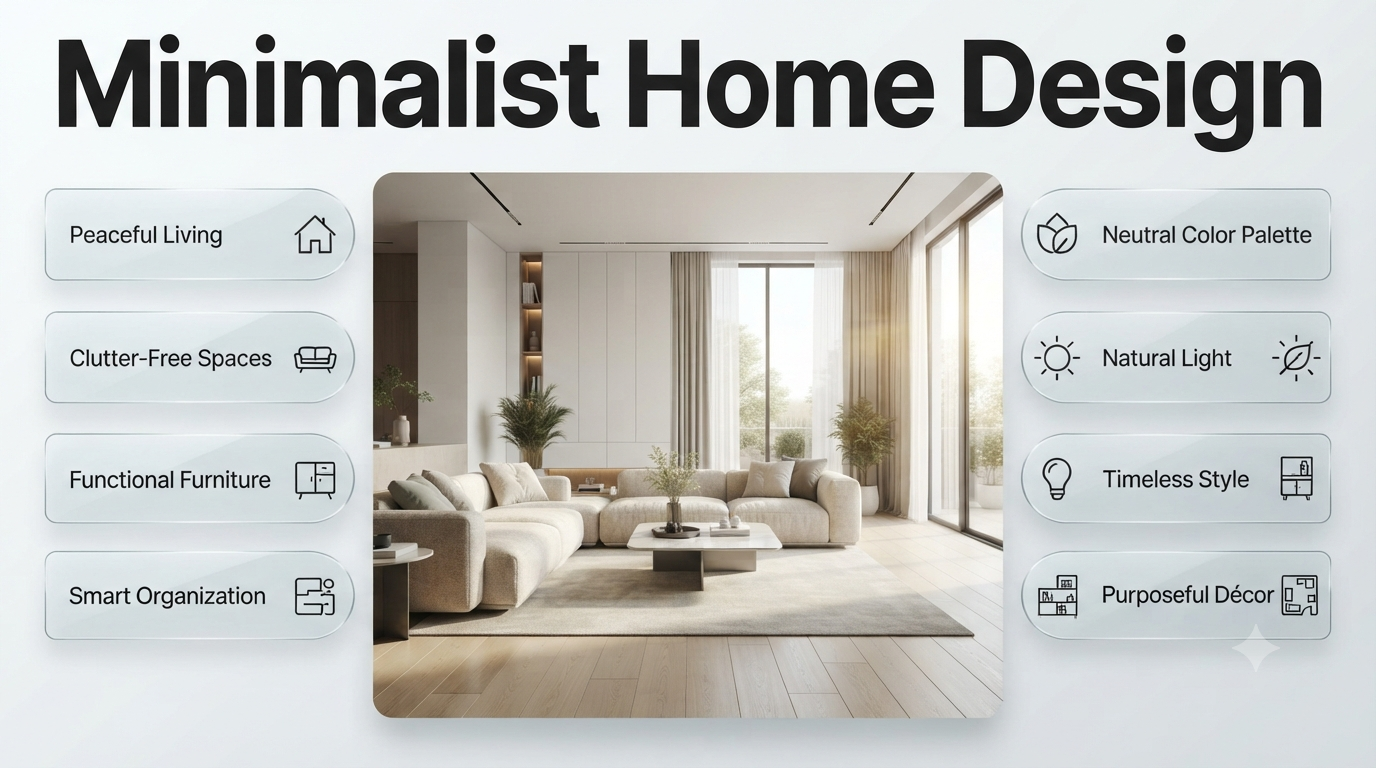
Minimalist Home Design | Modern life is fast-paced, and many homes end up filled with unnecessary furniture, decorations, and clutter. Instead of creating a relaxing environment, these crowded spaces can feel stressful and difficult to maintain. That’s one of the biggest reasons why Minimalist Home Design has become one of the most popular interior design trends worldwide.
Minimalism is much more than removing extra furniture or painting walls white. It’s about designing a home that feels peaceful, organized, practical, and timeless. Every piece of furniture, every decorative item, and every color has a purpose. The goal is to create a space that supports your lifestyle instead of overwhelming it.
Whether you’re decorating a new house, renovating your current home, or simply looking for ways to simplify your living space, this guide will help you understand the principles of minimalist design and show you how to apply them in a practical way.
For more expert design inspiration, visit Design Mode 24 Interior Design, where you’ll find practical decorating ideas, modern home inspiration, and helpful design guides.
What Is Minimalist Home Design?
Minimalist Home Design is an interior design style that focuses on simplicity, functionality, clean lines, uncluttered spaces, and carefully selected furniture. Rather than filling rooms with decorative objects, minimalist interiors use only essential elements to create calm, comfortable, and visually balanced living spaces.
Minimalism isn’t about owning less just for the sake of it. Instead, it’s about owning the right things.
Every item should have a purpose, whether it’s practical, beautiful, or meaningful.
Instead of asking:
“What else can I add?”
Minimalist design asks:
“What can I remove without losing comfort?”
This philosophy creates homes that are easier to clean, easier to organize, and much more enjoyable to live in.
If you’re exploring different decorating concepts, you may also enjoy Home Design Ideas for additional inspiration.
Why Has Minimalist Home Design Become So Popular?
Minimalist home design has become increasingly popular because it creates cleaner, brighter, and more functional living spaces while reducing stress, maintenance, and unnecessary spending.
Modern lifestyles have changed dramatically over the last decade.
People now spend more time working from home, entertaining at home, and relaxing at home.
As a result, homeowners want spaces that feel:
- Comfortable
- Organized
- Spacious
- Peaceful
- Easy to maintain
Minimalist interiors satisfy all of these needs without requiring expensive renovations.
They also adapt well to apartments, family homes, luxury villas, and even compact urban spaces.
Why Homeowners Love Minimalism
Many homeowners choose minimalist interiors because they offer practical everyday benefits.
Some of the biggest reasons include:
- Less visual clutter
- Easier cleaning
- Better organization
- More natural light
- Lower decorating costs
- Timeless appearance
- Improved mental well-being
- Greater flexibility for future updates
Rather than chasing every new decorating trend, minimalist homeowners invest in quality furniture that remains stylish for many years.
💡 Pro Tip: Minimalism doesn’t mean empty rooms. It means every item deserves its place.
The Core Principles of Minimalist Home Design
Every successful minimalist interior follows a few essential design principles.
Understanding these principles makes decorating much easier.
1. Simplicity Above Everything
Simplicity is the foundation of minimalist design.
Every room should feel clean and visually balanced.
Instead of displaying dozens of decorative objects, choose only a few meaningful accessories that complement the space.
When entering a minimalist room, your eyes should immediately feel relaxed instead of overwhelmed.
2. Function Comes Before Decoration
Beautiful furniture should also serve a purpose.
Minimalist homes prioritize practical furniture over decorative furniture.
Examples include:
- Storage beds
- Extendable dining tables
- Modular sofas
- Floating shelves
- Multi-purpose cabinets
- Hidden storage benches
Furniture that combines beauty with functionality helps reduce clutter throughout the home.
If you’re planning a home makeover, the Home Improvement section offers practical renovation ideas.
3. Quality Over Quantity
Minimalist homeowners typically purchase fewer items, but they invest in better quality.
Instead of replacing inexpensive furniture every few years, they choose durable pieces built to last.
This approach often saves money over time while creating a more refined interior.
⭐ Expert Tip: Interior designers recommend investing more in furniture you use every day, such as sofas, dining chairs, and beds. Decorative accessories can remain simple and affordable.
4. Neutral Color Palettes
Color plays an important role in minimalist interiors.
Soft, neutral shades help rooms feel larger, brighter, and more relaxing.
Popular minimalist colors include:
- White
- Warm white
- Ivory
- Beige
- Taupe
- Greige
- Soft gray
- Sand
- Natural wood tones
These colors also work well together, making it easier to update your home over time.
For additional inspiration, browse Paint Color ideas.
5. Clean Lines and Simple Shapes
Minimalist furniture avoids excessive ornamentation.
Instead, it focuses on:
- Straight lines
- Smooth surfaces
- Balanced proportions
- Geometric forms
- Simple silhouettes
This creates a calm visual flow throughout the home.
Even decorative accessories follow this principle by remaining understated rather than overly elaborate.
6. Open, Airy Spaces
One of the biggest characteristics of minimalist homes is the feeling of openness.
Rooms shouldn’t feel crowded.
Instead of filling every corner with furniture, minimalist interiors leave enough empty space for movement and visual balance.
Open layouts also allow natural light to spread throughout the room, making smaller homes appear significantly larger.
7. Natural Light Becomes Part of the Design
Natural light is one of the most valuable design elements in a minimalist home.
Large windows, sheer curtains, skylights, and reflective surfaces maximize daylight while reducing the need for artificial lighting.
To increase natural brightness:
- Keep windows unobstructed.
- Choose lightweight curtains.
- Add mirrors opposite windows.
- Paint walls with light neutral colors.
Brighter rooms automatically feel cleaner and more inviting.
Benefits of Minimalist Home Design
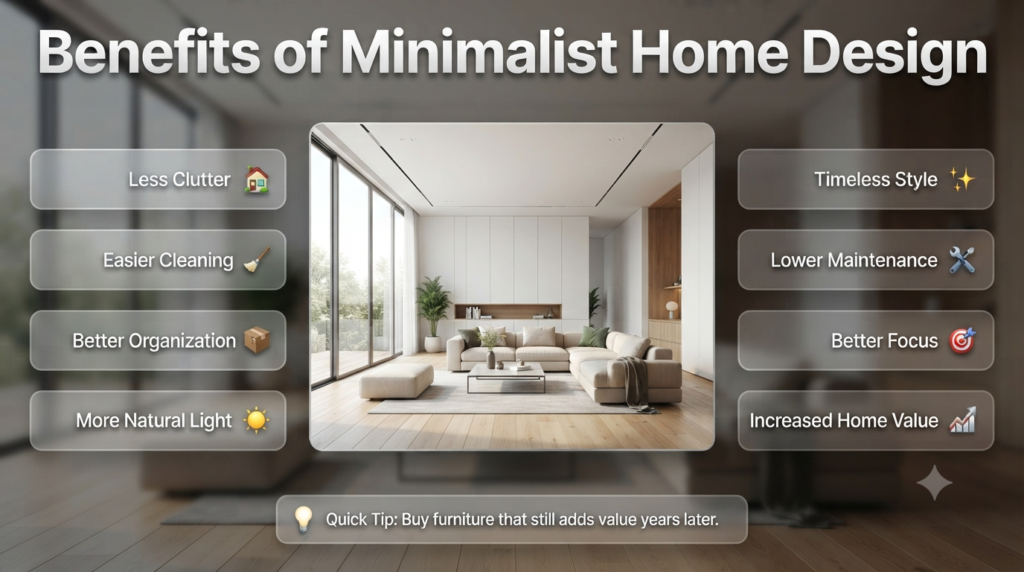
Minimalism offers much more than visual appeal.
It can positively affect your daily lifestyle in many practical ways.
| Benefit | How It Improves Everyday Living |
|---|---|
| Less Clutter | Creates a calmer environment |
| Easier Cleaning | Fewer objects collect dust |
| Better Organization | Everything has a designated place |
| More Natural Light | Rooms feel brighter and larger |
| Timeless Style | Doesn’t quickly go out of fashion |
| Lower Maintenance | Less decorating and rearranging |
| Better Focus | Fewer distractions while working or relaxing |
| Increased Home Value | Modern minimalist interiors appeal to many buyers |
Minimalist homes also encourage mindful purchasing habits.
Instead of buying decorative items on impulse, homeowners carefully select pieces that genuinely improve their living space.
📌 Quick Tip: Before buying any new furniture or decoration, ask yourself, “Will this still add value to my home five years from now?” If the answer is no, it may not be the right purchase.
Minimalist Home Design Supports Every Lifestyle
Many people believe minimalism only works for single professionals or luxury apartments.
That’s a common misconception.
Minimalist design works equally well for:
- Families with children
- Small apartments
- Large family homes
- Vacation homes
- Studio apartments
- Luxury villas
- Home offices
The key is adapting minimalist principles to your own lifestyle rather than copying someone else’s home.
If you’re interested in exploring related interior styles, these guides are worth reading:
- Minimalist Interior Design
- Scandinavian Interior Design
- Japandi Interior Design
- Contemporary Interior Design
These styles share many minimalist principles while offering their own unique design characteristics.
How to Design Every Room with a Minimalist Style
Creating a minimalist home doesn’t mean making every room look identical. Each space has its own purpose, so the design should support how you use it every day. The key is to keep every room functional, comfortable, and free from unnecessary clutter while maintaining a consistent design language throughout the home.
Minimalist Living Room Design
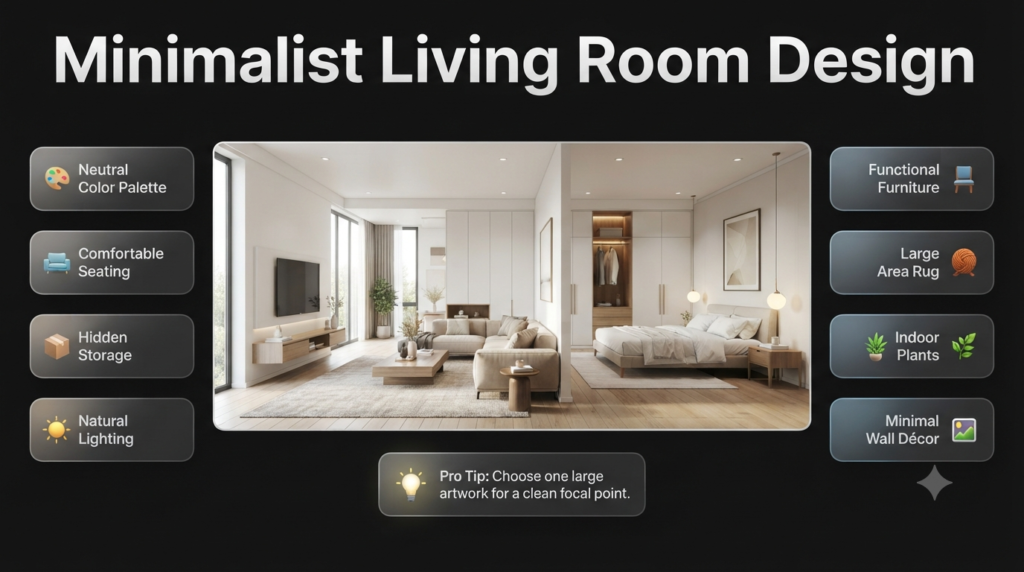
A minimalist living room focuses on comfortable seating, clean lines, neutral colors, and carefully chosen décor. Every furniture piece should have a purpose while leaving enough open space for easy movement and a calm atmosphere.
The living room is often the heart of the home, making it one of the most important spaces to design thoughtfully.
Start with the essentials:
- A comfortable sofa
- A functional coffee table
- A media console
- Accent lighting
- One or two decorative accessories
Avoid filling every wall or corner with furniture.
Instead, allow negative space to become part of the overall design.
Living Room Checklist
✔ Neutral color palette
✔ Comfortable seating
✔ Hidden storage
✔ Large area rug
✔ Indoor plants
✔ Natural lighting
✔ Minimal wall décor
💡 Pro Tip: Choose one large artwork instead of several small frames. It creates a cleaner and more sophisticated focal point.
For more decorating inspiration, explore Home Styling.
Minimalist Bedroom Design
A minimalist bedroom should feel peaceful, organized, and relaxing. Keep furniture to the essentials, use soft colors, incorporate layered lighting, and avoid excessive decorative items that can create visual clutter.
The bedroom should encourage rest, not distraction.
Essential furniture includes:
- Comfortable bed
- Two bedside tables
- Simple wardrobe
- Soft lighting
- Minimal artwork
Choose quality bedding in natural fabrics like cotton or linen to create a cozy yet uncluttered look.
Avoid overcrowding shelves with decorative accessories.
Instead, use a single vase, framed artwork, or indoor plant as an accent.
⭐ Expert Tip: Keep bedside tables almost empty. A lamp, one book, and a small decorative object are usually enough.
Minimalist Kitchen Design
A minimalist kitchen emphasizes clean countertops, efficient storage, durable materials, and functional layouts. The goal is to create a space that’s easy to cook in and even easier to maintain.
Kitchen clutter quickly makes a home feel untidy.
To maintain a minimalist kitchen:
- Store appliances inside cabinets.
- Keep countertops mostly clear.
- Use matching storage containers.
- Organize drawers with dividers.
- Install under-cabinet lighting.
Simple cabinetry with flat-panel doors often complements minimalist interiors.
Natural wood, matte finishes, and white cabinets remain timeless choices.
Minimalist Bathroom Design
A minimalist bathroom uses clean surfaces, neutral colors, floating vanities, hidden storage, and high-quality materials to create a spa-like atmosphere that feels both modern and practical.
Bathrooms benefit greatly from simplicity.
Keep only daily essentials visible.
Everything else should be stored inside cabinets or drawers.
Popular minimalist bathroom materials include:
- Stone
- Porcelain
- Glass
- Wood accents
- Matte black fixtures
- Brushed nickel hardware
Adding one indoor plant can also soften the overall appearance.
📌 Quick Tip: Use matching bottles and dispensers for soap, shampoo, and lotion to create a cleaner visual appearance.
Minimalist Home Office Design
A minimalist home office improves focus by reducing distractions. Use only essential furniture, proper lighting, smart storage, and a clean desktop to create a productive workspace.
Remote work has made home offices more important than ever.
Your workspace should include:
- Comfortable chair
- Functional desk
- Task lighting
- Cable management
- Storage drawers
Avoid decorating your desk with unnecessary accessories.
A clean workspace often leads to better concentration and productivity.
Choosing the Right Color Palette
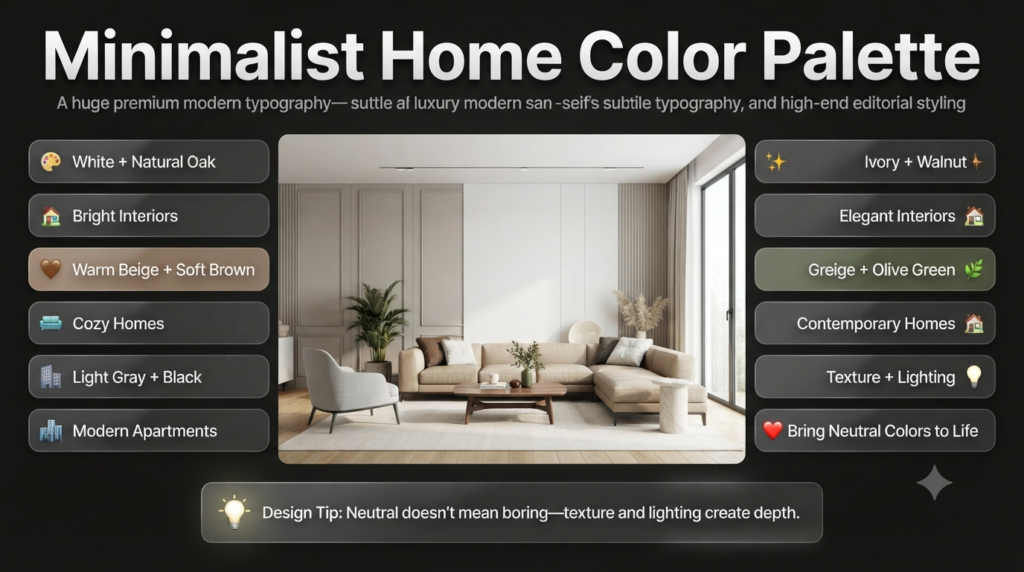
Color influences how large, bright, and welcoming a room feels.
The most popular minimalist color combinations include:
| Main Color | Accent Color | Best For |
|---|---|---|
| White | Natural Oak | Bright interiors |
| Warm Beige | Soft Brown | Cozy homes |
| Light Gray | Black | Modern apartments |
| Ivory | Walnut | Elegant interiors |
| Greige | Olive Green | Contemporary homes |
Neutral doesn’t mean boring.
Texture and lighting bring these colors to life.
For additional inspiration, visit Paint Color.
Selecting Minimalist Furniture
Furniture should solve problems—not create them.
When shopping, prioritize:
- Comfort
- Durability
- Functionality
- Storage
- Timeless design
Look for Furniture That Offers:
- Hidden storage
- Rounded edges
- Clean silhouettes
- Durable upholstery
- Easy maintenance
Avoid oversized furniture that overwhelms smaller rooms.
⚠ Common Mistake: Buying furniture before measuring the room often leads to crowded layouts and poor traffic flow.
The Importance of Lighting
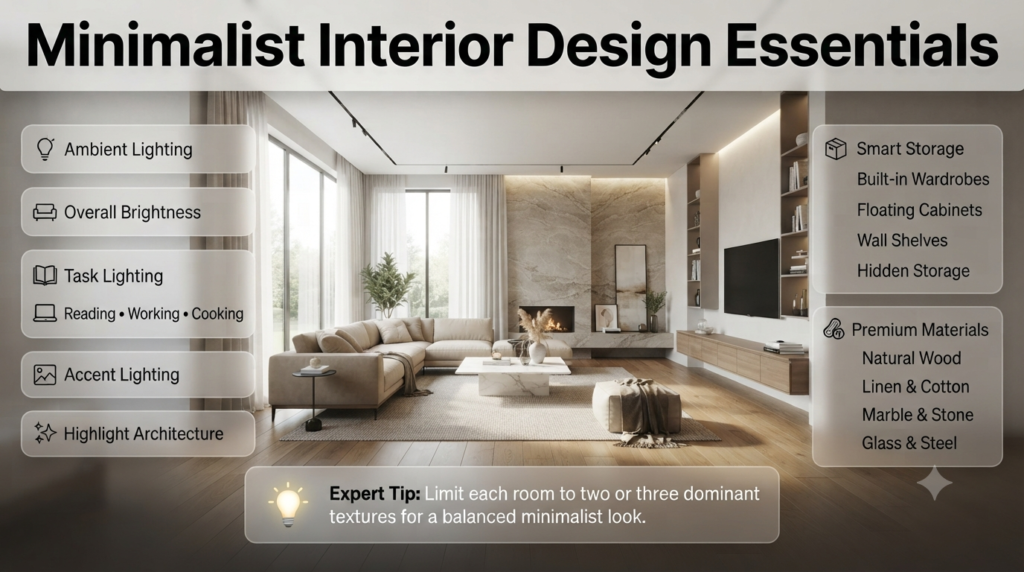
Lighting is one of the most overlooked elements in minimalist design.
Instead of relying on a single ceiling light, combine different lighting layers.
Three Essential Lighting Types
| Type | Purpose |
|---|---|
| Ambient Lighting | Overall room brightness |
| Task Lighting | Reading, cooking, working |
| Accent Lighting | Highlight artwork or architecture |
Natural daylight should always be maximized whenever possible.
Use sheer curtains instead of heavy drapes to allow more sunlight inside.
Smart Storage Solutions
Minimalist homes stay organized because everything has a designated place.
Some of the best storage ideas include:
- Built-in wardrobes
- Under-bed drawers
- Floating cabinets
- Hidden bench storage
- Wall-mounted shelves
- Multi-purpose furniture
Good storage allows rooms to remain visually clean without sacrificing functionality.
Best Materials for Minimalist Interiors
Minimalist design relies on timeless materials rather than trendy finishes.
Popular choices include:
- Natural wood
- Linen
- Cotton
- Stone
- Marble
- Concrete
- Glass
- Steel
Combining these materials creates visual depth while maintaining simplicity.
Adding Texture Without Creating Clutter
Texture is what keeps minimalist spaces from feeling cold or sterile.
Instead of adding more decorations, introduce texture through:
- Woven rugs
- Linen curtains
- Wool throws
- Wooden furniture
- Stone surfaces
- Ceramic accessories
Layering textures creates warmth while preserving a clean aesthetic.
⭐ Expert Tip: Limit each room to two or three dominant textures for a balanced and cohesive look.
Decorating a Minimalist Home
Minimalist décor should complement the room rather than dominate it.
Choose meaningful decorative pieces such as:
- Large artwork
- Sculptural vases
- Indoor plants
- Coffee table books
- Ceramic bowls
- Candles
- Mirrors
Remember that empty space is part of the design.
You don’t need to decorate every shelf or tabletop.
Minimalist Home Design on a Budget
You don’t need a large budget to create a minimalist home.
Start with simple improvements:
- Declutter one room at a time.
- Rearrange existing furniture.
- Paint walls in neutral colors.
- Replace bulky curtains with lighter fabrics.
- Add better lighting.
- Invest gradually in quality furniture.
Many beautiful minimalist homes evolve over several years rather than being completed all at once.
If you enjoy affordable home upgrades, explore DIY Projects for creative ideas.
Common Beginner Mistakes
Many homeowners unintentionally make design decisions that reduce the beauty and functionality of minimalist interiors.
Avoid these common mistakes:
- Buying furniture that’s too large
- Decorating every surface
- Ignoring storage needs
- Using too many accent colors
- Following short-lived design trends
- Choosing poor lighting
- Sacrificing comfort for appearance
- Removing too much furniture
⚠ Common Mistake: A minimalist home should feel warm and welcoming—not empty or uncomfortable. Balance simplicity with everyday practicality.
Professional Designer Recommendations
Interior designers often use a few simple strategies to create timeless minimalist homes:
- Start with a neutral foundation.
- Invest in fewer, higher-quality furniture pieces.
- Maximize natural light.
- Keep decorations intentional.
- Hide everyday clutter with smart storage.
- Use plants to introduce natural color.
- Repeat materials consistently throughout the home.
Following these principles creates a home that remains stylish for years instead of chasing changing trends.
How to Create a Minimalist Home: Step-by-Step Guide
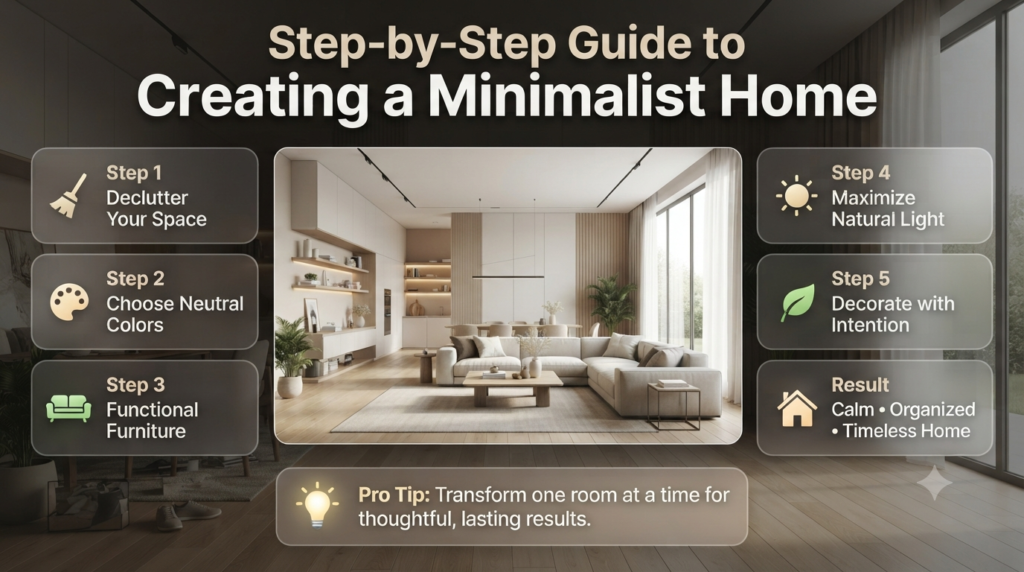
Creating a minimalist home starts with decluttering, defining a neutral color palette, choosing functional furniture, maximizing natural light, and decorating with intention. By following a structured approach, you can design a home that feels organized, timeless, and comfortable without unnecessary excess.
Instead of redesigning your entire house overnight, work through one room at a time. This approach is more manageable and helps you make thoughtful decisions rather than rushing into purchases.
Step 1: Declutter Your Space
Begin by removing items you no longer use, need, or love. Focus on one room at a time to avoid feeling overwhelmed.
Ask yourself:
- Do I use this regularly?
- Does it serve a purpose?
- Does it add value to my home?
- Would I buy it again today?
Donate, recycle, or store items that no longer fit your lifestyle.
💡 Pro Tip: Decluttering isn’t about throwing everything away—it’s about making space for the things that matter most.
Step 2: Choose a Neutral Color Palette
Select a consistent color scheme throughout your home to create visual harmony.
Popular minimalist combinations include:
- White and oak
- Beige and walnut
- Greige and black
- Soft gray and natural wood
- Ivory and stone
For more inspiration, browse Paint Color.
Step 3: Invest in Functional Furniture
Every furniture piece should have a purpose.
Look for items that offer:
- Built-in storage
- Comfortable seating
- Durable materials
- Timeless design
- Multi-functional use
Avoid buying trendy furniture that may quickly go out of style.
Step 4: Maximize Natural Light
Natural light instantly makes a room feel larger and more inviting.
Simple ways to increase brightness include:
- Using sheer curtains
- Hanging mirrors opposite windows
- Keeping window areas uncluttered
- Choosing light-colored walls and flooring
Step 5: Decorate with Intention
Decor should complement your home—not overwhelm it.
Choose a few meaningful accessories, such as:
- A large framed artwork
- Indoor plants
- Ceramic vases
- Sculptural lamps
- Coffee table books
📌 Quick Tip: If you’re unsure whether to add another decorative item, wait a few days. Often, you’ll realize the room already feels complete.
Minimalist vs Scandinavian vs Japandi Design
Although these styles share similarities, each has its own personality.
| Feature | Minimalist | Scandinavian | Japandi |
|---|---|---|---|
| Overall Style | Clean and simple | Cozy and functional | Japanese simplicity with Nordic warmth |
| Color Palette | Neutral tones | White with soft colors | Earthy and muted colors |
| Furniture | Sleek and practical | Comfortable and light | Handcrafted and natural |
| Materials | Glass, wood, stone | Wood, wool, linen | Bamboo, oak, stone |
| Décor | Minimal | Warm and inviting | Minimal with natural accents |
| Best For | Modern homes | Family homes | Calm and luxurious interiors |
If you enjoy these styles, explore:
- Scandinavian Interior Design
- Japandi Interior Design
- Japandi Home Decor
- Modern Japandi Interior
- Interior Design Styles
What Defines Minimalist Home Design, and Why Is It Trending So Heavily Right Now?
Minimalist home design is an interior design philosophy centered on simplicity, functionality, and intentional living. Instead of filling a room with unnecessary furniture and decorations, every element serves a clear purpose. Clean lines, neutral color palettes, open layouts, natural light, and high-quality materials are the defining characteristics of this style.
Its growing popularity comes from changing lifestyles. Many homeowners are looking for peaceful, organized spaces that reduce stress and are easier to maintain. With more people working from home and living in smaller urban spaces, minimalist interiors provide flexibility, improve functionality, and create a timeless look that doesn’t rely on short-lived design trends. The combination of beauty, practicality, and lower maintenance has made minimalist home design one of the most sought-after interior styles today.
How Do I Make a Minimalist Space Feel Warm and Inviting Rather Than Cold and Clinical?
A minimalist home should feel calm and comfortable—not empty or sterile. The secret is balancing simplicity with warmth by incorporating natural materials, soft textures, and layered lighting.
Choose warm neutral colors such as beige, ivory, taupe, or greige instead of stark white. Add wooden furniture, linen curtains, woven rugs, wool throws, and textured cushions to introduce depth without creating clutter. Indoor plants, ceramic décor, and carefully selected artwork also bring personality while maintaining a clean aesthetic.
Lighting plays a major role as well. Combine natural daylight with warm ambient lighting, table lamps, and floor lamps to create a welcoming atmosphere. Rather than decorating every surface, focus on a few meaningful accessories that make the space feel lived-in while preserving its minimalist character.
What Are the Best Storage Solutions to Maintain a Clutter-Free, Minimalist Aesthetic?
Effective storage is essential for maintaining a minimalist home because it keeps everyday items organized and out of sight. The best solutions combine functionality with a clean, seamless appearance.
Popular minimalist storage ideas include:
Built-in wardrobes with concealed shelving
Storage beds with under-bed drawers
Multi-functional ottomans and benches
Floating cabinets and wall-mounted shelves
Modular closet systems
Kitchen pantry organizers and drawer dividers
Entryway cabinets for shoes and accessories
Hidden storage inside coffee tables and media consoles
The goal is to ensure every item has a designated place. Regular decluttering and thoughtful organization prevent unnecessary accumulation and help maintain a clean, spacious environment without sacrificing convenience.
Is Minimalist Design Practical for Families with Children or Pets?
Yes. Minimalist design is highly practical for families because it emphasizes organization, durability, and functional living rather than decorative excess. A clutter-free home is often safer for children, easier to clean, and more adaptable to everyday family life.
Parents can choose durable, stain-resistant fabrics, rounded furniture edges, washable rugs, and smart storage solutions that keep toys and household items neatly organized. Built-in cabinets, labeled storage bins, and multifunctional furniture make it easier for every family member to maintain an organized home.
For pet owners, selecting scratch-resistant flooring, performance fabrics, and easy-to-clean surfaces helps preserve the minimalist look while accommodating daily wear and tear. Minimalism isn’t about limiting family life—it’s about creating a home that supports it more efficiently.
How Does Minimalist Interior Design Improve Home Valuation and ROI for Sellers?
Minimalist interior design can positively influence a property’s market appeal by making spaces appear larger, brighter, and more functional. Buyers often find it easier to imagine themselves living in a clean, neutral home, which can increase interest and shorten selling time.
Simple layouts, uncluttered rooms, and modern finishes highlight a property’s architectural features rather than distracting from them. Neutral color schemes also appeal to a broader range of buyers, reducing the need for costly updates before moving in.
While minimalist design alone doesn’t guarantee a higher selling price, it enhances presentation, improves first impressions during showings, and complements professional home staging strategies. These factors can contribute to stronger buyer interest and a better return on investment when selling a home.
Conclusion
Minimalist Home Design is more than a decorating trend—it’s a practical approach to creating a home that feels organized, functional, and timeless. By focusing on quality over quantity, embracing clean lines, maximizing natural light, and choosing purposeful furniture, you can design spaces that are both beautiful and comfortable.
Whether you’re refreshing a single room or planning a complete home makeover, adopting minimalist principles can simplify daily living, reduce clutter, and create a more peaceful environment. Remember, successful minimalism isn’t about removing everything—it’s about keeping what truly adds value to your home and lifestyle.
For more expert decorating ideas, inspiration, and practical design guides, explore Design Mode 24 Interior Design and discover additional resources on Home Design Ideas, Interior Design, and Minimalist Interior Design to help you create a home that is stylish, functional, and built to stand the test of time.

Leave a Reply