
Introduction
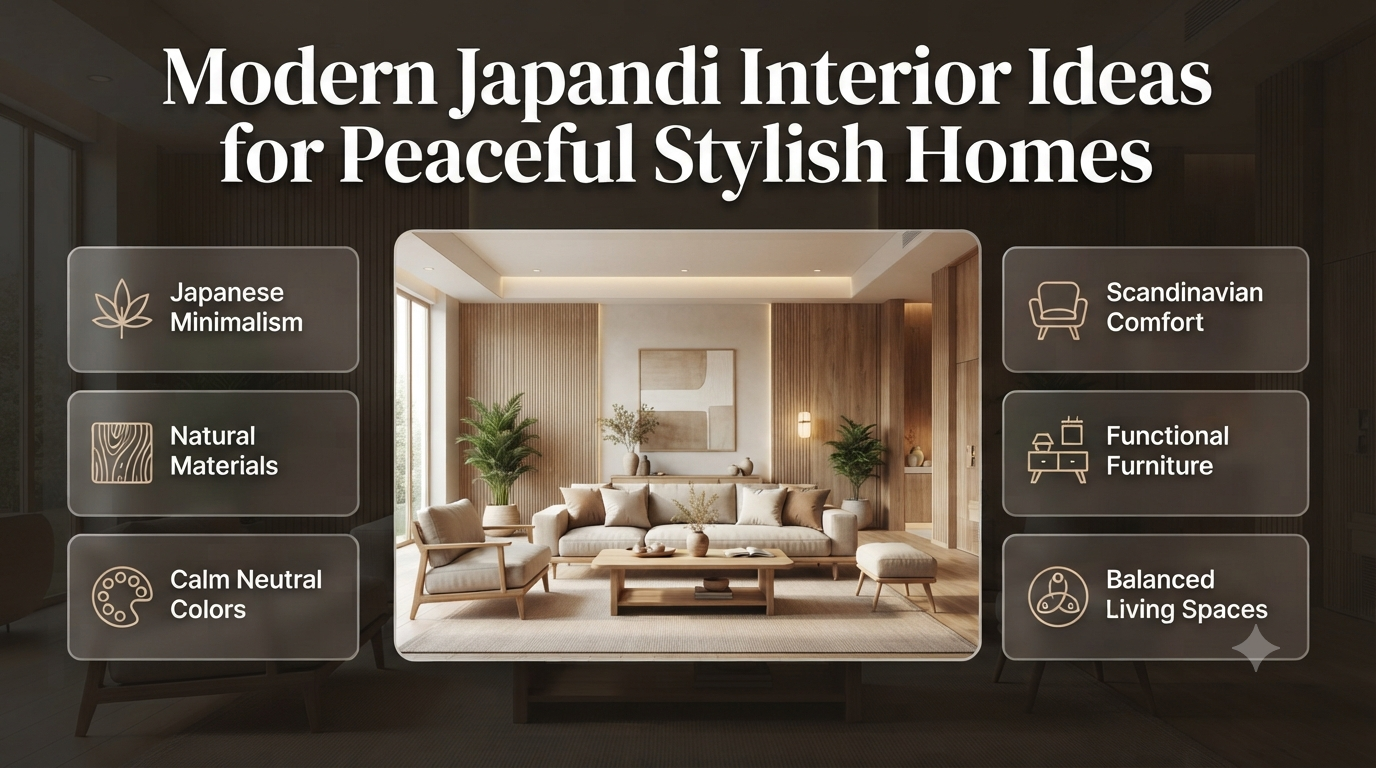
Modern Japandi Interior Ideas | Many homeowners today want a home that looks beautiful but also feels peaceful. A space filled with too much furniture, unnecessary decoration, and mismatched colors can make everyday life feel stressful. People are now looking for interiors that support relaxation, organization, and a better quality of living.
This is why Modern Japandi Interior has become one of the most admired design styles. It combines Japanese minimalism with Scandinavian comfort to create homes that feel warm, functional, and naturally balanced.
Creating a peaceful and stylish home requires the right combination of aesthetics, functionality, and thoughtful planning. At Design Mode 24, homeowners can explore modern interior inspiration, practical design solutions, and creative ideas for transforming everyday spaces.
Modern Japandi Interior is not about making a home empty or boring. It is about choosing meaningful furniture, natural materials, calming colors, and simple details that improve daily living.
In this guide, you will discover:
- What Modern Japandi Interior design really means
- The philosophy behind Japandi style
- How to select colors, furniture, and materials
- How to create Japandi-inspired rooms
- Common mistakes to avoid
- Professional tips for achieving a balanced look
Whether you are redesigning an entire house or adding small Japandi-inspired elements, this guide will help you create a timeless and comfortable interior.
What Is Modern Japandi Interior Design?
Modern Japandi Interior is a design style that combines Japanese simplicity with Scandinavian warmth. It focuses on minimalism, natural materials, functional furniture, neutral colors, and a peaceful connection with nature.
Unlike traditional minimalism, which can sometimes feel cold, Japandi creates a softer atmosphere by adding:
- Natural textures
- Comfortable furniture
- Warm lighting
- Organic shapes
- Handmade details
The main idea behind Japandi is simple:
A beautiful home should feel calm, purposeful, and easy to live in.
Every element has a reason for being there. Furniture should provide comfort. Colors should create relaxation. Decorations should add meaning instead of creating clutter.
The Philosophy Behind Japandi Interior Design
Modern Japandi Interior is built around two important design philosophies:
- Japanese Wabi-sabi
- Scandinavian Hygge
Together, they create a home that feels balanced, peaceful, and welcoming.
Japanese Influence: Simplicity and Natural Harmony
Japanese interior design has always focused on creating harmony between people and their surroundings.
Important Japanese concepts include:
Wabi-Sabi
Wabi-sabi teaches appreciation for natural imperfections.
Instead of searching for perfectly manufactured objects, Japandi embraces:
- Handmade ceramics
- Natural wood grains
- Slightly irregular textures
- Authentic materials
A handmade wooden table with natural marks may feel more valuable than a perfectly polished artificial surface.
Ma: The Beauty of Empty Space
One important Japanese principle is Ma, which means appreciating empty space.
In interior design, this means:
- Avoid overcrowding rooms
- Allow furniture to breathe
- Create visual balance
- Let important pieces stand out
Empty space is not wasted space. It creates calmness.
Scandinavian Influence: Comfort and Functionality
Scandinavian design focuses on creating homes that are practical, comfortable, and welcoming.
It introduces ideas such as:
- Cozy textiles
- Functional furniture
- Soft lighting
- Comfortable living spaces
The Scandinavian concept of hygge encourages creating moments of comfort through simple things:
- A warm blanket
- A comfortable chair
- Natural sunlight
- A peaceful corner for reading
How Japanese and Scandinavian Styles Create Japandi Balance
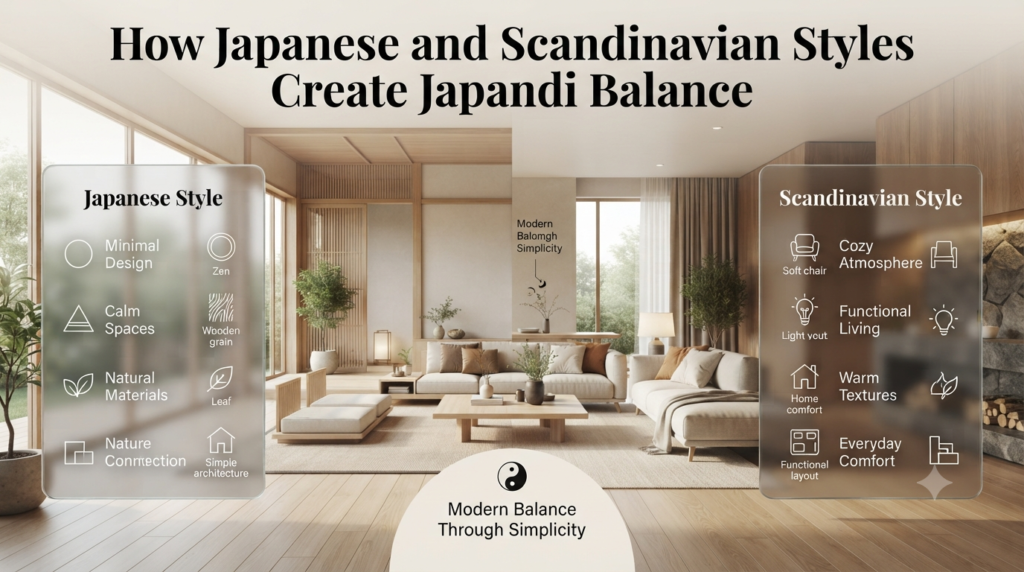
At first, Japanese and Scandinavian styles may seem different.
Japanese design is often:
- Minimal
- Calm
- Structured
- Nature-focused
Scandinavian design is often:
- Cozy
- Bright
- Functional
- Comfortable
Japandi combines both approaches.
| Japanese Style | Scandinavian Style |
|---|---|
| Minimal decoration | Cozy atmosphere |
| Natural materials | Comfortable furniture |
| Calm colors | Warm textures |
| Simple spaces | Functional layouts |
| Connection with nature | Everyday comfort |
The result is an interior that feels modern without becoming cold.
Key Principles of Modern Japandi Interior Design
1. Choose Function Before Decoration
The most important rule of Modern Japandi Interior design is that every item should have a purpose. Furniture and accessories should improve your lifestyle instead of simply filling empty areas.
Many beginners make the mistake of decorating first and thinking about functionality later.
Professional designers usually start with questions like:
- How will this room be used?
- What furniture is actually necessary?
- Does this item improve comfort?
- Does it create visual balance?
For example, a Japandi living room may include:
✔ A comfortable sofa
✔ A simple wooden coffee table
✔ Soft lighting
✔ Natural plants
✔ Minimal decoration
Instead of:
✘ Too many shelves
✘ Random decorative objects
✘ Excess furniture
✘ Busy patterns
💡 Pro Tip: Before purchasing new décor, remove unnecessary items first. Japandi design often begins with creating space rather than adding more things.
2. Balance Minimalism With Warmth
A common concern about minimalist interiors is that they can feel empty or uncomfortable.
Modern Japandi solves this problem by combining clean design with natural warmth.
A balanced Japandi room usually includes:
Minimal Elements
- Simple furniture shapes
- Open areas
- Organized storage
- Limited decorations
Warm Elements
- Wooden surfaces
- Linen fabrics
- Soft rugs
- Indoor plants
- Warm lighting
The goal is not to create a showroom. The goal is to create a home that feels peaceful.
3. Use Natural Materials for Authentic Japandi Style
Natural materials are one of the strongest features of Modern Japandi Interior design.
They bring:
- Texture
- Warmth
- Visual interest
- A connection with nature
When selecting materials, quality matters more than quantity.
Wood: The Foundation of Japandi Interiors
Wood is one of the most important materials in Japandi homes.
Popular choices include:
- Oak
- Walnut
- Ash wood
- Bamboo
- Natural timber
Wood can be used for:
- Flooring
- Tables
- Cabinets
- Shelves
- Wall panels
The natural grain of wood adds character and prevents minimalist spaces from feeling plain.
Stone and Earth-Based Materials
Stone introduces an earthy and grounded feeling.
Common uses include:
- Kitchen countertops
- Bathroom surfaces
- Coffee tables
- Decorative pieces
Popular options:
- Marble
- Travertine
- Natural stone finishes
Natural Fabrics and Textures
Soft materials create comfort and balance hard surfaces.
Common Japandi fabrics include:
- Linen
- Cotton
- Wool
- Jute
These materials work beautifully for:
- Curtains
- Rugs
- Cushions
- Throws
⭐ Expert Tip: A few high-quality natural materials create a stronger Japandi effect than many cheap decorative items.
Modern Japandi Color Palette: Creating a Calm Atmosphere
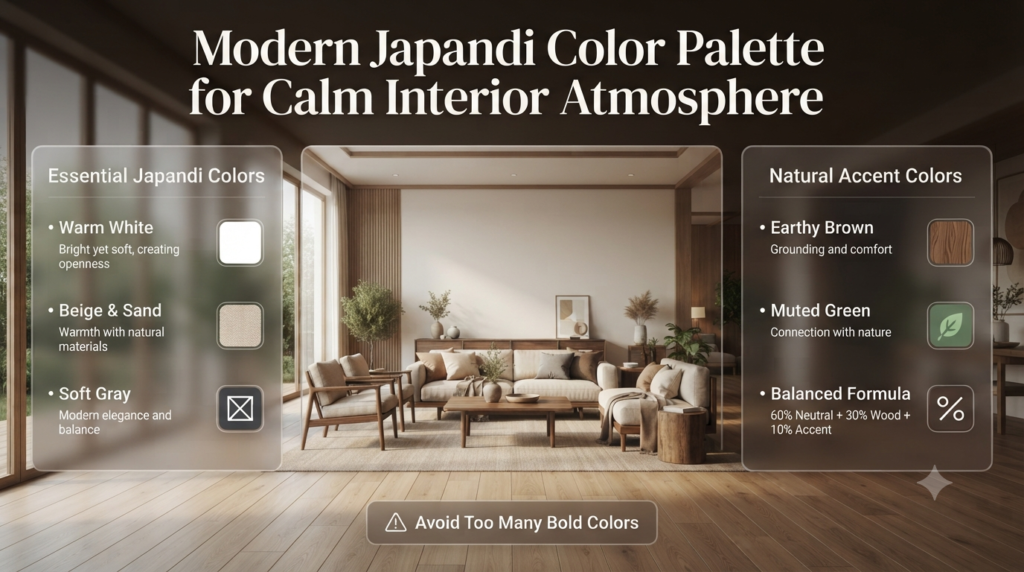
Modern Japandi Interior colors focus on neutral shades, earthy tones, and natural-inspired palettes that create a peaceful and timeless environment.
Color selection can completely change how a space feels.
The goal is not to use many colors but to create harmony between different shades.
For more inspiration on choosing suitable interior shades and wall combinations, explore these Paint Color ideas.
Best Colors for Modern Japandi Interiors
Warm White
Warm white creates brightness while maintaining a soft feeling.
Best used for:
- Walls
- Ceilings
- Large rooms
Avoid extremely bright white because it may make the space feel too sterile.
Beige and Sand Colors
Beige creates warmth and works beautifully with natural materials.
It pairs well with:
- Wooden furniture
- Linen fabrics
- Stone surfaces
Soft Gray
Soft gray adds a modern and elegant touch.
Popular combinations:
- Gray walls with walnut furniture
- Gray sofa with beige textiles
- Gray accessories with wood flooring
Earthy Brown
Brown tones create grounding and comfort.
Common choices:
- Walnut brown
- Coffee shades
- Natural wood tones
Muted Green
Green introduces nature into the home.
Popular options:
- Sage green
- Olive green
- Moss green
These shades work especially well with plants and wooden furniture.
Simple Japandi Color Formula
A professional approach is:
| Percentage | Element |
|---|---|
| 60% | Main neutral color |
| 30% | Wood and natural materials |
| 10% | Accent colors |
This creates balance without overwhelming the room.
⚠ Common Mistake: Using too many bold colors in a Japandi interior. Strong colors can break the calm and natural feeling of the design.
Selecting Furniture for a Modern Japandi Home
Furniture determines the overall personality of a room.
Modern Japandi furniture usually has:
- Clean lines
- Natural finishes
- Comfortable shapes
- Practical functions
- Minimal decoration
Low-Profile Furniture
Japanese interiors often use lower furniture because it creates a relaxed connection with the space.
Examples:
- Low coffee tables
- Platform beds
- Simple sofas
Clean and Organic Shapes
Choose furniture with:
✔ Smooth curves
✔ Simple forms
✔ Natural finishes
Avoid:
✘ Heavy decoration
✘ Excessive luxury details
✘ Overly complicated designs
Functional Storage Solutions
Organization is essential in Japandi homes.
Useful options include:
- Built-in cabinets
- Hidden storage
- Floating shelves
- Multi-purpose furniture
A clean environment creates a calmer daily experience.
Modern Japandi Interior Ideas for Different Rooms
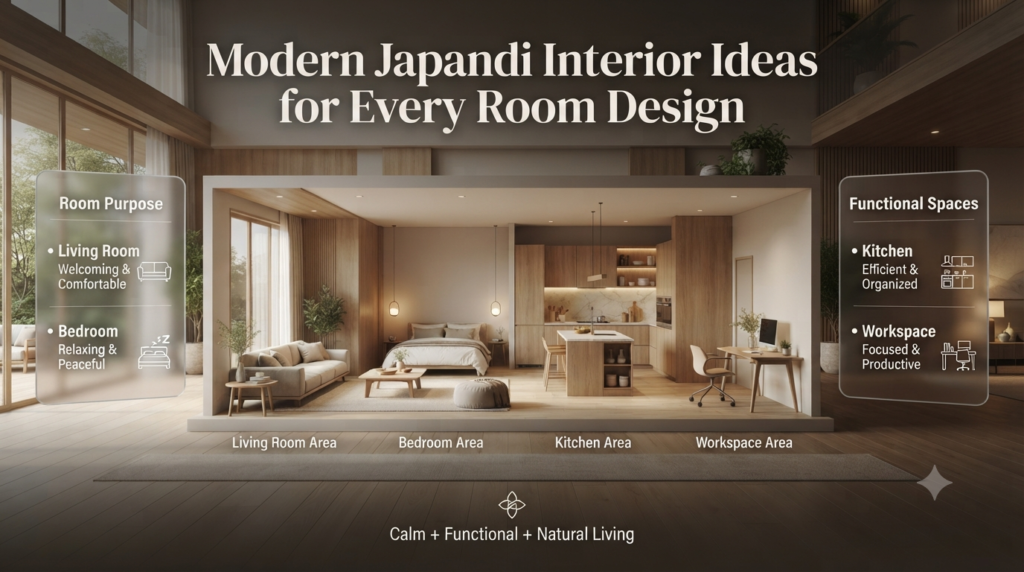
A successful Modern Japandi Interior is not created by following one fixed formula. Each room has a different purpose, and the design should support how people actually live in that space.
A living room should feel welcoming. A bedroom should encourage relaxation. A kitchen should support efficiency. A workspace should improve focus.
The goal is always the same:
Create a home that feels calm, functional, natural, and comfortable.
Modern Japandi Living Room Design Ideas
A Modern Japandi living room combines minimal furniture, natural textures, warm lighting, and neutral colors to create a peaceful gathering space that feels comfortable without visual clutter.
The living room is usually the heart of a home, so it should balance simplicity with warmth.
A common mistake is thinking Japandi means having an empty room with only a sofa and table. In reality, professional Japandi design focuses on carefully selected elements that create comfort.
Essential Elements of a Japandi Living Room
1. Choose a Simple Sofa
The sofa is usually the largest piece of furniture, so it sets the entire mood.
Ideal choices:
- Neutral fabric sofa
- Low-profile design
- Soft curved edges
- Linen or cotton upholstery
Recommended colors:
- Beige
- Cream
- Light gray
- Warm taupe
Avoid:
- Bright artificial colors
- Heavy decorative patterns
- Oversized furniture that blocks movement
2. Add Natural Wood Furniture
Wood introduces warmth into a minimalist space.
Popular options:
- Oak coffee tables
- Walnut side tables
- Bamboo shelves
- Wooden TV units
The natural grain of wood creates visual interest without requiring extra decoration.
3. Use Soft Textures
Texture is what prevents Japandi interiors from feeling plain.
Add:
- Wool rugs
- Linen cushions
- Cotton throws
- Woven baskets
These small details create comfort while maintaining simplicity.
💡 Pro Tip: Instead of adding many decorative objects, focus on one or two meaningful pieces that create personality.
For more room arrangement inspiration and practical styling concepts, explore these Home Design Ideas.
Modern Japandi Bedroom Design
A Modern Japandi bedroom focuses on creating a peaceful environment through soft colors, minimal furniture, natural materials, and calming textures that support better relaxation.
The bedroom should feel like a retreat from daily stress.
Unlike dramatic bedroom styles that use bold colors and luxury decoration, Japandi bedrooms focus on simplicity.
Key Features of a Japandi Bedroom
Low Platform Beds
Low beds are strongly connected with Japanese design philosophy.
Benefits:
- Creates a grounded feeling
- Makes rooms appear larger
- Supports a minimalist appearance
Neutral Bedding
Choose bedding with natural fabrics.
Best options:
- Linen sheets
- Cotton blankets
- Wool throws
Color ideas:
- Off-white
- Beige
- Soft gray
- Natural brown
Minimal Nightstands
A Japandi bedroom does not require many accessories.
A simple nightstand can include:
- A small lamp
- A ceramic piece
- A book
- A plant
The purpose is creating calm, not decoration overload.
⚠ Common Mistake: Adding too many pillows, artwork, and accessories because the room feels empty.
In Japandi design, empty space is part of the beauty.
Modern Japandi Kitchen Design
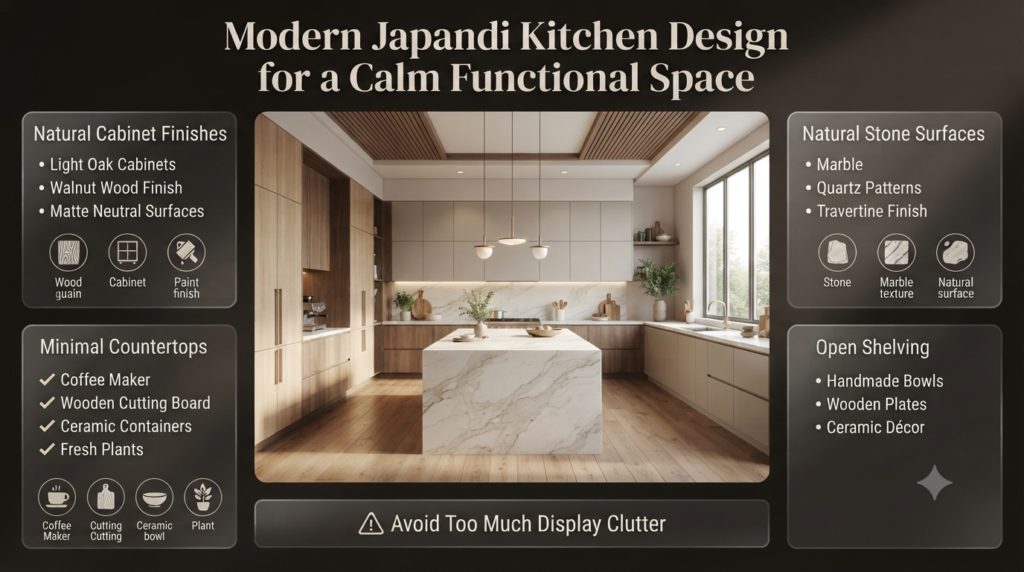
A Modern Japandi kitchen combines clean layouts, natural materials, hidden storage, and functional design to create a cooking space that feels organized and welcoming.
The kitchen is one of the best places to apply Japandi principles because functionality is already important.
Japandi Kitchen Characteristics
Natural Cabinet Finishes
Popular choices:
- Light oak cabinets
- Walnut wood finishes
- Matte neutral surfaces
These create warmth while maintaining a modern appearance.
Minimal Countertops
Japandi kitchens avoid crowded countertops.
Keep only essential items visible:
✔ Coffee maker
✔ Wooden cutting board
✔ Ceramic containers
✔ Fresh plants
Store unnecessary appliances away.
Natural Stone Surfaces
Stone countertops create an elegant but organic appearance.
Popular options:
- Marble
- Quartz with natural patterns
- Travertine-inspired finishes
Open Shelving: Use Carefully
Open shelves can work beautifully in Japandi kitchens.
Display:
- Handmade bowls
- Wooden plates
- Ceramic items
However, too many displayed items can quickly create clutter.
Modern Japandi Dining Area
The dining area should encourage connection and comfort.
Important elements include:
Wooden Dining Table
A natural wood table becomes the center of the room.
Good choices:
- Solid oak
- Walnut
- Reclaimed wood
Simple Dining Chairs
Choose chairs with:
- Natural materials
- Comfortable shapes
- Minimal designs
Mixing wood with fabric seating can create a balanced Scandinavian influence.
Modern Japandi Bathroom Design
A Modern Japandi bathroom creates a spa-like atmosphere using natural materials, soft colors, simple fixtures, and organized storage.
Bathrooms are ideal spaces for Japandi because the style naturally supports relaxation.
Japandi Bathroom Features
Natural Stone and Wood Combination
A popular combination:
- Stone flooring
- Wooden vanity
- Neutral walls
This creates a connection with nature.
Soft Lighting
Avoid harsh lighting.
Better choices:
- Warm LED lights
- Hidden lighting
- Wall sconces
Simple Accessories
Use:
- Wooden trays
- Natural towels
- Ceramic containers
- Small plants
Keep surfaces clean and organized.
Modern Japandi Interior for Small Spaces
Modern Japandi Interior works especially well in small homes because its focus on simplicity, multifunctional furniture, and smart organization helps maximize available space.
Small apartments often become crowded because every corner is filled with furniture.
Japandi takes a different approach.
Small Space Japandi Strategies
1. Use Multi-Functional Furniture
Examples:
- Storage beds
- Folding tables
- Built-in cabinets
- Extendable dining tables
2. Keep Visual Space Open
Use:
- Light colors
- Minimal furniture
- Open pathways
- Floating shelves
3. Use Mirrors Carefully
Mirrors can make small spaces feel larger.
Best placement:
- Opposite windows
- Near light sources
Avoid excessive mirrors because they can disturb the natural feeling.
Lighting Design in Modern Japandi Interior
Lighting is one of the most overlooked elements in Japandi design.
A room with perfect furniture can still feel uncomfortable if the lighting is too harsh.
Best Japandi Lighting Choices
Warm Lighting
Choose warm tones instead of cold white lights.
Benefits:
- Creates comfort
- Enhances natural materials
- Makes spaces relaxing
Layered Lighting
Professional designers usually combine:
- Main ceiling lighting
- Floor lamps
- Table lamps
- Decorative lighting
This creates depth and flexibility.
Natural Light
Japandi homes maximize daylight.
Use:
- Sheer curtains
- Open windows
- Light-colored walls
Natural light highlights wood textures and neutral colors.
Plants and Nature in Japandi Interiors
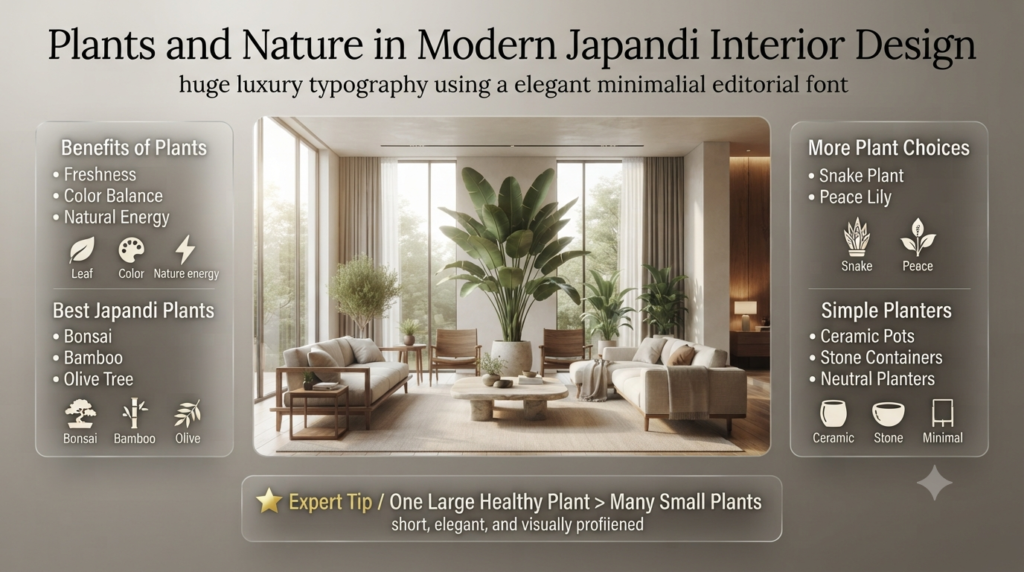
Nature is a major part of Japandi philosophy.
Plants add:
- Freshness
- Color balance
- Natural energy
Best Plants for Japandi Style
Suitable choices:
- Bonsai
- Bamboo
- Olive trees
- Snake plants
- Peace lilies
Choose simple pots:
- Ceramic containers
- Stone pots
- Neutral-colored planters
⭐ Expert Tip: One large healthy plant often creates a stronger design impact than many small plants scattered around the room.
Japandi Decoration: Less But Meaningful
Modern Japandi decoration follows the idea of intentional styling.
Every decorative item should have a reason.
Good choices:
- Handmade ceramics
- Natural artwork
- Wooden sculptures
- Textured fabrics
- Simple candles
Avoid:
- Random decorations
- Trend-based accessories
- Too many colors
How Home Styling Completes a Japandi Interior
Furniture and colors create the foundation, but final styling creates the emotional feeling of the home.
Small details such as:
- Cushion placement
- Decorative objects
- Texture layering
- Artwork selection
can completely change the atmosphere.
For additional inspiration on arranging furniture, accessories, and finishing details, explore Home Styling ideas.
Adding Personal Touches Through DIY Japandi Projects
Japandi does not mean your home should look identical to everyone else’s.
Personal handmade items can make the space more meaningful.
Examples:
- Handmade pottery
- Wooden shelves
- Custom artwork
- Natural fiber decorations
Simple creative improvements can add character while maintaining the minimalist style.
You can explore more creative handmade inspiration through DIY Projects.
Updating Your Home With Japandi Improvements
Sometimes achieving a Japandi look does not require a complete renovation.
Small improvements can create a major difference:
- Repainting walls
- Changing lighting fixtures
- Updating storage
- Replacing heavy furniture
- Adding natural materials
These changes are part of practical Home Improvement planning.
Common Mistakes to Avoid in Modern Japandi Interior Design
Creating a beautiful Modern Japandi Interior may look simple, but achieving the right balance requires careful planning. Many homeowners make mistakes because they focus only on the visual appearance and ignore the philosophy behind Japandi design.
A successful Japandi home is not created by simply adding beige colors, wooden furniture, and plants. It requires thoughtful decisions about space, materials, functionality, and comfort.
Below are the most common mistakes and how professionals avoid them.
1. Making the Space Too Empty
A common misunderstanding about Japandi design is that minimalism means having almost no furniture or decoration. In reality, Japandi focuses on intentional simplicity, not emptiness.
Some homeowners remove too many items and end up with a room that feels:
- Cold
- Uncomfortable
- Unfinished
- Less personal
The goal is not to remove everything.
The goal is to keep only what adds value.
Better Approach:
Instead of removing all decorations:
✔ Keep meaningful artwork
✔ Add natural textures
✔ Use comfortable furniture
✔ Include personal items carefully
A Japandi home should feel peaceful, not like an empty showroom.
2. Using Only Beige Colors
Neutral colors are important in Japandi interiors, but using only beige can make a room feel flat.
A balanced Japandi palette includes different natural tones:
- Warm white
- Soft gray
- Brown
- Sage green
- Natural wood shades
The combination of different textures creates depth.
For example:
A beige sofa + wooden table + linen curtains + stone accessories creates a richer look than using beige everywhere.
⚠ Common Mistake: Choosing one color for everything because Japandi looks simple online.
3. Buying Cheap Furniture That Looks Temporary
Japandi design values quality over quantity.
Cheap furniture often creates problems:
- Poor durability
- Artificial materials
- Less natural appearance
- Short lifespan
Instead of filling a room quickly, invest in important pieces.
Prioritize:
- Sofa
- Dining table
- Bed
- Storage furniture
A few high-quality pieces create a stronger interior than many low-quality items.
4. Ignoring Texture
Many beginners focus only on colors and furniture but forget texture.
Without texture, a minimalist room can feel boring.
Professional designers add texture through:
- Wooden surfaces
- Woven baskets
- Linen curtains
- Wool rugs
- Ceramic accessories
Texture creates warmth without adding visual clutter.
5. Mixing Too Many Design Styles
Modern Japandi works well with some modern elements, but mixing too many styles can destroy the balance.
Avoid combining Japandi with:
- Heavy traditional furniture
- Bright maximalist decorations
- Industrial elements everywhere
- Excessive luxury designs
A small accent from another style can work, but Japandi should remain the main identity.
Step-by-Step Guide: How to Create a Modern Japandi Interior
Creating a Modern Japandi Interior involves planning your space, selecting natural materials, choosing calming colors, adding functional furniture, and finishing with meaningful decorative elements.
Follow this professional process to transform any home.
Step 1: Analyze Your Current Space
What to do:
Before buying anything, study your room.
Look at:
- Available space
- Natural lighting
- Existing furniture
- Storage problems
- Traffic movement
Why it matters:
Japandi design depends heavily on balance.
A room that is overcrowded cannot achieve a calm atmosphere.
Professional Advice:
Take photos of your room from different angles. This helps identify unnecessary items.
Common Mistake:
Buying furniture before understanding the actual space.
Quick Example:
A small apartment may need a storage bed instead of a large decorative bed frame.
Step 2: Remove Unnecessary Clutter
What to do:
Organize your belongings and remove items that no longer serve a purpose.
Use the question:
“Does this item improve my daily life?”
Why it matters:
Japandi design values clarity and peaceful surroundings.
Professional Advice:
Do not throw away everything. Keep meaningful items that add personality.
Common Mistake:
Confusing minimalism with having no personal belongings.
Step 3: Select Your Color Foundation
What to do:
Choose a neutral base color.
Popular options:
- Warm white
- Beige
- Soft gray
- Sand tones
Then add:
- Wood tones
- Earth colors
- Small natural accents
Why it matters:
The color foundation controls the mood of the entire home.
Professional Advice:
Test paint samples under different lighting conditions before making a final choice.
Step 4: Choose Natural Materials
What to do:
Introduce:
- Wood
- Stone
- Linen
- Cotton
- Bamboo
- Ceramic
Why it matters:
Natural materials create the organic feeling that defines Japandi.
Common Mistake:
Using too many artificial finishes that make the space feel less authentic.
Step 5: Select Functional Furniture
What to do:
Choose furniture based on:
- Comfort
- Purpose
- Quality
- Proportion
Look for:
- Clean designs
- Natural finishes
- Simple shapes
Professional Advice:
Measure furniture before buying.
A beautiful sofa that is too large can damage the balance of the room.
Step 6: Add Lighting and Final Details
What to do:
Complete the space with:
- Warm lighting
- Plants
- Textures
- Handmade accessories
Why it matters:
Small details create the emotional feeling of the interior.
Modern Japandi Interior vs Other Popular Styles
Understanding differences helps homeowners choose the right design direction.
| Feature | Japandi | Minimalism | Scandinavian |
|---|---|---|---|
| Main Focus | Balance and harmony | Simplicity | Comfort and coziness |
| Colors | Earthy neutrals | Mostly neutral | Light and bright |
| Materials | Wood, stone, natural textures | Simple materials | Wood and soft fabrics |
| Feeling | Calm and warm | Clean and open | Cozy and welcoming |
| Decoration | Meaningful items | Very limited | Functional décor |
Expert Recommendations for Creating an Authentic Japandi Home
Professional designers usually follow a few important principles when creating Japandi interiors.
1. Invest in Quality Over Quantity
A beautiful home does not require hundreds of items.
Focus on:
- One excellent sofa
- A beautiful wooden table
- Quality lighting
- Natural fabrics
2. Create Visual Breathing Space
Allow empty areas around furniture.
This creates:
- Better movement
- More relaxation
- Stronger design impact
3. Combine Modern Technology Carefully
Modern homes require technology, but it should not dominate the design.
Better solutions:
- Hidden cables
- Built-in charging areas
- Smart lighting systems
- Minimal electronics display
4. Prioritize Natural Light
Natural sunlight enhances:
- Wood textures
- Neutral colors
- Natural materials
Whenever possible:
- Keep windows open
- Use light curtains
- Avoid blocking daylight
What Is Modern Japandi Interior and Why Is It So Popular in Modern Homes?
Modern Japandi Interior is a design style that combines Japanese minimalism with Scandinavian comfort to create peaceful, functional, and timeless living spaces. It focuses on clean layouts, natural materials, warm neutral colors, and meaningful decoration rather than excessive styling.
The popularity of Japandi has increased because modern homeowners are looking for interiors that do more than look attractive. People want homes that feel relaxing, organized, and easier to maintain. After years of fast-paced lifestyles, many homeowners prefer spaces that reduce visual stress and create a stronger connection with nature.
Unlike traditional minimalist interiors that can sometimes feel cold or empty, Japandi adds warmth through wooden furniture, soft textiles, natural lighting, and comfortable elements. This balance makes it suitable for modern apartments, family homes, and luxury interiors.
Key reasons why Modern Japandi Interior is trending:
Creates a calm and stress-free environment
Works well in both small and large spaces
Uses timeless materials instead of temporary trends
Supports sustainable and mindful living
Combines beauty with everyday functionality
Professional Tip:
The best Japandi interiors are not created by removing everything from a room. They are created by carefully selecting items that improve comfort, function, and emotional connection.
How Can I Create a Modern Japandi Interior in My Home Without a Complete Renovation?
Creating a Modern Japandi Interior does not always require major construction work or expensive renovations. Small, thoughtful changes in colors, furniture arrangement, lighting, and decoration can completely transform the feeling of a space.
Many homeowners think they need to replace everything to achieve Japandi style, but professionals usually recommend starting with the elements that have the biggest visual impact.
Begin by removing unnecessary clutter and creating more breathing space. Japandi design depends heavily on simplicity and organization. After that, introduce natural materials such as wood, linen, cotton, bamboo, or stone-inspired accessories.
Changing wall colors is another effective improvement. Soft shades like warm white, beige, sand, and muted green can immediately create a more peaceful atmosphere.
Simple ways to introduce Japandi style:
Replace bright colors with warm neutral tones
Add wooden furniture or natural wood accents
Use linen curtains and textured fabrics
Choose warm lighting instead of harsh white lights
Add a few meaningful handmade decorations
Organize storage to keep surfaces clean
Common Mistake:
Adding too many Japandi-inspired decorations at once. Authentic Japandi design is about balance, not filling every corner with themed items.
Expert Recommendation:
Start with one room, such as the living room or bedroom. Once you understand the style, you can gradually apply the same principles throughout your home.
What Colors Are Best for a Modern Japandi Interior Design?
The best colors for Modern Japandi Interior are soft neutral shades and natural earthy tones that create a calm, warm, and balanced atmosphere. Popular choices include warm white, beige, soft gray, taupe, natural brown, sage green, and muted earth tones.
Color selection is one of the most important parts of Japandi design because the style depends on creating visual harmony. Unlike bold interior styles that use strong contrasts, Japandi prefers colors inspired by nature.
Warm whites help create brightness without making a room feel too cold. Beige and sand tones add comfort, while wood shades introduce natural warmth. Soft greens are often used as accent colors because they bring an outdoor feeling into the home.
Professional designers usually avoid using too many colors in one room because it can disturb the peaceful atmosphere.
Recommended Japandi color combinations:
Warm white + oak wood → Fresh and natural look
Beige + walnut furniture → Elegant and cozy feeling
Soft gray + natural textures → Modern and sophisticated style
Sage green + wood accents → Organic and relaxing atmosphere
Cream + brown tones → Warm and timeless interior
Design Tip:
Follow the 60-30-10 color rule:
60% → Main neutral color (walls and large surfaces)
30% → Natural materials (wood, stone, fabrics)
10% → Accent colors (plants, artwork, accessories)
This keeps the interior balanced and visually comfortable.
What Furniture Works Best for a Modern Japandi Interior?
The best furniture for Modern Japandi Interior includes simple designs, natural materials, comfortable shapes, and practical functions. Japandi furniture is chosen for quality and purpose rather than decoration or luxury appearance.
Furniture plays a major role because it defines how the entire room feels. Japandi spaces usually avoid oversized, heavily decorated, or complicated furniture designs.
Instead, professionals choose pieces with clean lines, organic shapes, and natural finishes. Low-profile furniture is also popular because it creates a relaxed Japanese-inspired atmosphere.
For example, a Japandi living room may include a comfortable linen sofa, a wooden coffee table, a simple rug, and a few carefully selected accessories.
Best furniture choices for Japandi homes:
Solid wood dining tables
Low-profile sofas
Platform beds
Natural fabric chairs
Minimal storage cabinets
Handmade wooden furniture
Furniture materials that work well:
Oak wood
Walnut
Bamboo
Linen
Cotton
Natural stone finishes
Common Furniture Mistake:
Choosing furniture only because it looks stylish online. A piece may look attractive but still damage the room balance if it is too large, uncomfortable, or difficult to maintain.
Professional Advice:
Invest more in important pieces like the sofa, bed, dining table, and storage solutions. These items create the foundation of your home and should last for years.
Is Modern Japandi Interior Suitable for Small Apartments and Limited Spaces?
Modern Japandi Interior is one of the best design styles for small apartments because it focuses on smart organization, multifunctional furniture, open layouts, and minimal visual clutter.
Small spaces often feel crowded because homeowners try to fit too many furniture pieces and decorations into limited areas. Japandi solves this problem by focusing on what is truly necessary.
The style creates the feeling of a larger space by using light colors, simple furniture, and organized storage solutions. Instead of adding more items, Japandi improves the efficiency of the existing space.
For apartment living, every piece should have a purpose. A storage bed, folding table, built-in cabinet, or multifunctional furniture can significantly improve comfort.
Best Japandi ideas for small spaces:
Use light neutral wall colors
Choose furniture with hidden storage
Keep walkways open
Use floating shelves
Avoid heavy decorative items
Maximize natural light
Add vertical storage solutions
Small Space Example:
A small apartment living room can use a compact beige sofa, wooden coffee table, soft rug, wall-mounted storage, and one large plant to create a complete Japandi atmosphere without feeling crowded.
Expert Tip:
In small homes, the biggest improvement often comes from removing unnecessary items rather than buying new ones. Japandi is about creating space for better living.
Conclusion
Modern Japandi Interior is more than just a popular design trend; it is a thoughtful approach to creating a home that feels peaceful, functional, and connected to nature. By combining Japanese simplicity with Scandinavian comfort, this style creates spaces that are visually beautiful while supporting a more relaxed lifestyle.
The key to achieving an authentic Japandi look is not filling your home with expensive furniture or decorative items. It is about making intentional choices — selecting natural materials, using calming colors, choosing functional furniture, and keeping only the elements that add value to your daily life.
Whether you live in a large house or a small apartment, Japandi principles can help you create a more organized and comfortable environment. Small changes such as introducing warm lighting, adding wooden textures, improving storage, or choosing neutral color palettes can completely transform the feeling of your space.
The most successful Modern Japandi interiors are those that reflect the people living inside them. A home should not only look good in photographs; it should feel comfortable, practical, and meaningful every day.
Start with simple improvements, focus on balance, and allow your space to evolve naturally. With the right combination of simplicity, warmth, and thoughtful design, you can create a timeless interior that remains beautiful for years to come.

Leave a Reply