
Introduction
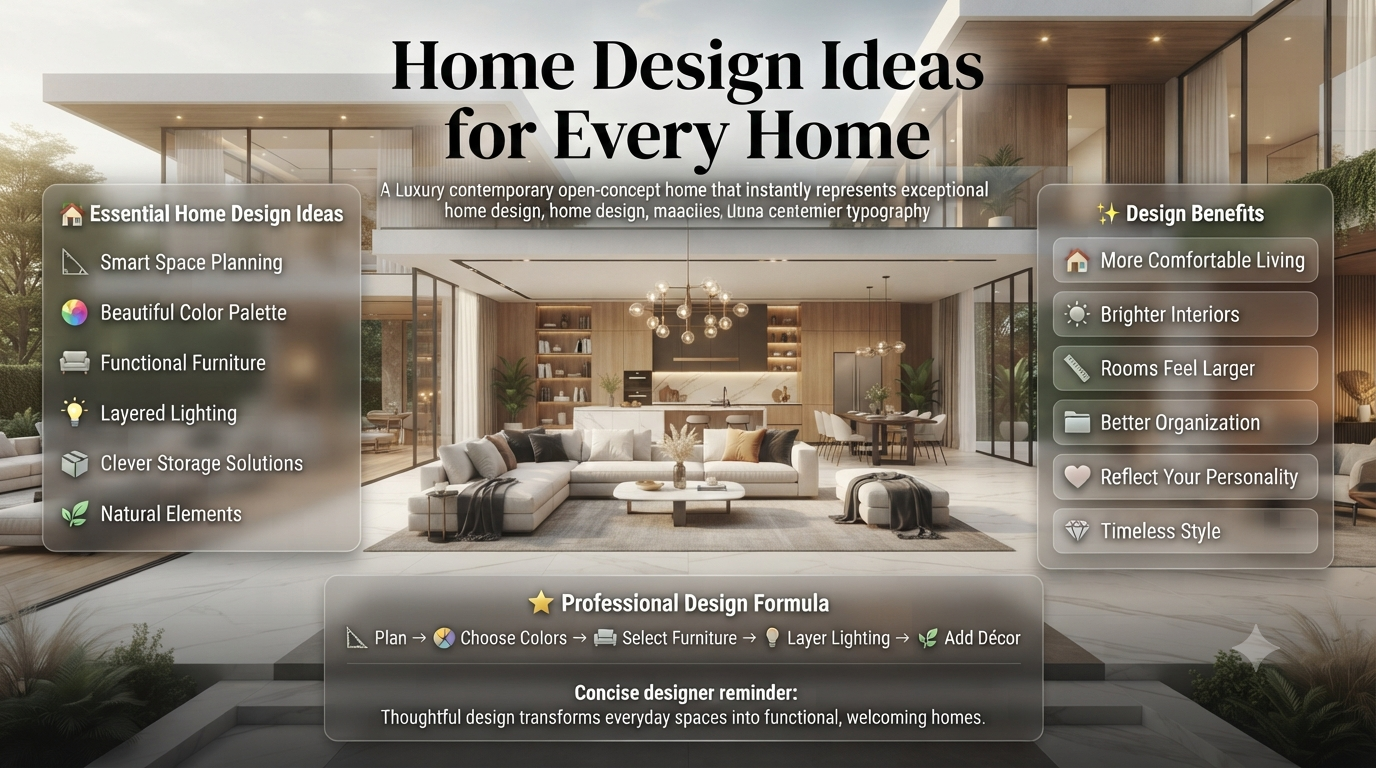
Home Design Ideas for every home | Your home should make everyday life easier, more comfortable, and more enjoyable. Yet many people struggle with rooms that feel cramped, outdated, or disconnected from their lifestyle. The good news is that creating a beautiful home doesn’t always require a complete renovation or a large budget. With the right Home Design Ideas, you can transform any space into one that feels functional, welcoming, and uniquely yours.
Whether you’re decorating your first apartment, updating an older house, or planning your dream home, smart design choices can make every room look larger, brighter, and more organized. From selecting the right colors and furniture to improving lighting and maximizing storage, every decision contributes to how your home looks and feels. You’ll also find helpful resources throughout this guide from Interior Design Mode 24 to explore related topics in more detail.
Why Home Design Matters More Than Ever
Today’s homes do much more than provide shelter. They serve as workplaces, entertainment areas, study zones, and spaces where families spend quality time together.
That’s why thoughtful home design has become essential rather than optional.
A well-designed home helps you:
- Improve daily comfort
- Reduce clutter and stress
- Maximize natural light
- Increase storage space
- Make small rooms feel larger
- Improve functionality
- Reflect your personality
- Increase your property’s value
Instead of decorating randomly, successful home design focuses on creating spaces that support the way you actually live.
💡 Pro Tip: Before buying new furniture or décor, identify what’s not working in your current space. Solving problems first almost always leads to better design decisions.
The Five Goals of Great Home Design
Professional designers don’t begin with furniture—they begin with purpose.
Every successful home usually achieves these five goals.
| Goal | Why It Matters |
|---|---|
| Functionality | Makes daily life easier |
| Comfort | Creates relaxing spaces |
| Beauty | Enhances visual appeal |
| Organization | Keeps clutter under control |
| Flexibility | Adapts to changing lifestyles |
When these elements work together, a home feels natural, balanced, and enjoyable to live in.
Core Principles Behind Beautiful Home Design
Regardless of style, professional designers rely on a few timeless principles. Understanding them will help you make smarter decorating decisions.
1. Balance
Balance creates visual stability.
There are three common approaches:
Symmetrical Balance
Furniture is arranged equally on both sides.
Example:
Chair      Sofa      Chair
 Lamp                 Lamp
This creates a formal and elegant appearance.
Asymmetrical Balance
Different furniture pieces create equal visual weight without looking identical.
Example:
A sectional sofa may be balanced by two accent chairs and a tall indoor plant.
This feels relaxed and modern.
Radial Balance
Furniture surrounds one central feature.
Examples include:
- Fireplace
- Round dining table
- Large chandelier
- Circular rug
This layout naturally encourages conversation.
2. Scale and Proportion
One of the biggest decorating mistakes is choosing furniture that doesn’t fit the room.
Examples include:
- Oversized sofas in small living rooms
- Tiny rugs under large furniture
- Massive artwork in narrow hallways
Always measure your room before shopping.
Proper proportion creates harmony between furniture, décor, and available space.
⚠ Common Mistake
Many homeowners buy furniture because it looks beautiful in a showroom without measuring their own room. This often leads to cramped layouts and expensive returns.
3. Rhythm
Rhythm helps guide your eyes naturally around a room.
Designers achieve rhythm by repeating:
- Colors
- Textures
- Materials
- Shapes
- Patterns
For example, repeating natural wood finishes across shelves, tables, and flooring creates visual consistency.
4. Emphasis
Every room needs one clear focal point.
Popular focal points include:
- Fireplace
- Statement lighting
- Feature wall
- Picture window
- Large artwork
- Luxury sofa
Without a focal point, rooms often feel cluttered and confusing.
If you’re planning to create a stunning feature wall, explore these inspiring Accent Walls ideas for colors, textures, and modern styling techniques.
5. Harmony
Harmony ensures every design element works together.
This includes:
- Coordinated furniture
- Complementary colors
- Matching materials
- Consistent finishes
- Balanced lighting
Harmony doesn’t mean everything has to match perfectly—it simply means everything feels connected.
⭐ Expert Tip
Choose an overall design style before purchasing furniture. This simple step prevents expensive impulse purchases that don’t work together.
Popular Home Design Styles
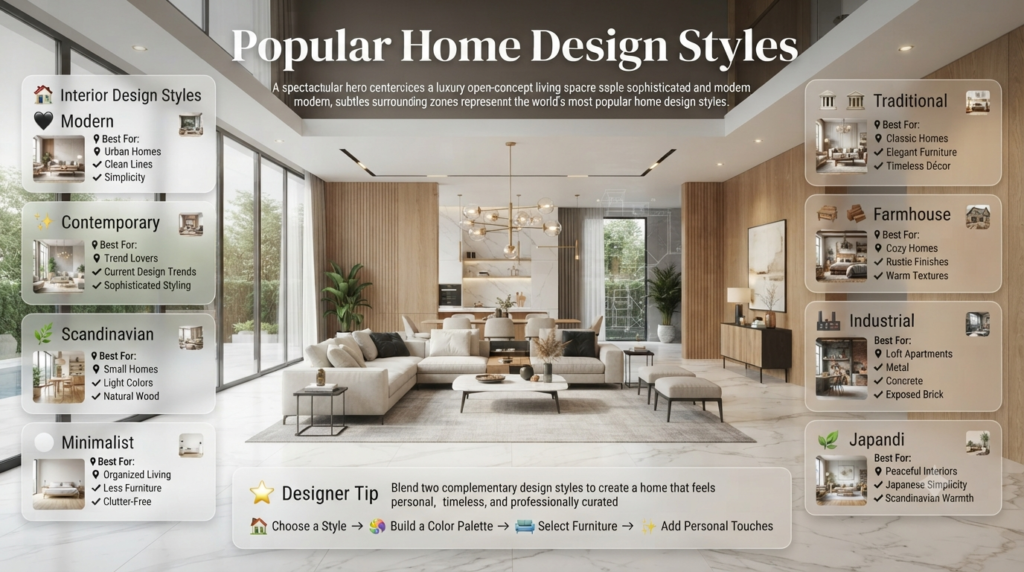
Choosing a design style makes decorating much easier because every future decision follows a clear direction.
| Style | Best For | Main Features |
|---|---|---|
| Modern | Urban homes | Clean lines, simplicity |
| Contemporary | Trend lovers | Current design trends |
| Scandinavian | Small homes | Light colors, natural wood |
| Minimalist | Organized living | Less furniture, clutter-free |
| Traditional | Classic homes | Elegant furniture, timeless décor |
| Farmhouse | Cozy homes | Rustic finishes, warm textures |
| Industrial | Loft apartments | Metal, concrete, exposed brick |
| Japandi | Peaceful interiors | Japanese simplicity + Scandinavian warmth |
Many homeowners successfully combine two complementary styles instead of following just one.
How to Plan Your Home Design
Professional-looking interiors always begin with careful planning.
Follow these simple steps before buying anything.
Step 1: Understand Your Lifestyle
Ask yourself:
- Do you work from home?
- Do you entertain guests often?
- Do you have children?
- Do you own pets?
- Do you prefer cozy or open spaces?
Your answers should shape every design decision.
Step 2: Measure Every Room
Never rely on estimates.
Measure:
- Room dimensions
- Ceiling height
- Window sizes
- Door openings
- Walkways
- Power outlets
This prevents costly furniture mistakes.
Step 3: Set a Realistic Budget
Divide your spending into priorities.
| Category | Priority |
|---|---|
| Furniture | High |
| Lighting | High |
| Flooring | Medium |
| Paint | Medium |
| Accessories | Medium |
| Decorative items | Lower |
Invest in quality furniture first because it has the biggest impact on both appearance and durability.
Step 4: Collect Inspiration
Create a folder of rooms you genuinely love.
Notice recurring themes like:
- Neutral colors
- Wooden furniture
- Open layouts
- Indoor plants
- Natural light
- Minimal décor
This helps define your personal style.
Step 5: Create a Design Plan
Before shopping, decide on:
- Furniture layout
- Color palette
- Lighting plan
- Storage solutions
- Decorative accessories
A clear plan reduces unnecessary spending and ensures every purchase has a purpose.
📌 Quick Tip: A digital mood board can help you visualize how furniture, colors, and textures work together before you spend any money.
Choosing the Perfect Color Palette
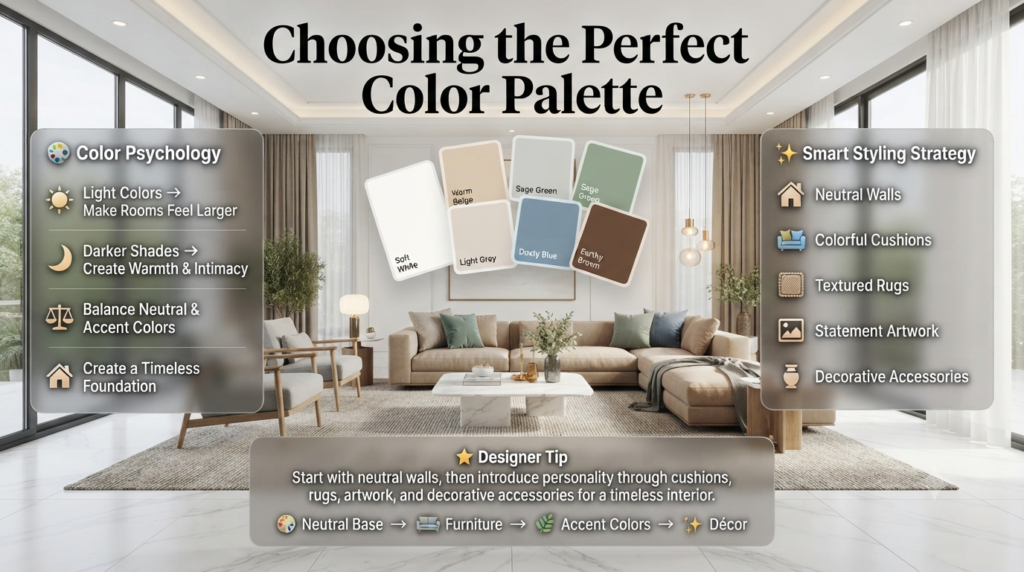
Color has one of the biggest influences on how a room feels.
Light colors make rooms appear larger, while darker shades create warmth and intimacy.
A timeless strategy is to start with neutral walls and introduce color through cushions, rugs, artwork, and decorative accessories.
Popular color choices include:
- Soft White
- Warm Beige
- Light Gray
- Sage Green
- Dusty Blue
- Earthy Brown
If you’re choosing colors for your home, these guides will help:
These resources provide inspiration, color combinations, and expert advice for creating balanced interiors.
Home Design Trends That Never Go Out of Style
Some design ideas remain popular because they improve both aesthetics and functionality.
Long-lasting trends include:
- Open-concept layouts
- Natural materials like wood and stone
- Layered lighting
- Smart storage solutions
- Indoor plants
- Multi-functional furniture
- Sustainable materials
- Large windows
- Textured fabrics
- Smart home technology
Unlike short-term trends, these ideas continue adding value for years.
Comparison Table: Which Home Design Style Fits You?
| Feature | Modern | Scandinavian | Traditional | Minimalist | Farmhouse |
|---|---|---|---|---|---|
| Color Palette | Neutral | Bright & Airy | Warm | Soft Neutral | Earthy |
| Furniture | Sleek | Functional | Detailed | Simple | Rustic |
| Décor | Minimal | Cozy | Decorative | Limited | Vintage |
| Best For | City Homes | Small Spaces | Family Homes | Clutter-Free Living | Cozy Homes |
| Maintenance | Easy | Easy | Medium | Very Easy | Medium |
Room-by-Room Home Design Ideas
Every room in your home serves a different purpose, so each space deserves its own design strategy. Instead of using the same decorating approach throughout the house, focus on creating rooms that support how you live while maintaining a consistent overall style.
Living Room Home Design Ideas
A well-designed living room combines comfort, functionality, and style. Choose furniture that fits the room, maximize natural light, layer different lighting sources, and add texture through rugs, cushions, and décor. A balanced layout creates a welcoming space for both everyday living and entertaining guests.
The living room is often the heart of the home. It’s where families gather, guests are welcomed, and many everyday moments happen. A thoughtfully designed living room should feel inviting without being overcrowded.
Best Living Room Design Ideas
- Choose a focal point such as a fireplace or statement wall.
- Arrange seating to encourage conversation.
- Use layered lighting instead of relying on one ceiling light.
- Mix textures like wood, linen, leather, and woven fabrics.
- Add greenery with indoor plants.
- Keep walkways open for easy movement.
- Select furniture that matches the room’s size.
If you’re planning to refresh your living room colors, explore these inspiring Living Room Paint Ideas for modern color combinations and styling inspiration.
💡 Pro Tip
Leave at least 30–36 inches of walking space between large furniture pieces. A room that flows well always feels larger and more comfortable.
Bedroom Home Design Ideas
Your bedroom should be your most relaxing space. Instead of filling it with unnecessary furniture, focus on creating a calm environment that encourages better sleep and relaxation.
Essential Bedroom Design Tips
- Use soft, calming colors.
- Invest in quality bedding.
- Keep bedside tables clutter-free.
- Add blackout curtains for better sleep.
- Use warm lighting instead of bright white bulbs.
- Include hidden storage where possible.
A simple color palette often creates a more luxurious appearance than using too many bold colors.
For color inspiration, browse Bedroom Color Inspiration to discover relaxing palettes that work in both modern and classic bedrooms.
Kitchen Home Design Ideas
An efficient kitchen design focuses on workflow, storage, lighting, and durable materials. Keep frequently used items within easy reach, maximize cabinet space, and use task lighting to improve both safety and functionality.
The kitchen is one of the hardest-working rooms in any home. Good design improves cooking efficiency while making the space more enjoyable.
Smart Kitchen Design Ideas
- Install under-cabinet lighting.
- Choose easy-to-clean countertops.
- Add pull-out storage drawers.
- Use vertical storage for small kitchens.
- Include open shelving carefully.
- Maximize natural lighting.
Kitchen Layout Comparison
| Layout | Best For |
|---|---|
| L-Shaped | Small to medium homes |
| U-Shaped | Large kitchens |
| Galley | Narrow spaces |
| Island Layout | Open floor plans |
| Peninsula | Medium-sized kitchens |
If you’re selecting cabinet or wall colors, don’t miss these expert Kitchen Paint Colors ideas.
⚠ Common Mistake
Prioritizing appearance over functionality often results in beautiful kitchens that are frustrating to use. Always plan your workflow before choosing finishes.
Bathroom Home Design Ideas
Bathrooms don’t need to be large to feel luxurious. The right combination of lighting, storage, and finishes can completely transform a small space.
Bathroom Design Essentials
- Install large mirrors.
- Use floating vanities.
- Add recessed shelving.
- Choose water-resistant materials.
- Include layered lighting.
- Keep countertops clear.
Large-format tiles can also make compact bathrooms appear more spacious by reducing visible grout lines.
Dining Room Home Design Ideas
A dining room should feel comfortable enough for everyday meals while still being suitable for special occasions.
Design Tips
- Center lighting above the dining table.
- Leave enough space around chairs.
- Use washable fabrics if you have children.
- Add artwork that complements the room.
- Include a sideboard for extra storage.
Round tables work particularly well in smaller dining areas because they improve movement around the room.
Entryway Design Ideas
Your entryway creates the first impression of your home.
Even a small entrance can become practical with thoughtful planning.
Include:
- Shoe storage
- Wall hooks
- Console table
- Decorative mirror
- Small bench
- Indoor plants
A mirror also reflects natural light, making narrow entrances feel larger.
⭐ Expert Tip
Design your entryway around everyday habits. If shoes, keys, and bags always end up on the floor, create dedicated storage for each item.
Home Office Design Ideas
Working from home has become increasingly common, making a functional workspace more important than ever.
Home Office Essentials
- Comfortable ergonomic chair
- Adjustable desk
- Natural lighting
- Cable management
- Closed storage
- Noise reduction
Keep your workspace separate from relaxation areas whenever possible to improve productivity.
Small Home Design Ideas
Small homes feel larger when furniture serves multiple purposes, vertical storage is maximized, natural light is increased, and unnecessary clutter is removed. Smart layouts matter more than square footage.
Limited space doesn’t mean limited style.
Professional designers often rely on clever solutions instead of expensive renovations.
Best Ideas for Small Homes
- Choose multifunctional furniture.
- Install floating shelves.
- Use mirrors to reflect light.
- Keep floors visible.
- Select light-colored walls.
- Use built-in storage.
- Hang curtains close to the ceiling.
These simple techniques create the illusion of more space.
Modern Home Design Ideas
Modern interiors prioritize simplicity without feeling empty.
Characteristics include:
- Clean architectural lines
- Minimal decoration
- Neutral colors
- Natural lighting
- Open layouts
- Quality materials
- Hidden storage
Rather than adding more décor, modern homes emphasize fewer, better-quality pieces.
Budget-Friendly Home Design Ideas
Improving your home doesn’t always require major spending.
Many affordable updates create impressive results.
Low-Cost Improvements
- Repaint walls.
- Replace cabinet hardware.
- Add indoor plants.
- Update lighting fixtures.
- Rearrange furniture.
- Replace old curtains.
- Add decorative cushions.
- Install floating shelves.
Small improvements made consistently often have a greater impact than one expensive renovation.
📌 Quick Tip
Spend more on timeless furniture and less on trendy accessories. Decorative items are much easier—and cheaper—to replace as styles change.
Choosing the Right Lighting for Every Room
Lighting is one of the most overlooked parts of home design.
Professionals typically combine three types of lighting.
| Lighting Type | Purpose |
|---|---|
| Ambient | General room lighting |
| Task | Reading, cooking, working |
| Accent | Highlight artwork and décor |
Using all three creates depth and improves both comfort and functionality.
Natural daylight should always be maximized whenever possible.
Ceiling Design Can Transform a Room
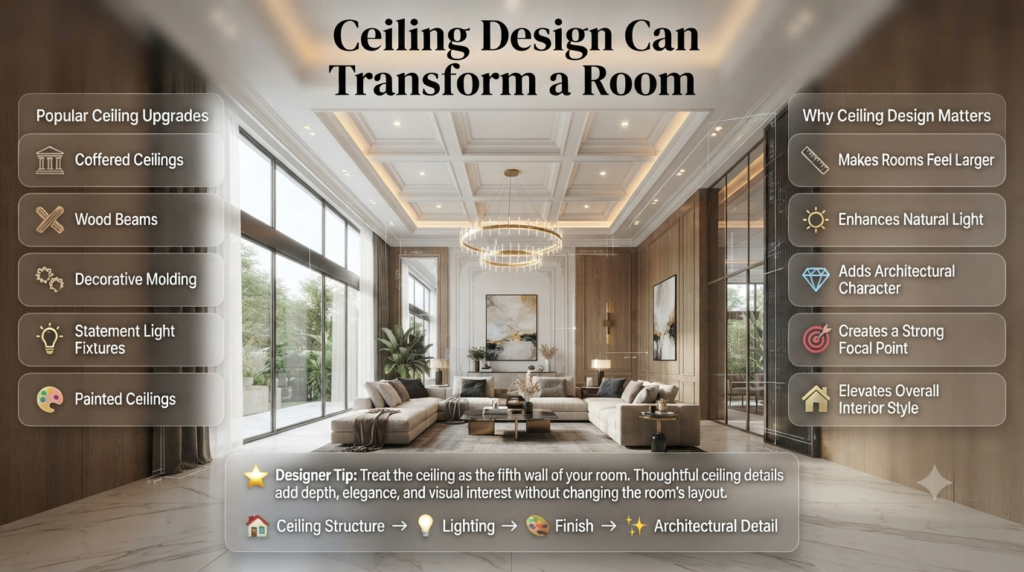
Many homeowners focus only on walls and furniture while forgetting the ceiling.
Simple ceiling upgrades include:
- Coffered ceilings
- Wood beams
- Decorative molding
- Statement light fixtures
- Painted ceilings
For inspiration, explore these creative Ceiling Colors ideas that can dramatically change the mood of any room.
Choosing the Right Paint Finish
The color you choose is important, but the finish is equally critical.
| Finish | Best Use |
|---|---|
| Flat | Bedrooms & ceilings |
| Eggshell | Living rooms |
| Satin | Hallways |
| Semi-Gloss | Kitchens & bathrooms |
| High Gloss | Doors & trim |
To understand which finish works best in different rooms, read this complete guide on Paint Finishes.
Common Home Design Mistakes to Avoid
Even expensive homes can feel uncomfortable when common design mistakes are overlooked.
Mistake 1: Buying Furniture Before Planning
Without a layout, furniture often ends up too large or too small.
Solution: Measure first and create a floor plan.
Mistake 2: Ignoring Lighting
One ceiling light rarely provides enough illumination.
Solution: Layer ambient, task, and accent lighting.
Mistake 3: Following Every Trend
Trends change quickly.
Solution: Invest in timeless furniture and update accessories instead.
Mistake 4: Using Too Many Colors
Too many competing colors create visual clutter.
Solution: Limit your palette to three or four complementary colors.
Mistake 5: Forgetting Storage
Beautiful rooms become cluttered without enough storage.
Solution: Include built-in cabinets, baskets, and multifunctional furniture wherever possible.
Step-by-Step Guide to Designing Your Home Like a Professional
Creating a beautiful home doesn’t happen overnight. Professional designers follow a clear process that helps them avoid costly mistakes and achieve a balanced result.
Follow these steps to design your home with confidence.
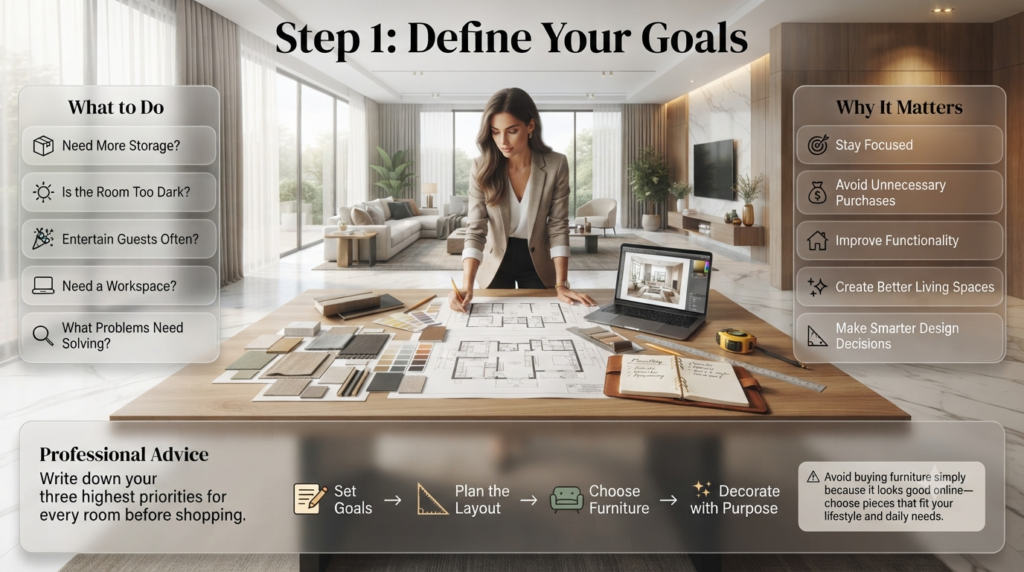
Step 1: Define Your Goals
What to Do
Decide how you want each room to function before choosing furniture or décor.
Ask yourself:
- Do I need more storage?
- Is the room too dark?
- Do I entertain guests often?
- Do I need a workspace?
- What problems am I trying to solve?
Why It Matters
A clear goal keeps every design decision focused and prevents unnecessary purchases.
Professional Advice
Write down three priorities for every room before shopping.
Common Mistake
Buying furniture because it looks good online without considering your lifestyle.
Quick Example
A family with young children may prioritize durable fabrics, while a couple may focus on aesthetics and entertaining space.
Step 2: Create a Mood Board
What to Do
Collect inspiration from magazines, Pinterest, and your favorite interiors.
Include:
- Furniture
- Colors
- Lighting
- Flooring
- Artwork
- Fabrics
Why It Matters
A mood board helps you visualize how different elements work together.
Professional Advice
Remove any image that doesn’t fit your overall style. Consistency creates a polished look.
Step 3: Plan the Layout
What to Do
Arrange furniture to create clear walking paths and functional zones.
Why It Matters
Even beautiful furniture can make a room feel uncomfortable if the layout isn’t practical.
Professional Advice
Start with the largest furniture pieces, then add smaller items around them.
Step 4: Add Layers
Once the main furniture is in place, add personality with:
- Rugs
- Curtains
- Artwork
- Plants
- Cushions
- Decorative lighting
These finishing touches make a home feel complete.
Expert Recommendations for Better Home Design
Experienced designers focus on timeless decisions instead of chasing every trend.
Here are some practical recommendations:
⭐ Buy the best-quality sofa your budget allows because it gets the most daily use.
⭐ Use neutral colors for large furniture and introduce trends through accessories.
⭐ Combine different textures instead of using too many colors.
⭐ Let natural light become part of your design whenever possible.
⭐ Mix old and new pieces to give your home character instead of making it look like a showroom.
⭐ Leave some empty space. Every wall and shelf doesn’t need decoration.
⭐ Design for your lifestyle—not for social media.
💡 Pro Tip
When decorating, step back every few additions. Looking at the room from a distance helps you notice imbalance, clutter, or empty areas before they’re difficult to fix.
What are the best home design ideas to make a house look modern without a complete renovation?
You don’t need a full remodel to give your home a modern appearance. The biggest transformation often comes from updating the basics rather than replacing everything. Start by choosing a neutral color palette, improving lighting, decluttering each room, and replacing outdated fixtures such as cabinet handles, faucets, and light fittings. Modern interiors also emphasize clean lines, natural materials, and functional furniture. Even small upgrades like adding large mirrors, layered lighting, indoor plants, and minimalist décor can make your home feel fresh and contemporary while staying within budget.
Key Points:
Focus on clean, clutter-free spaces.
Upgrade lighting before buying new furniture.
Choose timeless colors instead of trendy shades.
Mix wood, metal, and natural textures for depth.
Invest in a few quality statement pieces rather than many inexpensive accessories.
How can I design a beautiful home on a limited budget?
A beautiful home is created through thoughtful planning, not expensive purchases. Begin by identifying the rooms that need the most attention and prioritize improvements that have the greatest visual impact. Painting walls, rearranging furniture, replacing outdated lighting, adding rugs, updating curtains, and incorporating indoor plants are all affordable ways to refresh a space. Instead of replacing every piece of furniture, consider refinishing or repainting existing items to give them a completely new look.
Key Points:
Create a budget before shopping.
Paint is one of the most affordable design upgrades.
Reuse and refresh existing furniture whenever possible.
Shop gradually instead of decorating everything at once.
Spend more on long-term furniture and less on trendy décor.
Which home design trends will stay popular for years?
While trends constantly change, some design ideas remain timeless because they improve both comfort and functionality. Neutral color palettes, open layouts, smart storage solutions, layered lighting, sustainable materials, and natural textures continue to be popular because they suit almost every home style. Rather than following every new trend, focus on creating a flexible foundation that can easily be updated with seasonal accessories or artwork.
Key Points:
Neutral colors never go out of style.
Natural wood and stone create timeless appeal.
Layered lighting improves both function and atmosphere.
Multifunctional furniture works especially well in modern homes.
Sustainable materials continue to gain popularity.
What are the biggest mistakes people make when designing their homes?
Many homeowners rush into decorating without creating a plan. Buying furniture before measuring the room, choosing paint before selecting flooring, overcrowding spaces with décor, and ignoring lighting are among the most common mistakes. Another frequent error is following trends without considering personal lifestyle or long-term practicality. Successful home design always starts with planning, measuring, and understanding how each room will be used every day.
Key Points:
Measure rooms before purchasing furniture.
Avoid overcrowding small spaces.
Don’t rely on a single ceiling light.
Keep a consistent design style throughout the home.
Prioritize functionality before decoration.
How do I choose the right color scheme for my home?
The right color palette depends on your home’s natural lighting, room size, and personal style. Light shades create a brighter and more spacious feeling, while darker colors add warmth and character. A common professional approach is to use neutral colors as the base and introduce accent colors through cushions, artwork, rugs, and decorative accessories. This keeps your home timeless while allowing you to update its look without major expense.
Key Points:
Test paint samples in natural and artificial light.
Use the 60-30-10 color rule for balance.
Keep connected rooms visually coordinated.
Add personality with accessories instead of permanent finishes.
Choose colors that complement your furniture and flooring rather than competing with them.
Creating a well-designed home isn’t about following every trend or investing in expensive furniture—it’s about making thoughtful choices that improve the way you live every day. From selecting the right layout and color palette to maximizing natural light, choosing functional furniture, and adding personal touches, every decision contributes to a home that feels comfortable, stylish, and practical.
The best Home Design Ideas combine beauty with functionality. Instead of decorating room by room without a plan, focus on creating a consistent style throughout your home while adapting each space to your family’s needs and lifestyle. Small improvements, such as better lighting, smart storage solutions, fresh paint, or updated décor, can often make a bigger impact than costly renovations.
As you begin your home design journey, remember that timeless interiors are built on quality, balance, and simplicity—not short-lived trends. Invest in pieces you’ll love for years, make changes gradually, and don’t be afraid to let your personality shine through every room.
For even more inspiration and expert guidance, explore these helpful resources:
- Interior Design Mode 24
- Home Improvement
- Interior Design
- Paint Color
- Living Room Paint Ideas
- Bedroom Color Inspiration
- Kitchen Paint Colors
- Accent Walls
- Neutral Color Schemes
- Warm Color Palettes
- Ceiling Colors
- Paint Finishes
- Exterior Paint Colors: 25 Best Ideas for Every Home
Whether you’re refreshing a single room or planning a complete home makeover, applying the ideas in this guide will help you create a space that’s functional, welcoming, and designed to stand the test of time. Start with one room, make intentional improvements, and enjoy transforming your house into a home that truly reflects your lifestyle and personal taste.

Leave a Reply