
Introduction
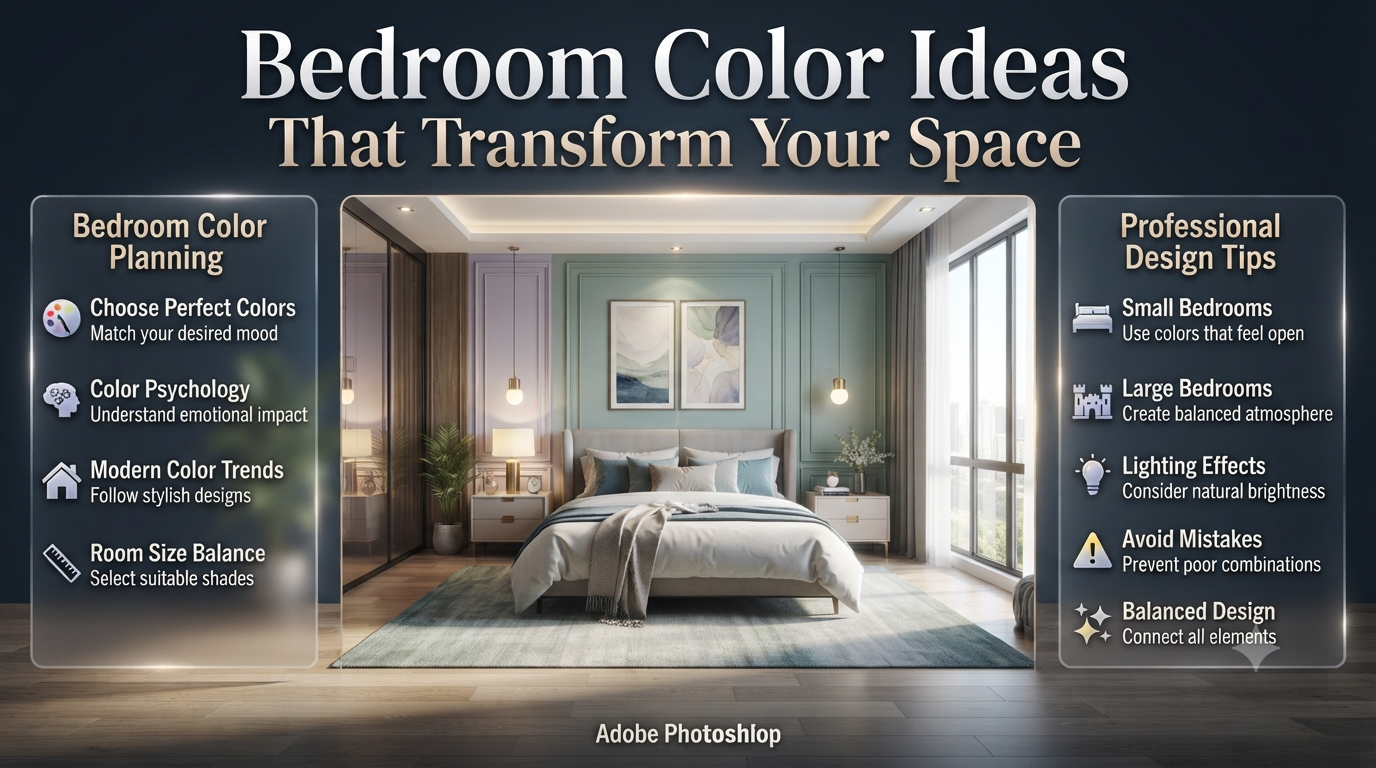
Bedroom Color Ideas That Transform Your Space | Have you ever entered a bedroom and immediately felt calm, comfortable, or refreshed? In many cases, the feeling comes from the colors surrounding you. A bedroom with the wrong color combination can feel small, dull, or uncomfortable, while the right shades can create a peaceful environment where you actually enjoy spending time.
Finding the right Bedroom Color Inspiration is not only about choosing a trendy paint shade. It is about understanding how colors affect mood, lighting, room size, furniture style, and the overall atmosphere you want to create.
Whether you are designing a new bedroom, refreshing an old space, or simply looking for modern paint ideas, the right color palette can completely change how your room looks and feels.
In this guide, you will discover:
- How to choose the perfect bedroom colors
- The psychology behind bedroom paint shades
- Trending bedroom color ideas for modern homes
- Best colors for small and large bedrooms
- Professional tips to avoid common mistakes
- Practical examples for creating a balanced bedroom design
For more interior styling ideas, explore Interior Design Mode 24 for expert home improvement and décor inspiration.
What Is Bedroom Color Inspiration?
Bedroom color inspiration refers to ideas, combinations, and design concepts that help you select paint colors, wall shades, and decorative tones that match your bedroom style, mood, and lifestyle.
A good bedroom color choice considers more than personal preference. It combines:
- Room size
- Natural lighting
- Furniture colors
- Flooring style
- Interior design theme
- Desired emotional effect
A bedroom should feel like a personal retreat. The colors you choose become the foundation of that feeling.
For example:
- Soft blue creates a peaceful and relaxing atmosphere.
- Warm beige adds comfort and elegance.
- Sage green brings a natural, refreshing feeling.
- Deep navy creates a luxurious and dramatic appearance.
The best bedroom colors are those that make the space feel comfortable while matching your personality.
Why Bedroom Colors Matter More Than You Think
Many homeowners focus heavily on furniture, beds, and decorations but underestimate the impact of wall colors. However, walls cover the largest visual area in most bedrooms, making them one of the strongest design elements.
The right color can:
Create a Relaxing Environment
Bedrooms are mainly used for rest and recovery. Calm colors help create a peaceful environment that feels comfortable after a busy day.
Soft shades such as:
- Light blue
- Warm white
- Pale green
- Soft gray
are commonly used because they create a soothing atmosphere.
Make a Room Feel Larger
Small bedrooms often benefit from lighter shades because they reflect more light and create an open feeling.
Colors like:
- Cream
- White
- Light beige
- Pastel tones
can visually expand the space.
Improve Interior Balance
Your bedroom color should work together with:
- Bed design
- Curtains
- Flooring
- Lighting
- Accessories
A beautiful bedroom is not created by one color alone. It is created through harmony between different elements.
💡 Pro Tip: Before painting the entire bedroom, test your chosen color on a small wall section. Paint can look completely different depending on natural light and artificial lighting.
How to Choose the Right Bedroom Color?
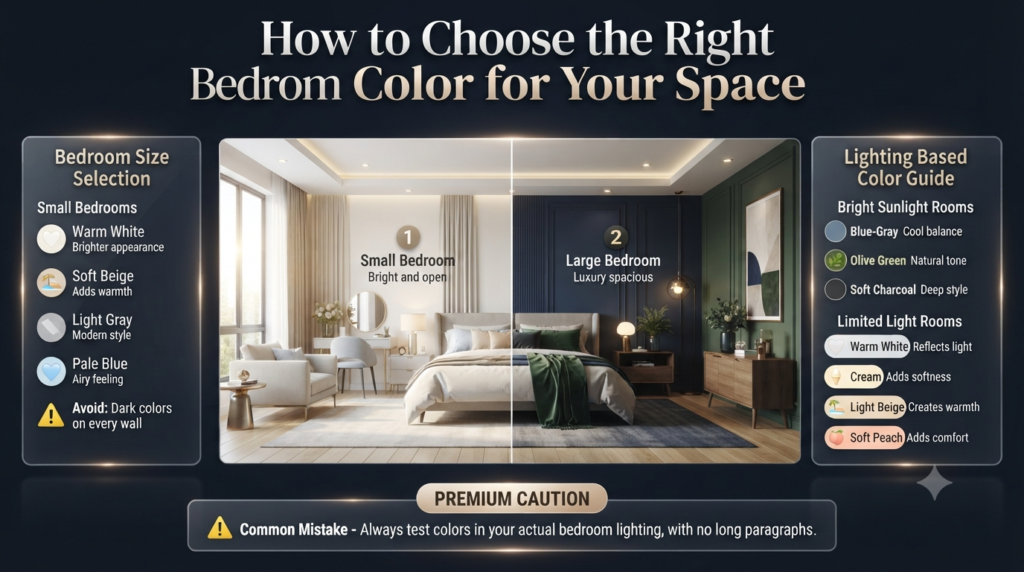
Choosing a bedroom color becomes easier when you follow a simple decision process. Instead of selecting a shade randomly from a paint chart, consider your room’s practical conditions first.
Step 1: Understand Your Bedroom Size
Room size plays an important role in color selection.
Small Bedrooms
Small spaces usually look better with:
- Light neutrals
- Soft pastels
- Reflective shades
Recommended colors:
| Color | Effect |
|---|---|
| Warm White | Makes the room brighter |
| Soft Beige | Adds warmth without making space smaller |
| Light Gray | Creates a modern appearance |
| Pale Blue | Gives an airy feeling |
Avoid using very dark colors on every wall because they can make the room feel enclosed.
Large Bedrooms
Large bedrooms provide more flexibility. You can experiment with:
- Dark accent walls
- Rich colors
- Dramatic combinations
Examples:
- Navy blue with gold accents
- Forest green with wooden furniture
- Charcoal gray with warm lighting
Large spaces can handle stronger colors without feeling overwhelming.
Step 2: Consider Natural Lighting
Lighting can completely change how bedroom paint appears.
A color that looks beautiful in a showroom may look different inside your bedroom.
Bedrooms With Plenty of Sunlight
Bright rooms work well with:
- Cool tones
- Deep shades
- Neutral colors
Examples:
- Blue-gray
- Olive green
- Soft charcoal
Bedrooms With Limited Natural Light
Dark rooms usually need colors that reflect available light.
Better choices include:
- Warm white
- Cream
- Light beige
- Soft peach
⚠ Common Mistake: Choosing a paint color without checking it under your bedroom’s actual lighting conditions.
Understanding Bedroom Color Psychology
Colors influence emotions and how we experience a space. While personal preference always matters, different shades often create different feelings.
Blue Bedroom Colors
Blue is one of the most popular bedroom colors because it is associated with calmness and relaxation.
Benefits:
- Creates a peaceful atmosphere
- Works well with modern designs
- Helps create a cool feeling
Best combinations:
- Blue + white
- Blue + beige
- Blue + natural wood
Example:
A soft navy accent wall behind the bed can create a luxurious hotel-style appearance.
Green Bedroom Colors
Green brings a natural and refreshing feeling into the bedroom.
Popular shades:
- Sage green
- Olive green
- Soft mint
Why homeowners love green:
- Feels connected to nature
- Creates balance
- Works well with wooden furniture
Green is especially suitable for bedrooms with plants or natural materials.
For more ideas about calming color combinations, explore Neutral Color Schemes.
Beige and Warm Neutral Bedroom Colors
Warm neutrals remain popular because they create timeless interiors.
Examples:
- Beige
- Sand
- Taupe
- Cream
Advantages:
- Easy to decorate around
- Matches many furniture styles
- Creates a comfortable atmosphere
Warm neutrals work especially well in:
- Minimalist bedrooms
- Modern farmhouse designs
- Luxury interiors
White Bedroom Colors
White creates a clean and fresh appearance.
However, using pure white alone can sometimes feel cold.
Better alternatives:
- Warm white
- Ivory
- Cream white
Professional designers often combine white walls with:
- Wooden furniture
- Textured fabrics
- Warm lighting
This creates a softer and more welcoming bedroom.
Trending Bedroom Color Ideas for Modern Homes
Bedroom trends continue changing, but some color styles remain popular because they combine beauty with practicality.
1. Soft Neutral Bedroom Palette
Neutral bedrooms are popular because they create a calm and sophisticated look.
Common combinations:
- Beige walls
- Cream bedding
- Wooden furniture
- Soft lighting
This style works well for homeowners who want a timeless design.
2. Earth-Inspired Bedroom Colors
Nature-inspired colors are becoming increasingly popular.
Examples:
- Sage green
- Terracotta
- Clay tones
- Warm browns
These shades create a grounded and relaxing atmosphere.
3. Luxury Dark Bedroom Colors
Dark colors can create an elegant and premium bedroom design when used correctly.
Popular choices:
- Deep navy
- Charcoal
- Emerald green
Best practice:
Use dark colors with:
- Proper lighting
- Light-colored furniture
- Metallic accents
4. Pastel Bedroom Colors
Pastel shades are perfect for creating a soft and peaceful environment.
Popular pastel options:
- Powder blue
- Blush pink
- Lavender
- Soft peach
They work especially well in:
- Small bedrooms
- Children’s bedrooms
- Feminine interior styles
Trending Bedroom Color Inspiration Ideas for 2026
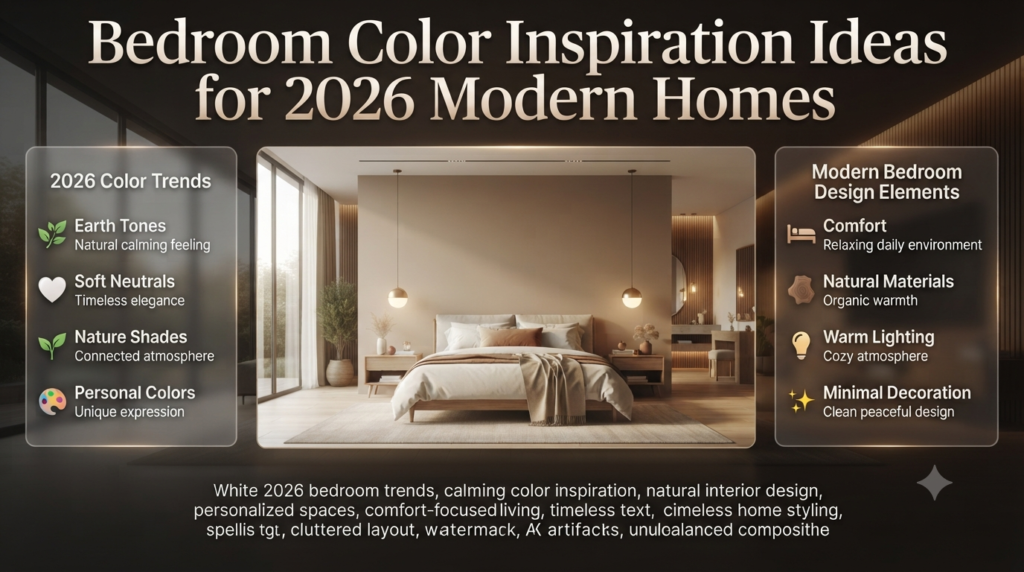
The best bedroom colors for 2026 focus on comfort, natural beauty, and timeless design. Modern homeowners are moving toward calming earth tones, soft neutrals, nature-inspired shades, and personalized color combinations that create a relaxing retreat.
Bedroom design trends are becoming less about following temporary fashion and more about creating spaces that feel peaceful, functional, and connected to personal style.
Today’s most popular bedroom palettes combine:
- Comfort
- Natural materials
- Warm lighting
- Minimal decoration
- Personal expression
The goal is not simply to make a bedroom look beautiful in photos. The goal is to create a room where you genuinely feel relaxed every day.
1. Warm Neutral Bedroom Colors
Warm neutral shades continue to dominate modern bedroom designs because they create a sophisticated yet comfortable atmosphere.
Popular choices include:
- Soft beige
- Warm white
- Cream
- Taupe
- Sand colors
- Light greige
Unlike plain white, warm neutrals add personality while maintaining a clean appearance.
Why Warm Neutrals Work So Well
Warm neutral colors:
- Make bedrooms feel cozy
- Match different furniture styles
- Create a timeless appearance
- Work well with natural materials
They are especially effective when combined with:
- Wooden flooring
- Linen bedding
- Woven textures
- Soft lighting
Example Design:
Wall Color: Warm beige
Furniture: Natural wood bed frame
Bedding: White linen sheets
Accessories: Gold lamps and plants
Result: A calm luxury bedroom similar to a boutique hotel.
💡 Pro Tip: If your bedroom receives limited sunlight, choose warmer beige tones instead of cool gray because they prevent the room from feeling cold.
For more timeless decorating ideas, explore Warm Color Palettes.
2. Sage Green Bedroom Inspiration
Sage green has become one of the most requested bedroom colors because it combines modern style with a natural feeling.
This soft green shade creates a balanced environment without becoming too bold.
Benefits of Sage Green:
- Creates a peaceful atmosphere
- Connects indoor spaces with nature
- Works with modern and traditional designs
- Complements wooden furniture
Best combinations:
| Sage Green | Matching Colors |
|---|---|
| Soft Sage | Cream and White |
| Dark Sage | Gold and Wood |
| Muted Sage | Beige and Gray |
Best For:
- Relaxing bedrooms
- Minimalist interiors
- Nature-inspired designs
- Modern farmhouse styles
⚠ Common Mistake: Using very bright green instead of muted sage. Bright greens can make a bedroom feel energetic rather than relaxing.
3. Blue Bedroom Color Ideas for Better Relaxation
Blue remains one of the most trusted bedroom colors because it naturally creates a calm and peaceful feeling.
Different blue shades create different effects.
Light Blue
Creates:
- Freshness
- Airiness
- A larger visual appearance
Best for:
- Small bedrooms
- Rooms with limited space
Navy Blue
Creates:
- Luxury
- Depth
- A dramatic appearance
Best used as:
- Accent wall
- Headboard wall
- Decorative feature
Example:
A navy blue wall behind the bed with white bedding creates a premium hotel-inspired bedroom.
Blue-Gray
A modern alternative that works beautifully in contemporary homes.
It provides:
- Calmness of blue
- Sophistication of gray
Perfect for:
- Modern apartments
- Minimalist bedrooms
4. Earth Tone Bedroom Color Inspiration
Earth tones are becoming increasingly popular because they create a connection with natural environments.
Popular earth-inspired colors:
- Terracotta
- Clay
- Olive
- Brown
- Warm beige
These colors create a grounded and comfortable feeling.
Why Earth Tones Are Trending
Modern lifestyles often involve technology and busy schedules. Earth tones help create a relaxing environment by bringing natural warmth indoors.
They work beautifully with:
- Wooden furniture
- Natural fabrics
- Indoor plants
- Handmade décor
Example:
A terracotta accent wall combined with cream bedding and wooden furniture creates a warm Mediterranean-inspired bedroom.
Bedroom Color Ideas Based on Interior Style
The best bedroom color depends heavily on your preferred design style.
A color that works beautifully in a modern bedroom may not suit a traditional or minimalist space.
Modern Bedroom Color Ideas
Modern bedrooms usually focus on simplicity and clean visual balance.
Recommended colors:
- Soft gray
- White
- Beige
- Charcoal
- Blue-gray
Design approach:
Use fewer colors but create interest through:
- Texture
- Lighting
- Furniture shapes
Example:
Gray walls + white bedding + black lighting fixtures = modern minimalist bedroom.
Luxury Bedroom Color Ideas
Luxury bedrooms often use deeper and richer shades.
Popular choices:
- Emerald green
- Navy blue
- Charcoal
- Deep brown
Luxury does not always mean expensive materials. The right color combination can make a room feel premium.
Luxury color combinations:
| Wall Color | Accent Color |
|---|---|
| Navy Blue | Gold |
| Emerald Green | Brass |
| Charcoal | Cream |
| Beige | Bronze |
⭐ Expert Tip: Luxury bedrooms usually avoid too many competing colors. Professional designers often use one main color, one supporting shade, and one accent color.
Minimalist Bedroom Color Ideas
Minimalist design focuses on simplicity and calmness.
Best colors:
- White
- Soft beige
- Light gray
- Pale taupe
The goal is to create:
- Less visual clutter
- More open space
- Better relaxation
Minimalist does not mean boring. Texture plays an important role.
Example:
A white bedroom with:
- Wooden furniture
- Textured bedding
- Natural curtains
can feel warm and inviting.
Small Bedroom Color Inspiration Ideas
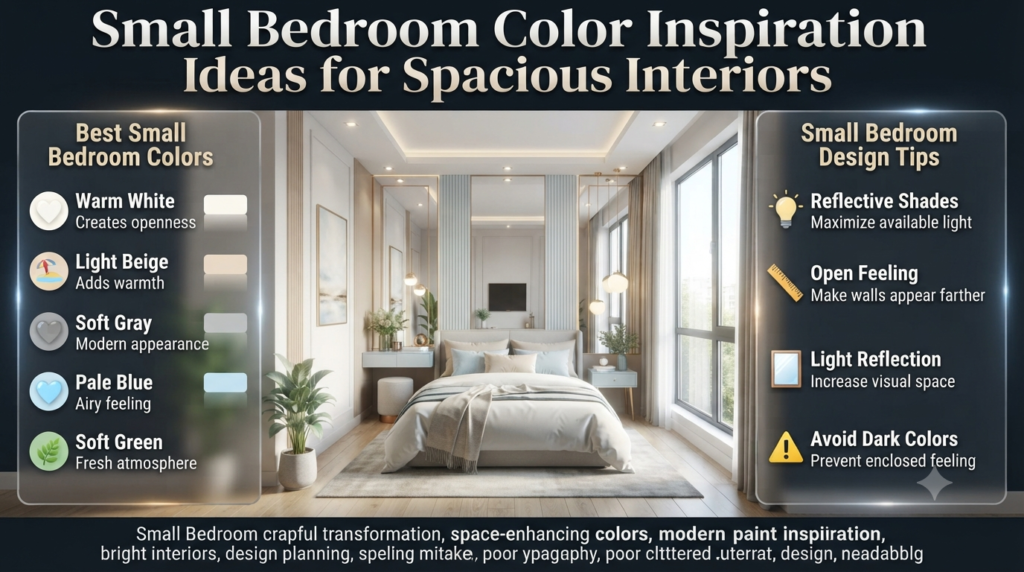
The best colors for small bedrooms are light, reflective shades that make the room feel larger, brighter, and more open. Soft whites, beige, pastel blue, and light gray are excellent choices because they maximize available light.
Small bedrooms require careful planning because dark or overly strong colors can make walls feel closer.
Best Colors for Small Bedrooms
| Color | Why It Works |
|---|---|
| Warm White | Creates openness |
| Light Beige | Adds warmth |
| Soft Gray | Gives a modern look |
| Pale Blue | Makes the room feel airy |
| Soft Green | Adds freshness |
How to Make a Small Bedroom Look Bigger With Color
Use these professional techniques:
Paint Walls and Ceiling Similar Shades
When walls and ceilings have similar tones, the room feels taller.
Use Light-Colored Furniture
Dark furniture can overpower small spaces.
Add Mirrors
Mirrors reflect light and enhance the effect of lighter colors.
Avoid Too Many Color Changes
Multiple contrasting colors can make a small room feel visually busy.
📌 Quick Tip: In small bedrooms, create interest through textures instead of adding many different colors.
Master Bedroom Color Inspiration Ideas
The master bedroom should feel comfortable, elegant, and personal.
Popular master bedroom palettes include:
Soft Beige + White
Creates:
- Luxury hotel feeling
- Warm atmosphere
- Timeless style
Navy + Neutral Colors
Creates:
- Sophisticated appearance
- Strong focal point
- Modern luxury
Sage Green + Natural Wood
Creates:
- Relaxing environment
- Organic feeling
- Nature-inspired design
Gray + Warm Lighting
Creates:
- Contemporary style
- Elegant appearance
- Calm atmosphere
Bedroom Color Combination Ideas
Choosing a single color is often easier than creating a complete palette. A professional bedroom design usually includes three layers:
Main Color
     ↓
Supporting Color
     ↓
Accent Color
Example:
Warm Beige
     ↓
Cream
     ↓
Gold Accessories
This creates balance without making the room look random.
Bedroom Color Mistakes Beginners Should Avoid
Choosing bedroom colors can be exciting, but several common mistakes can affect the final result.
Mistake 1: Choosing Colors Only From Small Paint Samples
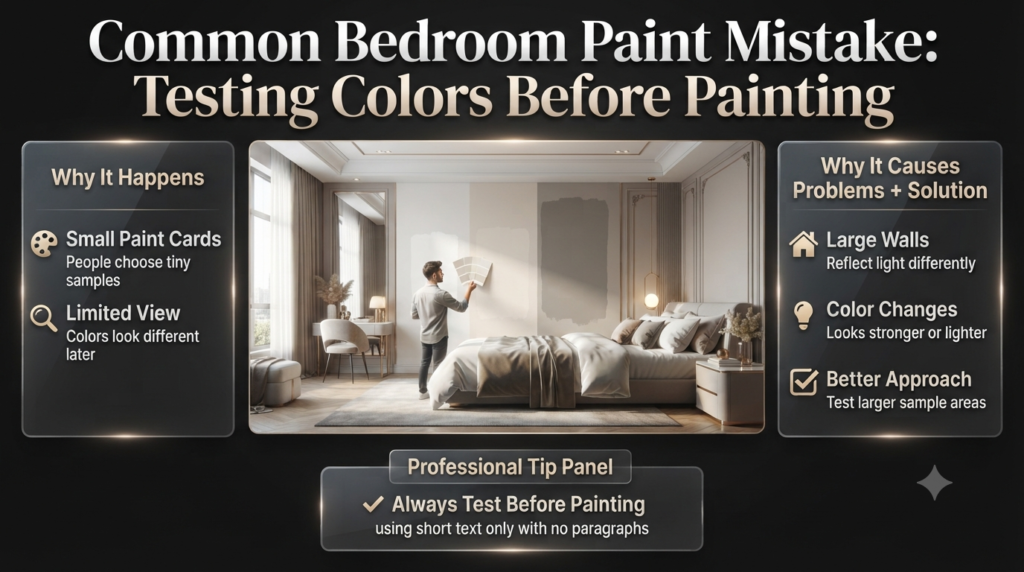
Why It Happens:
People select colors based on tiny paint cards.
Why It Causes Problems:
Large walls reflect light differently, making colors appear stronger or lighter.
Better Approach:
Always test a larger sample area before painting.
Mistake 2: Ignoring Lighting Conditions
Why It Happens:
A color looks attractive in a store but changes at home.
Why It Matters:
Natural sunlight, LED bulbs, and warm lights all affect appearance.
Solution:
Check your color during:
- Morning light
- Evening light
- Artificial lighting
Mistake 3: Following Trends Without Considering Personal Comfort
Why It Happens:
A trendy color looks attractive online.
Problem:
You may stop liking it after a short time.
Better Approach:
Choose trends that match your lifestyle and personality.
Mistake 4: Using Too Many Colors
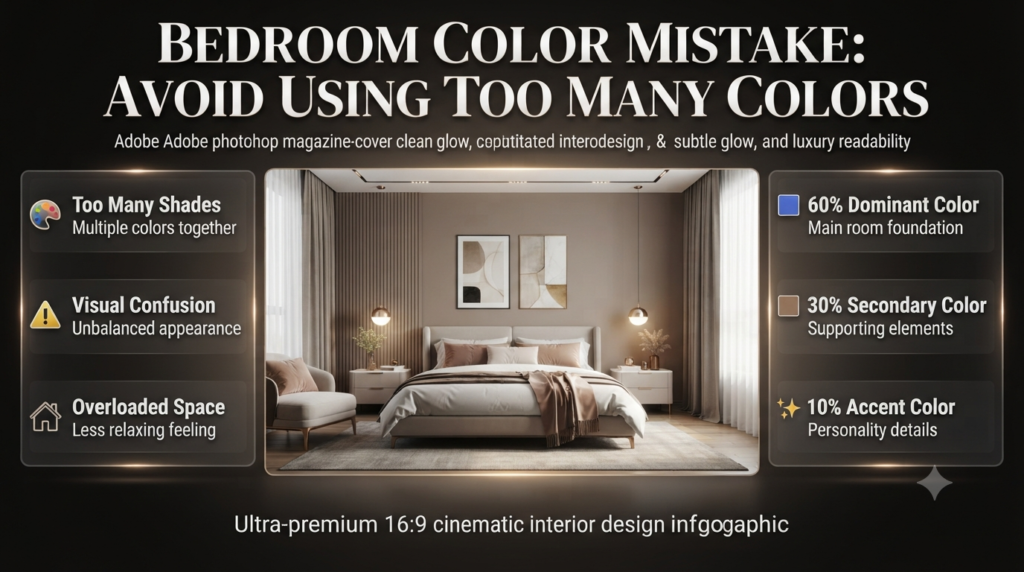
Why It Happens:
Homeowners try to add personality through multiple shades.
Problem:
Too many colors create visual confusion.
Professional Recommendation:
Follow the 60-30-10 color rule:
- 60% dominant color
- 30% secondary color
- 10% accent color
Professional Expert Advice for Choosing Bedroom Colors
Interior designers usually consider several factors before recommending a bedroom color.
Think About Your Daily Routine
Ask yourself:
- Do I want my bedroom to feel energetic or peaceful?
- Do I prefer modern or traditional style?
- Do I like warm or cool environments?
Your bedroom should support your lifestyle.
Consider Long-Term Satisfaction
A bedroom color is not something you change every month.
Choose colors that:
- Feel comfortable over time
- Match future furniture changes
- Maintain a timeless appearance
Use Accent Walls Strategically
An accent wall can add personality without overwhelming the room.
Best locations:
- Behind the bed
- Main focal wall
- Fireplace wall
Avoid placing strong colors on every wall unless the room has enough space and lighting.
For more ideas, explore Accent Walls.
Step-by-Step Guide: How to Choose the Perfect Bedroom Color
Choosing the perfect bedroom color requires a simple process that considers room size, lighting, furniture, mood, and personal style. Start by understanding your space, test different shades, create a balanced color palette, and select a final color that feels comfortable for everyday living.
Many homeowners choose bedroom colors based only on trends or online pictures. However, professional designers usually follow a structured approach to make sure the final result feels balanced and practical.
Follow these steps before making your final decision.
Step 1: Define the Feeling You Want to Create
Before choosing a paint color, decide what type of atmosphere you want your bedroom to have.
Ask yourself:
- Do I want a peaceful sleeping environment?
- Do I want a luxury hotel-style bedroom?
- Do I want a warm and cozy feeling?
- Do I want a modern minimalist appearance?
Different colors create different emotions.
| Desired Feeling | Recommended Colors |
|---|---|
| Relaxing | Soft blue, sage green, warm white |
| Luxury | Navy, emerald, charcoal |
| Cozy | Beige, cream, warm brown |
| Fresh | White, pastel green, light blue |
| Modern | Gray, greige, soft neutral |
⭐ Expert Tip: A bedroom should support relaxation first. Beautiful colors that feel uncomfortable will not create a successful design.
Step 2: Analyze Your Bedroom Lighting
Lighting is one of the biggest factors affecting how paint appears.
A color can look completely different depending on:
- Window direction
- Natural sunlight
- Artificial bulbs
- Room shadows
North-Facing Bedrooms
These rooms often receive cooler light.
Better choices:
- Warm beige
- Cream
- Soft peach
- Warm white
Avoid overly cool gray because it may make the room feel colder.
South-Facing Bedrooms
These rooms receive stronger natural light.
Suitable choices:
- Blue-gray
- Sage green
- Soft neutrals
- Deeper shades
These colors balance bright sunlight.
Artificial Lighting Considerations
Warm LED lights usually make colors appear softer.
Cool white lights may make colors appear sharper.
📌 Quick Tip: Always test bedroom paint colors under your actual lighting before committing.
Step 3: Create a Balanced Color Palette
A professional-looking bedroom usually does not rely on one random color.
Designers often use a three-layer approach:
Primary Color (60%)
The main wall color.
Example:
- Beige walls
Secondary Color (30%)
Furniture, curtains, or bedding.
Example:
- White furniture
Accent Color (10%)
Decorative details.
Example:
- Gold lamps
- Green plants
- Artwork
This creates visual balance.
Step 4: Test Your Bedroom Color Before Painting
Never judge a color only from a small paint card.
Professional testing method:
- Paint a large sample area.
- Observe it during morning light.
- Check it at night with artificial lighting.
- Compare it with furniture and flooring.
A shade that looks perfect in a showroom may appear completely different at home.
Step 5: Match Colors With Existing Bedroom Elements
Your bedroom color should work with:
- Bed frame
- Flooring
- Curtains
- Wardrobe
- Decorations
Example:
If you have dark wooden furniture:
Good choices:
- Cream
- Sage green
- Warm beige
Avoid:
- Extremely bright colors
- Very cold shades
Bedroom Color Decision Table
| Bedroom Situation | Best Color Choice | Avoid |
|---|---|---|
| Small bedroom | White, beige, pastel shades | Very dark colors everywhere |
| Low natural light | Warm neutrals | Cold gray shades |
| Large bedroom | Navy, charcoal, rich colors | Too many bright colors |
| Minimalist design | White, gray, beige | Heavy patterns |
| Luxury style | Deep blue, emerald, warm neutrals | Random color combinations |
Professional Bedroom Painting Tips
A beautiful bedroom color depends not only on the shade but also on how it is applied.
Prepare Walls Properly
Before painting:
- Repair cracks
- Clean dust
- Remove old peeling paint
- Apply primer if needed
A premium color cannot hide poor wall preparation.
Choose the Right Paint Finish
Different finishes create different appearances.
| Paint Finish | Best Use |
|---|---|
| Matte | Bedrooms with smooth walls |
| Eggshell | Balanced durability and softness |
| Satin | Areas needing easy cleaning |
For most bedrooms, matte or eggshell finishes are popular because they create a calm appearance without excessive shine.
For detailed information about finishes, explore Paint Finishes.
What are the best bedroom colors for creating a relaxing and peaceful atmosphere?
The best bedroom colors for creating a relaxing environment are soft, calming shades that reduce visual stress and create a comfortable feeling. Colors like soft blue, sage green, warm beige, cream, and light gray are popular choices because they create a peaceful atmosphere suitable for rest and relaxation.
A bedroom is not just another room in the house; it is a personal space where your mind should feel calm after a busy day. Cool tones such as blue and green are often preferred because they give a natural, balanced feeling, while warm neutrals like beige and cream add comfort and coziness.
Professional interior designers usually recommend avoiding overly bright or aggressive colors, such as strong red, neon shades, or highly saturated tones, because they can make the room feel more energetic rather than restful.
Important points to consider:
Soft blue works well for a calm, hotel-inspired bedroom design.
Sage green creates a natural and refreshing atmosphere.
Warm beige adds elegance while keeping the room comfortable.
Light gray provides a modern and sophisticated appearance.
Neutral colors allow easier changes in furniture and décor later.
Expert Tip: The perfect relaxing bedroom color is not only about the shade itself. Lighting, furniture, textures, and room size also influence how comfortable the final design feels.
What bedroom colors make a small room look bigger and brighter?
For small bedrooms, the best color choices are light and reflective shades that create an open and spacious appearance. Colors such as warm white, soft beige, pale blue, light gray, and pastel shades help reflect natural light and make walls feel farther apart.
Many homeowners make the mistake of choosing dark colors in small bedrooms because they look attractive in pictures. While darker shades can create a luxurious effect, using them on every wall may make a compact room feel smaller and more enclosed.
Professional designers often use light colors combined with smart design techniques to visually expand small bedrooms without changing the actual size of the space.
Best color choices for small bedrooms:
Warm white → Creates a clean and open feeling.
Soft beige → Adds warmth without reducing space.
Pale blue → Gives an airy and fresh appearance.
Light gray → Creates a modern minimalist look.
Soft pastel colors → Add personality while maintaining brightness.
Additional design tips:
Paint the ceiling in a lighter shade to create more height.
Use mirrors to reflect light and improve spaciousness.
Avoid using too many contrasting colors in a small room.
Choose furniture with lighter finishes to maintain visual balance.
Professional Recommendation: In small bedrooms, create interest through textures, fabrics, and lighting instead of relying only on bold wall colors.
What are the most popular bedroom color trends for 2026?
The biggest bedroom color trends for 2026 focus on comfort, natural inspiration, and timeless designs rather than short-term fashion. Homeowners are increasingly choosing colors that create peaceful environments while maintaining a modern appearance.
The latest bedroom trends are moving toward earthy tones, warm neutrals, and nature-inspired shades because people want their homes to feel more relaxing and connected to natural elements.
Popular bedroom color trends include:
Sage Green
Sage green continues to grow in popularity because it creates a calm and organic feeling. It works especially well with wooden furniture, plants, and natural fabrics.
Warm Neutrals
Colors like beige, cream, taupe, and greige remain popular because they create elegant bedrooms that do not quickly look outdated.
Deep Luxury Shades
Rich colors such as navy blue, emerald green, and charcoal are being used for accent walls and luxury bedroom designs.
Earth-Inspired Colors
Terracotta, clay, olive, and warm brown shades add depth and create a cozy environment.
Key reasons these colors are trending:
They create a relaxing atmosphere.
They work with different interior styles.
They match natural materials.
They provide long-term design flexibility.
They create a premium appearance without excessive decoration.
Expert Tip: Instead of copying a trending bedroom color directly, adapt the trend to your room’s lighting, furniture, and personal taste.
Should I choose warm or cool colors for my bedroom?
Choosing between warm and cool bedroom colors depends on the mood you want to create and the characteristics of your room. Both color groups can create beautiful bedrooms when used correctly.
Warm colors such as beige, cream, soft brown, and warm white create a cozy and inviting atmosphere. They are ideal for bedrooms that need more comfort and warmth, especially spaces with limited natural sunlight.
Cool colors such as blue, green, and blue-gray create a calm and refreshing environment. They are often used in modern bedrooms because they provide a clean and peaceful appearance.
Warm colors are best for:
Cozy bedroom designs
Traditional interiors
Rooms with less sunlight
Luxury comfortable spaces
Cool colors are best for:
Modern bedrooms
Relaxing environments
Rooms with strong natural lighting
Minimalist designs
Common mistake: Choosing a color temperature without considering existing elements like flooring, curtains, and furniture.
For example:
Dark wooden furniture often looks better with warm neutrals.
White furniture works beautifully with cool tones.
Natural materials pair well with earthy colors.
Professional Advice: A balanced bedroom often combines both warm and cool elements. For example, a soft blue wall with warm wooden furniture creates a comfortable and visually balanced design.
How do I choose the right bedroom color that matches my furniture and interior style?
Choosing the right bedroom color requires understanding how wall shades interact with your existing furniture, flooring, lighting, and overall interior style. The goal is to create harmony rather than choosing a color that looks attractive alone.
Many design mistakes happen because homeowners select paint first and try to match everything else afterward. Professional designers usually consider the entire room together before finalizing the wall color.
Consider these factors before choosing your bedroom color:
1. Furniture Color
Your bed, wardrobe, and side tables influence the best color choice.
Examples:
Dark wood furniture → Beige, cream, sage green
White furniture → Blue, gray, pastel shades
Black furniture → Warm neutrals and lighter walls
2. Bedroom Style
Different styles work better with specific color palettes.
Bedroom Style
Recommended Colors
Modern
Gray, white, blue-gray
Minimalist
Beige, white, soft neutrals
Luxury
Navy, emerald, charcoal
Natural Style
Sage green, earth tones
Classic
Cream, warm beige
3. Long-Term Appeal
Choose colors that you will enjoy for several years. Trendy colors may look attractive temporarily but can become difficult to decorate around later.
Best practice for choosing a bedroom color:
Collect inspiration images.
Identify colors you repeatedly like.
Test paint samples.
Check colors under different lighting.
Select a shade that matches your lifestyle.
Expert Tip: The best bedroom color is not necessarily the most popular one—it is the one that creates the right feeling every time you enter your room.
Conclusion
Choosing the right Bedroom Color Inspiration is more than selecting a beautiful paint shade. The colors around you influence the overall mood, comfort, and personality of your bedroom. A carefully chosen color palette can turn an ordinary room into a relaxing retreat where you feel comfortable and refreshed every day.
The best bedroom colors are those that balance style with practicality. Soft blues and greens can create a peaceful atmosphere, warm neutrals can add comfort and elegance, while deeper shades like navy and charcoal can bring a luxurious feel when used correctly.
Before making your final decision, always consider important factors such as:
- Natural and artificial lighting
- Bedroom size
- Existing furniture and décor
- Interior design style
- The feeling you want to create
Avoid choosing colors only because they are trending. A successful bedroom design combines current inspiration with your personal taste and long-term comfort.
Remember, there is no single perfect bedroom color for everyone. The ideal choice is the one that makes your space feel balanced, welcoming, and truly yours.
Whether you are designing a modern bedroom, a cozy small space, or a luxury master suite, the right color combination can completely transform the atmosphere of your home.
Start with your preferred mood, test your favorite shades, and create a bedroom that does not just look beautiful—but feels like the perfect place to relax and recharge.

Leave a Reply