
Introduction
Choosing the perfect paint colour is exciting, but many homeowners overlook one equally important decision—the paint finish. You might find the ideal shade for your living room or kitchen, only to discover later that it looks completely different once it dries or becomes difficult to clean after a few months.
The truth is, the finish you choose affects much more than appearance. It influences how your walls reflect light, hide imperfections, resist stains, and stand up to everyday wear and tear. Selecting the wrong finish can lead to visible marks, peeling, frequent repainting, or extra maintenance.
In this guide, you’ll learn everything you need to know about paint finishes, including the different types, where each finish works best, their advantages and disadvantages, and how professionals choose the right finish for every space. Whether you’re painting a single room or renovating your entire home, this guide will help you make confident decisions that last.
Before choosing a paint finish, it’s worth exploring different colour combinations. Our Paint Color guides can help you understand how colours influence lighting, room size, and overall atmosphere, making it easier to achieve the perfect result.
What Are Paint Finishes?
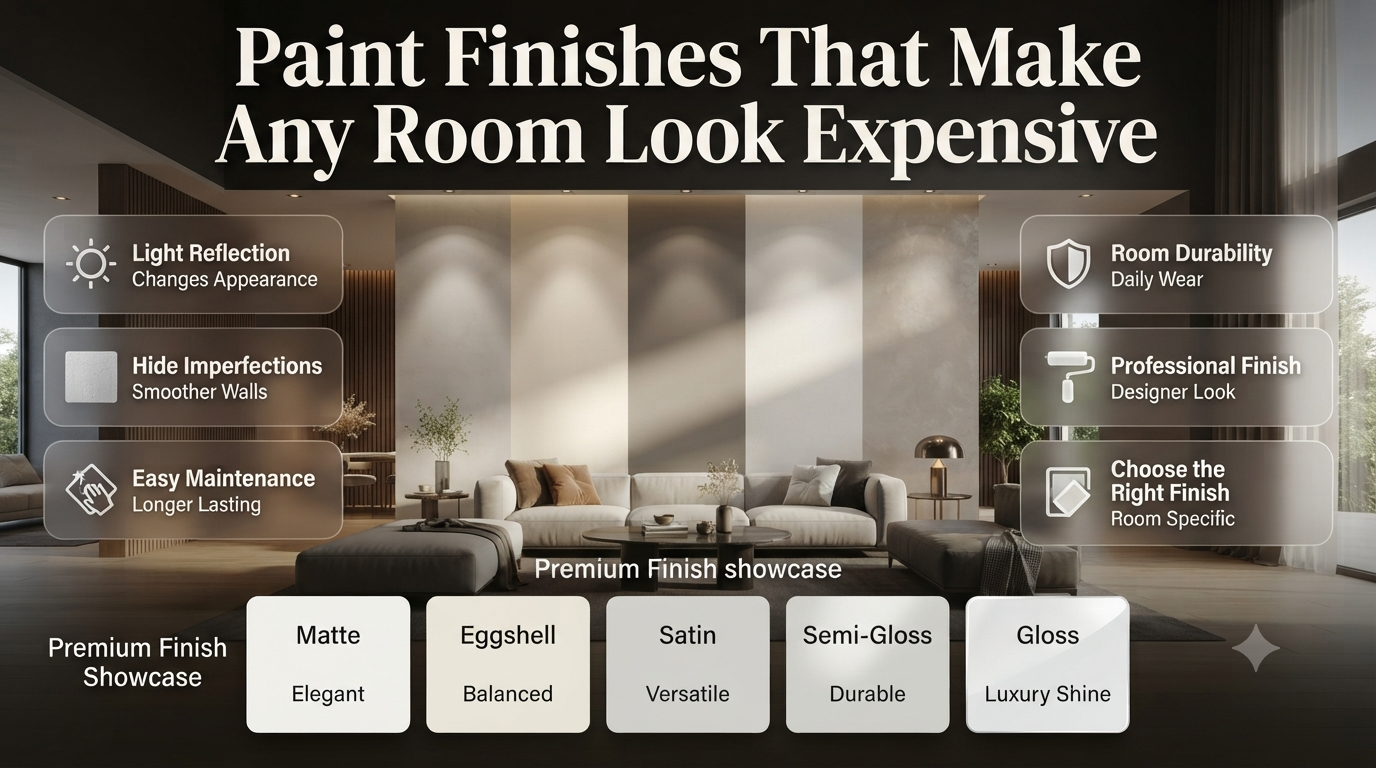
Paint finishes describe the amount of sheen or gloss a paint has after it dries. The finish determines how much light reflects from the painted surface, how durable the paint is, how easily it can be cleaned, and how well it hides wall imperfections. Choosing the right finish is just as important as selecting the right paint colour.
A paint finish, also known as a paint sheen, refers to the level of shine a painted surface has once the paint has fully dried and cured. Even if two paints are exactly the same colour, different finishes can dramatically change their final appearance.
For example:
- Matte white creates a soft, modern look.
- Satin white reflects more light and feels brighter.
- High-gloss white creates a polished, luxurious finish.
Understanding these differences helps you choose a finish that not only looks beautiful but also performs well in your home.
Why Paint Finish Matters
Many homeowners spend days selecting the perfect paint colour but only a few minutes choosing the finish. In reality, the finish often has a greater impact on long-term satisfaction because it determines how the painted surface handles daily life.
The right finish can:
- Hide wall imperfections
- Resist stains and moisture
- Make cleaning easier
- Improve durability
- Reflect natural light
- Enhance your overall interior design
Using the wrong finish can leave walls looking worn much sooner than expected, especially in busy areas like hallways and kitchens.
💡 Pro Tip: Choose your paint finish based on how the room is used rather than simply selecting the finish you like the most.
If you’re planning a complete home makeover, browse our Interior Design collection for practical decorating ideas that complement your paint choices.
What Determines a Paint Finish?
Several factors affect the sheen level of paint, including:
- Resin content
- Pigment concentration
- Surface texture
- Manufacturing formula
- Light reflection
As a general rule, the more gloss a paint contains, the more durable and washable it becomes. However, increased gloss also means wall imperfections become more visible.
| Lower Sheen | Higher Sheen |
|---|---|
| Soft appearance | More reflective |
| Better at hiding imperfections | More durable |
| Harder to clean | Easier to wipe clean |
| Contemporary look | Brighter finish |
Types of Paint Finishes
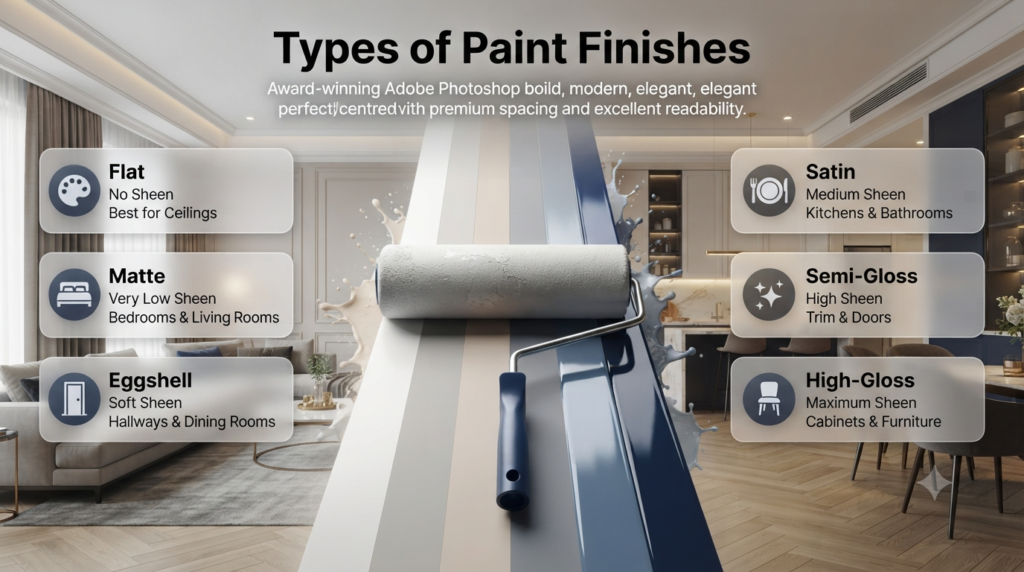
There are six main paint finishes commonly used for residential interiors.
| Finish | Sheen Level | Best Used For |
|---|---|---|
| Flat | No sheen | Ceilings |
| Matte | Very low sheen | Bedrooms & living rooms |
| Eggshell | Soft sheen | Hallways & dining rooms |
| Satin | Medium sheen | Kitchens & bathrooms |
| Semi-Gloss | High sheen | Trim & doors |
| High-Gloss | Maximum sheen | Cabinets & furniture |
Each finish has unique strengths, so choosing the right one depends on the room, traffic level, and desired appearance.
Matte Paint Finish
Matte paint has a very low sheen that creates a smooth, elegant appearance while hiding wall imperfections exceptionally well. It is ideal for bedrooms, living rooms, home offices, and other low-traffic spaces where a soft, sophisticated finish is preferred.
Matte paint has become one of the most popular finishes in modern interior design because of its understated elegance. Instead of reflecting light, matte paint absorbs it, creating a calm and luxurious atmosphere.
This finish works beautifully with:
- Modern interiors
- Scandinavian homes
- Minimalist designs
- Traditional spaces
- Luxury residential projects
Benefits of Matte Paint
Excellent at Hiding Imperfections
One of matte paint’s greatest strengths is its ability to disguise:
- Hairline cracks
- Minor dents
- Patch repairs
- Uneven drywall
- Older plaster walls
Because it reflects very little light, these imperfections become far less noticeable.
Richer Colour Appearance
Paint colours often appear deeper and more saturated in a matte finish.
Dark colours, especially charcoal, navy, forest green, and black, develop a rich, velvety appearance that many designers prefer.
Creates a Comfortable Atmosphere
Matte paint reduces glare from:
- Windows
- Ceiling lights
- Lamps
- Sunlight
The result is a warm, relaxing environment that’s perfect for bedrooms, reading rooms, and formal living spaces.
⭐ Expert Tip: Matte finishes are ideal if you want to create a cosy, high-end look without adding decorative wall treatments.
Drawbacks of Matte Paint
Despite its elegant appearance, matte paint isn’t suitable for every room.
Some disadvantages include:
- Less resistant to heavy scrubbing
- Can show fingerprints in busy areas
- Grease stains are harder to remove
- May require occasional touch-ups
Modern washable matte paints have improved significantly, but satin still performs better in high-traffic spaces.
⚠ Common Mistake: Using matte paint on kitchen walls simply because it looks beautiful. Grease, cooking splashes, and frequent cleaning can reduce its lifespan.
Best Places to Use Matte Paint
Matte paint performs exceptionally well in:
- Bedrooms
- Living rooms
- Dining rooms
- Home libraries
- Home offices
- Guest rooms
Avoid using it in:
- Kitchens
- Bathrooms
- Children’s playrooms
- Laundry rooms
- Busy hallways
If you’re redesigning these spaces, explore more ideas in our Home Improvement guides, where you’ll find practical renovation tips and decorating inspiration.
Practical Example
Imagine two identical bedrooms painted in the same warm grey colour.
- Room A: Matte finish
- Room B: Satin finish
Although the colour is identical, the matte finish creates a softer, calmer atmosphere because it absorbs light instead of reflecting it. The satin finish appears brighter and more reflective, making the room feel slightly more energetic.
Flat Paint Finish
Flat paint has virtually no shine and provides the best coverage for surface imperfections. It is commonly used on ceilings and low-traffic areas because it delivers a smooth, uniform appearance while minimising glare.
Flat paint is often confused with matte paint, but there is a subtle difference.
Flat paint contains almost zero sheen, whereas matte paint usually has a slight velvety sheen that gives it a richer appearance.
Professional painters continue to recommend flat paint primarily for ceilings because it creates a clean, seamless finish.
Advantages of Flat Paint
Outstanding Coverage
Flat paint effectively hides:
- Ceiling patches
- Minor cracks
- Uneven plaster
- Drywall repairs
- Surface texture
Because it reflects almost no light, imperfections remain much less visible.
Ideal for Ceilings
Flat white paint remains the professional standard for ceilings because it minimises glare and creates a clean visual transition between walls and ceilings.
Easier Touch-Ups
Compared with glossier finishes, flat paint usually blends better when small touch-ups are needed after repairs.
Disadvantages of Flat Paint
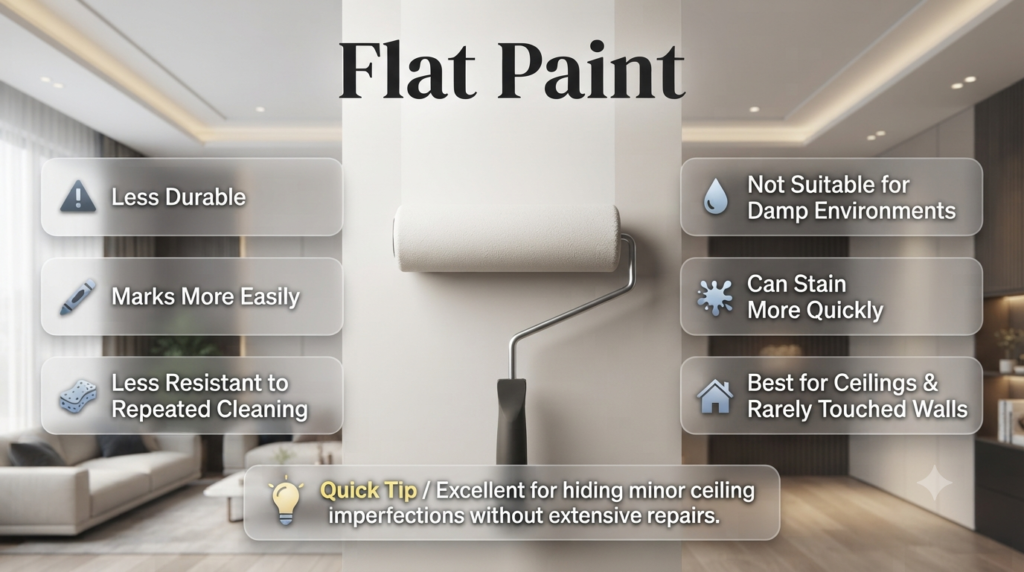
Flat paint is generally the least durable finish.
Some drawbacks include:
- Marks more easily
- Less resistant to repeated cleaning
- Not suitable for damp environments
- Can stain more quickly
For households with young children or pets, flat paint should generally be limited to ceilings or rarely touched walls.
📌 Quick Tip: Flat paint is an excellent choice if your ceiling has minor imperfections that you want to hide without extensive repairs.
Eggshell Paint Finish
Eggshell paint has a soft, low-level sheen that balances durability and appearance. It is easier to clean than matte paint while still hiding minor imperfections, making it one of the most versatile finishes for interior walls.
Eggshell is often considered the “middle ground” among paint finishes. It provides a subtle sheen that brightens a room without creating excessive reflection.
This makes it one of the most popular finishes for modern family homes.
Why Homeowners Love Eggshell Paint
Eggshell offers several advantages:
- Elegant appearance
- Better stain resistance than matte
- Easier maintenance
- Improved durability
- Soft light reflection
- Suitable for many different decorating styles
Unlike glossy finishes, eggshell doesn’t draw attention to every small wall imperfection, making it a forgiving option for everyday living spaces.
Benefits of Eggshell Paint
Better Washability
Eggshell paint can usually be cleaned with a damp cloth, making it practical for areas that experience occasional fingerprints or light scuffs.
Soft Light Reflection
Its gentle sheen helps brighten rooms while maintaining a warm, welcoming atmosphere.
Excellent Versatility
Many decorators recommend eggshell for homeowners who want one reliable finish throughout several living areas.
Best Rooms for Eggshell Paint
Eggshell is ideal for:
- Living rooms
- Dining rooms
- Hallways
- Guest bedrooms
- Family rooms
- Home offices
It can also work in kitchens with premium washable paint, although satin remains the preferred option where moisture and frequent cleaning are expected.
Looking for more decorating inspiration? Visit Interior Design Mode 24 for expert guides on painting, colour selection, interior styling, and home renovation ideas.
Satin Paint Finish
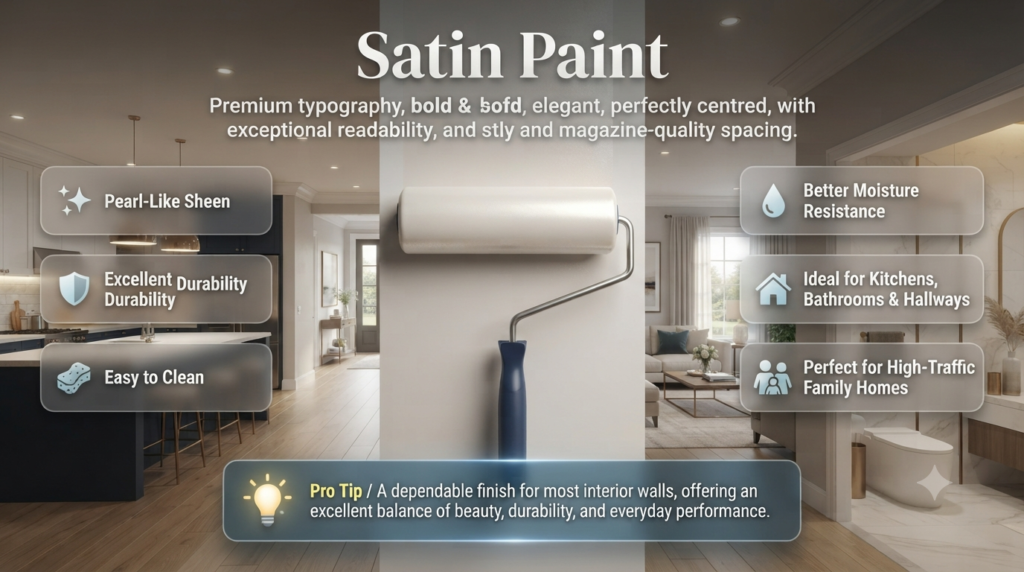
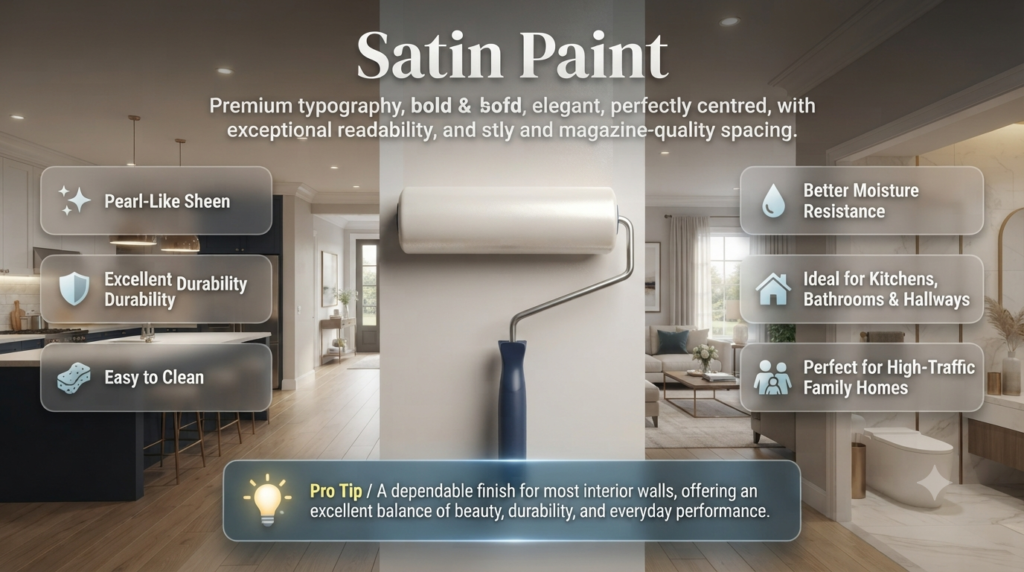
Satin paint has a smooth, pearl-like sheen that offers the perfect balance between durability and appearance. It is one of the best paint finishes for kitchens, bathrooms, hallways, children’s bedrooms, and other high-traffic areas because it is easy to clean and resists moisture better than lower-sheen finishes.
Satin is often regarded as the most versatile paint finish for modern homes. It has a gentle sheen that adds a subtle glow without looking overly glossy, making it suitable for both traditional and contemporary interiors.
Professional painters frequently recommend satin when homeowners want a finish that looks elegant but can also handle everyday wear and tear.
💡 Pro Tip: If you’re painting an entire family home and want one dependable finish for most walls, satin is usually the safest choice because it combines beauty with long-lasting durability.
Benefits of Satin Paint
Excellent Washability
Unlike matte paint, satin is much easier to wipe clean.
Most everyday marks can be removed using:
- A damp microfibre cloth
- Mild soap solution
- Gentle wiping
This makes satin a practical option for busy households with children or pets.
Moisture Resistant
Bathrooms, kitchens, and utility rooms experience regular humidity.
Satin paint offers improved resistance against:
- Steam
- Condensation
- Light moisture
- Cooking splashes
This helps painted walls stay attractive for longer.
Long-Lasting Finish
Satin maintains its appearance even in areas that experience frequent contact.
It’s an excellent choice for:
- Hallways
- Staircases
- Entryways
- Family rooms
- Children’s bedrooms
Because it withstands repeated cleaning, homeowners often repaint less frequently than with matte finishes.
Drawbacks of Satin Paint
Although satin is extremely practical, it isn’t completely forgiving.
Potential disadvantages include:
- Shows wall imperfections more than matte
- Roller marks become more noticeable
- Requires careful surface preparation
- Poor painting technique can affect the final finish
⭐ Expert Tip: Always sand repaired walls before applying satin paint. A smooth surface produces a much more professional result.
Best Rooms for Satin Paint
Satin performs exceptionally well in:
- Kitchens
- Bathrooms
- Hallways
- Children’s bedrooms
- Laundry rooms
- Family rooms
- Entryways
If you’re renovating these spaces, explore our Home Improvement section for practical renovation ideas, DIY tips, and expert advice that will help you achieve professional-looking results.
Semi-Gloss Paint Finish
Semi-gloss paint has a noticeable shine that provides excellent durability, moisture resistance, and easy cleaning. It is commonly used on trim, doors, cabinets, skirting boards, and bathrooms where strength and long-term performance are essential.
Semi-gloss reflects significantly more light than satin.
Rather than covering entire rooms, it’s most commonly used to highlight architectural details and woodwork.
Professional decorators often combine matte walls with semi-gloss trim to create subtle contrast without changing colours.
Advantages of Semi-Gloss Paint
Easy to Clean
Semi-gloss handles frequent cleaning exceptionally well.
It resists:
- Fingerprints
- Dirt
- Grease
- Mud splashes
- Food stains
making it ideal for surfaces that are touched every day.
Excellent Moisture Protection
Because semi-gloss forms a harder paint film, it performs well in humid environments.
It’s commonly recommended for:
- Bathrooms
- Utility rooms
- Kitchen splashback areas
- Window frames
Highlights Decorative Features
Semi-gloss naturally draws attention to architectural elements such as:
- Doors
- Window trim
- Crown moulding
- Skirting boards
- Built-in shelving
It creates clean definition and makes these features stand out beautifully.
Disadvantages of Semi-Gloss
More shine also means more visibility.
Semi-gloss highlights:
- Sanding marks
- Uneven filler
- Surface dents
- Brush strokes
Poor preparation often becomes very noticeable after painting.
⚠ Common Mistake: Applying semi-gloss directly over rough wood without sanding. The extra shine exaggerates imperfections instead of hiding them.
Best Places to Use Semi-Gloss
Semi-gloss is ideal for:
- Interior doors
- Trim
- Window frames
- Kitchen cabinets
- Bathroom cabinets
- Built-in furniture
Before painting woodwork, you may also find our Paint Color guides helpful for choosing complementary wall and trim colour combinations.
High-Gloss Paint Finish
High-gloss paint is the shiniest of all paint finishes. It creates a mirror-like appearance, offers exceptional durability, and is best suited to cabinets, furniture, decorative trim, and statement doors rather than entire walls.
High-gloss is widely used in luxury interiors where a polished, premium appearance is desired.
Because it reflects large amounts of light, it creates striking visual impact.
However, this same reflectiveness also reveals every small imperfection.
Benefits of High-Gloss Paint
Outstanding Durability
High-gloss paint offers excellent resistance to:
- Scratches
- Moisture
- Dirt
- Frequent cleaning
- Everyday wear
It is one of the toughest interior paint finishes available.
Luxury Appearance
High-gloss instantly creates a premium look.
It’s especially popular for:
- Designer kitchens
- Luxury wardrobes
- Statement furniture
- Feature doors
Brightens Dark Areas
Because it reflects more light than any other finish, high-gloss can help brighten darker spaces when used strategically.
Drawbacks of High-Gloss Paint
High-gloss demands the highest level of preparation.
Before painting, professionals usually:
- Fill every dent
- Sand thoroughly
- Apply quality primer
- Remove all dust
Without careful preparation, imperfections become highly visible.
Best Uses for High-Gloss
High-gloss works best on:
- Cabinets
- Furniture
- Decorative trim
- Feature doors
- Accent woodwork
It is rarely recommended for full walls because excessive reflection can become overwhelming.
For more design inspiration on incorporating glossy finishes into modern interiors, browse our Interior Design articles.
Paint Finish Comparison Table
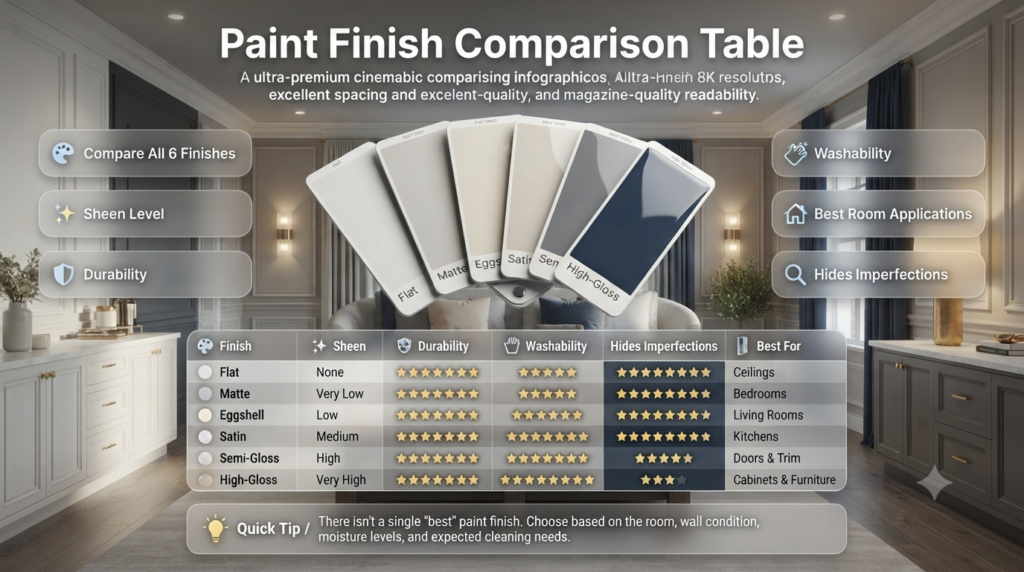
Choosing between different paint finishes becomes much easier when you compare them side by side.
| Paint Finish | Sheen | Durability | Washability | Hides Imperfections | Best For |
|---|---|---|---|---|---|
| Flat | None | ⭐⭐ | ⭐ | ⭐⭐⭐⭐⭐ | Ceilings |
| Matte | Very Low | ⭐⭐⭐ | ⭐⭐ | ⭐⭐⭐⭐⭐ | Bedrooms |
| Eggshell | Low | ⭐⭐⭐⭐ | ⭐⭐⭐ | ⭐⭐⭐⭐ | Living Rooms |
| Satin | Medium | ⭐⭐⭐⭐⭐ | ⭐⭐⭐⭐⭐ | ⭐⭐⭐ | Kitchens |
| Semi-Gloss | High | ⭐⭐⭐⭐⭐ | ⭐⭐⭐⭐⭐ | ⭐⭐ | Doors & Trim |
| High-Gloss | Very High | ⭐⭐⭐⭐⭐ | ⭐⭐⭐⭐⭐ | ⭐ | Cabinets & Furniture |
📌 Quick Tip: There isn’t a single “best” paint finish. The right choice depends on the room, the wall condition, moisture levels, and how much cleaning the surface will need.
How to Choose the Right Paint Finish
The best paint finish depends on your room’s purpose, wall condition, lighting, and maintenance requirements. Matte and eggshell work well in quieter living spaces, satin is ideal for busy family areas, while semi-gloss and high-gloss provide maximum durability for trim, cabinets, and doors.
When choosing a finish, ask yourself these questions:
1. How much traffic does the room receive?
Busy spaces need more durable finishes.
Choose:
- Satin
- Semi-gloss
for areas used every day.
2. Does the room have moisture?
Bathrooms, kitchens, and laundry rooms benefit from moisture-resistant finishes like satin or semi-gloss.
3. Are your walls perfectly smooth?
If not, avoid high-sheen paints.
Matte and eggshell hide imperfections much more effectively.
4. How often will the walls need cleaning?
If regular cleaning is expected, satin provides one of the best balances between appearance and practicality.
Before making your final decision, browse our Paint Color inspiration guides to see how different colours interact with various paint finishes under natural and artificial lighting.
Best Paint Finish for Every Room
| Room | Recommended Finish | Why It Works |
|---|---|---|
| Living Room | Matte / Eggshell | Soft, elegant appearance |
| Bedroom | Matte | Creates a calm atmosphere |
| Dining Room | Eggshell | Stylish with moderate durability |
| Hallway | Satin | Easy to clean |
| Kitchen | Satin | Moisture and stain resistant |
| Bathroom | Satin / Semi-Gloss | Handles humidity well |
| Ceiling | Flat | Minimises glare |
| Doors | Semi-Gloss | Durable and washable |
| Trim | Semi-Gloss | Highlights architectural details |
| Cabinets | High-Gloss / Semi-Gloss | Tough and easy to maintain |
Interior vs Exterior Paint Finishes
Although interior and exterior paints share similar sheen names, they are designed for completely different environments.
Interior paint focuses on:
- Easy cleaning
- Attractive appearance
- Smooth finish
- Low odour
Exterior paint is formulated to resist:
- UV rays
- Rain
- Humidity
- Temperature changes
- Dirt
- Mould
Never substitute one for the other, even if the finish appears identical.
To learn more about designing beautiful, long-lasting spaces, visit Interior Design Mode 24 where you’ll find expert advice on painting, decorating, furniture, and home styling.
Common Paint Finish Mistakes
Choosing the wrong paint finish can affect both appearance and durability.
Using Matte Paint in Kitchens
While matte looks beautiful, grease and food splashes make it difficult to maintain.
Better option: Satin.
Choosing Glossy Paint for Imperfect Walls
Gloss doesn’t hide defects—it highlights them.
Always repair and sand walls before using higher-sheen finishes.
Using One Finish Everywhere
Different rooms have different needs.
Using one finish throughout the home often sacrifices either durability or appearance.
Ignoring Natural Lighting
Paint finishes change throughout the day.
Always test samples under:
- Morning light
- Afternoon sunlight
- Evening lighting
⭐ Expert Tip: Paint a large sample board instead of a tiny wall patch. Moving it around the room provides a much more accurate idea of how the finish will look in different lighting conditions.
Expert Advice for Choosing the Right Paint Finish
Even the highest-quality paint won’t deliver great results if the wrong finish is used. Professional painters don’t simply choose a finish based on appearance—they consider the room’s purpose, lighting, wall condition, and the amount of daily wear the surface will experience.
Here are the recommendations professionals follow to achieve a beautiful and long-lasting finish.
Choose the Finish Based on the Room
Every room has different requirements.
For example:
- Flat is ideal for ceilings because it reduces glare.
- Matte creates a calm atmosphere in bedrooms and living rooms.
- Eggshell works well in dining rooms and hallways.
- Satin is perfect for kitchens, bathrooms, and busy family spaces.
- Semi-Gloss protects doors, trim, and cabinets.
- High-Gloss adds a luxury touch to furniture and feature pieces.
Instead of using one finish throughout your home, match each finish to the room’s function for the best results.
Always Test Samples Before Painting
Never rely on the colour chip alone.
Paint finishes can look very different depending on:
- Natural daylight
- Artificial lighting
- Wall texture
- Paint colour
- Time of day
Paint a sample on a test board or a small wall section and observe it throughout the day before making your final decision.
⭐ Expert Tip: Always test the colour and finish together. The same paint colour can appear softer in matte and noticeably brighter in satin or semi-gloss.
Invest in Quality Paint
Premium paint generally provides:
- Better coverage
- Longer-lasting colour
- Improved washability
- More consistent sheen
- Better stain resistance
Although premium paints cost more initially, they often require fewer coats and last longer, making them more cost-effective over time.
Prepare the Surface Properly
Preparation is just as important as choosing the right finish.
Before painting:
- Repair holes and cracks.
- Sand rough surfaces.
- Remove dust and grease.
- Apply primer where necessary.
- Allow each coat to dry fully.
Skipping these steps often results in poor adhesion and an uneven finish.
If you’re renovating your entire home, our Home Improvement section offers expert advice on wall preparation, decorating, and renovation projects that complement your painting plans.
How to Maintain Different Paint Finishes
A well-maintained paint finish not only looks better but also lasts significantly longer.
Cleaning Flat and Matte Paint
Flat and matte finishes require gentle care.
Use:
- Soft microfibre cloth
- Warm water
- Mild soap
- Gentle pressure
Avoid abrasive scrubbers or harsh cleaning chemicals, as they can damage the surface.
Cleaning Eggshell and Satin Paint
Eggshell and satin finishes are more durable.
To clean them safely:
- Remove loose dust first.
- Wipe with a damp cloth.
- Use mild detergent if necessary.
- Dry with a clean towel.
These finishes can handle occasional cleaning without affecting their appearance.
Cleaning Semi-Gloss and High-Gloss Paint
Semi-gloss and high-gloss are the easiest finishes to maintain.
They resist:
- Fingerprints
- Grease
- Water marks
- Food splashes
- Everyday dirt
These finishes are excellent for kitchens, bathrooms, cabinets, and trim because they can withstand frequent wiping.
💡 Pro Tip: Clean stains as soon as they appear. Fresh marks are much easier to remove than stains that have dried over time.
Common Paint Finish Mistakes to Avoid
Even experienced DIY decorators sometimes choose the wrong finish. Avoiding these common mistakes can save both time and money.
Using Matte Paint in Wet Areas
Matte paint looks elegant but isn’t the best option for rooms exposed to moisture.
Why it happens:
- People prefer its soft appearance.
- They assume all paints perform the same.
Why it’s harmful:
- Harder to clean.
- Moisture may reduce durability.
- Grease stains become difficult to remove.
How to avoid it:
Choose satin or semi-gloss for kitchens, bathrooms, and laundry rooms.
Choosing Glossy Paint to Hide Wall Defects
Some homeowners believe glossy paint creates a premium appearance that hides imperfections.
In reality, the opposite is true.
Gloss reflects light, making dents, cracks, filler marks, and sanding scratches much more noticeable.
Always repair and sand surfaces thoroughly before applying higher-sheen finishes.
Ignoring Lighting Conditions
Paint finishes change throughout the day.
Morning sunlight, afternoon brightness, and evening artificial lighting can all affect how the sheen appears.
Always test samples under different lighting before painting an entire room.
Using the Same Finish Everywhere
Every room has different needs.
Bedrooms don’t require the same durability as kitchens, and ceilings don’t need the same finish as doors.
Choosing the correct finish for each area produces better long-term results.
⚠ Common Mistake: Selecting paint based only on colour while ignoring the finish often leads to disappointment after the paint dries.
Which paint finish is best for interior walls?
There isn’t a single paint finish that’s perfect for every room because each space has different needs. However, eggshell and satin are widely considered the best all-round choices for interior walls. Eggshell offers a soft, elegant appearance that works beautifully in living rooms and bedrooms, while satin provides extra durability and is easier to clean, making it ideal for busy households. Before making a decision, consider how much traffic the room receives, whether it is exposed to moisture, and how often you’ll need to clean the walls. Choosing the right finish helps your paint look better and last much longer.
Key Points:
Eggshell is ideal for living rooms, dining rooms, and guest bedrooms.
Satin is perfect for kitchens, hallways, children’s rooms, and bathrooms.
Matte is better for hiding wall imperfections in low-traffic spaces.
Select the finish based on the room’s function rather than appearance alone.
What is the difference between matte, eggshell, satin, and gloss paint finishes?
The biggest difference between paint finishes is the amount of sheen they produce and how they perform over time. Matte finishes have very little shine and are excellent for hiding imperfections, while eggshell adds a subtle sheen with better durability. Satin offers even greater resistance to stains and moisture, making it suitable for high-traffic areas. Gloss and semi-gloss finishes reflect the most light and are extremely durable, but they also highlight surface imperfections. Understanding these differences helps you choose a finish that balances appearance, maintenance, and long-term performance.
Key Points:
Matte provides a soft, modern appearance with minimal reflection.
Eggshell balances elegance and durability.
Satin is washable and suitable for busy areas.
Semi-gloss and high-gloss are best for trim, cabinets, and doors.
Higher sheen generally means greater durability but also reveals more imperfections.
Does paint finish affect the final colour of the paint?
Yes, the paint finish can significantly influence how a colour looks once it dries. Although the paint colour remains the same, different finishes reflect light differently. Matte finishes absorb light, making colours appear deeper, richer, and softer. Satin and gloss finishes reflect more light, often making colours look brighter and slightly lighter. This is why the same paint colour can appear completely different when applied in different finishes. Testing both the colour and the finish before painting an entire room is the best way to avoid unexpected results.
Key Points:
Matte finishes create richer and softer-looking colours.
Satin and gloss finishes reflect more light.
Natural and artificial lighting also affect the appearance.
Always test both the colour and the finish before making a final decision.
Which paint finish is easiest to clean and maintain?
If easy maintenance is your priority, satin, semi-gloss, and high-gloss finishes are the best choices. These finishes create a smoother, harder surface that resists stains, fingerprints, grease, and moisture more effectively than matte or flat paint. They can be cleaned regularly without damaging the finish, making them ideal for kitchens, bathrooms, hallways, children’s bedrooms, and other busy areas. Choosing a washable finish reduces maintenance and helps your walls maintain a fresh appearance for many years.
Key Points:
Satin is the best balance between appearance and cleanability.
Semi-gloss is excellent for doors, trim, and cabinets.
High-gloss offers maximum durability for decorative woodwork.
Washable finishes are ideal for family homes with children or pets.
Can I use the same paint finish throughout my entire house?
While it’s possible to use one paint finish throughout your home, it usually isn’t the best approach. Every room experiences different levels of moisture, traffic, and wear. Bedrooms typically benefit from softer finishes like matte or eggshell, while kitchens and bathrooms require more durable options such as satin or semi-gloss. Professional painters usually combine different finishes to achieve the best balance between style, durability, and maintenance. Using the right finish in each room creates a more practical home and reduces the need for frequent repainting.
Key Points:
Different rooms have different performance requirements.
Matte and eggshell suit quieter living areas.
Satin works better in busy family spaces.
Semi-gloss is recommended for trim, doors, and cabinets.
Matching the finish to the room increases the lifespan of your paint.
Conclusion
Choosing the right paint finish is just as important as selecting the perfect paint colour. While colour defines the style of a room, the finish determines how your walls look under different lighting conditions, how easy they are to clean, and how well they stand up to everyday wear and tear.
Each finish has a specific purpose. Flat and matte finishes create a soft, elegant appearance and effectively hide surface imperfections, making them ideal for ceilings, bedrooms, and formal living spaces. Eggshell offers a balanced combination of style and practicality for most interior walls, while satin provides the durability and washability needed in busy households. For areas that require maximum protection, such as doors, trim, cabinets, and bathrooms, semi-gloss and high-gloss finishes deliver long-lasting performance and easy maintenance.
Instead of choosing one finish for your entire home, evaluate each room individually. Consider factors such as foot traffic, moisture levels, wall condition, natural light, and how often the surface will need cleaning. Taking the time to match the right finish to the right space will improve both the appearance and lifespan of your paintwork.
Whether you’re refreshing a single room or planning a complete home renovation, understanding paint finishes allows you to make informed decisions that combine beauty with practicality. Testing samples, preparing surfaces properly, and investing in high-quality paint will help you achieve professional-looking results that remain attractive for years to come.
For more expert decorating advice, colour inspiration, and home renovation ideas, visit Interior Design Mode 24. You can also explore our Paint Color, Interior Design, and Home Improvement sections for additional guides to help you create a beautiful, functional, and timeless home.

Leave a Reply