
Introduction
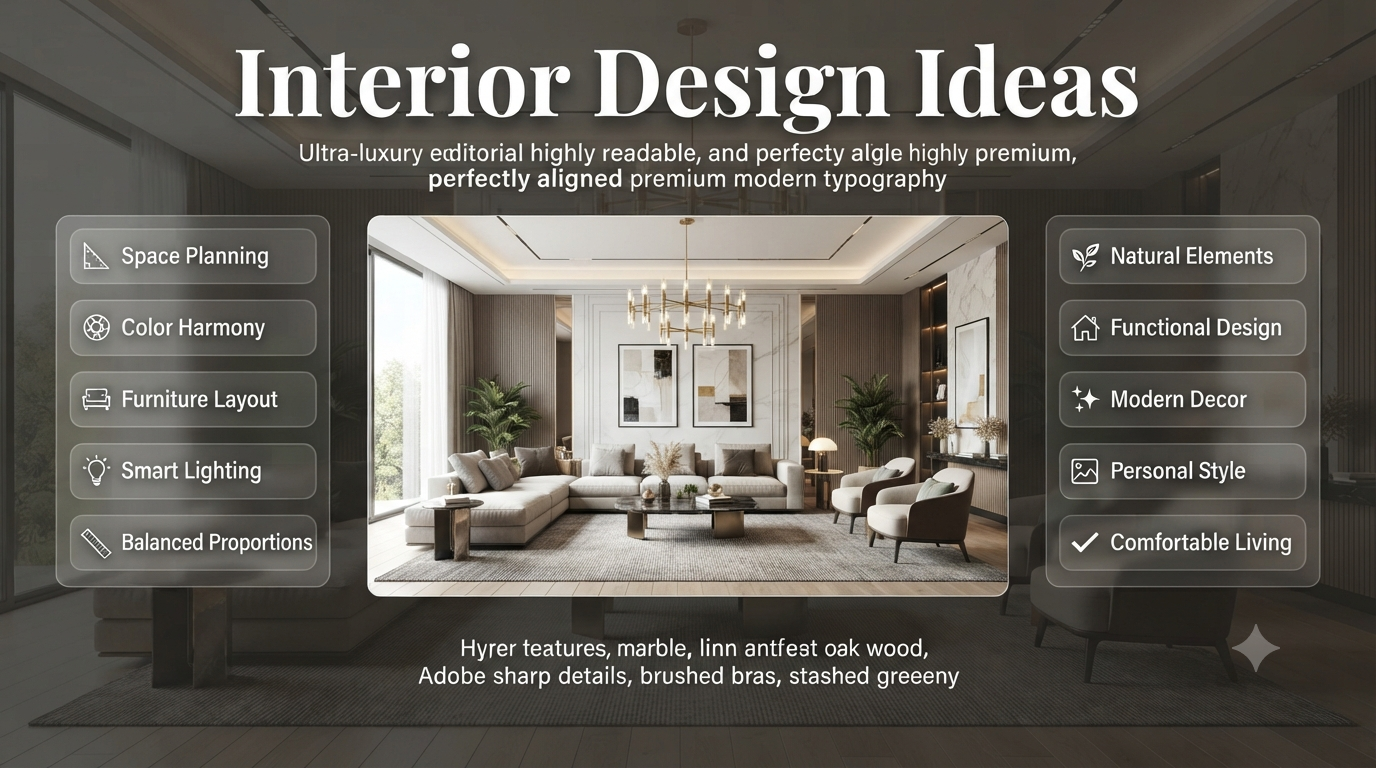
Interior Design Ideas | Have you ever walked into a home that instantly felt warm, welcoming, and perfectly organized? On the other hand, have you ever been in a room that looked expensive but somehow felt uncomfortable or impractical? The difference often comes down to interior design.
Interior design is much more than decorating with attractive furniture or choosing trendy paint colors. It’s the art and science of creating spaces that are functional, comfortable, visually appealing, and tailored to the people who use them. Every decision—from furniture placement and lighting to colors and materials—plays a role in shaping how a space looks and feels.
Whether you’re designing a new home, renovating a single room, decorating a small apartment, or simply looking for inspiration, understanding the fundamentals of interior design will help you make smarter decisions and avoid costly mistakes.
In this complete guide, you’ll learn everything from the basic principles of interior design to professional planning methods, design styles, space planning, and expert strategies used by experienced designers.
For more inspiration, expert guides, and practical decorating ideas, visit Interior Design Mode 24.
What Is Interior Design?
Interior design is the professional practice of planning and designing indoor spaces to improve functionality, comfort, safety, and aesthetics. It combines creativity with technical knowledge to create environments that enhance the way people live, work, and interact with their surroundings.
Unlike decoration, interior design considers the complete layout of a room, furniture placement, lighting, colors, materials, storage, circulation, ergonomics, and overall user experience.
A successful interior designer doesn’t simply make a room beautiful—they solve problems while creating spaces that are enjoyable to live in every day.
Interior Design Is More Than Decoration
Many homeowners think interior design simply means buying stylish furniture or repainting walls.
Professional interior design actually involves:
- Space planning
- Furniture layout
- Lighting design
- Material selection
- Color psychology
- Storage solutions
- Functional planning
- Accessibility
- Safety
- Sustainability
For example, purchasing an expensive sofa without checking room dimensions can make a living room feel cramped. A professional interior designer first measures the room, studies movement patterns, and then selects appropriately sized furniture.
Main Goals of Interior Design
Every successful interior project aims to achieve multiple objectives.
| Goal | Why It Matters |
|---|---|
| Functionality | Makes everyday life easier |
| Comfort | Improves quality of living |
| Beauty | Creates attractive interiors |
| Organization | Reduces clutter |
| Efficiency | Maximizes available space |
| Safety | Prevents hazards |
| Personal Style | Reflects the homeowner’s personality |
| Property Value | Increases resale appeal |
Why Interior Design Matters
Good interior design influences far more than appearance.
A thoughtfully designed home can:
- Improve productivity
- Reduce stress
- Increase comfort
- Enhance natural lighting
- Improve organization
- Maximize storage
- Make small rooms feel larger
- Support healthier lifestyles
- Increase property value
Real-Life Example
Imagine two identical apartments measuring 900 square feet.
Apartment A
- Dark paint
- Oversized furniture
- Poor lighting
- Limited storage
- Blocked walkways
Result:
- Feels crowded
- Difficult to navigate
- Looks smaller than it really is
Apartment B
- Light color palette
- Proper furniture scale
- Smart storage
- Layered lighting
- Open circulation
Result:
- Feels larger
- Looks brighter
- Functions better
- Appears more luxurious
The square footage hasn’t changed—only the design has.
💡 Pro Tip: Great interior design isn’t about buying expensive furniture. It’s about making thoughtful decisions that improve how a space looks, feels, and functions.
Interior Design vs Interior Decoration
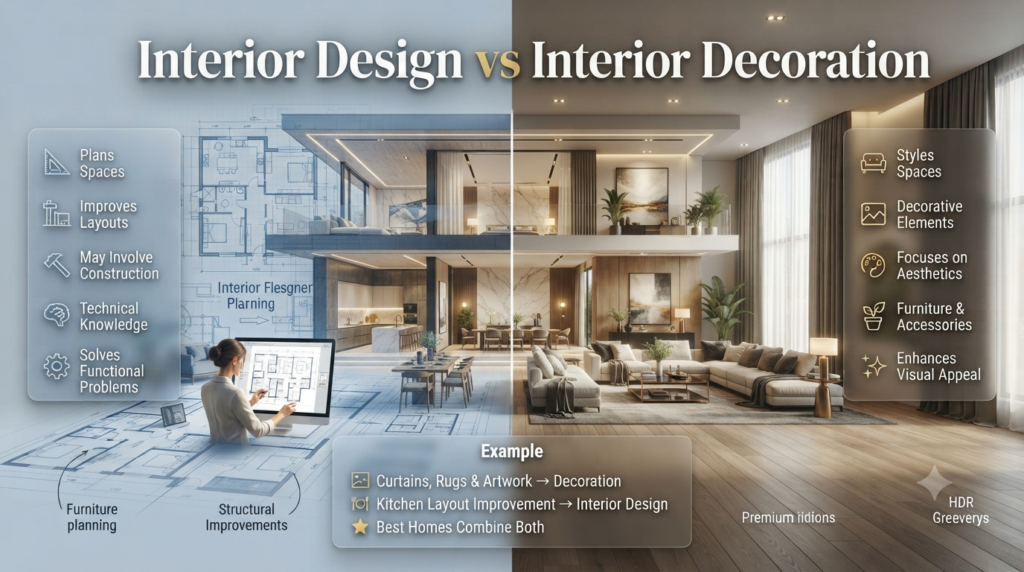
Although these terms are often used interchangeably, they are different professions.
| Interior Design | Interior Decoration |
|---|---|
| Plans spaces | Styles spaces |
| Improves layouts | Adds decorative elements |
| May involve construction | Usually cosmetic updates |
| Requires technical knowledge | Focuses on aesthetics |
| Solves functional problems | Enhances visual appeal |
Example
Buying curtains, rugs, and artwork is decoration.
Changing the kitchen layout to improve workflow is interior design.
The best homes combine both.
The Seven Principles of Interior Design
Professional designers follow several core principles to create balanced and attractive interiors.
1. Balance
Balance creates visual stability by evenly distributing furniture, colors, and decorative elements.
There are three types:
Symmetrical Balance
Chair      Sofa      Chair

 Lamp                Lamp
Creates:
- Formal appearance
- Elegant atmosphere
- Timeless design
Asymmetrical Balance
Large Sofa

Coffee Table

Chair + Floor Lamp
Creates:
- Relaxed feel
- Modern appearance
- Dynamic composition
Radial Balance
      Chair

Chair   Table   Chair

      Chair
Often used in:
- Dining rooms
- Conversation areas
- Hotel lobbies
2. Harmony
Harmony ensures every element works together.
This includes:
- Furniture
- Flooring
- Lighting
- Colors
- Fabrics
- Decorative accessories
A harmonious room feels unified without becoming repetitive.
3. Contrast
Contrast prevents interiors from looking dull.
Examples include:
- Black and white
- Wood and metal
- Matte and glossy finishes
- Curved and straight furniture
- Rough stone and soft fabrics
Contrast adds depth and personality.
4. Emphasis
Every room should have one focal point.
Examples:
- Fireplace
- Statement wall
- Artwork
- Television
- Large window
- Luxury chandelier
Everything else should support—not compete with—that focal point.
5. Rhythm
Rhythm guides the eye naturally around a room.
Designers create rhythm by repeating:
- Colors
- Materials
- Shapes
- Lighting
- Patterns
For example, using oak wood in flooring, shelves, and furniture creates consistency without monotony.
6. Scale and Proportion
Furniture should always match the size of the room.
| Room Size | Recommended Sofa |
|---|---|
| Small Apartment | 2-Seater |
| Medium Living Room | 3-Seater |
| Large Open Space | Sectional Sofa |
Oversized furniture is one of the biggest mistakes homeowners make.
7. Functionality
Beautiful interiors should also be practical.
Ask yourself:
- Can people move comfortably?
- Is storage sufficient?
- Is lighting appropriate?
- Are seating areas comfortable?
- Is the room easy to clean?
Professional designers always prioritize functionality before decoration.
⚠ Mistake to Avoid: Never buy furniture before measuring your room. A piece that looks perfect in a showroom may overwhelm your home.
The Essential Elements of Interior Design
While principles guide decisions, these elements form the foundation of every interior.
Space
Space is the starting point of every design project.
Designers balance:
- Positive space (occupied)
- Negative space (empty)
- Vertical space
- Horizontal space
Proper balance prevents clutter while improving comfort.
Line
Lines influence how a room feels.
| Line Type | Effect |
|---|---|
| Horizontal | Calm and relaxing |
| Vertical | Makes ceilings appear taller |
| Diagonal | Adds movement |
| Curved | Creates softness |
Form
Form refers to shape.
Examples include:
- Rectangular sofas
- Circular dining tables
- Curved armchairs
- Cylindrical pendant lights
Mixing forms creates visual interest.
Light
Lighting dramatically changes how a room looks and feels.
Professional interiors combine:
- Ambient lighting
- Task lighting
- Accent lighting
- Decorative lighting
We’ll explore lighting in detail in Part 2.
Color
Colors affect emotions and perception.
They can make a room feel:
- Larger
- Smaller
- Brighter
- Cozier
- Cooler
- Warmer
Choosing the right color palette is one of the most important design decisions.
For expert color inspiration, explore the Paint Color category.
Texture
Texture creates depth and comfort.
Popular textures include:
- Wood
- Marble
- Linen
- Leather
- Velvet
- Concrete
- Glass
- Woven fabrics
Professional designers layer multiple textures to create luxurious interiors.
Pattern
Patterns add personality.
Examples include:
- Floral wallpaper
- Geometric rugs
- Chevron cushions
- Herringbone flooring
The key is balance—too many patterns can overwhelm a space.
⭐ Expert Tip: A professionally designed room usually combines at least four materials—such as wood, metal, fabric, and stone—to create depth and visual richness.
Popular Interior Design Styles
Choosing a style helps create a cohesive and timeless home.
Modern Interior Design
Characteristics:
- Clean lines
- Neutral colors
- Minimal decoration
- Functional furniture
- Open layouts
- Glass and metal finishes
Best for:
- Apartments
- Modern homes
- Offices
Explore our complete Modern Interior Design Guide to discover practical ideas, furniture choices, color schemes, room-by-room inspiration, and expert tips for creating a stylish modern space.
Contemporary Interior Design
Contemporary design reflects today’s evolving trends.
Features include:
- Curved furniture
- Mixed materials
- Bold lighting
- Sustainable finishes
- Flexible layouts
Scandinavian Interior Design
Inspired by Nordic living, Scandinavian interiors emphasize comfort and simplicity.
Key features:
- White walls
- Light wood
- Cozy textiles
- Functional furniture
- Natural lighting
- Indoor plants
Minimalist Interior Design
Minimalism follows the philosophy of “less is more.”
Characteristics:
- Hidden storage
- Clean surfaces
- Neutral palettes
- Simple furniture
- Clutter-free spaces
Industrial Interior Design
Inspired by warehouses and lofts.
Features:
- Exposed brick
- Concrete
- Steel
- Black metal
- Reclaimed wood
- Leather furniture
Traditional Interior Design
Known for elegance and symmetry.
Includes:
- Rich wood furniture
- Crown molding
- Classic chandeliers
- Luxurious fabrics
- Timeless layouts
Transitional Interior Design
A blend of traditional and modern.
Perfect for homeowners who want timeless interiors with updated finishes.
Bohemian Interior Design
Creative, colorful, and eclectic.
Characteristics:
- Layered textiles
- Handmade décor
- Mixed patterns
- Vintage furniture
- Global influences
Farmhouse Interior Design
Warm and inviting.
Popular elements:
- Rustic wood
- Neutral colors
- Open shelving
- Comfortable seating
- Black hardware
For more ideas, explore our Farmhouse Interior Design Guide to create a warm, timeless, and effortlessly inviting home.
Japandi Interior Design
Combines Japanese minimalism with Scandinavian comfort.
Features:
- Earthy colors
- Natural materials
- Clean lines
- Functional furniture
- Peaceful atmosphere
Interior Design MintPalDecor
Blends modern interior styling with warm, practical, and visually balanced home decor ideas.
Features:
- Modern and elegant interiors
- Warm, welcoming color palettes
- Stylish yet functional furniture
- Thoughtful space planning
- Decorative accents with personality
- Clean and organized layouts
- Comfortable and practical living spaces
Explore our complete Interior Design MintPalDecor Guide to discover detailed design ideas, color combinations, furniture choices, space-planning tips, and practical ways to create a warm, stylish, and functional home.
Interior Design DrHomey
Combines modern home styling with practical, comfortable, and personalized interior design ideas for everyday living.
Features:
- Modern and timeless interiors
- Comfortable furniture choices
- Balanced color palettes
- Functional space planning
- Stylish home decor
- Smart storage solutions
- Warm and inviting atmosphere
Explore our complete Interior Design DrHomey Guide to discover practical design ideas, furniture selections, color schemes, space-planning solutions, storage tips, and inspiring ways to create a comfortable, stylish, and personalized home.
Minecraft Interior Design
Transforms Minecraft builds into detailed, functional, and visually appealing spaces inspired by real-world interior design.
Features:
- Creative room layouts
- Functional furniture builds
- Custom kitchens and bedrooms
- Modern and traditional styles
- Decorative blocks and details
- Smart space utilization
- Lighting and atmosphere
- Cohesive color and material combinations
Explore our complete Minecraft Interior Design Guide to discover creative room layouts, furniture-building ideas, lighting techniques, decorative details, smart space-saving solutions, and stylish ways to create realistic Minecraft interiors.
🏡 Interior Designer Advice: Instead of copying a style exactly, choose one as your foundation and add personal touches that reflect your lifestyle. This creates a home that feels authentic rather than staged.
The Professional Interior Design Process
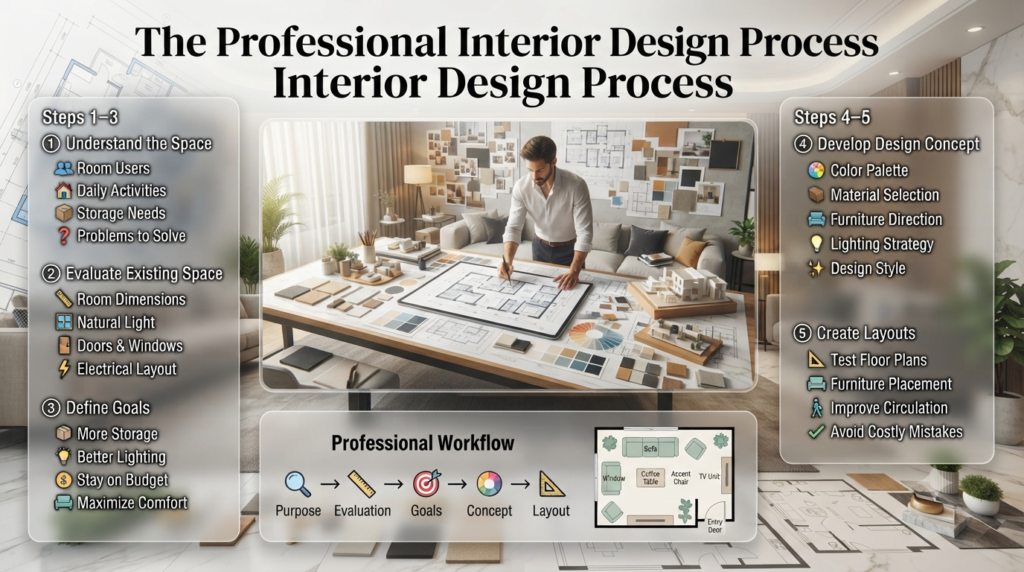
Professional designers rarely start by shopping for furniture. Instead, they follow a structured process that ensures every decision supports the overall vision.
Step 1: Understand the Purpose of the Space
Ask:
- Who will use this room?
- What activities happen here?
- How many people need to be accommodated?
- What storage is required?
- What problems need solving?
Why It Matters
A room designed for entertaining guests requires a different layout than one intended for family movie nights or remote work.
Step 2: Evaluate the Existing Space
Carefully assess:
- Room dimensions
- Ceiling height
- Window placement
- Natural light
- Door locations
- Electrical outlets
- Architectural features
- Circulation paths
Document everything before making design decisions.
Step 3: Define Your Goals
Examples include:
- Increase storage
- Improve lighting
- Make the room feel larger
- Create a modern look
- Maximize seating
- Stay within budget
Clear goals keep the project focused and prevent unnecessary expenses.
Step 4: Develop a Design Concept
Create a vision that includes:
- Design style
- Color palette
- Material selection
- Furniture direction
- Lighting strategy
- Decorative theme
This concept becomes the roadmap for the entire project.
Step 5: Create Preliminary Layouts
Before buying furniture, sketch multiple layout options.
+----------------------------------+
|             Window               |
|                                  |
|  Sofa         Coffee Table       |
|                                  |
| Accent Chair      TV Unit        |
|                                  |
| Entry Door                      |
+----------------------------------+
Testing layouts on paper helps avoid expensive mistakes during installation.
Continue Reading
If you’re planning a renovation or decorating project, you’ll also find practical renovation tips in Home Improvement and additional design inspiration in the Interior Design section.
Space Planning: The Foundation of Every Successful Interior Design
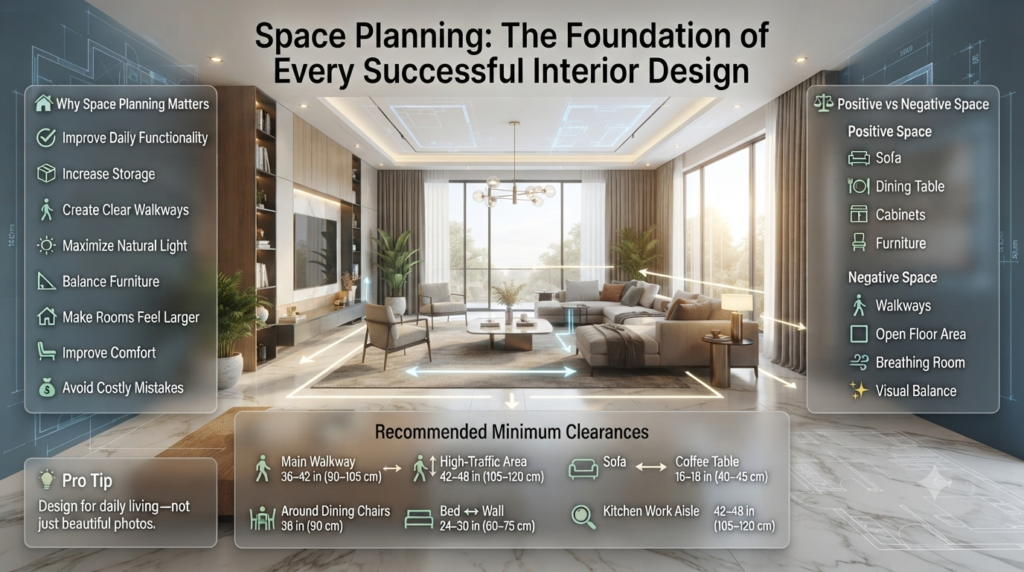
Space planning is the process of organizing furniture, circulation paths, storage, and functional areas within a room to maximize comfort, efficiency, and visual balance. It ensures every square foot serves a purpose while maintaining easy movement and a cohesive design.
One of the biggest mistakes homeowners make is purchasing furniture before understanding how the room should function. Professional interior designers always begin with a space plan because even the most beautiful furniture can make a room feel cramped if it’s arranged poorly.
Whether you’re designing a studio apartment or a spacious family home, effective space planning helps you create rooms that feel open, organized, and comfortable.
Why Space Planning Is So Important
Good space planning helps you:
- Improve daily functionality
- Increase storage without adding clutter
- Create clear walking paths
- Maximize natural light
- Balance furniture proportions
- Make small rooms feel larger
- Enhance comfort and usability
- Avoid expensive design mistakes
For additional layout inspiration and design ideas, browse the Interior Design section.
💡 Pro Tip: Before buying any furniture, imagine your daily routine in the room. Design should support how you actually live—not just how a room looks in photos.
Understanding Positive and Negative Space
Professional designers divide every room into two types of space:
| Type of Space | Description | Example |
|---|---|---|
| Positive Space | Areas occupied by furniture or décor | Sofa, dining table, cabinets |
| Negative Space | Empty areas that provide breathing room | Walkways, open floor area |
A common misconception is that filling every empty corner makes a room feel complete. In reality, too much furniture reduces functionality and creates visual clutter.
A balanced mix of positive and negative space makes interiors feel more spacious and inviting.
The Importance of Circulation
Circulation refers to the pathways people use to move through a room.
A well-designed layout should allow people to move comfortably without squeezing between furniture.
Recommended Minimum Clearances
| Area | Recommended Clearance |
|---|---|
| Main Walkway | 36–42 inches (90–105 cm) |
| High-Traffic Areas | 42–48 inches (105–120 cm) |
| Around Dining Chairs | 36 inches (90 cm) |
| Between Sofa and Coffee Table | 16–18 inches (40–45 cm) |
| Bed to Wall | 24–30 inches (60–75 cm) |
| Kitchen Work Aisle | 42–48 inches (105–120 cm) |
Maintaining these clearances improves comfort and accessibility while preventing the room from feeling overcrowded.
How to Measure a Room Before Designing
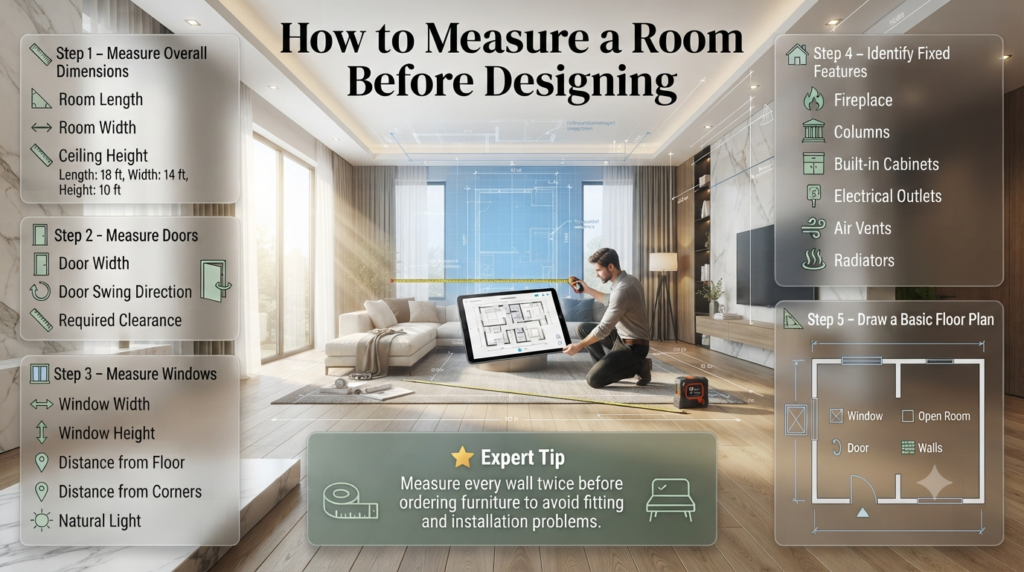
Accurate measurements are the foundation of every successful interior design project.
Step 1: Measure Overall Dimensions
Record:
- Room length
- Room width
- Ceiling height
Example:
Living Room

Length : 18 ft
Width  : 14 ft
Height : 10 ft
Step 2: Measure Doors
Record:
- Door width
- Door swing direction
- Clearance required
Example:
Door Width : 36"

Door Swing

  ↺
| Door |
Step 3: Measure Windows
Include:
- Width
- Height
- Distance from floor
- Distance from corners
Natural light greatly influences furniture placement.
Step 4: Identify Fixed Features
Mark:
- Fireplace
- Columns
- Built-in cabinets
- Electrical outlets
- Air vents
- Radiators
These elements cannot easily be moved, so your layout should work around them.
Step 5: Draw a Basic Floor Plan
Even a simple sketch helps visualize furniture placement.
+--------------------------------+
|            Window              |
|                                |
|                                |
|                                |
|                                |
| Door                      Wall |
+--------------------------------+
You don’t need advanced software—a pencil sketch is enough to start.
⭐ Expert Tip: Measure every wall twice before ordering furniture. Even a small error can result in pieces that don’t fit through doors or into the intended space.
Furniture Planning: Think Before You Buy
Buying furniture without a plan often leads to wasted money and poor layouts.
Before purchasing, consider:
- Room dimensions
- Furniture scale
- Number of users
- Storage needs
- Traffic flow
- Existing architectural features
Ask yourself:
- Will this piece block movement?
- Can doors and drawers still open?
- Is there enough seating?
- Does the furniture fit the room proportionally?
Furniture Size Guide
Living Room
| Furniture | Recommended Size |
|---|---|
| Coffee Table Height | 16–18 in (40–45 cm) |
| Sofa Seat Height | 17–19 in (43–48 cm) |
| Side Table Height | Same as sofa arm |
| TV Viewing Distance | 1.5–2.5 × screen diagonal |
Bedroom
| Furniture | Recommended Size |
|---|---|
| Clearance Around Bed | 24–30 in |
| Nightstand Height | Level with mattress |
| Wardrobe Depth | 24 in (60 cm) |
Dining Room
| Furniture | Recommended Size |
|---|---|
| Dining Table Height | 30 in (76 cm) |
| Chair Seat Height | 18 in (46 cm) |
| Space Per Person | 24 in (60 cm) |
Common Furniture Layout Mistakes
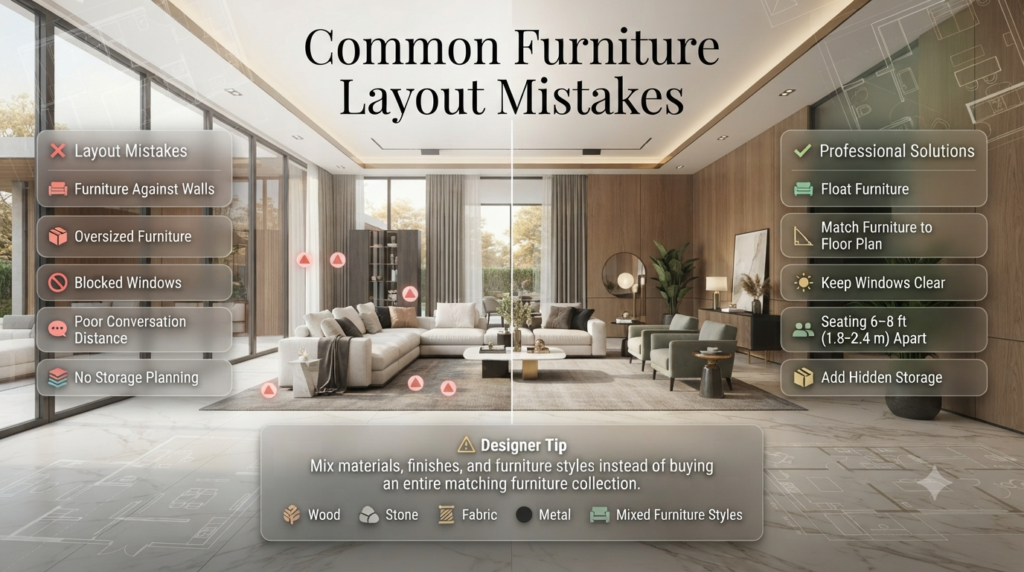
1. Pushing All Furniture Against Walls
Many people believe this makes a room look bigger.
In reality, it often creates an empty center and weakens conversation areas.
Instead, float furniture when possible.
2. Choosing Oversized Furniture
A large sectional may look beautiful in a showroom but dominate a compact living room.
Always compare furniture dimensions with your floor plan.
3. Ignoring Conversation Distance
Seating should encourage interaction.
Ideal distance between sofas and chairs:
6–8 feet (1.8–2.4 m)
4. Blocking Windows
Natural light makes rooms feel larger.
Avoid placing tall cabinets directly in front of windows.
5. Ignoring Storage
Beautiful rooms become cluttered if storage is overlooked.
Include:
- Built-in shelving
- Hidden storage ottomans
- Storage benches
- Multifunctional furniture
⚠ Mistake to Avoid: Never buy every piece from the same furniture collection. Mixing materials, finishes, and shapes creates a more natural and professionally designed interior.
Interior Design Color Theory
Color theory in interior design explains how colors interact, influence emotions, and affect the perception of space. Choosing the right color palette helps create harmony, improve mood, and make rooms feel larger, warmer, brighter, or more relaxing.
Color is one of the most powerful tools in interior design. The right palette can completely transform a room without changing its layout.
For inspiration on selecting the perfect shades, explore the Paint Color collection.
Understanding the Color Wheel
Interior designers use the color wheel to build balanced palettes.
Primary Colors
- Red
- Blue
- Yellow
Secondary Colors
- Green
- Orange
- Purple
Tertiary Colors
These are created by mixing primary and secondary colors, offering more nuanced shades for sophisticated interiors.
Warm vs. Cool Colors
| Warm Colors | Cool Colors |
|---|---|
| Red | Blue |
| Orange | Green |
| Yellow | Purple |
| Terracotta | Aqua |
| Coral | Teal |
Warm Colors
Warm tones create energy and intimacy.
Best for:
- Dining rooms
- Living rooms
- Entryways
Cool Colors
Cool shades promote calmness and relaxation.
Ideal for:
- Bedrooms
- Bathrooms
- Home offices
The 60-30-10 Rule
Professional designers often follow this timeless formula:
| Percentage | Purpose |
|---|---|
| 60% | Dominant color (walls) |
| 30% | Secondary color (furniture) |
| 10% | Accent color (accessories) |
Example
Walls      : Soft Beige (60%)

Sofa       : Light Gray (30%)

Pillows    : Navy Blue (10%)
This approach creates visual balance while allowing accent colors to stand out.
How Colors Affect Mood
| Color | Psychological Effect |
|---|---|
| Blue | Calm, peaceful |
| Green | Fresh, balanced |
| Yellow | Cheerful, energetic |
| White | Clean, spacious |
| Gray | Sophisticated, neutral |
| Beige | Warm and inviting |
| Black | Dramatic, elegant |
| Navy | Luxurious, timeless |
Choose colors that align with the room’s purpose rather than following short-lived trends.
📌 Quick Tip: Always test paint samples on your walls before committing. Colors can appear very different under natural daylight and artificial lighting.
Lighting Design: The Secret Behind Great Interiors
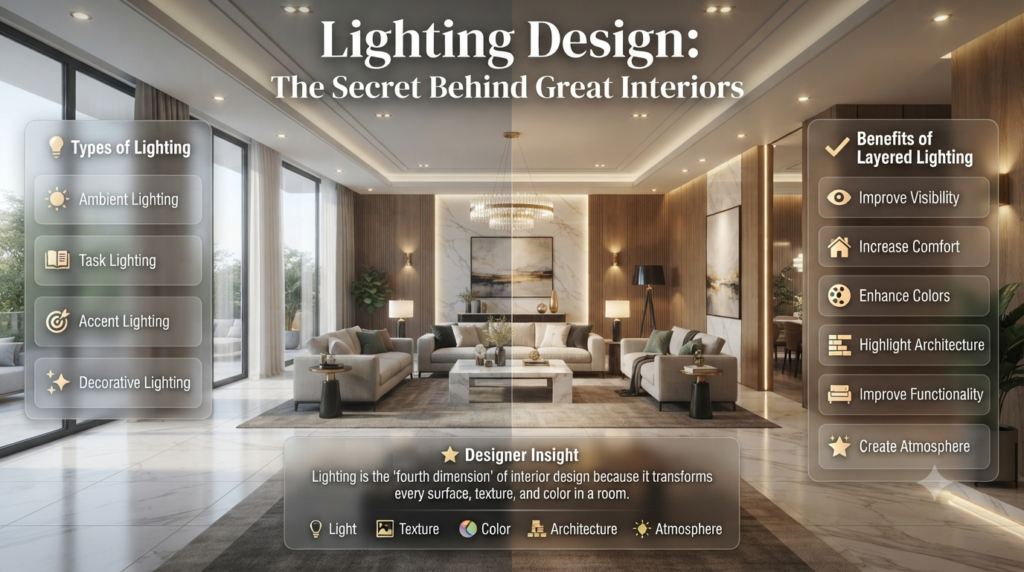
Lighting design combines ambient, task, accent, and decorative lighting to improve visibility, functionality, and atmosphere. A layered lighting plan enhances comfort, highlights architectural features, and brings an interior design concept to life.
Lighting is often called the “fourth dimension” of interior design because it influences every surface, texture, and color in a room.
Even beautifully furnished spaces can feel dull if lighting is poorly planned.
The Four Types of Interior Lighting
1. Ambient Lighting
This is the primary source of illumination.
Examples:
- Ceiling fixtures
- Recessed lights
- Chandeliers
- LED panels
Purpose:
- General visibility
- Overall brightness
2. Task Lighting
Designed for specific activities.
Examples:
- Reading lamps
- Desk lights
- Kitchen under-cabinet LEDs
- Vanity lighting
Purpose:
- Improve focus
- Reduce eye strain
3. Accent Lighting
Highlights specific features.
Examples:
- Artwork lighting
- Shelf LEDs
- Wall washers
- Picture lights
Purpose:
- Add depth
- Create visual interest
4. Decorative Lighting
Lighting can also serve as a design statement.
Examples:
- Pendant lights
- Sculptural chandeliers
- Designer sconces
Purpose:
- Enhance style
- Create focal points
Layering Light for Better Results
Instead of relying on a single ceiling fixture, combine multiple light sources.
Example: Living Room
- Ambient: Recessed ceiling lights
- Task: Floor lamp beside a reading chair
- Accent: LED shelf lighting
- Decorative: Statement pendant over the coffee table
This layered approach provides flexibility for different activities and moods.
Choosing the Right Light Color
| Color Temperature | Effect | Best Use |
|---|---|---|
| 2700K–3000K | Warm, cozy | Living rooms, bedrooms |
| 3500K–4100K | Neutral | Kitchens, bathrooms |
| 5000K–6500K | Cool, bright | Offices, garages |
Selecting the appropriate color temperature enhances both comfort and functionality.
🏡 Interior Designer Advice: Install dimmer switches wherever possible. They allow you to adjust lighting levels throughout the day, creating a more adaptable and comfortable environment while reducing energy consumption.
How to Plan an Interior Design Budget
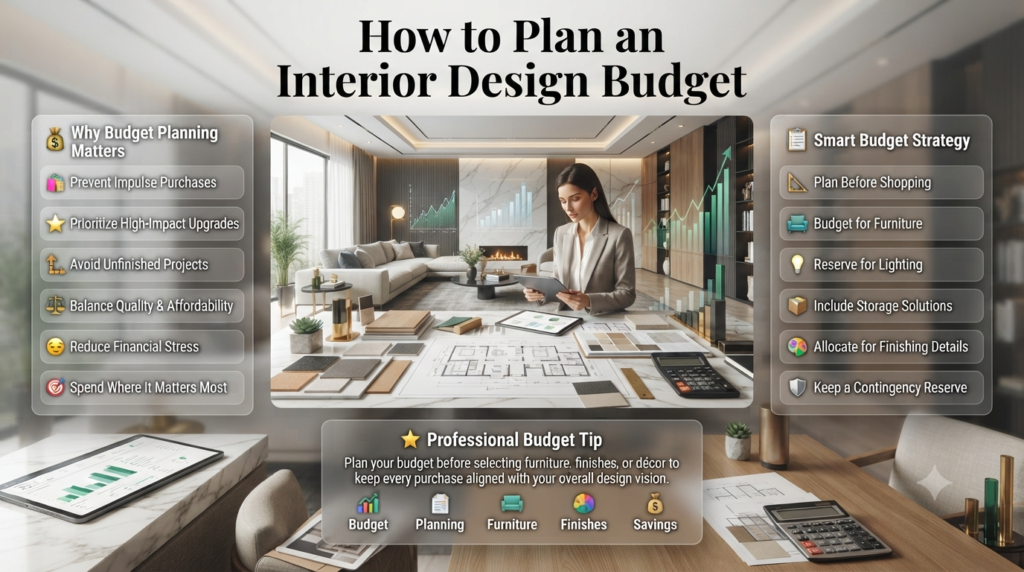
A successful interior design budget prioritizes essential upgrades, allocates funds strategically, and includes a contingency reserve for unexpected costs. Planning your budget before shopping helps prevent overspending while ensuring every purchase supports your overall design vision.
One of the biggest misconceptions about interior design is that creating a beautiful home requires an unlimited budget. In reality, thoughtful planning and smart purchasing decisions often produce better results than simply spending more money.
Professional interior designers always establish a budget before selecting furniture, finishes, or decorative accessories. This approach keeps the project organized, prevents costly mistakes, and ensures every investment adds value to the finished space.
For additional renovation ideas and budgeting inspiration, visit Home Improvement.
Why Budget Planning Matters
A clear budget helps you:
- Prevent impulse purchases
- Prioritize high-impact improvements
- Avoid unfinished projects
- Balance quality with affordability
- Reduce financial stress
- Allocate money where it matters most
Without a financial plan, it’s common to overspend on furniture and then compromise on lighting, storage, or finishing details.
Step 1: Determine Your Total Budget
Before making any purchases, decide how much you’re comfortable investing.
Example:
| Budget Level | Suitable Projects |
|---|---|
| Under $2,000 | Room refresh, paint, décor |
| $2,000–$10,000 | Single-room makeover |
| $10,000–$30,000 | Multiple-room renovation |
| $30,000+ | Full home redesign |
Remember to set realistic expectations. A modest budget can still achieve outstanding results with careful planning.
Step 2: Divide Your Budget by Category
A simple allocation plan keeps spending balanced.
| Category | Suggested Percentage |
|---|---|
| Furniture | 35% |
| Lighting | 10% |
| Paint & Wall Finishes | 10% |
| Flooring | 15% |
| Window Treatments | 10% |
| Décor & Accessories | 10% |
| Contingency Fund | 10% |
This framework can be adjusted depending on your priorities and the scope of your project.
Step 3: Prioritize Essential Investments
Not everything needs to be purchased at once.
Spend More On
- Comfortable sofas
- Quality mattresses
- Durable flooring
- Custom cabinetry
- Ergonomic office furniture
- Energy-efficient lighting
Save On
- Decorative cushions
- Trend-based accessories
- Seasonal décor
- Artwork (initially)
- Accent pieces
Investing in long-lasting items reduces replacement costs over time.
💡 Pro Tip: Buy timeless furniture first and trendy accessories later. Cushions, rugs, and artwork are much easier—and less expensive—to update than sofas or cabinets.
Smart Buying Guide for Interior Design
Making informed purchasing decisions is just as important as choosing the right style.
Before buying any item, ask yourself:
- Does it fit the available space?
- Is it comfortable?
- Will it suit my lifestyle?
- Is it durable?
- Will I still like it in five years?
If the answer to most of these questions is “yes,” it’s likely a worthwhile investment.
Furniture Buying Checklist
✔ Measure your room first
✔ Measure doorways and staircases
✔ Compare furniture dimensions
✔ Test comfort whenever possible
✔ Check warranty information
✔ Choose durable upholstery
✔ Consider maintenance requirements
✔ Think about long-term use
Material Comparison Guide
| Material | Advantages | Considerations |
|---|---|---|
| Solid Wood | Durable, timeless, repairable | Higher initial cost |
| Engineered Wood | Affordable, versatile | Less durable than solid wood |
| Marble | Luxurious appearance | Requires regular sealing |
| Quartz | Low maintenance | Premium price |
| Leather | Elegant and durable | Needs conditioning |
| Linen | Breathable and natural | Wrinkles easily |
| Velvet | Soft and luxurious | Requires careful cleaning |
Select materials based on both aesthetics and practicality.
Sustainable Interior Design
Sustainability has become an essential part of modern interior design.
Eco-conscious choices benefit both your home and the environment.
Sustainable Practices Include
- Choosing responsibly sourced wood
- Using low-VOC paints
- Installing LED lighting
- Selecting energy-efficient appliances
- Buying long-lasting furniture
- Repurposing existing items
- Incorporating recycled materials
Small changes can significantly reduce environmental impact over time.
Common Interior Design Mistakes Beginners Make
Even well-intentioned homeowners can make costly design decisions.
Understanding these mistakes helps you avoid unnecessary expenses and frustration.
Mistake 1: Buying Furniture Before Planning
Why It Happens
People often fall in love with furniture in a showroom without considering room dimensions.
Consequences
- Blocked walkways
- Overcrowded spaces
- Poor furniture proportions
Solution
Always create a floor plan and measure your room before making any purchase.
Mistake 2: Ignoring Lighting
Many homeowners rely solely on one ceiling light.
Consequences
- Dark corners
- Flat-looking interiors
- Reduced functionality
Solution
Layer ambient, task, accent, and decorative lighting.
Mistake 3: Choosing Paint First
Paint is one of the easiest elements to change.
Furniture, flooring, and cabinetry are far more permanent.
Better Approach
Choose major furnishings first, then select paint colors that complement them.
Mistake 4: Following Every Trend
Design trends change quickly.
An interior based entirely on trends may feel outdated within a few years.
Better Strategy
Use timeless foundations with trend-based accessories that can be updated easily.
Mistake 5: Poor Scale and Proportion
Furniture that is too large or too small disrupts visual balance.
Always compare furniture dimensions with room measurements.
Mistake 6: Forgetting Storage
Beautiful spaces quickly become cluttered without adequate storage.
Include:
- Built-in shelving
- Storage benches
- Multifunctional furniture
- Hidden storage solutions
Mistake 7: Decorating Everything at Once
A thoughtfully designed home evolves over time.
Living in the space before making every purchase helps you understand what you truly need.
⚠ Mistake to Avoid: Don’t copy a room exactly as it appears online. Every home has different dimensions, lighting conditions, and lifestyle requirements.
Expert Advice from Professional Interior Designers
Experienced designers often follow principles that aren’t immediately obvious to beginners.
1. Design Around Daily Life
A beautiful home should make everyday routines easier.
Think about:
- Morning habits
- Family gatherings
- Work-from-home needs
- Storage requirements
Design should reflect how you actually live.
2. Layer Instead of Matching
Professional interiors rarely feature identical furniture sets.
Instead, combine:
- Different materials
- Complementary finishes
- Various textures
- Mixed lighting
Layering creates depth and character.
3. Create Visual Balance
Distribute visual weight evenly throughout the room.
Balance heavy furniture with lighter elements such as mirrors, artwork, or open shelving.
4. Invest in Lighting
Lighting can dramatically improve even modest interiors.
Use multiple light sources to create flexibility and atmosphere.
5. Think Long-Term
Choose durable finishes and timeless designs for permanent features.
Save experimental colors and trends for accessories.
🏡 Interior Designer Advice: A well-designed home should tell your story. Include meaningful artwork, travel souvenirs, heirloom furniture, or handcrafted pieces that reflect your personality rather than decorating solely to follow trends.
Interior Design Trends Worth Considering
While timeless design should always form the foundation of your home, current trends can introduce fresh ideas and improve functionality.
1. Nature-Inspired Interiors
Natural materials continue to dominate interior design.
Popular choices include:
- Oak
- Walnut
- Stone
- Linen
- Rattan
- Bamboo
Indoor plants also remain an essential design feature.
2. Warm Neutral Color Palettes
Cool gray interiors are gradually giving way to warmer tones.
Trending colors include:
- Beige
- Sand
- Taupe
- Clay
- Warm white
- Mushroom
These shades create inviting, comfortable spaces.
3. Multifunctional Spaces
As homes serve more purposes than ever, rooms are becoming increasingly flexible.
Examples:
- Guest room + office
- Dining room + workspace
- Living room + reading corner
Furniture with multiple functions helps maximize available space.
4. Curved Furniture
Rounded edges soften interiors and create a welcoming atmosphere.
Popular pieces include:
- Curved sofas
- Oval dining tables
- Arched mirrors
- Rounded coffee tables
5. Statement Lighting
Lighting is now viewed as functional art.
Examples:
- Oversized pendants
- Sculptural chandeliers
- Designer wall sconces
A single statement fixture can transform an entire room.
6. Sustainable Design
Eco-friendly choices continue to influence purchasing decisions.
Homeowners increasingly prioritize:
- Long-lasting materials
- Energy efficiency
- Locally sourced products
- Recycled finishes
7. Personalized Interiors
Rather than copying showroom displays, homeowners are embracing individuality through:
- Custom artwork
- Vintage furniture
- Handmade décor
- Family heirlooms
- Unique color palettes
The result is a home that feels authentic and meaningful.
Printable Interior Design Checklist
Use this checklist before beginning any interior design project.
Planning
✔ Define the room’s purpose
✔ Measure the space accurately
✔ Create a realistic budget
✔ Select a design style
✔ Develop a color palette
✔ Plan furniture placement
Furniture
✔ Measure furniture dimensions
✔ Confirm delivery access
✔ Check comfort
✔ Verify durability
✔ Compare warranties
Lighting
✔ Ambient lighting
✔ Task lighting
✔ Accent lighting
✔ Decorative lighting
✔ Dimmer switches
Color & Materials
✔ Paint samples tested
✔ Flooring selected
✔ Fabric samples reviewed
✔ Material durability evaluated
Final Styling
✔ Artwork
✔ Rugs
✔ Curtains
✔ Indoor plants
✔ Decorative accessories
✔ Personal touches
What is the difference between interior design and interior decorating?
Although the terms are often used interchangeably, interior design and interior decorating are not the same. Interior design is a professional discipline that focuses on planning the functionality, layout, lighting, materials, and overall usability of a space. It often involves structural planning, space optimization, and technical knowledge. Interior decorating, on the other hand, focuses on enhancing the visual appeal of an existing space through furniture, colors, artwork, textiles, and accessories. In simple terms, an interior designer creates the foundation of a space, while a decorator adds the finishing touches that reflect style and personality.
Key Points:
✔ Interior design improves both function and aesthetics.
✔ Interior decorating focuses mainly on appearance.
✔ Designers often work with architects and contractors.
✔ Decorators usually work after construction or renovation is complete.
✔ Many projects benefit from combining both services.
How do I choose the right interior design style for my home?
The best interior design style is one that complements your lifestyle, daily routines, and the architecture of your home—not simply the latest trend on social media. Start by identifying how you use each room, the atmosphere you want to create, and the colors and materials you naturally gravitate toward. Rather than copying a single design style, many professional designers recommend blending elements from complementary styles to create a home that feels timeless and personal. A well-designed interior should remain comfortable and functional for years, even as trends evolve.
Key Points:
✔ Consider your lifestyle before selecting a style.
✔ Match the design to your home’s architecture.
✔ Create inspiration boards before purchasing furniture.
✔ Mix styles carefully while maintaining a consistent color palette.
✔ Focus on long-term comfort instead of short-term trends.
What are the biggest mistakes people make when designing their home?
One of the most common mistakes is purchasing furniture before creating a proper layout. Homeowners often choose pieces based on appearance without measuring the room or considering traffic flow, resulting in cramped spaces and poor functionality. Other frequent mistakes include relying on a single ceiling light, ignoring storage needs, selecting paint before choosing furniture, and trying to follow every design trend at once. Successful interior design begins with careful planning, accurate measurements, and a clear understanding of how the space will be used every day.
Key Points:
✔ Always measure the room before buying furniture.
✔ Leave comfortable walking space between furniture.
✔ Layer ambient, task, and accent lighting.
✔ Include practical storage solutions from the beginning.
✔ Build a timeless foundation and update accessories as trends change.
How can I make a small room look bigger without renovating?
Making a small room feel larger doesn’t always require knocking down walls. Professional interior designers rely on visual techniques such as using light-colored walls, maximizing natural light, selecting furniture with exposed legs, and incorporating mirrors to reflect light and create the illusion of depth. Multifunctional furniture and smart storage solutions also reduce clutter, making the room feel more open and organized. The goal is to create a sense of openness through thoughtful planning rather than adding more decorative elements.
Key Points:
✔ Choose light and neutral wall colors.
✔ Use mirrors to reflect natural light.
✔ Select furniture that suits the room’s scale.
✔ Keep walkways clear and uncluttered.
✔ Use vertical storage to maximize floor space.
Is hiring an interior designer worth the investment?
Hiring an interior designer can save both time and money by helping you avoid expensive mistakes and make informed design decisions. Designers understand space planning, furniture proportions, lighting, materials, and project coordination, allowing them to create interiors that are not only beautiful but also practical and long-lasting. Whether you’re renovating an entire home or redesigning a single room, professional guidance often leads to better results, improved functionality, and increased property value. Even if you have a limited budget, consulting a designer during the planning stage can prevent costly changes later.
Key Points:
✔ Professional planning reduces costly mistakes.
✔ Designers optimize layouts and maximize available space.
✔ They help create a cohesive and timeless design.
✔ They can recommend durable materials and trusted suppliers.
✔ Well-designed interiors often improve resale value and everyday comfort.
Conclusion
Interior design is far more than arranging furniture or selecting attractive colors—it’s about creating spaces that improve the way you live every day. A thoughtfully designed home balances functionality, comfort, aesthetics, and personality, ensuring every room serves a purpose while reflecting your unique style. Whether you’re updating a single room, renovating an entire house, or building your dream home from scratch, applying the right design principles will help you create interiors that remain beautiful and practical for years to come.
Throughout this guide, we’ve explored the fundamentals of interior design, including space planning, furniture layouts, color psychology, lighting strategies, budgeting, design styles, and professional techniques used by experienced designers. By planning carefully, investing in quality materials, avoiding common mistakes, and focusing on timeless design rather than short-lived trends, you can confidently transform any space into one that is both visually appealing and highly functional.
Remember, exceptional interior design isn’t measured by how expensive your furniture is—it’s measured by how well your home supports your lifestyle, makes everyday living easier, and creates an environment where you truly enjoy spending time.
If you’re ready to continue your design journey, explore more expert resources, decorating inspiration, and practical guides at Interior Design Mode 24. You can also discover renovation ideas in Home Improvement, browse expert articles in Interior Design, and find the perfect color inspiration in Paint Color to bring your vision to life.
The best time to create a home you truly love is now. Start with a clear plan, make thoughtful decisions, and remember that great interior design is a journey of continuous improvement. Every well-planned choice brings you one step closer to creating a space that is beautiful, functional, timeless, and uniquely yours.

Leave a Reply