
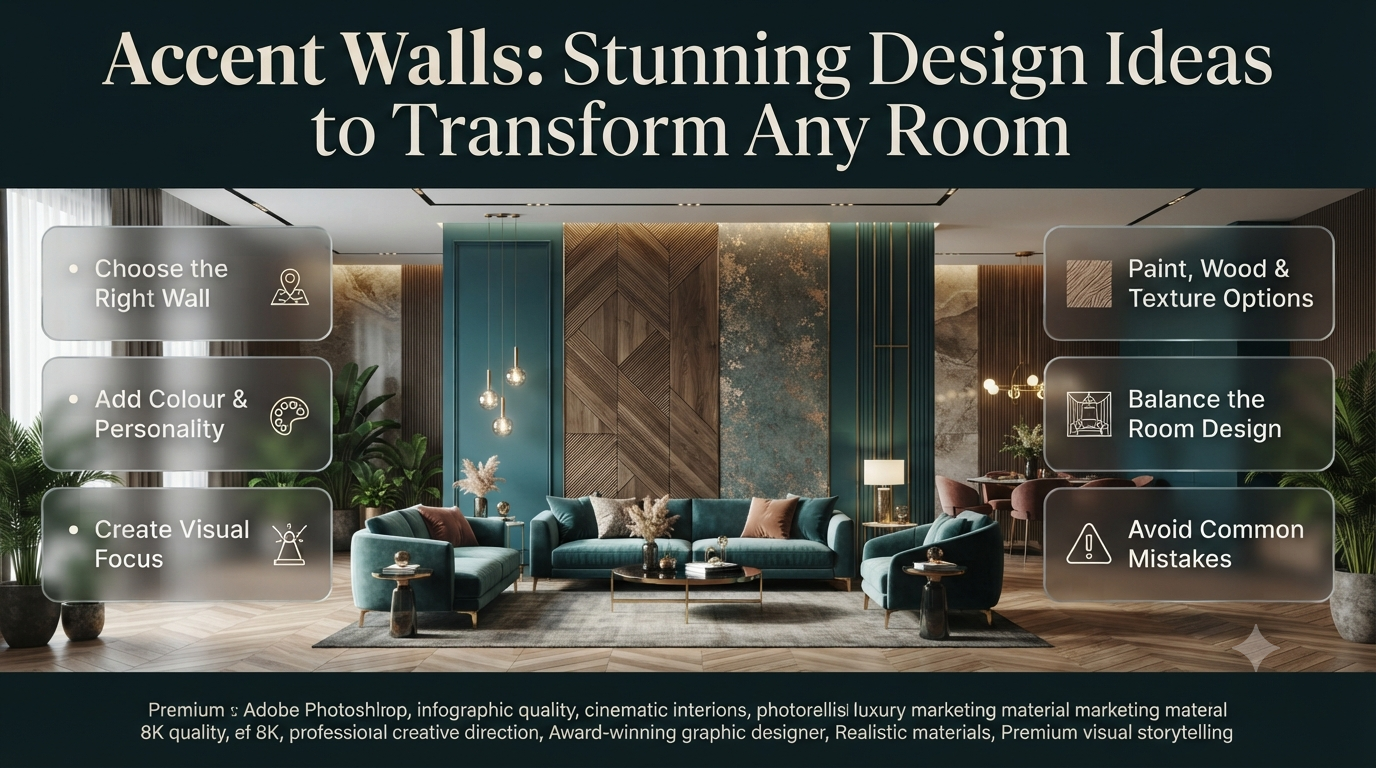
Introduction: Why Accent Walls Can Completely Change a Room
Have you ever walked into a room and felt that something was missing, even though the furniture, lighting, and décor looked good? Often, the problem isn’t the space itself—it’s the lack of a strong visual focus. This is where accent walls can make a dramatic difference.
An accent wall is one of the easiest ways to add personality, colour, texture, and character to a room without redesigning the entire space. Whether you want to make a small bedroom feel larger, create a luxury living room atmosphere, or add creativity to a plain home office, the right accent wall can completely transform the look and feel of your interior.
Many homeowners struggle with questions like: Which wall should become an accent wall? What colour works best? Should I use paint, wallpaper, wood panels, or textured finishes? A poorly planned accent wall can make a room feel unbalanced, but a thoughtfully designed one can become the most attractive feature of your home.
In this complete guide, you’ll learn what accent walls are, why they work, how to choose the right wall, popular design ideas, common mistakes to avoid, and expert tips for creating a beautiful feature wall that matches your style.
For more home improvement inspiration, explore our guides on Home Improvement and Interior Design.
What Is an Accent Wall?
An accent wall is a single wall in a room designed differently from the other walls to create a visual focal point. It may use a bold colour, wallpaper, natural materials, patterns, artwork, or unique textures to attract attention and enhance the overall design.
Unlike traditional walls that blend into the background, an accent wall is intentionally created to stand out. It gives the room depth and allows homeowners to introduce creativity without overwhelming the entire space.
For example:
- A deep green wall behind a sofa can create a luxurious living room feel.
- A wooden panel wall behind a bed can add warmth and a hotel-inspired look.
- A patterned wallpaper wall in a dining area can create a stylish conversation point.
Accent walls are popular because they offer a balance between simplicity and creativity. You can experiment with design without committing to a complete room makeover.
Why Are Accent Walls Popular in Modern Interior Design?
Modern homeowners are moving away from plain, one-colour rooms and looking for ways to make their spaces feel more personal. Accent walls provide an affordable solution that creates a designer appearance without requiring major renovations.
A well-designed accent wall can:
- Add personality to a plain room
- Highlight important architectural features
- Create a luxury appearance
- Improve the balance of colours in a space
- Make small rooms feel more intentional
- Showcase artwork, furniture, or décor
Interior designers often use accent walls because they guide the eye. When someone enters a room, the accent wall naturally becomes the first area they notice.
💡 Pro Tip: The best accent walls do not compete with the room—they support the overall design. The goal is harmony, not simply making one wall brighter than everything else.
Benefits of Adding Accent Walls to Your Home
1. Creates a Strong Focal Point
Every well-designed room needs a visual centre. Without one, a space can feel flat or unfinished.
An accent wall immediately gives the eye a place to rest. It helps organise the room by making certain areas more important.
Examples:
- Behind a television unit in a living room
- Behind a bed in a bedroom
- Behind a dining table
- Behind a desk in a home office
A focal wall makes furniture placement feel more intentional and creates a professional interior design effect.
2. Adds Colour Without Overwhelming the Space
Many homeowners love bold colours but hesitate to paint an entire room with them. An accent wall solves this problem.
Instead of covering all four walls with navy blue, charcoal grey, emerald green, or terracotta, you can introduce these colours on one wall while keeping the rest of the room balanced.
This approach works especially well with:
- Dark colours
- Rich jewel tones
- Dramatic patterns
- Statement wallpapers
📌 Quick Tip: If you love a bold colour but worry it may feel too intense, test it on one accent wall first before committing to the entire room.
3. Makes Rooms Feel More Expensive
A professionally designed accent wall can create a high-end appearance without a luxury renovation budget.
Simple additions such as:
- Wood slat panels
- Decorative moulding
- Textured paint
- Stone finishes
- Wallpaper patterns
can make a basic room look more customised.
Many modern homes use accent walls to recreate the feeling of boutique hotels, luxury apartments, and designer spaces.
4. Highlights Architectural Features
Accent walls are not only about colour. They can also draw attention to unique features in your home.
Examples include:
- Fireplace walls
- Built-in shelves
- TV walls
- Staircase walls
- Bedroom headboard areas
- Entryway walls
Instead of hiding these features, an accent wall makes them a design highlight.
Types of Accent Walls: Which Style Is Right for You?
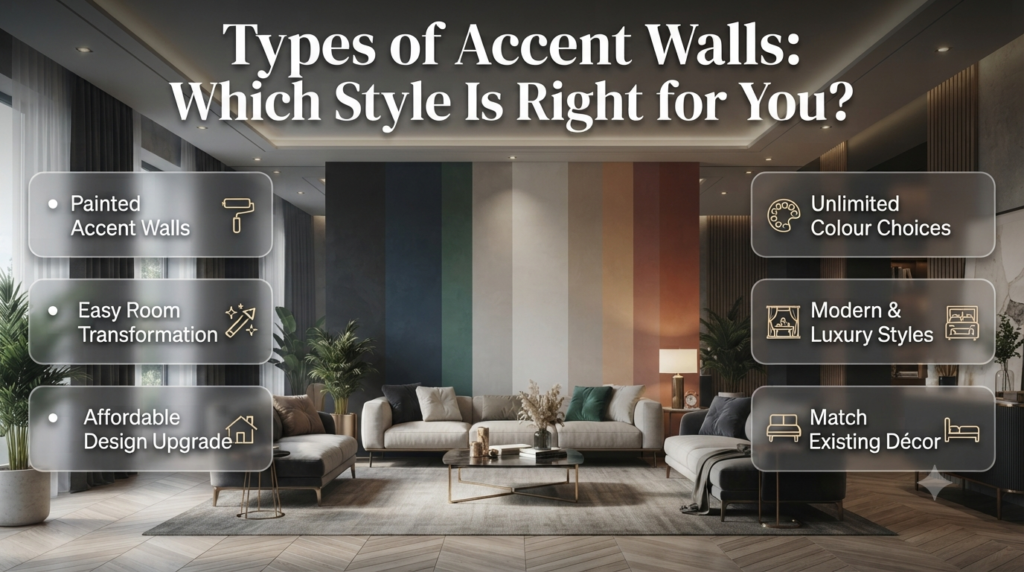
Accent walls come in many different styles. The right choice depends on your budget, room function, personal taste, and existing décor.
Painted Accent Walls
Paint is the most common and affordable accent wall option.
It works well because:
- It is easy to change
- It requires less investment
- It offers unlimited colour choices
- It suits almost every room style
Popular paint choices include:
| Style | Popular Colours |
|---|---|
| Modern | Charcoal, navy, black, deep green |
| Scandinavian | Soft grey, beige, muted blue |
| Luxury | Emerald, dark brown, rich jewel tones |
| Minimalist | Warm white, taupe, earthy shades |
| Bohemian | Terracotta, mustard, olive |
A painted accent wall is ideal for homeowners who want a simple transformation without complicated installation.
Wallpaper Accent Walls
Wallpaper has become extremely popular because modern designs offer more than traditional patterns.
Today’s wallpaper options include:
- Botanical prints
- Geometric patterns
- Textured wallpaper
- Marble effects
- Luxury fabric-inspired designs
Wallpaper works especially well in:
- Bedrooms
- Dining rooms
- Entryways
- Feature walls behind furniture
⚠️ Common Mistake: Choosing wallpaper only because you like the pattern. Always consider whether it matches your furniture, flooring, lighting, and room size.
Wood Accent Walls
Wood accent walls bring warmth and natural texture into interiors.
Popular options include:
- Wood slat walls
- Reclaimed wood panels
- Vertical timber designs
- Decorative wooden panels
Wood works beautifully in:
- Modern homes
- Farmhouse interiors
- Scandinavian designs
- Luxury bedrooms
A wooden accent wall behind a bed or sofa can instantly create a premium appearance.
Textured Accent Walls
Textured walls add depth and a unique visual experience.
Common materials include:
- Stone veneer
- Brick panels
- Plaster finishes
- Concrete textures
- 3D wall panels
These designs are often used in contemporary homes where homeowners want something more distinctive than paint.
How to Choose the Perfect Accent Wall?
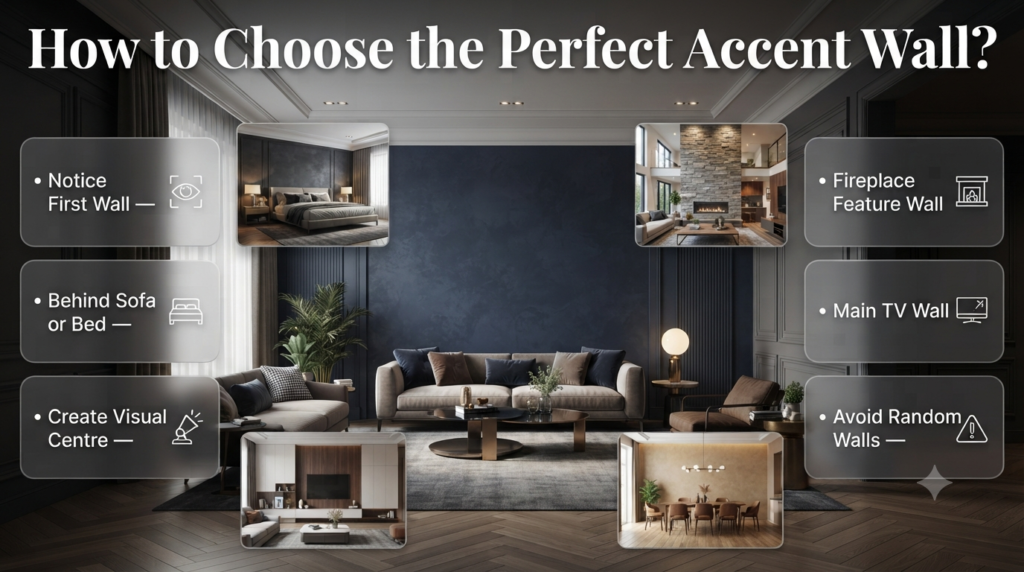
Choosing the right wall is one of the most important decisions. A beautiful colour or material will not work if it is placed on the wrong surface.
Follow these simple guidelines:
Choose the Wall You Naturally Notice First
The best accent wall is usually the first wall people see when entering the room.
Good choices:
✔ Behind the sofa
✔ Behind the bed
✔ Fireplace wall
✔ Main TV wall
✔ Dining feature wall
Avoid random walls that do not have a clear purpose.
Consider the Room’s Layout
The accent wall should support the room arrangement.
For example:
A bedroom:
- Best choice: Wall behind the headboard
- Avoid: Wall blocked by large wardrobes
A living room:
- Best choice: TV wall or sofa wall
- Avoid: Wall with too many doors or interruptions
A home office:
- Best choice: Background wall behind the desk
- Avoid: Wall that creates distractions during video calls
Match the Accent Wall With Existing Colours
An accent wall should connect with the rest of the room.
Look at:
- Furniture colours
- Curtains
- Rugs
- Flooring
- Artwork
- Lighting
A good accent wall feels intentional, not separate.
⭐ Expert Tip: Pick a colour from an existing item in the room—such as a cushion, artwork, or rug—and use a deeper or richer version of that shade for your accent wall.
Accent Wall Colour Ideas and Room-by-Room Accent Wall Designs
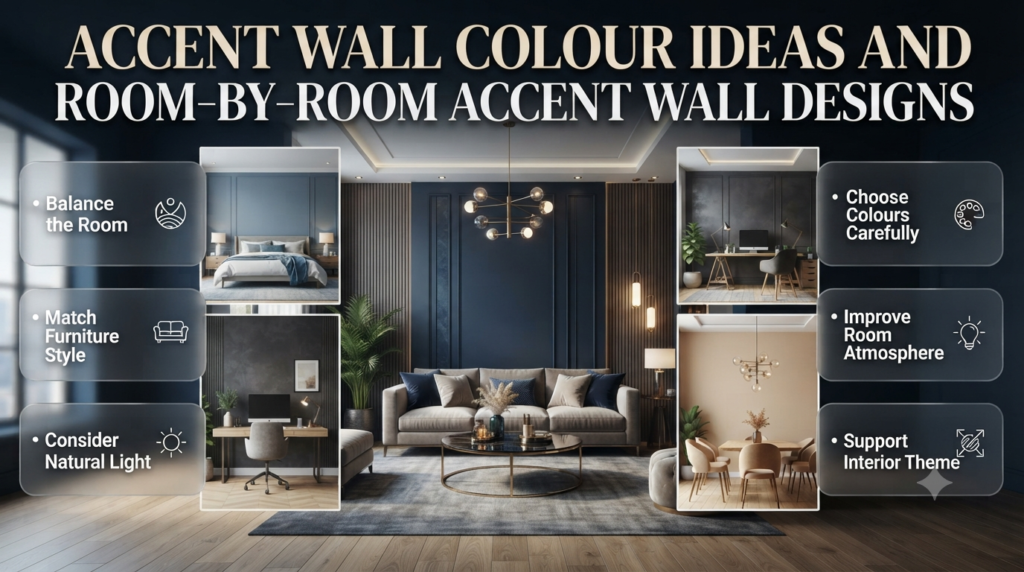
A successful accent wall is not only about choosing a different colour or material. It is about creating balance, improving the room’s atmosphere, and supporting the overall interior design theme.
Many homeowners make the mistake of selecting an accent wall colour based only on personal preference. While liking a colour is important, professional designers also consider lighting, room size, furniture style, and the emotional effect of different colours.
For more inspiration about choosing the right colours, explore our guide on Paint Color.
Best Accent Wall Colours for Modern Homes
The best accent wall colours depend on your room style, natural lighting, and desired mood. Popular choices include deep greens for luxury, navy blue for elegance, warm neutrals for comfort, and charcoal tones for modern interiors. The right colour should complement existing décor rather than overpower the space.
Colour is one of the easiest ways to transform a room. A carefully selected shade can make a small room feel larger, create a relaxing atmosphere, or add a dramatic designer touch.
1. Dark Green Accent Walls
Dark green has become one of the most popular accent wall colours in modern interior design.
It creates:
- A natural and calming atmosphere
- A luxury hotel-inspired feeling
- A connection with outdoor elements
- A sophisticated appearance
Dark green works especially well with:
- Wooden furniture
- Gold décor
- Beige sofas
- Natural textures
- Indoor plants
Best rooms for dark green accent walls:
✔ Living rooms
✔ Bedrooms
✔ Home offices
✔ Reading corners
💡 Pro Tip: Pair dark green walls with warm lighting. Cool white lights can make deep colours appear harsh, while warm lights create a more comfortable look.
2. Navy Blue Accent Walls
Navy blue is a timeless choice for homeowners who want a stylish but safe option.
It provides:
- Depth
- Elegance
- A peaceful feeling
- A premium appearance
Navy accent walls look excellent with:
- White furniture
- Grey sofas
- Brass accessories
- Light wooden flooring
Common uses include:
- Bedroom feature walls
- Living room walls
- Home offices
Navy blue is especially effective in rooms with plenty of natural light because sunlight balances the darker tone.
3. Charcoal and Black Accent Walls
Black accent walls can create a bold and dramatic statement.
Many homeowners avoid black because they think it will make a room feel smaller. However, when used correctly, black can create a luxury and modern atmosphere.
Black accent walls work well with:
- Minimalist interiors
- Contemporary furniture
- Metallic finishes
- Bright artwork
Best locations:
- TV walls
- Fireplace walls
- Modern bedrooms
⚠️ Common Mistake: Using black in a poorly lit small room without balancing it with lighter furniture and proper lighting.
4. Beige and Warm Neutral Accent Walls
Neutral accent walls are perfect for homeowners who prefer a calm and timeless style.
Popular shades include:
- Sand beige
- Cream
- Taupe
- Warm grey
- Soft brown
These colours create:
- Comfort
- Relaxation
- A clean appearance
- A natural design feeling
They work beautifully with:
- Scandinavian interiors
- Minimalist homes
- Modern farmhouse designs
Neutral accent walls are also easier to decorate around because they match many furniture styles.
5. Terracotta Accent Walls
Terracotta brings warmth and personality into a room.
This earthy colour works well with:
- Bohemian décor
- Mediterranean designs
- Natural wood furniture
- Handmade accessories
Terracotta creates a welcoming atmosphere and works particularly well in:
- Dining rooms
- Bedrooms
- Entryways
Accent Wall Ideas for Different Rooms
The best accent wall design depends on how the room is used. A bedroom should feel relaxing, while a living room can handle stronger design choices.
Living Room Accent Wall Ideas
A living room accent wall should create a welcoming focal point while enhancing furniture placement and entertainment areas. Popular options include painted feature walls, wooden panels, textured finishes, and TV wall designs.
The living room is usually the most visible space in a home, making it one of the best places for an accent wall.
Popular ideas:
1. TV Feature Wall
A TV wall is one of the most common accent wall choices.
Design options:
- Wooden slat panels
- Stone textures
- Dark paint colours
- Built-in shelves
- Decorative moulding
A well-designed TV wall can make entertainment areas look more organised and luxurious.
2. Sofa Background Wall
The wall behind your sofa naturally attracts attention.
Good choices:
- Large artwork
- Textured wallpaper
- Bold paint colour
- Decorative wall panels
This option works especially well when the sofa is the main furniture piece.
Bedroom Accent Wall Ideas
The best bedroom accent walls are usually placed behind the bed because this creates a natural focal point. Soft colours, textured materials, and calming designs help create a comfortable and relaxing environment.
Bedrooms benefit from accent walls because they add personality without disturbing the peaceful atmosphere.
Popular bedroom designs:
Wooden Headboard Wall
Wood panels behind the bed create:
- Warmth
- Texture
- A luxury bedroom appearance
Wallpaper Feature Wall
Suitable patterns include:
- Floral designs
- Soft geometric patterns
- Nature-inspired prints
Dark Colour Accent Wall
Deep colours like navy, green, or charcoal create a cosy feeling when combined with soft lighting.
Kitchen Accent Wall Ideas
Many kitchens focus only on cabinets and countertops, but an accent wall can add character.
Ideas include:
- Decorative backsplash walls
- Patterned tiles
- Open shelving backgrounds
- Bold paint colours
A kitchen accent wall should be practical because cooking areas experience moisture, heat, and stains.
Choose:
✔ Washable paint
✔ Durable tiles
✔ Easy-clean surfaces
Dining Room Accent Wall Ideas
Dining rooms are perfect for creative accent walls because they are social spaces.
Popular designs:
- Wallpaper behind the dining table
- Textured plaster finishes
- Dark dramatic colours
- Artwork walls
An accent wall can make dining areas feel more elegant and inviting.
Home Office Accent Wall Ideas
With remote work becoming common, many homeowners want inspiring workspaces.
Effective office accent walls include:
- Calm blue tones
- Green nature-inspired shades
- Wooden panels
- Simple geometric designs
Avoid overly distracting patterns because they may reduce focus during work.
Accent Wall Materials: Comparing Different Options
| Accent Wall Type | Benefits | Best For | Possible Drawback |
|---|---|---|---|
| Paint | Affordable, easy to change | Any room | Less texture |
| Wallpaper | Many designs available | Bedrooms, dining rooms | Removal can be difficult |
| Wood Panels | Luxury appearance, warmth | Living rooms, bedrooms | Higher cost |
| Stone Finish | Premium natural look | TV walls, fireplaces | Installation cost |
| 3D Panels | Unique texture | Modern interiors | May not suit every style |
Painted Accent Walls vs Wallpaper vs Wood Panels
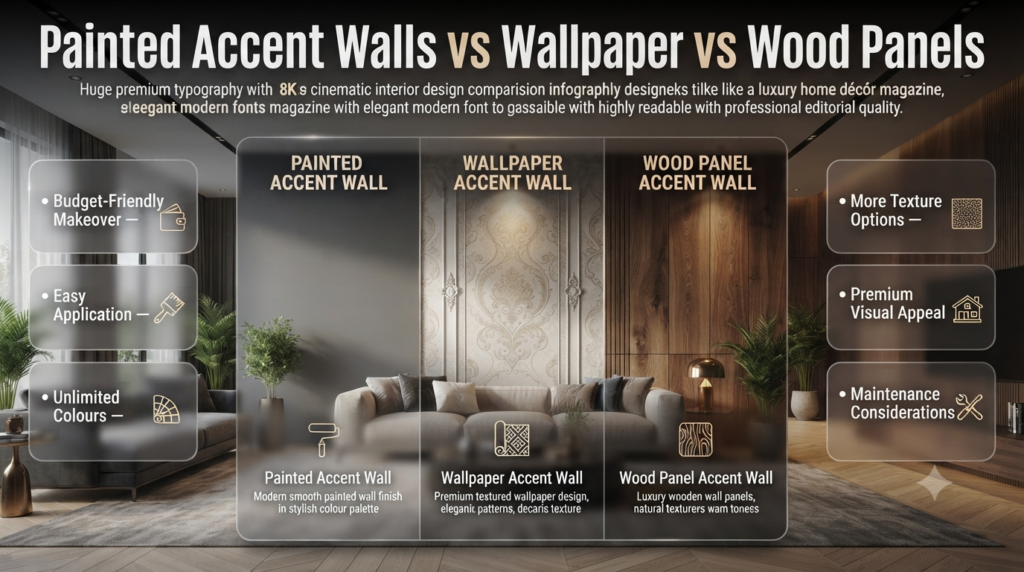
Choosing between materials depends on your budget, design goals, and maintenance expectations.
Paint Accent Walls
Best for:
- Budget-friendly makeovers
- Rental homes
- Simple updates
Advantages:
✔ Affordable
✔ Easy application
✔ Unlimited colours
Disadvantages:
✘ Less texture
✘ May need repainting over time
Wallpaper Accent Walls
Best for:
- Statement designs
- Luxury interiors
- Pattern lovers
Advantages:
✔ Unique patterns
✔ Designer appearance
✔ Creates strong visual impact
Disadvantages:
✘ Installation requires accuracy
✘ Some types are harder to remove
Wood Accent Walls
Best for:
- Luxury homes
- Warm modern designs
- Premium bedrooms
Advantages:
✔ Adds texture
✔ Long-lasting
✔ Creates a custom look
Disadvantages:
✘ More expensive
✘ Requires professional installation in many cases
How to Make a Small Room Look Bigger With Accent Walls
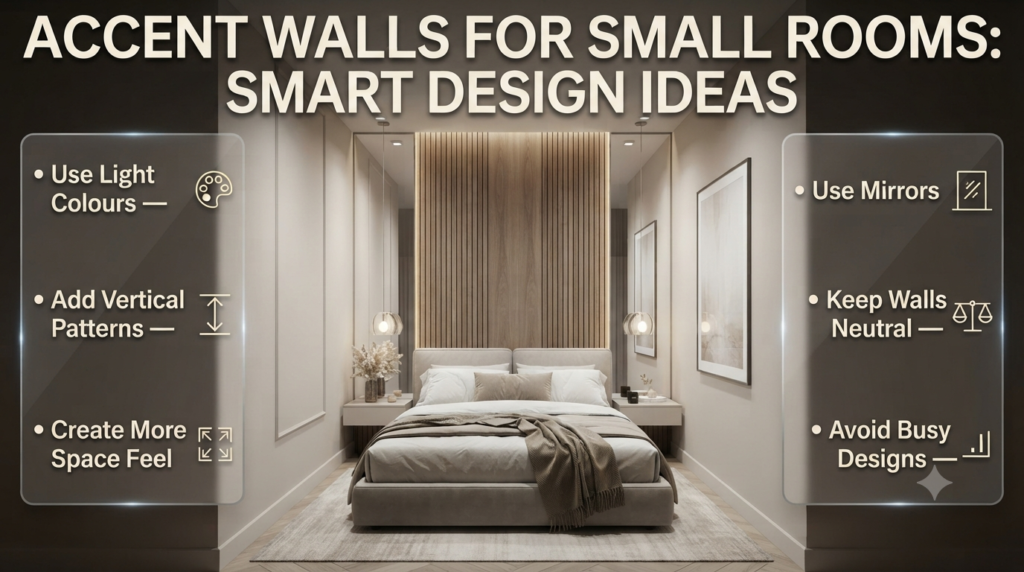
Many people believe accent walls only work in large rooms, but they can also improve small spaces when designed correctly.
Helpful techniques:
- Use lighter accent colours
- Choose vertical patterns to increase height
- Avoid overly busy designs
- Use mirrors with feature walls
- Keep surrounding walls neutral
For example, a narrow bedroom can feel taller with vertical wood panels behind the bed.
📌 Quick Tip: In small rooms, the goal is not to make the accent wall louder—it is to make the space feel more balanced.
Expert Tips for Designing Perfect Accent Walls
Professional designers usually follow a few important rules:
1. Think About Lighting
Colours change depending on lighting conditions.
Before finalising:
- Test paint samples
- Check morning and evening appearance
- Consider artificial lighting
2. Balance Bold Designs
If your accent wall is dramatic, keep other elements simpler.
Example:
A dark green wall works better with neutral furniture than with multiple competing colours.
3. Consider Long-Term Style
Avoid choosing trends that may quickly feel outdated.
Timeless choices include:
- Natural wood
- Neutral colours
- Classic textures
- Simple patterns
⭐ Expert Tip: The most successful accent walls look like they belong in the room from the beginning. They should feel intentional, not like an afterthought.
Common Accent Wall Mistakes Homeowners Make (And How to Avoid Them)
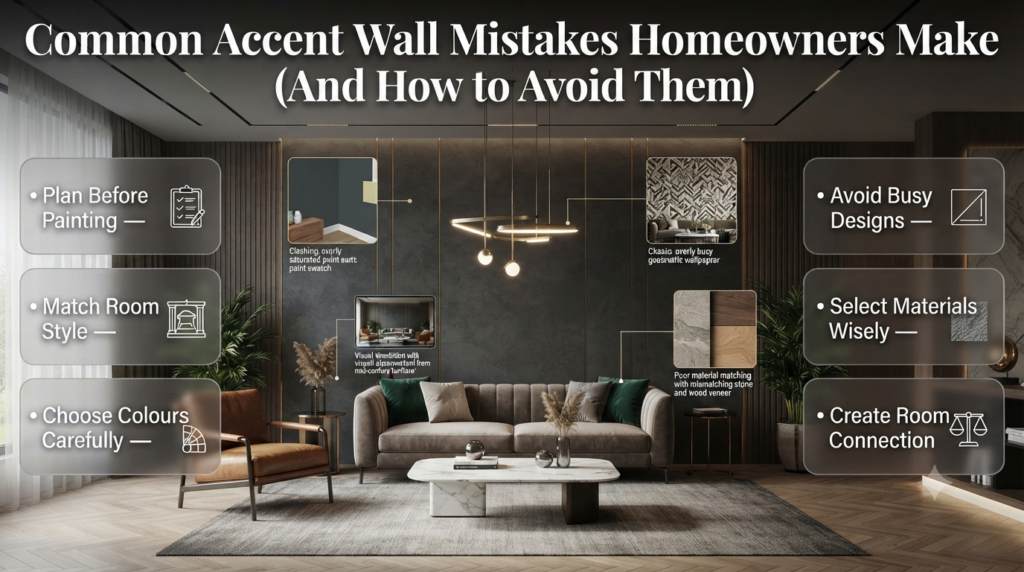
Creating an accent wall may look simple, but many homeowners make design decisions that reduce the overall impact of the room. A beautiful accent wall requires planning, colour understanding, and awareness of how different materials work with existing interiors.
A mistake does not always mean the wall looks “bad.” Sometimes the problem is that the accent wall does not connect with the rest of the room, making the design feel incomplete.
Understanding common mistakes before starting your project can save money, time, and frustration.
1. Choosing the Wrong Wall
The biggest accent wall mistake is selecting a wall without considering the room’s layout. The best accent wall is usually the first wall people notice or the wall that naturally supports the room’s main feature, such as a bed, sofa, fireplace, or TV unit.
Many beginners choose a wall simply because it is empty. However, an empty wall is not always the right wall.
A good accent wall should:
- Create a focal point
- Support furniture placement
- Improve room balance
- Feel connected to the overall design
Example:
A bedroom usually looks best with an accent wall behind the bed because it creates a natural frame around the sleeping area.
A random side wall may distract attention and make the room feel unbalanced.
⚠️ Common Mistake: Creating an accent wall on a wall that already has too many interruptions, such as multiple doors, windows, or unnecessary visual distractions.
2. Choosing a Colour Without Testing It
Many homeowners select colours from online photos or small paint cards without testing them in their own homes.
The same colour can look completely different depending on:
- Natural sunlight
- Room size
- Artificial lighting
- Furniture colours
- Flooring materials
A dark blue shade may look elegant in a bright room but feel too heavy in a darker space.
Before painting:
- Test a small sample area.
- Observe it during different times of the day.
- Compare it with furniture and décor.
- Decide only after seeing the real effect.
💡 Pro Tip: Paint samples on different areas of the wall because corners and direct light can change how colours appear.
3. Making the Accent Wall Too Busy
An accent wall should stand out, but it should not overwhelm the entire room.
Common examples of over-designing include:
- Very bold wallpaper with colourful furniture
- Multiple textures competing together
- Too many decorative elements on one wall
- Strong patterns in small rooms
A successful accent wall creates balance.
If the wall is already dramatic, keep other elements simpler.
Example:
A geometric wallpaper wall works better with neutral furniture than with bright patterned curtains and colourful rugs.
4. Ignoring the Rest of the Room
An accent wall does not exist separately from the room.
Before selecting your design, consider:
- Sofa colour
- Bed frame
- Curtains
- Flooring
- Lighting
- Artwork
- Decorative accessories
The goal is coordination.
A navy accent wall with warm wooden furniture creates a different feeling compared with the same wall paired with bright modern furniture.
For complete interior planning ideas, explore our Interior Design resources.
5. Following Trends Without Considering Personal Style
Interior trends change quickly. A design that looks popular today may feel outdated in a few years.
Many homeowners copy social media designs without considering whether they match their lifestyle.
Instead, focus on:
- Your personal taste
- Your home architecture
- Your furniture style
- Long-term comfort
Timeless accent wall choices include:
✔ Natural wood textures
✔ Neutral colours
✔ Classic patterns
✔ Quality materials
6. Poor Lighting Planning
Lighting can completely change the appearance of an accent wall.
A textured wall may look flat without proper lighting.
Professional designers often use:
- Wall lights
- LED strips
- Spotlights
- Warm ceiling lights
Example:
A stone accent wall behind a TV looks much more attractive when soft lighting highlights the texture.
📌 Quick Tip: Always check your accent wall under the same lighting conditions you normally use in the room.
Step-by-Step Guide: How to Create an Accent Wall
Creating an accent wall does not need to be complicated. A planned approach gives better results.
Step 1: Understand Your Goal
What To Do
Decide why you want an accent wall.
Ask yourself:
- Do I want more colour?
- Do I want a luxury appearance?
- Do I want to highlight furniture?
- Do I want more texture?
Why It Matters
A clear goal helps you choose the right material, colour, and location.
Professional Advice
Do not start by choosing paint. Start by deciding the feeling you want the room to have.
Common Mistake
Choosing a design first and trying to make it work later.
Step 2: Select the Right Wall
What To Do
Identify the strongest visual area in the room.
Good options:
- Wall behind the bed
- TV wall
- Fireplace wall
- Sofa background wall
- Dining feature wall
Why It Matters
The correct wall naturally attracts attention.
Professional Advice
Stand at the entrance of the room and notice where your eyes go first.
Step 3: Choose Your Accent Wall Style
What To Do
Select between:
- Paint
- Wallpaper
- Wood panels
- Stone
- Decorative moulding
- Textured finishes
Why It Matters
Different materials create different moods.
Examples:
- Wood = warmth and luxury
- Wallpaper = creativity and personality
- Stone = natural premium feeling
- Paint = simple and affordable transformation
Step 4: Select the Right Colour or Material
What To Do
Match your accent wall with existing design elements.
Consider:
- Furniture colours
- Room size
- Lighting
- Interior style
Why It Matters
A coordinated accent wall feels professionally designed.
Professional Advice
Use existing colours from your room and create a stronger version of those tones.
Step 5: Prepare the Wall Properly
What To Do
Before installation or painting:
- Clean the wall
- Repair cracks
- Remove old damaged paint
- Apply primer if required
Why It Matters
A beautiful design cannot hide poor preparation.
Common Mistake
Applying expensive wallpaper or paint over damaged surfaces.
Step 6: Add Finishing Details
A professional-looking accent wall often depends on small details.
Consider adding:
- Proper lighting
- Artwork
- Shelves
- Decorative objects
- Matching furniture accessories
These elements complete the design.
Expert Advice: Professional Accent Wall Recommendations
Interior designers usually follow these principles when creating successful accent walls.
Keep Balance Between Contrast and Harmony
A good accent wall should contrast enough to stand out but still feel connected.
Too little contrast:
- The wall disappears
Too much contrast:
- The room feels disconnected
The perfect balance creates visual interest.
Use Accent Walls to Solve Design Problems
Accent walls are not only decorative. They can solve practical design challenges.
Examples:
Problem:
A small bedroom feels plain.
Solution:
A textured wall behind the bed adds depth.
Problem:
A large living room feels empty.
Solution:
A feature wall creates structure.
Problem:
A home office feels uninspiring.
Solution:
A calming colour wall improves atmosphere.
Accent Wall Maintenance Tips
Different accent wall materials require different care.
| Accent Wall Type | Maintenance Tips |
|---|---|
| Painted Wall | Clean gently and touch up scratches |
| Wallpaper | Avoid excessive moisture and harsh cleaning |
| Wood Panels | Dust regularly and protect from humidity |
| Stone Finish | Remove dust and inspect joints |
Proper maintenance keeps your accent wall attractive for years.
Which wall in a room should be chosen as the accent wall?
The ideal accent wall is the natural focal point you see immediately when entering the room. This is usually the wall hosting the room’s main architectural feature, such as a fireplace, a bed headboard, or a media console. Avoid walls with large windows or doors, as these elements break up the visual weight and compete with your design. If your room lacks a clear focal point, choose the most solid, symmetric wall to anchor the space.
The symmetry rule: Select a wall that is unbroken by doors, closets, or off-center windows for a clean canvas.
Functional placement: In bedrooms, it is almost always the wall behind the headboard; in living rooms, it is the TV or fireplace wall.
Sightlines matter: Stand in the main doorway of the room; the wall your eyes land on first is your prime candidate.
Is the single-color painted accent wall still in style, or is it outdated?
The basic, flat-painted accent wall is declining in trend, replaced by high-texture, three-dimensional, and immersive accent surfaces. Modern design treats accent walls as architectural features rather than just a pop of contrasting paint. Trends have shifted toward floor-to-ceiling wood paneling (like slat walls), textured limewash, board and batten, and bold, large-scale mural wallpapers. If you do use paint alone, the current trend is to paint the surrounding trim and ceiling in a matching tone to make it look intentional, not accidental.
Texture over color: Homeowners are prioritizing tactile surfaces like microcement, plaster, or wood slats over simple latex paint.
Wallpaper revival: Bold geometric patterns, moody botanicals, and peel-and-stick murals dominate high-end searches.
The “Fifth Wall”: Using the ceiling as the accent wall is a massive, fast-growing trend for rooms with neutral vertical walls.
How do you choose the right color or material for a small room without making it look smaller?
In compact spaces, the goal is to create depth, not restriction. A common misconception is that dark colors shrink a room. In reality, deep, cool tones like charcoal, navy, or forest green make the accent wall recede visually, creating the illusion of more space. If using wallpaper or panels, stick to vertical lines or small-scale patterns to elongate the room’s height. Avoid heavy, chunky wood textures or massive contrasting geometric shapes in enclosed spaces.
Cool vs. warm: Cool dark colors (blues, greens, grays) recede; warm dark colors (terracotta, burgundy) advance and can make a small room feel tight.
Gloss and light reflection: Satin or semi-gloss finishes reflect light, adding a sense of dimension that flat finishes lack.
Monochromatic approach: Keep the furniture placed against the accent wall in a similar color family to avoid harsh visual breaks.
What are the best rental-friendly accent wall options that won’t damage the drywall?
Rental-friendly decor is one of the highest-volume search categories in interior design right now. The gold standard is premium peel-and-stick wallpaper, which uses a low-tack adhesive designed to pull away cleanly without ripping the drywall paper. Other surging options include lightweight acoustic felt tiles, temporary tension-mounted slat panels, large framed textile tapestries, or a gallery wall using heavy-duty command strips instead of nails.
Peel-and-stick prep: Wipe the wall with a damp cloth and let it dry completely; never apply it to freshly painted walls (wait at least 4 weeks).
Faux paneling: Lightweight PVC or foam molding strips can be applied with heavy-duty double-sided mounting tape.
The oversized art hack: Lean a massive, 6-foot framed canvas or mirror against the wall instead of hanging anything.
How do you balance the rest of the room’s decor so it doesn’t clash with the accent wall?
An accent wall should be the “hero” of the room, meaning the remaining three walls and major furniture must play a supporting role. If your accent wall features a busy wallpaper or a bright color, your other walls should pull a neutral tone directly from that accent piece to maintain harmony. Tie the room together by repeating the accent wall’s color in three small places around the room, such as a throw pillow, a rug detail, or a piece of shelf decor.
The 60-30-10 rule: 60% dominant room color (neutral walls/large rugs), 30% secondary color (furniture/curtains), and 10% accent wall color.
Lighting balance: Ensure your accent wall has dedicated lighting, like sconces or track lights, so it doesn’t look like a dark cave at night.
Furniture scaling: Avoid placing tall, bulky furniture directly in front of the accent wall, which hides the design and creates visual clutter.
Conclusion
Accent walls are one of the most effective ways to refresh your interior without completely redesigning your space. A carefully planned feature wall can introduce colour, texture, depth, and personality while making your home feel more stylish and welcoming.
The secret to a successful accent wall is not choosing the brightest colour or the most expensive material. It is about understanding your room, selecting the right wall, and creating a design that works naturally with your furniture, lighting, and overall interior style.
Whether you choose a bold painted wall, elegant wallpaper, natural wood panels, or a textured finish, the right accent wall can become the defining feature of your room. Always consider balance, avoid common design mistakes, and focus on creating a space that reflects your personal taste.
If you are looking for more inspiration, ideas, and professional interior design guidance, explore Interior Design Mode 24 for expert tips on creating beautiful and functional spaces.
You can also discover more helpful guides through our Interior Design, Home Improvement, and Paint Color resources.

Leave a Reply