

Introduction: Why Ceiling Colors Matter More Than Most People Realise
Walk into a beautifully designed room and something often feels right—but you may not immediately know why. The walls, furniture, lighting, and décor might look perfect, yet the ceiling quietly influences the entire atmosphere. A poorly chosen ceiling color can make a room feel smaller, darker, outdated, or disconnected, while the right shade can make the space feel taller, brighter, and more luxurious.
Choosing the right ceiling colors is not just about picking a white paint and moving on. Modern interior design uses ceilings as an important design element that can change how people experience a room.
Whether you are renovating a home, designing a new space, or simply refreshing a tired-looking room, understanding ceiling paint colors helps you create better balance and visual harmony.
In this guide, you’ll learn:
- How ceiling colors affect room size and mood
- When to choose white, dark, or colored ceilings
- The best ceiling colors for different rooms
- How lighting changes ceiling paint appearance
- Common ceiling color mistakes to avoid
- Professional designer tips for creating stylish interiors
You can also explore related interior improvement ideas through Interior Design Mode 24 for more home styling inspiration.
What Are the Best Ceiling Colors for a Home?
The best ceiling color depends on your room size, lighting, wall color, and the atmosphere you want to create. White remains the most popular choice because it creates an open feeling, but soft neutrals, warm tones, and even darker shades can make ceilings more stylish and intentional.
A ceiling is often called the “fifth wall” because it occupies a large visual area in any room. Ignoring it means missing an opportunity to improve the overall design.
Traditional interior design usually follows one simple rule:
White ceiling = brighter and taller room
However, modern designers know that there are many situations where a different ceiling color works better.
For example:
- A small bedroom may feel warmer with a soft beige ceiling.
- A dining room may look more elegant with a deep charcoal ceiling.
- A children’s room can become more playful with pastel ceiling shades.
- A living room with high ceilings may benefit from darker colors to create comfort.
The goal is not choosing the trendiest color—it is choosing a shade that supports the room’s purpose.
How Ceiling Colors Affect the Look and Feel of a Room
Ceiling Colors Can Change Room Height Perception
One of the biggest reasons homeowners carefully choose ceiling paint colors is their ability to visually change the height of a room.
A ceiling does not physically move, but color creates optical effects that influence how spacious a room feels.
Light Ceiling Colors
Light shades reflect more light and make ceilings appear higher.
Popular options include:
- Pure white
- Soft ivory
- Warm white
- Light grey
- Pale beige
- Cream
These colours work especially well in:
- Apartments
- Small bedrooms
- Narrow hallways
- Rooms with limited natural light
💡 Pro Tip: If your room feels cramped, avoid creating strong contrast between the ceiling and walls. A softer transition makes the entire space feel larger.
Dark Ceiling Colors
Dark ceilings create a completely different effect. Instead of making the ceiling disappear, they bring attention upward and create a dramatic, sophisticated feeling.
Dark ceiling shades can work beautifully in:
- Large living rooms
- Home theatres
- Dining areas
- Rooms with tall ceilings
Examples include:
- Deep navy
- Charcoal grey
- Forest green
- Chocolate brown
- Matte black
However, dark ceilings require careful planning.
⚠️ Common Mistake: Painting a low ceiling a very dark color without considering lighting can make the room feel heavy and closed.
Professional designers often balance dark ceilings with:
- Bright lighting
- Lighter walls
- Reflective surfaces
- Minimal furniture clutter
Popular Ceiling Colors for Modern Homes

From bright white ceilings to dramatic dark tones, each colour choice adds personality and balance to interior spaces.
Different ceiling colors create different design personalities. Below are some of the most commonly used options by interior designers.
| Ceiling Color | Room Effect | Best Used In |
|---|---|---|
| Bright White | Clean, open, timeless | Any room |
| Warm White | Cosy and inviting | Bedrooms, living rooms |
| Soft Grey | Modern and elegant | Contemporary homes |
| Beige/Cream | Warm and comfortable | Traditional interiors |
| Pastel Blue | Calm and relaxing | Bedrooms, bathrooms |
| Dark Charcoal | Dramatic and luxurious | Dining rooms, entertainment areas |
| Black | Bold and stylish | Modern luxury spaces |
| Natural Green | Organic and refreshing | Nature-inspired interiors |
Should Ceilings Always Be White?
No, ceilings do not always need to be white. White ceilings are a safe and timeless option, but coloured ceilings can add personality, depth, and designer appeal when chosen correctly.
For decades, white ceilings dominated interior design because they were practical and easy to match.
White ceilings still remain popular because they:
- Reflect natural light
- Work with almost every wall color
- Make rooms feel fresh
- Create a clean appearance
- Increase flexibility when decorating
However, a completely white ceiling is not always the best choice.
A room with warm beige walls and a cold bright white ceiling may sometimes feel disconnected. In such cases, a warmer ceiling shade can create better harmony.
For example:
Wall Color: Warm taupe
Better Ceiling Choice: Soft ivory instead of bright white
Wall Color: Light grey
Better Ceiling Choice: Warm white to prevent the room feeling cold
Wall Color: Deep green
Better Ceiling Choice: Cream or muted beige for balance
How to Choose Ceiling Colors Based on Room Type
Every room has a different purpose, so the ideal ceiling color changes depending on how the space is used.
Living Room Ceiling Colors
The living room is usually the main gathering area, so the ceiling should support comfort and visual balance.
Best options:
- Warm white
- Soft beige
- Light greige
- Pale grey
- Subtle accent colors
For luxury interiors, designers often match the ceiling with architectural details such as:
- Crown moulding
- Wooden beams
- Decorative panels
- Ceiling lighting designs
⭐ Expert Tip: A slightly warmer ceiling color can make a living room feel more welcoming, especially when combined with warm lighting.
Bedroom Ceiling Colors
Bedrooms should feel calm and relaxing. Extremely bright or dramatic ceilings can sometimes disturb the peaceful atmosphere.
Recommended bedroom ceiling colors:
- Soft white
- Light blue
- Pale lavender
- Warm cream
- Gentle grey
A coloured bedroom ceiling can create a cosy “enclosed” feeling, especially in rooms with high ceilings.
Example:
A bedroom with light grey walls and a soft blue ceiling creates a calm, hotel-inspired atmosphere.
Kitchen Ceiling Colors
Kitchen ceilings need to feel clean and fresh while handling strong lighting conditions.
Popular choices:
- White
- Warm white
- Light grey
- Soft beige
White works especially well in kitchens because it reflects task lighting and keeps the space feeling hygienic.
Avoid overly dark colours unless your kitchen has:
- High ceilings
- Strong lighting
- Large windows
Bathroom Ceiling Colors
Bathrooms usually benefit from bright and moisture-friendly designs.
Good choices:
- White
- Soft grey
- Light blue
- Pale green
Light ceiling colors help smaller bathrooms feel more spacious.
For modern spa-style bathrooms, a muted blue or green ceiling can create a relaxing atmosphere.
Understanding Ceiling Paint Finish: Color Is Not the Only Factor
Many homeowners focus only on the shade but forget that paint finish also affects the final appearance.
Common ceiling finishes include:
| Finish | Appearance | Best For |
|---|---|---|
| Matte | Soft, hides imperfections | Most ceilings |
| Flat | Non-reflective and smooth | Bedrooms, living rooms |
| Eggshell | Slight shine | Certain modern designs |
| Satin | More reflective | Moisture-prone areas |
For most residential ceilings, matte or flat finishes are preferred because they hide small cracks, uneven textures, and surface imperfections.
📌 Quick Tip: A beautiful ceiling color can still look poor if the finish creates unwanted glare or highlights surface flaws.
How to Match Ceiling Colors With Wall Colors

The right combination of ceiling and wall paint can improve room flow, lighting, and overall design personality.
The best ceiling color should complement your wall color rather than compete with it. A well-matched ceiling creates a smooth visual flow, while a poorly matched ceiling can make the room feel disconnected or unbalanced.
Many homeowners choose wall paint first and treat the ceiling as an afterthought. However, professional designers usually consider both surfaces together because the relationship between walls and ceilings affects the entire room atmosphere.
The right combination depends on:
- Wall color intensity
- Natural light availability
- Room size
- Interior style
- Furniture colors
- Flooring materials
A ceiling does not always need to match the walls, but it should feel intentional.
Ceiling Colors With White Walls
White walls provide the greatest flexibility because almost every ceiling shade can work with them.
Best ceiling options:
Matching white ceiling
Creates:
- A clean minimalist look
- A larger visual appearance
- A seamless modern feel
Ideal for:
- Scandinavian interiors
- Contemporary homes
- Small apartments
Contrasting ceiling
Creates:
- Personality
- Architectural interest
- A designer touch
Examples:
- White walls + navy ceiling = dramatic and elegant
- White walls + soft green ceiling = natural and refreshing
- White walls + beige ceiling = warm and comfortable
💡 Pro Tip: If your walls are bright white, avoid choosing a ceiling white that is noticeably cooler or warmer unless you want contrast. Slight differences can sometimes look accidental.
Ceiling Colors With Grey Walls
Grey walls have become extremely popular in modern homes because they create a sophisticated foundation.
However, grey can sometimes feel cold, especially in rooms with limited sunlight.
Good ceiling choices include:
Warm White Ceiling
Balances cool grey walls and creates a softer atmosphere.
Cream Ceiling
Adds warmth and prevents a sterile feeling.
Dark Grey Ceiling
Creates a dramatic, luxury appearance when used in large spaces.
Example:
A charcoal grey ceiling with light grey walls can create a boutique hotel-inspired living room.
Ceiling Colors With Beige and Neutral Walls
Neutral interiors are popular because they feel timeless and elegant.
Common wall colors:
- Beige
- Greige
- Sand
- Taupe
- Cream
These shades pair beautifully with:
- Warm white ceilings
- Ivory ceilings
- Soft brown ceilings
- Natural wood tones
Neutral ceiling colors are especially effective in:
- Luxury homes
- Traditional interiors
- Modern organic designs
You can find more inspiration for balanced home palettes through [https://designmode24interiordesign.com/category/paint-color/ – Paint Color Ideas].
Ceiling Colors With Bold Wall Colors
Bold walls require more planning because the ceiling can either balance the design or overwhelm the room.
Examples:
Dark Green Walls
Best ceiling options:
- Warm white
- Cream
- Soft beige
These soften the richness of green.
Navy Blue Walls
Best ceiling options:
- White
- Light grey
- Pale blue
These maintain elegance without making the room too dark.
Terracotta or Warm Orange Walls
Best ceiling options:
- Ivory
- Sand
- Soft cream
These enhance the earthy feeling.
⚠️ Common Mistake: Pairing a very bold wall color with an equally intense ceiling color without considering room size or lighting. This can make the space visually overwhelming.
Should Ceiling Color Match Wall Color?

Explore three professional approaches: same-color ceilings, lighter ceilings, and darker statement ceilings.
A ceiling does not need to match the walls. Matching ceiling and wall colors can create a modern, seamless appearance, while contrasting colors can add depth and architectural interest. The right choice depends on the style and feeling you want to create.
There are three popular approaches:
1. Same Color Ceiling and Walls
This technique is called a “color drenching” approach.
It means painting:
- Walls
- Ceiling
- Sometimes trim
in the same or similar shade.
Benefits:
- Creates a luxurious atmosphere
- Makes the room feel intentional
- Reduces visual breaks
- Works well with bold colors
Best for:
- Bedrooms
- Reading rooms
- Home offices
- Designer interiors
Example:
A soft sage green ceiling and walls create a calm nature-inspired space.
2. Lighter Ceiling Than Walls
This is the most traditional method.
Example:
Walls: Warm beige
Ceiling: Soft white
Benefits:
- Makes ceilings appear higher
- Keeps rooms bright
- Creates visual openness
This approach works in almost every home.
3. Darker Ceiling Than Walls
A darker ceiling creates drama and sophistication.
Best for:
- Large rooms
- High ceilings
- Entertainment spaces
- Dining rooms
Example:
Walls: Light grey
Ceiling: Deep charcoal
Effect:
The ceiling becomes a design feature instead of disappearing.
Best Ceiling Colors for Small Rooms
Small rooms usually benefit from lighter ceiling colors because they reflect more light and create the illusion of additional height. Soft whites, creams, and pale neutrals are the safest choices for making compact spaces feel open.
Small rooms often struggle with:
- Limited natural light
- Low ceilings
- Feeling crowded
The right ceiling color can improve these problems.
Recommended ceiling shades:
Soft White
Creates maximum brightness.
Warm White
Adds comfort without reducing openness.
Light Beige
Works well in warm interior styles.
Pale Grey
Creates a modern, airy feeling.
Designer Tricks for Making Small Rooms Look Bigger
Paint the Ceiling and Walls Similar Colors
This removes strong visual boundaries.
Use Glossy Elements Carefully
Reflective décor can bounce light around the room.
Keep Strong Contrasts Low
A dark ceiling against bright walls can make the ceiling appear lower.
Use Vertical Design Elements
Tall curtains, vertical wall panels, and higher furniture placement can support the feeling of height.
📌 Quick Tip: In a small bedroom, painting the ceiling slightly lighter than the walls can make the room feel taller without looking boring.
Best Ceiling Colors for High Ceilings
High ceilings provide more creative freedom because there is less risk of making the room feel closed.
Popular choices:
- Dark blue
- Charcoal
- Forest green
- Warm brown
- Deep beige
A high ceiling can sometimes make a room feel empty or cold. Darker ceiling colors help bring the visual focus downward and create comfort.
Example:
A large living room with a 12-foot ceiling may feel more balanced with a warm charcoal ceiling instead of plain white.
Modern Ceiling Color Trends for 2026
Interior design trends are moving away from plain, forgotten ceilings. Designers are increasingly using ceilings as a creative feature.
1. Warm Neutral Ceiling Colors
Popular shades:
- Cream
- Beige
- Soft taupe
- Greige
Why they are trending:
- Create calm environments
- Match natural materials
- Support luxury interiors
2. Nature-Inspired Ceiling Colors
Inspired by biophilic design.
Examples:
- Sage green
- Olive
- Soft blue
- Earth tones
These colors create a connection with outdoor environments.
3. Moody Dark Ceilings
Dark ceilings are becoming popular in:
- Luxury restaurants
- Modern homes
- Home theatres
Common choices:
- Black
- Deep navy
- Charcoal
They create:
- Drama
- Depth
- Sophistication
4. Soft Pastel Ceilings
Pastels are increasingly used in bedrooms and children’s spaces.
Examples:
- Powder blue
- Blush pink
- Soft lavender
- Mint green
They add personality while keeping the room relaxing.
Ceiling Color Ideas Based on Interior Design Styles

The right ceiling shade can enhance your chosen style and create a more cohesive interior atmosphere.
Your interior style should influence your ceiling choice.
| Interior Style | Recommended Ceiling Colors |
|---|---|
| Modern Minimalist | White, soft grey, warm white |
| Scandinavian | Bright white, pale grey |
| Luxury Contemporary | Charcoal, cream, muted tones |
| Traditional | Ivory, beige, warm white |
| Farmhouse | White, cream, soft beige |
| Organic Modern | Sage green, sand, natural tones |
| Industrial | Concrete grey, charcoal, black |
| Coastal | White, pale blue, soft aqua |
How Lighting Changes Ceiling Colors
Lighting is one of the most overlooked factors when selecting ceiling paint.
The same paint color can look completely different depending on the light source.
Natural Daylight
Makes colors appear:
- Brighter
- Cooler
- More accurate
Warm LED Lighting
Makes colors appear:
- Softer
- More yellow
- Cosier
Cool White Lighting
Makes colors appear:
- Sharper
- Cleaner
- Sometimes colder
⭐ Expert Tip: Always test ceiling paint samples under your actual room lighting before painting the entire ceiling.
Professional Method for Testing Ceiling Colors
Before committing to a ceiling color:
Step 1: Paint a Small Sample Area
Test the color near different walls and corners.
Step 2: Check Morning and Evening Appearance
Natural light changes throughout the day.
Step 3: Observe Artificial Lighting
Turn on your regular lamps and ceiling lights.
Step 4: Compare With Furniture
The ceiling should work with your existing décor.
⚠️ Common Mistake: Choosing a ceiling color from a small paint card without testing it in the actual room. Large surfaces often look different than small samples.
Choosing the wrong ceiling color can affect the entire appearance of a room. The most common mistakes include ignoring lighting, creating too much contrast, selecting trendy shades without considering the space, and forgetting how ceilings interact with walls, flooring, and furniture.
A ceiling may seem like a small design decision, but because it covers a large visual area, even a small mistake can change the entire feeling of a room.
Professional interior designers always consider the ceiling as part of the complete design system rather than treating it as an empty surface.
For more complete renovation and styling ideas, explore these helpful Home Improvement ideas that can help you plan your entire space more effectively.
Mistake 1: Using Bright White Ceiling Paint Everywhere
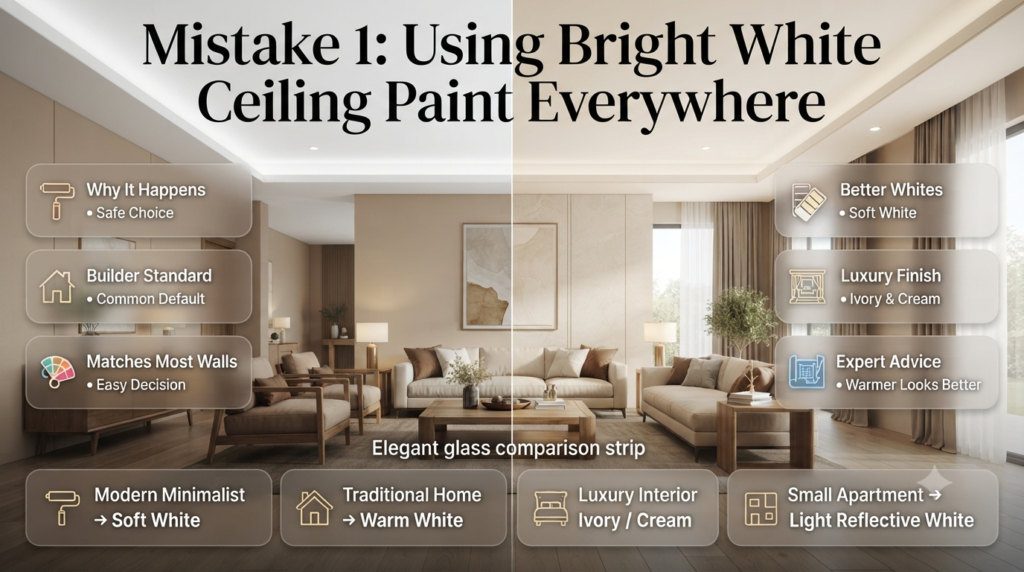
White ceilings are classic, practical, and timeless. However, using the same bright white shade in every room may not always create the best result.
Many homeowners choose pure white because they believe every ceiling should disappear into the background. While this works in some homes, modern interiors often require more thoughtful colour selection.
Why this happens:
- White feels like the safest choice
- It matches most wall colours
- It is commonly used by builders
Why it can create problems:
A bright white ceiling may feel too harsh when paired with:
- Warm beige walls
- Wooden furniture
- Earth-tone flooring
- Soft lighting
The room can lose warmth and feel less connected.
Better approach:
Choose different whites based on the room:
| Room Style | Better Ceiling Choice |
|---|---|
| Modern minimalist | Soft white |
| Traditional home | Warm white |
| Luxury interior | Ivory or cream |
| Small apartment | Light reflective white |
⭐ Expert Tip: Many designers avoid extremely bright white ceilings because slightly warmer whites often create a more expensive and comfortable appearance.
Mistake 2: Ignoring Lighting Before Choosing Ceiling Colors
Lighting can completely change how a ceiling color appears.
A shade that looks beautiful in a showroom may look completely different inside your home.
Before choosing ceiling colors, consider:
- Window direction
- Amount of sunlight
- Artificial lighting temperature
- Room purpose
- Existing furniture colours
For example:
A north-facing room receives cooler light, so warm ceiling colours can make the space feel more inviting.
A bright south-facing room may work better with softer or cooler shades to maintain balance.
💡 Pro Tip: Always test ceiling paint samples under your actual room lighting before making a final decision.
Mistake 3: Creating Too Much Contrast Between Walls and Ceiling
Contrast can create a stunning designer effect, but excessive contrast can make the room feel disconnected.
For example:
❌ Small room + black ceiling + white walls
❌ Dark walls + extremely bright ceiling without balance
These combinations may overpower the space.
A better approach is controlled contrast:
Balanced Examples:
- Light grey walls + charcoal ceiling
- Beige walls + cream ceiling
- White walls + soft blue ceiling
- Olive green walls + warm white ceiling
The goal is not making the ceiling stand out randomly. The goal is creating visual harmony.
Mistake 4: Choosing Dark Ceiling Colors Without Planning
Dark ceilings have become popular in luxury interiors because they create depth and sophistication.
However, they require the right conditions.
Dark ceiling colours work best with:
✔ High ceilings
✔ Large rooms
✔ Strong lighting
✔ Minimal clutter
✔ Balanced furniture colours
Popular dark ceiling choices:
- Charcoal grey
- Deep navy
- Forest green
- Matte black
- Chocolate brown
They work beautifully in:
- Dining rooms
- Home theatres
- Luxury living rooms
⚠️ Common Mistake: Copying a luxury hotel design without considering your own room size and lighting conditions.
Mistake 5: Choosing Ceiling Color Without Considering Interior Style
A ceiling should match the personality of the room.
For example:
A farmhouse interior usually looks better with:
- Cream
- Warm white
- Beige
A modern luxury interior may suit:
- Charcoal
- Deep neutral shades
- Soft greys
A natural organic interior works well with:
- Sage green
- Sand tones
- Earth-inspired colours
Understanding complete interior themes can help you make better choices. You can explore more Interior Design inspiration for different styles and room concepts.
Step-by-Step Guide: How to Choose the Perfect Ceiling Color
Choosing the right ceiling color requires more than selecting a beautiful shade. You need to consider room size, lighting, wall colors, furniture, and the mood you want to create.
Follow these professional steps before painting.
Step 1: Understand the Purpose of the Room
What to do:
Identify how you use the space.
Ask:
- Is this a relaxing area?
- Is it a social space?
- Is it a working area?
- Is it a private room?
Why it matters:
Different rooms require different emotional effects.
Examples:
Bedroom
→ Calm and relaxing colours
Living room
→ Warm and welcoming colours
Office
→ Focus-friendly neutral tones
Professional advice:
Do not choose ceiling colors only because they are trending. Choose colours that support how you want the room to feel.
Step 2: Consider Room Size and Ceiling Height
Small Rooms
Best options:
- Soft white
- Cream
- Pale grey
- Light beige
These shades reflect light and create openness.
Large Rooms
More flexibility:
- Dark neutrals
- Rich colours
- Accent ceilings
Large spaces can handle stronger ceiling colours without feeling crowded.
Step 3: Match Ceiling Colors With Existing Design Elements
Your ceiling should work with:
- Wall paint
- Flooring
- Curtains
- Furniture
- Lighting fixtures
- Decorative elements
Example:
A room with:
- Oak flooring
- Beige sofa
- Natural wood furniture
will usually look better with:
- Warm white ceiling
- Cream ceiling
- Soft beige ceiling
rather than a cold bright white.
Step 4: Test Paint Samples Before Final Painting
This is one of the most important professional recommendations.
Test your colour:
✔ Morning light
✔ Afternoon light
✔ Evening lighting
✔ Different room corners
Paint behaves differently depending on surroundings.
📌 Quick Tip: Observe samples for at least 24–48 hours before making your final decision.
Step 5: Select the Correct Paint Finish
The finish affects the final appearance.
| Finish | Appearance | Recommended Use |
|---|---|---|
| Matte | Soft and elegant | Most ceilings |
| Flat | Hides imperfections | Bedrooms and living rooms |
| Satin | Slight reflection | Bathrooms and kitchens |
For most homes, matte ceiling paint remains the safest professional choice.
Expert Interior Designer Advice for Ceiling Colors
Professional designers do not select ceiling colours separately. They look at the complete visual story of the room.
Use Ceiling Colors to Highlight Architecture
A ceiling can become a major design feature when your home has:
- Wooden beams
- Decorative mouldings
- Tray ceilings
- Coffered ceilings
Instead of hiding these elements, colour can enhance them.
Example:
A cream ceiling with dark wooden beams creates a timeless luxury appearance.
Keep Warm and Cool Tones Balanced
Every colour has an emotional temperature.
Warm ceiling colours:
- Cream
- Beige
- Sand
- Taupe
Create:
- Comfort
- Relaxation
- Luxury
Cool ceiling colours:
- Blue
- Grey
- Green
Create:
- Freshness
- Calmness
- Modern appeal
The best interiors usually combine these tones carefully.
Ceiling Color Decision Table
| Room Situation | Recommended Ceiling Colors | Avoid |
|---|---|---|
| Small dark room | Warm white, cream | Black or very dark shades |
| Large luxury room | Charcoal, navy, rich neutrals | Plain unfinished look |
| Low ceiling | Light colours | Strong contrast |
| Modern home | White, grey, subtle tones | Random bold colours |
| Traditional home | Ivory, beige, cream | Cold bright whites |
What is the best ceiling color to make a room look bigger and brighter?
The best ceiling colors for making a room appear larger and brighter are soft white, warm white, cream, and light neutral shades. These colors reflect natural and artificial light, creating an open and airy feeling. A ceiling painted in a lighter tone reduces visual heaviness and helps the room feel taller, especially when combined with similar wall colors.
However, the exact shade depends on the room’s lighting conditions. A bright white ceiling may work well in a modern apartment with plenty of sunlight, while a warm white or creamy ceiling often creates a more comfortable look in rooms with wooden furniture and warm lighting.
Professional designers often avoid extremely cold white shades because they can sometimes make interiors feel harsh or less inviting.
Best ceiling colors for a spacious look:
Soft white for a clean and timeless appearance
Warm white for cosy and elegant interiors
Light beige for traditional and natural designs
Pale grey for modern minimalist spaces
Cream tones for luxury and warmth
Professional Tip:
For small rooms, painting the ceiling slightly lighter than the walls can create the illusion of extra height without making the space feel empty.
Should ceiling colors match the walls or be different?
Ceiling colors do not always need to match the walls. The right choice depends on the style, room size, and atmosphere you want to create. Matching ceiling and wall colors can produce a seamless, designer-inspired appearance, while contrasting colors can add depth and architectural interest.
A matching ceiling creates a smooth visual flow because there are fewer color breaks in the room. This technique, often called color drenching, is becoming popular in modern interior design because it creates a luxurious and intentional feeling.
On the other hand, choosing a different ceiling shade can highlight the ceiling as a design feature.
Examples of successful combinations:
White walls + soft beige ceiling = warm and elegant
Grey walls + warm white ceiling = balanced and comfortable
Green walls + cream ceiling = natural and relaxing
Navy walls + light grey ceiling = sophisticated and modern
When to choose matching colors:
Small bedrooms
Home offices
Modern minimalist interiors
Rooms where you want a calm atmosphere
When to choose different colors:
Large living rooms
Dining spaces
Rooms with decorative ceilings
Luxury interior designs
Expert Advice:
Instead of asking whether the ceiling should match the walls, ask whether the combination creates the feeling you want. Good interior design is about balance, not strict rules.
Are dark ceiling colors a good idea, or do they make a room look smaller?
Dark ceiling colors can create a dramatic, luxurious, and sophisticated appearance when used correctly. While many homeowners worry that dark ceilings make rooms feel smaller, the result depends on the room’s size, lighting, and overall design.
In large rooms with high ceilings, dark shades can actually improve the atmosphere by making the space feel warmer and more comfortable. They bring the ceiling visually closer and prevent large areas from feeling empty.
Popular dark ceiling colors include:
Charcoal grey
Deep navy blue
Forest green
Matte black
Dark brown
These shades work particularly well in:
Dining rooms
Home theatres
Luxury living rooms
Rooms with statement lighting
However, dark ceilings require careful planning.
Avoid dark ceilings when:
The room has very little natural light
The ceiling is already low
The furniture is heavy and dark
The space is very small
Professional Design Tip:
If you love dark ceiling colors but have a smaller room, balance them with lighter walls, reflective surfaces, and strong lighting. This prevents the room from feeling closed or heavy.
What are the most popular ceiling colors for modern homes in 2026?
Modern ceiling color trends are moving beyond plain white ceilings. Homeowners and designers are increasingly treating ceilings as an important part of interior design rather than simply a blank surface.
In 2026, the biggest trends focus on natural tones, calming shades, and sophisticated neutrals that create comfortable and personalised spaces.
Trending ceiling colors include:
Warm White
Warm whites are replacing harsh bright whites because they create a softer and more welcoming environment.
Best for:
Living rooms
Bedrooms
Traditional homes
Luxury interiors
Soft Beige and Greige
These shades provide warmth while maintaining a modern appearance.
Best for:
Neutral interiors
Organic modern designs
Homes with wooden elements
Sage Green and Earthy Shades
Nature-inspired colors continue to grow because they create a relaxing connection with outdoor environments.
Best for:
Bedrooms
Reading areas
Relaxing spaces
Deep Blues and Charcoal
Dark statement ceilings are becoming popular in luxury interiors.
Best for:
Large rooms
Entertainment areas
Dining spaces
Why these trends are popular:
They create more personality
They work well with natural materials
They make interiors feel more customised
They support modern luxury design styles
Expert Recommendation:
Instead of following a trend blindly, choose a ceiling color that works with your home’s lighting, furniture, and architectural style. A timeless shade will always outperform a temporary trend.
How do I choose the right ceiling color for my room?
Choosing the right ceiling color requires looking at the complete room rather than selecting a paint shade separately. The ceiling should work together with your walls, flooring, furniture, lighting, and overall interior style.
A professional approach starts by understanding the purpose and characteristics of the room.
Consider these factors before choosing:
1. Room Size
Small rooms usually benefit from:
White
Warm white
Light neutrals
Large rooms can handle:
Dark colors
Bold shades
Statement ceilings
2. Natural Lighting
Rooms with limited sunlight often need warmer ceiling colors to avoid feeling cold.
Bright rooms can support a wider range of shades.
3. Wall Color
Your ceiling should complement your walls.
Examples:
Cool grey walls → warm white ceiling
Beige walls → cream ceiling
Dark walls → lighter ceiling for balance
4. Interior Style
Different styles work with different ceiling colors.
Interior Style
Suitable Ceiling Colors
Minimalist
White, soft grey
Modern Luxury
Charcoal, cream, neutral tones
Farmhouse
Warm white, beige
Organic Modern
Sage green, earthy shades
Traditional
Ivory, cream
5. Paint Testing
Always test your chosen color before painting the entire ceiling.
Paint samples can look different because of:
Room lighting
Wall reflection
Furniture colors
Time of day
Final Professional Advice:
The best ceiling color is not necessarily the most popular one. It is the shade that improves your room’s proportions, supports your design style, and creates the atmosphere you want to experience every day.
Conclusion
Ceiling colors are no longer just a background detail in interior design. They play an important role in shaping how a room looks, feels, and functions. The right ceiling shade can make a small space appear larger, add warmth to a living area, create a relaxing bedroom atmosphere, or introduce a luxury feel to a modern interior.
While classic white ceilings remain a safe and timeless choice, today’s design approach offers much more flexibility. Warm whites, soft neutrals, earthy tones, pastel shades, and even dark statement ceilings can create beautiful results when chosen thoughtfully.
The key to selecting the perfect ceiling color is understanding your own space. Consider factors such as:
- Room size and ceiling height
- Natural and artificial lighting
- Wall colors and furniture
- Interior design style
- The mood you want to create
Avoid choosing a ceiling color simply because it is trending. A shade that looks impressive in another home may not work the same way in your space. Always test paint samples, observe them under different lighting conditions, and consider how the ceiling connects with the entire room design.
A professionally designed ceiling does not need to be the most noticeable feature in the room. Its purpose is to create balance, enhance beauty, and make the entire interior feel complete.
Whether you prefer a bright and airy look, a warm and cosy atmosphere, or a bold designer statement, the right ceiling color can completely transform your home and add a refined finishing touch to your interior design.

Leave a Reply