
Introduction
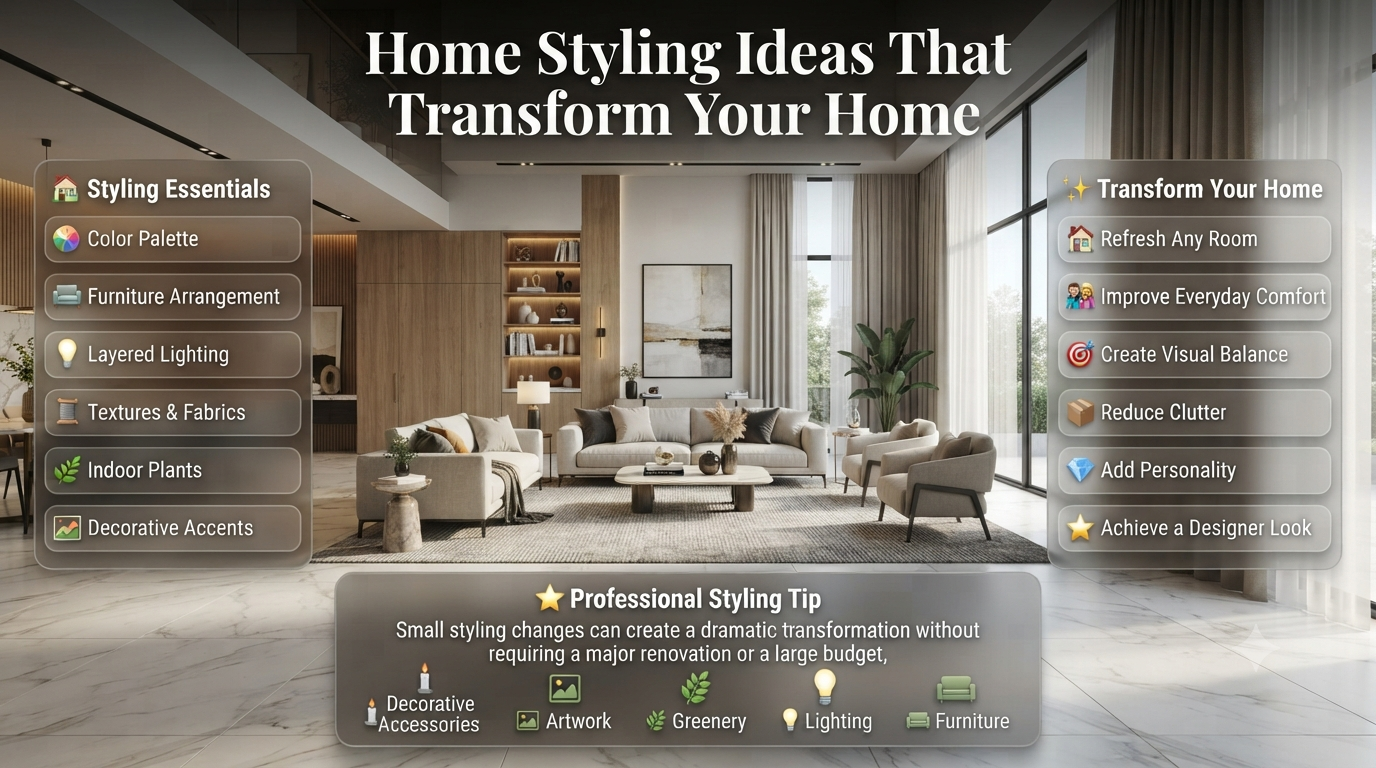
Home Styling Ideas That Transform Your Home | Your home should feel like a place that reflects your personality, supports your lifestyle, and makes you feel comfortable every day. Yet many homeowners struggle with spaces that look cluttered, unfinished, or lacking character. The good news is that transforming your home doesn’t always require a major renovation or a large budget. With the right home styling techniques, even small changes can create a noticeable difference.
Whether you’re decorating a new home, refreshing a single room, or preparing your property for guests, thoughtful styling can improve both the appearance and functionality of your space. From choosing the right color palette to arranging furniture and adding decorative accents, every design decision contributes to the overall atmosphere.
In this complete guide, you’ll learn practical home styling ideas, room-by-room decorating strategies, common mistakes to avoid, and expert tips that help you create beautiful, balanced, and welcoming interiors. You’ll also discover how color, lighting, textures, and accessories work together to make your home look professionally styled.
What Is Home Styling?
Home styling is the process of arranging furniture, colors, lighting, décor, and accessories to improve the appearance, comfort, and functionality of a living space. Unlike full interior renovation projects, home styling focuses on enhancing existing rooms through thoughtful decoration, organization, and design choices.
Home styling is about much more than making a room look attractive. It creates spaces that suit your daily routine while expressing your personal taste. Every element—from the sofa to the artwork—works together to create harmony and balance.
Professional home stylists carefully consider:
- Color harmony
- Furniture placement
- Lighting layers
- Decorative accessories
- Textures and fabrics
- Room proportions
- Visual balance
- Functionality
Unlike remodeling, which often involves construction work, home styling typically works with the home’s existing structure and focuses on maximizing its potential.
If you’re planning a complete room transformation, exploring Interior Design can help you understand the broader design principles behind successful spaces.
Why Home Styling Matters
Good home styling improves comfort, functionality, and visual appeal while making your home feel organized, inviting, and personal. Even simple styling updates can enhance everyday living and increase the perceived value of a property.
Many people believe stylish homes require expensive furniture or luxury décor. In reality, professionally styled homes rely more on thoughtful planning than high-end purchases.
Benefits of effective home styling include:
- Creates a welcoming atmosphere
- Improves everyday comfort
- Makes small rooms appear larger
- Enhances natural light
- Reduces visual clutter
- Reflects your personality
- Supports better organization
- Makes entertaining guests more enjoyable
- Can increase property appeal for buyers
💡 Pro Tip: Before purchasing new décor, rearrange your existing furniture and accessories. A fresh layout often delivers impressive results without additional spending.
Core Principles of Home Styling
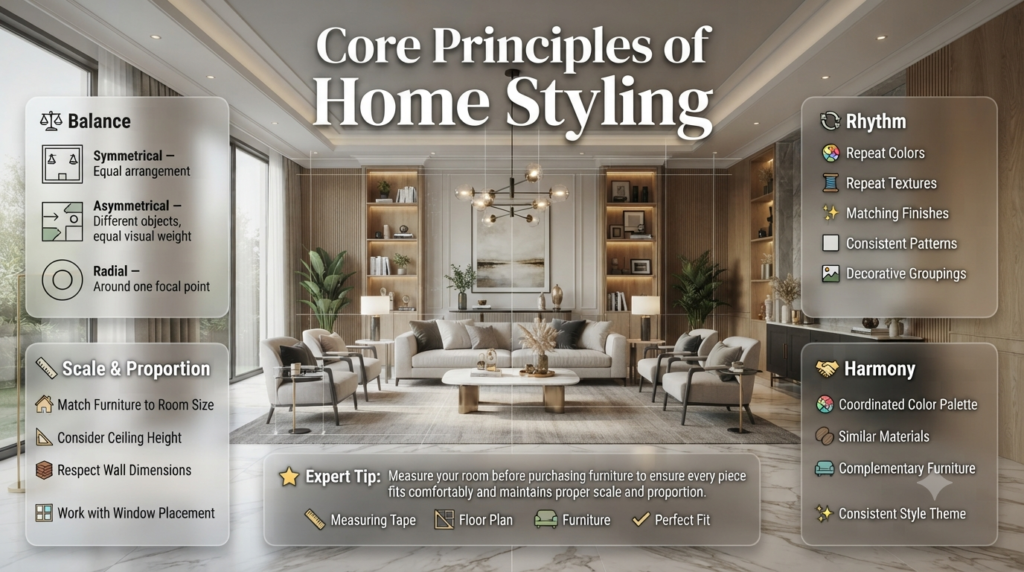
Understanding the fundamentals helps every decorating decision feel intentional instead of random.
Balance
Balance creates visual stability.
There are three common types:
| Type | Description | Best For |
|---|---|---|
| Symmetrical | Equal arrangement on both sides | Traditional interiors |
| Asymmetrical | Different objects with equal visual weight | Modern homes |
| Radial | Items arranged around a focal point | Dining areas and circular spaces |
Balanced rooms naturally feel calm and comfortable.
Scale and Proportion
One of the biggest styling mistakes is choosing furniture that doesn’t fit the room.
Large furniture overwhelms small spaces.
Tiny furniture disappears inside spacious rooms.
Everything should relate proportionally to:
- Room size
- Ceiling height
- Wall dimensions
- Window placement
⭐ Expert Tip: Measure your room before purchasing furniture. A floor plan prevents costly mistakes and ensures each piece fits comfortably.
Rhythm
Rhythm guides the eye throughout a room.
Professional stylists create rhythm using:
- Repeating colors
- Similar textures
- Matching finishes
- Consistent patterns
- Decorative groupings
For example, repeating black accents in lighting fixtures, picture frames, and cabinet handles creates a cohesive look without feeling repetitive.
Harmony
Harmony connects every design element into one unified style.
Instead of every item competing for attention, harmonious rooms feel intentional.
Harmony comes from:
- Coordinated color palettes
- Similar materials
- Complementary furniture styles
- Consistent decorative themes
This doesn’t mean everything must match perfectly. Mixing styles thoughtfully often creates more interesting interiors.
Popular Home Styling Styles
Choosing a design style provides direction for decorating decisions and prevents a room from feeling inconsistent.
Modern Home Styling
Modern interiors focus on simplicity and clean lines.
Characteristics include:
- Neutral colors
- Minimal decoration
- Functional furniture
- Open layouts
- Sleek finishes
- Natural light
Modern homes emphasize quality over quantity.
Contemporary Style
Contemporary styling evolves with current trends.
Common features include:
- Curved furniture
- Mixed materials
- Statement lighting
- Bold artwork
- Layered textures
Unlike modern design, contemporary interiors adapt over time.
Scandinavian Style
Scandinavian interiors prioritize comfort and simplicity.
Typical elements:
- White walls
- Soft neutral colors
- Wooden furniture
- Cozy textiles
- Indoor plants
- Minimal clutter
This style works especially well in smaller homes because it maximizes brightness and openness.
Farmhouse Style
Farmhouse styling combines warmth with rustic charm.
Popular features:
- Natural wood
- Vintage accessories
- Linen fabrics
- Open shelving
- Soft neutral colors
- Comfortable seating
The result is a relaxed and welcoming environment.
Industrial Style
Industrial interiors celebrate raw materials.
Key characteristics include:
- Exposed brick
- Metal accents
- Concrete surfaces
- Leather furniture
- Open ceilings
- Dark finishes
Industrial styling works particularly well in loft apartments and urban homes.
Bohemian Style
Bohemian styling embraces creativity and individuality.
You’ll often see:
- Colorful textiles
- Handmade décor
- Layered rugs
- Mixed patterns
- Global-inspired accessories
- Indoor greenery
The goal is creating a collected, lived-in appearance rather than a perfectly matched room.
⚠ Common Mistake: Mixing several decorating styles without a clear plan often creates visual clutter. Choose one primary style and add small influences from others for a balanced result.
How to Choose the Right Color Palette
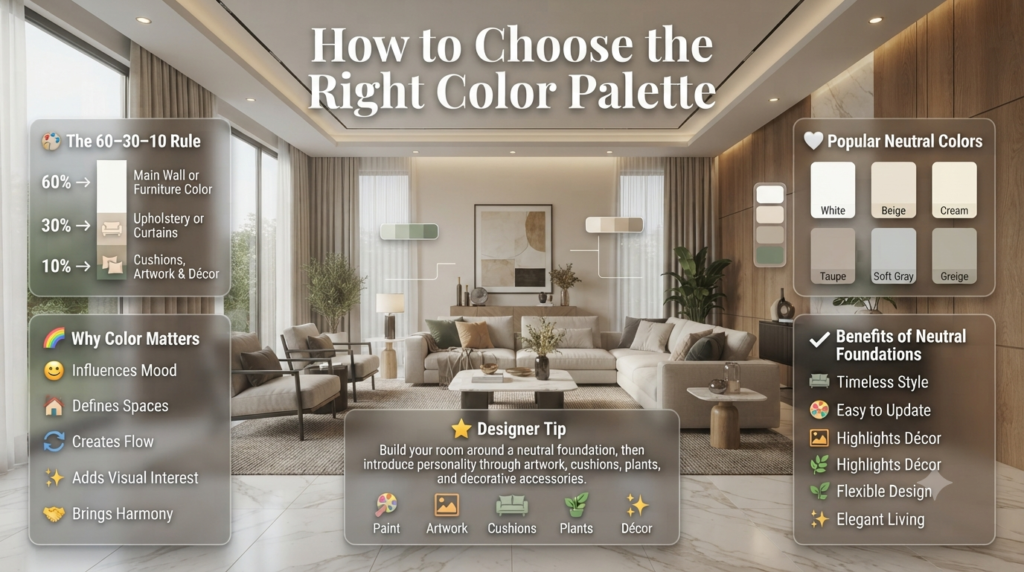
The best home color palette combines one dominant color, one supporting color, and one accent color. This creates balance, visual interest, and consistency throughout the home without making rooms feel overwhelming.
Color is one of the most powerful tools in home styling. It influences mood, defines spaces, and ties different rooms together.
A simple approach is the 60-30-10 rule:
- 60% – Main wall or furniture color
- 30% – Secondary color for upholstery or curtains
- 10% – Accent color through cushions, artwork, or décor
Neutral Color Schemes
Neutral shades remain timeless because they’re flexible and easy to update.
Popular choices include:
- White
- Beige
- Cream
- Taupe
- Soft gray
- Greige
Neutral foundations allow decorative accessories to stand out.
Readers looking for timeless palettes can also explore Neutral Color Schemes for inspiration.
Warm Color Palettes
Warm colors make spaces feel cozy and inviting.
Examples include:
- Terracotta
- Sand
- Olive green
- Clay
- Warm beige
- Soft caramel
These colors work beautifully in living rooms and dining spaces.
For more inspiration, see Warm Color Palettes.
📌 Quick Tip: Always test paint samples on different walls before making a final decision. Natural daylight and artificial lighting can dramatically change how a color appears throughout the day.
Lighting: The Secret Behind Beautiful Home Styling
Great lighting combines ambient, task, and accent lighting to create depth, improve functionality, and highlight your home’s best features. Layering different light sources makes rooms feel brighter, warmer, and more inviting.
Lighting is often overlooked, yet it has one of the biggest impacts on how a room feels. Even the most expensive furniture can look dull under poor lighting.
Professional stylists use three lighting layers:
| Lighting Type | Purpose | Examples |
|---|---|---|
| Ambient | Overall illumination | Ceiling lights, recessed lighting |
| Task | Supports specific activities | Desk lamps, reading lights, under-cabinet lights |
| Accent | Highlights features | Wall sconces, picture lights, LED strips |
Natural light should also be maximized wherever possible. Keep window treatments light and avoid blocking windows with oversized furniture.
For a polished finish, coordinate your lighting fixtures with the overall design style so they feel like part of the room rather than an afterthought.
Furniture Arrangement Like a Professional
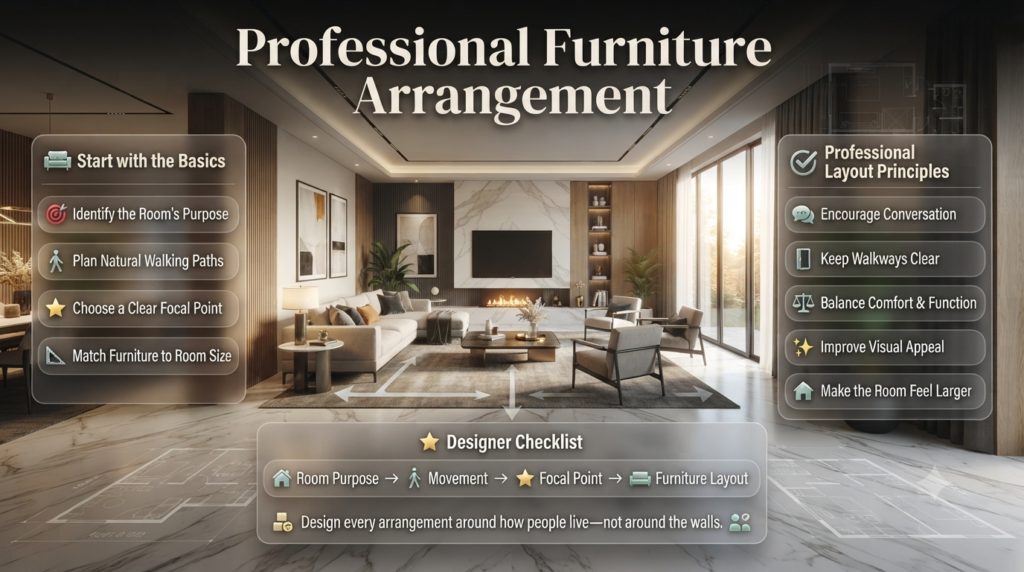
The best furniture arrangement balances comfort, functionality, and visual appeal. Start by identifying the room’s focal point, maintain clear walking paths, and choose furniture that fits the room’s size instead of filling every available space.
Many homeowners buy beautiful furniture but struggle to make the room feel comfortable. The issue usually isn’t the furniture itself—it’s how it’s arranged. A thoughtful layout can make a room appear larger, brighter, and more inviting.
Before moving furniture, ask yourself:
- What is the room’s primary purpose?
- Where do people naturally walk?
- What should be the main focal point?
- Does the layout encourage conversation and movement?
Design every arrangement around these answers rather than placing furniture against every wall.
Start with a Focal Point
Every well-styled room has one element that naturally attracts attention.
Common focal points include:
- Fireplace
- Large window with a view
- Feature wall
- Television
- Statement artwork
- Beautiful bookshelf
- Decorative lighting fixture
Arrange your main furniture around this focal point to create a cohesive layout.
💡 Pro Tip: If your room lacks a natural focal point, create one with a large piece of artwork, an Accent Walls design, or a stylish media unit.
Maintain Comfortable Walking Space
A beautifully decorated room loses its appeal if it’s difficult to move around.
As a general guideline:
- Keep major walkways open.
- Avoid blocking doorways.
- Leave enough space between furniture for comfortable movement.
- Ensure chairs can be pulled out easily in dining areas.
An open layout instantly makes a room feel more spacious.
Choose Furniture That Fits the Space
Oversized furniture can overwhelm a compact room, while tiny pieces may look out of place in a large area.
Before purchasing furniture:
- Measure room dimensions.
- Measure doorways and staircases.
- Mark furniture placement with painter’s tape.
- Consider ceiling height as well as floor space.
⭐ Expert Tip: It’s often better to invest in a few high-quality pieces than to overcrowd a room with unnecessary furniture.
Create Conversation Areas
Living rooms should encourage interaction rather than focusing only on the television.
Arrange seating so people can comfortably talk without raising their voices.
A simple conversational layout might include:
        Coffee Table
   Sofa            Armchair

        Area Rug

 Accent Chair    Side Table
This arrangement feels balanced while keeping the room functional.
Home Styling Ideas for Every Room
Each room serves a different purpose, so your styling choices should support how the space is used every day.
Living Room Styling Ideas
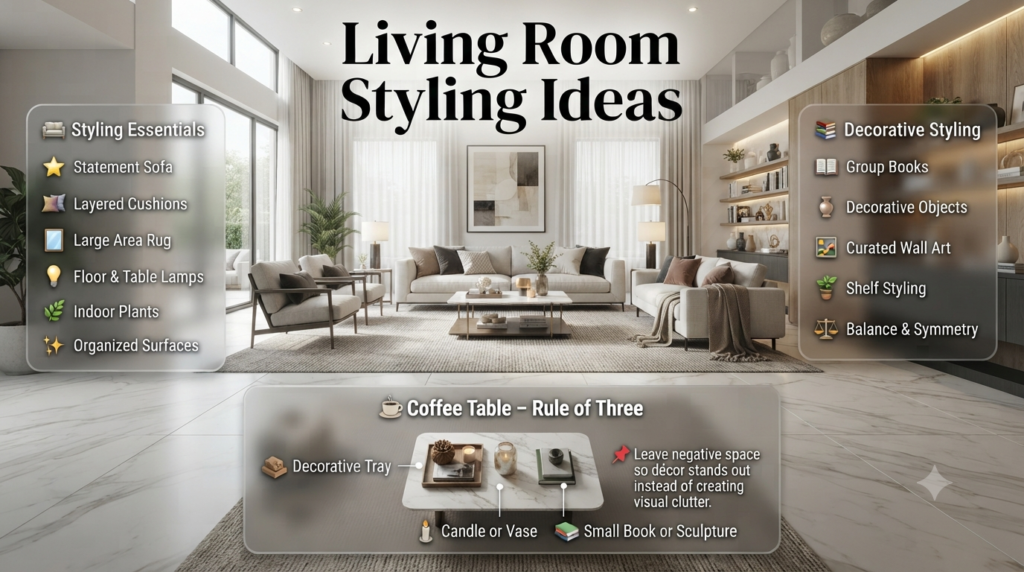
A stylish living room combines comfortable seating, layered lighting, balanced colors, and carefully selected décor to create a welcoming space for relaxation and entertaining.
The living room is often the heart of the home. It should feel inviting without becoming cluttered.
Key styling ideas include:
- Choose one statement sofa.
- Layer cushions in different textures.
- Add a large area rug.
- Include floor and table lamps.
- Display books and decorative objects in groups.
- Introduce indoor plants.
- Keep surfaces organized.
Coffee tables work best when styled using the “Rule of Three”:
- Decorative tray
- Candle or vase
- Small book or sculpture
For more inspiration, explore Living Room Paint Ideas to complement your styling choices.
📌 Quick Tip: Leave some empty space on shelves and tables. Negative space helps decorative items stand out instead of making the room feel crowded.
Bedroom Styling Ideas
A well-styled bedroom prioritizes comfort through soft textures, calming colors, layered bedding, and minimal clutter to create a peaceful retreat.
Bedrooms should promote rest rather than overstimulation.
Focus on:
- Comfortable bedding
- Soft lighting
- Matching bedside tables
- Layered pillows
- Neutral or calming wall colors
- Functional storage
- Minimal decorations
Texture is especially important here.
Combine:
- Cotton sheets
- Linen cushions
- Wool throws
- Upholstered headboards
- Soft rugs
These layers create a luxurious hotel-like atmosphere.
Looking for color inspiration? Visit Bedroom Color Inspiration for ideas that promote relaxation.
Kitchen Styling Ideas
Kitchen styling combines functionality with clean design by organizing countertops, using coordinated accessories, and adding subtle decorative elements without reducing workspace.
A beautiful kitchen doesn’t require expensive remodeling.
Small styling improvements include:
- Matching storage containers
- Wooden cutting boards
- Fresh herbs
- Decorative bowls
- Coordinated hardware
- Stylish lighting
- Minimal countertop clutter
Open shelving looks best when combining:
- Everyday dishes
- Small plants
- Glass jars
- Cookbooks
Avoid filling every shelf.
Need help choosing colors? Explore Kitchen Paint Colors before updating your kitchen.
Dining Room Styling
Dining rooms should encourage conversation and comfort.
Simple improvements include:
- Centerpiece with seasonal flowers
- Statement pendant lighting
- Upholstered dining chairs
- Large mirror
- Area rug
- Coordinated table settings
Avoid oversized centerpieces that block eye contact across the table.
Entryway Styling
Your entryway creates the first impression of your home.
Include practical essentials like:
- Console table
- Mirror
- Shoe storage
- Wall hooks
- Decorative basket
- Small lamp
- Indoor plant
A tidy entrance immediately makes the rest of the home feel more organized.
Decorating with Accessories
Accessories should support the room—not dominate it.
Popular decorating accessories include:
- Vases
- Candles
- Decorative bowls
- Books
- Sculptures
- Framed artwork
- Throw blankets
- Cushions
Follow the Rule of Three
Professional stylists often group décor into sets of three because odd numbers feel more natural.
Example grouping:
- Tall vase
- Medium candle
- Small decorative object
This creates visual balance without looking overly symmetrical.
Mix Different Heights
Decorating becomes more dynamic when objects vary in height.
For example:
| Tall | Medium | Small |
|---|---|---|
| Floor lamp | Vase | Candle |
| Plant | Sculpture | Book |
| Mirror | Tray | Bowl |
Variation adds depth and keeps displays interesting.
⚠ Common Mistake: Displaying every decorative item you own at once makes a room feel cluttered. Rotate seasonal décor throughout the year to keep your home looking fresh.
Styling with Artwork
Artwork adds personality and creates focal points.
When hanging artwork:
- Center it at eye level.
- Choose sizes that suit the wall.
- Frame pieces consistently.
- Coordinate colors with the room.
Large artwork often has a greater impact than several small pieces scattered across a wall.
Gallery walls work best when planned before hanging.
Lay the arrangement on the floor first to find the right composition.
Bringing Nature Indoors
Indoor plants enhance home styling by adding color, texture, freshness, and visual balance while making interiors feel more inviting and connected to nature.
Plants soften hard surfaces and improve the atmosphere of any room.
Easy indoor plants include:
- Snake Plant
- ZZ Plant
- Pothos
- Peace Lily
- Rubber Plant
- Monstera
- Spider Plant
Even one large plant can transform an empty corner.
Natural materials also help create warmth:
- Wood
- Stone
- Bamboo
- Linen
- Cotton
- Rattan
- Wicker
Combining greenery with natural textures creates timeless interiors.
⭐ Expert Tip: Use baskets instead of plastic plant pots. Woven baskets instantly make greenery look more elegant and blend seamlessly with most home styling themes.
Organizing Without Sacrificing Style
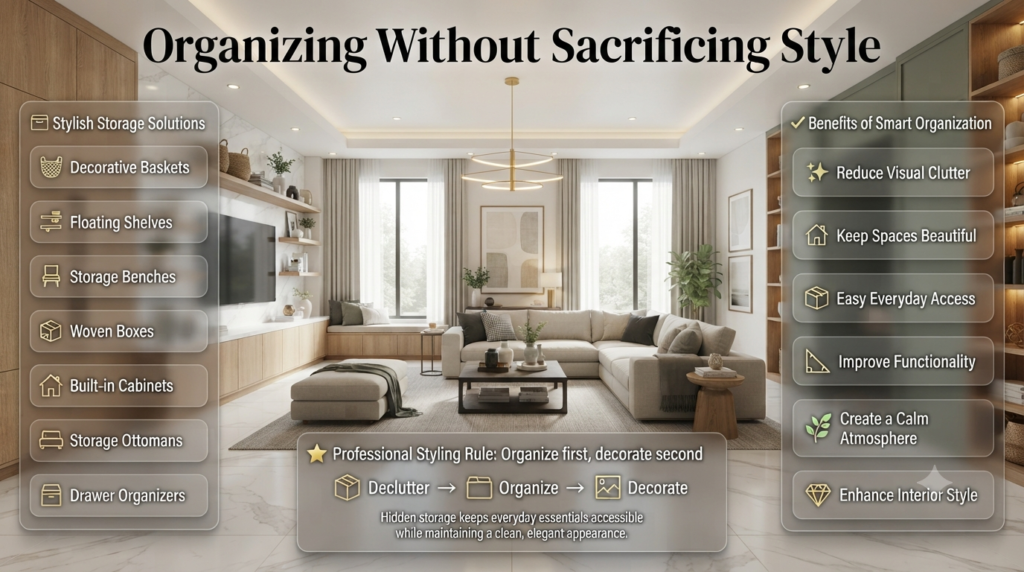
Organization is one of the foundations of successful home styling. A beautifully decorated room can quickly lose its appeal if everyday items are left scattered across surfaces.
Stylish storage solutions include:
- Decorative baskets
- Floating shelves
- Storage benches
- Woven boxes
- Built-in cabinets
- Ottoman storage
- Drawer organizers
Hidden storage helps maintain a clean appearance while keeping frequently used items within easy reach.
A useful rule is to decorate only after organizing. Once unnecessary items are removed, you’ll have a clearer idea of what decorative pieces the room actually needs.
Budget-Friendly Home Styling Ideas
You don’t need a large budget to achieve a professionally styled home. Smart updates often make a bigger impact than expensive purchases.
Here are affordable ways to refresh your space:
- Rearrange existing furniture.
- Paint a feature wall.
- Replace outdated cushions.
- Add a large mirror to reflect light.
- Update cabinet handles.
- Introduce indoor plants.
- Swap heavy curtains for lighter fabrics.
- Display books and decorative trays.
- Replace old lampshades.
- Refresh walls with framed prints.
If you’re planning a bigger makeover, browsing Home Improvement ideas can help you prioritize projects that deliver the greatest visual impact.
Common Home Styling Mistakes (And How to Avoid Them)
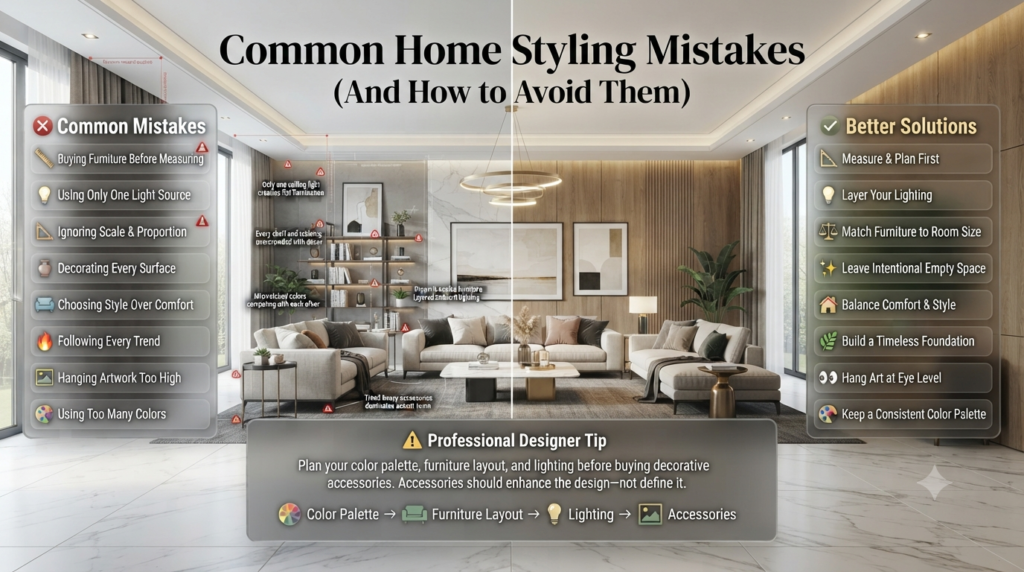
Even with beautiful furniture and quality décor, a few common mistakes can prevent your home from looking polished. The good news is that most of these issues are easy to fix once you know what to look for.
| Mistake | Why It’s a Problem | Better Solution |
|---|---|---|
| Buying furniture before measuring | Creates overcrowded or awkward layouts | Measure the room and plan the layout first |
| Using only one light source | Makes the room feel flat | Layer ambient, task, and accent lighting |
| Ignoring scale and proportion | Furniture looks too big or too small | Match furniture size to the room |
| Decorating every surface | Creates visual clutter | Leave intentional empty space |
| Choosing style over comfort | Rooms look good but aren’t practical | Balance aesthetics with functionality |
| Following every trend | Dates your home quickly | Build a timeless foundation and add trendy accents |
| Hanging artwork too high | Breaks visual balance | Hang artwork around eye level |
| Using too many colors | Makes rooms feel chaotic | Stick to a consistent color palette |
⚠ Common Mistake: Many homeowners buy decorative accessories before deciding on the room’s overall style. Always establish your color palette, furniture layout, and lighting first. Accessories should enhance the design—not define it.
Professional Home Styling Tips Designers Actually Use
Professional stylists don’t necessarily spend more money—they make smarter design decisions. These practical techniques can instantly improve the appearance of almost any room.
1. Style in Layers
Instead of decorating all at once, build the room gradually.
A designer’s typical sequence is:
- Large furniture
- Area rugs
- Lighting
- Curtains
- Artwork
- Decorative accessories
- Plants
- Personal touches
Layering creates depth and prevents the room from feeling unfinished.
2. Repeat Colors Throughout the Room
A color feels intentional when it appears in multiple places.
For example:
- Navy cushions
- Navy artwork
- Navy vase
Repeating a color three or four times creates harmony without making the room look overly coordinated.
3. Mix Textures Instead of Colors
Rooms become more interesting when they combine different materials.
Try mixing:
- Linen
- Velvet
- Leather
- Wood
- Glass
- Metal
- Woven baskets
- Stone
Even a neutral room feels rich and inviting when it contains layered textures.
⭐ Expert Tip: If your space feels “flat,” don’t rush to add more colors. Add texture first. A chunky knit throw, woven basket, or textured rug often makes a bigger difference than another decorative object.
4. Leave Empty Space
One of the biggest differences between professionally styled homes and cluttered homes is restraint.
Not every shelf, wall, or table needs decoration.
Empty space:
- Improves balance
- Highlights focal points
- Makes rooms feel larger
- Creates a calmer atmosphere
Sometimes, what you remove has a greater impact than what you add.
5. Invest in Timeless Pieces
Trendy décor comes and goes, but quality essentials remain stylish for years.
Prioritize spending on:
- Comfortable sofas
- Dining tables
- Quality mattresses
- Durable rugs
- Classic lighting
- Storage furniture
Update the look later with affordable accessories such as cushions, artwork, and seasonal décor.
Home Styling Trends for 2026
While timeless design never goes out of style, current trends focus on creating homes that feel warm, practical, and personal rather than perfectly staged.
Some of the biggest home styling trends include:
Warm Neutral Interiors
Cool gray palettes are giving way to warmer tones like:
- Sand
- Mushroom
- Beige
- Clay
- Soft brown
- Cream
These shades create a more inviting atmosphere.
Sustainable Materials
Homeowners are choosing:
- Reclaimed wood
- Bamboo
- Organic cotton
- Linen
- Natural stone
- Handmade ceramics
Sustainable materials add authenticity while reducing environmental impact.
Multifunctional Spaces
As more people work and study from home, rooms are expected to serve multiple purposes.
Examples include:
- Guest room + home office
- Dining room + workspace
- Living room + reading corner
Flexible furniture helps maximize available space.
Statement Lighting
Lighting is becoming a decorative feature instead of simply a necessity.
Popular options include:
- Oversized pendants
- Sculptural chandeliers
- Wall sconces
- Smart lighting systems
- Minimalist floor lamps
Nature-Inspired Interiors
Biophilic design continues to grow in popularity.
Expect to see:
- Indoor plants
- Wooden finishes
- Stone textures
- Large windows
- Earth-inspired color palettes
These elements create healthier and more relaxing living environments.
If you’re updating your home’s colors, browsing Paint Color ideas can help you choose shades that complement these modern styling trends.
What are the most important elements of successful home styling?
Successful home styling starts with creating a space that feels balanced, functional, and personal rather than simply following the latest design trends. The most stylish homes combine a cohesive color palette, well-proportioned furniture, layered lighting, comfortable textures, and carefully chosen decorative accessories. Instead of filling every corner with décor, focus on selecting pieces that complement each other and support the purpose of the room. A thoughtfully styled home should not only look beautiful but also make everyday living easier and more enjoyable.
Key Points:
Choose a consistent color palette throughout your home.
Arrange furniture to improve comfort and movement.
Layer ambient, task, and accent lighting.
Add texture using rugs, cushions, curtains, and throws.
Use decorative accessories in moderation to avoid visual clutter.
Include plants and natural materials for warmth and freshness.
How can I style my home on a budget without making it look cheap?
Creating a stylish home doesn’t require expensive furniture or a complete renovation. The most effective budget-friendly styling projects focus on improving what you already have. Rearranging furniture, repainting walls, updating soft furnishings, replacing outdated hardware, and introducing greenery can dramatically refresh a space. Investing in a few quality statement pieces while keeping the rest of the décor simple often creates a more expensive-looking result than buying many inexpensive decorative items.
Key Points:
Rearrange existing furniture before buying new pieces.
Paint walls using timeless neutral colors.
Replace old cushions, curtains, or rugs for an instant update.
Add mirrors to reflect natural light and create depth.
Use indoor plants to make rooms feel more inviting.
Shop gradually instead of decorating every room at once.
Which home styling trends are most popular in 2026?
Home styling in 2026 is centered around comfort, sustainability, and timeless design rather than short-lived trends. Homeowners are choosing warm neutral color palettes, natural materials, multifunctional furniture, and layered textures to create spaces that feel both practical and welcoming. Statement lighting, handcrafted décor, and biophilic design—bringing nature indoors through plants, wood, and stone—continue to dominate modern interiors. These trends help create homes that remain stylish for years instead of feeling outdated after one season.
Key Points:
Warm beige, clay, olive, and soft brown tones are highly popular.
Sustainable materials like wood, linen, and bamboo are in demand.
Multifunctional furniture is ideal for modern lifestyles.
Large statement lighting fixtures add character.
Indoor plants remain one of the easiest ways to refresh any room.
Timeless designs are replacing fast-changing decorating trends.
How do I choose the right color palette for home styling?
Choosing the right color palette begins with deciding how you want each room to feel. Soft neutral colors create a calm and spacious atmosphere, while warm earthy shades make spaces feel cozy and inviting. A practical approach is the 60-30-10 rule, where one dominant color covers most of the room, a secondary color provides balance, and an accent color adds personality. Testing paint samples in natural and artificial light before making a final decision helps prevent costly mistakes and ensures the colors look right throughout the day.
Key Points:
Use one dominant, one secondary, and one accent color.
Consider how natural light changes color throughout the day.
Keep the palette consistent between connected rooms.
Add bold colors through accessories rather than permanent features.
Match furniture and décor with your chosen color scheme.
Choose timeless shades if you want long-lasting appeal.
What’s the biggest mistake people make when styling their home?
The most common mistake is trying to decorate every space at once without having a clear plan. This often leads to mismatched furniture, overcrowded rooms, inconsistent colors, and unnecessary spending. Professional home styling starts with understanding the room’s purpose, selecting a cohesive style, and building the design step by step. Taking time to plan each decision results in a home that feels organized, balanced, and visually appealing instead of cluttered or unfinished.
Key Points:
Avoid purchasing furniture before measuring the space.
Don’t mix too many decorating styles in one room.
Leave enough empty space for visual balance.
Prioritize functionality before decorative details.
Invest in quality furniture and update accessories over time.
Build your design gradually instead of rushing the entire project.
Conclusion
Home styling is more than choosing attractive furniture or following the latest design trends—it’s about creating a home that reflects your personality, supports your lifestyle, and feels comfortable every day. By focusing on thoughtful furniture placement, balanced color schemes, layered lighting, natural textures, and practical organization, you can transform any space into a beautiful and functional environment without the need for a complete renovation.
Remember that great home styling is built over time. Start with a clear vision, invest in timeless essentials, and enhance each room with carefully selected décor that adds character without creating clutter. Small, intentional updates often deliver the biggest impact and help your home remain stylish for years to come.
If you’re planning your next decorating project, explore more expert resources at Interior Design Mode 24. You can also discover practical ideas in Home Improvement, Interior Design, Paint Color, Accent Walls, Neutral Color Schemes, Warm Color Palettes, Ceiling Colors, Paint Finishes, Kitchen Paint Colors, Bedroom Color Inspiration, Living Room Paint Ideas, and Exterior Paint Colors: 25 Best Ideas for Every Home to continue creating a home that is stylish, functional, and uniquely yours.

Leave a Reply