
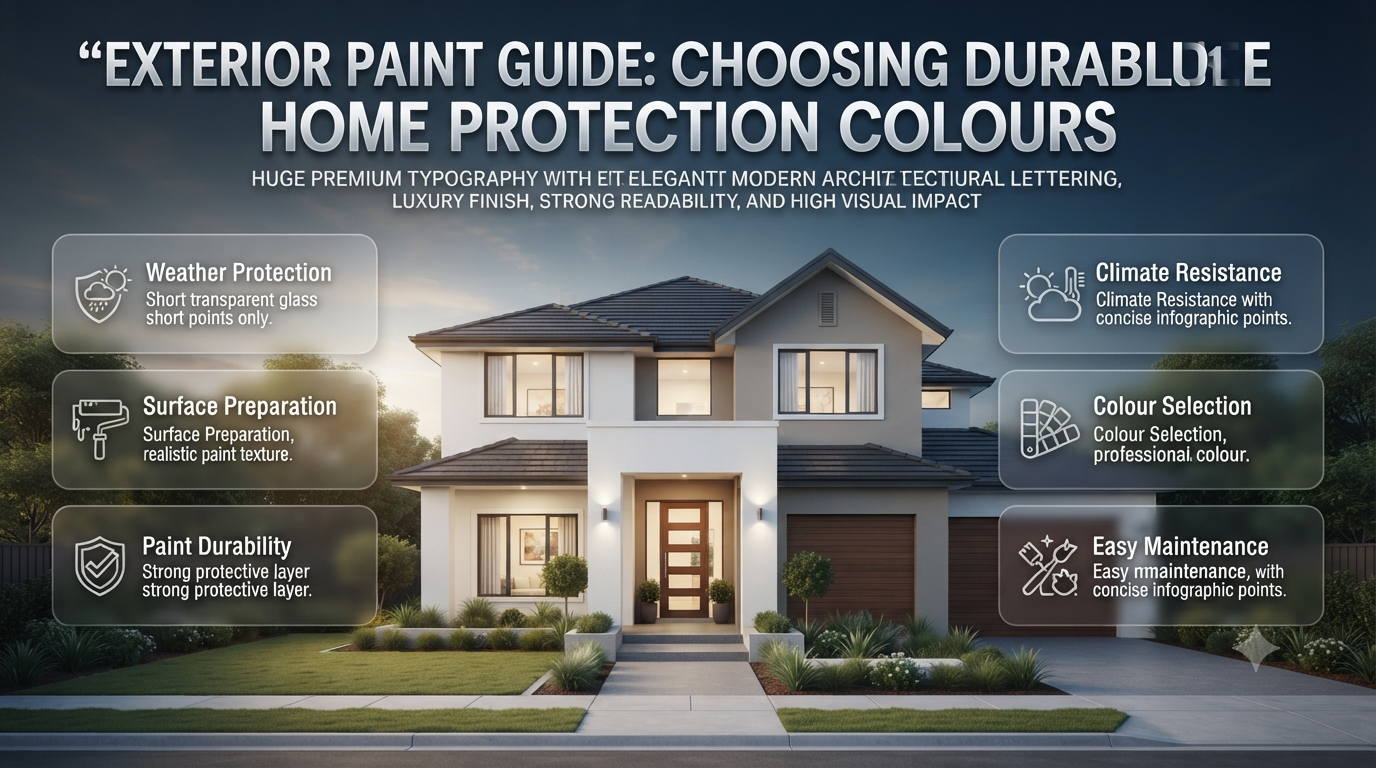
Introduction: Why Choosing the Right Exterior Paint Matters
Your home’s exterior is the first thing people notice, but exterior paint does much more than improve appearance. A poor-quality paint choice can lead to peeling walls, fading colours, water damage, and expensive repairs. On the other hand, the right exterior paint protects your property from weather conditions while keeping it attractive for many years.
Many homeowners struggle with questions like: Which exterior paint is best for my house? How long does exterior paint last? Should I choose acrylic, latex, or elastomeric paint? What colours work best outdoors?
Choosing exterior paint is not just about picking a beautiful colour from a catalogue. You need to consider your climate, surface type, moisture exposure, sunlight, paint durability, and maintenance requirements.
In this complete guide, you’ll learn everything about exterior paint, including different paint types, how to choose the right option, preparation steps, application methods, common mistakes, professional tips, and maintenance advice to achieve a long-lasting finish.
If you are also improving your home’s overall appearance, explore more ideas through Interior Design Mode 24 for inspiration on creating a balanced indoor and outdoor design style.
What Is Exterior Paint?
Exterior paint is a specially formulated coating designed to protect and decorate the outside surfaces of buildings. It is made to withstand sunlight, rain, temperature changes, humidity, and environmental damage while maintaining colour and durability.
Unlike interior paint, exterior paint contains stronger resins and additives that help it resist cracking, fading, moisture penetration, and mildew growth.
Exterior surfaces face constant exposure to:
- UV sunlight
- Rain and humidity
- Wind and dust
- Temperature changes
- Pollution
- Mold and algae growth
- Seasonal expansion and contraction
Because of these challenges, exterior paint requires different ingredients compared with indoor wall coatings.
💡 Pro Tip: Never use interior paint on outdoor walls. Interior paints are not designed to handle weather exposure and usually fail much faster when used outside.
Why Is Exterior Paint Important for Your Home?
Exterior paint works as a protective barrier between your home and the environment. A quality paint system can prevent costly damage while improving your property’s appearance and value.
1. Protects Against Weather Damage
The exterior walls of your home constantly deal with changing weather conditions. Without proper protection, surfaces can absorb moisture, leading to:
- Wall cracks
- Water stains
- Surface deterioration
- Mold growth
- Structural problems
A durable exterior paint creates a protective layer that reduces water absorption and improves resistance against harsh conditions.
2. Improves Curb Appeal
A fresh coat of exterior paint can completely transform a property.
The right colour combination can make your home appear:
- More modern
- Larger
- Cleaner
- More welcoming
- More valuable
For example, neutral colours such as warm white, beige, grey, and soft earth tones often create a timeless appearance, while deeper colours can add character and personality.
3. Increases Property Value
A well-maintained exterior creates a strong first impression for potential buyers.
A professionally painted home suggests:
- Regular maintenance
- Better care
- Reduced future repair costs
- Higher market appeal
Exterior paint is one of the most affordable improvements that can significantly change how a property looks.
How Long Does Exterior Paint Last?
Most high-quality exterior paint lasts between 5 and 10 years, depending on the paint quality, surface preparation, climate, and maintenance. Homes exposed to extreme weather may require repainting sooner.
Several factors affect exterior paint lifespan:
| Factor | Impact on Paint Life |
|---|---|
| Paint Quality | Premium paints last longer |
| Weather Exposure | Harsh sunlight and rain reduce lifespan |
| Surface Preparation | Proper preparation improves durability |
| Application Method | Professional application increases performance |
| Maintenance | Regular cleaning extends paint life |
Average Exterior Paint Lifespan by Surface
| Surface Type | Expected Lifespan |
|---|---|
| Wood siding | 3–7 years |
| Stucco walls | 5–10 years |
| Brick surfaces | 8–15 years |
| Concrete walls | 5–10 years |
| Metal surfaces | 5–10 years |
⭐ Expert Tip: The paint itself is only part of the system. Professional painters often say that preparation determines around 70% of the final result. Even the best exterior paint can fail if applied over dirty, damaged, or poorly prepared surfaces.
Types of Exterior Paint
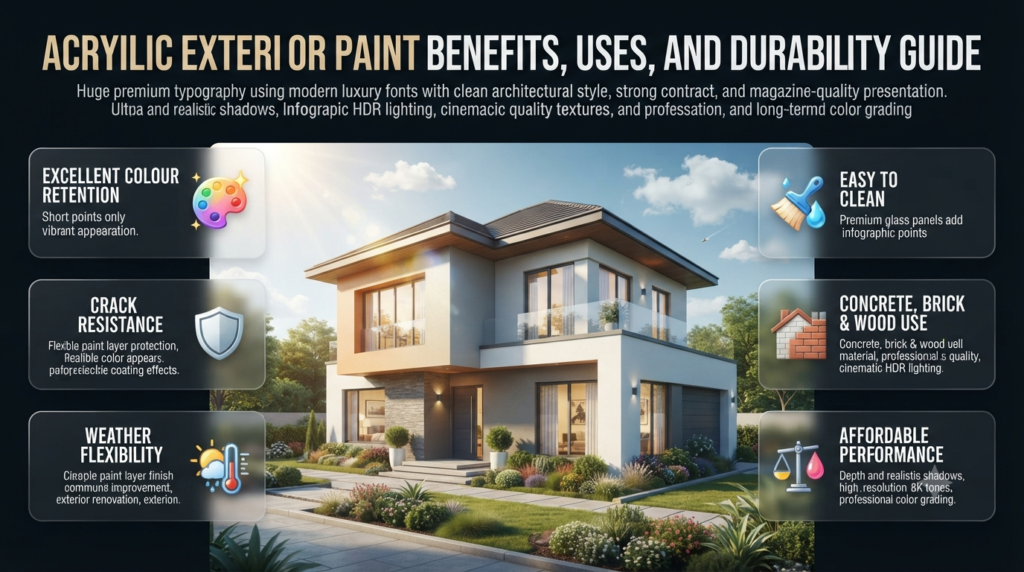
This visual guide highlights its benefits, applications, and key considerations.
Choosing the correct type of exterior paint is one of the most important decisions. Different paints offer different levels of durability, flexibility, and protection.
Acrylic Exterior Paint
Acrylic paint is one of the most popular choices for exterior walls because it provides excellent flexibility and weather resistance.
Benefits of Acrylic Exterior Paint
- Excellent colour retention
- Resistant to cracking
- Handles temperature changes well
- Easy to clean
- Suitable for many surfaces
Best For:
- Concrete walls
- Stucco
- Brick
- Wood siding
Possible Drawbacks:
- Premium acrylic paints can be expensive
- Lower-quality versions may fade faster
Acrylic exterior paint is often recommended for homeowners who want a balance between performance and affordability.
Latex Exterior Paint
Latex exterior paint is water-based and widely used because it is easy to apply and dries quickly.
Advantages:
- Low odour
- Easy cleanup
- Quick drying time
- Environmentally friendly options available
Disadvantages:
- May not perform as well in extreme conditions compared with premium acrylic formulas
Latex paints work well for many residential projects, especially when homeowners need an affordable and practical solution.
Elastomeric Exterior Paint
Elastomeric paint is a thick, flexible coating designed to bridge small cracks and protect surfaces from moisture.
Best Uses:
- Stucco homes
- Concrete walls
- Masonry surfaces
- Buildings exposed to heavy moisture
Benefits:
- Excellent waterproofing ability
- Covers minor surface imperfections
- Flexible during temperature changes
Limitations:
- More expensive
- Requires careful application
- Not suitable for every surface
⚠ Common Mistake: Many homeowners choose elastomeric paint simply because it sounds stronger. However, using the wrong coating on the wrong surface can trap moisture and create problems.
Exterior Paint Finishes Explained
The finish you choose affects both appearance and performance.
Flat Exterior Paint
Flat paint has a non-reflective appearance and helps hide surface imperfections.
Advantages:
- Elegant appearance
- Hides wall flaws
- Creates a modern look
Disadvantages:
- Harder to clean
- Less resistant to stains
Best for:
- Older walls
- Low-contact exterior areas
Satin Exterior Paint
Satin is one of the most popular exterior finishes because it provides a balance between beauty and durability.
Benefits:
- Easier cleaning
- Slight shine
- Better moisture resistance
- Long-lasting appearance
Best for:
- Exterior walls
- Doors
- High-visibility areas
Semi-Gloss Exterior Paint
Semi-gloss creates a stronger shine and is commonly used for detailed areas.
Best applications:
- Doors
- Window frames
- Trim
- Shutters
Advantages:
- Highly durable
- Easy to clean
- Resists moisture
How to Choose the Best Exterior Paint for Your Home
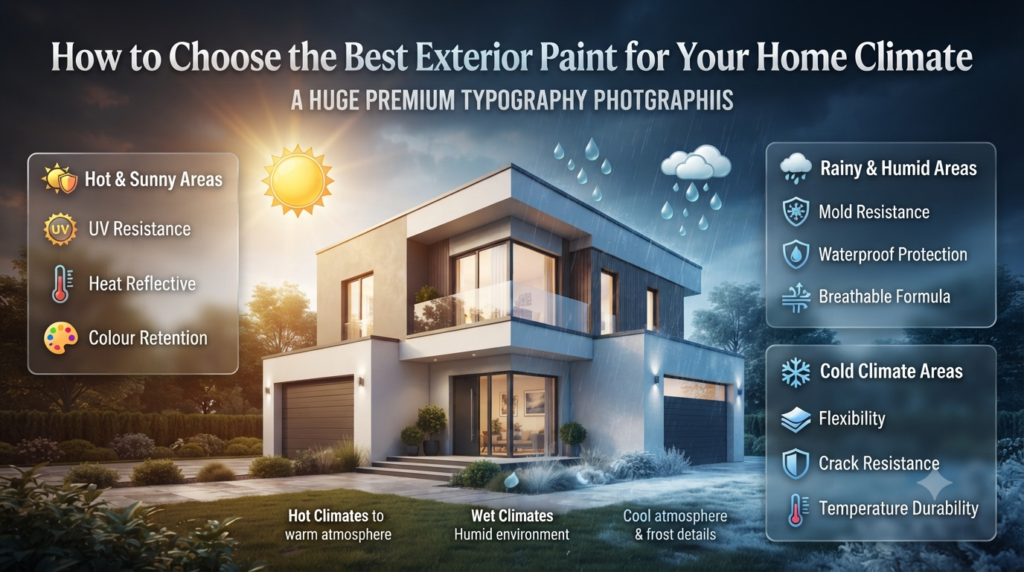
This visual guide explains how heat, humidity, and cold conditions affect paint performance.
Selecting exterior paint requires more than choosing a favourite colour. Consider these important factors before buying.
1. Consider Your Climate
Your local weather plays a major role in paint performance.
Hot and Sunny Areas
Choose paints with:
- UV resistance
- Heat-reflective properties
- Strong colour retention
Rainy or Humid Areas
Look for:
- Mold resistance
- Waterproof protection
- Breathable formulas
Cold Climate Areas
Choose paints with:
- Flexibility
- Crack resistance
- Temperature-change durability
2. Match Paint With Your Surface Type
Different materials require different paint solutions.
| Surface | Recommended Paint Type |
|---|---|
| Concrete | Acrylic or elastomeric |
| Stucco | Acrylic or elastomeric |
| Wood | Acrylic latex |
| Brick | Masonry acrylic |
| Metal | Exterior metal coating |
Using the wrong paint can cause:
- Peeling
- Poor adhesion
- Blistering
- Early failure
Best Exterior Paint Colours for Modern Homes

A premium visual guide showcasing timeless colour choices and smart selection factors.
The best exterior paint colours depend on your home style, surroundings, climate, and personal preference. Popular choices include neutral shades like white, beige, grey, and earthy tones because they provide timeless appeal and work well with different architectural designs.
Choosing an exterior colour is one of the most exciting parts of painting your home, but it is also where many homeowners make mistakes. A colour that looks attractive on a small sample card may appear completely different when applied across an entire wall.
Before selecting a colour, consider:
- Roof colour
- Landscape design
- Neighbouring homes
- Natural lighting
- Architectural style
- Climate conditions
Popular Exterior Paint Colour Ideas
1. Classic White Exterior
White remains one of the most popular exterior paint choices because it creates a clean and elegant appearance.
Advantages:
- Makes homes look brighter
- Creates a timeless design
- Works with almost every architectural style
- Reflects sunlight better than darker shades
Best Combinations:
- White walls + black window frames
- White walls + wooden doors
- White walls + grey accents
⚠ Common Mistake: Pure bright white can sometimes look too harsh under strong sunlight. Many professionals prefer warm whites with slight beige or grey undertones.
2. Modern Grey Exterior
Grey has become a popular choice for contemporary homes because it creates a sophisticated and modern look.
Grey exterior paint works well with:
- Minimalist designs
- Modern villas
- Urban homes
- Industrial-style architecture
Popular combinations include:
- Dark grey walls with white trim
- Light grey walls with black accents
- Grey walls with natural stone features
3. Beige and Earth Tones
Warm neutral colours create a welcoming and natural appearance.
Benefits include:
- Blends well with outdoor surroundings
- Creates a comfortable feeling
- Maintains long-term appeal
Common choices:
- Sand beige
- Taupe
- Cream
- Light brown
These colours are especially popular for traditional homes and properties surrounded by gardens.
4. Bold Exterior Colours
Some homeowners prefer stronger colours to create a unique appearance.
Examples:
- Navy blue
- Deep green
- Charcoal
- Terracotta
Bold colours work best when balanced with neutral elements.
For example:
A dark blue exterior can look elegant when combined with white trim and natural wood details.
How to Prepare Exterior Walls Before Painting
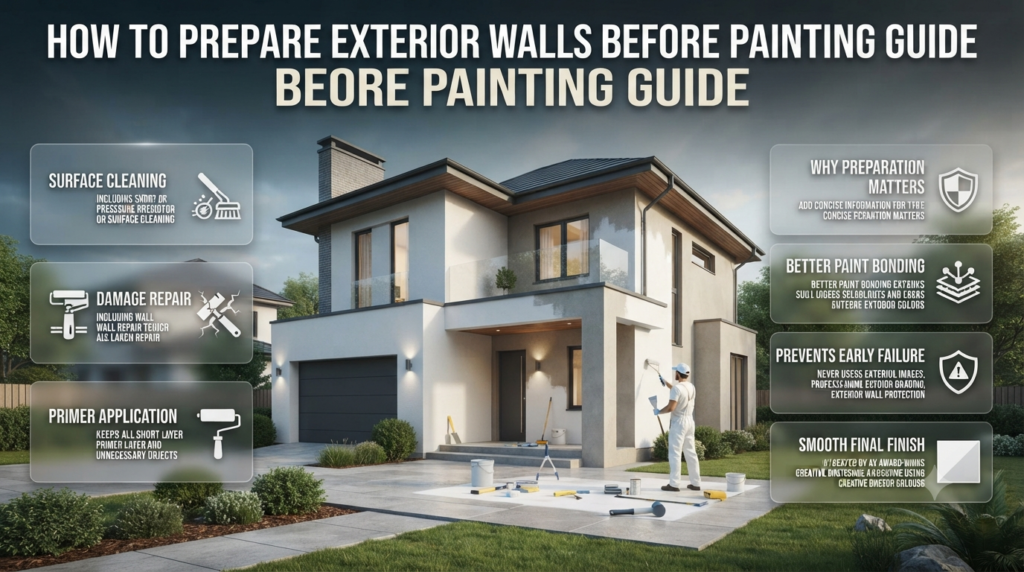
Learn the essential steps professionals follow before applying exterior coatings.
Proper surface preparation is the foundation of a long-lasting exterior paint job. Cleaning, repairing damage, and applying primer help paint bond properly and prevent early failure.
Many paint problems are not caused by poor-quality paint. They happen because the surface was not prepared correctly.
Professional painters usually follow a preparation process before applying any coating.
Step-by-Step Exterior Paint Preparation Process
Step 1: Inspect the Exterior Surface
What to do:
Check the walls carefully for:
- Cracks
- Peeling paint
- Water stains
- Mold
- Loose materials
- Damaged areas
Why it matters:
Painting over damaged surfaces hides problems temporarily but does not fix them.
Professional advice:
Repair structural issues before painting. Paint should protect a healthy surface, not cover existing damage.
Common mistake:
Applying fresh paint over peeling old paint.
This usually causes the new layer to fail quickly.
Step 2: Clean the Surface
Exterior walls collect:
- Dust
- Dirt
- Pollution
- Algae
- Mold
- Spider webs
Cleaning improves paint adhesion.
Common cleaning methods include:
- Pressure washing
- Soft brushing
- Mild detergent cleaning
💡 Pro Tip: Allow walls to dry completely after washing. Moisture trapped under paint can cause bubbling and peeling.
Step 3: Repair Cracks and Imperfections
Small cracks should be repaired before painting.
Common repair materials:
- Exterior-grade filler
- Masonry repair compound
- Caulk for gaps around windows and doors
Benefits:
- Smoother appearance
- Better paint performance
- Reduced moisture penetration
Step 4: Remove Loose Paint
Old failing paint must be removed.
Methods include:
- Scraping
- Sanding
- Power tools for larger areas
A new paint layer cannot properly stick to a weak surface.
Step 5: Apply Exterior Primer
Primer is an important preparation layer that improves paint performance.
Benefits of Primer:
- Improves adhesion
- Creates a uniform surface
- Blocks stains
- Reduces paint absorption
- Increases durability
Primer is especially important for:
- New construction
- Bare wood
- Masonry surfaces
- Previously unpainted walls
⭐ Expert Tip: Many professional painters use a primer even when homeowners think it is unnecessary because it improves the final appearance and extends paint life.
Exterior Painting Process: Professional Method
A quality exterior painting project follows a structured process.
Step 1: Protect Surrounding Areas
Before painting:
- Cover windows
- Protect plants
- Remove outdoor furniture
- Cover pathways
This prevents accidental paint damage.
Step 2: Apply Paint Correctly
Professional painters usually apply paint using:
- Brushes for detailed areas
- Rollers for large walls
- Sprayers for specific projects
The method depends on:
- Surface texture
- Paint type
- Project size
Step 3: Apply Multiple Coats
Most exterior surfaces require:
- Primer coat
- First paint coat
- Second finishing coat
Multiple coats provide:
- Better colour coverage
- Improved protection
- Longer lifespan
⚠ Common Mistake: Applying one thick coat instead of two proper coats.
A thick layer may dry unevenly and create cracking problems.
Best Time to Paint Exterior Walls
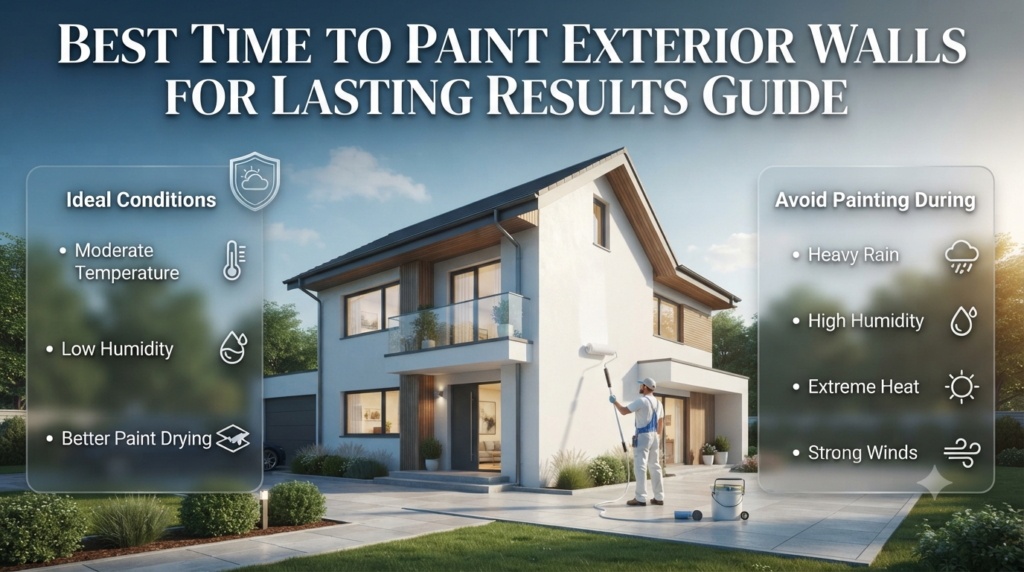
Learn how weather conditions like heat, rain, humidity, and wind affect exterior paint performance.
The ideal time for exterior painting is during mild weather conditions when temperatures are moderate and humidity is low. Extreme heat, rain, or high moisture can affect paint drying and durability.
Generally, avoid painting during:
- Heavy rain
- Very humid conditions
- Extreme heat
- Strong winds
Ideal Painting Conditions
| Condition | Recommended |
|---|---|
| Temperature | Moderate weather |
| Surface | Dry and clean |
| Humidity | Lower humidity preferred |
| Weather | Several dry days expected |
How Much Does Exterior Paint Cost?
Exterior paint costs vary depending on paint quality, surface size, labour charges, preparation work, and the type of coating selected. Premium paints usually cost more upfront but often provide better durability and fewer maintenance expenses.
Main cost factors include:
| Factor | Cost Impact |
|---|---|
| Paint Quality | Higher-quality paints cost more |
| Home Size | Larger homes require more material |
| Surface Condition | Repairs increase cost |
| Labour | Professional work affects total price |
| Number of Coats | More coats increase material use |
Ways to Reduce Exterior Painting Costs
You can control costs by:
- Choosing durable paint instead of repainting frequently
- Preparing surfaces properly
- Comparing multiple professional quotes
- Painting during suitable weather
- Maintaining painted surfaces regularly
📌 Quick Tip: The cheapest paint option is not always the most affordable. A low-quality coating may require repainting much sooner.
Exterior Paint Maintenance Tips
Regular maintenance helps exterior paint last longer by preventing small problems from becoming expensive repairs. Simple cleaning and early repairs can significantly extend the life of your paint system.
Follow these maintenance practices:
Clean Exterior Walls Regularly
Remove:
- Dust
- Dirt
- Mold
- Pollution buildup
Cleaning keeps colours fresh and protects the coating.
Inspect Walls Every Year
Look for:
- Cracks
- Peeling
- Fading
- Moisture marks
Early detection prevents bigger problems.
Maintain Gutters and Drainage
Poor drainage can damage exterior paint.
Blocked gutters may cause:
- Water stains
- Moisture problems
- Paint deterioration
Trim Nearby Plants
Plants touching exterior walls can increase:
- Moisture exposure
- Mold growth
- Surface damage
Keep a small gap between vegetation and painted walls.
Professional Exterior Paint Tips Experts Follow
Experienced painters use several techniques that improve results.
Choose Quality Over Cheap Materials
Premium exterior paints usually contain:
- Better pigments
- Stronger binders
- Improved weather resistance
They often provide better coverage and longer protection.
Test Colours Before Full Application
Always test paint samples on different areas.
Observe the colour:
- Morning sunlight
- Afternoon sunlight
- Evening shade
A colour can change significantly throughout the day.
Do Not Ignore Surface Problems
Paint cannot solve:
- Leaking roofs
- Structural cracks
- Water infiltration
Fix underlying issues first.
Consider Professional Help for Large Projects
Professional painters provide:
- Proper preparation
- Correct tools
- Better finishing quality
- Safety equipment
- Time efficiency
For homeowners improving their complete property appearance, related home improvement ideas can also be explored through Home Improvement and Paint Color Ideas.
Common Exterior Paint Mistakes Homeowners Make
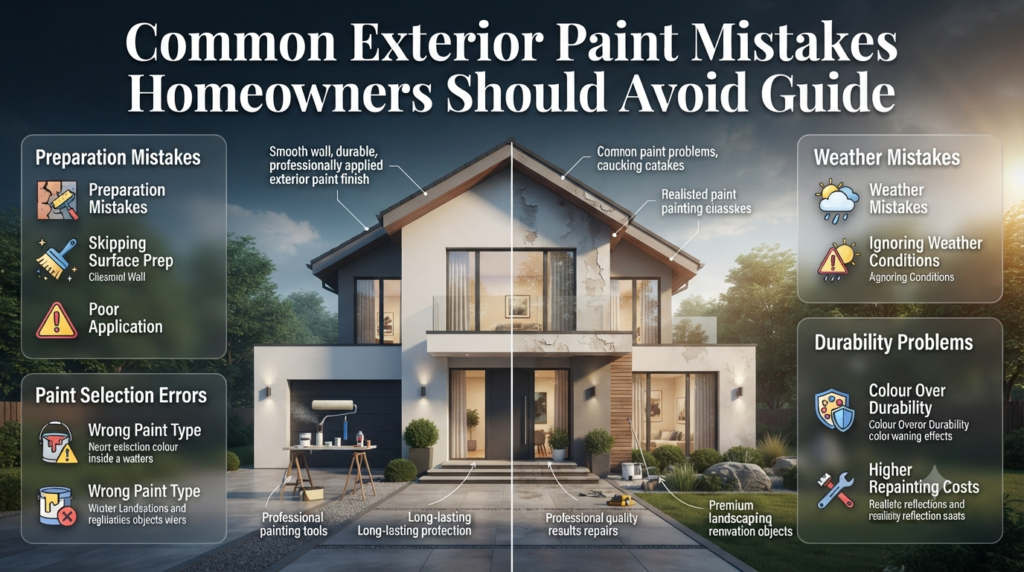
This visual guide reveals the key errors homeowners should prevent for a durable finish.
The most common exterior paint mistakes include skipping surface preparation, choosing the wrong paint type, ignoring weather conditions, and focusing only on colour instead of durability. Avoiding these mistakes helps prevent peeling, fading, cracking, and unnecessary repainting costs.
A beautiful exterior finish depends on many small decisions. Even expensive paint can fail if the preparation, application, or maintenance process is incorrect.
Below are the mistakes professionals see most often.
Mistake 1: Choosing Paint Based Only on Price
Many homeowners select the cheapest exterior paint because they want to reduce project costs.
However, low-cost paint often contains:
- Less durable ingredients
- Lower-quality pigments
- Reduced weather resistance
- Poor colour retention
This can result in:
- Faster fading
- More frequent repainting
- Increased maintenance expenses
💡 Pro Tip: A slightly higher investment in quality exterior paint can save money over time because you spend less on repairs and repainting.
Mistake 2: Skipping Surface Preparation
This is one of the biggest reasons exterior paint fails.
Some people believe applying a new coat over old paint will save time, but this usually creates problems.
Poor preparation can cause:
- Peeling paint
- Bubbling
- Uneven texture
- Poor adhesion
A professional painter spends significant time preparing surfaces because the paint job is only as strong as the surface underneath.
Mistake 3: Painting in Poor Weather Conditions
Weather directly affects how exterior paint dries and bonds.
Avoid painting during:
- Rainy weather
- High humidity
- Extreme heat
- Strong winds
Why?
Rain can wash away fresh paint.
High humidity slows drying.
Extreme heat can cause paint to dry too quickly, creating:
- Brush marks
- Uneven texture
- Poor bonding
Mistake 4: Using Interior Paint Outdoors
Interior and exterior paints are designed differently.
Interior paint is made for:
- Controlled temperatures
- Lower moisture exposure
- Indoor surfaces
Exterior paint is designed for:
- UV protection
- Weather resistance
- Temperature changes
- Outdoor durability
⚠ Common Mistake: Using leftover interior paint outside because it appears similar.
The result is usually early cracking, fading, and peeling.
Mistake 5: Ignoring Primer
Primer is sometimes considered an unnecessary expense, but it plays an important role.
Skipping primer can lead to:
- Uneven colour appearance
- Poor adhesion
- Increased paint absorption
- Reduced durability
Primer is especially important when:
- Painting new surfaces
- Changing from dark to light colours
- Covering stains
- Painting porous materials
Mistake 6: Selecting the Wrong Finish
Different finishes provide different performance levels.
For example:
- Flat paint hides imperfections but is harder to clean.
- Satin paint provides better durability for exterior walls.
- Semi-gloss works well for doors and trims.
Choosing the wrong finish can affect:
- Appearance
- Cleaning ability
- Long-term performance
Mistake 7: Ignoring Small Repairs
Small wall issues can become major problems.
Examples:
Small crack → moisture entry → wall damage → paint failure
Before painting, check:
- Wall cracks
- Damaged sealants
- Water stains
- Loose surfaces
📌 Quick Tip: Fixing small problems before painting is usually much cheaper than repairing damage later.
Exterior Paint Comparison Guide
Choosing between different exterior paint options can be confusing. This comparison helps homeowners understand the differences.
| Paint Type | Best For | Main Benefits | Limitations |
|---|---|---|---|
| Acrylic Paint | Most exterior walls | Durable, flexible, weather resistant | Premium options cost more |
| Latex Paint | General residential use | Affordable, easy application | Lower durability in harsh climates |
| Elastomeric Paint | Stucco and masonry | Excellent crack coverage and waterproofing | Requires skilled application |
| Oil-Based Paint | Specific surfaces | Strong adhesion | Longer drying time and maintenance concerns |
Acrylic vs Elastomeric Exterior Paint: Which Is Better?
Acrylic paint is usually the best all-purpose exterior option, while elastomeric paint is better for surfaces requiring extra flexibility and moisture protection, such as stucco and masonry walls. The better choice depends on your surface condition and climate.
Acrylic Paint Advantages:
- Flexible coating
- Good UV resistance
- Easier maintenance
- Suitable for most homes
Elastomeric Paint Advantages:
- Thick protective layer
- Covers small cracks
- Strong moisture resistance
Choose Acrylic If:
✔ Your walls are in good condition
✔ You want easier application
✔ You need a versatile paint solution
Choose Elastomeric If:
✔ Your walls have minor cracks
✔ Your area has heavy moisture exposure
✔ Waterproofing is a priority
Exterior Paint Decision Checklist
Before purchasing exterior paint, ask these questions:
Surface Checklist
☐ What material is my exterior wall made from?
☐ Are there cracks or damaged areas?
☐ Does the surface need repairs?
☐ Is primer required?
Climate Checklist
☐ Does my home receive strong sunlight?
☐ Is moisture a concern?
☐ Are temperature changes common?
Paint Selection Checklist
☐ Is the paint designed for exterior use?
☐ Does it provide UV protection?
☐ Is it suitable for my surface type?
☐ Does it offer mildew resistance?
Colour Checklist
☐ Does the colour match my roof and surroundings?
☐ Have I tested a sample?
☐ Will the colour remain attractive long-term?
Expert Advice: What Professional Painters Actually Recommend
Professional painters focus on durability, not just appearance.
Here are practical recommendations experts commonly follow:
1. Invest More in Preparation Than Paint
Many homeowners spend most of their budget on paint but ignore preparation.
Professionals know that:
- Cleaning matters
- Repairs matter
- Primer matters
- Application technique matters
A properly prepared surface allows even a good-quality paint to perform better.
2. Choose Colours That Age Well
Trendy colours may look attractive today but become outdated quickly.
Long-lasting choices include:
- Warm whites
- Soft greys
- Neutral beige
- Earth tones
These colours maintain appeal for many years.
3. Buy Enough Paint From the Same Batch
Different paint batches can sometimes have slight colour variations.
For larger projects:
- Calculate your paint requirement carefully
- Purchase enough paint together
- Mix cans before application
This creates a consistent finish.
4. Maintain Painted Surfaces Instead of Waiting for Failure
Many homeowners wait until paint is peeling before taking action.
Professionals recommend:
- Annual inspections
- Regular cleaning
- Early crack repairs
Preventive maintenance extends paint life.
Exterior Paint Maintenance Schedule
| Task | Recommended Frequency |
|---|---|
| Visual inspection | Every year |
| Exterior cleaning | Once or twice yearly |
| Crack repair | When noticed |
| Repainting | Usually every 5–10 years |
How long does exterior paint typically last before it needs a repaint?
Exterior paint usually lasts between 5 to 10 years. However, this lifespan varies heavily based on your local climate, the quality of the paint used, and the surface material of your home. Wood siding requires repainting every 3 to 7 years because it expands and contracts, while stucco and brick can hold paint for up to 15 years. Skipping proper surface prep or using cheap contractor-grade paint will cut these numbers in half.
Climate impact: Intense UV rays and heavy coastal salt moisture accelerate peeling and fading.
Material factors: Synthetic materials like fiber cement (Hardie Plank) retain paint much longer than natural wood.
Failure signs: Look for chalking, hairline cracks, or bubbling, which indicate the protective bond is failing.
What is the difference between acrylic latex and oil-based exterior paint?
Acrylic latex is the modern industry standard for most residential exteriors because it is highly flexible. It expands and contracts with temperature changes, meaning it is less likely to crack or peel over time. It is also breathable, allowing interior moisture to escape. Oil-based paint cures to a much harder, rigid shell. While it offers superior water resistance and scrubbability, its lack of flexibility makes it prone to cracking on large exterior walls.
Best use for acrylic: Vinyl siding, wood siding, stucco, masonry, and large exterior walls.
Best use for oil-based: High-touch areas, porch floors, steps, metal railings, and exterior trim.
Drying metrics: Acrylic dries to the touch in hours; oil takes up to 24 hours and requires chemical solvents for cleanup.
Can you paint exterior surfaces in any weather condition?
No, exterior painting requires a specific atmospheric window to cure correctly. The ideal temperature range is between 10°C and 32°C (50°F to 90°F) with low humidity. If you paint in direct, blazing sunlight, the paint dries too fast, causing brush marks and poor adhesion. If it is too cold, the paint cannot form a cohesive film, leading to premature washing away or cracking. Humidity should ideally be below 40% to 70% max.
The 48-hour rule: Avoid painting if it rained within the last 48 hours, as trapped moisture causes blistering.
Dew point caution: Stop painting at least four hours before sunset so evening dew does not ruin the wet film.
Modern exceptions: Some specialized “low-temp” acrylics can now be applied in temperatures as low as 2°C (35°F).
Why is surface preparation considered 80% of an exterior paint job?
Paint is only as good as the surface it adheres to. If you apply high-end paint over dirt, mildew, oil, or loose, flaking older paint, the new layer will bind to the debris instead of the house and peel away within a year. Professional prep involves pressure washing, scraping away dead paint, sanding rough spots, replacing rotted wood, and sealing gaps with exterior-grade caulk.
Pressure washing: Cleans dirt and chalky residue but requires 2 to 3 days of dry time before painting.
Priming necessity: Raw wood, patched areas, weathered masonry, and drastic color changes always require a dedicated primer coat.
Gloss management: Existing glossy paints must be scuff-sanded, or the new coat will slide off.
Which paint finish (sheen) is best for exterior siding and trim?
The rule of thumb for exterior sheens is to use flat or satin for the main body and semi-gloss for the trim and doors. Flat finishes hide surface flaws and dents beautifully but are harder to clean. Satin has a slight pearl-like sheen, offers great UV protection, and resists dirt accumulation, making it the most popular choice for siding. Semi-gloss is highly durable and moisture-resistant, which makes architectural details pop.
Flat/Matte: Best for older wood siding, stucco, and hiding heavy texture imperfections.
Satin/Eggshell: The ideal balance for standard vinyl, wood, and fiber-cement siding.
Semi-Gloss/Gloss: Reserved strictly for trim, window casings, shutters, and front doors due to its high washability.
Conclusion: Make the Right Exterior Paint Choice for Long-Lasting Results
Choosing the right exterior paint is not only about improving how your home looks—it is about protecting your property from weather damage, maintaining its value, and creating a finish that lasts for years.
A successful exterior painting project depends on several important decisions: selecting the correct paint type, understanding your surface material, preparing walls properly, choosing suitable colours, and applying the paint under the right conditions.
High-quality exterior paint combined with professional preparation can help prevent common problems such as peeling, fading, cracking, and moisture damage. Whether you are repainting an older home or adding the finishing touch to a new property, investing in the right products and techniques will always deliver better results.
Remember these key points:
- Choose exterior paint based on your climate and surface type.
- Never skip cleaning, repairs, or primer when needed.
- Select colours that match your home style and remain attractive over time.
- Use quality materials instead of focusing only on the lowest price.
- Maintain painted surfaces regularly to extend their lifespan.
A well-planned exterior painting project can completely transform your home while providing long-term protection. With the right approach, your exterior walls can remain beautiful, durable, and resistant to everyday environmental challenges for many years.

Leave a Reply