
Introduction
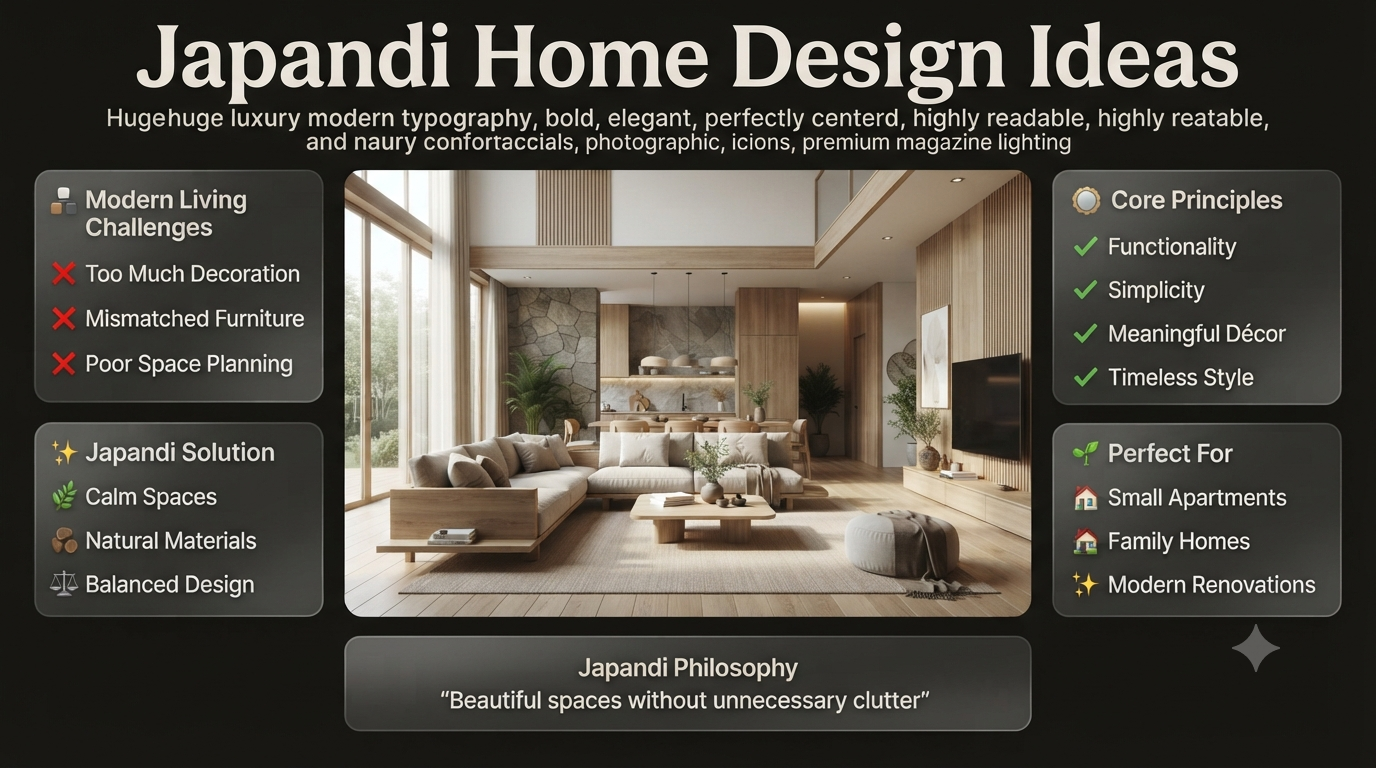
Japandi Home Design Ideas | Modern homes are becoming more than just places to live—they are spaces where people want to feel relaxed, comfortable, and connected. However, many homeowners struggle with creating interiors that look beautiful without feeling crowded or difficult to maintain. Too much decoration, mismatched furniture, and poor space planning can make even expensive homes feel stressful.
This is where Japandi Home Design has become one of the most loved interior styles worldwide. It combines the peaceful simplicity of Japanese aesthetics with the warmth and practicality of Scandinavian design. The result is a home that feels calm, organized, natural, and timeless.
Whether you are decorating a small apartment, renovating a family home, or simply looking for fresh Interior Design inspiration, Japandi offers a practical approach focused on balance, functionality, and meaningful design choices.
In this complete guide, you will discover what Japandi Home Design means, why it has become popular, the principles behind this style, essential elements, common mistakes, and professional techniques used by designers to create elegant spaces.
What Is Japandi Home Design?
Japandi Home Design is an interior style that blends Japanese minimalism with Scandinavian comfort. It focuses on simplicity, natural materials, functional furniture, neutral colors, and intentional decoration to create peaceful and practical living spaces.
The word “Japandi” combines two design philosophies:
- Japanese design: Focuses on simplicity, harmony, craftsmanship, and connection with nature.
- Scandinavian design: Emphasizes comfort, functionality, warmth, and practical living.
Together, these styles create interiors that are minimal but not empty, elegant but not overly formal, and modern while still feeling connected to nature.
Unlike cold minimalist spaces that remove almost everything, Japandi homes carefully select items that have purpose and emotional value.
A handmade ceramic vase, a wooden dining table, a soft linen curtain, or a comfortable chair can become an important design feature because each piece contributes to the overall feeling of the room.
Why Is Japandi Home Design Becoming So Popular?
Japandi has gained popularity because it creates peaceful homes that support modern lifestyles. It combines simplicity, sustainability, comfort, and functionality while avoiding unnecessary clutter.
Today’s homeowners are searching for interiors that do more than look attractive. They want spaces that improve daily life.
Japandi meets these needs because it helps create:
- More organized rooms
- Relaxing environments
- Better use of available space
- Sustainable interiors
- Timeless designs
Many people now prefer quality over quantity. Instead of buying large amounts of cheap décor, they choose fewer items that are durable, useful, and visually meaningful.
This philosophy also connects with modern Home Design Ideas where smart planning and thoughtful decoration create comfortable living spaces.
The Philosophy Behind Japandi Design
Japandi is not only a decorating style; it is a way of thinking about how a home should feel.
The style is influenced by several important concepts.
Wabi-Sabi: Finding Beauty in Imperfection
Japanese design embraces the idea of appreciating natural imperfections.
Instead of hiding every mark or irregular detail, Japandi celebrates:
- Handmade pottery
- Natural wood grains
- Organic textures
- Slight variations in materials
These imperfections make a home feel authentic and personal.
For example, a handmade wooden table with visible grain may become more attractive because it shows craftsmanship and natural character.
Hygge: Creating Everyday Comfort
Scandinavian design contributes the concept of comfort and coziness.
Japandi interiors use:
- Soft fabrics
- Warm lighting
- Comfortable seating
- Cozy blankets
- Natural textures
The goal is not simply to create a beautiful room but to create a space where people genuinely enjoy spending time.
Core Principles of Japandi Home Design
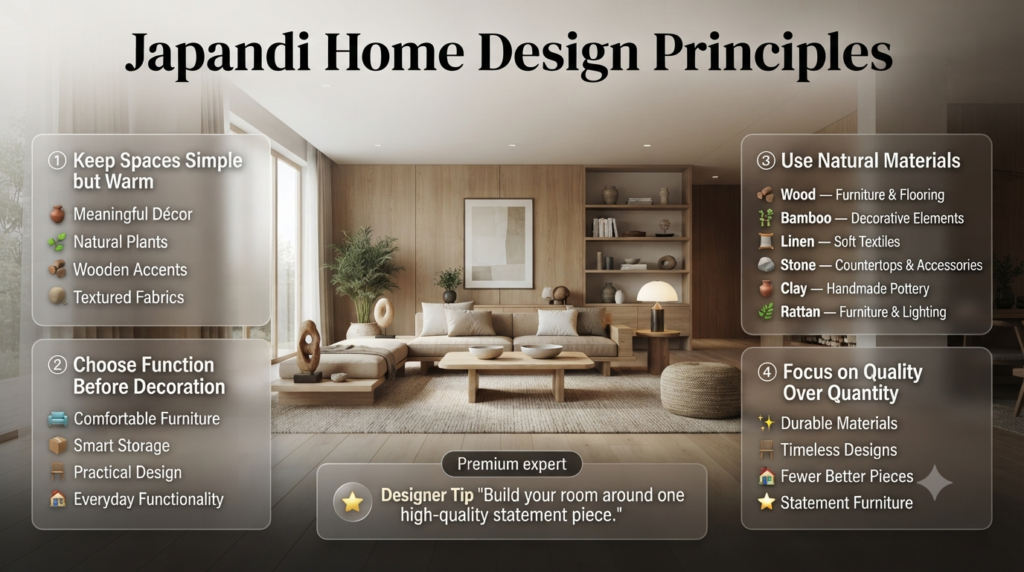
1. Keep Spaces Simple but Warm
The biggest misunderstanding about Japandi is that it means empty rooms with no personality.
In reality, Japandi focuses on intentional simplicity.
Every item should have a purpose.
Instead of displaying many decorations, designers usually choose a few meaningful elements:
- A handcrafted bowl
- A natural plant
- A textured rug
- A wooden sculpture
- A quality lamp
This creates visual peace while maintaining personality.
💡 Pro Tip: Before adding anything new, ask: “Does this improve the function or feeling of the room?”
If the answer is no, the space may become unnecessarily crowded.
2. Choose Function Before Decoration
Japandi homes are designed around real-life activities.
Furniture is selected based on comfort and usefulness rather than only appearance.
Examples include:
- Storage beds
- Functional coffee tables
- Comfortable dining chairs
- Built-in shelving
- Multi-purpose furniture
A beautiful home should also make everyday routines easier.
3. Use Natural Materials
Natural materials are one of the strongest features of Japandi interiors.
Popular choices include:
| Material | How It Is Used |
|---|---|
| Wood | Furniture, flooring, wall details |
| Bamboo | Decorative elements and furniture |
| Linen | Curtains, cushions, bedding |
| Stone | Countertops and accessories |
| Clay | Handmade pottery |
| Rattan | Chairs, baskets, lighting |
These materials introduce warmth and prevent minimalist spaces from feeling cold.
If you enjoy creating personalized interiors, explore more creative ideas through DIY Projects that complement Japandi styling.
4. Focus on Quality Over Quantity
Japandi encourages homeowners to invest in pieces that last.
A well-made wooden table or handcrafted chair can become a long-term part of your home instead of being replaced every few years.
Professional designers often recommend:
- Buying fewer furniture pieces
- Choosing durable materials
- Avoiding temporary trends
- Selecting timeless designs
⭐ Expert Tip: Build your room around one high-quality statement piece instead of filling the space with multiple average-quality items.
Key Characteristics of Japandi Home Design
The main characteristics of Japandi Home Design include neutral colors, natural textures, simple furniture, handcrafted accessories, clean layouts, soft lighting, and a strong connection with nature.
| Feature | Purpose |
|---|---|
| Neutral colors | Creates calm atmosphere |
| Natural wood | Adds warmth |
| Minimal decoration | Reduces clutter |
| Soft lighting | Improves comfort |
| Functional furniture | Supports daily life |
| Organic textures | Adds visual interest |
| Open spaces | Creates balance |
Benefits of Japandi Home Design
Creates a Peaceful Atmosphere
A cluttered environment can make people feel overwhelmed. Japandi reduces unnecessary visual distractions and creates a calmer atmosphere.
This makes it especially suitable for:
- Bedrooms
- Living rooms
- Home offices
- Relaxation areas
Makes Small Homes Feel Larger
Because Japandi avoids excessive furniture and decoration, rooms often appear more spacious.
Smart layouts, open areas, and simple furniture arrangements allow natural light to move throughout the space.
Easier Home Maintenance
Minimal decoration means less cleaning and easier organization.
Instead of spending hours managing unnecessary items, homeowners can enjoy a cleaner and more practical environment.
📌 Quick Tip: Use hidden storage solutions to maintain the clean appearance of Japandi interiors.
Supports Sustainable Living
Japandi naturally encourages sustainable choices by promoting:
- Long-lasting furniture
- Natural materials
- Responsible purchasing
- Reduced waste
This makes it an excellent option for homeowners who want stylish interiors with environmentally conscious choices.
Japandi Home Design Color Palette: Creating a Calm and Natural Atmosphere
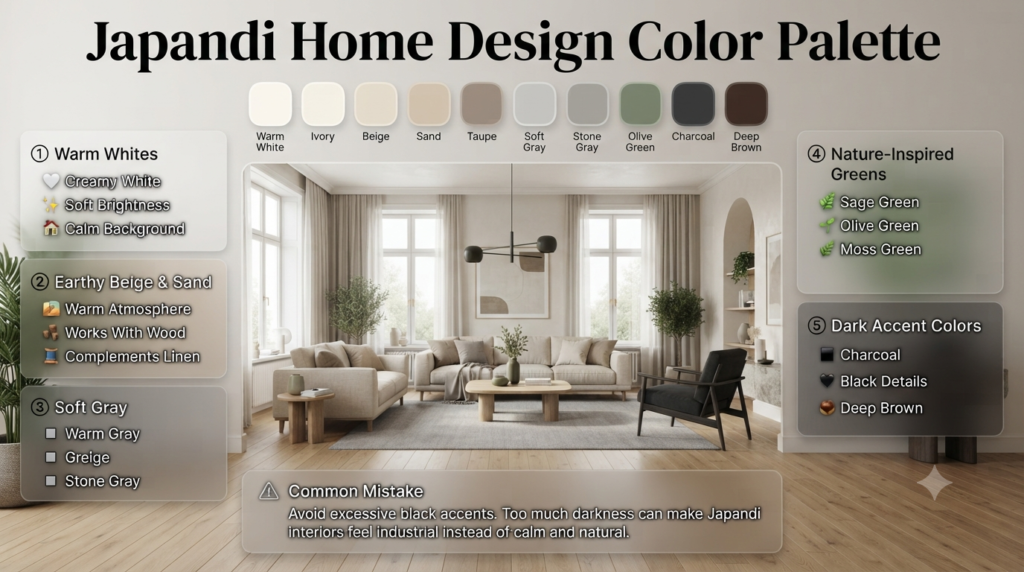
The Japandi color palette focuses on soft neutral tones, earthy shades, and natural-inspired colors. Popular choices include beige, warm white, soft gray, taupe, brown, muted green, and charcoal because they create a peaceful and balanced home environment.
Color plays a major role in Japandi interiors because the style depends on creating visual harmony rather than dramatic contrasts.
Unlike bold interior styles that use bright colors as the main attraction, Japandi uses colors that feel connected to nature.
The goal is to create a background that allows furniture, textures, and natural elements to stand out.
Best Colors for Japandi Interiors
1. Warm Whites
Pure white can sometimes feel cold. Japandi designers usually prefer warmer whites with subtle beige or creamy undertones.
These shades create:
- Brightness without harshness
- A softer atmosphere
- Better connection with natural materials
Warm white works beautifully for:
- Walls
- Ceilings
- Curtains
- Large furniture pieces
For more inspiration on choosing balanced wall shades, explore these Paint Color ideas.
2. Earthy Beige and Sand Tones
Beige is one of the most common Japandi colors because it creates warmth while maintaining simplicity.
It works well with:
- Wooden furniture
- Linen fabrics
- Stone surfaces
- Natural decorations
A beige living room with oak furniture and soft lighting instantly creates a peaceful Japandi feeling.
3. Soft Gray
Gray adds sophistication without making the space feel heavy.
The best choices are:
- Warm gray
- Greige
- Stone gray
Avoid extremely dark or cold grays because they may remove the welcoming feeling that Japandi design requires.
4. Nature-Inspired Greens
Muted greens bring an outdoor feeling inside.
Popular options include:
- Sage green
- Olive green
- Moss green
These shades work especially well with:
- Indoor plants
- Wooden surfaces
- Natural fabrics
5. Dark Accent Colors
Japandi does not completely avoid darker colors.
Small amounts of:
- Charcoal
- Black
- Deep brown
can create contrast and make lighter colors feel more balanced.
Examples:
- Black metal lighting fixtures
- Dark wooden furniture
- Charcoal cushions
⚠ Common Mistake: Using too much black can make Japandi interiors feel closer to industrial design instead of calm Japanese-Scandinavian style.
Choosing Japandi Furniture: Simple, Functional, and Timeless
Japandi furniture combines Japanese simplicity with Scandinavian comfort. The ideal pieces feature clean lines, natural materials, practical designs, and high-quality craftsmanship without unnecessary decoration.
Furniture is one of the most important elements of Japandi Home Design because it defines both the appearance and functionality of the space.
The right furniture should feel:
- Comfortable
- Durable
- Natural
- Simple
- Purposeful
Characteristics of Japandi Furniture
Low-Profile Designs
Japanese interiors often use lower furniture because it creates a closer connection with the floor and a feeling of openness.
Examples:
- Low sofas
- Platform beds
- Minimal coffee tables
These designs help rooms appear larger and calmer.
Natural Wood Finishes
Wood is almost always present in Japandi homes.
Common wood choices include:
- Oak
- Walnut
- Ash
- Bamboo
Natural grain and texture are preferred over glossy artificial finishes.
Clean Shapes
Japandi furniture avoids excessive decoration.
Look for:
- Straight lines
- Rounded edges
- Simple silhouettes
- Functional designs
The furniture should look elegant without demanding attention.
How to Select Japandi Furniture for Different Rooms
| Room | Recommended Furniture |
|---|---|
| Living Room | Low sofa, wooden coffee table, textured chairs |
| Bedroom | Simple wooden bed frame, minimal side tables |
| Dining Room | Solid wood dining table, comfortable chairs |
| Home Office | Functional desk, ergonomic chair |
| Entryway | Wooden bench, storage cabinet |
Japandi Materials and Textures: The Secret Behind the Warm Feeling
Many people think minimal interiors feel empty, but Japandi avoids this problem through layering textures.
Japandi interiors use natural textures such as wood, linen, cotton, wool, stone, bamboo, and ceramics to add warmth and depth. These materials prevent minimalist spaces from feeling cold or unfinished.
A successful Japandi room usually combines several textures without creating visual chaos.
For example:
A living room may include:
- Wooden flooring
- Linen curtains
- Wool rug
- Ceramic vase
- Cotton cushions
Each material adds a different sensory experience.
Popular Japandi Materials
Wood
Wood creates warmth and connects the interior with nature.
Used for:
- Flooring
- Furniture
- Wall panels
- Decorative elements
Linen and Cotton
Natural fabrics provide softness.
Common uses:
- Curtains
- Bedding
- Cushions
- Throws
Stone and Clay
These materials introduce an earthy feeling.
Examples:
- Stone countertops
- Clay pots
- Ceramic accessories
Bamboo and Rattan
These lightweight materials add natural texture.
They work well for:
- Chairs
- Baskets
- Lamps
- Decorative pieces
💡 Pro Tip: A Japandi room should not rely on decoration for interest. Use different textures to create depth naturally.
Japandi Lighting Design: Creating Warm and Relaxing Spaces
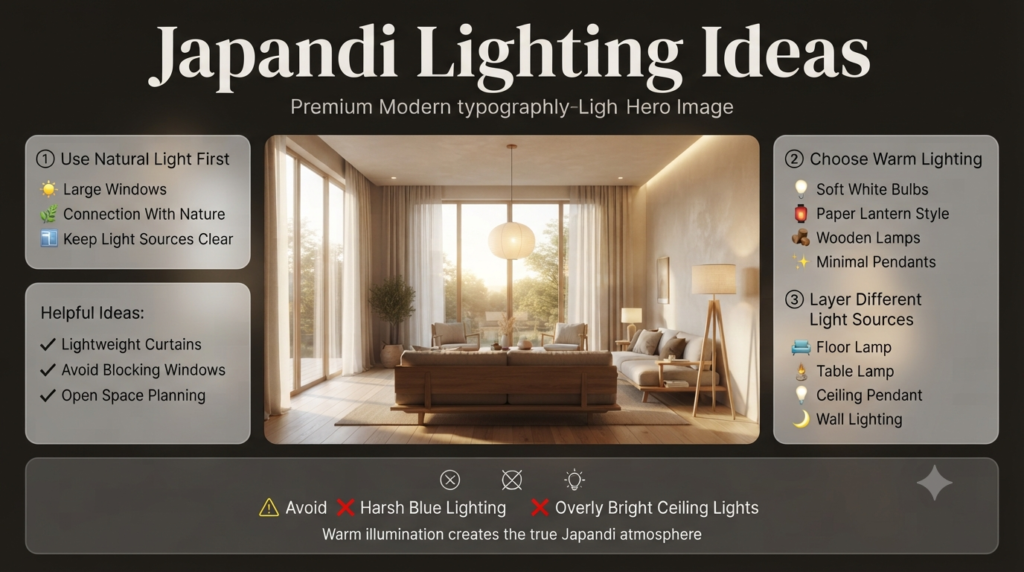
Japandi lighting focuses on soft, warm, and layered illumination. Instead of one bright ceiling light, designers combine natural light, pendant lamps, floor lamps, and subtle accent lighting to create a comfortable atmosphere.
Lighting can completely change how a Japandi interior feels.
The wrong lighting can make natural materials appear dull, while warm lighting enhances the beauty of wood and fabrics.
Japandi Lighting Principles
Use Natural Light First
Large windows and open spaces are ideal because daylight creates a connection with nature.
Helpful ideas:
- Use lightweight curtains
- Avoid blocking windows
- Keep furniture away from light sources
Choose Warm Lighting
Recommended:
- Soft white bulbs
- Paper lantern-style lights
- Wooden lamps
- Minimal pendant fixtures
Avoid:
- Harsh blue lighting
- Overly bright ceiling lights
Layer Different Light Sources
Professional designers rarely depend on one light source.
A balanced Japandi room may include:
- Ceiling pendant
- Floor lamp
- Table lamp
- Wall lighting
This creates flexibility for different moods.
Japandi Home Design Ideas Room by Room
Japandi Living Room
The living room should feel welcoming but uncluttered.
Key elements:
- Neutral sofa
- Wooden coffee table
- Soft rug
- Natural plants
- Minimal artwork
Avoid filling every empty corner.
A little empty space helps the room breathe.
Japandi Bedroom
The bedroom is one of the best spaces for this style because Japandi naturally supports relaxation.
Recommended elements:
- Low wooden bed
- Linen bedding
- Soft lighting
- Neutral colors
- Minimal decoration
The focus should be comfort and rest.
Japandi Kitchen
A Japandi kitchen combines beauty with practicality.
Common features:
- Wooden cabinets
- Stone countertops
- Open shelving
- Minimal hardware
- Natural accessories
Storage is extremely important because clutter can quickly affect the clean appearance.
Japandi Bathroom
Bathrooms benefit greatly from Japandi principles.
Popular features:
- Stone textures
- Wooden accents
- Simple fixtures
- Natural plants
- Spa-inspired atmosphere
The goal is to create a peaceful daily routine.
Japandi vs Scandinavian Design: What’s the Difference?
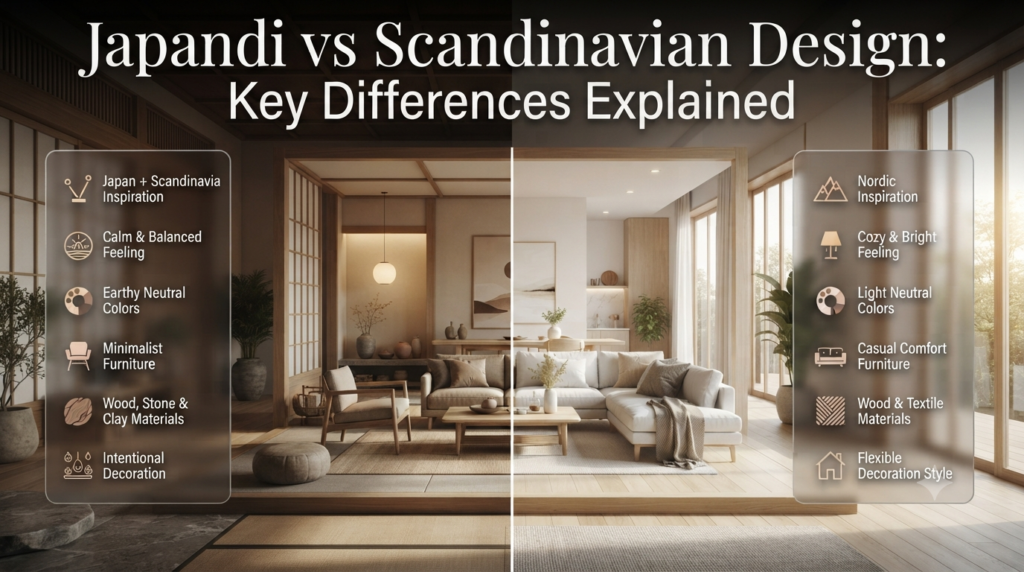
A visual guide to understanding how Japanese minimalism blends with Nordic comfort.
| Feature | Japandi | Scandinavian |
|---|---|---|
| Inspiration | Japan + Scandinavia | Nordic countries |
| Feeling | Calm and balanced | Cozy and bright |
| Colors | Earthy neutrals | Light neutrals |
| Furniture | More minimalist | More casual comfort |
| Materials | Wood, stone, clay | Wood, textiles |
| Decoration | Very intentional | More flexible |
Both styles share similarities, but Japandi usually has a stronger focus on simplicity, mindfulness, and natural balance.
How to Add Japandi Style on a Budget
You do not need a complete renovation to introduce Japandi elements.
Start with small improvements:
- Remove unnecessary decorations
- Add natural fabrics
- Replace bright colors with neutral tones
- Introduce indoor plants
- Choose wooden accessories
- Improve lighting quality
Small changes can significantly transform the atmosphere.
For affordable creative improvements, you can also explore Home Improvement ideas.
Professional Styling Techniques Designers Use
Interior designers often use these methods to achieve a polished Japandi look:
Repeat Natural Materials
Use the same wood tone in different areas.
Example:
- Wooden table
- Wooden shelves
- Wooden frames
This creates visual connection.
Balance Empty Space
Empty areas are not wasted space.
They create breathing room and allow important pieces to stand out.
Mix Old and New Elements
Japandi works beautifully with:
- Modern furniture
- Vintage ceramics
- Handmade accessories
This creates personality without clutter.
Keep Decorations Meaningful
Every accessory should contribute something.
Choose:
- Artwork with emotional value
- Handmade objects
- Natural pieces
Avoid random decorations.
⭐ Expert Tip: Professional designers often remove one or two items from a finished room because simplicity improves visual balance.
Common Mistakes People Make in Japandi Home Design
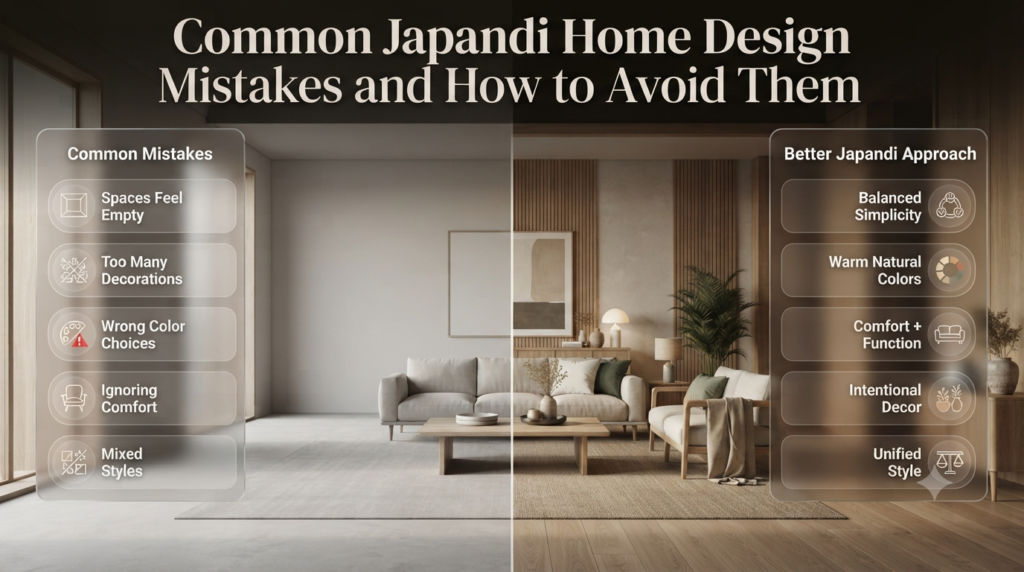
A visual guide to creating a peaceful and well-designed Japandi home.
The biggest Japandi Home Design mistakes include creating spaces that feel empty, using too many decorations, choosing the wrong colors, ignoring comfort, and mixing too many unrelated design styles. A successful Japandi home requires balance between simplicity, warmth, and functionality.
Japandi looks simple, but achieving the right balance requires careful planning. Many beginners focus only on the minimalist appearance and forget the warmth and comfort that make this style unique.
Below are the most common mistakes and how to avoid them.
Mistake 1: Making the Space Too Empty
One of the biggest misunderstandings about Japandi design is believing that fewer items mean removing everything.
A completely empty room may look minimal, but it can also feel uncomfortable and unfinished.
Japandi is not about having nothing—it is about having only what matters.
Why This Happens
Many people confuse Japandi with extreme minimalism and remove useful furniture, textures, and personal items.
Why It Creates Problems
Without warmth and personality, the room may feel:
- Cold
- Unwelcoming
- Too plain
- Lacking character
How to Avoid It
Include:
- Soft fabrics
- Natural textures
- Plants
- Meaningful artwork
- Comfortable furniture
💡 Pro Tip: A Japandi room should feel peaceful, not empty.
Mistake 2: Using Too Many Decorative Items
Japandi interiors use decoration carefully.
Adding too many:
- Candles
- Frames
- Accessories
- Plants
- Decorative objects
can quickly destroy the calm atmosphere.
Better Approach
Choose fewer items with stronger visual value.
For example:
Instead of displaying ten small decorations:
✓ Choose one handmade ceramic piece
✓ Add one natural plant
✓ Include one meaningful artwork
The result feels more intentional.
Mistake 3: Choosing Cold Colors
Many beginners use only white, gray, and black because they associate minimalism with these colors.
However, Japandi requires warmth.
Better Color Choices:
- Beige
- Cream
- Sand
- Warm gray
- Soft brown
- Muted green
These shades create a connection with nature.
For more inspiration on creating balanced palettes, explore Neutral Color Schemes and Warm Color Palettes.
Mistake 4: Ignoring Comfort
A beautiful home should still support everyday life.
Some people choose furniture only because it looks attractive but forget comfort.
Common Problems:
- Uncomfortable chairs
- Hard sofas
- Poor furniture placement
- Lack of storage
Better Solution:
Choose furniture that combines:
- Beauty
- Practicality
- Comfort
- Durability
Japandi is about creating a home that feels good, not just looks good.
Mistake 5: Mixing Too Many Styles
Japandi works well with many design influences, but too much mixing can create confusion.
Avoid combining too many competing styles:
- Heavy industrial elements
- Bright bohemian patterns
- Excessive luxury decoration
- Very traditional furniture
Instead, maintain a consistent visual direction.
Mistake 6: Buying Cheap Trend Furniture
Japandi values craftsmanship and longevity.
Low-quality furniture often creates problems because:
- Materials age quickly
- Designs become outdated
- Replacement costs increase
A better strategy is buying fewer pieces with better quality.
⭐ Expert Tip: Start with important foundation pieces like a sofa, bed, dining table, or storage furniture. These create the overall feeling of the room.
Expert Advice: How Professional Designers Create Japandi Interiors
Featured Snippet Answer
Professional designers create Japandi interiors by focusing on balance, natural materials, functional layouts, layered textures, and carefully selected furniture. They prioritize atmosphere and usability instead of simply copying the visual appearance of the style.
Experienced designers understand that Japandi is more than choosing beige walls and wooden furniture.
The real skill is creating harmony between every element.
1. Start With the Function of the Room
Before selecting colors or furniture, professionals ask:
- How will this room be used?
- Who will use it?
- What storage is needed?
- What feeling should the space create?
A bedroom, for example, should prioritize relaxation, while a home office should support concentration.
2. Create a Natural Flow
Furniture placement is extremely important.
Designers avoid overcrowding rooms and maintain comfortable movement paths.
A good Japandi layout usually includes:
- Open walking areas
- Balanced furniture placement
- Clear focal points
3. Layer Textures Instead of Adding Clutter
Many beginners try to make rooms interesting by adding more objects.
Designers create interest through textures:
Example:
A simple bedroom can feel luxurious with:
- Linen bedding
- Wooden bed frame
- Wool rug
- Soft lighting
No excessive decoration is needed.
4. Use Nature as Inspiration
Japandi homes often bring outdoor elements inside.
Popular additions include:
- Indoor plants
- Natural stone
- Wooden surfaces
- Organic shapes
Nature creates a calming connection and improves the overall atmosphere.
What is the exact mathematical color ratio for a true Japandi space?
There is no official mathematical color ratio required for Japandi design, but professional designers often follow a balanced 60-30-10 color rule as a practical guideline.
A typical Japandi color distribution looks like this:
60% Primary Base Color: Soft neutral tones such as warm white, beige, sand, cream, or light gray. These usually appear on walls, ceilings, large furniture, and flooring.
30% Secondary Color: Natural materials and earthy shades such as oak wood, walnut, stone, linen, clay, or muted green. These add warmth and texture.
10% Accent Color: Small amounts of darker or contrasting shades like charcoal, black, deep brown, or forest green through artwork, cushions, ceramics, or lighting fixtures.
Example:
A Japandi living room may include:
60% warm beige walls and sofa
30% oak flooring, wooden furniture, and linen textiles
10% black metal lamps, dark cushions, or ceramic accessories
However, Japandi is not about strict measurement. The purpose of the ratio is to maintain visual balance. If one color becomes too dominant, the room can lose the calm and natural feeling that defines Japandi interiors.
Professional Tip: Instead of matching colors perfectly, focus on creating a connection between tones. Natural shades should feel like they belong together, similar to colors found in forests, sand, stone, and wood.
How do you choose flooring and rugs to ground a Japandi layout?
Flooring and rugs play an important role in Japandi interiors because they create the foundation of the entire space. The right choices help furniture feel connected while adding warmth to minimalist layouts.
For flooring, the best options are natural-looking materials:
Light oak wood
Natural bamboo
Warm-toned hardwood
Matte stone finishes
Neutral porcelain tiles with natural textures
The goal is to avoid overly glossy surfaces because Japandi design values authenticity and softness.
When choosing rugs, focus on texture rather than bold patterns.
Ideal Japandi rug choices include:
Wool rugs
Jute rugs
Cotton rugs
Handwoven natural fiber rugs
Soft neutral-colored carpets
Good colors include:
Beige
Ivory
Taupe
Light gray
Sand
Soft brown
A rug should define the space without becoming the main attraction.
Example:
In a Japandi living room:
Wooden flooring creates warmth.
A large neutral rug connects the sofa and coffee table.
Natural textures add comfort without visual clutter.
⚠ Common Mistake: Choosing small rugs that only sit under the coffee table. A properly sized rug should usually extend under the front legs of major furniture pieces to create a unified layout.
Designer Advice: Think of flooring as the background and the rug as the bridge that connects different furniture elements together.
What lighting strategies are required to balance Scandi brightness with Zen warmth?
The challenge in Japandi lighting is combining two different philosophies:
Scandinavian design prefers bright, functional, and welcoming spaces.
Japanese design focuses on softness, shadows, and peaceful atmosphere.
A successful Japandi lighting plan balances both.
1. Maximize Natural Light
Natural daylight is one of the most important elements.
Use:
Large windows
Lightweight curtains
Open layouts
Reflective natural surfaces
Avoid blocking sunlight with heavy window treatments.
2. Use Warm Artificial Lighting
Choose lighting between approximately 2700K–3000K color temperature to create a warm and relaxing atmosphere.
Recommended options:
Paper lantern-style pendant lights
Wooden lamps
Ceramic table lamps
Soft wall lighting
Floor lamps
Avoid harsh cool-white lighting because it can make natural materials feel less inviting.
3. Create Multiple Lighting Layers
Professional designers rarely depend on one ceiling light.
A balanced Japandi room uses:
Ambient Lighting
Main ceiling fixture
Natural daylight
Task Lighting
Reading lamps
Desk lights
Kitchen lighting
Accent Lighting
Artwork lights
Decorative lamps
Soft corner lighting
This creates flexibility throughout the day.
💡 Pro Tip: A Japandi home should never feel brightly illuminated everywhere. Allow some softer areas and gentle shadows because they create the peaceful Zen feeling.
How can an active family maintain the minimalist look without hiding everything?
A common misconception is that minimalist homes only work for people who own very few things. In reality, Japandi can work beautifully for families if organization is designed properly.
The secret is not hiding everything—it is creating intentional storage and organization systems.
Practical Family-Friendly Japandi Solutions:
1. Use Beautiful Storage
Instead of plastic containers or random storage boxes, choose:
Wooden cabinets
Woven baskets
Built-in shelves
Natural fabric storage bins
These keep everyday items organized while matching the design.
2. Create Dedicated Zones
Families should assign specific places for:
Toys
Shoes
Books
School supplies
Electronics
When everything has a home, clutter naturally decreases.
3. Choose Durable Materials
Japandi works well for families because natural materials often age beautifully.
Good choices include:
Solid wood furniture
Washable linen
Strong cotton fabrics
Easy-clean surfaces
4. Accept Real Life
A Japandi home does not need to look like a showroom every minute.
The goal is:
Organized living
Comfortable routines
Reduced visual stress
not perfection.
⭐ Expert Tip: The best family Japandi homes include signs of life. A child’s artwork, family photographs, or favorite books can exist when displayed intentionally.
What is the rule for choosing and displaying decor in a Japandi home?
The main rule of Japandi décor is:
Choose fewer items, but make every item meaningful, functional, and connected to the natural environment.
Unlike decorative styles that fill every empty surface, Japandi follows the idea of intentional placement.
Before adding any décor, ask:
Does this item have a purpose?
Does it add beauty or emotion?
Does it match the natural feeling of the room?
Does it improve the atmosphere?
If the answer is no, it may not belong.
Japandi Decor Guidelines:
Choose Natural Materials
Best options:
Ceramic
Wood
Stone
Glass
Linen
Bamboo
Display Objects With Space Around Them
Avoid crowded shelves.
Instead of:
❌ Ten small decorations together
Choose:
✅ One ceramic vase
✅ One plant
✅ One meaningful artwork
The empty space around objects is part of the design.
Use Handmade Pieces
Japandi appreciates craftsmanship.
Examples:
Handmade pottery
Woven baskets
Artisan sculptures
Natural wood objects
These pieces add personality without creating clutter.
Follow the “One Beautiful Thing” Principle
A single high-quality object often creates more impact than many average decorations.
For example:
A handcrafted ceramic bowl on a wooden table can become a stronger design feature than a collection of unrelated accessories.
📌 Quick Tip: In Japandi design, empty space is not unfinished space—it is an intentional design element that allows important objects to stand out.
Conclusion: Creating a Balanced and Timeless Japandi Home
Japandi Home Design is more than a visual style—it is a thoughtful approach to creating a home that feels peaceful, functional, and connected to nature. By combining Japanese simplicity with Scandinavian comfort, Japandi creates spaces where every element has a purpose and every detail contributes to a sense of balance.
The key to achieving a true Japandi interior is not following strict rules or copying a showroom look. Instead, focus on the principles behind the style: choose quality over quantity, use natural materials, maintain a calm color palette, and create layouts that support your everyday lifestyle.
A successful Japandi home balances:
- Simplicity without feeling empty
- Minimalism without losing warmth
- Beauty without sacrificing functionality
- Modern living with natural elements
Whether you are redesigning a small apartment, updating a family home, or creating a peaceful personal retreat, Japandi principles can help you build a space that feels organized, comfortable, and timeless.
Remember, the most beautiful homes are not always the ones with the most decorations—they are the ones where every choice feels intentional. Start with small improvements, remove unnecessary clutter, introduce natural textures, and allow your home to reflect a calmer way of living.
With the right balance of materials, colors, lighting, and meaningful décor, Japandi Home Design can transform any space into a welcoming environment that remains elegant and inspiring for years to come.

Leave a Reply