
Introduction
Contemporary Interior Design: Modern Home Ideas & Expert Tips | Have you ever walked into a home that instantly felt bright, organized, and welcoming? The furniture looked stylish without being overwhelming, the colors felt calming, and every room seemed to have a purpose. That’s the appeal of Contemporary Interior Design.
Many homeowners struggle to find a design style that balances beauty with everyday practicality. Some interiors feel too traditional, while others become outdated as trends change. Contemporary interior design solves this problem by combining clean lines, open spaces, functional furniture, and timeless materials that evolve with modern living.
In this guide, you’ll discover what contemporary interior design really means, its defining characteristics, how it differs from modern design, and why it remains one of the most popular interior styles today. You’ll also learn practical tips to help you create a home that feels elegant, comfortable, and built for the way you live.
What Is Contemporary Interior Design?
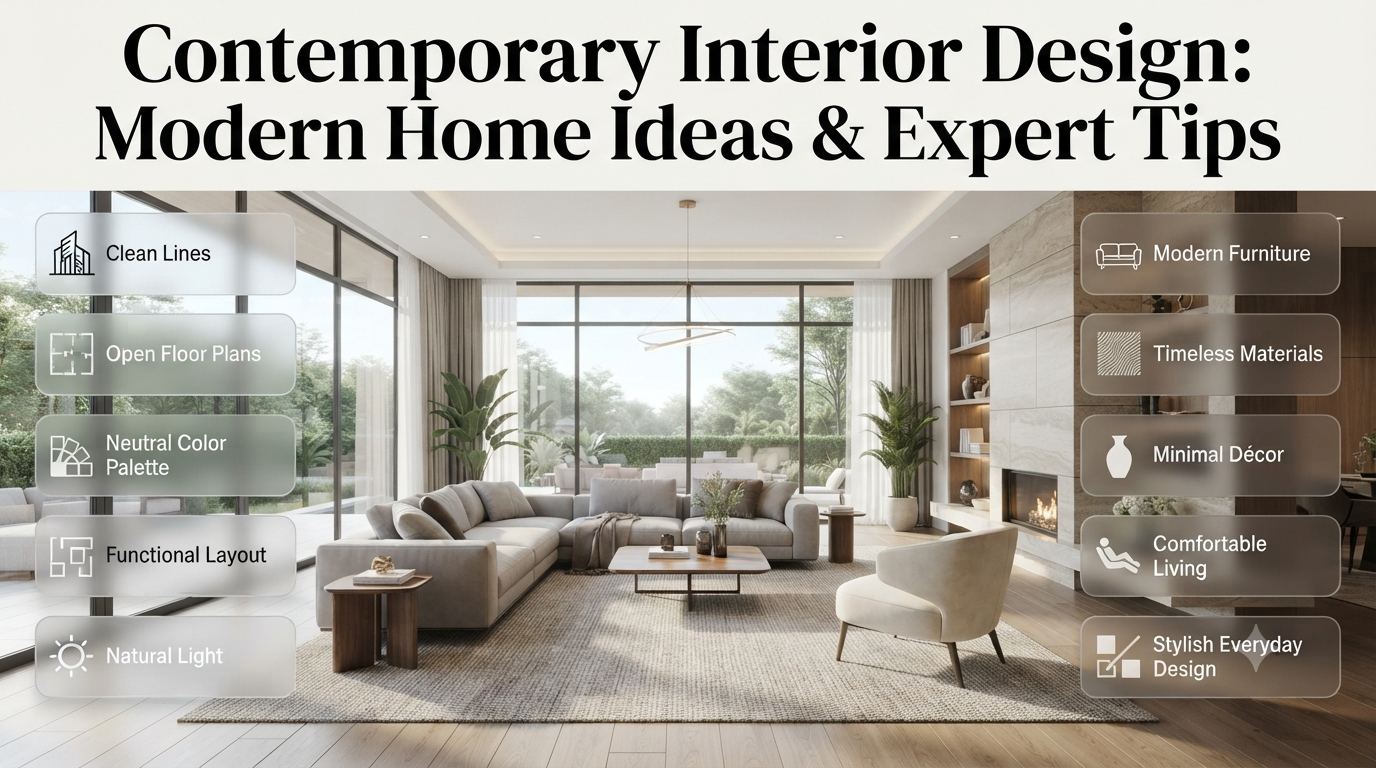
Contemporary Interior Design is a style that reflects current design trends while focusing on clean lines, open spaces, natural light, functional furniture, and a balanced color palette. Unlike fixed design styles, it changes over time, allowing homes to remain modern, practical, and visually appealing.
Many people believe contemporary and modern interior design are the same, but they’re actually different. Contemporary design is always evolving. It takes inspiration from today’s best design ideas instead of following one historical period.
Rather than filling rooms with decorative objects, contemporary interiors focus on creating spaces that feel open, organized, and easy to live in. Every piece of furniture, lighting fixture, and decorative accessory has a purpose.
A contemporary home typically includes:
- Open floor plans
- Large windows
- Neutral color palettes
- Comfortable furniture
- Simple architectural details
- Natural materials
- Statement lighting
- Carefully selected artwork
- Smart storage solutions
- Minimal visual clutter
The beauty of contemporary design is its flexibility. As lifestyles and design preferences evolve, the style adapts while maintaining its clean and sophisticated appearance.
💡 Pro Tip: Contemporary design isn’t about buying the newest furniture every year. Instead, invest in timeless pieces and update smaller decorative elements as trends change.
Why Contemporary Interior Design Is So Popular
Contemporary Interior Design has become one of today’s most popular styles because it combines comfort, functionality, and timeless beauty. Its flexible design principles work equally well in apartments, family homes, luxury villas, and urban living spaces.
Modern lifestyles demand homes that are both beautiful and practical. Contemporary interiors make daily life easier by reducing clutter, improving natural light, and creating layouts that support work, relaxation, and family activities.
Some of the biggest reasons homeowners choose contemporary design include:
- Easy maintenance
- Bright and airy interiors
- Flexible layouts
- Timeless appearance
- Comfortable living spaces
- Better organization
- Improved natural lighting
- Compatibility with smart home technology
Another major advantage is that contemporary interiors don’t become outdated quickly. Instead of requiring complete renovations every few years, homeowners can simply refresh artwork, textiles, or accent colors to keep the space current.
If you’re looking for more decorating inspiration beyond contemporary interiors, exploring Home Styling ideas can help you discover practical ways to personalize your living space while maintaining a cohesive design.
Key Characteristics of Contemporary Interior Design
Understanding the defining features of contemporary interiors helps you recognize the style and apply its principles more effectively.
Clean Lines
Straight, uncluttered lines are one of the most recognizable characteristics of contemporary design.
You’ll commonly see them in:
- Sofas
- Kitchen cabinetry
- Dining tables
- Staircases
- Built-in shelving
- Window frames
Curved furniture isn’t completely avoided, but it’s usually introduced as a feature piece to soften the overall design.
Open Floor Plans
Contemporary homes often remove unnecessary walls to create larger, more connected living spaces.
Benefits include:
- Better natural light
- Improved airflow
- Easier movement
- More social interaction
- Greater visual spaciousness
Open-plan layouts also make smaller homes feel significantly larger.
Neutral Color Palette
Most contemporary interiors begin with calm, neutral colors that create a relaxing backdrop.
Popular choices include:
- White
- Warm white
- Beige
- Greige
- Soft gray
- Charcoal
- Taupe
Neutral walls allow furniture, artwork, and decorative accents to stand out without overwhelming the room.
Accent colors are often introduced through:
- Cushions
- Rugs
- Paintings
- Decorative ceramics
- Indoor plants
If you’re planning to update your walls, learning more about Paint Color ideas can help you choose shades that complement a contemporary interior without making the room feel busy.
Natural Light
Natural light is one of the most valuable design elements in contemporary homes.
Large windows help:
- Brighten interiors
- Reduce energy consumption
- Highlight architectural details
- Improve mood
- Make rooms appear larger
Instead of heavy curtains, contemporary homes often use sheer fabrics, roller blinds, or minimal window treatments that maximize daylight.
⭐ Expert Tip: Position mirrors opposite windows to reflect sunlight deeper into the room. This simple technique can dramatically increase brightness without adding extra lighting.
Functional Furniture
Furniture should be attractive, but it should also improve everyday living.
Popular contemporary furniture includes:
- Modular sofas
- Extendable dining tables
- Floating TV units
- Storage ottomans
- Platform beds
- Multifunctional coffee tables
Every piece should contribute to both comfort and practicality.
Minimal Clutter
Contemporary interiors embrace simplicity rather than excessive decoration.
Instead of filling shelves with dozens of accessories, focus on a few carefully selected items such as:
- A large piece of artwork
- Sculptural vases
- Decorative lighting
- Indoor plants
- Handmade ceramics
This approach creates visual balance while allowing individual design features to stand out.
Mixed Materials and Textures
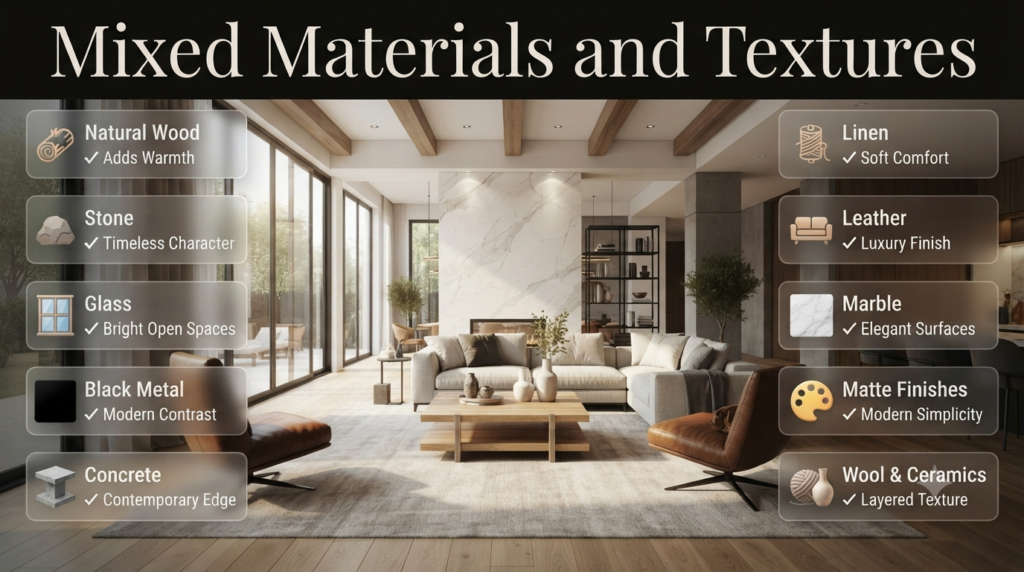
Although contemporary interiors often use neutral colors, they never feel flat because different materials create visual interest.
Popular combinations include:
| Material | Pairs Well With |
|---|---|
| Natural wood | Stone |
| Glass | Black metal |
| Concrete | Warm timber |
| Linen | Leather |
| Marble | Matte finishes |
| Wool | Ceramic accessories |
Mixing textures makes a room feel layered, comfortable, and inviting.
Sustainable Design Choices
Modern contemporary homes increasingly incorporate environmentally responsible materials and energy-efficient solutions.
Examples include:
- Reclaimed wood
- Bamboo furniture
- Recycled glass
- Natural stone
- Low-VOC paint
- Energy-efficient lighting
- Sustainable textiles
Choosing durable materials not only reduces environmental impact but also saves money over time.
Contemporary Interior Design vs Modern Interior Design
Many homeowners use these terms interchangeably, but they represent different design philosophies.
| Feature | Contemporary Interior Design | Modern Interior Design |
|---|---|---|
| Time Period | Current and evolving | Early to mid-20th century |
| Style | Flexible | Fixed |
| Color Palette | Neutral with changing accents | Earth tones and warm neutrals |
| Furniture | Mix of today’s styles | Mid-century inspired |
| Materials | Glass, concrete, metal, wood | Wood, leather, steel |
| Trends | Continuously updated | Historically defined |
| Flexibility | High | Moderate |
Quick Summary
Modern design represents a specific historical movement, while Contemporary Interior Design reflects what is happening in interior design today. Contemporary homes often borrow ideas from Scandinavian, industrial, minimalist, and even luxury interiors without being limited to one style.
If you’re comparing decorating themes before renovating your home, exploring different Interior Design Styles can help you choose a look that matches your lifestyle and long-term preferences.
⚠ Common Mistake: Many people buy modern furniture thinking it automatically creates a contemporary interior. In reality, contemporary design depends on the overall balance of space, lighting, materials, and functionality—not just individual furniture pieces.
Core Principles That Define Contemporary Interiors
Beautiful contemporary spaces aren’t created by following trends alone. They are built on timeless design principles that improve both appearance and everyday comfort.
Balance
Furniture, lighting, and décor should feel evenly distributed throughout the room.
Avoid placing all large furniture on one side, as this creates visual imbalance.
Simplicity
Every object should have a purpose.
Instead of asking, “Can I fit this here?”, ask:
“Does this improve the room?”
Removing unnecessary items often makes a bigger difference than buying new ones.
Contrast
Contrast prevents neutral interiors from looking dull.
Examples include:
- Black frames against white walls
- Wooden flooring with concrete finishes
- Linen upholstery paired with metal lighting
- Soft rugs beneath sleek furniture
These subtle contrasts create depth while maintaining a clean overall aesthetic.
Comfort
A contemporary home should never sacrifice comfort for appearance.
The most successful interiors combine:
- Comfortable seating
- Good lighting
- Practical layouts
- Soft textiles
- Easy movement
- Functional storage
The result is a home that looks elegant while supporting everyday life.
📌 Quick Tip: Before purchasing furniture, measure your room carefully and sketch a simple floor plan. This helps prevent overcrowding and ensures each piece complements the overall layout.
Why Contemporary Interior Design Works for Almost Every Home
One of the greatest strengths of contemporary interior design is its versatility. Whether you’re decorating a compact apartment, a suburban family home, or a spacious villa, its emphasis on simplicity, functionality, and timeless materials makes it adaptable to almost any space.
Rather than chasing short-lived trends, contemporary design encourages thoughtful decisions that improve how you live every day. With the right balance of furniture, lighting, colors, and textures, you can create a home that feels modern today and remains stylish for years to come.
For more expert inspiration, decorating guides, and practical renovation ideas, explore Design Mode 24. You’ll also find valuable resources on Home Design Ideas, Interior Design, and Home Improvement to help you design every room with confidence.
How to Create a Contemporary Interior Design Style
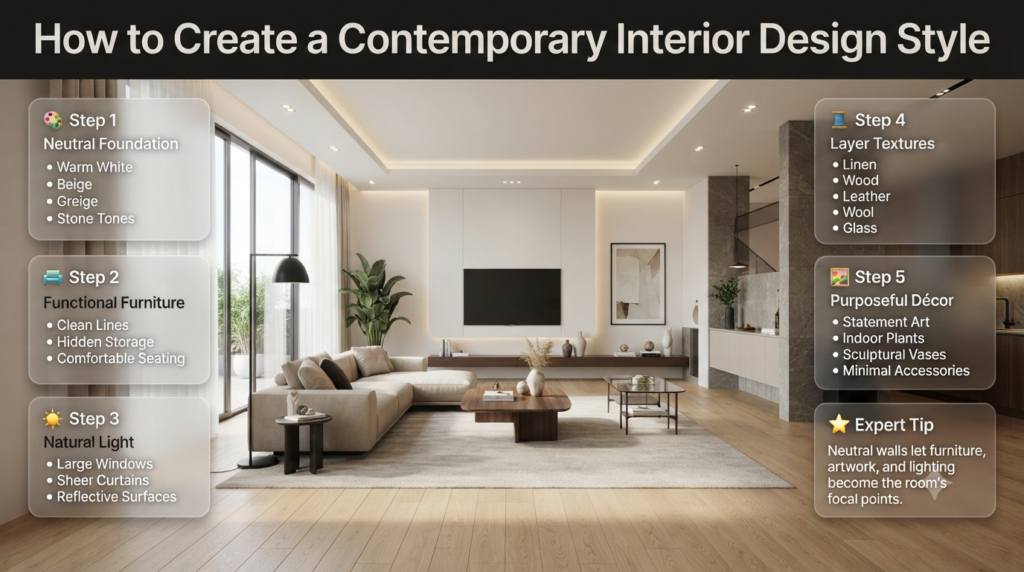
Creating a contemporary interior starts with a simple foundation, functional furniture, neutral colors, layered textures, and thoughtful lighting. Instead of filling a room with decorative items, focus on balance, comfort, and quality pieces that complement one another.
One of the biggest advantages of contemporary interior design is that you don’t have to renovate your entire home overnight. Even small changes can transform the atmosphere when they’re made with a clear plan.
Follow these professional steps to create a contemporary space that feels both stylish and practical.
Step 1: Start with a Neutral Foundation
The walls, flooring, and large furniture pieces create the foundation of every room. Choosing timeless colors allows you to refresh your décor later without starting from scratch.
Popular contemporary base colors include:
- Warm White
- Soft Beige
- Greige
- Light Gray
- Sand
- Stone
- Taupe
These shades create a calm background while making natural light feel brighter.
Why It Matters
Neutral colors allow statement furniture, artwork, and lighting to stand out without competing for attention.
⭐ Expert Tip: Instead of using bright paint throughout the room, keep walls neutral and introduce color through cushions, artwork, throws, and decorative accessories.
If you’re choosing wall colors, exploring different Paint Color combinations can help you build a timeless palette that complements contemporary interiors.
Step 2: Choose Functional Furniture
Every piece of furniture should serve a purpose.
Instead of filling every corner, choose fewer, higher-quality pieces that improve both comfort and functionality.
Look for furniture with:
- Clean silhouettes
- Simple detailing
- Hidden storage
- Comfortable seating
- Durable materials
- Versatile designs
For example, a modular sofa can easily adapt to changing family needs while maintaining a modern appearance.
Professional Advice
Leave enough space between furniture pieces for comfortable movement. A spacious room often feels more luxurious than one filled with oversized furniture.
⚠ Common Mistake: Buying furniture before measuring the room. Oversized sofas and dining tables can make even large spaces feel cramped.
Step 3: Maximize Natural Light
Light is one of the defining characteristics of contemporary homes.
Whenever possible:
- Keep windows unobstructed.
- Use sheer curtains.
- Replace heavy drapes.
- Choose reflective surfaces.
- Position mirrors strategically.
A bright room naturally feels larger, cleaner, and more welcoming.
Quick Example
A living room with white walls, light oak flooring, and large windows often appears significantly more spacious than the same room with dark paint and heavy curtains.
📌 Quick Tip: Clean windows regularly. Even a thin layer of dust can noticeably reduce the amount of natural light entering your home.
Step 4: Layer Different Textures
Although contemporary interiors are visually simple, they should never feel flat.
Texture creates warmth without adding unnecessary clutter.
Combine materials such as:
- Linen
- Cotton
- Wool
- Leather
- Glass
- Stone
- Natural wood
- Matte metal
Example
A beige linen sofa paired with a walnut coffee table, black metal floor lamp, wool rug, and ceramic vase creates depth while maintaining a clean aesthetic.
Step 5: Keep Décor Purposeful
Accessories should enhance a room rather than overwhelm it.
Choose items that have visual impact, such as:
- Large framed artwork
- Sculptural vases
- Statement mirrors
- Indoor plants
- Decorative bowls
- Minimalist bookshelves
Instead of displaying many small decorative objects, focus on fewer, meaningful pieces.
Contemporary Interior Design Room by Room
Every room has different functional requirements. Applying contemporary design principles thoughtfully ensures each space feels cohesive while serving its purpose.
Contemporary Living Room Ideas
The living room is usually the heart of the home, making it the perfect place to embrace contemporary design.
Focus on:
- Comfortable seating
- Open layouts
- Layered lighting
- Neutral colors
- Textured fabrics
- Minimal décor
Living Room Checklist
✔ Large area rug
✔ Comfortable sectional sofa
✔ Coffee table with clean lines
✔ Statement lighting
✔ Indoor plants
✔ Minimal wall décor
✔ Hidden storage
💡 Pro Tip: Instead of buying a matching furniture set, combine complementary pieces with different textures and finishes to create a more natural, designer-inspired look.
If you’re looking for more decorating inspiration, browsing Home Design Ideas can help you discover layouts and styling techniques that work beautifully in contemporary living rooms.
Contemporary Bedroom Design
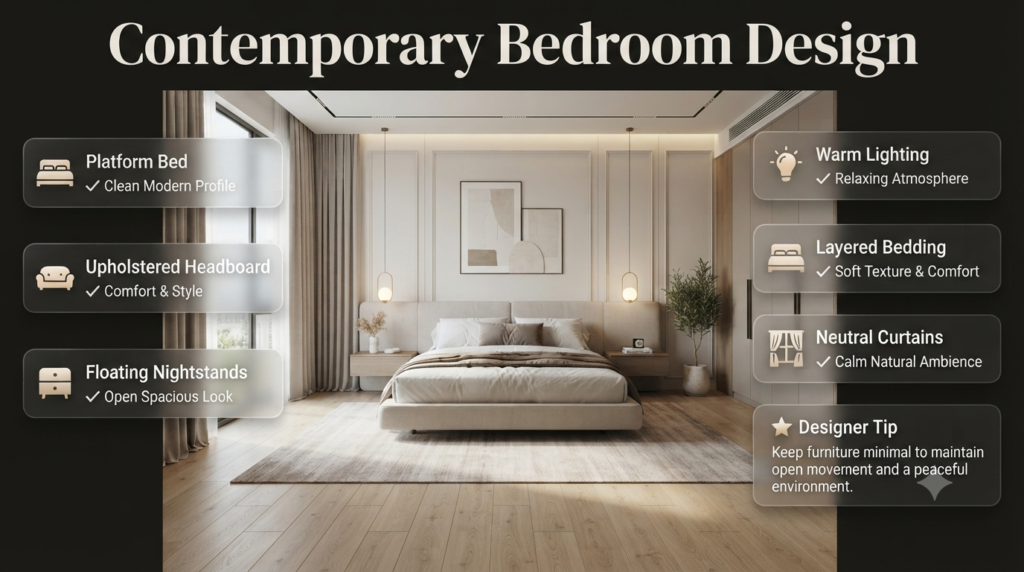
Bedrooms should feel peaceful and uncluttered.
Use soft textures and calming colors to encourage relaxation.
Recommended features include:
- Upholstered headboard
- Platform bed
- Floating nightstands
- Warm lighting
- Layered bedding
- Neutral curtains
Avoid excessive furniture that limits movement around the room.
Contemporary Kitchen Design
Modern contemporary kitchens emphasize both functionality and clean aesthetics.
Popular features include:
- Flat-panel cabinets
- Quartz countertops
- Hidden storage
- Integrated appliances
- Matte finishes
- Large kitchen islands
Decision Table
| If You Want… | Choose… |
|---|---|
| Easy maintenance | Quartz countertops |
| Warm appearance | Wood accents |
| Luxury feel | Marble details |
| Modern simplicity | Matte cabinetry |
| Brighter space | Gloss backsplash with neutral walls |
Contemporary Bathroom Design
Bathrooms should feel calm and spa-like.
Popular contemporary features include:
- Floating vanities
- Frameless glass showers
- Large mirrors
- Stone countertops
- Minimal hardware
- Recessed lighting
Adding natural materials such as wood shelving or stone accessories prevents bathrooms from feeling cold.
Contemporary Dining Room
Dining spaces should encourage conversation while maintaining simplicity.
Consider:
- Wooden dining table
- Upholstered chairs
- Pendant lighting
- Neutral centerpiece
- Minimal wall art
Leave plenty of circulation space around the table for comfortable movement.
Best Color Palettes for Contemporary Interior Design
Color plays an important role in creating a balanced atmosphere.
Warm Contemporary Palette
- Warm White
- Beige
- Oak
- Camel
- Terracotta accents
Perfect for family homes and cozy interiors.
Cool Contemporary Palette
- Soft Gray
- Charcoal
- White
- Black accents
- Chrome finishes
Ideal for apartments and urban homes.
Nature-Inspired Palette
- Sand
- Olive Green
- Stone Gray
- Walnut
- Cream
Creates a calm and timeless environment.
Luxury Contemporary Palette
- White
- Black
- Marble
- Brass
- Dark Walnut
Works particularly well in spacious homes with abundant natural light.
Lighting Ideas for Contemporary Homes
Lighting influences both functionality and atmosphere.
Layer different types of lighting:
Ambient Lighting
Provides overall illumination.
Examples:
- Recessed lights
- Ceiling fixtures
- LED panels
Task Lighting
Supports daily activities.
Examples:
- Reading lamps
- Desk lights
- Kitchen under-cabinet lighting
Accent Lighting
Highlights architectural details and artwork.
Examples:
- Wall sconces
- Picture lights
- LED strips
- Display cabinet lighting
⭐ Expert Tip: Install dimmer switches wherever possible. Adjustable lighting allows one room to serve multiple purposes throughout the day.
Choosing Contemporary Décor
Décor should complement the architecture rather than dominate it.
Popular choices include:
- Oversized artwork
- Sculptural ceramics
- Textured cushions
- Indoor trees
- Handmade bowls
- Decorative trays
- Abstract sculptures
Avoid buying decorative accessories simply to fill empty shelves.
Instead, let each object contribute to the overall story of the room.
Common Mistakes to Avoid
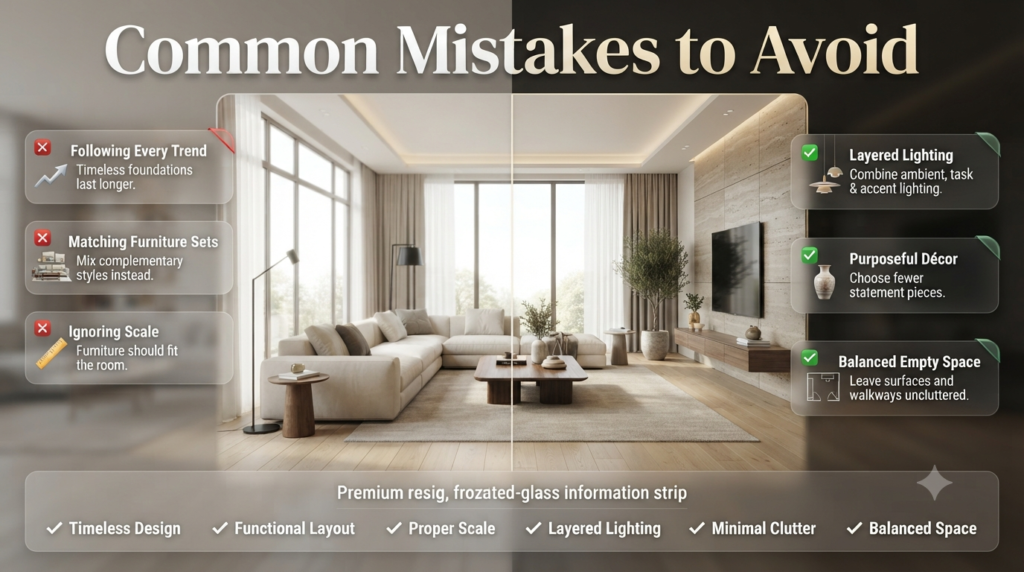
Even beautifully designed homes can lose their contemporary appeal when common decorating mistakes are overlooked.
1. Following Every Trend
Not every trend suits every home.
Choose timeless foundations first, then introduce trends through accessories.
2. Buying Matching Furniture Sets
Designer interiors usually combine complementary furniture instead of identical collections.
Mixing textures and finishes creates a more personalized appearance.
3. Ignoring Scale
Furniture should fit the size of the room.
Large furniture overwhelms small spaces, while tiny furniture looks out of place in spacious rooms.
4. Poor Lighting
One ceiling light rarely provides enough illumination.
Layer different lighting sources to create depth and comfort.
5. Decorating Every Surface
Empty space is an essential part of contemporary design.
Leave shelves, countertops, and tables with room to breathe.
⚠ Common Mistake: Many homeowners mistake minimalism for emptiness. Contemporary interiors should feel balanced and welcoming—not unfinished.
Expert Advice from Interior Designers
Professionals often focus on long-term quality instead of short-term trends.
Here are a few recommendations used in real design projects:
- Invest in timeless furniture before decorative accessories.
- Choose durable flooring that suits your lifestyle.
- Layer textures instead of adding unnecessary colors.
- Prioritize natural light whenever possible.
- Include hidden storage to maintain clean surfaces.
- Use large rugs to visually connect furniture.
- Add greenery to soften clean architectural lines.
If you’re planning a budget-friendly makeover, exploring creative DIY Projects can help you refresh your home without compromising the clean, sophisticated look of contemporary design.
Contemporary Interior Design Trends for 2026
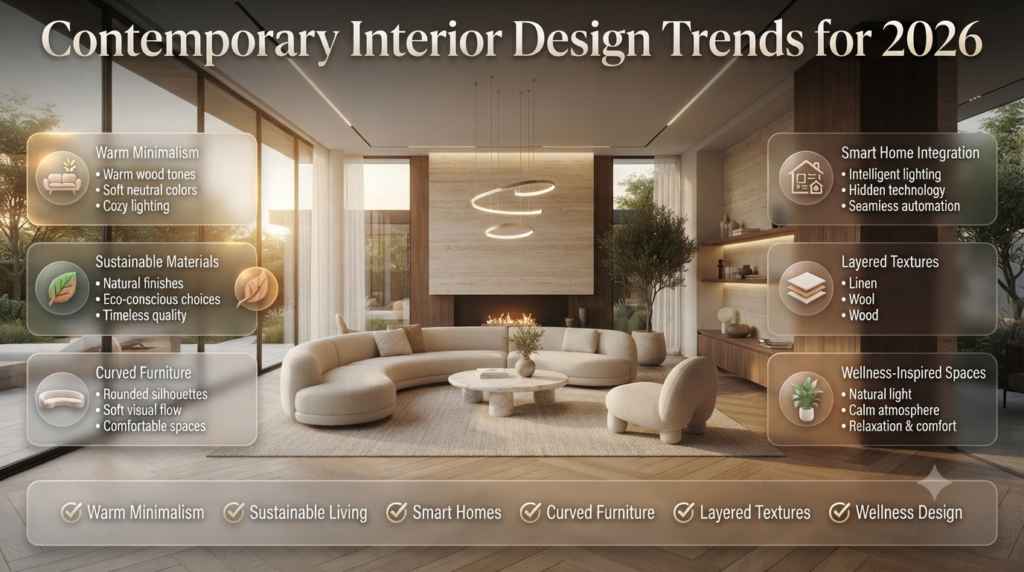
Contemporary Interior Design in 2026 focuses on warm minimalism, sustainable materials, curved furniture, smart home integration, layered textures, and wellness-inspired spaces. Instead of chasing fast-changing trends, homeowners are investing in timeless interiors that combine comfort, functionality, and environmental responsibility.
Interior design continues to evolve as lifestyles change. Today’s homeowners want spaces that support remote work, relaxation, entertaining, and family life without sacrificing style. Contemporary design embraces these changing needs by blending timeless principles with carefully selected modern innovations.
Let’s explore the biggest contemporary interior design trends shaping homes in 2026.
Warm Minimalism Is Replacing Cold Minimalism
For many years, minimal interiors were often criticized for feeling sterile or impersonal. In 2026, the focus has shifted toward warm minimalism, where simplicity is balanced with comfort.
You’ll notice more:
- Warm wood tones
- Soft neutral colors
- Organic fabrics
- Rounded furniture
- Handmade accessories
- Cozy lighting
Instead of creating empty-looking spaces, homeowners are designing interiors that feel peaceful, welcoming, and lived in.
💡 Pro Tip: A warm minimalist room doesn’t require more furniture—it requires better furniture. Choose quality pieces with natural textures rather than filling a room with unnecessary décor.
Sustainable Materials Continue to Grow
Sustainability is no longer just a trend—it’s becoming a standard part of contemporary design.
Popular eco-friendly materials include:
- Reclaimed wood
- Bamboo
- Cork
- Recycled glass
- Natural stone
- Linen
- Organic cotton
- Low-VOC paints
These materials not only reduce environmental impact but also add warmth and authenticity to modern interiors.
When planning renovations, combining sustainable materials with practical Home Improvement ideas can help create a home that is both beautiful and energy-efficient.
Smart Homes with Invisible Technology
Technology is becoming less visible but more useful.
Rather than filling homes with noticeable gadgets, contemporary interiors now integrate technology seamlessly into the design.
Examples include:
- Hidden speakers
- Smart thermostats
- Voice-controlled lighting
- Motorized blinds
- Wireless charging furniture
- Automated security systems
The goal is to improve everyday living without disrupting the clean visual appearance of the room.
Curved Furniture Creates Softer Spaces
Sharp lines remain an important feature of contemporary interiors, but designers are increasingly introducing soft curves to create balance.
Popular choices include:
- Curved sofas
- Rounded coffee tables
- Arched mirrors
- Circular rugs
- Curved accent chairs
These shapes soften modern spaces and create a more inviting atmosphere.
Wellness-Focused Interior Design
Homeowners now want interiors that support both physical and mental well-being.
Modern contemporary homes increasingly include:
- Better natural lighting
- Indoor plants
- Improved ventilation
- Quiet reading corners
- Meditation spaces
- Natural materials
- Comfortable ergonomic furniture
The result is a home that looks beautiful while encouraging healthier daily habits.
⭐ Expert Tip: Even a small indoor plant collection can improve the atmosphere of a room by adding natural color, texture, and a stronger connection to nature.
Contemporary Interior Design vs Other Popular Interior Styles
Many homeowners compare contemporary design with other popular decorating styles before deciding which one best suits their lifestyle.
The table below highlights the main differences.
| Style | Best For | Main Characteristics |
|---|---|---|
| Contemporary | Modern lifestyles | Clean lines, open spaces, evolving trends |
| Modern | Mid-century enthusiasts | Functional furniture, warm wood, simple forms |
| Scandinavian | Small homes | Bright colors, natural wood, cozy simplicity |
| Industrial | Urban apartments | Exposed brick, steel, concrete |
| Traditional | Classic interiors | Ornate furniture, symmetry, rich detailing |
| Farmhouse | Cozy family homes | Rustic wood, vintage charm, relaxed comfort |
| Japandi | Calm living | Japanese simplicity blended with Scandinavian warmth |
Is Japandi Similar to Contemporary Interior Design?
Many homeowners notice similarities between these two design styles.
While both prioritize simplicity and functionality, Japandi places greater emphasis on craftsmanship, natural materials, and peaceful living inspired by Japanese and Scandinavian philosophies.
If you appreciate clean interiors with calming natural elements, you may also enjoy exploring Japandi Interior Design for inspiration that blends elegance with everyday comfort.
For homeowners interested in creating peaceful, clutter-free spaces, Japandi Home Design offers practical ideas that complement many contemporary design principles without copying them completely.
Contemporary vs Modern Japandi Interior
Another style growing rapidly in popularity is Modern Japandi Interior, which combines contemporary architecture with Scandinavian functionality and Japanese minimalism.
Compared with traditional contemporary interiors:
| Contemporary | Modern Japandi Interior |
|---|---|
| More flexible trends | Strong philosophical foundation |
| Wider variety of materials | Greater focus on natural textures |
| Bold statement lighting | Softer ambient lighting |
| Decorative flexibility | Minimal decorative elements |
| Urban elegance | Calm, nature-inspired atmosphere |
If you’re drawn to warm woods, soft neutral colors, and handcrafted furniture, exploring Modern Japandi Interior can provide additional inspiration while maintaining a clean contemporary aesthetic.
You can also discover practical decorating ideas through Japandi Home Decor if you’re looking to incorporate organic textures, minimalist accessories, and timeless styling into your home.
Budget Planning for Contemporary Interior Design
One of the biggest myths about contemporary design is that it always requires a large budget.
In reality, successful contemporary interiors prioritize thoughtful planning over expensive furniture.
Budget-Friendly Upgrades
Small improvements often make the biggest difference.
Consider:
- Repainting walls
- Replacing outdated lighting
- Adding larger mirrors
- Updating cabinet hardware
- Introducing indoor plants
- Using textured cushions
- Decluttering every room
These simple updates can dramatically improve the appearance of your home without major renovations.
Where You Should Spend More
Some purchases provide long-term value.
Prioritize quality when buying:
- Sofa
- Mattress
- Dining table
- Flooring
- Kitchen cabinets
- Lighting fixtures
These pieces experience daily use and should be durable enough to last for years.
Where You Can Save Money
Not everything needs to be expensive.
You can reduce costs by choosing affordable alternatives for:
- Decorative accessories
- Artwork
- Throw pillows
- Rugs
- Vases
- Seasonal decorations
Updating these items over time helps keep your interior looking fresh without significant investment.
📌 Quick Tip: Create a decorating budget before shopping. Divide it into categories such as furniture, lighting, décor, textiles, and accessories to avoid overspending on a single room.
Contemporary Interior Design Checklist
Before finishing your decorating project, use this simple checklist.
Layout
✔ Open and comfortable
✔ Easy movement
✔ Balanced furniture placement
Colors
✔ Neutral foundation
✔ Limited accent colors
✔ Consistent color palette
Furniture
✔ Functional
✔ Comfortable
✔ Proper scale
✔ High quality
Lighting
✔ Natural light
✔ Ambient lighting
✔ Task lighting
✔ Accent lighting
Décor
✔ Purposeful accessories
✔ Indoor plants
✔ Statement artwork
✔ Minimal clutter
Materials
✔ Wood
✔ Stone
✔ Glass
✔ Linen
✔ Metal
✔ Sustainable finishes
⚠ Common Mistake: Decorating one room at a time without considering the rest of the home. Contemporary interiors look best when colors, materials, and design elements flow naturally from one space to another.
What is Contemporary Interior Design, and how is it different from Modern Interior Design?
Although these two terms are often used interchangeably, they are not the same. Contemporary Interior Design reflects the latest design trends and continues to evolve over time, while modern interior design refers to a specific design movement that originated in the early to mid-20th century. A contemporary home is more flexible, allowing you to incorporate new materials, smart technology, and changing color palettes without losing its overall style.
For example, a modern living room may feature iconic mid-century furniture, whereas a contemporary living room could combine clean-lined furniture with sustainable materials, curved shapes, and smart lighting to suit today’s lifestyle.
Key Points
Contemporary design evolves with current trends.
Modern design follows a fixed historical style.
Contemporary interiors are more adaptable and personalized.
Both styles value simplicity, but contemporary homes offer greater flexibility.
What colors work best in Contemporary Interior Design?
Neutral colors form the foundation of most contemporary interiors because they create a bright, calm, and timeless atmosphere. Shades like warm white, beige, greige, soft gray, and taupe provide a versatile backdrop that allows furniture, artwork, and decorative accessories to stand out naturally. Accent colors can then be introduced through cushions, rugs, plants, or statement artwork without overwhelming the space.
Rather than chasing bold color trends every year, many professional designers recommend investing in a neutral base and updating smaller decorative elements whenever you want to refresh the room.
Best Contemporary Color Choices
Warm White
Soft Beige
Greige
Light Gray
Taupe
Charcoal for contrast
Earthy greens and terracotta as accent colors
Can Contemporary Interior Design work in small apartments?
Absolutely. Contemporary Interior Design is one of the most practical choices for apartments because it focuses on functionality, open layouts, and smart space planning. Instead of filling a small room with bulky furniture and excessive décor, the style encourages multifunctional furniture, clean lines, and minimal clutter, making even compact spaces feel larger and more comfortable.
Simple changes such as using floating shelves, mirrors, light-colored walls, and furniture with built-in storage can dramatically improve both the appearance and functionality of a smaller home.
Ways to maximize a small apartment
Choose multifunctional furniture.
Use light, neutral wall colors.
Maximize natural light.
Add mirrors to create visual depth.
Keep decorative accessories to a minimum.
What are the biggest mistakes people make when decorating a contemporary home?
One of the most common mistakes is assuming that contemporary design means removing everything from a room. While simplicity is important, an empty space often feels cold and uninviting. Another mistake is buying furniture based only on appearance without considering comfort, quality, or proportion.
Many homeowners also follow every new trend they see online, which can quickly make an interior feel inconsistent. A well-designed contemporary home should prioritize timeless foundations and introduce trends through smaller, easily replaceable accessories.
Mistakes to Avoid
Overdecorating every surface.
Ignoring room proportions.
Buying oversized furniture.
Using too many colors.
Relying on a single ceiling light.
Following trends without a long-term plan.
How can I make my home look more contemporary without spending a lot of money?
Creating a contemporary home doesn’t always require a complete renovation. In many cases, thoughtful updates can make a significant difference. Decluttering, repainting walls in neutral shades, replacing outdated light fixtures, updating cabinet hardware, and adding textured cushions or indoor plants are affordable improvements that instantly modernize a space.
Professional designers often recommend spending more on timeless furniture while saving money on accessories that can easily be updated as styles evolve. This approach creates a sophisticated home without exceeding your budget.
Affordable Contemporary Design Ideas
Declutter every room.
Paint walls in neutral colors.
Replace outdated lighting.
Add large mirrors.
Introduce natural textures like wood and linen.
Use indoor plants for warmth and freshness.
Refresh décor with cushions, rugs, and artwork instead of replacing furniture.
Conclusion
Contemporary Interior Design is more than just a decorating trend—it’s a practical approach to creating a home that feels comfortable, functional, and visually timeless. By combining clean lines, neutral color palettes, natural materials, thoughtful lighting, and purposeful furniture, you can design spaces that not only look beautiful but also support your everyday lifestyle.
The best part about contemporary design is its flexibility. Whether you’re updating a small apartment, renovating a family home, or designing a new house from scratch, its principles can be adapted to suit your space, budget, and personal taste. Instead of following short-lived trends, focus on quality, balance, and functionality to create interiors that remain stylish for years to come.
Remember, a successful contemporary home isn’t measured by how expensive it looks—it’s measured by how well it works for the people who live in it. Start with a neutral foundation, invest in timeless furniture, maximize natural light, and add carefully selected textures and décor to create a space that feels modern, welcoming, and uniquely yours.
If you’re looking for more expert inspiration, practical decorating tips, and the latest design trends, explore DesignMode24 for comprehensive guides on Interior Design, Home Styling, Home Improvement, and a wide range of Interior Design Styles to help you transform every room with confidence.

Leave a Reply