
Introduction
Japandi Home Decor Ideas | Many homeowners want a home that looks beautiful but also feels peaceful and comfortable. The problem is that many modern interiors focus too much on decoration and trends, making spaces feel crowded, stressful, or difficult to maintain.
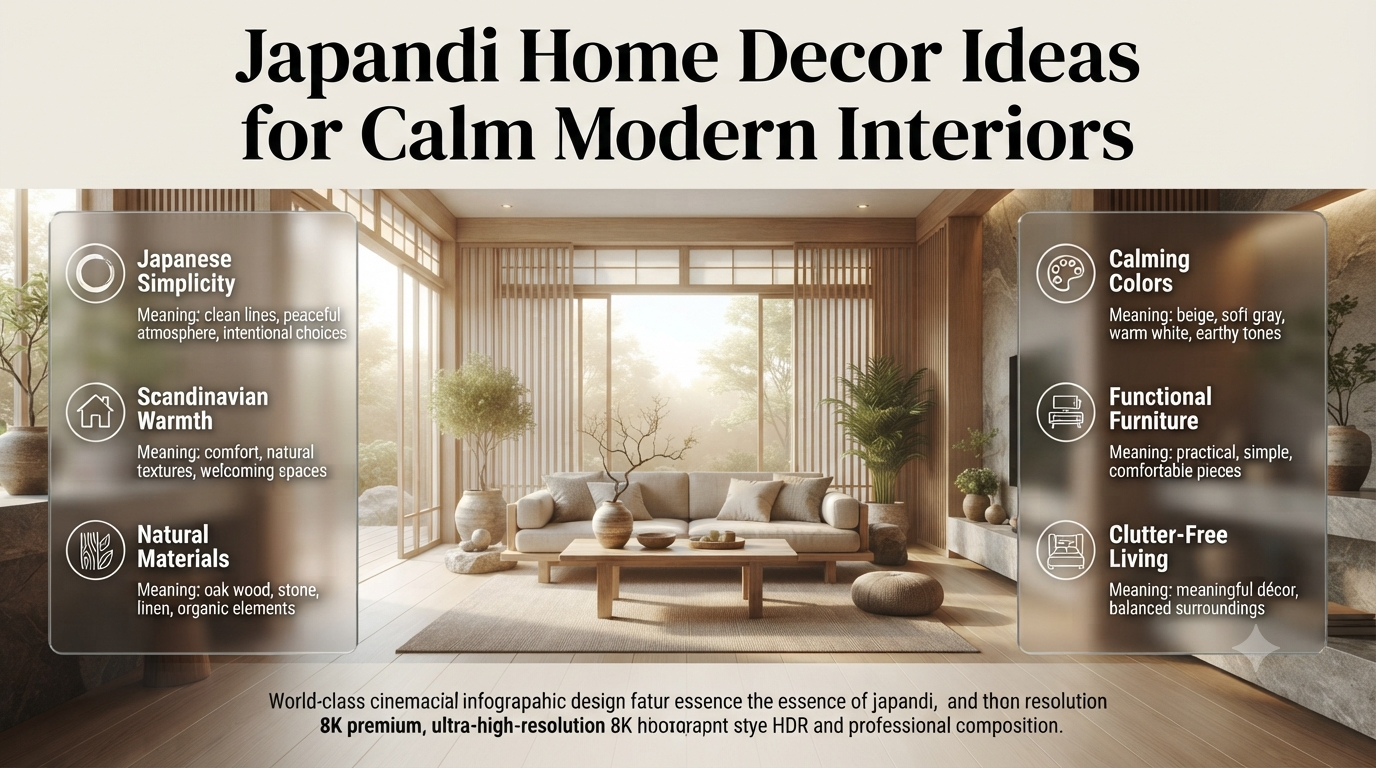
This is where Japandi Home Decor creates a different approach. It combines Japanese simplicity with Scandinavian warmth to create interiors that feel balanced, functional, and naturally welcoming.
For homeowners searching for a timeless design style, Design Mode 24 Interior Design provides inspiration and practical ideas for creating thoughtful spaces that combine beauty with everyday functionality.
Japandi is not about having an empty home. It is about selecting meaningful furniture, natural materials, calming colors, and useful decorations that improve your lifestyle.
In this complete guide, you will learn:
- What Japandi Home Decor means
- Why this design style is becoming popular
- The main principles behind Japandi interiors
- How to choose colors, furniture, and materials
- How to create Japandi rooms step by step
- Common mistakes beginners should avoid
- Professional tips for achieving a balanced look
Whether you live in a small apartment or a large house, Japandi design can help you create a calm environment that feels organized and comfortable.
What Is Japandi Home Decor?
Japandi Home Decor is a combination of Japanese minimalist design and Scandinavian interior style. It focuses on simplicity, natural materials, neutral colors, functional furniture, and cozy details to create peaceful and practical living spaces.
Japandi is based on two important design philosophies:
Japanese Influence: Wabi-Sabi
Japanese interiors follow the idea of Wabi-Sabi, which appreciates:
- Natural imperfections
- Handmade objects
- Simple beauty
- Authentic materials
- Connection with nature
A handmade ceramic vase, wooden table with natural grain, or stone accessory can add personality because it shows uniqueness.
Scandinavian Influence: Hygge
Scandinavian design focuses on comfort and warmth through:
- Soft fabrics
- Comfortable furniture
- Warm lighting
- Relaxed atmosphere
- Functional layouts
Japandi combines these two approaches:
Japanese simplicity + Scandinavian comfort = Balanced living
Why Is Japandi Home Decor So Popular?
Japandi Home Decor is popular because it creates calm, organized, and comfortable homes. It helps people reduce clutter, connect with natural elements, and design spaces that feel peaceful while remaining practical for everyday living.
Modern lifestyles often create stress through busy schedules and excessive consumption. Many homeowners now prefer interiors that support relaxation rather than simply follow temporary trends.
Japandi offers:
- A cleaner visual environment
- Easier home maintenance
- Better organization
- More connection with nature
- A timeless appearance
💡 Pro Tip:
A Japandi home does not require expensive furniture. The style depends more on thoughtful selection, quality materials, and balanced placement.
Core Principles of Japandi Home Decor
1. Simplicity With Purpose
Japandi design follows one important rule:
Every item should have a purpose.
This does not mean removing everything from your home. Instead, it means choosing items carefully.
A decorative object should provide:
- Function
- Beauty
- Comfort
- Personal meaning
For example:
A random decoration placed on a shelf may create clutter, while a handmade ceramic bowl that you use daily adds both function and character.
⚠ Common Mistake:
Many beginners misunderstand minimalism and remove too many things, creating a cold and uncomfortable space.
Japandi is not about owning less.
It is about choosing better.
2. Natural Materials Create Japandi Warmth
Natural materials are one of the most important elements of Japandi Home Decor.
The style avoids excessive artificial finishes and focuses on organic textures.
Popular materials include:
| Material | Common Use | Effect |
|---|---|---|
| Wood | Flooring, furniture, shelves | Warm and natural feeling |
| Bamboo | Lighting and accessories | Organic texture |
| Stone | Tables and decoration | Earthy balance |
| Linen | Curtains and cushions | Soft comfort |
| Cotton | Bedding and upholstery | Relaxed atmosphere |
| Ceramic | Vases and bowls | Handmade character |
| Rattan | Chairs and baskets | Natural warmth |
Wood is especially important because it prevents neutral interiors from feeling cold.
Common Japandi wood choices:
- Oak
- Walnut
- Ash
- Bamboo
- Natural timber
⭐ Expert Tip:
Professional designers often create luxury-looking Japandi interiors by combining different textures instead of adding too many colors.
How to Choose Materials for a Japandi Room
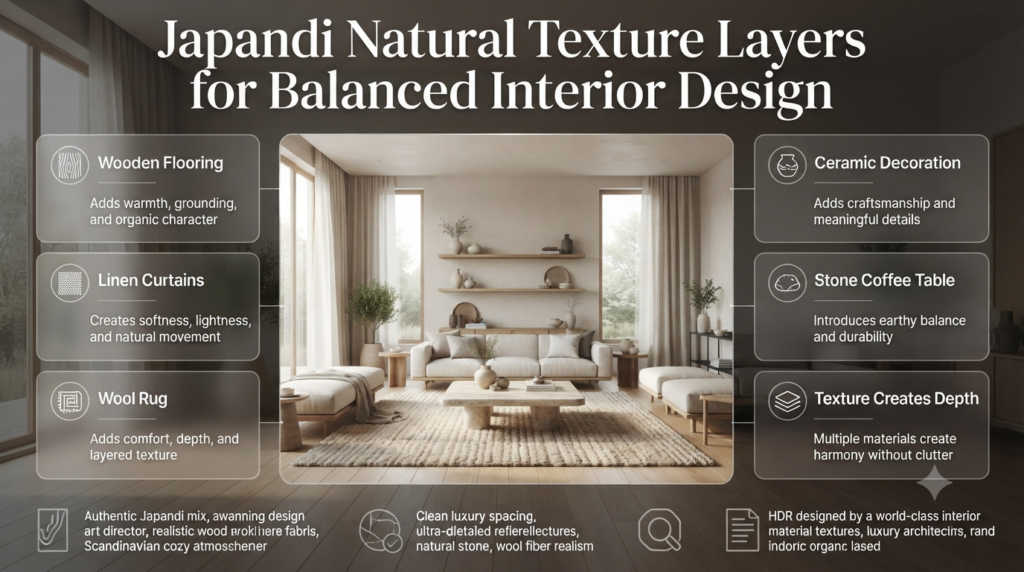
Wood, linen, wool, ceramic, and stone elements work together to build a peaceful and balanced interior atmosphere.
A successful Japandi space usually layers different natural textures.
Example combination:
- Wooden flooring
- Linen curtains
- Wool rug
- Ceramic decoration
- Stone coffee table
This creates depth while keeping the room visually calm.
For more ideas about creating balanced and beautiful spaces, explore Interior Design concepts that focus on functionality and aesthetics.
3. Japandi Color Palette: Calm, Earthy, and Neutral
Japandi color palettes use warm neutral and earthy shades such as beige, cream, soft gray, brown, olive green, and muted tones. These colors create a relaxing atmosphere while allowing natural materials to become the main visual focus.
Color selection plays a major role because Japandi design depends on harmony.
Common colors include:
Warm Neutral Colors
Examples:
- Beige
- Cream
- Ivory
- Sand
- Warm gray
These create a peaceful foundation.
Earth-Inspired Colors
Examples:
- Clay
- Terracotta
- Olive green
- Brown
- Charcoal
These introduce natural warmth.
Dark Accent Colors
Used carefully:
- Black
- Deep gray
- Dark wood
They add contrast without overwhelming the room.
Japandi Color Balance Formula
A professional approach:
70% Neutral Base
Walls, flooring, large furniture
20% Natural Elements
Wood, fabrics, rugs
10% Accent Details
Decorative pieces and accessories
Choosing the right shades is an important part of creating a successful interior. You can explore more inspiration through Paint Color ideas to select tones that match your Japandi vision.
4. Minimal Furniture With Maximum Comfort
Japandi furniture combines simplicity with usability.
The goal is not to create an empty room but to create a comfortable space where every piece has a purpose.
Common Japandi furniture features:
- Clean lines
- Natural wood finishes
- Soft curves
- Low-profile designs
- Neutral upholstery
- Functional storage
Avoid:
- Overly decorative furniture
- Glossy finishes
- Excessive patterns
- Large unnecessary pieces
📌 Quick Tip:
If furniture looks attractive but does not improve comfort or daily living, it may not fit the Japandi philosophy.
Japandi Lighting Design: Creating a Warm and Relaxing Atmosphere
Japandi lighting focuses on creating a soft, warm, and comfortable atmosphere through natural light, layered lighting, and simple fixtures. The goal is to avoid harsh brightness and create a peaceful environment that supports relaxation.
Lighting is one of the most important parts of Japandi Home Decor because it directly affects how a space feels.
A beautifully designed room can lose its calming effect if the lighting is too bright, cold, or artificial.
Japandi lighting follows three main principles:
- Use natural light whenever possible
- Choose warm light sources
- Create multiple layers of illumination
1. Maximize Natural Light
Japanese and Scandinavian design both value natural light.
Large windows, open layouts, and minimal window coverings help bring outdoor energy inside.
Best practices:
✔ Use lightweight linen curtains
✔ Avoid heavy dark fabrics
✔ Keep windows clean and unobstructed
✔ Position furniture to allow light movement
Natural light enhances:
- Wood textures
- Neutral colors
- Organic materials
- Room openness
💡 Pro Tip:
Instead of blocking sunlight completely, use sheer curtains to soften the light while maintaining privacy.
2. Choose Warm Lighting Fixtures
Japandi homes avoid cold white lighting because it can make natural materials appear lifeless.
Recommended lighting temperature:
- Warm white: 2700K–3000K
Suitable fixtures include:
- Paper pendant lights
- Wooden lamps
- Ceramic table lamps
- Minimal floor lamps
- Soft wall lighting
The design of the fixture matters as much as the light itself.
A simple handmade lamp can become a functional piece of art.
3. Use Layered Lighting
Professional designers rarely depend on one ceiling light.
A balanced Japandi room uses multiple lighting sources:
            Ceiling Light
                 |
                 ↓
      ---------------------
      |                   |
 Ambient Light     Task Light
      |                   |
      ↓                   ↓
 Floor Lamp        Reading Lamp
Example:
Living room:
- Soft ceiling fixture
- Floor lamp beside sofa
- Small table lamp
- Natural daylight
This creates depth and comfort.
Japandi Living Room Ideas: Designing a Peaceful Social Space
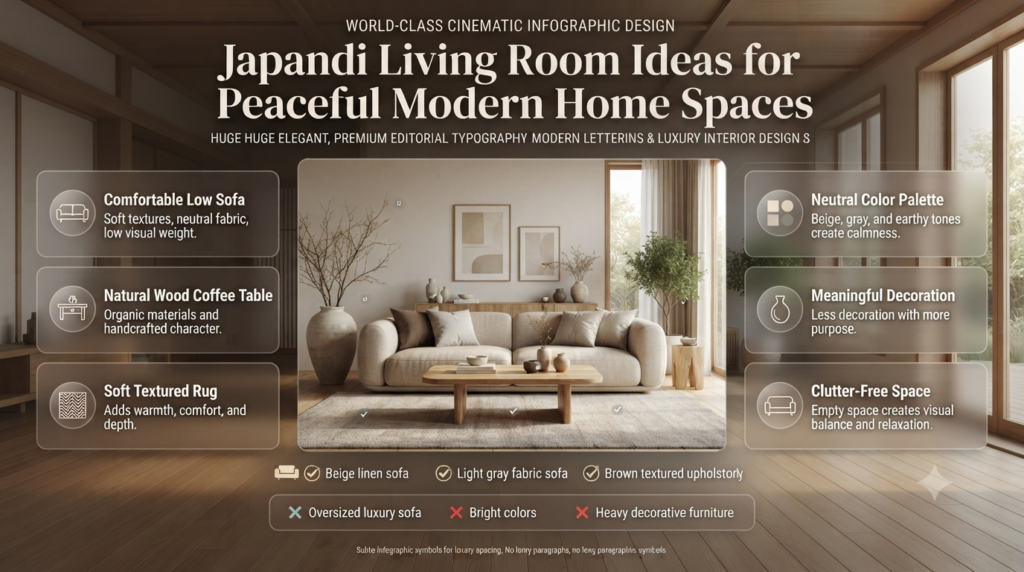
This design approach focuses on simplicity, functionality, and peaceful social spaces without unnecessary clutter.
A Japandi living room combines comfortable furniture, neutral colors, natural materials, and minimal decoration to create a relaxing environment. The focus is on simplicity, functionality, and creating a welcoming space without unnecessary clutter.
The living room is often the heart of a home, so it should feel warm rather than empty.
A successful Japandi living room usually includes:
- Comfortable low-profile sofa
- Natural wood coffee table
- Soft textured rug
- Neutral cushions
- Minimal artwork
- Indoor plants
Choosing a Japandi Sofa
The sofa should balance comfort and simplicity.
Look for:
✔ Neutral fabric colors
✔ Soft textures
✔ Rounded edges
✔ Low visual weight
Popular choices:
- Beige linen sofa
- Light gray fabric sofa
- Brown textured upholstery
Avoid:
✘ Oversized luxury sofas
✘ Bright colors
✘ Heavy decorative designs
Japandi Coffee Table Selection
Coffee tables often become the center point of the living room.
Good options:
- Solid wood tables
- Stone-top tables
- Rounded designs
- Handmade pieces
The table should feel natural rather than overly polished.
Decorating Without Creating Clutter
Japandi decoration follows the principle of:
Less decoration, more meaning.
Good choices:
- One large ceramic vase
- A small collection of books
- Natural branches
- Handmade pottery
- Simple artwork
Avoid filling every shelf.
Empty space is an important part of Japandi design because it allows the eye to rest.
For more inspiration on creating balanced spaces, explore these Home Styling approaches that focus on practical and beautiful arrangements.
Japandi Bedroom Design: Creating a Calm Sleeping Environment
A Japandi bedroom uses soft colors, natural materials, simple furniture, and minimal decoration to create a peaceful environment that supports better relaxation and sleep.
The bedroom should feel like a personal retreat.
Key elements include:
- Wooden bed frame
- Neutral bedding
- Soft lighting
- Natural fabrics
- Limited decoration
Japandi Bed Design
Popular choices:
- Low wooden platform beds
- Simple frames
- Natural wood finishes
Low furniture creates a grounded feeling and connects with traditional Japanese interiors.
Bedding and Textures
Layering textures creates warmth without adding clutter.
Recommended materials:
- Linen sheets
- Cotton blankets
- Wool throws
- Textured cushions
Example:
A simple beige bed can become visually interesting with:
- White linen sheets
- Brown wool blanket
- Soft gray cushions
Bedroom Storage Solutions
Storage is essential because clutter can destroy the peaceful feeling of Japandi interiors.
Use:
- Built-in cabinets
- Wooden storage boxes
- Hidden drawers
- Minimal wardrobes
⚠ Common Mistake:
Leaving too many personal items visible creates visual noise and removes the calm feeling of the space.
Japandi Kitchen Design: Functional Beauty
A Japandi kitchen combines clean layouts, natural materials, simple cabinets, and functional storage to create a practical cooking space that feels warm and organized.
The kitchen should be beautiful but easy to use.
Important features:
- Wooden cabinets
- Neutral countertops
- Open shelves with limited items
- Natural stone surfaces
- Minimal hardware
Japandi Kitchen Color Ideas
Popular combinations:
| Cabinet Color | Matching Element |
|---|---|
| Warm white | Oak wood |
| Beige | Natural stone |
| Light gray | Dark wood accents |
| Soft green | Brass details |
Open Shelving: Use Carefully
Open shelves can add warmth, but too many items create clutter.
Display:
✔ Handmade ceramics
✔ Wooden bowls
✔ Plants
✔ Everyday essentials
Avoid:
✘ Random decorations
✘ Too many colors
✘ Unused items
📌 Quick Tip:
In Japandi kitchens, everyday objects can become decoration when they are beautiful, useful, and intentionally displayed.
Japandi Bathroom Design: A Natural Spa-Like Experience
A Japandi bathroom combines natural materials, simple layouts, warm lighting, and calming colors to create a peaceful spa-like environment.
The bathroom should feel clean and relaxing.
Key features:
- Stone surfaces
- Wooden accents
- Minimal accessories
- Soft lighting
- Natural textures
Materials for Japandi Bathrooms
Recommended:
- Natural stone
- Matte tiles
- Wood-look finishes
- Bamboo accessories
- Linen towels
Avoid:
- Excessive glossy surfaces
- Bright colors
- Too many decorative items
The goal is creating a space that feels connected to nature.
Small Space Japandi Home Decor Ideas
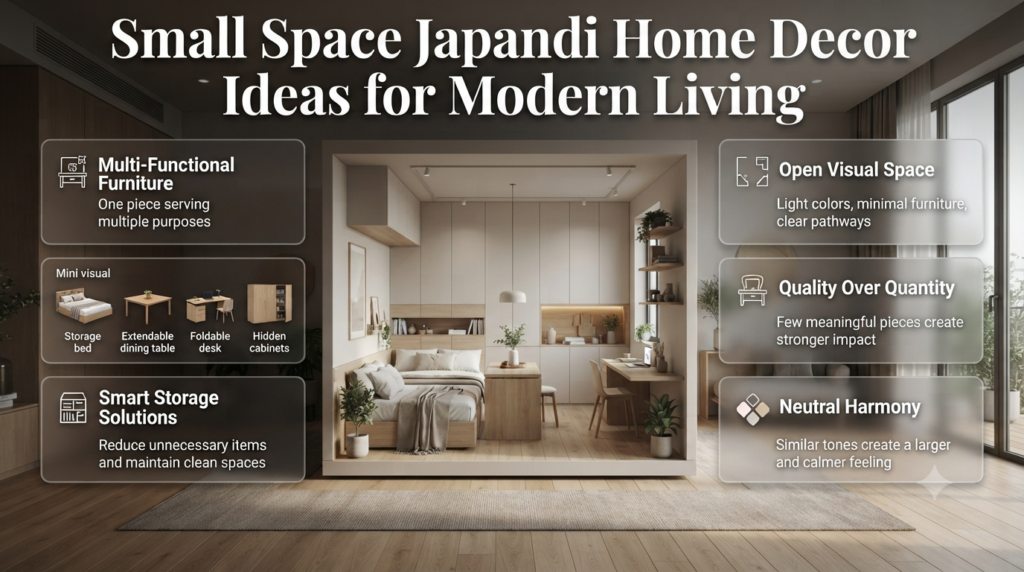
A minimalist approach creates a peaceful living environment by focusing on quality, functionality, and simplicity.
Japandi style works especially well in small spaces because it focuses on functionality, smart storage, and simple design. By using neutral colors, multifunctional furniture, and organized layouts, small homes can feel larger and more peaceful.
Small homes benefit from Japandi principles because they reduce unnecessary elements.
Useful ideas:
Use Multi-Functional Furniture
Examples:
- Storage beds
- Extendable dining tables
- Foldable desks
- Hidden cabinets
Keep Visual Space Open
Use:
- Light colors
- Minimal furniture
- Open pathways
- Similar tones throughout rooms
Choose Quality Over Quantity
A small apartment does not need many items.
A few carefully selected pieces often create a stronger design impact.
Step-by-Step Guide: How to Create Japandi Home Decor
Step 1: Remove Unnecessary Clutter
What to do:
Review each room and remove items that no longer serve a purpose.
Why it matters:
Japandi depends on visual calmness.
Professional advice:
Keep only items that provide function, beauty, or emotional value.
Common mistake:
Removing everything and creating an empty space.
Quick example:
Replace ten small decorations with one meaningful handmade piece.
Step 2: Create a Neutral Foundation
What to do:
Choose:
- Warm wall colors
- Natural flooring
- Neutral furniture
Why it matters:
A calm base allows textures and materials to stand out.
For complete planning ideas, explore Home Design Ideas that help create functional and visually balanced interiors.
Step 3: Add Natural Materials
Introduce:
- Wood
- Linen
- Stone
- Ceramic
- Bamboo
These elements create warmth and authenticity.
Step 4: Add Meaningful Decoration
Choose:
- Plants
- Artwork
- Handmade objects
- Natural accessories
Avoid random purchases.
Step 5: Improve Lighting
Combine:
- Natural daylight
- Warm lamps
- Layered fixtures
The right lighting completes the Japandi atmosphere.
Japandi vs Scandinavian vs Minimalism: What Is the Difference?
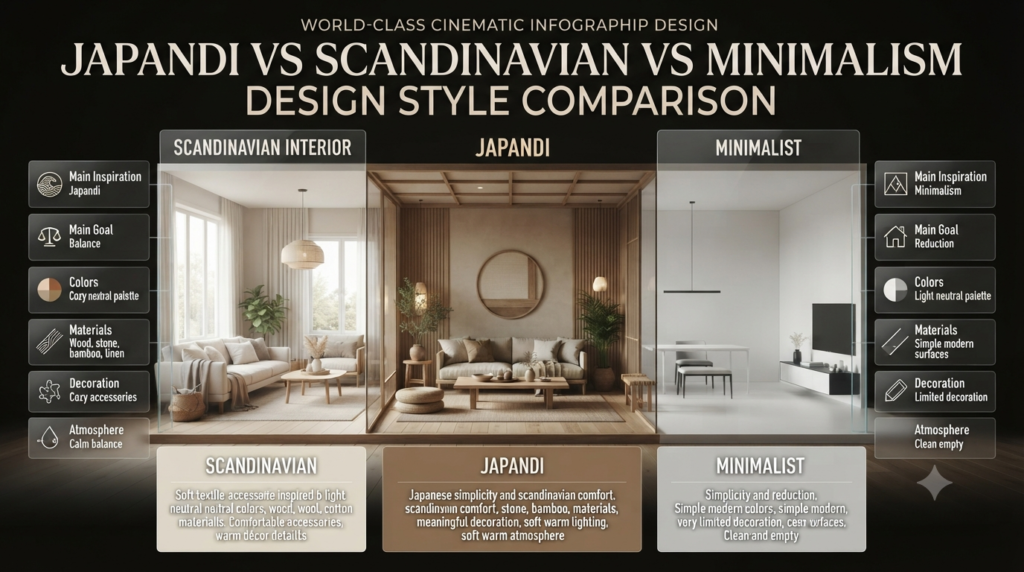
Each design philosophy creates a different atmosphere while sharing a focus on clean and thoughtful spaces.
Japandi combines Japanese simplicity with Scandinavian comfort, while Scandinavian design focuses on coziness and minimalism focuses mainly on reducing unnecessary elements. Japandi creates a balance between clean design, natural materials, warmth, and emotional connection.
Although these styles look similar, they have different philosophies.
| Feature | Japandi | Scandinavian | Minimalism |
|---|---|---|---|
| Main Inspiration | Japanese + Scandinavian design | Nordic lifestyle | Simplicity and reduction |
| Main Goal | Balance, calmness, comfort | Warm and cozy living | Removing excess |
| Colors | Earthy neutrals | Light neutrals | Mostly neutral |
| Materials | Wood, stone, bamboo, linen | Wood, wool, cotton | Simple modern materials |
| Decoration | Meaningful objects only | Cozy accessories | Very limited decoration |
| Atmosphere | Calm and balanced | Bright and welcoming | Clean and empty |
Japandi vs Scandinavian Design
Scandinavian interiors often focus on creating a bright and cozy environment.
Common Scandinavian elements:
- Light wood
- White walls
- Soft textiles
- Comfortable furniture
Japandi takes these ideas and adds Japanese principles:
- Imperfection
- Natural simplicity
- Quiet spaces
- Mindful decoration
Example:
A Scandinavian living room may include many cozy cushions and blankets, while a Japandi living room may use fewer but more intentional pieces.
Japandi vs Minimalist Design
Minimalism focuses on reducing possessions and visual elements.
Japandi also values simplicity, but it does not remove warmth.
A minimalist room might have:
- Simple furniture
- Empty walls
- Limited decoration
A Japandi room adds:
- Natural textures
- Handmade items
- Organic materials
- Warm lighting
The result feels peaceful rather than empty.
Common Mistakes People Make in Japandi Home Decor
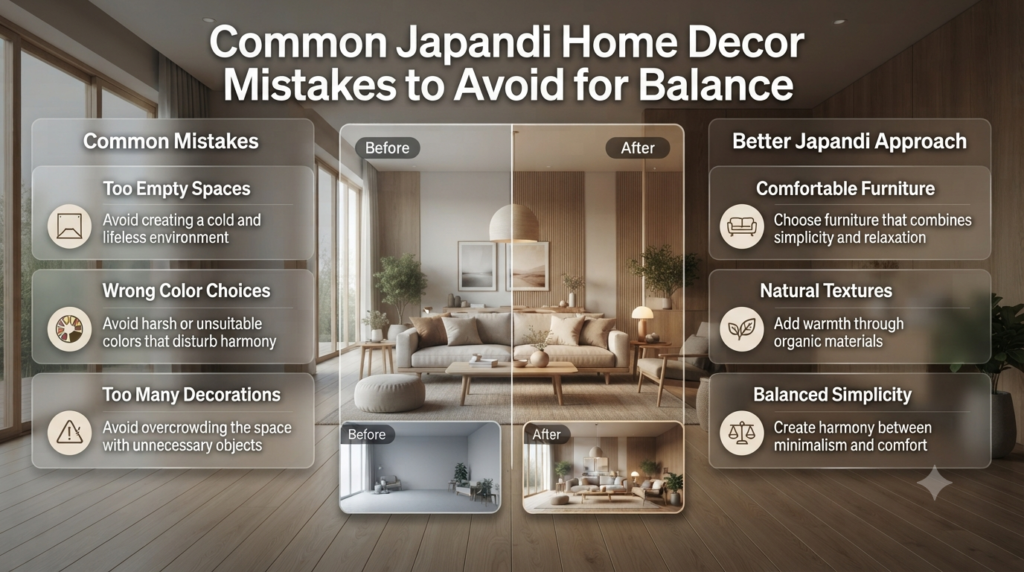
A successful Japandi interior is not empty or cold — it is thoughtfully designed with meaningful choices and functional beauty.
The most common Japandi Home Decor mistakes include creating spaces that feel too empty, using the wrong colors, adding too many decorations, choosing uncomfortable furniture, and ignoring natural textures. A successful Japandi interior requires balance between simplicity, warmth, and functionality.
Japandi looks simple, but achieving the right balance requires careful decisions.
Many beginners focus only on the appearance and forget the philosophy behind the style.
Mistake 1: Making the Space Too Empty
Why It Happens
People often misunderstand minimal design and think fewer items automatically create Japandi style.
Why It Is Harmful
An empty room can feel:
- Cold
- Uncomfortable
- Unpersonalized
How to Avoid It
Add meaningful elements:
✔ Natural plants
✔ Handmade ceramics
✔ Soft textiles
✔ Personal items with value
The goal is not an empty home.
The goal is a peaceful home.
Mistake 2: Using Only White Colors
Why It Happens
Many people associate minimal interiors with white spaces.
Why It Is Harmful
Too much white can make Japandi rooms feel:
- Sterile
- Flat
- Less inviting
Better Approach
Combine:
- Warm beige
- Soft gray
- Natural wood
- Earth tones
A balanced palette creates more depth.
Mistake 3: Adding Too Many Decorations
Why It Happens
Homeowners want to make the space feel complete.
Why It Is Harmful
Too many objects create visual clutter.
Better Solution
Use the rule:
Quality over quantity
Choose fewer pieces that have:
- Function
- Meaning
- Beauty
Mistake 4: Choosing Style Over Comfort
Why It Happens
Some people focus only on how furniture looks.
Why It Is Harmful
A beautiful chair that is uncomfortable does not support the Japandi lifestyle.
Professional Recommendation
Always test:
- Seating comfort
- Storage practicality
- Daily usability
A home should support your life, not just look good in photos.
Mistake 5: Mixing Too Many Design Styles
Why It Happens
People collect furniture from different trends.
Why It Is Harmful
Too many unrelated styles destroy visual harmony.
Better Approach
Choose elements that match:
- Natural materials
- Neutral colors
- Simple forms
Expert Advice: How Designers Create Authentic Japandi Interiors
Professional designers create authentic Japandi interiors by focusing on balance, natural materials, thoughtful furniture selection, layered lighting, and meaningful decoration instead of simply copying a visual style.
Experienced designers usually follow these principles:
1. Start With Function Before Decoration
A common professional approach is:
First decide:
- How the room will be used
- What furniture is necessary
- What storage is required
Then add decoration.
This prevents unnecessary purchases.
2. Focus on Texture Instead of Bright Colors
Japandi interiors often stay neutral because texture creates interest.
Examples:
A beige room becomes richer with:
- Wooden furniture
- Linen curtains
- Wool rugs
- Ceramic accessories
Texture creates visual depth.
3. Choose Long-Term Pieces
Japandi supports mindful buying.
Invest in:
- Quality wooden furniture
- Durable fabrics
- Timeless designs
Avoid:
- Fast trends
- Cheap temporary items
- Excessive decoration
4. Connect Indoor Spaces With Nature
Nature is a major part of Japandi philosophy.
Use:
- Indoor plants
- Natural wood
- Stone elements
- Organic shapes
Even small natural details can improve the atmosphere.
Budget-Friendly Japandi Home Decor Ideas
You can create Japandi Home Decor on a budget by focusing on decluttering, using neutral colors, adding natural textures, choosing simple furniture, and incorporating affordable handmade or DIY elements.
A Japandi home does not require expensive renovation.
Affordable improvements include:
Paint Updates
Changing wall colors can completely transform a room.
Choose:
- Warm white
- Beige
- Soft gray
- Earth tones
Add Natural Textures
Affordable options:
- Linen-style cushions
- Bamboo baskets
- Cotton throws
- Wooden accessories
Create DIY Decorations
Simple projects:
- Handmade pottery display
- Wooden shelves
- Natural branch arrangements
- Minimal artwork
For more creative improvement projects, explore DIY Projects for practical ways to personalize your space.
What Makes Japandi Home Decor Different From Other Interior Design Styles?
Japandi Home Decor stands out because it combines two powerful design philosophies: Japanese minimalism and Scandinavian comfort. Unlike traditional minimalist styles that mainly focus on reducing items, Japandi focuses on creating a balanced environment where every piece has a purpose, a story, or a functional value.
The goal of Japandi is not to make a home look empty. Instead, it creates a peaceful atmosphere by combining natural materials, soft colors, simple furniture, and thoughtful decoration. This approach makes spaces feel calm, warm, and connected to nature.
A Japandi interior avoids excessive decoration and fast-changing trends. Instead, it focuses on timeless design choices that remain beautiful for years. This is why many homeowners are choosing Japandi as a long-term home design approach rather than a temporary trend.
Key Elements That Make Japandi Unique:
Balance Between Minimalism and Comfort:
Japandi removes unnecessary clutter but keeps the warmth and coziness needed for everyday living.
Natural Material Focus:
Wood, linen, bamboo, stone, and ceramic elements create a connection with nature.
Purposeful Decoration:
Every decorative item should add beauty, function, or personal meaning.
Calm and Functional Spaces:
Rooms are designed to support relaxation, organization, and comfortable living.
Timeless Aesthetic:
Japandi avoids trends that quickly become outdated and focuses on lasting design principles.
How Do I Create a Japandi Home Decor Style Without Making My Space Feel Empty or Cold?
The biggest challenge with Japandi Home Decor is finding the right balance between simplicity and warmth. Many beginners remove too many items and create spaces that feel unfinished rather than peaceful.
A successful Japandi home uses negative space intentionally while adding warmth through textures, natural materials, lighting, and comfortable furniture. The focus should not be on having fewer things; it should be on having better-selected things.
Professional designers usually build Japandi interiors by creating a neutral foundation first and then adding layers of texture and personality.
Practical Ways to Add Warmth Without Creating Clutter:
Layer Different Textures:
Combine linen curtains, wool rugs, wooden furniture, cotton cushions, and ceramic accessories to add depth.
Use Warm Lighting:
Soft warm lighting creates a comfortable atmosphere and prevents neutral spaces from looking dull.
Choose Natural Wood Elements:
Wooden furniture, shelves, and flooring instantly add warmth and character.
Add Meaningful Accessories:
Select handmade objects, artwork, or plants instead of filling the room with random decorations.
Maintain Visual Breathing Space:
Empty areas are important because they allow the room to feel calm and organized.
What Colors Are Best for Japandi Home Decor?
Japandi color palettes are based on natural, calming, and earthy tones that create a peaceful environment. The style avoids extremely bright or artificial colors because they can disturb the sense of balance that Japandi interiors aim to achieve.
The best Japandi color combinations usually include warm neutrals as the foundation, natural wood tones as supporting elements, and subtle darker shades for contrast.
Professional designers often use colors inspired by nature, such as sand, stone, clay, forests, and natural fibers.
Popular Japandi Color Choices Include:
Warm White and Cream:
Creates a bright and peaceful background while allowing natural materials to stand out.
Beige and Taupe:
Adds warmth and creates a comfortable, relaxing atmosphere.
Soft Gray:
Provides a modern look without feeling too cold.
Earthy Brown Tones:
Enhance the natural feeling through wood and furniture finishes.
Muted Green and Terracotta:
Add organic character while maintaining calmness.
Professional Color Tip:
A balanced Japandi room often follows the:
70% neutral base colors
20% natural materials and secondary tones
10% accent colors
This prevents the room from becoming boring while keeping the peaceful Japandi identity.
What Furniture Works Best in Japandi Interior Design?
Japandi furniture is defined by simplicity, functionality, and comfort. The best furniture pieces are not chosen only because they look attractive; they are selected because they improve how people use and experience the space.
Unlike heavily decorative furniture styles, Japandi prefers clean shapes, natural finishes, and designs that feel timeless.
The ideal Japandi furniture creates a sense of calm while still providing everyday comfort.
Important Features of Japandi Furniture:
Natural Materials:
Wooden tables, oak cabinets, bamboo details, and linen upholstery create an authentic Japandi appearance.
Simple Shapes:
Furniture usually has clean lines, soft curves, and minimal detailing.
Functional Design:
Storage furniture should help maintain an organized and clutter-free environment.
Comfortable Proportions:
Sofas, chairs, and beds should feel inviting instead of looking purely decorative.
Neutral Upholstery:
Colors like beige, gray, cream, and soft brown work best.
Furniture Pieces Commonly Used in Japandi Homes:
Low-profile sofas
Wooden coffee tables
Simple dining tables
Platform beds
Built-in storage units
Minimal shelving systems
Expert Recommendation:
Choose fewer high-quality furniture pieces instead of filling your home with many low-value items. Japandi design celebrates longevity and thoughtful purchasing.
Is Japandi Home Decor Still Trending in 2026, or Is It Just a Temporary Design Trend?
Japandi Home Decor continues to grow in popularity because it is based on timeless principles rather than short-term decoration trends. Modern homeowners are increasingly looking for homes that support comfort, organization, mental relaxation, and a stronger connection with nature.
Unlike styles that depend on specific colors or fashionable furniture shapes, Japandi focuses on universal design concepts such as simplicity, functionality, and natural beauty.
The growing demand for Japandi comes from changing lifestyles where people want homes that feel peaceful after busy daily routines.
Why Japandi Remains Popular in 2026:
Supports Minimal and Organized Living:
People want easier-to-maintain homes with less unnecessary clutter.
Matches Sustainable Design Trends:
Natural materials and long-lasting furniture align with eco-conscious choices.
Works for Different Home Sizes:
Japandi principles are effective in apartments, small homes, and large houses.
Creates Emotional Comfort:
The combination of warm textures and simple layouts creates relaxing environments.
Adapts Easily:
Japandi can blend with modern, traditional, and contemporary interiors.
Future Design Insight:
Japandi is likely to remain influential because it focuses less on decoration and more on improving the way people experience their homes. It is a design philosophy built around better living, not just visual appearance.
Conclusion
Japandi Home Decor is more than a beautiful interior style; it is a thoughtful approach to creating a home that supports comfort, simplicity, and everyday well-being. By combining Japanese principles of balance and mindfulness with Scandinavian ideas of warmth and functionality, Japandi creates spaces that feel peaceful without becoming empty or boring.
The key to achieving an authentic Japandi interior is not adding more decoration but making better choices. Natural materials, neutral colors, comfortable furniture, soft lighting, and meaningful accessories work together to create a balanced atmosphere that feels connected to nature.
Whether you are redesigning an entire home or making small improvements, Japandi principles can be applied at any stage. Start by removing unnecessary clutter, selecting quality pieces, introducing natural textures, and creating a layout that supports your lifestyle.
The most successful Japandi homes are not perfect showroom spaces. They are personal, comfortable environments where people can relax, recharge, and enjoy daily moments.
By focusing on simplicity, functionality, and intentional design, you can create a home that remains stylish for years while providing the calm and comfort that modern living needs.

Leave a Reply