Introduction
Interior Design Styles for Every Home | Have you ever looked at a beautifully designed room online and thought, “I love this space, but I have no idea what style it is or how to create something similar in my own home?”
You are not alone.
Many homeowners collect inspiration from magazines, social media, and design websites but struggle when it comes to making real decisions about furniture, colors, materials, and layouts.
Should you choose a modern look or something more traditional? Is minimal design too empty? Can luxury interiors still feel comfortable? How do you combine different styles without making your home look unorganized?
Understanding interior design styles helps answer these questions.
Interior styles are not just about decoration. They are a complete design language that guides how your home looks, feels, and functions. The right style creates balance between beauty and practicality while making your space feel connected to your personality.
Whether you are designing a small apartment, upgrading a single room, or planning an entire house renovation, knowing different interior design approaches allows you to make confident decisions.
In this complete professional guide, you will learn:
- What interior design styles are and why they matter
- The most popular interior styles used by professional designers
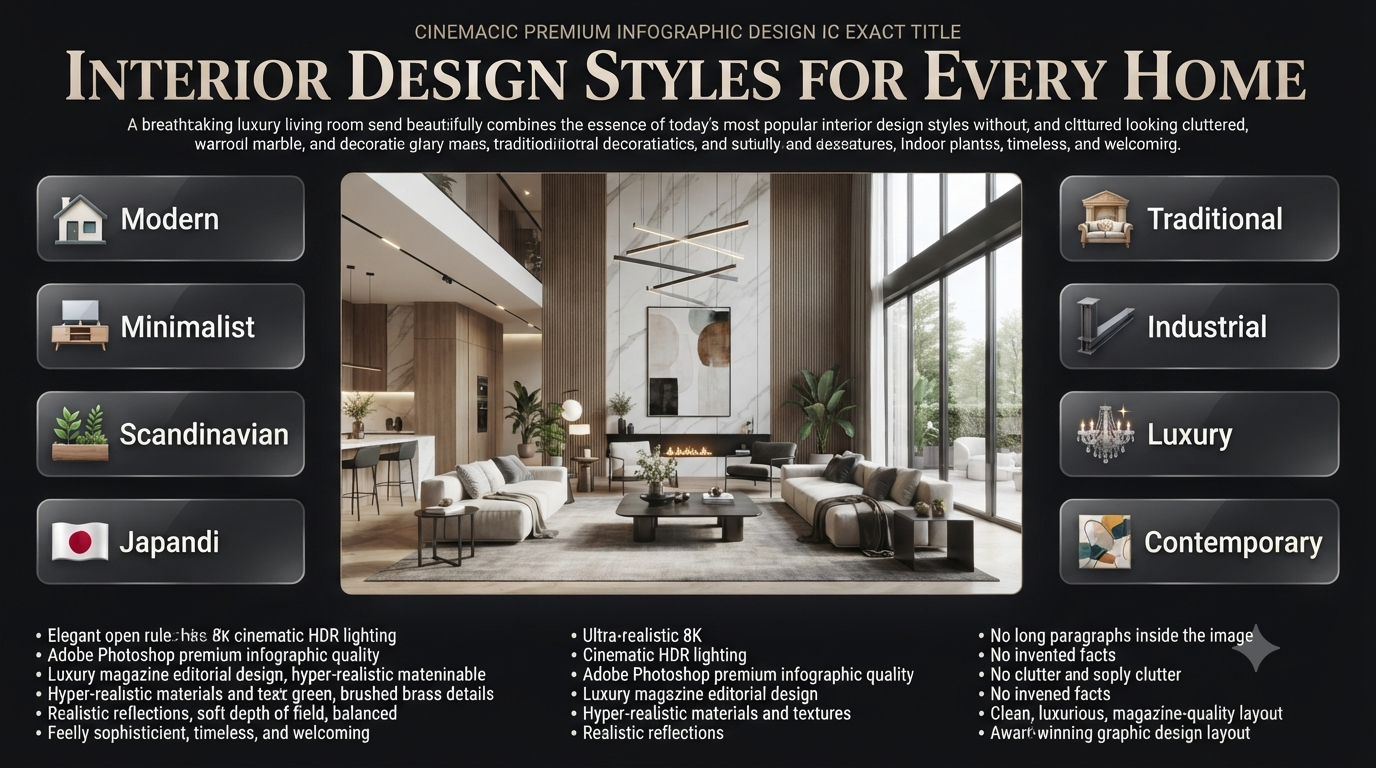
- The differences between modern, contemporary, minimalist, Scandinavian, Japandi, traditional, industrial, and luxury designs
- How to select the right style according to your lifestyle and home architecture
- How to combine multiple styles successfully
- Common mistakes homeowners make during interior planning
- Expert techniques for creating timeless interiors
This guide will help beginners understand interior design while also providing practical insights used by experienced designers.
What Are Interior Design Styles?
Interior design styles are organized approaches to decorating a home using specific combinations of colors, furniture, materials, textures, layouts, and architectural details. They help create a consistent visual identity, whether the goal is a modern, minimalist, traditional, luxury, rustic, or contemporary interior.
Interior design styles are frameworks that help homeowners and designers create spaces with a clear identity.
A style determines the overall feeling of a room.
For example:
A minimalist interior creates a calm and uncluttered environment through:
- Simple furniture
- Neutral colors
- Open space
- Functional design
A traditional interior creates elegance through:
- Classic furniture
- Detailed craftsmanship
- Symmetry
- Rich fabrics
A modern interior focuses on:
- Clean lines
- Open layouts
- Practical furniture
- Simple decoration
A luxury interior creates sophistication using:
- Premium materials
- Custom details
- Statement lighting
- High-quality finishes
Every style has its own characteristics, but professional designers often adapt these styles according to the homeowner’s needs.
Why Interior Design Styles Matter in Home Planning
Choosing an interior style before decorating prevents random decisions and creates a more balanced home.
Many people make the mistake of buying individual items they like without considering how everything works together.
For example:
A homeowner may purchase:
- A classic velvet sofa
- Industrial metal shelves
- Coastal artwork
- Modern lighting
Each item may look attractive separately, but together they may create visual confusion.
A defined interior style creates a connection between every element.
1. Creates Visual Harmony
A successful interior feels intentional because every design choice supports the same direction.
For example, a Scandinavian living room usually combines:
| Element | Scandinavian Approach |
|---|---|
| Walls | Soft whites and light neutrals |
| Furniture | Simple wooden designs |
| Fabrics | Natural cotton and wool |
| Decoration | Minimal accessories |
| Lighting | Warm and comfortable |
Every choice contributes to the same peaceful atmosphere.
2. Helps You Spend Money Wisely
Interior design can become expensive when decisions are made without planning.
Understanding your preferred style helps you avoid unnecessary purchases.
Before buying anything, ask:
- Does this match my design direction?
- Will this remain attractive for years?
- Does it improve the functionality of my room?
This approach saves money and creates a more professional result.
3. Makes Your Home More Personal
Interior design should reflect the people who live there.
A professional designer does not simply copy a showroom.
They consider:
- Lifestyle
- Daily habits
- Family requirements
- Personal taste
- Available space
- Budget
For example:
A person who loves peaceful surroundings may prefer minimalist or Scandinavian interiors.
Someone who enjoys entertaining guests may choose a comfortable contemporary or luxury style with larger seating areas.
How Professional Designers Choose an Interior Design Style
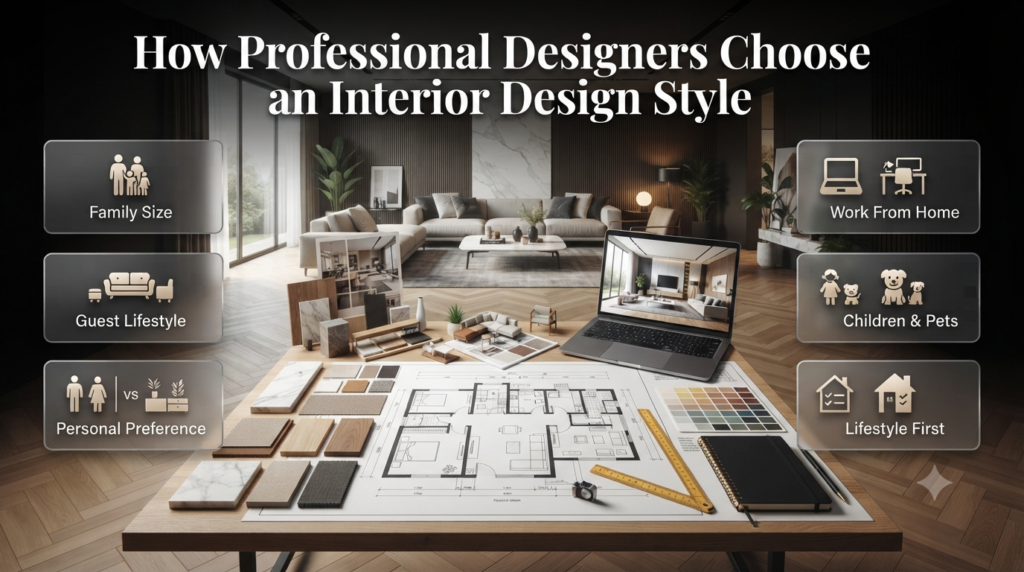
Professional designers follow a structured process instead of randomly selecting furniture or decorations.
Step 1: Understand Lifestyle Requirements
The best interior style is one that supports your daily life.
Designers ask questions like:
| Question | Why It Matters |
|---|---|
| How many people live in the home? | Determines furniture size and layout |
| Do you host guests often? | Influences seating and entertainment areas |
| Do you prefer simple or decorative spaces? | Defines style direction |
| Do you work from home? | Helps plan office areas |
| Do you have children or pets? | Affects material choices |
Step 2: Study the Home Architecture
The structure of a home influences which styles work naturally.
Examples:
Modern Homes
Features:
- Open floor plans
- Large windows
- Simple architecture
Suitable styles:
- Modern
- Contemporary
- Minimalist
Older Homes
Features:
- Decorative molding
- Traditional doors
- Classic details
Suitable styles:
- Traditional
- Transitional
- Rustic
Small Apartments
Features:
- Limited space
- Compact rooms
Suitable styles:
- Scandinavian
- Minimalist
- Japandi
Step 3: Create a Design Direction
Before selecting products, designers create a visual direction.
This includes:
- Color palette
- Material selection
- Furniture style
- Lighting approach
- Decorative elements
For more inspiration about professional planning and creative home solutions, explore Design Mode 24 Interior Design.
Core Elements That Define Every Interior Design Style
Although different styles look unique, every successful interior is built on several fundamental elements.
1. Color Palette
Colors create the emotional foundation of a room.
Professional designers usually follow a balanced color system.
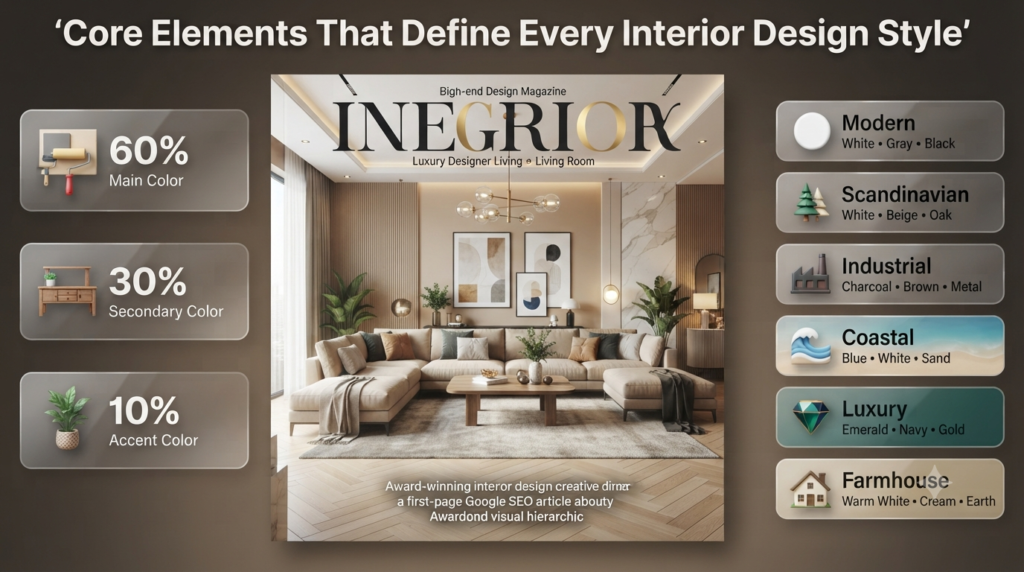
The 60-30-10 Rule
A common interior design formula:
60% Main Color
30% Secondary Color
10% Accent Color
Example:
Living Room:
60% Warm Beige
→ Walls and Main Sofa

30% Natural Wood
→ Tables and Flooring

10% Green Accents
→ Plants and Decorative Items
Example Color Combinations
| Interior Style | Common Colors |
|---|---|
| Modern | White, gray, black |
| Scandinavian | White, beige, soft wood |
| Industrial | Charcoal, brown, metal tones |
| Coastal | Blue, white, sandy colors |
| Luxury | Emerald, navy, gold accents |
| Farmhouse | Warm white, cream, earthy tones |
Choosing the correct colors is one of the most important steps in creating a successful interior.
You can explore more professional color inspiration through Paint Color.
2. Furniture Selection
Furniture defines the personality of a room.
A designer considers:
- Shape
- Scale
- Material
- Comfort
- Function
Example:
| Style | Furniture Characteristics |
|---|---|
| Modern | Straight lines and simple forms |
| Traditional | Decorative details and classic shapes |
| Minimalist | Essential pieces only |
| Industrial | Metal and reclaimed materials |
| Luxury | Premium fabrics and custom designs |
3. Lighting Design
Lighting can completely change how an interior feels.
Professional designers use three lighting layers:
Ambient Lighting
General illumination.
Examples:
- Ceiling fixtures
- Recessed lights
- Chandeliers
Task Lighting
Lighting for specific activities.
Examples:
- Desk lamps
- Reading lights
- Kitchen lighting
Accent Lighting
Used to highlight design features.
Examples:
- Artwork lighting
- Display shelves
- Architectural details
4. Materials and Textures
A room without texture can feel flat.
Designers combine different materials to create depth.
Example:
Modern luxury living room:
- Marble coffee table
- Velvet sofa
- Wooden wall panels
- Glass accessories
- Metal lighting fixtures
The combination creates a richer visual experience.
5. Modern Interior Design Style
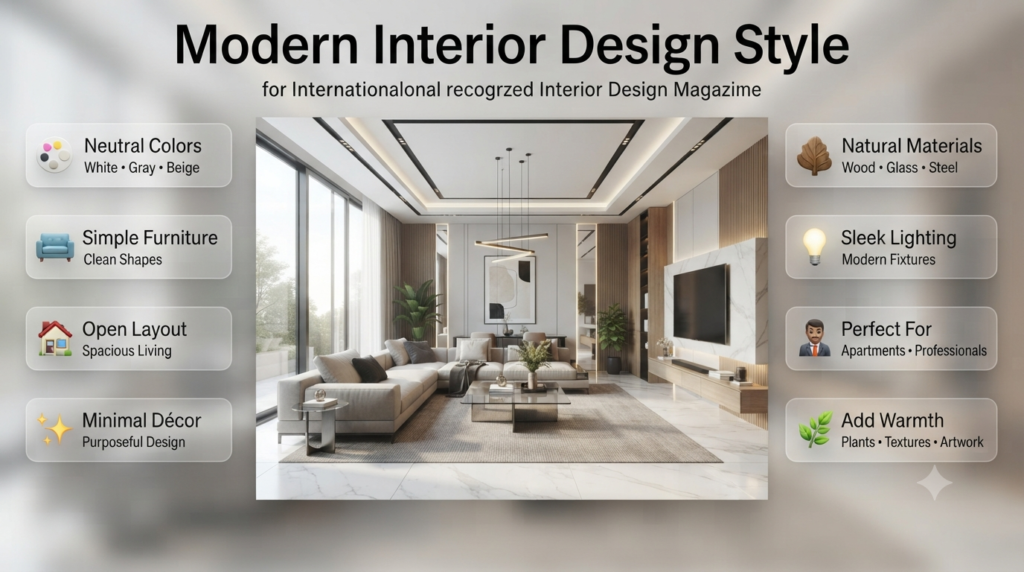
Modern interior design style focuses on simplicity, clean lines, functional furniture, open spaces, and minimal decoration. It commonly uses neutral colors, natural materials, smooth surfaces, and practical layouts to create a sophisticated and uncluttered home environment.
Modern interior design is one of the most recognized styles in residential architecture.
Many people confuse “modern” with “contemporary,” but they are different.
Modern design refers to a specific design movement that developed during the early and mid-20th century, influenced by simplicity, functionality, and industrial innovation.
The main philosophy is:
“Every element should have a purpose.”
Key Features of Modern Interior Design
| Element | Modern Design Approach |
|---|---|
| Colors | White, gray, black, beige |
| Furniture | Clean shapes and simple forms |
| Materials | Glass, steel, wood, leather |
| Layout | Open and spacious |
| Decoration | Limited and intentional |
| Lighting | Sleek fixtures |
Modern Living Room Example
A modern living room may include:
- A low-profile sofa
- Glass coffee table
- Neutral wall colors
- Large windows
- Minimal artwork
- Hidden storage solutions
Example layout:
------------------------------------------------
|              Large Window                    |
|                                              |
|  Sofa                 Coffee Table            |
|                                              |
|                 TV Wall                      |
|                                              |
|  Chair                          Plant        |
------------------------------------------------
Best For:
✔ Apartment owners
✔ Busy professionals
✔ People who prefer clean spaces
✔ Homes with open layouts
Common Mistake
⚠ Mistake to Avoid:
Many homeowners think modern design means an empty room with no personality.
Professional designers add warmth through:
- Wooden textures
- Soft fabrics
- Indoor plants
- Artwork
- Layered lighting
💡 Designer Tip:
A modern home should feel simple, not cold. Add natural materials to create comfort.
6. Contemporary Interior Design Style
Contemporary interior design represents current design trends and focuses on flexibility, comfort, clean aesthetics, and a mixture of modern materials. Unlike modern style, contemporary design changes over time as new colors, technologies, and lifestyle preferences influence home design.
Contemporary design is one of the most misunderstood interior styles.
The word “contemporary” means “existing or happening now.”
Therefore, contemporary interiors continue evolving.
A contemporary home designed today may look different from one designed ten years ago.
Characteristics of Contemporary Design
1. Balanced Colors
Common choices:
- Soft neutrals
- Warm whites
- Gray tones
- Natural shades
Accent colors are often introduced through:
- Artwork
- Furniture
- Decorative objects
2. Comfortable Furniture
Unlike extremely minimal designs, contemporary interiors focus heavily on comfort.
Examples:
- Deep sofas
- Comfortable chairs
- Soft rugs
- Functional storage
3. Mixed Materials
Contemporary interiors often combine:
- Wood
- Metal
- Glass
- Stone
- Textiles
Example:
A dining room may include:
- Wooden dining table
- Metal lighting fixture
- Fabric chairs
- Stone flooring
Modern vs Contemporary Interior Design
| Feature | Modern | Contemporary |
|---|---|---|
| Time Period | Historical movement | Current trends |
| Style Changes | More fixed | Constantly evolving |
| Furniture | Simple geometric forms | More flexible |
| Materials | Glass, steel, wood | Mixed materials |
| Feeling | Minimal and structured | Comfortable and updated |
7. Minimalist Interior Design Style
Minimalist interior design focuses on simplicity, functionality, and intentional living. It uses fewer furniture pieces, neutral colors, clean layouts, and organized spaces to create a calm environment without unnecessary decoration.
Minimalism is not about having an empty home.
It is about removing unnecessary elements and keeping only what adds value.
The philosophy:
“Less, but better.”
Main Principles of Minimalist Design
Simple Furniture
Choose:
- Functional pieces
- Clean shapes
- Quality over quantity
Avoid:
- Excess decoration
- Oversized furniture
- Unnecessary accessories
Neutral Color Palette
Common colors:
- White
- Beige
- Gray
- Soft brown
Small accents can include:
- Green plants
- Natural wood
- Black details
Minimalist Bedroom Example
A minimalist bedroom may include:
--------------------------------
|                              |
|          Bed                 |
|                              |
|  Side Table       Side Table |
|                              |
|          Wardrobe            |
--------------------------------
The goal is creating visual peace.
Benefits of Minimalist Interiors
✔ Easier cleaning
✔ Less visual stress
✔ Better organization
✔ Timeless appearance
✔ More focus on quality
Mistake to Avoid
⚠ Avoid creating a boring space.
Professional designers add interest through:
- Different textures
- Natural materials
- Artwork
- Lighting
8. Scandinavian Interior Design Style
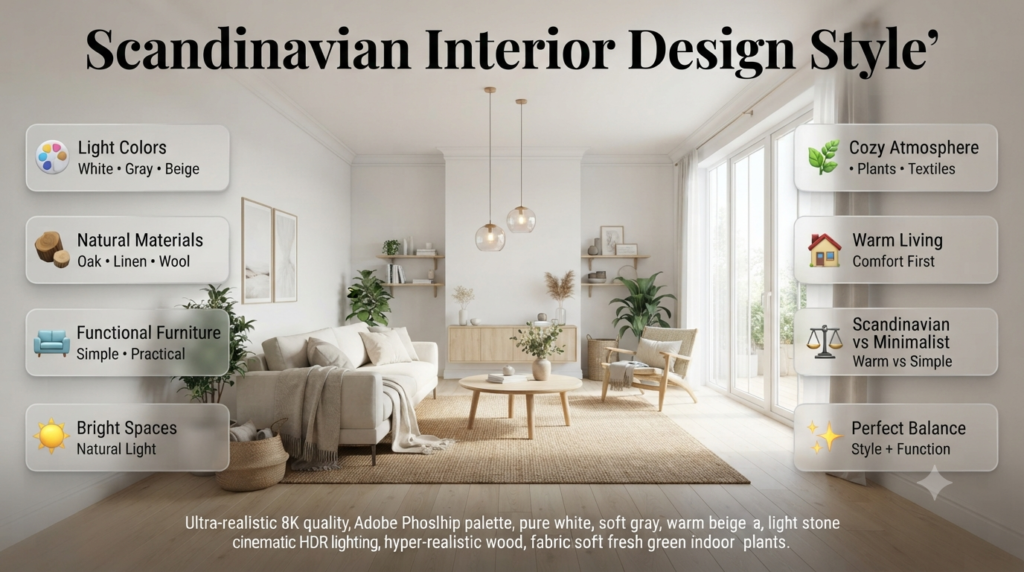
Scandinavian interior design combines simplicity, functionality, comfort, and natural materials. Originating from Nordic countries, it uses light colors, wooden elements, cozy textiles, and practical furniture to create bright and welcoming spaces.
Scandinavian design is famous for creating homes that feel:
- Bright
- Comfortable
- Peaceful
- Practical
It reflects the Nordic concept of creating happiness through simple living.
Key Scandinavian Elements
Colors
Common palette:
- White
- Soft gray
- Beige
- Light blue
- Natural wood tones
Materials
Frequently used:
- Oak wood
- Wool
- Cotton
- Linen
- Stone
Furniture
Characteristics:
- Simple designs
- Rounded edges
- Functional storage
Scandinavian Living Room Example
Features:
- Light wooden flooring
- White walls
- Comfortable sofa
- Warm lighting
- Indoor plants
Scandinavian vs Minimalist Design
| Feature | Scandinavian | Minimalist |
|---|---|---|
| Feeling | Warm and cozy | Calm and simple |
| Materials | More natural textures | More controlled |
| Decoration | Plants and textiles | Limited accessories |
| Atmosphere | Comfortable | Clean |
💡 Expert Tip:
If your home feels too plain, Scandinavian design is a great choice because it combines simplicity with warmth.
9. Japandi Interior Design Style
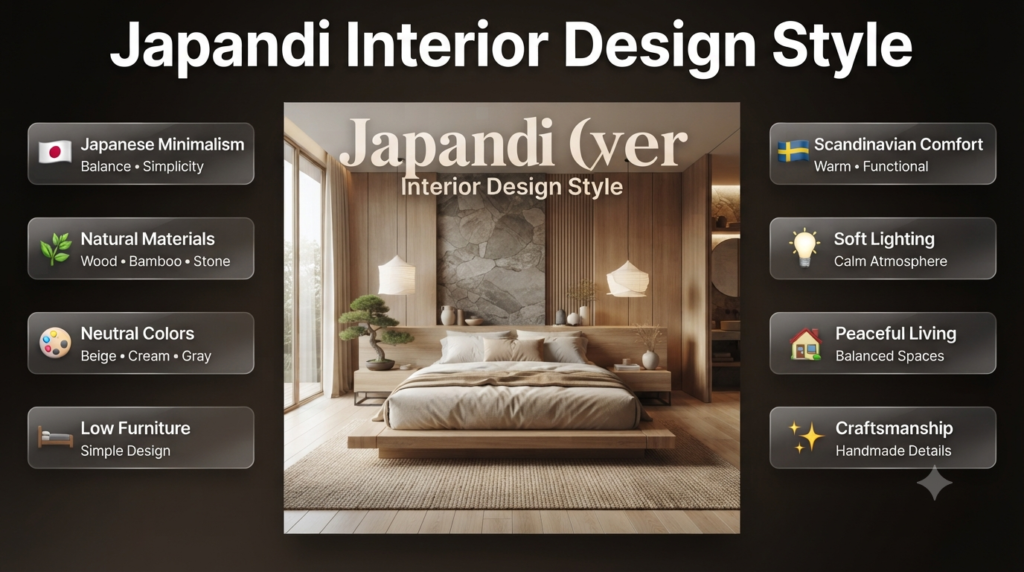
Japandi interior design combines Japanese minimalism with Scandinavian comfort. It focuses on simplicity, natural materials, neutral colors, craftsmanship, and creating peaceful spaces that feel balanced and functional.
Japandi has become one of the most popular interior design styles because it combines two powerful design philosophies.
Japanese design contributes:
- Balance
- Simplicity
- Natural beauty
- Calm spaces
Scandinavian design contributes:
- Comfort
- Warmth
- Functionality
Together they create a peaceful modern home.
Japandi Design Features
| Element | Approach |
|---|---|
| Colors | Beige, brown, cream, gray |
| Furniture | Low-profile and simple |
| Materials | Wood, bamboo, stone |
| Decoration | Minimal |
| Lighting | Soft and warm |
Japandi Bedroom Example
A Japandi bedroom may include:
- Low wooden bed
- Linen bedding
- Neutral walls
- Handmade pottery
- Soft lighting
Best For:
✔ Small apartments
✔ Relaxing bedrooms
✔ Minimal lifestyle lovers
✔ Nature-inspired homes
10. Traditional Interior Design Style
Traditional interior design style is inspired by classic European interiors and emphasizes elegance, symmetry, detailed furniture, rich fabrics, and timeless decorative elements. It creates formal yet comfortable spaces with a sense of history and sophistication.
Traditional design celebrates:
- Craftsmanship
- History
- Elegance
- Comfort
Unlike minimalist styles, traditional interiors often include more decorative details.
Traditional Design Characteristics
Furniture
Common features:
- Curved shapes
- Wooden details
- Classic upholstery
Colors
Popular choices:
- Deep blue
- Burgundy
- Cream
- Brown
- Gold accents
Accessories
Examples:
- Artwork
- Mirrors
- Decorative lamps
- Curtains
- Rugs
Traditional Living Room Example
--------------------------------
| Artwork        Mirror         |
|                              |
| Sofa       Coffee Table       |
|                              |
| Chair                Lamp     |
--------------------------------
Traditional Style Works Well For:
✔ Large homes
✔ Classic architecture
✔ People who enjoy elegant spaces
Quick Comparison of First 6 Major Styles
| Style | Main Feeling | Best Feature |
|---|---|---|
| Modern | Clean and sophisticated | Simple design |
| Contemporary | Updated and flexible | Current trends |
| Minimalist | Calm and organized | Less clutter |
| Scandinavian | Cozy and bright | Natural comfort |
| Japandi | Peaceful and balanced | Japanese simplicity |
| Traditional | Elegant and timeless | Classic details |
11. Industrial Interior Design Style
Industrial interior design style is inspired by old factories and warehouses. It features exposed materials such as brick, metal, concrete, and wood combined with open layouts, functional furniture, and bold architectural elements to create a raw yet stylish atmosphere.
Industrial design became popular when old factories and commercial buildings were transformed into residential lofts.
Instead of hiding structural elements, this style celebrates them.
The philosophy is:
“Show the beauty of raw materials.”
Main Features of Industrial Interior Design
| Element | Industrial Approach |
|---|---|
| Walls | Exposed brick or concrete |
| Colors | Black, gray, brown, earthy tones |
| Materials | Metal, steel, reclaimed wood |
| Furniture | Functional and durable |
| Lighting | Large pendant lights |
| Layout | Open spaces |
Industrial Living Room Example
A professional industrial living room may include:
- Leather sofa
- Metal coffee table
- Brick accent wall
- Wooden shelves
- Black steel lighting
Example layout:
------------------------------------------------
| Brick Accent Wall                             |
|                                              |
| Sofa              Coffee Table                |
|                                              |
| Industrial Lamp                 Bookshelf     |
|                                              |
------------------------------------------------
Advantages of Industrial Style
✔ Unique character
✔ Durable materials
✔ Low-maintenance surfaces
✔ Suitable for open spaces
✔ Strong architectural appeal
Common Mistake
⚠ Mistake to Avoid:
Creating a space that feels too cold.
Industrial interiors need balance.
Add warmth with:
- Soft rugs
- Plants
- Wooden furniture
- Comfortable fabrics
💡 Expert Tip:
Combine industrial materials with warm textures to create a home that feels stylish instead of unfinished.
12. Farmhouse Interior Design Style
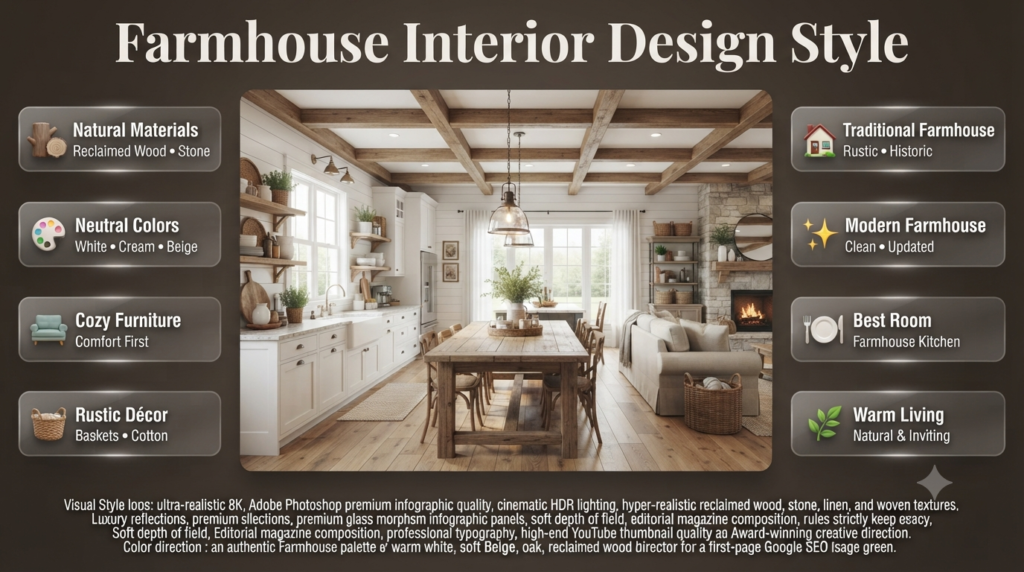
Farmhouse interior design style creates a warm and comfortable home atmosphere using natural materials, rustic textures, neutral colors, wooden furniture, and cozy decorative elements inspired by countryside living.
Farmhouse design focuses on comfort and simplicity.
It does not require living in the countryside. Many modern homes use farmhouse elements to create a welcoming environment.
Farmhouse Design Characteristics
Materials:
- Reclaimed wood
- Natural stone
- Cotton fabrics
- Woven baskets
Colors:
- White
- Cream
- Beige
- Soft gray
- Earth tones
Furniture:
- Wooden dining tables
- Comfortable sofas
- Vintage-inspired pieces
Modern Farmhouse vs Traditional Farmhouse
| Feature | Traditional Farmhouse | Modern Farmhouse |
|---|---|---|
| Feeling | Rustic and historic | Cleaner and updated |
| Colors | More earthy | More neutral |
| Furniture | Antique-inspired | Simple designs |
| Decoration | More accessories | Minimal styling |
Best Rooms for Farmhouse Style
Kitchen
Popular features:
- Wooden cabinets
- Open shelves
- Large farmhouse sink
- Natural countertops
Dining Room
Common elements:
- Large wooden table
- Comfortable chairs
- Pendant lighting
13. Mid-Century Modern Interior Design Style
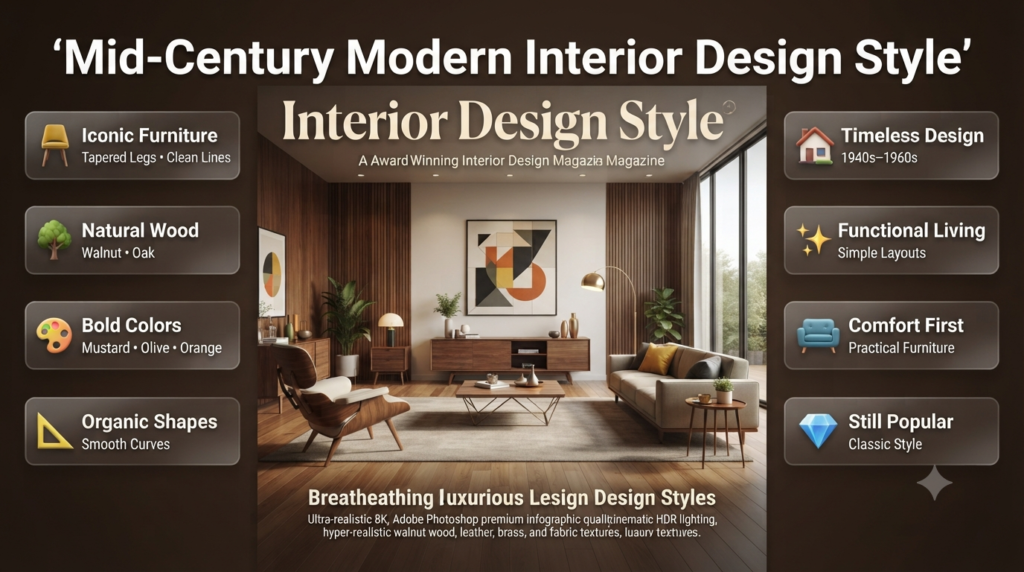
Mid-century modern interior design combines functionality, clean lines, organic shapes, and iconic furniture designs from the mid-20th century. It uses natural wood, bold accents, simple forms, and practical layouts to create timeless interiors.
This style originated between the 1940s and 1960s and remains popular because of its timeless appearance.
It combines:
- Function
- Beauty
- Simplicity
Key Features
Furniture
Characteristics:
- Tapered legs
- Smooth curves
- Simple shapes
Examples:
- Wooden chairs
- Low sofas
- Minimal cabinets
Colors
Common palette:
- Mustard yellow
- Olive green
- Warm brown
- Orange accents
- Neutral backgrounds
Mid-Century Living Room Example
Includes:
- Wooden TV cabinet
- Statement chair
- Simple sofa
- Geometric artwork
- Warm lighting
Why It Remains Popular
✔ Timeless appearance
✔ Works with modern homes
✔ Comfortable furniture
✔ Strong design identity
14. Bohemian Interior Design Style
Bohemian interior design style focuses on creativity, individuality, and artistic expression. It combines different colors, patterns, textures, plants, handmade items, and global influences to create relaxed and personalized spaces.
Bohemian style is perfect for people who do not want strict design rules.
It celebrates:
- Creativity
- Travel memories
- Handmade objects
- Personal collections
Bohemian Design Elements
Textures
Use:
- Woven rugs
- Macramé
- Soft blankets
- Cushions
Colors
Common choices:
- Terracotta
- Green
- Orange
- Deep blue
- Warm neutrals
Decoration
Examples:
- Plants
- Artwork
- Handmade accessories
- Vintage items
Professional Advice
A common misunderstanding is that Bohemian means everything should be mixed randomly.
A successful Bohemian interior still requires balance.
Designers usually maintain:
- A consistent color story
- Similar textures
- Visual harmony
15. Coastal Interior Design Style
Coastal interior design style is inspired by the beach and ocean environment. It uses light colors, natural textures, airy layouts, and materials such as wood, linen, and rattan to create a relaxed and refreshing home atmosphere.
Coastal design brings a feeling of:
- Fresh air
- Relaxation
- Openness
Coastal Design Features
| Element | Coastal Style |
|---|---|
| Colors | White, blue, sand tones |
| Materials | Rattan, wood, linen |
| Lighting | Bright natural light |
| Furniture | Comfortable and casual |
| Decoration | Ocean-inspired details |
Coastal Living Room Example
Features:
- White sofa
- Blue cushions
- Natural wood table
- Large windows
- Woven accessories
💡 Designer Tip:
Avoid using too many beach decorations. Professional coastal interiors suggest the ocean through colors and textures rather than obvious themes.
16. Mediterranean Interior Design Style
Mediterranean interior design is inspired by homes around the Mediterranean region. It combines warm colors, natural stone, textured walls, handcrafted furniture, arches, and earthy materials to create a relaxed and elegant atmosphere.
This style is influenced by regions such as:
- Spain
- Italy
- Greece
- Morocco
Mediterranean Design Elements
Architecture
Common features:
- Arched doorways
- Stone walls
- Decorative tiles
Colors
Popular choices:
- Terracotta
- Cream
- Olive green
- Warm beige
- Deep blue
Materials
- Stone
- Wood
- Ceramic
- Wrought iron
Ideal For:
✔ Large homes
✔ Villas
✔ Warm climates
✔ People who love timeless elegance
17. Luxury Interior Design Style
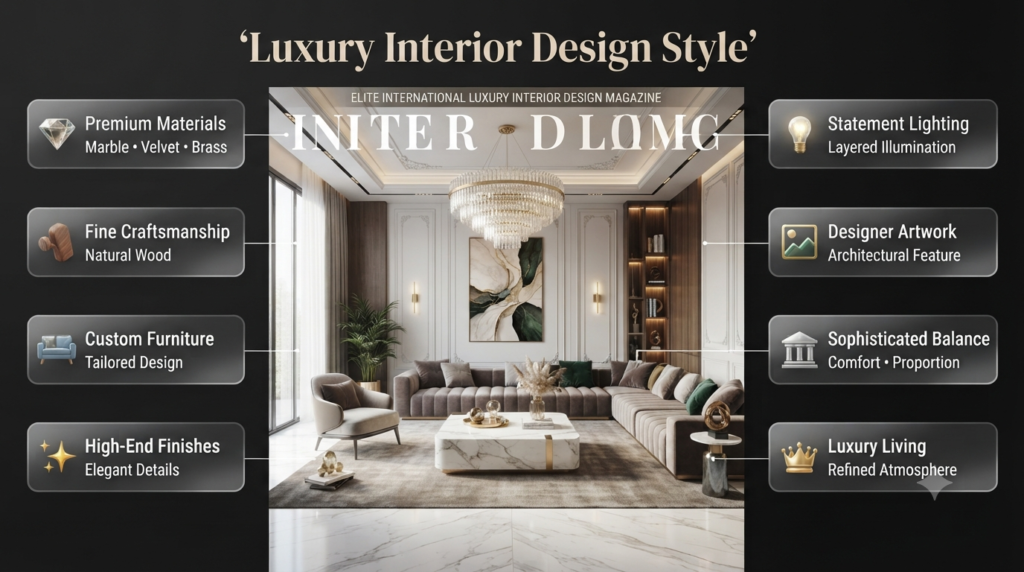
Luxury interior design style focuses on elegance, premium materials, sophisticated details, customized furniture, layered lighting, and high-quality finishes. It creates a refined atmosphere by combining comfort, craftsmanship, and visual balance.
Luxury design is not simply about expensive products.
A professionally designed luxury home focuses on:
- Quality
- Proportion
- Detail
- Comfort
Luxury Interior Elements
Premium Materials
Examples:
- Marble
- Natural wood
- Velvet
- Brass
- Glass
Statement Features
Examples:
- Designer lighting
- Custom wall panels
- Large artwork
- Architectural details
Luxury Living Room Example
---------------------------------------
|          Statement Lighting          |
|                                     |
|  Sofa       Marble Table      Chair |
|                                     |
|      Artwork Wall + Display Unit    |
---------------------------------------
Common Luxury Mistake
⚠ Mistake to Avoid:
Adding too many expensive elements.
Luxury interiors require balance.
A room filled with gold, mirrors, and decorative items can quickly look excessive.
18. Rustic Interior Design Style
Rustic interior design style emphasizes natural materials, handmade details, rough textures, and earthy colors. It creates warm and comfortable spaces inspired by nature and traditional craftsmanship.
Rustic design celebrates imperfections.
Common features:
- Exposed wood
- Stone fireplaces
- Handmade furniture
- Natural fabrics
Rustic vs Farmhouse Style
| Feature | Rustic | Farmhouse |
|---|---|---|
| Feeling | More natural and raw | More clean and comfortable |
| Materials | Rough wood, stone | Painted wood, soft textures |
| Colors | Darker earth tones | Lighter neutrals |
19. Art Deco Interior Design Style
Art Deco interior design style is known for glamour, geometric patterns, rich colors, luxurious materials, and decorative details. It creates elegant interiors using bold shapes, metallic finishes, mirrors, and sophisticated furniture.
Art Deco became famous during the 1920s and 1930s.
Its design language includes:
- Symmetry
- Luxury
- Drama
Art Deco Features
Materials:
- Brass
- Glass
- Marble
- Velvet
Patterns:
- Geometric designs
- Fan shapes
- Repeated lines
Colors:
- Black
- Gold
- Emerald green
- Deep blue
20. Transitional Interior Design Style
Transitional interior design combines traditional elegance with modern simplicity. It uses classic furniture shapes, neutral colors, clean lines, and balanced decoration to create timeless interiors that feel both comfortable and updated.
Transitional style is ideal for homeowners who love both classic and modern designs.
It creates a bridge between:
Traditional + Contemporary
Transitional Design Characteristics
| Element | Approach |
|---|---|
| Colors | Neutral tones |
| Furniture | Classic but simple |
| Decoration | Balanced |
| Materials | Wood, fabric, stone |
| Feeling | Elegant and comfortable |
Interior Design Styles Quick Comparison Chart
| Style | Personality | Best For |
|---|---|---|
| Industrial | Bold and creative | Loft-style homes |
| Farmhouse | Warm and welcoming | Family homes |
| Mid-Century Modern | Timeless and stylish | Modern apartments |
| Bohemian | Artistic and personal | Creative homeowners |
| Coastal | Relaxed and fresh | Bright homes |
| Mediterranean | Warm and elegant | Villas |
| Luxury | Sophisticated | Premium interiors |
| Rustic | Natural and cozy | Nature lovers |
| Art Deco | Glamorous | Statement interiors |
| Transitional | Balanced | Mixed preferences |
How to Choose the Right Interior Design Style
Choosing a style should not be based only on trends.
A professional approach considers:
1. Your Lifestyle
Ask:
- Do you prefer simplicity or decoration?
- Do you like open spaces?
- Do you entertain guests?
- Do you need practical storage?
2. Your Home Size
Small Spaces
Best options:
- Minimalist
- Scandinavian
- Japandi
Large Homes
Suitable options:
- Luxury
- Traditional
- Mediterranean
3. Your Personality
| Personality | Suitable Styles |
|---|---|
| Organized | Minimalist |
| Creative | Bohemian |
| Elegant | Traditional/Luxury |
| Nature lover | Rustic/Farmhouse |
| Modern thinker | Contemporary |
For more inspiration on creating personalized spaces, explore professional resources from Home Styling and Home Design Ideas.
How to Mix Different Interior Design Styles Successfully
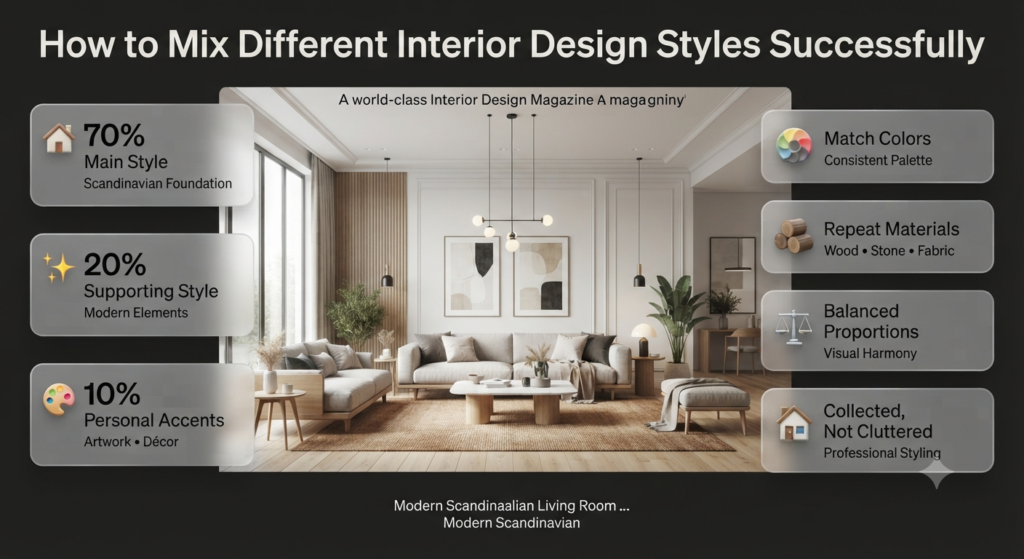
The best way to mix interior design styles is to choose one dominant style, add one supporting style, and connect both through common colors, materials, or design elements. Professional designers maintain balance by repeating textures, controlling proportions, and avoiding too many competing features.
Combining styles is known as eclectic interior design, but successful eclectic spaces still require planning.
A room should feel collected, not confused.
Rule 1: Choose a Dominant Style
The first step is deciding which style will control the overall feeling.
A common professional formula:
70% Main Interior Style
20% Supporting Style
10% Personal Accents
Example:
Modern Scandinavian Living Room:
70% Scandinavian
→ Light wood furniture
→ Neutral colors

20% Modern
→ Clean lighting
→ Minimal shapes

10% Personal
→ Artwork
→ Decorative objects
Rule 2: Create a Common Connection
Different styles work together when they share similar elements.
These connections can include:
Color
Example:
Modern + Traditional
Both can use:
- Beige
- White
- Gray
- Natural wood tones
Material
Example:
Industrial + Scandinavian
Connection:
- Wood
- Metal
- Natural fabrics
Shape
Example:
Modern + Mid-Century Modern
Both use:
- Clean lines
- Functional furniture
- Simple forms
Rule 3: Maintain Balance
A common mistake is giving every style equal attention.
Example:
A room containing:
- Industrial sofa
- Traditional chandelier
- Coastal artwork
- Bohemian rugs
- Luxury marble table
may feel chaotic.
Instead:
Choose one main direction.
Interior Style Combination Examples
Modern + Luxury
Perfect for:
- Apartments
- Villas
- Contemporary homes
Combination:
Modern provides:
- Clean structure
- Simple layout
Luxury adds:
- Premium materials
- Elegant details
Example:
Living room:
- Neutral sofa
- Marble coffee table
- Gold lighting
- Minimal artwork
Scandinavian + Japandi
Perfect for:
- Small apartments
- Peaceful bedrooms
Combination:
Scandinavian:
- Comfort
- Warm textures
Japandi:
- Calm simplicity
- Natural materials
Result:
A relaxing, organized space.
Industrial + Rustic
Perfect for:
- Loft homes
- Large open spaces
Combination:
Industrial:
- Metal
- Concrete
Rustic:
- Wood
- Natural textures
Result:
A warm industrial environment.
Room-by-Room Interior Design Style Examples
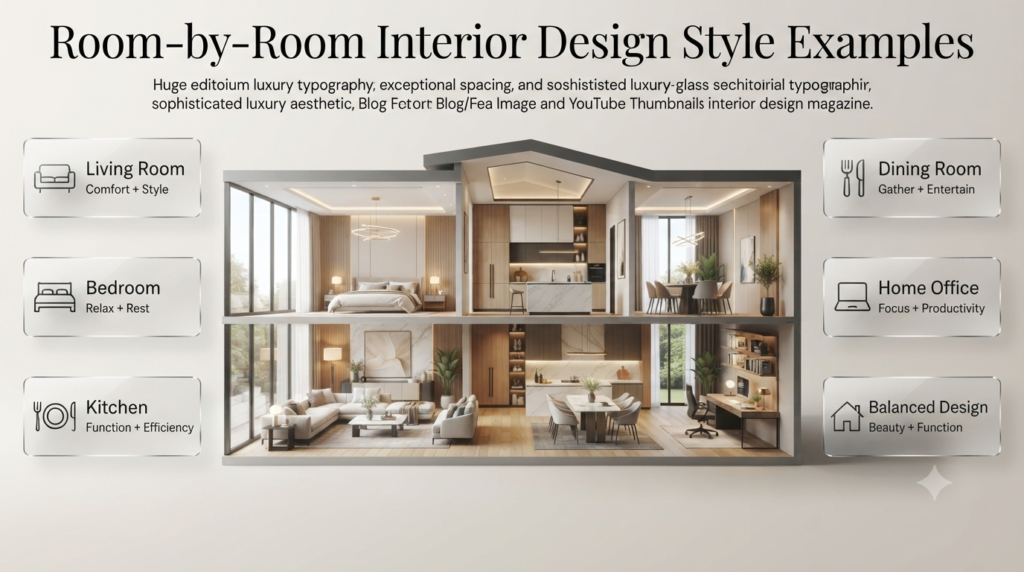
Different rooms have different requirements.
A bedroom should feel relaxing.
A kitchen should focus on functionality.
A living room should balance comfort and appearance.
Living Room Interior Design Styles
The best living room interior design style depends on your lifestyle, space, and personality. Popular choices include modern, contemporary, Scandinavian, luxury, and transitional styles because they combine comfort, functionality, and visual appeal.
The living room is usually the most visible area of a home.
It should represent your design personality while remaining practical.
Modern Living Room
Key Features:
- Neutral colors
- Simple furniture
- Open layout
- Minimal decoration
Example:
---------------------------------
|          TV Wall              |
|                               |
| Sofa              Chair       |
|                               |
|       Coffee Table            |
|                               |
| Plant              Lamp       |
---------------------------------
Best for:
✔ Apartments
✔ Professionals
✔ Minimal lifestyles
Luxury Living Room
Features:
- Statement lighting
- Premium fabrics
- Marble surfaces
- Custom furniture
Professional tip:
Luxury is created through quality, not quantity.
Scandinavian Living Room
Features:
- Light colors
- Natural wood
- Comfortable seating
- Soft lighting
Best for:
- Small spaces
- Family homes
Bedroom Interior Design Styles
The ideal bedroom interior design style should create comfort, relaxation, and personal connection. Minimalist, Scandinavian, Japandi, and luxury styles are popular because they promote calm environments through balanced colors, comfortable furniture, and thoughtful lighting.
The bedroom is a personal retreat.
Professional designers focus on:
- Comfort
- Lighting
- Storage
- Relaxing colors
Minimalist Bedroom Example
Features:
- Simple bed design
- Hidden storage
- Neutral walls
- Limited decoration
Layout:
--------------------------------
|                              |
|           Window             |
|                              |
|      Bed                     |
|                              |
| Side Table      Side Table   |
|                              |
|       Storage Unit           |
--------------------------------
Luxury Bedroom Example
Includes:
- Upholstered headboard
- Layered lighting
- Premium bedding
- Decorative wall panels
💡 Expert Tip:
Avoid overly bright colors in bedrooms because they can create visual energy instead of relaxation.
Kitchen Interior Design Styles
Kitchen interior design styles should balance beauty with functionality. Modern, contemporary, farmhouse, and Scandinavian styles are popular because they provide efficient layouts, practical storage, and attractive finishes.
A professional kitchen design considers:
- Workflow
- Storage
- Lighting
- Materials
Kitchen Layout Planning
Work Triangle Concept
The three important areas:
       Refrigerator

            ▲

            |

Sink ◄--------------► Stove
The distance between these areas should allow easy movement.
Modern Kitchen
Features:
- Flat cabinets
- Integrated appliances
- Simple colors
Farmhouse Kitchen
Features:
- Wooden cabinets
- Open shelves
- Large sink
- Warm lighting
Dining Room Interior Design Styles
The dining room should encourage comfort and conversation.
Popular styles:
- Traditional
- Modern
- Scandinavian
- Luxury
Dining Table Size Guide
| Table Type | Recommended Space |
|---|---|
| Small 4-seat table | Small apartments |
| 6-seat table | Average family homes |
| 8-seat table | Large dining areas |
Professional Placement Tip
Allow approximately:
- 36 inches clearance around chairs
- More space behind frequently used areas
This improves comfort and movement.
Home Office Interior Design Styles
With remote work becoming more common, home offices require both style and productivity.
Popular styles:
- Minimalist
- Modern
- Scandinavian
Ideal Home Office Features
Include:
✔ Comfortable chair
✔ Proper lighting
✔ Organized storage
✔ Limited distractions
Example:
--------------------------------
| Window                       |
|                              |
| Desk                         |
|                              |
| Chair          Storage       |
|                              |
--------------------------------
Small Apartment Interior Design Styles
Small homes require smart planning.
Best styles:
- Minimalist
- Scandinavian
- Japandi
- Contemporary
Small Space Design Principles
1. Use Multi-Functional Furniture
Examples:
- Storage beds
- Folding tables
- Modular sofas
2. Use Light Colors
Light colors create:
- Openness
- Brightness
- Visual space
3. Avoid Oversized Furniture
A large sofa can make a small room feel crowded.
Large House Interior Design Styles
Large homes provide more flexibility.
Suitable styles:
- Luxury
- Traditional
- Mediterranean
- Transitional
Professional approach:
Do not fill every corner.
Empty space creates elegance.
Interior Design Style Decision Guide
Use this quick guide:
| If You Want… | Choose… |
|---|---|
| Clean and simple home | Minimalist |
| Cozy natural feeling | Scandinavian |
| Elegant appearance | Luxury |
| Classic beauty | Traditional |
| Creative personality | Bohemian |
| Warm family atmosphere | Farmhouse |
| Modern lifestyle | Contemporary |
| Peaceful environment | Japandi |
| Bold character | Industrial |
Common Interior Design Style Mistakes
1. Following Trends Instead of Personal Needs
Why It Happens:
People copy popular designs online.
Problem:
Trends change quickly.
Solution:
Build around your lifestyle first.
Use trends only for:
- Accessories
- Paint updates
- Small decorations
2. Mixing Too Many Styles
Why It Happens:
Homeowners love many different looks.
Problem:
The room loses identity.
Solution:
Choose:
- One main style
- One supporting style
3. Ignoring Room Proportions
Problem:
Furniture may look attractive but feel uncomfortable.
Example:
A huge sectional sofa in a small apartment.
Solution:
Measure before buying.
4. Poor Lighting Planning
Problem:
Even beautiful interiors can feel unattractive without proper lighting.
Solution:
Use:
- Ambient lighting
- Task lighting
- Accent lighting
5. Buying Furniture Before Planning
Problem:
Furniture determines the layout.
Solution:
Create a basic floor plan first.
For more practical improvement ideas and home upgrade inspiration, explore DIY Projects and Home Improvement.
How do I choose the right interior design style for my home?
Choosing the right interior design style starts with understanding how you live rather than following the latest trends. A beautiful home should reflect your daily routine, personal preferences, available space, and budget. For example, if you prefer clutter-free spaces with functional furniture, a minimalist or Scandinavian style may be ideal. If you enjoy timeless elegance and decorative details, a traditional or luxury style could be a better fit. Instead of copying a room from social media, identify the elements you genuinely enjoy—such as colors, textures, materials, and furniture—and build your design around them. A well-chosen style creates visual harmony, improves functionality, and makes decorating future rooms much easier.
Key Points:
Consider your lifestyle before selecting a design style.
Match the style with your home’s architecture and room size.
Choose colors and materials that suit your personality.
Focus on timeless design rather than short-lived trends.
Create a mood board before purchasing furniture or décor.
Can I mix different interior design styles in the same home?
Yes, mixing interior design styles is one of the most popular approaches today, but it requires careful planning. Professional designers rarely follow a single style throughout an entire home. Instead, they combine complementary styles to create spaces that feel unique and personal. The best approach is to choose one dominant style that defines the room and introduce a secondary style through furniture, lighting, artwork, or decorative accessories. Maintaining a consistent color palette and repeating similar materials helps different styles blend naturally rather than compete with one another.
Key Points:
Select one primary style and one supporting style.
Keep a consistent color palette throughout the room.
Repeat similar materials such as wood, metal, or stone.
Avoid combining too many bold styles in one space.
Balance modern and classic elements carefully.
Which interior design style is best for small apartments and compact homes?
For small apartments, styles that emphasize simplicity, natural light, and functionality usually work best. Scandinavian, Japandi, minimalist, and modern interior design styles are excellent choices because they make rooms feel larger and more organized. These styles use light color palettes, clean-lined furniture, smart storage solutions, and uncluttered layouts to maximize every square foot. Choosing multi-functional furniture, wall-mounted storage, and mirrors can further improve the sense of openness without sacrificing comfort or style.
Key Points:
Use light wall colors to make rooms appear larger.
Choose furniture with built-in storage whenever possible.
Keep decorations simple to reduce visual clutter.
Maximize natural lighting with sheer window treatments.
Select furniture that is appropriately sized for the room.
What is the difference between modern and contemporary interior design?
Although the terms are often used interchangeably, modern and contemporary interior design are not the same. Modern design refers to a specific design movement from the early to mid-20th century and is defined by clean lines, functional furniture, and minimal ornamentation. Contemporary design, on the other hand, reflects current design trends and continues to evolve over time. Contemporary interiors often incorporate modern elements while also embracing new materials, updated color palettes, curved furniture, and changing lifestyle preferences. Understanding this difference helps homeowners choose a style that aligns with both their aesthetic goals and long-term expectations.
Key Points:
Modern design follows a historical design movement.
Contemporary design changes as trends evolve.
Modern interiors often feature stronger geometric lines.
Contemporary spaces mix different materials more freely.
Both styles emphasize comfort and functionality but achieve it differently.
How can I make my home look professionally designed without spending a fortune?
A professionally designed home is not defined by expensive furniture—it is created through thoughtful planning, consistency, and attention to detail. Start by selecting a clear interior design style and stick to a cohesive color palette throughout your home. Invest in a few high-quality statement pieces instead of filling every room with unnecessary décor. Layer lighting, mix textures, and incorporate natural materials to add depth and warmth. Finally, edit your space regularly by removing items that no longer serve a purpose, allowing your favorite pieces to stand out and creating a balanced, polished interior.
Key Points:
Choose one clear design style before shopping.
Invest in quality furniture instead of quantity.
Use layered lighting for a more inviting atmosphere.
Add texture through rugs, cushions, curtains, and natural materials.
Keep rooms organized and avoid excessive decoration for a timeless look.
Conclusion
Choosing the right interior design styles is about much more than following trends or copying beautiful rooms from magazines and social media. The best interiors are thoughtfully designed to reflect your lifestyle, personality, and the way you use your home every day. Whether you’re drawn to the clean simplicity of Minimalist design, the warmth of Scandinavian interiors, the timeless elegance of Traditional décor, or the sophistication of Luxury spaces, selecting a clear design direction helps create a home that feels both beautiful and functional.
Remember that great interior design is built on strong fundamentals. A balanced color palette, well-planned furniture layout, layered lighting, quality materials, and carefully selected decorative elements all work together to create harmony. Rather than filling every room with expensive furniture or the latest trends, focus on making intentional choices that improve comfort, functionality, and long-term style.
If you’re planning to redesign your home, start with one room at a time. Create a mood board, define your preferred style, measure your space carefully, and invest in pieces that complement your overall vision. Small improvements made with a clear plan often deliver better results than large renovations without direction.
For more expert inspiration, decorating tips, and practical room-by-room guides, explore Design Mode 24 Interior Design. You can also discover additional ideas through our Interior Design, Home Styling, and Home Design Ideas resources to continue transforming your home with confidence.
Ultimately, the most successful interior design style is not the one that’s currently trending—it’s the one that makes you feel comfortable, inspired, and truly at home every time you walk through the door. By applying the principles and expert advice shared in this guide, you’ll be well-equipped to create a timeless interior that you’ll enjoy for years to come.
Leave a Reply