
Introduction
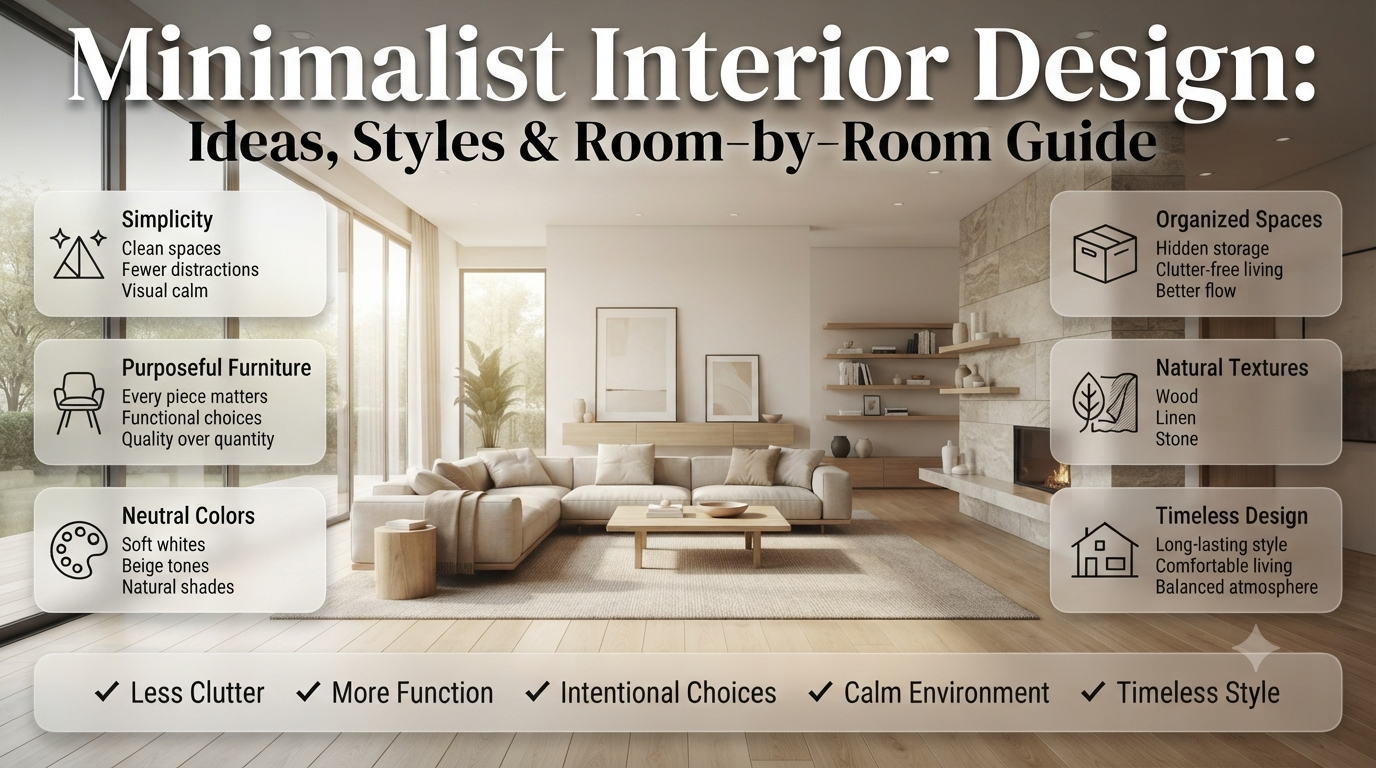
Minimalist Interior Design: Ideas, Styles & Room-by-Room Guide | Many homeowners feel that their rooms never look organized, even after buying new furniture and adding more decorations. The problem is often not a lack of style—it is having too many elements competing for attention. A crowded space can make daily life feel stressful, while a thoughtfully designed home can create comfort, balance, and peace.
Minimalist Interior Design solves this problem by focusing on simplicity, purpose, and intentional choices. It is not about creating an empty or boring home. Instead, it is about designing a space where every piece of furniture, color, texture, and decoration has a clear reason to exist.
Modern homeowners are choosing minimalist interiors because they support today’s lifestyles. Whether you work from home, live in a small apartment, or simply want a calmer environment, minimalist design helps create spaces that feel organized, functional, and timeless.
In this guide, you will learn what minimalist interior design means, its core principles, important elements, benefits, common characteristics, and practical ways to bring this style into your home.
What Is Minimalist Interior Design?
Minimalist Interior Design is a decorating approach that focuses on simplicity, functionality, and intentional living. It uses clean layouts, neutral colors, natural materials, and carefully selected furniture to create peaceful and practical spaces. The goal is not to remove everything but to keep only the elements that add real value.
Minimalism is a design philosophy built around the idea of “less but better.”
Instead of filling rooms with unnecessary furniture, decorations, and accessories, minimalist interiors prioritize:
- Purposeful furniture
- Open spaces
- Quality materials
- Balanced colors
- Functional layouts
- Clutter-free environments
A minimalist home still feels warm and personal. The difference is that every item is carefully chosen rather than randomly added.
For homeowners exploring different Interior Design Styles, minimalism stands out because it combines beauty with everyday practicality.
Why Is Minimalist Interior Design Popular in Modern Homes?
Minimalist Interior Design is popular because it creates calm, organized, and functional homes. It reduces visual clutter, improves usability, makes spaces appear larger, and encourages homeowners to invest in meaningful furniture and décor instead of temporary trends.
Modern lifestyles have changed how people use their homes.
Today, homes are not only places to relax. They are also:
- Workspaces
- Entertainment areas
- Learning environments
- Family gathering spaces
- Personal retreats
Because of these changing needs, homeowners want interiors that feel flexible and comfortable.
Minimalist design provides this balance by removing unnecessary distractions and creating spaces that are easier to maintain.
For example, a minimalist living room may include:
- One comfortable sofa
- A simple coffee table
- Soft lighting
- A few meaningful decorations
- Hidden storage solutions
Instead of dozens of decorative objects, the room focuses on comfort and usability.
💡 Pro Tip: A minimalist home should never feel empty. The goal is to create breathing space while keeping the personality and warmth of the homeowner.
Core Principles of Minimalist Interior Design
1. Function Comes Before Decoration
The first rule of minimalist design is simple:
Every element should serve a purpose.
Before adding furniture or décor, ask:
- Does this item improve the room?
- Will I use it regularly?
- Does it make my daily life easier?
- Does it contribute to the overall design?
A beautiful home is not created by filling every corner. It is created by making intentional decisions.
Examples of functional minimalist choices include:
- Storage beds
- Multi-purpose furniture
- Built-in cabinets
- Floating shelves
- Foldable tables
- Modular seating
These solutions maximize space while maintaining a clean appearance.
2. Creating Balance Through Simplicity
Minimalist interiors focus on visual balance.
This means avoiding:
- Too many colors
- Excessive patterns
- Oversized furniture
- Random decorations
- Crowded layouts
Instead, designers create harmony through:
- Proportion
- Texture
- Lighting
- Space planning
- Material selection
A simple room with carefully chosen elements often feels more luxurious than a heavily decorated space.
3. Quality Over Quantity
One of the biggest misunderstandings about minimalism is that it encourages buying less expensive items.
Actually, minimalist design values quality over quantity.
A homeowner may choose:
- One premium sofa instead of multiple cheap chairs
- One durable dining table instead of replacing furniture every few years
- One statement artwork instead of many small decorations
This approach saves money over time and creates a more refined interior.
4. Open and Airy Spaces
A minimalist room should allow easy movement.
Professional designers often create openness by:
- Keeping walking paths clear
- Avoiding oversized furniture
- Using smart storage
- Choosing furniture with simple shapes
- Allowing natural light to flow
Even small homes can feel spacious with the right planning.
Exploring professional Home Design Ideas can help homeowners understand how layouts influence comfort and functionality.
Key Characteristics of Minimalist Interior Design
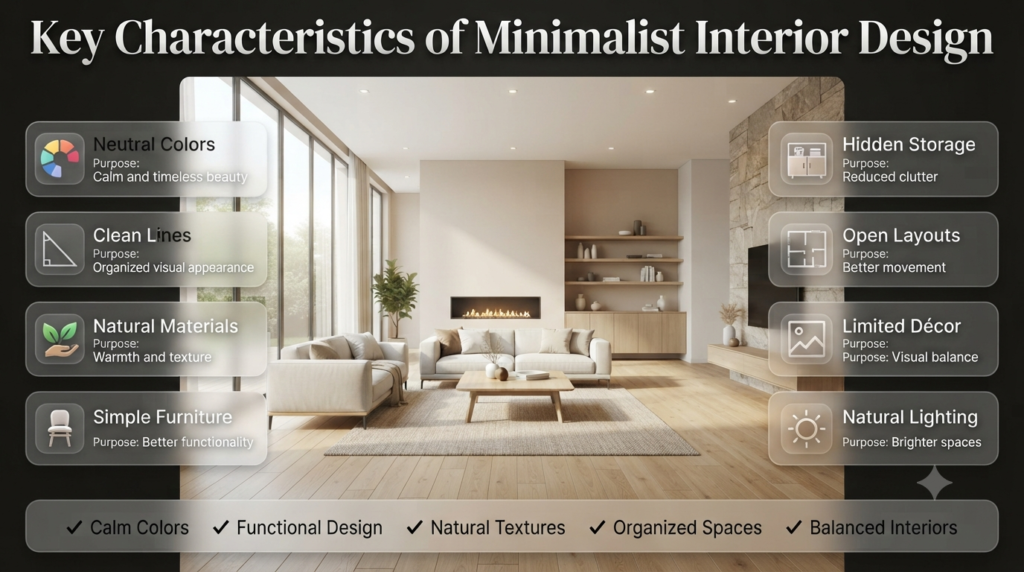
Minimalist interiors usually share several recognizable features.
| Feature | Purpose |
|---|---|
| Neutral colors | Creates calm and timeless beauty |
| Clean lines | Makes rooms feel organized |
| Natural materials | Adds warmth and texture |
| Simple furniture | Improves functionality |
| Hidden storage | Reduces clutter |
| Open layouts | Creates better movement |
| Limited décor | Maintains visual balance |
| Natural lighting | Makes spaces brighter |
Essential Elements of Minimalist Interior Design
Neutral Color Palette
Minimalist interiors commonly use neutral colors such as white, beige, gray, cream, and earthy tones. These shades create a calm background, make spaces appear larger, and allow furniture, textures, and natural materials to become the main visual elements.
Color plays a major role in creating a peaceful minimalist environment.
Popular minimalist color combinations include:
- Warm white with natural wood
- Beige with soft gray
- Cream with stone textures
- Light gray with black accents
- Earth tones with organic materials
The purpose is not to create a boring space but to create a balanced foundation.
Choosing the right shades can completely change the atmosphere of a room. Homeowners looking for inspiration can explore different Paint Color ideas to find suitable tones for minimalist interiors.
Natural Materials and Textures
Minimalist homes avoid excessive decoration by using materials that naturally add character.
Common materials include:
- Wood
- Stone
- Linen
- Cotton
- Glass
- Metal
- Ceramic
Textures are especially important because minimalist spaces often use fewer colors.
For example:
A plain beige room can feel warm when combined with:
- Wooden flooring
- Linen curtains
- A textured rug
- Ceramic accessories
⭐ Expert Tip: When using a simple color palette, focus on texture variation. Different materials create depth without making the room visually busy.
Functional Furniture Choices
Furniture is one of the most important parts of minimalist design.
The right furniture should provide:
- Comfort
- Storage
- Durability
- Visual simplicity
Popular minimalist furniture choices include:
- Low-profile sofas
- Simple wooden tables
- Floating cabinets
- Built-in storage units
- Streamlined chairs
Avoid buying furniture only because it looks attractive.
A beautiful piece that creates inconvenience will eventually become unnecessary clutter.
Intentional Décor Selection
Minimalist homes still need personality.
The difference is that decorations are selected carefully.
Good minimalist décor examples include:
- Large artwork
- Indoor plants
- Handmade ceramics
- Simple mirrors
- Sculptural lighting
Instead of displaying many small items, choose fewer pieces that create a stronger impact.
A similar philosophy can be seen in Japandi Home Design, where simplicity, natural materials, and comfort work together.
Benefits of Minimalist Interior Design
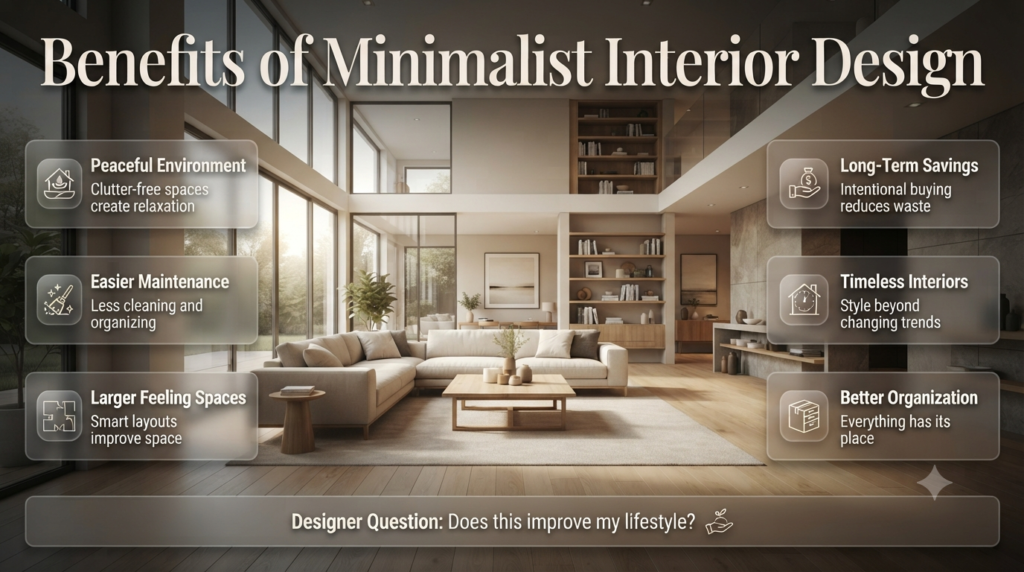
Minimalist interiors offer both visual and practical advantages.
Main Benefits:
1. Creates a Peaceful Environment
A clutter-free space can make the home feel calmer and more relaxing.
2. Easier Maintenance
Fewer objects mean:
- Less cleaning
- Less organizing
- Less daily maintenance
3. Makes Small Spaces Feel Larger
Smart layouts and open areas improve the feeling of space.
4. Saves Money Long-Term
Intentional purchasing prevents unnecessary spending.
5. Creates Timeless Interiors
Minimalist designs are less affected by changing trends.
6. Supports Better Organization
Everything has a designated place, making daily routines easier.
📌 Quick Tip: Before purchasing anything new for your home, ask: “Does this improve my lifestyle, or does it only fill empty space?”
How to Create a Minimalist Living Room
A minimalist living room focuses on comfort, functionality, and visual balance. The key is choosing essential furniture, maintaining open space, using neutral colors, adding natural textures, and avoiding unnecessary decorations. A successful minimalist living room feels warm, practical, and inviting rather than empty.
The living room is usually the heart of a home, so creating a minimalist style here requires a careful balance between simplicity and comfort.
A common mistake is removing too many items and creating a cold atmosphere. Professional designers focus on keeping the room functional while allowing enough personality through carefully selected pieces.
Essential Elements of a Minimalist Living Room
Simple Furniture Layout
Furniture placement has a major impact on how spacious a room feels.
A minimalist living room usually includes:
- One comfortable sofa
- A simple coffee table
- Functional storage furniture
- A few selected decorative pieces
- Open walking areas
Avoid pushing too much furniture against walls just to fill empty spaces.
Instead, create a layout where people can move naturally and interact comfortably.
Use a Neutral Foundation
A neutral background allows furniture and textures to stand out.
Popular choices include:
- Soft white walls
- Warm beige sofas
- Light wood flooring
- Natural fabric curtains
- Earth-tone accessories
These colors create a relaxing atmosphere while making future design updates easier.
Add Warmth Through Texture
Many people believe minimalist rooms look boring because they use fewer colors.
The solution is texture.
You can add warmth through:
- Wool rugs
- Linen cushions
- Wooden furniture
- Stone accessories
- Indoor plants
This creates depth without adding unnecessary visual noise.
💡 Pro Tip: A minimalist living room should feel peaceful, not empty. Add warmth through materials instead of adding more objects.
Minimalist Bedroom Design Ideas
A minimalist bedroom creates a calm sleeping environment by focusing on comfortable furniture, limited decoration, soft colors, and organized storage. The goal is to remove distractions and create a relaxing space that supports better rest and a peaceful daily routine.
The bedroom is one of the best places to apply minimalist principles because a clutter-free environment can improve relaxation.
A successful minimalist bedroom focuses on:
- Comfort
- Organization
- Soft lighting
- Natural materials
- Calm colors
Choose the Right Bed Design
The bed is the main feature of the bedroom.
Minimalist bedroom designs often use:
- Simple platform beds
- Wooden frames
- Low-profile designs
- Neutral bedding
Avoid overly decorative headboards or complicated furniture designs that dominate the room.
Keep Nightstands Simple
A nightstand should include only useful items.
A practical setup may include:
- A lamp
- A book
- A small plant
- Essential personal items
Avoid collecting unnecessary accessories that create visual clutter.
Use Smart Storage Solutions
Storage is essential in minimalist bedrooms.
Useful options include:
- Built-in wardrobes
- Under-bed storage
- Hidden cabinets
- Floating shelves
The goal is to keep everyday items organized and out of sight.
For homeowners interested in improving overall organization, exploring Home Improvement solutions can provide practical ideas for creating cleaner spaces.
Minimalist Kitchen Design
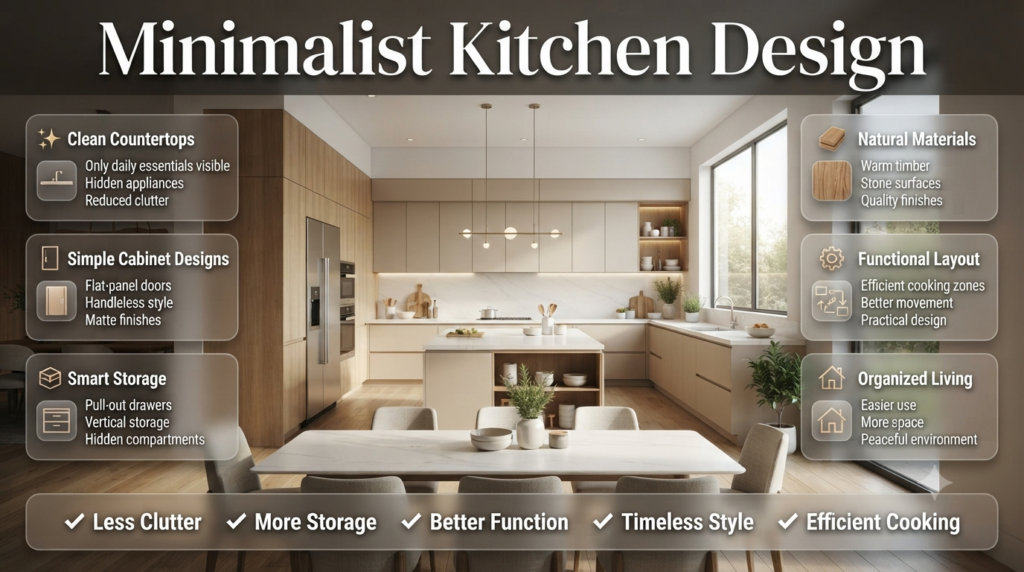
A minimalist kitchen combines clean surfaces, efficient storage, simple cabinetry, and functional layouts. It reduces unnecessary items on countertops while focusing on quality materials, smart organization, and practical cooking zones.
Modern kitchens often become cluttered because of appliances, containers, and everyday products.
Minimalist kitchen design solves this by creating organized systems.
Key Features of a Minimalist Kitchen
Clean Countertops
A minimalist kitchen keeps only frequently used items visible.
Instead of displaying everything, store:
- Small appliances
- Extra utensils
- Food containers
- Rarely used equipment
inside organized cabinets.
Simple Cabinet Designs
Popular minimalist cabinet styles include:
- Flat-panel doors
- Handleless cabinets
- Natural wood finishes
- Matte surfaces
- Neutral colors
These designs create a smooth visual appearance.
Smart Storage
Professional designers maximize storage through:
- Pull-out drawers
- Corner cabinets
- Vertical storage
- Drawer organizers
- Hidden compartments
A well-organized kitchen feels larger and easier to use.
Minimalist Bathroom Design Ideas
A minimalist bathroom uses simple layouts, clean surfaces, neutral colors, and functional storage to create a relaxing spa-like environment. The focus is on reducing clutter while maintaining comfort, practicality, and modern style.
Bathrooms benefit greatly from minimalist design because they often have limited space.
Important Features:
Floating Vanities
Floating cabinets create a sense of openness and make cleaning easier.
Simple Fixtures
Choose:
- Clean-lined faucets
- Frameless mirrors
- Minimal shower designs
- Modern lighting
Organized Storage
Avoid keeping many products visible.
Use:
- Wall cabinets
- Drawer organizers
- Built-in shelves
to maintain a clean appearance.
Minimalist Home Office Design
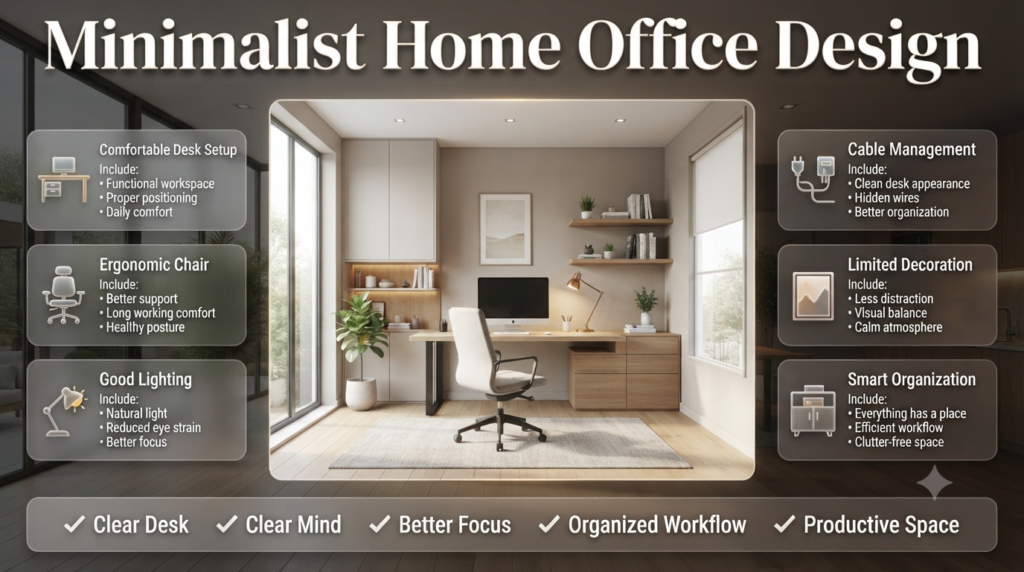
A minimalist home office improves focus by reducing distractions and creating an organized workspace. It uses functional furniture, proper lighting, clean layouts, and efficient storage to support productivity and comfort.
With more people working remotely, minimalist home offices have become increasingly valuable.
A productive workspace should include:
- Comfortable desk
- Ergonomic chair
- Good lighting
- Cable management
- Limited decoration
Avoid turning your workspace into a storage area.
A clean desk creates a clearer mindset.
Step-by-Step Guide to Creating a Minimalist Home
Step 1: Remove Unnecessary Items
What to Do:
Review each room and identify items you no longer use.
Why It Matters:
Removing clutter creates space for better organization.
Professional Advice:
Do not remove everything immediately. Start with obvious unnecessary items.
Common Mistake:
Throwing away useful items and later buying replacements.
Step 2: Define Your Essential Needs
What to Do:
Create a list of furniture and items you actually need.
Example:
Living room:
- Sofa
- Table
- Storage
- Lighting
Bedroom:
- Bed
- Wardrobe
- Nightstand
Why It Matters:
This prevents unnecessary purchases.
Step 3: Select a Simple Color Palette
What to Do:
Choose two or three main colors.
Example:
- Warm white
- Beige
- Natural wood
Why It Matters:
A limited palette creates visual harmony.
Step 4: Improve Storage Systems
What to Do:
Create a place for everything.
Use:
- Cabinets
- Baskets
- Drawers
- Hidden storage
Why It Matters:
Minimalism depends on organization, not just decoration.
Step 5: Add Meaningful Décor
What to Do:
Choose only items that add beauty or personal value.
Examples:
- Artwork
- Plants
- Handmade pieces
Why It Matters:
Personal touches prevent the home from feeling generic.
Common Minimalist Interior Design Mistakes
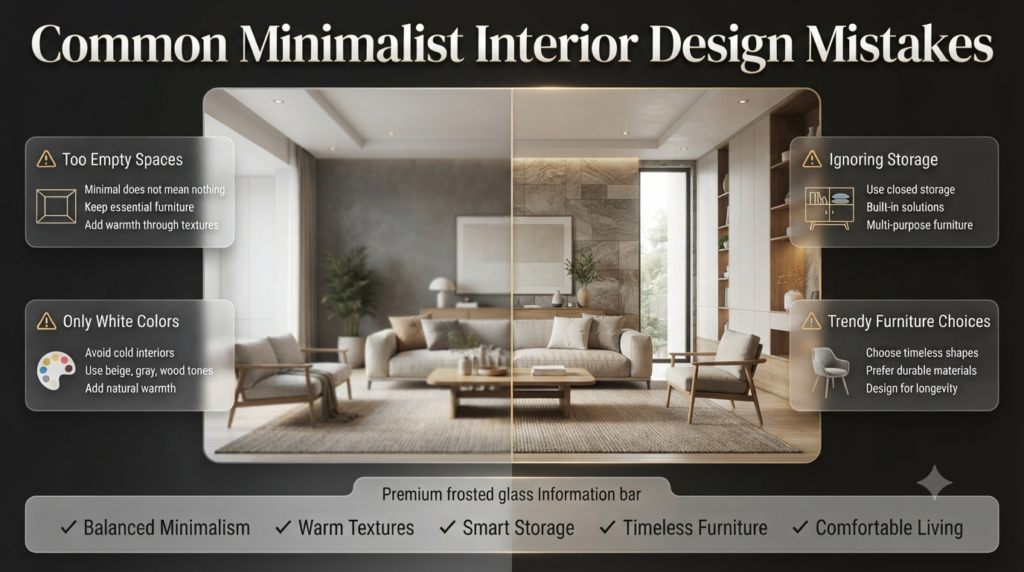
1. Making the Space Too Empty
⚠ Common Mistake: Removing too many items and creating an uncomfortable environment.
Why It Happens:
People misunderstand minimalism as having nothing.
Better Approach:
Keep essential furniture and add warmth through textures.
2. Using Only White Colors
Many beginners think minimalist means completely white interiors.
However, too much white can make a room feel cold.
Better alternatives:
- Warm beige
- Soft gray
- Natural wood tones
- Earth colors
3. Ignoring Storage
A minimalist home cannot stay organized without proper storage.
Visible clutter quickly damages the design.
Use:
- Closed cabinets
- Built-in solutions
- Multi-purpose furniture
4. Buying Trendy Furniture
Minimalist design is about longevity.
Avoid furniture that looks fashionable today but outdated tomorrow.
Choose:
- Durable materials
- Timeless shapes
- Comfortable designs
Expert Tips for Professional Minimalist Interiors
⭐ Expert Tip 1: Focus on empty space as a design element. The areas without furniture help important pieces stand out.
⭐ Expert Tip 2: Use fewer but better materials. Combining wood, stone, and fabric often creates more luxury than mixing many finishes.
⭐ Expert Tip 3: Lighting can transform a minimalist room. Use layered lighting with ceiling fixtures, lamps, and natural light.
⭐ Expert Tip 4: Personalize your minimalist home. A few meaningful items create emotional connection without creating clutter.
For homeowners who enjoy simple yet warm aesthetics, combining minimalist ideas with Modern Japandi Interior principles can create a balanced and timeless atmosphere.
Minimalist Interior Design Trends for 2026
Minimalist Interior Design trends in 2026 focus on warmer, more comfortable spaces rather than cold and empty rooms. Modern minimalism combines natural materials, sustainable choices, smart technology, curved furniture, layered textures, and personalized décor to create homes that feel simple, functional, and welcoming.
Minimalism is evolving.
Earlier versions of minimalism often focused on strict simplicity with white walls, empty surfaces, and very limited decoration. In 2026, homeowners are moving toward a softer approach known as warm minimalism.
The goal is no longer just reducing possessions. It is creating meaningful spaces that support comfort, wellness, and everyday living.
1. Warm Minimalism
Warm minimalism combines simplicity with comfort.
Instead of creating spaces that feel empty, designers are adding:
- Natural wood tones
- Soft fabrics
- Warm lighting
- Organic textures
- Handmade accessories
For example:
A minimalist living room with a beige sofa, wooden coffee table, linen curtains, and a soft rug feels more inviting than a completely white room with no personality.
2. Sustainable Materials
Sustainability is becoming a major part of modern interior choices.
Homeowners are choosing:
- Reclaimed wood
- Natural stone
- Organic fabrics
- Long-lasting furniture
- Eco-friendly finishes
The focus is on buying fewer items that last longer.
This approach supports both minimalist principles and responsible living.
3. Smart Home Integration
Technology is becoming part of minimalist design.
Modern minimalist homes often include:
- Hidden speakers
- Automated lighting
- Smart temperature control
- Wireless charging solutions
- Integrated security systems
The goal is to improve convenience without creating visible technology clutter.
4. Curved Furniture and Soft Shapes
Sharp lines are being replaced by softer forms.
Popular choices include:
- Rounded sofas
- Circular coffee tables
- Curved chairs
- Organic-shaped mirrors
These elements create a more relaxed and welcoming atmosphere.
Budget-Friendly Ways to Create a Minimalist Home
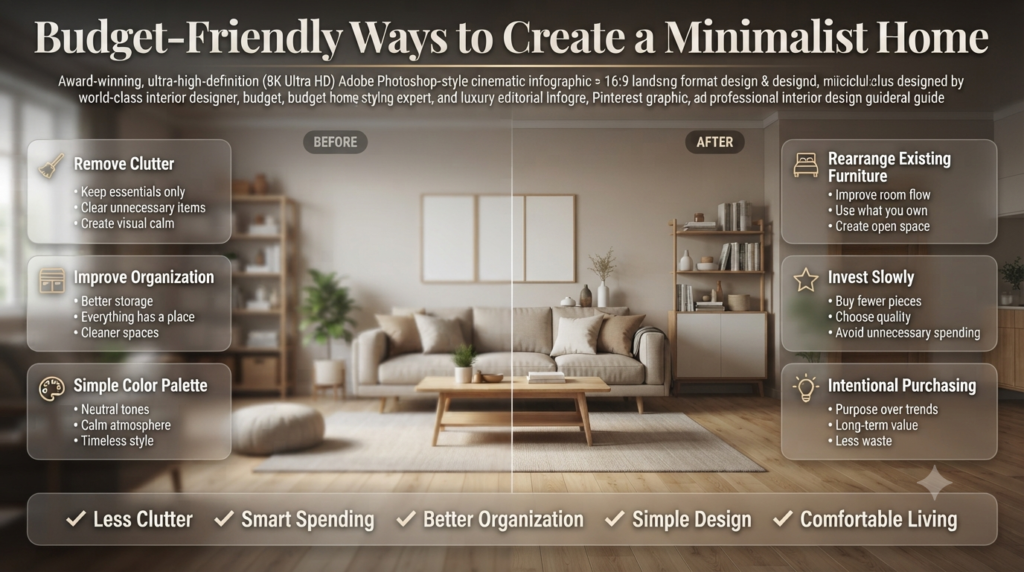
Creating a minimalist home does not require expensive furniture or a complete renovation. Homeowners can achieve a minimalist look by removing clutter, improving organization, choosing a simple color palette, rearranging existing furniture, and investing in a few high-quality pieces over time.
Many people believe minimalist interiors are expensive because they often appear in luxury homes.
In reality, minimalism can reduce costs because it encourages intentional purchasing.
1. Declutter Before Buying Anything
The first step is free.
Before purchasing new furniture or décor:
- Remove unused items
- Organize storage areas
- Donate unnecessary belongings
- Keep only meaningful pieces
A cleaner space often looks completely different without spending money.
2. Reuse Existing Furniture
You do not always need new furniture.
Consider:
- Repainting old cabinets
- Changing furniture placement
- Updating cushions
- Adding simple lighting
- Removing unnecessary accessories
Small changes can create a fresh minimalist appearance.
3. Invest Slowly
Minimalist homes are built over time.
Instead of buying everything at once:
- Choose essential furniture first
- Improve storage
- Add quality décor later
- Upgrade materials gradually
This prevents unnecessary spending.
Minimalist Interior Design Pros and Cons
| Advantages | Limitations |
|---|---|
| Creates a peaceful environment | Requires regular organization |
| Easier cleaning and maintenance | Less suitable for people who enjoy heavy decoration |
| Makes spaces appear larger | Poor planning can make rooms feel empty |
| Timeless appearance | Quality furniture can require higher investment |
| Encourages mindful purchasing | Requires careful storage solutions |
Minimalism works best when it matches your lifestyle.
A family with young children may need more practical storage solutions, while someone living alone may prefer a more open and simplified environment.
Minimalist Interior Design and Sustainability
Minimalism naturally connects with sustainable living because it encourages conscious consumption.
Instead of frequently replacing furniture and decorations, homeowners focus on:
- Durable products
- Responsible materials
- Long-term value
- Reduced waste
A minimalist home is not just visually attractive; it can also support a more thoughtful lifestyle.
Many modern homeowners combine sustainability with creative solutions through DIY Projects that improve organization and personalize their spaces.
How Minimalist Design Improves Daily Life
A well-designed minimalist home can influence everyday routines.
Better Focus
Less visual distraction can help improve concentration, especially in home offices.
Less Stress
Organized spaces often create a calmer mental environment.
Easier Cleaning
Fewer objects mean less time spent maintaining the home.
Better Decision Making
Minimalism encourages homeowners to think carefully before purchasing new items.
Expert Recommendations for Creating a Professional Minimalist Interior
Professional designers usually follow a few important principles when creating minimalist spaces.
Start With Function
Before choosing colors or decorations, understand how the room will be used.
A beautiful room that does not support daily activities will not remain practical.
Create Visual Balance
Balance does not mean everything must match.
It means:
- Furniture proportions work together
- Colors complement each other
- Empty space feels intentional
- Materials create harmony
Add Personality Carefully
A minimalist home should still tell your story.
Include:
- Family photographs
- Travel memories
- Artwork
- Handmade items
The key is selecting meaningful pieces rather than displaying everything.
Building a Complete Interior Design Vision
Minimalist design works best when every part of the home follows a consistent direction.
From choosing furniture to selecting colors and accessories, a complete approach creates better results.
Homeowners looking for professional inspiration and complete design guidance can explore DesignMode24 for more interior ideas and creative solutions.
What is Minimalist Interior Design and why is it becoming so popular?
Minimalist Interior Design is a thoughtful approach to creating beautiful spaces by focusing on simplicity, functionality, and intentional choices. Instead of filling rooms with unnecessary furniture and decorations, this design style emphasizes quality, open space, natural materials, and items that genuinely improve everyday living.
The popularity of minimalist interiors has increased because modern homeowners want homes that feel calmer, easier to maintain, and more practical. With busy lifestyles, remote work, and smaller living spaces becoming common, people are looking for environments that reduce visual clutter and create a sense of relaxation.
A well-designed minimalist home does not feel empty or boring. Professional designers create warmth through textures, lighting, natural elements, and carefully selected furniture. The goal is to remove distractions while keeping the personality and comfort of the homeowner.
Key points:
Focuses on purpose rather than excessive decoration
Creates a cleaner and more organized living environment
Uses fewer but better-quality furniture pieces
Supports modern lifestyles and wellness
Works well for apartments, villas, and family homes
How can I make my home look minimalist without making it feel cold or empty?
Creating a minimalist home does not mean removing everything or designing a completely white space. A common misconception is that minimalism requires a bare and uncomfortable environment. In reality, professional minimalist interiors focus on balance—keeping spaces simple while adding warmth and personality.
The secret is combining clean design with comfortable elements. Neutral colors, soft fabrics, wooden finishes, indoor plants, layered lighting, and meaningful décor can make a minimalist room feel welcoming.
Instead of displaying many small decorative items, choose a few pieces that create impact. For example, one large artwork, a textured rug, or a statement light fixture can add character without creating clutter.
Key points:
Use warm neutral colors instead of only bright white
Add texture through wood, linen, wool, and natural materials
Keep meaningful decorations instead of removing all décor
Use layered lighting to create a comfortable atmosphere
Choose furniture based on comfort and function
What furniture should I choose for a minimalist interior design?
Furniture selection plays one of the biggest roles in achieving a successful minimalist interior. The right furniture should combine comfort, functionality, durability, and a simple appearance.
Minimalist design does not mean buying cheap or basic furniture. Instead, it encourages homeowners to invest in fewer pieces that provide long-term value. A high-quality sofa, a durable dining table, or a well-designed storage unit can become the foundation of the entire room.
Professional designers usually recommend furniture with clean lines, neutral colors, and practical features. Multi-functional furniture is especially useful for smaller homes because it maximizes available space without creating clutter.
Key points:
Choose furniture with simple shapes and timeless designs
Prioritize comfort and durability over trends
Use multi-purpose furniture where possible
Avoid oversized pieces that make rooms feel crowded
Select materials that age well, such as wood, leather, and natural fabrics
What colors work best for Minimalist Interior Design?
The best colors for Minimalist Interior Design are soft, neutral, and calming shades that create a balanced atmosphere. Popular choices include white, beige, cream, taupe, gray, and earthy tones.
However, modern minimalist interiors are moving beyond plain white spaces. In 2026, designers are increasingly using warmer tones, natural colors, and subtle contrasts to create homes that feel more comfortable and personal.
Color should support the overall feeling of the room. For example, warm beige and wood tones can create a cozy living room, while soft gray and natural textures can create a sophisticated bedroom environment.
Key points:
Use neutral colors as the main foundation
Add contrast through darker accents or natural materials
Avoid too many competing colors
Consider natural lighting before choosing paint shades
Use textures to create depth instead of adding more colors
Is Minimalist Interior Design suitable for small homes and apartments?
Minimalist Interior Design is one of the most effective styles for small homes because it improves space efficiency and organization. By removing unnecessary items and choosing functional furniture, even a compact apartment can feel larger, brighter, and more comfortable.
Small spaces often feel crowded because of poor layouts, excessive furniture, and limited storage. Minimalist principles solve these problems by focusing on smart planning, open areas, and practical storage solutions.
For example, a small apartment can benefit from a storage bed, floating shelves, a compact dining table, and a simple color palette. These choices create a spacious feeling without requiring major renovations.
Key points:
Reduces visual clutter in limited spaces
Improves movement and functionality
Makes rooms appear larger and brighter
Encourages smarter furniture choices
Helps maintain an organized lifestyle
Conclusion: Minimalist Interior Design
Minimalist Interior Design is not simply about having fewer items in your home; it is about creating a space where every element has meaning, purpose, and value. A successful minimalist interior combines simplicity with comfort, allowing homeowners to enjoy a more organized, peaceful, and functional living environment.
The beauty of minimalism comes from thoughtful choices. Instead of following short-term trends, this design approach focuses on timeless furniture, neutral colors, natural materials, smart storage, and layouts that support everyday life. Whether you are designing a large house or a small apartment, minimalist principles can help you create a home that feels spacious, balanced, and welcoming.
Modern minimalist homes in 2026 are also becoming warmer and more personalized. Designers are combining clean aesthetics with sustainable materials, smart technology, soft textures, and meaningful décor to create interiors that feel both stylish and comfortable.
The key is to remember that minimalism does not mean removing personality from your home. It means removing unnecessary distractions so the things that truly matter can stand out.
By focusing on quality over quantity, functionality over decoration, and intention over impulse, you can create a home that is easier to maintain, more enjoyable to live in, and beautifully aligned with your lifestyle.
A well-designed minimalist space is not just visually attractive—it creates a better way of living.

Leave a Reply