
Introduction: Why Scandinavian Interior Design Is Becoming So Popular
Many homeowners face the same challenge: their homes look expensive, yet they still feel uncomfortable, crowded, or difficult to maintain. Too much decoration, poor furniture choices, and unnecessary clutter can make a space feel stressful instead of relaxing.
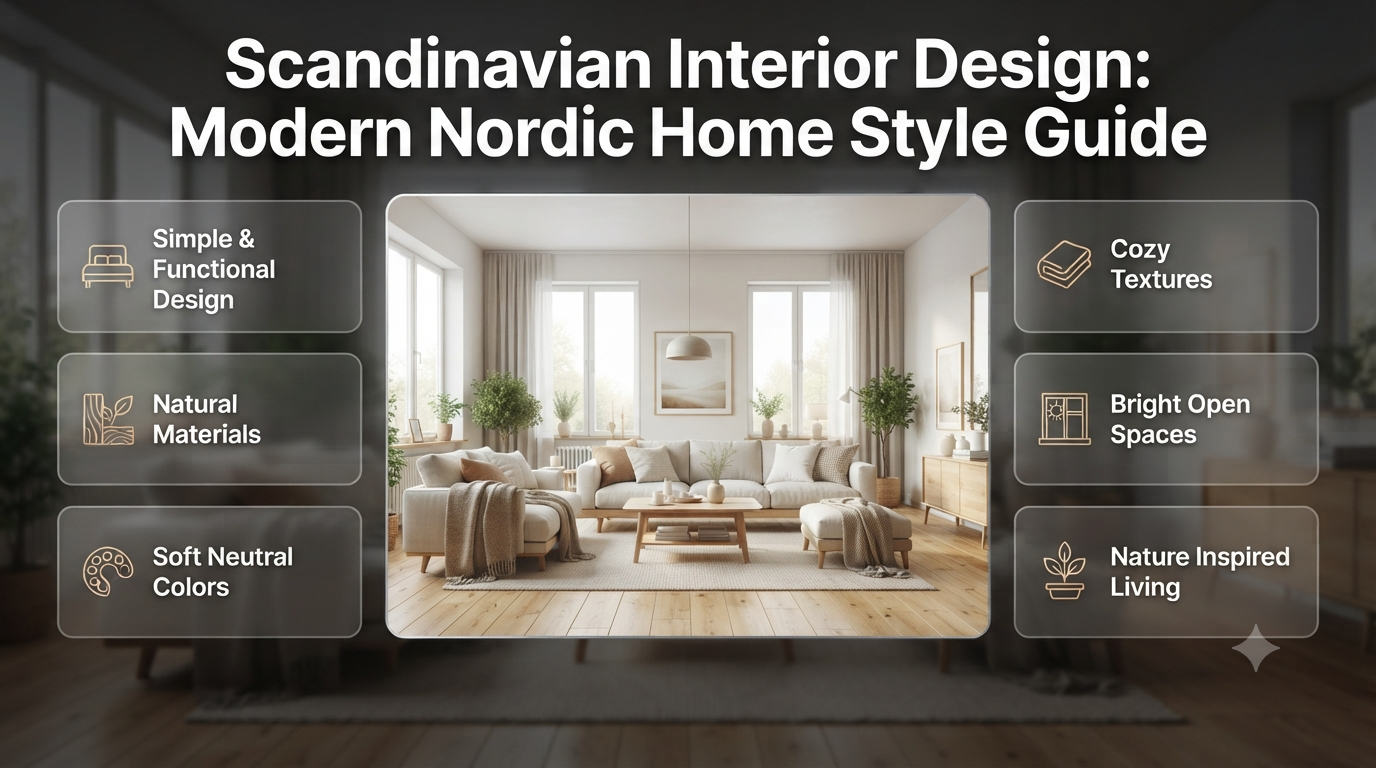
This is why Scandinavian Interior Design has become one of the most loved interior styles worldwide. It focuses on creating homes that feel peaceful, practical, bright, and connected to nature. Instead of filling rooms with unnecessary items, Scandinavian design carefully selects elements that improve comfort and everyday living.
Originating from Nordic countries such as Denmark, Sweden, Norway, and Finland, this design style combines simplicity with warmth. It uses natural materials, soft colors, functional furniture, and cozy textures to create spaces that are both beautiful and practical.
In this guide, you will learn:
- What Scandinavian Interior Design really means
- The main principles behind Nordic home design
- How to choose colors, furniture, lighting, and décor
- How to apply Scandinavian style in different rooms
- Common mistakes homeowners should avoid
- Expert tips for creating a balanced Scandinavian home
Whether you are designing a new house or refreshing a small apartment, Scandinavian design can help you create a more comfortable and timeless environment.
What Is Scandinavian Interior Design?
Scandinavian Interior Design is a decorating approach that combines simplicity, functionality, natural materials, and cozy comfort to create bright and peaceful living spaces. It focuses on clean designs, neutral colors, practical furniture, and a strong connection with nature.
Unlike decorative styles that focus mainly on luxury and visual impact, Scandinavian design focuses on how a home feels and functions. Every piece should have a purpose while contributing to a calm atmosphere.
The style developed in Nordic regions where long winters and limited daylight influenced people to design interiors that maximize brightness, warmth, and comfort.
A Scandinavian-style home commonly includes:
- Neutral and soft color palettes
- Natural wood elements
- Comfortable textiles
- Minimal clutter
- Functional furniture
- Simple decorations
- Layered lighting
The goal is not to create an empty or boring space. Instead, Scandinavian design creates a balanced home where every item feels intentional.
💡 Pro Tip: Scandinavian design is not about removing everything from your home. It is about keeping only the things that bring value, comfort, or beauty to your daily life.
The Philosophy Behind Scandinavian Interior Design
Simplicity With Purpose
The foundation of Scandinavian design is the idea of “less but better.” This means choosing fewer items but investing in pieces that offer better quality, comfort, and long-term usefulness.
For example, instead of purchasing multiple decorative furniture pieces that have no practical purpose, Scandinavian interiors focus on one high-quality item that improves the room.
This approach helps create:
- Cleaner spaces
- Better organization
- Easier maintenance
- A more relaxing environment
A Scandinavian home should feel naturally organized rather than overly designed.
Functionality Comes Before Decoration
One of the most important principles of Scandinavian Interior Design is that function comes before appearance.
Furniture should not only look attractive but should also support everyday activities.
Examples include:
- Storage beds for small bedrooms
- Comfortable sofas for daily relaxation
- Extendable dining tables for flexible use
- Floating shelves for organized storage
- Multi-purpose furniture for apartments
This makes Scandinavian design especially useful for modern homes where space efficiency is important.
⭐ Expert Tip: Before adding any furniture, consider how it improves your lifestyle. A beautiful item that creates inconvenience does not match Scandinavian principles.
Key Elements of Scandinavian Interior Design
1. Neutral Color Palette
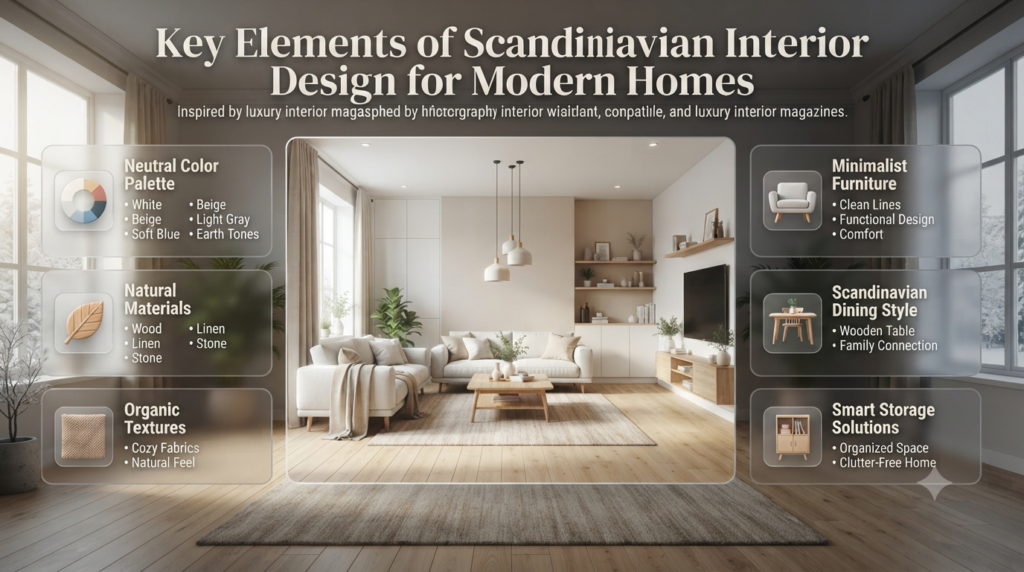
One of the most recognizable features of Scandinavian homes is the use of calm, neutral colors.
Popular Scandinavian color choices include:
| Color | How It Works in Scandinavian Design |
|---|---|
| White | Reflects natural light and makes rooms feel open |
| Beige | Adds warmth and softness |
| Light Gray | Creates a modern and elegant appearance |
| Soft Blue | Brings a peaceful Nordic feeling |
| Earth Tones | Connect interiors with nature |
Traditional Scandinavian interiors often use white walls because Nordic countries experience limited sunlight during winter. Light colors help make rooms brighter and more welcoming.
However, modern Scandinavian design is not limited to plain white. Designers often combine neutral backgrounds with warmer tones, wooden textures, and natural fabrics.
For more inspiration on selecting suitable interior colors, explore Paint Color ideas for different home styles.
📌 Quick Tip: If your room feels cold with neutral colors, add warmth through wood, soft textiles, and natural decorations instead of adding too many bright colors.
2. Natural Materials and Organic Textures
Scandinavian design has a strong connection with nature. Natural materials bring warmth and balance to spaces that use simple colors and clean designs.
Common materials include:
- Light-colored wood
- Linen
- Cotton
- Wool
- Stone
- Leather
- Rattan
Wood is one of the most important elements because it prevents Scandinavian interiors from feeling too cold or empty.
You can use wood through:
- Flooring
- Dining tables
- Shelves
- Cabinets
- Decorative accessories
A combination of white walls, wooden surfaces, and soft fabrics creates the classic Scandinavian atmosphere.
📌 Quick Tip: When a room feels too plain, add texture before adding more decoration. A wool rug, linen curtains, or wooden accessories can create a major improvement.
3. Scandinavian Furniture Style
Scandinavian furniture is famous for its simple appearance, comfort, and practical design.
Typical characteristics include:
- Clean lines
- Smooth finishes
- Functional shapes
- Natural materials
- Comfortable structure
Unlike traditional luxury furniture that focuses heavily on decoration, Scandinavian furniture creates beauty through simplicity.
Scandinavian Sofas
A Scandinavian sofa usually features:
- Neutral fabric colors
- Soft cushions
- Comfortable seating
- Minimal frames
The purpose is to create a relaxing area where people can spend quality time.
Scandinavian Dining Furniture
Dining spaces are extremely important in Nordic homes because meals are often considered moments for family connection.
Common features include:
- Wooden dining tables
- Comfortable chairs
- Simple pendant lighting
- Minimal table decoration
Smart Storage Furniture
Storage plays a major role because Scandinavian homes avoid visual clutter.
Popular solutions include:
- Built-in cabinets
- Storage benches
- Floating shelves
- Closed wardrobes
Good storage keeps the home organized while maintaining a clean appearance.
Scandinavian Interior Design vs Minimalist Interior Design
Many people believe Scandinavian and minimalist interiors are the same because both styles value simplicity. However, their approach is different.
| Feature | Scandinavian Design | Minimalist Design |
|---|---|---|
| Main Goal | Comfort and functionality | Reducing unnecessary elements |
| Overall Feeling | Warm and inviting | Clean and controlled |
| Materials | Wood, wool, linen, natural textures | Glass, metal, smooth surfaces |
| Colors | Soft neutrals with warmth | Mostly monochrome shades |
| Decoration | Minimal but cozy | Very limited |
Scandinavian design allows personality and comfort while maintaining a simple appearance.
If you prefer clean and organized spaces, you can also explore Minimalist Interior Design ideas for additional inspiration.
The Role of Hygge in Scandinavian Homes
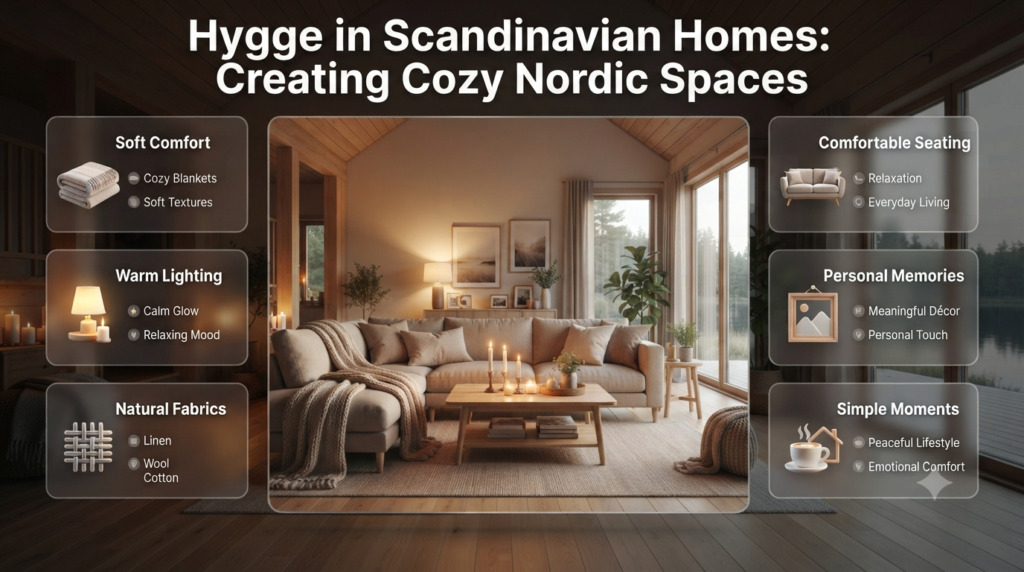
A major concept connected with Scandinavian interiors is Hygge, a Danish lifestyle philosophy focused on comfort, relaxation, and enjoying simple moments.
Although Hygge is not exactly an interior design style, it strongly influences Scandinavian homes.
Hygge-inspired elements include:
- Soft blankets
- Comfortable seating
- Warm lighting
- Candles
- Natural fabrics
- Personal memories
The purpose is to create a home that feels emotionally comfortable, not just visually attractive.
A Scandinavian living room should look beautiful, but more importantly, it should feel like a place where you enjoy spending time.
Scandinavian Lighting: Creating a Bright and Cozy Atmosphere
Lighting is one of the most important parts of Scandinavian Interior Design.
Because Nordic countries experience darker seasons, Scandinavian homes carefully use lighting to create warmth and brightness.
Natural Lighting
Maximizing natural light is a key priority.
Common techniques include:
- Using light curtains
- Keeping windows visually open
- Avoiding heavy dark fabrics
- Using reflective surfaces carefully
Artificial Lighting
Instead of depending on one ceiling light, Scandinavian homes use multiple light sources.
Examples:
- Floor lamps
- Table lamps
- Pendant lights
- Wall lights
- Decorative candles
This creates layered lighting and makes rooms feel warmer.
⚠ Common Mistake: Using only bright white lighting can make a Scandinavian room feel uncomfortable and cold. Warm lighting usually creates a more relaxing atmosphere.
Scandinavian Interior Design Ideas for Every Room
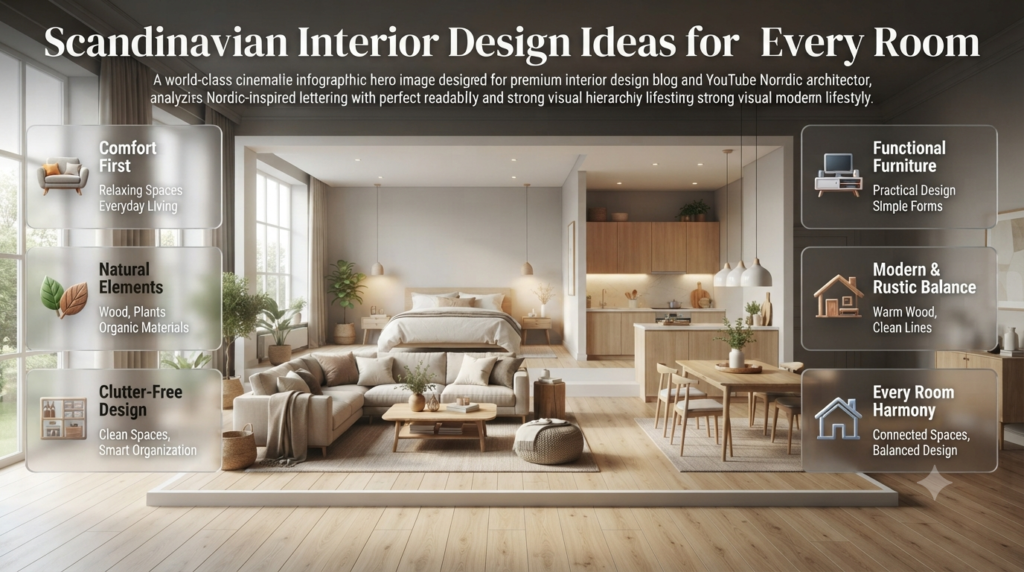
Scandinavian Interior Design works because it is adaptable. Whether you have a large family home, a compact apartment, or a modern villa, the same principles can be applied: create comfort, remove unnecessary clutter, use natural elements, and design every space around real-life needs.
The best Scandinavian interiors do not look identical. Some homes may feel warm and rustic with more wood, while others may look modern with cleaner lines and fewer decorations. The key is maintaining balance between simplicity and comfort.
Scandinavian Living Room Design: Creating a Warm and Relaxing Space
A Scandinavian living room combines comfortable furniture, natural textures, soft colors, and practical layouts to create a peaceful area for relaxation and social connection. The focus is on comfort without excessive decoration.
The living room is often the heart of a Scandinavian home. It should feel welcoming, functional, and easy to live in.
Key Features of a Scandinavian Living Room
1. Comfortable Neutral Sofa
The sofa is usually the main element of the room. Scandinavian sofas often feature:
- Beige, gray, cream, or soft earth-tone fabrics
- Clean shapes
- Deep comfortable seating
- Minimal decorative details
The purpose is not to create a formal showroom appearance. It is to create a space where people naturally gather.
2. Layered Textures
Because Scandinavian colors are often simple, textures add personality.
Popular choices include:
- Wool blankets
- Knitted cushions
- Linen curtains
- Soft area rugs
- Natural fiber accessories
These elements prevent neutral interiors from feeling boring.
3. Simple Decorative Pieces
Scandinavian décor follows the principle of intentional styling.
Good examples:
- Ceramic vases
- Indoor plants
- Wooden bowls
- Handmade accessories
- Minimal artwork
Avoid filling every empty surface. Empty space is also part of the design.
💡 Pro Tip: Instead of adding many small decorations, choose a few meaningful pieces that reflect your personality.
Scandinavian Bedroom Design: A Calm Space for Better Rest
A Scandinavian bedroom focuses on relaxation through soft colors, natural materials, comfortable bedding, and clutter-free organization. The goal is to create a peaceful environment that supports rest and comfort.
Bedrooms designed in Scandinavian style often feel like a personal retreat.
Essential Scandinavian Bedroom Elements
Soft and Natural Bedding
The bed is usually styled with:
- Linen sheets
- Cotton blankets
- Layered throws
- Neutral-colored pillows
Natural fabrics create a comfortable and breathable sleeping environment.
Minimal Furniture
A Scandinavian bedroom usually avoids unnecessary furniture.
Common furniture choices:
- Simple wooden bed frames
- Small bedside tables
- Functional wardrobes
- Open shelves
Too much furniture can reduce the peaceful feeling of the room.
Warm Bedroom Lighting
Instead of harsh overhead lighting, Scandinavian bedrooms use:
- Bedside lamps
- Soft pendant lights
- Warm wall lights
This creates a relaxing atmosphere before sleep.
⭐ Expert Tip: A Scandinavian bedroom should feel calm within seconds of entering. If the room feels visually busy, remove items before adding new ones.
Scandinavian Kitchen Design: Functional Beauty
A Scandinavian kitchen combines practical layouts, natural materials, clean cabinets, and smart organization to create a space that is efficient, bright, and welcoming.
The kitchen is one of the strongest areas where Scandinavian design principles appear.
Common Scandinavian Kitchen Features
Light-Colored Cabinets
Popular cabinet colors include:
- White
- Soft gray
- Beige
- Natural wood tones
These colors make kitchens feel larger and brighter.
Open Shelving
Open shelves are common because they provide easy access while adding visual warmth.
They can display:
- Ceramic dishes
- Wooden cutting boards
- Glass containers
- Plants
However, they should be carefully organized.
⚠ Common Mistake: Too many items on open shelves can create clutter. Scandinavian kitchens require controlled styling.
Natural Countertop Materials
Common choices include:
- Wood
- Stone
- Quartz with natural appearance
These materials add durability and warmth.
Scandinavian Bathroom Design: Clean and Spa-Like
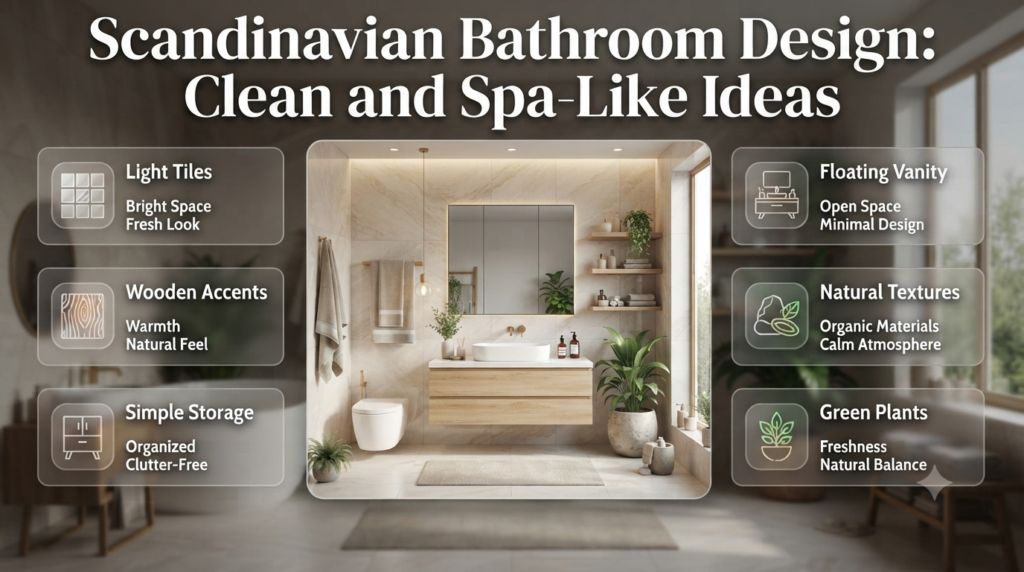
Scandinavian bathrooms focus on simplicity, functionality, and a fresh atmosphere.
Common elements include:
- Light tiles
- Wooden accents
- Simple storage solutions
- Natural textures
- Minimal accessories
A Scandinavian bathroom should feel organized and relaxing rather than crowded.
Practical Scandinavian Bathroom Ideas
Use:
- Floating vanities to create openness
- Wooden shelves for warmth
- Neutral towels
- Green plants for freshness
Small bathrooms can especially benefit from Scandinavian design because the style naturally improves visual space.
Scandinavian Home Office Design
Modern lifestyles have increased the importance of comfortable home workspaces.
A Scandinavian home office focuses on productivity without creating a stressful environment.
Important Elements
Functional Desk
Choose:
- Simple wooden desks
- Comfortable chairs
- Minimal accessories
Organized Storage
Avoid visible clutter by using:
- Drawers
- Cabinets
- Storage boxes
Natural Inspiration
Adding:
- Plants
- Wooden accessories
- Natural lighting
can improve the overall atmosphere.
You can explore more workspace and organization ideas through Home Styling inspiration.
Scandinavian Design for Small Spaces
One reason Scandinavian style is popular among apartment owners is that it works extremely well in limited spaces.
Small homes often struggle with:
- Lack of storage
- Poor lighting
- Overcrowded furniture
- Limited movement space
Scandinavian solutions focus on making every area useful.
Small Space Strategies
1. Choose Multi-Functional Furniture
Examples:
- Storage beds
- Foldable dining tables
- Modular sofas
- Hidden storage cabinets
2. Use Light Colors
Neutral colors create the feeling of a larger room by reflecting light.
3. Keep Visual Clutter Low
Instead of displaying everything:
- Store unnecessary items
- Use closed cabinets
- Keep surfaces clean
4. Use Vertical Space
Make better use of walls through:
- Tall shelves
- Wall-mounted storage
- Hanging plants
📌 Quick Tip: In small Scandinavian homes, every object should either serve a purpose or create beauty.
Scandinavian Décor Ideas: How to Add Personality Without Clutter
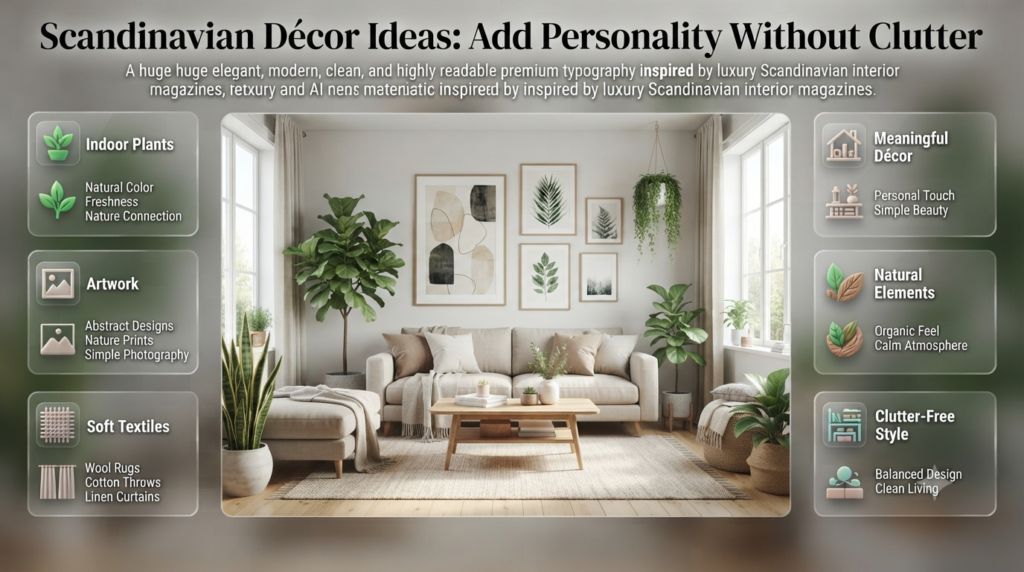
A common misunderstanding is that Scandinavian homes are completely plain. In reality, Scandinavian décor focuses on meaningful simplicity.
Popular Scandinavian Décor Elements
Indoor Plants
Plants add:
- Natural color
- Freshness
- Connection with nature
Popular choices:
- Fiddle leaf fig
- Snake plants
- Small herbs
- Hanging plants
Artwork
Scandinavian artwork usually includes:
- Abstract designs
- Nature-inspired prints
- Simple photography
- Neutral illustrations
Rugs and Textiles
Soft textiles create warmth.
Use:
- Wool rugs
- Cotton throws
- Linen curtains
These elements make minimal spaces feel comfortable.
Scandinavian Interior Design Materials Guide
Choosing the right materials is essential because Scandinavian design depends heavily on natural beauty.
| Material | How It Is Used | Benefit |
|---|---|---|
| Wood | Floors, furniture, shelves | Adds warmth |
| Linen | Curtains, cushions | Creates softness |
| Wool | Rugs, blankets | Improves comfort |
| Stone | Countertops, accessories | Adds durability |
| Leather | Chairs, small details | Provides character |
| Rattan | Decorative furniture | Creates natural texture |
The combination of these materials creates a balanced Nordic atmosphere.
Scandinavian vs Japandi Interior Design
Scandinavian and Japandi styles are closely related because both value simplicity, natural materials, and calm spaces.
However, there are differences:
| Feature | Scandinavian | Japandi |
|---|---|---|
| Origin | Nordic countries | Japan + Scandinavia combination |
| Feeling | Bright and cozy | Calm and minimalist |
| Colors | Light neutrals | Deeper earth tones |
| Furniture | Functional and comfortable | Low-profile and refined |
| Decoration | Simple cozy elements | More intentional minimalism |
If you like the peaceful combination of Japanese and Scandinavian design, explore Japandi Interior Design ideas for inspiration.
How to Create Scandinavian Interior Design Step by Step
Step 1: Declutter Your Space
What to do: Remove unnecessary items.
Why it matters: Scandinavian design depends on openness and simplicity.
Professional advice: Do not remove everything. Keep items that are useful or emotionally valuable.
Common mistake: Throwing away personal items and creating a cold-looking home.
Step 2: Select a Neutral Base Color
What to do: Choose whites, beige, soft gray, or warm neutral tones.
Why it matters: These colors create a calm foundation.
Professional advice: Add warmth through textures rather than strong colors.
Step 3: Add Natural Materials
What to do: Introduce wood, linen, wool, and plants.
Why it matters: Natural materials create balance and comfort.
Professional advice: A few high-quality natural pieces are better than many artificial decorations.
Step 4: Improve Lighting
What to do: Combine natural light with layered artificial lighting.
Why it matters: Lighting controls the mood of Scandinavian interiors.
Professional advice: Use warm bulbs for cozy evenings.
Step 5: Add Personal Details
What to do: Include meaningful artwork, books, plants, and accessories.
Why it matters: A home should reflect the people living there.
Professional advice: Scandinavian design should feel personal, not like a furniture showroom.
Common Mistakes to Avoid in Scandinavian Interior Design
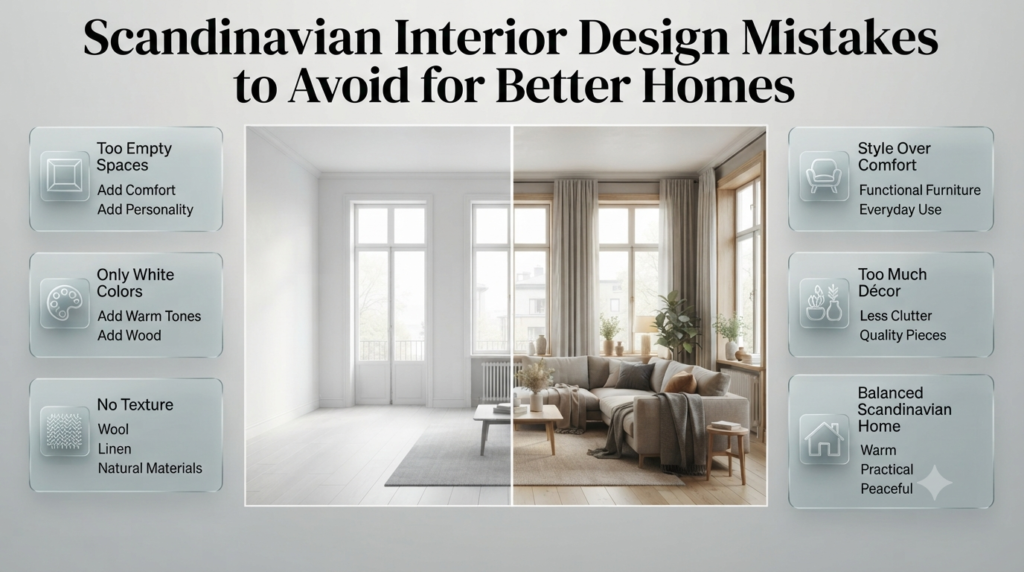
Scandinavian Interior Design looks simple, but creating a balanced Scandinavian home requires careful planning. Many beginners misunderstand the style and focus only on white colors and minimal furniture. As a result, their homes can feel cold, empty, or unfinished.
Understanding common mistakes helps you create a Scandinavian-inspired space that feels warm, practical, and comfortable.
1. Making the Space Too Empty
One of the biggest mistakes people make is confusing Scandinavian design with an empty room.
Scandinavian interiors are not about removing everything. They are about keeping only meaningful and useful elements.
Why This Mistake Happens
Many homeowners think:
“Minimal design means fewer objects.”
While this is partly true, Scandinavian style also values:
- Comfort
- Personality
- Warmth
- Everyday usability
Why It Can Be a Problem
A completely empty room may feel:
- Cold
- Uncomfortable
- Unfinished
- Less personal
How to Avoid It
Add:
- Soft textiles
- Indoor plants
- Personal artwork
- Books
- Warm lighting
The goal is a calm home, not a lifeless space.
2. Using Only White Colors
White is an important part of Scandinavian interiors, but using only white can create a harsh appearance.
Better Approach
Combine white with:
- Beige tones
- Warm gray
- Natural wood
- Soft brown shades
- Green plants
This creates the balance between brightness and warmth.
⚠ Common Mistake: Creating a completely white room without texture can make the space feel like a showroom instead of a comfortable home.
3. Ignoring Texture
Because Scandinavian design uses simple colors, texture becomes extremely important.
Without texture, neutral interiors can feel flat.
Add Texture Through:
- Wool blankets
- Linen curtains
- Cotton cushions
- Wooden furniture
- Natural rugs
A room with multiple textures feels richer without adding visual clutter.
4. Choosing Style Over Comfort
Some homeowners focus too much on creating a beautiful Instagram-style Scandinavian home.
However, authentic Scandinavian design is built around everyday comfort.
Before buying furniture, consider:
- Is it comfortable?
- Is it practical?
- Will I use it regularly?
- Does it improve my lifestyle?
A beautiful chair that nobody wants to sit on does not match Scandinavian principles.
⭐ Expert Tip: Scandinavian homes are designed for living, not just for looking attractive in photographs.
5. Adding Too Many Decorative Items
Scandinavian décor is intentional.
A common mistake is adding too many:
- Vases
- Candles
- Frames
- Accessories
- Small decorative objects
This creates visual noise and removes the peaceful feeling.
Better Method:
Choose fewer but better-quality pieces.
For example:
Instead of:
- 10 small decorations
Choose:
- One beautiful ceramic vase
- One artwork piece
- One indoor plant
Quality creates more impact than quantity.
Scandinavian Interior Design Trends in 2026
Modern Scandinavian interiors are evolving while keeping their traditional principles.
The latest trends focus on comfort, sustainability, and personalized spaces.
1. Warm Scandinavian Color Palettes
While classic Scandinavian homes used mainly white and gray, modern designs are introducing warmer colors.
Popular choices include:
- Sand beige
- Soft clay
- Warm taupe
- Olive green
- Natural brown
These shades create a more welcoming atmosphere.
For more inspiration, explore Home Design Ideas for modern interior concepts.
2. Sustainable and Eco-Friendly Materials
Sustainability has become an important part of modern Scandinavian design.
Homeowners are choosing:
- Reclaimed wood
- Natural fabrics
- Handmade furniture
- Long-lasting materials
The focus is shifting from buying more items to choosing better-quality products.
3. Biophilic Scandinavian Design
Modern Scandinavian interiors increasingly connect indoor spaces with nature.
This includes:
- More indoor plants
- Natural ventilation
- Organic shapes
- Wooden surfaces
- Nature-inspired colors
This approach creates healthier and more relaxing homes.
4. Personalized Minimalism
Modern Scandinavian homes are becoming more personal.
Instead of following strict rules, homeowners now combine Scandinavian principles with their own lifestyle.
Examples:
- Family photographs
- Travel memories
- Handmade accessories
- Favorite books
The result is a home that feels authentic.
Expert Advice: How Professionals Create Better Scandinavian Interiors
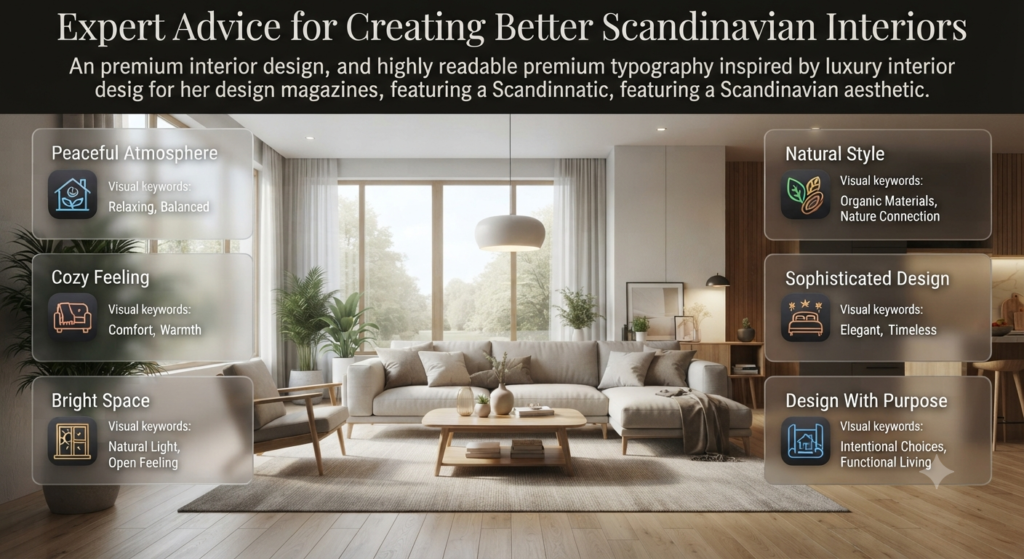
Interior professionals usually focus on balance rather than following trends.
Here are practical recommendations designers use:
1. Start With the Feeling You Want to Create
Before choosing furniture or colors, decide the atmosphere.
Ask yourself:
- Should the room feel peaceful?
- Cozy?
- Bright?
- Natural?
- Sophisticated?
The design choices should support that feeling.
2. Invest in Quality Foundation Pieces
You do not need expensive furniture everywhere.
Instead, prioritize important pieces:
- Sofa
- Dining table
- Bed
- Lighting fixtures
A few quality items create a stronger impact than many low-quality decorations.
3. Create Balance Between Hard and Soft Elements
A successful Scandinavian room combines different materials.
Example:
Hard elements:
- Wood flooring
- Stone surfaces
- Metal lighting
Soft elements:
- Rugs
- Cushions
- Curtains
- Blankets
This balance creates visual comfort.
4. Use Lighting as a Design Tool
Professional designers rarely depend on one light source.
They combine:
- Ceiling lighting
- Floor lamps
- Table lamps
- Decorative lighting
This creates different moods throughout the day.
Scandinavian Interior Design Budget Guide
Creating a Scandinavian home does not require a huge budget.
Smart choices can achieve the same feeling.
| Budget Level | Focus Areas |
|---|---|
| Low Budget | Decluttering, paint updates, textiles, plants |
| Medium Budget | Furniture upgrades, lighting, storage solutions |
| Higher Budget | Custom furniture, premium materials, full renovation |
Affordable Scandinavian Design Ideas
You can create Scandinavian style by:
Changing Wall Colors
Use:
- Warm white
- Soft beige
- Light gray
Adding Textiles
Affordable improvements include:
- Cushion covers
- Rugs
- Throws
- Curtains
Improving Organization
Use:
- Storage baskets
- Shelves
- Hidden storage
Bringing Nature Indoors
Plants are one of the easiest ways to add Scandinavian character.
What Are the Main Principles of Scandinavian Interior Design?
Scandinavian Interior Design is based on three core principles: simplicity, functionality, and comfort. The style focuses on creating homes that are visually calm while supporting everyday living. Instead of adding unnecessary decorations, Scandinavian design carefully selects furniture, colors, and materials that improve the overall experience of a space.
The main idea is to create a home that feels open, organized, and connected with nature. Neutral colors, natural materials, smart storage solutions, and comfortable furniture work together to create a balanced environment.
Unlike extremely minimal interiors that may feel empty, Scandinavian homes maintain warmth through textures, lighting, plants, and personal elements. Every item should have a purpose while still contributing to the beauty of the room.
Key elements include:
Neutral and soft color palettes
Natural wood and organic materials
Functional furniture designs
Clean layouts with less clutter
Warm and layered lighting
Cozy textiles like wool and linen
Personal décor that adds character
A successful Scandinavian interior is not about following strict rules; it is about creating a peaceful home that feels practical, comfortable, and timeless.
How Can I Make My Home Look Scandinavian Without a Complete Renovation?
Creating a Scandinavian-inspired home does not require expensive remodeling or replacing all your furniture. Small, thoughtful changes can transform the atmosphere of your home while keeping your existing layout and budget in mind.
The easiest way to achieve this style is by improving the foundation of your space. Start by reducing unnecessary clutter, introducing lighter colors, and adding natural textures. Scandinavian design focuses more on balance and organization than expensive products.
For example, replacing heavy curtains with lighter fabrics, adding a wooden coffee table, using neutral cushions, or bringing indoor plants can immediately create a Nordic-inspired feeling.
Simple Scandinavian updates include:
Paint walls with warm white, beige, or light gray tones
Add linen curtains or cotton textiles
Replace excessive décor with meaningful pieces
Introduce wooden accessories
Use warm lighting instead of harsh bright lights
Organize storage areas to reduce visual clutter
The goal is not to make your home look like a showroom. A true Scandinavian interior should feel natural, lived-in, and comfortable for daily life.
What Colors Are Best for Scandinavian Interior Design?
The most popular colors in Scandinavian Interior Design are soft neutrals and nature-inspired shades. These colors help create bright, relaxing spaces while making rooms feel larger and more welcoming.
Traditional Scandinavian homes often use white because Nordic countries experience long periods with limited natural sunlight. However, modern Scandinavian design has expanded beyond plain white interiors by introducing warmer tones that create more personality.
Popular Scandinavian color combinations include:
White + natural wood for a classic Nordic look
Beige + cream for a warm and cozy atmosphere
Light gray + soft blue for a calm modern style
Earth tones + green plants for a natural feeling
Warm taupe + wooden textures for an elegant appearance
When selecting colors, the important factor is maintaining harmony. Strong, bright colors can be used as accents, but the overall atmosphere should remain peaceful and balanced.
Professional color tips:
Use warm neutrals instead of cold shades to avoid a harsh feeling
Combine different textures to add depth
Use plants and natural materials to introduce organic colors
Avoid using too many competing colors in one room
A Scandinavian color palette should make the home feel calm, comfortable, and connected with nature.
What Furniture Works Best in a Scandinavian-Style Home?
Scandinavian furniture is designed around comfort, simplicity, and practicality. The best furniture choices are pieces that look elegant but also support everyday activities.
Unlike traditional furniture styles that often focus on decorative details, Scandinavian furniture uses clean lines and high-quality materials. The beauty comes from craftsmanship, proportion, and functionality.
Ideal Scandinavian furniture features:
Simple shapes
Natural wood finishes
Neutral upholstery
Comfortable designs
Multi-purpose functionality
Popular choices include:
Wooden dining tables
Soft fabric sofas
Minimal bedside tables
Functional storage cabinets
Comfortable lounge chairs
For small homes, Scandinavian furniture is especially useful because many pieces are designed with space efficiency in mind. Storage beds, modular sofas, and compact dining solutions help maintain an organized environment.
When choosing furniture, consider:
Does it improve daily comfort?
Does it provide practical value?
Does it match the overall color palette?
Will it remain useful for many years?
The best Scandinavian furniture is not necessarily the most expensive—it is the furniture that combines beauty, comfort, and purpose.
Is Scandinavian Interior Design Still Popular and Trending in 2026?
Yes, Scandinavian Interior Design continues to remain one of the most influential interior styles because its principles match modern lifestyle needs. In 2026, homeowners are increasingly looking for spaces that feel peaceful, sustainable, functional, and comfortable.
Many current design trends focus on creating homes that support mental well-being and everyday comfort. Scandinavian design naturally fits these preferences because it reduces clutter, improves organization, and creates stronger connections with natural elements.
Modern Scandinavian trends include:
Warm neutral color palettes
Sustainable materials
Handmade décor
Natural wood finishes
Biophilic design with plants
Personalized minimalist spaces
Energy-efficient lighting solutions
The style has also evolved by mixing with other design approaches such as contemporary interiors and Japandi influences. This allows homeowners to create personalized spaces while keeping Scandinavian principles.
Why Scandinavian design remains popular:
It works in both small and large homes
It does not depend on temporary trends
It improves comfort and functionality
It supports sustainable choices
It creates timeless interiors
The biggest reason for its popularity is that Scandinavian design is not only about appearance—it creates homes that feel better to live in.
Conclusion: Scandinavian Interior Design Creates Homes That Feel Better to Live In
Scandinavian Interior Design is more than a decorating trend; it is a thoughtful approach to creating spaces that support comfort, simplicity, and everyday living. By focusing on functional furniture, natural materials, soft colors, smart organization, and cozy textures, this design style helps transform ordinary homes into peaceful and welcoming environments.
The beauty of Scandinavian design comes from its balance. It avoids excessive decoration while still allowing personality, warmth, and character. A well-designed Scandinavian home does not feel empty or cold—it feels calm, organized, and connected to nature.
Whether you are redesigning an entire house or making small improvements to one room, you do not need a large budget to achieve this style. Simple changes such as reducing clutter, adding natural elements, improving lighting, choosing neutral colors, and investing in quality pieces can create a significant impact.
The most important lesson behind Scandinavian interiors is that a home should not only look beautiful; it should also make daily life easier and more enjoyable. Every design choice should have a purpose, from furniture placement to lighting selection and decorative details.
By applying Scandinavian principles with your own personal style, you can create a timeless interior that remains comfortable and attractive for years. A successful Scandinavian home is not about following strict rules—it is about designing a space where you feel relaxed, inspired, and truly at home.
For more professional inspiration and modern interior ideas, explore DesignMode24 Interior Design and discover practical solutions for creating beautiful, functional, and stylish living spaces.

Leave a Reply