Introduction
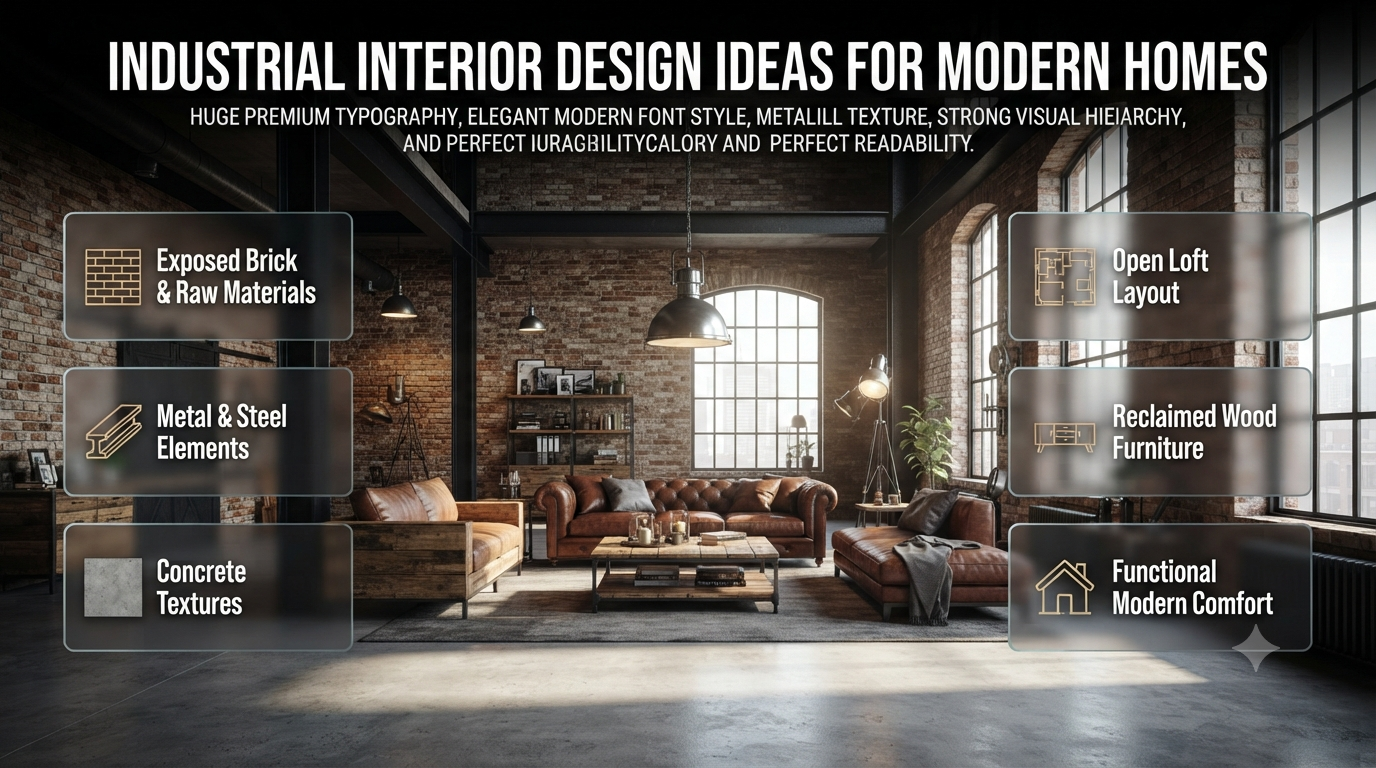
Industrial Interior Design | Many homeowners struggle with creating a space that feels stylish, comfortable, and unique at the same time. Modern interiors can sometimes look too polished, while minimalist spaces may feel empty or lacking personality. This is where Industrial Interior Design offers a powerful solution by combining raw architectural beauty with practical comfort.
Inspired by old factories, warehouses, and urban lofts, industrial style transforms unfinished materials like exposed brick, metal, concrete, and reclaimed wood into attractive design features. It celebrates authentic textures, functional furniture, and open layouts while creating a warm and inviting atmosphere.
For homeowners looking for professional guidance, DesignMode24 Interior Design provides inspiration and ideas to create stylish, personalized spaces that match modern living needs.
In this complete guide, you will learn what industrial interior design is, where it comes from, its main characteristics, essential materials, color choices, furniture styles, and expert techniques to create a balanced industrial-inspired home.
What Is Industrial Interior Design?
Industrial Interior Design is a style that combines raw building materials, open layouts, functional furniture, and urban-inspired details to create modern and character-filled spaces. It uses elements such as exposed brick, metal, concrete, wood, and large windows to recreate the feeling of converted factories and warehouses.
Unlike traditional designs that hide structural details, industrial interiors highlight them. Exposed pipes, beams, brick walls, and unfinished surfaces become important visual features instead of imperfections.
The purpose of industrial style is not to make a home look incomplete. Professional designers carefully combine rough materials with comfortable furniture, warm lighting, and natural textures to create a stylish yet livable environment.
For example:
- An exposed brick wall can become a statement feature.
- Steel frames can add architectural character.
- Reclaimed wood can bring warmth.
- Leather furniture can create comfort.
- Large windows can improve natural brightness.
Industrial design focuses on authenticity, simplicity, and functionality.
The History and Evolution of Industrial Interior Design
Industrial interior design started from necessity rather than decoration.
During the Industrial Revolution, factories and warehouses were designed for efficiency. These buildings required strong structures, open spaces, durable materials, and practical layouts to support manufacturing.
Over time, many industrial buildings became unused. During the 20th century, artists, designers, and creative professionals began transforming old warehouses into studios and homes.
These converted spaces introduced many features that define industrial interiors today:
- High ceilings
- Open floor plans
- Large factory-style windows
- Exposed brick walls
- Visible pipes
- Concrete surfaces
- Metal structures
As urban loft living became popular, industrial design moved from commercial buildings into residential homes.
Today, the style has evolved into a more comfortable version that combines industrial elements with modern and cozy features.
A contemporary industrial home may include:
- A concrete kitchen island with wooden cabinets
- Metal lighting with warm bulbs
- Brick accent walls with soft furniture
- Steel details mixed with natural fabrics
This modern approach makes industrial style suitable for apartments, villas, offices, and commercial spaces.
Why Is Industrial Interior Design Popular Today?
Industrial interiors continue to gain popularity because they provide something many modern homeowners want: personality.
Many newly built homes look similar because they use identical materials and furniture styles. Industrial design creates individuality by highlighting textures, craftsmanship, and architectural details.
1. It Creates a Unique Atmosphere
Industrial spaces have a strong visual identity.
The combination of metal, wood, brick, and concrete creates an environment that feels authentic and memorable.
A simple living room can become more interesting with:
- A reclaimed wood coffee table
- Black metal shelves
- Textured walls
- Vintage-inspired lighting
2. It Works With Different Property Types
One major advantage of industrial style is flexibility.
It works well in:
- Apartments
- Loft spaces
- Modern houses
- Offices
- Restaurants
- Creative studios
Even if a property does not have original industrial features, designers can recreate the look using modern materials and furniture.
3. It Focuses on Functionality
Industrial interiors avoid unnecessary decoration.
Every item usually has a purpose.
Furniture choices often prioritize:
- Durability
- Comfort
- Practical use
- Long-term value
This makes industrial style ideal for people who prefer smart and efficient living spaces.
Main Characteristics of Industrial Interior Design
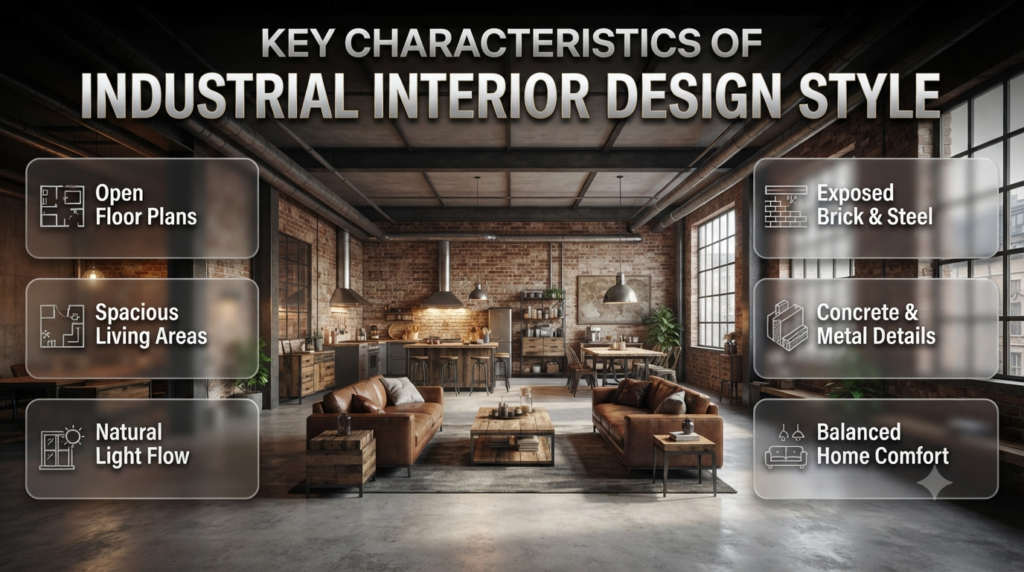
Understanding the key characteristics helps homeowners create an authentic industrial look instead of a random mix of materials.
1. Open Floor Plans
Open layouts are one of the most important features of industrial interior design because they create a spacious, flexible, and connected living environment inspired by warehouse architecture.
Industrial spaces usually avoid unnecessary walls and allow different areas to flow together.
For example:
A kitchen, dining area, and living room may share one large open space.
Benefits of Open Industrial Layouts:
- Makes rooms feel larger
- Improves natural light
- Creates better movement
- Encourages social interaction
- Matches modern lifestyles
However, open spaces need proper planning.
Professional designers create separate zones using:
- Area rugs
- Furniture placement
- Lighting layers
- Shelving units
- Decorative partitions
💡 Pro Tip:
Do not leave an open space completely empty. Use furniture arrangement to create clear functional areas while maintaining the spacious feeling.
2. Exposed Architectural Elements
Industrial design celebrates the original structure of a building.
Instead of hiding construction details, designers make them the focus.
Common exposed elements include:
- Brick walls
- Concrete columns
- Steel beams
- Metal pipes
- Wooden ceiling beams
- Industrial windows
These details add depth and personality to a space.
For homes without natural industrial features, similar effects can be created through:
- Brick wallpaper or veneer panels
- Concrete-effect finishes
- Metal accessories
- Industrial-style furniture
⚠️ Common Mistake:
Adding too many artificial industrial elements can make a room look like a themed restaurant instead of a comfortable home. Use industrial details carefully and balance them with softer materials.
Essential Materials Used in Industrial Interior Design
Materials are the foundation of industrial style. The right combination creates a balance between strength, texture, and comfort.
1. Exposed Brick
Brick is one of the most recognizable industrial design materials.
It adds:
- Warmth
- Texture
- History
- Visual interest
Common applications include:
- Feature walls
- Fireplace areas
- Kitchen backsplashes
- Entry spaces
Traditional red brick creates a classic warehouse appearance, while painted brick gives a cleaner modern look.
2. Metal Finishes
Metal gives industrial interiors their signature urban character.
Popular choices include:
- Steel
- Iron
- Aluminum
- Black metal finishes
Metal is commonly used for:
- Furniture frames
- Shelving
- Staircases
- Lighting fixtures
- Window frames
Black metal is especially popular because it creates strong contrast against wood and neutral colors.
3. Reclaimed Wood
Wood is essential because it prevents industrial interiors from feeling too harsh.
Reclaimed wood adds:
- Natural warmth
- Texture
- Character
- A handcrafted appearance
It is commonly used in:
- Dining tables
- Flooring
- Cabinets
- Shelves
- Ceiling details
Combining aged wood with metal creates the perfect industrial balance.
4. Concrete Surfaces
Concrete represents the raw architectural beauty of industrial spaces.
It can be used for:
- Floors
- Walls
- Countertops
- Decorative finishes
Modern concrete finishes can create a sophisticated appearance without making the room feel unfinished.
Industrial Interior Design Color Palette
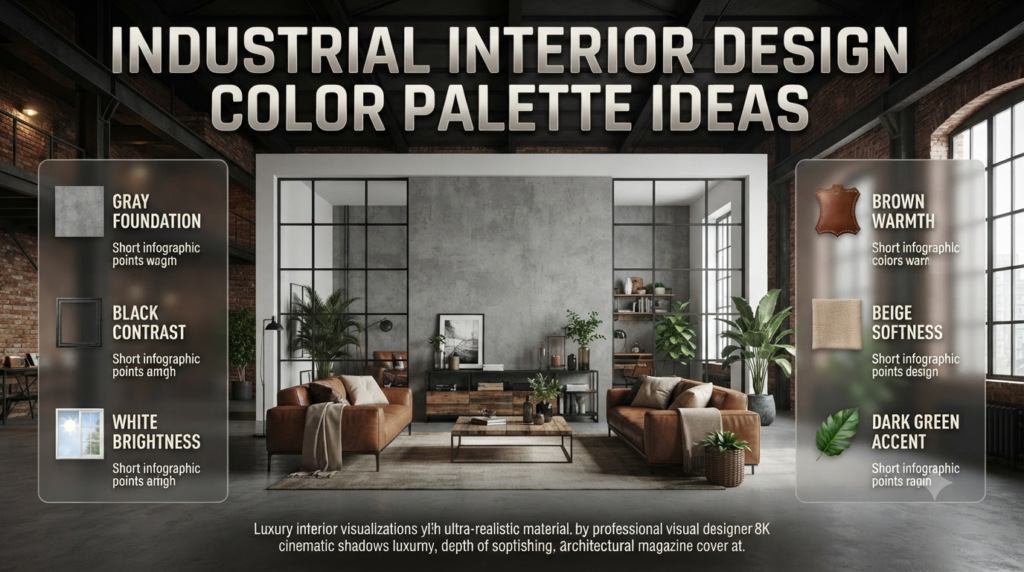
Industrial design usually follows neutral and earthy colors inspired by factories and urban environments.
| Color | Design Purpose |
|---|---|
| Gray | Creates a concrete-inspired foundation |
| Black | Adds contrast and sophistication |
| White | Improves brightness |
| Brown | Adds warmth through wood and leather |
| Beige | Softens industrial elements |
| Dark Green | Creates a natural accent |
Industrial interiors rely more on textures than bright colors.
For better color planning, homeowners can explore ideas from Paint Color and create a balanced palette that supports industrial materials.
Industrial Furniture Ideas: Choosing Pieces That Complete the Look
Furniture plays a major role in industrial interior design because it connects the raw architectural elements with everyday comfort. The right furniture should feel practical, durable, and visually balanced.
Industrial furniture is usually inspired by factories, workshops, and vintage industrial spaces. It combines strong materials with simple designs rather than heavy decoration.
A successful industrial room does not require every piece to look old or mechanical. Modern designers often mix industrial furniture with elements from other styles, including ideas from Contemporary Interior Design and Minimalist Interior Design to create cleaner and more comfortable spaces.
What Furniture Works Best in Industrial Interior Design?
Industrial furniture works best when it combines raw materials, simple shapes, and practical functionality. Popular choices include leather sofas, metal-frame tables, wooden furniture, open shelving, and vintage-inspired pieces that create an urban warehouse atmosphere.
The goal is to choose furniture that looks strong but still feels comfortable for daily living.
1. Leather Sofas and Armchairs
Leather furniture is one of the most popular choices for industrial interiors.
Why it works:
- Adds warmth to cold materials
- Creates a vintage appearance
- Ages beautifully over time
- Matches wood and metal elements
Popular colors include:
- Brown leather
- Dark tan
- Black leather
- Cognac tones
A large leather sofa combined with a metal coffee table can instantly create an industrial living room.
💡 Pro Tip:
Avoid filling the room with only dark furniture. Add lighter fabrics, cushions, or rugs to maintain a comfortable atmosphere.
2. Metal and Wood Tables
The combination of metal and wood represents the heart of industrial design.
Common examples:
- Reclaimed wood dining tables with steel legs
- Metal coffee tables with wooden tops
- Industrial-style kitchen islands
This combination creates contrast:
Warm wood + Cold metal = Balanced industrial style
Wood provides natural comfort, while metal adds structure and strength.
3. Open Shelving Units
Industrial interiors often use open shelving instead of closed cabinets.
Benefits:
- Creates an open feeling
- Displays decorative items
- Adds architectural interest
- Provides practical storage
Popular materials:
- Black steel frames
- Natural wood shelves
- Iron brackets
Open shelving works especially well in:
- Kitchens
- Living rooms
- Home offices
For more practical organization ideas, explore Home Improvement solutions that improve both appearance and functionality.
Industrial Lighting Design: Creating Warmth and Character
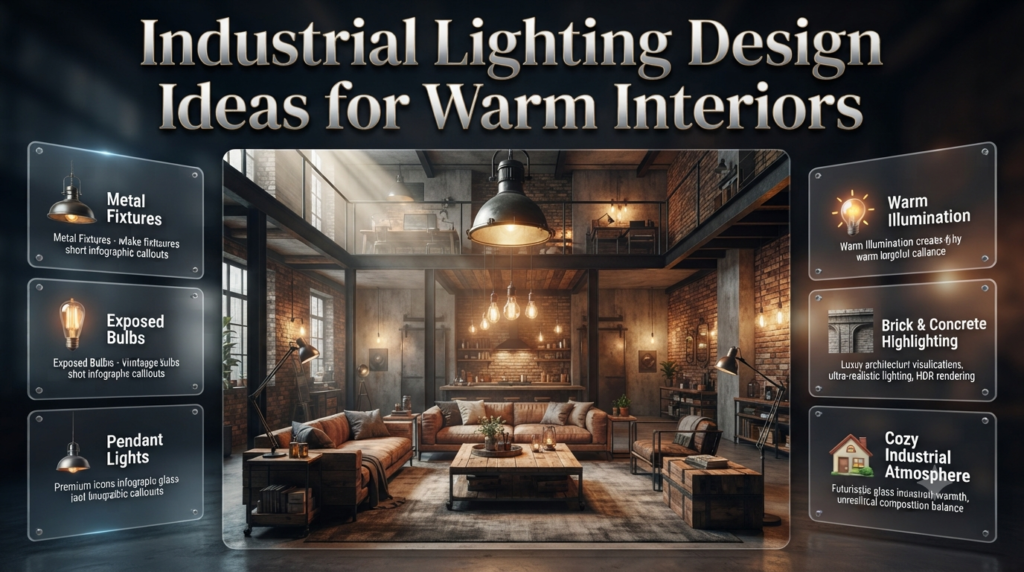
Lighting is one of the most important parts of industrial interior design.
Because industrial spaces often use darker materials like metal, concrete, and brick, proper lighting prevents the room from feeling cold.
Industrial lighting uses metal fixtures, exposed bulbs, pendant lights, and warm illumination to highlight architectural features while creating a comfortable atmosphere.
Popular Industrial Lighting Ideas
1. Pendant Lights
Pendant lights are a signature feature of industrial interiors.
They work well above:
- Dining tables
- Kitchen islands
- Workspaces
- Seating areas
Common styles include:
- Black metal shades
- Copper finishes
- Vintage factory designs
2. Edison Bulbs
Edison bulbs are widely used because they create a warm vintage feeling.
They are especially effective in:
- Restaurants
- Loft apartments
- Entertainment areas
However, avoid using only decorative bulbs. Good industrial lighting should also provide enough functional light.
3. Track Lighting
Track lighting is practical and flexible.
Advantages:
- Adjustable direction
- Modern appearance
- Works well in open spaces
It is commonly used in:
- Living rooms
- Studios
- Offices
Industrial Interior Design Room-by-Room Guide
Industrial style can be applied throughout the home, but each room requires a slightly different approach.
Industrial Living Room Design
The living room is usually the main area where industrial style becomes visible.
Key elements:
- Leather sofa
- Metal coffee table
- Brick accent wall
- Large floor lamp
- Wooden furniture
- Neutral color palette
A balanced industrial living room should not feel like an empty warehouse. Add:
- Soft rugs
- Indoor plants
- Textured cushions
- Warm lighting
These elements create comfort while maintaining the industrial identity.
For additional living space inspiration, explore Home Styling ideas that combine functionality with visual appeal.
Industrial Kitchen Design
Industrial kitchens are known for their practical and bold appearance.
Popular features:
- Concrete countertops
- Metal cabinets
- Open shelves
- Exposed brick backsplash
- Industrial pendant lights
A common modern approach is combining industrial elements with natural finishes.
Example:
- Matte black cabinets
- Wooden shelves
- Brass hardware
- Stone countertops
This creates a sophisticated kitchen rather than a harsh industrial space.
Industrial Bedroom Design
Bedrooms require extra attention because comfort is the priority.
A successful industrial bedroom usually combines:
- Simple wooden bed frames
- Soft bedding
- Warm lighting
- Neutral colors
- Minimal decoration
Avoid making the bedroom too dark.
Professional designers often soften industrial bedrooms with:
- Linen fabrics
- Plants
- Layered lighting
- Natural textures
Industrial Bathroom Design
Industrial bathrooms often focus on material contrast.
Popular features:
- Concrete walls
- Black metal fixtures
- Glass shower panels
- Stone surfaces
- Wooden accents
A wood and concrete combination can create a luxurious spa-like feeling.
Industrial Home Office Design
Industrial style works especially well for workspaces because it naturally supports focus and organization.
Recommended elements:
- Wooden desk
- Metal shelving
- Adjustable lighting
- Comfortable chair
- Minimal accessories
The style creates a professional environment without feeling too formal.
For broader workspace and creative design inspiration, you can explore DIY Projects for practical upgrades and personalized improvements.
Industrial Interior Design vs Other Popular Styles
Understanding the difference between styles helps homeowners choose the right direction.
| Style | Main Focus | Materials | Overall Feeling |
|---|---|---|---|
| Industrial | Raw materials and structure | Metal, brick, concrete, wood | Urban and authentic |
| Minimalist | Simplicity and fewer elements | Clean surfaces, neutral colors | Calm and organized |
| Contemporary | Modern trends and comfort | Glass, metal, mixed materials | Elegant and updated |
| Scandinavian | Light, natural comfort | Wood, soft fabrics, bright colors | Cozy and peaceful |
| Japandi | Japanese + Scandinavian balance | Natural materials, simple forms | Relaxed and refined |
Industrial design can also be combined with other styles.
For example:
- Industrial + Minimalist creates a clean modern loft.
- Industrial + Scandinavian creates a softer Nordic warehouse look.
- Industrial + Contemporary creates a luxury urban interior.
You can explore different approaches through Interior Design Styles to understand how various styles compare.
Combining Industrial Design With Modern Trends
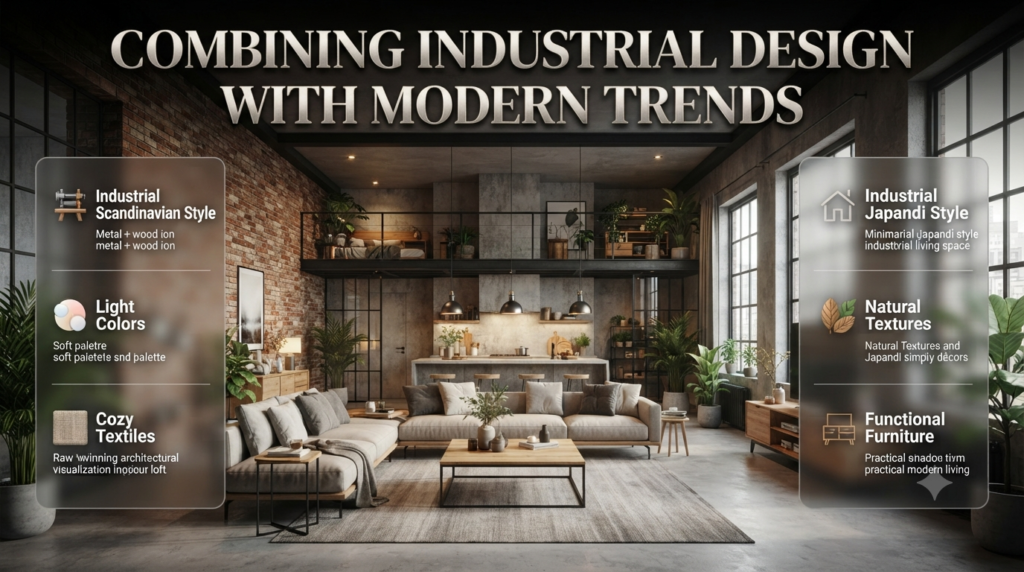
Modern homeowners often prefer hybrid interiors instead of following one style completely.
Some popular combinations include:
Industrial Scandinavian Style
This combines:
- Industrial materials
- Light colors
- Natural wood
- Cozy textiles
The result is softer and more welcoming.
Learn more about this approach through Scandinavian Interior Design.
Industrial Japandi Style
Japandi combines Japanese simplicity with Scandinavian comfort.
When mixed with industrial elements, it creates:
- Clean spaces
- Natural textures
- Functional furniture
- Balanced decoration
Related inspiration:
⭐ Expert Tip:
Do not try to copy a factory exactly. The best industrial homes borrow the strongest elements of industrial design while keeping the comfort needed for everyday life.
Benefits of Industrial Interior Design: Why Homeowners Choose This Style
Industrial interior design has become popular because it offers more than just a unique appearance. It creates practical, durable, and flexible spaces that work well for modern lifestyles.
Unlike highly decorative styles that depend on trends, industrial design focuses on timeless materials and functional choices.
1. Creates a Timeless Look
One of the biggest advantages of industrial interiors is longevity.
Materials like:
- Wood
- Metal
- Brick
- Concrete
- Leather
do not easily go out of style.
A well-designed industrial home can look attractive for many years because it relies on natural textures rather than temporary trends.
2. Easy to Maintain
Industrial interiors are often easier to maintain because they use durable materials.
Examples:
- Concrete floors handle heavy use.
- Metal furniture is long-lasting.
- Brick walls require minimal maintenance.
- Leather furniture becomes more attractive with age.
This makes industrial design suitable for busy homeowners who want beauty without excessive upkeep.
3. Works Well With Open Spaces
Industrial design naturally supports open layouts.
It works especially well for:
- Studio apartments
- Loft-style homes
- Large living areas
- Modern offices
Open layouts allow better movement, more natural light, and flexible furniture arrangements.
4. Allows Creative Personalization
Industrial interiors provide a strong foundation but leave room for personal expression.
Homeowners can customize their space through:
- Artwork
- Vintage accessories
- Plants
- Handmade furniture
- Decorative lighting
For more creative ideas and personalized styling approaches, explore Home Design Ideas to discover ways to make spaces more functional and visually appealing.
How to Create Industrial Interior Design on a Budget
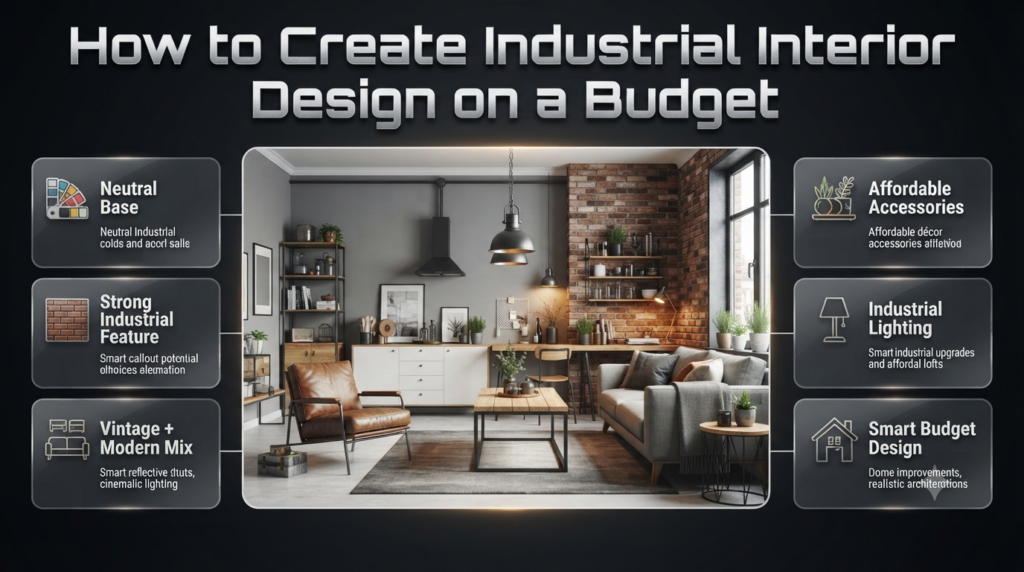
Many people assume industrial design requires expensive renovations. In reality, you can create an industrial atmosphere with smart choices and small upgrades.
Step 1: Start With a Neutral Base
Choose a simple foundation:
- Gray walls
- White surfaces
- Natural wood tones
- Black accents
A neutral base allows industrial elements to stand out.
Step 2: Add One Strong Industrial Feature
You do not need to redesign the entire home.
Start with one statement element:
- Brick accent wall
- Metal shelving
- Industrial lighting
- Wooden table
- Concrete-style finish
A single feature can completely change the feeling of a room.
Step 3: Mix Old and New Elements
Professional designers often combine:
- Vintage furniture
- Modern technology
- Contemporary accessories
This creates a balanced and comfortable look.
For example:
A vintage leather chair paired with a modern sofa creates a more interesting living room than matching furniture sets.
Step 4: Use Affordable Industrial Accessories
Small details can create a big impact.
Consider:
- Metal picture frames
- Black fixtures
- Wooden trays
- Factory-style clocks
- Industrial lamps
- Open shelves
These additions create the industrial feeling without major construction costs.
Common Mistakes in Industrial Interior Design
Many beginners make mistakes when trying to achieve an industrial look. Understanding these problems helps create a more professional result.
Mistake 1: Making the Space Too Cold
Why it happens:
People often focus only on:
- Concrete
- Metal
- Dark colors
Why it becomes a problem:
The room may feel uncomfortable and unwelcoming.
How to avoid it:
Add warmth through:
- Soft fabrics
- Wooden furniture
- Rugs
- Plants
- Warm lighting
Mistake 2: Using Too Many Industrial Elements
Why it happens:
Homeowners think more industrial features mean a better industrial design.
Why it is harmful:
Too much exposed metal, dark colors, and rough textures can make the home feel like a commercial building.
Better approach:
Follow the balance rule:
70% Comfortable Living Elements + 30% Industrial Features
Mistake 3: Ignoring Lighting
Why it happens:
People focus heavily on furniture and materials.
Why it matters:
Industrial spaces often use darker finishes, which can reduce brightness.
Solution:
Use layered lighting:
- Ceiling lights
- Floor lamps
- Pendant lights
- Accent lighting
Mistake 4: Choosing Style Over Comfort
Why it happens:
Some people copy warehouse images without considering daily life.
Why it fails:
A home should still feel comfortable.
Always prioritize:
- Comfortable seating
- Practical storage
- Easy movement
- Personal needs
Mistake 5: Creating a Fake Industrial Look
Why it happens:
Adding random industrial decorations without understanding the style.
Why it looks unnatural:
Industrial design is about authenticity, not decoration overload.
Instead of adding many factory-style objects, focus on:
- Quality materials
- Proper proportions
- Functional design
Professional Expert Advice for Industrial Interiors
Interior designers usually focus on balance rather than simply adding industrial features.
Here are professional recommendations that create better results:
1. Focus on Texture Instead of Decoration
Industrial spaces become attractive through material contrast.
Combine:
- Rough brick
- Smooth metal
- Soft fabrics
- Natural wood
Texture creates depth without needing excessive decoration.
2. Use Warm Lighting
Lighting can completely change industrial interiors.
Professionals recommend:
- Warm LED bulbs
- Layered lighting
- Adjustable fixtures
Avoid harsh white lighting because it can make materials feel uncomfortable.
3. Add Natural Elements
Plants and natural materials soften industrial spaces.
Good choices include:
- Large indoor plants
- Wooden furniture
- Natural fiber rugs
- Stone accessories
This creates a healthier and more welcoming atmosphere.
4. Invest in Quality Over Quantity
Industrial design works best when each piece has purpose.
Instead of buying many inexpensive decorations, invest in:
- A quality sofa
- A strong dining table
- Good lighting
- Durable storage solutions
What Is Industrial Interior Design and Why Is It Popular in Modern Homes?
Industrial Interior Design is a style that focuses on raw architectural beauty, practical layouts, and authentic materials. It takes inspiration from old factories, warehouses, and urban lofts by using elements like exposed brick, metal frames, concrete surfaces, reclaimed wood, and open spaces.
Its popularity comes from the fact that modern homeowners are moving away from overly decorated interiors and looking for spaces with personality and character. Industrial design creates a balance between rugged materials and comfortable living by combining strong textures with soft furniture, warm lighting, and natural elements.
Unlike many short-term trends, industrial interiors feel timeless because they rely on durable materials and functional design principles. A well-planned industrial home can remain stylish for years without requiring frequent updates.
Key points to consider:
Focuses on authenticity rather than excessive decoration.
Uses durable materials that age beautifully.
Creates unique spaces with strong visual character.
Works well for apartments, villas, offices, and commercial areas.
Can be customized with modern, minimalist, or natural design elements.
How Can I Make My Home Look Industrial Without Making It Feel Cold or Uncomfortable?
One of the biggest challenges with Industrial Interior Design is creating warmth. Since this style uses materials like concrete, steel, and brick, an unbalanced design can sometimes feel harsh or unfinished.
Professional designers solve this problem by adding softer elements that create comfort and balance. The goal is not to create a factory-like environment but to bring the personality of industrial spaces into a livable home.
For example, a concrete wall can feel cold on its own, but when combined with a comfortable sofa, wooden furniture, warm lighting, and textured fabrics, it becomes an attractive design feature.
Professional ways to add warmth:
Use wooden furniture to soften metal and concrete surfaces.
Add rugs, cushions, and curtains with natural fabrics.
Choose warm lighting instead of bright white lights.
Include indoor plants for freshness and balance.
Mix industrial materials with cozy decorative elements.
What Are the Most Important Elements Needed to Create an Authentic Industrial Interior?
Creating an authentic industrial interior requires more than simply adding metal furniture or dark colors. The style depends on combining specific materials, textures, and design principles that reflect industrial architecture.
The foundation of industrial design is the relationship between raw materials and functional living. Every element should have a purpose while contributing to the overall visual balance of the room.
The most successful industrial interiors usually include a combination of exposed structures, natural materials, neutral colors, and practical furniture.
Essential industrial design elements include:
Exposed brick walls: Add texture, history, and visual depth.
Metal details: Used in furniture frames, lighting, and shelving.
Reclaimed wood: Introduces warmth and natural character.
Concrete surfaces: Create a modern urban appearance.
Open layouts: Improve space flow and natural light.
Industrial lighting: Adds personality and functional brightness.
Neutral color palettes: Allow textures and materials to stand out.
Is Industrial Interior Design Suitable for Small Apartments and Limited Spaces?
Yes, Industrial Interior Design can work extremely well in small apartments when planned correctly. In fact, many industrial concepts originally came from converted lofts and compact urban spaces where designers needed to maximize functionality.
The key is avoiding heavy furniture and unnecessary decoration. Small industrial spaces should focus on openness, smart storage, and carefully selected statement pieces.
Using the right design techniques can make a small apartment feel larger, brighter, and more organized.
Best practices for small industrial spaces:
Choose multifunctional furniture.
Use open shelving instead of bulky storage units.
Keep the color palette balanced with lighter shades.
Use mirrors to improve the sense of space.
Select slim metal-frame furniture.
Avoid overcrowding the room with industrial accessories.
A small industrial apartment should feel intentional and organized rather than packed with decorative elements.
What Are the Common Mistakes People Make When Designing an Industrial-Style Home?
Many homeowners misunderstand Industrial Interior Design and focus only on the visual appearance instead of the principles behind the style. This often leads to spaces that feel uncomfortable, overly dark, or artificial.
A professional industrial interior is not created by adding random factory-inspired decorations. It requires balance between rough materials and comfortable living features.
Avoiding common mistakes helps create a space that feels sophisticated and practical.
Common mistakes to avoid:
Using too much concrete and metal:
Excessive hard materials can make the room feel cold. Balance them with wood, fabrics, and plants.
Ignoring lighting:
Dark industrial materials need proper lighting to maintain a welcoming atmosphere.
Making the space look like a commercial building:
Homes require comfort, personality, and warmth.
Choosing style over functionality:
Furniture should support daily life, not only match the theme.
Overusing industrial decorations:
Too many vintage signs, pipes, or factory accessories can make the design feel forced.
Expert recommendation:
The best industrial interiors are created through thoughtful material selection, balanced textures, and practical planning—not by adding more industrial items.
Conclusion
Industrial Interior Design is more than just a style inspired by factories and warehouses; it is a way of creating spaces that feel authentic, functional, and full of character. By combining raw materials like exposed brick, metal, concrete, and reclaimed wood with comfortable furniture, warm lighting, and thoughtful layouts, homeowners can achieve a modern interior that feels both stylish and welcoming.
The key to a successful industrial space is balance. Too many hard materials can make a room feel cold, while too much decoration can remove the simplicity that makes industrial design unique. Professional designers focus on creating harmony between textures, colors, and practical elements to build interiors that support everyday living.
Whether you are designing a small apartment, a modern villa, or a creative workspace, industrial style offers endless possibilities. Start with authentic materials, choose functional furniture, add warmth through natural elements, and personalize the space with details that reflect your lifestyle.
A well-designed industrial home does not simply follow a trend—it creates a timeless environment where character, comfort, and modern living come together beautifully.
Leave a Reply