
Introduction
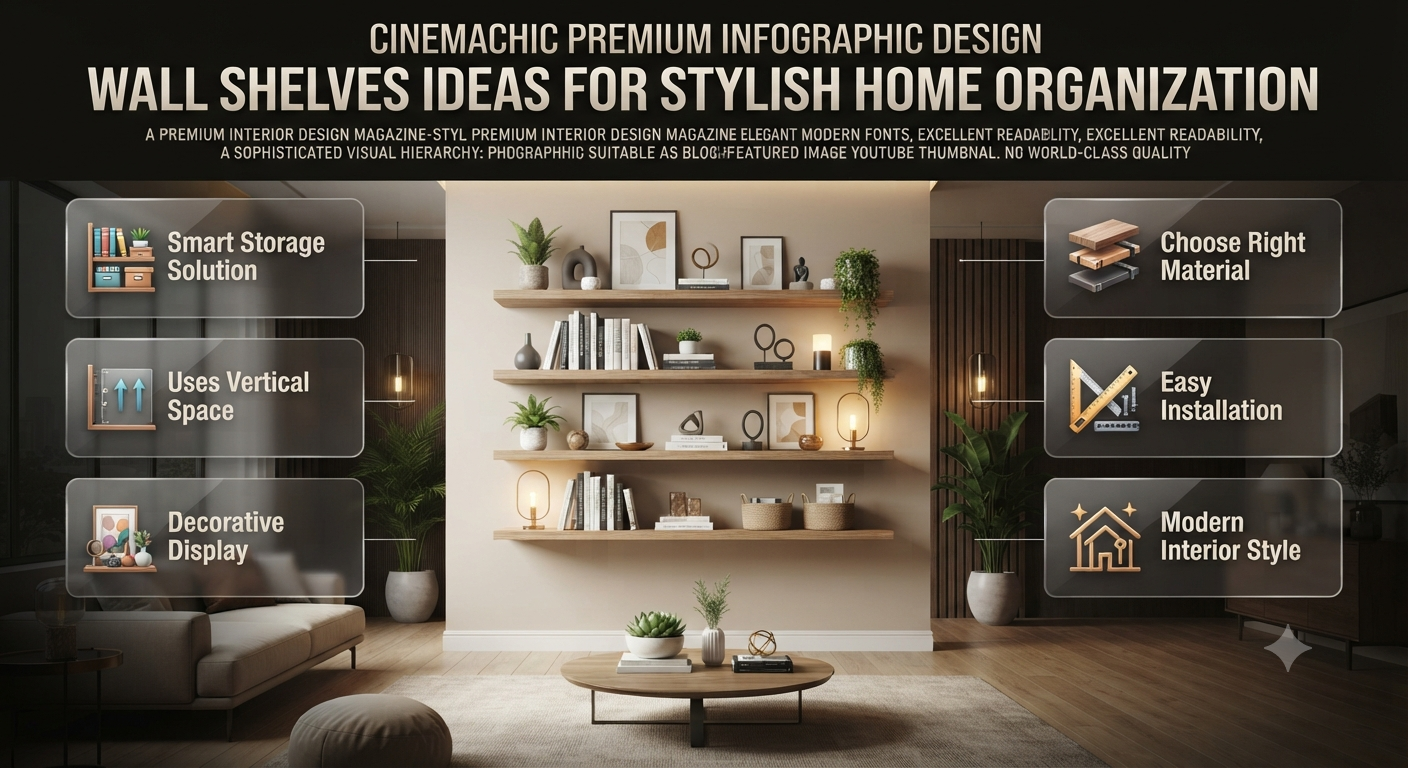
Wall Shelves Ideas | A room can feel crowded even when you don’t have too many belongings. Books pile up on tables, decorative items have no proper place, and empty walls make the space feel unfinished. This is where wall shelves become a practical and stylish solution.
Unlike bulky cabinets or floor storage units, wall shelves use vertical space to organize your home while adding personality to your interiors. They can transform an empty wall into a beautiful display area, improve functionality, and create a cleaner living environment without taking up valuable floor space.
Today, homeowners are not choosing shelves only for storage. They are using them as part of modern interior design, creating stylish corners for books, plants, artwork, collectibles, and everyday essentials.
In this complete guide, you will learn:
- What wall shelves are and why they are popular
- Different types of wall shelves for every room
- How to choose the right shelf style and material
- Benefits and drawbacks of wall-mounted shelving
- Installation tips and common mistakes to avoid
- Expert styling ideas to make shelves look professionally designed
Whether you live in a small apartment, a modern house, or want a simple weekend home improvement project, the right wall shelves can improve both organization and visual appeal.
For more ideas about improving your home’s functionality and appearance, explore our guides on Home Improvement and Interior Design.
What Are Wall Shelves?
Wall shelves are storage platforms attached directly to walls to hold decorative items, books, plants, and everyday objects while saving floor space. They are available in different materials, designs, and sizes, making them suitable for living rooms, bedrooms, kitchens, offices, and bathrooms.
Wall shelves are one of the simplest ways to combine storage and decoration. Instead of leaving walls empty, homeowners can use vertical space to create functional areas that look intentional.
A well-designed shelf does two jobs:
- Provides practical storage
- Enhances the appearance of a room
For example, a wooden floating shelf in a living room can display books and plants, while metal shelves in a kitchen can organize cookware and accessories.
Modern interior designers often use shelves as a design feature rather than just a storage solution. The arrangement, color, material, and placement all influence the overall style of a room.
Why Are Wall Shelves Becoming Popular in Modern Homes?
Wall shelves have become increasingly popular because they solve several common home design problems at the same time.
Many modern homes have smaller rooms, open layouts, and limited storage areas. Traditional furniture can make these spaces feel tight, while wall-mounted shelving creates storage without reducing usable floor space.
Key Reasons Homeowners Choose Wall Shelves
1. They Save Valuable Floor Space
The biggest advantage of wall shelves is that they use unused vertical areas.
A blank wall can become:
- A bookshelf
- A plant display area
- A workspace organizer
- A decorative feature wall
- A kitchen storage solution
This makes them especially useful for apartments, small bedrooms, and compact offices.
💡 Pro Tip: In smaller rooms, choose floating shelves with simple designs. Heavy-looking shelves can make the space feel smaller.
2. They Improve Room Organization
Clutter often makes a room feel uncomfortable. Wall shelves provide dedicated spaces for items that otherwise create mess.
Examples:
Living Room
- Books
- Picture frames
- Decorative objects
- Indoor plants
Bedroom
- Small accessories
- Alarm clocks
- Personal collections
Kitchen
- Spice jars
- Coffee accessories
- Cooking essentials
Home Office
- Files
- Stationery
- Office supplies
A properly planned shelf system makes frequently used items easier to access.
3. They Add Personality to Interior Design
Furniture usually has a fixed purpose, but wall shelves allow homeowners to express their style.
A shelf can showcase:
- Travel memories
- Artwork
- Family photos
- Plants
- Handmade decorations
- Favorite books
This makes the room feel more personal instead of looking like a generic showroom.
For additional styling inspiration, visit our resources on Home Styling and Beautiful Interior.
Types of Wall Shelves for Different Home Styles
Choosing the right wall shelf depends on your room design, storage needs, and personal taste. Different shelf styles create different visual effects.
1. Floating Wall Shelves
Floating shelves are among the most popular modern shelf designs because they create a clean, minimal appearance.
They are installed with hidden brackets, making the shelf look like it is attached directly to the wall.
Best For:
- Modern living rooms
- Bedrooms
- Offices
- Minimalist interiors
Advantages:
✔ Clean appearance
✔ Saves space
✔ Easy to style
✔ Works with many décor themes
Limitations:
- Usually supports less weight than bracket shelves
- Requires proper wall anchoring
Floating shelves work especially well with contemporary designs, neutral colors, and minimalist decoration styles.
2. Corner Wall Shelves
Corner shelves are designed to use areas that are often ignored.
Empty corners can become useful storage spaces with triangular or curved shelf designs.
Best For:
- Small bedrooms
- Bathrooms
- Reading corners
- Compact apartments
Benefits:
- Uses wasted space
- Creates visual interest
- Perfect for plants and small décor items
⚠ Common Mistake: Installing corner shelves without measuring the corner angle properly can create uneven alignment.
3. Wooden Wall Shelves
Wooden shelves remain a timeless choice because they add warmth and natural texture.
Popular wood options include:
- Solid wood
- Pine
- Oak
- Walnut
- Engineered wood
Why Choose Wooden Shelves?
Wood works with almost every interior style:
- Rustic homes
- Scandinavian interiors
- Farmhouse designs
- Modern apartments
A natural wood shelf can make a plain wall feel warmer and more inviting.
4. Metal Wall Shelves
Metal shelves are popular in industrial and modern interiors.
They are commonly made from:
- Steel
- Iron
- Aluminum
Best Applications:
- Kitchens
- Garages
- Offices
- Industrial-style rooms
Metal shelves are durable and can support heavier objects when properly installed.
5. Glass Wall Shelves
Glass shelves create a lightweight and elegant appearance.
They are commonly used in:
- Bathrooms
- Luxury interiors
- Display areas
Advantages:
✔ Makes rooms look open
✔ Easy to clean
✔ Matches modern designs
Drawbacks:
- Requires regular cleaning
- Not ideal for heavy storage
Wall Shelf Materials: Which One Should You Choose?
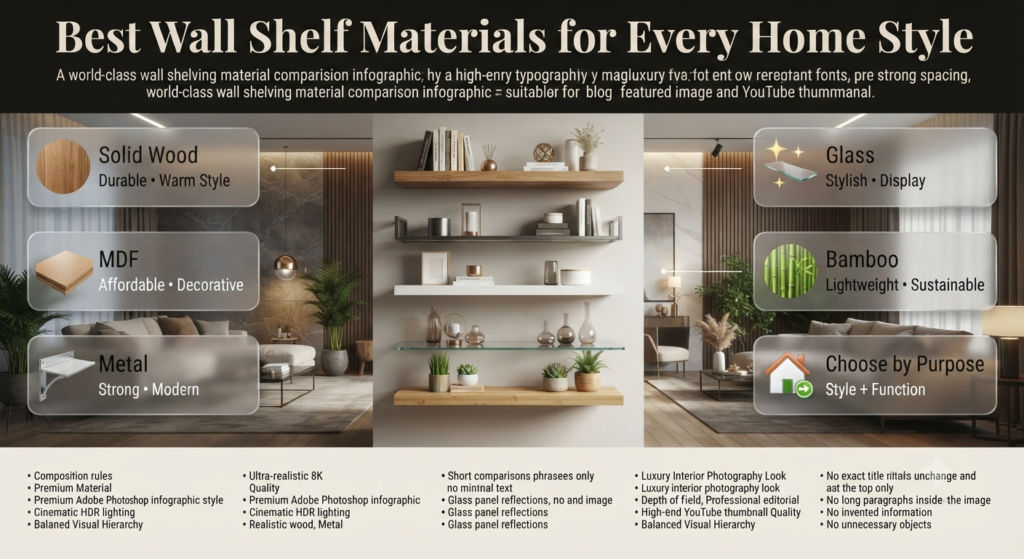
The material of your wall shelves affects durability, appearance, maintenance, and price.
| Material | Best For | Advantages | Limitations |
|---|---|---|---|
| Solid Wood | Living rooms, bedrooms | Durable, warm appearance | Higher cost |
| MDF | Budget projects | Affordable, smooth finish | Less moisture resistant |
| Metal | Offices, kitchens | Strong and modern | Can feel industrial |
| Glass | Decorative spaces | Elegant appearance | Fragile |
| Bamboo | Eco-friendly homes | Lightweight and sustainable | Limited heavy-duty use |
Expert Recommendation
For most homes, the best choice depends on the purpose:
- Choose solid wood for long-term beauty and durability.
- Choose metal for heavy storage.
- Choose MDF for affordable decorative shelving.
- Choose glass for elegant displays.
The right material should match both your practical needs and your interior style.
How to Choose the Right Wall Shelves for Your Home
Selecting shelves is not only about appearance. A good choice requires considering size, weight, placement, and room function.
Step 1: Understand Your Purpose
Before buying shelves, ask:
What will I store or display?
Different purposes require different designs.
For example:
- Books require strong shelves
- Decorative items need visually balanced shelves
- Kitchen storage needs easy cleaning materials
- Bathroom shelves need moisture resistance
Step 2: Measure Your Wall Space
Many shelf installation problems happen because homeowners skip measurement.
Before purchasing:
- Measure wall width
- Check available height
- Consider furniture below the shelf
- Mark installation points
A shelf should look balanced with surrounding furniture.
Step 3: Match the Shelf Style With Your Interior
Your shelves should complement your existing design.
Examples:
Modern Interior
- Floating shelves
- Clean lines
- Neutral finishes
Rustic Interior
- Natural wood
- Thick shelves
- Warm textures
Minimalist Interior
- Simple shapes
- Limited decoration
You can explore more design inspiration through Interior Inspiration.
Wall Shelf Design Ideas for Every Room
Wall shelves are extremely versatile because they can be adapted to almost any room. The best shelf design depends on how the space is used, what items need storage, and the overall interior style.
A common mistake is choosing shelves only based on appearance. A beautiful shelf that does not match your storage needs can quickly become inconvenient.
The goal is to create a balance between functionality, organization, and visual appeal.
Wall Shelves for Living Room
The living room is one of the most popular places for wall shelves because it is where homeowners usually want to display personality and style.
A well-designed shelf wall can become a focal point without requiring expensive renovations.
Popular Living Room Wall Shelf Ideas
1. Floating Shelves Around the TV
Floating shelves placed around a television create a built-in entertainment wall effect.
They can hold:
- Books
- Small plants
- Decorative objects
- Family photos
- Artwork
This design works especially well in modern homes where homeowners want a clean appearance without large storage cabinets.
2. Gallery-Style Display Shelves
Instead of filling shelves with random items, create a curated display.
A professional designer often follows the:
60-30-10 Styling Rule
- 60% dominant items (books, larger décor)
- 30% supporting items (plants, medium objects)
- 10% accent pieces (small decorative elements)
This prevents shelves from looking crowded.
⭐ Expert Tip: Leave some empty space between objects. Empty areas help each item stand out and make shelves look professionally styled.
Wall Shelves for Bedroom
Bedrooms usually require storage solutions that feel calm and organized.
Wall shelves can replace bulky bedside tables or add extra storage without making the room crowded.
Bedroom Shelf Placement Ideas
Above the Bed
A long shelf above the bed can display:
- Artwork
- Plants
- Decorative pieces
However, avoid placing heavy objects above sleeping areas for safety reasons.
Beside the Bed
Small wall shelves can replace traditional nightstands.
They are useful for:
- Books
- Glasses
- Phones
- Small lamps
This is a smart option for smaller bedrooms where floor space is limited.
Wall Shelves for Kitchen
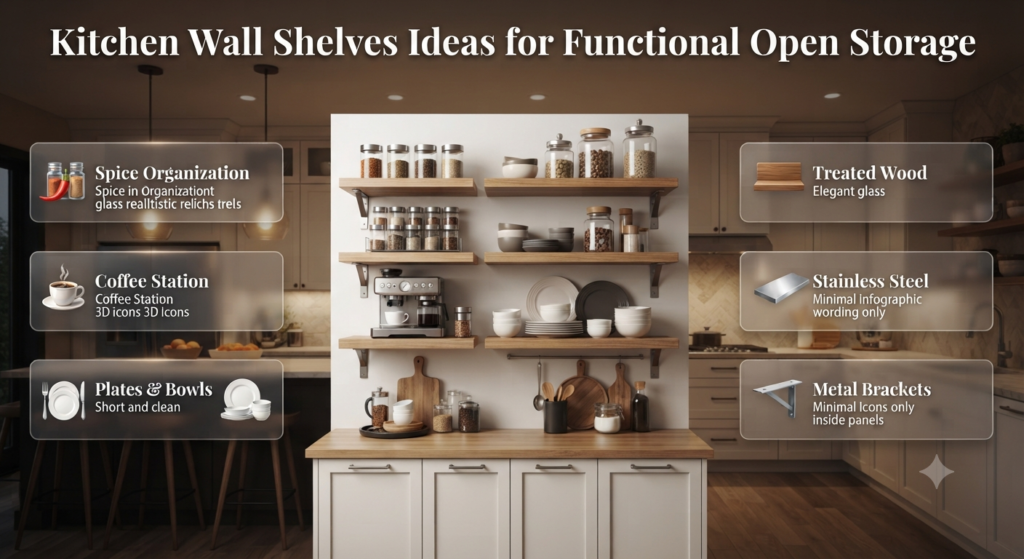
Kitchen shelves have become increasingly popular because they create an open and functional cooking space.
Instead of hiding everything behind cabinets, open shelving allows frequently used items to stay accessible.
Kitchen Wall Shelf Uses
- Spice organization
- Coffee stations
- Plates and bowls
- Cooking accessories
- Decorative jars
Best Materials for Kitchen Shelves
Choose materials that handle heat, moisture, and frequent cleaning.
Recommended options:
✔ Treated wood
✔ Stainless steel
✔ Metal brackets with wood shelves
⚠ Common Mistake: Using untreated wood near sinks or cooking areas can lead to swelling, stains, and damage.
For more kitchen design inspiration, explore Kitchen Paint Colors and related home styling ideas.
Wall Shelves for Bathroom
Bathrooms often have limited storage, making wall shelves highly practical.
They can organize everyday items while keeping countertops cleaner.
Bathroom Shelf Ideas
Use shelves for:
- Towels
- Toiletries
- Skincare products
- Decorative plants
- Storage baskets
Best Bathroom Shelf Materials
Because bathrooms have high humidity, choose:
- Stainless steel
- Waterproof wood
- Glass
- Moisture-resistant materials
Avoid low-quality materials that absorb water easily.
Wall Shelves for Home Office
With remote work becoming more common, organized workspaces are essential.
Wall shelves help keep desks clear and create a more productive environment.
Office Shelf Uses
Store:
- Books
- Documents
- Office supplies
- Equipment
- Decorative items
A clean workspace improves focus because fewer visual distractions compete for attention.
For complete workspace improvement ideas, check our guide on Smart Home Design.
Wall Shelves Installation Guide: Step-by-Step Process
Installing wall shelves may look simple, but proper preparation is important. A poorly installed shelf can damage walls, fall, or create safety problems.
Step 1: Choose the Installation Location
What to Do:
Decide where the shelf should be placed.
Consider:
- Room function
- Furniture placement
- Eye level
- Accessibility
Why It Matters:
The wrong location can make the shelf look awkward or difficult to use.
Professional Advice:
Mark the position with painter’s tape before drilling. This allows you to visualize the final result.
Common Mistake:
Installing shelves too high without considering daily use.
Step 2: Find Wall Studs
What to Do:
Use a stud finder to locate strong support points behind the wall.
Why It Matters:
Wall studs provide much better support than drywall alone.
Professional Advice:
Heavy shelves should always connect to studs whenever possible.
Common Mistake:
Using basic wall anchors for heavy books or equipment.
Step 3: Select Proper Hardware
The correct mounting hardware depends on:
- Shelf material
- Shelf weight
- Wall type
- Stored items
Common options include:
| Hardware Type | Best Use |
|---|---|
| Stud Screws | Heavy shelves |
| Drywall Anchors | Lightweight items |
| Brackets | Strong support |
| Hidden Mounts | Floating shelves |
Step 4: Install and Level the Shelf
What to Do:
- Mark drilling points
- Install brackets or mounts
- Attach shelf
- Check alignment with a level
Why It Matters:
Even a slightly tilted shelf can make the entire wall look unfinished.
📌 Quick Tip: Always check the shelf level before tightening all screws completely.
How Much Weight Can Wall Shelves Hold?
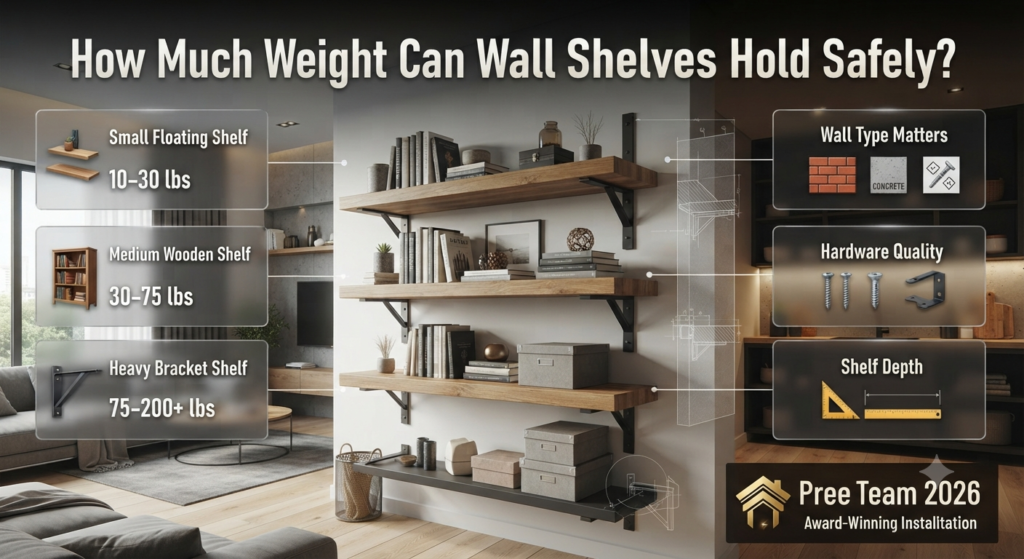
The weight capacity of wall shelves depends on the shelf material, mounting system, wall type, and installation quality. Lightweight floating shelves may hold decorative items, while reinforced shelves attached to studs can support books and heavier objects.
Approximate weight ranges:
| Shelf Type | Average Weight Capacity |
|---|---|
| Small Floating Shelf | 10–30 lbs |
| Medium Wooden Shelf | 30–75 lbs |
| Heavy-Duty Bracket Shelf | 75–200+ lbs |
| Metal Industrial Shelf | 100+ lbs |
These numbers vary depending on installation conditions.
Factors That Affect Shelf Strength
1. Wall Type
Different walls provide different support.
Examples:
- Brick walls: Usually strong
- Concrete walls: Excellent support
- Drywall: Requires proper anchors
- Old walls: Need extra inspection
2. Mounting Hardware Quality
Cheap brackets or weak screws can reduce safety even with a strong shelf.
Always match hardware with expected weight.
3. Shelf Depth
Deeper shelves create more pressure on wall mounts.
A shelf holding large books requires stronger support than a shallow decorative shelf.
Wall Shelves vs Cabinets: Which Is Better?
Many homeowners compare shelves and cabinets when planning storage.
The right choice depends on your priorities.
| Feature | Wall Shelves | Cabinets |
|---|---|---|
| Space Saving | Excellent | Moderate |
| Cost | Usually lower | Higher |
| Accessibility | Easy access | Items hidden |
| Appearance | Open and decorative | Clean and enclosed |
| Maintenance | Requires dusting | Easier cleaning |
| Storage Capacity | Moderate | Higher |
Choose Wall Shelves If:
✔ You want an open design
✔ You like displaying items
✔ Your room is small
✔ You need affordable storage
Choose Cabinets If:
✔ You need hidden storage
✔ You have many items
✔ You prefer a cleaner appearance
Many modern homes combine both solutions for the best balance.
Creative Wall Shelf Styling Ideas
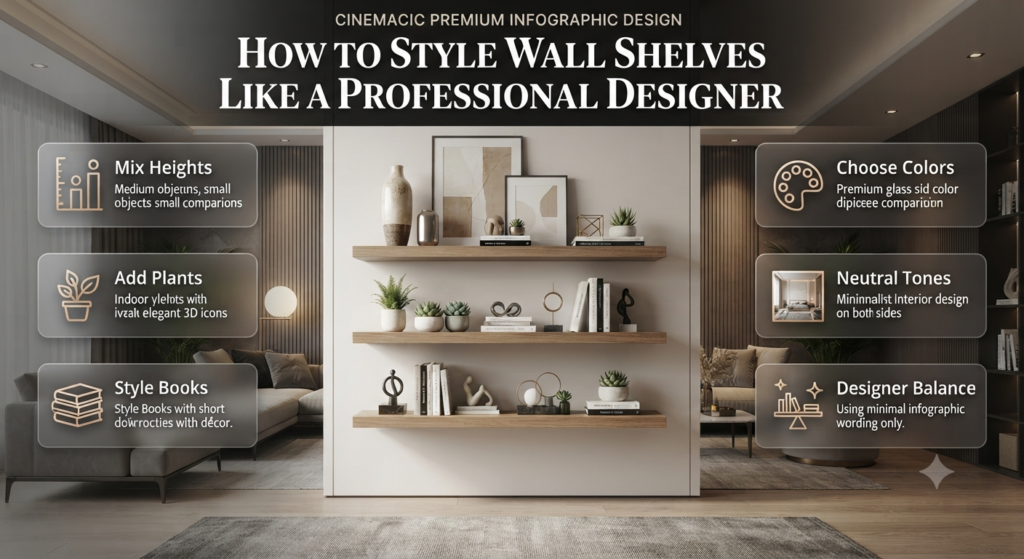
A shelf can look expensive and professionally designed with the right arrangement.
1. Mix Different Heights
Avoid placing objects at the same level.
Combine:
- Tall objects
- Medium décor
- Small accessories
This creates movement and visual interest.
2. Add Natural Elements
Plants instantly improve shelf appearance.
Good choices include:
- Small indoor plants
- Hanging plants
- Succulents
Plants add texture and make interiors feel fresher.
3. Use Books Creatively
Books do not always need to stand vertically.
Try:
- Horizontal stacks
- Mixed arrangements
- Books combined with décor
This creates a designer-style appearance.
4. Follow a Color Theme
Too many unrelated colors can make shelves look messy.
Choose a simple palette:
- Neutral tones
- Natural wood colors
- Black and white combinations
- Two or three accent colors
For more color coordination ideas, explore Neutral Color Schemes and Warm Color Palettes.
Common Wall Shelf Mistakes Beginners Make
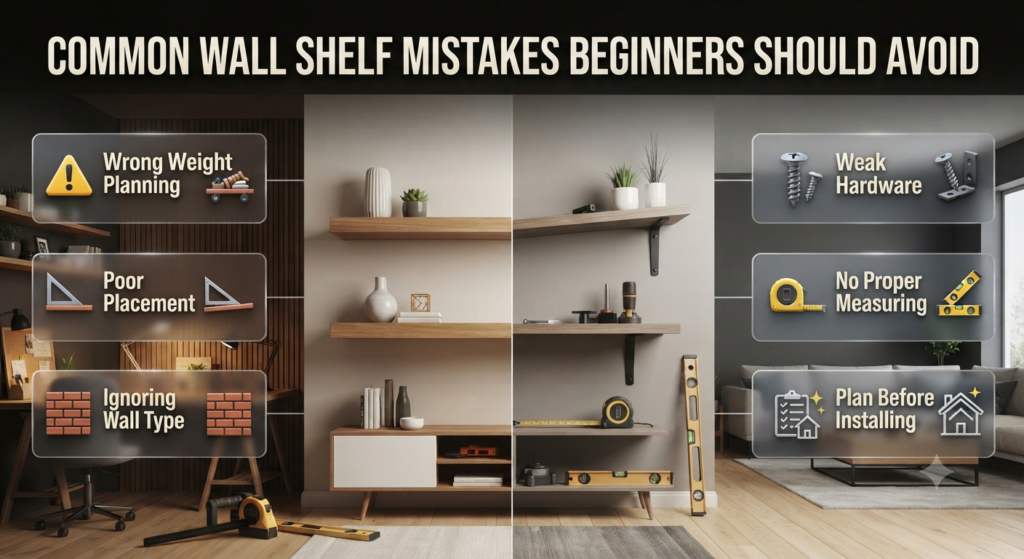
Installing wall shelves may seem like an easy home improvement project, but small mistakes can affect safety, appearance, and long-term durability.
Many homeowners focus only on choosing attractive designs and forget important factors like weight capacity, wall structure, and proper placement.
Understanding these common mistakes helps you create shelves that are both beautiful and practical.
1. Choosing Style Before Function
Why It Happens
Many people select shelves because they look attractive online or match a certain design trend.
However, a shelf should first solve a specific problem.
For example:
A thin decorative floating shelf may look beautiful but may not support heavy books, kitchen items, or large plants.
Why It Is Harmful
Choosing the wrong shelf type can lead to:
- Poor organization
- Overloaded shelves
- Damage to the wall
- Expensive replacements
How to Avoid It
Before purchasing, decide:
- What items will be stored?
- How much weight is required?
- Is the shelf for decoration or daily use?
⭐ Expert Tip: Function should always come first. A beautiful shelf that cannot handle your needs is not a good investment.
2. Installing Shelves Without Checking Wall Strength
Why It Happens
Many beginners assume every wall can support the same amount of weight.
However, drywall, brick, and concrete walls have very different strength levels.
Why It Is Harmful
Incorrect installation can cause:
- Loose brackets
- Cracked walls
- Falling shelves
- Damaged belongings
How to Avoid It
Always check:
- Wall type
- Stud locations
- Appropriate anchors
- Weight requirements
For heavy storage, attaching shelves directly into wall studs provides the safest support.
3. Overloading Shelves
Why It Happens
Once shelves are installed, homeowners often keep adding more items over time.
A shelf that originally held decorative objects may slowly become overloaded.
Why It Is Harmful
Excess weight can:
- Bend shelves
- Damage mounting points
- Reduce shelf lifespan
How to Avoid It
Follow the manufacturer’s weight recommendations.
Keep heavier items closer to brackets or support points.
⚠ Common Mistake: Placing heavy books, large speakers, or appliances on decorative floating shelves designed only for light objects.
4. Installing Shelves Too High
Why It Happens
Homeowners often focus on making walls look balanced but forget everyday usability.
Why It Is Harmful
Very high shelves can become difficult to access and may create an uncomfortable room layout.
How to Avoid It
Consider:
- Room height
- Furniture below
- User accessibility
- Purpose of the shelf
Decorative shelves can be higher, but practical storage shelves should remain easy to reach.
5. Creating a Cluttered Display
Why It Happens
People often believe more decoration creates a better-looking shelf.
Actually, too many items reduce visual impact.
Why It Is Harmful
A crowded shelf can make a room feel:
- Messy
- Smaller
- Unorganized
Better Approach
Use balance:
- Leave empty space
- Mix sizes
- Combine textures
- Avoid repeating identical objects
A professionally styled shelf usually has fewer but more meaningful items.
Expert Advice: How Interior Designers Style Wall Shelves
Professional designers do not simply place objects randomly. They create visual balance through planning and proportion.
Here are practical techniques used in modern interiors.
1. Create a Focal Point
Every shelf arrangement should have a main attraction.
Examples:
- A unique artwork
- A large plant
- A statement object
- A collection of books
Smaller items should support the focal point rather than compete with it.
2. Use the Rule of Three
The rule of three is a popular interior styling principle.
Objects arranged in groups of three often look more natural and visually appealing.
Examples:
- Small plant + book stack + candle
- Frame + sculpture + decorative bowl
This creates a balanced but relaxed appearance.
3. Mix Materials and Textures
A shelf looks more interesting when different textures are combined.
Examples:
- Wood shelf + ceramic objects
- Metal shelf + plants
- Glass décor + books
Different materials prevent the display from looking flat.
4. Consider Lighting
Lighting can dramatically improve wall shelves.
Options include:
- LED strip lighting
- Small spotlights
- Wall-mounted lamps
Lighting highlights decorative objects and creates a premium interior feel.
For more modern home ideas, explore Smart Home Design.
DIY Wall Shelf Ideas for Weekend Projects
Wall shelves are among the most beginner-friendly DIY home improvement projects.
With basic tools and materials, homeowners can create customized storage solutions.
For more DIY inspiration, visit DIY Projects and Weekend DIY Projects.
1. Simple Wooden Floating Shelf
Materials:
- Wooden board
- Hidden brackets
- Screws
- Wall anchors
- Sandpaper
- Paint or wood finish
Best For:
- Bedrooms
- Living rooms
- Home offices
Professional Advice:
Choose quality wood and properly seal it for long-lasting durability.
2. Rope Hanging Shelf
This style creates a relaxed and creative appearance.
Best suited for:
- Bohemian interiors
- Reading corners
- Children’s rooms
However, avoid placing heavy objects because rope shelves are mainly decorative.
3. Pipe Industrial Shelf
Metal pipes combined with wooden boards create an industrial-style shelf.
Popular locations:
- Kitchens
- Offices
- Garages
This design is strong and visually unique.
Wall Shelf Maintenance Tips
Proper maintenance keeps shelves attractive and extends their lifespan.
Wooden Shelves
Maintenance:
- Remove dust regularly
- Avoid excessive moisture
- Apply protective coating when needed
Metal Shelves
Maintenance:
- Clean with a soft cloth
- Check for rust
- Avoid harsh chemicals
Glass Shelves
Maintenance:
- Use glass cleaner
- Remove fingerprints regularly
- Check mounting hardware occasionally
What type of wall shelves are best for modern home interiors?
The best wall shelves for modern homes are usually floating shelves, minimalist wooden shelves, and metal-framed shelves because they create a clean, organized, and contemporary look. Modern interior design focuses on simplicity, functionality, and making spaces feel open, which is why homeowners prefer shelves that provide storage without making rooms appear crowded.
Floating shelves are especially popular because their hidden mounting system creates a seamless appearance. They work well in living rooms, bedrooms, offices, and even kitchens. Wooden finishes add warmth and natural texture, while metal shelves create a more industrial and modern feel.
When choosing a modern wall shelf, homeowners should consider the room’s existing design, wall color, furniture style, and storage requirements. A shelf should not only look attractive but also support the items you plan to display.
Key Points to Consider:
Choose floating shelves for minimalist and contemporary interiors.
Use natural wood finishes to create a warm and inviting atmosphere.
Select metal shelves for industrial or modern spaces.
Match shelf colors with existing furniture and wall tones.
Avoid overcrowding shelves; modern design depends on balance and simplicity.
How much weight can wall shelves hold safely?
What type of wall shelves are best for modern home interiors?
The best wall shelves for modern homes are usually floating shelves, minimalist wooden shelves, and metal-framed shelves because they create a clean, organized, and contemporary look. Modern interior design focuses on simplicity, functionality, and making spaces feel open, which is why homeowners prefer shelves that provide storage without making rooms appear crowded.
Floating shelves are especially popular because their hidden mounting system creates a seamless appearance. They work well in living rooms, bedrooms, offices, and even kitchens. Wooden finishes add warmth and natural texture, while metal shelves create a more industrial and modern feel.
When choosing a modern wall shelf, homeowners should consider the room’s existing design, wall color, furniture style, and storage requirements. A shelf should not only look attractive but also support the items you plan to display.
Key Points to Consider:
Choose floating shelves for minimalist and contemporary interiors.
Use natural wood finishes to create a warm and inviting atmosphere.
Select metal shelves for industrial or modern spaces.
Match shelf colors with existing furniture and wall tones.
Avoid overcrowding shelves; modern design depends on balance and simplicity.
Are wall shelves better than cabinets for storage and home organization?
Wall shelves and cabinets serve different purposes, so the better option depends on your storage goals and interior style. Wall shelves are ideal for homeowners who want easy access, open displays, and a more spacious appearance. Cabinets are better when you need hidden storage and want to keep items protected from dust.
Wall shelves are becoming increasingly popular in modern homes because they use vertical space efficiently. They are especially useful in smaller apartments where large cabinets can make rooms feel smaller.
However, shelves require more maintenance because everything remains visible. Items need to be arranged carefully to avoid creating a cluttered appearance.
Wall Shelves Are Better For:
Displaying books, plants, artwork, and décor pieces.
Small rooms where floor space is limited.
Creating an open and airy interior design.
Budget-friendly storage improvements.
Easy access to frequently used items.
Cabinets Are Better For:
Hiding clutter and personal belongings.
Protecting items from dust.
Storing large quantities of items.
Creating a cleaner visual appearance.
Expert Insight:
Many professional interior designers combine both solutions. Cabinets provide hidden storage, while wall shelves add personality and decorative value.
How can I style wall shelves to make them look professionally designed?
Styling wall shelves is about creating balance, not simply filling empty spaces. Professional designers use a combination of height variation, color coordination, texture mixing, and intentional spacing to create attractive shelf displays.
A common beginner mistake is placing too many items on shelves because empty spaces feel incomplete. However, professional interiors often include empty areas because they allow important decorative pieces to stand out.
A well-styled shelf usually combines functional and decorative elements. For example, books can be paired with plants, artwork, candles, or small sculptures to create a balanced arrangement.
Professional Shelf Styling Techniques:
Use different object heights to create visual movement.
Group items in odd numbers, such as sets of three.
Mix materials like wood, glass, ceramic, and metal.
Add plants to introduce natural texture.
Keep some empty space between objects.
Follow a consistent color theme.
Example Styling Formula:
Large item → Artwork or plant
Medium item → Books or decorative object
Small accent → Candle, frame, or sculpture
Expert Tip:
Think of your shelf like a display area in a boutique. Every item should have a purpose and contribute to the overall design.
What are the biggest mistakes to avoid when installing wall shelves?
The most common wall shelf mistakes happen because homeowners focus on appearance but ignore planning, measurements, and safety. A shelf may look attractive initially, but poor installation decisions can lead to unstable shelves, wall damage, or an unsuitable design.
One of the biggest mistakes is choosing shelves without considering their purpose. A shelf for decoration has different requirements compared to one used for books, kitchen storage, or heavy equipment.
Another common problem is incorrect placement. Installing shelves too high, too close together, or without considering surrounding furniture can make the room feel unbalanced.
Common Wall Shelf Installation Mistakes:
Installing shelves without checking wall strength.
Using weak anchors for heavy items.
Overloading shelves beyond their capacity.
Ignoring proper measurements before drilling.
Choosing a shelf style that does not match the room.
Creating clutter by displaying too many items.
Forgetting maintenance requirements for different materials.
Professional Advice:
Before installation, always plan the shelf location, measure carefully, select suitable hardware, and consider the weight requirements. A few minutes of preparation can prevent expensive repairs later.
Conclusion
Wall shelves are no longer just simple storage solutions; they have become an important part of modern interior design. They help homeowners organize everyday items, maximize unused wall space, and add personality to rooms without making the space feel crowded.
The best wall shelves are those that balance function, durability, and style. Whether you choose floating shelves for a minimalist living room, wooden shelves for a warm and natural look, or metal shelves for a modern industrial feel, the right choice depends on your storage needs and overall home design.
Successful wall shelving is not only about buying an attractive product. Proper planning, correct installation, suitable materials, and thoughtful styling all play an important role in creating a safe and visually appealing result.
Before installing wall shelves, always consider the wall strength, weight requirements, placement, and purpose of the shelf. Avoid overcrowding, choose quality hardware, and use decorative items strategically to create a balanced appearance.
A well-designed wall shelf can transform an empty wall into a practical feature that improves organization and enhances your home’s atmosphere. With the right approach, even a small wall area can become a stylish, functional, and inspiring part of your interior.
For more ideas about creating beautiful and practical spaces, explore our guides on Home Design Ideas, Interior Inspiration, and Stylish Living.

Leave a Reply