Introduction
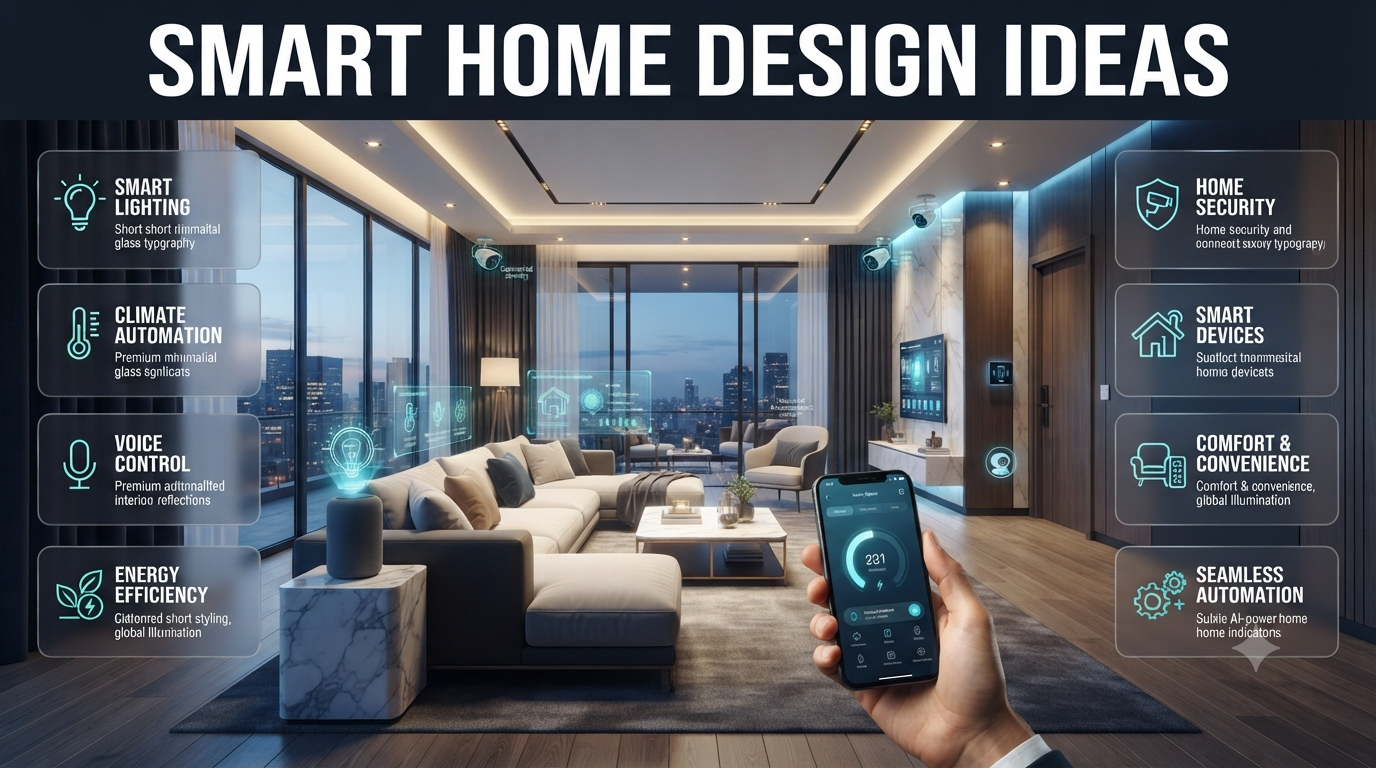
Smart Home Design Ideas | Imagine walking into your home after a long day, and the lights automatically turn on, the air conditioner adjusts to your favorite temperature, your favorite playlist starts playing, and your front door locks behind you—all without pressing a single button. That’s no longer a futuristic dream. It’s the reality of Smart Home Design.
As technology becomes more accessible, homeowners are transforming ordinary houses into intelligent living spaces that improve comfort, security, energy efficiency, and convenience. Whether you’re building a new home, renovating your current one, or simply adding a few smart devices, thoughtful planning can make a huge difference.
At Design Mode 24 Interior Design, we believe smart technology should enhance both the functionality and beauty of your living space. A well-designed smart home combines innovative automation with thoughtful interior planning to create a home that’s efficient, comfortable, and built around your lifestyle.
In this guide, you’ll learn what smart home design really means, the essential technologies every modern home should include, how to plan your setup, common mistakes to avoid, and professional tips to build a smart home that works seamlessly for your lifestyle.
What Is Smart Home Design?
Smart Home Design is the process of integrating connected devices, automation systems, and intelligent technologies into a home to improve convenience, security, energy efficiency, and everyday living. A well-designed smart home allows different devices to communicate with each other and perform tasks automatically through schedules, sensors, or voice commands.
Unlike simply buying a few smart gadgets, smart home design focuses on creating a connected ecosystem where lighting, climate control, security, entertainment, and appliances work together seamlessly. The result is a home that responds intelligently to your daily habits while reducing manual effort.
Why Smart Home Design Matters
Modern lifestyles are busier than ever, and homeowners want solutions that save time while making their homes safer and more efficient. Smart home technology delivers exactly that by automating repetitive tasks and giving you greater control over your living environment.
Whether you’re away on vacation, working from the office, or relaxing on the couch, you can manage lighting, locks, cameras, and even appliances from your smartphone.
Today’s smart homes are also becoming more sustainable by helping homeowners monitor electricity usage, reduce energy waste, and lower monthly utility bills.
💡 Pro Tip: Don’t think of smart home technology as luxury. Start with devices that solve everyday problems, then expand your system over time.
Benefits of Smart Home Design
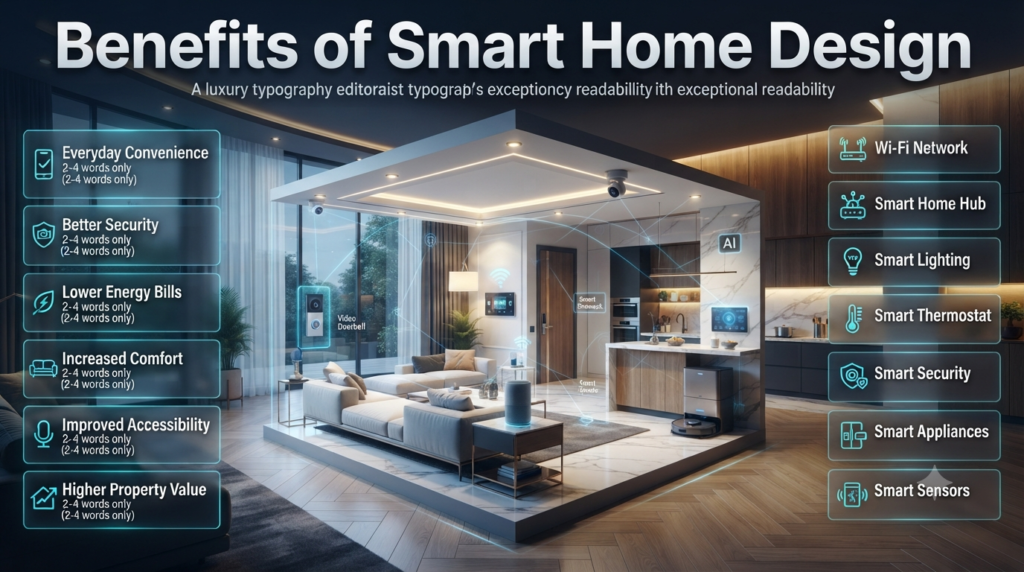
A well-planned smart home offers greater comfort, stronger security, improved energy efficiency, and simplified daily living. Instead of controlling devices individually, homeowners can automate routines that save time, reduce costs, and create a more personalized living experience.
1. Everyday Convenience
One of the biggest advantages of smart home design is convenience.
Imagine leaving home and locking every door, switching off every light, lowering the thermostat, and activating your security system with a single tap.
You can also create routines such as:
- Good Morning Mode
- Work Mode
- Movie Night
- Vacation Mode
- Bedtime Routine
Each routine performs multiple actions automatically, reducing the need for constant manual adjustments.
2. Better Home Security
Security has become one of the main reasons homeowners invest in smart technology.
Modern systems include:
- Smart doorbells
- AI security cameras
- Smart locks
- Motion sensors
- Glass-break detectors
- Smoke alarms
- Water leak sensors
- Real-time smartphone alerts
Instead of discovering problems after they happen, smart security helps you respond immediately.
3. Lower Energy Bills
Smart homes don’t just add convenience—they also improve efficiency.
Automated systems help reduce unnecessary electricity usage by:
- Turning lights off automatically
- Adjusting room temperatures
- Detecting empty rooms
- Monitoring appliance consumption
- Scheduling energy-intensive devices
Many homeowners notice significant savings over time simply by eliminating wasted energy.
📌 Quick Tip: Installing smart plugs is one of the easiest ways to identify which appliances consume the most electricity.
4. Increased Comfort
Comfort is about more than furniture and décor.
A smart home creates an environment that adjusts automatically to your lifestyle.
Examples include:
- Curtains opening at sunrise
- Bedroom lights dimming at night
- Air conditioning starting before you arrive
- Soft lighting during evening hours
- Personalized music in different rooms
To create a home that’s both intelligent and visually appealing, consider combining smart technology with thoughtful Home Styling ideas that enhance comfort and functionality.
5. Improved Accessibility
Smart technology makes homes easier to use for everyone.
Voice assistants allow users to:
- Control lights
- Lock doors
- Play music
- Open blinds
- Adjust thermostats
- Control TVs
- Make phone calls
These features are especially helpful for older adults and individuals with limited mobility.
6. Higher Property Value
Modern buyers increasingly appreciate homes that include integrated technology.
A professionally designed smart home can make a property more attractive because it offers:
- Enhanced security
- Lower operating costs
- Energy efficiency
- Modern lifestyle features
- Future-ready infrastructure
Although technology alone won’t determine a home’s value, it often becomes a strong selling point.
Essential Components of a Smart Home
Every successful smart home is built around reliable internet, connected devices, intelligent automation, sensors, and centralized control. These components work together to create a smooth, dependable experience.
Reliable Wi-Fi Network
Your Wi-Fi network is the foundation of every smart home.
Without strong connectivity, devices may disconnect, respond slowly, or fail to communicate.
For the best performance, consider:
- High-speed broadband
- Mesh Wi-Fi systems
- Strong password protection
- Router placement
- Whole-home coverage
- Regular firmware updates
A dependable network prevents many common smart home frustrations before they happen.
Smart Home Hub
A smart hub acts as the central control point for connected devices.
Instead of opening multiple apps, homeowners can manage everything from one place.
Benefits include:
- Unified control
- Automation routines
- Scheduling
- Device synchronization
- Voice assistant integration
- Easier management
Choosing compatible devices from the beginning creates a smoother and more reliable smart home experience.
Smart Lighting
Lighting is often the easiest and most affordable smart home upgrade.
Popular features include:
- Motion activation
- Brightness adjustment
- Color-changing bulbs
- Voice control
- Scheduling
- Sunrise and sunset automation
- Vacation lighting
Smart lighting also enhances interior design by creating different moods throughout the day. Pair automated lighting with inspiring Living Room Paint Ideas to achieve a modern and inviting atmosphere.
Smart Thermostats
Heating and cooling account for a large portion of household energy consumption.
Smart thermostats automatically learn your routine and optimize indoor temperatures without constant adjustments.
Benefits include:
- Reduced energy costs
- Remote control
- Learning schedules
- Occupancy detection
- Energy reports
- Greater comfort
Smart Security Systems
Security technology has evolved significantly in recent years.
Today’s systems often combine:
- Smart cameras
- Video doorbells
- Window sensors
- Motion detectors
- Smart locks
- Alarm systems
- Mobile alerts
When integrated properly, these devices work together to provide comprehensive protection for your home.
Smart Appliances
Modern appliances are becoming increasingly connected.
Examples include:
- Smart refrigerators
- Connected ovens
- Wi-Fi washing machines
- Robotic vacuum cleaners
- Smart dishwashers
- Automated coffee makers
These appliances simplify household chores while improving efficiency and convenience.
Smart Sensors
Smart sensors quietly power many automated routines.
| Sensor | Purpose |
|---|---|
| Motion Sensor | Detects movement |
| Door Sensor | Monitors entry points |
| Window Sensor | Improves security |
| Temperature Sensor | Controls climate |
| Humidity Sensor | Maintains comfort |
| Leak Sensor | Detects water leaks |
| Smoke Sensor | Improves fire safety |
| Light Sensor | Automates lighting |
These sensors allow your home to react intelligently without requiring constant user input.
Step-by-Step Guide to Planning Your Smart Home
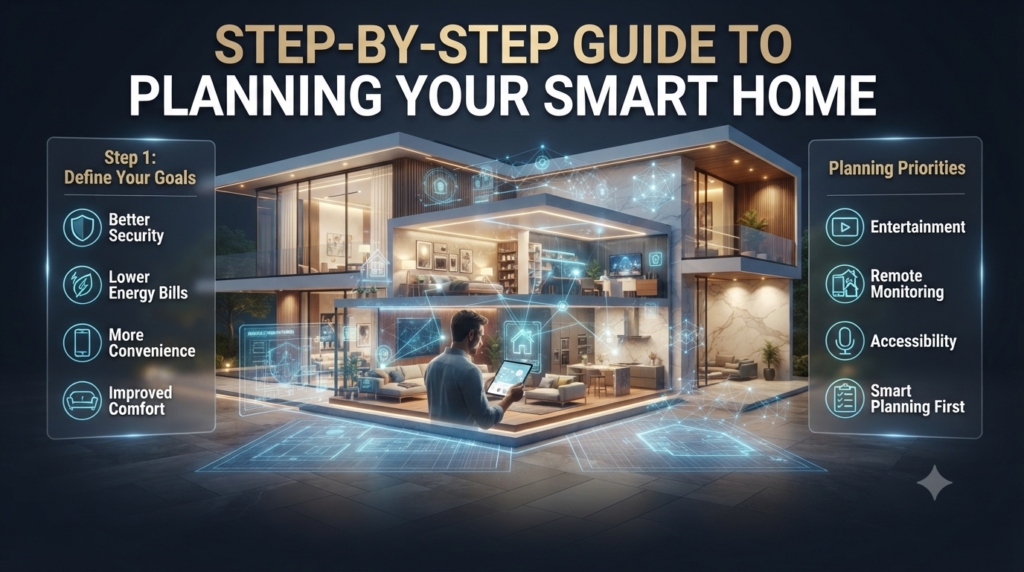
The most successful smart homes begin with careful planning rather than buying random gadgets. Identify your goals, choose a compatible ecosystem, plan your network, prioritize important rooms, and expand gradually as your needs grow.
Step 1: Define Your Goals
What to Do
Before purchasing any smart devices, decide what problems you want to solve.
Examples include:
- Better home security
- Lower energy costs
- More convenience
- Improved comfort
- Entertainment
- Remote monitoring
- Accessibility
Writing down your priorities helps you avoid unnecessary purchases.
Why It Matters
Every smart device should improve your daily life instead of becoming another gadget that rarely gets used.
⭐ Expert Tip
Start with your most frequently used spaces, such as the living room, kitchen, or entryway, where automation provides the greatest everyday value.
⚠ Common Mistake
Buying popular smart devices simply because they’re trending, without checking whether they work together or solve a real need.
Quick Example
A family looking to reduce electricity costs may begin with smart lighting, thermostats, and energy-monitoring plugs before investing in advanced entertainment systems.
Step 2: Choose a Compatible Smart Home Ecosystem
What to Do
Select one primary smart home platform before purchasing devices. Sticking to a compatible ecosystem helps your lights, locks, cameras, thermostats, and appliances communicate seamlessly.
Why It Matters
Mixing incompatible products often leads to setup issues, limited automation options, and the frustration of managing several different apps.
Professional Advice
Think long-term. Choose products that can grow with your home so future upgrades are easier and more cost-effective.
Common Mistake
Choosing devices based solely on price instead of compatibility, making future expansion more difficult.
Room-by-Room Smart Home Design Ideas
The best smart homes are designed around how each room is used. Instead of installing technology everywhere, choose smart devices that improve comfort, convenience, security, and efficiency in specific spaces. This approach creates a smarter home without unnecessary complexity.
Smart Living Room Design
The living room is where families spend most of their time, making it one of the best places to begin your smart home journey.
A modern smart living room combines entertainment, lighting, climate control, and automation to create a comfortable environment throughout the day.
Popular smart features include:
- Voice-controlled lighting
- Automated curtains or blinds
- Smart TVs
- Wireless speakers
- Smart plugs
- Motion sensors
- Smart ceiling fans
- Universal remote systems
For example, saying “Movie Night” could automatically:
- Dim the lights
- Close the curtains
- Turn on the television
- Switch the sound system
- Adjust room temperature
Instead of controlling multiple devices separately, one routine creates the perfect atmosphere.
If you’re redesigning your living space, pairing smart lighting with the right Living Room Paint Ideas can dramatically improve both functionality and visual appeal.
💡 Pro Tip: Install smart plugs behind entertainment units so existing lamps and electronics can become smart without replacing them.
Smart Kitchen Design
A smart kitchen combines connected appliances, intelligent lighting, and automation to improve cooking, organization, and energy efficiency while making everyday tasks easier.
The kitchen has become much more than a place to cook. Today’s smart kitchens help homeowners save time while reducing energy waste.
Useful smart kitchen devices include:
- Smart refrigerators
- Wi-Fi ovens
- Smart microwaves
- Touchless faucets
- Smart dishwashers
- Under-cabinet smart lighting
- Leak detection sensors
- Smart smoke detectors
These devices can notify you when maintenance is needed, monitor energy consumption, or even allow you to preheat your oven before arriving home.
A beautiful kitchen deserves an equally attractive color scheme. Browse Kitchen Paint Colors to find shades that complement modern smart appliances and lighting.
Smart Bedroom Design
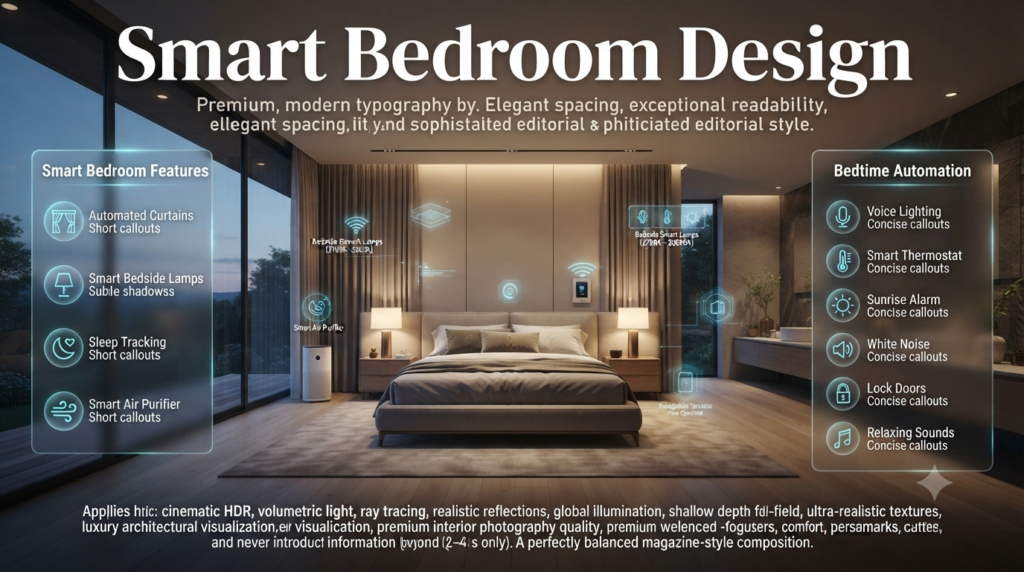
The bedroom should be your most relaxing room, and automation can make that possible.
Instead of bright lights and noisy alarms, your bedroom can gently prepare you for sleep and help you wake up naturally.
Popular smart bedroom features include:
- Automated blackout curtains
- Smart bedside lamps
- Sleep tracking devices
- Smart air purifiers
- Voice-controlled lighting
- Smart thermostats
- Sunrise alarm lighting
- White noise speakers
A bedtime routine might automatically:
- Lock doors
- Turn off downstairs lights
- Lower room temperature
- Close curtains
- Play relaxing sounds
This creates a peaceful environment without requiring multiple manual tasks.
For a calming atmosphere, combine smart lighting with soothing Bedroom Color Inspiration that promotes better sleep and relaxation.
⭐ Expert Tip: Warm white lighting (around 2700K–3000K) is generally more comfortable in bedrooms than cool white lighting, especially during the evening.
Smart Bathroom Design
Bathrooms are often overlooked during smart home planning, but they can greatly improve comfort and convenience.
Popular upgrades include:
- Motion-sensor lighting
- Smart mirrors
- Heated towel racks
- Smart exhaust fans
- Leak sensors
- Water temperature monitoring
- Automatic faucets
- Heated floors
Leak sensors placed near toilets, sinks, and washing machines can alert homeowners before minor leaks become expensive repairs.
Small improvements like these provide long-term value without requiring a major renovation.
Smart Home Office Design
As remote work continues to grow, home offices have become a priority.
Smart technology helps improve productivity while reducing distractions.
Useful additions include:
- Adjustable smart lighting
- Automated blinds
- Noise control devices
- Smart thermostats
- Video conferencing lighting
- Air quality monitors
- Smart speakers
- Occupancy sensors
Good lighting and comfortable temperatures can significantly improve focus throughout the workday.
Smart Entryway Design
Your home’s entrance creates the first impression while serving as the center of household security.
Essential smart entry features include:
- Smart door locks
- Video doorbells
- Motion lighting
- Smart package detection
- Security cameras
- Door sensors
Imagine receiving a notification the moment a package arrives or unlocking your front door remotely for a trusted visitor.
These small conveniences quickly become part of everyday life.
Smart Outdoor Spaces
Outdoor automation improves both security and curb appeal.
Popular smart outdoor features include:
- Landscape lighting
- Smart irrigation systems
- Outdoor security cameras
- Motion floodlights
- Smart garage doors
- Weather sensors
- Pool automation
- Outdoor speakers
Automated irrigation systems can even adjust watering schedules based on weather forecasts, helping conserve water while keeping gardens healthy.
Smart Lighting Design Tips
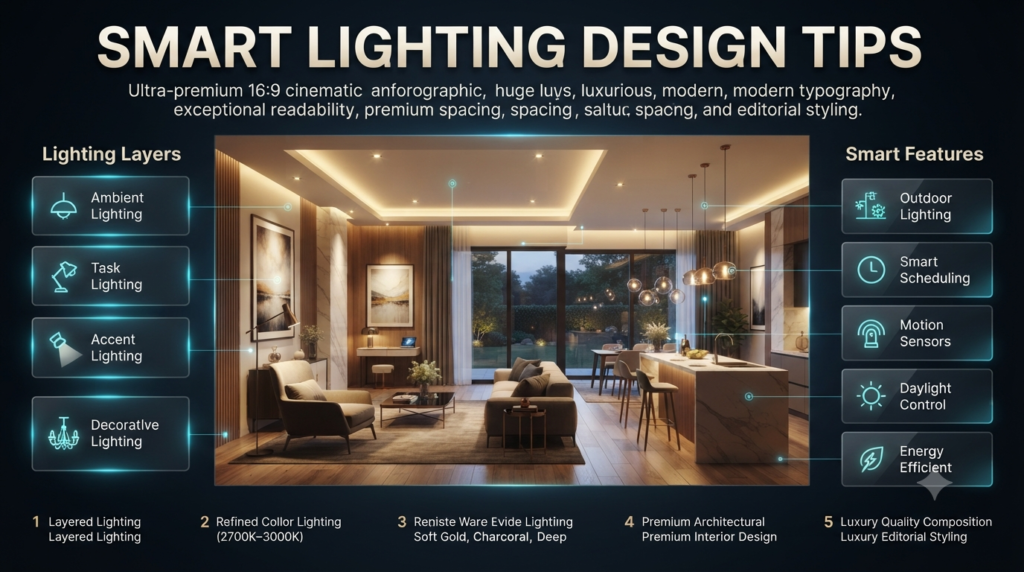
Smart lighting should improve comfort rather than simply adding colorful bulbs. Layering ambient, task, and accent lighting creates a balanced, energy-efficient home that’s easy to control and enjoyable to live in.
Professional designers recommend using multiple lighting layers instead of relying on a single ceiling fixture.
| Lighting Type | Best Use |
|---|---|
| Ambient | General room lighting |
| Task | Reading, cooking, working |
| Accent | Artwork and décor |
| Decorative | Chandeliers and pendants |
| Outdoor | Security and landscaping |
Smart scheduling allows lights to adjust automatically throughout the day based on natural sunlight.
To maximize the impact of your lighting, pair it with carefully selected wall colors from Paint Color resources that enhance brightness and atmosphere.
📌 Quick Tip: Place motion sensors in hallways, closets, and staircases where lights are frequently forgotten.
Smart Climate Control
Climate automation goes far beyond controlling air conditioning.
Today’s intelligent systems monitor:
- Indoor temperature
- Outdoor weather
- Humidity
- Occupancy
- Air quality
Benefits include:
- Better comfort
- Lower energy bills
- Improved indoor air quality
- Reduced HVAC wear
- Personalized schedules
Many homeowners also automate ceiling fans alongside thermostats for greater efficiency. Choosing suitable Ceiling Colors can further enhance brightness and make climate-controlled spaces feel larger and more inviting.
Smart Home Security Best Practices
Security should always be part of your overall home design rather than an afterthought.
A layered security strategy often includes:
- Video doorbells
- Outdoor cameras
- Indoor cameras
- Smart locks
- Window sensors
- Motion detectors
- Alarm systems
- Cloud recording
- Emergency alerts
Security Checklist
✔ Secure Wi-Fi passwords
✔ Enable two-factor authentication
✔ Update firmware regularly
✔ Place cameras strategically
✔ Backup important recordings
✔ Test alarms monthly
⚠ Common Mistake: Many homeowners install expensive cameras but forget to secure their Wi-Fi network. Weak passwords can make connected devices vulnerable to unauthorized access.
Energy-Efficient Smart Home Design
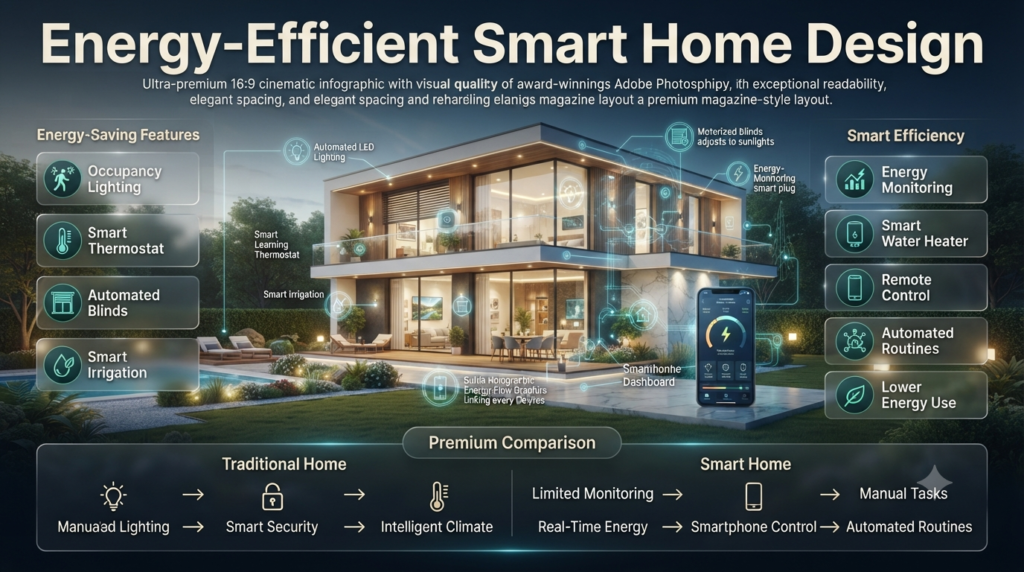
One of the biggest long-term benefits of smart technology is improved energy efficiency.
Automation helps eliminate unnecessary electricity consumption without reducing comfort.
Energy-saving ideas include:
- Occupancy-based lighting
- Smart thermostats
- Automated blinds
- Smart irrigation
- Energy-monitoring plugs
- Smart water heaters
Comparison Table: Traditional Home vs Smart Home
| Feature | Traditional Home | Smart Home |
|---|---|---|
| Lighting | Manual switches | Automated schedules & voice control |
| Security | Basic locks | Cameras, sensors & smart locks |
| Climate | Manual thermostat | Intelligent learning thermostat |
| Energy Monitoring | Limited | Real-time usage tracking |
| Remote Control | Not available | Smartphone access |
| Convenience | Manual operation | Automated routines |
Many homeowners find that combining automation with thoughtful Home Design Ideas creates spaces that are not only more efficient but also more enjoyable to live in.
Common Smart Home Design Mistakes
Even the best technology can become frustrating if it’s poorly planned.
Some of the most common mistakes include:
Buying Devices Without a Plan
Many homeowners purchase random gadgets that don’t integrate with one another.
How to avoid it: Create a complete smart home plan before shopping.
Ignoring Wi-Fi Coverage
Weak internet signals cause delayed responses and disconnected devices.
How to avoid it: Invest in reliable Wi-Fi or a mesh network before expanding your smart home.
Choosing Price Over Compatibility
Cheap devices may save money initially but often create compatibility issues later.
How to avoid it: Prioritize quality and ecosystem compatibility over the lowest price.
Over-Automating Everything
Not every task needs automation.
Too many unnecessary routines can make your home confusing rather than convenient.
How to avoid it: Automate repetitive tasks that genuinely improve your daily life.
Forgetting Interior Design
Technology should complement your home’s appearance instead of dominating it.
Hide cables, choose matching finishes, and integrate devices naturally into your décor. Pairing automation with timeless Interior Design principles ensures your home remains stylish as well as functional.
Expert Recommendations for a Future-Ready Smart Home
Professional designers and smart home installers often follow these best practices:
- Plan your smart home before buying devices.
- Choose products that support future upgrades.
- Build around a reliable Wi-Fi network.
- Focus on security from the beginning.
- Create simple automation routines before adding complex ones.
- Invest in quality products for frequently used areas.
- Keep software and firmware updated regularly.
- Blend technology with beautiful interiors instead of letting devices become the focal point.
A truly successful smart home isn’t the one with the most gadgets—it’s the one that quietly makes everyday life easier, safer, and more enjoyable.
Future Trends in Smart Home Design
The future of Smart Home Design is centered on artificial intelligence, sustainability, improved interoperability, and predictive automation. Instead of waiting for commands, future smart homes will anticipate your needs, optimize energy consumption, and provide a more personalized living experience.
Technology continues to evolve rapidly, making smart homes more intelligent, efficient, and user-friendly. As devices become better at communicating with each other, homeowners can expect smoother automation and fewer compatibility issues.
Some of the biggest trends shaping modern smart homes include:
- AI-powered home automation
- Matter-compatible smart devices
- Smart energy management
- Solar integration
- Predictive maintenance alerts
- Advanced home security systems
- Health and wellness monitoring
- Touchless home controls
- Smart water management
- Eco-friendly automation
The focus is shifting from owning more smart devices to creating homes that are intelligent, sustainable, and easy to manage.
💡 Pro Tip: When purchasing new devices, choose products that support future standards and regular software updates. This helps protect your investment as technology evolves.
Smart Home Budget Guide
Building a smart home doesn’t require a huge budget. Start with essential devices that solve everyday problems, then expand your system over time. Prioritizing your needs allows you to enjoy smart home benefits without overspending.
Estimated Budget by Home Type
| Home Type | Suggested Smart Features | Estimated Budget |
|---|---|---|
| Apartment | Smart bulbs, smart plugs, smart speaker, smart lock | Low |
| Small Home | Lighting, thermostat, cameras, doorbell | Medium |
| Family Home | Full lighting automation, security, climate control, entertainment | Medium to High |
| Luxury Home | Whole-home automation, multi-room audio, motorized blinds, AI security | Premium |
Instead of buying everything at once, build your smart home in phases:
Phase 1
- Smart speaker
- Smart lighting
- Smart plugs
Phase 2
- Smart thermostat
- Smart locks
- Video doorbell
Phase 3
- Security cameras
- Smart appliances
- Automated blinds
- Energy monitoring
Phase 4
- Whole-home automation
- Multi-room entertainment
- AI routines
- Advanced security integration
This phased approach makes upgrades easier while keeping costs manageable.
How do I integrate smart technology into my home without ruining my interior design aesthetic?
The secret to successful Smart Home Design is making technology feel like a natural part of your home instead of the center of attention. Rather than filling every room with visible gadgets, choose smart devices that blend into your décor, complement your color palette, and support your daily routine. A thoughtfully planned smart home should look clean, organized, and timeless while delivering modern convenience behind the scenes.
Professional interior designers often hide technology wherever possible. Smart speakers can sit discreetly on shelves, motorized blinds disappear into window frames, and recessed smart lighting provides automation without drawing attention. Even security cameras and sensors can be positioned carefully to preserve the overall design of a room.
To create a cohesive look, coordinate finishes and materials across your smart devices. For example, choose switches, thermostats, and smart locks in finishes that match your cabinet hardware, door handles, or light fixtures. Avoid mixing too many colors or styles, as consistency creates a more luxurious appearance.
A clutter-free installation is equally important. Conceal cables, place routers in hidden locations with good ventilation, and organize charging stations inside cabinets whenever possible. This keeps technology functional without making your home feel overly technical.
Key Tips:
Choose minimalist smart devices that blend with your décor.
Hide cables and networking equipment whenever possible.
Match device finishes with existing hardware and fixtures.
Use recessed or concealed lighting for a cleaner appearance.
Prioritize functionality without sacrificing visual balance.
What is Matter, and why should I care about it when planning a new smart home system?
Matter is a universal smart home connectivity standard developed to make devices from different manufacturers work together more easily. Instead of worrying whether one brand is compatible with another, Matter-certified devices are designed to communicate across supported ecosystems, giving homeowners greater flexibility when expanding their smart home.
Before Matter, many smart home systems operated in separate ecosystems, forcing users to stay within one brand or manage multiple apps. Matter simplifies this process by improving interoperability, making setup easier, and reducing compatibility issues.
For anyone planning a new smart home, choosing Matter-compatible products helps future-proof your investment. As your needs grow, you’ll have more freedom to add new devices without replacing your existing system.
Matter also improves reliability because many supported devices communicate locally instead of depending entirely on cloud services. This often results in faster response times and better performance during internet interruptions.
Benefits of Matter:
Better compatibility between different brands.
Easier installation and setup.
More reliable local communication.
Greater flexibility for future upgrades.
Reduced dependence on a single manufacturer.
How should I design a smart lighting plan that improves both wellness and energy efficiency?
A well-designed smart lighting system does much more than turn lights on and off remotely. It supports your natural daily rhythm, enhances comfort, and reduces unnecessary energy consumption by automatically adjusting brightness, color temperature, and operating schedules.
Start by dividing your lighting into layers rather than relying on a single ceiling fixture. Ambient lighting provides overall illumination, task lighting supports activities such as reading or cooking, and accent lighting highlights artwork or architectural features. Smart controls allow each layer to operate independently or together.
Scheduling also plays an important role. Warm, dim lighting during the evening encourages relaxation, while brighter, cooler lighting in the morning helps improve alertness. Motion sensors in hallways, bathrooms, closets, and staircases ensure lights are only used when needed, reducing wasted electricity.
Daylight sensors can further improve efficiency by adjusting artificial lighting based on the amount of natural light entering a room. This creates a more comfortable environment while lowering energy costs.
Best Practices:
Layer ambient, task, and accent lighting.
Use warm lighting during evening hours.
Schedule brighter lighting for mornings.
Install motion sensors in low-traffic areas.
Use daylight sensors to reduce unnecessary lighting.
Choose LED smart bulbs for maximum efficiency.
What are the essential infrastructure requirements for a reliable, luxury smart home?
The most impressive luxury smart homes aren’t defined by expensive gadgets—they’re built on reliable infrastructure. Without a strong technical foundation, even the most advanced automation system will struggle with slow response times, connectivity issues, and inconsistent performance.
The first priority is a robust home network. A high-speed internet connection combined with a professionally designed mesh Wi-Fi system ensures consistent coverage throughout the property. Larger homes may also benefit from wired Ethernet connections for devices that require maximum reliability, such as security systems and media equipment.
Electrical planning is equally important. Provide sufficient power outlets, dedicated circuits for high-demand equipment, and backup power solutions for essential devices like routers and security systems.
Luxury homes should also include structured cabling, centralized equipment storage, surge protection, and scalable automation platforms that allow future upgrades without major renovations.
Planning these elements during construction or remodeling is significantly easier and more cost-effective than retrofitting them later.
Essential Infrastructure Checklist:
Reliable high-speed internet connection.
Whole-home mesh Wi-Fi coverage.
Structured Ethernet cabling where possible.
Central equipment cabinet or media closet.
Surge protection for connected devices.
Backup power for critical systems.
Scalable automation platform.
Professional network security configuration.
How can I design a smart home security system that prioritizes privacy over convenience?
A secure smart home should protect both your property and your personal information. While convenience features like remote access and cloud storage are valuable, privacy should remain a top priority during the design process.
Begin by securing your home network. Use strong, unique passwords for every device, enable two-factor authentication, and keep firmware updated regularly. These simple steps significantly reduce the risk of unauthorized access.
When selecting security equipment, choose manufacturers with a strong reputation for privacy and ongoing software support. Whenever possible, use systems that allow local storage or encrypted recording instead of relying entirely on cloud services.
Carefully consider camera placement as well. Outdoor cameras should monitor entrances and driveways, while indoor cameras should only be installed where they are genuinely necessary. Avoid placing cameras in bedrooms, bathrooms, or other private areas.
Finally, review app permissions and only enable features you actually need. Limiting unnecessary data sharing helps maintain better control over your home’s digital privacy.
Privacy-Focused Security Tips:
Enable two-factor authentication.
Keep all devices updated.
Use strong, unique passwords.
Choose encrypted or local video storage.
Place cameras only where necessary.
Review app permissions regularly.
Separate smart devices on a dedicated Wi-Fi network.
Buy products from trusted manufacturers with long-term software support.
Conclusion
Smart Home Design is no longer just about adding the latest gadgets—it’s about creating a home that works smarter for the people who live in it. When planned carefully, smart technology can improve everyday comfort, strengthen security, reduce energy consumption, and simplify daily routines without compromising your home’s style or functionality.
The key to success is starting with a clear plan rather than buying random devices. Focus on your lifestyle, choose a compatible smart home ecosystem, invest in a reliable network, and prioritize solutions that solve real problems. As your needs change, you can expand your system gradually while keeping your home organized, efficient, and future-ready.
Remember that great smart homes combine intelligent automation with thoughtful interior design. By balancing technology, aesthetics, and practicality, you can create a connected living space that’s comfortable, secure, energy-efficient, and built to last. Whether you’re making small upgrades or designing a fully automated home from scratch, every smart decision you make today helps create a more convenient and enjoyable home for the future.

Leave a Reply