
Introduction
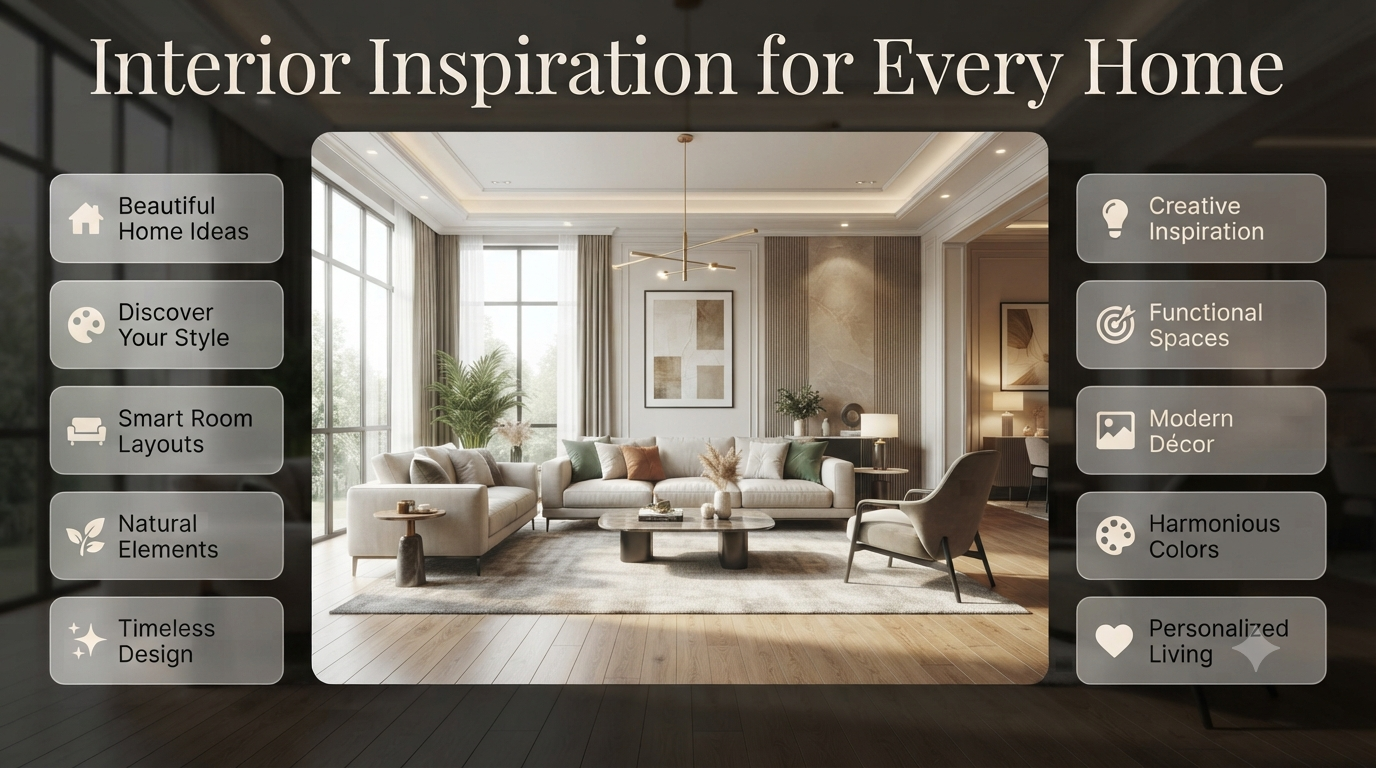
Interior Inspiration for Every Home | Creating a beautiful home doesn’t always start with buying expensive furniture or hiring a designer. More often, it begins with a single idea that sparks your imagination. That’s exactly what interior inspiration is—a collection of ideas, styles, colors, textures, and layouts that help you transform your living space into a home that feels comfortable, functional, and uniquely yours.
Whether you’re decorating a new house, refreshing one room, or planning a complete makeover, finding the right inspiration can save time, prevent costly mistakes, and help you make confident design decisions. In this guide, you’ll discover where to find the best ideas, how to identify your personal design style, and practical ways to turn inspiration into a home you’ll love for years.
What Is Interior Inspiration?
Interior inspiration is the process of gathering ideas, styles, colors, layouts, and design concepts that help you create spaces reflecting your personality, lifestyle, and functional needs. Rather than copying someone else’s home, it’s about discovering ideas that work for your own space.
Every well-designed room starts with inspiration. It can come from architecture, nature, travel, artwork, hotels, cafés, magazines, or even everyday life. Inspiration gives direction before you begin selecting furniture, paint colors, lighting, or décor.
Unlike following a single design trend, interior inspiration encourages creativity while ensuring your home remains practical and timeless.
Some people prefer modern simplicity, while others are drawn to rustic charm, Scandinavian comfort, contemporary elegance, or classic luxury. Inspiration helps narrow these preferences into a clear vision.
Why Interior Inspiration Matters Before Decorating
Many homeowners rush into buying furniture or painting walls without a clear plan. The result is often mismatched décor, wasted money, and spaces that never feel complete.
Taking time to gather inspiration allows you to make thoughtful decisions instead of impulse purchases.
Benefits of Finding Inspiration First
- Creates a consistent design throughout your home.
- Helps you establish a realistic decorating budget.
- Prevents expensive decorating mistakes.
- Makes furniture shopping much easier.
- Improves room functionality.
- Builds confidence when choosing colors and materials.
- Creates a home that reflects your personality instead of temporary trends.
💡 Pro Tip: Spend several days collecting ideas before making any purchases. You’ll naturally notice repeating colors, materials, and styles that match your taste.
Where Can You Find Interior Inspiration?
The best interior inspiration comes from combining different sources instead of relying on a single website or trend. This helps you create a home that’s unique rather than an exact copy of someone else’s design.
Here are some of the most reliable places professionals use when planning interiors.
1. Explore Real Homes
Nothing provides better inspiration than seeing how people actually live.
Pay attention to:
- Furniture arrangement
- Storage solutions
- Lighting placement
- Wall treatments
- Decorative accessories
- Space-saving ideas
Real homes often provide more practical ideas than showroom displays because they balance beauty with everyday living.
2. Study Professional Interior Design Projects
Professional designers understand scale, balance, texture, and functionality.
Browsing projects from experienced designers helps you learn:
- How colors work together
- Proper furniture spacing
- Layering techniques
- Lighting combinations
- Material selection
If you’re planning a complete home transformation, exploring resources like Interior Design can provide practical guidance on creating cohesive spaces from room to room.
⭐ Expert Tip: Don’t copy a room exactly. Instead, identify why it looks good. Is it the lighting? The furniture layout? The color palette? Learning the design principles behind the look will help you adapt the ideas to your own home.
3. Take Inspiration From Nature
Nature has inspired designers for centuries because its color combinations always feel balanced.
Examples include:
| Natural Element | Interior Design Inspiration |
|---|---|
| Forests | Earthy greens, warm wood, organic textures |
| Beaches | Soft blues, whites, sand tones |
| Mountains | Stone finishes, gray palettes, rustic wood |
| Desert | Terracotta, beige, warm neutrals |
| Gardens | Floral accents, natural fabrics, botanical décor |
Natural materials also create timeless interiors that rarely go out of style.
4. Visit Hotels, Cafés, and Restaurants
Luxury hotels and boutique cafés invest heavily in interior design.
Observe details like:
- Lighting temperature
- Ceiling treatments
- Furniture spacing
- Accent walls
- Artwork placement
- Texture combinations
Many ideas can easily be recreated at home with a smaller budget.
5. Browse Home Improvement Resources
When planning a renovation, it’s helpful to explore guides that cover remodeling, storage solutions, flooring, lighting, and structural improvements—not just décor.
Resources focused on Home Improvement can help you understand how practical upgrades support better interior design decisions.
📌 Quick Tip: Save inspiration by category instead of mixing everything together. Create separate folders for kitchens, bedrooms, bathrooms, living rooms, lighting, colors, and furniture.
How Do You Identify Your Personal Interior Style?
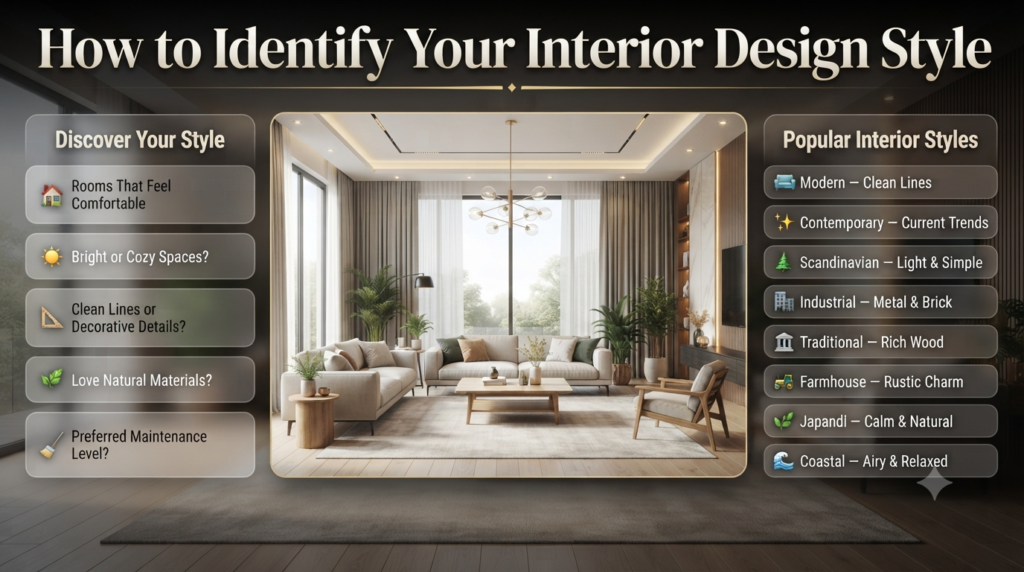
The easiest way to identify your style is to look for patterns in the rooms you’re naturally drawn to. Most people consistently prefer similar colors, materials, and furniture without realizing it.
Instead of asking, “Which design style is most popular?” ask yourself:
- Which rooms make me feel comfortable?
- Do I prefer bright or cozy spaces?
- Do I like clean lines or decorative details?
- Am I attracted to natural materials?
- How much maintenance am I willing to handle?
Your answers reveal your design preferences more accurately than following trends.
Popular Interior Styles
| Style | Best For | Key Features |
|---|---|---|
| Modern | Minimalists | Clean lines, open spaces |
| Contemporary | Trend lovers | Current materials and layouts |
| Scandinavian | Cozy homes | Light colors, simplicity |
| Industrial | Urban apartments | Metal, exposed brick, concrete |
| Traditional | Classic homes | Rich wood, elegant details |
| Farmhouse | Warm family spaces | Rustic textures, vintage charm |
| Japandi | Calm interiors | Minimalism with natural warmth |
| Coastal | Relaxing environments | Soft blues, airy layouts |
Remember, your home doesn’t need to fit perfectly into one category. Mixing compatible styles often creates the most authentic results.
Build an Inspiration Board Before You Buy Anything
One of the smartest habits professional designers follow is creating a visual inspiration board.
This can be digital or physical.
Include:
- Furniture
- Paint colors
- Flooring
- Lighting
- Rugs
- Fabrics
- Artwork
- Decorative accessories
- Plants
- Window treatments
Once everything is collected together, you’ll quickly notice whether the designs feel cohesive.
⚠ Common Mistake: Buying individual pieces because they look attractive on their own. A beautiful chair may not work with the rest of your room if it doesn’t match the overall design direction.
Choosing the Right Color Palette
Color is often the first thing people notice when they enter a room. A well-planned palette creates harmony, while random color choices can make even expensive interiors feel disconnected.
Before selecting paint, decide on the mood you want to create.
Soft and Relaxing
- Warm whites
- Beige
- Light gray
- Sage green
- Dusty blue
If you’re looking for timeless combinations, exploring Neutral Color Schemes is an excellent starting point.
Warm and Welcoming
Earth-inspired colors make rooms feel inviting and comfortable.
Popular choices include:
- Terracotta
- Clay
- Camel
- Olive green
- Warm taupe
You can also discover ideas through Warm Color Palettes for homes that need extra warmth and character.
Bold and Dramatic
These colors work well as accents rather than dominating an entire room.
Examples include:
- Navy blue
- Emerald green
- Charcoal
- Burgundy
- Matte black
The secret is balancing bold colors with neutral surroundings to prevent visual overload.
Interior Inspiration Isn’t Just About Furniture
Many people believe furniture defines a room, but professionals know that successful interiors depend on multiple elements working together.
Think of your room like this:
Foundation
│
├── Layout
├── Lighting
├── Colors
├── Flooring
├── Furniture
├── Textures
├── Accessories
└── Personal Details
When one layer is missing, the room often feels unfinished.
For example, a beautifully furnished living room can still feel cold if it lacks soft textiles, artwork, or proper lighting.
Focus on the Details That Create Character
The most memorable interiors are rarely filled with expensive items. Instead, they include thoughtful details that add warmth and personality, such as layered lighting, natural textures, meaningful artwork, books, plants, and carefully chosen accessories.
If you’re updating individual spaces, related guides like Home Styling and Home Design Ideas can provide additional inspiration for creating cohesive, inviting interiors throughout your home.
Turn Interior Inspiration Into a Real Design: Step-by-Step Guide
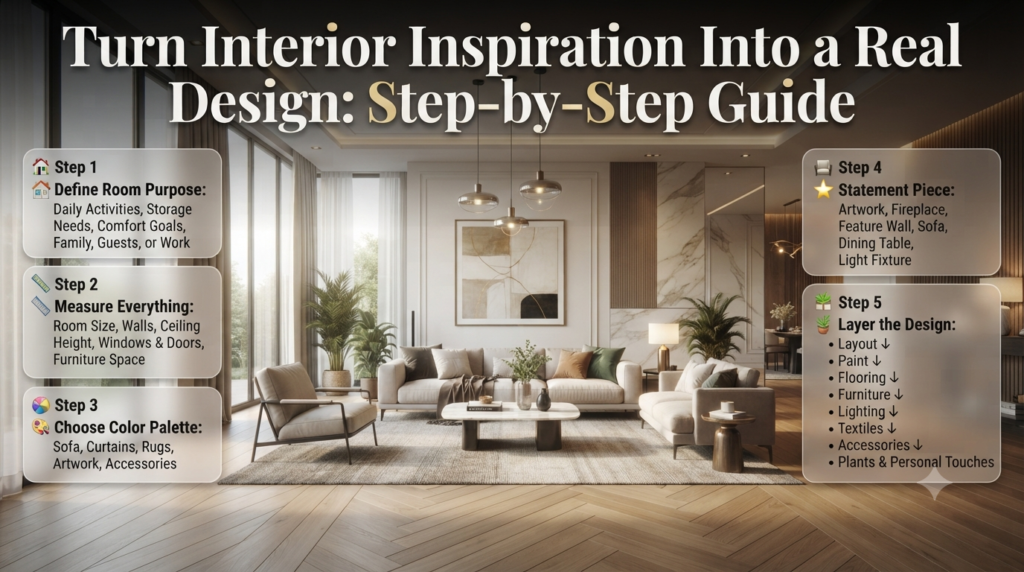
Finding beautiful ideas is easy. The real challenge is turning those ideas into a home that looks cohesive, fits your lifestyle, and stays within your budget. Professional designers don’t start by shopping—they start with a plan.
Follow these steps to move from inspiration to a finished space with confidence.
Step 1: Define the Purpose of the Room
Before choosing colors or furniture, decide how the room should function. A beautiful space that doesn’t meet your daily needs will never feel complete.
What to Do
Ask yourself:
- Who uses this room every day?
- What activities happen here?
- Do I need more storage?
- Should the room feel relaxing or energetic?
- Is it mainly for family, guests, or work?
Why It Matters
Every design decision should support the room’s purpose. A family living room requires different furniture than a formal sitting room.
⭐ Expert Tip: Write down three priorities before buying anything. For example:
- Comfortable seating
- Better storage
- More natural light
Common Mistake
Choosing furniture before understanding how the space will actually be used.
Quick Example
A young family may choose washable fabrics and rounded furniture corners, while someone living alone might prioritize statement pieces and luxury finishes.
Step 2: Measure Everything
One of the biggest decorating mistakes is buying furniture that doesn’t fit.
What to Do
Measure:
- Room dimensions
- Wall lengths
- Ceiling height
- Windows
- Doors
- Existing furniture
Also measure walkways so movement remains comfortable.
Why It Matters
Good proportions make a room feel balanced.
📌 Quick Tip: Use painter’s tape on the floor to outline furniture sizes before purchasing.
Step 3: Choose Your Color Palette First
Paint is much easier to change than furniture.
Select your overall palette before buying:
- Sofa
- Curtains
- Rugs
- Artwork
- Accessories
For additional inspiration, browse Paint Color to explore combinations that suit different home styles.
Step 4: Build Around One Statement Piece
Every professionally designed room usually has one focal point.
Examples include:
- Large artwork
- Fireplace
- Feature wall
- Beautiful sofa
- Dining table
- Elegant light fixture
Everything else should support that focal point instead of competing with it.
💡 Pro Tip: A room with one strong focal point often looks more luxurious than one filled with multiple attention-grabbing pieces.
Step 5: Layer the Design
Professionals don’t decorate all at once.
Instead, they layer the room.
Layout
      ↓
Paint
      ↓
Flooring
      ↓
Furniture
      ↓
Lighting
      ↓
Textiles
      ↓
Accessories
      ↓
Plants & Personal Touches
Each layer adds comfort, personality, and visual interest.
Interior Inspiration for Every Room
Every room has different needs. The best inspiration balances style with functionality.
Living Room Interior Inspiration
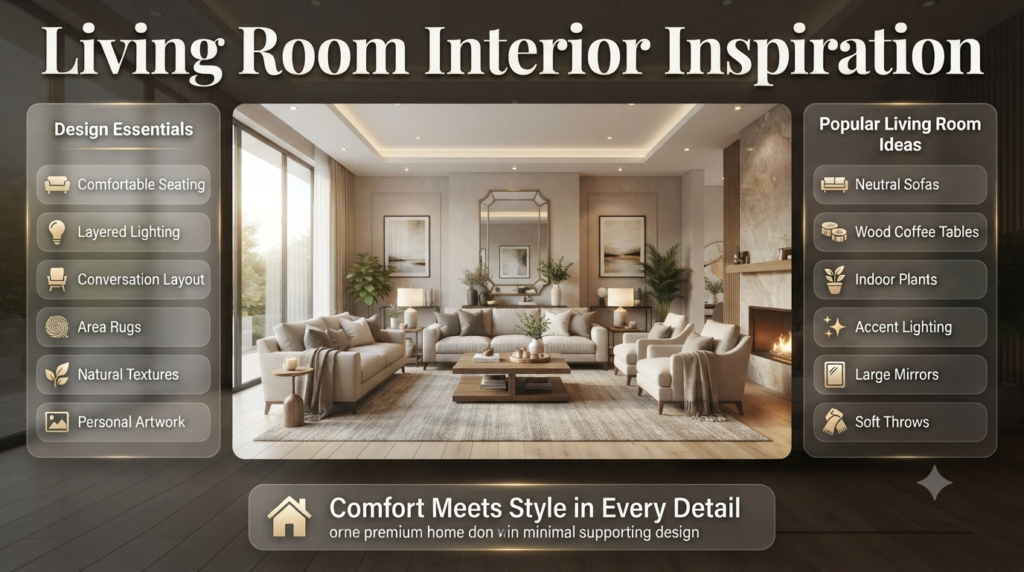
The living room should feel welcoming, comfortable, and easy to use. It often serves as the social heart of the home, making layout just as important as decoration.
Focus On
- Comfortable seating
- Layered lighting
- Conversation-friendly layout
- Area rugs
- Natural textures
- Personal artwork
Popular ideas include:
- Neutral sofas
- Wood coffee tables
- Indoor plants
- Accent lighting
- Large mirrors
- Soft throws
If you’re updating this space, Living Room Paint Ideas can help you choose colors that complement your furniture and lighting.
Living Room Checklist
✔ Comfortable seating
✔ Coffee table
✔ Accent lighting
✔ Area rug
✔ Curtains
✔ Decorative pillows
✔ Wall décor
✔ Greenery
Bedroom Interior Inspiration
A bedroom should promote relaxation rather than visual clutter. Every design decision should help create a peaceful environment for better rest.
Prioritize:
- Soft lighting
- Comfortable bedding
- Calm colors
- Functional storage
- Minimal clutter
Many designers start by selecting bedding first because it occupies the largest visual area in the room.
For calming palettes, explore Bedroom Color Inspiration before choosing paint.
⭐ Expert Tip: Keep electronic devices to a minimum if your goal is creating a restful bedroom atmosphere.
Kitchen Interior Inspiration
The kitchen is one of the busiest rooms in any home.
Good design combines beauty with efficiency.
Focus on:
- Easy movement
- Durable materials
- Plenty of lighting
- Organized storage
- Easy-to-clean surfaces
Popular trends include:
- Quartz countertops
- Open shelving
- Warm wood cabinetry
- Matte hardware
- Large islands
- Hidden storage
If you’re repainting cabinets or walls, Kitchen Paint Colors offers ideas that work with both modern and traditional kitchens.
⚠ Common Mistake: Choosing trendy finishes without considering long-term maintenance.
Bathroom Interior Inspiration
Small bathrooms can still feel luxurious.
Use inspiration that emphasizes:
- Better lighting
- Floating vanities
- Large mirrors
- Light color palettes
- Minimal accessories
- High-quality fixtures
Simple upgrades like replacing mirrors, faucets, or lighting often make a bigger difference than a full renovation.
Dining Room Inspiration
A dining room should encourage conversation and comfort.
Include:
- Proper lighting above the table
- Comfortable chairs
- Balanced proportions
- Warm colors
- Simple centerpiece
A statement pendant light can completely transform the atmosphere.
Home Office Inspiration
With remote work becoming increasingly common, home offices need both functionality and comfort.
Key elements include:
- Ergonomic chair
- Adjustable lighting
- Organized storage
- Minimal distractions
- Comfortable desk height
- Neutral background
Natural daylight improves productivity and reduces eye strain.
Entryway Inspiration
Your entryway creates the first impression of your home.
Include:
- Mirror
- Storage bench
- Shoe organization
- Hooks
- Decorative lighting
- Small plants
Even compact entryways can feel welcoming with thoughtful organization.
Budget-Friendly Interior Inspiration
Beautiful homes aren’t always expensive.
Many professional-looking interiors rely on creativity instead of large budgets.
Affordable Upgrades
| Upgrade | Visual Impact | Budget Friendly |
|---|---|---|
| Fresh paint | ⭐⭐⭐⭐⭐ | ✅ |
| New lighting | ⭐⭐⭐⭐⭐ | ✅ |
| Area rug | ⭐⭐⭐⭐ | ✅ |
| Indoor plants | ⭐⭐⭐⭐ | ✅ |
| New cushions | ⭐⭐⭐⭐ | ✅ |
| Wall art | ⭐⭐⭐⭐ | ✅ |
| Curtains | ⭐⭐⭐⭐ | ✅ |
| Decorative mirrors | ⭐⭐⭐⭐⭐ | ✅ |
Small improvements often create dramatic results when combined thoughtfully.
💡 Pro Tip: Spend more on long-term furniture and save on decorative accessories that are easier to update over time.
Balance Trends With Timeless Design
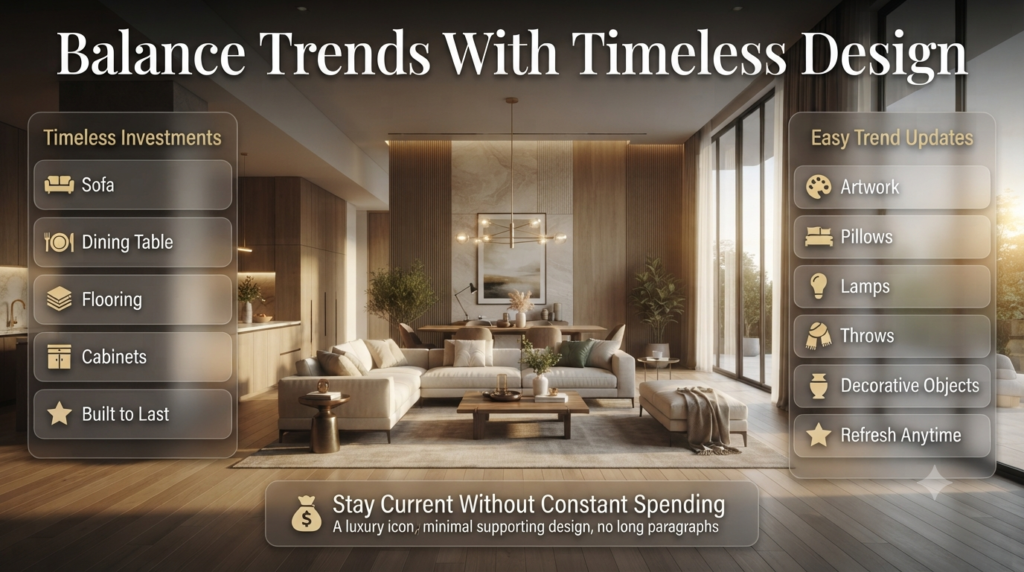
Interior inspiration often comes from social media, but trends change quickly.
Instead of redesigning your entire home every year:
Choose timeless items for:
- Sofa
- Dining table
- Flooring
- Cabinets
Use trends in:
- Pillows
- Artwork
- Lamps
- Throws
- Decorative objects
This approach keeps your home current without constant spending.
Common Interior Inspiration Mistakes
Even with plenty of inspiration, beginners often make the same decorating mistakes.
1. Copying a Photo Exactly
Every home has different:
- Lighting
- Room size
- Ceiling height
- Architecture
- Lifestyle
Use inspiration as a guide—not a blueprint.
2. Ignoring Lighting
Beautiful furniture won’t look its best in poor lighting.
Layer:
- Ambient lighting
- Task lighting
- Accent lighting
Professional interiors rarely rely on a single ceiling light.
3. Buying Everything at Once
Homes develop naturally over time.
Buying everything in one shopping trip often creates a showroom look instead of a personal home.
4. Choosing Style Over Comfort
An uncomfortable chair that looks amazing will eventually become wasted space.
Always test furniture whenever possible.
5. Forgetting Scale
Large furniture overwhelms small rooms.
Tiny furniture disappears inside large spaces.
Balance proportions carefully.
⚠ Common Mistake: Filling every empty corner. Leaving some open space actually makes a room feel larger and more elegant.
Professional Interior Designer Recommendations
Designers consistently follow a few principles that homeowners often overlook.
Start With Quality Basics
Invest in:
- Comfortable sofa
- Quality mattress
- Durable dining table
- Good lighting
These items affect everyday life more than decorative accessories.
Add Texture Instead of More Color
A room doesn’t always need brighter colors.
Sometimes it simply needs more texture.
Mix:
- Linen
- Cotton
- Leather
- Wood
- Glass
- Stone
- Metal
- Wool
Texture creates depth without making a space feel busy.
Think Long-Term
Ask yourself:
“Will I still love this five years from now?”
If the answer is uncertain, it may be a passing trend rather than a lasting investment.
Personalize Every Room
The most inspiring homes tell a story.
Display:
- Travel souvenirs
- Family photos
- Handmade artwork
- Favorite books
- Meaningful collections
These details make your home unique rather than looking like a furniture showroom.
⭐ Expert Tip: Aim for a home that reflects your lifestyle, not one that simply follows the latest design trend.
Interior Inspiration Trends for 2026
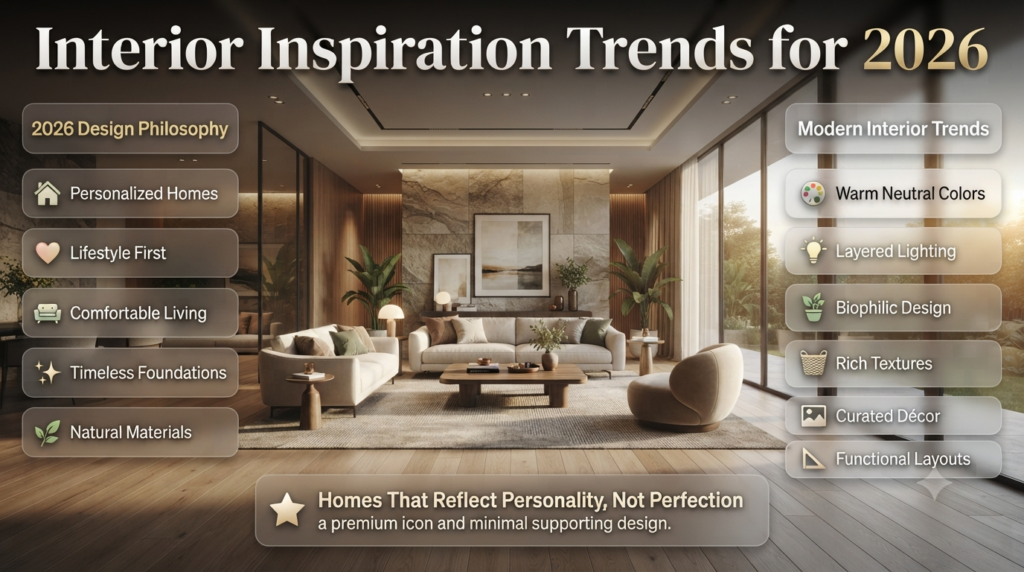
Interior design trends continue to evolve, but the biggest shift in 2026 is toward creating homes that feel personal rather than perfectly styled. Instead of copying social media interiors, homeowners are choosing designs that improve daily living while reflecting their own personality.
Here are some of the most influential trends shaping modern interiors.
1. Warm Minimalism
Warm minimalism combines clean layouts with cozy materials.
Key features include:
- Warm white walls
- Natural wood furniture
- Linen fabrics
- Soft lighting
- Curved furniture
- Handmade décor
Unlike traditional minimalism, this style feels welcoming instead of empty.
2. Nature-Inspired Interiors
Biophilic design continues to grow in popularity.
Homeowners are bringing nature indoors through:
- Large indoor plants
- Natural stone
- Wooden finishes
- Organic fabrics
- Large windows
- Earth-tone colors
This approach creates calming spaces that support well-being.
3. Sustainable Design
People are investing in fewer, higher-quality pieces that last longer.
Examples include:
- Solid wood furniture
- Recycled materials
- Vintage décor
- Energy-efficient lighting
- Eco-friendly textiles
Sustainable interiors reduce waste while creating timeless spaces.
4. Multifunctional Rooms
Modern homes often require one room to serve multiple purposes.
Examples include:
- Guest room + home office
- Kitchen + dining area
- Living room + workspace
- Bedroom + reading corner
Flexible furniture makes these spaces more practical without sacrificing style.
5. Personalized Décor
Instead of filling homes with trendy accessories, homeowners are displaying meaningful items.
Popular choices include:
- Family photographs
- Handmade artwork
- Travel collections
- Vintage finds
- Custom shelving
- Statement lighting
These personal touches make a home feel authentic and memorable.
How to Keep Finding Interior Inspiration
Interior inspiration isn’t something you find once—it’s an ongoing process. As your lifestyle changes, your home should evolve with it.
Simple ways to stay inspired include:
- Visit furniture showrooms occasionally.
- Save photos that genuinely reflect your taste.
- Rearrange furniture before buying new pieces.
- Explore different architectural styles.
- Follow designers whose work emphasizes functionality.
- Refresh accessories seasonally instead of renovating entire rooms.
💡 Pro Tip: Create a digital inspiration folder and review it every few months. Remove ideas you no longer love and keep only those that still excite you. Over time, your personal style becomes much clearer.
How can I find interior inspiration that matches my personal style?
The best interior inspiration starts with understanding what makes you feel comfortable in your own home—not by copying every trend you see online. Instead of saving random photos, look for common patterns in the rooms you admire. You may notice you’re consistently drawn to natural wood, neutral color palettes, modern furniture, or cozy textures. Once you identify these preferences, it becomes much easier to make decorating decisions that feel authentic and create a cohesive look throughout your home.
Key Points:
Save inspiration images with similar colors and layouts.
Consider your lifestyle before choosing a design style.
Focus on functionality as much as appearance.
Build a mood board before shopping for furniture or décor.
What are the biggest mistakes people make when using interior inspiration?
One of the most common mistakes is trying to recreate a beautiful photo without considering the size, lighting, or layout of your own home. A design that works perfectly in a large, open-concept house may not suit a smaller apartment. Another mistake is buying furniture before creating a clear plan, which often results in mismatched pieces and wasted money. Successful interiors are built around the needs of the homeowner, not just what’s trending.
Key Points:
Avoid copying rooms exactly as they appear online.
Measure your space before making purchases.
Choose a consistent color palette from the beginning.
Prioritize comfort and practicality over trends.
How do professional interior designers find inspiration for every project?
Professional designers rarely rely on one source of inspiration. They study architecture, nature, travel, hotels, artwork, furniture collections, and even the client’s daily lifestyle before creating a design plan. Instead of following trends, they focus on solving practical problems while building a space that feels balanced, functional, and visually appealing. This thoughtful approach helps create interiors that remain stylish for years rather than just one season.
Key Points:
Inspiration comes from multiple sources, not one website.
Designers always consider the client’s lifestyle first.
They combine timeless design with modern features.
Functionality is just as important as aesthetics.
How can I refresh my home’s interior without spending a lot of money?
A complete renovation isn’t always necessary to create a fresh new look. Small, strategic updates often have the biggest visual impact. Repainting walls, changing lighting fixtures, adding indoor plants, updating cushions, replacing curtains, or rearranging furniture can completely transform a room without exceeding your budget. Investing in a few quality accessories instead of replacing everything at once is often the smartest approach.
Key Points:
Repaint walls using timeless colors.
Rearrange existing furniture before buying new pieces.
Replace outdated lighting for an instant upgrade.
Add rugs, artwork, and plants to introduce personality.
Upgrade décor gradually instead of renovating everything.
What interior design trends provide long-lasting inspiration instead of going out of style?
The most successful interiors focus on timeless design rather than short-lived trends. Neutral color palettes, natural materials, layered lighting, quality furniture, and personalized décor continue to remain popular because they adapt easily as styles evolve. Instead of redesigning your entire home every few years, choose classic foundation pieces and refresh the space with seasonal accessories or accent colors when you want a new look.
Key Points:
Invest in timeless furniture with quality craftsmanship.
Use neutral colors for walls and large furniture pieces.
Add trends through cushions, artwork, and decorative accessories.
Include natural textures like wood, linen, and stone.
Create a home that reflects your personality rather than temporary fashion.
Conclusion
Every great home begins with a single idea. Sometimes it’s a color that catches your eye, a beautifully designed living room, or a simple piece of furniture that inspires an entirely new direction. That’s the true value of interior inspiration—it gives you the confidence to make design decisions that suit your home instead of simply following what’s popular.
As you’ve seen throughout this guide, creating an inspiring interior isn’t about spending the most money or copying someone else’s space. It’s about understanding how each room should function, choosing a style that reflects your personality, building a balanced color palette, layering textures and lighting, and adding meaningful details that make your home feel truly lived in.
Whether you’re updating one room or planning a complete home transformation, take your time with the process. Save ideas, compare options, create a mood board, and make thoughtful choices rather than rushing into purchases. Homes that are designed with patience almost always look better, feel more comfortable, and remain timeless for years to come.
Most importantly, don’t be afraid to let your personality shape your interiors. Trends will continue to change, but a home that reflects your lifestyle, memories, and everyday needs will never go out of style. Use inspiration as your starting point, not your destination, and create spaces that are both beautiful and practical.
If you’re looking for more decorating ideas, expert room makeovers, color inspiration, and practical home design advice, explore our guides on Interior Design, Home Styling, Home Design Ideas, Living Room Paint Ideas, Bedroom Color Inspiration, and Kitchen Paint Colors. Every article is designed to help you make smarter decorating decisions and create a home you’ll enjoy for years to come.
The best interiors aren’t the ones that impress everyone else—they’re the ones that make you feel at home the moment you walk through the door.

Leave a Reply