
Introduction
Living in a stylish home isn’t about buying expensive furniture or copying celebrity interiors. It’s about creating a space that reflects your personality while making everyday life easier and more enjoyable. A thoughtfully designed home can improve your mood, increase productivity, and even help you feel more relaxed after a busy day.
The idea of Stylish Living has evolved far beyond decoration. Today, it combines comfort, functionality, sustainability, and personal expression. Whether you’re furnishing your first apartment, updating a family home, or simply refreshing one room, making smart design choices can transform the way you experience your living space.
In this guide, you’ll discover what stylish living really means, the design principles professionals rely on, common misconceptions to avoid, and practical ideas that work for every budget. You’ll also learn how to create interiors that look elegant without sacrificing comfort or everyday functionality.
If you’re planning a complete makeover, exploring Home Design Ideas can help you build a strong foundation before choosing furniture and décor.
What Is Stylish Living?
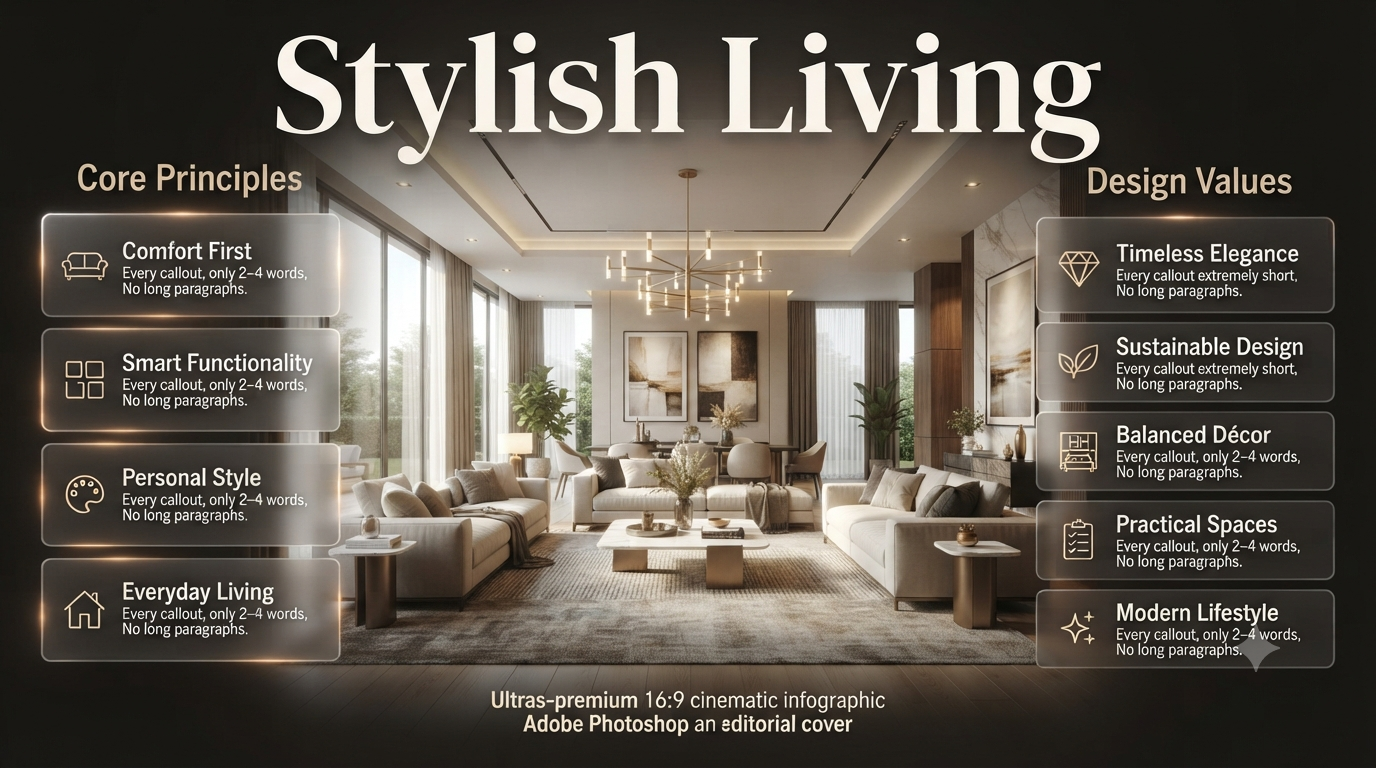
Stylish Living is the practice of designing and organizing your home to balance beauty, comfort, functionality, and personal style. Instead of following temporary trends, it focuses on creating practical spaces that support your daily lifestyle while expressing your personality through thoughtful design choices.
Unlike decorating solely for appearance, stylish living prioritizes how a home feels and functions every day. Every room should look attractive while making daily routines easier.
A stylish home often includes:
- Comfortable furniture
- Balanced color palettes
- Practical storage
- Quality lighting
- Natural textures
- Personalized décor
- Organized layouts
- Timeless design elements
The goal isn’t perfection—it’s creating spaces that genuinely improve your quality of life.
Why Stylish Living Matters
Stylish living improves more than your home’s appearance. A well-designed environment supports better organization, reduces stress, increases comfort, and creates spaces that feel welcoming. Combining aesthetics with functionality helps your home adapt to your lifestyle instead of working against it.
Your home influences how you work, relax, entertain guests, and spend time with family. Poor layouts, clutter, and mismatched furniture often make everyday tasks feel more difficult than they need to be.
When your home is designed with intention, you’ll notice benefits such as:
- Better daily organization
- More relaxing environments
- Improved productivity
- Easier cleaning and maintenance
- Better use of available space
- Increased property appeal
- More enjoyable entertaining
Modern interior designers often focus on lifestyle first and decoration second because beautiful spaces only succeed when they’re practical.
💡 Pro Tip: Before purchasing anything new, identify one problem you want the room to solve. Stylish design starts with function, not shopping.
The Four Foundations of Stylish Living
Every professionally designed home follows a few fundamental principles. Understanding these foundations makes decorating much easier.
1. Function Comes First
A stylish room should support the way you actually live. Before choosing colors or furniture, consider how the space will be used, who uses it, and which daily activities take place there.
Many homeowners make the mistake of designing rooms for photographs instead of real life.
Ask yourself:
- Do you work from home?
- Do children use the room?
- Do you entertain guests frequently?
- Do you need extra storage?
- Is relaxation your priority?
When furniture placement supports daily routines, the room naturally feels more comfortable.
Practical Example
Instead of placing a sofa solely for symmetry, position it where conversations flow naturally and television viewing feels comfortable.
2. Comfort Is Always Stylish
Luxury doesn’t automatically mean comfortable.
Some of the most beautiful homes are difficult to live in because every piece of furniture prioritizes appearance over usability.
Comfort includes:
- Ergonomic seating
- Soft lighting
- Breathable fabrics
- Comfortable temperatures
- Easy movement between furniture
- Quiet, relaxing environments
People remember how your home feels more than how expensive it looks.
⭐ Expert Tip: Designers often test furniture by sitting in it for several minutes before recommending it to clients. Visual appeal alone isn’t enough.
3. Simplicity Creates Elegance
Simple interiors often appear more sophisticated because every element has purpose. Reducing visual clutter allows furniture, artwork, textures, and architectural details to stand out naturally without overwhelming the room.
Minimal doesn’t have to mean empty.
Instead, focus on:
- Intentional decoration
- Clean layouts
- Consistent color palettes
- Balanced furniture placement
- Organized storage
- Decorative restraint
Removing unnecessary items often improves a room more than adding new ones.
4. Personality Makes a House Feel Like Home
Following every social media trend can leave your home feeling generic.
Stylish living should reflect your interests, experiences, and lifestyle.
Personal touches include:
- Family photographs
- Travel souvenirs
- Handmade artwork
- Books
- Indoor plants
- Vintage furniture
- Meaningful collections
These details create warmth and authenticity that no showroom can replicate.
📌 Quick Tip: Choose décor that tells your story instead of buying accessories simply because they’re trending.
Stylish Living vs. Following Design Trends
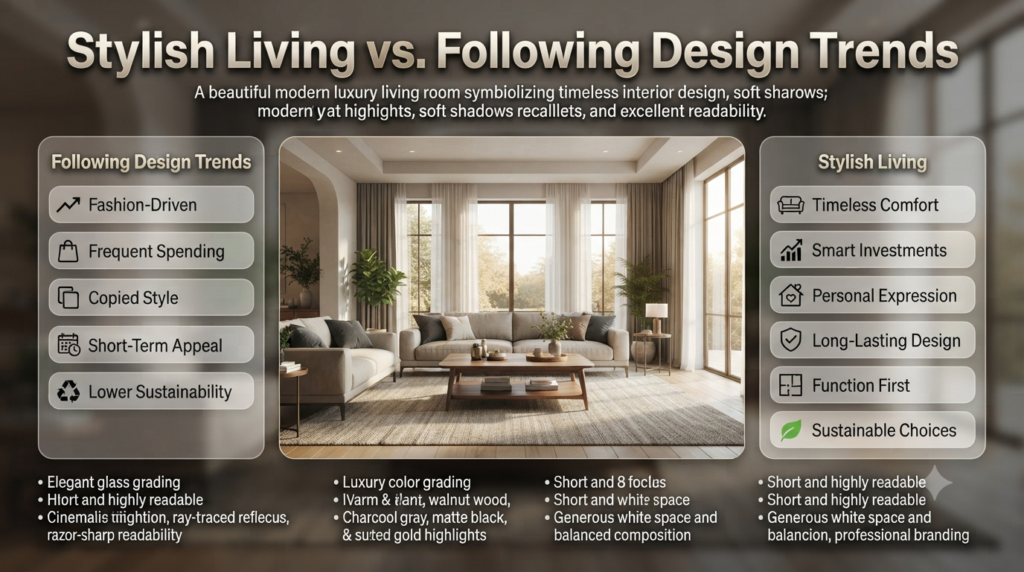
Many people confuse stylish living with constantly updating their home to match the latest trends.
The reality is quite different.
| Feature | Trend-Based Decorating | Stylish Living |
|---|---|---|
| Focus | Current fashions | Long-term comfort and beauty |
| Budget | Frequent spending | Smarter investments |
| Personal Style | Often copied | Individually expressed |
| Longevity | Changes quickly | Remains appealing for years |
| Functionality | Sometimes overlooked | Always prioritized |
| Sustainability | Lower | Higher |
Trends can inspire your home, but they shouldn’t define it.
A timeless foundation allows you to refresh your interiors with smaller, more affordable updates rather than complete renovations.
Essential Elements of a Stylish Home
Professional interiors usually succeed because multiple design elements work together rather than competing for attention.
The most important elements include:
Color Harmony
A balanced color palette creates visual consistency throughout the home.
Popular choices include:
- Warm neutrals
- Earth tones
- Soft whites
- Sage green
- Deep navy
- Charcoal accents
If you’re selecting colors for an upcoming makeover, Paint Color offers inspiration for creating cohesive palettes across different rooms.
Lighting
Lighting influences every part of a room, including mood, comfort, and functionality.
Use three lighting layers whenever possible:
- Ambient lighting
- Task lighting
- Accent lighting
Combining all three creates depth and flexibility throughout the day.
Texture
Texture prevents interiors from feeling flat.
Mix materials like:
- Wood
- Linen
- Cotton
- Stone
- Leather
- Glass
- Metal
- Wool
Using several textures within the same color palette creates richness without adding unnecessary clutter.
Storage
Stylish homes rarely appear crowded because everything has a designated place.
Storage ideas include:
- Built-in shelving
- Storage benches
- Decorative baskets
- Floating shelves
- Hidden cabinets
- Multi-functional furniture
Good organization allows your décor to become the focal point instead of everyday clutter.
⚠ Common Mistake: Buying decorative accessories before solving storage problems often makes rooms feel more cluttered rather than more stylish.
How to Define Your Personal Style
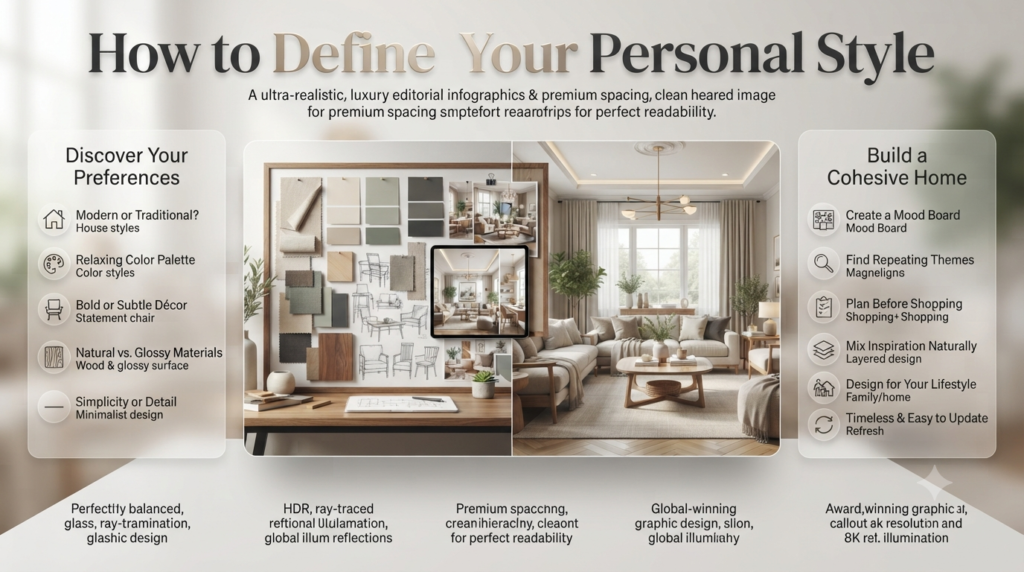
Your personal style is the combination of colors, materials, furniture, and décor that reflects your preferences and daily lifestyle. Understanding your tastes before shopping helps create a cohesive home instead of a collection of unrelated pieces.
Many people struggle because they purchase individual items without considering how everything works together.
Start by identifying what naturally attracts you.
Ask yourself:
- Do you prefer modern or traditional interiors?
- Which colors make you feel relaxed?
- Do you enjoy bold statement pieces or subtle elegance?
- Are natural materials more appealing than glossy finishes?
- Do you value simplicity or decorative detail?
Create a mood board using magazine images, saved photos, or inspiration from Interior Design resources. After reviewing your collection, you’ll usually notice repeating themes that reveal your preferred style.
Instead of copying one exact look, combine the ideas that genuinely suit your home and lifestyle. This approach leads to spaces that feel authentic, balanced, and easy to update over time.
Room-by-Room Guide to Stylish Living
Creating a stylish home doesn’t mean every room has to look the same. Each space has a different purpose, so its design should support how you use it every day. The key is maintaining a consistent style while allowing each room to have its own personality.
How Do You Create a Stylish Living Room?
A stylish living room combines comfortable seating, balanced furniture placement, layered lighting, thoughtful décor, and a cohesive color palette. The best designs prioritize conversation, relaxation, and functionality while using decorative elements to add warmth and personality.
The living room is often the heart of the home. It’s where families gather, guests are welcomed, and many everyday moments happen.
Instead of filling the room with furniture, focus on creating a balanced layout.
What to Do
- Choose seating that suits your household.
- Create a conversation-friendly arrangement.
- Leave enough walking space.
- Add layered lighting.
- Use one statement piece as a focal point.
Why It Matters
A well-planned layout feels larger, more inviting, and easier to use.
Professional Advice
Anchor the room with a large area rug that extends beneath the front legs of your furniture. This visually connects each piece and makes the room feel more cohesive.
Common Mistake
Pushing every piece of furniture against the wall often creates awkward empty space in the center.
Quick Example
Instead of placing two sofas opposite the television only, add accent chairs to encourage conversation.
If you’re redesigning this space, Living Room Paint Ideas can help you choose colors that complement your furniture and lighting.
Designing a Comfortable and Elegant Bedroom
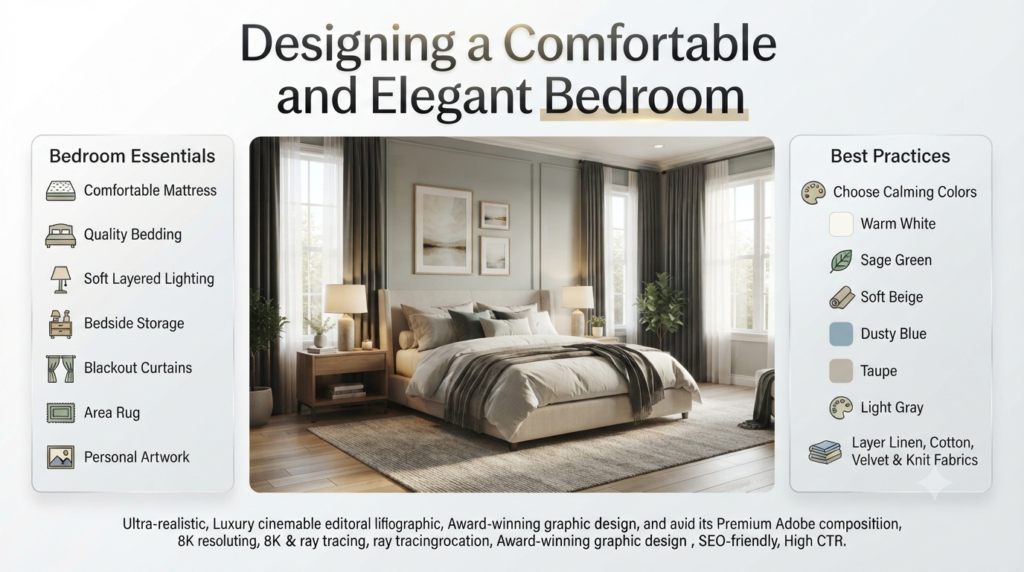
A stylish bedroom should promote rest while reflecting your personal taste. Soft colors, quality bedding, layered lighting, and minimal clutter create a calming environment that feels luxurious without requiring expensive furniture.
Your bedroom should feel peaceful from the moment you walk in.
Focus on comfort before decoration.
Essentials
- Comfortable mattress
- Quality bedding
- Soft lighting
- Bedside storage
- Blackout curtains
- Area rug
- Personal artwork
Best Practices
Choose calming colors instead of overly bright shades.
Popular options include:
- Warm white
- Sage green
- Soft beige
- Dusty blue
- Taupe
- Light gray
💡 Pro Tip: Layer different fabrics such as linen, cotton, velvet, and knit throws to make the room feel richer without adding unnecessary decorations.
Need color inspiration? Explore Bedroom Color Inspiration before selecting paint or textiles.
Stylish Kitchen Design That Works Every Day
A stylish kitchen balances beauty with efficiency. Smart storage, durable materials, practical lighting, and a functional layout make cooking easier while creating a welcoming space for family and guests.
Beautiful kitchens aren’t just attractive.
They’re organized.
Focus on these priorities:
- Efficient workflow
- Durable countertops
- Easy-to-clean finishes
- Under-cabinet lighting
- Plenty of storage
- Comfortable seating
Professional Recommendation
Keep frequently used items within easy reach while storing seasonal appliances elsewhere.
Open shelving works best when displayed selectively rather than overcrowded.
⚠ Common Mistake: Choosing trendy finishes without considering maintenance requirements.
For paint inspiration that complements cabinets and countertops, visit Kitchen Paint Colors.
Creating a Bathroom That Feels Like a Spa
A stylish bathroom focuses on cleanliness, efficient storage, quality lighting, and calming materials. Small upgrades like better mirrors, coordinated accessories, and soft towels can significantly improve the overall experience.
Luxury often comes from thoughtful details rather than expensive renovations.
Easy improvements include:
- Large mirrors
- Floating vanities
- Glass shower panels
- Neutral colors
- Hidden storage
- Soft towels
- Indoor plants
Even a compact bathroom can feel spacious when clutter is minimized.
How Color Shapes Stylish Living
Color influences how every room feels.
Instead of choosing favorite colors individually, think about how they connect throughout your home.
Popular Color Directions
| Style | Recommended Colors | Best For |
|---|---|---|
| Modern | White, gray, black | Contemporary homes |
| Scandinavian | Soft white, oak, beige | Small spaces |
| Earthy | Olive, clay, sand | Cozy interiors |
| Luxury | Navy, charcoal, brass | Elegant homes |
| Coastal | White, blue, natural wood | Bright spaces |
Homes feel more polished when neighboring rooms share complementary tones.
If you’re building a timeless palette, explore Neutral Color Schemes or add warmth with Warm Color Palettes.
⭐ Expert Tip: Follow the 60–30–10 rule:
- 60% dominant color
- 30% secondary color
- 10% accent color
This creates visual balance without making the room feel overwhelming.
Lighting: The Secret Behind Every Beautiful Interior
Lighting is one of the most important elements of stylish living because it affects comfort, mood, and how colors appear. Combining ambient, task, and accent lighting creates flexible spaces that work throughout the day and evening.
Professional designers rarely rely on a single ceiling fixture.
Instead, they layer light.
Ambient Lighting
Provides overall room illumination.
Examples:
- Ceiling fixtures
- Recessed lighting
- Pendant lights
Task Lighting
Supports specific activities.
Examples:
- Reading lamps
- Desk lights
- Under-cabinet kitchen lighting
Accent Lighting
Highlights architectural or decorative features.
Examples:
- Wall sconces
- Picture lights
- LED shelf lighting
📌 Quick Tip: Install dimmers whenever possible. They instantly make rooms feel more sophisticated while improving energy efficiency.
Furniture Selection: Buy Less, Choose Better
Many stylish homes actually contain fewer furniture pieces.
Each item has a purpose.
Before buying, ask yourself:
- Is it comfortable?
- Will it last?
- Does it fit the room?
- Does it match my lifestyle?
- Can it serve multiple purposes?
Quality Over Quantity
Instead of replacing inexpensive furniture every few years, invest gradually in well-made pieces that remain attractive for decades.
Good investment pieces include:
- Sofa
- Dining table
- Bed frame
- Office chair
- Storage cabinets
Accessories can be updated more often without changing the overall design.
Decorating Without Creating Clutter
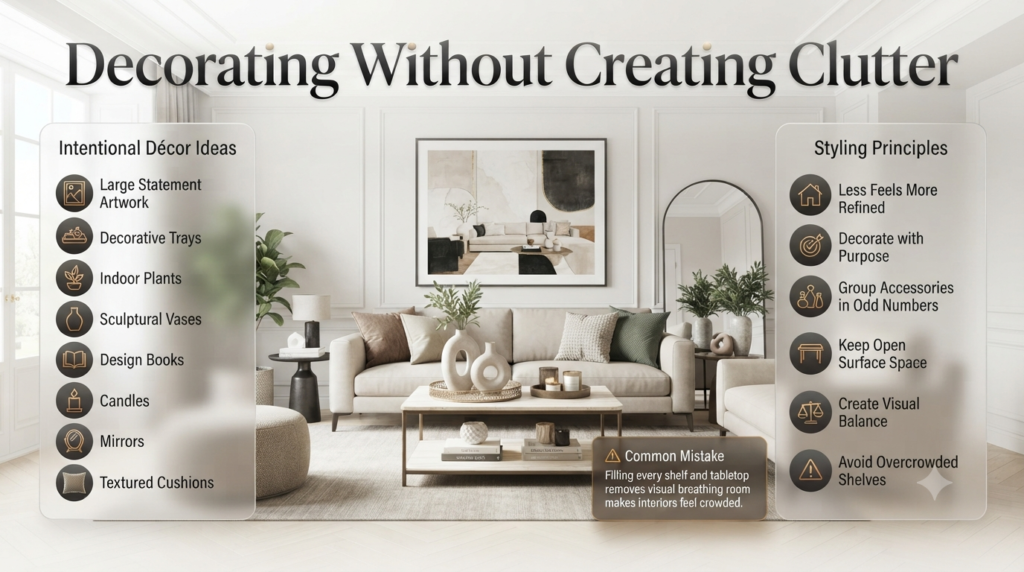
One of the biggest challenges in stylish living is knowing when to stop decorating.
Less often feels more refined.
Use décor intentionally.
Ideas include:
- Large artwork instead of many small pieces
- Decorative trays
- Indoor plants
- Sculptural vases
- Books
- Candles
- Mirrors
- Textured cushions
Keep decorative accessories grouped in odd numbers for a more natural appearance.
⚠ Common Mistake: Filling every shelf and tabletop removes visual breathing room and makes even expensive interiors feel crowded.
Bringing Nature Indoors
Natural materials add warmth and timeless appeal to almost every decorating style.
Easy ways to introduce nature include:
- Wooden furniture
- Stone accessories
- Linen curtains
- Cotton throws
- Indoor plants
- Bamboo décor
- Woven baskets
These materials soften modern interiors while creating a more welcoming atmosphere.
Budget-Friendly Stylish Living Ideas
Creating a beautiful home doesn’t require a complete renovation.
Small improvements often produce the biggest impact.
Affordable Upgrades
- Paint the walls
- Replace cabinet handles
- Add new cushions
- Update light fixtures
- Introduce indoor plants
- Hang larger artwork
- Replace old curtains
- Organize open shelving
- Add decorative mirrors
- Upgrade bedding
| Budget | Improvements |
|---|---|
| Under $100 | Plants, cushions, candles, artwork |
| $100–500 | Lighting, rugs, curtains, mirrors |
| $500–1,500 | Furniture upgrades, storage solutions |
| $1,500+ | Flooring, built-ins, major renovations |
The goal isn’t spending more—it’s spending wisely.
Blending Style With Smart Functionality
Today’s stylish homes often incorporate practical technology without sacrificing aesthetics.
Examples include:
- Smart lighting systems
- Hidden charging stations
- Voice-controlled assistants
- Automated blinds
- Smart thermostats
- Integrated speakers
- Wireless security systems
Technology should simplify daily life while remaining visually discreet.
If you’re planning larger upgrades, the Home Improvement section offers ideas for combining functionality with modern design.
Common Stylish Living Mistakes (and How to Avoid Them)
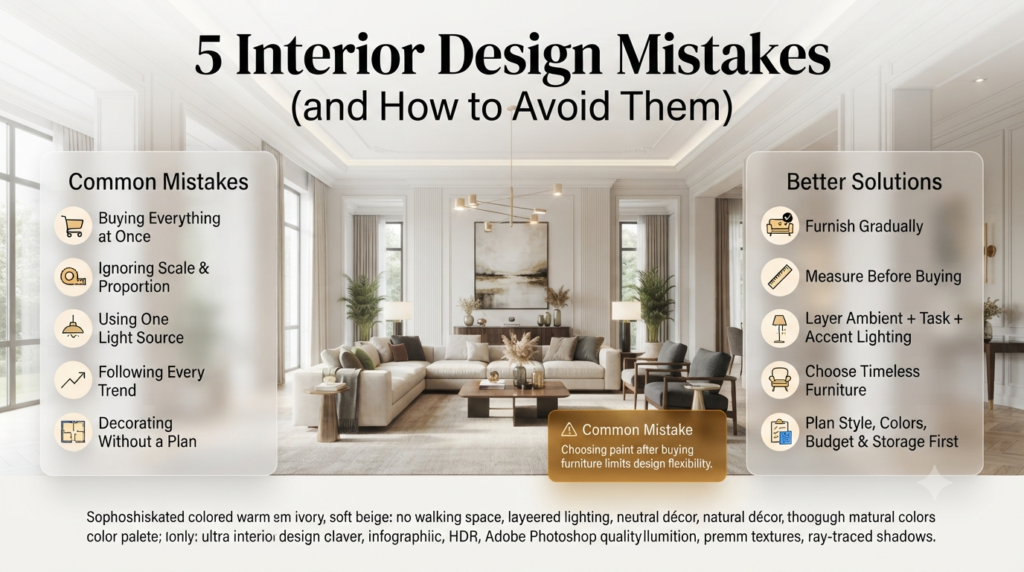
Even beautifully decorated homes can feel uncomfortable if common design mistakes are overlooked. The good news is that most of these issues are easy to fix once you recognize them.
1. Buying Everything at Once
Many homeowners rush to furnish an entire room in one shopping trip.
Why It Happens
People want the room to feel “finished” as quickly as possible.
Why It’s Harmful
- The space often lacks personality.
- Furniture may not suit your long-term needs.
- Expensive mistakes become difficult to correct.
How to Avoid It
Build your home gradually. Start with quality essentials and add decorative pieces over time.
2. Ignoring Scale and Proportion
Furniture that’s too large or too small can make a room feel awkward.
Why It Happens
People shop without measuring their space.
Why It’s Harmful
- Rooms feel crowded.
- Walking paths become blocked.
- The layout loses balance.
How to Avoid It
Measure every room before buying furniture and leave comfortable walking space between pieces.
3. Depending on One Light Source
A single ceiling fixture rarely creates a welcoming atmosphere.
Why It’s Harmful
Rooms appear flat, cold, and less functional.
Better Solution
Combine:
- Ambient lighting
- Task lighting
- Accent lighting
Layered lighting instantly improves both comfort and appearance.
4. Following Every Trend
Trends can be inspiring, but they change quickly.
Why It’s Harmful
- Frequent redecorating becomes expensive.
- Your home may feel outdated within a few years.
Better Solution
Use timeless furniture and add trends through accessories, cushions, artwork, or décor that are easy to replace.
5. Decorating Without a Plan
Buying attractive items individually doesn’t always create a cohesive home.
Better Approach
Before shopping, decide:
- Your preferred style
- Color palette
- Budget
- Storage needs
- Room priorities
Planning first almost always leads to better results.
⚠ Common Mistake: Choosing paint after buying furniture often limits your options. Paint is usually easier and less expensive to change than large furniture pieces.
Expert Advice for Creating a Stylish Home
Professional designers focus on more than appearance. They create spaces that continue to work well years after installation.
Here are some of their most valuable recommendations:
Invest in Timeless Pieces
Spend more on items you’ll use every day, such as:
- Sofas
- Dining tables
- Beds
- Office chairs
- Quality storage
Decorative accessories can be updated whenever your style changes.
Let Your Home Evolve
Your home should grow with your lifestyle.
Add meaningful items over time instead of trying to create a perfect space immediately.
Homes with personal history often feel warmer than perfectly staged interiors.
Prioritize Natural Light
Whenever possible:
- Keep windows unobstructed.
- Use light window treatments.
- Position mirrors to reflect daylight.
- Choose lighter wall colors in darker rooms.
Natural light makes almost every room feel larger and more inviting.
⭐ Expert Tip: Before buying new décor, remove one unnecessary item from the room. Sometimes the best design improvement is simply reducing visual clutter.
How do I make a small living space look expensive and curated without creating clutter?
A small home can feel luxurious without being filled with expensive furniture or decorative accessories. The secret is to focus on quality over quantity and create a space where every item has a purpose. Professionally designed interiors often look expensive because they’re carefully edited, not because they’re packed with décor.
Start by choosing one or two statement pieces, such as a well-made sofa, a striking coffee table, or a large piece of artwork. Let these become the focal points while keeping surrounding accessories minimal. A consistent color palette, layered textures, and concealed storage also help create a polished look. Instead of displaying dozens of decorative objects, select a few meaningful pieces that complement one another.
Another designer trick is to use oversized décor rather than many small items. A large mirror, full-length curtains, or a single oversized plant makes a room feel intentional and visually spacious. Furniture with exposed legs also creates a sense of openness by allowing more of the floor to remain visible.
Finally, keep surfaces as clear as possible. Coffee tables, shelves, and countertops should display only a handful of carefully chosen items. Empty space is just as important as decoration because it gives the eye room to rest and highlights the pieces you’ve chosen.
Tips for a Curated, Luxury Look
Invest in fewer but higher-quality furniture pieces.
Stick to a consistent color palette throughout the room.
Use hidden storage to reduce visible clutter.
Choose one statement artwork instead of multiple small frames.
Mix textures like linen, wood, stone, and metal for depth.
Leave some shelves and surfaces intentionally empty.
Add one large indoor plant for a refined natural touch.
What is the “Quiet Luxury” interior trend, and how do I implement it sustainably?
Quiet Luxury is an interior design approach that emphasizes timeless elegance instead of obvious luxury. Rather than showcasing bold colors, oversized décor, or designer logos, it focuses on craftsmanship, natural materials, subtle details, and lasting quality. The goal is to create a home that feels calm, sophisticated, and effortlessly refined.
A Quiet Luxury interior often includes neutral color palettes, solid wood furniture, natural stone, linen fabrics, soft lighting, and carefully selected décor. Every item has a purpose, and nothing feels excessive or trendy. This style is built to remain beautiful for years rather than following short-lived design trends.
To implement Quiet Luxury sustainably, prioritize durable materials over disposable décor. Buy fewer items, but choose pieces that can last for decades. Vintage furniture, reclaimed wood, artisan-made accessories, and high-quality natural textiles all align with this philosophy. Sustainable design isn’t just environmentally responsible—it also creates interiors with more character and authenticity.
Instead of replacing everything during every trend cycle, update your space gradually with timeless additions that complement what you already own.
Ways to Create a Sustainable Quiet Luxury Home
Choose solid wood instead of particleboard furniture.
Use linen, cotton, wool, and other natural textiles.
Invest in handcrafted décor with lasting value.
Buy vintage or refurbished furniture whenever possible.
Avoid overly trendy accessories that date quickly.
Use warm, layered lighting instead of harsh overhead fixtures.
Select neutral colors that remain timeless.
💡 Pro Tip: Quiet Luxury is defined by restraint. If a room feels complete, resist the urge to keep decorating.
How do I choose a cohesive home color palette that flows naturally between rooms?
A cohesive color palette creates visual harmony and makes your home feel larger, calmer, and professionally designed. Instead of selecting completely different colors for every room, establish a consistent foundation and introduce variation through accent colors, textures, and furnishings.
Begin with one dominant neutral that works throughout your home, such as warm white, soft beige, light greige, or gentle taupe. This becomes the backdrop that connects each room. Next, choose two or three complementary secondary colors that appear in furniture, textiles, rugs, or artwork. Finally, use one or two accent colors to add personality without disrupting the overall flow.
It’s also important to consider how rooms connect. Adjacent spaces should transition naturally rather than creating abrupt color changes. Repeating similar wood finishes, metals, or fabrics throughout different rooms strengthens this sense of continuity.
Natural light also influences color perception, so always test paint samples at different times of day before making a final decision.
Simple Formula for a Cohesive Palette
One primary neutral for walls.
Two complementary secondary colors.
One or two accent colors.
Repeat similar wood tones throughout the home.
Use consistent metal finishes where possible.
Introduce variation with textiles instead of repainting every room.
⭐ Expert Tip: A home feels more cohesive when colors relate to one another rather than match perfectly. Think coordination instead of uniformity.
How can I transition my home into a biophilic design layout without it looking chaotic?
Biophilic design is the practice of strengthening the connection between your home and nature. While many people assume this means filling every room with plants, successful biophilic interiors are much more balanced. They combine natural light, organic materials, earthy colors, and carefully chosen greenery to create calming, restorative spaces.
Begin by introducing natural elements gradually. Replace synthetic materials with wood, linen, stone, bamboo, or woven textures where practical. Add plants in stages rather than buying many at once. A few healthy, well-placed plants often create a stronger impact than dozens scattered randomly around the home.
Maximize daylight by keeping windows unobstructed and using light, breathable curtains. You can also strengthen the connection with nature through botanical artwork, natural scents, water features, or furniture with organic shapes.
Remember that biophilic design is about balance. The objective is to create a peaceful environment inspired by nature, not a space that resembles a greenhouse.
Easy Ways to Introduce Biophilic Design
Add one large statement plant before buying smaller ones.
Choose natural materials like wood, stone, and rattan.
Maximize natural daylight.
Use earthy greens, warm browns, and soft neutrals.
Introduce woven baskets and natural fiber rugs.
Display botanical artwork instead of excessive ornaments.
Keep plant groupings intentional and evenly spaced.
⚠ Common Mistake: Mixing too many plant varieties, colors, and decorative pots can make a room feel visually cluttered instead of calming.
What are the key lighting layers needed to create an intimate, moody evening ambiance?
A warm and inviting evening atmosphere is created through layered lighting rather than relying on one bright ceiling fixture. Professional designers use multiple light sources at different heights to add depth, warmth, and visual interest while allowing the brightness to change depending on the occasion.
The foundation is ambient lighting, which provides general illumination. This should be soft and comfortable rather than overly bright. Task lighting comes next, supporting activities such as reading, cooking, or working without illuminating the entire room. Finally, accent lighting highlights artwork, shelving, architectural features, or decorative objects, adding depth and character.
To create a moody ambiance, use warm light bulbs between 2700K and 3000K, install dimmer switches where possible, and spread lamps throughout the room instead of concentrating all the light overhead. Candles, wall sconces, and concealed LED strips can also introduce a subtle glow that makes a space feel intimate and relaxing.
The goal isn’t darkness—it’s creating gentle contrast that makes the room feel layered, comfortable, and welcoming.
Lighting Layers for a Cozy Evening Atmosphere
Ambient Lighting: Ceiling fixtures, pendants, recessed lights.
Task Lighting: Floor lamps, reading lamps, desk lights.
Accent Lighting: Wall sconces, shelf lighting, artwork lighting.
Use warm white bulbs (2700K–3000K).
Install dimmers for adjustable brightness.
Position lights at different heights for visual depth.
Add candles or decorative table lamps for a softer glow.
📌 Quick Tip: If every corner of a room is equally bright, it often feels flat. Varying light intensity creates the depth and atmosphere associated with high-end interior design.
Conclusion
Stylish living isn’t about following every new design trend or spending a fortune on luxury furniture. It’s about creating a home that feels comfortable, functions effortlessly, and reflects your personality. When every design choice has a purpose—from your color palette and lighting to furniture placement and storage—your home becomes a place that supports your daily life while looking beautifully put together.
The most successful interiors are built on timeless principles rather than temporary trends. Investing in quality over quantity, maintaining a cohesive design, embracing natural materials, and reducing unnecessary clutter will always have a greater impact than constantly redecorating. Small, thoughtful improvements made over time often create the most lasting transformation.
Whether you’re refreshing a single room or planning a complete home makeover, focus on designing spaces that balance style with practicality. A well-designed home should make everyday routines easier, feel welcoming to family and guests, and continue to evolve as your lifestyle changes.
Remember, stylish living isn’t about achieving perfection—it’s about creating a home that feels authentically yours. Start with one room, make intentional choices, and build a space that you’ll enjoy living in for years to come.

Leave a Reply