
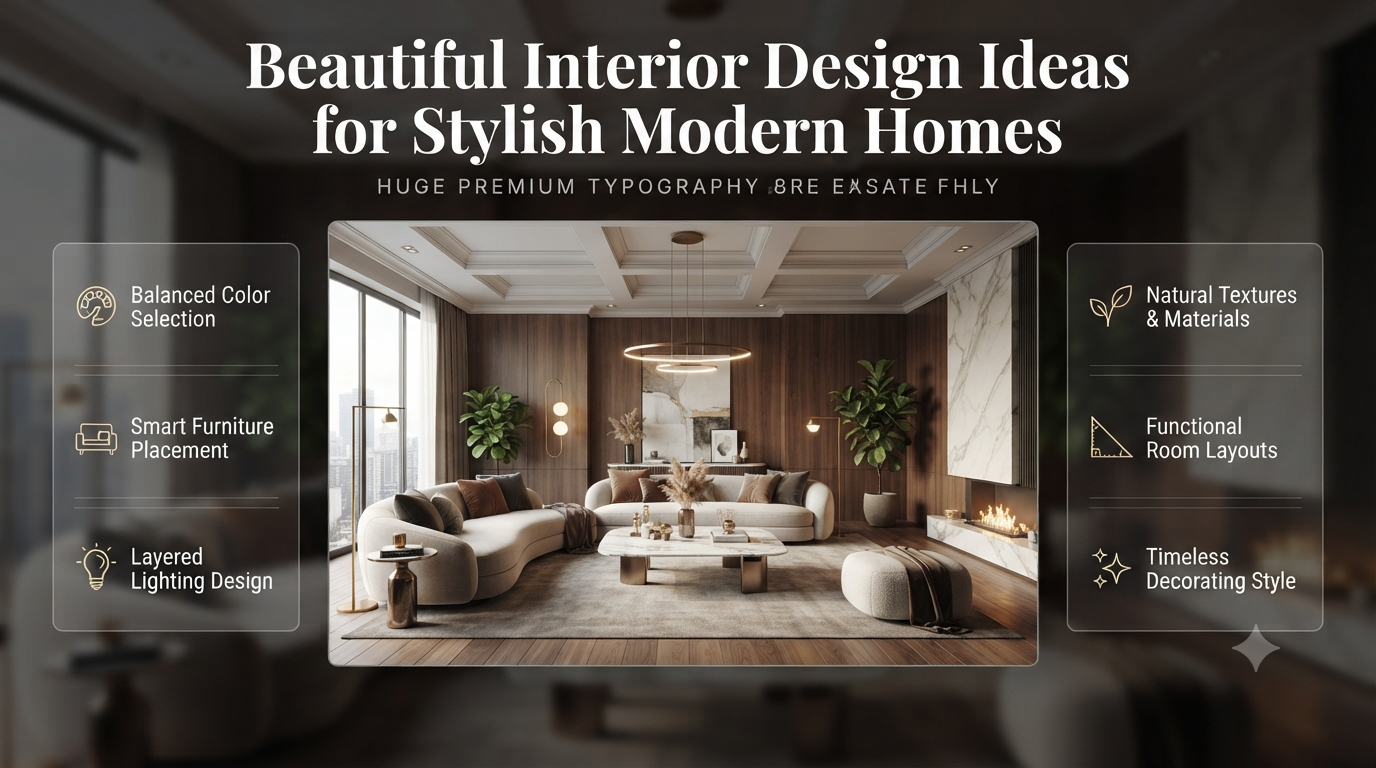
Introduction
Beautiful Interior Design Ideas | A home can have expensive furniture, trendy decorations, and beautiful finishes, yet still feel incomplete. The reason is simple: beautiful interiors are not created by adding more things—they are created by making smarter design decisions. A well-designed space should feel comfortable, balanced, personal, and practical while reflecting the lifestyle of the people who live there.
Creating Beautiful Interiors is about understanding how colors, furniture, lighting, textures, and layouts work together. Whether you are decorating a new home, renovating an old space, or refreshing a single room, the right approach can completely transform how your home looks and feels.
For homeowners looking to understand the complete process, exploring professional Interior Design principles can help you make better decisions about layouts, materials, and decorating styles. You can also discover more creative concepts through Design Mode 24 Interior Design for practical home transformation ideas.
In this guide, you will learn how designers create visually appealing spaces, how to choose the right colors and furniture, which mistakes to avoid, and how to build interiors that remain stylish for years instead of following short-term trends.
What Are Beautiful Interiors?
Beautiful interiors are thoughtfully designed spaces that combine aesthetics, comfort, functionality, and personal style. They use balanced colors, suitable furniture, proper lighting, quality materials, and meaningful décor to create a home that feels attractive and enjoyable.
A beautiful interior is not defined by a specific style. A minimalist apartment, a warm traditional home, a modern luxury villa, or a cozy farmhouse-style room can all be considered beautiful when the design choices work together.
The goal is not simply to make a room look impressive. The goal is to create an environment that supports everyday life.
A successful interior answers important questions:
- Does the space feel comfortable?
- Is the furniture arranged properly?
- Does the lighting create the right mood?
- Do colors complement each other?
- Does the design reflect the homeowner’s personality?
- Is the space practical for daily activities?
Professional designers focus on creating a connection between beauty and usability.
A living room should encourage conversation.
A bedroom should promote relaxation.
A kitchen should support cooking and movement.
A workspace should improve focus and productivity.
Beautiful interiors are always designed around people first.
Why Beautiful Interior Design Matters
Beautiful interior design improves the way people experience their homes. It creates comfortable environments, improves organization, enhances mood, increases functionality, and helps homeowners express their personality through thoughtful design choices.
Your home is the place where you start and end your day. The colors you see, the lighting around you, and the organization of your surroundings can influence your emotions and daily routines.
A carefully designed interior provides several benefits:
| Benefit | Impact on Your Home |
|---|---|
| Better comfort | Furniture and layouts support daily activities |
| Improved mood | Colors and lighting create relaxing environments |
| More functionality | Every area has a clear purpose |
| Better organization | Smart storage reduces clutter |
| Increased home value | Attractive interiors appeal to future buyers |
| Personal expression | Your home reflects your lifestyle |
A beautiful home does not always require a large budget. Many impressive interiors are created through thoughtful planning, creativity, and attention to detail rather than expensive purchases.
💡 Pro Tip: Before buying decorative items, invest time in planning your layout. A well-planned room with simple furniture often looks better than an expensive room without direction.
The Key Principles Behind Beautiful Interiors
Professional designers follow several fundamental principles when creating successful interiors. These principles help transform ordinary rooms into balanced and visually appealing spaces.
1. Balance Creates a Comfortable Look
Featured Snippet Answer
Balance in interior design means distributing visual elements throughout a room so the space feels stable and harmonious. Proper balance prevents rooms from feeling too crowded, empty, or visually uncomfortable.
Balance does not mean everything must match perfectly. Instead, it means every element has the right relationship with other elements.
There are three main types of balance:
Symmetrical Balance
Symmetrical design creates a formal and organized appearance.
Examples:
- Two matching chairs beside a coffee table
- Identical lamps on both sides of a sofa
- A centered bed with matching bedside tables
This approach works especially well in:
- Classic interiors
- Luxury homes
- Formal living rooms
Symmetry creates a sense of elegance and calmness.
Asymmetrical Balance
Asymmetrical design creates a more relaxed and modern feeling.
Instead of identical objects, designers use different pieces with similar visual weight.
Example:
A large sofa on one side of the room may be balanced with two smaller chairs and a tall floor lamp on the opposite side.
This style feels more natural and personalized.
Radial Balance
Radial balance focuses around a central point.
Examples:
- Dining chairs surrounding a round table
- Seating arranged around a fireplace
- Furniture positioned around a statement chandelier
This layout encourages interaction and creates a strong visual focus.
2. Choosing the Right Color Palette
A successful interior color palette combines a main color, supporting shades, and accent tones to create harmony. The right colors influence mood, improve visual flow, and help different rooms feel connected.
Color is one of the most powerful tools in interior design.
The wrong colors can make a room feel:
- Smaller
- Darker
- Uncomfortable
- Disconnected
The right colors can make a space feel:
- Larger
- Warmer
- More relaxing
- More luxurious
Start With a Base Color
The base color covers the largest areas, such as:
- Walls
- Large furniture
- Flooring
- Curtains
Popular base colors include:
- Soft white
- Beige
- Warm gray
- Cream
- Taupe
Neutral shades remain popular because they create flexibility and allow other design elements to stand out.
Add Secondary Colors
Secondary colors create personality without overwhelming the room.
Examples:
- Sage green
- Navy blue
- Terracotta
- Olive
- Dusty blue
These shades can appear through:
- Accent chairs
- Rugs
- Cushions
- Artwork
- Decorative objects
For homeowners exploring different color combinations, our Paint Color ideas provide guidance on selecting shades that match different interior styles.
Use Accent Colors Carefully
Accent colors add character and visual interest.
Popular accent choices include:
- Brass
- Matte black
- Emerald green
- Deep charcoal
- Burnt orange
The key is moderation.
⚠ Common Mistake: Using too many bold colors in one room. This can make the space feel chaotic instead of stylish.
3. Understanding Scale and Proportion
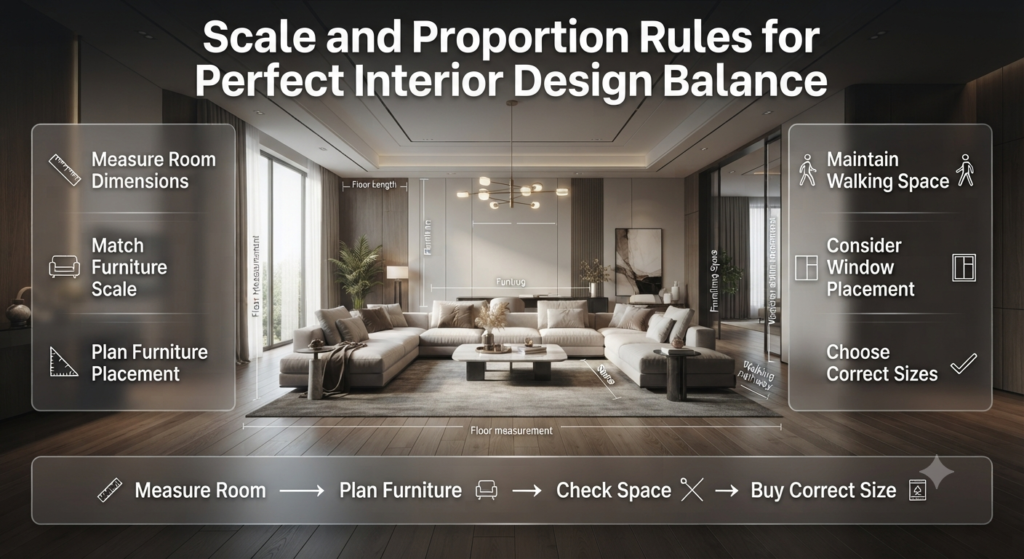
Scale and proportion determine how furniture and décor relate to the size of a room. Choosing pieces that match the available space creates a comfortable and professionally designed appearance.
One of the biggest differences between amateur and professional interiors is understanding size relationships.
A large sofa in a small apartment can make the room feel crowded.
A tiny rug in a large living room can make the furniture arrangement feel disconnected.
Designers consider:
- Ceiling height
- Room dimensions
- Furniture size
- Walking space
- Window placement
Before purchasing furniture, measure your space carefully.
A simple planning technique:
Measure Room
      ↓
Plan Furniture Placement
      ↓
Check Walking Space
      ↓
Purchase Correct Size
⭐ Expert Tip: Use floor tape to mark furniture dimensions before buying. This gives a realistic idea of how much space each item will occupy.
4. Creating Harmony Through Materials and Textures
Texture and materials add depth to interiors by creating visual and physical contrast. Combining wood, fabric, stone, metal, and natural elements makes a room feel richer and more complete.
A room with only one texture can feel flat.
Professional designers create layers by combining different materials.
Examples:
| Material | Feeling It Creates |
|---|---|
| Wood | Warm and natural |
| Glass | Modern and open |
| Stone | Luxury and durability |
| Linen | Soft and relaxed |
| Metal | Contemporary style |
| Velvet | Elegant appearance |
For example, a living room may combine:
- A soft fabric sofa
- Wooden coffee table
- Textured rug
- Metal lighting fixture
- Natural plants
This creates depth without adding unnecessary decoration.
Planning Before Decorating
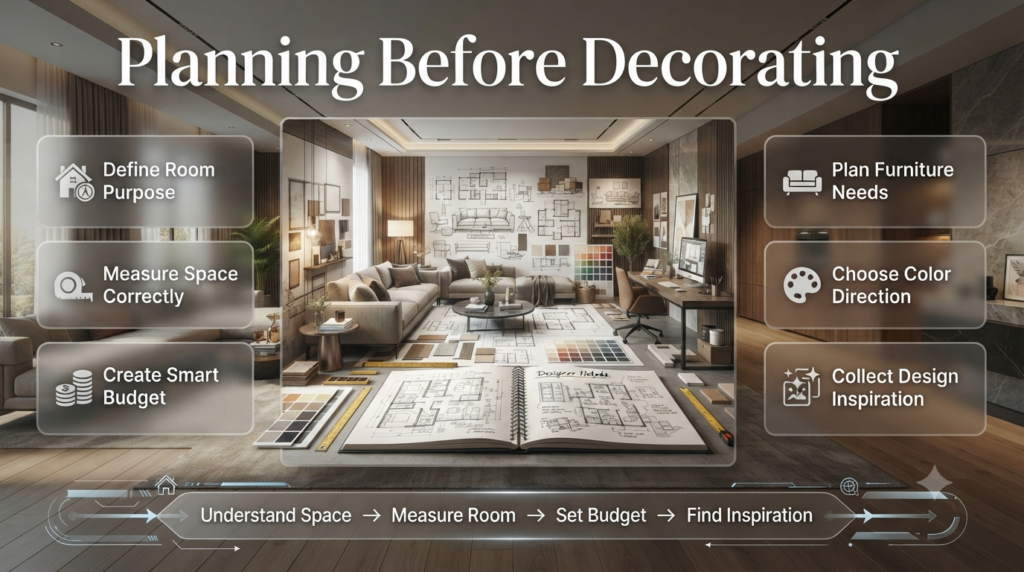
Planning before decorating helps homeowners avoid expensive mistakes and create interiors that match their lifestyle. A clear design plan should include room purpose, measurements, budget, color direction, and furniture requirements.
Many people start decorating by buying attractive items they like. However, random purchases often create rooms that feel disconnected.
A better approach is to create a plan.
Step 1: Understand How You Use the Space
Ask:
- Who uses this room?
- What activities happen here?
- How much storage is needed?
- Do you entertain guests?
- Do you need a workspace?
A family living room requires different choices compared to a formal guest room.
Step 2: Measure the Room
Always measure:
- Walls
- Doors
- Windows
- Ceiling height
- Existing furniture
Measurements prevent common problems like oversized furniture or blocked pathways.
Step 3: Create a Budget
Divide your budget wisely.
Example:
| Category | Budget Focus |
|---|---|
| Furniture | Main investment |
| Lighting | Mood and functionality |
| Paint | Background transformation |
| Accessories | Personality |
| Storage | Organization |
A realistic budget creates better results than impulse shopping.
Step 4: Collect Inspiration
Before final decisions, explore different styles and identify what attracts you.
You can explore Interior Inspiration to find ideas related to layouts, colors, furniture arrangements, and decorating approaches.
The Power of Lighting in Beautiful Interiors
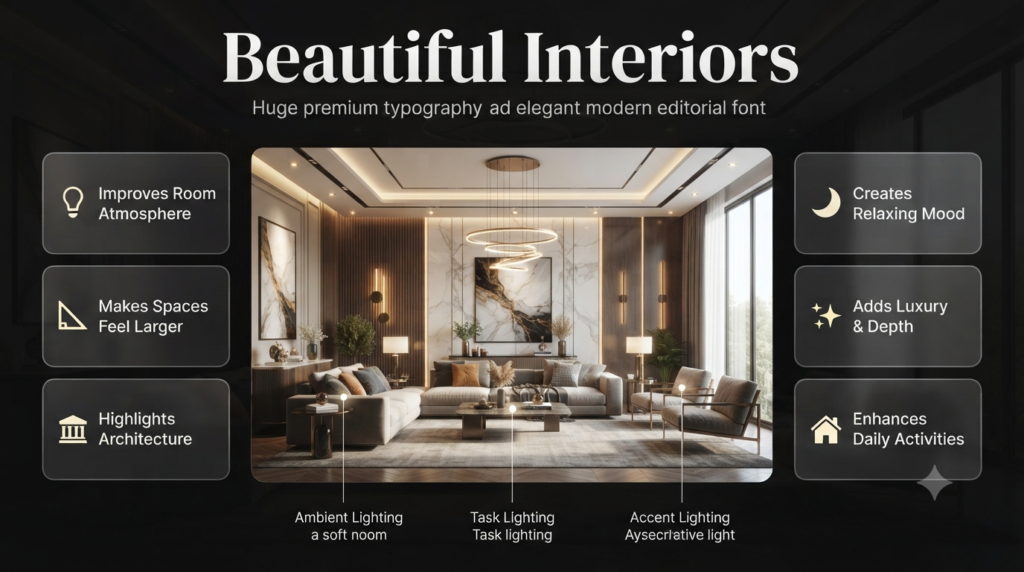
Lighting is one of the most important elements of interior design because it affects mood, functionality, and the overall appearance of a room. A well-designed lighting plan combines ambient, task, and accent lighting to create a comfortable and visually appealing space.
Many homeowners focus heavily on furniture and colors but underestimate lighting. However, professional designers know that even a beautifully decorated room can feel dull without proper lighting.
Lighting can:
- Make rooms appear larger
- Highlight architectural features
- Create a relaxing atmosphere
- Improve daily activities
- Add luxury and depth
A successful lighting design usually includes three layers.
1. Ambient Lighting (General Illumination)
Ambient lighting provides the main source of light in a room.
Common examples include:
- Ceiling fixtures
- Chandeliers
- Recessed lights
- Pendant lights
- Large wall fixtures
This lighting should create comfortable visibility without feeling harsh.
For example:
A living room may use recessed ceiling lights combined with a central chandelier to provide balanced illumination.
2. Task Lighting (Purpose-Based Lighting)
Task lighting focuses on specific activities.
Examples:
- Reading lamps
- Kitchen counter lights
- Desk lamps
- Bathroom mirror lighting
This type of lighting improves comfort and prevents eye strain.
A beautiful kitchen should not only look attractive—it should have enough focused lighting for cooking and food preparation.
You can explore more functional kitchen design approaches through Kitchen Paint Colors to understand how lighting and color work together.
3. Accent Lighting (Creating Visual Interest)
Accent lighting highlights specific features.
Examples:
- Artwork lighting
- Shelf lights
- Under-cabinet lighting
- Wall washers
- Decorative lamps
Accent lighting adds a luxury feeling by drawing attention to important design elements.
💡 Pro Tip: Use warm white lighting in living rooms and bedrooms because it creates a relaxing atmosphere. Cooler lighting is better suited for work areas where concentration is needed.
Creating Beautiful Interiors With Furniture Arrangement
Furniture arrangement determines how comfortable and functional a room feels. The best layouts create easy movement, encourage conversation, and maintain balance between furniture size and available space.
Even expensive furniture can look unattractive when arranged incorrectly.
A good furniture layout considers:
- Room purpose
- Traffic flow
- Focal points
- Furniture proportions
- Open space
Create Conversation Areas
Living rooms should encourage interaction.
Instead of pushing all furniture against walls, create intentional conversation zones.
Example:
      Chair        Chair

          Coffee Table

        Sofa Facing TV
This arrangement feels more welcoming because people can easily communicate.
Avoid Blocking Natural Movement
Walking paths should remain clear.
Avoid:
- Placing furniture directly in doorways
- Blocking windows
- Creating narrow pathways
- Overcrowding small rooms
A room needs breathing space to feel comfortable.
Use Rugs to Define Areas
Rugs help organize open spaces.
They can:
- Connect furniture pieces
- Add warmth
- Improve acoustics
- Create visual zones
For example:
A large living room rug can separate the seating area from the dining area in an open-plan home.
Adding Personality Through Décor and Accessories
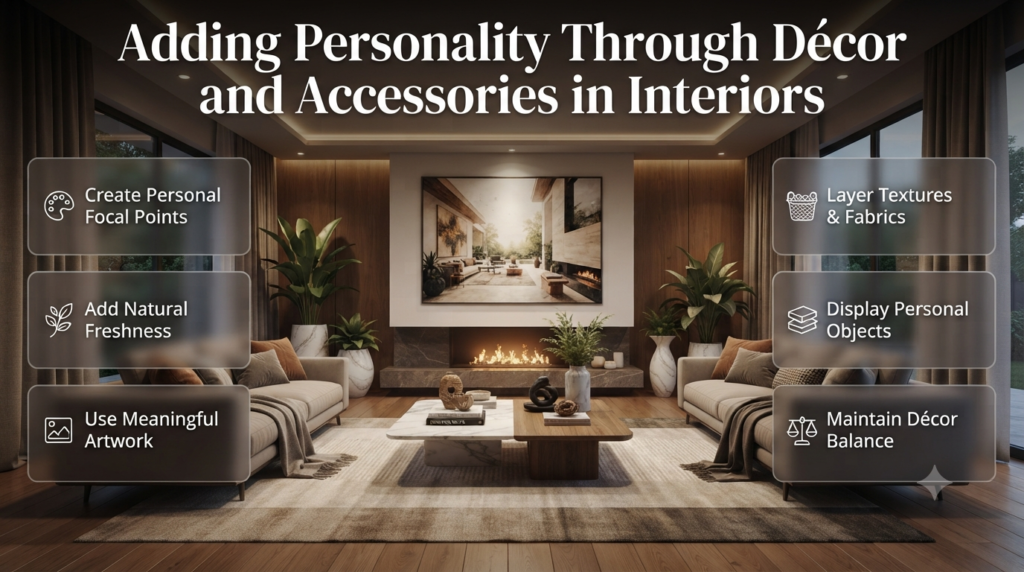
Accessories make interiors feel personal by adding character, color, and emotional connection. The best décor choices include meaningful artwork, plants, books, textiles, and objects that reflect the homeowner’s personality.
A room without accessories can feel unfinished, but too many decorations create clutter.
The goal is balance.
Use Artwork Strategically
Artwork adds personality and creates focal points.
Popular choices include:
- Large statement paintings
- Photography
- Abstract artwork
- Family memories
- Handmade pieces
A single large artwork often creates more impact than many small pieces.
Add Natural Elements
Plants are one of the easiest ways to improve interiors.
Benefits include:
- Adding freshness
- Bringing natural color
- Softening hard surfaces
- Improving visual balance
Popular indoor plants:
- Snake plant
- Fiddle leaf fig
- Monstera
- Peace lily
Natural materials such as wood, stone, and woven textures also create a connection with nature.
Layer Soft Furnishings
Soft furnishings make spaces comfortable.
Include:
- Cushions
- Throws
- Curtains
- Rugs
- Upholstered furniture
Layering different fabrics creates a cozy and sophisticated appearance.
Designing Beautiful Interiors Room by Room
Every room has a different purpose, so each space requires a unique design approach.
Living Room Interior Design
A beautiful living room combines comfortable seating, balanced lighting, practical furniture placement, and personalized décor. The goal is to create a welcoming environment for relaxation, entertainment, and everyday activities.
The living room is often the social heart of a home.
Key elements include:
Comfortable Seating
Choose furniture based on lifestyle.
Options:
- Sectional sofas for families
- Accent chairs for flexible seating
- Compact sofas for apartments
Comfort should always come before appearance.
Balanced Colors
Popular living room combinations:
- Beige + wood tones
- White + black accents
- Gray + warm textures
- Green + natural materials
For more ideas on creating stylish living spaces, explore Living Room Paint Ideas.
Layered Lighting
A beautiful living room usually combines:
- Ceiling lighting
- Floor lamps
- Table lamps
- Accent lighting
This allows you to change the mood depending on the time of day.
Bedroom Interior Design
A beautiful bedroom should create a calm and comfortable environment by combining relaxing colors, comfortable furniture, soft lighting, and organized storage solutions.
The bedroom should support rest and relaxation.
Important design elements include:
Choose Relaxing Colors
Good bedroom colors include:
- Soft beige
- Warm white
- Sage green
- Light blue
- Neutral gray
Avoid overly bright colors that may feel stimulating.
You can explore calming bedroom combinations through Bedroom Color Inspiration.
Focus on Comfort
Prioritize:
- Quality mattress
- Comfortable bedding
- Proper lighting
- Functional storage
A beautiful bedroom should feel peaceful, not just attractive.
Kitchen Interior Design
Beautiful kitchen interiors combine practical layouts, durable materials, smart storage, and attractive finishes. The best kitchens balance appearance with everyday functionality.
Important kitchen design features include:
- Efficient work triangle
- Good lighting
- Organized storage
- Durable surfaces
- Easy maintenance
Popular modern kitchen trends include:
- Natural wood cabinets
- Matte finishes
- Open shelving
- Stone countertops
- Integrated appliances
Bathroom Interior Design
A beautiful bathroom should feel clean, relaxing, and functional.
Important elements:
- Good lighting around mirrors
- Water-resistant materials
- Smart storage
- Quality fixtures
- Proper ventilation
Small bathrooms can look larger with:
- Light colors
- Large mirrors
- Glass shower panels
- Minimal decoration
Smart Technology in Beautiful Interiors

Smart home technology enhances beautiful interiors by improving comfort, convenience, security, and energy efficiency. The best smart designs integrate technology naturally without making spaces look complicated or cluttered.
Modern homeowners increasingly combine design with technology.
Popular smart features include:
- Automated lighting
- Smart thermostats
- Motorized curtains
- Voice-controlled systems
- Smart security devices
The key is hidden integration.
Technology should support your lifestyle without becoming the main visual focus.
For homeowners interested in combining modern convenience with stylish design, explore Smart Home Design ideas.
Latest Beautiful Interior Design Trends
Interior trends continue changing, but many modern approaches focus on comfort, sustainability, and timeless appeal.
1. Natural Materials
Popular materials:
- Wood
- Stone
- Bamboo
- Linen
- Clay finishes
These create warmth and authenticity.
2. Warm Minimalism
Minimalism is moving away from cold, empty spaces.
Modern minimal interiors include:
- Soft textures
- Natural colors
- Comfortable furniture
- Personal accessories
3. Biophilic Design
Biophilic interiors bring nature indoors.
Common features:
- Indoor plants
- Natural light
- Organic materials
- Nature-inspired colors
4. Personalized Homes
The biggest trend is creating spaces that feel unique.
Homeowners are moving away from identical showroom designs and choosing:
- Custom artwork
- Vintage pieces
- Family collections
- Handmade décor
Common Mistakes That Make Interiors Look Less Beautiful
1. Following Every Trend
Why It Happens
People want their homes to look modern immediately.
Why It’s Harmful
Trends change quickly, causing expensive redesigns.
How to Avoid It
Choose timeless foundations and add trends through small accessories.
2. Poor Lighting Planning
Why It Happens
Many homeowners only install basic ceiling lights.
Why It’s Harmful
Rooms can feel flat and uncomfortable.
How to Avoid It
Use layered lighting with multiple sources.
3. Buying Furniture Before Planning
Why It Happens
People purchase items they like without considering space.
Why It’s Harmful
Furniture may not fit or work together.
How to Avoid It
Measure first and create a layout plan.
4. Ignoring Storage
Why It Happens
People focus only on appearance.
Why It’s Harmful
Clutter reduces the beauty of any interior.
How to Avoid It
Include hidden storage solutions from the beginning.
How do I balance beauty with functionality in a high-traffic family living room?
A beautiful family living room should not only look stylish—it should support everyday life. The biggest mistake homeowners make is designing a space that looks perfect but becomes uncomfortable when children, pets, guests, and daily activities enter the picture.
The key is creating a balance between durability, comfort, storage, and visual appeal.
Start with furniture that matches your lifestyle. Instead of choosing delicate fabrics or oversized decorative pieces, select practical options such as:
Performance fabrics that resist stains and wear
Comfortable sofas with durable frames
Rounded furniture edges for safer movement
Washable rugs and removable cushion covers
Multi-purpose storage furniture
The layout is equally important. A high-traffic living room needs clear walking paths between doors, seating areas, and frequently used spaces. Avoid placing furniture where people constantly walk around it.
A professional approach is creating different zones:
Conversation zone: Sofa and chairs arranged for family interaction
Entertainment zone: TV or media area positioned comfortably
Activity zone: Space for children, hobbies, or reading
Storage zone: Hidden solutions for toys, blankets, and everyday items
Beauty comes from intentional details. Use decorative elements that are both attractive and practical, such as textured baskets, built-in shelving, layered lighting, indoor plants, and meaningful artwork.
💡 Expert Tip: In family spaces, choose a timeless foundation and add personality through easily replaceable items like cushions, throws, and accessories. This allows the room to evolve without expensive redesigns.
What is “Warm Minimalism,” and how do I achieve it without making my home look bare or cold?
Warm Minimalism is an interior design approach that combines the simplicity of minimal design with the comfort of natural materials, soft textures, and inviting colors. Instead of creating empty spaces with only a few objects, warm minimalism focuses on creating calm, functional, and emotionally comfortable environments.
Traditional minimalism sometimes feels cold because it relies heavily on sharp lines, empty surfaces, and limited decoration. Warm minimalism solves this by adding layers of warmth.
Key elements include:
Use Soft Neutral Colors
Instead of bright white and cool gray, warm minimal interiors often use:
Cream
Beige
Sand
Taupe
Soft brown
Warm gray
These shades create a relaxed atmosphere.
Add Natural Materials
Natural materials prevent minimal spaces from feeling empty.
Include:
Oak or walnut wood
Linen fabrics
Stone surfaces
Clay accessories
Wool rugs
Woven textures
Focus on Quality Over Quantity
Warm minimalism is not about owning less just for the sake of it. It is about choosing fewer items that have purpose and meaning.
Instead of filling shelves with random decorations, select:
A beautiful ceramic piece
A meaningful artwork
A handcrafted object
A statement lamp
Layer Different Textures
Texture is what makes minimal spaces feel comfortable.
Combine:
Smooth wood
Soft fabrics
Rough stone
Natural fibers
Matte finishes
📌 Quick Tip: A warm minimalist home should feel peaceful, not empty. Every item should either serve a function or add emotional value.
How do I mix different wood tones and metal finishes throughout a house without them clashing?
Mixing wood tones and metal finishes can create a sophisticated, designer-level interior when done correctly. The problem occurs when materials compete instead of complementing each other.
The goal is not matching everything perfectly—it is creating a visual connection.
Choose One Dominant Wood Tone
Start with a primary wood finish that appears most frequently.
Examples:
Oak flooring
Walnut cabinets
Wooden furniture
This becomes the foundation of the home.
Then introduce secondary wood tones through:
Side tables
Shelving
Decorative pieces
Accent furniture
Keep Undertones Consistent
Wood tones usually fall into categories:
Warm undertones: honey, orange, red
Cool undertones: gray, ash
Neutral undertones: natural oak
Avoid combining too many competing undertones.
For example:
A warm walnut table can work beautifully with natural oak flooring, but adding a very gray-toned wood may create visual conflict.
Mix Metal Finishes With Intention
Modern interiors often combine metals successfully.
Popular combinations:
Brass + matte black
Chrome + brushed nickel
Bronze + black
A good rule is:
Choose one dominant metal finish
Add one supporting metal finish
Example:
Main finish:
Brushed brass lighting fixtures
Supporting finish:
Matte black cabinet handles
Repeat Materials Throughout the Home
Consistency creates harmony.
If you use black metal in the kitchen, repeat it in:
Bathroom fixtures
Lighting
Furniture details
This creates a connected design language.
⭐ Expert Tip: Do not try to make every material identical. Professional interiors often look better when they include controlled contrast.
What are the key rules for scaling and placing area rugs to elevate a room’s entire design?
Area rugs are one of the most powerful design tools because they define spaces, add warmth, and connect furniture pieces. However, the wrong rug size can make an expensive room feel poorly designed.
The biggest rule is simple:
The rug should be large enough to connect the furniture, not just sit underneath a small table.
Living Room Rug Rules
For a large living room:
All furniture legs can sit on the rug
Sofa and chairs should feel connected
For smaller rooms:
Front legs of furniture should sit on the rug
The rug should extend beyond the coffee table
Avoid placing a tiny rug only under the coffee table because it visually separates the furniture instead of bringing the room together.
Bedroom Rug Placement
Common approaches:
Large Bedroom:
Place a large rug under the entire bed and bedside tables
Medium Bedroom:
Place the rug under the lower two-thirds of the bed
Small Bedroom:
Use runners on both sides of the bed
Dining Room Rug Rules
The rug should extend beyond the dining chairs.
When chairs are pulled out, they should remain on the rug.
A practical guideline:
Add approximately 60–90 cm of extra rug space around the table.
Consider Room Proportion
A rug should match the scale of the room.
Large rooms require larger rugs.
Small rooms benefit from properly sized rugs that create structure without overwhelming the space.
💡 Pro Tip: When uncertain, always choose the larger rug option. Oversized rugs usually make rooms feel more luxurious and connected.
How can I use architectural millwork to add character and historical depth to a plain, modern home?
Architectural millwork adds craftsmanship, texture, and personality to spaces that may otherwise feel plain. It includes decorative woodwork and built-in architectural details such as wall panels, moldings, cabinetry, and custom features.
Modern homes often have clean surfaces, but millwork introduces depth and visual interest.
Popular millwork options include:
Wall Paneling
Wall panels can transform simple walls into elegant architectural features.
Styles include:
Traditional raised panels
Modern geometric panels
Simple vertical slats
Contemporary molding designs
Crown Molding and Trim
Crown molding creates a finished connection between walls and ceilings.
It works especially well in:
Living rooms
Dining rooms
Bedrooms
Entryways
Built-In Shelving
Custom shelving adds both beauty and function.
Benefits include:
Extra storage
Display opportunities
Architectural character
Built-ins can showcase:
Books
Artwork
Decorative objects
Family collections
Ceiling Details
Ceilings are often ignored, but they provide opportunities for character.
Options include:
Coffered ceilings
Wooden beams
Decorative molding
Tray ceilings
Keep Millwork Appropriate for the Home
The design should match the architecture.
For example:
Traditional homes may suit:
Detailed moldings
Classic panels
Ornate trim
Modern homes often work better with:
Simple lines
Minimal paneling
Natural wood accents
⚠ Common Mistake: Adding too much decorative millwork in a modern home can make the space feel artificial. The best results come from using architectural details strategically rather than covering every surface.
The goal is not to make a home look old—it is to add craftsmanship, depth, and timeless character while maintaining a modern lifestyle.
Conclusion: Creating Beautiful Interiors That Feel Like Home
Beautiful interiors are not created by following every trend or filling every corner with decoration. The most successful homes come from thoughtful planning, balanced design choices, and a clear understanding of how a space should support everyday life.
A truly beautiful interior combines style, comfort, functionality, and personality. From choosing the right color palette and arranging furniture properly to layering lighting, adding textures, and selecting meaningful décor, every detail contributes to the overall experience of your home.
The best interiors are not simply visually attractive—they make people feel comfortable, relaxed, and connected. A well-designed living room encourages conversation, a peaceful bedroom supports rest, and a functional kitchen makes daily routines easier.
Whether you prefer modern minimalism, classic elegance, natural designs, or a combination of different styles, the foundation remains the same:
- Plan before decorating
- Choose quality over quantity
- Create harmony between colors and materials
- Balance beauty with practical needs
- Add personal elements that tell your story
- Design spaces around the way you actually live
Remember, your home does not need to look like a showroom to be beautiful. The most memorable interiors are those that feel authentic, welcoming, and thoughtfully designed.
By applying the principles of balance, proportion, lighting, texture, and personalization, you can create a home that remains stylish, comfortable, and meaningful for years to come. Beautiful interiors are not just about how a space looks—they are about how it makes you feel every day.

Leave a Reply