
Introduction
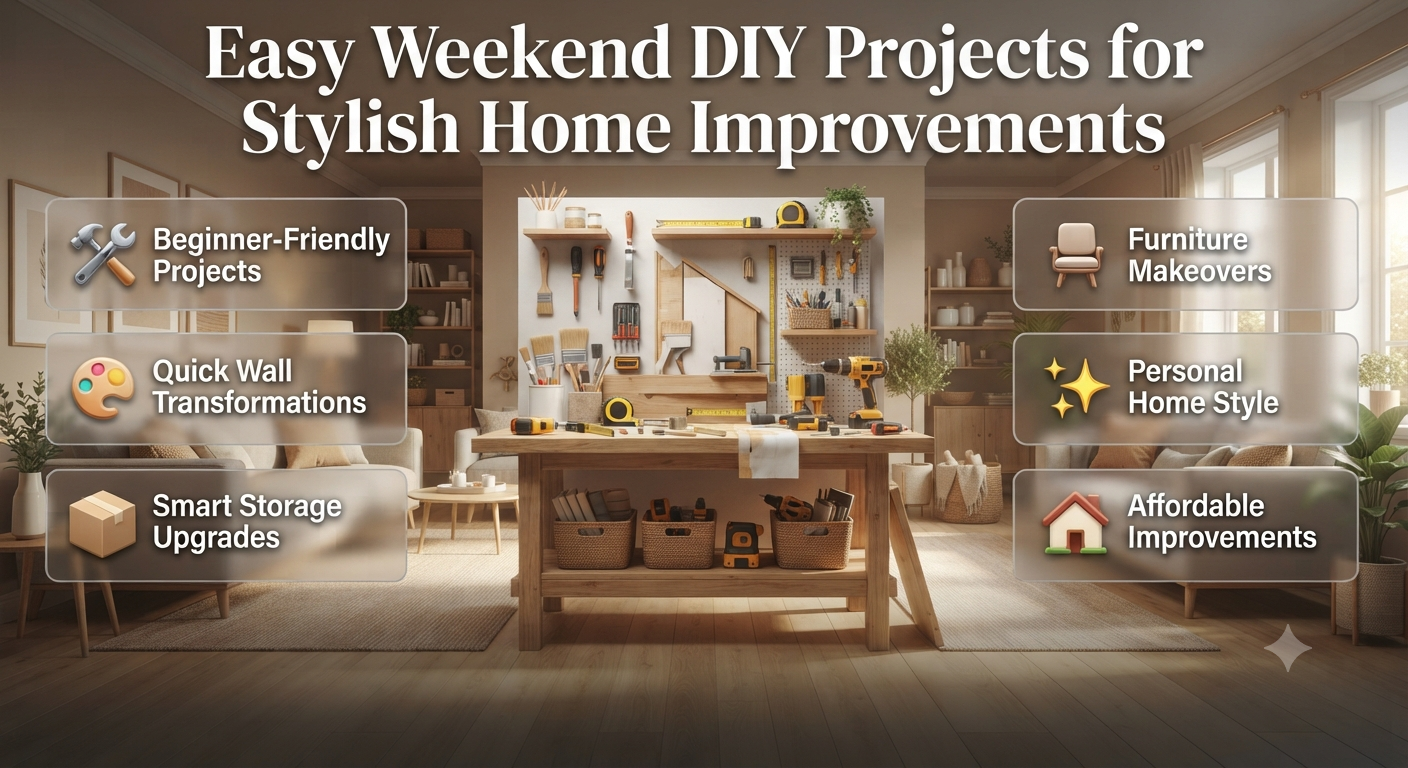
Easy Weekend DIY Projects for Your Home | Have you ever looked around your home and felt that something was missing? Maybe your walls look outdated, your storage feels messy, or your rooms need a fresh personality—but a complete renovation feels too expensive and time-consuming.
The good news is that you don’t always need weeks of construction or a large budget to improve your living space. Weekend DIY Projects give homeowners and renters the opportunity to refresh, organize, and personalize their homes within just a few days.
From creating stylish storage solutions to upgrading furniture, painting feature walls, and adding decorative touches, small DIY improvements can create a surprisingly big impact.
In this guide, you’ll discover the best weekend DIY projects for beginners and intermediate DIY lovers, how to choose the right project, essential tools you need, common mistakes to avoid, and expert tips that help your results look more professional.
Whether your goal is improving functionality, creating a more beautiful interior, or adding your personal style, these ideas will help you make meaningful changes without overwhelming your schedule.
What Are Weekend DIY Projects?
Weekend DIY projects are small home improvement tasks that can usually be completed within one or two days using basic tools and materials. These projects help homeowners improve their home’s appearance, organization, and functionality while saving money compared with hiring professionals.
Unlike major renovations, DIY weekend upgrades focus on simple improvements with noticeable results.
Examples include:
- Painting a room or accent wall
- Building floating shelves
- Updating furniture
- Creating home décor
- Installing storage solutions
- Improving outdoor spaces
The main purpose is not only saving money but also creating a home that feels more personal and comfortable.
For more complete home improvement inspiration, explore these helpful ideas from Design Mode 24 Interior Design.
Why Are Weekend DIY Projects Worth Doing?
Small improvements can completely change how a home looks and feels. Many homeowners assume they need expensive renovations to make their spaces better, but carefully planned DIY upgrades often provide excellent results at a fraction of the cost.
1. Save Money on Home Improvements
One of the biggest reasons people choose DIY projects is cost savings.
Professional labor can significantly increase renovation expenses, especially for simple upgrades like:
- Painting walls
- Installing shelves
- Updating cabinet hardware
- Creating decorative features
- Organizing storage areas
A DIY approach allows you to spend more money on quality materials while reducing labor costs.
Example:
A professional may charge hundreds of dollars to create a feature wall, while a homeowner can complete a similar project with paint, tools, and materials for much less.
2. Improve Your Home’s Appearance
A home does not need expensive furniture or luxury décor to look beautiful.
Simple changes can create a fresh atmosphere:
- New wall colors
- Better lighting
- Handmade decorations
- Organized storage
- Updated furniture finishes
If you want to improve your home’s overall appearance, explore more Interior Design ideas for inspiration.
3. Increase Functionality
The best DIY projects solve everyday problems.
For example:
A floating shelf is not only decorative—it creates storage.
A customized closet organizer does not only look better—it saves time every morning.
A garden planter does not only improve outdoor appearance—it creates space for growing plants.
Good DIY projects combine beauty with practical benefits.
4. Add Personal Style to Your Home
Mass-produced décor often looks similar in many homes.
DIY allows you to create something unique that matches:
- Your preferred colors
- Your lifestyle
- Your room size
- Your personality
This personal connection is one reason DIY projects continue to grow in popularity.
💡 Pro Tip:
Before starting any project, ask yourself: “Will this improve my daily life?” The best DIY upgrades are not only attractive—they make your home easier and more enjoyable to use.
How to Choose the Right Weekend DIY Project
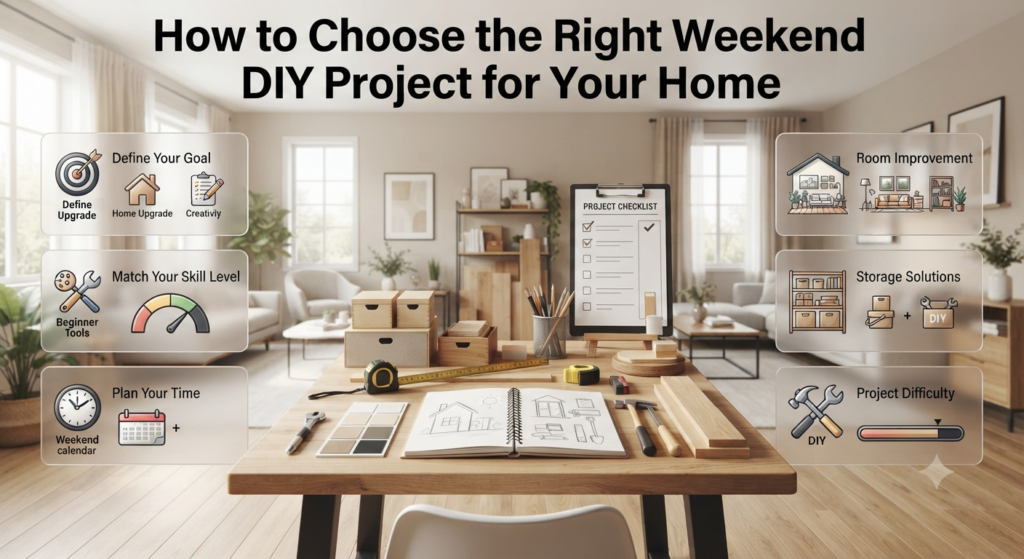
The right weekend DIY project depends on your available time, budget, skill level, and the problem you want to solve. Beginners should start with simple projects like painting, decorating, or organizing before attempting complex woodworking or structural improvements.
Before choosing a project, consider these factors:
1. Identify Your Goal
Start by deciding what you want to achieve.
Are you trying to:
- Make a room look modern?
- Add storage?
- Improve organization?
- Refresh old furniture?
- Create a comfortable outdoor area?
Your goal will determine the best project.
2. Consider Your Skill Level
Choosing a project that matches your experience prevents frustration.
Beginner-Friendly Projects
Suitable for first-time DIY users:
- Painting walls
- Installing shelves
- Creating artwork
- Organizing closets
- Updating furniture handles
Intermediate Projects
Require more tools and patience:
- Building wooden furniture
- Installing wall panels
- Creating custom storage
Advanced Projects
Require stronger skills:
- Electrical work
- Major carpentry
- Structural changes
Always build confidence with smaller projects before moving to complex ones.
3. Check Your Available Time
Not every DIY project fits into the same weekend.
| Available Time | Suitable Projects |
|---|---|
| 2–3 Hours | Wall décor, organization, small updates |
| Half Day | Shelves, painting furniture |
| One Day | Accent wall, garden projects |
| Full Weekend | Furniture building, larger upgrades |
⚠ Common Mistake:
Many beginners underestimate preparation time. Cleaning, measuring, shopping for materials, and setting up tools often takes longer than expected.
Always plan extra time before starting.
Essential Tools for Weekend DIY Projects
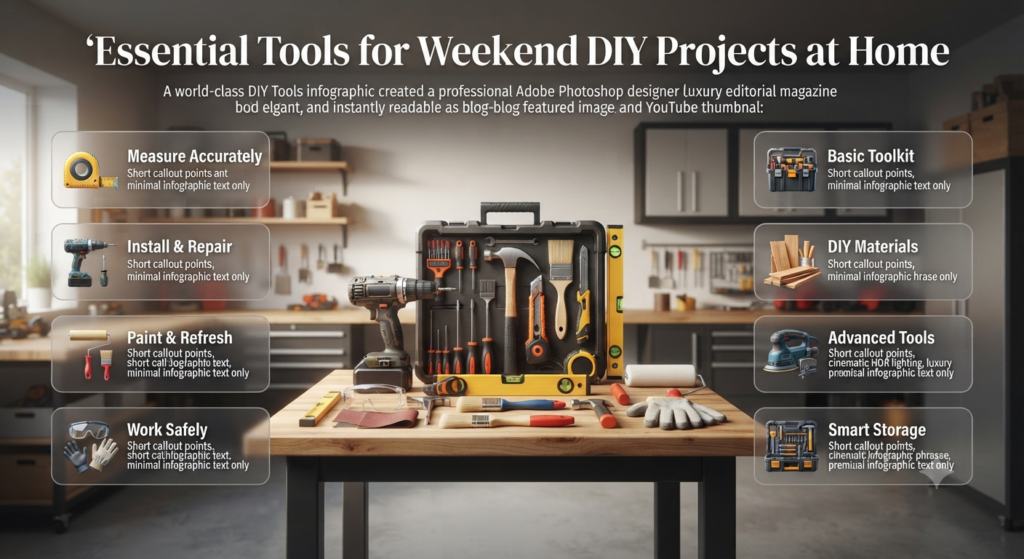
Most weekend DIY projects can be completed with a basic home toolkit. Essential tools include a measuring tape, drill, screwdriver set, hammer, level, utility knife, paint brushes, and safety equipment. Investing in quality basic tools makes future projects easier and safer.
Basic DIY Toolkit Checklist
| Tool | Purpose |
|---|---|
| Measuring Tape | Accurate measurements |
| Drill | Installing screws and hardware |
| Screwdriver Set | Furniture and fixtures |
| Hammer | Basic construction |
| Level | Straight installation |
| Utility Knife | Cutting materials |
| Sandpaper | Smoothing surfaces |
| Paint Roller | Painting large areas |
| Safety Glasses | Eye protection |
| Gloves | Hand safety |
Helpful Additional Tools
For people planning more DIY projects, consider adding:
- Stud finder
- Electric sander
- Clamps
- Jigsaw
- Paint sprayer
- Storage organizer for tools
A good toolkit saves time and improves the quality of your finished projects.
Materials You Should Keep at Home
Having common supplies available makes spontaneous DIY projects easier.
Useful materials include:
- Screws
- Nails
- Wall anchors
- Wood glue
- Painter’s tape
- Paint brushes
- Primer
- Sandpaper
- Caulk
- Wood boards
- Paint samples
⭐ Expert Tip:
Professional DIY enthusiasts organize materials before starting. Place every tool and supply nearby before beginning work. This simple habit prevents delays and reduces mistakes.
15 Best Weekend DIY Projects to Upgrade Your Home
1. Install Floating Shelves
Floating shelves are one of the easiest weekend DIY projects because they improve storage and decoration at the same time. They work in living rooms, bedrooms, kitchens, and bathrooms while requiring only basic tools and materials.
Floating shelves are perfect for displaying:
- Books
- Plants
- Photos
- Decorative items
- Kitchen accessories
Materials Needed:
- Wooden shelf boards
- Brackets
- Screws
- Drill
- Level
- Wall anchors
Steps:
- Choose the location.
- Measure the wall space.
- Mark installation points.
- Secure brackets.
- Attach shelves.
- Check alignment.
Benefits:
- Saves floor space
- Creates modern appearance
- Improves organization
- Works in small rooms
📌 Quick Tip:
Always locate wall studs before installing heavy shelves. Decorative items are lightweight, but books and storage items can add significant weight.
2. Create an Accent Wall
An accent wall is one of the fastest ways to transform a room without repainting everything.
Popular options include:
- Bold paint colors
- Wooden panels
- Wallpaper
- Textured finishes
- Geometric designs
For more color inspiration, explore Paint Color ideas that match different interior styles.
An accent wall works especially well in:
- Living rooms
- Bedrooms
- Dining areas
- Home offices
Choosing the Right Accent Wall
The best wall is usually:
- Behind a sofa
- Behind a bed
- Opposite the entrance
- A natural focal point
Avoid choosing random walls without considering the room layout.
3. Build a Simple Entryway Bench
Your entryway creates the first impression of your home.
A DIY wooden bench provides:
- Seating
- Shoe storage
- Organization
- Decorative value
You can customize:
- Size
- Color
- Storage options
- Cushion style
For more home styling inspiration, explore Home Styling ideas.
4. Refresh Kitchen Cabinets With Paint
Replacing kitchen cabinets can be expensive, but painting them creates a dramatic transformation.
This project requires:
- Cleaning cabinets
- Removing hardware
- Sanding surfaces
- Applying primer
- Painting carefully
- Adding new handles
For better results, choosing the correct finish matters. Learn more about Paint Finishes before starting.
5. Create DIY Wall Art
Personalized wall art makes your home feel unique.
Ideas include:
- Wooden designs
- Canvas paintings
- Photo displays
- Handmade frames
- Nature-inspired décor
DIY artwork is affordable and allows complete creative control.
6. Upgrade Interior Doors With New Hardware
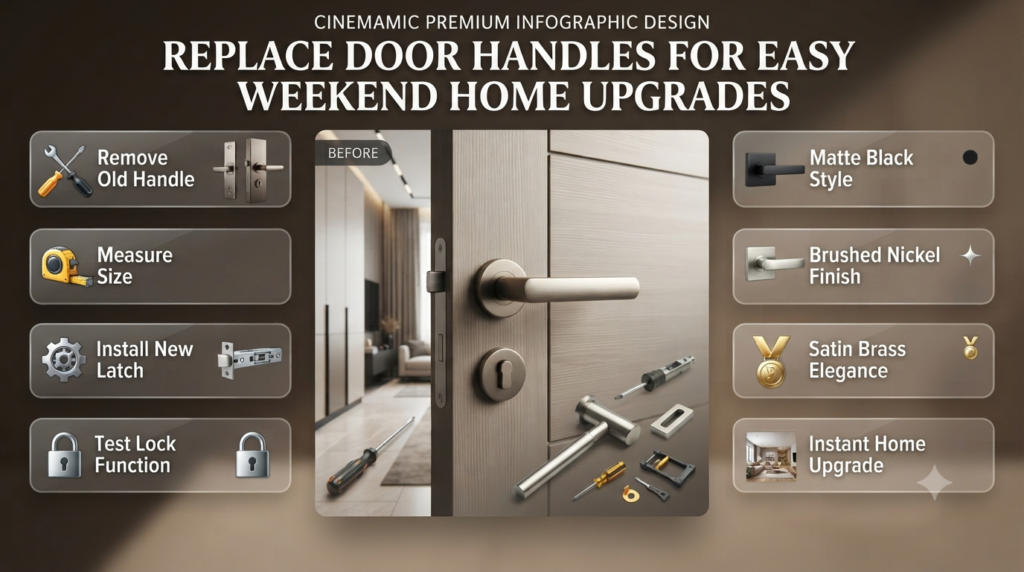
Replacing outdated door handles is one of the easiest weekend DIY projects to modernize your home. New hardware can instantly improve the appearance of bedrooms, bathrooms, and living spaces while requiring minimal tools and experience.
Many homeowners underestimate how much small details affect interior design. Old, scratched, or mismatched handles can make a home feel outdated, while modern hardware creates a cleaner and more polished appearance.
Popular Door Hardware Finishes
| Finish | Style | Best For |
|---|---|---|
| Matte Black | Modern and bold | Contemporary homes |
| Brushed Nickel | Clean and timeless | Most interiors |
| Satin Brass | Warm and elegant | Luxury designs |
| Bronze | Traditional look | Classic homes |
Steps to Replace Door Handles
- Remove the existing handle.
- Measure the current hardware size.
- Install the new latch.
- Attach the new handle.
- Test the locking mechanism.
Benefits
- Affordable upgrade
- Quick installation
- Improves room appearance
- Creates a consistent design style
💡 Pro Tip:
Replace multiple door handles together instead of one at a time. Matching hardware throughout the home creates a more professionally designed appearance.
7. Build Raised Garden Planters
Raised garden planters are simple weekend DIY projects that improve outdoor spaces while making gardening easier. They provide better soil control, improved drainage, and easier maintenance compared with traditional ground gardens.
A raised planter works well for:
- Small yards
- Balconies
- Patios
- Rooftop gardens
- Outdoor corners
Materials Required
- Wooden boards
- Screws
- Landscape fabric
- Soil mixture
- Plants or seeds
Why Raised Planters Are Useful
Traditional gardening can be challenging because of poor soil quality or limited space.
Raised planters solve these problems by offering:
- Better drainage
- Easier weed control
- Cleaner appearance
- Comfortable gardening height
📌 Quick Tip:
Use weather-resistant wood or apply a protective outdoor finish to increase the planter’s lifespan.
8. Organize Your Closet With DIY Storage Solutions
DIY closet organization projects improve storage efficiency by using available space more effectively. Simple additions like shelves, dividers, hooks, and baskets can transform a messy closet into a functional and organized area.
A well-organized closet saves time and reduces daily frustration.
DIY Closet Improvement Ideas
Add Adjustable Shelves
Adjustable shelving allows you to change storage based on your needs.
Useful for:
- Shoes
- Bags
- Folded clothes
- Accessories
Install Hooks
Hooks are inexpensive and practical for:
- Jackets
- Hats
- Scarves
- Bags
Use Storage Boxes
Clear containers help you quickly find seasonal items.
For more ideas on creating organized and attractive spaces, explore Beautiful Interior inspiration.
9. Create a Cozy Reading Corner
A comfortable reading corner does not require a large space.
Even a small unused corner can become a relaxing area with a few improvements.
What You Need
- Comfortable chair
- Small side table
- Floor lamp
- Soft cushions
- Small bookshelf
Why This Project Works
A dedicated relaxation area improves:
- Comfort
- Home atmosphere
- Daily routines
- Personal enjoyment
This project is especially useful for apartments and smaller homes.
⭐ Expert Tip:
Good lighting matters more than expensive furniture. A warm, adjustable lamp can completely change how comfortable a reading space feels.
10. Create a DIY Indoor Plant Display
Plants add natural beauty and improve the feeling of a room.
A DIY plant display can include:
- Hanging planters
- Wooden plant stands
- Wall-mounted plant shelves
- Decorative plant corners
Best Areas for Indoor Plants
- Living room corners
- Windows
- Home offices
- Empty shelves
Plants work especially well with modern, Scandinavian, and natural interior styles.
For more creative decorating ideas, explore Interior Inspiration.
11. Upgrade Lighting Fixtures

Lighting has a major impact on how a room feels.
Replacing outdated lamps or fixtures can make interiors appear more modern.
Simple Lighting Improvements
- Replace old lampshades
- Add LED strips
- Install decorative fixtures
- Use smart bulbs
- Improve task lighting
Benefits
Better lighting can:
- Make rooms feel larger
- Improve functionality
- Highlight décor
- Create different moods
⚠ Common Mistake:
Many people focus only on furniture and ignore lighting. Even a beautifully designed room can feel uncomfortable if lighting is poor.
12. Build a DIY Coffee Table
A handmade coffee table can become the centerpiece of your living room.
Beginner-Friendly Materials
- Wooden boards
- Furniture legs
- Screws
- Wood stain
- Protective coating
Design Options
You can create:
- Rustic farmhouse style
- Modern minimalist style
- Industrial design
- Natural wood style
The advantage of DIY furniture is complete customization.
You can choose:
- Exact dimensions
- Color
- Storage options
- Design details
13. Create a Home Office Upgrade
With more people working remotely, a comfortable workspace has become essential.
A weekend DIY office upgrade can include:
- Installing shelves
- Creating cable management
- Adding better lighting
- Building a desk organizer
- Improving wall décor
Simple Workspace Improvements
| Problem | DIY Solution |
|---|---|
| Cable clutter | Cable holders |
| Empty walls | Artwork or shelves |
| Poor storage | Floating shelves |
| Uncomfortable lighting | Desk lamp |
A well-designed workspace improves focus and productivity.
For smart organization ideas, explore Smart Home Design concepts.
14. Create a Bedroom Makeover
A bedroom refresh does not always require new furniture.
Small changes can create a completely different atmosphere.
Weekend Bedroom Upgrade Ideas
- Paint one wall
- Replace bedding
- Add decorative pillows
- Install bedside lighting
- Create wall artwork
- Organize storage
Color Considerations
Colors influence the feeling of a bedroom.
Examples:
- Soft neutrals create calmness
- Warm colors create comfort
- Dark shades create luxury
- Light colors make rooms appear larger
For bedroom inspiration, explore Bedroom Color Inspiration.
15. Transform Your Living Room With Simple DIY Updates
The living room is one of the most important areas of any home because it is where families relax and guests gather.
Small DIY improvements can create a major difference.
Easy Living Room Projects
Create a Gallery Wall
Display:
- Family photos
- Artwork
- Decorative frames
Add Decorative Shelves
Use shelves for:
- Books
- Plants
- Collectibles
Refresh Furniture
Simple updates include:
- New covers
- Paint
- Decorative cushions
For more ideas, explore Living Room Paint Ideas.
Weekend DIY Project Comparison Guide
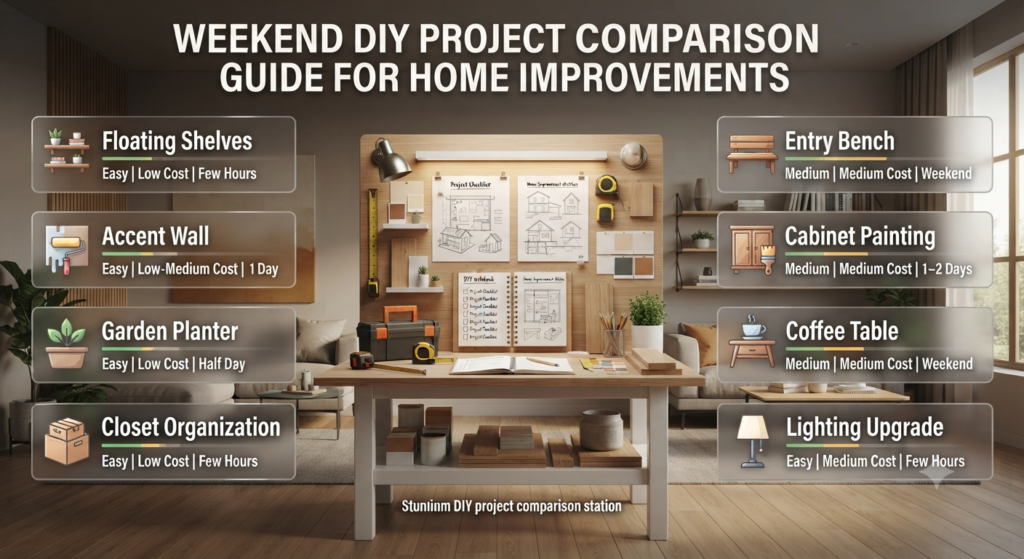
| Project | Difficulty | Cost Level | Time Required |
|---|---|---|---|
| Floating Shelves | Easy | Low | Few Hours |
| Accent Wall | Easy | Low-Medium | 1 Day |
| Entry Bench | Medium | Medium | Weekend |
| Cabinet Painting | Medium | Medium | 1–2 Days |
| Garden Planter | Easy | Low | Half Day |
| Coffee Table | Medium | Medium | Weekend |
| Closet Organization | Easy | Low | Few Hours |
| Lighting Upgrade | Easy | Medium | Few Hours |
Common Weekend DIY Mistakes Beginners Make
The most common DIY mistakes include poor planning, choosing the wrong materials, skipping preparation, ignoring safety precautions, and rushing the finishing process. Proper planning and patience help beginners achieve better results and avoid unnecessary costs.
1. Skipping Measurements
Many DIY failures happen because people guess measurements.
Why It Happens:
Beginners often underestimate the importance of accuracy.
Why It’s Harmful:
Incorrect measurements lead to:
- Wasted materials
- Uneven installations
- Poor appearance
How To Avoid It:
Always:
- Measure twice
- Mark locations carefully
- Confirm dimensions before cutting
2. Choosing Cheap Materials
Saving money is good, but extremely cheap materials often create problems.
Low-quality materials may:
- Break quickly
- Look unfinished
- Require replacement sooner
Choose materials based on durability, not only price.
3. Ignoring Preparation
Preparation is often the difference between amateur and professional results.
Examples:
Before painting:
- Clean surfaces
- Repair damage
- Use primer when needed
Before building:
- Organize tools
- Prepare workspace
- Read instructions
4. Rushing the Finishing Process
The final details matter.
Common rushed mistakes:
- Uneven paint edges
- Poor sanding
- Missing protective coating
- Loose hardware
Professional-looking results require patience.
Expert Advice for Better Weekend DIY Results
Professional-quality DIY results come from proper planning, accurate measurements, quality materials, patience, and attention to finishing details. Experts recommend preparing the workspace before starting, choosing realistic projects, and focusing on durability rather than rushing for quick results.
1. Plan Before You Start
Many successful DIY projects begin before the first tool is picked up.
Professionals usually follow this process:
- Understand the project requirements.
- Measure the available space.
- Create a material list.
- Purchase supplies.
- Prepare the workspace.
- Start the installation or improvement.
Good planning reduces mistakes and keeps the project within budget.
2. Focus on Quality Over Speed
A common beginner mindset is:
“I need to finish this as quickly as possible.”
However, rushing often creates problems.
Quality DIY work requires:
- Proper preparation
- Careful measurements
- Smooth finishing
- Correct installation
A project completed one day later with better results is always more valuable than a rushed project that needs repairs.
3. Choose Projects That Match Your Home
Not every popular DIY idea works for every home.
Consider:
- Room size
- Existing design style
- Available natural light
- Storage needs
- Family lifestyle
For example:
A large bookshelf may look beautiful online, but it may overwhelm a small apartment.
A compact floating shelf might provide better functionality.
4. Use Colors Strategically
Color is one of the easiest ways to transform a space.
Before choosing paint colors, consider:
- Room purpose
- Lighting conditions
- Existing furniture
- Desired atmosphere
For more ideas about creating balanced color combinations, explore Warm Color Palettes.
Warm colors can create:
- Comfort
- Energy
- Relaxation
- Visual warmth
Weekend DIY Project Preparation Checklist
Before starting any project, use this simple checklist.
Planning Checklist
✔ Choose the project
✔ Set a realistic budget
✔ Check available time
✔ Measure the space
✔ Create a shopping list
✔ Prepare tools
Safety Checklist
✔ Wear protective equipment
✔ Keep workspace organized
✔ Use tools correctly
✔ Keep children away from dangerous tools
✔ Follow product instructions
Final Quality Checklist
Before considering your project complete:
✔ Check measurements
✔ Tighten hardware
✔ Clean surfaces
✔ Fix small imperfections
✔ Add finishing touches
How to Make DIY Projects Look More Professional
DIY projects look professional when surfaces are properly prepared, measurements are accurate, materials are high quality, and finishing details are completed carefully. Clean edges, consistent colors, and proper installation techniques often make the biggest difference between an average and professional-looking result.
Pay Attention to Small Details
Professional results often come from small improvements:
- Smooth paint edges
- Hidden cables
- Matching hardware
- Clean corners
- Proper alignment
These details create a finished appearance.
Create a Consistent Home Style
A common mistake is completing projects separately without considering the entire home.
Your DIY improvements should connect through:
- Similar colors
- Matching materials
- Consistent design themes
For complete decorating inspiration, explore Home Design Ideas.
Budget-Friendly Weekend DIY Ideas
Not every improvement requires a large investment.
Here are affordable projects with strong visual impact:
| Project | Approximate Budget | Impact |
|---|---|---|
| Wall Painting | Low | Very High |
| Shelf Installation | Low | Medium-High |
| Hardware Replacement | Low | High |
| DIY Artwork | Very Low | Medium |
| Closet Organization | Low | High |
| Plant Display | Low | Medium |
What Are the Best Weekend DIY Projects for Beginners?
The best weekend DIY projects for beginners are those that require basic tools, limited experience, and provide noticeable results without creating unnecessary challenges. Beginners should focus on simple improvements that build confidence while improving the beauty and functionality of their homes.
Projects like painting an accent wall, installing floating shelves, creating a small indoor garden, updating cabinet hardware, organizing storage areas, and making simple décor pieces are excellent starting points. These projects allow beginners to learn important skills such as measuring, preparing surfaces, using tools correctly, and applying finishing touches.
A good beginner DIY project should not only look attractive but also solve a practical problem. For example, a floating shelf can improve wall décor while adding storage space, and a closet organization project can make daily routines easier.
Important points to consider:
Start with small projects before attempting complex renovations.
Choose projects that match your current skill level.
Prepare all tools and materials before starting.
Focus on learning the process instead of achieving perfection immediately.
Select projects that create visible improvements within a short time.
A successful first DIY experience builds confidence and encourages homeowners to take on bigger projects in the future.
How Can I Choose the Right Weekend DIY Project for My Home?
Choosing the right weekend DIY project depends on your home’s needs, your available time, budget, and personal goals. Many people make the mistake of selecting projects because they look attractive online without considering whether they actually fit their space or lifestyle.
The best approach is to first identify a problem you want to solve. If your home feels cluttered, a storage-focused project may provide more value than decorative upgrades. If your rooms feel outdated, painting or lighting improvements may create a bigger impact.
Before starting any project, evaluate:
Your available space:
A large furniture project may not work well in a small apartment, while wall-mounted storage solutions can maximize limited space.
Your budget:
Some DIY projects require only paint and basic supplies, while others involve tools, wood, or specialized materials.
Your experience level:
Choose projects that challenge you but are still realistic. A project that is too advanced can lead to wasted materials and frustration.
Important points to remember:
Define your main goal before choosing a project.
Consider how often you will use the improvement.
Measure your space carefully.
Calculate the complete cost before beginning.
Select designs that match your home’s existing style.
The right DIY project should improve your everyday living experience, not just create a temporary visual change.
How Much Money Can You Save With Weekend DIY Projects?
Weekend DIY projects can save homeowners a significant amount of money by reducing professional labor costs. While the exact savings depend on the type of project, many simple home improvements can cost 50% to 80% less when completed independently.
For example, painting a room yourself can save hundreds of dollars compared with hiring a professional painter. Similarly, installing shelves, updating furniture, or creating decorative features often requires affordable materials but delivers a high visual impact.
However, saving money does not mean choosing the cheapest materials available. Low-quality supplies may require replacement sooner and reduce the overall value of your project.
Smart DIY budgeting includes:
Comparing material prices before purchasing.
Investing in reusable tools.
Choosing durable materials.
Avoiding unnecessary decorative expenses.
Planning projects carefully to reduce mistakes.
Cost-saving tips:
Buy commonly used tools once and reuse them.
Purchase materials during seasonal sales.
Repurpose existing furniture when possible.
Start with high-impact, low-cost improvements.
Avoid rushing, because mistakes increase expenses.
A well-planned DIY project is not only affordable—it can also create results that look professional and last for years.
Which Weekend DIY Projects Add the Most Value to a Home?
The DIY projects that add the most value are usually improvements that increase functionality, improve appearance, and make the home more attractive to future buyers. Not every DIY upgrade increases property value, but certain projects create a stronger impression.
Some of the most valuable weekend improvements include:
Fresh Interior Painting
A clean, modern paint color can instantly refresh outdated rooms and create a more attractive environment.
Storage Improvements
Projects like built-in shelves, closet organization systems, and smart storage solutions make homes feel larger and more practical.
Lighting Upgrades
Modern lighting fixtures and improved room lighting can dramatically change the atmosphere of a space.
Kitchen Improvements
Simple updates such as cabinet painting, new handles, and backsplash improvements can provide excellent visual results without a full renovation.
Outdoor Improvements
Garden planters, patio upgrades, and outdoor seating areas improve curb appeal and lifestyle value.
Key factors that make a DIY project valuable:
It solves a common household problem.
It improves daily convenience.
It uses durable materials.
It matches modern design preferences.
It creates a clean and finished appearance.
The best home improvements combine beauty with practicality.
What Common Mistakes Should Beginners Avoid When Doing Weekend DIY Projects?
Many beginners fail not because they lack creativity, but because they underestimate planning and preparation. DIY projects require patience, accurate measurements, and attention to detail. Avoiding common mistakes can make the difference between a professional-looking result and a frustrating experience.
One of the biggest mistakes is starting without a clear plan. Many people begin working immediately without measuring the area, preparing materials, or understanding the steps involved.
Another common problem is choosing projects that are too advanced. Trying complex woodworking, electrical work, or major renovations without experience can create safety risks and expensive repairs.
Common mistakes to avoid:
Skipping Preparation
Cleaning, sanding, measuring, and preparing surfaces are essential steps that improve final results.
Using Incorrect Tools
The right tool makes work easier, safer, and more accurate.
Buying Poor-Quality Materials
Cheap materials may reduce the lifespan and appearance of your project.
Rushing Finishing Details
Small details like smooth paint edges, proper alignment, and clean installation create a professional look.
Ignoring Safety
Always use protective equipment and follow tool instructions.
Professional tips for better results:
Watch tutorials before starting unfamiliar tasks.
Create a realistic timeline.
Keep your workspace organized.
Take breaks instead of rushing.
Focus on quality rather than speed.
A successful DIY project is not about finishing quickly—it is about creating something useful, attractive, and long-lasting.
Conclusion
Weekend DIY Projects are a practical way to improve your home’s appearance, functionality, and comfort without spending a large amount of money on professional renovations. Whether you are updating a single room, creating better storage, refreshing old furniture, or adding personal décor, small improvements can create a meaningful difference in your everyday living space.
The key to successful DIY work is not having advanced skills or expensive equipment. It is about choosing the right project, planning carefully, using quality materials, and taking enough time to complete each step properly. A simple project completed with patience and attention to detail can often deliver results that feel just as impressive as professional upgrades.
Before starting your next project, focus on solving a real problem in your home. Choose improvements that make your space more organized, comfortable, and aligned with your lifestyle. Start with beginner-friendly ideas, learn from every experience, and gradually take on more challenging projects as your confidence grows.
From creating stylish storage solutions to designing beautiful living spaces, DIY allows you to add your own personality and creativity to your home. With the right planning and approach, one weekend can be enough to create a noticeable transformation that you will enjoy for years.
Explore more ideas for creating a beautiful and functional home through Home Improvement, Home Design Ideas, and Stylish Living inspiration. Start small, stay creative, and turn your next weekend into an opportunity to improve the place you call home.

Leave a Reply