
Introduction
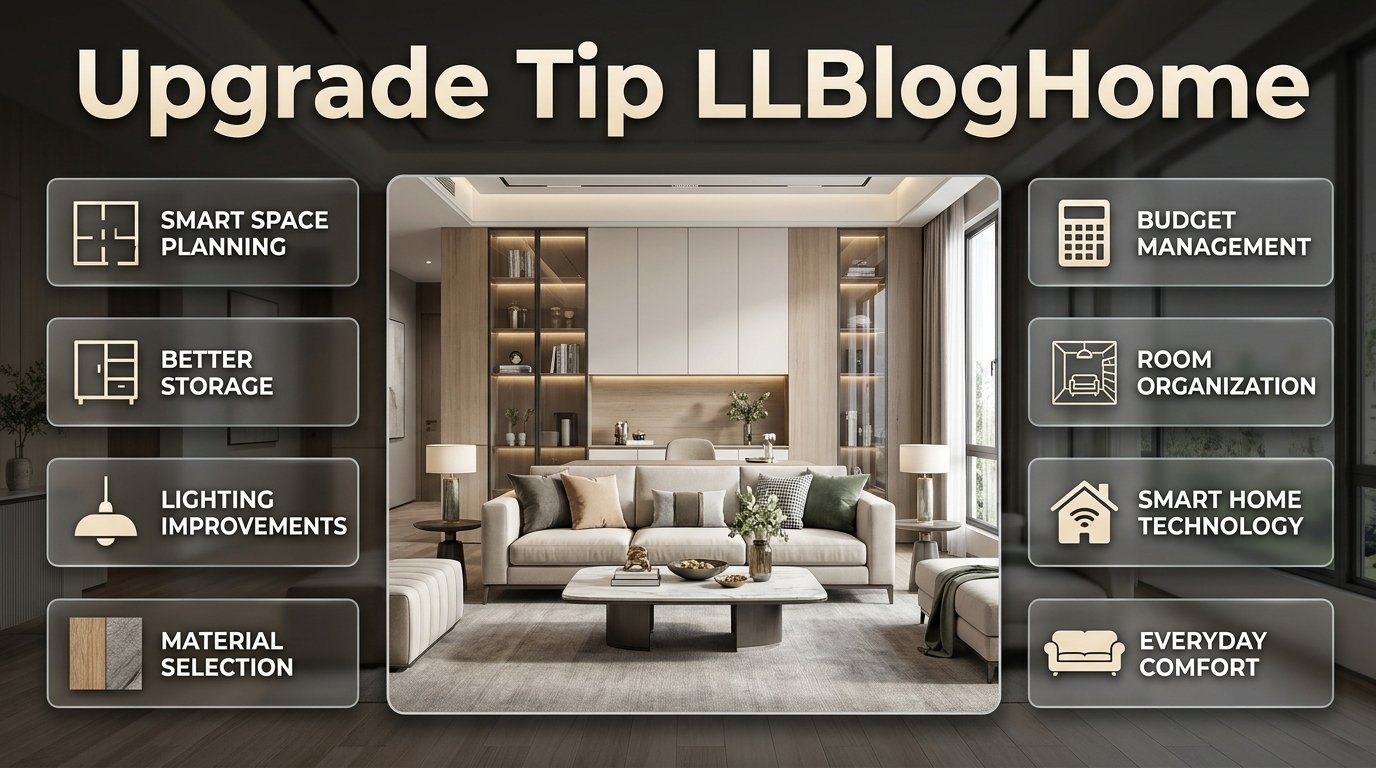
Upgrade Tip LLBlogHome | A home doesn’t become outdated overnight. It usually happens gradually. A room that once felt comfortable starts looking crowded, storage becomes difficult to manage, lighting no longer feels appropriate, and small maintenance problems begin affecting everyday comfort. Many homeowners recognize these issues but aren’t sure which improvements deserve attention first or how to make meaningful changes without spending too much money.
This is where the upgrade tip LLBlogHome approach becomes useful. Instead of treating home improvement as a collection of expensive renovation projects, it encourages homeowners to identify practical opportunities, improve existing spaces, and make thoughtful decisions that support their daily routines.
The most successful home upgrades aren’t necessarily the most expensive ones. Sometimes, replacing outdated lighting, reorganizing a kitchen, improving an entrance, selecting more suitable materials, or changing an uncomfortable furniture arrangement can make a noticeable difference. What matters is understanding the purpose of each improvement before investing time and money.
For homeowners looking for practical inspiration, DesignMode24 Interior Design offers additional ideas related to interior styling, home improvement, room planning, and creative ways to make living spaces more functional.
This guide explains how to approach home upgrades intelligently, identify improvements that provide genuine value, manage budgets, improve individual rooms, choose appropriate materials, introduce useful technology, and avoid mistakes that commonly increase renovation expenses.
Whether you’re updating a small apartment, improving an older property, refreshing a family home, or planning a larger renovation, you’ll find practical suggestions that can help you make better decisions.
1. What Does Upgrade Tip LLBlogHome Mean?
Upgrade Tip LLBlogHome is a home improvement-focused search topic associated with practical upgrade ideas, creative decorating solutions, and ways to make residential spaces more comfortable and functional.
Rather than focusing exclusively on expensive renovations, the concept covers improvements that homeowners can introduce according to their available space, budget, lifestyle, and property condition.
A useful upgrade might involve repairing a damaged surface, creating additional storage, improving room lighting, reorganizing furniture, or introducing technology that makes everyday household tasks easier.
The main objective is to improve how a home looks, feels, and functions without spending money unnecessarily.
Understanding the Difference Between Decoration, Improvement, and Renovation
These terms are often used together, but they describe different types of work.
Home decoration focuses mainly on appearance. Examples include changing curtains, adding artwork, introducing decorative cushions, and selecting new accessories.
Home improvement includes practical changes that make a property more useful, comfortable, efficient, or attractive. Installing better lighting, replacing damaged flooring, and improving storage are common examples.
Home renovation generally involves more extensive work, such as changing a room layout, replacing major fixtures, updating plumbing, or remodeling a kitchen.
Understanding these differences helps you select the right project.
For example, if a bedroom feels uncomfortable because of poor lighting and limited storage, you may not need a complete renovation. Adding suitable bedside lighting, organizing the wardrobe, and changing the furniture arrangement might solve the problem.
Why Homeowners Need a Planned Upgrade Strategy
Without planning, home improvement can become an expensive collection of unrelated purchases.
A homeowner might buy new furniture before measuring the room, select paint without considering existing flooring, or install decorative shelving before identifying the storage requirements.
A planned strategy prevents these problems.
Before starting any project, establish:
- What problem needs to be solved?
- Which room or area requires attention?
- Is the improvement necessary or optional?
- How much money can reasonably be spent?
- Will the result make everyday living easier?
- Does the project require professional assistance?
- What maintenance will be necessary afterward?
A clear answer to these questions helps turn a general decorating idea into a practical improvement plan.
2. How to Identify the Right Home Upgrades Before Spending Money

The first step toward a successful home improvement project is understanding what your property actually needs.
Not every outdated-looking room requires new furniture, and not every storage problem requires additional cabinets. Sometimes the existing arrangement is simply inefficient.
Conduct a Room-by-Room Home Assessment
Walk through your home and evaluate each room according to its condition and everyday use.
Instead of asking whether a room looks attractive, consider whether it works properly.
For example, a living room might have beautiful furniture but insufficient walking space. A kitchen may contain expensive cabinets but lack convenient storage for frequently used cooking equipment.
Write down these issues and identify their likely solutions.
| Area | Common problem | Possible improvement |
|---|---|---|
| Living room | Uncomfortable furniture arrangement | Reorganize seating and circulation |
| Kitchen | Crowded countertops | Improve cabinet and drawer organization |
| Bedroom | Insufficient clothing storage | Introduce wardrobe organizers |
| Bathroom | Poor ventilation | Inspect and improve ventilation |
| Entrance | Shoes and bags create clutter | Add appropriate entryway storage |
| Home office | Disorganized workstation | Improve desk layout and cable management |
| Garden | Difficult maintenance | Create defined planting and access areas |
This assessment gives you a realistic picture of where improvements are needed.
Separate Urgent Repairs From Optional Upgrades
One of the most important planning decisions is understanding which problems should be addressed first.
A damaged roof, leaking pipe, faulty electrical connection, or persistent moisture issue should never be treated as a decorative inconvenience.
Separate your findings into three categories:
- Essential repairs: Problems affecting safety, structural condition, water protection, or essential building systems.
- Functional improvements: Changes that improve storage, comfort, lighting, accessibility, or efficiency.
- Decorative upgrades: Changes that improve appearance without addressing an essential problem.
This order helps prevent homeowners from spending their budgets on cosmetic improvements while serious maintenance issues remain unresolved.
Understand Your Household’s Actual Requirements
Every household uses its home differently.
A family with young children may need durable flooring, accessible storage, and easy-to-clean furniture. Someone working remotely may need better desk lighting, ergonomic seating, and a quiet workspace.
A household that frequently entertains guests may benefit from flexible seating and an organized entrance.
The best upgrade decisions reflect these everyday requirements rather than simply copying another property’s design.
3. Creating a Realistic Home Improvement Budget
A successful upgrade plan should be financially manageable from the beginning.
Many projects become expensive because homeowners calculate only the purchase price of the main product and overlook preparation, installation, tools, delivery, and maintenance.
Calculate the Complete Project Cost
Suppose you want to repaint a bedroom.
The actual expense may include:
- Wall paint.
- Primer.
- Surface filler.
- Sandpaper.
- Brushes and rollers.
- Protective floor coverings.
- Masking materials.
- Additional labor if required.
The same principle applies to flooring, furniture installation, kitchen updates, and bathroom improvements.
Create a written estimate before purchasing anything.
| Expense category | What to include |
|---|---|
| Main materials | Paint, flooring, hardware, fixtures |
| Preparation | Cleaning, filling, sanding, removal |
| Tools | Measuring equipment and installation tools |
| Labor | Skilled installation or professional services |
| Delivery | Transportation and material handling |
| Contingency | Unexpected expenses and additional repairs |
Keep approximately 10–15% of the planned project budget available as a contingency when appropriate. Older properties and projects involving concealed building components may require a larger allowance.
Prioritize Upgrades According to Their Value
An attractive improvement isn’t automatically the most valuable improvement.
Consider two possible projects:
- Replacing decorative accessories in a living room.
- Improving inadequate kitchen storage that makes cooking difficult.
The second project may provide greater everyday value even if the first produces a more immediate visual change.
A useful priority system considers:
Frequency of use: Does the improvement affect something you use daily?
Problem severity: Is the existing condition inconvenient, damaged, or unsafe?
Long-term usefulness: Will the improvement remain practical for several years?
Maintenance requirements: Will it reduce future maintenance or introduce additional work?
Total cost: Is the expected benefit reasonable compared with the expense?
This approach helps homeowners avoid spending money on improvements that look impressive but provide limited practical value.
4. Interior Design Upgrades That Improve Everyday Comfort
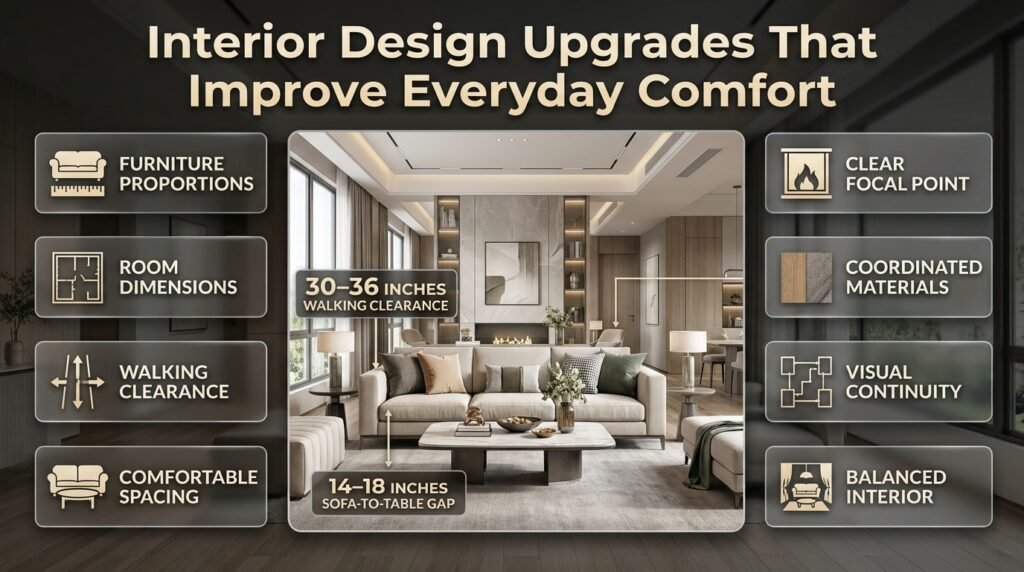
Interior design isn’t simply about selecting beautiful furniture or matching decorative colors. It involves arranging space, coordinating materials, managing lighting, and making sure each room supports its intended activities.
Improve Furniture Proportions and Room Layout
Furniture should relate to the available room dimensions.
An oversized sofa can make a small living room difficult to navigate, while a very small dining table may look disconnected from a large dining area.
Before purchasing furniture, measure:
- Available wall length.
- Room width and depth.
- Door openings.
- Window positions.
- Walking routes.
- Clearance around cabinets and drawers.
For many living rooms, approximately 30–36 inches of main walking clearance is a useful planning target where space permits.
A distance of around 14–18 inches between a sofa and coffee table often provides comfortable access.
These measurements are starting points rather than universal requirements. The actual arrangement should account for household needs, furniture dimensions, and accessibility.
Create a Clear Focal Point
A focal point gives a room visual direction.
It might be a fireplace, an attractive window, a feature wall, a television arrangement, or a distinctive piece of artwork.
Once you identify the focal point, organize the surrounding furniture and decorative elements so that they support rather than compete with it.
Avoid introducing several oversized statement pieces into one small room. Too many competing features can make an interior feel visually confusing.
For more detailed guidance, explore room focal point planning principles.
Improve the Connection Between Different Rooms
A home should feel visually connected even when individual rooms have different functions.
This doesn’t mean using identical furniture or paint colors throughout the property.
Instead, create continuity through selected materials, finishes, textures, and color relationships.
For example, warm wood flooring in a living room can connect naturally with wooden furniture in an adjoining dining area.
Similarly, repeating a metal finish in door hardware, lighting fixtures, and cabinet handles can create a subtle sense of coordination.
The goal is to make transitions feel intentional rather than accidental.
Explore creating cohesion between different rooms for more ideas.
5. Affordable Decorating Upgrades That Transform a Room
Decorative changes can refresh an interior without requiring extensive construction.
However, successful decorating depends on selecting elements that complement the room rather than filling every available surface.
Refresh Walls With a Suitable Color Palette
Wall color influences the atmosphere of a room and affects how existing furniture and materials appear.
Before choosing a paint color, examine the flooring, curtains, furniture, and amount of natural light.
Useful options include:
- Warm white for a soft and welcoming appearance.
- Beige for a comfortable neutral background.
- Muted green for a natural atmosphere.
- Light greige for contemporary interiors.
- Soft blue for a calm bedroom environment.
- Earthy terracotta for selected accent areas.
Test paint samples directly on the wall and observe them under different lighting conditions.
A shade that looks attractive in a showroom may appear much darker or cooler in your actual room.
For more guidance, visit the Paint Color section.
Improve the Way Colors Work Together
Choosing individual colors is only one part of creating a successful interior palette.
The relationship between wall color, flooring, upholstery, artwork, and decorative accessories matters just as much.
Start with existing permanent materials and build the palette around them.
For example, if your home has warm oak flooring and cream-colored furniture, introducing several unrelated cool gray finishes may create an inconsistent appearance.
Instead, consider warmer neutral tones, muted green accents, and coordinated natural textures.
Developing a stronger understanding of undertones, contrast, and color relationships can help you make more confident decorating decisions.
Read developing an interior design color eye for additional guidance.
Introduce Texture Instead of Excessive Decoration
A room can feel visually rich without containing numerous decorative objects.
Texture adds depth through differences in surface appearance and touch.
Consider combining:
- Linen curtains.
- Wool or cotton rugs.
- Natural wood furniture.
- Textured cushions.
- Stone-inspired surfaces.
- Matte ceramic accessories.
The important point is balance. Too many contrasting textures can make a small room feel crowded.
Use Mirrors and Artwork Intentionally
Mirrors can reflect available light and create a greater sense of visual depth.
Position them where they reflect something attractive, such as a window, artwork, or well-organized part of the room.
Artwork should also relate to the furniture and available wall space.
A small picture placed above a large sofa can look disconnected. A properly proportioned arrangement creates a stronger visual relationship.
6. Smart Storage Upgrades for Better Organization
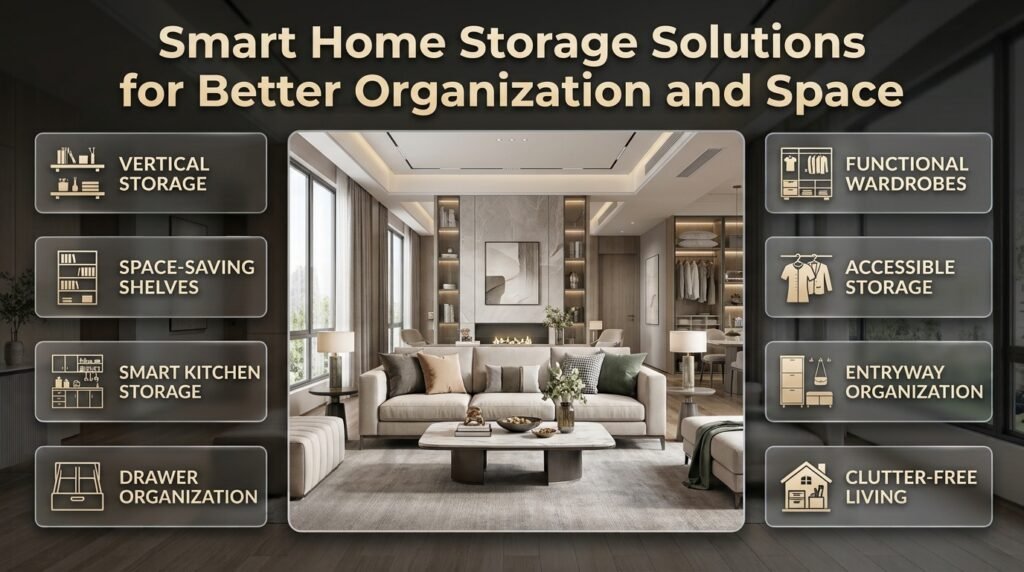
Storage should make everyday belongings easier to access, not simply hide clutter.
A successful storage system gives frequently used items convenient locations and reduces unnecessary movement around the home.
Use Vertical Storage Where Floor Space Is Limited
Vertical shelving can be particularly useful in apartments and compact rooms.
Consider:
- Wall-mounted shelves.
- Tall bookcases.
- Over-door organizers.
- Properly secured floating shelves.
- Vertical kitchen storage.
- Wall-mounted office organizers.
Before installation, check wall construction and select appropriate anchors or fixings.
Never assume that every wall can support the same weight.
Improve Kitchen Cabinet Organization
Kitchen storage should reflect how people actually cook.
Place frequently used utensils, cookware, and preparation equipment close to the areas where they’re needed.
Useful improvements include:
- Drawer dividers.
- Pull-out cabinet organizers.
- Vertical tray storage.
- Dedicated spice arrangements.
- Pantry containers.
- Under-sink organizers.
Keep cleaning products separate from food storage and ensure that any organizer can be cleaned easily.
Make Bedroom Wardrobes Easier to Use
A wardrobe should have a clear arrangement for clothing, accessories, footwear, and seasonal belongings.
Start by removing items that are no longer used.
Then separate the remaining belongings according to their purpose.
Frequently worn clothing should be accessible, while occasional items can be stored on higher shelves or in suitable containers.
Don’t overcrowd hanging rails. Clothing needs sufficient space to remain accessible and avoid unnecessary creasing.
Create a Functional Entryway
The entrance is one of the first places where everyday clutter develops.
Shoes, keys, bags, jackets, and parcels need designated locations.
A practical arrangement might include a narrow shoe cabinet, wall hooks, a small key tray, and a compact bench.
The available walking space should remain clear, especially in narrow entrances.
For detailed planning, explore entryway storage capacity planning.
7. Kitchen Upgrade Tips That Focus on Functionality
Kitchens are among the most frequently used spaces in a home. Improvements should make cooking, cleaning, and food preparation more convenient.
Organize Work Areas Around Everyday Activities
A practical kitchen arrangement considers food storage, preparation, cooking, cleaning, and serving.
Frequently used equipment should be positioned near the relevant work area.
For example, keep preparation utensils close to the countertop where vegetables and other ingredients are handled.
Place commonly used cookware near the cooking area, provided storage remains safe and accessible.
Avoid storing heavy equipment in difficult-to-reach overhead cabinets.
Refresh Cabinets Without Replacing Everything
If existing cabinets are structurally sound, a complete replacement may not be necessary.
Depending on their material and condition, possible improvements include:
- Replacing worn handles.
- Adjusting misaligned doors.
- Updating suitable cabinet finishes.
- Improving internal storage.
- Replacing damaged hinges.
- Installing appropriate lighting.
Check whether the cabinet material is suitable for repainting or refinishing before purchasing products.
Improve Kitchen Lighting
A kitchen needs more than general ceiling illumination.
Task lighting can make food preparation safer and more convenient.
Consider under-cabinet lighting, suitable ceiling fixtures, and focused lighting above work surfaces.
Select fixtures and electrical products appropriate for the kitchen environment.
Choose Practical Countertop Materials
Countertops experience frequent contact with food, liquids, heat, and cleaning products.
Before selecting a material, consider:
- Resistance to stains.
- Heat limitations.
- Maintenance requirements.
- Surface durability.
- Installation cost.
- Compatibility with existing cabinets.
Natural stone, engineered surfaces, and suitable laminates offer different benefits and limitations.
The correct selection depends on household habits and budget rather than appearance alone.
8. Bathroom Upgrades That Improve Comfort and Maintenance
Bathrooms require careful planning because moisture, ventilation, and hygiene affect the performance of many materials.
A decorative improvement should never hide an underlying leak or waterproofing problem.
Inspect Existing Fixtures and Sealants
Check taps, shower fittings, drains, grout, and silicone sealant.
Look for discoloration, cracks, loose fittings, and persistent dampness.
Replace deteriorated components with products suitable for the intended bathroom application.
If moisture continues to appear despite basic maintenance, investigate the underlying cause instead of repeatedly covering the visible damage.
Improve Storage Without Crowding the Room
Bathrooms often have limited floor space.
Wall-mounted cabinets, narrow shelving, mirror cabinets, and suitable organizers can improve storage without blocking movement.
Keep frequently used toiletries accessible while storing less frequently used supplies separately.
Pay Attention to Ventilation
Proper ventilation helps control moisture and reduce condensation.
Check whether the existing exhaust system operates effectively and whether air can move through the intended ventilation route.
If the bathroom has persistent dampness, damaged finishes, or mold growth, investigate the cause and seek professional advice where necessary.
Choose Materials for Moisture Exposure
Not every attractive material is suitable for a bathroom.
Check product specifications for water resistance, installation requirements, and cleaning compatibility.
Flooring, wall finishes, cabinetry, and adhesives should be appropriate for the actual moisture conditions.
9. Bedroom Upgrades for Better Rest and Everyday Convenience
A bedroom should provide comfortable sleeping conditions, convenient storage, and an environment that feels relaxing.
Its design should support rest rather than become overloaded with decorative features.
Select the Right Bed and Mattress Arrangement
The bed is usually the largest furniture item in the bedroom.
Its dimensions should leave sufficient room for movement and access to wardrobes, windows, and doors.
Before choosing a bed, measure the room and check whether bedside tables and other essential furniture can fit comfortably.
A bed with integrated storage may be useful where wardrobe space is limited.
However, make sure the storage mechanism is easy to operate and suitable for the available clearance.
Improve Bedside Lighting
A single bright ceiling fixture may not provide the best lighting for every bedroom activity.
Bedside lamps, wall lights, or adjustable reading fixtures can provide more suitable illumination.
Warm lighting often works well for a relaxing evening environment.
Avoid positioning bright fixtures where they create uncomfortable glare.
Reduce Bedroom Clutter
Too many decorative accessories, unnecessary furniture, and disorganized clothing can make a bedroom feel less relaxing.
Keep surfaces relatively clear and give frequently used belongings dedicated storage locations.
Choose a limited color palette and repeat selected materials for a coordinated result.
10. Outdoor Entrance and Garden Improvements
Home improvement should not stop at interior spaces.
The entrance and outdoor areas contribute to the property’s appearance, accessibility, and maintenance requirements.
Improve the Main Entrance
A well-planned entrance creates a welcoming first impression.
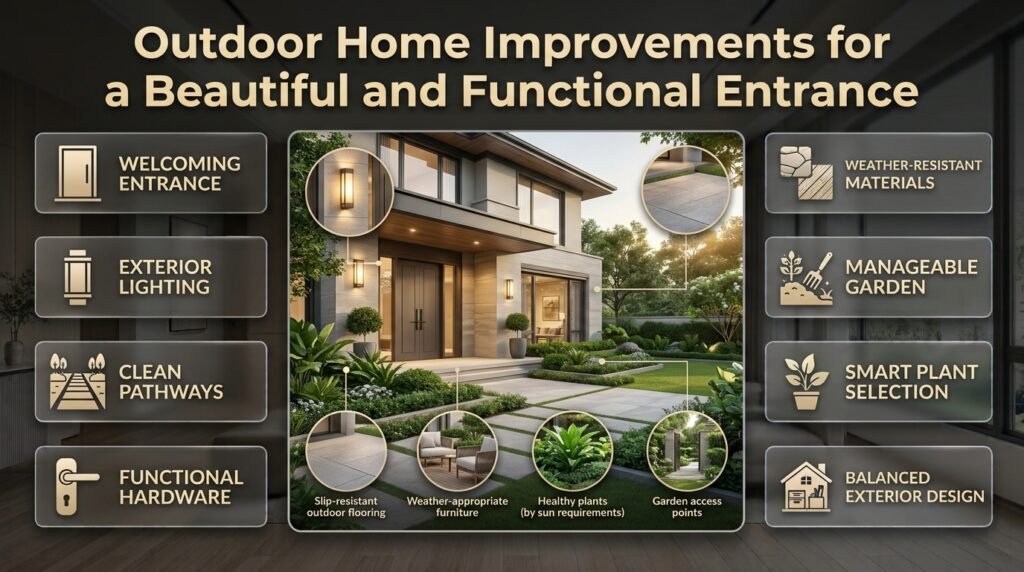
Focus on practical details such as:
- A clearly visible entrance.
- Suitable exterior lighting.
- Clean and maintained pathways.
- Weather-appropriate materials.
- Functional door hardware.
- Well-positioned plants.
- Clear access around the doorway.
Make sure outdoor lighting provides sufficient visibility without creating unnecessary glare.
Choose Appropriate Outdoor Materials
Outdoor surfaces experience sunlight, rainfall, temperature changes, and regular use.
Select materials according to their exposure conditions and manufacturer’s installation recommendations.
For example, exterior flooring should provide suitable slip resistance, while outdoor furniture should be designed for the local weather conditions.
Avoid choosing an indoor material simply because it looks attractive in an outdoor photograph.
Plan Garden Improvements Around Maintenance
A beautiful garden should remain manageable.
Consider available sunlight, soil conditions, drainage, plant growth, and the amount of time you can spend on maintenance.
Group plants according to their water and sunlight requirements.
Leave sufficient access for pruning, watering, and cleaning.
For further ideas, explore Decoradhouse Garden Tips by DecoratorAdvice.
Maintain a Balanced Outdoor Appearance
The entrance, garden, pathways, and exterior finishes should work together.
You don’t need elaborate landscaping to create a welcoming property.
Clean pathways, healthy plants, suitable lighting, and properly maintained surfaces can make a substantial difference.
For more specific planning advice, read outdoor entrance design proportions.
11. DIY Home Improvement Projects Worth Considering
DIY projects can help homeowners improve their properties while controlling labor expenses.
However, not every project is suitable for beginners.
Choose tasks according to your experience, available tools, and the risks involved.
Beginner-Friendly DIY Improvements
Some manageable projects include:
- Painting a small wall.
- Replacing suitable cabinet handles.
- Organizing drawers.
- Assembling freestanding furniture.
- Refreshing decorative accessories.
- Installing lightweight organizers using suitable fixings.
- Creating a simple storage arrangement.
Before beginning, read the product instructions and prepare the work area.
Measure Twice Before Cutting or Installing
Measurement mistakes are among the most common reasons DIY projects become expensive.
Before cutting material or drilling holes, verify the required dimensions.
Check wall construction, available clearance, and the position of electrical cables or plumbing services before drilling.
Use suitable detection equipment where appropriate and stop if the installation conditions are uncertain.
Prepare Surfaces Properly
Paint, adhesives, and other finishes generally perform better when applied to correctly prepared surfaces.
Depending on the project, preparation may involve cleaning, removing loose material, filling holes, sanding, and allowing the surface to dry.
Follow the manufacturer’s instructions for preparation and curing.
Know When to Hire a Professional
Electrical panel work, gas installations, structural modifications, complex plumbing, and other regulated or hazardous activities should be handled by appropriately qualified professionals.
DIY should reduce unnecessary expenses, not introduce avoidable risks.
For more project ideas, explore DIY home projects.
12. Choosing Materials That Provide Long-Term Value
Material selection has a direct effect on how well a home improvement project performs over time.
A finish may look beautiful when installed but become inconvenient if it requires excessive maintenance or isn’t suitable for its environment.
Consider the Purpose of Each Material
Start with the conditions in which the material will be used.
A living room rug needs to handle regular foot traffic, while a bathroom surface must tolerate moisture.
A kitchen countertop should be suitable for frequent cleaning and everyday food preparation.
The right choice depends on more than appearance.
Compare Common Material Options
| Material | Main advantages | Important considerations |
|---|---|---|
| Solid wood | Natural appearance and repair potential | Requires suitable care |
| Engineered wood | Consistent appearance and versatility | Quality and construction vary |
| Porcelain tile | Durable and suitable for many wet areas | Can feel hard and cold |
| Natural stone | Distinctive natural appearance | May require sealing |
| Laminate | Available in many styles | Water resistance varies |
| Performance upholstery | Practical for frequently used seating | Cleaning instructions differ |
| Ceramic finishes | Versatile decorative applications | Impact resistance varies |
Match Materials With Room Conditions
For a kitchen, select surfaces that tolerate regular cleaning.
For a bathroom, check water resistance and installation compatibility.
For a family living room, prioritize durable upholstery and easy maintenance.
For an entrance, consider dirt, moisture, and foot traffic.
This approach helps reduce premature wear and unnecessary replacement.
Explore organic modern material combinations for inspiration on coordinating natural finishes and contemporary surfaces.
13. Improving Natural Light and Artificial Lighting
Lighting should be planned according to how a room is used and how much natural daylight it receives.
A poorly illuminated room can feel uncomfortable even when its furniture and decoration are carefully selected.
Make Better Use of Existing Natural Light
Start by examining the direction of windows and the amount of daylight entering the room.
Avoid placing large furniture pieces where they unnecessarily obstruct important window areas.
Use window treatments that provide the required privacy without blocking more light than necessary.
Light-colored walls and appropriately placed mirrors may also help distribute available daylight.
Introduce Layered Lighting
A useful lighting arrangement combines different sources.
Ambient lighting provides general illumination.
Task lighting supports focused activities such as reading, cooking, and working.
Accent lighting highlights artwork, shelves, or architectural features.
Decorative lighting contributes to the room’s appearance while serving an appropriate lighting function.
For example, a living room might include a ceiling fixture, a floor lamp near the sofa, and accent lighting around a bookshelf.
Select Suitable Bulbs
Check brightness, color temperature, compatibility, and dimming requirements before purchasing replacement bulbs.
Warm white lighting is often suitable for relaxing areas, while workspaces may benefit from brighter neutral lighting.
The final selection should reflect the room’s activities and existing daylight.
14. Smart Home Technology That Makes Everyday Tasks Easier

Smart home technology can improve convenience, but it should solve a real household problem.
Purchasing connected devices without considering compatibility, privacy, and ongoing costs can create unnecessary complexity.
Start With One Useful Smart Home Upgrade
Consider the activity you want to improve.
If you regularly forget to switch off lights, smart lighting may be useful.
If you want to manage heating and cooling schedules, a compatible programmable thermostat may be more appropriate.
If you want early warning of possible plumbing leaks, a water-leak detector could be a practical addition.
Understand Common Smart Home Devices
| Device | Main purpose | What to check |
|---|---|---|
| Smart bulbs | Remote lighting control | Fixture compatibility |
| Smart plugs | Control selected electrical devices | Electrical ratings |
| Smart thermostat | Manage temperature schedules | Heating and cooling compatibility |
| Motion sensors | Detect movement | Placement and sensitivity |
| Water-leak detectors | Provide leak alerts | Sensor coverage and connectivity |
| Smart doorbells | Provide entrance monitoring | Privacy and installation requirements |
Check Compatibility Before Purchasing
Different smart devices may use different connectivity systems and applications.
Before buying, check whether the product works with your existing network and preferred control system.
Also consider:
- Internet requirements.
- Account security.
- Privacy settings.
- Software support.
- Subscription costs.
- Manual operation during connectivity problems.
For more detailed guidance, explore how to set up my home Decoradtech.
Build a System Gradually
You don’t need to automate an entire home immediately.
Begin with one device, understand its operation, and evaluate whether it improves everyday convenience.
Once the first installation works reliably, consider whether another device would provide a meaningful benefit.
15. Energy-Efficient Improvements for a More Responsible Home
Energy efficiency is an important part of long-term home improvement.
The objective is to reduce unnecessary consumption while maintaining comfortable indoor conditions.
Replace Inefficient Lighting
LED lighting can reduce electricity consumption compared with traditional incandescent lighting.
Before replacing bulbs, check brightness, color temperature, fixture compatibility, and dimming requirements.
Inspect Doors and Windows for Air Leakage
Small gaps can contribute to unwanted drafts and increased heating or cooling demands.
Check weatherstripping around exterior doors and inspect window seals.
Appropriate sealing products can help reduce minor air leakage.
However, don’t block intentional ventilation openings or interfere with required combustion-air supplies.
Maintain Heating and Cooling Equipment
Poorly maintained equipment may operate less efficiently.
Follow the manufacturer’s recommendations for filter replacement, cleaning, and servicing.
Where cooling equipment is heavily used, professional maintenance can help identify developing problems.
Consider Insulation Improvements
Insulation can influence indoor comfort and energy requirements.
Before adding materials, understand the existing construction, local climate, moisture conditions, and ventilation requirements.
Incorrect insulation installation can create condensation or moisture problems.
Seek appropriate professional guidance when the existing building assembly is uncertain.
Reduce Water Waste
Repair leaking fixtures and consider suitable water-efficient fittings.
A small leak may appear insignificant, but continuous water loss can increase household expenses.
Choose products that maintain suitable performance and water pressure.
16. How to Manage a Home Renovation Without Unnecessary Problems
Larger home improvements require more coordination than simple decorating projects.
A clear renovation process can help homeowners control expenses, maintain quality, and avoid misunderstandings.
Define the Scope of Work
Write down exactly what the project includes.
For a kitchen renovation, this may cover cabinet repairs, countertop replacement, lighting, flooring, plumbing adjustments, and finishing work.
Clearly identify what is excluded as well.
A detailed scope helps prevent disagreements about the work expected from contractors.
Prepare a Written Work Order
A renovation work order should identify the agreed work, materials, responsibilities, estimated schedule, payment arrangements, and inspection requirements.
Include:
- Property and project details.
- Description of each task.
- Material specifications.
- Labor responsibilities.
- Expected start and completion dates.
- Payment milestones.
- Change approval procedures.
- Cleanup arrangements.
- Completion and inspection requirements.
Avoid relying entirely on verbal agreements for significant work.
For a more organized process, see renovation work order for homeowners.
Check Contractors Before Work Begins
Ask contractors about relevant experience, qualifications, insurance where applicable, and examples of comparable completed projects.
Clarify who is responsible for purchasing materials, arranging inspections, and managing unexpected conditions.
Obtain written estimates and compare the scope rather than choosing solely according to the lowest price.
Document Changes During the Project
Renovation requirements can change when concealed problems become visible.
If additional work is necessary, document the reason, revised cost, and effect on the schedule before authorizing it.
This makes it easier to track expenses and understand the final result.
Inspect Work Before Final Payment
Review completed work against the agreed scope.
Check visible finishes, fixture operation, alignment, cleanliness, and any relevant installation or testing documentation.
Keep records of warranties, invoices, and product information.
17. Home Improvement Trends Worth Considering in 2026
Trends can introduce fresh ideas, but the best choices are those that remain useful beyond a particular decorating season.
Organic Modern Design
Organic modern interiors combine contemporary forms with natural textures and warmer materials.
Common features include:
- Natural wood.
- Linen and cotton fabrics.
- Stone-inspired surfaces.
- Soft neutral colors.
- Simple furniture silhouettes.
- Carefully selected decorative objects.
This style can create a comfortable atmosphere without relying on excessive ornamentation.
Flexible Living Spaces
Homes increasingly need to support different activities within the same room.
A guest bedroom may also function as a home office, while a living room may contain a compact reading area.
Use furniture that can adapt to different activities and establish clear zones through lighting, rugs, and furniture placement.
Sustainable Material Choices
Durability and repairability are useful considerations when selecting furniture, flooring, and decorative materials.
Instead of replacing an entire room whenever styles change, consider repairing existing pieces or updating selected finishes.
Choosing appropriate long-lasting materials can reduce unnecessary waste.
Personal and Meaningful Decoration
A home should reflect the people who use it.
Artwork, photographs, collected objects, and carefully chosen accessories can create a more personal environment.
The objective isn’t to make every room look identical. It’s to create a consistent atmosphere while allowing each space to have its own character.
Balanced Use of Natural Materials
Wood, stone, ceramic, and textured fabrics can introduce visual depth.
However, natural materials should be selected according to their maintenance needs and suitability for the room.
A beautiful material that requires more care than a household can provide may not be a practical choice.
18. Common Home Upgrade Mistakes and How to Avoid Them
Even well-intentioned improvements can create problems when homeowners rush into purchasing materials or overlook basic planning.
Mistake 1: Purchasing Furniture Before Measuring
This happens when buyers focus on appearance instead of actual dimensions.
The result may be blocked walkways, crowded corners, or furniture that doesn’t fit through the entrance.
Better approach: Measure the room, furniture footprint, access routes, and door openings before ordering.
Mistake 2: Choosing Paint Without Testing It
Paint samples can look different under natural and artificial lighting.
A shade that appears neutral in a store may look noticeably yellow, gray, or pink at home.
Better approach: Test samples on the actual wall and observe them at different times of day.
Mistake 3: Ignoring Maintenance Requirements
Some materials need regular cleaning, sealing, refinishing, or specialized care.
Ignoring these requirements can reduce their lifespan.
Better approach: Review maintenance instructions before making a purchase.
Mistake 4: Spending the Entire Budget on Appearance
Decorative changes may improve visual appeal but won’t solve plumbing, ventilation, electrical, or structural problems.
Better approach: Prioritize essential repairs before optional decoration.
Mistake 5: Starting Multiple Projects Together
Several unfinished projects can create clutter, increase material waste, and make spending difficult to control.
Better approach: Organize improvements into manageable stages and complete each stage before moving forward.
Mistake 6: Selecting Materials Only According to Price
The cheapest product may require more maintenance or earlier replacement.
Better approach: Compare durability, installation requirements, warranty conditions, and long-term care.
Mistake 7: Following Trends Without Considering Existing Design
A popular style may not suit the home’s proportions, architecture, or existing materials.
Better approach: Adapt trends to your surroundings rather than copying an entire design without considering its suitability.
Mistake 8: Skipping Professional Inspections
Some problems remain hidden until work begins.
Better approach: Seek suitable inspections when dealing with structural damage, persistent moisture, electrical systems, gas installations, and major renovation work.
19. Expert Recommendations for Getting Better Results From Every Upgrade
The difference between a successful improvement and an expensive mistake often comes down to the order in which decisions are made.
Use the Repair, Improve, and Decorate Sequence
Follow this order:
- Repair damaged or unsafe components.
- Improve lighting, ventilation, storage, and functionality.
- Complete necessary installation and finishing work.
- Introduce furniture and decorative accessories.
- Inspect the finished space.
This prevents newly installed decorative features from being damaged by later repairs.
Work With the Existing Architecture
Don’t assume every room needs to be redesigned.
Existing windows, flooring, doors, ceiling heights, and architectural features may provide useful design direction.
For example, a room with attractive natural wood flooring may benefit from complementary wall colors and furniture rather than a complete flooring replacement.
Understand Repetition and Visual Rhythm
Repeated materials, colors, shapes, and finishes help connect different elements in an interior.
For example, repeating a wood tone in shelving, furniture, and selected decorative accessories can create visual continuity.
However, repetition doesn’t mean everything should match exactly.
Introduce controlled variation to keep the room interesting.
Explore rhythm and repetition in interiors for a deeper understanding.
Check Furniture Scale Before Buying
Furniture should relate to room dimensions and surrounding objects.
A large coffee table can overwhelm a compact seating arrangement, while an undersized rug may make a living room feel disconnected.
Consider the complete composition rather than evaluating individual furniture pieces in isolation.
For additional guidance, read furniture scale vs room size.
Coordinate Paint With Existing Wood Finishes
Wood has different undertones depending on its species, finish, and lighting conditions.
Before choosing a wall color, compare samples with existing wooden floors, cabinets, and furniture.
Warm wood often works naturally with selected cream, beige, and earthy tones, while other finishes may require a different approach.
Read coordinating paint with natural wood for more detailed guidance.
Keep Learning Before Making Major Changes
Home improvement knowledge develops through understanding materials, planning, maintenance, and practical design decisions.
Following useful industry discussions and staying aware of new decorating approaches can help homeowners make more informed choices.
For additional inspiration, explore latest news decoratoradvice.
You can also discover more ideas through LLBlogHome Upgrades by Lovelolablog, particularly when looking for fresh ways to approach everyday home improvements.
20. A Practical 30-Day Home Upgrade Plan
One of the easiest ways to turn inspiration into action is to divide your improvements into manageable stages.
A 30-day plan doesn’t mean completing a full renovation in one month. It provides a structure for evaluating your home, organizing priorities, and completing a few useful improvements.
Week 1: Assess and Plan
Start by inspecting the rooms that need attention.
Make a list of visible problems, storage difficulties, maintenance requirements, and decorative improvements.
Then:
- Identify urgent repairs.
- Measure important areas.
- Set a realistic budget.
- Compare possible solutions.
- Decide which project should come first.
By the end of the week, you should have a clear improvement plan rather than a collection of unrelated ideas.
Week 2: Improve Organization and Storage
Focus on practical changes that don’t require extensive construction.
Organize wardrobes, kitchen cabinets, office supplies, and entrance storage.
Remove unnecessary belongings and give frequently used items accessible locations.
Check whether existing furniture can be rearranged before purchasing new storage products.
Week 3: Refresh the Appearance
Once the main organization work is complete, focus on selected decorative improvements.
Depending on your budget, this could include:
- Repainting a small area.
- Replacing outdated cabinet handles.
- Updating suitable lighting.
- Refreshing curtains or cushions.
- Rearranging artwork.
- Introducing coordinated decorative accessories.
Complete preparation and installation carefully rather than rushing through several projects.
Week 4: Inspect and Evaluate
Review the improvements and ask whether they solved the original problems.
Check that storage is practical, lighting works as intended, and furniture arrangements remain comfortable.
Make a note of any unfinished work or maintenance requirements.
This evaluation will help you plan future improvements more accurately.
What Are the Most Valuable Home Upgrades to Make in 2026?
The most valuable home upgrades in 2026 are those that improve everyday comfort, functionality, energy efficiency, and long-term property condition. Homeowners are increasingly looking beyond decorative changes and focusing on improvements that solve practical problems. Kitchen storage, bathroom improvements, efficient lighting, better ventilation, smart home features, and flexible living spaces are all worth considering. However, the right investment depends on the property’s current condition and the household’s requirements. Before planning a major renovation, address maintenance issues such as leaking fixtures, damaged surfaces, and inefficient building systems. Once essential work is complete, invest in upgrades that make everyday activities easier and more comfortable.
Practical upgrades worth prioritizing:
Improve kitchen storage and countertop organization.
Upgrade outdated lighting with suitable LED fixtures.
Improve bathroom ventilation and moisture management.
Introduce practical smart home controls.
Create flexible spaces for working, relaxing, or entertaining.
Choose durable materials that require manageable maintenance.
How Can I Upgrade My Home Without Spending Too Much Money?
Upgrading a home on a limited budget requires careful prioritization rather than choosing the cheapest available products. Start by identifying which areas create the most inconvenience and look for ways to improve them using existing furniture, materials, and available space. Repainting a wall, updating cabinet handles, reorganizing wardrobes, improving lighting, and creating better storage can refresh a home without requiring a complete renovation. It is also important to calculate the complete project cost, including preparation, tools, installation, and possible maintenance. Instead of attempting several improvements simultaneously, complete one project at a time and evaluate the results before spending money on the next one.
Smart ways to control home improvement expenses:
Reuse furniture that remains structurally sound.
Rearrange existing furniture before purchasing replacements.
Compare material quality instead of choosing products by price alone.
Refresh cabinets and doors rather than replacing entire units.
Complete suitable beginner-friendly DIY projects.
Keep an additional budget for unexpected repairs.
Prioritize improvements that solve frequently experienced problems.
Which Smart Home Upgrades Are Actually Worth Installing?
Smart home upgrades are worth considering when they provide a clear benefit to everyday household management. However, installing multiple connected devices without understanding their purpose can create unnecessary expenses and technical complications. A better approach is to identify one particular requirement and select technology that addresses it. Smart lighting can improve convenience, programmable thermostats can help manage temperature schedules, and water-leak detectors can provide useful early warnings. Before purchasing any device, check its compatibility with your existing electrical systems, internet connection, and preferred control platform. Privacy settings, software support, installation requirements, and ongoing subscription costs should also influence the decision.
Useful smart home technologies include:
Smart lighting for convenient control of selected fixtures.
Programmable thermostats for managing heating and cooling schedules.
Water-leak detectors for monitoring vulnerable plumbing areas.
Motion sensors for selected lighting and automation tasks.
Smart plugs for compatible electrical appliances.
Smart security devices for additional household monitoring.
What Home Improvements Can Make a Small House Feel More Spacious?
Making a small house feel spacious is mainly about improving layout, storage, lighting, and furniture proportions. Adding more furniture or decorative accessories usually makes the problem worse because it reduces available movement and increases visual clutter. Start by measuring each room and identifying furniture that occupies unnecessary space. Use vertical shelving, multifunctional furniture, and appropriately positioned mirrors to make better use of the available area. Natural light should also remain unobstructed wherever possible. In smaller homes, every furniture item should serve a useful purpose, and frequently used belongings should have accessible storage locations. A well-organized room can feel considerably more comfortable without changing its actual dimensions.
Space-saving improvements to consider:
Choose furniture according to the room’s measurements.
Use wall-mounted shelves and vertical storage.
Consider beds and ottomans with built-in storage.
Keep main walking routes clear.
Use mirrors to reflect available natural light.
Select appropriately sized rugs and decorative accessories.
Remove furniture that serves no practical purpose.
How Do I Choose Home Upgrades That Will Last for Years?
Choosing long-lasting home upgrades requires looking beyond their immediate appearance and purchase price. Materials, construction quality, installation methods, maintenance requirements, and suitability for the room all influence how well an improvement performs over time. For example, kitchen surfaces need to tolerate frequent cleaning, bathroom materials must be appropriate for moisture exposure, and living room upholstery should suit the household’s everyday use. It is also important to consider whether a product can be repaired or maintained without replacing the entire installation. Before making a significant purchase, review manufacturer specifications, warranties, and installation recommendations. Prioritizing durability and practical design helps homeowners avoid repeated expenses and unnecessary replacements.
Important factors to check before purchasing:
Material durability and expected lifespan.
Resistance to moisture, stains, and everyday wear.
Cleaning and maintenance requirements.
Product specifications and installation compatibility.
Warranty coverage and repair options.
Availability of replacement parts.
Whether the design will remain practical as household needs change.
Conclusion
A successful home upgrade is not about spending more money or following every new design trend. It is about making thoughtful improvements that enhance comfort, functionality, appearance, and long-term value. Whether you are refreshing a single room, improving storage, updating lighting, choosing better materials, or planning a larger renovation, every decision should support the way you actually live.
The most effective approach is to begin with your home’s existing needs, set a realistic budget, and prioritize improvements that offer noticeable everyday benefits. Small changes, such as updating paint colors, improving furniture placement, adding practical storage, or upgrading lighting, can make a meaningful difference without requiring a complete renovation. Larger projects should be planned carefully, with attention to material quality, measurements, durability, and the order of work.
With the right planning, Upgrade Tip LLBlogHome can become a practical approach to creating a home that feels more organized, attractive, comfortable, and efficient. Focus on improvements that solve real problems rather than adding unnecessary features. By combining smart design choices with sensible budgeting and consistent maintenance, you can build a living space that reflects your personal style and continues to serve your household well for years to come.