
Introduction
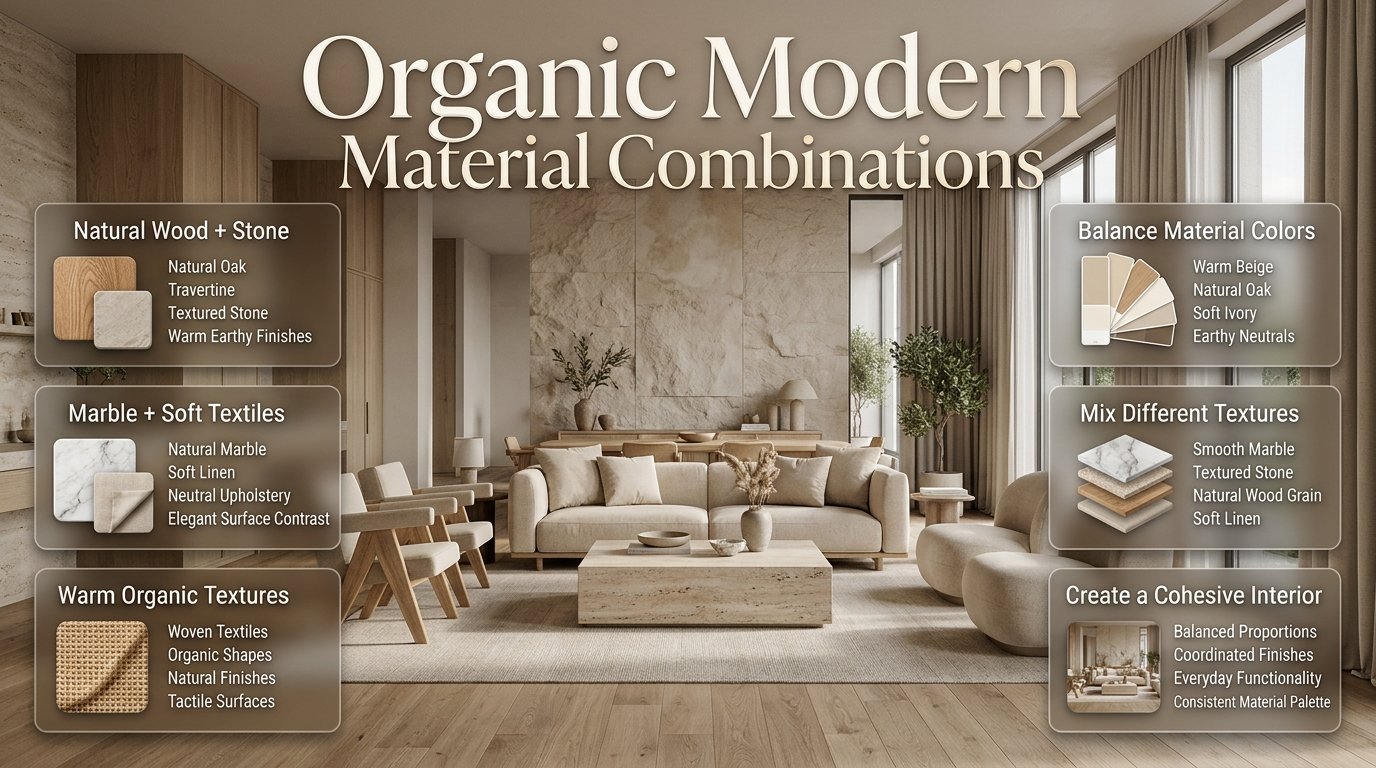
Organic Modern Material Combinations | Creating an organic modern home sounds simple until you start choosing materials. You might love the appearance of natural oak, travertine, linen, marble, and textured stone, but bringing all these finishes together can become confusing. Some combinations look beautifully balanced in a showroom but feel disconnected when installed in an actual home.
The secret is understanding how different materials interact. Organic modern material combinations are not simply about using natural products. They involve balancing texture, color, surface finishes, proportions, and everyday functionality to create interiors that feel comfortable and contemporary.
Whether you’re furnishing a new home, renovating an existing room, or making small decorative improvements, the right material choices can completely change the atmosphere of your space.
In this guide, we’ll explore the most attractive natural material pairings, explain how to combine different wood and stone finishes, discuss practical options for every room, and help you avoid expensive mistakes. You’ll also learn how to develop a cohesive material palette without relying on expensive designer products.
What Are Organic Modern Material Combinations?
Organic modern material combinations bring natural textures and contemporary finishes together to create interiors that feel warm, balanced, and visually simple. They typically combine wood, stone, linen, wool, clay, and metal with clean furniture shapes and earthy colors.
The style avoids two extremes. It doesn’t make a home feel overly rustic, and it doesn’t rely on completely smooth, artificial-looking surfaces.
Instead, it creates contrast through carefully selected materials.
For example, imagine a living room with:
- A natural oak coffee table.
- A cream linen sofa.
- A travertine side table.
- A wool area rug.
- Brushed bronze lighting.
- Handmade ceramic accessories.
Each material contributes something different. Oak introduces warmth, linen creates softness, travertine adds natural variation, and bronze provides a contemporary accent.
The result feels layered without becoming visually crowded.
Why Are Natural Material Combinations Becoming Popular?
Many homeowners want interiors that look attractive but also feel comfortable during everyday life. Completely minimalist rooms can sometimes appear cold, while heavily decorated interiors may feel difficult to maintain.
Organic modern design offers a middle ground.
Natural materials introduce imperfections and variations that make a space feel less artificial. Wood grain, stone markings, woven fibers, and handmade ceramic surfaces give rooms individual character.
Another reason for its popularity is flexibility. Organic modern materials can work with contemporary apartments, traditional houses, renovated properties, and open-plan homes.
They also allow homeowners to update their interiors gradually rather than replacing every piece of furniture at once.
For additional guidance on creating cohesive interiors, explore DesignMode24 Interior Design.
Which Materials Are Essential for Organic Modern Interiors?

The strongest organic modern interiors usually rely on a small collection of materials that complement each other. Wood provides warmth, stone adds structure, fabrics introduce comfort, and metal creates definition.
You don’t need to use every available natural material. Selecting a few appropriate options is usually more effective than combining everything in one room.
1. Natural Wood: The Foundation of Warmth
Wood is one of the most recognizable materials in organic modern design. Its natural grain, subtle color variations, and tactile appearance make it suitable for furniture, flooring, cabinetry, and decorative details.
Different wood species create different atmospheres.
Light oak
Light oak works particularly well in rooms where you want a bright, relaxed appearance. Its relatively subtle grain complements white walls, beige upholstery, and pale stone.
Use it for:
- Flooring.
- Dining tables.
- Kitchen cabinetry.
- Bed frames.
- Open shelving.
Walnut
Walnut introduces deeper brown tones and a more sophisticated appearance. It works well when a neutral interior needs stronger visual definition.
Consider walnut for dining furniture, bedside tables, cabinetry, and occasional chairs.
Ash and maple
These woods offer relatively light appearances and can complement contemporary furniture, simple architectural details, and pale neutral palettes.
Professional recommendation: Choose a dominant wood tone before purchasing furniture. If your flooring is warm oak, compare the undertones of any additional timber finishes rather than assuming every brown wood will automatically match.
2. Natural Stone: Character Without Excessive Decoration
Natural stone introduces visual movement through veining, mineral markings, and surface variations.
It can make an interior feel more established and refined without requiring decorative patterns.
Popular options include:
- Travertine.
- Limestone.
- Marble.
- Granite.
- Slate.
- Quartzite.
Each stone has different characteristics.
Travertine has a warm, naturally textured appearance that works beautifully with beige fabrics and light wood.
Limestone is often more understated, making it suitable for calm, minimalist spaces.
Marble can introduce more noticeable veining and a polished appearance.
Granite and quartzite may be useful in areas where durability and practical performance are important, depending on the specific product.
Important consideration: Natural stone is not automatically maintenance-free. Porosity, staining resistance, sealing requirements, and cleaning instructions vary. Always check the characteristics of the exact stone before installation.
3. Linen: A Soft Contrast to Hard Surfaces
Linen is an excellent choice for balancing wood and stone.
Its slightly irregular weave creates a relaxed appearance, making it suitable for upholstery, curtains, bedding, cushions, and decorative textiles.
Popular colors include:
- Natural cream.
- Oatmeal.
- Sand.
- Warm white.
- Muted taupe.
A linen sofa can soften the visual appearance of a stone coffee table, while linen curtains can make a room with wooden floors feel more welcoming.
However, pure linen can wrinkle and may require more careful maintenance than some blended fabrics.
For busy households, linen blends can provide a useful alternative.
4. Wool: Comfort and Natural Layering
Wool adds softness and helps connect different materials visually.
It is particularly useful in spaces with wooden or stone flooring.
Consider using wool for:
- Area rugs.
- Throws.
- Cushion covers.
- Upholstered furniture.
- Bedroom textiles.
A wool rug under a wooden dining table can soften the overall arrangement. Similarly, a textured wool throw can make a bedroom with smooth wooden furniture feel more inviting.
Choose the pile and weave according to the room’s practical requirements. High-pile rugs may be less convenient in areas with frequent movement or rolling chairs.
5. Rattan and Woven Natural Fibers
Rattan, jute, and other woven fibers introduce an organic texture that is different from smooth timber or stone.
They can be used for:
- Accent chairs.
- Storage baskets.
- Pendant shades.
- Decorative trays.
- Rugs.
- Cabinet details.
However, woven materials should be used selectively. Too much rattan can make an interior feel more tropical or traditional than contemporary.
Pair one or two woven elements with clean-lined furniture and simple finishes.
6. Clay and Ceramic: Handmade Visual Interest
Ceramics and clay accessories are useful when a room needs character without additional furniture or strong colors.
Examples include:
- Handmade vases.
- Ceramic bowls.
- Decorative vessels.
- Textured table lamps.
- Clay pendant shades.
Matte and slightly irregular finishes usually work particularly well with organic modern palettes.
These accessories also allow you to introduce craftsmanship without changing permanent surfaces.
7. Metal: The Contemporary Finishing Element
Metal introduces contrast and helps prevent natural materials from making an interior appear overly rustic.
Useful finishes include brushed brass, bronze, matte black, and brushed stainless steel.
Use metal for:
- Cabinet handles.
- Lighting fixtures.
- Table bases.
- Shelving supports.
- Furniture legs.
- Bathroom fittings.
Warm metal finishes generally complement oak, walnut, beige, and cream.
Matte black creates a stronger contrast and can help define the edges of furniture and architectural details.
Avoid introducing too many unrelated metal finishes without a clear design reason.
What Are the Best Organic Modern Material Combinations?
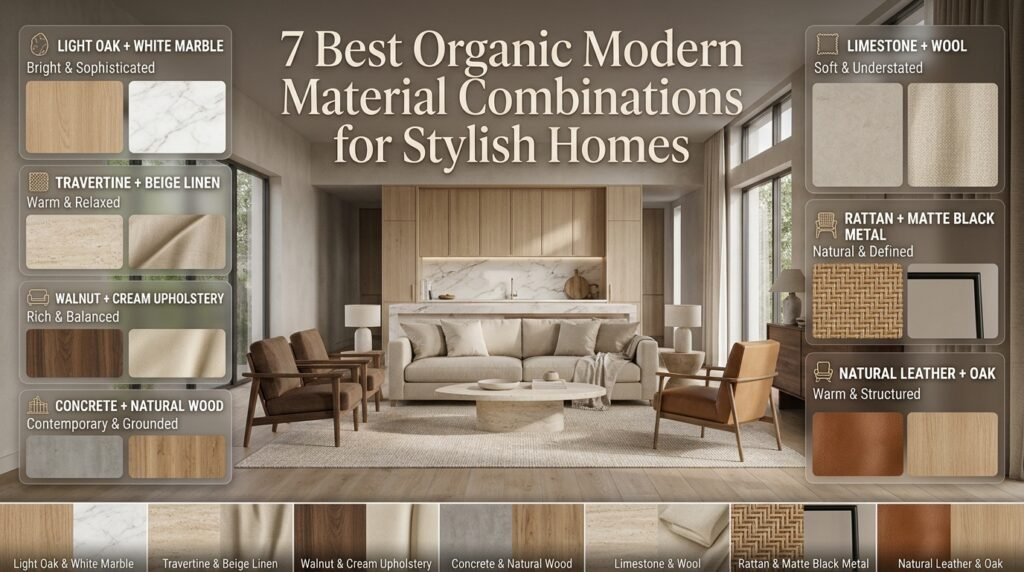
The best material pairings combine different textures while maintaining a consistent visual temperature. A warm material can balance a cooler surface, while a smooth finish can prevent a heavily textured room from feeling crowded.
Here are practical combinations that work in different types of homes.
1. Light Oak and White Marble
This combination creates a bright and sophisticated appearance.
Light oak adds warmth, while white marble introduces subtle pattern and visual contrast.
It works especially well in kitchens, dining areas, and contemporary living rooms.
A kitchen with oak cabinetry, a white stone countertop, and simple brushed metal hardware can look elegant without feeling overly formal.
Best applications:
- Kitchen islands.
- Dining tables.
- Bathroom vanities.
- Coffee tables.
- Console furniture.
Potential drawback: Strongly veined marble may compete with heavily patterned flooring or cabinetry. Keep surrounding surfaces relatively simple.
2. Travertine and Beige Linen
Travertine and beige linen create one of the most relaxed organic modern combinations.
Travertine introduces natural mineral markings, while linen provides softness.
A living room could feature a travertine coffee table, beige linen sofa, and oatmeal wool rug.
This combination works particularly well when the aim is to create a comfortable, understated atmosphere.
3. Walnut and Cream Upholstery
Walnut has a deeper appearance that can make a room feel more grounded.
Cream upholstery balances its richness and prevents the space from becoming too dark.
Try combining:
- Walnut dining table.
- Cream upholstered chairs.
- Warm white walls.
- Neutral wool rug.
- Bronze pendant lighting.
This pairing is also suitable for bedrooms where darker wooden furniture can create a more intimate atmosphere.
4. Concrete and Natural Wood
Concrete offers an architectural and contemporary appearance, while natural wood introduces warmth.
Together, they create a balanced industrial-organic combination.
Use concrete-inspired finishes for flooring, countertops, or selected architectural surfaces. Add oak cabinetry, timber furniture, or wooden shelving to soften the appearance.
Avoid covering every surface in concrete. The room may otherwise feel cold and visually heavy.
5. Limestone and Wool
Limestone and wool create a quiet, comfortable atmosphere.
The stone provides a relatively understated architectural surface, while wool adds softness.
This pairing is useful for:
- Living room floors.
- Fireplace surroundings.
- Bedroom rugs.
- Reading corners.
- Minimalist sitting areas.
6. Rattan and Matte Black Metal
Rattan introduces a relaxed woven texture, while matte black metal gives furniture a cleaner outline.
This combination works well for accent chairs, pendant lights, shelving, and occasional tables.
For example, a woven accent chair with a slim black metal frame can add organic character without making a room feel traditional.
7. Natural Leather and Oak
Tan or cognac leather works particularly well with natural oak.
Leather introduces a slightly richer texture, while oak keeps the combination visually light.
Use it for occasional seating, dining chairs, or carefully selected upholstery.
This pairing is useful when a neutral room needs a little more depth.
Material Combination Comparison
| Material pairing | Visual character | Best rooms |
|---|---|---|
| Oak + white marble | Bright and sophisticated | Kitchen, dining |
| Travertine + linen | Warm and relaxed | Living room |
| Walnut + cream fabric | Rich and balanced | Bedroom, dining |
| Concrete + wood | Contemporary and grounded | Open-plan areas |
| Limestone + wool | Soft and understated | Living room, bedroom |
| Rattan + black metal | Natural and defined | Living room |
| Leather + oak | Warm and structured | Study, living room |
How Do You Mix Different Wood Tones Without Making a Room Look Messy?
Different wood tones can work together when their undertones, grain patterns, and visual proportions are considered. The goal isn’t to find identical finishes but to create a deliberate relationship between them.
For example, a room with light oak flooring can include a walnut side table if the rest of the palette connects the two finishes.
Understand Wood Undertones
Wood finishes often contain yellow, golden, red, orange, gray, or brown undertones.
Two wood finishes may look similar in a product photograph but appear noticeably different when placed beside each other.
Compare samples in the actual room.
Pay attention to:
- The warmth of the wood.
- The amount of visible grain.
- The darkness of the finish.
- Whether the surface looks yellow, red, gray, or neutral.
Use One Dominant Wood Finish
A simple approach is to select one wood finish for the largest surfaces.
For example:
- Oak flooring as the dominant finish.
- Walnut dining furniture as a secondary finish.
- Small wooden accessories that connect the palette.
This creates a visual hierarchy.
Balance Light and Dark Wood
Contrast can be attractive when used intentionally.
Light oak furniture with darker walnut details can create depth without requiring strong wall colors.
However, avoid placing several unrelated dark wood finishes together simply because they are natural.
Repeat Secondary Wood Tones
Repeating a smaller wood finish in two or three places can help the room feel connected.
For example, if you introduce walnut through a side table, you could repeat a similar tone in a picture frame or small decorative accessory.
The repetition doesn’t need to be exact, but it should feel intentional.
How Do You Balance Smooth and Rough Textures?
Texture balance is what makes organic modern interiors feel layered rather than plain. Smooth materials reflect and define surfaces, while rough or woven materials introduce tactile interest.
A room needs both.
Step 1: Identify the Largest Surfaces
Start by looking at flooring, walls, ceilings, countertops, and large furniture.
These surfaces establish the overall visual character.
If the room has smooth stone flooring, you may need softer fabrics to create balance.
If the room contains heavily textured walls and rough timber, smoother furniture and simpler accessories may be more appropriate.
Step 2: Introduce One Strong Contrast
Choose a material that creates a noticeable difference.
Examples include:
- Smooth marble with textured linen.
- Polished metal with natural timber.
- Concrete with wool.
- Smooth cabinetry with woven accessories.
The contrast should be noticeable but not distracting.
Step 3: Add Smaller Texture Variations
Once the main surfaces are balanced, introduce smaller details through cushions, ceramic accessories, throws, and baskets.
These items help create depth without requiring major renovation work.
💡 Pro Tip: Don’t judge texture balance from individual samples alone. Arrange them together on a flat surface and look at the complete group. A finish that appears subtle on its own may become dominant when surrounded by other materials.
How Do You Choose Colors That Complement Natural Materials?
Organic modern interiors usually rely on earthy colors and understated neutrals. These colors allow the natural appearance of wood, stone, and fabrics to remain visible.
However, choosing the right shade is more complicated than selecting several beige products.
Understand Warm and Cool Undertones
Warm colors often contain yellow, golden, red, or brown undertones.
Cool colors may contain blue, gray, or green undertones.
A warm oak floor may look disconnected beside a strongly blue-gray wall unless another finish creates a transition.
Before choosing paint, compare it with the actual flooring, furniture, and stone samples.
Build a Practical Organic Modern Palette
A balanced palette could include:
| Color | Recommended use |
|---|---|
| Warm white | Main walls |
| Cream | Upholstery |
| Sand | Curtains and rugs |
| Taupe | Secondary finishes |
| Warm brown | Wood furniture |
| Olive green | Decorative accents |
| Charcoal | Small metal details |
You don’t need to use every color. Select a few that complement the permanent materials in your room.
For additional help understanding how shades interact, read Developing an Interior Design Color Eye.
Can You Use Dark Colors in Organic Modern Interiors?
Absolutely. Dark colors create depth and prevent a neutral interior from appearing flat.
Walnut, deep brown, charcoal, olive, and muted black can all work.
Use them through furniture, decorative objects, lighting, and selected architectural details.
For example, a cream sofa, oak flooring, and travertine table can look more complete with a dark bronze lamp or walnut side table.
The important thing is controlling the amount of contrast.
How Should You Use Accent Colors?
Accent colors should connect with the materials rather than compete with them.
Olive green can complement natural wood, while muted terracotta works well with warm stone and cream fabrics.
Use accent colors in:
- Cushions.
- Artwork.
- Ceramic accessories.
- Plants.
- Decorative objects.
For wider guidance on selecting coordinated shades, explore the Paint Color collection.
How Can You Select Materials for Each Room?
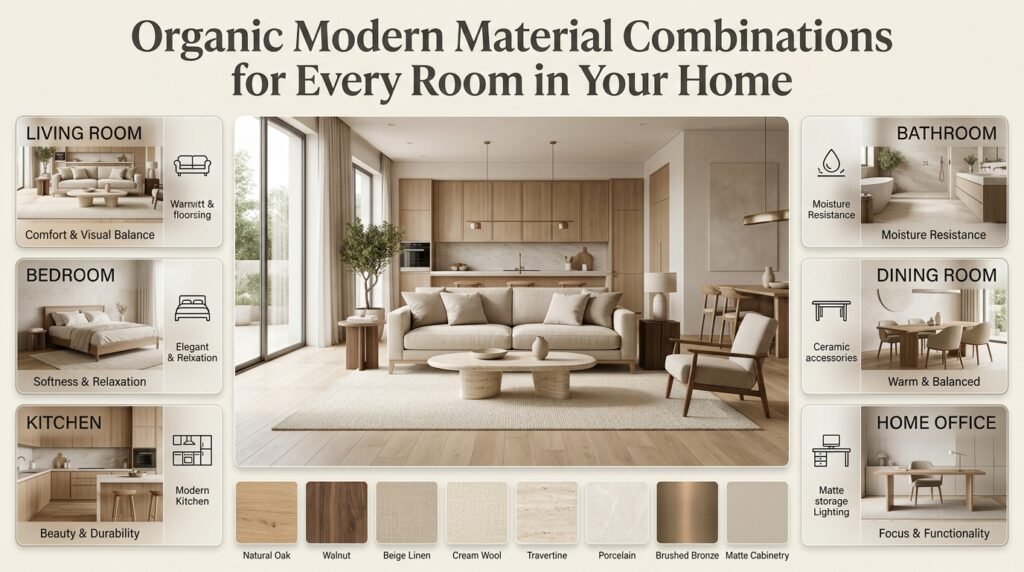
Material selection should change according to how each room is used. A beautiful surface may be suitable for a bedroom but impractical for a heavily used kitchen.
The best approach is to balance appearance with durability, cleaning, moisture resistance, and comfort.
Living Room: Create a Comfortable Material Mix
Living rooms usually contain several large surfaces, including flooring, upholstery, tables, rugs, and storage furniture.
A practical combination includes:
- Light oak flooring.
- Beige or cream upholstered sofa.
- Travertine coffee table.
- Wool rug.
- Walnut side table.
- Brushed bronze lighting.
- Ceramic accessories.
The sofa and coffee table should have appropriate proportions.
Leave enough space for comfortable movement and ensure the rug connects the main seating arrangement.
A room can contain beautiful materials but still feel uncomfortable when furniture blocks walking routes.
If you want to refine furniture placement, consider how Styling Open Shelves Without Clutter can help maintain visual balance in surrounding storage and display areas.
Bedroom: Prioritize Softness and Relaxation
Bedrooms should feel comfortable rather than overly decorative.
A suitable palette might include:
- Natural oak or walnut bed frame.
- Cream linen bedding.
- Wool rug.
- Soft plaster-style wall finish.
- Wooden bedside tables.
- Fabric window treatments.
Avoid introducing too many polished surfaces near the bed.
A wooden bed frame with soft bedding and subtle lighting creates a more comfortable environment than a room filled with reflective stone and metal.
Kitchen: Combine Beauty With Durability
Kitchens experience frequent cleaning, moisture, heat, and food spills.
Material selection should therefore consider practical performance.
A useful combination includes:
- Oak or walnut cabinetry.
- Durable stone or engineered countertops.
- Porcelain backsplash.
- Brushed metal hardware.
- Easy-to-clean flooring.
Natural marble can look beautiful, but some varieties require more maintenance and are vulnerable to staining or etching.
For a busy household, compare maintenance requirements before selecting a countertop.
The same principle applies to cabinet finishes. A beautiful matte surface may show fingerprints differently from a textured or slightly patterned finish.
Bathroom: Choose Moisture-Appropriate Materials
Bathrooms require more careful material selection because surfaces are regularly exposed to water and humidity.
Consider:
- Porcelain tiles with natural stone appearance.
- Suitable sealed stone.
- Moisture-resistant cabinetry.
- Brushed brass or stainless steel fittings.
- Ceramic accessories.
Wood can be introduced through properly designed bathroom furniture, but it needs suitable protection, ventilation, and installation details.
Never assume that every natural material is suitable for a wet environment.
Dining Room: Create a Balanced Focal Point
A dining room benefits from materials that feel substantial without making the space heavy.
A natural oak or walnut dining table can serve as the main feature.
Combine it with:
- Linen or textured upholstered chairs.
- A wool or suitable flat-weave rug.
- Ceramic table accessories.
- A contemporary pendant light.
If the dining table has a noticeable grain pattern, avoid introducing several competing wood patterns nearby.
Home Office: Balance Professional Appearance and Comfort
A home office needs surfaces that support concentration and daily work.
A useful material palette includes:
- Natural wood desk.
- Neutral upholstered chair.
- Matte storage cabinetry.
- Wool or low-pile rug.
- Simple metal lighting.
Avoid reflective surfaces that produce distracting glare on computer screens.
A wooden desktop can make a workspace feel warmer, while matte finishes help keep the environment visually controlled.
For practical improvements across different spaces, explore DIY Home Projects.
How Does Natural and Artificial Lighting Affect Material Choices?
Lighting changes how materials appear. A warm wood finish may look golden under artificial lighting, while a pale stone surface may appear cooler in natural daylight.
Ignoring lighting can lead to disappointing results after installation.
Understand Natural Light Direction
Rooms with different window orientations receive different qualities of daylight.
Some spaces receive stronger direct sunlight, while others remain relatively shaded.
Observe your room during different times of the day.
Check:
- Whether sunlight reaches the flooring.
- Whether darker materials make the room feel heavy.
- Whether reflective surfaces create glare.
- Whether pale finishes appear washed out.
- Whether fabric colors change throughout the day.
Choose Lighting That Supports Material Warmth
Warm lighting can complement oak, walnut, beige, and bronze.
However, lighting should also support the practical purpose of each room.
A kitchen needs useful task lighting, while a bedroom benefits from softer ambient illumination.
Layering ambient, task, and accent lighting helps show the natural qualities of different surfaces.
For more ideas about integrating lighting with interior design, explore Intelligent Lighting.
Avoid Judging Materials Under One Light Source
A sample may look attractive in a showroom but appear different at home.
Always test larger samples in their intended location.
Check them in daylight, evening lighting, and the artificial lighting that will normally be used.
How Can You Use Organic Modern Materials in Small Spaces?
Small spaces benefit from materials that create continuity rather than unnecessary visual divisions.
The aim isn’t to avoid texture. It’s to use texture in a controlled way.
Choose Lighter Dominant Finishes
Light oak, warm white, pale stone, and neutral fabrics can help compact rooms feel more open.
However, completely pale interiors may appear flat.
Introduce contrast through a darker side table, a bronze fixture, or a small number of natural accessories.
Repeat Materials Between Connected Areas
In an apartment with an open-plan living and dining area, repeating flooring and selected wood finishes can create a sense of continuity.
This is especially useful when several functional areas share one visual space.
Avoid Oversized Decorative Surfaces
A large, heavily veined stone table may overpower a small living room.
Choose furniture and surfaces according to the available space.
The same applies to thick woven rugs, bulky storage units, and large decorative accessories.
Use Storage to Maintain Visual Simplicity
Visible clutter can make natural materials lose their impact.
Use practical storage solutions to keep everyday items organized.
You can find additional ideas in LLBlogHome Upgrades by Lovelolablog.
How Do You Combine Organic Modern Materials on a Budget?
A sophisticated organic modern interior doesn’t require expensive imported stone or solid hardwood furniture.
The key is knowing which surfaces deserve investment and where suitable alternatives can provide the appearance you want.
Compare Premium Materials With Affordable Alternatives
| Premium material | Alternative | Important consideration |
|---|---|---|
| Natural marble | Marble-look porcelain | Compare appearance and durability |
| Solid walnut | Walnut veneer | Check construction quality |
| Natural travertine | Travertine-look porcelain | Compare finish and installation |
| Solid oak flooring | Quality oak-look flooring | Check wear layer and suitability |
| Pure linen | Linen-blend fabric | Compare comfort and cleaning |
| Handmade ceramics | Quality ceramic accessories | Check finish and construction |
Where Should You Spend More?
Prioritize permanent surfaces and frequently used items.
These may include:
- Main flooring.
- Kitchen countertops.
- Bathroom waterproofing.
- Frequently used seating.
- Dining furniture.
- Cabinet hardware.
These items affect everyday comfort and may be expensive to replace.
Where Can You Save Money?
Decorative accessories are often easier to replace.
You can introduce an organic appearance through affordable ceramic objects, neutral cushions, simple woven baskets, and carefully selected second-hand furniture.
You don’t need expensive accessories to create an attractive material palette.
Avoid False Savings
A low-priced product isn’t necessarily a better investment.
Cheap finishes may scratch, peel, fade, or require early replacement.
Compare the complete cost, including installation, maintenance, repair, and expected lifespan.
For broader home improvement planning, explore Home Improvement.
What Are the Most Common Mistakes When Combining Natural Materials?
Many design problems happen because homeowners select materials separately instead of considering how they will work together.
The following mistakes can make even expensive interiors feel unfinished.
1. Using Too Many Different Wood Finishes
Why it happens: Furniture is purchased at different times without comparing wood samples.
Why it’s harmful: Different undertones can make the room appear disconnected.
How to avoid it: Select one dominant finish and use complementary secondary tones.
2. Making Every Surface Beige
Why it happens: Beige is associated with warm and calming interiors.
Why it’s harmful: Without contrast, the room can look flat and lack definition.
How to avoid it: Introduce walnut, muted olive, natural stone markings, bronze, or charcoal details.
3. Combining Too Many Strong Textures
Why it happens: Homeowners want every material to make a noticeable contribution.
Why it’s harmful: The eye has no clear focal point.
How to avoid it: Allow one or two textures to lead and use simpler finishes elsewhere.
4. Ignoring Material Maintenance
Why it happens: The appearance of a product receives more attention than its practical performance.
Why it’s harmful: Some surfaces may stain, scratch, or deteriorate when used in unsuitable locations.
How to avoid it: Check cleaning instructions, sealing requirements, moisture resistance, and durability.
5. Choosing Materials Without Checking Samples
Why it happens: Product photographs and showroom lighting can make finishes look different.
Why it’s harmful: The installed materials may clash with existing flooring, paint, or furniture.
How to avoid it: Compare actual samples in the room where they’ll be used.
6. Using Too Much Dark Material in a Small Room
Why it happens: Dark wood and stone look attractive in large showrooms.
Why it’s harmful: In a compact room, extensive dark surfaces can make the space feel visually heavy.
How to avoid it: Use darker finishes selectively and balance them with lighter materials.
7. Choosing Materials Without Considering Furniture Scale
Why it happens: Homeowners focus on finish quality rather than room proportions.
Why it’s harmful: Oversized furniture can overwhelm the space and restrict movement.
How to avoid it: Measure the room and plan furniture placement before ordering.
8. Treating Every Natural Material as Low Maintenance
Why it happens: Natural materials are sometimes assumed to be more durable simply because they’re natural.
Why it’s harmful: Different stones, woods, and fibers have different care requirements.
How to avoid it: Research the exact product, finish, and installation method rather than relying on broad material labels.
How Can You Create a Complete Material Palette Step by Step?
A material palette is a collection of finishes selected to work together throughout a room or home.
Creating one before purchasing products reduces the risk of mismatched finishes and unnecessary spending.
Step 1: Identify the Room’s Main Purpose
Start by understanding how the room will be used.
A living room may need durable upholstery and comfortable flooring, while a bedroom requires softer surfaces.
A kitchen needs materials that can handle cleaning, moisture, and regular use.
Write down the most important functional requirements before selecting finishes.
Step 2: Identify Permanent Surfaces
Look at the materials that are difficult or expensive to change.
These may include:
- Existing flooring.
- Wall finishes.
- Kitchen cabinetry.
- Countertops.
- Bathroom tiles.
- Architectural woodwork.
Use these elements as the starting point.
Step 3: Select a Dominant Material
Choose the material that will establish the overall character.
For example, light oak flooring can provide the foundation for a warm, contemporary living room.
The dominant material should connect naturally with the other finishes.
Step 4: Select Supporting Materials
Choose two or three materials that provide contrast.
A useful combination might include oak, travertine, and linen.
Each should contribute a different quality.
Step 5: Add an Accent Finish
Select a smaller accent material, such as bronze, black metal, or handmade ceramic.
This creates definition without making the palette complicated.
Step 6: Test Samples Together
Arrange the samples next to one another.
Look for:
- Color compatibility.
- Texture balance.
- Grain patterns.
- Surface reflectivity.
- Differences in warmth.
- Visual weight.
If something looks disconnected, identify the reason before purchasing.
Step 7: Review the Complete Room
Think about how the selected materials will look alongside furniture, lighting, artwork, and everyday accessories.
A material board should represent the complete design direction rather than a collection of unrelated attractive samples.
Professional advice: Keep photographs of the final material board. These can help when comparing products, communicating with contractors, and making decisions during installation.
For additional preparation guidance, Latest News DecoratorAdvice can provide another useful starting point for following home and decorating ideas.
How Can You Maintain a Consistent Organic Modern Look Throughout the Home?
A home doesn’t need identical materials in every room to feel cohesive.
Instead, establish a few recurring design elements and adapt them according to each room’s purpose.
Repeat Selected Materials
For example, light oak might appear in the living room, kitchen, and bedroom.
It doesn’t have to be used in exactly the same way.
You could use oak flooring in one room, cabinetry in another, and a bedside table elsewhere.
Maintain a Connected Color Palette
Choose a small collection of recurring colors.
Warm white, sand, beige, brown, and muted green can connect different rooms without making them look identical.
Vary Texture According to Function
A living room may use wool rugs and linen upholstery, while a kitchen relies more heavily on stone, porcelain, and timber cabinetry.
The materials can differ while the overall color and design language remain consistent.
Use Decorative Repetition Carefully
Repeat selected details such as bronze hardware, ceramic accessories, or similar wood finishes.
Avoid using identical decorative objects everywhere.
A home should feel connected, not repetitive.
For more ideas about visual consistency, explore Rhythm and Repetition in Interiors.
How Do Organic Modern Materials Work With Outdoor and Natural Surroundings?
Organic modern design can also connect indoor spaces with outdoor areas.
Natural wood, stone, muted colors, and simple forms can help create a transition between interior and exterior environments.
Choose Materials That Respond to Their Environment
Outdoor materials face different conditions from indoor products.
They may experience:
- Direct sunlight.
- Rainfall.
- Temperature changes.
- Humidity.
- Dust.
- Frequent cleaning.
Select outdoor-rated finishes instead of assuming indoor materials will perform equally well outside.
Create a Natural Visual Transition
If the interior uses warm oak and beige fabrics, an outdoor seating area might continue the palette through suitable timber-look surfaces, stone paving, and weather-resistant neutral upholstery.
The materials don’t need to match exactly.
They should simply share a similar visual character.
Use Natural Stone and Suitable Wood Finishes
Stone paving, weather-resistant timber, and outdoor porcelain can help create a calm exterior environment.
Always check slip resistance, drainage, weather suitability, and maintenance requirements before installation.
For related outdoor design inspiration, read Decoradhouse Garden Tips by DecoratorAdvice.
You can also explore Outdoor Entrance Design Proportions when planning the transition between your home’s exterior and interior design.
How Can DIY Projects Improve an Organic Modern Interior?
Not every design improvement requires a full renovation.
Small projects can introduce natural textures, improve storage, and make existing furniture feel more connected to the overall palette.
Update Existing Furniture
An old side table may become more suitable for an organic modern room after a carefully selected finish change.
Before refinishing furniture, check its existing material and construction.
Solid wood, veneer, laminate, and painted surfaces require different preparation methods.
Introduce Natural Decorative Accessories
Ceramic vessels, woven baskets, wooden trays, and neutral textiles are relatively simple ways to introduce additional texture.
Choose accessories according to their scale and purpose.
A small room doesn’t need numerous decorative pieces to feel complete.
Improve Storage and Display Areas
Open shelves can be used to display selected ceramics, books, and natural accessories.
However, avoid filling every shelf.
Leave negative space between objects to maintain a clean appearance.
For additional project ideas, visit DIY Home Projects.
If you’re exploring technology alongside home improvements, How to Set Up My Home Decoradtech can provide related guidance on combining modern home features with interior planning.
What Expert Designers Recommend Before Finalizing Materials
Experienced designers don’t simply choose attractive materials. They consider how the entire room will function and how every surface will interact with the others.
These professional considerations can help homeowners make better decisions.
Consider Visual Weight
A large stone island has more visual weight than a small ceramic vase.
Similarly, dark walnut furniture may dominate a room more than pale oak furniture.
Balance substantial elements with lighter surfaces and appropriate spacing.
Check Surface Reflectivity
Glossy surfaces reflect more light, while matte finishes generally create a softer appearance.
A useful combination might include matte oak cabinetry, a polished stone countertop, and textured linen upholstery.
This introduces contrast without requiring additional colors.
Evaluate the Grain and Pattern
Wood grain and stone veining can act like decorative patterns.
When several materials have strong markings, the room may look busy.
Allow one surface to become the main visual feature and keep the others more understated.
Don’t Forget the Installation Details
The appearance of a material also depends on how it’s installed.
Grout color, edge profiles, joints, trim, and transitions can affect the finished result.
For example, a beautiful stone floor may lose its impact if the grout color clashes with its natural tones.
Discuss installation details before work begins.
Think Beyond Current Trends
Organic modern design should remain practical and comfortable even when decorating trends change.
Choose permanent finishes according to your long-term preferences rather than selecting every material because it’s currently popular.
Natural wood, suitable stone, neutral fabrics, and simple furniture shapes can provide a flexible foundation for future updates.
Organic Modern Material Selection Checklist
Before making your final purchases, use this checklist to review the complete design.
Material selection
- Identify the dominant material.
- Choose complementary wood finishes.
- Select stone according to its maintenance requirements.
- Compare upholstery fabrics.
- Choose suitable metal accents.
- Consider handmade decorative materials.
Color and texture
- Compare warm and cool undertones.
- Balance smooth and rough surfaces.
- Avoid too many competing grain patterns.
- Introduce contrast where necessary.
- Maintain a connected color palette.
Practical performance
- Check moisture resistance.
- Review cleaning instructions.
- Consider household activities.
- Check sunlight exposure.
- Confirm installation requirements.
- Compare warranties and repair options.
Final design review
- Arrange physical samples together.
- Test materials in natural daylight.
- Review them under artificial lighting.
- Check furniture proportions.
- Review the complete room before ordering.
What are the most popular organic modern material combinations for 2026?
The most popular combinations focus on natural textures, warm wood tones, tactile stone, and soft fabrics. Homeowners are moving toward interiors that feel warm and authentic rather than completely polished or overly minimalist. Travertine, walnut, natural oak, linen, textured plaster, and bouclé are particularly useful for creating this appearance.
Some attractive combinations include:
Travertine and walnut: Creates a sophisticated contrast between pale stone and darker wood.
Oak and textured plaster: Adds warmth and subtle architectural depth.
Linen and natural stone: Balances soft upholstery with solid surfaces.
Bouclé and walnut: Introduces a comfortable, layered appearance.
Rattan and brushed bronze: Combines natural craftsmanship with contemporary detailing.
The best approach is to choose materials that complement your existing flooring, furniture, and lighting instead of following every new trend.
Practical considerations:
Choose one dominant material for the room.
Use contrasting textures to create visual interest.
Introduce darker wood or metal accents for depth.
Prioritize materials that will remain attractive beyond current trends.
How do you combine travertine, wood, and linen without making a room look too plain?
Combining travertine, wood, and linen successfully requires a balance of color, texture, and proportion. Although these materials naturally complement each other, using similar shades everywhere can make the room look flat. The solution is to create subtle differences between surfaces while maintaining a consistent warm color palette.
For example, consider a living room with a medium-toned oak coffee table, a light travertine side table, and a cream linen sofa. Instead of adding more beige furniture, introduce a darker walnut accessory, textured wool rug, or bronze lighting fixture.
Each material should have a specific purpose:
Travertine: Adds natural markings and a solid visual foundation.
Wood: Introduces warmth and connects the furniture to the natural palette.
Linen: Softens harder surfaces and improves comfort.
Wool: Adds another layer of texture without requiring a new color.
Bronze or walnut: Provides contrast and prevents the room from looking washed out.
Professional tip: Avoid selecting every material in exactly the same shade. A slight difference between cream, sand, taupe, and natural brown creates a much more interesting interior.
Which organic modern materials are best for kitchens and bathrooms where durability matters?
Kitchens and bathrooms require more careful material selection because they experience moisture, heat, spills, cleaning products, and frequent daily use. Natural appearance should never be the only deciding factor. A material must also suit the conditions in which it will be installed.
For kitchens, durable porcelain, suitable engineered surfaces, properly selected natural stone, and quality cabinetry finishes can create an attractive organic modern appearance. Oak or walnut can be introduced through cabinetry, provided the finish and construction are appropriate for the environment.
For bathrooms, porcelain tiles, properly installed and sealed stone, moisture-resistant cabinetry, and suitable metal fittings are practical choices.
Recommended material choices:
Area
Suitable material
Main consideration
Kitchen countertop
Porcelain or suitable stone
Stain and heat performance
Kitchen cabinets
Finished oak or walnut
Moisture protection
Bathroom flooring
Porcelain tile
Slip resistance
Bathroom vanity
Moisture-resistant cabinetry
Ventilation and sealing
Shower walls
Porcelain or suitable sealed stone
Waterproof installation
Hardware
Stainless steel or suitable brass
Corrosion resistance
Important advice: Travertine and marble may look beautiful, but some varieties are porous and vulnerable to staining or etching. Check the specific product’s maintenance requirements before using it in high-use areas.
How can you create an expensive-looking organic modern interior without buying expensive natural materials?
You can achieve a sophisticated organic modern appearance without purchasing premium marble, solid walnut furniture, or imported stone. The important thing is to select alternatives that reproduce the desired visual qualities while maintaining acceptable durability and workmanship.
For example, quality marble-look porcelain can provide a refined appearance in a kitchen or bathroom. Walnut veneer furniture can introduce a rich wood finish at a lower cost than solid walnut, while textured upholstery can create the softness associated with natural linen.
Smart budget-friendly alternatives:
Use quality oak veneer instead of solid oak for suitable furniture.
Choose marble-look porcelain for selected surfaces.
Consider linen-blend upholstery for frequently used seating.
Introduce handmade-look ceramics instead of expensive decorative objects.
Update existing furniture rather than replacing everything.
Spend more on permanent flooring and frequently used furniture.
One useful strategy is to invest in the materials that are difficult to replace and save money on accessories that can be updated later.
A well-proportioned room with coordinated finishes often looks more sophisticated than an expensive interior containing mismatched materials.
Is organic modern interior design still worth choosing, or will it look outdated in the next few years?
Organic modern design remains a flexible interior approach because it is based on natural materials, functional furniture, comfortable textures, and relatively simple forms rather than one specific decorative trend. Its long-term appeal comes from the ability to update smaller details without changing the entire interior.
However, an organic modern home can start looking dated if every decision is based on short-term trends. For example, using the same fashionable stone, furniture silhouette, and beige accessories throughout the property can make the design feel predictable.
A more lasting approach is to build the interior around materials that suit your home and everyday needs.
Design choices that support long-term appeal:
Choose natural wood finishes that complement your architecture.
Use stone according to durability and maintenance requirements.
Invest in comfortable, well-constructed furniture.
Keep permanent color choices relatively flexible.
Introduce fashionable colors through replaceable accessories.
Combine contemporary details with personal and handcrafted pieces.
Rather than trying to make every room look like a newly published design photograph, create an interior that can evolve naturally as your preferences change.
Conclusion
Organic modern design is not about filling a room with natural materials or following the latest interior trends. It is about creating a thoughtful balance between natural beauty, practical performance, and modern simplicity. The right combination of wood, stone, linen, natural fibers, plaster, metal, and handmade finishes can make a space feel warm, refined, comfortable, and visually connected.
The key is to choose materials that complement one another rather than compete for attention. Pair warm wood with textured plaster, balance stone surfaces with soft fabrics, introduce subtle metal details, and use natural finishes to create depth. Consider how each material will look under natural and artificial lighting, how it will age, and how well it will perform in everyday use.
Before purchasing materials, think about the room’s purpose, maintenance requirements, budget, and overall color palette. You do not need expensive finishes everywhere to achieve a sophisticated result. A few carefully selected materials, repeated consistently throughout the space, can create a much stronger impression than a room filled with unrelated textures and decorative details.
Ultimately, the most successful organic modern interiors are those that feel natural rather than overly styled. By combining timeless materials with thoughtful proportions and practical choices, you can create a home that remains welcoming, functional, and beautiful for years to come.