
Introduction
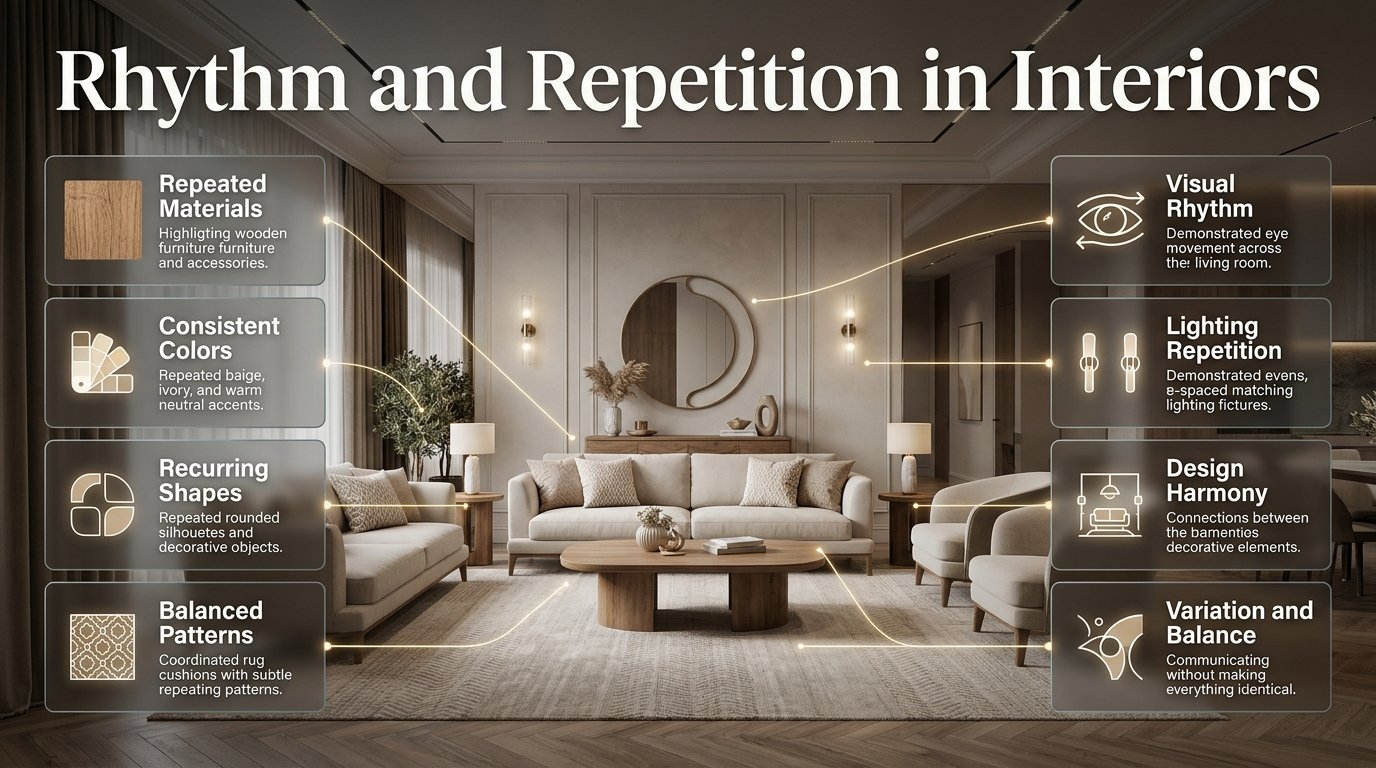
Rhythm and Repetition in Interiors | A beautifully designed home is not simply a collection of attractive furniture, decorative accessories, colors, and materials. What makes an interior feel complete is the way these elements connect with one another. When you enter a room, your eyes naturally move from one detail to another. You may notice a repeated color, matching furniture shapes, similar lighting fixtures, or a pattern that appears in different areas. These visual connections create a sense of order and make the space feel thoughtfully designed.
This is where rhythm and repetition in interiors become important. Rhythm guides the eye through a space, while repetition creates familiarity by bringing selected design elements back in a consistent way. Together, they help rooms feel connected without making every corner look identical.
Imagine a living room with a warm wooden coffee table, a wooden console, and a few carefully selected wooden accessories. The repeated material creates a visual connection. Now imagine the same room with matching cushions, a repeated curved shape in the furniture, and evenly spaced wall lighting. These details create a natural visual rhythm that makes the interior feel balanced.
However, repetition does not mean copying the same object everywhere. Too much repetition can make a room look predictable, while too little can make the design feel disconnected. The goal is to create enough consistency to establish harmony while allowing enough variation to maintain interest.
At DesignMode24 Interior Design, thoughtful interior planning focuses on how individual design decisions work together to create comfortable, practical, and visually connected homes.
This guide explains how rhythm and repetition work, how to use them in different rooms, which mistakes to avoid, and how to apply these principles without making your home feel overly coordinated.
What Are Rhythm and Repetition in Interior Design?
Rhythm and repetition are related interior design principles, but they perform slightly different functions.
Rhythm is the visual movement created when design elements are arranged in a way that guides the eye through a room. Repetition is the reuse of selected elements, such as colors, shapes, materials, patterns, or decorative details, to establish consistency.
For example, a hallway with regularly spaced wall lights creates rhythm because the eye follows the fixtures along the wall. If those fixtures share the same finish as the hardware in an adjoining room, repetition also creates a connection between the spaces.
These principles can work through:
- Repeated colors and complementary shades.
- Similar furniture shapes and silhouettes.
- Consistent materials and finishes.
- Repeated patterns and textures.
- Regularly arranged lighting fixtures.
- Matching decorative details.
- Similar architectural features.
- Consistent proportions and spacing.
The most successful interiors do not repeat everything. Instead, they select a few elements that deserve to appear more than once.
Understanding Rhythm as Visual Movement
Rhythm helps the eye move naturally around an interior. It can be created through furniture placement, lighting, architectural details, patterns, or decorative objects.
Consider a dining room with a rectangular dining table, a row of pendant lights, and chairs arranged at regular intervals. The repeated arrangement creates a sense of order. The eye can understand the layout without feeling overwhelmed by unrelated details.
Rhythm can also be less obvious. A series of rounded shapes in a mirror, coffee table, cushions, and decorative accessories can create a gentle visual connection even when the objects are not identical.
Understanding Repetition as Consistency
Repetition establishes a recognizable design language. It helps different elements feel as though they belong to the same interior.
For example, a home might use warm oak in the living room, dining area, and bedroom. The furniture does not need to match exactly. The repeated wood tone is enough to create a connection.
Repetition is especially useful when designing open-plan homes, where several functional areas share one visual environment.
Why Rhythm and Repetition Matter in a Home
A room can contain expensive furniture and attractive accessories but still feel unfinished if the elements do not relate to one another. Rhythm and repetition help solve this problem by creating visual relationships.
They Make Rooms Feel More Connected
When a color, material, or shape appears in several places, the eye recognizes the connection. This makes the room feel more organized.
For example, a living room might include:
- A beige sofa.
- Cream curtains.
- A warm neutral rug.
- A few cushions in a related shade.
- A light-colored decorative object.
These items do not have to use exactly the same color. Their shared undertones create a consistent atmosphere.
They Guide the Eye Through the Space
A well-designed room should allow the eye to move comfortably from one area to another.
Repeated details can create a visual route. A sequence of ceiling lights can guide attention down a hallway, while repeated vertical lines in wall panels can make a room appear taller.
They Reduce Visual Confusion
When too many unrelated finishes, shapes, and colors compete for attention, a room can feel disorganized. Repetition gives the design a recognizable structure.
This does not mean every room should be neutral or minimal. Even colorful interiors benefit from repeated elements that help organize the overall composition.
They Support a Consistent Home Style
A home may include different decorating styles in different rooms. The living room might feel contemporary, the bedroom might have a softer traditional influence, and the dining area might include natural materials.
Repeated details can connect these spaces without forcing them into one identical style.
For broader guidance on creating a cohesive home, explore Interior Design.
The Main Types of Rhythm in Interior Design
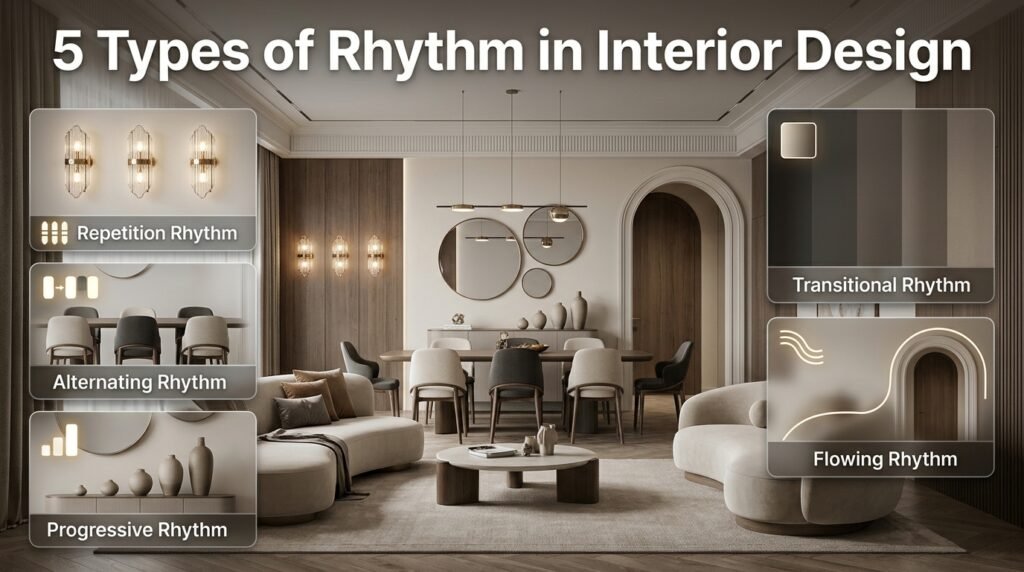
Interior rhythm can be created in several ways. Understanding these types helps homeowners choose an arrangement that suits the room, its dimensions, and its intended function.
1. Repetition Rhythm
Repetition rhythm is created when the same design element appears more than once.
Examples include:
- Matching wall lights along a corridor.
- Identical dining chairs around a table.
- Repeated cabinet handles.
- Similar cushions arranged across a sofa.
- A consistent pattern repeated on curtains and selected accessories.
The repeated element gives the eye something familiar to recognize.
However, identical objects should not be repeated simply to fill empty space. Each item should have a purpose and should fit the scale of the room.
2. Alternating Rhythm
Alternating rhythm uses two or more elements in a repeating sequence.
For example, a dining room might use chairs with alternating upholstery colors. A hallway could combine two complementary wall finishes in a repeated arrangement.
A simple sequence might be:
- Light.
- Dark.
- Light.
- Dark.
Alternation introduces more visual interest than using one element repeatedly, but it still creates order.
The key is to maintain a clear pattern. Random changes can weaken the rhythm and make the arrangement feel accidental.
3. Progressive Rhythm
Progressive rhythm occurs when an element changes gradually in size, color, shape, or intensity.
For example, decorative objects on a console table might move from smaller pieces to larger pieces. A series of pendant lights could gradually increase in size along a long dining table.
Progression creates movement and can make a room feel more dynamic.
It is particularly useful when the design needs a sense of direction. However, the progression should be subtle enough to avoid looking forced.
4. Transitional Rhythm
Transitional rhythm connects different elements through gradual visual changes.
For example, a room might use a strong dark color in one corner and introduce lighter versions of the same color in nearby accessories. The eye moves through related shades instead of encountering an abrupt change.
This approach works well in open-plan homes, where one functional zone needs to connect with another.
5. Flowing Rhythm
Flowing rhythm is created through curved, organic, or continuous lines.
Examples include:
- Rounded furniture edges.
- Curved sofas.
- Arched doorways.
- Circular mirrors.
- Wavy decorative details.
- Rounded coffee tables.
These forms create a softer movement than rigid geometric arrangements.
Flowing rhythm can be especially useful in rooms with many straight architectural lines. A curved chair or circular rug can introduce visual contrast while maintaining a sense of continuity.
How to Use Repetition Without Making a Room Look Boring
Repetition creates consistency, but excessive repetition can make a room feel like a showroom where every object has been purchased as part of one matching set.
A more natural approach is to repeat an element while changing its form, scale, or placement.
Repeat a Color in Different Ways
Choose one or two supporting colors and introduce them through different objects.
For example, muted green might appear in:
- A pair of cushions.
- A ceramic vase.
- A small artwork detail.
- A plant pot.
- A decorative throw.
The objects are different, but the repeated color creates a connection.
Repeat Materials Instead of Matching Furniture
Matching every furniture item is not necessary. Repeating a material can create a more sophisticated result.
For example, natural wood might appear in a coffee table, dining chairs, floating shelves, and bedroom side tables. The shapes can vary while the material connects them.
Repeat Shapes in Subtle Ways
A room with many rectangular elements can benefit from repeated curves.
A rounded mirror, circular side table, curved lamp base, and oval tray can establish a soft visual theme.
Likewise, a room with curved furniture can use repeated vertical or linear details to provide structure.
Change Scale to Maintain Interest
A repeated element does not need to appear in the same size every time.
A large artwork, medium decorative bowl, and small cushion detail might all use the same geometric motif. The shared pattern creates consistency, while the different scales prevent monotony.
Leave Space Between Repeated Elements
Repetition does not mean placing similar objects next to one another in every available area.
Allowing empty space gives repeated details room to stand out. A few well-positioned elements often create a stronger effect than a large collection of matching accessories.
Creating Rhythm Through Color
Color is one of the easiest ways to introduce repetition into an interior.
A carefully selected color palette can connect furniture, wall finishes, fabrics, and accessories. It also helps different rooms feel related.
Choose a Main Color Direction
Start by identifying the overall atmosphere you want to create.
A warm interior might use:
- Cream.
- Warm white.
- Sand.
- Natural wood.
- Muted brown.
A cooler interior might use:
- Soft grey.
- Blue.
- Charcoal.
- Cool white.
- Muted green.
The goal is not to use every color in equal amounts. Choose a dominant color, supporting shades, and a few accents.
Use Accent Colors Repeatedly
An accent color can appear in several small details rather than one large feature.
For example, navy might appear in a cushion, a framed artwork, a ceramic accessory, and a small section of an area rug.
This repeated color creates a visual connection without dominating the room.
Repeat Undertones Carefully
Two colors can look similar but still feel disconnected if their undertones are different.
A warm beige may look uncomfortable beside a cool grey. Similarly, a yellow-based white can appear noticeably different from a blue-based white.
Check paint samples, fabric swatches, and flooring together under the room’s actual lighting conditions.
For more practical guidance on coordinating interior shades, visit the Paint & Color category.
Avoid Repeating Too Many Strong Colors
If several bright colors compete for attention, the room may lose its visual structure.
Instead, select one dominant accent and repeat it in controlled amounts. Other colors can support the overall palette without becoming equally prominent.
Using Texture and Material Repetition
Texture adds depth to a room, while material repetition creates continuity.
A room can use a limited color palette and still feel interesting if its surfaces have different tactile qualities.
Combine Smooth and Textured Surfaces
Consider a living room with:
- A smooth wooden coffee table.
- A woven rug.
- Linen cushions.
- A textured throw.
- A ceramic vase.
- A soft upholstered sofa.
The materials are different, but their combination creates a balanced interior.
Repeat Natural Materials
Wood, stone, linen, rattan, and wool can appear in multiple areas of the home.
Natural materials often work well together because they introduce subtle variations rather than perfectly uniform finishes.
For example, a home might use oak in the living room, a natural wood vanity in the bathroom, and wooden bedside tables in the bedroom.
Use Metal Finishes Consistently
Metal finishes can also establish repetition.
Brushed brass might appear in cabinet handles, a table lamp, and selected decorative accessories. Matte black might connect door hardware, lighting fixtures, and furniture legs.
It is not necessary to use the same finish everywhere. However, limiting the number of competing metal finishes can help maintain visual order.
Balance Texture With Practical Needs
A highly textured surface may look attractive but may not be suitable for every location.
Consider cleaning, durability, maintenance, and everyday use before repeating a material throughout the home.
A delicate fabric might work well on decorative cushions but may be less suitable for heavily used seating.
Creating Rhythm Through Furniture Shapes and Arrangements
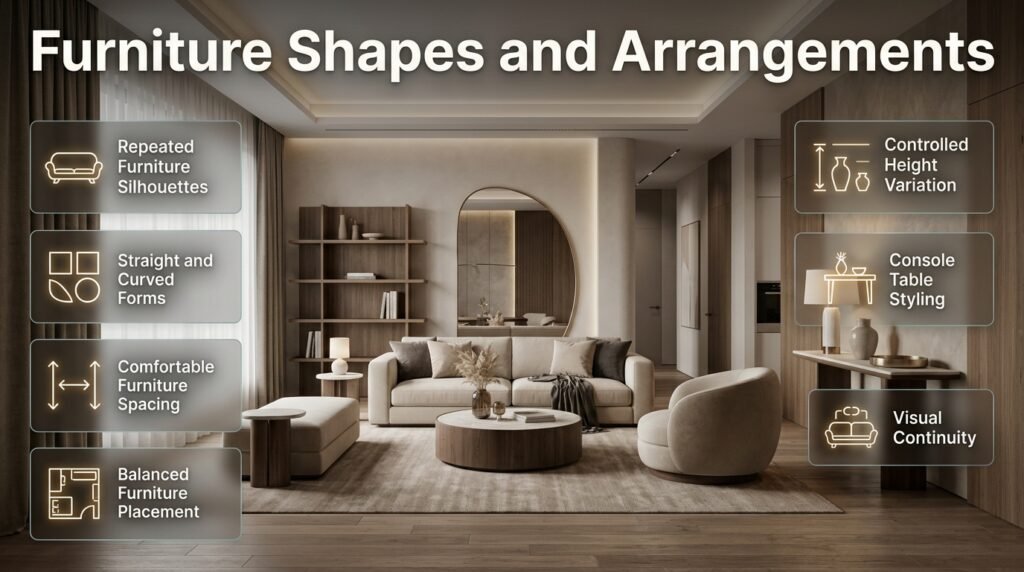
Furniture contributes to rhythm through its shape, placement, height, and spacing.
A room feels more organized when furniture pieces relate to one another instead of competing as separate objects.
Repeat Furniture Silhouettes
A room can use several furniture pieces with similar visual characteristics.
For example, rounded furniture edges might appear in:
- A sofa.
- A coffee table.
- An accent chair.
- A side table.
- A decorative mirror.
These items do not need to match. Their similar silhouettes create a shared visual language.
Balance Straight and Curved Forms
Using only straight lines can make an interior feel rigid. Using too many curves can make the composition feel unstructured.
A balanced arrangement might include a rectangular sofa, a circular coffee table, straight shelving, and a rounded mirror.
The contrast makes each shape more noticeable while preserving overall harmony.
Maintain Comfortable Furniture Spacing
Rhythm is not only about appearance. It also depends on how people move through a room.
Furniture should leave comfortable walking routes and should not interrupt doorways or access points.
For example, a living room arrangement should allow people to move between the entrance, seating area, and adjoining spaces without constantly walking around obstacles.
Use Repeated Heights Carefully
A series of objects at exactly the same height can appear flat. Introducing controlled height variation creates a more natural rhythm.
On a console table, a taller lamp, medium-sized vase, and lower decorative tray can form a balanced arrangement.
The objects should still relate through color, material, shape, or purpose.
Rhythm and Repetition in Lighting Design
Lighting is one of the strongest tools for creating visual rhythm.
Repeated lighting fixtures can establish a clear sequence, while consistent light quality can help different areas feel connected.
Use Repeated Fixtures in Long Spaces
A hallway or long corridor may benefit from regularly spaced ceiling or wall lights.
The repeated arrangement guides the eye along the space and creates a sense of order.
Before installing fixtures, consider ceiling height, room dimensions, electrical requirements, and the intended brightness.
Create a Lighting Connection Between Rooms
Different rooms do not need identical lights. However, they can share a finish, shape, or design characteristic.
For example, a home might use black metal pendants in the kitchen, black wall lights in the hallway, and a black table lamp in the living room.
The fixtures are different, but the repeated finish connects them.
Repeat Light Temperature Consistently
Light color affects how paint, furniture, and materials appear.
Using very different light temperatures in adjoining spaces can make the transition feel abrupt.
Choose lighting based on the room’s function and desired atmosphere, then consider how nearby spaces will look together.
Combine Ambient, Task, and Accent Lighting
A successful lighting plan usually includes different layers:
- Ambient lighting for general visibility.
- Task lighting for reading, cooking, and working.
- Accent lighting to highlight architectural or decorative details.
Repeating a fixture style can create consistency, while different lighting functions keep the arrangement practical.
Rhythm and Repetition in Open-Plan Interiors
Open-plan spaces can be difficult to design because several activities take place within one connected area.
The kitchen, dining room, and living room may share the same floor, ceiling, and overall view. Repetition helps these zones feel related.
Repeat Materials Across Functional Zones
A consistent flooring material can connect different areas.
Wood-look flooring, natural stone, or another suitable finish may continue through the kitchen, dining area, and living room.
If different materials are necessary, choose finishes that complement one another in color and texture.
Use a Shared Color Palette
A common palette helps open-plan spaces feel like one environment.
For example:
- Warm white walls.
- Natural wood furniture.
- Soft beige upholstery.
- Dark metal details.
- Muted green accents.
Each zone can have its own character while remaining connected to the overall palette.
Create Repetition Through Furniture Details
Furniture does not need to be identical across the entire open area.
Instead, repeat selected details such as wood tones, leg shapes, upholstery colors, or metal finishes.
This approach creates continuity without making every functional zone look the same.
Define Each Zone Without Breaking the Flow
A rug can identify the living area, while pendant lighting can define the dining zone.
The kitchen might use a consistent cabinet finish that relates to the living room furniture.
These distinctions make the layout easier to understand while maintaining visual connection.
Room-by-Room Guide to Rhythm and Repetition
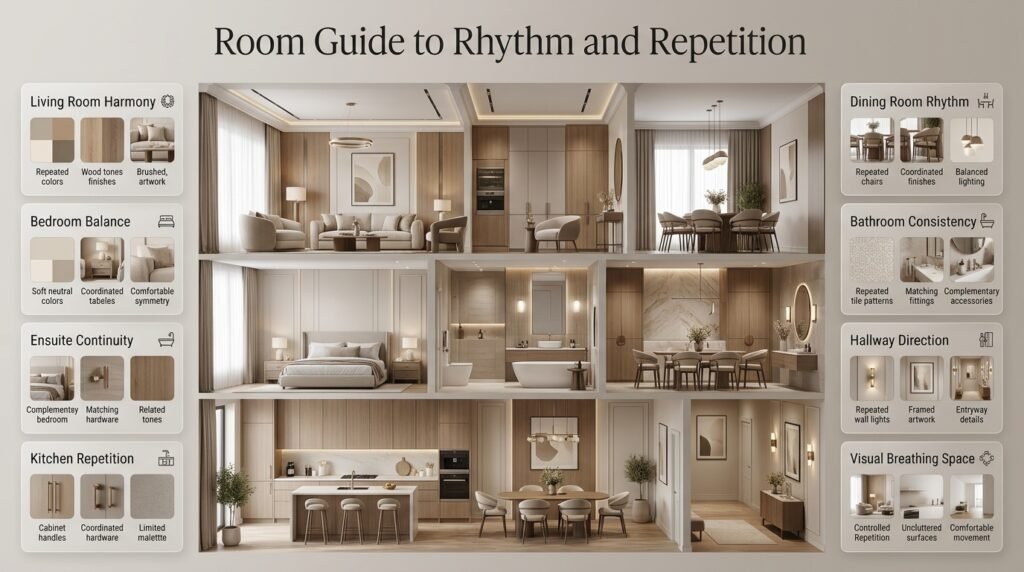
The best way to use rhythm and repetition depends on the purpose and size of each room. A living room needs a different arrangement from a bedroom or hallway.
Living Room
The living room is often the main shared space in a home. It may include seating, entertainment, storage, reading, and social activities.
Use repetition to connect the main furniture and decorative elements.
Practical ideas include:
- Repeat one accent color in cushions, artwork, and accessories.
- Use similar wood tones in the coffee table and side tables.
- Introduce curved forms through a mirror or accent chair.
- Repeat a metal finish in lighting and furniture details.
- Use a consistent pattern in a limited number of textiles.
Avoid placing matching accessories on every surface. A room needs visual breathing space.
The sofa, rug, and coffee table should also relate in scale. A repeated design element cannot compensate for furniture that is too large or too small for the room.
Bedroom
A bedroom should feel calm and comfortable. Repetition can help create a restful environment without making the space look overly decorated.
Consider repeating:
- A soft neutral color.
- A wood finish in the bed frame and bedside tables.
- A fabric texture in cushions and curtains.
- A curved or linear detail in selected furniture.
- A consistent metal finish in bedside lighting and handles.
Symmetry can be useful around the bed, especially when matching bedside tables and lamps support the layout.
However, perfect symmetry is not essential. Different accessories can still create balance when their visual weight is similar.
For inspiration on combining finishes and textures, see Celebrity Bedroom Material Palettes.
Bedroom With Ensuite Access
A bedroom connected to an ensuite bathroom needs a clear relationship between the two spaces.
The transition should feel intentional rather than like two unrelated rooms.
Useful repeated details include:
- Similar wood tones in bedroom furniture and bathroom storage.
- Related metal finishes in lighting and bathroom hardware.
- Complementary wall colors.
- Consistent stone or tile undertones.
- Repeated geometric details in selected accessories.
At the same time, the bathroom needs suitable moisture-resistant materials and practical surfaces.
The layout should also preserve comfortable movement between the bed, wardrobe, and ensuite entrance.
For more detailed planning considerations, explore Bedroom Layout With Ensuite Access.
Kitchen
The kitchen contains many functional elements, so repetition can make the space feel organized.
Consider using:
- Consistent cabinet handles.
- A repeated finish on taps and selected hardware.
- Similar tones in cabinets and nearby dining furniture.
- Repeated materials in open shelving and countertop accessories.
- A consistent lighting style.
Cabinet handles are a small detail, but repeating the same style across drawers and doors creates a cleaner appearance.
Avoid using too many competing finishes. A limited material palette is often easier to maintain and coordinate.
Dining Room
Dining rooms naturally benefit from repetition because furniture is often arranged around a central table.
Matching chairs create a clear repeated pattern. Pendant lights can also introduce rhythm when positioned at suitable intervals.
For a less formal look, chairs can vary slightly while sharing a common color, material, or silhouette.
The dining table should remain the main visual anchor. Decorative objects should not interfere with comfortable seating or conversation.
Bathroom
Bathrooms can use repetition through tiles, fittings, storage, and accessories.
For example:
- Repeated tile shapes can establish a consistent pattern.
- Matching metal finishes can connect taps, shower fittings, and handles.
- Similar storage finishes can create visual continuity.
- Repeated colors in towels and accessories can soften the space.
The design should also consider cleaning, water exposure, slip resistance, ventilation, and maintenance.
Hallway and Entryway
Hallways are ideal places to use repeated elements because their layouts often create a natural direction.
A sequence of wall lights, framed artwork, or repeated wall details can guide the eye toward the next space.
In an entryway, a consistent combination of storage, hooks, lighting, and decorative details can create an organized first impression.
Avoid filling narrow hallways with too many repeated objects. Maintain sufficient space for comfortable movement.
How Rhythm Connects Different Rooms
A home should feel connected, but each room should still have its own identity.
The easiest way to create continuity is to select a small group of recurring elements and use them in different ways.
Establish a Whole-Home Design Direction
Start with a simple list of materials, colors, and shapes that will appear throughout the home.
For example:
| Design element | Possible repeated use |
|---|---|
| Warm wood | Living room, dining room, bedroom |
| Matte black | Lighting, handles, selected furniture |
| Cream | Walls, curtains, upholstery |
| Rounded shapes | Mirrors, tables, accessories |
| Natural texture | Rugs, cushions, baskets |
This does not mean every room must contain every element. Use the list as a guide rather than a strict decorating formula.
Connect Adjacent Rooms
Pay particular attention to spaces that can be seen together.
If the living room opens into the dining room, their colors and materials should work together.
A repeated wood finish or related upholstery color may be enough to create the connection.
Consider Sightlines and Natural Light
A design element may look different depending on the direction of natural light and the position from which it is viewed.
A color that appears warm in one room may look cooler in another because of window orientation or surrounding materials.
Before repeating a finish throughout the home, check how it appears under different lighting conditions.
The guide on Natural Light and Floor Plan Orientation can help explain why light direction matters when planning connected spaces.
Allow Each Room to Have a Distinct Feature
Continuity does not require uniformity.
A bedroom may use a softer version of the home’s main palette, while the kitchen may use stronger contrast. The shared materials and finishes can still connect both rooms.
The goal is to create a recognizable relationship, not a copy-and-paste interior.
Using Patterns to Establish Repetition
Patterns are a direct way to introduce repetition, but they need to be used with care.
A room can include geometric, floral, striped, or abstract patterns without becoming visually crowded.
Repeat One Pattern in Controlled Amounts
A pattern might appear on cushions, curtains, or a rug. It does not need to cover every surface.
Using one pattern as a recurring accent can create a clear design connection.
Mix Patterns Through Shared Colors
Different patterns can work together when they share a common color palette.
For example, a striped cushion, geometric rug, and subtle floral fabric may feel connected if they use related shades.
Vary Pattern Scale
Combining patterns of different sizes can create a more balanced result.
A large-scale pattern can provide the main visual statement, while smaller patterns support it.
Avoid using several equally strong patterns in the same area because they may compete for attention.
Consider the Room’s Size
Large patterns can dominate a small room, while very small patterns may become visually busy when repeated across several surfaces.
Choose patterns according to the room’s dimensions, furniture scale, and viewing distance.
Rhythm and Repetition in Small Spaces
Small rooms need careful visual organization because every object has a stronger influence on the overall composition.
Repetition can make a compact space feel more intentional, but excessive decorative details can make it feel crowded.
Use a Limited Color Palette
A few related colors create a calm background and reduce visual fragmentation.
For example, a small bedroom might use warm white, light wood, and one muted accent color.
Repeat Vertical Details
Vertical lines can guide the eye upward and create a sense of height.
Tall shelving, vertical wall details, or long curtains can establish a repeated direction.
Keep Decorative Repetition Selective
Instead of placing matching accessories on every surface, choose a few locations where repetition will be noticeable.
A repeated finish on cabinet handles or a consistent frame style may be enough.
Choose Furniture With Related Proportions
Furniture should suit the available floor area.
Repeated shapes can create consistency, but bulky pieces can still make a small room difficult to use.
Measure the space and maintain practical walking routes before adding more furniture.
Common Mistakes When Using Rhythm and Repetition
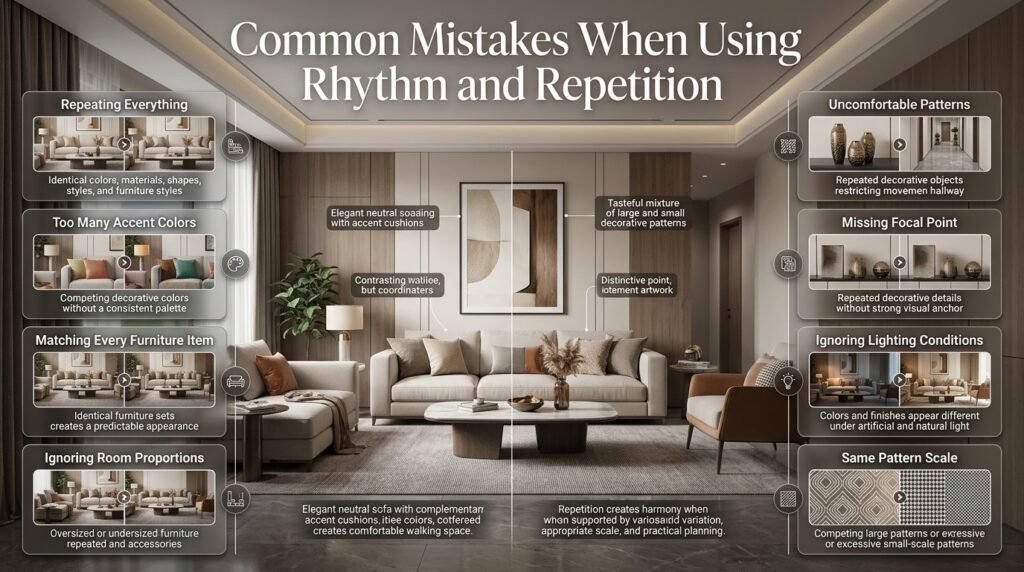
Even a useful design principle can create problems when applied without considering the room.
Repeating Everything
Using the same color, pattern, material, shape, and furniture style everywhere can make a home feel predictable.
Better approach: Choose two or three recurring design features and allow other elements to vary.
Using Too Many Accent Colors
Several unrelated accent colors can weaken the visual connection between objects.
Better approach: Select one dominant accent and use supporting colors carefully.
Matching Every Furniture Item
A complete matching furniture set may look coordinated, but it can also make the room feel less personal.
Better approach: Connect furniture through material, color, or shape rather than buying identical pieces.
Ignoring Room Proportions
A repeated object may look attractive in one room but feel too large or too small in another.
Better approach: Adjust the size and spacing of repeated elements to suit each room.
Creating Uncomfortable Patterns
A repeated arrangement should never interfere with daily movement.
For example, decorative furniture placed at regular intervals in a hallway may look organized but could reduce the available walking space.
Better approach: Prioritize circulation, access, and everyday use.
Using Repetition Without a Focal Point
A room can contain many repeated details but still lack a clear visual anchor.
Better approach: Establish a focal point first, then use repetition to guide attention around it.
Ignoring Lighting Conditions
Colors and materials can change appearance under different lighting.
Better approach: Test finishes in the actual room before repeating them throughout the home.
Repeating Patterns at the Same Scale
Several large patterns can compete, while several tiny patterns can create visual noise.
Better approach: Vary pattern scale and keep one pattern dominant.
Practical Steps to Plan Rhythm and Repetition
A simple planning process can prevent unnecessary purchases and design mistakes.
Step 1: Study the Existing Room
Before changing anything, identify the room’s main features.
Look at:
- Wall colors.
- Flooring.
- Furniture shapes.
- Window positions.
- Lighting.
- Architectural details.
- Existing materials.
Some elements may already create repetition. You may not need to introduce additional decorative features.
Step 2: Choose Your Repeating Elements
Select a few elements that can appear more than once.
These may include:
- One accent color.
- A natural material.
- A metal finish.
- A geometric shape.
- A particular texture.
Keep the selection manageable.
Step 3: Identify the Focal Point
Decide where attention should go first.
In a living room, the focal point may be a fireplace, a large window, or the main seating arrangement.
In a bedroom, it may be the bed or the wall behind it.
Repeated details should support the focal point instead of competing with it.
Step 4: Plan the Sequence
Think about where the repeated elements will appear.
For example, if warm wood is the main repeated material, it might appear in the coffee table, side table, and shelving.
Avoid placing every repeated item together. Spread the details naturally throughout the space.
Step 5: Adjust Scale and Spacing
Check the size of each object and the distance between them.
Repeated objects should be arranged with enough space to remain visually clear.
Step 6: Review the Room From Different Positions
Look at the room from its entrance, main seating position, and adjoining spaces.
Check whether the repeated elements create a natural visual connection.
If one area feels crowded, remove or reposition an item.
Step 7: Make Changes Gradually
Do not purchase every accessory at once.
Start with the larger elements, such as furniture, flooring, and lighting. Add smaller repeated details after the main composition is established.
This approach makes it easier to identify what the room actually needs.
Expert Tips for More Natural Visual Rhythm
Professional interior planning is not about making every detail match. It is about creating relationships between elements while maintaining comfort and individuality.
Repeat Materials More Often Than Decorative Objects
A repeated material can create continuity without making the room look overly styled.
For example, the same wood tone can appear in different furniture pieces without requiring identical shapes.
Use Repetition to Strengthen Architecture
Architectural details such as wall panels, ceiling beams, door frames, and built-in shelving can establish rhythm naturally.
If a room already has strong architectural features, use them as the starting point for the design.
Keep the Strongest Repetition Away From Cluttered Areas
If a surface already contains many objects, adding more repeated accessories may increase visual noise.
Choose clearer areas where the repeated detail can be noticed.
Think About Sound and Comfort Too
Interior harmony is not limited to what people see. A room should also feel comfortable to use.
In hospitality spaces, repeated hard surfaces and large open areas can contribute to sound reflection. Soft furnishings, acoustic materials, and suitable layouts help create a more comfortable environment.
For additional planning considerations, read Hospitality Interior Acoustic Planning.
Plan Before Starting Renovation Work
If rhythm and repetition require changes to flooring, lighting, cabinetry, or wall finishes, organize the work before construction begins.
A clear sequence helps prevent mismatched materials and unnecessary rework.
The guide to a Renovation Work Order for Homeowners can support better project planning.
How to Keep Rhythm and Repetition Personal
A home should reflect the people who use it. Design principles are useful, but they should not make the interior feel generic.
Include Meaningful Objects
Personal objects can become part of the visual rhythm when their colors, materials, or shapes relate to the wider design.
A collection of travel souvenirs, family books, or handmade accessories can feel organized when displayed with a consistent approach.
Combine Old and New Pieces
A modern room can include vintage furniture, handmade ceramics, or traditional textiles.
Repeated colors or materials can connect these different pieces.
Avoid Following Every Trend
A repeated design feature should be selected because it suits the room, not simply because it is currently popular.
A trend may work in one home but feel unsuitable in another.
Make Room for Change
A good interior should be adaptable.
Choose repeated elements that are relatively easy to update, such as cushions, accessories, and artwork. Keep more permanent decisions, such as flooring and built-in finishes, practical and timeless.
For additional ideas about planning and improving a home, explore Home Improvement.
Rhythm and Repetition in Different Interior Styles
These principles can work with almost any decorating style. The details change, but the purpose remains the same: create visual connections and guide the eye.
Modern Interiors
Modern interiors often use repeated lines, simple shapes, restrained colors, and consistent finishes.
A repeated black metal detail or a sequence of linear lighting fixtures can establish rhythm without adding unnecessary decoration.
Minimalist Interiors
Minimalist spaces benefit from subtle repetition.
Similar materials, consistent proportions, and carefully spaced furniture can create visual order.
Because there are fewer objects, each repeated element becomes more noticeable.
Traditional Interiors
Traditional rooms may use repeated patterns, symmetrical furniture arrangements, decorative moldings, and consistent wood finishes.
The repetition can create a sense of formality and familiarity.
Scandinavian-Inspired Interiors
Scandinavian-inspired spaces often use light wood, neutral colors, natural textures, and simple shapes.
Repeating these materials and colors can create a calm and connected atmosphere.
Eclectic Interiors
Eclectic interiors combine different styles, materials, and periods.
Repetition is particularly useful here because it connects objects that might otherwise feel unrelated.
A repeated accent color, shared material, or similar shape can help create a coherent composition.
Decorating With Repetition on a Realistic Budget
A visually connected room does not require expensive furniture or a complete renovation.
Small, thoughtful changes can establish rhythm without unnecessary spending.
Reuse What You Already Own
Look for existing colors, materials, and shapes that can be repeated.
A wooden tray, an existing side table, and a frame with a similar finish may already create a useful connection.
Update Small Details
Changing cabinet handles, cushion covers, lampshades, or selected accessories can introduce repetition without replacing large furniture items.
Shop With a Plan
Before buying anything, write down the elements you want to repeat.
This reduces impulse purchases and helps avoid collecting items that do not work together.
Use DIY Projects Carefully
Simple DIY projects can help introduce consistent finishes or decorative details.
For example, a homeowner may refinish selected wooden accessories in a related tone or update a few cabinet handles.
For practical project inspiration, explore DIY Home Projects.
Organize Before Adding More Decor
Sometimes a room needs fewer objects rather than more.
Rearranging furniture, removing unnecessary accessories, and improving storage can make existing repeated elements more visible.
Styling Open Shelves With Rhythm and Repetition
Open shelves provide a useful opportunity to create visual rhythm because objects are displayed in a visible sequence.
However, shelves can quickly become cluttered if every available space is filled.
Group Objects With a Shared Feature
Objects can be grouped through color, material, shape, or purpose.
For example, a shelf might include a few ceramic pieces, books with related colors, and one natural material accessory.
Vary Heights
Use objects of different heights to create a more natural arrangement.
A taller vase, a medium-sized stack of books, and a smaller decorative object can create a balanced composition.
Leave Empty Space
Empty space is part of the arrangement. It allows individual objects to stand out and prevents the shelf from looking overcrowded.
Repeat Selected Details Across Shelves
A similar color or material can appear on different shelves to create a connection.
For more practical advice, see Styling Open Shelves Without Clutter.
Modern Technology and Rhythm in Interior Spaces
Technology can influence the way a home looks and functions. Smart lighting, automated window treatments, integrated speakers, and connected controls may become part of the interior design.
The important point is to make technology feel integrated rather than visually disconnected.
Keep Controls and Finishes Consistent
Where possible, use a consistent finish for visible switches, control panels, and hardware.
This can help technology blend with the rest of the interior.
Use Lighting Scenes to Support Different Activities
Smart lighting can create different moods for reading, relaxing, entertaining, and working.
The lighting fixtures do not need to change, but the light levels can adapt to the room’s use.
Keep Technology Visually Subtle
Avoid allowing wires, oversized devices, and unrelated accessories to interrupt the design.
Plan storage and equipment locations early so practical requirements do not damage the visual composition.
For more ideas about integrating technology into home design, explore How to Set Up My Home Decoradtech.
How to Evaluate Whether Your Design Has Enough Rhythm
Once the room is arranged, review it from the perspective of someone entering the space for the first time.
Ask yourself whether the main design elements feel connected and whether the room is comfortable to use.
Use these questions as a practical review:
- Is there a clear focal point?
- Do selected colors appear in more than one location?
- Are materials connected without matching everything?
- Does the furniture arrangement allow comfortable movement?
- Are repeated shapes balanced by enough variation?
- Do the lighting fixtures support the room’s layout?
- Can the eye move naturally from one area to another?
- Are any repeated accessories unnecessary?
- Do adjoining rooms feel connected?
- Does the space still reflect personal taste?
If the room feels crowded, remove a few decorative objects. If it feels disconnected, identify one material, color, or shape that could create a stronger relationship.
How Do You Use Rhythm and Repetition in Interior Design Without Making a Room Look Boring?
The secret is to repeat selected design elements while introducing enough variation to keep the room interesting. Rhythm and repetition should create a visual connection, not make every piece of furniture, accessory, or decoration look identical. For example, you can repeat a warm wood finish in your coffee table, side tables, and shelving while choosing different shapes and sizes for each piece. This creates consistency without making the room feel like a furniture showroom.
Another effective approach is to repeat colors through different materials. A muted green might appear in cushions, artwork, a ceramic vase, and a small decorative detail. Because the objects have different purposes and textures, the repeated color feels natural rather than forced.
Practical ways to maintain visual interest:
Repeat two or three design elements instead of matching everything.
Combine smooth, rough, soft, and natural textures.
Use different object sizes to create visual variation.
Introduce one distinctive focal point.
Leave some empty space so repeated details can stand out.
What Are the Different Types of Rhythm in Interior Design, and How Do They Affect a Room?
Rhythm in interior design refers to the visual movement created by arranging design elements in a recognizable sequence. It helps guide the eye through a room and makes the overall composition feel organized. Different types of rhythm create different effects, so choosing the right one depends on the room’s size, layout, and decorating style.
Repetition rhythm uses the same element more than once, such as matching wall lights along a hallway. Alternating rhythm combines two or more elements in a sequence, while progressive rhythm gradually changes an element’s size, color, or shape. Transitional rhythm creates a smooth connection between different features, and flowing rhythm uses curved or continuous forms to create softer movement.
Common types of interior rhythm include:
Repetition: Reusing the same color, shape, material, or object.
Alternation: Arranging two or more elements in a repeated sequence.
Progression: Gradually changing size, color, or proportion.
Transition: Connecting different elements through gradual visual changes.
Flowing rhythm: Using curved lines and organic shapes to guide the eye.
For example, a hallway with regularly spaced wall lights uses repetition, while a living room with rounded furniture and curved decorative details can create flowing rhythm.
How Can Rhythm and Repetition Make an Open-Plan Living Space Look More Connected?
Open-plan interiors can sometimes feel disconnected because the kitchen, dining area, and living room serve different purposes but share one continuous space. Rhythm and repetition help create a visual relationship between these zones without making them look exactly alike.
A practical solution is to repeat selected materials, colors, or finishes across the different areas. For instance, natural wood might appear in the kitchen cabinetry, dining furniture, and living room shelving. Similarly, a black metal finish could connect kitchen handles, dining room lighting, and selected living room accessories.
The important thing is to maintain a shared design direction while allowing each zone to have its own identity. A rug can define the seating area, pendant lighting can highlight the dining table, and consistent flooring can connect the entire layout.
Useful ways to create continuity:
Repeat one or two materials across adjoining areas.
Use a shared color palette throughout the open-plan space.
Connect furniture through similar shapes or finishes.
Use rugs and lighting to identify different functional zones.
Maintain comfortable walking routes between areas.
Avoid introducing too many unrelated patterns and finishes.
How Do You Create Rhythm and Repetition in a Small Room Without Making It Feel Cluttered?
Small rooms need a more controlled approach because every piece of furniture and decoration has a noticeable effect on the overall appearance. Repeating too many accessories, patterns, or colors can make a compact space feel crowded. Instead, focus on a few details that create consistency without taking up unnecessary visual or physical space.
For example, a small bedroom might use the same light wood finish for the bedside tables and wardrobe details. A neutral color palette can connect the bedding, curtains, and walls, while one accent color adds personality through a few carefully selected accessories.
Vertical repetition can also help guide the eye upward. Tall curtains, vertical shelving, and repeated linear details can make the room feel more structured without requiring additional floor space.
Smart design strategies for small rooms:
Limit the palette to a few complementary colors.
Repeat materials through existing furniture and finishes.
Choose simple patterns rather than several competing designs.
Use vertical lines to create a sense of height.
Avoid filling every shelf and available surface.
Prioritize furniture scale and clear walking space.
A small room does not need more decoration to feel complete. It needs a clear arrangement in which every repeated detail has a purpose.
What Is the Best Way to Choose Colors, Textures, and Materials for Repetition Throughout a Home?
The best approach is to establish a simple whole-home design direction before selecting individual decorative items. Start with a main color palette, then choose a few supporting materials and finishes that can appear in different rooms. This creates continuity while allowing each space to have its own atmosphere.
For example, a home might use warm white as its main wall color, natural wood as a recurring material, and matte black as a selected accent finish. The living room could introduce these elements through furniture and lighting, while the bedroom uses them through bedside tables, wardrobe details, and accessories.
Texture is equally important because repeating only colors can sometimes make an interior feel flat. Combining linen, wood, ceramic, stone, woven fabrics, and upholstered surfaces introduces depth while maintaining a connected design.
A practical selection process:
Choose one dominant color direction for the home.
Select two or three supporting materials.
Repeat metal finishes in selected fixtures and hardware.
Introduce different textures to prevent a flat appearance.
Check paint and material samples under actual room lighting.
Adapt the repeated elements to each room’s size and function.
The aim is to create a recognizable relationship between rooms, not to make every space look the same. When colors, textures, and materials are selected thoughtfully, the entire home feels more balanced and professionally planned.
Conclusion
Rhythm and repetition in interiors are essential design principles that help create visual harmony, balance, and a natural flow throughout a home. By repeating selected colors, materials, shapes, textures, and decorative details, you can connect different elements without making every room look identical. The key is to understand how these details work together and use them in a way that supports the room’s layout, purpose, and overall style.
A successful interior does not depend on filling every corner with matching furniture or repeated accessories. It comes from making thoughtful choices, maintaining comfortable proportions, and introducing enough variation to keep the design interesting. Whether you are decorating a small bedroom, arranging an open-plan living area, or creating consistency between several rooms, a well-planned approach to rhythm and repetition can make the entire home feel more organized and welcoming.
Start with a simple color palette, select a few recurring materials, and repeat shapes or patterns where they naturally belong. Pay attention to lighting, furniture placement, and empty space so that each element has room to stand out. When these principles are applied with care, your home can achieve a balanced appearance that feels cohesive, comfortable, and timeless rather than overly coordinated.