Introduction
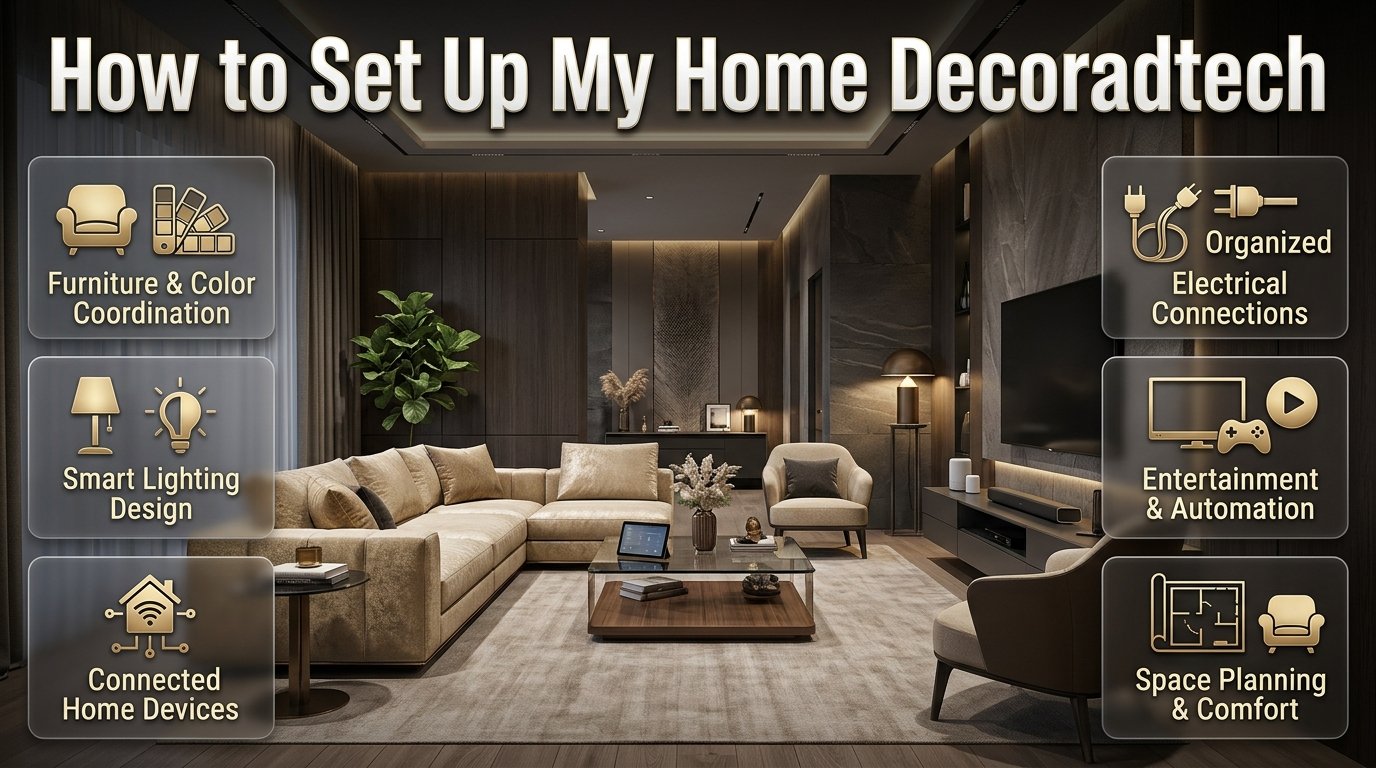
How to Set Up My Home Decoradtech | A beautiful home should do more than look attractive. It should also make everyday activities easier, provide comfort, support your lifestyle, and use available space effectively. However, many homeowners struggle when trying to combine modern decoration with smart technology. They purchase attractive furniture, install smart devices, add decorative lighting, and introduce connected appliances without considering how everything will work together.
If you’re wondering how to set up my home decoradtech, the best approach is to treat interior design and technology as parts of one complete home improvement plan. Decoradtech brings together decorative styling, practical interior design, smart lighting, connected devices, entertainment systems, and home automation.
The goal isn’t to turn your house into a collection of electronic gadgets. It’s to create an environment where technology feels natural, furniture serves a clear purpose, lighting supports different activities, and decorative choices make the home comfortable.
Whether you’re furnishing a new property, upgrading an existing apartment, or improving one room at a time, a thoughtful plan can help you achieve better results without unnecessary spending.
In this guide, we’ll explain how to plan a decoradtech setup, select suitable furniture and colors, introduce smart technology, organize electrical connections, improve lighting, manage costs, and avoid common mistakes. You’ll also learn how to create a consistent design throughout your home while keeping everyday maintenance manageable.
For additional residential design inspiration, explore DesignMode24 Interior Design.
What Is Home Decoradtech and How Does It Work?
Home decoradtech is an approach to residential living that combines decorative design with practical technology. It considers how furniture, colors, lighting, connected devices, electrical systems, and household activities can work together to create a comfortable and functional interior.
Instead of decorating a room first and adding technology afterward, you consider both requirements during the planning process.
For example, imagine a living room with a comfortable sofa, natural wood furniture, neutral walls, and carefully selected accessories. You can introduce smart lighting, a wall-mounted television, concealed cable management, wireless speakers, and automated curtains without disturbing the room’s visual balance.
The technology supports the room rather than competing with its decoration.
Why Are Homeowners Interested in Decoradtech?
Modern households increasingly expect their homes to support multiple activities. A living room may serve as an entertainment area, family gathering space, and occasional workspace. A bedroom may need comfortable lighting, convenient charging points, and temperature controls.
Decoradtech helps coordinate these requirements.
Its main advantages include:
- Better convenience: Compatible devices can make lighting, entertainment, and selected household controls easier to manage.
- Improved appearance: Technology can be incorporated into furniture arrangements and decorative features.
- More functional spaces: Proper planning helps rooms support their intended activities.
- Flexible lighting: Different lighting settings can accommodate working, relaxing, reading, and entertainment.
- Better organization: Cable management and suitable storage reduce visible clutter.
- Energy management: Smart schedules and sensors can help prevent unnecessary electricity consumption.
- Long-term flexibility: Thoughtful infrastructure makes future improvements easier.
However, adding technology doesn’t automatically improve an interior. A room filled with incompatible devices, exposed cables, and excessive lighting can become less comfortable than a simple, well-organized room.
The important decision is choosing technology that solves actual household problems.
How to Plan Your Home Decoradtech Setup Before Buying Anything
The first stage should be planning, not shopping. Many expensive mistakes happen because homeowners purchase equipment before understanding their room dimensions, electrical requirements, internet coverage, and furniture arrangements.
A proper plan gives every purchase a purpose.
1. Evaluate Your Existing Home Layout
Walk through your home and observe how each room is currently used.
Look at the position of doors, windows, electrical outlets, furniture, lighting fixtures, and available storage. Notice areas where movement feels restricted or where technology could improve convenience.
Ask yourself:
- Which rooms need better lighting?
- Where do you regularly charge electronic devices?
- Are there enough electrical outlets?
- Does the furniture arrangement support comfortable movement?
- Are televisions and entertainment equipment positioned properly?
- Does your Wi-Fi connection reach every important area?
- Are there decorative features that deserve better lighting?
Write down the improvements you want to make.
A room-by-room assessment can help you avoid buying equipment that doesn’t suit your actual requirements.
2. Identify Your Household’s Priorities
Different households have different expectations.
A family that spends considerable time watching television may prioritize entertainment equipment and comfortable seating. Someone working remotely may need better desk lighting, reliable internet, and convenient charging access.
A household with children may prioritize practical storage and suitable safety features.
Divide your requirements into three groups:
Essential improvements
- Functional lighting.
- Reliable internet.
- Appropriate furniture.
- Sufficient electrical access.
- Organized storage.
Convenience upgrades
- Smart bulbs.
- Compatible smart switches.
- Automated curtains.
- Smart speakers.
- Connected entertainment equipment.
Optional improvements
- Advanced home automation.
- Smart mirrors.
- Integrated security systems.
- Specialized sensors.
- Automated climate controls.
This approach prevents optional purchases from taking priority over important improvements.
3. Measure Every Room Before Purchasing Furniture
Measurements are essential when planning a technology-friendly interior.
Record the length and width of each room, ceiling height, door openings, window positions, and available wall space.
Also measure the furniture and electronic equipment you intend to purchase.
For example, a television console should have enough space for the television accessories, media players, and cable connections. A desk should provide sufficient surface area for monitors, keyboards, and other equipment.
Consider walking clearance as well.
A beautiful room can become uncomfortable when furniture blocks movement or makes doors difficult to open.
4. Establish a Realistic Budget
A decoradtech project involves more than buying smart devices.
You may need furniture, decorative materials, electrical work, lighting fixtures, internet equipment, installation services, and storage solutions.
A useful budget structure includes:
| Category | Expenses to consider |
|---|---|
| Interior design | Paint, wallpaper, furniture and decorative materials |
| Lighting | Ceiling fixtures, lamps, smart bulbs and switches |
| Smart technology | Sensors, speakers, hubs and connected devices |
| Entertainment | Television, speakers and media equipment |
| Electrical work | Outlets, wiring and professional installation |
| Organization | Storage, cable trays and charging stations |
| Maintenance | Replacement parts and future upgrades |
Keep some money available for unexpected installation requirements.
Professional recommendation: Complete essential electrical and infrastructure work before spending heavily on decorative accessories.
How to Choose an Interior Design Style for Decoradtech

Your chosen interior style influences which furniture, materials, colors, fixtures, and devices will look appropriate.
A consistent design direction makes it easier to combine traditional decoration with modern technology.
1. Modern Minimalist Interior Design
Modern minimalism focuses on simplicity, useful furniture, clean surfaces, and limited decorative accessories.
It works particularly well when you want smart technology to remain visually discreet.
Consider:
- Neutral wall colors.
- Simple furniture shapes.
- Concealed cable arrangements.
- Recessed or adjustable lighting.
- Compact entertainment equipment.
- Built-in storage.
Avoid filling every available surface with decorative objects or electronic accessories.
The purpose of minimalism is not to remove everything. It is to retain the items that contribute to comfort and functionality.
2. Japandi Interior Design
Japandi combines Japanese-inspired simplicity with Scandinavian warmth.
It uses natural materials, practical furniture, neutral colors, and a calm atmosphere.
Technology can be incorporated through subtle lighting, discreet controls, and carefully positioned entertainment equipment.
Natural oak furniture, linen curtains, warm lighting, and simple decorative objects create an environment where modern devices don’t dominate the room.
For more detailed guidance, explore Japandi lighting composition.
3. Contemporary Interior Design
Contemporary interiors offer flexibility for modern furniture, connected appliances, entertainment systems, and decorative lighting.
You can combine different materials, textures, and finishes while maintaining a coordinated appearance.
For example, a contemporary living room might include:
- A neutral sofa.
- A textured feature wall.
- A television with organized cable management.
- Adjustable ceiling lighting.
- Metallic decorative accessories.
- A compact smart speaker.
The key is maintaining balance between visual interest and everyday usability.
4. Traditional Interiors With Modern Technology
You don’t have to replace traditional furniture to introduce smart home features.
Classic wooden cabinets, traditional decorative pieces, and existing architectural details can work alongside modern controls and connected equipment.
Choose discreet devices, compatible finishes, and suitable installation locations.
For historical context and inspiration, read history of changing residential interiors.
How to Choose Colors, Furniture and Materials That Work Together
A successful decoradtech arrangement needs a consistent visual foundation.
Technology products are available in black, white, silver, metallic, and other finishes. Furniture and decorative materials should complement these elements without making every item look identical.
1. Create a Balanced Color Palette
Start with a small selection of colors.
A practical approach is to choose:
- One main wall color.
- One or two complementary furniture colors.
- A suitable accent color.
- Natural or metallic finishes where appropriate.
For example, warm white walls, oak furniture, beige upholstery, and black electronic accessories can create a balanced contemporary appearance.
If you prefer a darker interior, charcoal walls and walnut furniture can work with carefully selected metallic fixtures.
Consider how natural and artificial lighting affect the colors throughout the day.
A shade that looks warm in daylight may appear different under cool artificial lighting.
For additional guidance, explore coordinating paint with natural wood.
2. Select Furniture That Supports Technology
Furniture should provide practical space for devices without making rooms feel overcrowded.
Before buying a television cabinet, desk, bedside table, or storage unit, consider:
- Device dimensions.
- Cable openings.
- Electrical access.
- Ventilation.
- Charging requirements.
- Storage capacity.
- Ease of cleaning.
A media cabinet with appropriate cable openings is often more practical than a completely enclosed cabinet.
Similarly, a desk with integrated cable management can make a home office easier to maintain.
3. Use Materials According to Their Purpose
Different materials serve different functions.
Wood adds warmth and visual character. Glass can make smaller spaces feel lighter. Metal provides a contemporary finish, while natural fabrics soften the appearance of electronic equipment.
However, material selection should also consider maintenance and durability.
For example, avoid placing delicate materials in locations where they may regularly experience moisture or excessive heat.
In kitchens and bathrooms, choose surfaces appropriate for the environmental conditions.
4. Avoid Overdecorating Technology Areas
Television walls, charging stations, and computer desks can become visually crowded.
Keep these areas organized.
Use storage for accessories, controllers, chargers, and spare cables. Limit decorative objects around frequently used equipment.
A simple arrangement often looks more refined than a crowded display.
How to Set Up Smart Lighting in Your Home Decoradtech
Lighting is one of the most important parts of a successful decoradtech arrangement.
It influences visibility, comfort, atmosphere, and the appearance of furniture and decorative materials.
Instead of relying on one ceiling light, combine different lighting types according to the activities performed in each room.
1. Understand Ambient Lighting
Ambient lighting provides the general illumination required for everyday movement and activities.
Common options include:
- Ceiling-mounted fixtures.
- Recessed downlights.
- Flush-mounted lights.
- Pendant fixtures.
- Suitable indirect lighting.
Choose fixtures according to ceiling height, room dimensions, and the required brightness.
A small bedroom doesn’t necessarily need a large decorative chandelier. Similarly, a spacious living room may require multiple lighting sources.
2. Introduce Task Lighting
Task lighting provides focused illumination for specific activities.
Examples include:
- Desk lamps.
- Reading lights.
- Kitchen counter lighting.
- Bathroom vanity lighting.
- Workbench lighting.
The position of task lighting matters.
For example, a desk lamp should provide sufficient illumination without creating distracting reflections on a computer screen.
In a kitchen, under-cabinet lighting can make food preparation areas easier to use.
3. Use Accent Lighting Carefully
Accent lighting highlights particular decorative features.
You can use it to emphasize:
- Artwork.
- Open shelves.
- Architectural details.
- Feature walls.
- Decorative niches.
- Selected furniture.
LED strips and picture lights are useful options when installed appropriately.
Avoid placing decorative lighting everywhere. Too many illuminated features can make an interior visually uncomfortable.
4. Choose Suitable Smart Bulbs and Switches
Smart bulbs and switches allow compatible lighting to be controlled through applications, schedules, or automation.
However, they work differently.
| Feature | Smart bulbs | Smart switches |
|---|---|---|
| Installation | Usually straightforward | May require electrical work |
| Individual bulb control | Often supported | Depends on circuit |
| Existing wall switch | Usually needs to remain powered | Replaces a compatible switch |
| Best application | Lamps and individual fixtures | Suitable lighting circuits |
| Compatibility | Depends on bulb and platform | Depends on wiring and platform |
Check manufacturer requirements before purchasing.
Some smart switches require a neutral wire, while others support different wiring arrangements.
Electrical modifications should be completed by a qualified electrician.
5. Create Different Lighting Scenes
Lighting scenes allow several compatible devices to work together.
You could create settings for:
Morning routine: Comfortable, brighter illumination.
Working hours: Focused lighting around desks and work areas.
Relaxation: Warm, reduced lighting in the living room.
Entertainment: Dimmed ambient lighting with suitable accent lights.
Nighttime: Soft illumination around important walkways.
These scenes can make the same room more adaptable without changing furniture or decorative arrangements.
How to Choose the Right Smart Home Technology

Technology should be selected according to your actual requirements, not advertising claims.
Before purchasing any device, understand its purpose, connectivity, compatibility, operating requirements, and maintenance needs.
1. Select a Smart Home Platform
A smart home platform provides a way to manage compatible connected devices.
Popular options include Amazon Alexa, Google Home, and Apple Home.
Consider:
- Which smartphones and operating systems your household uses.
- Whether the devices you want are supported.
- Whether voice control is important.
- Which automation features are available.
- Whether a hub is required.
- How the system handles privacy and security.
Matter is another important smart home connectivity standard designed to improve interoperability between compatible devices.
However, compatibility does not mean that every device supports every feature across all platforms.
Always verify the manufacturer’s specifications.
2. Add Smart Plugs Where Appropriate
Smart plugs can make selected ordinary electrical appliances easier to control.
For example, a compatible table lamp can be scheduled to switch on in the evening.
Before purchasing, check:
- Maximum supported electrical load.
- Voltage and plug compatibility.
- Appliance requirements.
- Manufacturer safety instructions.
- Whether the appliance safely resumes operation after power is restored.
Don’t assume every high-power appliance is suitable for a smart plug.
3. Consider Smart Speakers
Smart speakers can provide voice control, music playback, reminders, and access to compatible home automation features.
Place them where microphones and speakers have enough open space.
Avoid hiding them inside closed cabinets because this can affect sound and microphone performance.
Review privacy settings and microphone permissions before using voice-controlled services.
4. Introduce Smart Security Devices
Security devices can help homeowners monitor selected areas and receive notifications.
Common options include:
- Video doorbells.
- Motion sensors.
- Smart door sensors.
- Compatible security cameras.
- Smart locks.
Choose equipment according to your property and security requirements.
Pay particular attention to privacy, recording permissions, account security, and installation requirements.
5. Upgrade Appliances Only When Necessary
Smart refrigerators, washing machines, air conditioners, and other connected appliances can offer useful features.
However, replacing a functional appliance solely to obtain internet connectivity may not be financially sensible.
Compare the actual benefits, purchase price, warranty, energy requirements, and expected maintenance.
Choose features that solve a genuine problem.
How to Set Up Decoradtech Room by Room
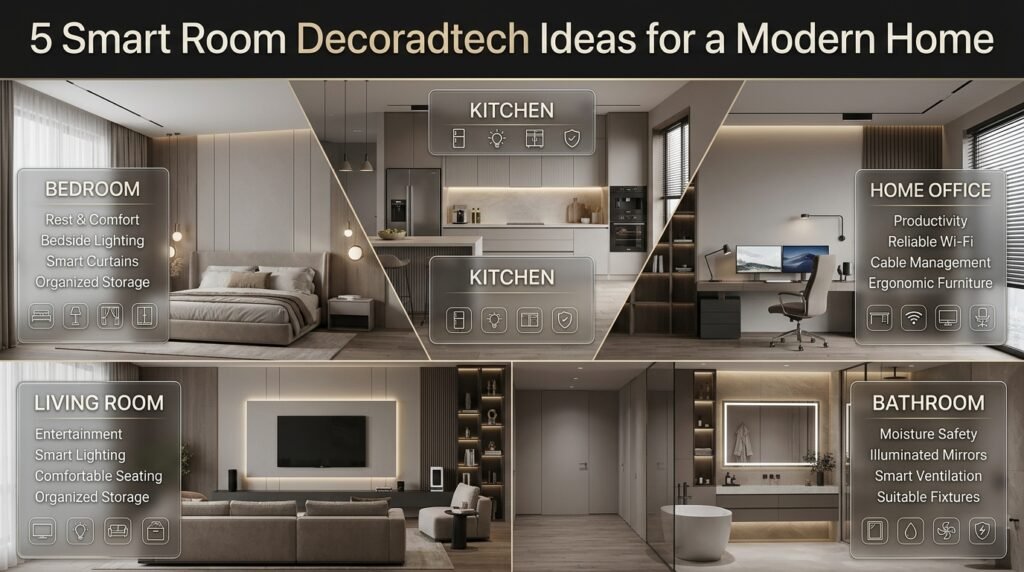
Every room has a different purpose, so technology and decorative choices should be adjusted accordingly.
1. Living Room: Combine Entertainment and Comfort
The living room often serves as the main family gathering and entertainment area.
Begin by choosing a clear focal point.
This could be a television wall, fireplace, large window, or architectural feature.
Arrange seating around the main activity while maintaining comfortable walking space.
Useful decoradtech improvements include:
- Wall-mounted television with suitable cable management.
- Adjustable ambient lighting.
- Comfortable seating.
- Wireless speakers.
- A suitable charging station.
- Organized storage for remote controls.
- Reliable network coverage.
Avoid placing electronic equipment inside enclosed furniture without adequate ventilation.
Also consider window glare when positioning the television.
For help planning the room’s main visual feature, explore room focal point planning principles.
2. Bedroom: Prioritize Rest and Personal Comfort
A bedroom should provide a relaxing environment.
Choose furniture and lighting that support comfortable daily routines.
Useful improvements include:
- Adjustable bedside lighting.
- Smart bulbs or compatible switches.
- Convenient charging outlets.
- Suitable curtains or automated blinds.
- Organized storage.
- Comfortable temperature controls.
Avoid excessive decorative lighting and unnecessary electronic indicators near the bed.
Keep the bedroom visually calm by limiting devices to those that provide genuine value.
3. Kitchen: Focus on Practicality and Safety
A smart kitchen should make everyday activities more convenient.
Consider under-cabinet lighting, organized appliance storage, and suitable connected equipment.
Useful improvements include:
- Better illumination around preparation areas.
- Convenient electrical access.
- Suitable smart appliances.
- Organized countertop equipment.
- Practical storage.
- Proper ventilation.
Never position electrical equipment where it may be exposed to water, excessive heat, or unsuitable environmental conditions.
4. Home Office: Improve Productivity
A home office should combine comfortable furniture, appropriate lighting, and reliable connectivity.
Start with a suitable desk and supportive chair.
Then consider:
- Adjustable task lighting.
- Reliable Wi-Fi.
- Cable management.
- Appropriate monitor placement.
- Convenient charging access.
- Suitable power protection.
- Organized storage.
Keep frequently used accessories accessible without overcrowding the work surface.
5. Bathroom: Pay Attention to Moisture Safety
Bathrooms require careful material and electrical planning.
Useful improvements may include suitable illuminated mirrors, humidity-sensing ventilation, and appropriately rated lighting.
Always select equipment designed for the relevant wet or damp location.
Follow applicable electrical safety requirements and use qualified professionals for installation.
How to Organize Wiring, Wi-Fi and Electronic Equipment
A beautiful interior can lose its appeal when cables, routers, and electronic accessories are scattered around the room.
Cable management and network planning should therefore be included in the original design.
1. Plan Electrical Access Before Installing Furniture
Identify where televisions, computers, lamps, and charging stations will be positioned.
Make sure suitable outlets are available.
If additional outlets or permanent wiring are required, arrange the work before furniture installation.
Avoid relying on multiple extension boards to solve an inadequate electrical layout.
2. Use Appropriate Cable Management
Useful solutions include:
- Cable trays under desks.
- Suitable wall conduits.
- Cable sleeves.
- Furniture with cable openings.
- Organized charging stations.
- Properly installed cable channels.
Keep electrical connections accessible and follow installation requirements.
Never hide electrical equipment in a space where heat can accumulate.
3. Improve Wi-Fi Coverage
Smart devices depend on reliable connectivity.
Place the router in a suitable location rather than hiding it inside a metal cabinet or placing it behind large obstructions.
Practical improvements include:
- Positioning the router centrally where possible.
- Testing connectivity in different rooms.
- Reducing unnecessary physical obstructions.
- Updating router firmware.
- Considering mesh networking for larger homes.
- Securing connected devices with appropriate passwords.
A strong connection in the living room doesn’t guarantee reliable coverage in distant bedrooms.
Test the areas where your devices will actually operate.
4. Provide Ventilation for Electronic Equipment
Televisions, gaming consoles, routers, and other electronic equipment produce heat.
Allow sufficient airflow around ventilation openings.
Don’t stack equipment in ways that block cooling.
Check manufacturer recommendations for cabinets and mounting arrangements.
How to Make Your Home Decoradtech Energy Efficient
Smart technology can help manage electricity use when devices are configured correctly.
The most useful improvements are usually simple and based on actual household routines.
1. Use Lighting Schedules
Schedules can switch compatible lights on and off according to your daily activities.
For example, outdoor lighting might operate during selected evening hours, while bedroom lighting follows a comfortable nighttime schedule.
Avoid leaving unnecessary lights running throughout the day.
2. Introduce Motion Sensors
Motion sensors can control suitable lights in areas such as hallways, storage rooms, and selected entrances.
Adjust sensor sensitivity and timing according to how the space is used.
A light that switches off too quickly can become frustrating, while a poorly positioned sensor may activate unnecessarily.
3. Use Natural Daylight
Natural daylight can reduce the need for artificial lighting during daytime hours.
Choose window treatments that allow suitable daylight while controlling glare and heat.
Avoid placing large furniture pieces where they unnecessarily block important windows.
4. Monitor Actual Electricity Consumption
Some compatible devices provide energy monitoring.
Use this information to identify equipment that consumes unnecessary electricity.
Remember that smart technology also uses electricity, so the overall benefit depends on the devices selected and how they are operated.
How to Set Up My Home Decoradtech on a Limited Budget
A modern home doesn’t require a complete renovation or expensive automation system.
You can create a practical setup by upgrading essential areas gradually.
Start With Affordable Improvements
Consider these options:
- Replace unsuitable bulbs with efficient lighting.
- Organize exposed cables.
- Rearrange furniture.
- Improve natural lighting.
- Add a practical desk lamp.
- Organize electronic accessories.
- Introduce selected smart plugs.
- Use existing storage more effectively.
These improvements can make a noticeable difference without requiring a major investment.
Upgrade One Room at a Time
Instead of purchasing everything together, select one room and complete its improvements.
For example, a living room project might include:
- Measuring the room.
- Rearranging furniture.
- Improving the television position.
- Organizing cables.
- Adding suitable lighting.
- Introducing compatible smart controls.
- Testing the finished arrangement.
Once the room works properly, move to another area.
Compare Essential and Optional Purchases
| Priority | Improvement | Reason |
|---|---|---|
| High | Reliable electrical access | Supports safe equipment use |
| High | Appropriate lighting | Improves everyday functionality |
| High | Comfortable furniture | Supports regular activities |
| Medium | Smart bulbs | Adds lighting flexibility |
| Medium | Cable management | Reduces visual clutter |
| Optional | Smart mirrors | Specialized convenience |
| Optional | Advanced automation | Useful for specific requirements |
This helps prevent unnecessary purchases from consuming your available budget.
For practical improvement ideas, visit Home Improvement.
How to Maintain Visual Balance in a Decoradtech Interior
One of the biggest challenges is preventing technology from taking over the room.
A television, speaker, charging station, smart display, router, and lighting controls can become distracting when they are not planned carefully.
1. Keep Important Surfaces Organized
Coffee tables, bedside tables, kitchen counters, and desks should remain practical.
Avoid covering every available surface with electronic accessories and decorative objects.
Use suitable storage for equipment that isn’t needed every day.
2. Style Open Shelves Carefully
Open shelves can display books, decorative objects, and selected technology accessories.
However, overcrowding makes them difficult to maintain.
Group similar objects, leave some open space, and avoid mixing too many competing finishes.
For additional guidance, read styling open shelves without clutter.
3. Maintain Consistency Between Rooms
Your home doesn’t need identical furniture in every room.
However, maintaining a relationship between colors, finishes, lighting styles, and materials helps create a connected interior.
For example, you might repeat warm wood finishes in the living room and bedroom while using similar neutral tones throughout the property.
Explore styling principles for visually balanced homes for more practical ideas.
4. Choose Timeless Features Over Temporary Trends
Technology changes quickly, but furniture, flooring, and major decorative finishes are often expensive to replace.
Choose durable materials and adaptable furniture for permanent design decisions.
You can introduce changing trends through smaller accessories, lighting settings, and replaceable decorative pieces.
For more inspiration, explore characteristics of timeless interiors.
Common Decoradtech Mistakes and How to Avoid Them
Even a well-intentioned project can become expensive or inconvenient when basic planning is overlooked.
1. Buying Devices Before Checking Compatibility
Why it happens: Attractive advertisements encourage people to purchase individual products without considering their existing equipment.
Why it’s harmful: Devices may require different applications, hubs, or unsupported connections.
How to avoid it: Check compatibility, connectivity, operating requirements, and supported features before purchasing.
2. Ignoring Furniture Measurements
Why it happens: Buyers focus on the appearance of furniture rather than its dimensions.
Why it’s harmful: Equipment may not fit properly, and furniture can restrict movement.
How to avoid it: Measure rooms, furniture, and electronic equipment before ordering.
3. Using Too Much Decorative Lighting
Why it happens: Color-changing lights and illuminated surfaces appear attractive in promotional photographs.
Why it’s harmful: Excessive lighting can create glare and make the room uncomfortable.
How to avoid it: Establish practical ambient and task lighting before introducing accent fixtures.
4. Ignoring Electrical Safety
Why it happens: Homeowners sometimes treat electrical connections as minor decorative details.
Why it’s harmful: Poor wiring, unsuitable equipment, and overloaded connections can create serious hazards.
How to avoid it: Follow manufacturer instructions, local electrical requirements, and professional installation recommendations.
5. Overcomplicating Automation
Why it happens: People attempt to automate every possible household activity.
Why it’s harmful: Complicated routines may become difficult to manage and troubleshoot.
How to avoid it: Start with a few useful routines and expand only when necessary.
6. Neglecting Device Privacy
Why it happens: Convenience receives more attention than account security.
Why it’s harmful: Poorly protected connected devices may expose personal information.
How to avoid it: Use strong passwords, multifactor authentication, software updates, and appropriate privacy permissions.
7. Spending on Technology Instead of Essential Improvements
Why it happens: Advanced devices can seem more exciting than practical furniture or electrical upgrades.
Why it’s harmful: You may end up with expensive equipment in an uncomfortable or poorly organized room.
How to avoid it: Complete essential design and infrastructure improvements first.
Professional Recommendations for a Better Decoradtech Setup
A polished home usually comes from careful decisions rather than purchasing the most expensive products.
1. Think About the Complete Room, Not Individual Products
Before selecting a device, consider how it will affect the surrounding furniture, lighting, and available space.
For example, a television should be positioned according to viewing comfort, available wall space, and natural light.
Its cables and supporting equipment should also be considered.
2. Keep Future Maintenance in Mind
Choose accessible equipment locations.
Make sure bulbs, sensors, chargers, routers, and electrical connections can be reached when necessary.
Avoid designs that make simple repairs unnecessarily difficult.
3. Plan Renovation Work in the Correct Order
When a project requires structural changes, electrical work, painting, or furniture installation, the sequence matters.
A practical order is:
- Assess the existing property.
- Finalize the layout.
- Identify electrical and network requirements.
- Complete approved structural and installation work.
- Prepare walls and surfaces.
- Install flooring and decorative finishes.
- Complete suitable lighting installation.
- Arrange furniture.
- Install and configure smart devices.
- Test the completed environment.
For more detailed project organization, explore renovation work order for homeowners.
4. Avoid Making Every Device Dependent on One Control Method
Voice control can be convenient, but physical switches and manual controls remain useful.
Keep alternative ways to operate important lighting and equipment.
This is especially helpful when internet connectivity is interrupted or a connected application stops responding.
5. Make Technology Support Your Daily Routine
Think about the activities that happen regularly.
For example, a morning routine may involve opening curtains, switching on selected lights, and adjusting compatible climate controls.
An evening routine might reduce lighting brightness and switch off selected equipment.
The best automation is practical, understandable, and easy to change.
A Practical 30-Day Decoradtech Setup Plan
If you’re unsure where to begin, divide your project into manageable stages.
| Period | Main task | Expected result |
|---|---|---|
| Days 1–5 | Measure rooms and identify requirements | Clear project plan |
| Days 6–10 | Select colors, furniture and lighting | Consistent design direction |
| Days 11–15 | Plan electrical access and connectivity | Prepared infrastructure |
| Days 16–20 | Complete essential decorative improvements | Functional interior |
| Days 21–25 | Install selected smart devices | Connected features |
| Days 26–30 | Test, organize and adjust | More complete setup |
This is a planning framework rather than a fixed installation schedule. Renovations, electrical work, and product delivery may require additional time.
How Do I Set Up My Home Decoradtech for the First Time?
Setting up your home decoradtech for the first time requires a clear plan that connects your interior design preferences with practical technology. Instead of purchasing multiple smart devices immediately, begin by understanding how you use each room and identifying the improvements that would make everyday living easier.
Start by assessing your furniture arrangement, lighting conditions, available electrical outlets, internet coverage, and storage requirements. Once you understand your home’s existing layout, select a suitable interior design style and decide which smart features are genuinely useful. For example, a living room may benefit from smart lighting and organized entertainment equipment, while a bedroom may need adjustable bedside lights and convenient charging points.
A practical starting process includes:
Measure each room before purchasing furniture or electronic equipment.
Choose a consistent color palette and interior design style.
Plan electrical outlets, cable routes, and Wi-Fi coverage.
Introduce essential smart devices gradually.
Test device compatibility before expanding your system.
Organize electronic equipment so it doesn’t interfere with the room’s appearance.
The most important thing is to build your setup around your lifestyle. A well-planned home doesn’t need expensive automation everywhere; it needs the right combination of comfort, attractive decoration, and useful technology.
What Smart Home Devices Should I Buy for a Modern Decoradtech Setup?
The best smart home devices are those that solve everyday problems while fitting naturally into your interior design. You don’t need to purchase every available gadget. Begin with a few reliable products that improve convenience, lighting, security, or entertainment.
Smart lighting is often a practical first upgrade because it allows you to adjust brightness and create different lighting settings for everyday activities. Smart plugs can help control suitable electrical appliances, while smart speakers provide convenient access to compatible voice controls and entertainment features.
Depending on your requirements, you can also consider smart door sensors, video doorbells, automated curtains, and compatible climate controls.
Before purchasing anything, consider these important factors:
Compatibility: Make sure devices work with your preferred smart home platform.
Connectivity: Check whether products require Wi-Fi, Bluetooth, a hub, or another communication standard.
Design: Choose finishes and dimensions that complement your furniture and decorative style.
Security: Look for reliable software updates, strong account protection, and appropriate privacy controls.
Practical value: Prioritize features you will actually use rather than paying for unnecessary functions.
A useful strategy is to start with smart lighting, one or two compatible control devices, and reliable internet connectivity. Once these features work properly, you can gradually introduce additional technology without making your home complicated.
How Can I Combine Home Decoration With Smart Technology Without Making My House Look Cluttered?
Combining decoration with smart technology successfully requires thoughtful device placement, coordinated materials, and organized storage. The objective is to make technology support your interior design rather than allowing electronic equipment to dominate the appearance of each room.
Start by choosing devices that complement your existing furniture and finishes. For example, black electronic accessories can look attractive against darker walls or natural wood furniture, while white switches and compact sensors can blend into lighter interiors.
Cable organization is equally important. Visible wires around television units, desks, and charging stations can make even an expensive room look unfinished. Use suitable cable trays, furniture openings, wall conduits, and organized charging stations to maintain a cleaner appearance.
You can improve visual balance by following these recommendations:
Choose compact devices that suit the available space.
Keep television and entertainment equipment properly organized.
Avoid placing unnecessary gadgets on coffee tables and bedside tables.
Use furniture with suitable storage and cable-management features.
Combine ambient, task, and accent lighting instead of relying on decorative LEDs alone.
Maintain consistent finishes across switches, fixtures, and electronic accessories.
Another useful approach is to establish a focal point in each room. A television wall, decorative shelf, statement light fixture, or artwork can provide visual interest without competing with multiple electronic devices.
Remember that technology should remain convenient and accessible. Hiding equipment in unsuitable enclosed spaces can create ventilation and maintenance problems. Good decoradtech design balances a clean appearance with safe and practical equipment placement.
How Much Does It Cost to Set Up a Home Decoradtech System?
The cost of setting up a home decoradtech system depends on your property size, design preferences, number of smart devices, furniture requirements, electrical work, and installation needs. A simple setup involving organized furniture, improved lighting, and a few smart devices can be considerably more affordable than a complete renovation with integrated automation.
The best way to control expenses is to divide your project into essential improvements and optional upgrades. Essential work may include suitable electrical access, reliable internet, functional lighting, and comfortable furniture. Additional spending can then go toward automated curtains, connected appliances, advanced security, and integrated entertainment.
Consider the following budget priorities:
Basic setup: Furniture organization, suitable LED lighting, cable management, and selected smart bulbs.
Intermediate setup: Compatible smart switches, smart plugs, wireless speakers, and improved network equipment.
Advanced setup: Automated window treatments, integrated lighting controls, professional installation, and connected security systems.
Don’t forget to include installation charges, replacement accessories, and future maintenance in your calculations.
One common mistake is spending too much on premium smart devices before completing essential improvements. For example, purchasing an expensive entertainment system won’t improve the overall experience if the room has uncomfortable seating, poor lighting, and inadequate electrical access.
A more sensible approach is to upgrade one room at a time. Complete the most important improvements first, evaluate their performance, and then decide where additional spending will provide genuine value.
What Are the Most Important Decoradtech Trends to Consider for Modern Homes in 2026?
Modern decoradtech is increasingly focused on making technology more convenient, visually integrated, energy-conscious, and adaptable to everyday living. Homeowners are moving beyond individual gadgets and paying greater attention to how lighting, connected equipment, window treatments, and automation work together.
One important direction is layered and adjustable lighting. Instead of using the same brightness throughout the day, homeowners can create suitable lighting conditions for working, relaxing, reading, and entertainment. Automated window treatments are also gaining attention because they help manage daylight, privacy, and the overall atmosphere of a room.
Other useful developments include:
Matter-compatible devices: These can improve communication between supported products from different manufacturers.
Smart lighting scenes: Allow compatible lights to adjust according to activities and personal preferences.
Automated curtains and blinds: Help manage natural light, glare, and privacy.
Energy monitoring: Helps homeowners understand electricity consumption and identify unnecessary usage.
Privacy-focused technology: Encourages better account security, transparent permissions, and appropriate control over connected devices.
Design-friendly equipment: Compact switches, discreet sensors, and coordinated finishes help technology blend into modern interiors.
However, following every new trend isn’t necessary. Some advanced products require additional installation, subscriptions, or maintenance. Before purchasing them, consider whether their features will genuinely improve your household’s daily routine.
The most valuable 2026 design direction is personalization with simplicity: a home that responds to your needs while maintaining a comfortable, attractive, and easy-to-manage interior.
Conclusion
Creating a successful home Decoradtech setup is about finding the right balance between interior design, everyday comfort, and smart technology. A well-designed home should not only look attractive but also make daily routines easier, improve functionality, and support the way you actually live. From choosing complementary colors and furniture to installing smart lighting, automated devices, and energy-efficient systems, every decision should contribute to a comfortable and visually balanced environment.
The most effective approach is to start with your home’s existing layout, identify the areas that need improvement, and introduce technology where it provides genuine value. You do not need to purchase every smart device at once or follow every new design trend. Instead, focus on practical upgrades, reliable connectivity, simple controls, privacy, and a consistent interior style. Small improvements made in the right order can create a noticeable difference without putting unnecessary pressure on your budget.
As your needs change, your Decoradtech setup can evolve with you. You can introduce new lighting features, improve storage, upgrade automation, or refresh your furniture and decorative details over time. The goal is to create a home where technology works quietly in the background while design brings warmth, personality, and comfort to every room.
Ultimately, the best home Decoradtech setup is not the one with the most expensive devices or the latest gadgets. It is the one that makes your space more beautiful, functional, efficient, and enjoyable to live in every day.