

Introduction
Japandi Lighting Composition | A beautifully designed room can still feel uncomfortable when its lighting is poorly planned. You might have natural wooden furniture, neutral walls, linen curtains, and carefully selected decorations, yet the space may look dull during the day or overly bright at night. This is where thoughtful Japandi lighting composition makes a difference.
Japandi interiors combine Japanese simplicity with Scandinavian comfort. Their lighting follows the same philosophy: fewer unnecessary fixtures, natural materials, warm illumination, and a carefully balanced atmosphere. Instead of depending on one powerful ceiling light, this approach combines different light sources to support everyday activities and create visual depth.
Whether you’re decorating a new apartment, renovating a family home, or updating one bedroom, understanding how light interacts with furniture, colors, and materials can transform the entire space. You can explore more ideas through DesignMode24 Interior Design, where practical interior planning and thoughtful home improvements come together.
This guide explains how to plan Japandi lighting from the beginning, choose suitable fixtures, use natural daylight, select comfortable bulb temperatures, and arrange illumination in every room. You’ll also learn how to avoid common design mistakes, manage installation costs, and create a cohesive lighting arrangement without making your home look overly decorated.
What Is Japandi Lighting Composition?
Japandi lighting composition is the intentional arrangement of natural, functional, and decorative light sources to create a comfortable interior. It combines Japanese-inspired simplicity with Scandinavian warmth through understated fixtures, soft illumination, natural materials, and practical placement.
The objective isn’t to make every part of a room equally bright. Instead, lighting should support everyday activities, highlight meaningful architectural details, and establish a peaceful atmosphere.
Three principles form the foundation of this approach:
- Simplicity: Choose fixtures with clean shapes and minimal decoration.
- Functionality: Make sure every light source serves a practical or visual purpose.
- Natural warmth: Use comfortable illumination that complements wood, stone, linen, and other organic materials.
For example, imagine a living room with a simple wooden ceiling fixture, a linen-shaded floor lamp beside the sofa, and subtle lighting underneath a floating shelf.
Each source has a different responsibility. The ceiling fixture provides general illumination, the floor lamp supports reading, and the shelf lighting highlights a selected decorative arrangement.
Together, they create a comfortable environment without introducing unnecessary visual clutter.
How Is Japandi Lighting Different From Ordinary Minimalist Lighting?
Although both styles value simplicity, Japandi lighting places particular emphasis on natural textures, gentle illumination, and a welcoming atmosphere.
Traditional minimalist lighting may rely heavily on clean geometric fixtures, glass, polished metal, and restrained architectural details. Japandi introduces a softer character through materials such as bamboo, paper, wood, linen, and ceramic.
The difference is noticeable in the final atmosphere. A minimalist room may feel crisp and architectural, while a Japandi room generally feels warmer and more connected to nature.
Why Is Lighting So Important in Japandi Interior Design?
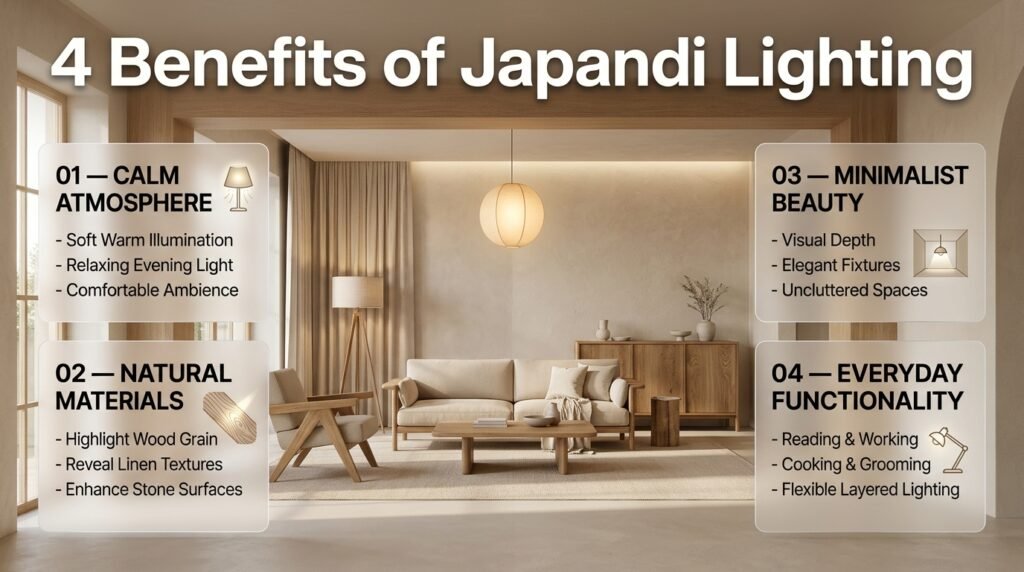
Lighting influences how people experience a room. It changes the appearance of colors, affects the visibility of architectural details, and determines whether a space feels comfortable during different parts of the day.
In Japandi interiors, where decoration is intentionally limited, lighting becomes one of the most important design elements.
1. It Creates a Calm and Relaxing Atmosphere
Japandi interiors are designed to feel peaceful rather than visually overwhelming. Harsh overhead lighting can work against this objective.
Soft illumination reduces uncomfortable brightness and creates a more welcoming environment during evenings.
Consider using:
- Fabric-shaded floor lamps.
- Frosted glass pendant lights.
- Warm LED bulbs.
- Indirect wall lighting.
- Small table lamps with natural finishes.
These fixtures provide visual warmth without requiring numerous decorative accessories.
A practical example is a bedroom with one soft ceiling fixture and two bedside lamps. Instead of switching on a bright central light every evening, occupants can use the bedside lamps to create a quieter atmosphere.
2. It Highlights Natural Materials
Natural materials are an important part of Japandi interiors. However, their appearance changes depending on the direction, intensity, and color of the light falling on them.
A wooden cabinet may look flat under poorly positioned lighting but reveal its grain and texture when illuminated from the side.
Similarly, linen curtains, textured plaster, stone countertops, and ceramic accessories become more visually interesting when light reaches them from suitable angles.
3. It Makes Minimalist Rooms Feel Complete
Minimalist interiors can sometimes appear unfinished when they lack visual depth.
A carefully positioned floor lamp, pendant, or wall light can introduce character without adding furniture or decorative objects.
This is particularly useful in apartments where homeowners want to maintain open floor space.
4. It Improves Everyday Functionality
Beautiful lighting should also support the activities performed in a room.
Reading, cooking, working, grooming, and cleaning require different lighting conditions.
A layered lighting arrangement makes it possible to adjust illumination according to the task instead of depending on one fixture for everything.
What Are the Three Main Layers of Japandi Lighting?
A successful Japandi lighting composition combines ambient, task, and accent lighting. Each layer performs a different function, and using them together creates a balanced arrangement that supports both everyday activities and visual comfort.
1. Ambient Lighting: Creating the Foundation
Ambient lighting provides general illumination throughout a room. It allows people to move comfortably and recognize the main features of the space.
Common options include:
- Simple wooden ceiling fixtures.
- Paper-inspired pendant lamps.
- Frosted glass ceiling lights.
- Recessed LED fixtures.
- Concealed ceiling lighting.
- Minimalist flush-mount lights.
The goal is to create comfortable background illumination rather than an intensely bright environment.
Practical example: In a medium-sized living room, one appropriately sized ceiling fixture can provide general lighting while smaller lamps improve illumination around seating areas.
Professional Advice: Consider the fixture’s light distribution before purchasing it. A decorative shade that directs most of its light upward may create a different effect from one that distributes illumination downward and outward.
2. Task Lighting: Supporting Everyday Activities
Task lighting directs illumination toward a specific activity.
It is especially useful in areas where people read, cook, work, apply makeup, or complete detailed tasks.
Suitable fixtures include:
- Adjustable desk lamps.
- Reading floor lamps.
- Under-cabinet kitchen lights.
- Bathroom mirror lights.
- Bedside reading lamps.
- Focused worktop lighting.
For example, a person reading in bed should have a light source positioned close enough to illuminate the book without disturbing someone sleeping nearby.
Similarly, a desk lamp should illuminate the working surface without creating reflections on a computer screen.
3. Accent Lighting: Adding Depth and Character
Accent lighting highlights selected features rather than illuminating an entire room.
It can draw attention to:
- Textured walls.
- Artwork.
- Indoor plants.
- Wooden shelving.
- Architectural niches.
- Decorative ceramics.
A small directional light can highlight a carefully arranged display without making the entire wall excessively bright.
However, accent lighting should be used selectively. If every decorative object receives its own spotlight, the room can lose the visual calm associated with Japandi design.
How Should These Three Layers Work Together?
Consider this simple living room arrangement:
| Lighting layer | Example fixture | Main purpose |
|---|---|---|
| Ambient | Wooden ceiling pendant | General illumination |
| Task | Floor lamp beside sofa | Reading and activities |
| Accent | Concealed shelf LED | Highlighting selected details |
The arrangement doesn’t require an expensive lighting system. Its effectiveness comes from giving each source a clear responsibility.
Which Materials and Fixtures Are Best for Japandi Lighting?

The best Japandi fixtures combine simple geometry, natural-looking materials, comfortable illumination, and practical functionality. Their appearance should complement the room instead of competing with furniture, architectural features, or decorative accessories.
1. Paper Lantern Lighting
Paper lanterns are closely associated with Japanese-inspired interiors.
Their soft appearance and diffused illumination make them suitable for living rooms, bedrooms, and dining areas.
They work particularly well when the surrounding furniture is relatively simple.
When choosing one, consider its dimensions and construction quality. A large paper pendant may become the main visual feature in a room, while a smaller lantern can provide a subtle decorative element.
Use suitable LED bulbs and follow the manufacturer’s electrical and installation instructions.
2. Wooden Pendant Lights
Wooden fixtures introduce natural warmth and complement furniture made from oak, walnut, ash, or bamboo.
They are suitable for:
- Dining areas.
- Kitchen islands.
- Living rooms.
- Entryways.
- Open-plan spaces.
Choose a simple silhouette rather than an overly complicated decorative structure.
A light oak pendant, for example, can coordinate beautifully with pale flooring and cream-colored walls.
3. Linen-Shaded Lamps
Linen shades create a softer appearance and help diffuse light.
They are particularly useful for bedside tables, reading corners, and living room side tables.
Choose neutral shades such as:
- Warm white.
- Beige.
- Sand.
- Light taupe.
- Natural cream.
These colors complement the understated palette commonly used in Japandi interiors.
4. Frosted Glass Fixtures
Frosted glass offers a clean, understated appearance while softening the visibility of the light source.
It can work well in modern Japandi kitchens, bathrooms, hallways, and dining spaces.
Unlike strongly decorative glass, frosted finishes generally maintain a quieter visual presence.
5. Ceramic Table Lamps
Ceramic lamps introduce an earthy character without requiring complicated shapes.
Look for:
- Rounded bases.
- Matte finishes.
- Neutral glazes.
- Subtle irregularities.
- Simple fabric shades.
A handmade-looking ceramic lamp can add personality to a minimalist room while maintaining visual restraint.
Material Comparison
| Material | Visual character | Suitable application |
|---|---|---|
| Paper | Delicate and diffused | Pendant lighting |
| Natural wood | Warm and organic | Ceiling and table lamps |
| Linen | Soft and textured | Floor and bedside lamps |
| Bamboo | Light and natural | Pendant shades |
| Ceramic | Earthy and understated | Table lamps |
| Frosted glass | Clean and subtle | Ceiling and wall fixtures |
| Matte metal | Contemporary and restrained | Adjustable task lighting |
You don’t need to use every material in one room. Two or three complementary finishes are often enough to create a coordinated appearance.
What Color Temperature Works Best for Japandi Lighting?
Warm-white lighting generally works best for Japandi interiors because it complements natural materials and creates a comfortable atmosphere. A range of approximately 2700K to 3000K is a useful starting point for living rooms and bedrooms.
However, the right temperature depends on the activity, the amount of daylight, and the room’s existing colors.
Understanding Different Color Temperatures
| Color temperature | Appearance | Recommended application |
|---|---|---|
| 2200K–2400K | Very warm and amber | Decorative evening lighting |
| 2700K | Warm white | Bedrooms and living rooms |
| 3000K | Soft warm white | Kitchens and general living areas |
| 3500K | Neutral-warm | Detailed work areas |
| 4000K | Neutral white | Utility and specific task areas |
These are general recommendations rather than strict design rules.
Why Does Warm Lighting Suit Japandi Interiors?
Warm illumination complements natural finishes such as oak, walnut, bamboo, beige plaster, and linen.
It can also help connect different areas in an open-plan home.
For example, a 2700K bedside lamp can create a comfortable evening atmosphere, while a 3000K kitchen task light can provide clearer visibility for food preparation.
What Is CRI and Why Should You Consider It?
Color Rendering Index (CRI) describes how accurately a light source reveals colors compared with a reference light source.
This matters when your interior includes carefully selected wood finishes, natural fabrics, colored walls, and decorative materials.
A CRI of 90 or higher is a useful target when accurate color appearance is important.
Expert Tip: Don’t select bulbs based on color temperature alone. Check brightness, CRI, dimming compatibility, and light distribution before purchasing them.
How Can You Use Natural Light in Japandi Interiors?

Natural light is an essential part of Japandi lighting composition. It reduces dependence on artificial illumination during daylight hours and helps reveal the beauty of natural materials.
Instead of treating windows as simple architectural openings, consider them an important part of the overall lighting arrangement.
1. Choose Simple Window Treatments
Heavy curtains can block valuable daylight.
Depending on your privacy requirements, consider:
- Linen curtains.
- Sheer window coverings.
- Light-filtering blinds.
- Simple roller shades.
- Minimal wooden blinds.
For example, sheer linen curtains can soften direct sunlight while allowing useful daylight into a living room.
However, homes facing busy streets may need more substantial window coverings for privacy.
2. Use Reflective Surfaces Carefully
Light-colored walls, pale wooden flooring, and selected reflective surfaces can help distribute daylight.
However, Japandi interiors don’t require glossy surfaces everywhere.
Matte finishes generally support the understated appearance of this design style.
A large mirror placed opposite or near a window can also help distribute available daylight, provided it doesn’t create uncomfortable reflections or glare.
3. Keep Windows Relatively Unobstructed
Avoid positioning tall furniture directly in front of major windows when possible.
Keep daylight pathways open and use lower furniture near important light sources.
This is especially helpful in smaller homes where natural illumination can make a room feel more open.
4. Observe How Sunlight Changes Throughout the Day
Morning sunlight, afternoon brightness, and evening shadows create different visual conditions.
Before finalizing your lighting arrangement, observe the room at different times.
Notice:
- Which corners remain dark.
- Where direct sunlight creates glare.
- Which walls receive softer daylight.
- Whether plants and furniture block windows.
- Whether certain surfaces become uncomfortably bright.
Quick Tip: If a room receives limited natural light, use several appropriately positioned artificial light sources instead of relying on one powerful ceiling fixture.
How Do You Plan Japandi Lighting for Different Rooms?
Every room has different lighting requirements. A successful design adapts the same principles of simplicity, natural materials, and visual balance to the way people use each space.
1. Japandi Living Room Lighting
The living room should feel comfortable, flexible, and visually balanced.
It is usually a multifunctional space where people relax, read, watch television, entertain guests, and spend time together.
A practical arrangement might include:
- One understated ceiling fixture.
- A floor lamp beside the sofa.
- A small table lamp near a seating area.
- Subtle accent lighting near selected shelves or artwork.
Choose shades that distribute light comfortably rather than producing concentrated glare.
For open-plan living rooms, use lighting to define separate functional areas without adding physical partitions.
For example, a pendant above the dining table can distinguish the dining zone from the seating area.
The relationship between lighting and furniture is equally important. A floor lamp should illuminate the seating area without blocking circulation or creating an awkward arrangement.
For more guidance, explore room focal point planning principles.
2. Japandi Bedroom Lighting
Bedroom lighting should support relaxation while providing enough illumination for reading, dressing, and everyday routines.
A comfortable arrangement may include:
- Soft general ceiling lighting.
- Coordinated bedside lamps.
- Warm indirect lighting behind the headboard.
- Optional wardrobe illumination.
Bedside pendant lights can be an effective alternative to traditional table lamps, particularly when bedside surfaces are small.
However, their installation height should allow comfortable use without interfering with movement.
Avoid placing exposed bright bulbs directly within your normal line of sight while lying in bed.
For bedrooms with natural wood furniture, linen bedding, and muted wall colors, warm lighting generally creates a more cohesive atmosphere.
3. Japandi Kitchen Lighting
Kitchen lighting needs to balance a calm appearance with clear visibility for food preparation and cleaning.
Use general ceiling illumination as the foundation, then introduce task lighting where needed.
Recommended options include:
- Recessed ceiling lights.
- Under-cabinet LED strips.
- Simple pendant lights above an island.
- Focused illumination above preparation areas.
Under-cabinet lighting is particularly useful because overhead cabinets can cast shadows across countertops.
If your kitchen includes a dining peninsula or island, pendant lights can provide both practical illumination and visual definition.
Choose finishes that complement cabinetry, countertops, and hardware.
A combination of natural wood, matte surfaces, and warm lighting can create a welcoming kitchen without making it look overly decorative.
4. Japandi Bathroom Lighting
Bathroom lighting should feel comfortable and natural while providing sufficient visibility around mirrors, sinks, and showers.
A practical arrangement combines general ceiling illumination with properly positioned mirror lighting.
Consider:
- Frosted glass wall lights.
- Simple recessed ceiling fixtures.
- Moisture-rated LED lighting.
- Soft indirect lighting beneath floating vanities.
Mirror lighting deserves particular attention.
A single overhead fixture may create shadows beneath the eyes and chin. Where possible, use balanced illumination from both sides of the mirror or a suitable integrated mirror-lighting system.
Always select fixtures with appropriate IP ratings for their installation zones and follow local electrical safety requirements.
5. Japandi Home Office Lighting
A Japandi home office should maintain a peaceful appearance without compromising concentration or visual comfort.
Use natural daylight whenever practical and add focused task lighting for detailed work.
A suitable arrangement includes:
- Soft ambient ceiling lighting.
- An adjustable desk lamp.
- Indirect lighting behind a monitor, if useful.
- Window treatments that control glare.
Position the desk to avoid direct reflections on computer screens.
Choose a lamp with adjustable brightness and a suitable color temperature rather than relying entirely on decorative lighting.
If two people share a home office, give each workstation its own task light to avoid depending on one central fixture.
6. Japandi Entryway Lighting
An entryway establishes the first impression of a home.
It should feel welcoming without requiring an elaborate lighting arrangement.
A small ceiling pendant, understated wall light, or simple table lamp can provide sufficient illumination depending on the space.
For narrow hallways, wall-mounted fixtures can be useful because they don’t occupy valuable floor space.
Choose lighting that helps people find keys, shoes, and storage areas without creating excessive brightness.
7. Japandi Dining Room Lighting
Dining areas benefit from lighting that creates a comfortable atmosphere while making food and table settings clearly visible.
A simple pendant positioned above the dining table can provide a visual focal point.
Consider:
- Paper pendants for diffused illumination.
- Wooden shades for natural warmth.
- Frosted glass for understated elegance.
- Dimmable fixtures for flexible dining conditions.
Make sure the fixture doesn’t obstruct people’s views across the table.
A well-proportioned pendant should relate to the table’s dimensions rather than appearing disconnected from the furniture arrangement.
How Should You Balance Light and Shadow in Japandi Design?
Japandi interiors don’t aim to eliminate every shadow. Gentle variations in brightness help create depth, reveal material textures, and make minimalist spaces feel more natural.
A room with identical brightness everywhere can appear flat.
Instead, consider creating three visual zones:
- Brighter functional areas: Kitchen worktops, desks, and reading spaces.
- Comfortable general areas: Living rooms, bedrooms, and circulation spaces.
- Softer atmospheric areas: Corners, decorative niches, and relaxation spaces.
For example, a living room can have moderate ambient illumination, a brighter reading corner, and subtle accent lighting near a textured wall.
This arrangement creates visual interest without requiring additional decorative objects.
What Is the Role of Indirect Lighting?
Indirect lighting directs illumination toward a wall, ceiling, or another surface instead of exposing the light source directly.
It can be useful behind:
- Headboards.
- Floating shelves.
- Ceiling coves.
- Architectural panels.
- Bathroom mirrors.
The reflected light appears softer and can reduce direct glare.
However, installation quality matters. Poorly concealed LED strips, visible wiring, and uneven brightness can undermine the clean appearance you’re trying to achieve.
How Can You Combine Japandi Lighting With Furniture and Decor?

Lighting should feel connected to the room’s furniture, materials, and decorative arrangement. It shouldn’t appear as a collection of unrelated fixtures purchased separately.
1. Coordinate Wood Finishes
If your room includes oak furniture, bamboo accessories, and natural linen, select lighting that complements these materials.
You don’t need every wooden finish to match perfectly.
Instead, maintain a consistent level of warmth and avoid introducing too many competing wood tones.
2. Keep Decorative Lighting Understated
A ceramic table lamp, paper pendant, or simple floor lamp can provide enough decorative interest.
Avoid filling every available surface with lamps and accessories.
A few carefully selected pieces generally create a stronger visual result.
3. Use Lighting to Support Open Shelving
Open shelving can look particularly attractive in Japandi interiors when objects are arranged with restraint.
A subtle integrated LED strip or small directional light can highlight selected ceramics and natural decorative pieces.
Keep wiring concealed and avoid excessive illumination.
For additional styling ideas, see [styling open shelves without clutter](https://designmode24interiordesign.com/styling-open shelves without clutter/).
4. Maintain Visual Consistency
The lighting should complement the overall design language.
For example, combining an elaborate crystal chandelier, industrial cage lights, and traditional decorative wall sconces may create unnecessary visual competition.
For a more cohesive interior, explore styling principles for visually balanced homes.
5. Consider the Relationship Between Lighting and Color
Lighting affects how paint colors appear.
A warm-white bulb can make beige walls appear warmer, while certain cool-white bulbs may make the same finish look less inviting.
Before selecting wall paint or purchasing multiple fixtures, test samples under the lighting conditions you intend to use.
You can explore complementary ideas in the Paint Color category.
How Do You Choose the Right Fixture Size and Placement?
Fixture proportions are just as important as their appearance. A beautifully designed pendant can still look unsuitable if it is too large for a compact room or too small for a spacious interior.
Consider Ceiling Height
Low ceilings generally benefit from flush-mount fixtures or compact pendants that don’t interfere with movement.
Higher ceilings can accommodate larger hanging fixtures, provided their proportions suit the surrounding architecture.
Consider Furniture Dimensions
A dining pendant should relate to the size of the table beneath it.
Similarly, bedside lamps should fit comfortably on their tables without overwhelming the available surface.
Maintain Comfortable Clearance
Check the following before installation:
- Walking pathways.
- Door opening clearance.
- Headroom beneath hanging fixtures.
- Visibility across dining tables.
- Access to switches and controls.
- Distance from heat-sensitive materials.
Use Lighting to Define Areas
In an open-plan home, different fixtures can help establish visual zones.
A pendant above the dining table and a floor lamp beside the sofa can distinguish two functional areas without introducing walls or partitions.
What Are the Most Common Japandi Lighting Mistakes?
Many homeowners focus on buying attractive fixtures but overlook how those fixtures interact with the rest of the room. These mistakes can make an otherwise beautiful Japandi interior feel uncomfortable or unfinished.
1. Depending on One Ceiling Light
Why it happens: A single ceiling fixture seems like an inexpensive and convenient solution.
Why it’s harmful: It can create uneven illumination, harsh shadows, and dark corners.
How to avoid it: Introduce separate ambient, task, and accent lighting where necessary.
2. Choosing Bulbs That Are Too Cool
Why it happens: Bright white bulbs are often assumed to make rooms look cleaner and more modern.
Why it’s harmful: Cool illumination can make warm wooden finishes and neutral fabrics appear less inviting.
How to avoid it: Start with warm-white lighting and adjust according to the room’s purpose.
3. Selecting Fixtures Only for Appearance
Why it happens: Decorative lighting often attracts attention in interior design photographs.
Why it’s harmful: A beautiful fixture may provide insufficient illumination or create uncomfortable glare.
How to avoid it: Check brightness, beam direction, shade material, and installation requirements before purchasing.
4. Overusing Decorative Lighting
Why it happens: Homeowners try to make every corner visually interesting.
Why it’s harmful: Too many lamps and illuminated accessories create unnecessary visual noise.
How to avoid it: Give every fixture a clear purpose and leave some areas intentionally understated.
5. Ignoring Natural Light
Why it happens: Lighting plans are sometimes created without observing the room during daylight hours.
Why it’s harmful: Furniture and window treatments may block useful daylight.
How to avoid it: Study sunlight patterns before deciding where fixtures and large furniture pieces should go.
6. Using Inconsistent Fixture Finishes
Why it happens: Different fixtures are purchased at different times without a consistent design plan.
Why it’s harmful: Contrasting finishes can make the composition feel disconnected.
How to avoid it: Select a small group of complementary finishes, such as natural wood, matte black, and frosted glass.
7. Forgetting Practical Lighting Requirements
Why it happens: The focus remains on creating an attractive minimalist appearance.
Why it’s harmful: Reading, cooking, grooming, and working may become uncomfortable.
How to avoid it: Plan task lighting before choosing decorative fixtures.
8. Installing LED Strips Without Proper Planning
Why it happens: Concealed LED lighting is often treated as a quick decorative upgrade.
Why it’s harmful: Visible light dots, uneven illumination, exposed wiring, and poorly finished edges can reduce the quality of the installation.
How to avoid it: Select suitable LED profiles, compatible drivers, appropriate diffusion covers, and concealed cable routes.
What Do Interior Design Professionals Recommend for Japandi Lighting?
Professionals approach lighting as part of the complete interior design rather than treating it as a final decorative addition.
The following recommendations can help you create a more thoughtful arrangement.
1. Start With Activities, Not Fixtures
Before purchasing anything, identify what happens in each area.
Ask yourself:
- Where do people read?
- Which surfaces require detailed work?
- Where does the family relax?
- Which corners need additional illumination?
- Are there areas where glare could become a problem?
This makes fixture selection easier and prevents unnecessary purchases.
2. Create a Lighting Plan Before Renovation
Plan electrical outlets, switch locations, ceiling connections, and concealed wiring early.
This is particularly important when installing recessed lights, wall sconces, or integrated LED strips.
For larger projects, coordinate lighting decisions with furniture placement and renovation schedules.
A useful starting point is this guide to renovation work order for homeowners.
3. Use Dimmers Where Appropriate
Dimmable lighting allows you to adjust brightness according to the time of day and activity.
For example:
- Brighter illumination for cleaning.
- Moderate lighting for everyday activities.
- Softer lighting for relaxing in the evening.
Check that the dimmer and LED bulbs are compatible before installation.
4. Choose Fewer, Better Fixtures
A small collection of well-designed fixtures usually works better than numerous decorative lights.
Invest in suitable materials, reliable electrical components, good light distribution, and practical controls.
5. Consider Furniture and Lighting Together
Lighting should be planned alongside furniture rather than after the entire room has been arranged.
For example, deciding where a reading chair will sit can help determine the position of a floor lamp.
Similarly, the placement of a dining table should influence the position of pendant lighting.
When choosing furniture, consider construction quality and proportions as well. This guide to furniture frame construction comparison can help you understand the practical differences between furniture options.
6. Maintain a Timeless Design
Avoid selecting fixtures only because they are currently fashionable.
Simple shapes, good materials, and functional designs are more likely to remain attractive over time.
For further inspiration, explore the characteristics of timeless interiors.
How to Create a Japandi Lighting Plan Step by Step
You don’t need to redesign your entire home to improve its lighting. A structured approach helps you make practical changes without unnecessary purchases.
Step 1: Assess Existing Lighting
Walk through the room during the morning, afternoon, and evening.
Identify areas that feel too bright, too dark, or uncomfortable.
Write down the lighting problems before purchasing anything.
Step 2: Define the Purpose of Each Area
List the activities performed in the room.
A bedroom may need comfortable ambient lighting, reading illumination, and wardrobe lighting.
A kitchen may need general illumination, countertop task lighting, and pendant lighting above an island.
Step 3: Select a Consistent Lighting Style
Choose fixtures that complement existing furniture and finishes.
A useful combination might include:
- Natural wood.
- Linen shades.
- Frosted glass.
- Matte metal.
- Simple organic silhouettes.
Step 4: Establish Your Lighting Layers
Decide where ambient, task, and accent lighting are necessary.
Not every room needs every type of fixture. A small bedroom, for example, may only require comfortable ceiling lighting and two bedside lamps.
Step 5: Select Suitable Bulbs
Consider color temperature, brightness, CRI, and dimming compatibility.
Use lighting appropriate to each activity rather than choosing bulbs based on wattage alone.
For LED bulbs, lumens are a more useful indication of brightness than wattage.
Step 6: Check Placement and Safety
Review ceiling height, walking clearance, furniture arrangement, and electrical requirements.
For bathroom fixtures and other moisture-prone areas, use products specifically rated for their installation conditions.
Have electrical work completed by a qualified professional.
Step 7: Test the Composition at Night
Switch on the different lighting layers separately.
Notice whether:
- The room feels balanced.
- Reading areas receive sufficient illumination.
- Decorative lighting creates glare.
- Corners feel too dark.
- Different bulbs produce inconsistent colors.
Make adjustments before adding more fixtures.
How Much Does a Japandi Lighting Upgrade Cost?
The cost depends on the number of fixtures, material quality, electrical work, and whether you’re replacing existing lights or renovating the entire lighting system.
A simple upgrade may involve changing bulbs, adding a floor lamp, and replacing an outdated ceiling fixture.
A more extensive project could include concealed LED strips, new wiring, recessed lighting, and custom pendant installations.
| Upgrade | Relative investment | Potential impact |
|---|---|---|
| Replace unsuitable bulbs | Low | High |
| Add bedside lamps | Low to moderate | High |
| Install a floor lamp | Moderate | Medium to high |
| Replace ceiling fixtures | Moderate | High |
| Add under-cabinet LEDs | Moderate | High |
| Install concealed architectural lighting | Moderate to high | High |
| Redesign the complete lighting system | High | Very high |
These are general cost categories rather than fixed prices. Actual installation costs depend on location, product specifications, and labor.
Money-Saving Advice: Improve your existing lighting before replacing every fixture. Sometimes changing bulb temperatures, adding one well-positioned floor lamp, and introducing a dimmer can make a significant difference.
How Can You Make Japandi Lighting More Sustainable?
Sustainable lighting is about reducing unnecessary energy consumption while selecting durable fixtures and suitable materials.
Japandi design naturally supports this approach through simplicity and long-term functionality.
Choose Energy-Efficient LED Lighting
LED bulbs generally consume less electricity than traditional incandescent bulbs and have a longer rated lifespan.
Choose quality products that provide comfortable illumination and are suitable for the intended fixture.
Make Better Use of Daylight
Position furniture thoughtfully and use suitable window coverings to take advantage of natural illumination.
This can reduce the need for artificial lighting during daylight hours.
Avoid Unnecessary Fixtures
Installing more lights doesn’t automatically improve a room.
Choose fixtures according to actual needs and use separate controls where appropriate.
Select Durable Materials
Natural wood, ceramic, glass, and quality metal fixtures can remain useful for many years when properly maintained.
Avoid purchasing decorative lighting that needs frequent replacement simply because its appearance is temporary.
For broader ideas about responsible home improvements, explore the Home Improvement category.
How Can You Improve Japandi Lighting Without a Major Renovation?
You can create a noticeable improvement without replacing your entire electrical system.
Start with the areas where lighting currently causes the most discomfort.
Replace Unsuitable Bulbs
If your living room feels cold or uncomfortable, test warm-white bulbs in existing fixtures.
Check whether the new bulbs provide sufficient brightness and are compatible with the fixture.
Add One Useful Floor Lamp
A floor lamp beside a sofa or reading chair can improve task lighting while introducing a natural decorative element.
Choose a simple design with a suitable shade.
Introduce Bedside Lighting
If your bedroom depends entirely on a central ceiling light, add bedside lamps or wall-mounted reading lights.
This makes the room more flexible during evenings.
Improve Existing Window Treatments
Replace unnecessarily heavy window coverings with lighter alternatives where privacy and sunlight conditions allow.
Reorganize Furniture
Sometimes the problem isn’t the lighting fixture but the arrangement of furniture.
Moving a tall cabinet away from a window or repositioning a reading chair can improve the way natural and artificial light reaches the room.
For small projects, the DIY home projects section can provide additional practical inspiration.
How do you create a perfect Japandi lighting composition in a modern home?
Creating a balanced Japandi lighting composition starts with understanding how each area of your home is used. Instead of installing decorative lights randomly, combine ambient, task, and accent lighting to create a comfortable environment. Choose warm-white illumination, natural materials, and simple fixtures that complement your furniture and architectural details.
The key is to maintain a balance between functionality and visual simplicity. For example, a living room can have a wooden pendant for general illumination, a linen-shaded floor lamp beside the sofa, and subtle lighting around selected shelving.
Practical recommendations:
Use 2700K–3000K warm-white lighting in living areas.
Combine different lighting layers instead of depending on one ceiling fixture.
Choose natural materials such as wood, bamboo, linen, and frosted glass.
Position lights according to furniture placement and daily activities.
Avoid unnecessary decorative fixtures that make the room feel crowded.
What type of lighting fixtures work best with Japandi interior design?
Japandi interiors look best with fixtures that combine natural textures, simple shapes, and practical functionality. Paper lanterns, wooden pendants, ceramic table lamps, linen-shaded floor lamps, and frosted glass wall lights are particularly suitable because they create visual warmth without overwhelming the space.
When selecting fixtures, consider more than their appearance. Their size, brightness, material, and light distribution should complement the room. For instance, a paper pendant can create a soft atmosphere in a bedroom, while an adjustable matte-metal desk lamp provides better focused illumination in a home office.
Best fixture choices include:
Paper lanterns: For soft, diffused ambient lighting.
Wooden pendants: For dining areas and living rooms.
Linen-shaded lamps: For bedrooms and reading corners.
Ceramic table lamps: For natural decorative character.
Frosted glass fixtures: For understated modern illumination.
Which LED color temperature is best for Japandi lighting?
Warm-white LED lighting between 2700K and 3000K is generally the most suitable choice for Japandi interiors. It creates a comfortable atmosphere and complements natural wood, beige walls, stone surfaces, and neutral fabrics. However, different rooms may benefit from slightly different temperatures depending on their activities.
For example, a bedroom usually feels more relaxing with 2700K lighting, while a kitchen preparation area may benefit from 3000K illumination. A home office can use neutral-warm task lighting when clearer visibility is required.
Recommended lighting temperatures:
2200K–2400K: Soft decorative and evening illumination.
2700K: Bedrooms, living rooms, and relaxation areas.
3000K: Kitchens, dining spaces, and general lighting.
3500K: Selected workspaces requiring clearer visibility.
Also consider the bulb’s CRI rating. A CRI of 90 or higher is a useful target for revealing the natural appearance of furniture, fabrics, and decorative finishes.
How can you combine natural light and artificial lighting in a Japandi interior?
The best approach is to use natural daylight as the foundation and artificial lighting to maintain comfort when sunlight becomes limited. Keep windows relatively unobstructed, choose suitable light-filtering curtains, and arrange furniture so that large pieces don’t unnecessarily block daylight.
During the day, natural light can highlight wooden furniture, textured walls, and neutral finishes. In the evening, ambient lighting provides general illumination, while table lamps, floor lamps, and concealed LED strips create a softer atmosphere.
Professional tips:
Use linen or sheer curtains to soften direct sunlight.
Position tall furniture away from important windows where possible.
Use mirrors carefully to distribute available daylight.
Add adjustable lamps to darker corners.
Install dimmable lighting to adapt brightness throughout the day.
Avoid mixing artificial lighting temperatures that create an inconsistent appearance.
The objective is to make natural and artificial light feel like parts of one coordinated interior rather than two separate lighting arrangements.
What are the biggest mistakes to avoid when planning Japandi lighting?
The most common mistake is focusing entirely on decorative fixtures while ignoring how lighting affects everyday comfort. A beautiful pendant cannot replace proper task lighting, and an expensive floor lamp won’t improve a room if it’s positioned incorrectly.
Another problem is using excessively cool bulbs, which can make natural wood and warm neutral colors appear less inviting. Similarly, installing too many accent lights can create visual clutter and weaken the simplicity of Japandi design.
Mistakes to avoid:
Depending on one powerful ceiling light for the entire room.
Choosing cool-white bulbs without considering the interior palette.
Installing oversized fixtures in compact spaces.
Using too many decorative pendant and accent lights.
Ignoring reading, cooking, and working requirements.
Leaving LED strips, cables, or electrical components visibly exposed.
Blocking natural daylight with unnecessarily heavy curtains.
Expert recommendation: Before purchasing new fixtures, assess the room during daylight and evening hours. Identify where illumination is missing, which activities need focused lighting, and which existing fixtures can be improved. This approach helps you create a more functional Japandi interior without unnecessary spending.
Conclusion
A well-planned Japandi lighting composition is about more than choosing attractive lamps or installing modern light fixtures. It is about creating a calm, balanced atmosphere where natural light, warm illumination, thoughtful materials, and simple design work together. The right lighting can make a room feel more comfortable, highlight natural textures, and bring out the quiet beauty of Japandi interiors without making the space look overly decorated.
The most effective approach is to build lighting in layers. Use natural daylight wherever possible, add soft ambient lighting for everyday comfort, and introduce task lighting where focused activities take place. Accent lighting can then highlight meaningful details, such as wooden furniture, textured walls, ceramics, or carefully arranged decorative objects. Choose warm, comfortable light, simple fixtures, and materials that complement the rest of your interior.
Remember that Japandi design values simplicity and purpose. Every light should have a reason to be there. Avoid excessive brightness, unnecessary decorative fixtures, and complicated arrangements that distract from the peaceful character of the room. Instead, focus on practical placement, suitable light levels, and a consistent visual connection between furniture, finishes, and lighting.
Whether you are refreshing one room or planning a complete interior update, thoughtful lighting choices can help create a home that feels peaceful, functional, and timeless. By combining Japanese-inspired simplicity with Scandinavian warmth, you can achieve a Japandi lighting composition that supports everyday living while making your home feel naturally welcoming.