
Introduction
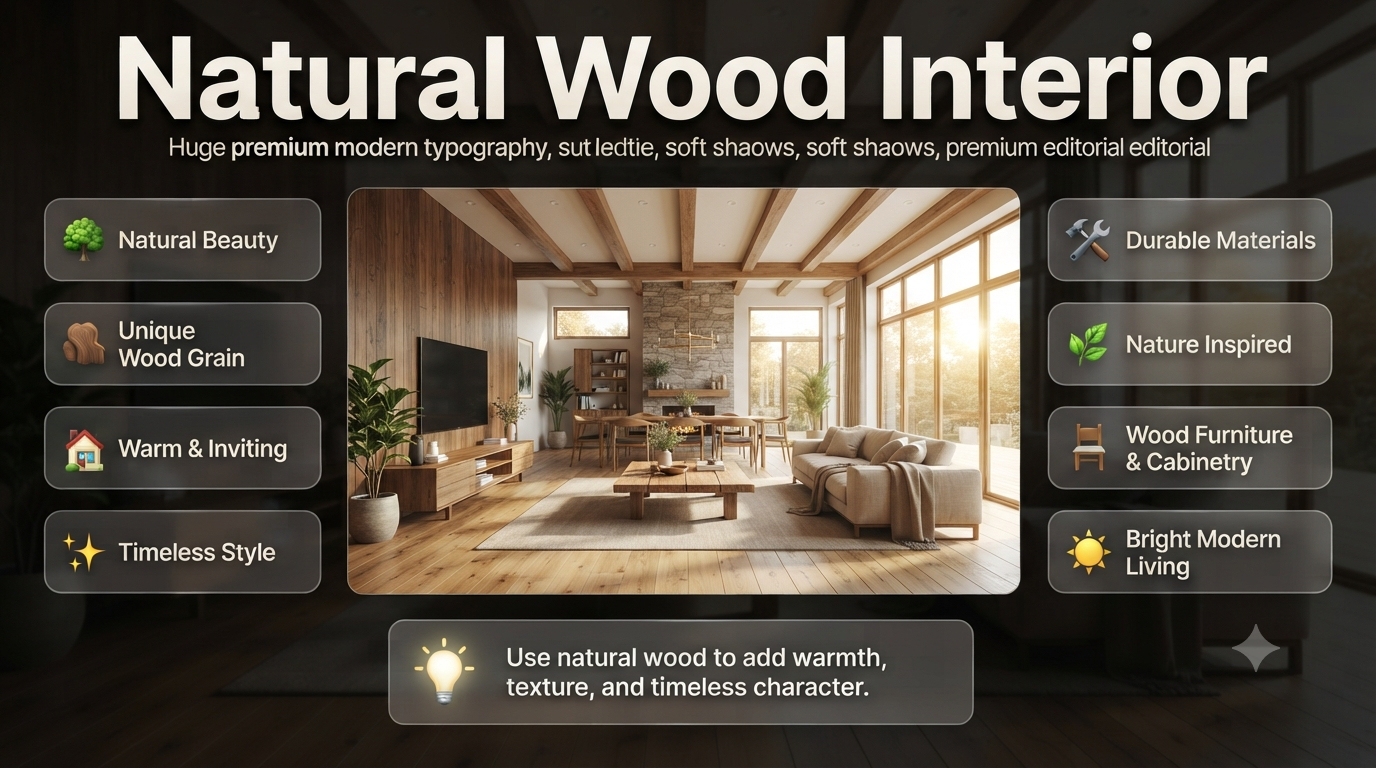
Natural Wood Interior | Natural wood never goes out of style. While design trends come and go, wood continues to bring warmth, texture, and timeless character into every home. Whether you’re renovating a single room or designing a brand-new house, a Natural Wood Interior creates a welcoming space that feels calm, elegant, and connected to nature.
Unlike artificial materials, real wood develops unique character over time. Every grain pattern, knot, and natural variation tells a story, making each piece one of a kind. That’s why homeowners, architects, and interior designers continue to choose natural wood for flooring, furniture, walls, ceilings, and cabinetry.
In this guide, you’ll discover what a natural wood interior really means, why it’s becoming one of the biggest interior design trends, the advantages and disadvantages of using real wood, and which wood species work best for different spaces. If you’re planning a home makeover, you’ll also find practical tips to help you make smarter design decisions.
If you’re looking for more home inspiration, visit DesignMode24 Interior Design for expert guides, decorating ideas, and modern interior trends.
What Is a Natural Wood Interior?
A Natural Wood Interior is a design style that uses real wood as a key element throughout a home. Instead of hiding the wood beneath thick paint or artificial finishes, it highlights the wood’s natural grain, color, and texture to create warm, inviting, and timeless living spaces.
Natural wood interiors are no longer limited to cabins or rustic homes. Today, they are found in luxury apartments, minimalist homes, Scandinavian interiors, Japandi spaces, and contemporary houses because wood blends effortlessly with almost every decorating style.
Common ways to use natural wood include:
- Hardwood flooring
- Solid wood furniture
- Kitchen cabinets
- Ceiling beams
- Accent walls
- Floating shelves
- Wooden staircases
- Dining tables
- Interior doors
- Decorative wall panels
One of the biggest advantages of wood is its versatility. Light oak creates an airy Scandinavian atmosphere, walnut adds richness and elegance, while reclaimed wood introduces rustic charm and history.
If you’re comparing decorating styles, you’ll also enjoy Interior Design Styles to see how natural wood fits into today’s most popular home designs.
Why Is Natural Wood Interior So Popular?
Natural wood interiors remain popular because they combine timeless beauty, durability, sustainability, and comfort. Wood makes homes feel warmer, complements nearly every decorating style, and often increases both visual appeal and long-term property value.
Modern homeowners want homes that feel relaxing instead of overly polished or artificial. Natural materials have become a major part of this movement, helping create peaceful environments that encourage comfort and wellbeing.
Several design trends have contributed to the popularity of natural wood:
- Biophilic design
- Sustainable living
- Scandinavian interiors
- Japandi style
- Minimalist homes
- Wellness-focused spaces
Wood naturally supports all of these styles without feeling trendy or temporary.
Unlike many manufactured materials, wood develops character over time. Small imperfections, subtle color changes, and natural aging often make it even more attractive.
Wood Creates Emotional Warmth
One reason luxury hotels, boutique cafés, and high-end homes use natural wood extensively is because it changes how a room feels.
Wood creates spaces that feel:
- Warm
- Comfortable
- Peaceful
- Welcoming
- Balanced
- Timeless
Even adding one wooden feature, such as a dining table or hardwood floor, can completely change the atmosphere of a room.
💡 Pro Tip
Instead of matching every wooden item perfectly, mix similar wood tones with different grain patterns. This creates a more natural and professionally designed appearance.
Benefits of a Natural Wood Interior
Natural wood offers far more than beautiful appearance. It also provides practical advantages that last for decades when properly maintained.
1. Timeless Beauty
Wood never feels outdated.
Unlike trendy materials that lose popularity after a few years, natural wood continues looking elegant across changing decorating styles.
Whether your home is modern, traditional, or transitional, wood always feels appropriate.
2. Adds Warmth and Character
Glass, concrete, and metal can sometimes make interiors feel cold.
Wood softens these hard materials by introducing natural texture and warmth.
Even a single wood feature can make a room feel far more inviting.
3. Every Piece Is Unique
No two trees grow exactly the same.
Every plank has its own:
- Grain pattern
- Color variation
- Natural knots
- Texture
This uniqueness gives homes personality that manufactured materials simply cannot replicate.
4. Long Lifespan
Quality hardwood products can last for generations.
Unlike inexpensive laminate furniture that often requires replacement, solid wood can usually be repaired, refinished, and restored.
This makes it an excellent long-term investment.
5. Easy to Restore
Scratches don’t necessarily mean replacement.
Many wood surfaces can be:
- Sanded
- Refinished
- Oiled
- Repaired
- Restained
As a result, wood often looks new again after simple maintenance.
6. Improves Home Value
Many buyers actively look for homes with:
- Hardwood flooring
- Wood cabinetry
- Custom wood features
- Solid wood furniture
Natural wood creates a premium impression that can positively influence resale value.
7. Works With Almost Every Interior Style
Natural wood complements nearly every decorating approach, including:
- Modern
- Contemporary
- Traditional
- Farmhouse
- Scandinavian
- Japandi
- Rustic
- Industrial
- Coastal
For readers interested in clean, clutter-free spaces, Minimalist Interior Design explains how natural wood creates warmth without sacrificing simplicity.
8. Supports Sustainable Living
Responsibly sourced wood is a renewable building material.
Many homeowners now choose:
- FSC-certified wood
- Reclaimed timber
- Locally sourced hardwood
- Sustainably harvested lumber
These options reduce environmental impact while maintaining exceptional beauty.
⭐ Expert Tip
Invest in solid wood for furniture that receives daily use, such as dining tables, desks, and bed frames. Although engineered wood can reduce costs, solid wood generally lasts much longer and is easier to repair.
Are There Any Disadvantages?
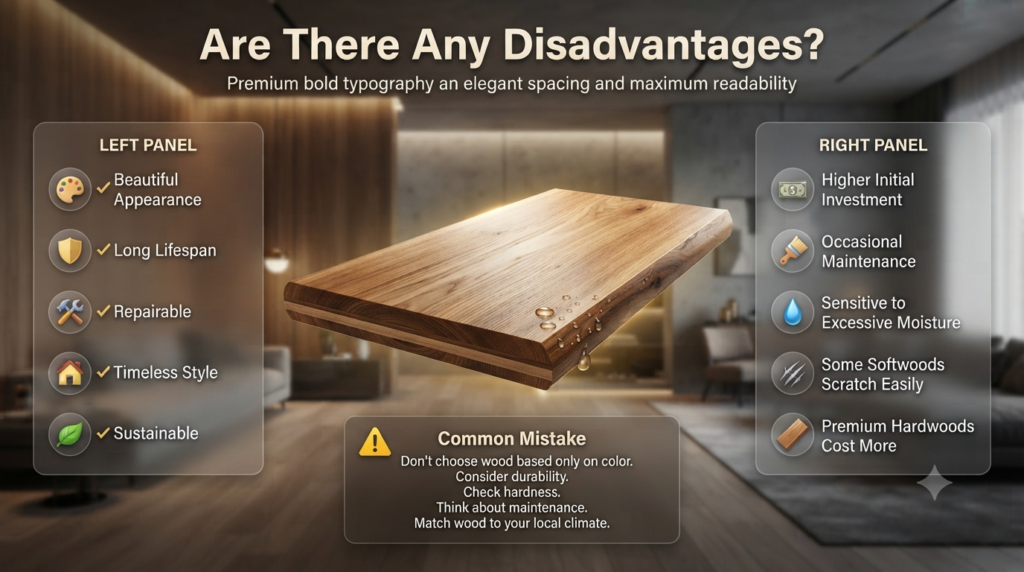
Although natural wood offers many benefits, it’s important to understand its limitations before making major design decisions.
| Benefits | Possible Drawbacks |
|---|---|
| Beautiful appearance | Higher initial investment |
| Long lifespan | Requires occasional maintenance |
| Repairable | Sensitive to excessive moisture |
| Timeless style | Some softwoods scratch easily |
| Sustainable | Premium hardwoods cost more |
Fortunately, these disadvantages are usually manageable when you choose the right wood species and apply appropriate finishes.
⚠ Common Mistake
Many homeowners choose wood based only on color. Always consider durability, hardness, maintenance requirements, and how the wood performs in your local climate before making your final decision.
Types of Wood Used in Interior Design
Every wood species has its own appearance, durability, and best applications.
Choosing the right one helps ensure your home remains beautiful for many years.
Oak
Oak is one of the world’s most popular hardwoods because it balances durability with timeless beauty.
Best for:
- Flooring
- Cabinets
- Dining tables
- Shelving
- Built-in furniture
Advantages
- Highly durable
- Beautiful grain
- Easy to refinish
- Suitable for traditional and modern interiors
Walnut
Walnut is known for its rich chocolate-brown color and luxurious appearance.
It instantly adds sophistication without making a room feel overly formal.
Best for
- Statement furniture
- Luxury offices
- Feature walls
- Dining tables
Maple
Maple offers a smooth surface and subtle grain.
Its light appearance makes smaller rooms feel brighter and more spacious.
Ideal for:
- Kitchen cabinets
- Hardwood flooring
- Contemporary furniture
Ash
Ash combines strength with flexibility.
Its pale color makes it especially popular in Scandinavian and minimalist homes.
Perfect for:
- Chairs
- Shelving
- Tables
- Flooring
If you appreciate bright, airy interiors, explore Scandinavian Interior Design to see how light-colored wood transforms modern homes.
Pine
Pine remains one of the most affordable natural wood options.
Its visible knots and distinctive grain make it ideal for casual, rustic spaces.
Common applications include:
- Farmhouse furniture
- DIY shelving
- Decorative wall panels
- Rustic bedrooms
Teak
Teak naturally contains protective oils that resist moisture and insects.
This makes it an excellent choice for:
- Bathrooms
- Kitchens
- Luxury furniture
- Outdoor living areas
Although teak costs more than many alternatives, its durability often justifies the investment.
Reclaimed Wood
Reclaimed wood comes from old barns, warehouses, factories, and historic buildings.
Because every piece carries unique marks and textures, reclaimed wood creates authentic character that new lumber cannot duplicate.
It’s especially popular for:
- Feature walls
- Floating shelves
- Dining tables
- Coffee tables
- Fireplace surrounds
📌 Quick Tip
If you love calm, balanced interiors, combine light oak or ash with neutral colors and simple furniture inspired by Japandi Home Decor or Modern Japandi Interior.
Comparison Table: Which Wood Is Best?
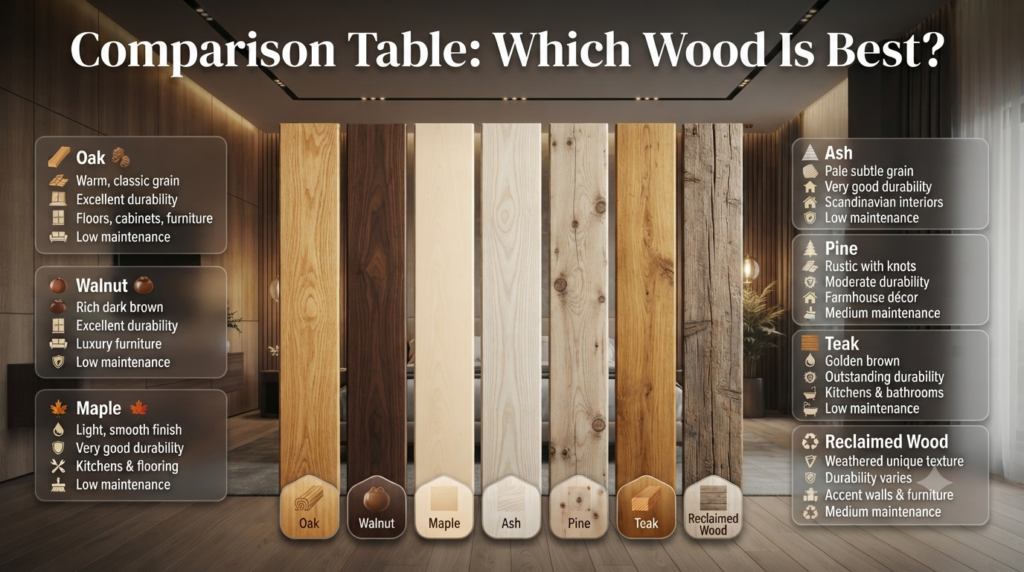
| Wood Type | Appearance | Durability | Best Uses | Maintenance |
|---|---|---|---|---|
| Oak | Warm, classic grain | Excellent | Floors, cabinets, furniture | Low |
| Walnut | Rich dark brown | Excellent | Luxury furniture | Low |
| Maple | Light, smooth | Very Good | Kitchens, flooring | Low |
| Ash | Pale, subtle grain | Very Good | Scandinavian interiors | Low |
| Pine | Rustic with knots | Moderate | Farmhouse décor | Medium |
| Teak | Golden brown | Outstanding | Kitchens, bathrooms | Low |
| Reclaimed Wood | Weathered, unique | Varies | Accent walls, furniture | Medium |
How to Design a Natural Wood Interior Step by Step
Designing a Natural Wood Interior starts with choosing the right wood tone, balancing it with complementary colors, layering textures, maximizing natural light, and selecting furniture that highlights the beauty of real wood without overwhelming the space.
A well-designed wood interior isn’t about covering every surface with timber. Professional designers create balance by mixing wood with stone, glass, metal, linen, and neutral colors. The goal is to let the wood become the focal point while keeping the room light, inviting, and functional.
Step 1: Choose Your Main Wood Tone
The wood tone you choose sets the mood for the entire home.
Generally, designers recommend sticking to one dominant wood tone and introducing one or two complementary shades for variety.
Light Woods
Examples:
- White Oak
- Ash
- Maple
- Birch
Best for:
- Scandinavian homes
- Japandi interiors
- Small apartments
- Modern spaces
Creates:
- Brightness
- Airiness
- Calm atmosphere
If you enjoy clean, simple spaces, you’ll find plenty of inspiration in Minimalist Home Design.
Medium Woods
Examples:
- Red Oak
- Hickory
- Cherry
Perfect for:
- Family homes
- Traditional interiors
- Transitional spaces
Creates:
- Warmth
- Comfort
- Balance
Dark Woods
Examples:
- Walnut
- Mahogany
- Wenge
Ideal for:
- Luxury homes
- Home offices
- Dining rooms
- Statement furniture
Creates:
- Elegance
- Sophistication
- Rich contrast
💡 Pro Tip
If your room receives limited natural light, choose lighter wood tones. They reflect more light and make the space feel larger.
Step 2: Pair Wood with the Right Colors
Neutral colors allow natural wood to stand out without competing for attention. Soft whites, warm beige, light gray, taupe, and earthy greens create balanced interiors that feel timeless rather than trendy.
Color selection is just as important as choosing the wood itself.
Natural wood already provides warmth, so wall colors should support—not overpower—it.
Best Color Combinations
| Wood Tone | Recommended Wall Colors |
|---|---|
| Light Oak | White, Cream, Light Gray |
| Walnut | Warm White, Beige, Taupe |
| Maple | Soft Gray, Sage Green |
| Ash | Off-White, Sand, Stone |
| Pine | Warm White, Olive Green |
| Teak | Ivory, Earth Brown, Greige |
If you’re unsure which paint shades work best, explore Paint Color for practical color ideas that complement natural wood beautifully.
📌 Quick Tip
Avoid bright neon colors or overly cool blue tones if you want the wood’s natural warmth to remain the focus.
Step 3: Mix Materials for Balance
Many beginners think every piece of furniture should be wood.
Professionals do the opposite.
Instead of filling the room with only timber, they layer different materials.
Great combinations include:
- Wood + Linen
- Wood + Stone
- Wood + Marble
- Wood + Glass
- Wood + Leather
- Wood + Black Metal
- Wood + Woven Textures
These combinations add depth without making the room feel busy.
Material Pairing Guide
| Material | Why It Works |
|---|---|
| Linen | Softens the room |
| Stone | Adds natural texture |
| Marble | Creates luxury contrast |
| Glass | Keeps spaces visually light |
| Black Metal | Adds modern definition |
| Leather | Introduces warmth and elegance |
| Rattan | Enhances organic style |
⭐ Expert Tip
Limit yourself to three or four main materials in one room. Too many competing finishes can make even a beautiful space feel cluttered.
Step 4: Let Natural Light Highlight the Wood
Natural wood looks different throughout the day.
Morning light often brings out soft golden tones, while evening light creates a richer and warmer appearance.
To maximize this effect:
- Use sheer curtains
- Keep windows unobstructed
- Place mirrors opposite windows
- Choose warm white lighting for evenings
- Avoid overly cool LED lighting
Lighting can dramatically change how wood appears, so always test samples in both daylight and artificial light before making a final decision.
Natural Wood Interior Ideas for Every Room
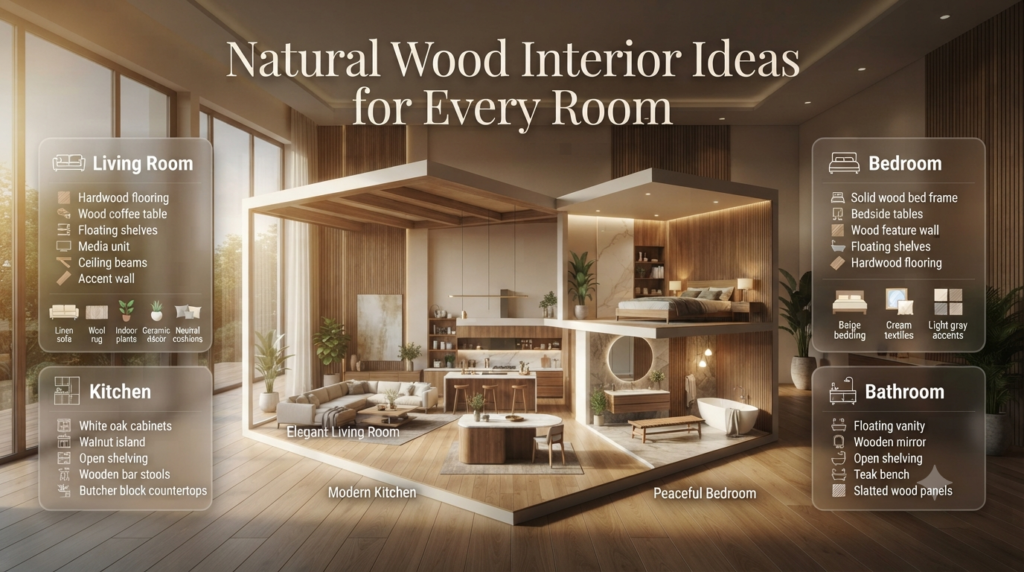
Each room has different functional needs, but natural wood can enhance every part of the home when used thoughtfully.
Living Room
The living room is usually the best place to showcase natural wood because it’s where family and guests spend the most time.
Popular features include:
- Hardwood flooring
- Wood coffee tables
- Floating shelves
- Media units
- Ceiling beams
- Accent walls
Layer these with:
- Linen sofas
- Wool rugs
- Indoor plants
- Ceramic décor
- Neutral cushions
For more decorating inspiration, browse Home Styling to discover practical ideas for creating a warm and welcoming living space.
Kitchen
Natural wood kitchens never feel cold.
Wood cabinets paired with stone countertops create one of the most timeless kitchen combinations.
Popular choices include:
- White oak cabinets
- Walnut islands
- Open shelving
- Wooden bar stools
- Butcher block countertops
Balance the space with:
- White walls
- Matte black fixtures
- Marble backsplashes
- Brushed brass hardware
Bedroom
Wood naturally creates a peaceful environment, making it ideal for bedrooms.
Consider adding:
- Solid wood bed frames
- Bedside tables
- Wood feature walls
- Floating shelves
- Hardwood flooring
Soft bedding in beige, cream, or light gray enhances the calming atmosphere.
If you’re drawn to peaceful, clutter-free bedrooms, you’ll enjoy Japandi Interior Design, which blends natural wood with simplicity and comfort.
Bathroom
Many people assume wood doesn’t belong in bathrooms.
In reality, moisture-resistant species like teak perform exceptionally well.
Great options include:
- Floating vanities
- Wooden mirrors
- Open shelving
- Teak benches
- Slatted wood panels
Pair them with:
- Natural stone
- White tiles
- Matte black fixtures
- Green plants
Dining Room
The dining room is where natural wood truly becomes the centerpiece.
A solid wood dining table instantly creates warmth and encourages family gatherings.
Complete the look with:
- Upholstered dining chairs
- Pendant lighting
- Linen table runners
- Ceramic centerpieces
- Indoor greenery
Common Mistakes to Avoid
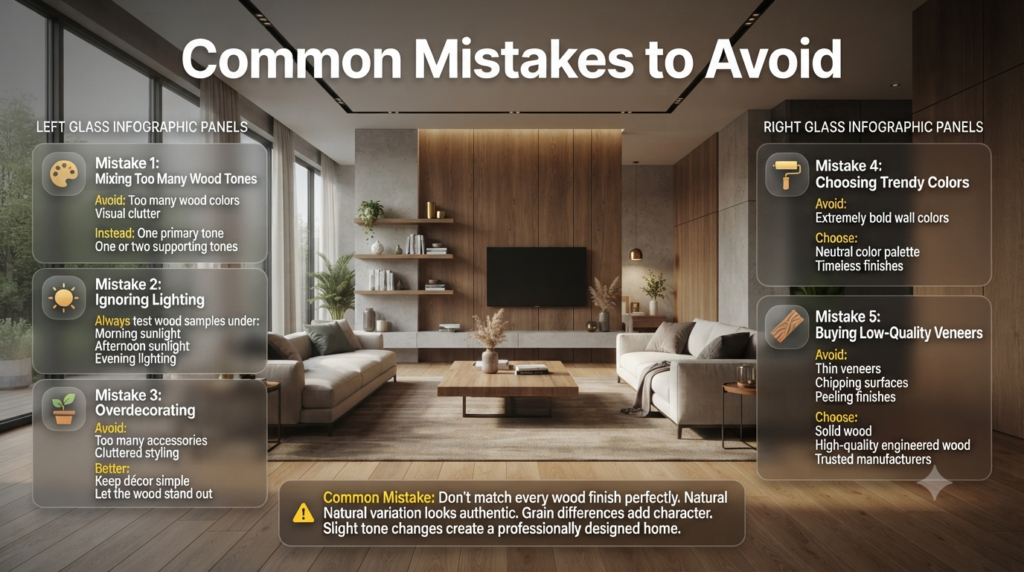
Even expensive materials can look disappointing when used incorrectly.
Mistake 1: Mixing Too Many Wood Tones
Using five or six different wood colors creates visual chaos.
Instead:
Choose one primary tone.
Add one or two supporting tones.
Mistake 2: Ignoring Lighting
Wood samples often look completely different at home than they do in a showroom.
Always test samples under:
- Morning sunlight
- Afternoon sunlight
- Evening lighting
Mistake 3: Overdecorating
Natural wood is already visually interesting.
Adding too many decorative objects distracts from its beauty.
Keep styling simple.
Less often feels more.
Mistake 4: Choosing Trendy Colors
Extremely bold wall colors can quickly become outdated.
Neutral colors allow wood to remain timeless.
Mistake 5: Buying Low-Quality Veneers
Very thin veneers can chip or peel over time.
Whenever possible, invest in solid wood or high-quality engineered wood from trusted manufacturers.
⚠ Common Mistake
Trying to match every wood finish perfectly. Slight variations in grain and tone make a home feel more natural and professionally designed.
Expert Designer Recommendations
Professional interior designers often follow these simple principles when working with natural wood:
✔ Keep a consistent wood palette throughout the home.
✔ Mix textures instead of adding more colors.
✔ Let one large wood feature become the focal point.
✔ Use plants to strengthen the connection with nature.
✔ Balance heavy wood furniture with lighter fabrics.
✔ Choose timeless pieces over trendy designs.
✔ Invest more in flooring and dining furniture since they’re used daily.
How to Design a Natural Wood Interior Step by Step
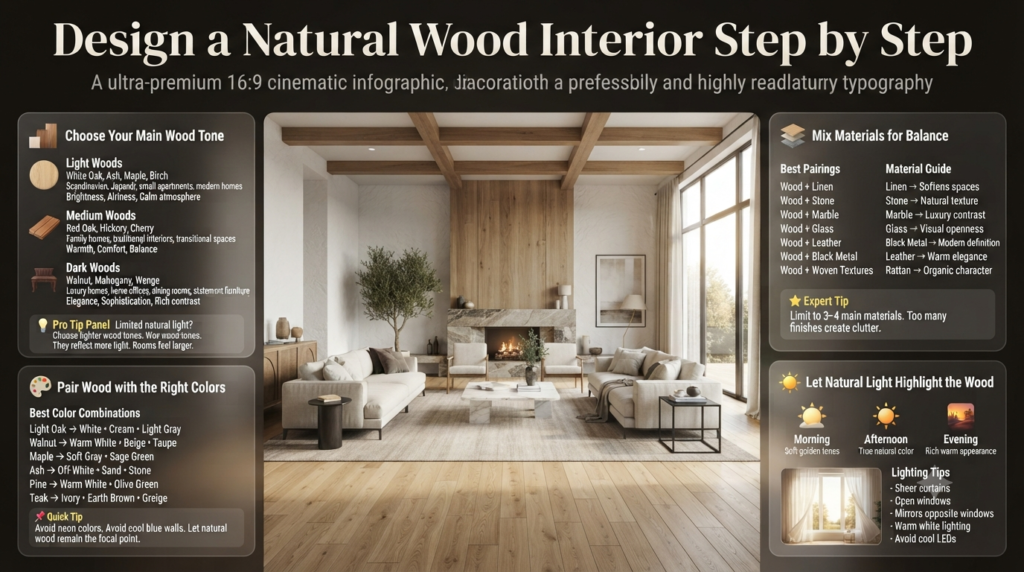
Designing a Natural Wood Interior starts with choosing the right wood tone, balancing it with complementary colors, layering textures, maximizing natural light, and selecting furniture that highlights the beauty of real wood without overwhelming the space.
A well-designed wood interior isn’t about covering every surface with timber. Professional designers create balance by mixing wood with stone, glass, metal, linen, and neutral colors. The goal is to let the wood become the focal point while keeping the room light, inviting, and functional.
Step 1: Choose Your Main Wood Tone
The wood tone you choose sets the mood for the entire home.
Generally, designers recommend sticking to one dominant wood tone and introducing one or two complementary shades for variety.
Light Woods
Examples:
- White Oak
- Ash
- Maple
- Birch
Best for:
- Scandinavian homes
- Japandi interiors
- Small apartments
- Modern spaces
Creates:
- Brightness
- Airiness
- Calm atmosphere
If you enjoy clean, simple spaces, you’ll find plenty of inspiration in Minimalist Home Design.
Medium Woods
Examples:
- Red Oak
- Hickory
- Cherry
Perfect for:
- Family homes
- Traditional interiors
- Transitional spaces
Creates:
- Warmth
- Comfort
- Balance
Dark Woods
Examples:
- Walnut
- Mahogany
- Wenge
Ideal for:
- Luxury homes
- Home offices
- Dining rooms
- Statement furniture
Creates:
- Elegance
- Sophistication
- Rich contrast
💡 Pro Tip
If your room receives limited natural light, choose lighter wood tones. They reflect more light and make the space feel larger.
Step 2: Pair Wood with the Right Colors
Neutral colors allow natural wood to stand out without competing for attention. Soft whites, warm beige, light gray, taupe, and earthy greens create balanced interiors that feel timeless rather than trendy.
Color selection is just as important as choosing the wood itself.
Natural wood already provides warmth, so wall colors should support—not overpower—it.
Best Color Combinations
| Wood Tone | Recommended Wall Colors |
|---|---|
| Light Oak | White, Cream, Light Gray |
| Walnut | Warm White, Beige, Taupe |
| Maple | Soft Gray, Sage Green |
| Ash | Off-White, Sand, Stone |
| Pine | Warm White, Olive Green |
| Teak | Ivory, Earth Brown, Greige |
If you’re unsure which paint shades work best, explore Paint Color for practical color ideas that complement natural wood beautifully.
📌 Quick Tip
Avoid bright neon colors or overly cool blue tones if you want the wood’s natural warmth to remain the focus.
Step 3: Mix Materials for Balance
Many beginners think every piece of furniture should be wood.
Professionals do the opposite.
Instead of filling the room with only timber, they layer different materials.
Great combinations include:
- Wood + Linen
- Wood + Stone
- Wood + Marble
- Wood + Glass
- Wood + Leather
- Wood + Black Metal
- Wood + Woven Textures
These combinations add depth without making the room feel busy.
Material Pairing Guide
| Material | Why It Works |
|---|---|
| Linen | Softens the room |
| Stone | Adds natural texture |
| Marble | Creates luxury contrast |
| Glass | Keeps spaces visually light |
| Black Metal | Adds modern definition |
| Leather | Introduces warmth and elegance |
| Rattan | Enhances organic style |
⭐ Expert Tip
Limit yourself to three or four main materials in one room. Too many competing finishes can make even a beautiful space feel cluttered.
Step 4: Let Natural Light Highlight the Wood
Natural wood looks different throughout the day.
Morning light often brings out soft golden tones, while evening light creates a richer and warmer appearance.
To maximize this effect:
- Use sheer curtains
- Keep windows unobstructed
- Place mirrors opposite windows
- Choose warm white lighting for evenings
- Avoid overly cool LED lighting
Lighting can dramatically change how wood appears, so always test samples in both daylight and artificial light before making a final decision.
Natural Wood Interior Ideas for Every Room
Each room has different functional needs, but natural wood can enhance every part of the home when used thoughtfully.
Living Room
The living room is usually the best place to showcase natural wood because it’s where family and guests spend the most time.
Popular features include:
- Hardwood flooring
- Wood coffee tables
- Floating shelves
- Media units
- Ceiling beams
- Accent walls
Layer these with:
- Linen sofas
- Wool rugs
- Indoor plants
- Ceramic décor
- Neutral cushions
For more decorating inspiration, browse Home Styling to discover practical ideas for creating a warm and welcoming living space.
Kitchen
Natural wood kitchens never feel cold.
Wood cabinets paired with stone countertops create one of the most timeless kitchen combinations.
Popular choices include:
- White oak cabinets
- Walnut islands
- Open shelving
- Wooden bar stools
- Butcher block countertops
Balance the space with:
- White walls
- Matte black fixtures
- Marble backsplashes
- Brushed brass hardware
Bedroom
Wood naturally creates a peaceful environment, making it ideal for bedrooms.
Consider adding:
- Solid wood bed frames
- Bedside tables
- Wood feature walls
- Floating shelves
- Hardwood flooring
Soft bedding in beige, cream, or light gray enhances the calming atmosphere.
If you’re drawn to peaceful, clutter-free bedrooms, you’ll enjoy Japandi Interior Design, which blends natural wood with simplicity and comfort.
Bathroom
Many people assume wood doesn’t belong in bathrooms.
In reality, moisture-resistant species like teak perform exceptionally well.
Great options include:
- Floating vanities
- Wooden mirrors
- Open shelving
- Teak benches
- Slatted wood panels
Pair them with:
- Natural stone
- White tiles
- Matte black fixtures
- Green plants
Dining Room
The dining room is where natural wood truly becomes the centerpiece.
A solid wood dining table instantly creates warmth and encourages family gatherings.
Complete the look with:
- Upholstered dining chairs
- Pendant lighting
- Linen table runners
- Ceramic centerpieces
- Indoor greenery
Common Mistakes to Avoid
Even expensive materials can look disappointing when used incorrectly.
Mistake 1: Mixing Too Many Wood Tones
Using five or six different wood colors creates visual chaos.
Instead:
Choose one primary tone.
Add one or two supporting tones.
Mistake 2: Ignoring Lighting
Wood samples often look completely different at home than they do in a showroom.
Always test samples under:
- Morning sunlight
- Afternoon sunlight
- Evening lighting
Mistake 3: Overdecorating
Natural wood is already visually interesting.
Adding too many decorative objects distracts from its beauty.
Keep styling simple.
Less often feels more.
Mistake 4: Choosing Trendy Colors
Extremely bold wall colors can quickly become outdated.
Neutral colors allow wood to remain timeless.
Mistake 5: Buying Low-Quality Veneers
Very thin veneers can chip or peel over time.
Whenever possible, invest in solid wood or high-quality engineered wood from trusted manufacturers.
⚠ Common Mistake
Trying to match every wood finish perfectly. Slight variations in grain and tone make a home feel more natural and professionally designed.
Expert Designer Recommendations
Professional interior designers often follow these simple principles when working with natural wood:
✔ Keep a consistent wood palette throughout the home.
✔ Mix textures instead of adding more colors.
✔ Let one large wood feature become the focal point.
✔ Use plants to strengthen the connection with nature.
✔ Balance heavy wood furniture with lighter fabrics.
✔ Choose timeless pieces over trendy designs.
✔ Invest more in flooring and dining furniture since they’re used daily.
How can I make a natural wood interior look modern instead of rustic?
A natural wood interior doesn’t have to feel like a cabin or farmhouse. Modern interiors use wood in a cleaner, more refined way by focusing on simple lines, minimal décor, and balanced color palettes. The key is to let the natural grain become a feature rather than covering every surface with wood. Pairing wood with materials like glass, stone, matte black metal, or concrete creates contrast and gives the space a contemporary feel. Light wood species such as oak, ash, and maple are especially popular because they brighten rooms and complement modern furniture styles.
Key Tips:
Choose light or medium wood tones for a fresh appearance.
Pair wood with white, beige, or soft gray walls.
Add black fixtures or metal accents for contrast.
Keep furniture simple with clean lines.
Avoid excessive wood paneling on every surface.
What is the best type of wood for interior design?
The best wood depends on your budget, lifestyle, and the purpose of the space. Oak remains one of the most popular choices because it’s durable, versatile, and suits almost every interior style. Walnut is ideal for homeowners seeking a luxurious look, while maple and ash work well in bright, minimalist homes. If sustainability is important, reclaimed wood offers unique character and reduces environmental impact. Instead of selecting wood based only on color, consider its durability, maintenance requirements, and how much daily wear it will experience.
Best Wood Options:
Oak: Excellent for flooring, cabinets, and furniture.
Walnut: Premium choice for luxury interiors.
Maple: Perfect for modern kitchens and smaller spaces.
Ash: Ideal for Scandinavian and minimalist designs.
Teak: Best for bathrooms and moisture-prone areas.
Which colors go best with a natural wood interior?
The most successful natural wood interiors use colors that enhance the warmth of the wood rather than competing with it. Neutral shades such as warm white, cream, beige, greige, taupe, and soft gray create a timeless backdrop that allows the wood’s natural grain to stand out. Earth-inspired colors like sage green, olive, terracotta, and muted clay also pair beautifully with wood because they reinforce a nature-inspired aesthetic. Choosing a balanced color palette helps create a space that feels calm, elegant, and visually cohesive.
Recommended Color Palette:
Warm White
Ivory
Cream
Beige
Greige
Taupe
Sage Green
Olive Green
Soft Gray
Earthy Brown Accents
Is a natural wood interior expensive to create?
A natural wood interior can fit a wide range of budgets because there are many wood species and product options available. While premium hardwoods like walnut and teak have a higher upfront cost, more affordable choices such as pine, engineered oak, or maple provide a similar natural appearance at a lower price. A smart approach is to invest in high-impact elements like flooring or a dining table while using cost-effective wood finishes for decorative features. This creates a premium look without exceeding your budget.
Ways to Save Money:
Prioritize solid wood for frequently used furniture.
Use engineered wood where appropriate.
Mix premium wood with affordable materials.
Choose timeless designs to avoid future replacements.
Invest gradually instead of renovating everything at once.
How do you maintain a natural wood interior so it lasts for decades?
Maintaining a natural wood interior is easier than many homeowners expect. Regular cleaning, protecting surfaces from moisture, and avoiding prolonged exposure to direct sunlight are the most important habits. Using the right cleaning products and refinishing wood when necessary helps preserve its natural beauty and extends its lifespan. With proper care, quality wood furniture and flooring can remain attractive for decades while developing even more character over time.
Maintenance Best Practices:
Dust surfaces with a soft microfiber cloth.
Clean spills immediately to prevent stains.
Use coasters, placemats, and felt pads to avoid scratches.
Keep indoor humidity between 40% and 60%.
Refinish wood surfaces when signs of wear begin to appear.
Avoid harsh chemical cleaners that can damage the finish.
Conclusion
A Natural Wood Interior is more than a design trend—it’s a timeless approach to creating a home that feels warm, comfortable, and connected to nature. Whether you prefer the clean simplicity of Scandinavian spaces, the balanced elegance of Japandi design, or the sophistication of modern interiors, natural wood adapts beautifully to every style. Its unique grain patterns, durability, and long-lasting appeal make it one of the most valuable materials you can incorporate into your home.
The secret to a successful natural wood interior isn’t using more wood—it’s using it thoughtfully. Choosing the right wood species, balancing textures and colors, maximizing natural light, and investing in quality materials will help you create a space that remains stylish for years rather than following short-lived trends. Regular maintenance and smart design choices will also ensure your wood features continue to age gracefully while adding character and value to your home.
As you plan your next renovation or decorating project, focus on creating spaces that are both beautiful and practical. By combining timeless wood elements with functional layouts and complementary materials, you can build a home that not only looks exceptional but also supports everyday living. When designed with care, a natural wood interior becomes a lasting investment that brings warmth, elegance, and lasting value to every room.

Leave a Reply