
Introduction
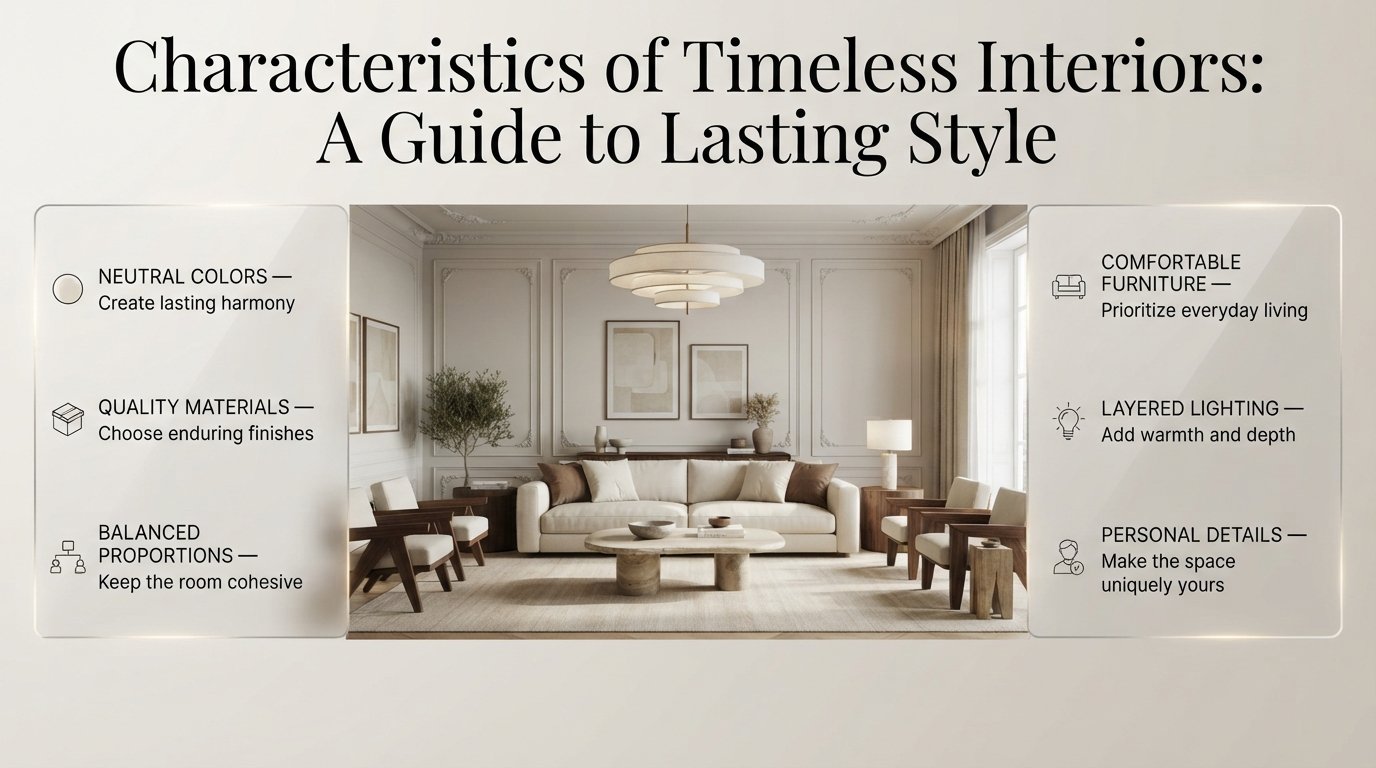
Characteristics of Timeless Interiors | You decorate your living room with the latest furniture, choose the colors everyone is talking about, and spend money on fashionable accessories. For a while, everything looks perfect. A few years later, however, the same room starts feeling dated, and you begin wondering whether another expensive makeover is necessary.
This is where understanding the characteristics of timeless interiors makes a real difference. Instead of designing around temporary trends, you can create a home that remains attractive, comfortable, and practical as your lifestyle changes.
Timeless interior design isn’t about making every room white, beige, or traditionally decorated. It’s about combining appropriate proportions, dependable materials, coordinated colors, comfortable furniture, useful lighting, and personal details in a way that feels natural.
At DesignMode24 Interior Design, the goal is to help homeowners understand design decisions that improve the way a home looks and functions. This guide takes that approach by explaining what makes an interior timeless, how to select the right finishes, which mistakes to avoid, and how to achieve lasting results without overspending.
Whether you’re planning a renovation, furnishing a new property, or refreshing an existing room, you’ll find practical strategies for building an interior that can evolve without losing its character.
What Are the Main Characteristics of Timeless Interiors?
Timeless interiors are defined by a combination of functionality, visual balance, appropriate proportions, durable materials, coordinated colors, layered lighting, and personal expression. These elements work together to create spaces that remain useful and visually appealing even as decorating trends change.
A timeless home doesn’t have to remain identical for decades. Its foundation should simply be strong enough to accommodate new accessories, different artwork, changing needs, and occasional updates without requiring a complete redesign.
1. Balanced Color Palettes That Remain Appealing
Color is often the first thing people notice when entering a room. It affects the atmosphere, influences how large a space appears, and changes how furniture and materials are perceived.
A timeless color palette usually has a dominant shade, a few supporting colors, and carefully selected accents. This structure creates visual consistency without making every surface look identical.
Warm white, soft beige, greige, muted gray, olive green, navy, and earthy brown are common choices. However, the best palette depends on your architecture, natural light, flooring, and personal preferences.
For example, a living room with oak flooring might combine warm-white walls, a charcoal sofa, cream curtains, and olive-green cushions. The colors differ, but their undertones complement one another.
How to build a timeless color palette:
- Choose a dominant color for walls or other large surfaces.
- Select supporting colors that work with existing flooring and furniture.
- Introduce stronger shades through accessories or a statement piece.
- Repeat one or two colors in different parts of the room.
- Test paint samples under both daylight and artificial lighting.
A common mistake is choosing a paint color from an attractive photograph without considering the light in your own home. The same shade can look warmer, cooler, brighter, or darker depending on its surroundings.
💡 Pro Tip: If you want to experiment with a fashionable color, introduce it through cushions, artwork, or a small accent piece before committing to permanent finishes.
For more inspiration, explore Paint and Color.
2. Quality Materials That Age Gracefully
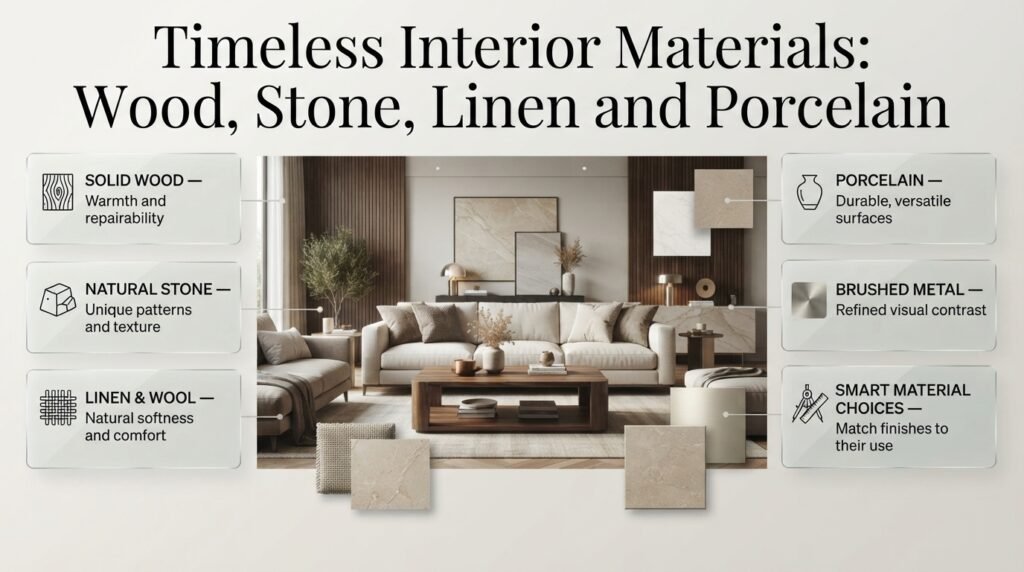
Materials influence how an interior looks, feels, and performs over time. A timeless design prioritizes finishes that suit their environment and can withstand the wear they are likely to experience.
Wood, stone, linen, wool, ceramic, porcelain, and selected metals can all contribute to an enduring interior. The key is to select the right material for the right application rather than assuming that natural or expensive materials are automatically superior.
Consider a dining table made from solid wood. Depending on its finish, it may develop small marks and variations through everyday use. These can sometimes be repaired or become part of the table’s character.
A kitchen countertop has different requirements. It needs to tolerate spills, cleaning, heat exposure within the manufacturer’s limits, and frequent use. Natural stone, engineered surfaces, and porcelain each offer different advantages and maintenance needs.
| Material | Main benefit | Important consideration |
|---|---|---|
| Solid wood | Warm appearance and potential repairability | Requires suitable care and may respond to humidity |
| Natural stone | Distinctive patterns and texture | Maintenance varies by stone type |
| Linen | Relaxed, natural appearance | Can wrinkle and may shrink if improperly cleaned |
| Wool | Softness and useful resilience | Cleaning and purchase costs |
| Porcelain | Durable, versatile finish | Hard surface and grout maintenance |
| Brushed metal | Subtle contrast and refined detail | Finish quality and resistance to corrosion |
Before making a purchase, consider cleaning requirements, sunlight exposure, moisture, repair options, and expected lifespan.
Expert advice: Spend more attention on materials that are expensive or disruptive to replace, such as flooring, fitted cabinetry, and countertops. Decorative accessories can be changed much more easily.
3. Furniture With the Right Scale and Proportion
One of the most overlooked characteristics of timeless interiors is correct furniture scale.
A beautiful sofa can still look wrong if it overwhelms the room. A small rug can make an otherwise spacious seating arrangement appear disconnected. Oversized dining chairs may leave insufficient room for people to move comfortably.
Proportion means understanding how each item relates to the room, the architecture, and the furniture around it.
Before purchasing furniture, measure the available floor area, doorways, circulation routes, and the dimensions of existing pieces.
As a starting point, a main walking route of around 30–36 inches (76–91 cm) is often useful where the layout allows. A gap of approximately 14–18 inches between a sofa and coffee table can also provide a comfortable balance between reach and movement.
These measurements are guidelines rather than fixed requirements. The correct arrangement depends on the furniture, room dimensions, accessibility needs, and intended use.
For example, a compact apartment may benefit from a streamlined sofa with raised legs, a suitably sized rug, and a narrow side table. A large living room might need a substantial sectional and additional seating to avoid feeling empty.
The aim is to make the room feel balanced rather than crowded or underfurnished.
Learn more through this guide to Visual Weight in Interior Spaces.
4. Functional Layouts That Make Everyday Life Easier
A room should work well before it is decorated. Timeless interiors account for movement, conversation, natural light, privacy, storage, and the activities people perform every day.
Imagine a living room where a sofa and chairs look symmetrical but block the route between the entrance and the kitchen. The arrangement might look attractive in a photograph, yet become irritating whenever several people use the space.
A functional layout solves these problems before accessories are introduced.
Follow this planning process:
- Identify the room’s main purpose.
- Mark doors, windows, fixed cabinetry, and electrical points.
- Identify the main walking routes.
- Place the largest furniture pieces first.
- Add smaller pieces only when circulation remains comfortable.
- Test the arrangement using measurements or temporary floor markers.
For a family living room, the main seating might face a fireplace or television while additional chairs support conversation. A side table can provide a convenient surface without obstructing the entrance.
A good layout also makes future changes easier. You may be able to replace the rug or chairs without reorganizing the entire room.
Explore more practical ideas in the Interior Design guide.
5. Natural Light and Layered Artificial Lighting
Lighting changes how people experience a room. It influences the appearance of colors, the visibility of textures, and the atmosphere during different parts of the day.
A timeless interior makes the best possible use of natural light while providing several types of artificial illumination.
Three useful layers are:
- Ambient lighting: General illumination for the room.
- Task lighting: Focused light for reading, cooking, grooming, or working.
- Accent lighting: Light that highlights artwork, architectural features, shelving, or decorative objects.
A bedroom, for example, may combine a ceiling fixture with bedside reading lamps and subtle wardrobe lighting. A kitchen may need general illumination, focused light over preparation surfaces, and selected accent lighting.
The advantage is flexibility. The room can be bright during practical tasks and more relaxed when you want to unwind.
Where appropriate, dimmers and separately controlled lighting circuits can make a room easier to adapt. Select suitable fixtures for the location and follow electrical safety requirements.
⭐ Expert Tip: Plan lighting before a renovation is finished. It is easier to position switches, outlets, and wiring correctly during the planning stage than to correct an unsuitable arrangement later.
For additional ideas, visit Intelligent Lighting.
6. Simplicity Without Losing Personality
Timeless interiors often use restraint to create a clear visual hierarchy. Rather than filling every surface with accessories, they allow selected pieces to stand out.
This doesn’t mean a timeless room must be minimalist. Traditional, contemporary, rustic, and transitional interiors can all feel enduring when their elements work together.
Consider a console table displaying numerous small ornaments, framed photographs, decorative trays, and candles. The individual objects might be attractive, but the combined effect can feel cluttered.
A carefully arranged lamp, one meaningful photograph, and a ceramic bowl may create a more balanced display.
Before adding another accessory, ask yourself:
- Does it have a useful function?
- Does it contribute something visually or emotionally?
- Does it complement the existing palette?
- Is there enough space for it to stand out?
Negative space—the area left free around objects—is important because it gives the eye room to rest.
A room often feels more considered when every decorative piece has a reason to be there.
7. Comfortable Furniture That Supports Real Life
Furniture should be comfortable enough to use regularly. A chair that looks impressive but causes discomfort will rarely become a favorite, regardless of how attractive it appears.
Comfort depends on factors such as seat depth, seat height, back support, arm height, cushion firmness, and upholstery.
A deep sofa may suit someone who enjoys lounging, but it can be uncomfortable for a shorter person whose feet do not reach the floor properly. A firm dining chair may provide better support during long meals than a soft lounge chair.
Consider the room’s main purpose before selecting furniture.
- For family rooms, prioritize durability and easy maintenance.
- For reading areas, consider supportive seating and task lighting.
- For dining rooms, check chair dimensions against the table.
- For bedrooms, balance mattress access, bedside storage, and circulation.
Upholstery should also match the household. Performance fabrics may be useful for busy family spaces, while delicate textiles might suit a lower-use sitting room.
For a more detailed discussion, read Sofa Seat Depth Selection.
8. Natural Textures That Create Depth
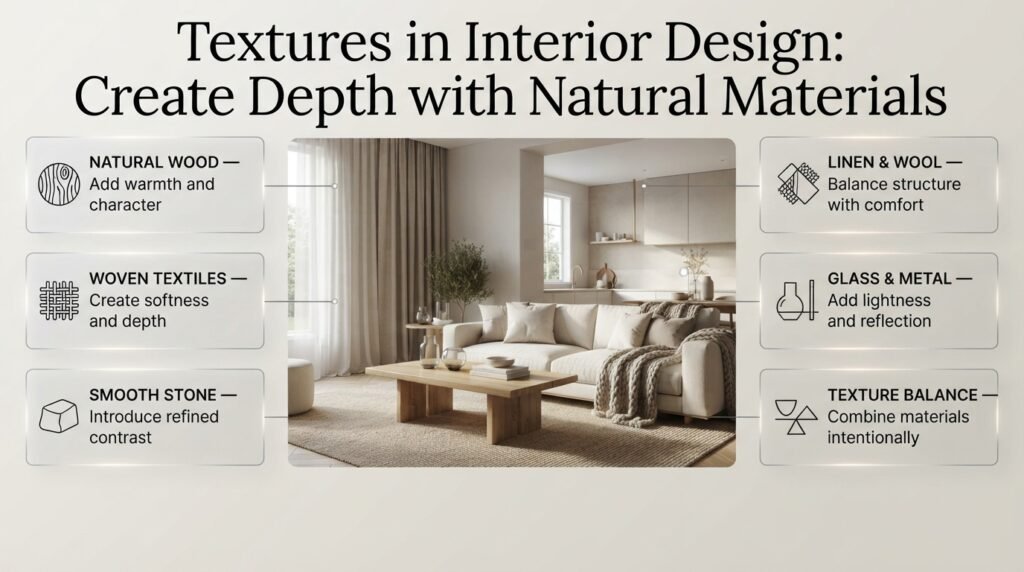
A room can feel flat when every surface has the same finish. Texture adds depth and character without requiring a large number of colors.
Imagine a living room with smooth walls, a timber coffee table, a woven rug, linen curtains, and a wool throw. The palette can remain simple because the different surfaces create visual interest.
Useful combinations include:
- Smooth stone with textured wood.
- Matte cabinetry with brushed-metal handles.
- Linen upholstery with a wool rug.
- Glass with natural timber.
- Soft curtains with structured furniture.
Contrast also helps balance a room’s visual weight. A space dominated by stone, glass, and metal may feel cold without wood or textiles. A room filled with heavy fabrics and dark furniture may benefit from lighter surfaces or reflective accents.
The goal is not to collect as many materials as possible. It’s to create a deliberate relationship between them.
9. Storage That Keeps Rooms Organized
Storage is an essential part of timeless interior design because clutter can undermine both function and appearance.
The most effective storage solutions reflect the way a household actually lives.
An entrance may need space for shoes, coats, bags, and keys. A bedroom may need drawers for accessories and a wardrobe designed around the occupants’ clothing. A living room might benefit from concealed storage for games, blankets, and electronic accessories.
Consider combining closed storage with selected open displays.
Closed cabinetry hides everyday clutter, while open shelves can display books, artwork, and meaningful objects. Too much closed storage may make a room feel heavy, but excessive open shelving can create visual noise.
Plan storage before purchasing decorative furniture. Otherwise, additional cabinets and baskets may be added later without a clear place in the layout.
Useful resources include Entryway Storage Capacity Planning and Wall Shelves Ideas.
10. Personal Details That Make a House Feel Like Home
A timeless interior should reflect the people who live in it. Without personal details, even a polished room can feel impersonal.
Artwork, family photographs, inherited furniture, handmade ceramics, books, and travel souvenirs can give a space character.
The key is to display these items thoughtfully.
For example, an inherited wooden cabinet can sit comfortably in a modern living room when its material or color connects with the surrounding furniture. Contemporary artwork can also bring freshness to a traditional space.
Personal items don’t need to match perfectly. Their relationship with the room matters more than strict uniformity.
Choose things you genuinely value instead of buying accessories simply because they are fashionable.
A home that reflects its occupants is more likely to remain meaningful as trends change.
Which Colors Work Best for Timeless Interior Design?
Timeless colors are shades that complement a room’s architecture, lighting, materials, and furnishings. Neutral colors are popular because they offer flexibility, but muted greens, blues, terracotta, and deeper earthy tones can also create lasting interiors.
The best palette is one you enjoy living with and can update without replacing major finishes.
Warm Neutrals or Cool Neutrals?
Warm neutrals have undertones of yellow, red, or brown, while cool neutrals tend toward blue, green, or violet. Both can work well, but the relationship between them needs consideration.
| Color | General atmosphere | Suitable combinations |
|---|---|---|
| Warm white | Soft and welcoming | Oak, cream, warm stone |
| Greige | Balanced and adaptable | Natural wood, charcoal accents |
| Cool gray | Crisp and restrained | Concrete, silver metals |
| Olive green | Natural and relaxed | Walnut, cream, brass |
| Navy blue | Classic and structured | White, oak, warm metals |
| Terracotta | Earthy and warm | Linen, natural stone, muted green |
Always compare paint samples with your flooring, upholstery, countertops, and other fixed finishes.
A shade that looks soft in a bright showroom may appear cold in a north-facing room. A beige that seems neutral on a small sample may look noticeably yellow when applied to a large wall.
Quick Tip: Test paint on large sample boards and move them around the room. Observe them in daylight and under the artificial lighting you normally use.
How Can You Combine Classic and Modern Interior Design?
Classic and modern design can work together when their colors, materials, proportions, and shapes share a clear relationship. A timeless interior doesn’t need to belong to a single period; it needs a consistent visual direction.
For example, a traditional dining table can be paired with modern chairs, or a contemporary sofa can sit beneath classic artwork in a room with architectural molding.
Choose a Dominant Style
Begin with one main design direction and introduce the other as a supporting influence.
A traditional room might include contemporary lighting and restrained artwork. A modern room might gain warmth from a vintage cabinet, a traditional rug, or antique accessories.
This approach prevents the room from feeling like a collection of unrelated purchases.
Introduce Trends Through Replaceable Items
Trends can make an interior feel current, but they don’t need to determine permanent design decisions.
Useful places to experiment include:
- Cushions and throws.
- Artwork and prints.
- Lampshades.
- Small occasional tables.
- Decorative accessories.
- Removable wallpaper.
This allows you to change the atmosphere without replacing flooring, cabinetry, or major furniture.
For advice on creating a consistent look throughout your home, explore Creating Cohesion Between Different Rooms.
What Mistakes Make an Interior Look Dated?
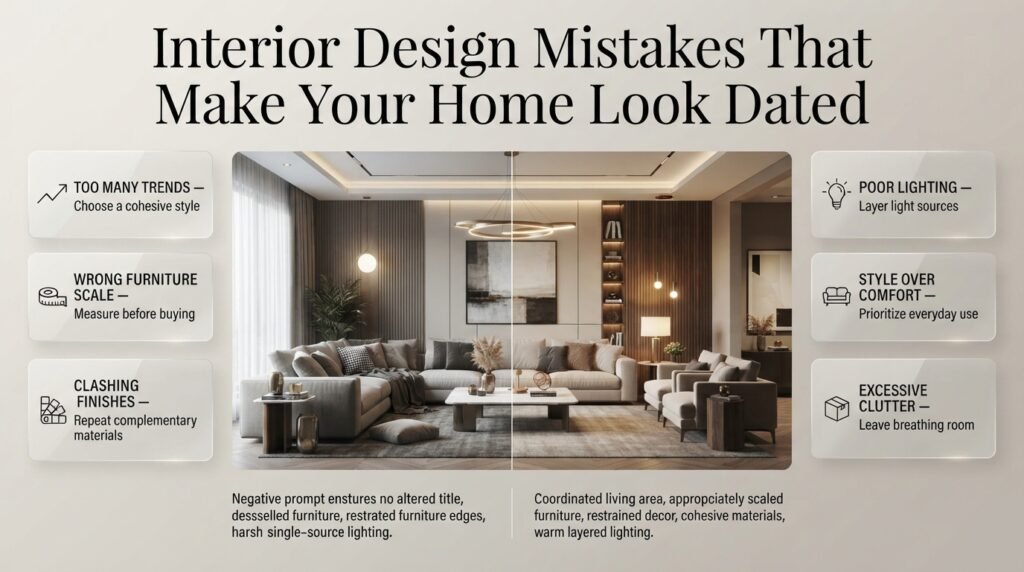
Interiors often become dated when they depend too heavily on one trend, ignore practical requirements, or combine too many unrelated finishes.
Following Every Decorating Trend
Social media can provide useful inspiration, but copying several fashionable looks at once can create a disconnected room.
How to avoid it: Identify the elements you genuinely like and check whether they suit your architecture, lifestyle, and existing furnishings before purchasing anything.
Buying Furniture Without Measuring
A sofa that blocks a walkway or a dining table that leaves insufficient room for chairs can become a daily frustration.
Measure the room, check the furniture dimensions, account for doors and drawers, and confirm delivery access before ordering.
Choosing Materials Only for Their Appearance
Delicate upholstery may be unsuitable for a busy family room, while some untreated materials may not perform well in damp conditions.
Evaluate durability, cleaning requirements, sunlight exposure, and expected wear before making a decision.
Using Too Many Colors and Finishes
Too many competing materials can make a room feel fragmented.
Choose a limited material palette and repeat selected finishes to establish continuity. Introduce contrast where it adds a clear benefit.
Relying on One Ceiling Light
A single overhead fixture may leave corners dark and make the room feel flat.
Combine ambient lighting with task and accent sources where appropriate. Consider how the room will be used in the evening as well as during daylight.
Prioritizing Appearance Over Comfort
Beautiful furniture is not a successful choice if it doesn’t suit the people who use it.
Test major pieces when possible and evaluate comfort, dimensions, maintenance, and construction alongside style.
Decorating Every Available Surface
Too many accessories compete for attention and make cleaning harder.
Keep frequently used objects accessible, display meaningful pieces selectively, and leave some surfaces clear.
How Can You Create a Timeless Interior Step by Step?
The most reliable approach is to work from foundational decisions toward decorative details. This helps you avoid spending money on accessories before the layout, colors, and materials are settled.
Step 1: Understand Your Space and Lifestyle
Identify what the room needs to do.
A family living room might need durable upholstery, flexible seating, and concealed storage. A home office may require task lighting, supportive seating, and organized cable management.
Write down your priorities before shopping.
Step 2: Build a Coordinated Color Palette
Start with permanent or expensive-to-replace elements such as flooring, countertops, and cabinetry.
Choose supporting colors for walls, upholstery, and textiles. Test samples together before committing to the final combination.
Step 3: Invest in Important Furniture First
Choose the major furniture pieces according to their purpose, dimensions, construction, and expected use.
You don’t have to purchase everything at once. Buying fewer, better-suited pieces can be more effective than filling the room quickly with furniture that doesn’t work together.
Step 4: Plan Lighting and Storage
Determine where you need general illumination, task lighting, and accent lighting.
Plan storage around daily routines so the room remains functional without accumulating extra cabinets and baskets later.
For larger projects, settle electrical and built-in storage plans before finishing the walls.
Step 5: Introduce Texture and Contrast
Add rugs, curtains, cushions, artwork, and accessories once the major elements are in place.
Combine smooth and textured materials, softer and harder surfaces, and lighter and darker tones to create depth.
Step 6: Add Personal Details Gradually
Finish the room with meaningful objects and artwork.
Live with the arrangement before purchasing more accessories. You may find that one reading lamp or a better-sized rug solves the problem more effectively than an entirely new set of decorations.
For affordable project ideas, explore DIY Home Projects and DIY Home Decor Crafts.
What Do Interior Designers Consider Before Finalizing a Timeless Room?
Professional interior planning considers architecture, furniture scale, lighting, material performance, maintenance, and the client’s needs before decorative choices are finalized.
Work With the Architecture
Ceiling height, window placement, existing floors, and architectural details influence the way a room feels.
Rather than fighting every existing feature, identify which elements can become part of the design.
If a home already has attractive timber flooring, for example, furniture and colors can be chosen to complement it instead of covering it unnecessarily.
Repeat Materials Without Making Rooms Identical
Repeating a material can connect spaces visually. However, using the same finishes everywhere may make a home feel monotonous.
Oak might appear in both the living room and dining room while each space uses different upholstery, artwork, and furniture shapes.
The shared material creates continuity without removing individuality.
Consider Long-Term Maintenance
Ask how surfaces should be cleaned, whether upholstery can be repaired, and whether a finish needs periodic sealing or special treatment.
A material that suits your cleaning routine is more likely to remain attractive over time.
For example, some polished finishes show fingerprints readily, while deeply textured surfaces may collect dust. The best option depends on the product and household.
Plan Larger Projects Carefully
For renovations, document material specifications, project scope, costs, responsibilities, and how changes will be approved.
Clear communication helps prevent misunderstandings about finishes, delivery dates, installation, and additional charges.
Before hiring a professional, review Interior Designer Contract Essentials.
Make Room for the Unexpected
Not every attractive piece needs to be purchased during the initial decorating phase.
Some of the most personal interiors develop gradually. A vintage chair discovered later, artwork collected over several years, or an inherited object may add more character than buying every accessory at once.
Allowing a room to develop can also prevent unnecessary purchases.
How Do Timeless Interiors Compare With Trend-Driven Interiors?
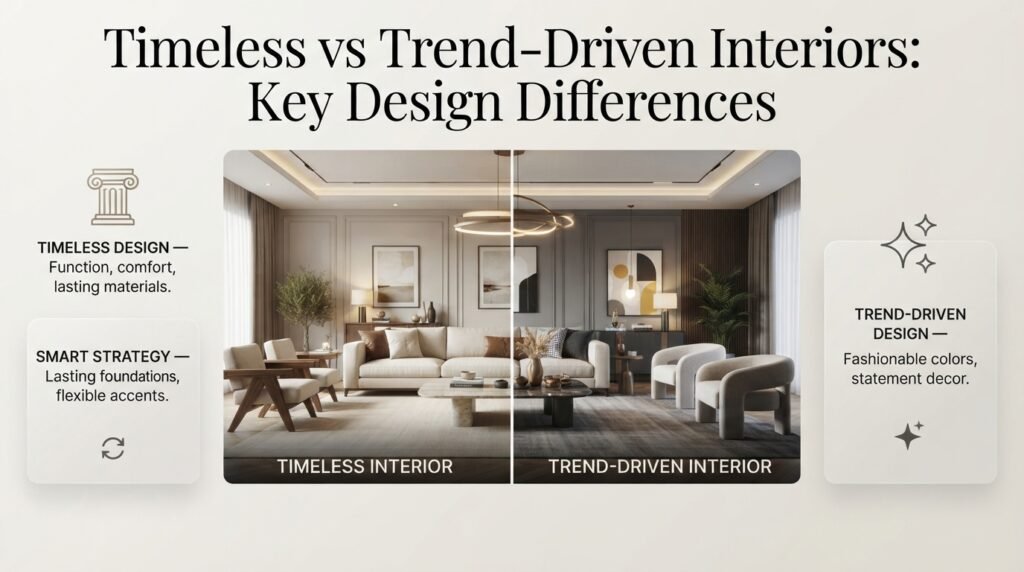
Timeless and trend-driven interiors can both look attractive. The difference lies in how much the overall design depends on a particular fashion and how easily it can adapt when preferences change.
| Feature | Timeless approach | Trend-driven approach |
|---|---|---|
| Design foundation | Function and enduring principles | Current popular aesthetics |
| Color palette | Coordinated and adaptable | May depend on a specific trend |
| Furniture | Chosen for comfort, fit, and longevity | May prioritize a fashionable look |
| Materials | Selected for suitability and maintenance | May emphasize popular finishes |
| Accessories | Meaningful and selectively displayed | May be replaced frequently |
| Future updates | Often possible through smaller changes | May require broader changes |
These categories are not absolute. A trend-driven room can contain durable furniture, and a timeless interior can include fashionable details.
A practical strategy is to establish a lasting foundation while using replaceable elements to express current tastes.
How Can You Create Timeless Interiors on a Budget?
A timeless home doesn’t require luxury furniture or a complete renovation. You can often improve a room by correcting its layout, coordinating existing colors, improving lighting, reducing clutter, and repairing furniture.
Start with changes that make a meaningful difference to daily life.
- Rearrange existing furniture: Improve circulation before buying new pieces.
- Edit accessories: Remove items that compete for attention.
- Refresh textiles: Update cushions, curtains, or rugs to improve coordination.
- Improve lighting: Add a suitable reading lamp or adjust poorly chosen bulbs.
- Repair existing furniture: Refinish a wooden table or fix a loose chair when practical.
- Consider secondhand pieces: Look for well-made vintage furniture that suits the room.
- Decorate gradually: Buy items only when you know what the space needs.
The best way to control costs is to distinguish between necessary improvements and optional decoration.
A room may need better lighting more urgently than another decorative object. A damaged chair may deserve repair before you purchase a replacement.
What are the most important characteristics of timeless interiors?
The most important characteristics of timeless interiors are balanced proportions, functional layouts, coordinated color palettes, durable materials, comfortable furniture, layered lighting, and carefully selected decorative details. These elements help a home remain attractive and practical even when popular decorating trends change. Rather than relying on expensive furniture or fashionable finishes, timeless design focuses on creating a cohesive space that suits the architecture and the people who live in it. A well-designed living room, for example, might combine warm neutral walls, a comfortable sofa, natural wood furniture, textured fabrics, and meaningful artwork. Each element contributes to the overall atmosphere without competing for attention. The result is a space that feels considered rather than tied to a particular year or trend.
Practical ways to create a timeless interior:
Choose colors that complement your existing flooring, furniture, and natural light.
Invest in well-made furniture that suits the room’s dimensions and daily use.
Combine different textures to create depth without overcrowding the space.
Prioritize comfortable circulation, useful storage, and appropriate lighting.
Add personality through artwork, family heirlooms, and meaningful accessories.
Which colors are best for creating a timeless interior design?
The best colors for timeless interiors are those that complement the home’s architecture, lighting, and materials while remaining comfortable to live with over time. Warm whites, soft beige, greige, muted gray, olive green, navy blue, and earthy brown are popular options because they work with a wide range of furniture styles. However, a timeless palette doesn’t need to be completely neutral. Deeper colors can create a distinctive and enduring appearance when balanced with suitable supporting shades. For example, olive-green cabinetry can work beautifully with warm wood, cream walls, and brushed-metal hardware. The key is to create a coordinated palette rather than selecting individual colors without considering how they interact. Testing paint samples in different lighting conditions also helps prevent expensive decorating mistakes.
Color-selection tips for lasting results:
Use one dominant color and introduce complementary shades through furniture and accessories.
Consider the undertones of your flooring, countertops, and existing finishes.
Introduce bold colors through artwork, cushions, or smaller furniture pieces.
Test paint samples in daylight and under your usual evening lighting.
Avoid choosing a color solely because it is currently popular on social media.
How can I make my home look timeless without spending too much money?
Creating a timeless home doesn’t require a complete renovation or luxury furniture. In many cases, improving the existing layout, reducing visual clutter, coordinating colors, and updating lighting can make a noticeable difference. Instead of replacing everything at once, identify which elements genuinely need improvement. An existing wooden table might need refinishing rather than replacement, while rearranging furniture could improve circulation without costing anything. Shopping for quality secondhand furniture and gradually purchasing suitable accessories can also help you stay within budget. The most important decision is to spend money on improvements that offer lasting practical or visual value rather than buying decorative items simply because they’re fashionable.
Budget-friendly improvements to consider:
Rearrange furniture to improve movement and make better use of available space.
Repair or refinish existing furniture when it remains structurally sound.
Refresh cushions, curtains, and rugs to create a more coordinated color scheme.
Add suitable lamps instead of relying entirely on overhead lighting.
Invest in durable, frequently used items before purchasing decorative accessories.
Explore DIY home projects for practical ways to improve your space gradually.
Can I combine modern trends with timeless interior design?
Modern trends can work well in timeless interiors when they’re introduced selectively and complement the room’s existing design. The most effective approach is to establish a lasting foundation with appropriate furniture, coordinated colors, functional layouts, and dependable materials before adding fashionable details. For example, a classic living room can feel contemporary with a modern pendant light, colorful artwork, or sculptural side table. These additions can refresh the space without requiring the replacement of flooring, fitted cabinetry, or major furniture. Problems usually arise when too many unrelated trends compete for attention or when expensive permanent finishes are chosen mainly because they’re fashionable. By keeping trend-led choices relatively easy to change, you can enjoy current styles while maintaining a cohesive interior.
Ways to balance timeless design with modern trends:
Keep major furniture pieces and permanent finishes adaptable.
Experiment with current colors through cushions, artwork, and accessories.
Choose trendy pieces that complement the room’s existing materials and proportions.
Repeat selected colors or finishes to maintain visual consistency.
Avoid renovating an entire room simply to reproduce a short-lived design trend.
Which furniture and materials should I choose for a timeless interior?
The best furniture and materials for a timeless interior are those that combine suitable proportions, lasting construction, practical maintenance, and a style that works with the rest of the home. Wood, natural stone, wool, linen, ceramic, and selected metal finishes can provide enduring texture and visual interest. However, the right choice depends on how the room is used. A busy family living room may benefit from durable, easy-care upholstery, while a formal sitting room might accommodate more delicate textiles. Furniture dimensions are equally important: an oversized sofa can overwhelm a small living room, while undersized furniture may leave a large space feeling empty. Before purchasing anything, consider comfort, available space, expected wear, cleaning requirements, and whether the item will remain useful as your needs change.
What to look for before buying:
Choose furniture that fits the room and allows comfortable walking routes.
Prioritize durable construction for frequently used pieces.
Select materials according to moisture, sunlight, cleaning, and wear requirements.
Combine wood, textiles, stone, and metal thoughtfully to create visual depth.
Test seating comfort and check furniture measurements before ordering.
Choose quality and functionality over fashionable designs that may quickly lose their appeal.
Conclusion: Creating Timeless Interiors That Last
Timeless interior design is about creating a home that remains beautiful, comfortable, and functional long after current trends have changed. Rather than following every new style, it focuses on thoughtful choices, balanced proportions, quality materials, practical layouts, and a consistent design direction. Neutral color palettes, well-made furniture, natural textures, effective lighting, and carefully selected decorative details help create spaces that feel welcoming without becoming outdated.
The most successful timeless interiors are not necessarily expensive or completely traditional. They combine personal style with long-term practicality, allowing homeowners to introduce modern accents while maintaining a strong foundation. Investing in durable materials, choosing furniture that suits the room, and prioritizing comfort can also reduce unnecessary replacements and renovation costs over time.
Whether you are designing a new home or updating an existing space, start with the elements that are difficult or costly to change, such as flooring, cabinetry, lighting infrastructure, and the overall layout. Then introduce personality through artwork, cushions, accessories, and other details that can be refreshed whenever your preferences evolve. For additional inspiration, explore Pure Home and discover practical ideas for creating a home that reflects your lifestyle.
Ultimately, the true characteristics of timeless interiors are simplicity, quality, balance, comfort, and adaptability. When these principles guide your decisions, you can create a home that feels relevant today, remains appealing for years, and continues to reflect your personality without depending on short-lived design trends.