
Introduction
Traditional Interior Design | Traditional interior design has remained one of the most admired decorating styles for generations because it combines elegance, comfort, and timeless beauty. While many design trends come and go, traditional interiors continue to create warm, welcoming spaces that feel sophisticated without appearing outdated. Whether you’re decorating a new home or renovating an existing one, this classic style offers a balanced look that never loses its charm.
If you’ve searched for Traditional Interior Design, you’re probably wondering what makes this style unique, whether it suits your home, and how to decorate without making your space feel old-fashioned. This comprehensive guide answers those questions while sharing practical tips, expert advice, and real-world examples to help you design a beautiful and functional home.
If you’re exploring more decorating inspiration, visit DesignMode24 Interior Design or browse other Interior Design Styles to compare different aesthetics before choosing the one that fits your lifestyle.
What Is Traditional Interior Design?
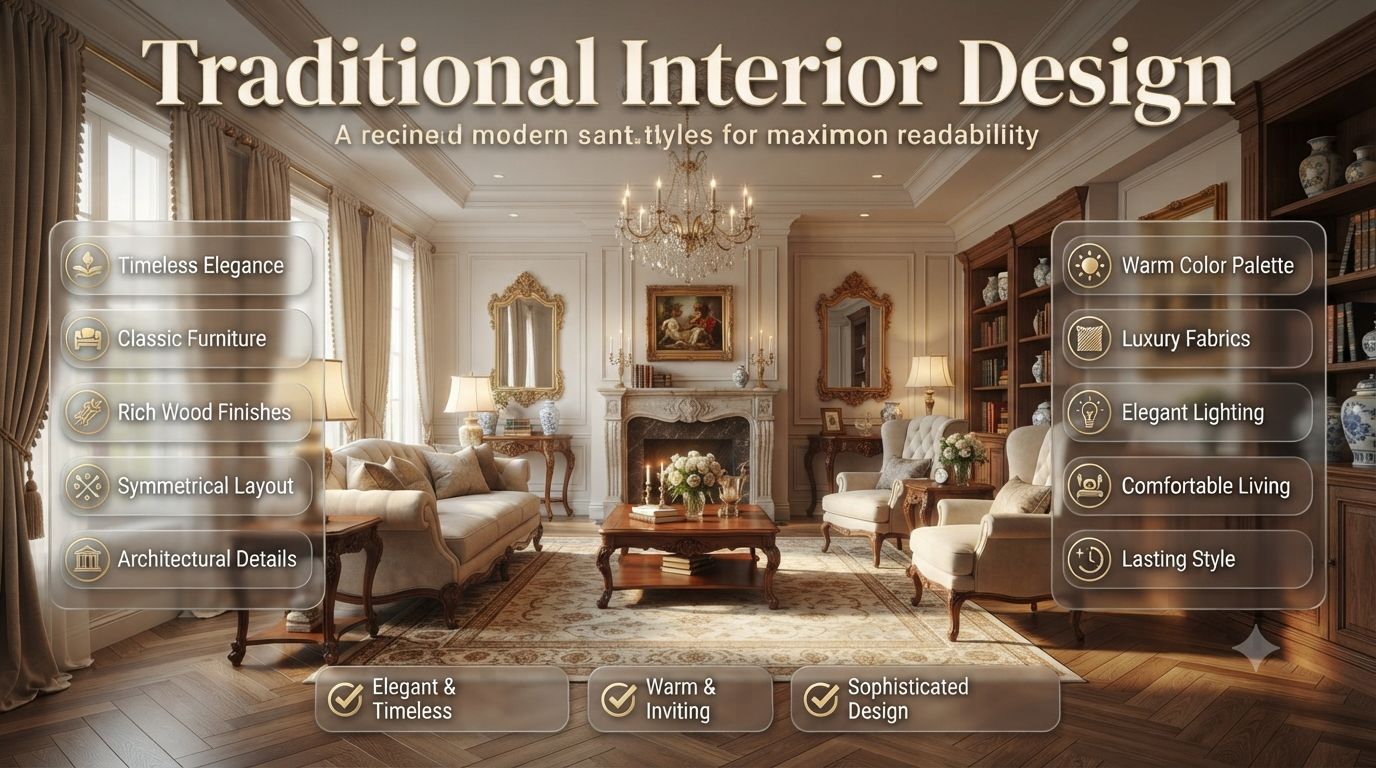
Traditional interior design is a timeless decorating style inspired by classic European homes from the 18th and 19th centuries. It focuses on symmetry, elegant furniture, warm color palettes, rich fabrics, decorative architectural details, and quality craftsmanship to create comfortable, sophisticated living spaces.
Unlike trend-based decorating styles, traditional interiors emphasize balance, proportion, and lasting beauty. Every furniture piece, fabric, and decorative accessory is carefully selected to create a harmonious environment that feels both luxurious and inviting.
Rather than chasing seasonal trends, traditional design celebrates timeless elements that continue to look beautiful year after year.
Why Is Traditional Interior Design So Popular?
Homeowners continue to choose traditional interiors because they offer:
- Timeless elegance
- Comfortable living spaces
- High-quality craftsmanship
- Long-lasting furniture
- Warm and inviting atmosphere
- Excellent resale appeal
- Easy coordination with antiques and family heirlooms
💡 Pro Tip: Traditional interiors don’t have to feel formal. Mixing classic furniture with comfortable seating and lighter fabrics creates a more relaxed version of this timeless style.
The History of Traditional Interior Design
Traditional interior design evolved from European architecture and classical decorating styles, particularly English, French, and Colonial influences. It reflects centuries of craftsmanship, elegant architecture, handcrafted furniture, and carefully balanced room layouts.
The origins of traditional interiors date back to a time when furniture was handcrafted by skilled artisans instead of mass-produced in factories. Homes featured detailed woodwork, decorative moldings, stone fireplaces, elegant chandeliers, and luxurious textiles that showcased both beauty and functionality.
As these design principles spread throughout Europe and North America, they became the foundation for what we now recognize as traditional interior design.
Major Influences
English Traditional
Known for:
- Rich wood furniture
- Comfortable seating
- Libraries
- Floral fabrics
- Cozy fireplaces
French Traditional
Recognized by:
- Curved furniture
- Decorative carvings
- Crystal chandeliers
- Elegant mirrors
- Ornate detailing
American Colonial
Features include:
- Symmetrical layouts
- Practical craftsmanship
- Natural wood finishes
- Functional furniture
- Warm family-friendly spaces
Today’s traditional interiors often combine these historical influences while incorporating modern conveniences, making them suitable for contemporary lifestyles.
Key Characteristics of Traditional Interior Design
Traditional interior design is characterized by symmetrical layouts, classic furniture, elegant architectural details, warm color palettes, layered fabrics, quality materials, and timeless decorative accessories that create a balanced and welcoming home.
Let’s explore each characteristic in greater detail.
1. Symmetry and Balance
One of the easiest ways to recognize traditional interiors is their balanced layout.
Furniture isn’t randomly arranged. Instead, designers carefully position matching elements throughout the room.
Examples include:
- Matching table lamps
- Twin armchairs
- Centered coffee tables
- Evenly spaced artwork
- Balanced bookshelves
This symmetrical approach creates visual harmony and makes rooms feel organized without appearing rigid.
⭐ Expert Tip: Always identify a focal point—such as a fireplace, large window, or statement artwork—before arranging furniture.
2. Elegant Furniture
Traditional furniture is built for longevity rather than short-term trends.
Common characteristics include:
- Rolled arms
- Curved legs
- Detailed wood carvings
- Rich upholstery
- Solid hardwood construction
- Refined silhouettes
Popular wood choices include:
- Mahogany
- Walnut
- Cherry
- Oak
- Maple
Unlike flat-pack furniture, traditional pieces are often handcrafted and designed to last for decades.
3. Rich Architectural Details
Traditional homes pay close attention to architectural features.
Common examples include:
- Crown molding
- Wainscoting
- Decorative ceiling trim
- Built-in cabinetry
- Fireplace mantels
- Raised wall panels
These architectural elements provide elegance before furniture and décor are even added.
If you’re planning a renovation, explore Home Improvement for ideas that complement traditional interiors.
4. Luxurious Fabrics
Textiles play an important role in creating warmth and sophistication.
Popular materials include:
- Linen
- Cotton
- Velvet
- Silk
- Wool
- Damask
Common patterns include:
- Floral
- Paisley
- Plaid
- Stripes
- Toile
Rather than overwhelming the room with patterns, professional designers repeat complementary fabrics to create visual consistency.
📌 Quick Tip: Layer different fabric textures—such as velvet cushions on a linen sofa—to make your room feel richer and more inviting.
5. Warm Color Palette
Traditional interiors typically avoid harsh or overly bright colors.
Instead, they rely on warm, calming tones that create a welcoming atmosphere.
Popular colors include:
- Cream
- Ivory
- Beige
- Taupe
- Soft Gold
- Sage Green
- Navy Blue
- Burgundy
- Chocolate Brown
These colors create a timeless foundation that allows furniture and décor to stand out naturally.
Need help selecting the perfect shades? Visit Paint Color for expert color inspiration and practical guidance.
Core Principles of Traditional Interior Design
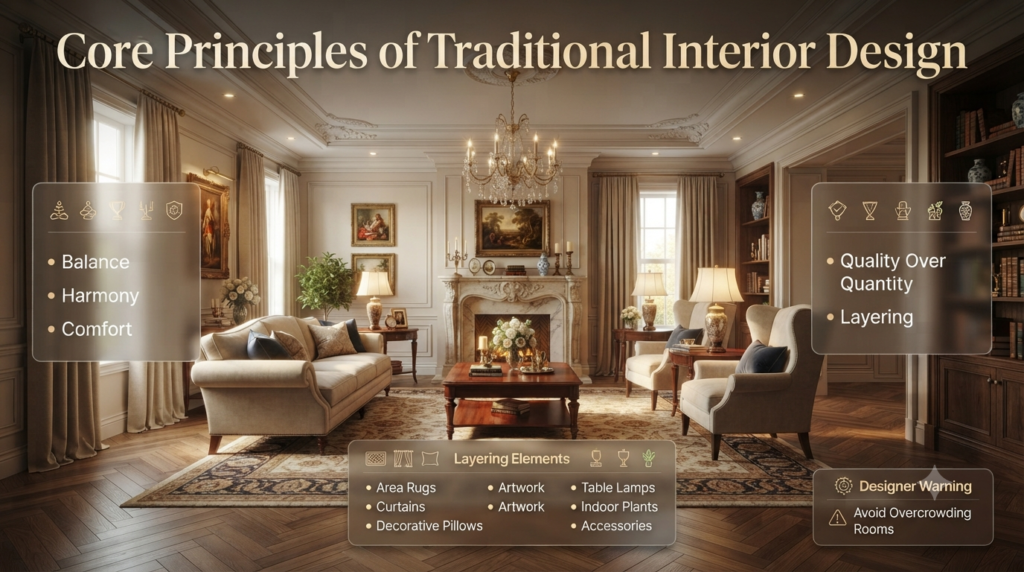
Every successful traditional home follows a set of timeless design principles rather than simply copying furniture styles.
Balance
Rooms should feel visually balanced.
Large furniture pieces are paired with similar-sized elements to create symmetry and stability.
Harmony
Every material, finish, texture, and decorative accessory should work together.
Nothing should appear out of place or disconnected from the overall design.
Comfort
Traditional homes are designed for everyday living.
Deep sofas, supportive chairs, soft rugs, and practical layouts make spaces both elegant and comfortable.
Quality Over Quantity
Instead of filling every corner with decorations, traditional interiors focus on fewer, higher-quality pieces.
Investing in well-crafted furniture often provides better long-term value than buying inexpensive trend-based décor.
Layering
Traditional rooms feel complete because multiple design elements work together.
These include:
- Area rugs
- Curtains
- Decorative pillows
- Artwork
- Table lamps
- Indoor plants
- Accessories
Each layer adds warmth, texture, and personality without creating clutter.
⚠ Common Mistake: Many homeowners believe traditional design means filling every room with heavy furniture and excessive decorations. In reality, professional designers prioritize balance, leaving enough open space to make rooms feel comfortable and elegant.
Traditional Interior Design vs Other Interior Styles
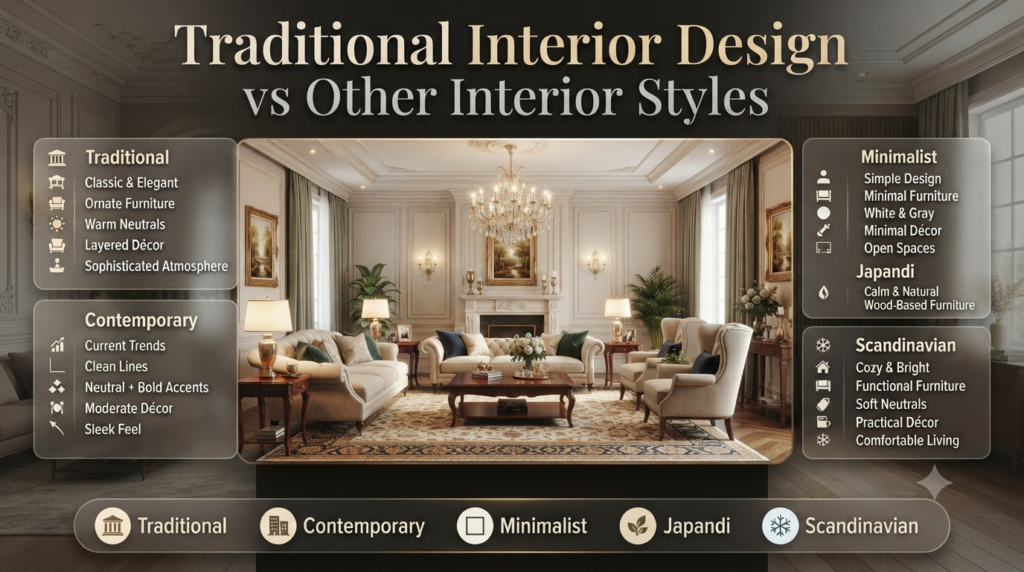
Choosing the right decorating style becomes easier when you understand how traditional interiors compare with other popular approaches.
| Feature | Traditional | Contemporary | Minimalist | Japandi | Scandinavian |
|---|---|---|---|---|---|
| Overall Style | Classic & Elegant | Current Trends | Simple | Calm & Natural | Cozy & Bright |
| Furniture | Ornate | Clean Lines | Minimal | Wood-Based | Functional |
| Color Palette | Warm Neutrals | Neutral with Bold Accents | White & Gray | Earth Tones | Soft Neutrals |
| Décor | Layered | Moderate | Minimal | Natural | Practical |
| Atmosphere | Sophisticated | Sleek | Open | Peaceful | Comfortable |
If you’re comparing decorating styles before making a decision, these guides may also help:
- Interior Design
- Contemporary Interior Design
- Minimalist Interior Design
- Japandi Interior Design
- Scandinavian Interior Design
Why Traditional Interior Design Never Goes Out of Style
Unlike trend-driven decorating styles, traditional interior design is built on timeless principles rather than temporary fashions. High-quality craftsmanship, balanced layouts, and neutral color palettes ensure that these spaces remain beautiful for decades.
Modern homeowners also appreciate the flexibility of traditional interiors. Smart home technology, energy-efficient lighting, and updated appliances can be seamlessly integrated without compromising the classic aesthetic. This ability to combine heritage with modern convenience is one of the reasons traditional design continues to be one of the most popular choices worldwide.
Traditional Interior Design Color Palette
Traditional interior design uses warm, timeless colors that create a comfortable and elegant atmosphere. Neutral shades form the foundation, while richer accent colors add depth, character, and sophistication without overwhelming the space.
Color is one of the first things people notice when entering a room. In traditional interiors, the goal isn’t to make a bold statement with bright colors but to create a calm, inviting environment that feels refined. Soft neutrals paired with classic accent shades make a room look polished while allowing furniture and architectural details to stand out.
Best Neutral Colors
These shades work well throughout almost every room:
- Ivory
- Cream
- Beige
- Warm White
- Taupe
- Soft Gray
- Light Sand
These colors provide a timeless backdrop that complements traditional furniture and decorative accessories.
Popular Accent Colors
Traditional interiors often incorporate deeper, richer tones such as:
- Navy Blue
- Forest Green
- Burgundy
- Dusty Blue
- Olive Green
- Chocolate Brown
- Antique Gold
- Deep Plum
These colors are commonly introduced through curtains, cushions, rugs, artwork, and upholstered furniture rather than large wall surfaces.
💡 Pro Tip: Use a neutral color on walls and introduce richer colors through accessories. It’s much easier and more affordable to update décor than repaint an entire room.
If you’re looking for color inspiration, explore Paint Color for ideas that complement traditional interiors.
Choosing Traditional Furniture
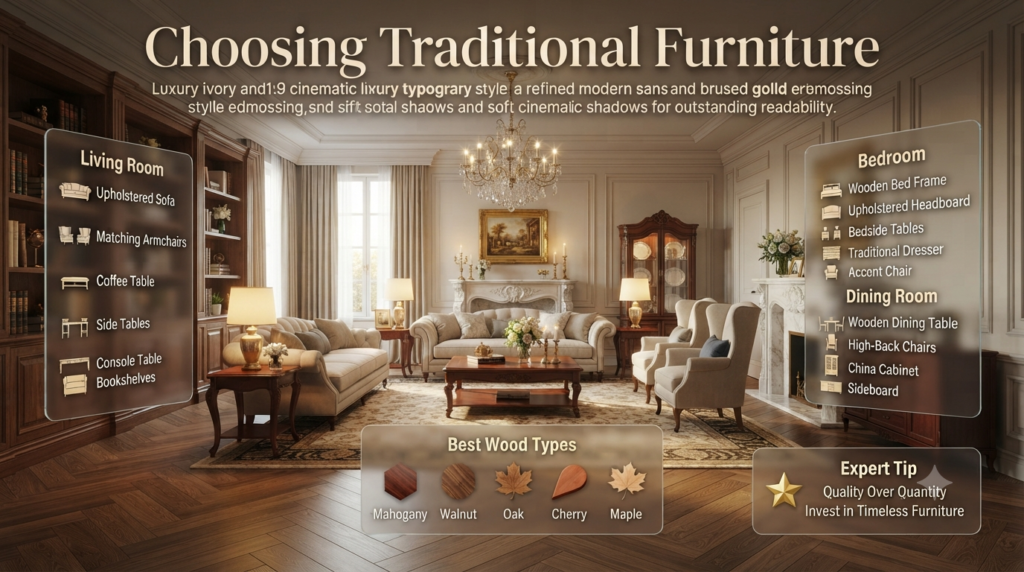
Traditional furniture features elegant shapes, premium materials, curved lines, handcrafted details, and timeless finishes. Every piece should prioritize both comfort and long-lasting quality.
Furniture is the heart of traditional interior design. Instead of chasing modern trends, this style emphasizes craftsmanship, durability, and classic beauty.
Essential Furniture Pieces
A traditional living room typically includes:
- Upholstered sofa
- Matching armchairs
- Solid wood coffee table
- Side tables
- Console table
- Bookshelves or display cabinets
Bedrooms often feature:
- Wooden bed frame
- Upholstered headboard
- Matching bedside tables
- Traditional dresser
- Accent chair
Dining rooms usually include:
- Large wooden dining table
- High-back chairs
- China cabinet
- Sideboard or buffet
Best Wood Types
Professional designers frequently choose:
- Mahogany
- Walnut
- Oak
- Cherry
- Maple
These hardwoods are valued for their durability and natural beauty.
⭐ Expert Tip: Invest in fewer, better-quality furniture pieces rather than filling every room with inexpensive décor. Quality furniture often lasts for decades and can even become family heirlooms.
Fabrics and Textiles
Layered fabrics add warmth, texture, and elegance to traditional interiors. Natural materials and timeless patterns create depth while maintaining a refined appearance.
Textiles soften a room and make it feel more inviting. They also help tie together furniture, colors, and decorative accessories.
Popular Fabric Choices
- Linen
- Cotton
- Velvet
- Wool
- Silk
- Damask
Traditional Patterns
Some of the most common patterns include:
- Floral
- Plaid
- Paisley
- Stripes
- Toile
- Damask
Rather than mixing too many patterns, choose two or three complementary designs and repeat them throughout the room.
Flooring for Traditional Homes
Traditional interiors typically feature natural flooring materials such as hardwood, stone, or high-quality tile. Area rugs add warmth, comfort, and visual interest while protecting the flooring underneath.
Best Flooring Options
| Flooring | Why It Works |
|---|---|
| Hardwood | Timeless and durable |
| Engineered Wood | Traditional look with easier maintenance |
| Natural Stone | Elegant and long-lasting |
| Marble | Luxurious appearance |
| Porcelain Tile | Practical for busy households |
Choosing Area Rugs
Traditional rugs often feature:
- Persian designs
- Oriental patterns
- Floral motifs
- Muted colors
- Handwoven textures
A large rug helps define seating areas and creates a cozy atmosphere.
📌 Quick Tip: Choose a rug large enough so that at least the front legs of your seating furniture rest on it. This creates a more balanced and professional layout.
Traditional Wall Treatments
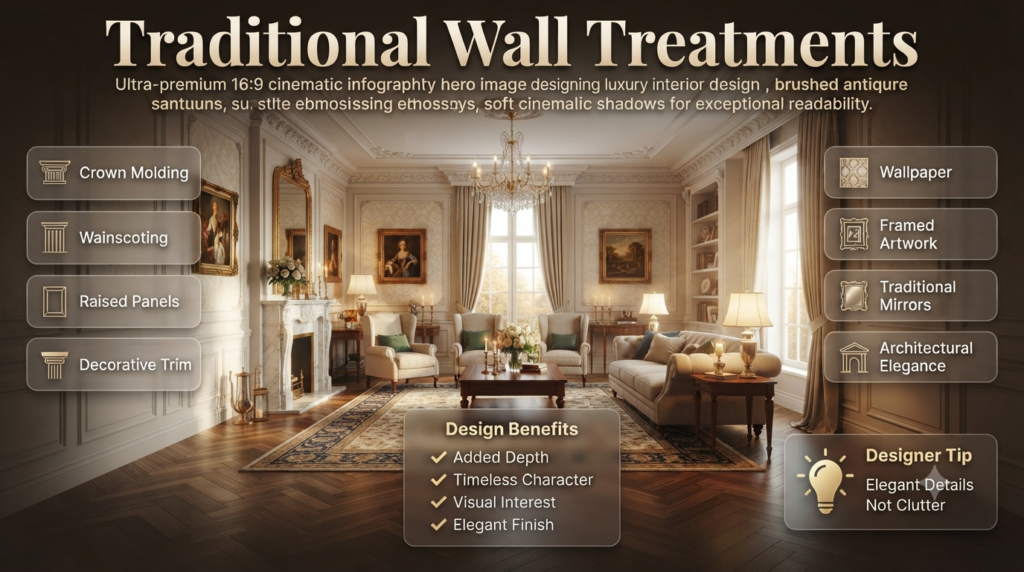
Walls in traditional interiors are more than painted surfaces. Decorative architectural details such as molding, paneling, wallpaper, and artwork add character and timeless elegance.
Popular wall treatments include:
- Crown molding
- Wainscoting
- Raised panels
- Wallpaper
- Decorative trim
- Framed artwork
- Traditional mirrors
These details give rooms greater depth and visual interest without making them feel cluttered.
If you’re considering decorative upgrades, visit Home Improvement for practical renovation ideas.
Lighting in Traditional Interior Design
Lighting should provide both functionality and elegance. Traditional interiors often combine ambient, task, and accent lighting using timeless fixtures and warm light tones.
Popular Lighting Fixtures
- Crystal chandeliers
- Pendant lights
- Table lamps
- Floor lamps
- Wall sconces
- Picture lights
Recommended Lighting Temperature
Warm white lighting (2700K–3000K) creates the cozy atmosphere associated with traditional homes.
Layering different light sources allows rooms to feel welcoming during both daytime and evening hours.
Decorative Accessories
Accessories complete a traditional interior by adding personality, warmth, and visual balance. Every decorative item should complement the room instead of competing for attention.
Popular decorative elements include:
- Framed artwork
- Decorative mirrors
- Ceramic vases
- Fresh flowers
- Antique clocks
- Books
- Candlesticks
- Decorative bowls
- Sculptures
Rather than filling every surface, carefully select accessories that reflect your personal style while maintaining balance.
⚠ Common Mistake: Overdecorating is one of the biggest mistakes in traditional design. Too many accessories can make a room feel crowded instead of elegant.
Traditional Interior Design Room by Room
Living Room
A traditional living room should feel warm, comfortable, and inviting.
Include:
- Upholstered sofa
- Matching chairs
- Wooden coffee table
- Traditional rug
- Fireplace (if available)
- Table lamps
- Artwork
Arrange furniture around a focal point to create conversation-friendly seating.
Dining Room
Focus on elegance and functionality.
Essential elements include:
- Wooden dining table
- Upholstered dining chairs
- Chandelier
- Sideboard
- China cabinet
- Centerpiece
Keep enough space around the table for comfortable movement.
Bedroom
Traditional bedrooms should promote relaxation.
Choose:
- Upholstered headboard
- Solid wood furniture
- Layered bedding
- Soft curtains
- Matching lamps
- Neutral wall colors
Comfort should always take priority over excessive decoration.
Home Office
A traditional home office creates a productive yet welcoming environment.
Include:
- Wooden desk
- Comfortable chair
- Built-in bookshelves
- Warm lighting
- Framed artwork
- Decorative accessories
Step-by-Step Guide to Creating a Traditional Interior
Step 1: Choose a Neutral Foundation
Start with warm neutral wall colors and timeless flooring.
Why it matters: Neutral backgrounds allow furniture and décor to become the focal point.
Professional advice: Avoid trendy wall colors that may quickly go out of style.
Quick example: Cream walls with medium-tone oak flooring.
Step 2: Invest in Quality Furniture
Purchase timeless furniture rather than inexpensive trend-based pieces.
Why it matters: Well-made furniture lasts much longer.
Professional advice: Focus on craftsmanship instead of quantity.
Quick example: Solid wood dining table with upholstered chairs.
Step 3: Layer Fabrics
Add curtains, cushions, throws, and rugs.
Why it matters: Layers make rooms feel warm and comfortable.
Professional advice: Mix textures instead of using identical fabrics everywhere.
Quick example: Linen curtains with velvet accent cushions.
Step 4: Add Architectural Details
Install molding, trim, or decorative wall panels.
Why it matters: Architectural details define traditional interiors.
Professional advice: Even simple crown molding dramatically enhances a room.
Quick example: White crown molding with soft beige walls.
Step 5: Finish with Accessories
Complete the room using artwork, lighting, books, and decorative objects.
Why it matters: Accessories add personality without overwhelming the space.
Professional advice: Edit your décor until every item feels intentional.
Quick example: Framed artwork above a fireplace with matching table lamps on each side.
Common Beginner Mistakes
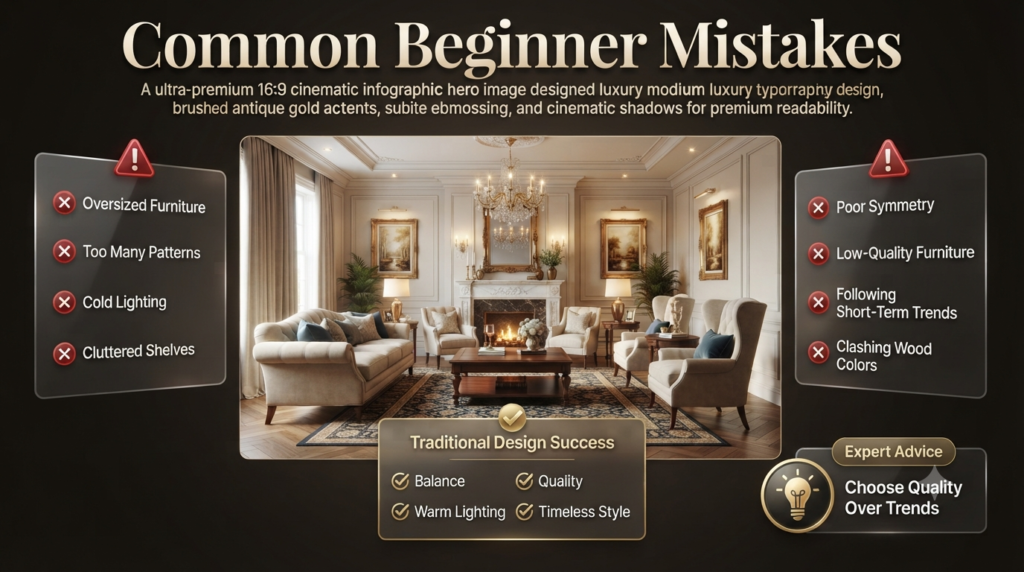
Many homeowners unintentionally reduce the elegance of traditional interiors by making simple decorating mistakes.
Avoid these common errors:
- Buying oversized furniture for small rooms
- Mixing too many patterns
- Choosing cold lighting instead of warm lighting
- Overdecorating shelves and tables
- Ignoring room symmetry
- Using poor-quality furniture
- Following short-term trends instead of timeless designs
- Selecting colors that clash with wood finishes
By focusing on balance, quality, and thoughtful design, you’ll create a home that feels elegant today and remains beautiful for years to come.
Expert Tips for Creating a Timeless Traditional Interior
Professional interior designers know that traditional design isn’t about filling a room with expensive furniture—it’s about creating balance, comfort, and lasting beauty. Small design decisions often make a bigger impact than buying costly décor.
Here are some expert recommendations that professionals use in real projects.
Invest in Statement Pieces
Instead of replacing all your furniture, choose one or two high-quality pieces that become the focal point of the room.
Examples include:
- A handcrafted dining table
- A classic upholstered sofa
- An elegant wooden bed frame
- A traditional fireplace mantel
These pieces create a timeless foundation that can easily adapt to changing décor trends.
⭐ Expert Tip: Spend more on furniture you use every day and save money on accessories that can be updated seasonally.
Layer Lighting
Professional designers never rely on a single ceiling light.
Instead, combine multiple lighting sources:
- Chandeliers
- Wall sconces
- Table lamps
- Floor lamps
- Picture lights
Layered lighting makes a room feel warmer, more inviting, and visually balanced.
Mix Old and New
Traditional interiors don’t need to look like museums.
Pair antique-inspired furniture with modern conveniences like:
- Smart lighting
- Energy-efficient appliances
- Contemporary artwork
- Modern upholstery fabrics
This blend creates a timeless home that suits today’s lifestyle.
Focus on Quality Materials
Natural materials age beautifully and often require fewer replacements over time.
Choose materials such as:
- Solid wood
- Marble
- Natural stone
- Brass
- Linen
- Cotton
- Wool
These finishes develop character over the years instead of looking worn out.
Traditional Interior Design on a Budget
Creating a traditional interior doesn’t always require a luxury budget. Prioritizing timeless furniture, neutral colors, and carefully selected accessories allows homeowners to achieve an elegant look without overspending.
A beautiful traditional home is built over time rather than completed in a single shopping trip.
Budget-Friendly Tips
✔ Paint walls using warm neutral colors.
✔ Buy fewer but better-quality furniture pieces.
✔ Shop for vintage furniture at local antique stores.
✔ Refinish existing wooden furniture instead of replacing it.
✔ Add traditional-style curtains.
✔ Use classic framed artwork.
✔ Incorporate decorative mirrors to reflect natural light.
✔ Layer affordable cushions and throws.
✔ Replace outdated lighting fixtures with timeless designs.
💡 Pro Tip: Vintage furniture often offers better craftsmanship than many newly manufactured budget pieces.
If you enjoy upgrading your home yourself, explore DIY Projects for creative ideas that complement traditional interiors.
Pros and Cons of Traditional Interior Design
| Pros | Cons |
|---|---|
| Timeless appearance | Quality furniture can be expensive |
| Comfortable living spaces | Decorative details require maintenance |
| Excellent resale appeal | May feel formal if overdecorated |
| Easy to combine with antiques | Heavy furniture may not suit small apartments |
| High-quality craftsmanship | Some materials require regular care |
| Never goes out of fashion | Initial investment is often higher |
The advantages usually outweigh the disadvantages, especially for homeowners looking for a style that will remain attractive for many years.
What is the difference between Traditional and Transitional interior design?
Traditional and Transitional interior design share a foundation of comfort and elegance, but they create very different visual experiences. Traditional interior design is rooted in classic European influences and emphasizes ornate details, rich wood finishes, decorative moldings, and timeless furniture with curved lines. Transitional interior design, on the other hand, blends the warmth of traditional design with the simplicity of modern aesthetics. It keeps classic proportions while reducing decorative details, creating spaces that feel lighter, cleaner, and more contemporary.
If you enjoy timeless elegance but also appreciate modern simplicity, transitional design offers the best of both worlds. Traditional interiors tend to feel more formal and layered, while transitional spaces prioritize openness and understated sophistication.
Key Differences:
Traditional design features ornate furniture and decorative details.
Transitional design combines classic furniture with modern simplicity.
Traditional rooms use richer colors and patterns.
Transitional interiors rely on neutral palettes with subtle textures.
Traditional décor is more layered, while transitional spaces feel cleaner and less formal.
Transitional design is ideal for homeowners who want a timeless look with a fresh, updated feel.
Can you mix modern furniture into a traditional living room without ruining the style?
Yes, you can successfully mix modern furniture into a traditional living room, and many professional designers encourage it. The key is maintaining balance rather than replacing every traditional element. A modern sofa with clean lines can work beautifully alongside a classic fireplace, crown molding, or antique wooden coffee table. This combination creates a space that feels timeless instead of overly formal or outdated.
The goal is to let traditional architectural features remain the foundation while using modern furniture to improve comfort and functionality. Avoid filling the room with too many contrasting styles, as this can make the design feel disconnected.
Best Practices:
Keep traditional architectural details like crown molding or wainscoting.
Choose modern furniture in neutral colors.
Mix natural materials such as wood, linen, and leather.
Maintain a balanced furniture layout.
Add classic artwork or traditional lighting to tie the room together.
Limit bold contemporary pieces so they don’t overpower the traditional character.
What color palettes define modern traditional interior design today?
Modern traditional interior design updates classic color schemes with softer, more versatile tones while maintaining warmth and elegance. Instead of dark reds and heavy browns dominating every room, today’s traditional interiors often use light neutrals paired with rich accent colors. This creates brighter spaces that still feel refined and timeless.
A balanced palette allows furniture, architectural details, and decorative accessories to stand out naturally without overwhelming the room. Layering warm neutrals with carefully chosen accent colors helps achieve a fresh yet classic appearance.
Popular Modern Traditional Color Palettes:
Warm white with natural oak and black accents.
Cream, beige, and soft taupe for a timeless foundation.
Sage green paired with ivory and brass finishes.
Navy blue combined with warm gray and walnut wood.
Soft greige with charcoal details for subtle contrast.
Dusty blue with crisp white trim and natural textures.
💡 Pro Tip: Keep walls neutral and introduce bold colors through cushions, artwork, rugs, or curtains. This makes it easier to refresh your décor without repainting the entire room.
How do I make a traditional home feel fresh and not outdated or stuffy?
A traditional home feels fresh when timeless design principles are combined with modern comfort and thoughtful styling. Instead of overcrowding rooms with heavy furniture and decorative accessories, focus on creating open, well-balanced spaces with plenty of natural light. Updating fabrics, lighting fixtures, and paint colors can dramatically transform a traditional interior while preserving its classic charm.
Mixing old and new elements is one of the easiest ways to modernize a traditional home. Contemporary artwork, simple accessories, and lighter textiles bring new energy to the space without compromising its elegant character.
Ways to Modernize a Traditional Home:
Paint walls in warm neutral shades instead of dark colors.
Replace heavy curtains with linen or cotton drapes.
Introduce modern lighting while keeping classic architectural details.
Reduce unnecessary decorative accessories.
Mix antique furniture with contemporary seating.
Add greenery and natural textures for a lighter atmosphere.
Use larger mirrors to reflect natural light and make rooms feel more spacious.
⭐ Expert Tip: Don’t remove original features like crown molding, fireplaces, or hardwood flooring. Instead, update the surrounding décor to create a timeless blend of classic and contemporary design.
What are the must-have architectural elements for an authentic traditional look?
Architectural details are one of the defining characteristics of authentic traditional interior design. Even with beautiful furniture, a room can feel incomplete if it lacks the classic features that give traditional homes their depth and character. Elements such as crown molding, paneled walls, and decorative trim create a refined backdrop that instantly elevates the overall design.
These features don’t have to be elaborate or expensive. Even simple moldings and well-proportioned trim can make a significant difference in achieving a timeless appearance.
Essential Architectural Elements:
Crown molding around ceilings.
Wainscoting or decorative wall paneling.
Solid wood doors with classic detailing.
Wide baseboards and elegant trim.
Built-in bookshelves or cabinetry.
Fireplace with a decorative mantel.
Coffered or tray ceilings (where space allows).
Large windows with traditional casings.
Hardwood flooring with quality finishes.
Symmetrical room layouts that create visual balance.
📌 Quick Tip: If your home lacks original architectural features, adding crown molding, wall paneling, or decorative trim is one of the most effective ways to give it an authentic traditional character without a complete renovation.
Conclusion
Traditional interior design has remained a favorite for generations because it offers something many decorating trends cannot—lasting elegance, comfort, and versatility. By combining quality craftsmanship, balanced layouts, timeless furniture, and warm color palettes, you can create a home that feels both inviting and sophisticated. Whether you’re decorating a single room or planning a complete home makeover, traditional design provides a strong foundation that adapts beautifully to changing lifestyles and personal tastes.
The best traditional interiors aren’t about filling a space with expensive antiques or ornate décor. They’re about thoughtful design choices, high-quality materials, and creating a harmonious environment that reflects your personality. You can even blend traditional elements with modern furniture, updated lighting, and contemporary accents to achieve a fresh look while preserving the classic charm that makes this style so enduring.
As you begin your design journey, focus on balance, comfort, and timeless details rather than short-lived trends. Start with a neutral foundation, invest in well-crafted furniture, incorporate elegant architectural features, and layer your space with textures and meaningful accessories. With these principles in mind, you’ll create a beautiful home that not only looks impressive today but continues to feel stylish and welcoming for many years to come.

Leave a Reply