

Introduction
Balancing Hard and Soft Furnishings | A living room can have expensive furniture, beautiful flooring, elegant lighting, and carefully selected decorations, yet something may still feel wrong. Perhaps the space looks too cold, the furniture feels uncomfortable, or the different materials don’t seem to belong together. This usually happens when hard and soft furnishings aren’t balanced properly.
Balancing hard and soft furnishings is one of the most important parts of creating an interior that looks attractive while supporting everyday comfort. Solid materials such as wood, glass, stone, and metal provide structure, while fabrics, rugs, curtains, and upholstery bring warmth and softness.
At DesignMode24 Interior Design, we believe that successful decorating should make everyday spaces more comfortable, practical, and visually appealing rather than simply filling rooms with attractive products.
The challenge is knowing how much of each material to use, which combinations work together, and how to avoid making a room feel either too rigid or overly decorated.
This guide explains how to select complementary materials, balance different textures, arrange furniture, decorate individual rooms, and make better furnishing decisions without unnecessary spending. You’ll also discover practical examples, professional styling techniques, and common mistakes that can affect the final appearance of your home.
1. What Does Balancing Hard and Soft Furnishings Actually Mean?
Balancing hard and soft furnishings means combining solid furniture and surfaces with comfortable textile-based elements to create a coordinated interior.
Hard furnishings provide physical structure and visual definition. Soft furnishings introduce comfort, texture, color, and flexibility. Both categories serve different purposes, but they become more effective when used together.
For example, consider a living room with polished wooden flooring, a glass coffee table, and a metal shelving unit. These elements may create an attractive modern appearance, but the room could feel uncomfortable without upholstered seating, curtains, and a suitable area rug.
Adding those soft elements changes the experience without requiring major renovations.
Understanding hard furnishings
Hard furnishings are solid, structured elements used for furniture, storage, surfaces, and decoration.
Common examples include:
- Wooden dining tables and coffee tables.
- Metal shelving and furniture frames.
- Glass display cabinets and side tables.
- Stone countertops and decorative surfaces.
- Wooden wardrobes and bed frames.
- Built-in cabinets and entertainment units.
- Ceramic and stone furniture details.
These materials are often selected for their durability, stability, and appearance.
Their finishes also influence the overall atmosphere. Polished marble can create a luxurious impression, natural wood introduces warmth, and black metal can provide a contemporary industrial appearance.
However, extensive use of hard materials may make a room feel visually rigid or acoustically uncomfortable.
Understanding soft furnishings
Soft furnishings are textile-based elements that make a room more comfortable and visually inviting.
They commonly include:
- Upholstered sofas and armchairs.
- Curtains and blinds with fabric components.
- Area rugs and runners.
- Decorative cushions.
- Throws and blankets.
- Bed linens and upholstered headboards.
- Fabric lampshades.
- Upholstered dining chairs.
Soft furnishings can also introduce patterns and seasonal colors without changing the permanent furniture.
Their flexibility makes them especially useful when homeowners want to refresh a room without replacing expensive items.
Why neither category should dominate
A room filled almost entirely with hard materials can appear cold, while excessive soft furnishings can make it look crowded.
The objective is not to create a perfect 50/50 split. Different rooms require different proportions depending on their function, available space, household activities, and preferred decorating style.
A kitchen, for example, naturally requires more hard and washable surfaces than a bedroom. A bedroom, meanwhile, benefits from more comfortable textiles because relaxation is its primary purpose.
2. Why Does the Balance Between Hard and Soft Furnishings Matter?
The relationship between these materials affects much more than the appearance of a room. It influences comfort, movement, maintenance, acoustics, and how people experience their surroundings.
Creating physical comfort
Hard surfaces are useful, but they aren’t always comfortable for everyday activities.
A wooden dining chair may look attractive but become uncomfortable during a long dinner. An upholstered seat can improve the experience without replacing the entire dining set.
Similarly, a hard floor can benefit from a rug near a sofa or beside a bed.
Think about where people sit, stand, walk, relax, and spend the most time. Those areas usually benefit from carefully selected soft materials.
Improving visual warmth
Stone, glass, concrete, and polished metal often have clean and structured appearances.
These materials work particularly well in contemporary interiors, but using too many together can make the space feel less welcoming.
Textiles help introduce visual warmth.
For example:
- Cream curtains soften dark window frames.
- A wool rug makes stone flooring feel less severe.
- Textured cushions balance a smooth leather sofa.
- Linen upholstery complements a polished wooden table.
The result is an interior with greater material variety.
Supporting better acoustics
Sound behaves differently in rooms containing hard and soft surfaces.
Glass, tiles, stone, and concrete reflect sound, while many textiles absorb some sound energy.
This means a room with extensive hard surfaces may experience more noticeable echo than one containing rugs, curtains, upholstered furniture, and fabric accessories.
Soft furnishings can improve everyday acoustic comfort, although they don’t replace specialist soundproofing.
For additional guidance on sound-related design decisions, explore hospitality interior acoustic planning.
Making interiors more adaptable
Large furniture pieces usually remain in a room for years, while smaller textile accessories can be changed more easily.
You might keep the same wooden coffee table and sofa but update the cushions, curtains, or rug when your preferences change.
This makes soft furnishings a practical way to refresh an interior without repeatedly purchasing expensive furniture.
3. How to Identify Whether Your Room Has Too Many Hard or Soft Materials
Before buying anything, identify what is actually missing from the room.
Many decorating problems occur because homeowners purchase accessories without understanding why the existing arrangement feels uncomfortable.
Signs that your room has too many hard furnishings
Your room may need additional soft elements if:
- The space feels cold despite having attractive furniture.
- Conversations produce noticeable echo.
- The flooring feels uncomfortable underfoot.
- Seating looks attractive but doesn’t feel inviting.
- Large windows make the room appear visually exposed.
- The furniture arrangement feels overly formal.
A few carefully chosen textiles can often improve these problems.
For example, a living room with polished tiles, a glass coffee table, and a leather sofa may benefit from a large rug, linen curtains, and textured cushions.
Signs that your room has too many soft furnishings
Too many textiles can also create problems.
Look for these warning signs:
- Cushions cover most of the available seating.
- Heavy curtains make windows feel smaller.
- Multiple rugs compete for attention.
- Furniture appears hidden behind blankets and throws.
- Decorative fabrics make cleaning difficult.
- The room feels crowded despite having limited furniture.
In this situation, removing unnecessary accessories may be more effective than purchasing additional items.
A simple room assessment
Use this table to identify possible improvements.
| Room condition | Likely issue | Practical improvement |
|---|---|---|
| Cold-looking living room | Too many rigid finishes | Add upholstery and textured textiles |
| Crowded bedroom | Excessive soft accessories | Remove unnecessary layers |
| Echoing dining room | Too many reflective surfaces | Add curtains and suitable textiles |
| Flat-looking interior | Limited material variation | Introduce contrasting textures |
| Difficult-to-clean seating area | Unsuitable fabric choices | Select practical upholstery |
Professional advice: Don’t automatically add something new whenever a room feels unfinished. Sometimes the best improvement is removing an element that competes with the existing arrangement.
4. How to Choose the Right Hard Furnishings for Your Interior
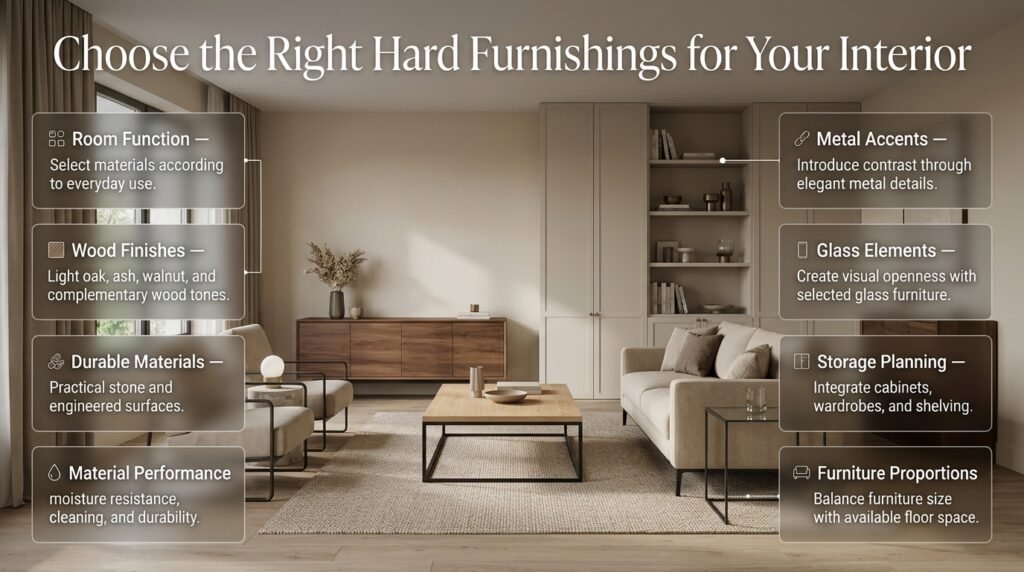
Hard furnishings establish the foundation of a room. Their size, finish, material, and placement influence which soft furnishings will work best.
Select materials according to room function
A material that works beautifully in a living room may not be suitable for a busy kitchen.
For example, natural wood creates warmth and character in dining areas, while durable stone or engineered surfaces may be more appropriate for frequently used worktops.
Consider the following factors before selecting hard furnishings:
- How frequently will the furniture be used?
- Will it experience moisture or spills?
- Does it need to support heavy objects?
- How much cleaning will it require?
- Does its finish complement existing materials?
- Will its size suit the available floor area?
A good furnishing decision should balance appearance with everyday performance.
Understand different wood finishes
Wood is particularly useful for creating a warm foundation.
Light oak, ash, and similar pale finishes can help smaller rooms feel visually lighter. Walnut and darker timber finishes create a richer appearance and may work well in larger rooms with suitable lighting.
Avoid selecting every wooden item in exactly the same shade unless a coordinated matching furniture collection is intentional.
Different wood tones can work together when they share similar undertones or a consistent design direction.
For more guidance, read our article on coordinating paint with natural wood.
Use metal and glass strategically
Metal and glass can prevent a room from feeling overly traditional or visually heavy.
A slim metal table frame, glass side table, or contemporary light fitting can introduce contrast.
However, these finishes should be balanced with warmer materials.
A black metal coffee table, for example, can look excellent beside a beige sofa and natural wool rug.
Consider storage and built-in furniture
Cabinets, shelving, wardrobes, and entertainment units influence the visual weight of a room.
Large storage units can dominate smaller interiors, particularly when their finishes are dark or reflective.
Use open shelving, lighter finishes, and carefully planned storage to prevent these elements from overwhelming the soft furnishings.
Our guide to styling open shelves without clutter offers further ideas for creating attractive and practical display areas.
5. How to Select Soft Furnishings That Complement Hard Surfaces
Soft furnishings should respond to the materials already present rather than being selected independently.
A beautiful rug may not work if its color, size, or texture conflicts with the flooring and furniture.
Select the right upholstery
Upholstery has a major influence on how comfortable and welcoming a room feels.
Common choices include cotton, linen, velvet, leather, boucle, and performance fabrics.
Each has different characteristics.
| Upholstery material | Appearance | Practical consideration |
|---|---|---|
| Cotton | Relaxed and versatile | Check cleaning instructions |
| Linen | Natural and textured | Can wrinkle easily |
| Velvet | Rich and elegant | Requires appropriate maintenance |
| Boucle | Soft and textured | Texture can collect debris |
| Leather | Smooth and structured | Needs suitable care |
| Performance fabric | Available in many finishes | Check the manufacturer’s specifications |
Don’t select upholstery based on appearance alone.
Consider children, pets, sunlight exposure, frequency of use, and cleaning requirements.
Choose rugs according to furniture arrangement
An area rug can visually connect furniture pieces and make a seating arrangement feel complete.
A rug that is too small often creates a disconnected appearance because the main furniture seems to float around it.
In many living rooms, placing the front legs of the sofa and armchairs on the rug creates a more unified arrangement.
For a more spacious seating area, a larger rug may accommodate all the main furniture legs.
Before purchasing, measure the furniture arrangement rather than relying only on the room’s overall dimensions.
Use curtains to soften architectural features
Windows often contain hard visual lines created by frames, glass, and surrounding walls.
Curtains introduce softness and can help connect the window area with the rest of the room.
When selecting curtains, consider:
- Window width and height.
- Ceiling height.
- Fabric thickness.
- Privacy requirements.
- Daylight conditions.
- Existing wall and furniture colors.
Light linen curtains may work well in a relaxed contemporary interior, while heavier fabrics can create a more formal appearance.
Introduce cushions with a clear purpose
Cushions are useful for adding texture and small amounts of color.
However, adding too many can make a sofa uncomfortable.
Start with a few cushions in complementary sizes and materials.
For example, a neutral sofa might feature:
- Two larger textured cushions.
- One smaller patterned cushion.
- One accent cushion in a deeper color.
This creates variation without making the seating arrangement look overloaded.
6. The Best Material Combinations for Balanced Interiors
Some material combinations work particularly well because they create a noticeable contrast without appearing disconnected.
The following combinations can be adapted to different decorating styles.
Wood and linen
Natural wood and linen create a relaxed, comfortable appearance.
This combination is particularly useful in Scandinavian, Japandi, rustic, and contemporary interiors.
Try light oak furniture with cream linen curtains and neutral upholstery.
Marble and wool
Marble introduces a polished and sophisticated finish, while wool brings warmth and texture.
A marble coffee table can look especially attractive with a wool rug and comfortable upholstered seating.
This combination works well in elegant living rooms where homeowners want a refined appearance without creating an overly formal atmosphere.
Metal and boucle
Metal provides clean lines and structure, while boucle introduces a softer surface.
A slim black metal side table beside a boucle armchair can create an interesting contrast.
Keep the surrounding color palette simple so the different textures remain noticeable.
Concrete and natural textiles
Concrete has a strong architectural appearance.
It can be softened with wool rugs, cotton cushions, linen curtains, and natural wooden accessories.
This combination is useful in industrial and contemporary interiors where the homeowner wants to retain the character of concrete without making the space feel too cold.
Glass and textured upholstery
Glass furniture can help smaller rooms feel visually open.
Pair it with a textured sofa, woven rug, or fabric-covered armchair to introduce comfort.
Avoid combining glass with too many other highly reflective surfaces if the room already feels visually cold.
Ceramic and woven materials
Ceramic accessories and surfaces can work well with baskets, woven rugs, and natural fabrics.
This combination is useful for creating relaxed interiors with an organic character.
The important factor is keeping the textures coordinated rather than introducing unrelated decorative styles.
7. How to Balance Hard and Soft Furnishings in a Living Room
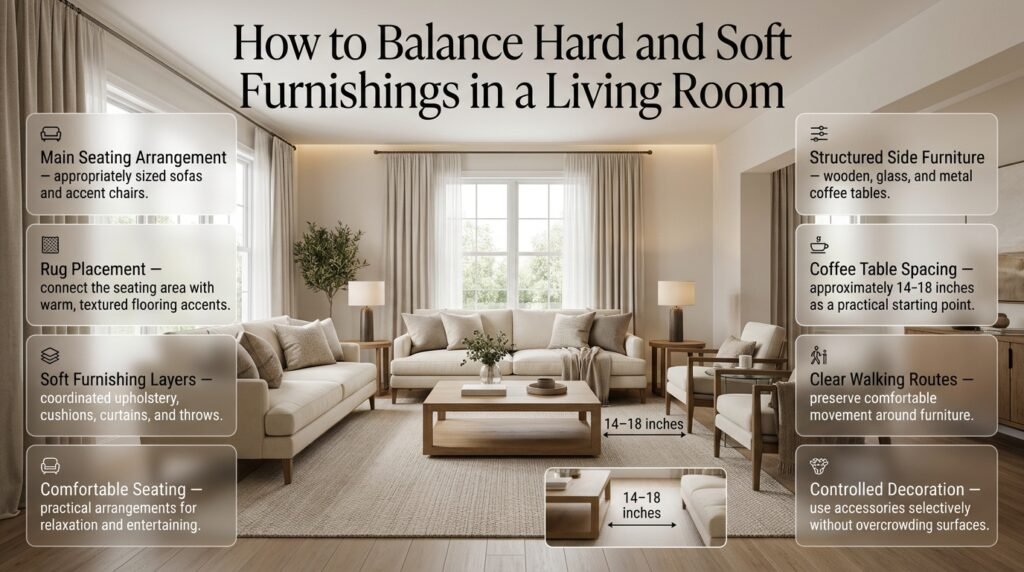
Living rooms usually require the greatest variety of furnishings because they support several activities.
People watch television, read, entertain guests, relax, and sometimes work in the same space.
The arrangement should therefore provide comfortable seating while maintaining practical movement.
Start with the main seating arrangement
Choose the sofa and main chairs before adding smaller decorative items.
Consider how many people regularly use the room and how much space they need.
A large sectional sofa may work in a spacious family room but can dominate a compact apartment.
An appropriately sized sofa leaves room for side tables, lighting, and circulation.
Introduce a rug to connect the furniture
Use a rug to define the seating area.
Its color should complement the flooring and upholstery rather than compete with them.
For a neutral interior, a textured cream or beige rug can add warmth without introducing too much visual contrast.
Add structured side furniture
Coffee tables, side tables, and cabinets provide practical surfaces.
Wooden furniture can introduce warmth, while glass and metal pieces can make the arrangement feel lighter.
Consider the distance between furniture pieces.
A gap of approximately 14–18 inches between the sofa and coffee table is a useful starting point, although the ideal distance depends on the furniture size and available movement space.
Finish with controlled textile layering
Add curtains, cushions, and throws according to the room’s needs.
Avoid decorating every available surface.
The sofa, rug, and curtains should already provide sufficient softness in many living rooms.
Additional accessories should introduce a useful color, texture, or practical function.
8. Balancing Hard and Soft Furnishings in Bedrooms
Bedrooms require a different approach because comfort and relaxation are more important than visual formality.
A bedroom should have enough hard furnishings to provide storage and organization while allowing soft materials to create a comfortable atmosphere.
Select a suitable bed frame
Wooden and upholstered bed frames create different visual effects.
A wooden bed provides structure and a natural finish. An upholstered headboard introduces softness and can make the bed feel more comfortable when sitting upright.
Consider the room’s size and the available clearance before selecting a frame.
Choose bedding that complements furniture
Bedding covers a large part of the bedroom’s visual area.
Its colors and textures should coordinate with the bed frame, flooring, curtains, and other furniture.
For example, a dark wooden bed can work with cream bedding, soft beige curtains, and muted green cushions.
Avoid combining too many competing patterns because the bedroom should remain visually calm.
Use bedside rugs carefully
A rug beside the bed can provide a softer surface when getting up in the morning.
In larger bedrooms, a generously sized rug can extend beneath the bed and create a more connected arrangement.
Choose a material that is comfortable underfoot and manageable to clean.
Keep storage visually organized
Wardrobes, bedside tables, and dressers provide essential storage.
However, too many large furniture pieces can make a bedroom feel crowded.
Select storage that suits the room’s dimensions and avoid placing unnecessary furniture around the bed.
9. How to Balance Furnishings in Dining Rooms and Kitchens

Dining rooms and kitchens require more attention to durability, cleaning, and practical use.
Their hard surfaces are necessary, but the correct soft furnishings can make them feel more welcoming.
Dining room material selection
A solid dining table provides a durable and stable foundation.
Upholstered chairs introduce comfort, particularly when people spend long periods sitting at the table.
You can also introduce:
- Fabric window treatments.
- Suitable washable rugs.
- Cushioned dining benches.
- Textured chair upholstery.
- Soft decorative lighting.
A rug beneath a dining table should allow chairs to move without repeatedly catching on its edges.
Choose a material that can handle crumbs and occasional spills.
Kitchen material selection
Kitchens naturally contain cabinets, countertops, appliances, and hard flooring.
Soft elements should be introduced selectively.
A washable runner, comfortable breakfast seating, and suitable window coverings can make the room feel less rigid.
Avoid placing loose textiles near cooking flames, hot appliances, or surfaces where grease accumulates.
In kitchens, practical maintenance is more important than decorative layering.
Breakfast nooks and compact dining spaces
A breakfast nook can benefit from a combination of a wooden table, upholstered bench, and washable cushions.
This creates a comfortable seating area without requiring a large dining set.
Choose cushions that can be removed or cleaned easily.
10. Balancing Furnishings in Home Offices and Multifunctional Spaces
Home offices often contain more hard furniture than other residential rooms.
Desks, shelves, filing cabinets, and storage units are necessary for productivity, but the space should still feel comfortable.
Choose a comfortable office chair
A chair should provide suitable ergonomic support.
Its upholstery should be durable and appropriate for regular use.
Don’t select a chair solely because its fabric matches the room’s decorating style.
Comfort and adjustability should remain the priority.
Soften the workspace without creating distractions
A low-pile rug, fabric curtains, and a few textile accessories can make a home office feel less formal.
Avoid placing a thick rug where it interferes with chair movement.
If the office is small, keep the main surfaces relatively clear.
Use storage to maintain visual balance
Wooden shelves, metal cabinets, and storage boxes can help organize the room.
Woven baskets or fabric organizers can introduce softer textures while keeping everyday items accessible.
The objective is to create a space that supports concentration rather than one filled with decorative accessories.
11. How to Balance Furnishings in Small Homes and Apartments
Small spaces require more careful decisions because every furniture item has a noticeable impact.
An oversized sofa, thick curtains, or multiple decorative rugs can make a compact room feel even smaller.
Choose furniture with lighter visual proportions
Furniture with open legs and slim frames can help maintain a sense of space.
A compact wooden side table may work better than a bulky storage cabinet.
Similarly, a glass coffee table can provide a useful surface without appearing visually heavy.
Use soft furnishings strategically
A single well-sized rug can create more impact than several small rugs.
Choose curtains that suit the window proportions and avoid excessive fabric gathering in narrow rooms.
Use cushions selectively to introduce color without reducing available seating space.
Prioritize multifunctional furniture
Small homes benefit from furniture that performs more than one function.
Examples include:
- Storage ottomans.
- Upholstered benches with hidden storage.
- Sofa beds.
- Nesting tables.
- Compact dining benches.
- Beds with built-in drawers.
These pieces help reduce clutter while maintaining comfort.
For more space-saving ideas, explore DIY home projects.
You can also find practical inspiration in our guide to LLBlogHome Upgrades by Lovelolablog.
12. How Color and Texture Influence the Balance
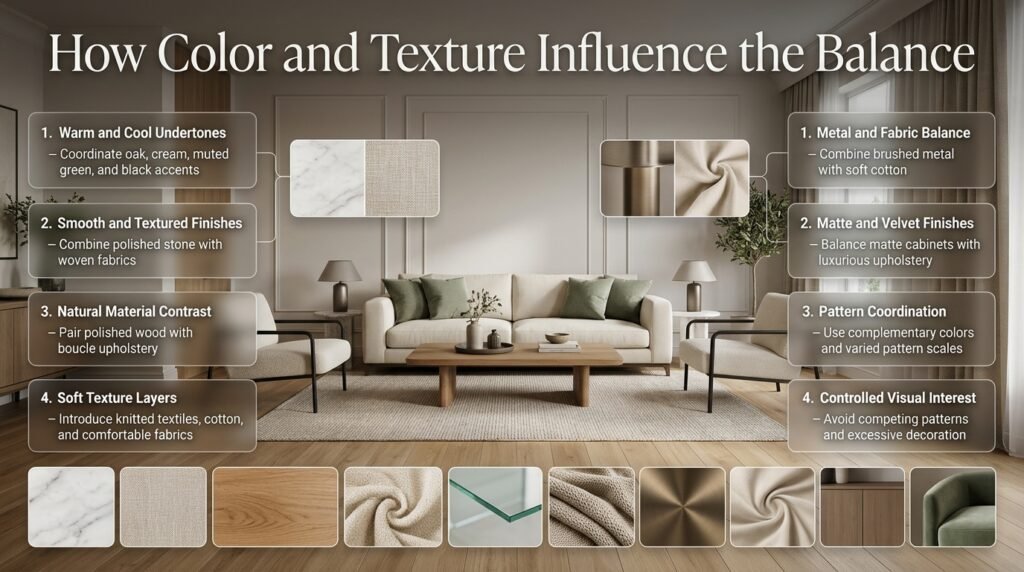
Material selection alone doesn’t determine whether a room feels balanced.
Color, pattern, finish, and texture also influence how hard and soft furnishings relate to each other.
Coordinate warm and cool undertones
A warm wooden floor may look disconnected when paired with fabrics that have strongly contrasting undertones.
This doesn’t mean every color needs to be warm.
Instead, choose a dominant palette and introduce contrasting shades carefully.
For example, warm oak, cream upholstery, muted green cushions, and black metal details can create a coordinated arrangement.
Mix smooth and textured finishes
A useful interior usually contains more than one surface texture.
Consider combining:
- Smooth stone with woven fabric.
- Polished wood with boucle.
- Glass with knitted textiles.
- Brushed metal with cotton.
- Matte cabinets with velvet upholstery.
These combinations introduce contrast without relying entirely on color.
Avoid competing patterns
Patterns should support the overall design rather than dominate it.
A large patterned rug may be enough to establish visual interest.
If you add patterned cushions and curtains, make sure their scale and colors complement the existing design.
For further inspiration about selecting and combining interior colors, explore our paint and color guide.
13. How Lighting Changes the Appearance of Hard and Soft Materials
Lighting influences how materials appear throughout the day.
A fabric that looks warm in natural daylight may appear darker under artificial lighting. Polished stone and glass may also produce noticeable reflections.
Understand natural lighting
North-facing and south-facing windows can create different lighting conditions depending on location and hemisphere.
The direction, size, glazing, surrounding buildings, and time of day all influence how much natural light enters a room.
Check material samples in the actual room rather than relying only on showroom lighting.
Combine different artificial lighting sources
A room usually benefits from more than one type of lighting.
Consider:
- Ambient lighting for general illumination.
- Task lighting for reading and working.
- Accent lighting for selected architectural or decorative features.
Fabric lampshades can soften the appearance of light fixtures, while metal and glass fittings may provide more structured visual details.
Consider reflective finishes
Glass, polished stone, and glossy surfaces can reflect light.
These materials may help a darker room feel brighter, but excessive reflection can create visual discomfort.
Balance them with matte furniture, textured upholstery, and suitable window treatments.
Our guide to natural light and floor plan orientation provides more insight into planning around daylight.
14. How to Choose Furnishings That Are Easy to Maintain
A balanced interior should remain manageable after the decorating work is finished.
A room that looks beautiful but requires constant cleaning may not be practical for everyday living.
Consider household activities
Before selecting fabrics and finishes, consider how the room will be used.
A family living room may need stain-resistant upholstery and washable rugs.
A formal guest room may allow more delicate fabrics because it receives less frequent use.
A kitchen needs materials that can handle spills and regular cleaning.
Understand fabric care requirements
Different textiles require different maintenance.
Some can be machine-washed, while others need professional cleaning or specific care products.
Always check the manufacturer’s cleaning instructions.
Avoid assuming that a fabric is washable simply because it feels durable.
Protect furniture from sunlight
Direct sunlight can affect some fabrics, wood finishes, and upholstery colors.
Use appropriate window treatments and consider how sunlight moves across the room.
Rotate removable cushions when suitable to help distribute wear more evenly.
Choose durable flooring accessories
Rugs should have an appropriate backing or rug pad where recommended.
This can help reduce slipping and improve stability.
Make sure the rug material is suitable for the room’s traffic and cleaning needs.
15. Common Mistakes When Balancing Hard and Soft Furnishings
Even well-selected furnishings can produce an unsuccessful interior if their proportions, colors, and practical requirements aren’t considered.
Mistake 1: Using too many hard materials
This often happens when homeowners focus entirely on contemporary finishes.
Stone flooring, metal furniture, glass tables, and polished surfaces can make a room look impressive but may create a cold atmosphere.
How to avoid it:
Introduce upholstery, curtains, rugs, and natural textile accessories. Focus on areas where people spend the most time.
Mistake 2: Adding soft furnishings without a plan
Buying cushions, throws, and rugs simply because they look attractive can create unnecessary clutter.
How to avoid it:
Identify the purpose of every textile. It should improve comfort, introduce useful texture, define an area, or contribute to the color palette.
Mistake 3: Ignoring furniture proportions
A large sofa paired with a tiny coffee table and small rug can make the arrangement feel disconnected.
How to avoid it:
Measure the furniture and floor area before shopping. Consider how the pieces will relate to one another rather than selecting each item independently.
Mistake 4: Choosing materials only because they’re fashionable
Trends can encourage homeowners to purchase materials that aren’t appropriate for their daily lifestyle.
How to avoid it:
Evaluate cleaning requirements, durability, comfort, and long-term suitability before making a purchase.
Mistake 5: Using too many different textures
Texture adds depth, but excessive variation can create visual confusion.
How to avoid it:
Choose a limited selection of complementary textures. Repeat some materials or finishes to create continuity.
Mistake 6: Forgetting about walking space
Furniture and rugs can interfere with movement when their placement isn’t planned properly.
How to avoid it:
Aim for approximately 30–36 inches of clearance along important walkways where the room allows. Adapt this to the layout and accessibility requirements.
Mistake 7: Ignoring room maintenance
Delicate upholstery, heavy curtains, and high-maintenance rugs may become inconvenient in busy areas.
How to avoid it:
Match materials to the amount of traffic, sunlight, moisture, and everyday activity in each room.
Mistake 8: Decorating without considering the entire home
A room may look attractive individually but feel disconnected from nearby spaces.
How to avoid it:
Repeat selected colors, finishes, or textures across adjoining rooms.
For additional guidance, explore creating cohesion between different rooms.
16. Professional Techniques for Creating a More Balanced Interior
Interior designers consider the relationship between different surfaces rather than treating furniture, textiles, and accessories as separate purchases.
The following techniques can help homeowners make more confident decisions.
Work with a limited material palette
Start with a small collection of complementary materials.
For example:
- Natural oak.
- Matte black metal.
- Cream linen.
- Wool upholstery.
- Textured ceramic.
This provides enough variation without making the room feel inconsistent.
Consider visual weight rather than counting objects
A large dark wooden cabinet may visually dominate a room more than several smaller fabric accessories.
Balance should therefore be based on the appearance and placement of materials rather than the number of objects.
Create a clear focal point
Every room benefits from a visual anchor.
This might be a fireplace, large artwork, statement sofa, or distinctive dining table.
Other furnishings should support the focal point instead of competing with it.
Explore our guide to room focal point planning principles for more practical design ideas.
Use samples before making expensive decisions
Collect fabric, wood, flooring, and paint samples.
Place them together in the room and observe how they look under different lighting conditions.
This is particularly important when combining several materials with different undertones.
Make changes gradually
Don’t purchase every furnishing at once.
Begin with the major furniture pieces, assess the room, and introduce missing textiles gradually.
This approach reduces unnecessary spending and makes it easier to identify what genuinely improves the interior.
17. A Realistic Example: Improving an Unbalanced Living Room
Imagine a family living room with polished porcelain flooring, a large leather sofa, a glass coffee table, black metal shelving, and minimal curtains.
The room looks modern, but it feels cold and produces noticeable echo.
Replacing all the furniture would be expensive and unnecessary.
Instead, the homeowner can make a series of targeted improvements.
Existing problems
- The polished flooring creates an extensive hard surface.
- The leather sofa introduces limited textile variation.
- The glass coffee table adds another reflective material.
- The metal shelving creates strong visual lines.
- The windows lack soft treatment.
Practical improvements
First, introduce a large neutral rug that connects the main seating arrangement.
Next, add textured cushions to the sofa. Choose a combination of cotton and woven fabrics in colors that complement the existing furniture.
Install suitable curtains to soften the window area.
Add a wooden side table to introduce a natural material.
Finally, use a soft throw on one end of the sofa rather than covering the entire seating area with unnecessary accessories.
What changes?
The original furniture remains in place, but the room gains greater material variation.
The rug improves comfort underfoot, the curtains and upholstery introduce softness, and the wooden side table adds a warmer finish.
This is a practical example of how thoughtful furnishing decisions can improve an existing room without requiring a complete redesign.
18. A Step-by-Step Furnishing Plan Before You Start Shopping
A clear plan can prevent unnecessary purchases and reduce the possibility of choosing materials that don’t work together.
Follow these steps before investing in new furnishings.
Step 1: Measure the room
Record the room’s length, width, ceiling height, window dimensions, and important architectural features.
Measure existing furniture as well.
This helps you avoid purchasing items that are too large or too small.
Step 2: Identify existing materials
List the major hard and soft furnishings already present.
Include flooring, furniture frames, upholstery, curtains, rugs, and storage.
Step 3: Identify the main problem
Decide whether the room feels cold, crowded, visually flat, uncomfortable, or difficult to maintain.
This helps determine which category needs improvement.
Step 4: Establish a color palette
Select a few complementary colors.
Consider existing flooring, wall finishes, natural light, and furniture.
Step 5: Select the missing materials
Choose only the items that address the identified problem.
If the room lacks warmth, consider upholstery or textiles. If it feels crowded, removing unnecessary accessories may be more useful.
Step 6: Check maintenance requirements
Read care instructions and compare the durability of different options.
Consider how frequently the furnishings will be used.
Step 7: Review the completed arrangement
After introducing new furnishings, observe how the room looks and functions.
Check walking routes, seating comfort, lighting, and the overall material relationship.
If the arrangement feels crowded, remove unnecessary items before purchasing more decorations.
19. Budget-Friendly Ways to Balance Hard and Soft Furnishings
Creating a balanced interior doesn’t always require a large decorating budget.
Small changes can make a significant difference when they address the actual problem.
Refresh existing cushions
Instead of buying a new sofa, replace worn cushion covers with complementary colors and textures.
This can change the appearance of the seating area without a major expense.
Rearrange existing furniture
Sometimes the problem isn’t the furniture itself but how it is arranged.
Moving a wooden table away from a crowded corner or repositioning a chair beside a rug can improve the visual relationship between different elements.
Use affordable textile accessories
Throws, cushion covers, small runners, and simple curtains can introduce softness without replacing permanent furnishings.
Choose materials that look coordinated with existing furniture.
Restore existing furniture
A wooden side table may only need cleaning or refinishing.
A structurally sound upholstered chair may benefit from new fabric rather than complete replacement.
Prioritize high-impact purchases
If your budget is limited, focus on the elements that influence the room most.
For a cold living room, a suitable rug may be more useful than several small decorative accessories.
For an uncomfortable bedroom, better bedding may provide greater value than another bedside decoration.
You can also explore latest news decoratoradvice for further home decorating inspiration.
20. How Interior Design Styles Influence Material Balance
Different decorating styles use hard and soft furnishings in different ways.
Understanding these differences can help you select combinations that match your preferred interior appearance.
Scandinavian interiors
Scandinavian design often combines pale wood, simple furniture, neutral textiles, and natural textures.
Light oak, cream upholstery, cotton curtains, and wool rugs create a relaxed appearance.
Japandi interiors
Japandi combines Japanese-inspired simplicity with Scandinavian warmth.
Natural wood, clean furniture lines, neutral fabrics, and carefully selected decorative elements are common features.
Avoid excessive decoration because simplicity is an important part of the style.
Industrial interiors
Industrial interiors often include concrete, exposed metal, brick, and darker wood finishes.
Soft furnishings such as leather seating, textured rugs, and heavier curtains help balance these architectural materials.
Contemporary interiors
Contemporary spaces can combine glass, stone, metal, and modern upholstery.
The key is to maintain a coordinated material palette rather than introducing too many competing finishes.
Traditional interiors
Traditional interiors often feature substantial wooden furniture, detailed finishes, patterned fabrics, and upholstered seating.
Balance can be created through carefully coordinated textiles and furniture proportions.
How do you balance hard and soft furnishings in a living room without making it look overcrowded?
Creating balance in a living room starts with understanding how much visual weight each material adds to the space. Hard furnishings such as wooden coffee tables, glass surfaces, metal shelving, and entertainment units provide structure, but too many can make the room feel cold. Soft furnishings such as upholstered sofas, area rugs, curtains, and cushions introduce warmth and improve comfort.
The best approach is to select a few important furniture pieces first and then introduce textiles where they are genuinely needed. For example, a leather sofa can be paired with a textured wool rug, two or three complementary cushions, and lightweight curtains. This creates contrast without filling every available space with decorative accessories.
Practical tips:
Choose one main furniture material, such as natural wood or metal.
Use a properly sized rug to connect the seating arrangement.
Introduce two or three complementary cushion textures.
Keep coffee tables and side tables proportionate to the sofa.
Avoid placing unnecessary decorative items on every surface.
Leave sufficient walking space around the furniture.
Which materials work best together when combining hard furniture with soft furnishings?
The most successful material combinations create contrast while maintaining a consistent appearance. Natural wood works particularly well with linen, cotton, and wool because its grain and warm finish complement the softer appearance of textiles. Similarly, marble and glass can be balanced with textured upholstery, while metal furniture frames look more inviting alongside woven fabrics and natural materials.
The important factor is to consider the finish, color, and texture of each material before combining them. For example, a polished marble coffee table may look too formal when surrounded by equally glossy surfaces. Adding a textured rug and comfortable fabric sofa creates a more relaxed arrangement.
Material combinations worth considering:
Natural wood and linen: Suitable for warm, relaxed interiors.
Marble and wool: Creates an elegant balance between polished and textured finishes.
Metal and boucle: Combines structured furniture with a softer surface.
Glass and cotton: Keeps smaller spaces visually light while introducing comfort.
Concrete and woven fabrics: Softens industrial-style interiors.
Dark wood and velvet: Creates a rich, sophisticated appearance.
Always consider cleaning requirements and durability before selecting materials for frequently used rooms.
How can I make a room with too many hard surfaces feel warmer and more comfortable?
A room dominated by stone flooring, glass furniture, polished wood, or metal finishes often needs more texture rather than additional decoration. These surfaces can create a clean and modern appearance, but without suitable soft furnishings, the room may feel uncomfortable or produce noticeable echo.
Start by identifying the areas where people spend the most time. A living room may benefit from a large area rug beneath the seating arrangement, while a bedroom may need an upholstered headboard, comfortable bedding, and soft bedside rugs. Curtains can also help soften large windows and introduce another layer of texture.
In addition to improving the room’s appearance, textiles can absorb some sound reflections, making the environment more comfortable.
Effective ways to introduce warmth:
Add a wool or textured area rug over hard flooring.
Use linen or cotton curtains to soften windows.
Introduce upholstered chairs or comfortable seating.
Add knitted throws and textured cushions.
Incorporate natural wooden accessories.
Use warm-toned lighting to create a more inviting atmosphere.
The goal is to soften the existing environment while preserving the practical benefits of its hard materials.
What are the biggest mistakes to avoid when mixing different furniture materials and textures?
One of the biggest mistakes is choosing furnishings individually without considering how they will look together. A beautiful wooden table, an attractive velvet sofa, and an expensive metal lamp may each look impressive separately, but their combination can feel disconnected if their colors, proportions, and finishes don’t complement one another.
Another common problem is introducing too many competing textures. Although layering different materials adds depth, excessive variation can make a room feel visually confusing. Furniture proportions also matter because oversized soft furnishings can overwhelm smaller rooms, while undersized rugs can make large seating arrangements look disconnected.
Mistakes to avoid:
Combining too many unrelated colors and finishes.
Using several large patterns in the same visual area.
Selecting rugs that are too small for the furniture.
Ignoring the maintenance requirements of upholstery.
Adding excessive cushions and decorative throws.
Choosing fashionable materials without considering everyday use.
Forgetting about lighting and natural material undertones.
Before purchasing anything, compare material samples and consider how they will interact with your existing flooring, walls, furniture, and lighting.
What are the latest 2026 trends for balancing hard and soft furnishings?
Interior design in 2026 is placing greater emphasis on natural materials, tactile surfaces, layered textures, and interiors that feel personal rather than overly coordinated. Instead of relying entirely on polished finishes and minimal decoration, homeowners are increasingly exploring combinations that make rooms feel comfortable, individual, and lived-in. Natural wood, stone, linen, wool, textured upholstery, and expressive decorative details are particularly relevant to this direction.
A practical way to apply this approach is to combine structured furniture with softer materials that introduce character. For example, a dark wooden coffee table can work with a curved upholstered sofa, a textured rug, and cushions in earthy shades. Similarly, mixing different wood finishes can add depth when their undertones complement one another.
Useful 2026-inspired decorating ideas:
Combine natural wood with linen and textured upholstery.
Introduce earthy colors such as olive, terracotta, warm brown, and muted beige.
Mix different wood tones instead of matching every furniture piece.
Experiment with boucle, velvet, wool, and woven fabrics.
Introduce curved furniture shapes to soften rigid architectural lines.
Combine vintage or handcrafted accessories with contemporary furniture.
Choose durable, long-lasting materials instead of following short-lived trends.
The most important principle is to use trends as inspiration rather than strict decorating rules. Your furnishings should reflect your lifestyle, comfort requirements, and personal preferences.
Conclusion
Balancing hard and soft furnishings is one of the most effective ways to create an interior that feels comfortable, functional, and visually appealing. Hard materials such as wood, stone, glass, and metal provide structure, durability, and definition, while soft furnishings such as rugs, curtains, cushions, and upholstered furniture introduce warmth, texture, and comfort. When these elements work together, a room feels more complete without becoming overcrowded or visually complicated.
The key is to make thoughtful choices based on the room’s size, purpose, lighting, and everyday needs. You do not need to replace all your furniture or follow every decorating trend to achieve a better result. Sometimes, adding a textured rug, introducing softer window treatments, changing cushion fabrics, or combining natural materials with existing furniture can make a noticeable difference.
Ultimately, successful interior design is not about choosing between hard and soft materials. It is about understanding how each contributes to the overall atmosphere of a space. By paying attention to proportion, texture, color, durability, and comfort, you can create a balanced home that looks beautiful, feels welcoming, and works well for everyday living.