
Introduction
Decorating Around Existing Flooring | Decorating a room can become frustrating when the flooring doesn’t match the look you want. Perhaps your living room has orange-toned oak, your kitchen has dated beige tiles, or your bedroom has gray laminate that makes your furniture feel out of place. Replacing the floor might solve the problem, but it can also consume a large part of your renovation budget.
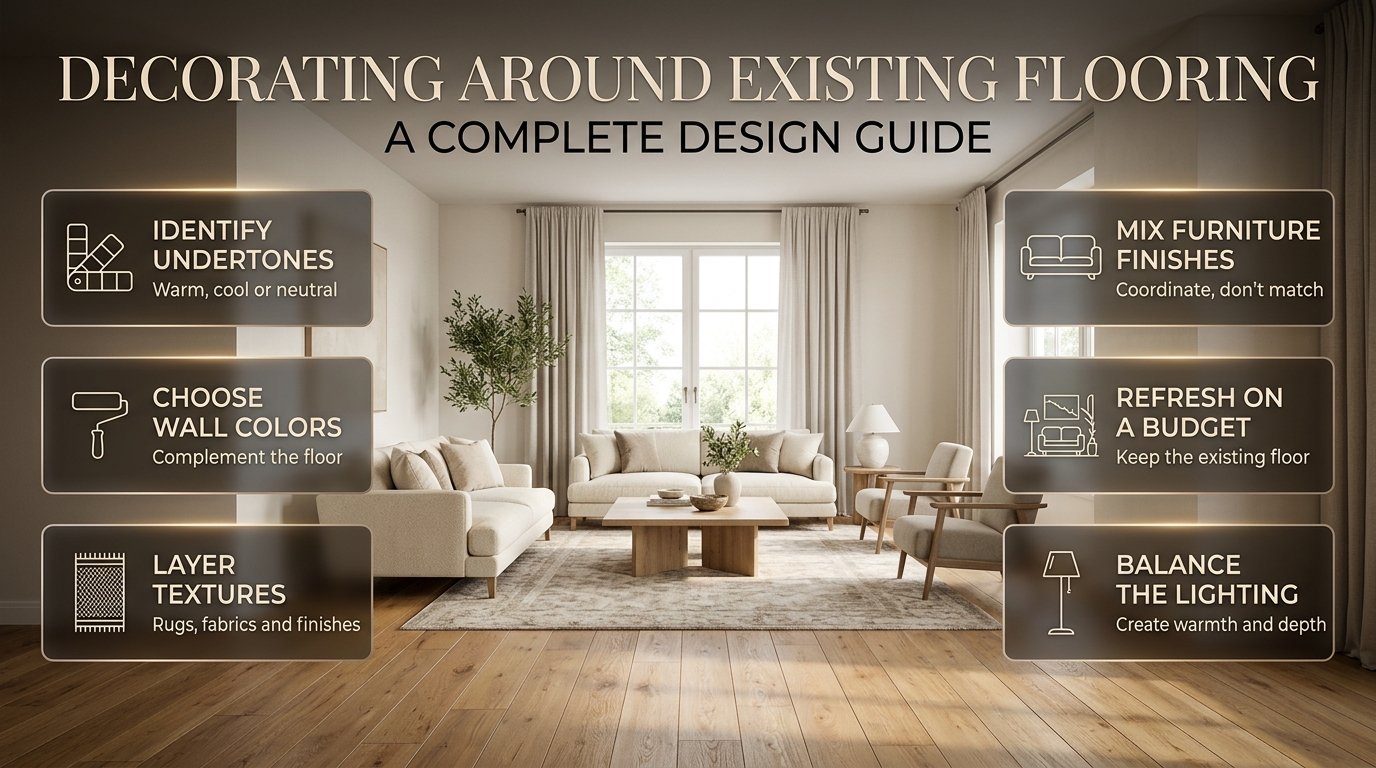
The better solution is often decorating around existing flooring. Instead of treating the floor as a limitation, use its color, texture, and character to guide your choices for wall paint, furniture, rugs, lighting, and accessories.
A successful interior doesn’t require every material to match perfectly. It requires the different elements to work together. A dated wood floor can look sophisticated with the right wall color, while ordinary beige tiles can become an attractive foundation for a contemporary interior.
At DesignMode24 Interior Design, thoughtful design begins with understanding the materials already present in a home. This approach can help you create a more coordinated space without unnecessary renovation.
In this guide, you’ll discover how to identify flooring undertones, choose complementary colors, mix furniture finishes, select the right rugs, refresh outdated surfaces, and decorate individual rooms. You’ll also learn practical budgeting strategies, common mistakes to avoid, and professional techniques for creating a cohesive home.
Why Should You Decorate Around Existing Flooring?
Decorating around existing flooring means designing the surrounding interior to complement the floor you already have. Rather than replacing a functional surface to suit a new decorating scheme, you choose colors, furniture, fabrics, and accessories that work with its existing characteristics.
This approach is especially useful when the floor is in reasonable condition, replacement would be expensive, or you want to update your home gradually.
What are the benefits of keeping existing flooring?
Keeping usable flooring can offer several practical advantages.
- Lower renovation costs: You can direct more of your budget toward furniture, paint, lighting, and other visible improvements.
- Less disruption: You avoid removing furniture, managing construction dust, and arranging flooring installation.
- Reduced material waste: Retaining a usable floor avoids discarding materials that may still have years of service left.
- Greater decorating flexibility: You can update accessories and furniture as your preferences change.
- Better renovation planning: You can address the room’s most important visual problems without committing to a complete makeover.
For example, imagine a living room with dark brown hardwood floors. You want a brighter, more contemporary interior, but the floor itself is in excellent condition.
Replacing it isn’t necessarily the smartest first step. Warm white walls, cream upholstery, a textured rug, and a few black accents could transform the room while allowing the existing wood to provide depth and contrast.
The same principle applies to gray laminate, patterned tiles, beige carpet, and older vinyl flooring.
When should you avoid decorating over an existing flooring problem?
Before making cosmetic improvements, check the floor’s physical condition.
Loose tiles, lifting laminate, significant movement, persistent dampness, and soft spots may indicate problems that decoration cannot solve. Covering these issues with a rug or furniture may make the room look better temporarily while allowing the underlying problem to continue.
Professional recommendation: Separate cosmetic concerns from maintenance concerns. If the floor is structurally sound but visually dated, decorating may be sufficient. If it is damaged or unsafe, investigate repairs before investing in new furnishings.
1. How Do You Identify Your Flooring’s Undertones?
Your flooring’s undertone is the subtle color beneath its main surface color. Identifying it helps you select wall paint, furniture, and textiles that complement the floor instead of creating an uncomfortable visual contrast.
A brown floor may contain golden, red, orange, or neutral undertones. Gray flooring may lean blue, green, or brown. These differences can significantly influence how other colors appear in the same room.
Understand warm, cool, and neutral flooring
Warm flooring includes honey oak, golden maple, reddish cherry, and many traditional brown wood finishes. These surfaces often work well with warm white, cream, olive green, muted blue, terracotta, and natural linen.
Cool flooring includes ash-gray wood, cool gray laminate, and some blue-gray stone tiles. Suitable partners may include soft white, charcoal, dusty blue, muted green, and selected cooler neutrals.
Neutral flooring includes balanced beige, some brown wood finishes, and many natural stone surfaces. These materials generally offer more flexibility, although their undertones still matter.
Patterned flooring requires a slightly different approach. Decorative tiles, multicolored stone, and patterned vinyl may contain several colors that influence the room’s overall palette.
How can you identify undertones at home?
Follow these steps before purchasing paint or furniture.
- Examine the floor in natural daylight. Look at it in the morning and afternoon because changing light can reveal different color characteristics.
- Place white paper beside the floor. The contrast may make yellow, orange, pink, green, or blue undertones easier to notice.
- Compare fixed finishes. Look at the floor beside door frames, cabinets, countertops, and trim.
- Check artificial lighting. Warm bulbs can make a cool surface appear warmer, while cooler lighting may emphasize blue or gray tones.
- Use physical samples. Place paint cards, fabric swatches, and wood samples directly beside the floor.
💡 Pro Tip: Don’t make a final color decision from a small sample viewed in a store. Take samples home and compare them against your actual flooring, furniture, and wall surfaces.
2. Which Wall Colors Work Best With Existing Flooring?
The best wall color depends on the floor’s undertone, the room’s natural light, and the atmosphere you want to create. Warm floors often suit warm whites and earthy colors, while cool floors may work with cooler neutrals and carefully chosen accent shades.
The objective isn’t to match the floor exactly. It’s to establish a balanced relationship between the wall and floor.
What wall colors work with dark hardwood floors?
Dark walnut, espresso, and deep brown flooring can create a rich, sophisticated foundation. However, when combined with dark walls and bulky furniture, these floors may make a poorly lit room feel heavy.
Consider these wall colors:
- Warm white for a bright, timeless appearance.
- Soft beige for a comfortable and understated atmosphere.
- Pale sage green for a natural, contemporary feel.
- Muted blue for controlled contrast.
- Light greige for a restrained modern palette.
For example, dark walnut flooring with warm white walls, a beige sofa, and olive-green cushions creates a balanced combination. The floor remains visually prominent without overwhelming the room.
Dark walls can also work, particularly in spacious rooms with good daylight. Charcoal or deep green may create an intimate atmosphere when balanced with suitable lighting and contrasting furniture.
What colors work with orange or honey oak floors?
Orange-toned oak can be challenging because certain cool grays make the wood’s warmth appear stronger.
Instead of fighting the color, introduce shades that balance it.
Suitable options include:
- Creamy white with a restrained warm undertone.
- Muted sage green.
- Dusty blue.
- Warm taupe.
- Carefully selected greige.
Avoid assuming that every neutral color will work. A gray with a strong violet or blue undertone may clash with orange wood.
A practical example is a room with honey oak flooring, warm white walls, a navy accent chair, and natural linen curtains. The blue provides contrast while the neutral finishes prevent the combination from feeling excessive.
What wall colors suit gray flooring?
Gray flooring can look sleek and contemporary, but an entirely gray room may feel cold or flat.
Introduce warmth through ivory walls, oak furniture, beige upholstery, camel-colored accessories, or woven textures.
If you prefer a cooler interior, combine gray flooring with soft white walls, navy accents, and charcoal details. The result can feel deliberate rather than monotonous.
How should you decorate around beige carpet or cream tiles?
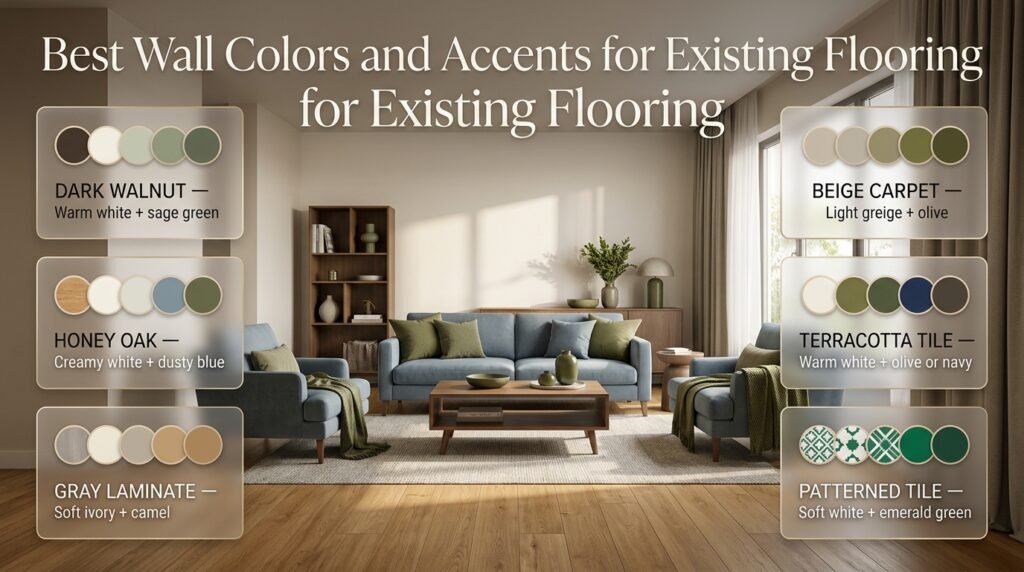
Beige flooring is versatile, but matching every surface to the same shade can make a room look bland.
Try warm white walls, olive accents, soft blue upholstery, or medium-brown furniture. These elements create definition while retaining the flexibility of a neutral foundation.
| Existing flooring | Suggested wall color | Accent color | Intended effect |
|---|---|---|---|
| Dark walnut | Warm white | Sage green | Bright and grounded |
| Honey oak | Creamy white | Dusty blue | Warm with contrast |
| Gray laminate | Soft ivory | Camel | Balanced and inviting |
| Beige carpet | Light greige | Olive green | Calm and natural |
| Terracotta tile | Warm white | Olive or navy | Mediterranean-inspired |
| Black-and-white tile | Soft white | Emerald green | Crisp and expressive |
For more inspiration, explore the Paint Color category, especially when comparing neutral wall shades and accent colors.
3. How Do You Choose Furniture That Complements Existing Flooring?
Furniture should complement the flooring without necessarily matching it. The most successful combinations balance color, material, size, and visual weight so the room feels coordinated rather than repetitive.
Start with the largest pieces, especially the sofa, bed, dining table, or major storage unit. These items influence the room’s appearance more than small decorative accessories.
Should furniture match the floor?
No. Matching every piece of furniture to the flooring can make the room look flat, and an almost-matching wood finish may appear accidental.
Instead, create a deliberate difference.
Examples include:
- Light oak furniture against medium-brown flooring.
- Walnut furniture against honey oak.
- Cream upholstery against dark wood.
- Dark dining furniture against pale laminate.
- Natural wood furniture against gray flooring.
The materials should relate through undertone, texture, or contrast rather than identical color.
How can you mix different wood tones?
Mixing wood finishes can make an interior feel collected and natural. However, the differences should appear intentional.
A useful approach is to establish a primary wood tone, usually the existing floor, then introduce one or two supporting finishes.
For example:
- Main surface: medium oak flooring.
- Secondary finish: walnut sideboard.
- Supporting finish: light oak coffee table.
Repeat the walnut or light oak elsewhere in small details, such as frames, shelves, or occasional furniture.
Grain pattern also matters. A heavily figured wood may attract more attention than a smooth, understated finish even when both have similar colors.
⭐ Expert Tip: Compare wood samples side by side under your home’s lighting. Wood can vary in tone and grain even within the same species, so a product description alone cannot guarantee a good match.
How does furniture size affect the flooring?
Large furniture pieces can make a floor appear more dominant or less visible. A bulky dark sofa may overwhelm a small room with dark flooring, while a suitably scaled sofa with visible legs can create a more open appearance.
Consider the room’s proportions before purchasing furniture.
- Keep clear walking routes between doors and main seating areas.
- Avoid oversized tables that interrupt movement.
- Use taller storage where appropriate instead of filling every wall with bulky low furniture.
- Allow enough room to open drawers and cabinet doors.
- Check delivery dimensions and access routes before ordering large pieces.
The Choosing Furniture Delivery Dimensions guide can help you plan furniture purchases more carefully.
4. How Can Rugs Improve a Room Without Replacing the Flooring?
Rugs are among the most effective decorating tools because they introduce color, texture, comfort, and visual organization without permanently changing the floor.
They can define seating areas, soften hard surfaces, and connect furniture that otherwise seems unrelated.
How do you choose a rug color?
Start by identifying colors already present in the room. A rug can repeat a shade from the curtains, connect the sofa to the flooring, or introduce a new accent color.
Examples include:
- Cream rugs over dark hardwood.
- Muted blue rugs over honey oak.
- Warm beige rugs over gray laminate.
- Textured ivory rugs over terracotta tile.
- Patterned neutral rugs over beige carpet.
The rug doesn’t have to match the floor. It should either complement the existing palette or provide controlled contrast.
Should the rug be patterned or plain?
Consider the visual complexity of the floor.
If the flooring is plain, a patterned rug can add personality. If the floor already contains strong geometric shapes or multiple colors, a simple rug may create a more comfortable balance.
Mixing patterns is possible, but vary their scale. For example, a large, subtle rug pattern may work with smaller decorative tile motifs because the two patterns don’t compete equally for attention.
What size rug should you choose?
In a living room, a common arrangement places at least the front legs of the sofa and main chairs on the rug. A larger rug that accommodates all seating legs can create a more unified appearance.
For dining areas, measure the table and allow sufficient room for chairs to move backward without catching on the rug’s edge.
In bedrooms, a rug extending beyond the sides and foot of the bed can create a softer landing area.
Before buying, mark the proposed dimensions on the floor using painter’s tape. This simple technique helps you evaluate the proportions without purchasing the wrong size.
Common mistake: Choosing a rug that’s too small because it is cheaper. A small rug floating in the center of a large seating arrangement can make the furniture appear disconnected.
For more detailed guidance, the Wall Shelves Ideas article can also help you think about how vertical storage and floor-level furniture work together without overcrowding the room.
5. How Can You Make Outdated Flooring Look Modern?
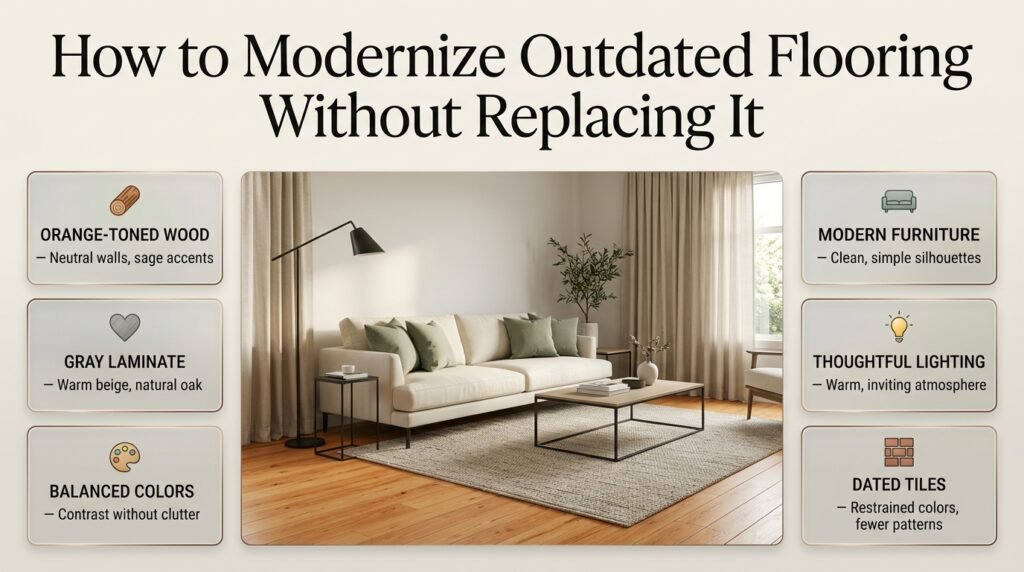
You can make dated flooring feel more contemporary by simplifying surrounding finishes, introducing suitable contrast, updating lighting, and choosing furniture with clean lines.
The aim is not to hide every feature of the floor. It’s to make the entire room feel intentional.
How do you modernize orange-toned wood?
Orange or reddish wood can feel dated when combined with too many golden, red, or orange accessories.
To create balance:
- Choose warm white or muted neutral walls.
- Introduce sage, dusty blue, or another restrained contrasting color.
- Use simple furniture silhouettes.
- Add natural fabrics and varied textures.
- Reduce unnecessary glossy finishes.
- Use black or dark bronze details selectively.
A honey oak floor, cream sofa, muted green cushions, and black metal lamp can feel contemporary without replacing the wood.
How do you improve outdated gray laminate?
Gray laminate may appear cold when paired with gray walls, silver accessories, and stark white furniture.
Introduce natural oak, warm beige upholstery, cream curtains, and woven accessories. A textured rug can also reduce the visual dominance of the gray surface.
Avoid adding so many warm colors that the room becomes visually divided. A few carefully selected materials are usually more effective than a complete collection of unrelated accessories.
How do you work with dated tiles?
Decorative tile can become a distinctive design feature when the surrounding finishes are restrained.
If the floor contains several colors, choose one or two for the room’s accessories. Use a quieter wall color and avoid introducing too many additional patterns.
In kitchens, consider the relationship between the tiles, cabinets, countertops, and hardware. In bathrooms, coordinate the floor with mirrors, towels, and moisture-appropriate storage.
If a tile is cracked or loose, address the underlying issue before decorating.
The Home Improvement category offers additional ideas for updating rooms without automatically committing to a full renovation.
6. How Should You Decorate Different Rooms Around Existing Flooring?
Different rooms have different practical needs, so the decorating strategy should reflect their function, lighting, moisture exposure, and furniture arrangement.
Living room
Begin with the flooring and the largest seating pieces. These establish the room’s main colors and proportions.
With dark flooring, lighter upholstery and a well-sized rug can provide contrast. With pale flooring, medium or dark furniture can create definition.
Use cushions, curtains, artwork, and lamps to repeat the accent palette. Avoid filling every available surface with accessories, particularly when the flooring already has a strong pattern.
In an open-plan room, furniture placement can define the living area without blocking the visual connection to the dining space.
Bedroom
A bedroom benefits from a calm palette and comfortable textures.
Dark floors can work well with light bedding and warm neutral walls. Pale wood can support deeper colors in the headboard, curtains, or bedside furniture.
Rugs beside the bed can make hard flooring more comfortable underfoot. Choose a size that works with the bed’s dimensions and leaves enough space for doors and storage to operate.
Lighting also affects the atmosphere. Bedside lamps and suitable ambient lighting can make the room feel softer than a single bright overhead fixture.
Explore Intelligent Lighting for ideas about integrating modern lighting into a coordinated interior.
Kitchen
Kitchen flooring must work with cabinets, countertops, backsplashes, and appliances.
Warm brown floors may suit creamy cabinetry and restrained dark hardware. Gray floors can work with white cabinets, natural wood accents, or carefully selected greige finishes.
If the flooring is staying, consider whether repainting suitable cabinets or updating hardware would improve the room more economically.
Always compare the floor, cabinet samples, and countertop together. A cabinet color that looks attractive by itself may clash with a fixed countertop.
For further inspiration, see Celebrity Kitchen Layout Features for ideas about kitchen organization and visual presentation.
Bathroom
Bathrooms require attention to moisture resistance, slip safety, and cleaning requirements.
If the existing tiles are functional but dated, update the space through coordinated towels, mirrors, lighting, and storage.
Choose bathroom rugs designed for damp environments, with appropriate non-slip backing. Don’t use ordinary decorative rugs in wet areas where they could become a slipping hazard.
If there are signs of water penetration, loose tiles, or persistent dampness, investigate the cause before making cosmetic changes.
Entryway
Entryways experience frequent foot traffic, so durability matters as much as appearance.
A slim console, mirror, wall hooks, and suitable runner can refresh the area without changing the floor.
Make sure the runner doesn’t curl, slide, or interfere with door movement. Keep the main walking route clear and choose storage that fits the available space.
The Entryway Storage Capacity Planning guide can help you combine practical organization with a more polished entrance.
7. How Do Lighting and Textures Affect Existing Flooring?
Lighting and texture change how flooring appears without changing the material itself. Daylight, bulb color, surface sheen, and nearby fabrics influence whether a floor looks warm, cool, bright, or subdued.
How should you light a room with dark flooring?
Dark flooring can absorb more light visually, so rooms with limited daylight may benefit from layered illumination.
Use three lighting types where appropriate:
- Ambient lighting: Provides general illumination.
- Task lighting: Supports reading, cooking, working, and other activities.
- Accent lighting: Highlights artwork, shelves, architectural features, or decorative objects.
Warm white light often suits warm wood and comfortable living spaces. Neutral white may be more appropriate for some kitchens and work areas.
Test bulbs in the actual room before changing every fitting. The best choice depends on the flooring’s undertone, the wall color, and the atmosphere you want to create.
How can texture improve a neutral room?
When walls and flooring have similar colors, texture adds depth without requiring a new color palette.
Consider combining:
- Wool rugs with polished wood.
- Linen curtains with glossy tiles.
- Textured upholstery with natural oak.
- Matte ceramics with stone flooring.
- Woven baskets with laminate.
These combinations create contrast through surface quality rather than color alone.
Quick Tip: If a room feels flat but its colors already work, introduce texture before adding another accent color.
How can mirrors and shelves help?
Mirrors can reflect available light and create a greater sense of openness when positioned thoughtfully. Wall-mounted shelves can also reduce the need for bulky floor-level storage.
However, neither solution replaces the need for suitable lighting or correct furniture proportions. Use mirrors to support the room’s layout rather than placing them wherever a wall is empty.
8. How Can You Decorate Around Existing Flooring on a Budget?
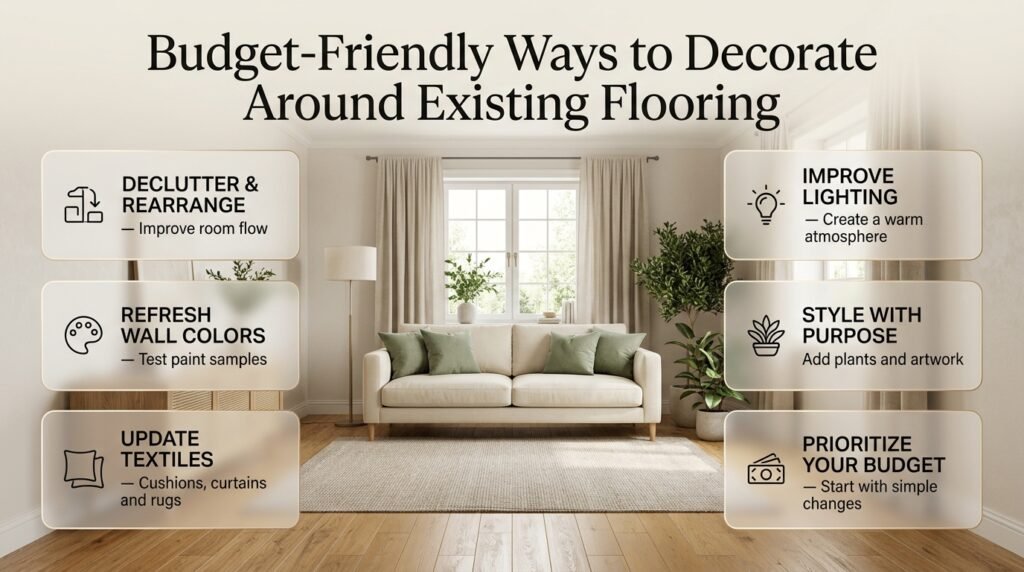
The most economical approach is to prioritize changes that affect the largest visible surfaces first. Paint, furniture placement, lighting, curtains, and rugs often provide more noticeable improvements than buying numerous small accessories.
Step 1: Declutter the room
Remove unnecessary accessories and furniture that obstruct movement. A simpler arrangement allows the flooring, architecture, and essential furniture to stand out.
Step 2: Rearrange what you already own
Try moving the sofa, changing the position of a chair, or relocating a side table.
Check whether the new arrangement improves circulation and makes the room’s proportions feel more balanced.
Step 3: Test new wall colors
If the walls clash with the floor, test several paint samples before committing.
Observe them at different times of day. A shade that looks balanced in daylight may appear too yellow, gray, or dark under artificial lighting.
Step 4: Refresh the textiles
Changing cushion covers, curtains, bedding, or a rug can introduce a more coordinated palette without replacing major furniture.
Step 5: Improve lighting
A well-positioned floor lamp or updated fitting can improve the atmosphere and highlight attractive materials.
Step 6: Add a few purposeful accessories
Choose artwork, plants, ceramics, or frames that repeat the room’s colors and finishes.
| Budget priority | Suggested change | Main benefit |
|---|---|---|
| Very low | Declutter and rearrange | Better flow |
| Low | Change cushion covers | Introduce color |
| Low to moderate | Repaint walls | Improve color coordination |
| Moderate | Add a suitable rug | Define a seating area |
| Moderate | Update lighting | Improve atmosphere |
| Higher | Refinish suitable wood flooring | Refresh the surface itself |
Actual costs depend on room size, product quality, labor, and location. Compare alternatives before making a large purchase.
For more project ideas, explore DIY Home Projects.
9. What Are the Most Common Decorating Mistakes?
Decorating mistakes often happen when people choose individual items without considering how the entire room will look together.
Mistake 1: Ignoring undertones
Why it happens: People select paint or furniture based on broad color labels.
Why it’s harmful: Two shades that appear similar may have incompatible undertones.
How to avoid it: Compare physical samples against the flooring in daylight and under artificial lighting.
Mistake 2: Matching every surface
Why it happens: Matching seems like the safest approach.
Why it’s harmful: The room may look flat, and near-matching wood finishes can appear accidental.
How to avoid it: Combine related tones with deliberate contrast and repeat important finishes elsewhere.
Mistake 3: Buying a rug that’s too small
Why it happens: Smaller rugs may seem more affordable.
Why it’s harmful: They can make the furniture arrangement look disconnected.
How to avoid it: Measure the seating area and mark the proposed dimensions before purchasing.
Mistake 4: Combining too many patterns
Why it happens: Rugs, curtains, cushions, and wallpaper are chosen independently.
Why it’s harmful: The room becomes visually busy, especially when the floor already has a strong design.
How to avoid it: Establish one dominant pattern and use simpler supporting surfaces.
Mistake 5: Choosing paint under unsuitable lighting
Why it happens: A paint shade is selected from a showroom display or online photograph.
Why it’s harmful: It can look different in the actual room.
How to avoid it: Test samples on multiple walls and review them at different times of day.
Mistake 6: Hiding damage instead of repairing it
Why it happens: A rug or furniture arrangement seems like a quick fix.
Why it’s harmful: Loose boards, damaged tiles, or moisture problems may become worse.
How to avoid it: Inspect the flooring before decorating and address safety or maintenance concerns first.
Mistake 7: Forgetting how rooms connect
Why it happens: Each room is decorated independently.
Why it’s harmful: Open-plan areas and adjoining rooms can feel disconnected.
How to avoid it: Repeat selected colors, wood tones, or metal finishes across connected spaces without making every room identical.
10. What Do Interior Designers Consider Before Finalizing a Room?

Professional interior planning starts with elements that are expensive or difficult to change. Existing flooring, fixed cabinetry, architectural features, and windows often establish the boundaries for the rest of the design.
Build a palette from fixed materials
Start with the floor’s dominant color and undertone. Then choose a main wall color, a secondary material, and one or two accent colors.
For example:
- Existing floor: medium warm oak.
- Main wall color: warm white.
- Large furniture: cream or muted olive.
- Secondary wood: walnut.
- Accent details: matte black.
Each finish has a role, so the room feels connected without requiring exact matches.
Control visual weight
Visual weight refers to how much attention an object attracts. Dark colors, strong patterns, large shapes, and glossy surfaces can make an element more prominent.
If the floor is dark and visually dominant, lighter upholstery and simpler furniture silhouettes can create balance.
If the floor is pale, a darker sofa or substantial dining table can provide definition.
The objective is to decide which features should lead and which should support the overall design.
Use repetition to create cohesion
Repeating a color or finish in several places makes a room feel connected.
For example, olive green might appear in cushions, artwork, and a decorative pot. Walnut might appear in a sideboard, a picture frame, and a small table.
The items don’t need to be identical. Small differences in texture and shade often produce a more natural result.
Prepare a materials board
Before ordering furniture or committing to paint, gather:
- A photograph or sample of the flooring.
- Wall paint samples.
- Upholstery swatches.
- Wood finishes.
- Rug options.
- Metal and hardware finishes.
Review everything together under the room’s actual lighting.
If you’re planning a larger project, the Interior Design section offers additional ideas for coordinating rooms, materials, and furnishings.
When professional assistance is appropriate, read Interior Designer Contract Essentials to understand important project arrangements before agreeing to a service.
11. How Can You Create a Cohesive Look Across the Entire Home?
A home feels cohesive when its rooms share a recognizable visual language. That doesn’t mean every room must have the same flooring, furniture, or wall color.
Instead, repeat a few carefully chosen elements.
Establish a whole-home color palette
Choose two or three base colors that can work in different combinations throughout the home.
For example, warm white, natural wood, and muted green might appear in the living room, bedroom, and entryway, while each room uses different accent colors.
This approach creates continuity without making every space feel identical.
Coordinate transitions between flooring types
Some homes have hardwood in the living room, tile in the kitchen, and carpet in the bedrooms.
The materials don’t need to match, but their transitions should feel deliberate.
Consider the undertones of adjacent floors, the colors of connecting walls, and whether a doorway creates a natural boundary between the spaces.
Use suitable transition strips where required for safety, installation, and movement between materials.
Repeat materials rather than identical objects
A consistent metal finish, similar wood tone, or repeated textile color can connect separate rooms.
For instance, black hardware in the kitchen might relate to black picture frames in the living room. Natural wood furniture in the bedroom might echo the living room’s coffee table.
This approach creates cohesion through relationships rather than repetition of entire furniture sets.
For broader inspiration, visit the Room-by-Room Design Hub.
12. When Should You Ask an Interior Design Professional for Help?
You don’t need professional assistance for every decorating project. However, a consultation can be useful when the flooring has unusual undertones, several fixed finishes compete with one another, or you’re planning a substantial investment in furniture and paint.
A professional can help you evaluate the room’s proportions, lighting, materials, and circulation before you spend money on changes.
What should you prepare before a consultation?
Gather the information that will make the discussion practical.
- Photographs of the room in daylight and evening lighting.
- Approximate room dimensions.
- Samples or clear photographs of the flooring.
- Images of furniture you intend to keep.
- Your preferred decorating styles.
- A realistic budget.
- A list of the main problems you want to solve.
For example, you might explain that you want to keep your honey oak floor but introduce contemporary furniture without making the room feel too warm.
Specific goals make it easier to compare design options.
Review Questions to Ask an Interior Design Consultant before booking a consultation so you can discuss your priorities clearly.
How do you decorate around existing flooring without replacing it?
Decorating around existing flooring starts with identifying the floor’s color, undertone, and overall condition. Instead of spending money on replacement, focus on wall paint, furniture, rugs, lighting, and accessories that complement the material already in place. Even dated hardwood, beige tiles, or gray laminate can look attractive when the surrounding elements are carefully coordinated.
To achieve the best results:
Choose complementary wall colors: Warm white and cream can balance golden wood, while selected soft neutrals can work well with gray flooring.
Introduce contrasting furniture: Light upholstery can brighten dark floors, while darker furniture can provide definition against pale surfaces.
Use rugs strategically: A properly sized rug can soften hard flooring, introduce texture, and define a seating area.
Improve the lighting: Layered lighting can make the room feel more inviting and help balance darker surfaces.
Keep the palette consistent: Repeat a few colors and materials throughout the room instead of matching every item exactly.
The most important consideration is the flooring’s condition. If it is structurally sound, decorating may be all you need. Loose tiles, lifting boards, or moisture damage should be assessed before cosmetic changes begin.
What wall colors look best with old or outdated flooring?
The best wall color depends on the flooring’s undertone, the amount of natural light, and the atmosphere you want to create. Older floors often contain warm golden, orange, red, or brown tones, while newer laminate and engineered surfaces may have cooler gray undertones. Choosing a wall color that respects these characteristics can make the entire room feel more coordinated.
Consider these combinations when planning your color scheme:
Honey oak flooring: Try warm white, creamy beige, muted sage, or dusty blue.
Dark hardwood flooring: Consider warm white, light greige, pale sage, or soft beige to create balance.
Gray laminate flooring: Explore ivory, warm beige, natural white, or muted earthy shades.
Beige carpet or tiles: Introduce soft white, olive green, muted blue, or carefully selected taupe.
Terracotta flooring: Use warm white, earthy neutrals, or restrained olive-green accents.
Before painting the entire room, test sample colors beside the flooring and observe them in daylight and under artificial lighting. A shade that looks neutral in a store may appear too yellow, pink, or cool at home.
Professional advice: Don’t choose paint based on current trends alone. A color that complements your existing floor will usually produce a more cohesive result than a fashionable shade that clashes with its undertones.
How do you make outdated flooring look modern without renovation?
introduce modern furniture, coordinated colors, natural textures, and suitable lighting to create a more intentional interior.
Here are practical ways to refresh the room:
Update the wall color: A carefully selected neutral can reduce visual conflict between the floor and other finishes.
Choose furniture with clean lines: Simple silhouettes often work well with traditional wood, older tiles, and dated laminate.
Add contemporary textiles: Textured rugs, linen curtains, and coordinated cushions can soften the appearance of older materials.
Introduce restrained accents: Matte black hardware, muted green accessories, or carefully chosen metal finishes can provide definition.
Reduce visual clutter: Removing unnecessary decorations helps the room feel cleaner and more current.
Improve lighting: Floor lamps, table lamps, and suitable ceiling fixtures can highlight attractive materials and improve the atmosphere.
For example, a living room with orange-toned oak flooring can feel more modern with warm white walls, a cream sofa, a muted blue accent chair, and simple black metal lighting. The floor remains visible, but the overall combination feels deliberate.
If the floor is damaged rather than simply outdated, cosmetic improvements may not be enough. Repairing or professionally refinishing the surface may be a better long-term decision.
What color rug and furniture should you choose to match existing flooring?
The best rug and furniture choices create contrast or coordination without making the room feel repetitive. Start with the floor’s undertone, then consider the size of the room, the amount of daylight, and the colors of your walls and existing furnishings. A successful combination should feel balanced rather than perfectly matched.
Use these ideas as a starting point:
Dark wood floors: Cream, beige, or textured ivory rugs can brighten the seating area. Light or medium-toned furniture creates useful contrast.
Honey oak floors: Muted blue, sage, and warm neutral rugs can balance the wood’s golden tones.
Gray flooring: Warm beige rugs, natural oak furniture, and cream upholstery can soften a cooler palette.
Beige carpet: Darker wood furniture, olive accents, or muted blue textiles can prevent the room from appearing flat.
Patterned tile floors: Choose relatively simple rugs and furniture finishes so the floor doesn’t compete with too many patterns.
Rug size matters just as much as color. In a living room, a rug that accommodates at least the front legs of the main seating pieces often creates a more unified arrangement. In a dining area, allow enough space for chairs to move without catching on the rug’s edges.
When mixing wood furniture with existing wood flooring, avoid forcing an exact match. Two slightly different finishes can look accidental, while deliberately contrasting tones often appear more sophisticated. Repeat important finishes in small details to connect the room visually.
Is it better to decorate around existing flooring or replace it?
Decorating around existing flooring is generally the more economical option when the floor is functional, safe, and in reasonable condition. Updating paint, furniture, lighting, and textiles can significantly change the room without the expense, waste, and disruption associated with removing and installing new flooring.
However, the right decision depends on the floor’s condition and your long-term plans.
Keep the flooring when it is structurally sound and its color can work with your preferred decorating style.
Decorate around it when the main problem is an outdated appearance rather than physical damage.
Consider refinishing when suitable wood flooring has scratches, worn finishes, or a color that no longer suits the room.
Repair or replace damaged sections when loose tiles, lifting boards, or other defects affect safety or performance.
Investigate moisture problems before covering the surface with rugs or installing new finishes.
Budget is another important consideration. If the floor is in good condition, you may get more immediate value from repainting the walls, improving lighting, or buying a properly sized rug. If the material is failing or the surface has persistent moisture damage, delaying necessary repairs may create greater costs later.
The most practical approach is to evaluate the floor’s condition first and then compare the cost of decorating, repairing, refinishing, or replacing it. The goal is not simply to spend less; it is to invest in the changes that will make the room more attractive, functional, and durable over time.
Conclusion: Make Your Existing Flooring Work for Your Design
Decorating around existing flooring is an opportunity to create a beautiful, cohesive home without the expense and disruption of replacing floors that still serve their purpose. Whether your space features dated tile, dark hardwood, warm-toned laminate, patterned carpet, or neutral stone, the key is to understand its undertones, texture, color, and visual weight before making other design decisions.
Start by selecting wall colors that complement the flooring, then introduce furniture, rugs, curtains, lighting, and accessories that create balance and reinforce your preferred interior style. Pay attention to natural light, room proportions, and the relationship between different materials. Even small changes, such as updating cabinet hardware, adding a well-proportioned area rug, or choosing contemporary furniture, can make an older floor feel more intentional and visually appealing.
Most importantly, avoid treating every existing finish as something that needs to be hidden. Instead, identify which elements deserve attention and which should provide a quiet foundation for the rest of the room. With thoughtful planning and a consistent color palette, you can transform the overall appearance of your home while keeping your existing flooring intact.
For more practical inspiration, explore Pure Home for interior design guidance, color ideas, and ways to make your existing spaces feel more functional, comfortable, and stylish. The right decorating decisions can help you achieve a refreshed look that reflects your personality without requiring a complete renovation.