
Introduction
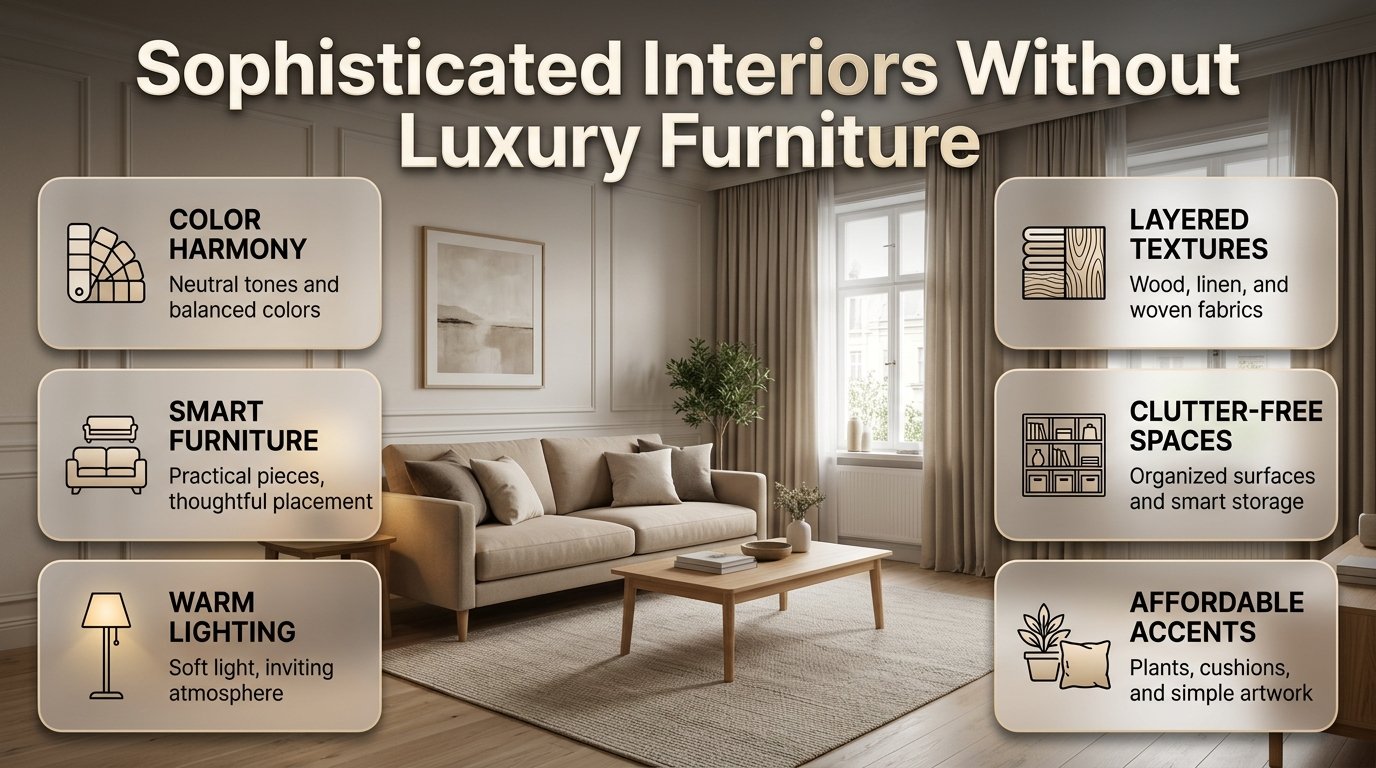
Sophisticated Interiors Without Luxury Furniture | Creating a beautiful home can feel expensive when interior design magazines and social media are filled with designer sofas, imported furniture, marble surfaces, and expensive decorative accessories. However, a stylish home doesn’t have to depend on luxury purchases. The way you arrange furniture, combine colors, use lighting, and manage everyday clutter can make a much bigger difference than the price of individual items.
Sophisticated interiors without luxury furniture are about creating a home that feels balanced, comfortable, intentional, and visually appealing without spending more than necessary. You can achieve this look in a small apartment, a rented property, a family home, or a newly renovated house by making thoughtful choices with the furniture and materials you already have.
At Design Mode 24 Interior Design, the goal is to help homeowners make practical design decisions that improve everyday living. In this guide, you’ll learn how to create an elegant interior through furniture selection, color coordination, texture, lighting, wall decoration, storage, and room-by-room planning. You’ll also discover which inexpensive improvements deliver the most noticeable results, which purchases are worth making, and which common decorating mistakes can waste your budget.
What Does a Sophisticated Interior Really Look Like?
A sophisticated interior looks carefully planned rather than expensive. Furniture fits the room, colors complement one another, lighting supports different activities, and decorative objects have a clear purpose. The result feels comfortable and cohesive without appearing overcrowded or overly decorated.
Sophistication isn’t limited to minimalist apartments or large homes with high ceilings. A traditional living room, a contemporary bedroom, or a compact dining area can all feel refined when the individual elements work together.
Consider two living rooms with similar budgets. The first contains a reasonably priced sofa, a rug that is too small, several unrelated decorative objects, and a single harsh ceiling light. The second uses the same sofa with a correctly sized rug, coordinated cushions, a simple side table, and warm layered lighting.
The second room will often feel more polished because its elements support one another.
Why Does Design Matter More Than the Price of Furniture?
Furniture prices reflect many things, including materials, manufacturing, branding, construction, and distribution. Some expensive pieces offer excellent durability, but a high price doesn’t guarantee that an item suits your home.
Good design begins with understanding the space. A large sofa may be beautiful but uncomfortable in a narrow living room. An inexpensive wooden table may be an excellent choice if its dimensions, finish, and construction suit your needs.
Focus on these five principles:
- Balance: Distribute visual weight so that one part of the room doesn’t feel overwhelmingly heavy.
- Proportion: Select furniture and accessories that fit the dimensions of the room.
- Consistency: Repeat a limited number of colors, finishes, and materials.
- Function: Make sure the room supports the activities that happen there.
- Restraint: Leave enough empty space for important elements to stand out.
These principles provide a reliable foundation before you purchase anything new.
Is Sophisticated Interior Design the Same as Luxury Interior Design?
Not exactly. Luxury interior design may involve premium materials, custom furniture, specialist craftsmanship, and high-end technology. Sophisticated design is broader: it describes a sense of balance, quality, and thoughtful coordination.
The two can overlap, but neither requires the other. A room with expensive furniture can lack harmony, while a carefully arranged room with modest furnishings can feel elegant.
The practical objective is to create a home that looks good, functions well, and reflects your preferences without putting unnecessary pressure on your finances.
1. Start With a Clear Design Direction
Before choosing paint, cushions, curtains, or furniture, decide what kind of atmosphere you want to create. Without a clear direction, it’s easy to buy attractive items that don’t work together.
You don’t need to follow one design style perfectly. Instead, choose a main influence and identify the characteristics you like about it.
For example, you might prefer the clean lines of contemporary interiors, the warmth of natural wood, or the relaxed simplicity of Scandinavian spaces. Use those preferences to guide your purchases.
Which Interior Styles Work Well With Affordable Furniture?
Several design styles are particularly adaptable to realistic budgets.
| Design direction | Main characteristics | Budget-friendly approach |
|---|---|---|
| Contemporary | Clean lines and restrained decoration | Simple furniture and coordinated finishes |
| Scandinavian | Natural light and practical comfort | Light colors, wood tones, and functional storage |
| Japandi | Calm spaces and natural materials | Simple silhouettes and carefully chosen accessories |
| Traditional | Classic forms and warm details | Reuse existing furniture and update its surroundings |
| Modern rustic | Natural textures and earthy colors | Wood, woven materials, and simple textiles |
| Minimalist | Essential furniture and uncluttered surfaces | Buy fewer items and prioritize useful pieces |
Choose a style based on the architecture of your home, the furniture you already own, and your daily routine.
A traditional wooden dining table, for instance, can work in a contemporary interior if its finish and surrounding chairs complement the room. You don’t have to replace it simply because it belongs to a different design period.
How Can You Create a Consistent Look Without Copying a Showroom?
Start by saving a few reference images that share similar colors, furniture shapes, or materials. Look for recurring features rather than trying to reproduce an entire room.
You might notice that your preferred interiors use warm walls, dark accents, natural fabrics, and simple lighting. Those observations become your design guide.
Before buying an item, ask yourself three questions:
- Does it solve a practical problem or improve the appearance of the room?
- Does it complement at least two elements already in the space?
- Will it remain useful if your preferences change?
If an item doesn’t meet these tests, consider waiting before purchasing it.
For a broader introduction to interior planning, explore Interior Design.
2. Use Color to Create an Expensive-Looking Atmosphere
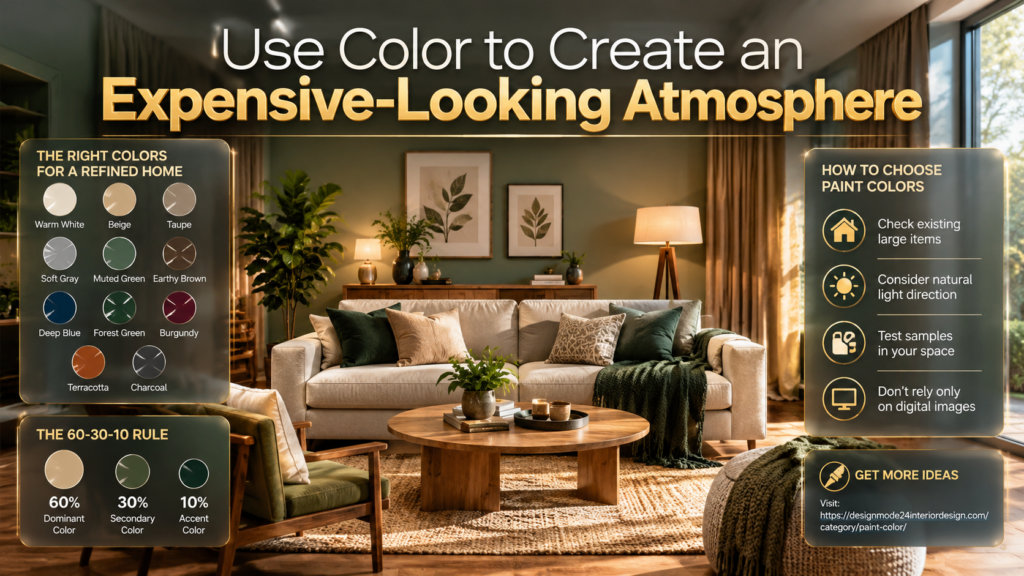
Color is one of the most affordable tools available when decorating a home. Paint, fabrics, artwork, and existing furniture can establish a coordinated appearance without major construction or expensive purchases.
The key is to understand how colors interact with each other and with the natural light in your room.
Which Colors Make a Home Feel More Refined?
Warm white, beige, taupe, soft gray, muted green, and earthy brown are useful starting points because they work with many materials and furniture styles. However, sophisticated interiors don’t have to be entirely neutral.
Deep blue, forest green, burgundy, terracotta, and charcoal can also create an elegant atmosphere when balanced with suitable surrounding colors.
A simple starting palette might include:
- A main shade for walls and other large surfaces.
- A secondary shade for upholstery, curtains, or substantial furniture.
- An accent color for cushions, artwork, or smaller decorative pieces.
A frequently used decorating guideline is the 60-30-10 color distribution. It suggests using approximately 60 percent of a dominant color, 30 percent of a secondary color, and 10 percent of an accent. These proportions are flexible rather than compulsory.
For example, warm-white walls, a beige sofa, natural wood furniture, and a few dark-green accessories can create a cohesive living room without requiring expensive finishes.
How Should You Choose Paint Colors?
Begin by examining the colors of the largest items that will remain in the room. Flooring, kitchen cabinets, large sofas, and existing woodwork may influence which paint shades work best.
Next, consider the direction and amount of natural light. A color may look bright in a sunny room but appear noticeably darker in a space with limited daylight.
Test paint samples on different walls and observe them at several times of day. Artificial lighting can also change how a shade appears in the evening.
Avoid selecting a color from a small digital image alone. Screens display colors differently, and the final result depends on the surface and lighting conditions.
For additional guidance, visit Paint Color Ideas.
How Can You Use Dark Colors Without Making a Room Feel Small?
Dark colors can create depth, but their effect depends on the room’s size, lighting, and existing finishes.
If you’re unsure about using a dark shade across every wall, introduce it through a smaller area, artwork, a side table, or textiles. This provides contrast without overwhelming the space.
A dark coffee table against a lighter rug, for example, can help define the seating area. Dark cushions can provide a similar effect on a pale sofa.
Pro Tip: Repeat accent colors in at least two places when practical. A dark-blue cushion and a related shade in the artwork can make the room feel coordinated without requiring identical accessories.
3. Choose Affordable Furniture With the Right Proportions
Furniture proportions have a major effect on how a room looks and functions. Even attractive furniture can feel awkward when it’s too large, too small, or poorly arranged.
Before purchasing anything, measure the room and identify the areas that must remain accessible. Include door swings, drawers, windows, radiators, and the main walking paths in your planning.
What Makes Inexpensive Furniture Look Well Designed?
Simple shapes, appropriate dimensions, functional construction, and compatible finishes often produce better results than decorative details alone.
Look for furniture that feels stable and suits the way you’ll use it. Check drawers, joints, hinges, upholstery seams, and the finish of visible surfaces before purchasing.
For heavily used items such as dining chairs and sofas, comfort and durability deserve particular attention. Decorative side tables and occasional accessories may allow more flexibility.
A useful way to evaluate a purchase is to separate its appearance from its performance. An attractive table that wobbles or has insufficient surface space may become frustrating, regardless of its price.
Should You Buy a Matching Furniture Set?
Matching furniture sets can make purchasing easier, but they’re not essential for creating a coordinated interior.
A room can look more personal when different pieces share a common design language without being identical. A wooden table, upholstered chair, and metal floor lamp can work together when their colors, proportions, and finishes are compatible.
Avoid mixing too many unrelated finishes in a small room. Instead, repeat one or two materials so the different items feel connected.
For example, natural wood can appear in a coffee table and a shelf, while black metal details connect a lamp with a picture frame.
How Can You Improve Furniture You Already Own?
Before replacing an existing piece, assess its structure, comfort, and finish.
Practical improvements include:
- Cleaning upholstery according to the manufacturer’s instructions.
- Tightening loose screws and suitable furniture joints.
- Replacing damaged or mismatched handles.
- Repairing small scratches with products appropriate for the finish.
- Repositioning furniture to improve circulation.
- Updating removable cushions or a worn but repairable cover.
Always test cleaning products and finishes on an inconspicuous area first. Avoid painting or sanding valuable furniture without understanding its material and condition.
To plan furniture placement more accurately, read Understanding Furniture Proportions.
If you appreciate restrained, natural interiors, Japandi Furniture Proportions provides another useful perspective on balancing furniture and open space.
4. Layer Textures to Make Simple Rooms More Interesting
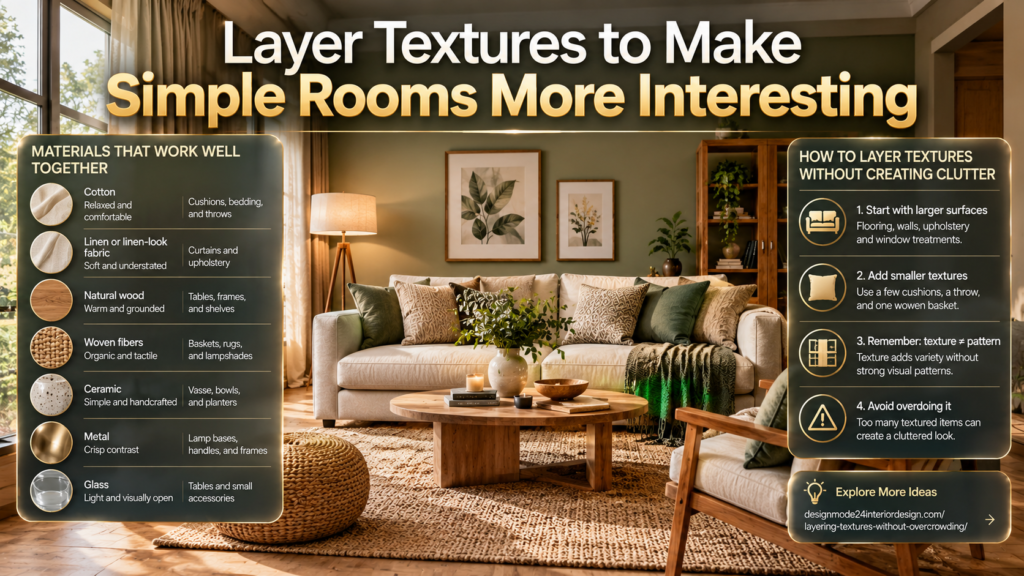
A room with only smooth surfaces and similar materials can feel flat, even when the colors are attractive. Texture introduces variety without requiring bold patterns or expensive decorations.
You can combine soft upholstery, woven rugs, natural wood, ceramic accessories, and simple curtains to make an ordinary room feel more complete.
Which Materials Work Well Together?
Different materials contribute different visual qualities.
| Material | Visual effect | Suitable uses |
|---|---|---|
| Cotton | Relaxed and comfortable | Cushions, bedding, and throws |
| Linen or linen-look fabric | Soft and understated | Curtains and upholstery |
| Natural wood | Warm and grounded | Tables, frames, and shelves |
| Woven fibers | Organic and tactile | Baskets, rugs, and lampshades |
| Ceramic | Simple and handcrafted | Vases, bowls, and planters |
| Metal | Crisp contrast | Lamp bases, handles, and frames |
| Glass | Light and visually open | Tables and small accessories |
You don’t need to use every material. Select a few that suit your chosen style and repeat them where appropriate.
For example, a beige sofa, a textured cream rug, a wooden side table, and a ceramic vase can create depth through subtle differences rather than dramatic color contrasts.
How Do You Layer Textures Without Creating Clutter?
Start with the largest surfaces: flooring, walls, upholstery, and window treatments. Add smaller textures only after the room’s main arrangement works.
A living room might need only two textured cushions, a soft throw, and one woven basket. A bedroom may benefit more from layered bedding and a simple rug than from additional decorative objects.
Keep in mind that texture and pattern are different. A fabric can have a noticeable texture without a strong visual pattern, making it useful in rooms where you want variety without too much visual activity.
The most common mistake is adding several textured objects at once without considering the rest of the room. If the room already contains patterned curtains and a busy rug, simpler cushions may produce a better result.
Explore Layering Textures Without Overcrowding for more ideas on balancing material variety with a clean layout.
5. Use Lighting to Change the Mood of a Room
Lighting affects comfort, visibility, color, and atmosphere. A carefully selected lamp can improve a room more effectively than several decorative purchases.
Instead of relying entirely on one ceiling light, consider how different light sources can support everyday activities.
What Are the Main Types of Interior Lighting?
Ambient lighting provides general illumination throughout a room. Ceiling fixtures and suitable recessed lights commonly perform this role.
Task lighting supports specific activities, such as reading, cooking, working, or applying makeup. Desk lamps, reading lights, and under-cabinet lighting are common examples.
Accent lighting highlights particular features, including artwork, shelves, architectural details, or plants.
A room doesn’t need elaborate equipment to use all three categories. A ceiling fixture, a reading lamp, and a small lamp beside a decorative feature may be sufficient.
How Can You Make Lighting Feel More Sophisticated on a Budget?
Start by checking whether existing bulbs provide suitable brightness and color temperature for their location. Warm-white lighting often works well in living rooms and bedrooms, while kitchens and work areas may benefit from brighter, more neutral illumination.
Clean lampshades and light fixtures regularly, and make sure bulbs are suitable for the fixture. Choose compatible bulbs when using dimmers or smart lighting controls.
Place task lighting where it supports a real activity. A reading lamp beside a chair is more useful than a decorative lamp hidden behind furniture.
You can also make better use of daylight by keeping windows reasonably clear and choosing curtains that balance privacy with light.
What Lighting Mistakes Should You Avoid?
A single harsh ceiling light can create uncomfortable shadows. Too many decorative lamps, on the other hand, can make a small room feel crowded.
Avoid placing lights where they cause glare on television screens or work surfaces. In kitchens and bathrooms, select fixtures appropriate for the installation environment and follow relevant electrical safety requirements.
If you’re updating window treatments as part of your lighting plan, explore Automated Window Treatment Planning.
6. Decorate Walls With Purpose
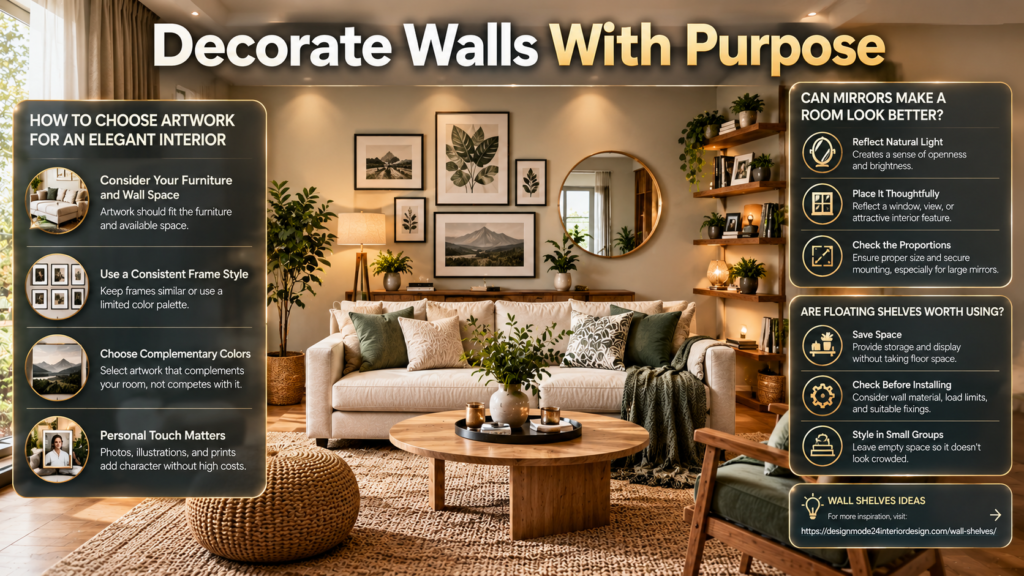
Wall decoration can make an interior feel personal and complete, but it should relate to the size and arrangement of the room.
A few well-positioned pieces often work better than filling every available wall. Affordable options include framed prints, personal photographs, mirrors, fabric art, and simple DIY artwork.
How Do You Choose Artwork for an Elegant Interior?
Start by considering the furniture beneath the artwork and the available wall space. Artwork that is too small may appear disconnected from a large sofa or console table.
For a gallery wall, choose frames that share a finish or repeat a limited color palette. The pictures themselves can vary, but some connection between them helps the display feel intentional.
If you prefer a single large print, choose an image whose colors complement the room rather than competing with its most prominent features.
Artwork doesn’t need to be expensive or created by a famous artist. Personal photographs, original illustrations, and thoughtfully framed prints can provide character.
Can Mirrors Make a Room Look Better?
Mirrors can reflect natural light and create a sense of openness when positioned thoughtfully. They are especially useful in narrow entryways and rooms with limited daylight.
Place a mirror where it reflects a window, a pleasant view, or an attractive part of the interior. A mirror facing a cluttered storage area may simply draw attention to the clutter.
Check the mirror’s proportions and mounting requirements before installation. Large mirrors need secure support, especially in homes with children or pets.
Are Floating Shelves Worth Using?
Floating shelves can provide storage and display space without occupying much floor area. They work well for books, small plants, photographs, and selected decorative objects.
However, their usefulness depends on correct installation and sensible styling. Check the wall material, load limits, and suitable fixings before mounting shelves.
Arrange objects in small groups and leave empty space between them. Filling every shelf completely can make the display feel crowded.
For additional inspiration, visit Wall Shelves Ideas.
7. Choose Curtains, Rugs, and Fabrics That Connect the Room
Soft furnishings help unite the room’s colors, soften hard surfaces, and improve comfort. They can also be changed more easily than built-in finishes or major furniture pieces.
Because these items cover substantial areas, their proportions and colors deserve careful attention.
How Should You Choose Curtains?
Choose curtains according to window dimensions, privacy needs, daylight, and the room’s overall style.
Where practical, placing the curtain rod above the window frame can emphasize vertical height. Extending the rod beyond the window may also allow the curtains to sit clear of the glass when open.
Measure the window and determine the required fabric width before ordering. The appropriate fullness depends on the fabric and the look you want.
Avoid curtains that interfere with radiators, doors, or other fixtures. In rooms where darkness matters, consider suitable lining or blackout options.
What Makes a Rug Look Right in a Living Room?
A rug should connect the seating arrangement rather than sit like a small island in the middle of the floor.
In many living rooms, a rug large enough for the front legs of the main seating pieces creates a more unified appearance. However, the ideal dimensions depend on the furniture, room layout, and available walking space.
Measure the arrangement before purchasing. If you’re unsure, use removable markers or paper to visualize the intended rug dimensions on the floor.
Choose a simple rug when other elements contain strong patterns. A patterned rug can work beautifully when the surrounding furniture and curtains are comparatively restrained.
How Can You Coordinate Cushions and Throws?
Choose cushions that repeat colors from the rug, curtains, artwork, or upholstery. You can vary the fabric and pattern while keeping the overall palette consistent.
A combination of plain cushions and one subtle pattern often provides enough variety. Throws should be arranged so they remain practical and don’t cover the furniture unnecessarily.
In bedrooms, coordinated bedding can create a similar effect. You don’t need an expensive bed frame if the bedding, lighting, and surrounding furniture work together.
8. Organize the Home Without Making It Feel Empty
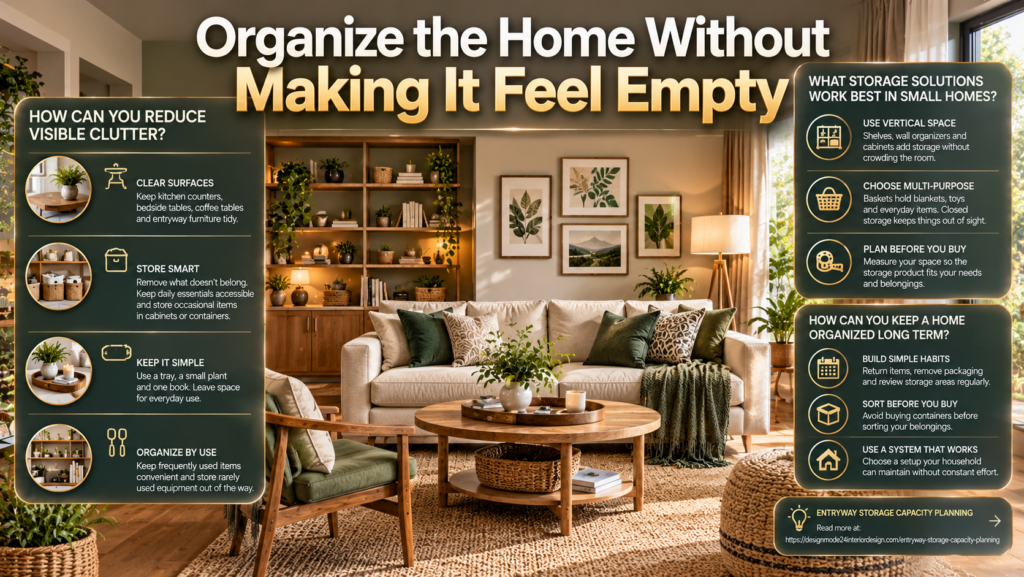
Organization is essential because clutter can hide the very details that make a room attractive. It also affects how comfortably you use the space.
A sophisticated home doesn’t have to contain very few belongings. It simply needs a workable system for storing and displaying them.
How Can You Reduce Visible Clutter?
Start with the surfaces you see most often, including kitchen counters, bedside tables, coffee tables, and entryway furniture.
Remove items that don’t belong in the room and decide where everyday essentials should be stored. Keep frequently used objects accessible while placing occasional items in suitable cabinets or containers.
A coffee table might need a tray, a small plant, and one book rather than a collection of unrelated accessories. The remaining surface stays available for drinks, games, or everyday use.
In the kitchen, store items according to how frequently you use them. Frequently used tools should be convenient, while rarely used equipment can occupy less accessible storage.
What Storage Solutions Work Best in Small Homes?
Vertical storage can be useful when floor space is limited. Shelves, wall-mounted organizers, and appropriately secured cabinets may provide additional capacity without making the room feel crowded.
Baskets can hold blankets, toys, or other everyday items. Closed storage is particularly useful for objects that don’t need to remain visible.
In entryways, consider what the household actually needs to store. Shoes, coats, keys, bags, and umbrellas may require different arrangements.
Measure the available space before purchasing organizers. A storage product that looks attractive online may not accommodate the objects you own.
Read Entryway Storage Capacity Planning for ideas on organizing an area that often becomes cluttered quickly.
How Can You Keep a Home Organized Long Term?
Create simple habits that fit your daily routine. Return frequently used items to their assigned locations, remove packaging promptly, and review storage areas periodically.
Avoid buying containers before sorting your belongings. Otherwise, you may spend money organizing objects you no longer need.
The best storage system is one that your household can maintain without constant effort.
9. Introduce Natural Materials and Greenery
Natural elements can make an interior feel warmer and more welcoming. Wood, woven fibers, stone, ceramic, and plants provide visual variety without requiring luxury finishes.
You can incorporate these materials gradually rather than replacing every surface.
Which Natural Elements Offer the Most Value?
A healthy plant, a wooden bowl, a woven basket, or a ceramic planter can add texture and personality. Choose pieces that serve a practical purpose or contribute something meaningful to the room.
Natural wood is particularly versatile because it can work with neutral colors, darker accents, and many different furniture styles.
If your home already contains several wood tones, compare their undertones before adding another large piece. They don’t need to match exactly, but a deliberate relationship helps the room feel coordinated.
How Do You Choose Plants for Different Rooms?
Consider light levels, humidity, available space, and maintenance requirements. A plant suitable for a bright window may struggle in a dim hallway.
Choose containers that complement the room without overpowering the plant. A simple planter may be more effective than a decorative pot that competes with the surrounding furniture.
If you have limited time for plant care, choose a low-maintenance species suited to your environment. Check whether a plant is safe for children and pets when relevant.
Avoid overcrowding shelves and window ledges with too many small plants. A few well-positioned plants can create a stronger visual effect while remaining easier to maintain.
10. Create a Sophisticated Living Room Without Replacing the Sofa
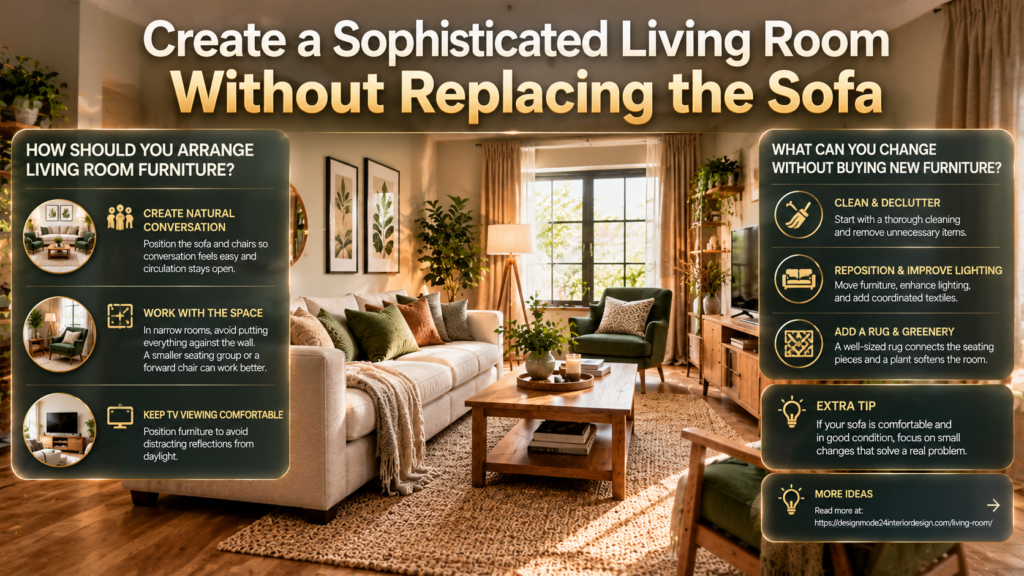
The living room often attracts the most attention because it serves several purposes, including relaxing, entertaining, watching television, and spending time with family.
The best arrangement balances comfort, conversation, circulation, and visual appeal.
How Should You Arrange Living Room Furniture?
Begin with the main seating pieces. Position the sofa and chairs so that conversation feels natural and people can move through the room without squeezing between furniture.
If the room is narrow, avoid automatically placing every piece against a wall. Depending on the layout, moving a chair slightly forward or creating a smaller seating group may improve the arrangement.
Keep television viewing comfortable if the room includes a screen. Avoid positioning furniture where daylight creates distracting reflections.
What Can You Change Without Buying New Furniture?
Start with a thorough cleaning and remove unnecessary items. Reposition the furniture, improve the lighting, and add coordinated textiles if the existing ones are worn or unsuitable.
A well-sized rug can connect the seating pieces. A floor lamp can make a dark corner more inviting, while a plant can soften a room dominated by straight lines.
If the sofa is comfortable and structurally sound, replacing it may not be necessary. Focus on improvements that solve an identifiable problem.
11. Make the Bedroom Feel Calm and Well Planned
A sophisticated bedroom should support rest, storage, and everyday convenience. It doesn’t need a large upholstered headboard, luxury bedding, or matching designer furniture.
The most effective changes often involve lighting, bedding, proportions, and clutter management.
How Can You Improve a Bedroom on a Limited Budget?
Start with the bed because it usually occupies a large portion of the room. Arrange the bedding neatly, coordinate the main colors, and remove unnecessary objects from the surrounding area.
Bedside lighting makes nighttime routines more comfortable. If space allows, bedside tables can provide useful storage and create a sense of balance.
Choose curtains that meet your privacy and light-control needs. In bedrooms exposed to street lighting or early morning sun, appropriate lining may be more useful than decorative accessories.
How Do You Make a Small Bedroom Feel Larger?
Measure the available space before adding furniture. Choose appropriately sized storage and keep the path around the bed as clear as possible.
Use wall space thoughtfully, and avoid purchasing a large dresser if a narrower storage unit can meet the same needs.
Mirrors may help reflect daylight, while a coordinated palette can reduce visual fragmentation. However, don’t sacrifice comfortable movement simply to fit more furniture into the room.
12. Improve the Kitchen and Dining Area With Practical Design
Kitchens and dining spaces can look sophisticated without extensive renovations. Clean surfaces, coordinated storage, functional lighting, and a well-maintained dining table can create a noticeable improvement.
What Should You Change First in a Kitchen?
Begin with organization and maintenance. Remove unnecessary items from counters, clean visible surfaces, and group frequently used utensils in accessible locations.
Check cabinet handles, hinges, and other hardware. Replacing damaged pieces with suitable alternatives may improve the overall appearance without replacing the cabinets.
If you plan to paint cabinets, verify that the existing surface is suitable for the chosen product and follow the preparation instructions. Poor preparation can lead to peeling or an uneven finish.
How Can You Make a Dining Area Look More Elegant?
Keep the dining table usable. A simple centerpiece, a coordinated table runner, or a suitable light fixture may be enough to establish a clear focal point.
Make sure chairs fit comfortably around the table and can be pulled out without blocking the main walking path.
You don’t need matching dining furniture, but chair heights, seat comfort, and table proportions should work together. Avoid accessories that prevent people from seeing one another or using the table comfortably.
13. Refresh the Bathroom and Entryway With Small Improvements
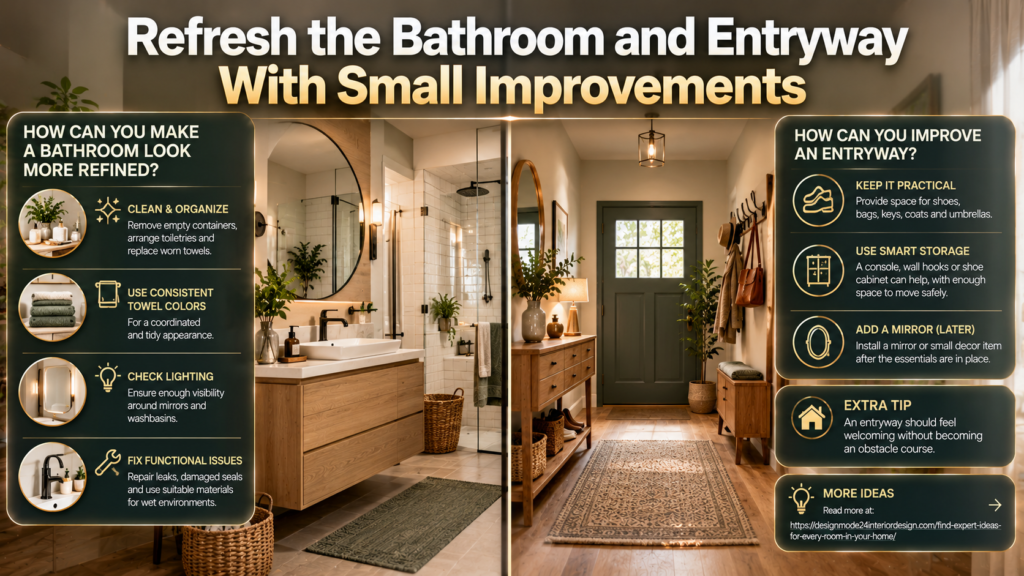
Bathrooms and entryways are often overlooked during decorating because they are smaller than living rooms and bedrooms. However, these areas influence the first impression of a home and can benefit from inexpensive updates.
How Can You Make a Bathroom Look More Refined?
Start with cleanliness, maintenance, and organization. Remove empty containers, arrange toiletries in suitable storage, and replace worn towels when necessary.
Use consistent towel colors if you want a coordinated appearance. Check whether lighting provides sufficient visibility around mirrors and washbasins.
Repair leaking fixtures, damaged seals, or other functional problems before concentrating on decoration. Avoid using materials that are unsuitable for wet environments.
How Can You Improve an Entryway?
An entryway needs to handle everyday arrivals and departures. Shoes, bags, keys, coats, and umbrellas should have practical places to go.
A narrow console, wall hooks, or a suitable shoe cabinet can help organize the area, provided there is enough space to move safely.
Add a mirror or small decorative item only after the essential storage works. An entryway should feel welcoming without becoming an obstacle course.
For broader inspiration across different spaces, explore the Room-by-Room Design Hub.
14. Common Mistakes That Make Budget Interiors Look Unfinished
Affordable decorating can produce excellent results, but a few common mistakes can undermine the final appearance.
Buying Accessories Before Planning the Room
People often buy cushions, vases, lamps, and decorative objects because they look attractive individually. Without an overall plan, these purchases can create a collection of unrelated colors and styles.
How to avoid it: Decide on the room’s palette, layout, and functional needs before purchasing accessories.
Choosing Furniture That Is Too Large
Oversized furniture can block walking paths, overwhelm small rooms, and reduce the available space for daily activities.
How to avoid it: Measure the room and furniture carefully. Check access through doorways and confirm that drawers and doors can open.
Using Too Many Competing Colors
A room with many unrelated colors may feel visually unsettled.
How to avoid it: Choose a limited palette and repeat key colors through textiles, artwork, and small accessories.
Ignoring the Quality of Cheap Purchases
An item may cost less initially but require frequent repairs or replacement.
How to avoid it: Check construction, comfort, safety, and expected use. Spend more where durability matters and save on easily replaceable decorative pieces.
Filling Every Surface
Decorating every shelf, wall, and tabletop leaves little space for the eye to rest.
How to avoid it: Display meaningful items selectively and leave some empty space around them.
Following Trends That Don’t Suit the Home
A popular design trend may not work with your room dimensions, existing furniture, or daily habits.
How to avoid it: Use trends as inspiration rather than instructions. Choose solutions that remain practical when the trend changes.
Starting DIY Work Without the Right Preparation
Painting, refinishing, and installing shelves can save money, but poor preparation may create extra work.
How to avoid it: Research the material, use suitable tools and products, and understand the safety requirements. Hire a qualified professional for work that involves specialized electrical, structural, or other regulated tasks.
15. Expert Tips for Getting More From Your Decorating Budget
A practical decorating strategy prioritizes the changes that make the greatest difference while avoiding unnecessary purchases.
Expert Tip: Work from large elements to small details. Coordinate walls, flooring, major furniture, and window treatments before selecting accessories. These larger elements establish the visual direction of the room.
Pro Tip: Take photographs before making changes. Pictures can reveal awkward spacing, excessive clutter, and unbalanced arrangements that are difficult to notice when you see the room every day.
Quick Tip: Use repetition to create consistency. Repeating a wood tone, accent color, or metal finish in a few places can connect different furniture pieces.
Common Mistake: Don’t buy everything at once. Live with the initial arrangement before making additional purchases. You may discover that the room needs better lighting rather than more decoration.
Expert Tip: Keep function at the center of the design. A beautiful room should still provide comfortable seating, accessible storage, safe walking paths, and appropriate lighting.
When Should You Consult an Interior Design Professional?
Professional advice can be useful when a renovation involves structural changes, complicated layouts, significant spending, or decisions that are difficult to reverse.
Before hiring someone, clarify the scope of work, budget, timeline, materials, payment arrangements, and responsibility for purchasing or supervising items.
Review Interior Designer Contract Essentials before entering an agreement. You can also prepare a list using Questions to Ask an Interior Design Consultant.
Professional help doesn’t necessarily mean handing over the entire project. A focused consultation about furniture layout, color selection, or lighting may be sufficient for some homes.
Which DIY Improvements Are Worth Considering?
Suitable projects may include painting, basic organization, replacing compatible cabinet hardware, arranging wall art, or assembling furniture according to its instructions.
Choose projects based on your skills, available tools, and the condition of the existing materials.
If you want to make improvements gradually, explore DIY Home Projects for ideas you can evaluate against your own needs.
16. A Step-by-Step Plan for Creating an Elegant Home on a Budget
You don’t have to redesign every room at once. A phased plan makes it easier to control costs and assess which improvements genuinely work.
Step 1: Assess the Existing Room
Identify what makes the room uncomfortable or visually unfinished. Common problems include poor lighting, clutter, unsuitable furniture dimensions, worn fabrics, or a lack of storage.
Write down the three changes most likely to improve the room.
Step 2: Measure the Space
Measure the room, doors, windows, and existing furniture. Note the main walking paths and any areas that must remain accessible.
These measurements will help you avoid buying furniture or rugs that don’t fit.
Step 3: Establish Your Budget
Separate necessary repairs from optional decorative improvements. Prioritize safety, comfort, and function before buying accessories.
Keep some flexibility for unexpected expenses, particularly if you’re undertaking repairs or renovation work.
Step 4: Reuse What You Already Own
Clean existing furniture, reorganize storage, and experiment with different layouts. Move decorative objects between rooms if they suit the new arrangement.
Take photographs so you can compare the results.
Step 5: Choose a Color and Material Direction
Identify the main colors and finishes you want to repeat. Use existing flooring, furniture, and architectural details as the starting point.
Avoid purchasing new items until you’ve established how they will work with the elements that remain.
Step 6: Improve Lighting and Organization
Correct dark areas, improve task lighting, and remove unnecessary clutter. These changes often make the room more comfortable before any new decorative purchases are needed.
Step 7: Purchase Only the Missing Items
Choose the items that solve the most important remaining problems. Depending on the room, that might be a rug, a lamp, curtains, storage, or replacement hardware.
Compare quality, dimensions, maintenance requirements, and total cost before buying.
Step 8: Review the Results
Use the room for several days and identify anything that still feels uncomfortable or unfinished.
Don’t rush to fill every empty corner. Some spaces benefit from remaining open.
How can I make my home look sophisticated without buying expensive furniture?
Creating a sophisticated home starts with how you use what you already have, not how much you spend on new furniture. A well-maintained sofa, coordinated colors, balanced furniture placement, and thoughtful lighting can make an ordinary room feel more polished. Instead of replacing everything, identify the elements that make the room look unfinished and improve those first.
Practical ways to achieve this:
Rearrange furniture to improve movement and create a balanced layout.
Use two or three complementary colors throughout the room.
Add texture through cushions, curtains, rugs, and natural materials.
Improve lighting with suitable lamps and bulbs.
Remove unnecessary decorations so the most attractive pieces stand out.
Which interior design styles look expensive but are affordable to achieve?
Contemporary, Scandinavian, minimalist, and Japandi-inspired interiors can work well on a limited budget because they emphasize simplicity, practical furniture, natural materials, and visual balance. These styles don’t require you to purchase a complete matching furniture set. You can adapt their principles to your existing home and introduce changes gradually.
Budget-friendly design approaches:
Contemporary: Choose clean-lined furniture and coordinated finishes.
Scandinavian: Use light colors, practical storage, and natural wood tones.
Japandi: Combine simple forms, restrained decoration, and organic textures.
Minimalist: Keep essential furniture and remove unnecessary clutter.
Choose the style that suits your home and lifestyle rather than following a trend that requires expensive replacements.
What colors and materials make affordable furniture look more sophisticated?
The most effective combinations usually balance color, texture, and contrast. Warm white, beige, taupe, muted green, and earthy brown can create a calm foundation, while darker accents add definition. Materials such as wood, cotton, woven fibers, and ceramic introduce visual interest without requiring luxury finishes.
Combinations worth trying:
Beige upholstery with natural wood and cream-colored textiles.
Warm-white walls with dark-green cushions and simple artwork.
Soft-gray furniture with black accents and textured fabrics.
Neutral bedding with wooden bedside tables and warm lighting.
Before buying paint or fabric, compare samples with your existing flooring and furniture. A material that looks attractive in a shop may appear different under your home’s lighting.
How can I make a small living room look elegant without overcrowding it?
A small living room looks more refined when every furniture piece has enough space to function comfortably. Oversized sofas, undersized rugs, and too many decorative objects can make the room feel cramped, even when individual items look attractive. The priority should be maintaining clear walking paths and creating a connected seating arrangement.
Improvements that make a difference:
Measure the room before purchasing furniture or rugs.
Choose appropriately sized seating and multifunctional storage.
Keep frequently used surfaces reasonably clear.
Use mirrors where they reflect daylight or an attractive view.
Combine general lighting with task or accent lighting where needed.
You don’t have to make the room completely minimalist. Keep the items that provide comfort or personality and remove those that take up space without serving a purpose.
Which affordable home improvements provide the biggest visual impact?
The best improvements are those that address a visible problem rather than simply adding more decoration. For many rooms, reorganizing furniture, improving lighting, refreshing worn textiles, and coordinating colors can deliver noticeable results before a major purchase becomes necessary.
Prioritize these improvements:
First: Declutter and rearrange the existing furniture.
Second: Improve lighting and make better use of natural daylight.
Third: Coordinate curtains, cushions, bedding, or rugs.
Fourth: Repair visible damage and update worn hardware where appropriate.
Finally: Add a small number of carefully selected accessories.
Set a budget before shopping and compare each potential purchase against the improvement it will provide. This helps you avoid spending money on decorative items while more important problems remain unresolved.
Conclusion
Creating a sophisticated interior does not depend on how much money you spend on furniture; it depends on how thoughtfully you design your space. By choosing a balanced color palette, incorporating different textures, improving lighting, maintaining a clutter-free environment, and arranging furniture with purpose, you can achieve a refined look without exceeding your budget. Even simple changes, such as updating curtains, adding elegant cushions, introducing natural elements, or selecting a few carefully chosen decorative accessories, can make a noticeable difference.
The key is to focus on quality of appearance rather than price. Instead of filling every corner with furniture and decorations, invest in pieces that complement your interior style and serve a clear purpose. Whether you are refreshing a living room, redesigning a bedroom, or improving your entire home, a thoughtful approach can help you create a space that feels comfortable, cohesive, and timeless.
Ultimately, sophisticated interiors are built through smart decisions, attention to detail, and consistency. Start with the changes that matter most, work within your budget, and gradually develop a home that reflects your personal taste. With the right design choices, an elegant and welcoming interior is achievable without luxury furniture.