
Introduction
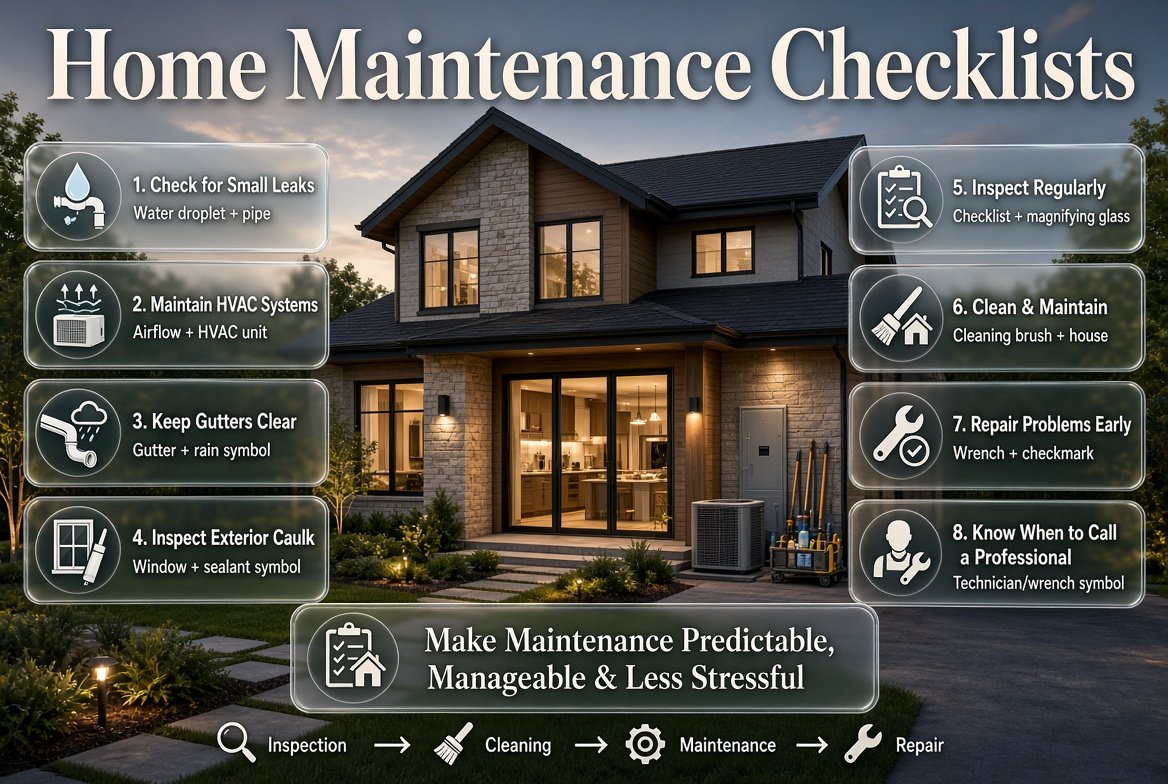
Home Maintenance Checklists | A home can look clean, comfortable, and perfectly maintained while important problems are developing quietly behind the scenes. A small plumbing leak can damage cabinets and flooring. A neglected HVAC system can become less efficient. A blocked gutter can send water toward the foundation, while cracked exterior caulk can allow moisture into areas you can’t easily see.
The problem isn’t usually that homeowners don’t care about their homes. It’s that there are simply too many things to remember.
That’s where home maintenance checklists become useful. Instead of relying on memory or waiting for something to break, a structured checklist gives you a practical way to inspect, clean, maintain, and repair different parts of your property throughout the year.
Whether you’re a first-time homeowner, managing an older property, or simply trying to become more organized, this guide will help you understand what needs attention, how often to check it, which jobs you can handle yourself, and when it’s smarter to call a professional.
For broader ideas about maintaining, improving, and making your home more functional, visit DesignMode24 Interior Design. The goal isn’t to turn homeownership into a never-ending list of chores. It’s to make maintenance predictable, manageable, and much less stressful.
What Are Home Maintenance Checklists?
A home maintenance checklist is an organized schedule of inspections, cleaning tasks, preventive maintenance, and repairs that helps keep a house safe, functional, efficient, and visually appealing.
Instead of asking, “What should I check today?”, a checklist gives you a simple framework based on frequency. Some tasks should be checked monthly, others every few months, while certain inspections make more sense once or twice a year.
A good checklist should cover more than cleaning. It should include the systems and components that protect the home from deterioration.
These typically include:
- Plumbing
- Electrical systems
- HVAC equipment
- Roofing
- Gutters and drainage
- Doors and windows
- Appliances
- Walls and ceilings
- Flooring
- Exterior surfaces
- Outdoor living areas
- Safety equipment
- Storage areas
- Attics, basements, and crawlspaces where applicable
The most useful checklist also tells you why a task matters and what warning signs should trigger further investigation.
Why Is Regular Home Maintenance So Important?
Regular maintenance is mainly about preventing small problems from becoming large ones. Most expensive household repairs don’t appear out of nowhere. They often begin with a minor warning sign that wasn’t noticed or wasn’t taken seriously.
A dripping faucet may eventually damage surrounding materials. A small roof defect can allow repeated moisture intrusion. A dirty HVAC filter can restrict airflow. Deteriorated weather stripping can make rooms uncomfortable and increase heating or cooling demands.
Preventive maintenance gives you the opportunity to catch these issues while they’re still manageable.
The main benefits of regular maintenance include:
- Lower likelihood of unexpected repair bills
- Better household safety
- Longer service life for equipment
- Improved energy efficiency
- Better indoor comfort
- Protection against moisture damage
- Preservation of property value
- Easier budgeting for repairs
- Fewer emergency situations
⭐ Expert Tip: Think of maintenance as an inspection system rather than a cleaning routine. Cleaning makes your home look better; inspection helps you discover what may go wrong next.
How Often Should You Perform Home Maintenance?
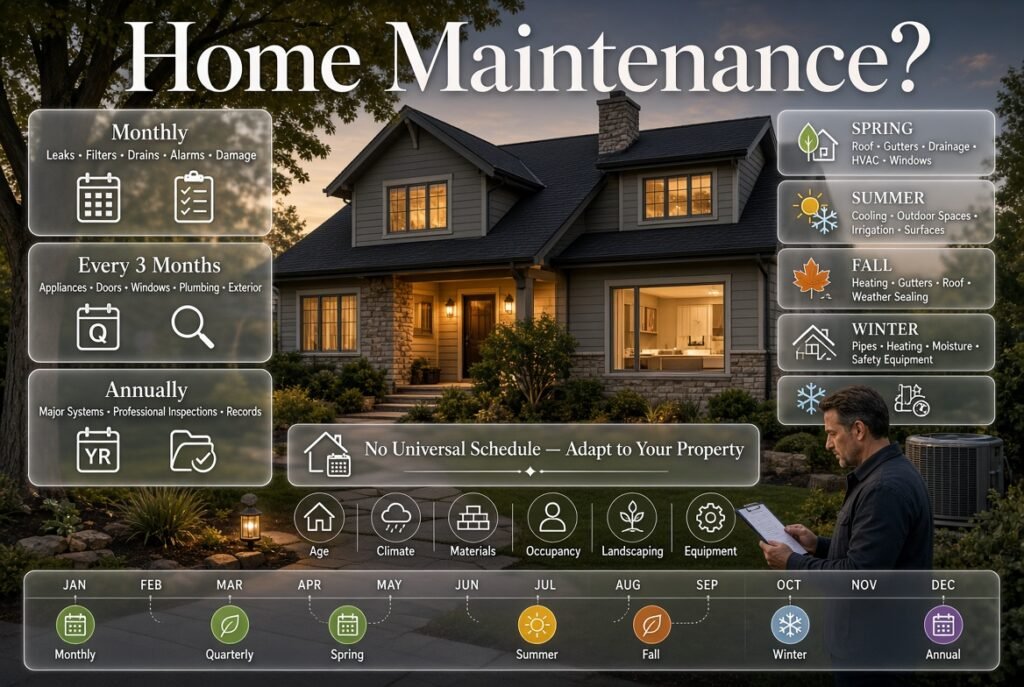
There isn’t one universal schedule for every property. A newly built apartment, a 50-year-old detached house, and a vacation property will have very different maintenance requirements.
However, dividing tasks into frequency categories makes the process much easier.
| Frequency | Typical Maintenance Tasks |
|---|---|
| Monthly | Check leaks, filters, drains, alarms, visible damage |
| Every 3 Months | Inspect appliances, doors, windows, plumbing, exterior |
| Spring | Roof, gutters, drainage, HVAC, windows, exterior |
| Summer | Cooling, outdoor spaces, irrigation, exterior surfaces |
| Fall | Heating, gutters, roof, weather sealing |
| Winter | Pipes, heating, moisture, safety equipment |
| Annually | Major systems, professional inspections, maintenance records |
Your home’s age, climate, materials, occupancy, landscaping, and equipment should influence the exact schedule.
A property in a humid climate may require more frequent moisture inspections. A home with mature trees may need additional attention around the roof and gutters. A house with an aging HVAC system may require more frequent monitoring than a recently installed system.
Monthly Home Maintenance Checklist
Monthly maintenance doesn’t need to consume your entire weekend. A focused inspection can often be completed relatively quickly if you know where to look.
1. Look for Plumbing Leaks
Check underneath sinks, around toilets, near washing machines, behind refrigerators with water connections, and around exposed plumbing.
Look for:
- Dampness
- Water stains
- Mineral deposits
- Corrosion
- Musty smells
- Dripping connections
- Unexplained moisture
A small leak is easier to address before it damages cabinetry, flooring, drywall, or insulation.
2. Inspect HVAC Filters
Check the filter used by your heating or cooling system and follow the manufacturer’s replacement or cleaning recommendations.
Don’t assume every filter needs to be replaced on exactly the same schedule. Household conditions matter.
Homes with pets, renovation dust, allergies, or heavy occupancy may require more frequent attention.
3. Test Smoke and Carbon Monoxide Alarms
Use the test function on smoke and carbon monoxide alarms.
Check that:
- The alarm responds properly
- Batteries aren’t depleted
- The unit isn’t visibly damaged
- Replacement guidance hasn’t been exceeded
⚠ Common Mistake: Taking out a low-battery alarm and forgetting to replace the battery. The noise may be annoying, but disabling a safety device creates a much bigger problem.
4. Check Drains
Slow drains are often an early warning sign.
Inspect:
- Kitchen sinks
- Bathroom sinks
- Showers
- Bathtubs
- Floor drains
Pay attention to standing water, unpleasant smells, slow drainage, or unusual gurgling.
5. Walk Around the Exterior
Take a quick walk around the property.
Look for:
- Cracked caulk
- Peeling paint
- Damaged siding
- Broken lights
- Standing water
- Loose railings
- Damaged screens
- Visible cracks
This simple habit can help you notice changes before they become significant repairs.
Quarterly Home Maintenance Checklist
Every three months, perform a more detailed review.
Inspect Plumbing Fixtures
Turn faucets on and off and check for leaks around handles and connections.
Flush toilets and pay attention to unusual running or filling behavior.
If water pressure suddenly changes throughout the house, investigate rather than assuming it’s normal.
Check Kitchen and Laundry Appliances
Inspect appliance connections and accessible areas.
Pay particular attention to:
- Refrigerator water lines
- Dishwasher connections
- Washing machine hoses
- Dryer lint buildup
- Range hood filters
- Refrigerator door seals
Dryer maintenance deserves special attention because restricted airflow and excessive lint accumulation can create a serious fire risk.
Inspect Doors and Windows
Open and close each regularly used window and exterior door.
Check for:
- Sticking
- Damaged weather stripping
- Broken locks
- Cracked caulk
- Moisture
- Air gaps
A door or window that suddenly becomes difficult to operate may indicate hardware problems, movement, or moisture-related changes.
Inspect the Attic or Basement
If these areas are safely accessible, look for:
- Water stains
- Dampness
- Condensation
- Pest activity
- Damaged insulation
- Unusual odors
Never enter a dangerous or structurally questionable space simply to complete a checklist.
Spring Home Maintenance Checklist
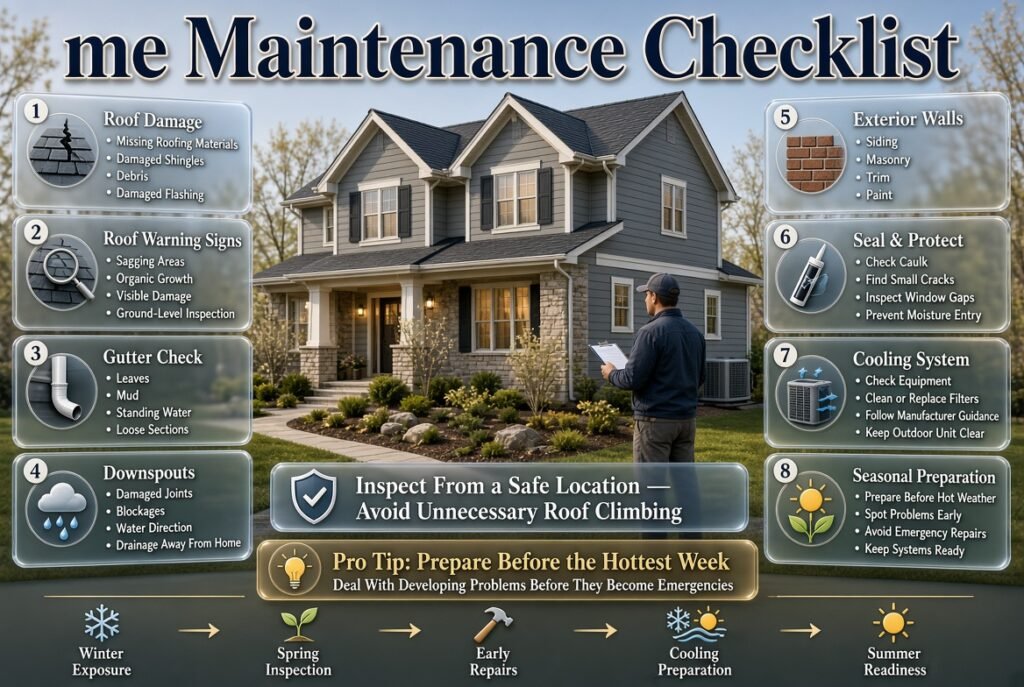
Spring is one of the most important times to inspect your property because winter weather may have exposed weaknesses.
Inspect the Roof
From a safe location, look for obvious signs of damage.
These may include:
- Missing roofing materials
- Damaged shingles
- Debris
- Damaged flashing
- Sagging areas
- Excessive organic growth
A ground-level visual inspection is reasonable for homeowners, but climbing onto a roof introduces unnecessary fall risks.
Clean Gutters and Downspouts
Gutters should carry rainwater away from the structure.
Check for:
- Leaves
- Mud
- Standing water
- Loose sections
- Damaged joints
- Blocked downspouts
The goal isn’t simply clean gutters. The goal is to make sure water is being directed away from the house.
Inspect Exterior Walls
Look at siding, masonry, trim, paint, and caulk.
Small cracks or gaps around windows and doors can become pathways for moisture.
Prepare the Cooling System
Before hot weather arrives, check your cooling equipment and follow its manufacturer’s maintenance instructions.
Replace or clean filters as required and make sure outdoor equipment isn’t obstructed.
💡 Pro Tip: Don’t wait for the hottest week of the year to discover that your air conditioner isn’t performing correctly. Seasonal preparation gives you time to deal with developing problems before they become emergencies.
Summer Home Maintenance Checklist
Summer maintenance focuses on cooling, moisture management, outdoor spaces, and exterior materials.
Monitor Air-Conditioning Performance
Pay attention to changes rather than waiting for complete failure.
Warning signs include:
- Weak airflow
- Uneven cooling
- Unusual sounds
- Strange odors
- Frequent cycling
- Water around indoor equipment
- Unexpected increases in energy consumption
Some basic filter and cleaning tasks may be homeowner-friendly, but specialized HVAC work should be handled by an appropriately qualified technician.
Inspect Outdoor Living Areas
Check decks, patios, fences, steps, balconies, and railings.
Look for:
- Loose boards
- Rot
- Cracks
- Rust
- Unstable railings
- Trip hazards
If you’re planning improvements to your outdoor area, the Garden and Outdoor Living Guides section can provide useful inspiration alongside your maintenance work.
Check Drainage and Irrigation
Inspect sprinkler heads, irrigation lines, and areas around the property that stay unusually wet.
Persistent water accumulation near a foundation deserves attention.
Fall Home Maintenance Checklist
Fall is the ideal time to prepare your property for colder or wetter weather.
Clean Gutters Again
Falling leaves can quickly block drainage systems.
Clean gutters and verify that downspouts are directing water away from the structure.
Inspect Heating Equipment
Before regular heating begins, check your heating system for unusual behavior.
Watch for:
- Strange noises
- Unusual odors
- Weak airflow
- Uneven temperatures
- Frequent cycling
Follow the manufacturer’s recommended maintenance schedule and arrange professional servicing where appropriate.
Inspect Weather Seals
Check weather stripping and caulk around doors and windows.
Damaged seals can allow unwanted outdoor air and moisture into the home.
Prepare Vulnerable Plumbing
If your area experiences freezing temperatures, identify exposed pipes and follow appropriate cold-weather protection procedures.
Also make sure everyone in the household knows where the main water shut-off is located.
Winter Home Maintenance Checklist
Winter maintenance is primarily about heating, plumbing protection, moisture control, and household safety.
Monitor the Heating System
Don’t ignore unusual smells, sounds, or changes in heating performance.
A system that is struggling may become more problematic when temperatures drop further.
Check for Condensation
Excessive condensation around windows or other surfaces can indicate humidity or ventilation issues.
Persistent moisture should be investigated rather than simply wiped away repeatedly.
Protect Pipes
During freezing weather, vulnerable plumbing needs attention.
Know the location of your main shut-off valve and understand how to respond if a pipe begins leaking.
Review Emergency Supplies
A basic emergency kit may include:
- Flashlights
- Batteries
- First-aid supplies
- Basic tools
- Water
- Emergency contact details
- Fire extinguisher
📌 Quick Tip: Every adult in your household should know where the main water shut-off, electrical panel, and emergency supplies are located.
Home Maintenance Checklist by Room
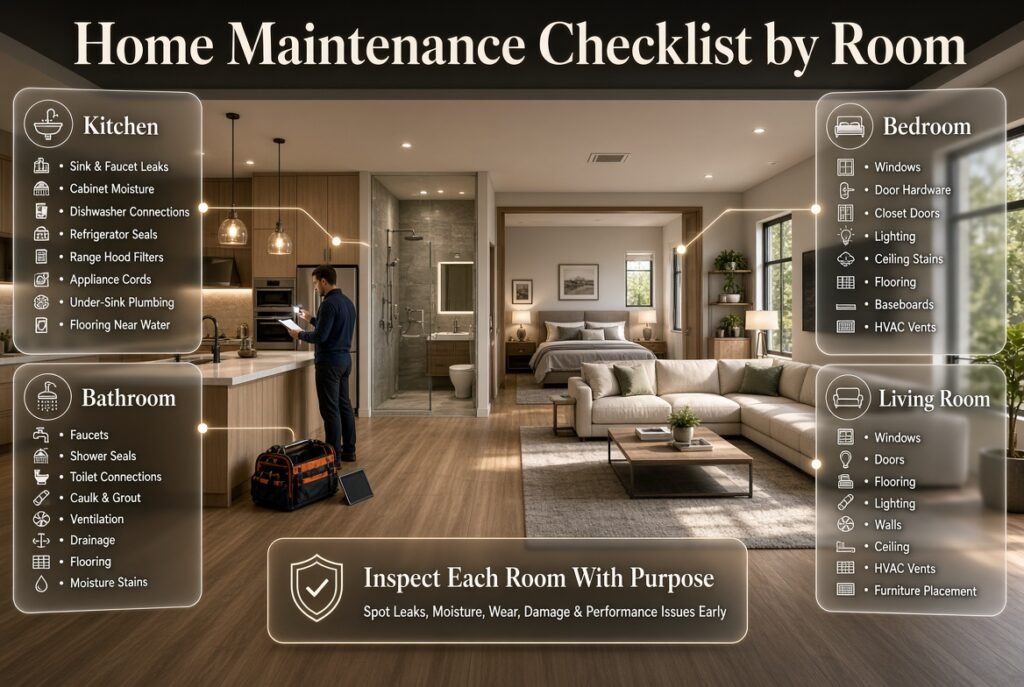
A room-by-room approach is useful when you don’t want to think about maintenance as a collection of technical systems.
Kitchen Maintenance Checklist
Check:
- Sink and faucet leaks
- Cabinet moisture
- Dishwasher connections
- Refrigerator seals
- Range hood filters
- Appliance cords
- Under-sink plumbing
- Flooring around water sources
For broader kitchen improvement and home projects, DIY Home Projects can be useful when maintenance leads to a practical upgrade.
Bathroom Maintenance Checklist
Inspect:
- Faucets
- Shower seals
- Toilet connections
- Caulk
- Grout
- Ventilation
- Drainage
- Flooring
- Ceiling for moisture stains
Bathrooms deserve frequent attention because they combine water, humidity, ventilation, and multiple plumbing fixtures.
Bedroom Maintenance Checklist
Check:
- Windows
- Door hardware
- Closet doors
- Lighting
- Ceiling stains
- Flooring
- Baseboards
- HVAC vents
If maintenance turns into a redesign project, Room-by-Room Interior Design Inspiration can help you plan improvements without overlooking practical considerations.
Living Room Checklist
Inspect:
- Windows
- Doors
- Flooring
- Lighting
- Walls
- Ceiling
- HVAC vents
- Furniture placement
A maintenance inspection is also a good opportunity to notice wear patterns, damaged finishes, or lighting problems.
Home Maintenance Checklist for Walls, Floors, and Ceilings
Not every maintenance problem involves a mechanical system.
Your home’s visible surfaces provide useful clues about what’s happening underneath.
Walls
Look for:
- Cracks
- Peeling paint
- Bubbling
- Discoloration
- Damp spots
- Nail pops
- Separation around trim
Not every crack indicates a structural problem. However, rapidly changing, large, or unusual cracks deserve professional evaluation.
If you’re considering repainting after completing repairs, the Paint Color category can help with color and finish decisions.
Floors
Check for:
- Soft areas
- Buckling
- Scratches
- Water stains
- Loose tiles
- Gaps
- Uneven transitions
Floor problems near kitchens, bathrooms, laundry rooms, or exterior doors deserve particular attention because moisture may be involved.
For design-focused flooring inspiration, see Flooring and Wall Design Inspiration.
Ceilings
Inspect ceilings for:
- Water stains
- Cracks
- Sagging
- Peeling paint
- Discoloration
A new ceiling stain should not simply be painted over. First determine why the stain appeared.
Electrical Home Maintenance Checklist
Electrical maintenance requires more caution than many homeowners realize.
You can safely perform some basic observations, but you shouldn’t treat electrical work like a normal DIY decorating project.
Look for visible warning signs such as:
- Damaged outlets
- Loose switches
- Burning smells
- Discoloration
- Sparking
- Repeated breaker trips
- Warm or hot outlets
- Damaged cords
If you notice these symptoms, stop using the affected equipment or outlet and contact a qualified professional.
Never remove electrical panels or attempt complex wiring work simply because an online tutorial makes the process look easy.
Plumbing Home Maintenance Checklist
Plumbing maintenance starts with observation.
Check:
- Faucet connections
- Toilet bases
- Sink cabinets
- Water heater area
- Exposed pipes
- Drain performance
- Shut-off valves
- Washing machine connections
If you notice corrosion, active leaks, persistent low pressure, sewage smells, or repeated blockages, the issue may require professional diagnosis.
⚠ Common Mistake: Treating repeated drain blockages as a problem that can always be solved with another chemical cleaner. Repeated blockages may have an underlying plumbing cause that requires proper diagnosis.
HVAC Maintenance Checklist
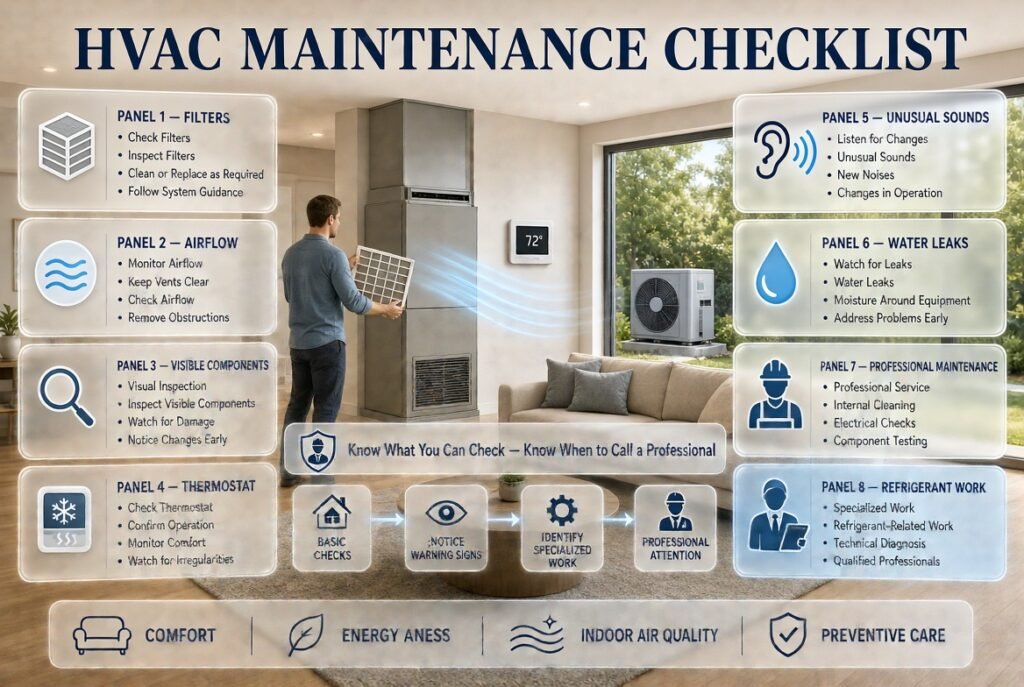
Heating and cooling systems deserve regular attention because they directly affect comfort, energy consumption, and indoor air quality.
A basic homeowner checklist can include:
- Checking filters
- Keeping vents unobstructed
- Inspecting visible components
- Monitoring airflow
- Listening for unusual sounds
- Watching for water leaks
- Checking thermostat operation
More specialized maintenance may include internal cleaning, electrical checks, refrigerant-related work, or component testing.
Those tasks should be performed by appropriately qualified professionals.
Home Maintenance vs Home Improvement: What’s the Difference?
Maintenance and improvement are related but shouldn’t be confused.
Maintenance keeps something functioning properly.
Improvement changes or upgrades it.
For example:
- Replacing damaged caulk = maintenance
- Replacing the entire bathroom vanity = improvement
- Repairing damaged flooring = maintenance
- Installing new flooring for style = improvement
- Replacing a failed light fixture = maintenance
- Redesigning the lighting layout = improvement
Understanding the difference helps you prioritize spending.
If you’re planning a larger upgrade after completing essential repairs, the Home Improvement section can help you explore projects without confusing decorative upgrades with urgent maintenance.
What Home Maintenance Tasks Can You Do Yourself?
Many homeowners can safely handle simple, low-risk maintenance.
Examples include:
- Replacing standard filters
- Cleaning accessible gutters where safe
- Replacing caulk
- Cleaning drains
- Testing alarms
- Touching up paint
- Cleaning appliance components
- Checking visible plumbing
- Lubricating appropriate hardware
- Cleaning outdoor areas
The important distinction is between maintenance and specialized repair.
If a job involves electrical wiring, structural components, gas systems, refrigerant, dangerous heights, or complex plumbing, professional assistance is generally the safer choice.
When Should You Call a Professional?
Call an appropriate professional when a problem exceeds your experience or involves significant safety risk.
Examples include:
- Gas odors
- Electrical burning smells
- Sparking
- Repeated breaker trips
- Major water leaks
- Sewage backups
- Structural movement
- Significant roof damage
- HVAC refrigerant problems
- Dangerous mold or environmental conditions
- Major foundation concerns
The purpose of a checklist isn’t to make you a professional electrician, plumber, roofer, or HVAC technician.
It’s to help you recognize when something isn’t right.
⭐ Expert Tip: A homeowner’s best skill isn’t knowing how to repair everything. It’s knowing what is normal, recognizing when something has changed, and knowing when to call someone qualified.
How to Build Your Own Home Maintenance Checklist
A customized checklist is more useful than copying a generic list and trying to follow every item.
Step 1: Walk Through Your Property
Move through every room and exterior area.
Write down the systems and components that require monitoring.
Step 2: Identify High-Risk Areas
Prioritize:
- Water sources
- Electrical equipment
- Heating and cooling
- Roof and drainage
- Exterior openings
- Safety devices
Step 3: Assign Frequencies
Put each task into a monthly, quarterly, seasonal, or annual category.
Step 4: Record Equipment Information
Keep:
- Model numbers
- Installation dates
- Manuals
- Warranty information
- Service records
Step 5: Set Reminders
Use a calendar or reminder app.
A maintenance task that exists only in your head is easy to forget.
Step 6: Record Completed Work
After every repair, note:
- Date
- Problem
- Solution
- Parts replaced
- Professional involved
- Future follow-up
This creates a useful property history.
A Practical Annual Home Maintenance Calendar
| Month | Priority |
|---|---|
| January | Heating, safety devices, plumbing |
| February | Interior inspection, appliances |
| March | Roof, gutters, exterior |
| April | HVAC, windows, drainage |
| May | Outdoor spaces, irrigation |
| June | Cooling system, appliances |
| July | Exterior surfaces, outdoor areas |
| August | Plumbing, drainage, ventilation |
| September | Roof, gutters, exterior |
| October | Heating, weather sealing |
| November | Pipes, emergency supplies |
| December | Safety review and maintenance records |
This calendar is a framework rather than a rigid rule. Adjust it according to your local climate and the specific requirements of your property.
How to Keep Home Maintenance From Becoming Overwhelming
The biggest mistake is trying to complete everything at once.
Instead, create three levels.
Level 1: Essential
These tasks affect safety or prevent major damage.
Examples:
- Active leaks
- Electrical hazards
- Smoke alarms
- Carbon monoxide alarms
- Heating failures
- Major drainage problems
Level 2: Preventive
These reduce future repair risks.
Examples:
- Filter replacement
- Gutter cleaning
- Caulk inspection
- Appliance maintenance
- Weather sealing
Level 3: Cosmetic
These improve appearance but aren’t normally urgent.
Examples:
- Repainting
- Decorative upgrades
- Minor surface refinishing
- Style changes
This prioritization prevents cosmetic projects from consuming the budget while important maintenance is ignored.
Common Home Maintenance Mistakes
Waiting Until Something Breaks
Reactive maintenance is often more expensive.
Why it happens: The home still appears functional.
Why it’s harmful: Small problems can continue causing hidden damage.
Better approach: Investigate changes as soon as you notice them.
Ignoring Gutters and Drainage
Homeowners often focus on indoor spaces.
Why it happens: Gutters aren’t visible from inside the home.
Why it’s harmful: Poor drainage can contribute to moisture problems.
Better approach: Inspect gutters and downspouts several times a year.
Treating Every Repair as a DIY Project
Online videos can make specialized repairs look simple.
Why it’s harmful: Incorrect repairs can create greater damage or safety risks.
Better approach: Stay within your skill level.
Forgetting the Exterior
The exterior is the home’s first line of defense against weather.
Better approach: Include roofs, windows, doors, siding, drainage, and exterior surfaces in every seasonal inspection.
Not Keeping Records
Why it happens: Maintenance feels too minor to document.
Why it’s harmful: You may forget when equipment was serviced or replaced.
Better approach: Keep a simple digital or physical maintenance log.
Expert Home Maintenance Advice That Saves Time and Money
Experienced homeowners often don’t maintain everything equally. They focus on systems where small failures can create disproportionately large problems.
Watch water first
Water is one of the most common sources of property damage. Check around plumbing fixtures, roofs, windows, foundations, and drainage areas.
Learn your home’s shut-offs
Know where the main water shut-off is located. Understand your electrical panel and know how to safely disconnect power when necessary.
Pay attention to changes
Your house develops patterns. If a door suddenly sticks, a room becomes unusually humid, or an HVAC system sounds different, investigate.
Maintain according to manufacturer guidance
Generic schedules can help, but the manufacturer’s instructions should take priority for appliances and mechanical systems.
Don’t confuse appearance with condition
Fresh paint can hide stains temporarily. New flooring can cover moisture damage temporarily. A clean HVAC grille doesn’t necessarily mean the equipment is operating correctly.
Maintenance should focus on function and condition, not just appearance.
Using Home Maintenance to Improve Interior Design
Maintenance and interior design don’t have to exist separately.
For example, repairing wall damage before repainting gives you a better foundation for a color update. Fixing flooring issues before rearranging furniture prevents aesthetic improvements from covering functional problems.
Similarly, lighting can affect how comfortable and usable a room feels.
If you’re upgrading fixtures after completing maintenance work, Lighting and Ceiling Ideas can help you think about lighting as part of the overall room design rather than simply replacing a broken fixture.
Bathrooms deserve the same approach. If you’re repairing or replacing a bathroom light, Bathroom Hanging Pendant Lighting can provide inspiration for a more considered lighting solution.
The important principle is simple: repair the underlying problem first, then improve the appearance.
Maintenance for Storage and Organization Areas
Storage spaces are easy to overlook because they aren’t always part of everyday living.
Inspect:
- Closets
- Cabinets
- Garage storage
- Utility rooms
- Shelving
- Storage containers
- Basement storage
- Attic storage
Check for moisture, pests, overloaded shelves, and poor ventilation.
If you’re reorganizing these spaces after maintenance, Smart Storage and Organization Ideas can help you create systems that make future inspections easier.
A well-organized utility area also makes maintenance more efficient because equipment, shut-offs, tools, and supplies are easier to locate.
Maintenance Should Include the Home’s Practical Details
Some areas don’t seem important until they cause inconvenience.
Check:
- Door handles
- Cabinet hinges
- Drawer slides
- Curtain hardware
- Wall hooks
- Shelving brackets
- Handrails
- Stair lighting
- Outdoor fixtures
These small components contribute to everyday usability.
For broader low-cost improvement ideas, Easy Decorating Tips for Every Budget can be useful once essential maintenance has been completed.
How to Prioritize Repairs When Your Budget Is Limited
You don’t need to fix everything simultaneously.
Use this order:
1. Immediate safety risks
Electrical hazards, gas concerns, structural instability, and dangerous conditions come first.
2. Active water intrusion
Leaks, roof problems, drainage failures, and plumbing issues can quickly create additional damage.
3. Essential systems
Heating, cooling, plumbing, electrical, and major appliances deserve priority when their failure affects basic household function.
4. Preventive repairs
Address deterioration before it becomes a major failure.
5. Cosmetic improvements
Paint, decorative fixtures, finishes, and style changes can wait when necessary.
This approach helps homeowners spend money where it provides the greatest protection.
How Home Maintenance Affects Property Value
Maintenance doesn’t guarantee a specific increase in property value, but poor maintenance can certainly reduce buyer confidence.
A property with documented maintenance has several advantages:
- Problems are easier to identify
- Equipment history is clearer
- Repairs are easier to explain
- Buyers may have greater confidence
- Unexpected defects are less likely to dominate discussions
A well-maintained home also tends to show better because functional problems haven’t been allowed to accumulate.
Maintenance is therefore not only about today’s comfort. It’s part of protecting the property’s long-term condition.

Leave a Reply