
Introduction
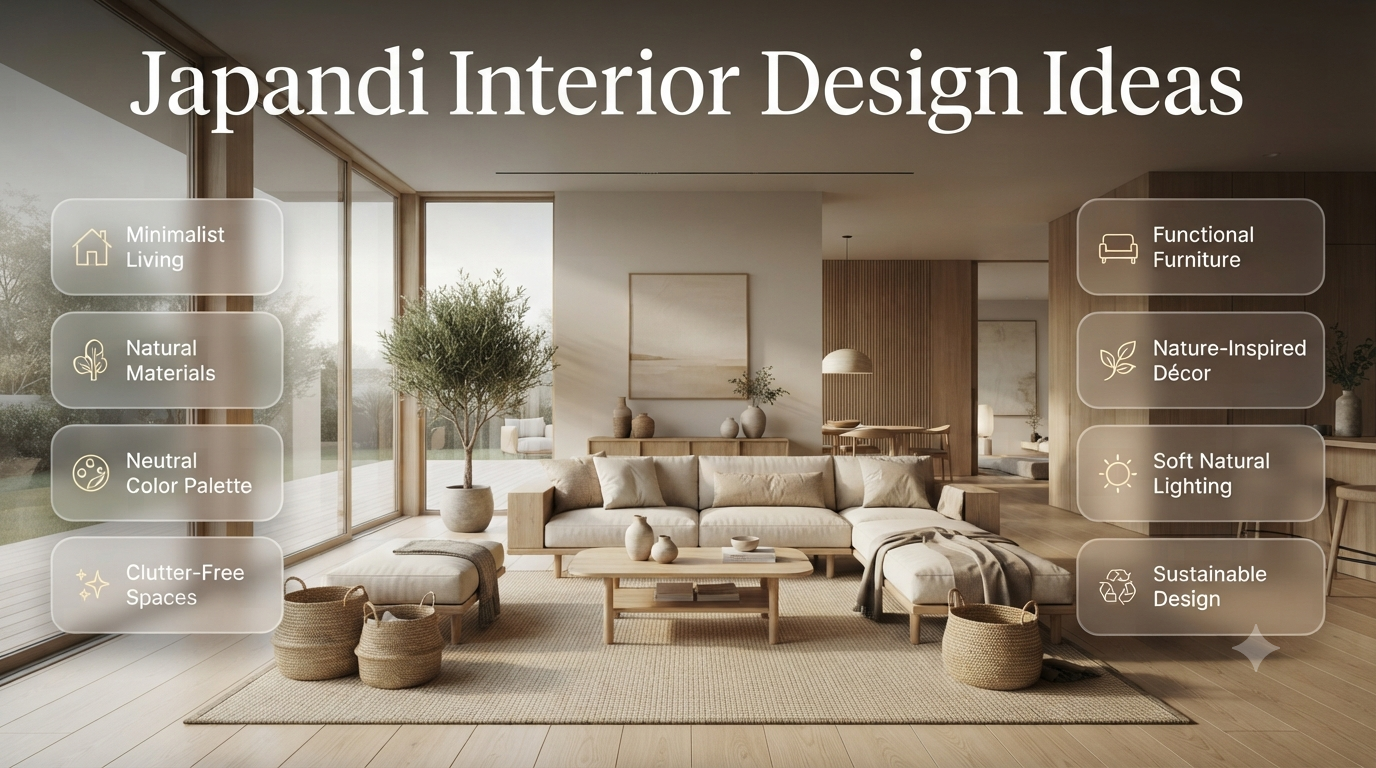
Japandi Interior Design Ideas | Have you ever walked into a room that instantly made you feel relaxed? No clutter, no overwhelming decorations—just a peaceful space where every piece feels intentional. That’s exactly why Japandi Interior Design has become one of the most sought-after home design styles in recent years.
Combining the warmth of Scandinavian design with the simplicity of Japanese interiors, Japandi creates spaces that are elegant, functional, and comfortable. Whether you’re decorating a small apartment, renovating your living room, or planning a complete home makeover, this style offers a timeless approach that prioritizes quality over quantity.
At Design Mode 24 Interior Design, we believe great interiors should be both beautiful and practical. In this comprehensive guide, you’ll learn everything you need to know about Japandi Interior Design, from its core principles and color palette to furniture, materials, and styling ideas that help you create a peaceful, timeless home.
What Is Japandi Interior Design?
Japandi Interior Design is a modern interior style that combines Japanese minimalism with Scandinavian comfort. It focuses on clean lines, natural materials, neutral colors, handcrafted furniture, and clutter-free living to create calm, functional, and timeless spaces that promote everyday well-being.
Japandi is more than just a decorating trend—it’s a lifestyle built around simplicity, balance, and intentional living. Rather than filling every corner with furniture and accessories, this design philosophy encourages homeowners to choose fewer, higher-quality pieces that add both beauty and purpose.
The style combines two timeless concepts:
- Japanese “Wabi-Sabi” – appreciating simplicity, authenticity, and natural imperfections.
- Scandinavian “Hygge” – creating warmth, comfort, and happiness through thoughtful living spaces.
Although these philosophies come from different cultures, they share a common belief: a home should support your lifestyle, not overwhelm it.
If you’re looking for more decorating inspiration beyond Japandi, explore our collection of Home Design Ideas for practical tips, room transformations, and timeless design inspiration.
Why Is Japandi Interior Design So Popular?
Japandi Interior Design has gained worldwide popularity because it blends minimalism with warmth. It creates peaceful, clutter-free spaces using natural materials, functional furniture, earthy colors, and timeless craftsmanship, making homes feel both elegant and comfortable.
Modern life can be busy and overwhelming. Many homeowners are now looking for interiors that reduce stress instead of adding visual clutter. Japandi answers that need by creating spaces that feel calm, organized, and welcoming.
Some of the biggest reasons for its popularity include:
- Clean and clutter-free interiors
- Natural, sustainable materials
- Timeless furniture instead of fast-changing trends
- Better organization and storage
- Warm, relaxing color palettes
- Focus on quality over quantity
- Easy to maintain and highly functional spaces
Unlike many trendy design styles that quickly go out of fashion, Japandi remains elegant because it is built on timeless design principles rather than temporary aesthetics.
💡 Pro Tip: Before buying any new furniture or décor, ask yourself: Does this piece improve both the appearance and functionality of my room? If not, it probably doesn’t belong in a Japandi home.
The Origins of Japandi Interior Design
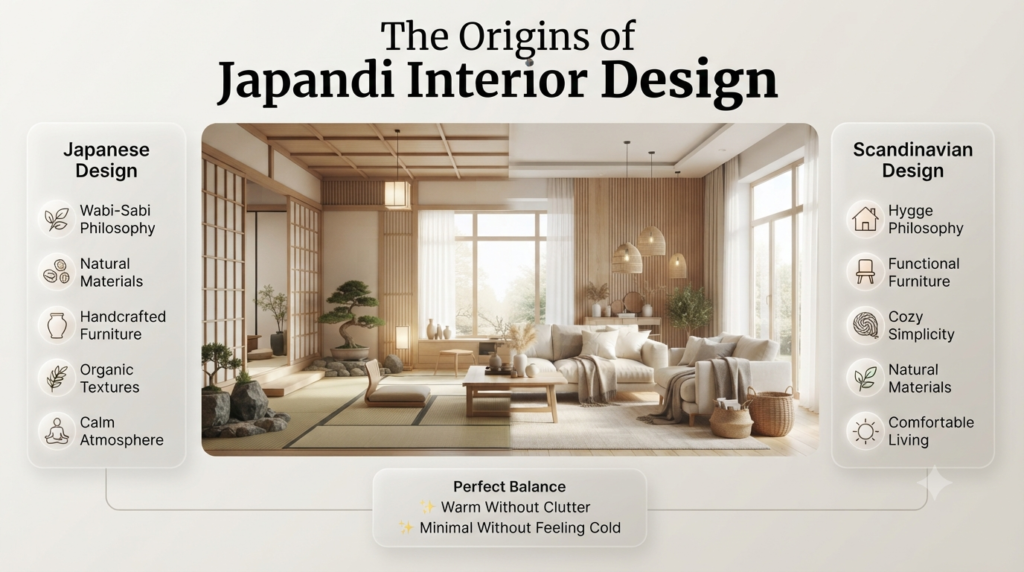
Although the name “Japandi” is relatively new, the ideas behind it have existed for decades.
Japanese and Scandinavian cultures have long shared similar values when it comes to design and everyday living. Both emphasize craftsmanship, functionality, simplicity, and a close connection with nature.
| Japanese Design | Scandinavian Design |
|---|---|
| Wabi-Sabi philosophy | Hygge philosophy |
| Natural materials | Natural materials |
| Minimal decoration | Cozy simplicity |
| Handcrafted furniture | Functional furniture |
| Organic textures | Soft textiles |
| Calm atmosphere | Comfortable living |
When these two styles are combined, they create interiors that feel warm without being cluttered and minimal without feeling cold.
Core Principles of Japandi Interior Design
Understanding the philosophy behind Japandi is more important than simply buying furniture that looks similar. These principles are what truly define the style.
1. Simplicity Without Emptiness
Minimalism doesn’t mean removing everything from a room.
Instead, every item should serve a purpose—whether practical, emotional, or decorative.
Rather than filling shelves with dozens of ornaments, Japandi encourages carefully selecting a few meaningful pieces, such as:
- Handmade ceramic vases
- Wooden trays
- Linen cushions
- Stone sculptures
- Woven baskets
- Indoor plants
Each object contributes to the overall harmony of the space instead of creating visual clutter.
2. Function Always Comes First
Every piece of furniture should improve your daily life.
Japandi interiors avoid decorative items that have no practical value. Instead, they focus on furniture that is comfortable, durable, and thoughtfully designed.
For example:
Instead of placing multiple side tables throughout a room, choose one beautifully crafted table with storage that serves multiple purposes.
Good design should make everyday living easier.
3. Natural Beauty Is Essential
Nature is at the heart of Japandi Interior Design.
Instead of synthetic materials, this style embraces authentic textures that age beautifully over time.
Popular materials include:
- Oak
- Walnut
- Ash wood
- Bamboo
- Linen
- Cotton
- Wool
- Stone
- Clay
- Rattan
These materials add warmth, texture, and character while maintaining the calm simplicity that defines Japandi interiors.
⭐ Expert Tip: Mix smooth wooden surfaces with textured fabrics like linen or wool to create visual depth without making the room feel busy.
4. Celebrate Imperfection
One of the most beautiful aspects of Japanese design is accepting that perfection isn’t always desirable.
A handcrafted ceramic vase with slight variations often feels more authentic than a perfectly manufactured one.
Similarly, reclaimed wood with visible grain, knots, and natural textures tells a story and adds personality to your home.
Japandi celebrates authenticity rather than flawless perfection.
Key Characteristics of Japandi Interior Design
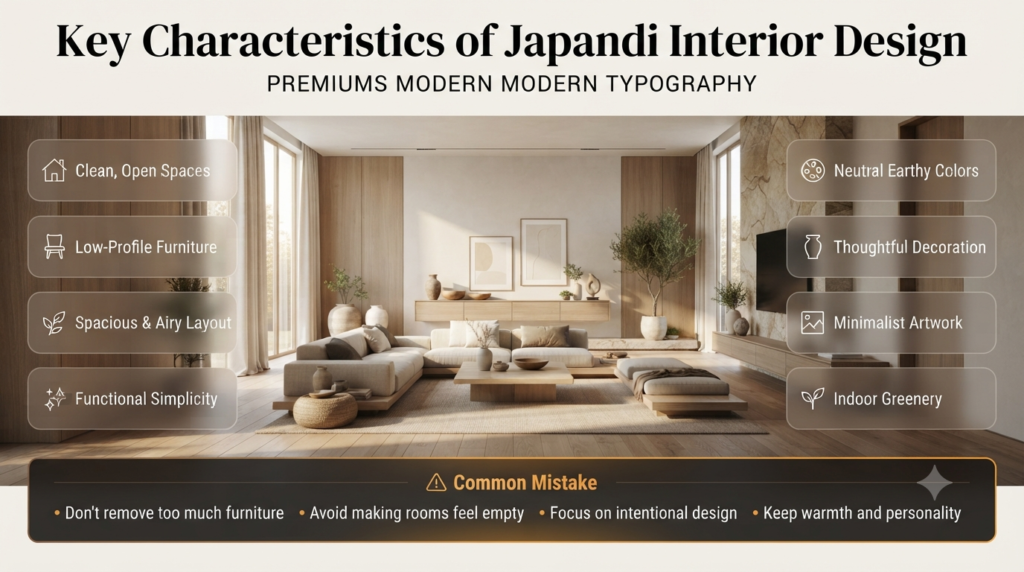
If you walk into a Japandi-inspired home, you’ll notice several defining features that work together to create a peaceful atmosphere.
Clean, Open Spaces
Rooms feel spacious because unnecessary furniture and accessories are removed. Every piece has room to breathe, making the home feel lighter and more inviting.
Neutral, Earthy Color Palette
Instead of bright colors, Japandi relies on calming shades inspired by nature, including:
- Warm White
- Ivory
- Beige
- Sand
- Stone Gray
- Taupe
- Sage Green
- Olive Green
- Soft Brown
- Charcoal
If you’re planning to refresh your walls, our Paint Color guides can help you choose timeless shades that perfectly complement the Japandi aesthetic.
Low-Profile Furniture
Furniture typically sits lower to the ground, creating a relaxed and grounded feeling.
Popular choices include:
- Platform beds
- Low sofas
- Minimal coffee tables
- Floating cabinets
- Simple wooden benches
Thoughtful Decoration
Rather than displaying many decorative objects, Japandi emphasizes a few carefully selected pieces such as:
- Handmade pottery
- Wooden bowls
- Organic sculptures
- Framed minimalist artwork
- Indoor greenery
⚠ Common Mistake: Many beginners remove too much furniture and décor, making the room feel empty. Japandi is about intentional design—not creating a space without personality.
Japandi Color Palette: Choosing Colors That Feel Calm
Japandi color palettes use warm neutrals and earthy tones inspired by nature, including beige, cream, soft gray, sage green, taupe, warm white, and charcoal. These colors create a peaceful atmosphere while allowing natural materials and textures to become the focal point.
Choosing the right color palette is one of the easiest ways to achieve an authentic Japandi look.
Recommended Color Palette
| Base Colors | Accent Colors |
|---|---|
| Warm White | Olive Green |
| Beige | Sage Green |
| Ivory | Terracotta |
| Sand | Charcoal |
| Taupe | Matte Black |
| Light Gray | Deep Brown |
📌 Quick Tip: Keep walls light and neutral, then introduce contrast through wood finishes, textiles, ceramics, and indoor plants instead of bold paint colors.
Natural Materials That Define Japandi Style
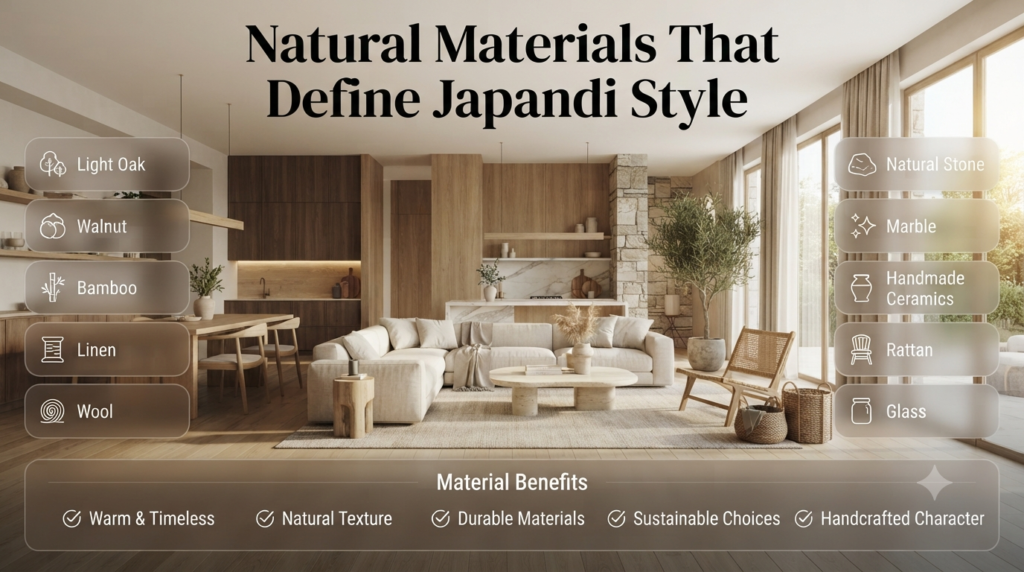
One of the reasons Japandi interiors feel so inviting is their strong connection to nature. Instead of relying on glossy synthetic finishes, this style highlights materials that age gracefully and develop character over time.
The most popular Japandi materials include:
- Light Oak
- Walnut
- Bamboo
- Linen
- Cotton
- Wool
- Natural Stone
- Marble
- Clay
- Handmade Ceramics
- Rattan
- Glass
Material Comparison Table
| Material | Best Used For | Why It Works |
|---|---|---|
| Oak | Furniture | Warm, durable, timeless |
| Walnut | Cabinets | Rich natural grain |
| Linen | Curtains | Soft, breathable texture |
| Wool | Rugs | Adds warmth and comfort |
| Stone | Countertops | Elegant and durable |
| Bamboo | Decorative accents | Sustainable and lightweight |
| Rattan | Chairs & baskets | Organic texture |
| Ceramic | Vases & tableware | Handmade character |
Quick Checklist: Is Your Home Becoming More Japandi?
Before moving on, use this checklist to see whether your space reflects the key principles of Japandi Interior Design.
- ✔ Neutral, earthy color palette
- ✔ Natural wood furniture
- ✔ Functional layout
- ✔ Minimal but meaningful décor
- ✔ Plenty of natural light
- ✔ Organic textures and materials
- ✔ High-quality craftsmanship
- ✔ Clutter-free surfaces
- ✔ Comfortable linen and wool textiles
- ✔ Balanced, peaceful atmosphere
If you’ve checked most of these points, you’re already building a home that captures the timeless beauty of Japandi design.
Japandi Furniture: Choosing Pieces That Blend Beauty and Function
Japandi furniture is characterized by clean lines, natural wood, soft curves, low-profile designs, and practical functionality. Instead of filling a room with oversized pieces, the focus is on carefully selected furniture that is comfortable, durable, and designed to create a calm, uncluttered living environment.
Furniture is the foundation of any Japandi interior. The right pieces don’t just look beautiful—they make your home feel more spacious, organized, and welcoming. Every item should have a clear purpose while maintaining a timeless appearance that won’t feel outdated after a few years.
If you’re planning a complete room makeover, explore our Interior Design resources for more expert inspiration and practical decorating ideas.
Characteristics of Japandi Furniture
Unlike ornate or heavily decorative furniture styles, Japandi embraces simplicity without sacrificing comfort.
Look for furniture that includes:
- Clean, straight lines
- Rounded edges and soft curves
- Solid wood construction
- Low-profile silhouettes
- Neutral upholstery
- Hidden storage
- Handcrafted details
- Matte or natural finishes
The goal is to create a balanced room where every piece complements the others instead of competing for attention.
⭐ Expert Tip: Invest in fewer, high-quality furniture pieces instead of buying multiple inexpensive items. Quality craftsmanship is one of the defining features of authentic Japandi interiors.
Best Wood Types for Japandi Interiors
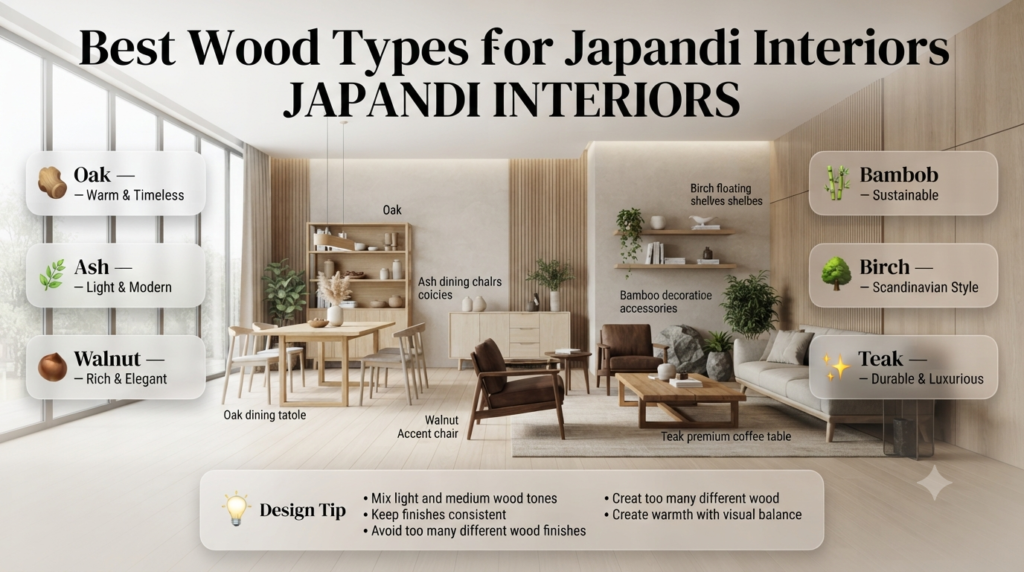
Natural wood plays a central role in Japandi design because it introduces warmth while maintaining simplicity.
| Wood Type | Best For | Style |
|---|---|---|
| Oak | Dining tables, shelves | Warm and timeless |
| Ash | Chairs and cabinets | Light and modern |
| Walnut | Accent furniture | Rich and elegant |
| Bamboo | Decorative accessories | Sustainable and natural |
| Birch | Small furniture | Scandinavian-inspired |
| Teak | Premium furniture | Durable and luxurious |
Mixing light and medium wood tones can add depth, but avoid combining too many different finishes in one room.
How to Choose Japandi Lighting
Japandi lighting focuses on soft, layered illumination that creates a warm and relaxing atmosphere. Natural daylight, paper lamps, linen shades, wooden fixtures, and warm LED lighting work together to produce a calm, balanced environment without harsh brightness.
Lighting is often overlooked, yet it has one of the biggest impacts on how a room feels.
Rather than relying on a single bright ceiling light, Japandi interiors use multiple light sources to create depth and comfort.
Popular lighting choices include:
- Paper pendant lamps
- Wooden floor lamps
- Linen lamp shades
- Warm LED bulbs
- Wall sconces
- Small table lamps
- Indirect lighting
Natural daylight is equally important. Keep window treatments light and breathable to allow as much sunlight into the room as possible.
📌 Quick Tip: Choose warm white bulbs (around 2700K–3000K) instead of cool white lighting to maintain a cozy and inviting atmosphere.
Decorating Every Room with Japandi Style
Each room has unique needs, but the core principles remain the same: simplicity, functionality, and natural beauty.
Japandi Living Room
The living room should encourage relaxation and meaningful conversation.
Include:
- Neutral sofa
- Wooden coffee table
- Soft textured rug
- Indoor plants
- Simple artwork
- Floating shelves
- Linen cushions
Avoid overcrowding the room with decorative accessories.
Instead, let natural materials become the focal point.
Japandi Bedroom
The bedroom should feel like a peaceful retreat.
Choose:
- Platform bed
- Linen bedding
- Wooden bedside tables
- Warm bedside lighting
- Minimal wall art
- Soft curtains
Keep technology and unnecessary decorations to a minimum to create a calming sleep environment.
Japandi Kitchen
A Japandi kitchen combines efficiency with elegance.
Focus on:
- Flat-panel cabinets
- Wooden open shelving
- Stone countertops
- Ceramic tableware
- Matte black fixtures
- Hidden storage
Everyday items should remain organized and easily accessible.
Japandi Dining Room
The dining room should encourage slow, enjoyable meals.
Recommended features include:
- Solid wood dining table
- Comfortable upholstered chairs
- Pendant lighting
- Ceramic dinnerware
- Linen table runner
- Fresh greenery
Simple table settings often create a stronger visual impact than elaborate centerpieces.
Japandi Bathroom
Even small bathrooms can embrace Japandi principles.
Use:
- Natural stone
- Wooden vanity
- Neutral towels
- Glass shower panels
- Bamboo organizers
- Minimal accessories
A clutter-free bathroom instantly feels more luxurious.
Step-by-Step Guide to Creating a Japandi Home
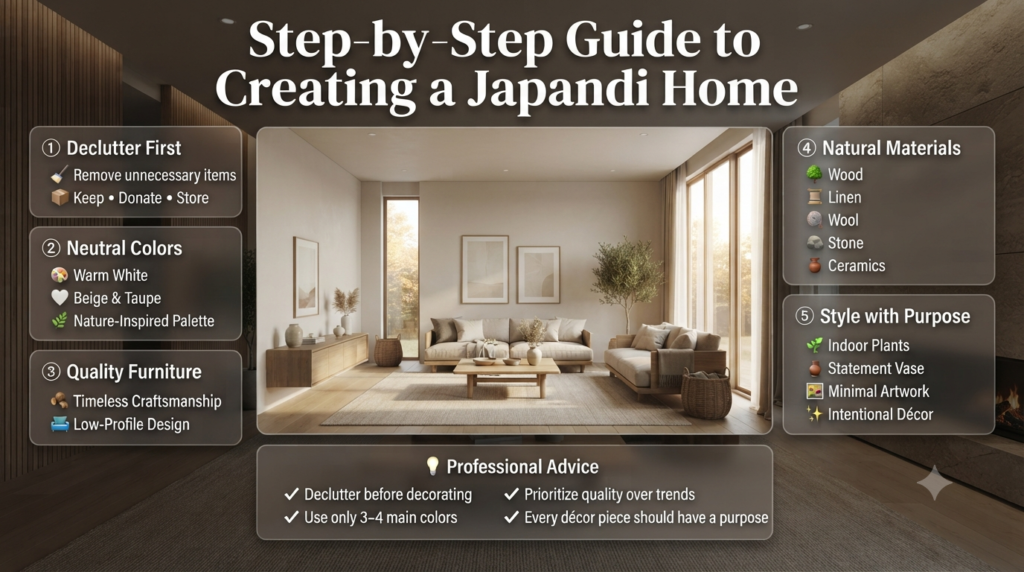
Transforming your home doesn’t have to happen all at once. Following a structured approach makes the process easier and helps you avoid costly decorating mistakes.
Step 1: Remove Unnecessary Clutter
What to Do
Start by clearing surfaces, shelves, and furniture of anything that doesn’t serve a purpose.
Why It Matters
Japandi relies on visual balance. Too many decorative items create distraction.
Professional Advice
Sort your belongings into three categories:
- Keep
- Donate
- Store
Common Mistake
Trying to decorate before decluttering.
Example
Instead of displaying twenty decorative objects, choose five meaningful pieces that complement each other.
Step 2: Choose a Neutral Color Palette
What to Do
Paint walls using calming colors inspired by nature.
Why It Matters
Neutral backgrounds allow furniture and natural textures to stand out.
Professional Advice
Stick to three or four main colors throughout the home.
Common Mistake
Using too many accent colors.
Step 3: Invest in Quality Furniture
What to Do
Replace bulky or unnecessary furniture with timeless pieces.
Why It Matters
Well-designed furniture lasts longer and creates a more cohesive interior.
Professional Advice
Prioritize craftsmanship over trends.
Step 4: Add Natural Materials
What to Do
Introduce wood, linen, wool, bamboo, stone, and ceramics.
Why It Matters
Natural materials add warmth and texture without creating visual clutter.
Step 5: Style with Purpose
What to Do
Decorate sparingly.
Include:
- One statement vase
- Indoor plants
- Handmade ceramics
- Minimal artwork
Every decorative object should contribute to the room’s atmosphere.
Benefits of Japandi Interior Design
There are many reasons homeowners continue choosing Japandi over trend-driven styles.
| Benefit | Why It Matters |
|---|---|
| Less Clutter | Easier to clean and organize |
| Timeless Style | Doesn’t go out of fashion |
| Better Functionality | Every item serves a purpose |
| Lower Stress | Calm environments improve well-being |
| Sustainable Living | Focus on quality over waste |
| Flexible Design | Works in apartments and large homes |
Many people also discover that simplifying their interiors encourages a more intentional lifestyle overall.
Are There Any Drawbacks?
Although Japandi offers many advantages, it may not suit every homeowner.
Some potential challenges include:
| Drawback | Solution |
|---|---|
| Quality furniture can be expensive | Buy gradually over time |
| Minimalism requires discipline | Declutter regularly |
| Cheap replicas reduce authenticity | Invest in fewer quality pieces |
| Neutral colors may feel plain | Add texture through fabrics and wood |
These drawbacks are usually easy to overcome with thoughtful planning.
Common Beginner Mistakes to Avoid
Even beautiful furniture won’t create an authentic Japandi interior if the design principles are ignored.
1. Buying Too Much Furniture
Less is often more.
Leave enough open space for the room to breathe.
2. Ignoring Natural Textures
A room filled with painted MDF furniture often feels flat.
Mix wood, linen, ceramics, and stone instead.
3. Using Bright Colors Everywhere
Japandi doesn’t eliminate color—it simply uses muted tones inspired by nature.
4. Decorating Every Shelf
Empty space is an important part of the overall design.
Not every surface needs decoration.
5. Choosing Trendy Furniture
Fashion changes quickly.
Timeless craftsmanship lasts much longer.
⚠ Common Mistake: Copying Japandi photos without considering how you actually live. A beautiful home should also support your daily routines and storage needs.
Professional Styling Tips Designers Use
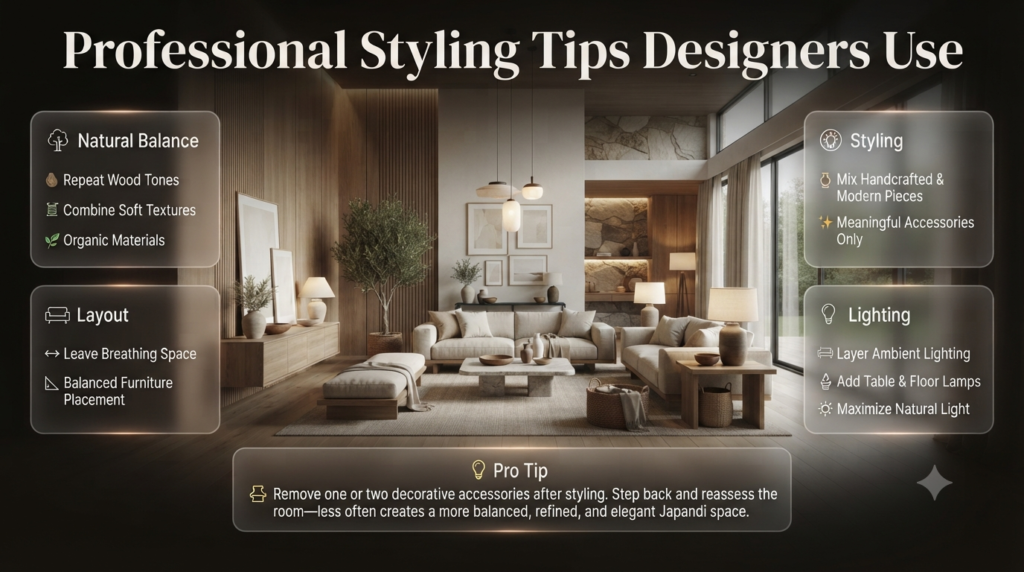
Interior designers rarely rely on expensive décor alone. Instead, they focus on creating balance and harmony.
Here are some techniques professionals often use:
- Repeat wood tones throughout the room.
- Combine soft and textured fabrics.
- Leave breathing space around furniture.
- Mix handcrafted and modern pieces.
- Layer lighting instead of using one ceiling fixture.
- Keep decorative accessories meaningful rather than excessive.
If you enjoy creating personalized spaces yourself, you’ll also love our collection of DIY Projects for creative ideas that complement Japandi interiors without compromising their minimalist charm.
💡 Pro Tip: After decorating a room, remove one or two accessories and step back. In many cases, the space will feel even more balanced and refined.
Japandi Interior Design on a Budget
You don’t need a luxury budget to create a Japandi-inspired home. By choosing quality over quantity, repurposing existing furniture, using natural materials, and decorating thoughtfully, you can achieve the calming Japandi aesthetic without overspending.
One of the biggest misconceptions about Japandi Interior Design is that it requires expensive designer furniture. While premium craftsmanship is certainly appreciated, the real philosophy is about intentional living—not buying the most expensive pieces.
Start by improving what you already have instead of replacing everything at once.
Affordable ways to embrace Japandi include:
- Repainting walls in soft neutral shades.
- Replacing synthetic fabrics with linen or cotton.
- Decluttering every room before buying new décor.
- Adding indoor plants for a natural touch.
- Choosing handmade ceramic accessories from local artisans.
- Refinishing old wooden furniture instead of replacing it.
Small changes made with purpose often have a greater impact than a complete makeover filled with unnecessary purchases.
Easy DIY Japandi Decorating Ideas
If you enjoy personalizing your home, a few simple DIY projects can help you achieve an authentic Japandi look while keeping costs under control.
For more creative home projects, browse our DIY Projects section, where you’ll find beginner-friendly ideas that complement minimalist interiors.
Here are a few easy projects to try:
Wooden Floating Shelves
Simple floating shelves made from natural oak or pine provide practical storage while maintaining clean lines.
Handmade Clay Vases
Handcrafted pottery adds personality and celebrates the imperfect beauty of the Wabi-Sabi philosophy.
Linen Cushion Covers
Replacing colorful cushions with neutral linen instantly softens the appearance of a room.
Minimal Wall Art
Choose abstract artwork, botanical sketches, or black-and-white photography in simple wooden frames.
Indoor Plant Display
Use ceramic pots to display plants such as:
- Snake Plant
- Olive Tree
- Fiddle Leaf Fig
- ZZ Plant
- Peace Lily
📌 Quick Tip: Avoid filling every shelf with accessories. Leave empty space around decorative objects to create a balanced composition.
Japandi Interior Design Trends for 2026
Interior design continues to evolve, but Japandi remains one of the most timeless styles because it adapts without losing its core principles.
Current trends include:
Sustainable Materials
More homeowners are choosing reclaimed wood, recycled textiles, bamboo, and eco-friendly finishes.
Curved Furniture
Rounded coffee tables, curved sofas, and soft-edged cabinets create a more inviting atmosphere.
Smart Storage
Hidden storage solutions help maintain clutter-free spaces while improving functionality.
Warm Earthy Colors
Instead of plain gray interiors, designers are embracing warmer tones such as:
- Mushroom
- Sand
- Clay
- Warm Beige
- Olive Green
- Terracotta
Handmade Accessories
Consumers increasingly value handcrafted ceramics, woven baskets, and artisan-made décor over mass-produced items.
⭐ Expert Tip: Rather than following every new trend, focus on timeless design principles. A well-designed Japandi home should still look beautiful years from now.
Japandi vs. Scandinavian vs. Minimalist Design
Many people confuse these three styles because they share similar characteristics. However, each has its own identity.
| Feature | Japandi | Scandinavian | Minimalist |
|---|---|---|---|
| Main Focus | Balance and simplicity | Comfort and coziness | Function with minimal decoration |
| Color Palette | Earthy neutrals | Light neutrals | Mostly white, black, and gray |
| Materials | Wood, stone, linen, ceramics | Wood, wool, cotton | Glass, metal, concrete |
| Decoration | Minimal but meaningful | Cozy accessories | Very limited décor |
| Atmosphere | Calm and grounded | Bright and welcoming | Clean and structured |
Understanding these differences can help you choose the style that best matches your personality and lifestyle.
Real-Life Japandi Styling Example
Imagine a standard living room with dark furniture, crowded shelves, and bright-colored accessories.
Before
- Large bulky sofa
- Heavy curtains
- Dark wall colors
- Multiple decorative items
- Poor natural light
- Mismatched furniture
After
- Neutral linen sofa
- Oak coffee table
- Soft beige walls
- Wooden floating shelves
- Indoor greenery
- Warm layered lighting
- Minimal handcrafted décor
The transformation doesn’t rely on adding more items—it comes from simplifying the space and making intentional design choices.
Expert Recommendations for a Timeless Japandi Home
Professional designers often follow a few simple rules that consistently produce elegant results.
- Choose timeless furniture over trendy designs.
- Keep your color palette consistent throughout the home.
- Let natural light become part of the design.
- Invest in handcrafted accessories rather than mass-produced decorations.
- Prioritize functionality before aesthetics.
- Edit your décor regularly to prevent clutter from returning.
- Mix textures instead of adding more colors.
- Focus on quality craftsmanship whenever possible.
If you’re exploring more decorating inspiration, visit our Home Styling guides for practical tips on creating beautiful, functional living spaces.
What is the difference between Japandi and standard minimalism?
Although Japandi and standard minimalism both embrace simplicity, they are not the same design philosophy. Traditional minimalism focuses on reducing possessions and visual distractions, often resulting in clean, monochromatic spaces with very little decoration. Japandi Interior Design, on the other hand, combines the Japanese concept of Wabi-Sabi, which appreciates natural beauty and imperfection, with the Scandinavian idea of Hygge, which emphasizes comfort and warmth. The result is an interior that feels peaceful, inviting, and lived-in rather than cold or empty.
Instead of removing everything from a room, Japandi encourages homeowners to carefully select furniture, décor, and materials that add both purpose and character. Natural wood, linen fabrics, handcrafted ceramics, and indoor plants are commonly used to soften minimalist spaces while maintaining a clean and organized appearance. This thoughtful balance makes Japandi a timeless design style that is both functional and emotionally comforting.
Key Points
Japandi combines Japanese and Scandinavian design philosophies.
Standard minimalism focuses mainly on reducing clutter.
Japandi uses warm natural materials and textures.
Handmade décor and craftsmanship play an important role.
The overall atmosphere is calm, cozy, and welcoming.
What are the key color palettes used in Japandi design?
One of the defining features of Japandi Interior Design is its calming and nature-inspired color palette. Rather than relying on bold or vibrant shades, Japandi interiors use soft neutral colors that create a sense of balance, warmth, and openness. These colors allow natural materials such as wood, stone, linen, and ceramics to become the focal point while making the space feel brighter and more spacious.
The most common Japandi color palette includes warm white, ivory, cream, beige, sand, taupe, soft gray, sage green, olive green, charcoal, and muted brown. These earthy tones work together to create a harmonious environment that feels relaxing throughout every season. Small accents in matte black or terracotta can also be introduced to add subtle contrast without disrupting the peaceful atmosphere.
When selecting colors, it’s best to keep walls and larger furniture in light neutral shades while adding depth through textiles, artwork, and decorative accessories. This layered approach creates a timeless interior that feels elegant without becoming overwhelming.
Key Takeaways
Use warm neutral colors inspired by nature.
Choose beige, cream, ivory, taupe, and soft gray as base colors.
Add muted greens and earthy browns for depth.
Keep bold colors to a minimum.
Create contrast through natural textures instead of bright paint.
How do I choose Japandi furniture for a small apartment?
Designing a small apartment in the Japandi style is all about choosing furniture that maximizes both functionality and visual space. Instead of filling every corner with bulky pieces, focus on selecting a few well-crafted items that serve multiple purposes while maintaining clean lines and a lightweight appearance. This approach helps even compact homes feel open, organized, and inviting.
Low-profile sofas, platform beds, floating shelves, nesting tables, and storage benches are excellent choices because they reduce visual clutter while providing practical storage solutions. Furniture made from solid oak, ash, walnut, or bamboo adds natural warmth without making the room feel heavy. Upholstery in neutral linen or cotton fabrics further enhances the calm and understated aesthetic.
Before purchasing any furniture, measure your available space carefully and consider how each piece will be used every day. In Japandi design, leaving empty space between furniture is just as important as the furniture itself, as it creates better flow and allows the room to feel larger than it actually is.
Key Takeaways
Choose multifunctional furniture whenever possible.
Select low-profile designs with clean lines.
Prioritize natural wood and neutral upholstery.
Avoid oversized furniture that overwhelms the room.
Leave enough open space to maintain visual balance.
What types of sustainable materials are essential for this style?
Sustainability is one of the core principles behind Japandi Interior Design. Rather than decorating with mass-produced synthetic products, this style encourages homeowners to invest in natural, renewable, and durable materials that age beautifully over time. These materials not only reduce environmental impact but also add warmth, texture, and authenticity to every room.
Solid oak, walnut, ash wood, bamboo, rattan, linen, organic cotton, wool, stone, clay, and handcrafted ceramics are among the most commonly used materials in Japandi homes. Because they develop character as they age, they contribute to the Japanese concept of Wabi-Sabi, which appreciates natural imperfections instead of hiding them.
Whenever possible, choose responsibly sourced wood, recycled materials, and handmade products from local artisans. Investing in quality materials may cost more initially, but they typically last much longer than inexpensive alternatives, making them a smarter and more sustainable long-term choice.
Key Takeaways
Prioritize natural and renewable materials.
Choose solid wood over engineered synthetic finishes.
Incorporate linen, cotton, wool, and rattan for texture.
Use handmade ceramics and clay accessories.
Invest in durable, long-lasting furniture instead of disposable décor.
How can I decorate a Japandi space without creating clutter?
Decorating a Japandi home successfully isn’t about owning fewer things—it’s about choosing the right things. Every piece of furniture and décor should have a purpose, whether it improves functionality, introduces natural texture, or adds visual interest. By decorating intentionally instead of excessively, you can create a space that feels peaceful, organized, and welcoming.
Start by removing unnecessary decorative items and keeping only those that genuinely enhance the room. A handcrafted ceramic vase, a wooden bowl, a linen throw, or a healthy indoor plant often creates a stronger impression than shelves filled with small accessories. Open surfaces and empty spaces are equally important because they allow each carefully selected object to stand out without competing for attention.
Maintaining a clutter-free Japandi home also requires regular editing. As your needs change, review your furniture and décor to ensure every item still serves a meaningful purpose. This mindful approach keeps your interior feeling fresh, functional, and true to the principles of Japandi design.
Key Takeaways
Decorate with intention rather than quantity.
Keep surfaces clean and uncluttered.
Display only meaningful decorative pieces.
Use natural textures to add depth instead of extra accessories.
Review and declutter your home regularly to maintain balance.
Conclusion
Japandi Interior Design is more than a passing trend—it’s a timeless approach to creating a home that feels calm, functional, and deeply connected to nature. By blending the simplicity of Japanese design with the warmth and practicality of Scandinavian interiors, Japandi offers a balanced aesthetic that enhances both the beauty of your home and your everyday lifestyle.
Whether you’re redesigning a single room, furnishing a small apartment, or planning a complete home renovation, the key is to focus on intentional choices. Prioritize quality over quantity, embrace natural materials, choose a soothing color palette, and keep your spaces free from unnecessary clutter. These principles not only create visually appealing interiors but also promote comfort, mindfulness, and long-term functionality.
The best part is that you don’t need an unlimited budget to achieve the Japandi look. Start with small improvements, invest in timeless furniture as your budget allows, and let each room evolve naturally. With thoughtful planning and attention to detail, you can create a home that remains stylish, practical, and inviting for years to come.
For more expert decorating inspiration, renovation ideas, and practical styling guides, explore Design Mode 24 Interior Design and discover helpful resources on Interior Design, Home Styling, and Home Improvement to continue transforming your living spaces with confidence.

Leave a Reply