

Introduction
Decorating Priorities for First Time Homeowners | Buying your first home is one of life’s biggest achievements, but the excitement of getting the keys often comes with an unexpected challenge: deciding how to decorate everything without wasting money. You walk into an empty living room, look at the bedrooms, kitchen, bathroom, and hallway, and suddenly realize how many things a home actually needs. Every space seems to require furniture, lighting, storage, curtains, paint, and decorative accessories.
The problem isn’t simply choosing attractive furniture. It’s knowing what deserves attention first, what can wait, and how to make decorating decisions that support your everyday lifestyle. Following the right decorating priorities for first time homeowners can help you avoid unnecessary purchases, manage your budget, and develop a home that feels comfortable without trying to complete every room immediately.
Your first property doesn’t need expensive furniture, designer decorations, or perfectly coordinated rooms to look impressive. It needs thoughtful planning, comfortable essentials, practical storage, suitable lighting, and a decorating style that reflects the people living there.
This guide from DesignMode24 Interior Design explains how to prioritize decorating projects, choose essential furniture, organize different rooms, establish a realistic budget, and create a cohesive interior. You’ll also discover which purchases offer the most value, how to avoid common beginner mistakes, and how to make your first home feel complete without overspending.
1. Understand What Your First Home Actually Needs Before Decorating
The first decorating decision shouldn’t be choosing a sofa color or purchasing wall artwork. It should be understanding what your property needs to become comfortable, safe, and functional. First-time homeowners often make expensive decisions because they start shopping before identifying their actual requirements.
A property can look empty without being ready for decoration. You might discover damaged flooring, insufficient storage, poor lighting, or maintenance issues that need attention before furniture arrives.
Start by separating your requirements into three categories: essential improvements, functional upgrades, and decorative additions.
Identify Essential Home Requirements
Essential requirements are the things that directly affect everyday comfort and usability.
These may include:
- A suitable mattress and bed frame.
- Basic living room seating.
- Functional kitchen equipment.
- Appropriate window coverings.
- Reliable indoor lighting.
- Sufficient bathroom storage.
- Secure doors and functioning locks.
- Necessary electrical and plumbing repairs.
These purchases should receive attention before decorative objects because they influence how comfortably you can use your property.
For example, buying an expensive living room centerpiece while your bedroom has no comfortable mattress is a poor spending decision. The centerpiece may improve the room’s appearance, but it doesn’t solve an important household requirement.
Separate Functional Upgrades From Decoration
Functional upgrades improve the way a room works without necessarily changing its entire appearance.
Examples include:
- Adding shelves to an underused wall.
- Installing drawer organizers.
- Improving kitchen task lighting.
- Replacing unsuitable window blinds.
- Adding a hallway shoe cabinet.
- Introducing better bathroom storage.
Decorative additions, on the other hand, primarily improve visual appearance.
These include artwork, sculptures, decorative bowls, premium cushions, and statement accessories.
Both categories have value, but their purchasing sequence should be different.
Create a Priority List for Every Room
Walk through your property and write down what each room needs.
| Room | First priority | Later improvement |
|---|---|---|
| Bedroom | Mattress and bed | Artwork and decorative lighting |
| Living room | Comfortable seating | Accent furniture |
| Kitchen | Functional storage | Decorative accessories |
| Bathroom | Ventilation and essential storage | Coordinated decorations |
| Entryway | Shoe and coat organization | Decorative mirror |
| Dining area | Suitable dining furniture | Statement centerpiece |
| Home office | Desk and comfortable chair | Decorative shelving |
This simple exercise gives you a clear starting point.
Professional advice: Don’t confuse an unfinished-looking room with an unusable room. Some spaces can remain simple for several months while you establish the essentials elsewhere.
2. Create a Realistic Decorating Budget That Protects Your Savings
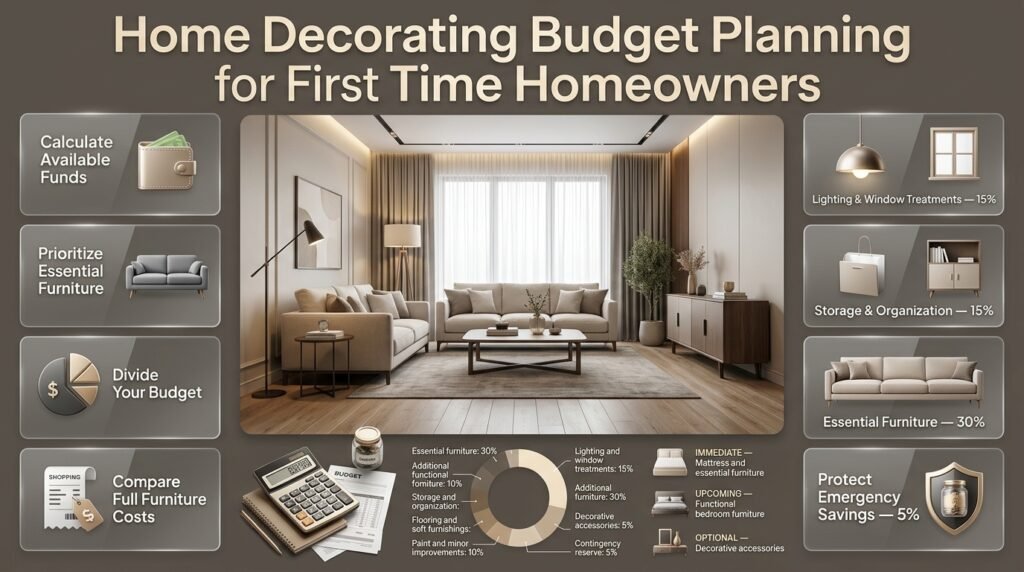
One of the biggest challenges for first-time homeowners is balancing decorating expenses with the financial responsibilities of owning a property. Mortgage payments, utility bills, insurance, maintenance, and unexpected repairs can quickly reduce the money available for furniture.
A decorating budget should therefore be based on what you can comfortably afford after accounting for essential household expenses.
Calculate Your Available Decorating Money
Start by identifying your actual available funds rather than estimating how much you would like to spend.
Consider:
- Your remaining savings after purchasing the property.
- Essential moving expenses.
- Immediate maintenance requirements.
- Monthly household commitments.
- Necessary furniture purchases.
- An emergency reserve.
Only the money remaining after these responsibilities should be considered available for optional decorating.
Divide Your Budget Into Practical Categories
The following example provides a starting allocation for a decorating budget.
| Category | Suggested allocation |
|---|---|
| Essential furniture | 30% |
| Lighting and window treatments | 15% |
| Storage and organization | 15% |
| Flooring and soft furnishings | 10% |
| Paint and minor improvements | 10% |
| Additional functional furniture | 10% |
| Decorative accessories | 5% |
| Contingency reserve | 5% |
These percentages are flexible. A property that already has good flooring may require less investment in that category, while a property without adequate furniture may require more.
For example, if your available decorating budget is $6,000, the suggested allocation would provide:
- $1,800 for essential furniture.
- $900 for lighting and window treatments.
- $900 for storage.
- $600 for flooring and soft furnishings.
- $600 for paint and minor improvements.
- $600 for additional furniture.
- $300 for decorative accessories.
- $300 for contingency.
The purpose isn’t to follow these figures exactly. It’s to stop one expensive purchase from consuming the money needed for other important improvements.
Build a Shopping List With Three Spending Levels
Another useful budgeting method is to divide purchases into immediate, upcoming, and optional expenses.
Immediate purchases: Items needed to use the home comfortably.
Upcoming purchases: Items that improve convenience after moving in.
Optional purchases: Items that make the property more personal or visually attractive.
For example, a mattress may belong in the immediate category, a bedroom dressing table in the upcoming category, and a decorative bedroom chandelier in the optional category.
Compare the Full Cost of Furniture
The displayed product price isn’t always the final amount you will spend.
Consider:
- Delivery charges.
- Assembly expenses.
- Installation requirements.
- Maintenance products.
- Replacement parts.
- Warranty coverage.
- Potential return costs.
A low-priced item may become expensive if it requires additional work or frequent replacement.
💡 Pro Tip: Keep a written record of decorating expenses. Review the total before making another large purchase, especially when several rooms still need essential improvements.
3. Inspect and Measure Your Property Before Making Design Decisions
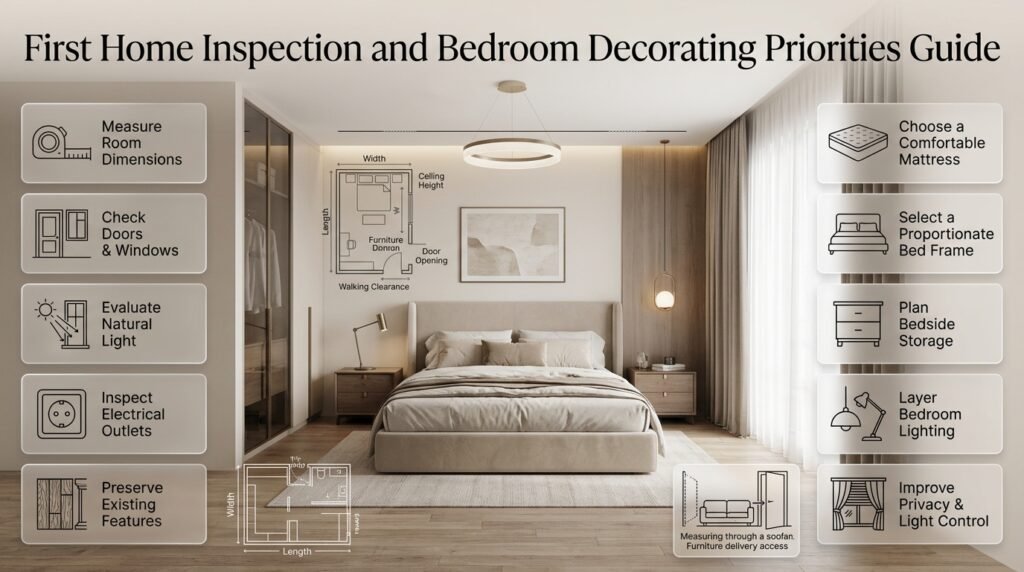
A successful decorating plan starts with accurate information about the property. Room dimensions, natural light, architectural features, electrical outlets, door positions, and existing materials all influence which furniture and finishes will work.
First-time homeowners sometimes purchase products based on attractive photographs without checking whether those products suit their actual rooms.
Measure the Important Dimensions
Record the following measurements:
- Room length and width.
- Ceiling height.
- Door width and opening direction.
- Window width and height.
- Available wall space.
- Existing furniture dimensions.
- Electrical outlet positions.
- Radiator and ventilation locations.
Measure the routes through which large furniture will be delivered.
A sofa may fit inside a living room but fail to pass through the entrance or staircase.
Study the Natural Light
Visit each room at different times of day.
Observe which areas receive direct sunlight, where shadows appear, and whether neighboring buildings reduce daylight.
This information helps you select appropriate paint colors, curtain fabrics, furniture finishes, and lighting.
For example, a room with limited natural light may require lighter wall colors and additional lamps. A bright south-facing room may need better glare control and suitable window treatments.
Decide Which Existing Features Should Remain
Replacing every existing feature can unnecessarily increase your decorating expenses.
Inspect:
- Hardwood floors.
- Existing cabinets.
- Interior doors.
- Window frames.
- Bathroom fixtures.
- Architectural moldings.
- Built-in shelving.
- Staircase finishes.
If these features are in good condition, consider incorporating them into the new design.
Make a Basic Floor Plan
You don’t need professional architectural software to plan furniture.
Draw each room on paper and mark the doors, windows, walls, and important measurements.
Then sketch possible furniture positions.
This helps you identify circulation problems before spending money.
Common mistake: Measuring only the available wall space and ignoring the space required for opening drawers, moving chairs, and walking comfortably.
A practical floor plan considers how people use the room, not simply whether furniture can physically fit.
4. Prioritize Bedroom Comfort Before Decorative Bedroom Upgrades
The bedroom should usually be one of the first spaces completed in a new home because it directly affects everyday rest and personal comfort. First-time homeowners should focus on a suitable mattress, practical bed arrangement, privacy, storage, and comfortable lighting.
A bedroom doesn’t need expensive decorative furniture to feel complete.
Choose the Mattress According to Your Requirements
A mattress is one of the most frequently used household purchases.
Before selecting one, consider:
- Your preferred sleeping position.
- Mattress firmness.
- Temperature preferences.
- Available bedroom space.
- Bed frame compatibility.
- Product warranty.
- Trial and return conditions.
Don’t choose a mattress simply because it is expensive or popular. Comfort and suitability matter more.
Select a Bed Frame That Matches the Room
Your bed should be proportionate to the available bedroom space.
In a compact bedroom, consider a platform bed, simple wooden frame, or storage bed.
In a larger bedroom, an upholstered frame may create a comfortable focal point.
Measure the complete bed dimensions, including the headboard and any additional frame extensions.
Plan the Bedside Arrangement
A bedside table provides practical storage for everyday items.
A suitable arrangement may include:
- A bedside lamp.
- A phone charging point.
- A book or reading material.
- A small storage drawer.
- A convenient surface for personal belongings.
Where floor space is limited, floating shelves can provide useful storage without occupying additional floor area.
Choose Bedroom Lighting for Different Activities
A bedroom benefits from more than one source of illumination.
Combine:
- General ceiling lighting.
- Bedside reading lamps.
- Soft accent lighting.
- Suitable task lighting for a dressing area.
This allows you to create different lighting conditions without relying on one bright ceiling fixture.
Install Privacy and Light-Control Solutions
Curtains or blinds should be included in the early bedroom budget.
Choose room-darkening or blackout materials if you need substantial control over incoming daylight. For other bedrooms, lined curtains or adjustable blinds may be sufficient.
Expert recommendation: Invest in mattress quality and suitable window coverings before purchasing expensive bedroom accessories. These purchases contribute more directly to everyday comfort.
5. Establish a Comfortable Living Room With the Right Furniture Layout
The living room is often the most visible area of a new home, but its first priority should be comfortable use rather than impressive decoration. A practical living room needs suitable seating, accessible surfaces, appropriate lighting, and clear walking routes.
It may support several activities, including watching television, reading, entertaining guests, and relaxing.
Choose the Sofa Based on Available Space
Before purchasing a sofa, evaluate:
- Room dimensions.
- Number of regular users.
- Furniture depth.
- Door and window locations.
- Television position.
- Walking routes.
- Delivery access.
A large sectional may work in an open-plan living area but overwhelm a smaller room.
A compact sofa with an additional movable chair may provide more flexibility.
Arrange Furniture Around a Clear Focal Point
The focal point could be:
- A fireplace.
- A television.
- A large window.
- An architectural feature.
- A significant artwork.
Arrange seating to support the main activity without blocking natural movement.
Avoid automatically pushing every piece of furniture against the walls. In larger rooms, floating the sofa away from the wall can create a more defined seating arrangement.
Select an Appropriate Coffee Table
A coffee table should relate to the sofa’s size and provide convenient access.
A practical starting point is approximately 14–18 inches between the seating and coffee table, adjusted according to the table design and available room.
Also consider the table’s height. It should generally be close to the height of the sofa seat or slightly lower.
Leave Enough Circulation Space
A comfortable living room requires accessible pathways.
Where space allows, approximately 30–36 inches is a useful starting point for important walking routes.
Keep access to doors, windows, and storage areas unobstructed.
Add Secondary Furniture Only When Needed
After establishing the main arrangement, consider adding:
- Side tables.
- A floor lamp.
- A television console.
- An accent chair.
- A suitable area rug.
- A compact storage unit.
Live with the basic layout before buying everything.
This helps you determine whether the room actually needs another chair or whether the existing seating is sufficient.
6. Organize the Kitchen Around Everyday Activities

Kitchen decorating should begin with functionality because the space needs to support food preparation, cooking, cleaning, and storage. First-time homeowners should prioritize accessible cabinets, useful work surfaces, practical lighting, and convenient organization.
A kitchen can look attractive while being frustrating to use if everyday equipment is stored in unsuitable locations.
Organize Storage According to Frequency of Use
Keep frequently used items in accessible cabinets and drawers.
For example:
| Item | Suggested storage area |
|---|---|
| Everyday plates | Near the dishwasher or dining area |
| Cooking utensils | Close to the cooking surface |
| Spices | Conveniently accessible while cooking |
| Food containers | In an organized cabinet |
| Cleaning supplies | In a designated suitable storage area |
| Small appliances | Accessible but away from unnecessary countertop clutter |
This arrangement reduces unnecessary movement during everyday tasks.
Improve Countertop Functionality
Avoid covering every available surface with appliances and decorative accessories.
Keep only frequently used items on the countertop.
Less frequently used equipment can be stored in suitable cabinets.
Improve Task Lighting
Kitchen lighting should illuminate food preparation areas effectively.
Useful options include:
- General ceiling lighting.
- Under-cabinet lighting.
- Suitable pendant lighting.
- Additional task lighting.
Make sure the selected fixtures are appropriate for the kitchen environment.
Add Storage Without Replacing Cabinets
If the existing cabinets are in good condition, consider:
- Drawer dividers.
- Pull-out organizers.
- Shelf inserts.
- Cabinet lighting.
- Wall-mounted hooks.
- Appropriate pantry containers.
These improvements can increase convenience without requiring a complete kitchen renovation.
7. Make the Bathroom Functional, Clean, and Easy to Maintain
Bathroom decorating should prioritize moisture control, suitable ventilation, accessible storage, reliable fixtures, and practical lighting. A complete bathroom renovation isn’t always necessary to make the space comfortable.
Start by identifying maintenance issues before purchasing decorative accessories.
Check Ventilation and Moisture
Inspect:
- Exhaust fan operation.
- Window ventilation.
- Leaking faucets.
- Damaged grout.
- Loose tiles.
- Water accumulation.
- Signs of dampness.
- Sealant condition.
Address moisture-related problems promptly.
Covering damp areas with decorative finishes can hide damage without solving the underlying issue.
Improve Bathroom Storage
A well-organized bathroom makes everyday routines easier.
Consider:
- Under-sink organizers.
- Wall-mounted shelves.
- Towel hooks.
- Drawer dividers.
- Medicine cabinets.
- Suitable storage baskets.
Keep frequently used products accessible without overcrowding the vanity.
Use Appropriate Lighting
Mirror lighting is especially useful for grooming and everyday bathroom activities.
Combine suitable general lighting with task lighting where practical.
All electrical installations should comply with applicable bathroom safety requirements.
Choose Accessories That Are Easy to Maintain
Coordinated towels, simple soap dispensers, washable mats, and practical organizers can improve appearance without requiring major spending.
Avoid materials that are unsuitable for humid conditions.
8. Choose a Color Palette Before Purchasing Large Furniture
A consistent color palette helps first-time homeowners create a coordinated property without buying identical furniture for every room. Begin with a few complementary shades and consider how daylight, flooring, wall finishes, and furniture materials interact.
Color decisions should be made before purchasing several large items because furniture and paint need to work together.
Establish Three Main Color Roles
A practical color palette usually includes:
Dominant color: The main shade used across larger surfaces.
Secondary color: A complementary shade introduced through furniture and materials.
Accent color: A smaller amount of color used to create interest.
For example:
| Color role | Example | Application |
|---|---|---|
| Dominant | Warm white | Main walls |
| Secondary | Natural oak | Furniture |
| Accent | Muted olive | Textiles and accessories |
This arrangement provides a simple foundation without making rooms visually repetitive.
Consider the Direction of Natural Light
Natural lighting influences how paint colors appear.
A room with limited daylight may make cooler shades feel darker. Warm neutral colors can sometimes create a more welcoming atmosphere.
A bright room may support cooler neutrals or stronger accent colors.
However, always test samples in the actual space.
Avoid Selecting Paint From a Screen
Online photographs and digital color charts can be misleading.
Paint colors may appear different depending on:
- Screen brightness.
- Natural light.
- Artificial lighting.
- Wall texture.
- Nearby furniture finishes.
Apply sample patches to the wall and observe them throughout the day.
Coordinate Colors Between Connected Rooms
Open-plan spaces should have a recognizable visual relationship.
You don’t need identical wall colors everywhere, but related undertones and repeated finishes can help connected areas feel balanced.
For further guidance, explore Paint Color.
9. Prioritize Lighting to Improve Comfort and Functionality
Lighting has a major influence on how a room looks and functions. First-time homeowners should plan general, task, and accent lighting instead of depending on one central ceiling fixture.
A well-designed lighting arrangement makes rooms more adaptable throughout the day.
Understand Ambient Lighting
Ambient lighting provides the main illumination for a space.
Common options include:
- Ceiling fixtures.
- Recessed lights.
- Flush-mount lights.
- Suitable pendant fixtures.
Choose brightness according to the room’s size and activities.
Add Task Lighting Where Activities Require It
Task lighting helps people perform specific activities comfortably.
Examples include:
- Reading lamps beside a bed.
- Desk lamps in a home office.
- Under-cabinet lights in a kitchen.
- Mirror lights in a bathroom.
Position task lighting to reduce unwanted shadows.
Use Accent Lighting Selectively
Accent lighting draws attention to selected features.
It can highlight:
- Artwork.
- Shelving.
- Architectural details.
- Decorative objects.
- Textured walls.
However, accent lighting should complement the general lighting rather than replace it.
Select Suitable Light Temperatures
Warm white lighting often creates a relaxed residential atmosphere. Neutral white can provide a balanced appearance, while cooler lighting may be appropriate for certain focused work areas.
Try to maintain consistency within connected spaces.
Consider Energy Efficiency
LED lighting is generally a practical residential option because it typically uses less electricity than traditional incandescent bulbs.
Check brightness, color temperature, dimmer compatibility, and fixture specifications before purchasing.
10. Purchase Furniture That Matches Room Proportions

Furniture should fit the physical dimensions and visual scale of the room. First-time homeowners should consider height, width, depth, shape, and circulation before committing to large purchases.
A showroom can make furniture appear smaller or more suitable than it will look inside your property.
Avoid Oversized Furniture
Large furniture can dominate a small room and reduce usable floor space.
Consider compact sofas, slim cabinets, smaller dining tables, and furniture with visible legs.
Don’t Make Every Piece Too Small
The opposite mistake is choosing furniture that is too small for a large room.
A small sofa and tiny coffee table may look disconnected in a spacious living area.
Use appropriately scaled pieces to establish a balanced arrangement.
Choose Flexible Furniture
First-time homeowners may eventually change properties or household requirements.
Flexible furniture can adapt to different layouts.
Useful examples include:
- Extendable dining tables.
- Modular seating.
- Nesting tables.
- Storage ottomans.
- Adjustable shelving.
- Movable side tables.
Check Furniture Construction
Before purchasing, examine the materials and build quality.
For upholstered furniture, check the frame, support, cushions, and fabric.
For cabinets, inspect hinges, drawer runners, joints, and surface finishes.
A suitable piece should offer a balance of comfort, durability, and price.
11. Plan Storage Before Everyday Clutter Appears
Storage is one of the most important decorating priorities because it determines how easily a home can remain organized. First-time homeowners should identify what they own and where those belongings will be stored before purchasing additional furniture.
Buying storage products without understanding the actual problem can create more clutter rather than solving it.
Identify Storage Needs by Room
Bedroom: Clothing, accessories, bedding, laundry, and personal items.
Living room: Books, electronic equipment, blankets, games, and remote controls.
Kitchen: Food, appliances, cooking equipment, containers, and cleaning supplies.
Bathroom: Towels, toiletries, cleaning products, and personal care items.
Entryway: Shoes, bags, coats, keys, and everyday accessories.
Make Better Use of Vertical Space
Vertical storage can be valuable in smaller properties.
Consider:
- Wall-mounted shelving.
- Tall cabinets.
- Floating shelves.
- Over-door organizers.
- Wall hooks.
- Built-in storage.
Always check the wall structure and use suitable fixings.
Choose Multi-Functional Furniture
Some furniture can provide both seating and storage.
Examples include:
- Storage benches.
- Ottoman beds.
- Coffee tables with drawers.
- Dining benches with storage.
- Cabinets with concealed compartments.
These products can be useful where floor space is limited.
For practical home organization and improvement inspiration, explore DIY Home Projects.
12. Select Flooring and Rugs According to Household Needs
Flooring should be selected according to durability, maintenance, comfort, moisture exposure, and the activities taking place in each room.
First-time homeowners shouldn’t automatically replace existing flooring if it remains functional and in good condition.
Inspect Existing Flooring First
Look for:
- Cracked tiles.
- Loose floorboards.
- Damaged transitions.
- Uneven surfaces.
- Water damage.
- Excessive wear.
- Difficult-to-clean areas.
Resolve structural or moisture problems before installing new decorative surfaces.
Understand Common Flooring Options
| Flooring | Benefits | Considerations |
|---|---|---|
| Hardwood | Natural appearance and long-term appeal | Requires suitable care |
| Laminate | Often budget-friendly | Moisture resistance varies |
| Vinyl | Available in many practical finishes | Quality differs by product |
| Porcelain tile | Durable and moisture-resistant | May feel cold |
| Carpet | Soft and comfortable | Requires regular cleaning |
The right selection depends on the room and the manufacturer’s installation and maintenance requirements.
Use Rugs to Define Furniture Areas
A rug can help establish a seating zone, introduce texture, and make a room feel more comfortable.
Consider the relationship between the rug and furniture.
For example, a living room rug may accommodate the front legs of the main seating furniture to create a more connected arrangement.
Choose appropriate rug materials for the level of traffic and cleaning requirements.
13. Give the Entryway a Practical and Welcoming Arrangement
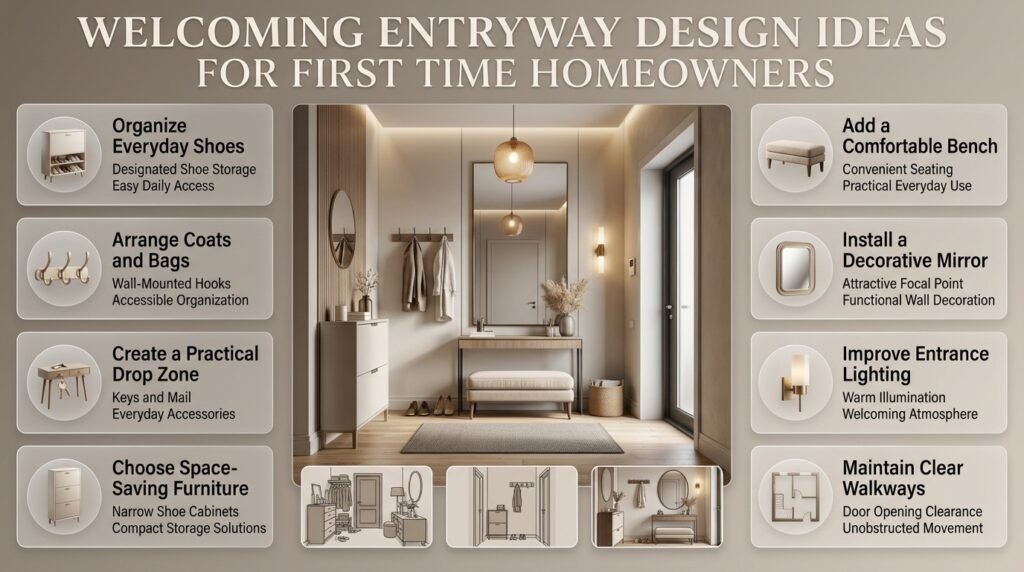
The entryway is the first area people encounter when entering your home. It should support everyday organization without obstructing the entrance.
A small entrance can still be functional when furniture is selected carefully.
Identify the Main Entryway Requirements
Consider where you will place:
- Shoes.
- Coats.
- Bags.
- Keys.
- Everyday accessories.
- Mail.
A designated location for these belongings can prevent clutter from spreading into other rooms.
Select Furniture According to Available Space
Useful options include:
- A narrow shoe cabinet.
- Wall hooks.
- A small bench.
- A slim console table.
- A wall mirror.
- A compact storage basket.
Avoid oversized cabinets in narrow entrances.
Improve the Visual Appearance
A suitable mirror, clean entrance mat, and coordinated lighting can make the area feel more welcoming.
For a balanced arrangement, consider the proportions of the entrance, door movement, and available wall space.
Explore Outdoor Entrance Design Proportions for additional entrance-planning inspiration.
14. Choose Window Treatments for Privacy, Light, and Comfort
Window treatments should be considered an essential part of decorating rather than a final accessory. Curtains and blinds affect privacy, daylight, glare, and the overall appearance of a room.
Select the Right Treatment for Each Room
| Room | Suitable option |
|---|---|
| Bedroom | Blackout or room-darkening curtains |
| Living room | Light-filtering curtains |
| Kitchen | Suitable easy-to-clean blinds |
| Home office | Adjustable glare-control blinds |
| Bathroom | Privacy-focused moisture-appropriate covering |
The best selection depends on window position, daylight, ventilation, and privacy requirements.
Measure Curtains Correctly
Measure the window width and height and consider the position of the curtain rod or track.
Curtains usually need additional width to create a fuller appearance.
Also consider whether you prefer curtains that finish above the floor, touch the floor, or have a specific decorative drop.
Coordinate Window Treatments With the Interior
Neutral fabrics can work well with several decorating styles.
Natural linen-look fabrics, soft neutral curtains, and simple blinds can provide a balanced appearance without requiring matching furniture.
15. Establish a Decorating Style That Can Develop Over Time
Your first home should reflect your preferences, but selecting a decorating style doesn’t mean purchasing an entirely matching furniture collection.
A consistent interior can be developed through related colors, materials, textures, and shapes.
Explore Styles Before Making Large Purchases
Some suitable decorating directions include:
Contemporary interiors: Clean lines, functional furniture, and balanced finishes.
Minimalist interiors: Simple forms, intentional storage, and limited decoration.
Scandinavian interiors: Natural materials, practical furniture, and light colors.
Organic modern interiors: Warm neutrals, natural textures, and contemporary furniture.
Traditional interiors: Classic shapes, decorative details, and established materials.
You can combine elements from different styles if they share complementary features.
Repeat Materials Rather Than Buying Matching Sets
For example, natural oak, black metal, and linen fabrics can appear in different rooms.
You might use oak in a living room coffee table, repeat it in a bedroom bedside table, and introduce a similar wood tone in the dining area.
This creates continuity without making every room identical.
For additional material inspiration, visit Organic Modern Material Combinations.
Create Visual Rhythm
Repeated shapes, finishes, and colors help connected rooms feel coordinated.
A rounded mirror in the hallway might complement a circular coffee table in the living room. Similar metal finishes can connect light fixtures, cabinet handles, and furniture details.
Explore Rhythm and Repetition in Interiors for more ideas about creating visual consistency.
16. Add Personal Decorations Without Overcrowding Your Home
Personal decoration is what makes a property feel like a home rather than a furniture showroom. However, first-time homeowners don’t need to purchase dozens of accessories to achieve this.
Start with meaningful objects and introduce additional decoration gradually.
Display Items That Have Personal Meaning
Consider:
- Family photographs.
- Artwork.
- Books.
- Travel souvenirs.
- Handmade objects.
- Personal collections.
- Meaningful gifts.
Choose items that contribute something to the room rather than filling every available surface.
Arrange Artwork According to Furniture Proportions
Artwork should relate to the size and position of nearby furniture.
For example, a small picture placed too high above a large sofa may appear disconnected.
A larger artwork or carefully arranged group of frames can create a more balanced composition.
Introduce Texture Through Soft Furnishings
Cushions, throws, curtains, and rugs can add visual interest without requiring permanent changes.
Use a combination of textures rather than relying entirely on different colors.
For example, linen, cotton, wool, and natural woven materials can create depth within a neutral palette.
Add Plants According to Available Conditions
Indoor plants can introduce natural texture and improve the visual appearance of a room.
Choose varieties based on daylight, temperature, maintenance requirements, and household safety.
Don’t purchase plants that require conditions your home cannot provide.
17. Improve Outdoor Spaces Without Overspending
A balcony, patio, garden, or small front entrance can extend the usefulness of your property.
Outdoor decorating should begin with practical furniture, suitable materials, privacy, and maintenance rather than expensive landscaping.
Select Outdoor Furniture According to Space
Consider:
- Compact chairs.
- Small outdoor tables.
- Weather-appropriate cushions.
- Outdoor storage.
- Suitable lighting.
Avoid large furniture that makes a small balcony difficult to use.
Add Simple Outdoor Improvements
Affordable improvements may include:
- Clean outdoor flooring.
- Suitable planters.
- An entrance mat.
- Well-maintained pathways.
- Weather-appropriate seating.
- Appropriate outdoor lighting.
Consider Maintenance Requirements
Outdoor materials are exposed to sunlight, moisture, temperature changes, and dirt.
Select finishes according to local climate and manufacturer recommendations.
If your outdoor area is small, prioritize comfortable seating and movement instead of filling it with unnecessary accessories.
18. Introduce Smart Home Improvements Only When They Are Useful
Technology can improve convenience, but first-time homeowners should avoid buying smart devices without a clear reason.
Begin with practical features that address a genuine household requirement.
Consider Useful Smart Home Products
Depending on compatibility and budget, these may include:
- Smart lighting.
- Smart plugs.
- Suitable security sensors.
- Video doorbells.
- Compatible thermostats.
- Energy monitoring devices.
Check Compatibility Before Purchasing
Before installing smart equipment, check:
- Wi-Fi requirements.
- Device compatibility.
- Electrical specifications.
- App support.
- Privacy settings.
- Ongoing subscription requirements.
Avoid Installing Too Many Systems at Once
A home with multiple disconnected systems can become difficult to manage.
Start with one useful feature.
For example, smart lighting may help if you regularly forget to switch off lights. A compatible thermostat may be useful if temperature control is a priority.
For additional guidance, explore How to Set Up My Home Decoradtech.
You can also explore LLBlogHome Upgrades by Lovelolablog and Upgrade Tip LLBlogHome for related home improvement inspiration.
19. Follow a Decorating Timeline Instead of Rushing Every Project
A decorating timeline helps you organize purchases and improvements according to their importance.
Rather than trying to finish every room immediately, divide the work into manageable stages.
Stage One: Before Moving In
Focus on property condition and preparation.
What to do:
- Inspect the property.
- Identify necessary repairs.
- Measure rooms.
- Check plumbing and electrical systems.
- Review flooring conditions.
- Prepare a decorating budget.
Why it matters:
You can address important issues before furniture and household belongings make the property difficult to work in.
Professional advice: Prioritize safety, necessary repairs, and accurate measurements.
Stage Two: The First Two Weeks
Establish the basic household arrangement.
What to do:
- Set up the bedroom.
- Install essential window treatments.
- Arrange living room seating.
- Organize kitchen essentials.
- Check bathroom functionality.
- Establish general lighting.
Why it matters:
These areas support the most important daily activities.
Avoid spending too much time on decorative details at this stage.
Stage Three: The First One to Three Months
Start improving functionality.
What to do:
- Complete the main furniture layout.
- Improve storage.
- Select a consistent color palette.
- Add appropriate rugs.
- Install task lighting.
- Organize the entryway.
Why it matters:
You will now have a better understanding of the way you actually use your property.
Stage Four: Three to Six Months
Introduce selected finishing touches.
What to do:
- Add artwork.
- Introduce plants.
- Improve secondary furniture.
- Refine outdoor spaces.
- Add useful smart home features.
- Review room arrangements.
Why it matters:
You can make decisions based on experience rather than assumptions.
Stage Five: Six Months and Beyond
Complete optional improvements.
What to do:
- Replace unsuitable furniture.
- Refine decorative details.
- Reassess storage.
- Consider larger optional upgrades.
- Review the overall decorating style.
Why it matters:
Your home can develop naturally according to your household requirements.
20. Common Decorating Mistakes First-Time Homeowners Should Avoid
Many decorating problems happen because new homeowners feel pressure to make every room look finished immediately. This can result in poor furniture choices, unnecessary spending, and inconsistent interiors.
Understanding these mistakes before shopping can protect your budget.
Buying Furniture Without Measuring
Why it happens: Attractive furniture photographs encourage quick purchasing decisions.
Why it’s harmful: Large pieces may block doors, reduce circulation, or overwhelm a room.
How to avoid it: Measure the room, doorway, delivery route, and furniture before purchasing.
Spending Too Much on Accessories
Why it happens: Decorative objects create an immediate visual improvement.
Why it’s harmful: Essential purchases may be delayed because the budget has been spent on optional items.
How to avoid it: Prioritize furniture, lighting, privacy, and storage first.
Trying to Complete Every Room Immediately
Why it happens: Homeowners want to feel that the property is completely finished.
Why it’s harmful: Decisions are made before understanding how rooms function.
How to avoid it: Decorate in stages and allow time to evaluate each arrangement.
Choosing Paint Without Testing Samples
Why it happens: Colors look attractive on screens or printed charts.
Why it’s harmful: Actual lighting can change the appearance of the selected shade.
How to avoid it: Test paint samples on the actual walls and observe them at different times.
Ignoring Storage Requirements
Why it happens: Furniture appearance receives more attention than everyday organization.
Why it’s harmful: Belongings accumulate on countertops, floors, and furniture.
How to avoid it: Identify storage needs before purchasing additional accessories.
Buying Furniture That Is Too Large
Why it happens: Oversized furniture can look luxurious in showrooms.
Why it’s harmful: It can reduce usable floor space and make rooms uncomfortable.
How to avoid it: Compare furniture dimensions with room measurements and circulation requirements.
Using Only One Source of Lighting
Why it happens: Homeowners assume a central ceiling light is sufficient.
Why it’s harmful: Different activities require different lighting conditions.
How to avoid it: Combine ambient, task, and accent lighting where appropriate.
Following Trends Without Considering Maintenance
Why it happens: Popular materials and finishes influence purchasing decisions.
Why it’s harmful: Some surfaces require more maintenance or are unsuitable for particular rooms.
How to avoid it: Evaluate durability, cleaning requirements, and long-term suitability.
Purchasing Matching Furniture Sets Automatically
Why it happens: Matching collections make shopping easier.
Why it’s harmful: They can make the home feel predictable and may not suit the proportions of individual rooms.
How to avoid it: Coordinate through materials, colors, shapes, and finishes.
Beginning Renovations Without a Clear Sequence
Why it happens: Homeowners underestimate the planning required for improvement work.
Why it’s harmful: Later installations may conflict with earlier decisions, increasing costs.
How to avoid it: Prepare a work sequence, material list, cost estimate, and contingency before beginning.
For additional preparation guidance, explore Renovation Work Order for Homeowners.
21. Professional Decorating Strategies That Make a First Home More Practical
Professional decorating is about making informed decisions that balance functionality, comfort, visual appearance, and long-term suitability.
You don’t need to purchase expensive products to apply professional planning principles.
Spend More on Frequently Used Items
Prioritize products that receive regular use.
These may include:
- Mattresses.
- Sofas.
- Dining chairs.
- Office chairs.
- Everyday lighting.
- Frequently used storage.
For decorative objects, a more economical approach may be appropriate.
Choose Timeless Foundations
Neutral walls, simple furniture shapes, and durable finishes can make future decorating changes easier.
Introduce temporary trends through cushions, accessories, artwork, and other replaceable details.
Leave Some Empty Space
A well-designed room doesn’t need furniture in every corner.
Empty space can improve circulation and help important furniture pieces stand out.
Avoid purchasing something simply because a wall or surface looks empty.
Test Materials Before Making Large Purchases
Samples help you understand how materials look and feel in your actual home.
Test flooring, fabrics, paint, and finishes against existing surfaces.
This reduces the risk of discovering that a selected material clashes with the rest of the interior.
Consider Cleaning and Maintenance
Before choosing a material, ask:
- Does it stain easily?
- Is it suitable for moisture?
- Can it tolerate regular use?
- Does it require specialist cleaning?
- Are replacement parts available?
- Is it appropriate for the room?
A practical finish that you can maintain comfortably may be a better choice than a delicate material that constantly needs attention.
Coordinate Connected Spaces
Living rooms, dining areas, and kitchens may have different functions but should still relate visually.
Repeat selected finishes and colors to establish a consistent design direction.
Make Lifestyle the Main Decorating Guide
A household that regularly entertains guests may need different living room furniture from a household that prefers quiet evenings.
Similarly, someone working remotely may need a dedicated office before investing in additional guest room furniture.
The best interior is the one that supports the people living there.
22. How to Decorate Your First Home on a Limited Budget
A limited budget doesn’t prevent you from creating an attractive and comfortable home. It simply makes prioritization more important.
The goal is to use available money where it provides the greatest practical benefit.
Reuse Furniture That Is Still in Good Condition
Inspect existing furniture before replacing it.
A dining table may need refinishing rather than replacement. A cabinet may look completely different after suitable hardware is installed.
Reuse can reduce costs and prevent unnecessary waste.
Consider Secondhand Furniture
Secondhand furniture can provide value when carefully selected.
Inspect:
- Frame stability.
- Joints.
- Drawer operation.
- Surface damage.
- Upholstery condition.
- Odors.
- Signs of pests.
Pay particular attention to hygiene when purchasing upholstered furniture.
Complete Affordable DIY Improvements
Some decorating improvements can be completed independently.
Examples include:
- Painting suitable walls.
- Installing simple shelves.
- Updating furniture handles.
- Organizing cabinets.
- Creating a gallery wall.
- Refinishing suitable furniture.
However, electrical, structural, gas, and complex plumbing work should be handled by appropriately qualified professionals.
Shop According to a Planned List
Avoid browsing furniture stores without knowing what you need.
Prepare a list containing:
- Essential item.
- Required dimensions.
- Maximum affordable price.
- Preferred materials.
- Alternative options.
This helps you compare purchases objectively.
Avoid Purchasing Everything at Once
A gradual decorating process gives you more flexibility.
You can compare products, save for higher-quality furniture, and understand what the property actually needs before committing to large expenses.
What Should First-Time Homeowners Decorate First When Moving Into a New House?
First-time homeowners should begin with the rooms and improvements that have the greatest impact on everyday comfort. Instead of decorating the entire property immediately, focus on establishing a comfortable bedroom, a functional living room, an organized kitchen, and a bathroom that meets basic household needs. These spaces support daily activities and should receive attention before optional decorative upgrades.
The bedroom is usually a sensible starting point because a suitable mattress, bed frame, curtains, and bedside lighting make the property comfortable from the first night. Next, arrange the living room with practical seating and enough walking space. The kitchen should have accessible storage and essential cooking equipment, while the bathroom needs suitable ventilation, lighting, and convenient storage.
A room-by-room approach also makes it easier to control spending. You can complete essential improvements first and gradually introduce artwork, accent furniture, decorative lighting, and other finishing touches as your budget allows.
Important priorities to follow:
Start with essential repairs and safety-related improvements.
Establish a comfortable bedroom before purchasing decorative bedroom accessories.
Arrange the living room around practical seating and clear walking routes.
Organize the kitchen and bathroom for everyday convenience.
Complete optional decorating projects after understanding how each room is used.
How Much Should First-Time Homeowners Budget for Decorating Their First Home?
First-time homeowners should establish a decorating budget based on their available savings, property condition, existing furniture, and essential household expenses. There is no fixed amount that works for every property. A small apartment requiring only furniture and window treatments will have different costs from an older house that needs flooring improvements, painting, storage, and additional repairs.
The smartest approach is to calculate your available decorating money after accounting for mortgage payments, utilities, insurance, moving expenses, and necessary maintenance. Divide the remaining amount into essential furniture, lighting, storage, flooring, minor improvements, and decorative accessories. Keep a contingency reserve because unexpected household expenses can appear after moving in.
For example, if your decorating budget is $5,000, you might allocate approximately 35% to essential furniture, 15% to lighting and window treatments, 15% to storage, 10% to flooring and soft furnishings, 10% to minor improvements, 5% to accessories, and 10% to unexpected costs. These percentages are a planning example rather than a universal spending rule.
Smart budgeting recommendations:
Prioritize mattresses, seating, and essential household furniture.
Compare the complete cost of products, including delivery and installation.
Avoid spending too much on decorative accessories during the first few weeks.
Reuse existing furniture when it remains functional and attractive.
Maintain an emergency reserve for unexpected repairs and maintenance.
What Are the Most Important Furniture Pieces to Buy for a First Home?
The most important furniture purchases for a first home are the pieces that support everyday activities, including a comfortable bed, suitable sofa, dining furniture, practical storage, and appropriate workspace furniture when required. The exact purchasing order depends on your lifestyle, available space, and the furniture you already own.
A quality mattress and suitable bed frame should generally be high priorities because they support daily rest. A comfortable sofa provides a practical place to relax and entertain guests, while a dining table offers a convenient surface for meals, working, and other household activities. Storage furniture is equally important because a lack of cabinets, shelves, and organizers can quickly create unnecessary clutter.
Before purchasing large furniture, measure your rooms, doorways, and available walking routes. Consider construction quality, materials, maintenance requirements, and whether each item will remain suitable if you change your decorating style in the future. Multi-functional furniture can be particularly useful in smaller properties.
Essential furniture shopping checklist:
Bed frame and comfortable mattress.
Sofa or suitable living room seating.
Dining table and chairs according to household needs.
Bedside tables and practical storage.
Wardrobe or clothing organization solutions.
Coffee table or suitable side tables.
Desk and comfortable chair if you work from home.
How Can First-Time Homeowners Make Their Home Look Stylish Without Overspending?
First-time homeowners can create a stylish interior by focusing on coordinated colors, suitable furniture proportions, layered lighting, practical storage, and carefully selected decorative details rather than purchasing expensive products. A well-organized room with balanced furniture and complementary finishes can look more attractive than a room filled with costly but unrelated accessories.
Start by selecting a simple color palette with a dominant neutral shade, a complementary secondary color, and one or two accent colors. Repeat selected materials, such as natural wood, metal finishes, or textured fabrics, throughout connected spaces. This creates visual consistency without requiring identical furniture collections.
Lighting also makes a noticeable difference. Combine general ceiling lighting with task lamps and selected accent lighting to create a comfortable atmosphere. Use curtains, rugs, cushions, and artwork to introduce texture and personality without making permanent or expensive changes.
Another effective strategy is to purchase quality essentials gradually and use affordable accessories to refresh the appearance of a room. Secondhand furniture, suitable DIY improvements, and reused decorative pieces can also help reduce expenses.
Affordable decorating strategies:
Choose a consistent color palette before purchasing furniture.
Use suitable curtains and rugs to improve the appearance of rooms.
Introduce affordable artwork and meaningful personal decorations.
Reuse or refinish furniture that remains in good condition.
Use mirrors and appropriate lighting to improve smaller spaces.
Avoid buying accessories simply to fill empty walls or surfaces.
What Decorating Mistakes Should First-Time Homeowners Avoid?
The biggest decorating mistakes first-time homeowners should avoid include purchasing furniture without measuring rooms, spending too much on accessories, choosing paint colors without testing samples, ignoring storage requirements, and trying to complete the entire property too quickly. These decisions can waste money and create spaces that look attractive initially but are difficult to use comfortably.
One particularly common problem is buying oversized furniture because it looks impressive in a showroom. A large sofa, dining table, or storage cabinet may overwhelm a smaller room and reduce the space available for everyday movement. Similarly, choosing several unrelated colors and furniture finishes can make connected rooms feel visually disconnected.
Another mistake is ignoring maintenance requirements. Some flooring materials, upholstery fabrics, and decorative finishes require more care than homeowners expect. Before purchasing, consider how frequently the surface will be used, how easily it can be cleaned, and whether it is suitable for the room’s conditions.
The best way to avoid these problems is to plan each room carefully, establish a realistic budget, and make purchases according to actual household requirements rather than temporary decorating trends.
Common mistakes to avoid:
Purchasing sofas, beds, and cabinets before measuring available space.
Spending on decorative products before completing essential rooms.
Selecting paint colors without checking them under natural and artificial light.
Ignoring storage and creating unnecessary household clutter.
Choosing furniture based only on appearance rather than comfort and durability.
Using insufficient lighting for reading, cooking, and other activities.
Replacing functional existing materials without a genuine reason.
Rushing renovations without establishing a clear project sequence.
Following trends that don’t suit your property’s layout or lifestyle.
Buying everything at once instead of decorating gradually.
Conclusion
Decorating your first home is an exciting opportunity to create a space that reflects your personality, supports your daily routine, and feels comfortable for years to come. However, successful decorating is not about buying everything at once or following every interior design trend. It is about making thoughtful decisions, understanding your priorities, and investing in improvements that genuinely make your home more functional and welcoming.
Start with the essentials: comfortable furniture, practical storage, suitable lighting, durable materials, and a balanced color scheme. Give priority to the rooms you use most frequently, measure your spaces before purchasing furniture, and leave enough room in your budget for unexpected expenses. Small improvements, such as updating window treatments, adding rugs, choosing suitable artwork, or improving lighting, can make a noticeable difference without requiring a major investment.
Most importantly, allow your home to develop naturally. You do not need to complete every room immediately. Take time to understand how each space works, identify what is missing, and gradually introduce furniture and decorative details that complement your lifestyle. With careful planning and realistic spending, first-time homeowners can build a beautiful, organized, and comfortable living environment without unnecessary financial pressure.
For more practical inspiration, decorating guidance, and home improvement ideas, explore DesignMode24 Interior Design. Your first home should not simply look attractive; it should feel like a place where you can relax, grow, and enjoy everyday life.