
Introduction
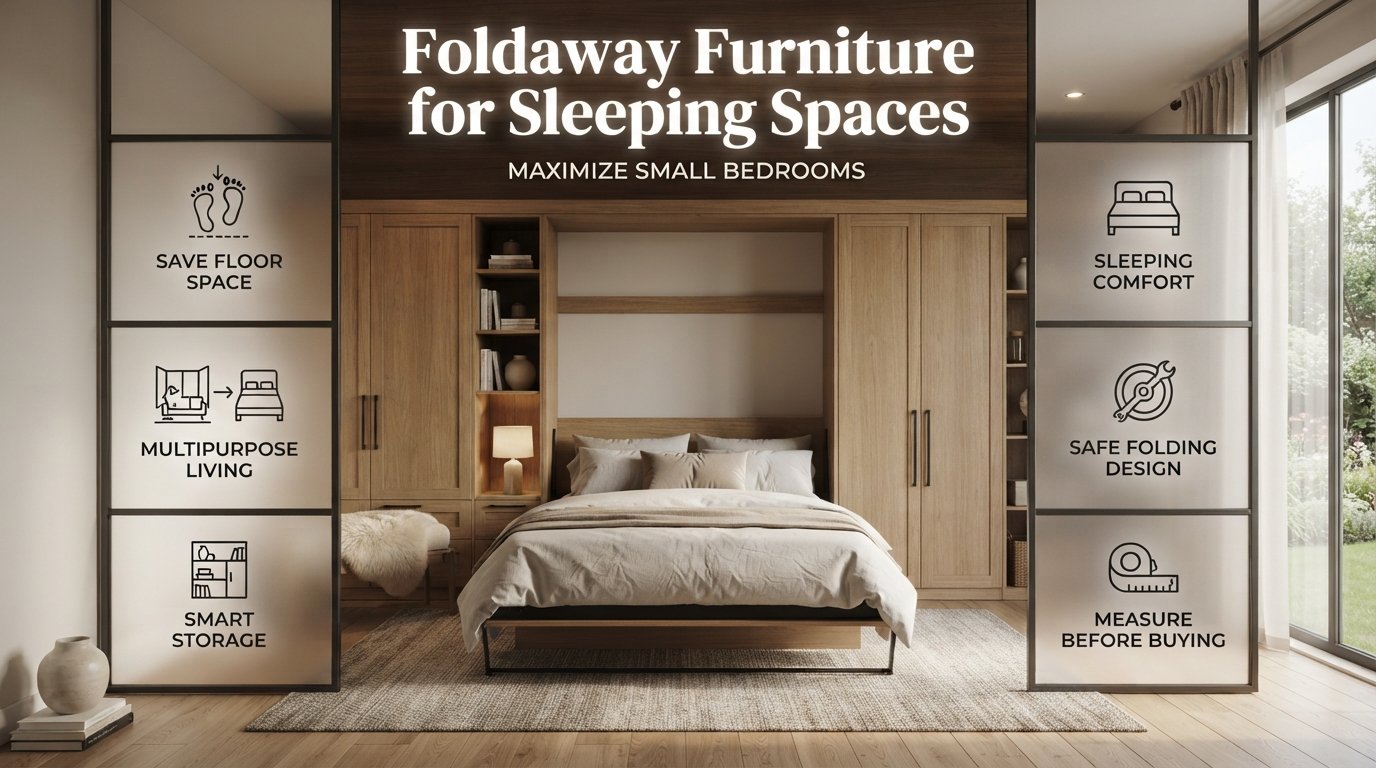
Foldaway Furniture for Sleeping Spaces | A small bedroom can become difficult to manage when a bed occupies most of the available floor space. The problem becomes even more noticeable when the same room must serve as a home office, guest bedroom, study area, or relaxing corner. Adding more furniture rarely solves the issue because every new piece competes for the space needed to move comfortably.
This is where foldaway furniture for sleeping spaces offers a practical alternative. Instead of keeping a bed permanently open, you can choose furniture that folds into a cabinet, converts from a sofa, slides beneath another bed, or stores compactly when it is not needed. The result is a room that adapts to everyday activities without sacrificing the importance of comfortable sleep.
For homeowners exploring practical layouts and thoughtful room planning, DesignMode24 Interior Design offers a starting point for discovering ideas that balance appearance and functionality.
However, not every foldaway bed suits every home. A wall bed may work beautifully in a home office but be unnecessary in a spacious bedroom. A folding guest bed may be convenient for occasional visitors yet unsuitable for someone who needs a permanent sleeping arrangement. The right decision depends on room dimensions, sleeping habits, storage requirements, safety, and budget.
This guide explains how to select foldaway furniture, compare different designs, measure your space, improve comfort, coordinate finishes, and avoid common purchasing mistakes. It also covers practical layouts for apartments, guest rooms, children’s bedrooms, and multipurpose spaces so you can choose a solution that works in everyday life.
What Is Foldaway Furniture for Sleeping Spaces?
Foldaway furniture for sleeping spaces includes beds and convertible furniture designed to reduce their footprint when they are not being used for sleep. These products use folding frames, hinges, sliding mechanisms, or convertible structures to make a room available for other activities during the day.
Unlike conventional bedroom furniture, foldaway designs are selected partly for how they function when the sleeping surface is not in use. Some disappear into cabinets, while others become seating or remain stored beneath another bed.
Common examples include:
- Wall beds: Beds that fold vertically or horizontally into a cabinet or wall-mounted structure.
- Folding guest beds: Portable frames that collapse for storage.
- Convertible sofa beds: Sofas that transform into sleeping surfaces.
- Daybeds with trundles: Beds with a second mattress stored underneath.
- Folding floor mattresses: Compact sleeping surfaces that can be folded and stored away.
- Wall beds with desks: Integrated systems that combine a sleeping area with a workspace.
- Convertible storage beds: Designs that combine sleeping, storage, and sometimes additional functions.
The purpose is not simply to hide a bed. It is to make a room perform more than one function without creating unnecessary clutter or compromising comfort.
For example, a spare bedroom may contain a wall bed, a compact desk, and closed storage. During working hours, the bed remains folded away. When guests arrive, the room becomes a bedroom without requiring a separate sleeping space.
Why Is Foldaway Furniture Useful in Small Homes?
Foldaway furniture is particularly useful when a room must accommodate several activities but cannot comfortably hold separate furniture for each one. By reducing the footprint of the sleeping area when it is not needed, these designs can improve circulation and make compact rooms easier to use.
It creates more usable floor space
A conventional bed occupies floor space throughout the day, even when nobody is sleeping. In a compact bedroom, this can limit access to wardrobes, reduce space for exercise, or make a desk difficult to position.
A folding bed changes how that floor area is used. Once the bed is safely stored, the available space can support another activity.
Consider a small bedroom measuring approximately 10 by 11 feet. A permanent bed, bedside tables, and a desk may leave little room for movement. Replacing the permanent bed with a suitably sized wall bed could allow the desk to remain in place while opening more floor space during the day.
The improvement depends on the actual furniture dimensions and layout, so measure both the open and folded configurations before purchasing.
It supports multipurpose living
Many households need rooms to serve more than one purpose. A guest room may also be a study, while a studio apartment must accommodate sleeping, cooking, working, and relaxing within one overall living area.
Foldaway furniture allows these functions to coexist more effectively.
A wall bed with a desk can support remote work during the day and provide a proper sleeping surface at night. A convertible sofa can provide everyday seating and temporary accommodation for visitors.
The most successful arrangements are those that require minimal effort to change between activities.
It can reduce visual clutter
A bed often becomes the largest visual feature in a compact room. When it is folded away, the room may appear more open because the sleeping surface no longer dominates the floor.
A cabinet-style wall bed can blend with the surrounding furniture, while a convertible sofa can maintain the appearance of a living room.
However, folding furniture does not automatically make a room look larger. An oversized cabinet, bulky storage system, or poorly proportioned unit can still overwhelm the space.
Choose a design that fits the room’s scale and complements its existing finishes.
It provides flexible guest accommodation
A dedicated guest bedroom is not practical for every household. Folding beds and convertible furniture provide alternative sleeping arrangements without requiring an entire room to remain unused.
For occasional visitors, a portable folding bed may be sufficient. For frequent guests, a wall bed or comfortable sofa bed may be more suitable.
The decision should account for how long visitors stay, whether they need a double or single sleeping surface, and how much preparation is required before bedtime.
Which Types of Foldaway Beds Should You Consider?

The best type of foldaway furniture depends on the room’s dimensions, the frequency of use, and the functions that must remain available during the day.
| Furniture type | Best application | Main advantage | Potential drawback |
|---|---|---|---|
| Vertical wall bed | Bedrooms with sufficient ceiling height | Folds into a cabinet against the wall | Requires appropriate height and projection clearance |
| Horizontal wall bed | Rooms with a suitable wide wall and limited height | Uses a lower-profile cabinet arrangement | Requires adequate wall width |
| Folding guest bed | Occasional visitors | Portable and relatively easy to store | May provide fewer mattress choices |
| Convertible sofa bed | Living rooms and studio apartments | Combines seating and sleeping | Comfort varies by mattress and frame |
| Daybed with trundle | Guest rooms and children’s bedrooms | Provides an additional sleeping surface | Needs room for the trundle to extend |
| Wall bed with desk | Home offices and multipurpose rooms | Combines work and sleep functions | More complex installation and operation |
| Folding floor mattress | Temporary accommodation | Requires little storage space | Offers a lower sleeping height |
| Convertible furniture system | Rooms with several competing functions | Combines multiple functions in one unit | Can be expensive and complicated |
Are vertical or horizontal wall beds better?
A vertical wall bed folds upward along its longer dimension and usually requires adequate ceiling height. It may suit a narrow room where a long, unobstructed wall is available.
A horizontal wall bed folds sideways and can be useful when ceiling height is limited or the room has a suitable wider wall. Its cabinet may project differently into the room, so the floor plan still needs careful evaluation.
Neither arrangement is universally better. Compare the complete cabinet dimensions, mattress size, opening direction, and surrounding furniture before deciding.
Are folding guest beds worth buying?
Folding guest beds are often a practical choice when visitors stay only occasionally. They can be stored in a closet or another suitable space and brought out when needed.
Their advantages include portability, relatively straightforward storage, and the ability to keep a permanent bedroom arrangement unchanged.
The main limitations are storage requirements, mattress comfort, and the effort needed to set up the bed. If guests regularly stay for several nights, test the sleeping surface before purchasing.
Is a sofa bed suitable for everyday sleeping?
A sofa bed can work well when the same area needs comfortable seating and sleeping accommodation. However, the quality of the mattress, frame, support system, and conversion mechanism makes a considerable difference.
A sofa bed designed mainly for occasional guests may not provide the comfort or durability required for nightly use.
If someone will sleep on it regularly, assess the sleeping surface as carefully as you would assess a conventional mattress. Check whether the surface is level, whether the frame creates uncomfortable pressure points, and whether replacement components are available.
How Do You Choose Foldaway Furniture for Your Room?
Choosing the right furniture requires more than finding a product with suitable dimensions. You must understand how the room will be used, what the sleeper needs, and how the furniture will operate in everyday conditions.
Step 1: Measure the room in both configurations
Start by measuring the room’s length, width, and ceiling height. Record the positions of doors, windows, wardrobes, radiators, electrical outlets, and other fixed features.
Next, measure the proposed furniture in its folded and fully open positions.
A wall bed may fit against the wall when closed but extend far enough into the room to block a doorway or desk when opened. A trundle bed may require extra floor space that is unavailable when a chair or storage box is nearby.
Create two simple layouts:
- A daytime layout showing the bed folded away.
- A nighttime layout showing the bed completely open.
Include the surrounding furniture in both drawings. The goal is to confirm that the room works in both configurations, not just when the bed is hidden.
Step 2: Identify the primary function of the room
Decide what the room needs to do most often.
If it is mainly a home office, a practical desk and comfortable working environment may be the priority. If it is a guest room, sleeping comfort and convenient bedding storage may matter more.
For a studio apartment, the arrangement must support several functions without making everyday transitions unnecessarily difficult.
Ask yourself:
- Will the bed be used every night?
- Does the room need a permanent desk?
- Must seating remain available throughout the day?
- Will children or older adults use the bed?
- Is the furniture likely to be moved in the future?
- How much storage space is available?
These questions help eliminate options that look attractive but do not suit the room’s real purpose.
Step 3: Prioritize mattress comfort
The mattress should be selected according to the sleeper’s needs and the furniture manufacturer’s specifications.
Some wall beds accept only mattresses within a particular thickness and weight range. A mattress that is too heavy or too thick may interfere with the mechanism or prevent the bed from closing properly.
Before buying, check:
- Mattress dimensions and permitted thickness.
- The weight range supported by the mechanism.
- Support across the entire sleeping surface.
- The ease of replacing the mattress later.
- Whether bedding can remain on the mattress when folded.
- Whether the sleeping surface contains uncomfortable joins.
For daily sleeping, comfort should never be treated as a secondary feature simply because the bed folds away.
Step 4: Evaluate the folding mechanism
Different furniture systems use different mechanisms. Wall beds may use spring-assisted or gas-assisted systems, while sofa beds and folding frames use their own hinges and supports.
The mechanism should operate according to the manufacturer’s instructions and remain stable throughout the opening and closing process.
Ask the supplier about maintenance requirements, replacement parts, warranty coverage, and installation conditions.
Avoid purchasing a product solely because its mechanism appears smooth in a short demonstration. Consider whether the furniture can be operated safely and conveniently over many months of regular use.
Step 5: Plan bedding and personal storage
A foldaway bed still requires sheets, pillows, blankets, and other sleeping essentials. These items need a suitable place when the bed is closed.
Integrated cupboards can simplify storage, but they may increase the overall size of the furniture. A separate linen cabinet may be a better solution in some rooms.
Before choosing, determine whether bedding can remain attached to the mattress or must be removed every time the bed is folded. Follow the manufacturer’s guidance rather than assuming all products allow the same arrangement.
For practical ideas about organizing compact areas, entryway storage capacity planning offers related principles for assessing storage needs and assigning items a convenient place.
Step 6: Consider installation and future maintenance
Wall beds require particular attention to installation. The wall structure, fixing hardware, floor condition, and assembly instructions must all be suitable for the selected model.
If professional installation is required, include that expense in the budget. In rental accommodation, check whether permanent modifications are permitted.
Freestanding folding beds may offer more flexibility, but they still need a stable floor, correct assembly, and regular inspection of moving parts.
How Much Space Does a Foldaway Bed Need?
The space required depends on the mattress dimensions, frame, opening direction, and the amount of clearance needed around the bed. A suitable layout must accommodate the fully open furniture while keeping essential doors, storage units, and walking routes accessible.
For illustration, a US double mattress is commonly about 54 inches wide and 75 inches long. The complete bed frame may be larger, and other countries use different mattress standards.
Always use the manufacturer’s measurements for the exact product.
Calculate the full footprint
Suppose a wall bed extends approximately 80 inches from its cabinet when open. That projection must fit within the room, with additional space for the movement and access required by the design.
Measure from the wall or cabinet to the furthest point of the open frame. Then check the remaining space between the bed and any opposing furniture.
A layout that technically fits may still feel cramped if the sleeper cannot enter or leave comfortably.
Check doors, windows, and furniture
The bed should not prevent normal access to important parts of the room.
Pay attention to:
- Bedroom and closet doors.
- Desk drawers and office chairs.
- Wardrobe doors.
- Windows and window coverings.
- Heating equipment and ventilation.
- Ceiling fans and light fixtures.
- Electrical outlets and cables.
If the bed overlaps another furniture item’s operating area, the arrangement may become inconvenient even when the dimensions appear acceptable.
Use a floor mock-up before purchasing
One of the simplest ways to test a layout is to mark the proposed bed footprint with removable painter’s tape.
Walk around the marked area and imagine the bed extending into the room. Check whether you can open cupboards, approach the sleeping surface, and reach the entrance without awkward movement.
This low-cost test can reveal problems before delivery and installation.
What Are the Benefits and Drawbacks of Foldaway Furniture?

Foldaway furniture can improve the flexibility of a home, but its value depends on the way it is used. A well-designed unit can reclaim valuable space, while an unsuitable model may introduce additional maintenance, installation costs, or daily inconvenience.
Main benefits
More usable floor space: Folding the bed away makes the same area available for work, exercise, or other activities.
Flexible room arrangements: One room can accommodate different functions without requiring separate furniture for every activity.
Integrated storage: Some designs combine sleeping surfaces with cabinets, shelves, or desks.
Guest accommodation: Folding beds and convertible sofas provide sleeping arrangements without requiring a permanent guest bedroom.
Cleaner appearance: Cabinet-style units can reduce the visual dominance of a bed in compact interiors.
Main drawbacks
Initial expense: Integrated wall beds can cost more than basic conventional beds or portable folding frames.
Installation requirements: Some designs need secure anchoring, specialist assembly, or suitable wall construction.
Operating clearance: The bed must still fit within the room when fully opened.
Maintenance: Moving components may require periodic inspection and servicing.
Comfort differences: Some convertible designs provide less consistent support than a conventional mattress.
Daily effort: Folding and unfolding furniture can become inconvenient if the process is complicated.
When is the investment worthwhile?
Foldaway furniture is usually most valuable when the floor space it releases serves a genuine daily purpose.
For example, a studio apartment may benefit considerably from a wall bed because the sleeping area can become part of the living space during the day. In a large bedroom with ample space, the same investment may offer little practical benefit.
Compare the total cost of the furniture, mattress, delivery, installation, and maintenance with the usefulness of the space gained.
A portable folding bed may be sufficient for occasional visitors, while a durable wall bed may make more sense for a frequently used multipurpose room.
How Can You Make Foldaway Furniture Look Attractive?
Foldaway furniture works best when its appearance is coordinated with the rest of the room. Cabinet finishes, proportions, lighting, and surrounding storage can help the unit feel like an intentional part of the interior rather than a compromise made to save space.
Coordinate finishes and proportions
Natural wood tones, neutral colors, and simple cabinet fronts can help a wall bed blend with existing furniture.
Alternatively, a contrasting finish can turn the cabinet into a deliberate design feature. The key is to keep the overall composition balanced.
Consider the room’s wall color, floor finish, existing storage, and natural light before selecting a cabinet finish.
For inspiration on combining materials thoughtfully, explore layering textures without overcrowding. The same principle applies to foldaway furniture: a small number of well-chosen textures can add depth without making a compact room feel busy.
Combine sleeping and storage functions
A wall bed with integrated cupboards can reduce the need for separate cabinets. Some arrangements also provide shelves for books, personal items, or decorative objects.
However, more storage is not always better. Oversized cupboards can consume the floor space the bed was intended to release.
Choose storage according to the items you actually need to keep in the room. Use closed cabinets for bedding and everyday essentials, and reserve open shelves for a limited selection of objects.
Use lighting for different activities
A multifunctional room may need bright task lighting during working hours and softer lighting in the evening.
Wall-mounted reading lights, desk lamps, and suitable ambient lighting can support these different uses. Make sure all fixtures remain clear of the furniture’s operating path.
If you plan to use connected lighting or automated controls, whole-home automation planning provides related ideas for organizing technology around everyday routines.
Keep the room visually open
Once the bed is folded away, avoid filling every available corner with additional furniture.
A compact desk, a movable chair, and one suitable storage unit may be enough. Leaving open floor space can make the room more flexible and easier to maintain.
The goal is not to maximize the number of items that fit into the room. It is to create an arrangement in which each item serves a clear purpose.
Which Foldaway Furniture Works Best in Different Rooms?

The most suitable design depends on the room’s primary function and the activities that must remain possible when the bed is stored.
Studio apartments
Studio apartments benefit from furniture that creates clear transitions between sleeping and living areas.
A wall bed may be useful when a permanent bed would occupy most of the available floor. A convertible sofa can be preferable when everyday seating is equally important.
Keep the remaining furniture compact and avoid placing storage units where they interfere with the bed’s opening path.
Home offices
A home office can become a guest room with a wall bed or a suitable convertible sofa.
A wall bed with an integrated desk can be especially useful, but check how the desk behaves during conversion. Some systems keep the desk level while the bed moves, while others require a different arrangement.
Choose a design that supports comfortable working conditions without making the sleeping setup difficult to operate.
Children’s bedrooms
Children’s rooms often need to accommodate sleeping, studying, playing, and storage.
A daybed with a trundle may be suitable when overnight visitors are common. A folding bed may provide a temporary option when space is particularly limited.
Prioritize stable frames, appropriate mattress support, and safe operation. Children should not operate mechanisms independently unless the manufacturer specifically permits it and suitable safeguards are in place.
Guest rooms
A guest room used only occasionally may not need a permanent bed.
A folding guest bed can be stored when the room is used for another purpose. If visitors stay frequently, a wall bed may offer a more integrated and comfortable solution.
Provide convenient access to bedding, a place for guests to store belongings, and sufficient space to enter and leave the bed comfortably.
Small secondary bedrooms
A secondary bedroom may need to serve as a sleeping area while also providing storage or a small workspace.
Measure the available wall length and the bed’s open footprint before selecting a model. If a wall bed is unsuitable, consider a compact folding bed or another arrangement that preserves the room’s main function.
What Mistakes Should You Avoid When Buying Foldaway Furniture?
The most common purchasing mistakes occur when buyers focus on appearance and folded dimensions while overlooking comfort, operating clearance, installation, and everyday convenience.
Buying before measuring
A bed may look compact in a product photograph but occupy considerable space when open.
How to avoid it: Measure the room and create a full-size footprint mock-up. Include the frame, not just the mattress.
Prioritizing appearance over comfort
An attractive design may be unsuitable for someone who needs to sleep on it every night.
How to avoid it: Evaluate mattress support, frame stability, and sleeping-surface quality before choosing decorative finishes.
Ignoring wall construction
Wall beds require suitable fixing points and secure installation.
How to avoid it: Confirm the installation requirements and seek professional assistance when needed. Never assume that an ordinary wall fixing will support a heavy folding system.
Overlooking daily operating effort
Some furniture requires bedding to be removed, chairs to be moved, or several steps to be completed before the bed can open.
How to avoid it: Test the conversion process and consider whether it will remain convenient after repeated use.
Adding too much furniture
Reclaimed floor space can tempt homeowners to add extra storage units or decorative pieces.
How to avoid it: Decide what the room must accommodate before buying anything else. Preserve enough open space for the room’s main daytime activity.
Neglecting maintenance
Hinges, fixings, and moving components should not be ignored simply because the furniture appears sturdy.
How to avoid it: Follow the manufacturer’s maintenance instructions and stop using the unit if it becomes damaged or operates unpredictably.
What Do Interior Design Professionals Recommend?
Professional space planning focuses on how a room works in real life. The aim is to balance sleeping comfort, convenient movement, storage, and visual appearance without allowing one function to interfere with another.
Design around daily routines
Start by identifying the room’s most frequent activities.
If the room is mainly an office, preserve a practical working area. If it is primarily a bedroom, prioritize the mattress, bedside access, and nighttime lighting.
For spaces that need to change functions throughout the day, minimize the number of objects that must be moved during conversion.
Test both room configurations
A floor plan should show the room with the bed stored and fully open.
Check whether drawers, cupboards, doors, and windows remain accessible in both layouts. If one configuration makes the room difficult to use, reconsider the furniture dimensions or placement.
Invest in the components that matter most
Prioritize the frame, folding mechanism, mattress, installation, and availability of replacement parts.
These components affect safety, comfort, and durability more directly than decorative details. A simple, well-built unit may provide greater long-term value than a more elaborate design with an unsuitable mechanism.
Plan for changing needs
A guest room may eventually become a home office, or a small bedroom may need to accommodate another family member.
Choose furniture that can continue to serve a useful purpose as the room changes. However, flexibility should not come at the expense of appropriate sleeping support or safe operation.
For further home improvement inspiration, visit Home Improvement.
What Is the Best Foldaway Furniture for Sleeping Spaces in a Small Bedroom?
The best foldaway furniture for a small bedroom depends on how the room is used throughout the day. A wall bed is often a strong choice when you need a comfortable sleeping area at night and open floor space during the day. It folds into a cabinet, allowing the room to function as a home office, study area, or multipurpose living space without keeping a permanent bed in the way.
For rooms that accommodate overnight guests only occasionally, a folding guest bed may be more practical and affordable. A convertible sofa bed works well in studio apartments and living rooms where seating is just as important as sleeping accommodation. Meanwhile, a daybed with a trundle can be useful in children’s bedrooms or guest rooms that need to accommodate two sleepers.
Before choosing a design, consider the room’s dimensions, available storage, mattress comfort, and the space required to open the bed fully. The most attractive option is not necessarily the most practical if it blocks a doorway or makes everyday movement difficult.
Important points to consider:
Choose a wall bed for frequently used multipurpose rooms where permanent floor space is limited.
Consider a folding guest bed if visitors stay occasionally and storage space is available.
Select a sofa bed when the room needs comfortable seating during the day.
Measure the complete furniture footprint in both open and folded positions.
Prioritize mattress support and safe operation over appearance alone.
Are Foldaway Beds Comfortable Enough for Everyday Sleeping?
Foldaway beds can provide comfortable everyday sleeping when they have a supportive mattress, a stable frame, and a mechanism designed for regular use. However, comfort varies significantly between models. A well-designed wall bed with a suitable mattress may serve as a practical primary bed, while a basic folding guest bed may be better reserved for occasional overnight visitors.
The mattress is particularly important. Some foldaway furniture systems have restrictions on mattress thickness and weight, so replacing the original mattress without checking the specifications can affect how the bed operates. Sofa beds also require careful evaluation because some designs have joints or uneven areas that may become uncomfortable during extended use.
If the bed will be used every night, assess it as you would a conventional bed. Consider the sleeper’s preferred firmness, the stability of the sleeping surface, and whether the furniture is easy to open and close. A space-saving design should improve the room’s functionality without making sleep less comfortable.
Important points to consider:
Check the manufacturer’s mattress thickness and weight requirements.
Look for an even, supportive sleeping surface without uncomfortable gaps.
Test the mattress whenever possible before purchasing.
Confirm that the frame and mechanism are designed for your intended frequency of use.
Review warranty coverage and the availability of replacement parts.
How Much Space Do You Need for Foldaway Furniture in a Bedroom?
The amount of space required depends on the furniture type, mattress size, frame dimensions, and opening direction. Foldaway furniture may occupy very little floor space when stored, but it still needs enough room to open completely and allow the sleeper to get in and out comfortably.
For example, a wall bed may fit neatly against a wall during the day but extend into the room when opened. If a desk, wardrobe, or doorway occupies that area, the arrangement may become inconvenient. A trundle bed has a similar consideration because the lower mattress needs enough space to slide out fully.
Before purchasing, measure the room’s length, width, and ceiling height. Record the position of windows, doors, wardrobes, radiators, and other fixed features. Then compare these measurements with the manufacturer’s complete dimensions for the folded and open furniture.
A useful approach is to mark the bed’s projected footprint on the floor using removable tape. This helps you visualize the space it will occupy and identify potential obstacles before spending money on furniture or installation.
Important points to consider:
Measure the full frame, not just the mattress.
Check the required clearance in front of a wall bed or beside a trundle bed.
Make sure doors, cupboards, and drawers remain accessible.
Check for possible interference with ceiling fans, lights, and other fixtures.
Preserve clear walking routes and convenient access to the sleeping surface.
Which Is Better for a Small Room: A Wall Bed or a Sofa Bed?
A wall bed is generally more suitable when the main goal is to reclaim floor space and maintain an open room during the day. A sofa bed is often the better choice when the room needs to provide everyday seating as well as occasional sleeping accommodation. Both options can work well, but they solve different space-planning problems.
A wall bed usually folds into a cabinet or integrated furniture unit. This can create a clean appearance in a home office, guest room, or compact bedroom. However, it may require secure installation and sufficient clearance for the bed to open fully.
A sofa bed provides seating without requiring a separate sofa and bed. This makes it particularly useful in studio apartments and small living rooms. Its suitability for regular sleeping depends on the mattress, frame, and sleeping surface.
When comparing the two, consider how often the bed will be used, whether seating is essential, and how much effort is required to convert the furniture. Also compare the total cost, including delivery, installation, and any additional storage you may need.
Important points to consider:
Choose a wall bed when maximizing daytime floor space is the priority.
Choose a sofa bed when a living room needs to accommodate overnight guests.
Compare mattress quality if the furniture will be used for regular sleeping.
Check the opening mechanism and available floor clearance.
Consider how the furniture will look and function in both configurations.
How Can You Make Foldaway Furniture Look Stylish Without Making a Small Bedroom Feel Crowded?
Foldaway furniture can look stylish when its design complements the room’s existing colors, materials, lighting, and proportions. The key is to treat the furniture as part of the overall interior rather than as a separate space-saving device. A well-chosen wall bed, for example, can resemble a built-in cabinet when closed, allowing the room to maintain a calm and organized appearance.
Start by choosing finishes that work with the walls and other furniture. Neutral colors and natural wood tones can help a cabinet blend into the background, while a contrasting finish can create a deliberate focal point. Integrated storage can also reduce the need for separate cupboards, provided the unit does not become too bulky for the room.
Lighting plays an important role as well. A combination of ambient lighting, task lighting, and suitable reading lights can support different activities without requiring additional floor-standing lamps. Keep the surrounding furniture proportionate to the room and avoid filling every available corner simply because the bed can be folded away.
For a more balanced result, focus on a few useful pieces rather than adding unnecessary decoration. The aim is to create a room that feels spacious and welcoming while remaining comfortable for sleeping.
Important points to consider:
Choose finishes that complement existing furniture and wall colors.
Use integrated storage when it reduces clutter without making the room oversized.
Keep desks, chairs, and decorative accessories proportionate to the available space.
Plan lighting for both daytime activities and nighttime use.
Maintain clear floor space so the room remains practical when the bed is folded away.
Conclusion: Make Every Inch Count with Foldaway Furniture for Sleeping Spaces
Foldaway furniture for sleeping spaces offers a practical way to create a bedroom that feels comfortable, organized, and adaptable without sacrificing valuable floor space. Whether you are furnishing a small apartment, a studio, a guest bedroom, or a multifunctional home office, the right solution can make everyday living easier while keeping the room visually balanced.
The key is to choose furniture according to your actual needs rather than focusing on its space-saving design alone. A wall bed can provide a practical everyday sleeping arrangement, a sofa bed can support both daytime seating and overnight guests, and a storage bed can help keep bedding and personal belongings organized. Careful measurements, a suitable mattress, safe installation, and sufficient clearance will ensure that your chosen furniture works well in daily life.
Before making a purchase, consider how often the bed will be used, who will sleep on it, how much storage you need, and how easily the furniture can be opened and closed. Complement the arrangement with appropriate lighting, coordinated colors, lightweight furnishings, and simple decorative details to create a room that feels spacious rather than crowded.
For more practical ideas on creating functional, attractive, and comfortable interiors, explore designmode24 interior design. With thoughtful planning and the right foldaway furniture, even a compact sleeping space can become a versatile, welcoming part of your home.