
Introduction
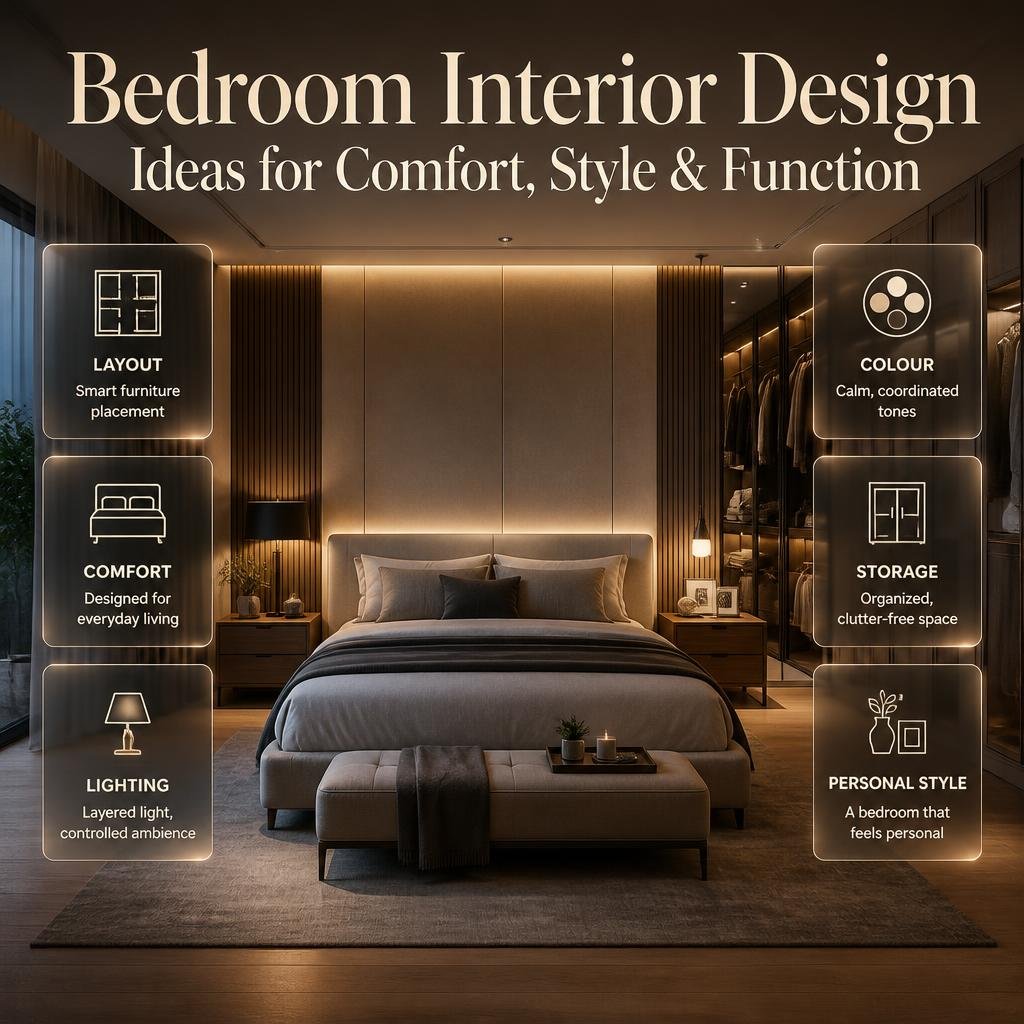
Bedroom Interior Design | A bedroom can have beautiful furniture, expensive finishes, and carefully chosen colours, yet still feel uncomfortable. You may have enough space, but poor furniture placement can make movement awkward. You may have attractive lighting, but the room can still feel too bright at night. Or you may have plenty of storage, but poor organisation can make the entire space look cluttered.
This is why bedroom interior design isn’t simply about choosing a stylish bed, painting the walls, or copying a picture from Pinterest. Good bedroom design combines layout, comfort, lighting, colour, storage, materials, furniture proportions, and personal style into one practical environment.
If you’re planning a bedroom from scratch, refreshing an existing space, or simply trying to understand why your current bedroom doesn’t feel right, this guide will help you make better decisions from the beginning.
For broader inspiration and professional home design ideas, you can also explore DesignMode24 Interior Design, especially if you’re planning several rooms rather than only the bedroom.
What Is Bedroom Interior Design?
Bedroom interior design is the process of planning and coordinating the layout, furniture, colours, lighting, materials, storage, textiles, and decorative elements of a bedroom to create a space that is comfortable, functional, visually balanced, and personal.
The best bedroom isn’t necessarily the most luxurious or expensive one. It’s the bedroom that works naturally for the person using it.
A well-designed bedroom should answer practical questions such as:
- Where should the bed go?
- How much walking space is needed?
- Where should clothes and personal belongings be stored?
- What type of lighting is useful at night?
- Which colours create the right atmosphere?
- How can the room feel spacious without becoming empty?
- How can decoration add personality without creating clutter?
- Which furniture size actually suits the room?
These decisions are connected.
For example, choosing an oversized bed doesn’t only affect the bed itself. It changes the available walking space, bedside table size, storage options, rug placement, and sometimes even the lighting arrangement.
That is why bedroom design should be planned as a complete system rather than as a collection of individual purchases.
How Do You Start a Bedroom Interior Design Project?
The smartest starting point isn’t furniture shopping. It’s understanding the room.
Before choosing colours, beds, wardrobes, or decorative accessories, examine the bedroom’s physical structure and how you intend to use it.
Start with:
- Room dimensions
- Door and window positions
- Natural light
- Electrical outlets
- Air-conditioning or heating positions
- Existing built-in storage
- Bed requirements
- Clothing storage
- Dressing requirements
- Reading, relaxing, or working needs
Once you understand these elements, the design becomes much easier.
Measure the Room First
Measure the complete room, including:
- Length and width
- Ceiling height
- Door openings
- Window dimensions
- Wardrobe areas
- Electrical points
- Radiators
- Air-conditioning units
- Built-in furniture
- Structural columns or unusual corners
Don’t rely on approximate measurements.
A wardrobe that is only slightly deeper than expected can affect the entire circulation path. Similarly, a bedside table that looks compact in a showroom may feel oversized once placed beside your actual bed.
💡 Pro Tip: Use painter’s tape or masking tape on the floor to mark the footprint of proposed furniture. Stand inside the marked area and walk around it. This gives you a much better understanding of scale than looking at dimensions on a product page.
What Is the Best Bedroom Layout?
There isn’t one universal bedroom layout because every room has different proportions, windows, doors, and storage requirements. However, the bed should usually act as the primary anchor, with enough circulation space around it and easy access to storage and other important areas.
A practical planning sequence is:
Room structure → bed position → circulation → storage → lighting → secondary furniture → decoration
This order matters because large furniture determines most of the room’s functionality.
Make the Bed the Anchor
The bed is normally the largest and most visually important piece in a bedroom.
Position it where:
- It doesn’t block the door
- It doesn’t interfere with wardrobe doors
- Both sides are accessible when possible
- Bedside lighting can be installed conveniently
- The headboard has enough visual space
- Natural light can be controlled comfortably
- The room still has a logical circulation route
Symmetry can be useful, especially in master bedrooms.
Two bedside tables and two lighting fixtures can create a balanced appearance, but symmetry isn’t mandatory. Smaller bedrooms often benefit from asymmetrical solutions when space is limited.
How Should Furniture Be Arranged in a Bedroom?
Furniture arrangement should follow the way you move through the room.
Think about your everyday sequence:
Enter → change clothes → access wardrobe → prepare for bed → sleep → wake → dress
Furniture should support these activities rather than obstruct them.
Keep Circulation Clear
Don’t fill every available wall with furniture.
A bedroom needs empty space to breathe.
If the route from the door to the bed is narrow, or if you have to walk around several objects to reach the wardrobe, the room will feel smaller and less comfortable.
Choose Furniture According to Scale
Furniture scale is one of the biggest differences between an amateur-looking bedroom and a professionally planned one.
A very large bed in a small bedroom can overwhelm the room. On the other hand, tiny bedside tables beside a large upholstered bed can look visually weak.
Think in relationships:
Bed size ↔ bedside table size ↔ headboard height ↔ rug size ↔ wardrobe scale
Everything should feel proportionate.
For wider home-planning principles, Design Concepts can provide useful context for understanding balance, proportion, and visual organisation across different interior spaces.
How Do You Choose the Right Bed?
The bed should be chosen according to both comfort and room proportions.
Consider:
- Mattress size
- Frame dimensions
- Headboard height
- Bed height
- Under-bed storage
- Upholstery
- Material
- Cleaning requirements
- Available floor space
A large bed can create a luxurious feeling, but only if the room can comfortably accommodate it.
Should You Choose an Upholstered Headboard?
An upholstered headboard can add softness and visual importance to a bedroom.
It’s particularly useful when you want:
- A comfortable backrest
- A softer appearance
- A luxury atmosphere
- Additional texture
- A stronger focal point
However, fabric requires appropriate care and may not be ideal for every lifestyle.
Wooden headboards can offer a warmer, more architectural appearance and may be easier to maintain.
The best choice depends on the room’s overall design language rather than fashion alone.
How Do You Choose a Bedroom Colour Scheme?
Bedroom colours influence how the room feels throughout the day.
Soft neutrals, warm beige, cream, muted green, dusty blue, warm grey, taupe, and earthy tones are commonly suitable because they can create a calm environment.
However, the best colour isn’t simply the colour that is currently trending.
Consider:
- Natural daylight
- Artificial lighting
- Room size
- Ceiling height
- Flooring
- Furniture colour
- Curtain colour
- Desired atmosphere
A bedroom with limited daylight may benefit from warmer or lighter tones, while a large room with strong natural light can often handle deeper colours.
For more colour-focused inspiration, the Paint Color section can help when developing a complete colour direction.
Should Every Wall Be the Same Colour?
Not necessarily.
You can use one main wall colour and introduce contrast through:
- Headboard fabric
- Artwork
- Wood panels
- Wallpaper
- Textured finishes
- Curtains
- Bedding
A feature wall can work particularly well behind the bed because it naturally reinforces the room’s main focal point.
The important thing is restraint.
⚠ Common Mistake: Creating several feature walls in the same bedroom. When everything is designed to attract attention, nothing remains visually important.
How Can You Make a Bedroom Feel Luxurious?
Luxury bedroom design is less about buying expensive objects and more about creating a controlled combination of quality, proportion, texture, lighting, and comfort.
A sophisticated bedroom might combine:
Warm wood + soft upholstery + natural stone + subtle metal + layered lighting + high-quality textiles
The result feels luxurious because the elements support one another.
For more inspiration on creating an elevated atmosphere, explore Luxury Ambience.
What Makes a Bedroom Look Expensive?
Several details can create a refined appearance without requiring excessive decoration:
- Well-fitted curtains
- Properly scaled furniture
- High-quality bedding
- Coordinated materials
- Warm layered lighting
- A restrained colour palette
- Large-scale artwork
- Quality hardware
- Clean storage
- Consistent finishes
Luxury is often visible through details that aren’t immediately obvious.
A perfectly fitted curtain, for example, can make a room feel more finished than adding several decorative accessories.
What Lighting Is Best for a Bedroom?
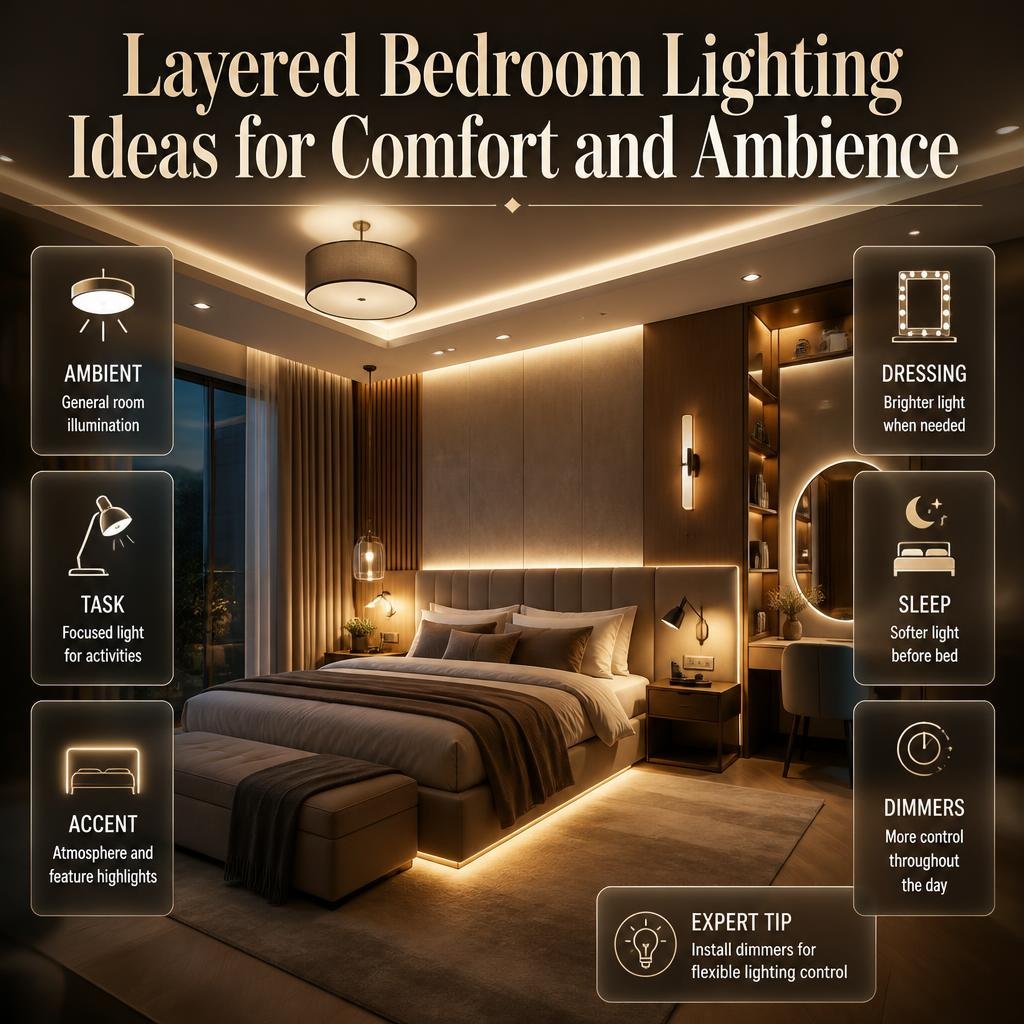
Bedroom lighting should be layered rather than dependent on one bright ceiling fixture.
The three most useful categories are:
Ambient Lighting
This provides general illumination.
Examples include:
- Ceiling fixtures
- Recessed lighting
- Soft pendant fixtures
- Cove lighting
Task Lighting
Task lighting supports specific activities.
Examples include:
- Reading lamps
- Bedside sconces
- Dressing lights
- Adjustable wall fixtures
Accent Lighting
Accent lighting creates atmosphere and highlights features.
Examples include:
- Headboard lighting
- Cove lighting
- Decorative wall lights
- Display lighting
- Soft LED illumination
A combination of these layers makes the bedroom more adaptable.
Bright light can be useful while dressing or cleaning, while softer light is more appropriate when preparing for sleep.
⭐ Expert Tip: If possible, install dimmers. A bedroom needs different lighting levels at different times of day, and dimming gives you more control without changing fixtures.
How Important Are Bedside Tables?
Bedside tables are small but extremely important.
They provide space for:
- Lamps
- Phones
- Books
- Water
- Personal items
- Small decorative objects
The height should generally relate comfortably to the mattress and bed height.
A bedside table that is dramatically lower or higher than the mattress can look awkward and become inconvenient to use.
In small rooms, floating bedside shelves can reduce the visual footprint while still providing practical storage.
How Do You Design Bedroom Storage Properly?
Storage should be considered before decorative styling.
Think about what you actually own.
For example:
A person with a large clothing collection may need extensive hanging storage.
Someone with fewer clothes but many books may benefit from shelving.
A family bedroom may require additional drawers for accessories, bedding, and personal items.
Built-In vs Freestanding Wardrobes
| Storage type | Main benefit | Possible limitation |
|---|---|---|
| Built-in wardrobe | Uses space efficiently | Less flexible |
| Freestanding wardrobe | Easy to replace | Can occupy more visual space |
| Under-bed storage | Excellent for occasional items | Less convenient daily |
| Bedside drawers | Convenient everyday storage | Limited capacity |
| Open shelving | Easy access | Can create visual clutter |
Storage should match behaviour.
If something is used every day, it should be easy to reach.
If something is seasonal, it can be placed higher or deeper inside the storage system.
📌 Quick Tip: Don’t design storage only around the amount of available wall space. Design it around the categories of belongings you actually need to organise.
How Do Textiles Improve Bedroom Interior Design?
Bedrooms contain many hard surfaces, including flooring, walls, wardrobes, furniture, and lighting fixtures.
Textiles soften these surfaces.
Useful layers include:
- Bedding
- Curtains
- Rugs
- Throws
- Cushions
- Upholstered headboards
- Fabric seating
Instead of using many different colours, introduce variation through texture.
For example:
Linen curtains + cotton bedding + wool rug + upholstered headboard + woven throw
The colours can remain relatively simple while the textures create visual depth.
How Should You Choose Curtains?
Curtains affect privacy, daylight, softness, and perceived ceiling height.
Floor-length curtains generally create a more finished appearance than curtains that stop awkwardly above the floor.
Consider:
- Blackout requirements
- Privacy
- Window orientation
- Fabric weight
- Curtain length
- Curtain rod placement
- Colour relationship with walls
If the bedroom receives strong morning sunlight, blackout or lined curtains may be especially useful.
Should You Add a Rug to a Bedroom?
A bedroom rug can add warmth, comfort, and visual connection between furniture pieces.
A common mistake is selecting a rug that is too small.
A larger rug can visually connect:
Bed + bedside tables + surrounding floor area
If the room is small, carefully positioned runners or smaller rugs can still work.
The goal is to create a deliberate composition rather than simply placing a rug wherever empty floor space is available.
How Do You Make a Small Bedroom Look Bigger?
Small bedroom design depends heavily on visual discipline.
Use:
- Appropriately scaled furniture
- Vertical storage
- Light or balanced colours
- Mirrors where appropriate
- Furniture with a smaller footprint
- Clear circulation
- Soft layered lighting
- Minimal visual clutter
Don’t automatically choose extremely small furniture.
If everything is tiny, the bedroom can feel unfinished.
Instead, select a few appropriately scaled pieces and reduce unnecessary objects.
Use Vertical Space
Walls provide valuable storage opportunities.
Consider:
- Tall wardrobes
- Vertical shelving
- Wall-mounted bedside tables
- Tall artwork
- Full-height curtains
Using vertical space can reduce the amount of furniture occupying the floor.
How Do You Add Personality to a Bedroom?
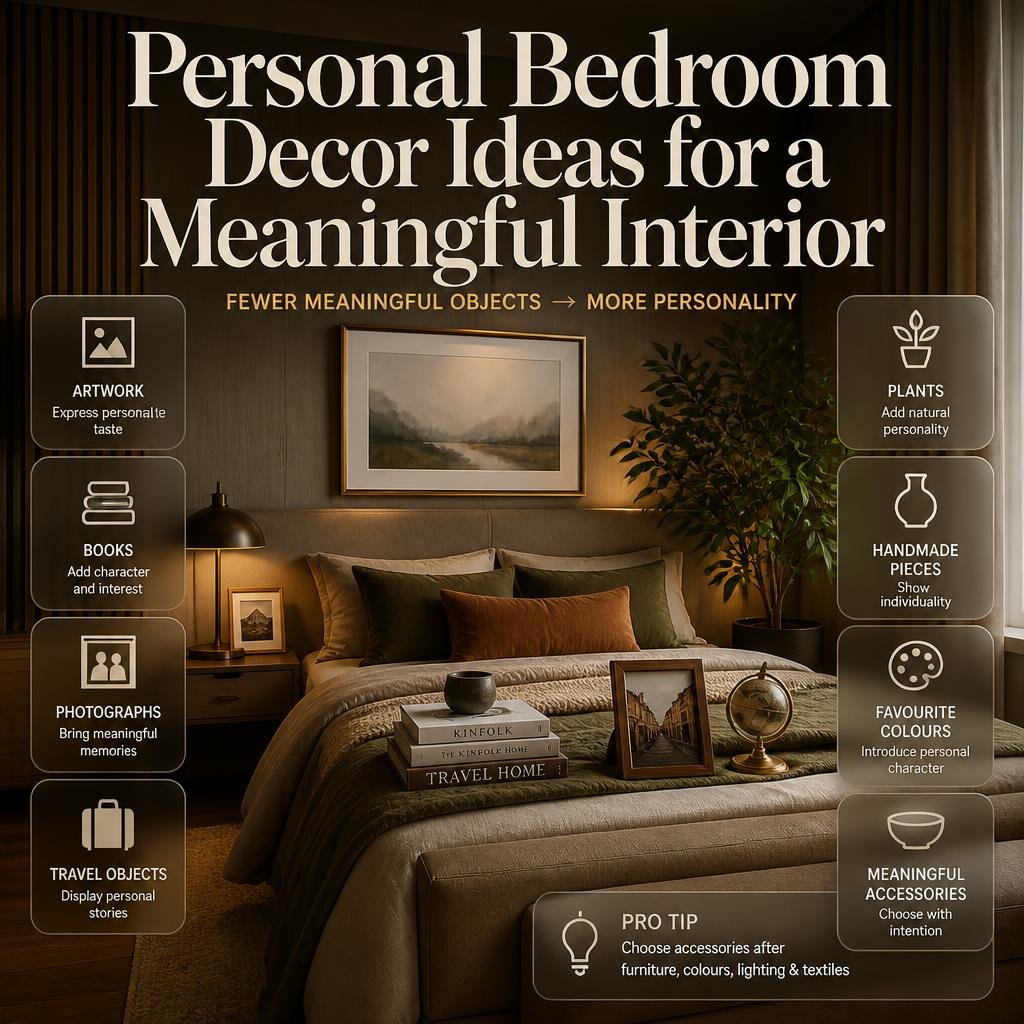
A bedroom should feel like someone’s personal environment rather than a hotel showroom.
Personality can come from:
- Artwork
- Books
- Photographs
- Travel objects
- Plants
- Handmade pieces
- Favourite colours
- Meaningful accessories
The key is selection.
Ten random objects usually create less personality than three meaningful objects.
You can explore Home Accessories for ideas on using decorative details without overwhelming the room.
💡 Pro Tip: Choose accessories after the main furniture, colours, lighting, and textiles are established. This prevents small decorative purchases from controlling the overall design.
How Can Bedroom Design Connect With the Rest of the Home?
A bedroom doesn’t need to look identical to the living room or hallway, but it should feel related to the rest of the home.
You can create continuity through:
- Repeated wood tones
- Similar metal finishes
- Related colours
- Consistent flooring
- Similar architectural details
- Repeated textures
This creates a visual language throughout the property.
If you’re developing a broader home project, Connected Living can be useful when thinking about how different spaces work together rather than treating every room as an isolated design project.
Similarly, why home improvement is important provides broader context for understanding how improvements can affect the functionality and experience of a home.
Bedroom Interior Design Styles
You don’t have to follow a style perfectly. Understanding the characteristics of different approaches can simply make your choices easier.
Modern Bedroom Design
Modern bedrooms commonly use:
- Clean lines
- Simple furniture
- Controlled decoration
- Functional lighting
- Neutral or restrained colours
The focus is often on clarity and practicality.
Contemporary Bedroom Design
Contemporary interiors tend to combine current materials, comfortable furniture, modern lighting, and flexible styling.
Because contemporary design changes over time, avoid copying a temporary trend too literally.
Minimalist Bedroom Design
Minimalism focuses on intentionality.
The room contains what is necessary and useful, with fewer distractions.
A minimalist bedroom may use:
- Limited furniture
- Neutral colours
- Hidden storage
- Clean surfaces
- Simple lighting
Natural Bedroom Design
Natural bedrooms often introduce:
- Wood
- Linen
- Plants
- Woven materials
- Earth tones
- Organic textures
This approach can create a relaxed atmosphere without excessive decoration.
Luxury Bedroom Design
Luxury bedrooms usually rely on:
- Strong proportions
- Quality materials
- Layered lighting
- Soft textures
- Refined details
- Controlled colour
The room doesn’t need to be covered in gold, marble, or elaborate decoration.
How Can Bedroom Design Improve the Feeling of Comfort?
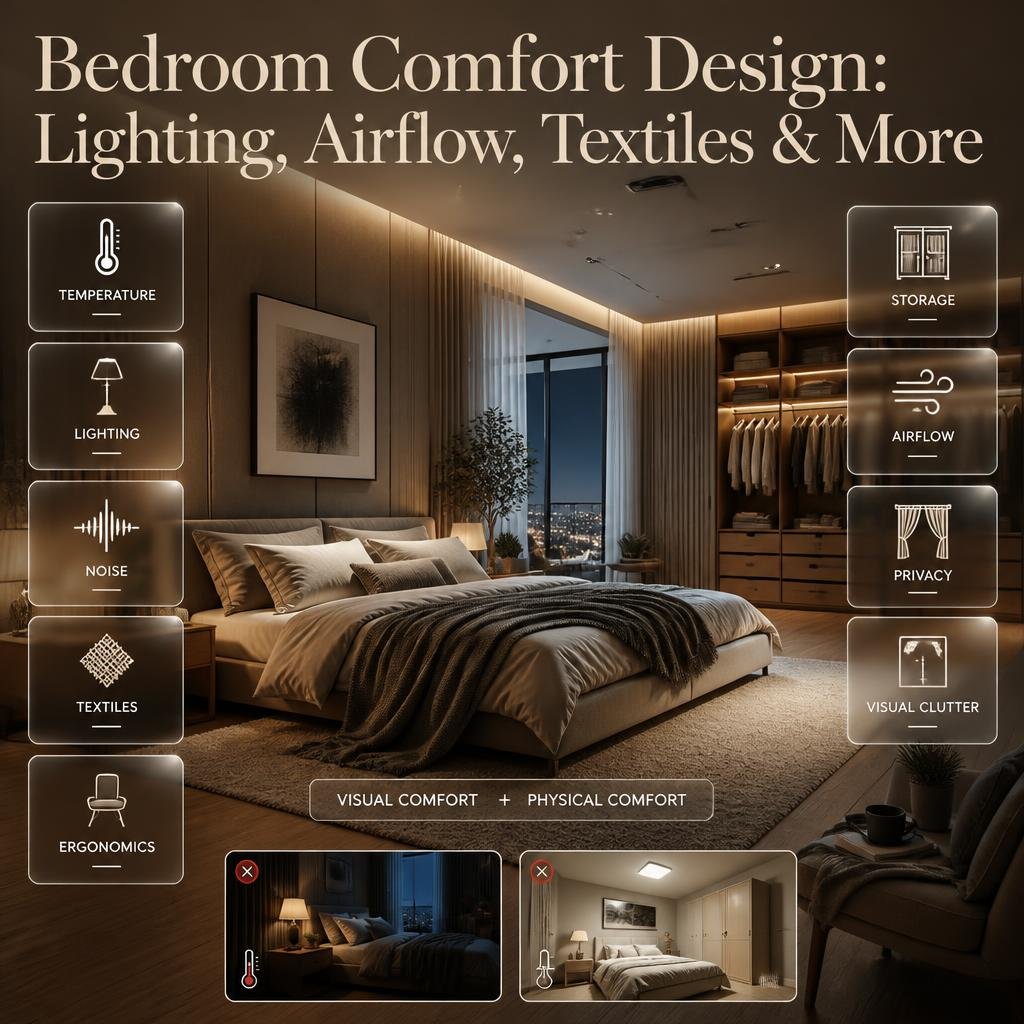
Comfort is influenced by more than the mattress.
Consider:
- Temperature
- Lighting
- Noise
- Textiles
- Furniture ergonomics
- Storage
- Airflow
- Privacy
- Visual clutter
A bedroom with beautiful styling but poor temperature control may not feel comfortable.
Likewise, a bedroom with excellent furniture but harsh lighting can feel unpleasant at night.
Interior design works best when visual and physical comfort are considered together.
Common Bedroom Interior Design Mistakes
1. Buying Furniture Before Measuring
This is one of the most expensive mistakes because correcting it can mean returning or replacing large pieces.
Better approach: Measure first and plan the layout.
2. Making Everything Match
Matching furniture sets can feel convenient, but perfect matching isn’t always necessary.
Mix complementary materials while maintaining a consistent visual relationship.
3. Ignoring Lighting
A single ceiling light rarely provides enough flexibility.
Layer the lighting according to different activities.
4. Choosing Trends Over Lifestyle
A design can look fashionable online and still be unsuitable for your daily routine.
Always ask:
Will this still work for me every day?
5. Overcrowding the Bedroom
Available floor space doesn’t mean every part of it needs furniture.
Leave visual breathing room.
6. Poor Storage Planning
If storage is insufficient, clutter will eventually become part of the room’s appearance.
7. Using Too Many Decorative Pieces
Decoration should support the design rather than compete with it.
8. Choosing the Wrong Rug Size
A tiny rug can make a large bed appear disconnected from the rest of the room.
9. Ignoring Maintenance
Some materials look beautiful but require significant maintenance.
Think about cleaning, durability, pets, children, and daily use before choosing finishes.
10. Copying an Inspiration Image Exactly
An inspiration photo shows someone else’s room, proportions, lighting, lifestyle, and furniture.
Use it to understand principles rather than reproduce it blindly.
How Can You Make a Bedroom Look More Professional?
Professional-looking bedrooms usually share several characteristics:
- Clear focal point
- Strong furniture proportions
- Controlled colour palette
- Layered lighting
- Coordinated materials
- Appropriate storage
- Comfortable circulation
- Deliberate accessories
- Consistent details
The difference isn’t necessarily the budget.
A modest bedroom can look carefully designed when the proportions and relationships are correct.
For broader room inspiration, the Room-by-Room Design Hub is useful because it encourages you to consider how individual spaces work as part of a complete home.
How Can You Create a More Personal Bedroom?
Start by identifying what you genuinely like.
Instead of asking:
“What bedroom style is trending?”
Ask:
“What environment makes me feel comfortable?”
Maybe you prefer:
- Warm colours
- Minimal decoration
- Natural wood
- Dark walls
- Soft fabrics
- Modern furniture
- Traditional details
- Large artwork
Once you understand your preferences, combine them with practical requirements.
This is where Interior Design principles become useful: design isn’t just decoration; it is the relationship between people, spaces, materials, and everyday activities.
Can Bedroom Design Be DIY?
Yes, many bedroom improvements can be handled as DIY projects.
Examples include:
- Painting
- Styling shelves
- Replacing soft furnishings
- Installing simple decorative elements
- Rearranging furniture
- Creating artwork displays
- Updating handles and small hardware
However, electrical work, structural changes, major built-ins, and other specialist work may require qualified professionals.
For suitable projects, DIY Home Projects can provide broader inspiration.
How Do You Balance Beauty and Function?
A useful design test is to ask three questions about every major decision:
Does it look good?
Does it work well?
Will it remain practical over time?
If the answer to only the first question is yes, reconsider the choice.
A beautiful chair that blocks the wardrobe isn’t a successful bedroom solution.
A stylish bedside lamp that produces uncomfortable glare isn’t successful lighting.
A beautiful open shelf that becomes permanently cluttered isn’t successful storage.
Good design solves these problems before they become visible.
What About External Design Inspiration?
Online inspiration can be useful, but the source matters less than how intelligently you interpret it.
Websites such as Preppyroom can provide additional visual inspiration for bedroom styling and decorative directions.
The important step is translating inspiration into your own room.
Look at an inspiration image and identify:
- What attracts your attention?
- Is it the colour?
- The furniture shape?
- The lighting?
- The materials?
- The layout?
- The artwork?
- The overall mood?
Then reproduce the principle rather than blindly copying every item.
What Role Does Home Improvement Play in Bedroom Design?
Bedroom design can be part of a wider home improvement project.
Sometimes the best bedroom improvement isn’t a new bed.
It may be:
- Better storage
- Improved lighting
- New flooring
- Fresh wall finishes
- Better curtains
- More practical electrical planning
- Improved ventilation
- A more efficient layout
This is why design decisions should be prioritised according to the actual problems in the room.
A room that already has attractive furniture may benefit more from improved lighting than another decorative purchase.
A Step-by-Step Bedroom Interior Design Process
Step 1: Identify the Problem
Before changing anything, ask what currently isn’t working.
Is the bedroom:
- Too cluttered?
- Too dark?
- Too cold?
- Too plain?
- Difficult to organise?
- Short on storage?
- Uncomfortable to move around?
Solve the actual problem rather than automatically redesigning everything.
Step 2: Measure the Space
Create a basic floor plan with doors, windows, outlets, and fixed features.
Step 3: Define the Bed Position
The bed should establish the room’s main visual and functional structure.
Step 4: Plan Circulation
Walk through the room mentally and physically.
Check every important route.
Step 5: Plan Storage
Categorise belongings before choosing storage.
Step 6: Select the Colour Direction
Choose a dominant palette based on light, mood, and existing finishes.
Step 7: Plan Lighting
Use ambient, task, and accent lighting.
Step 8: Select Materials
Coordinate wood, fabrics, flooring, metals, wall finishes, and other surfaces.
Step 9: Add Textiles
Use curtains, rugs, bedding, cushions, and throws to introduce comfort and texture.
Step 10: Add Personal Details
Only after the foundation is complete should you introduce decorative accessories.
Step 11: Edit
Stand back and remove anything that doesn’t contribute.
This final editing stage is often what transforms a decorated bedroom into a professionally considered one.
Bedroom Design Decision Table
| If your bedroom problem is… | Consider prioritising… |
|---|---|
| Looks cluttered | Better storage |
| Feels small | Furniture scale + circulation |
| Feels cold | Textiles + warm materials |
| Feels dark | Layered lighting + colour |
| Looks boring | Texture + focal point |
| Feels chaotic | Simplified palette |
| Lacks personality | Meaningful artwork/accessories |
| Feels unfinished | Curtains + rug + lighting |
| Has poor functionality | Layout revision |
| Looks dated | Lighting + finishes + furniture editing |
This approach helps you spend money where it can make the greatest difference.
How Do I Design a Bedroom That Looks Beautiful and Still Feels Comfortable?
A beautiful bedroom should work for everyday life, not just look impressive in photographs. Start with the layout and decide where the bed, wardrobe, bedside tables, and other essential furniture should go. Keep the main walking paths clear, make storage easy to access, and choose furniture that matches the room’s actual dimensions. Once the functional structure is right, introduce colour, lighting, textiles, artwork, and accessories.
The strongest bedroom designs usually balance comfort, function, proportion, and personality rather than relying on decoration alone.
Professional points to consider:
Position the bed before planning decorative elements.
Avoid oversized furniture in smaller rooms.
Use layered lighting instead of relying on one ceiling fixture.
Keep everyday belongings organised and accessible.
Use soft textiles to introduce warmth and texture.
Leave some empty space so the room doesn’t feel overcrowded.
This approach also reflects current design thinking, where bedrooms are increasingly being treated as comfortable, personalised spaces rather than purely decorative rooms.
How Can I Make a Small Bedroom Look Bigger Without Renovating It?
The most effective way to make a small bedroom feel larger is to improve visual space and circulation rather than simply adding mirrors or painting everything white. Choose furniture that fits the room properly, keep walking routes open, use vertical storage, and avoid bulky pieces that consume unnecessary floor area.
Furniture with visible legs or a lighter visual footprint can reveal more floor and create a greater sense of openness. Floating bedside tables, wall-mounted lighting, tall wardrobes, and under-bed storage can also free valuable floor space.
Practical improvements:
Choose appropriately sized beds and wardrobes.
Use floor-to-ceiling storage where suitable.
Consider floating bedside tables.
Keep decorative objects selective.
Use lighter or visually connected colours.
Hang curtains higher to create a stronger vertical impression.
Keep the floor as visually open as possible.
Use multifunctional furniture when space is extremely limited.
Expert advice: Don’t make the mistake of filling a small room with lots of tiny furniture. A few well-proportioned pieces usually look cleaner and make the bedroom feel more spacious than many small items.
What Colours Are Best for Modern Bedroom Interior Design in 2026?
For 2026, bedroom colour direction is moving strongly toward warm, earthy, and layered palettes rather than relying heavily on cold grey or stark white. Warm beige, creamy taupe, clay-inspired neutrals, muted greens, soft browns, and carefully controlled deeper accents are appearing frequently in current bedroom design coverage.
That doesn’t mean every bedroom should follow the same colour trend. The right palette depends on natural light, room size, flooring, furniture, and the atmosphere you want.
A practical colour structure is:
60%: dominant wall or architectural colour
30%: furniture, curtains, flooring, or larger textiles
10%: accent colour through artwork, cushions, accessories, or smaller furniture
For example:
Warm cream walls + walnut furniture + muted olive accents
can create a sophisticated bedroom without making the colour scheme feel complicated.
Professional tip: Always test paint samples in the actual bedroom. A colour that looks warm in a showroom or online image can appear completely different under your room’s natural and artificial lighting.
What Type of Lighting Is Best for a Bedroom?
The most practical bedroom lighting is layered lighting, combining general illumination with task and atmospheric lighting. Instead of depending entirely on one bright ceiling fixture, create several lighting levels that can be controlled according to the activity and time of day.
A useful bedroom lighting plan includes:
Ambient lighting:
Provides general illumination through ceiling lights, recessed fixtures, pendants, or indirect lighting.
Task lighting:
Supports specific activities such as reading, dressing, or applying makeup. Bedside lamps and wall-mounted reading lights are common solutions.
Accent lighting:
Adds atmosphere and highlights features such as a headboard, artwork, shelving, or architectural details.
Why this matters: A bedroom needs different lighting during different parts of the day. You may need brighter illumination while dressing or cleaning but much softer light when relaxing in the evening.
Current bedroom design guidance continues to emphasise layered lighting, warm illumination, and controllable light rather than depending exclusively on overhead lighting.
Expert checklist:
Use separate switches where practical.
Consider dimmable ambient lighting.
Put reading lights within easy reach of the bed.
Avoid uncomfortable glare.
Consider how natural daylight enters the room.
Coordinate lighting temperature with the materials and colours in the bedroom.
How Can I Make My Bedroom Look Luxurious Without Spending Too Much?
Luxury bedroom design doesn’t require every item to be expensive. A more convincing luxury effect comes from good proportions, coordinated materials, quality-looking textiles, layered lighting, and visual restraint.
Instead of buying many decorative products, concentrate your budget on the elements that occupy the most visual space.
For example, upgrading the:
Bed or headboard
Bedding
Curtains
Lighting
Rug
Wardrobe hardware
Wall treatment
can have a stronger impact than purchasing dozens of small accessories.
A sophisticated combination might be:
Warm neutral walls + upholstered headboard + quality bedding + full-length curtains + warm layered lighting + natural wood + one strong artwork
The result feels intentional because the elements work together.
Current 2026 bedroom trends also emphasise richer textures, warmer palettes, meaningful personal details, and comfort rather than simply adding more expensive-looking decoration.
Professional luxury rules:
Don’t mix too many competing finishes.
Invest in the bed and lighting first.
Use texture instead of excessive decoration.
Choose curtains that properly fit the room.
Keep the colour palette controlled.
Add a few meaningful accessories instead of filling every surface.
Leave negative space around important design features.
The real goal is not to make the bedroom look expensive. It’s to make every element look deliberately chosen.

Leave a Reply