
Introduction
Home Accessories | A room can have beautiful furniture, attractive flooring, fresh wall colors, and good lighting, yet something can still feel missing. You may look around and think the space feels plain, unfinished, or simply doesn’t reflect your personality. In many cases, the problem isn’t the furniture. It’s the lack of thoughtful finishing details.
That’s where home accessories come in.
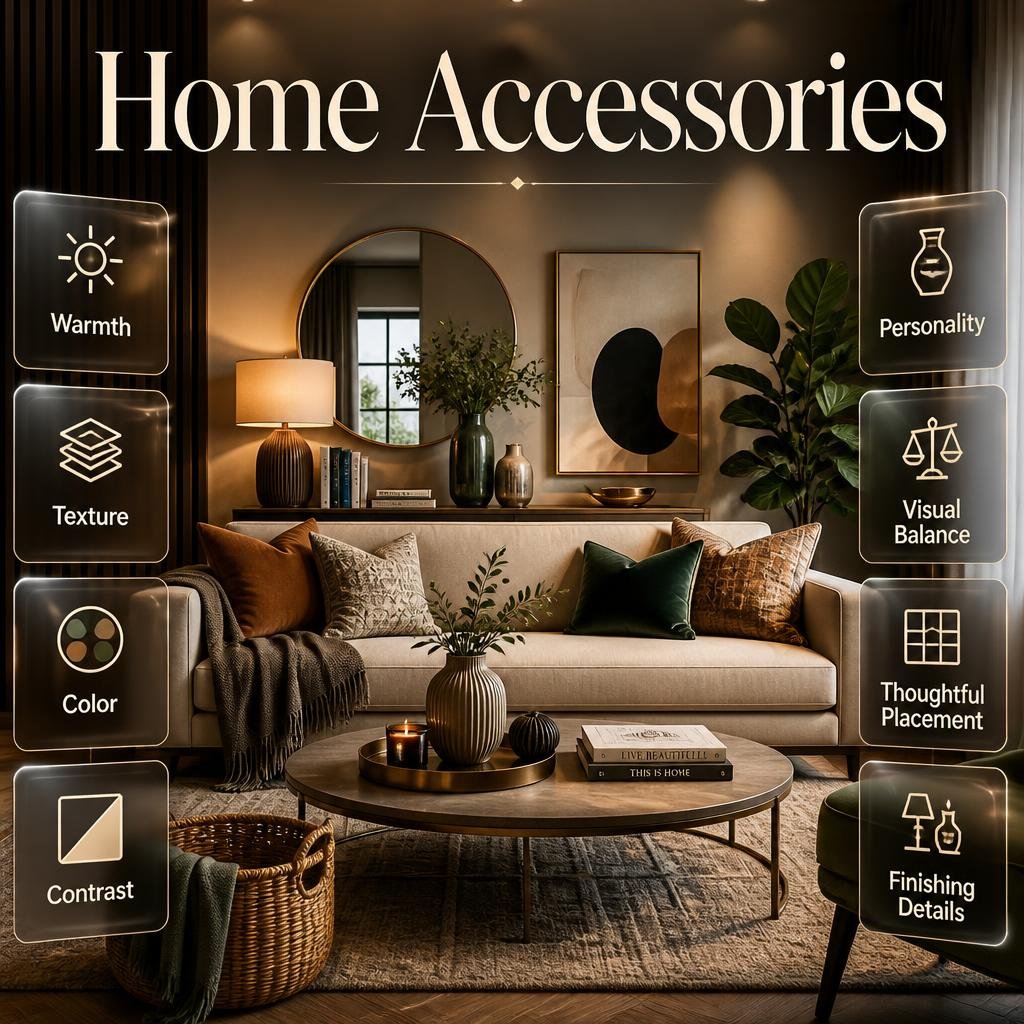
Accessories such as cushions, rugs, mirrors, artwork, vases, plants, throws, decorative books, baskets, lamps, trays, and small objects can completely change the character of a room without requiring a major renovation. They can introduce warmth, texture, color, contrast, personality, and visual balance.
But decorating with accessories isn’t about filling every empty surface. Too many pieces can make a room feel cluttered, while too few can leave it looking cold or unfinished. The real skill is knowing what to add, where to place it, how much is enough, and how different pieces should relate to one another.
This complete guide explains how to choose and style home accessories professionally, whether you’re refreshing one room, decorating a new home, working with a small budget, or simply trying to make your existing interior feel more complete.
If you’re looking for broader inspiration and professional interior ideas, DesignMode24 Interior Design can also help you explore different approaches to room styling, layouts, colors, and home decoration.
What Are Home Accessories?
Home accessories are decorative and functional objects used to enhance the appearance, comfort, personality, and usability of an interior space. They include items such as cushions, rugs, curtains, mirrors, artwork, plants, vases, lamps, decorative books, trays, baskets, candles, sculptures, and other smaller design elements.
Unlike major furniture, accessories are relatively easy to change. This makes them one of the most flexible ways to refresh a room without replacing sofas, dining tables, wardrobes, cabinets, or other expensive pieces.
Common home accessories include:
- Decorative cushions
- Throws and blankets
- Area rugs
- Mirrors
- Wall artwork
- Vases
- Indoor plants
- Decorative planters
- Books
- Baskets
- Decorative trays
- Candles
- Sculptures
- Table lamps
- Floor lamps
- Curtains
- Decorative bowls
- Clocks
- Photo frames
- Ceramic objects
- Small storage pieces
The most effective accessories aren’t necessarily the most expensive. Their success depends on how well they work with the room around them.
A simple ceramic vase can look more sophisticated when placed on the right console with suitable artwork behind it. A basic cushion can transform a neutral sofa when its color and texture connect with the rug and curtains.
This is why professional styling is less about individual products and more about relationships between objects.
Why Are Home Accessories Important in Interior Design?
Home accessories provide the finishing layer that connects the major elements of a room. Furniture establishes the structure, while accessories help create atmosphere, personality, texture, and visual rhythm.
Imagine a living room with a neutral sofa, wooden floor, plain walls, and a simple coffee table. Everything may be perfectly functional, but the space could still feel empty.
Now introduce:
- A textured rug
- Two or three coordinated cushions
- A large piece of artwork
- A plant
- A ceramic vase
- A warm floor lamp
- A woven basket
The furniture hasn’t changed, but the room feels completely different.
Accessories can help:
- Add personality to neutral interiors
- Introduce accent colors
- Create visual focal points
- Connect furniture pieces
- Add softness to hard surfaces
- Introduce natural elements
- Improve visual balance
- Define different zones
- Make a room feel warmer
- Reflect the homeowner’s interests
- Update an outdated interior
- Create seasonal changes
The important thing is to avoid treating accessories as random decorations.
Every visible object should have a reason for being there. It might provide function, color, texture, scale, contrast, personal meaning, or visual balance.
How Do You Choose Home Accessories for Your Interior?
Choose accessories by starting with the room’s existing furniture, color palette, proportions, lighting, function, and design style. Instead of buying individual objects simply because they look attractive, decide what the room is missing and select accessories that solve that specific design need.
A practical sequence is:
Function → Color → Scale → Texture → Focal Point → Accessories → Editing
This approach makes decorating much easier.
Start With the Function of the Room
A family living room needs different accessories from a formal sitting room.
A busy household may benefit from:
- Washable rugs
- Durable cushions
- Storage baskets
- Easy-care plants
- Practical trays
A bedroom should usually feel softer and calmer, so consider:
- Layered bedding
- Throws
- Soft rugs
- Bedside lamps
- Curtains
- Cushions
- Minimal decorative objects
An entryway needs accessories that combine decoration with everyday practicality.
For example:
- Mirror
- Console
- Decorative bowl
- Key tray
- Small plant
- Lamp
- Basket
The best accessory is not simply the one that looks good. It should make sense for how the room is actually used.
Look at What the Room Is Missing
Before shopping, stand in the room and ask:
What feels wrong?
Maybe the room is:
- Too plain
- Too cold
- Too dark
- Too empty
- Too colorful
- Too cluttered
- Too flat
- Visually disconnected
Each problem suggests a different solution.
A cold room may need texture and natural materials.
A plain room may need artwork or an accent color.
A cluttered room may need storage and editing rather than more decoration.
A flat room may need contrast in height, texture, and material.
This simple assessment can prevent unnecessary purchases.
How Do You Create a Home Accessories Color Scheme?

A successful accessory palette usually contains a dominant color, supporting shades, and one or two accents. The accessories don’t have to match exactly; they should relate through color, undertone, material, pattern, or finish.
For example:
| Element | Example |
|---|---|
| Dominant color | Warm beige |
| Supporting color | Soft brown |
| Secondary tone | Cream |
| Accent | Olive green |
| Metallic detail | Brass |
The same principle works with almost any palette.
Instead of buying ten items in exactly the same shade, repeat the same color family through different materials.
For example, green could appear in:
- Plant leaves
- Cushion pattern
- Artwork
- Ceramic vase
- Decorative book cover
This creates connection without looking overly coordinated.
Should Everything Match?
No.
A room where every accessory matches perfectly can look artificial.
Instead, look for relationships.
A brass lamp can connect with brass picture-frame details.
A green cushion can relate to plants.
A wooden tray can connect with timber flooring.
A patterned rug can bring together colors already appearing elsewhere.
The goal is coordination without repetition.
For additional ideas around colors and finishes, explore the Paint Color collection and see how color decisions can influence the overall character of an interior.
How Do You Use Texture in Home Accessories?
Texture adds depth to a room by creating differences between surfaces. Combining soft, rough, smooth, woven, glossy, matte, natural, and metallic materials can make an interior feel richer without requiring dramatic colors.
A neutral room is a perfect example.
Instead of introducing many bright colors, combine:
- Linen
- Wool
- Wood
- Ceramic
- Glass
- Metal
- Woven fibers
- Cotton
- Stone
A beige linen cushion feels different from a beige velvet cushion. A matte ceramic vase feels different from a glossy glass vase.
Even when the colors remain similar, the room becomes more visually interesting.
💡 Pro Tip: If a neutral room feels boring, add texture before adding more color. Texture often creates sophistication without disturbing a calm palette.
How Many Home Accessories Should You Use?
There is no universal number. The correct amount depends on the room size, furniture scale, available surfaces, and overall design style.
A small side table may need only:
- One lamp
- One small decorative object
A large coffee table may support:
- Tray
- Books
- Vase
- Small plant
- Decorative object
The key is to leave breathing room.
Empty space is not wasted space. It helps the important accessories stand out.
Use Groups Instead of Random Placement
Grouping accessories creates stronger visual organization.
A simple arrangement might be:
Tall object + medium object + low object
For example:
Vase + books + small bowl
Different heights create visual movement.
You can also create asymmetrical balance by combining objects with different visual weights.
How Do You Style a Coffee Table?
A coffee table should look attractive without becoming difficult to use. A tray is one of the easiest ways to create a defined arrangement while keeping smaller objects organized.
A practical arrangement can include:
- Decorative tray
- Two or three books
- Vase
- Small natural element
- One sculptural object
Don’t cover the entire surface.
People need space to place drinks, remote controls, laptops, or other everyday items.
⚠ Common Mistake: Filling every inch of a coffee table because the surface feels empty. A styled table still needs to function as a table.
How Do You Style Shelves With Home Accessories?
Shelves look more professional when accessories are arranged with variation rather than placed at equal intervals.
Mix:
- Books
- Artwork
- Plants
- Ceramics
- Decorative boxes
- Sculptural pieces
- Small photographs
Change the height and orientation of different items.
For example:
Books → empty space → vase → artwork → plant → decorative object
Avoid putting five similar objects side by side.
Instead, create small visual groups and allow negative space between them.
If your project includes practical home upgrades alongside decoration, the Home Improvement section can provide additional ideas that connect aesthetics with function.
How Can Rugs Improve Interior Design?
Rugs are among the most influential home accessories because they can visually connect furniture and define zones within an open room.
An appropriately sized rug can:
- Add warmth
- Reduce visual emptiness
- Define a seating area
- Introduce pattern
- Add texture
- Connect colors
- Improve comfort
The biggest issue is usually scale.
A rug that is too small can make furniture appear disconnected.
Before purchasing, measure:
- Sofa width
- Chairs
- Coffee table
- Walking paths
- Door clearance
- Available floor space
Choosing a Rug by Room
| Room | Main Consideration |
|---|---|
| Living room | Connect the main seating arrangement |
| Bedroom | Extend comfortably beyond the bed |
| Dining room | Allow chairs to remain on the rug |
| Entryway | Use a practical, durable size |
| Hallway | Maintain comfortable edge clearance |
📌 Quick Tip: Use masking tape to mark the approximate rug dimensions on the floor before purchasing. Seeing the actual footprint is much more useful than judging size from a product photograph.
How Do Mirrors Work as Home Accessories?
Mirrors can reflect light, create depth, and visually expand a room. But their placement matters more than simply owning a large mirror.
Before hanging one, look carefully at what it will reflect.
A mirror can reinforce:
- Natural light
- Artwork
- Architecture
- Plants
- Attractive furniture
But it can also reflect:
- Clutter
- A television
- Storage
- An unattractive wall
- Messy areas
The best mirror placement considers both the mirror itself and the reflected view.
A large framed mirror can also become a major decorative feature rather than simply a practical object.
How Do Plants Improve Home Decoration?
Plants bring organic shapes and natural color into interiors dominated by straight lines and manufactured materials.
A large plant can create vertical interest beside a sofa or console.
Smaller plants can work on:
- Shelves
- Side tables
- Windowsills
- Cabinets
- Desks
Choose plants according to the available light and maintenance requirements rather than choosing only according to appearance.
The planter itself is also part of the design.
A simple ceramic planter may suit a minimalist interior, while woven baskets can work better in warm natural spaces.
For additional garden and patio inspiration, explore Robert MyGardenAndPatio.
How Should You Use Artwork?
Artwork gives a room personality and can establish a focal point.
When selecting artwork, don’t focus only on whether it matches your sofa.
Consider:
- Room size
- Wall size
- Furniture scale
- Existing colors
- Lighting
- Frame style
- Emotional character
- Overall design direction
A large blank wall often looks better with one substantial piece than with many tiny pieces placed without a clear structure.
For a gallery wall, use a relationship between frames rather than making every frame identical.
How Do You Mix Materials in Home Accessories?
Material contrast can make a room feel sophisticated without adding excessive decoration.
Try combinations such as:
Wood + ceramic + linen + glass + metal
Or:
Stone + wool + timber + cotton + brass
The important principle is repetition.
If a material appears once, it may feel random.
If it appears several times, it begins to create a visual language.
For example, brushed brass can appear in:
- Lamp
- Picture frame
- Cabinet hardware
That repetition creates cohesion.
How Do Home Accessories Fit Different Interior Styles?

Accessories should support the style of the room instead of fighting against it.
Modern Interiors
Modern rooms often benefit from:
- Clean shapes
- Minimal decoration
- Sculptural objects
- Neutral colors
- Glass
- Metal
- Geometric artwork
Avoid filling every surface.
Minimalist Interiors
Minimalist rooms require stronger editing.
Choose fewer but more meaningful pieces:
- Simple ceramics
- One large artwork
- Natural materials
- Soft textiles
- Carefully selected plants
The empty space is part of the design.
Contemporary Interiors
Contemporary spaces can combine:
- Modern artwork
- Textured fabrics
- Sculptural lighting
- Mixed materials
- Controlled accent colors
- Refined decorative objects
The Refined Finishes approach can be particularly useful when you want decorative elements to feel polished rather than excessive.
Natural and Warm Interiors
Use:
- Timber
- Linen
- Woven baskets
- Ceramics
- Plants
- Earthy colors
- Natural fibers
The objective is warmth rather than perfection.
Connected Modern Homes
Modern homes increasingly combine decorative styling with technology, lighting, smart functions, and flexible spaces. Accessories should not obstruct these systems.
For ideas related to technology and modern living, explore Connected Living.
How Do You Style Home Accessories by Room?
Living Room
The living room usually benefits from layered accessories.
Consider:
- Large rug
- Cushions
- Throw
- Artwork
- Coffee-table styling
- Plants
- Floor lamp
- Side-table accessories
Don’t add everything at once.
Start with the largest visual elements and work downward.
Bedroom
The bedroom should feel comfortable rather than overdecorated.
Useful accessories include:
- Layered bedding
- Cushions
- Throw
- Bedside lamps
- Soft rug
- Curtains
- Artwork
- Small decorative objects
Keep surfaces relatively calm.
Dining Room
Use accessories that enhance atmosphere without interfering with dining.
Consider:
- Centerpiece
- Table runner
- Artwork
- Sideboard styling
- Pendant light
- Plant
Keep the dining table practical enough for everyday meals.
Entryway
The entryway is the first visual experience of a home.
A simple combination can include:
- Mirror
- Console
- Tray
- Lamp
- Plant
- Small artwork
- Basket
The design should look attractive while supporting everyday activities.
For a more complete room-by-room approach, the Room-by-Room Design Hub is a useful complementary resource.
How Can Home Accessories Make a Small Room Look Better?
Small rooms need editing more than decoration.
Choose accessories that provide multiple benefits.
For example:
A mirror adds decoration and reflection.
A basket adds texture and storage.
A rug adds color, comfort, and zoning.
A lamp adds light and visual interest.
A decorative tray organizes small objects.
Avoid placing many tiny items around the room because they can make the space feel visually fragmented.
Vertical accessories can also help.
Tall plants, vertical artwork, curtains, and narrow floor lamps can draw attention upward.
How Can You Decorate a Home on a Budget?
You don’t need to replace your furniture to refresh an interior.
Start with what you already own.
Rearrange Existing Accessories
Move objects from one room to another.
A vase that feels unnecessary in the living room might work perfectly in the bedroom.
Change Cushion Covers
Instead of replacing an entire sofa, change textiles.
Restyle Shelves
Remove everything and rebuild the arrangement.
Reuse Decorative Objects
Paint, refinish, or repurpose suitable pieces.
Introduce Plants
Even one well-positioned plant can change the atmosphere.
Use DIY Projects
Small handmade improvements can personalize a room without a large budget.
For practical creative projects, explore DIY Home Projects.
You can also use Home Hacks Decoradtech for additional practical ideas that connect everyday home solutions with decoration and modern living.
How Can You Use Home Accessories Without Creating Clutter?
The easiest way to avoid clutter is to stop treating every empty surface as an invitation to decorate.
Instead, use intentional zones.
For example, a console could have:
Lamp + artwork + tray + one decorative object
rather than ten unrelated pieces.
When a room feels cluttered, don’t immediately buy storage.
First remove objects.
Ask:
- Do I use this?
- Does it contribute visually?
- Does it belong in this room?
- Is another object already doing the same job?
- Does it interrupt circulation?
- Does it still suit my current style?
This process is called editing, and it’s one of the most important skills in interior styling.
Common Home Accessories Mistakes

Mistake 1: Buying Accessories Before Understanding the Room
Why it happens: Shopping is exciting and individual products look attractive.
Why it’s harmful: You may end up with objects that don’t relate to the room.
Better approach: Analyze the room first.
Mistake 2: Matching Everything
Why it happens: Matching feels safe.
Why it’s harmful: The room can look artificial.
Better approach: Coordinate rather than duplicate.
Mistake 3: Ignoring Scale
Why it happens: An accessory looks good by itself.
Why it’s harmful: A tiny piece can disappear beside large furniture.
Better approach: Compare the accessory with surrounding objects.
Mistake 4: Using Too Many Small Objects
Why it happens: Small items are easy to collect.
Why it’s harmful: They create visual noise.
Better approach: Replace several small pieces with one stronger object.
Mistake 5: Ignoring Function
Why it happens: Decorative photographs often show perfectly staged rooms.
Why it’s harmful: Real homes need practical surfaces.
Better approach: Make decoration support everyday life.
Mistake 6: Filling Every Wall
Why it happens: Blank walls can feel unfinished.
Why it’s harmful: Too much artwork removes visual breathing room.
Better approach: Let some walls remain quiet.
Mistake 7: Using Only One Material
Why it happens: A single material feels coordinated.
Why it’s harmful: The room can become flat.
Better approach: Mix natural and manufactured materials.
Mistake 8: Ignoring Lighting
Accessories can look completely different under different lighting conditions.
Check your room during:
- Morning
- Afternoon
- Evening
- Artificial lighting
A fabric that looks warm in daylight may appear completely different under a cool light source.
How Do Professionals Style Home Accessories?
Professional styling usually follows a process rather than random placement.
Step 1: Remove Everything
Start with a clean visual base.
Step 2: Identify the Focal Point
Decide what should attract attention first.
It could be:
- Artwork
- Fireplace
- Window
- Sofa
- Architectural feature
- Statement furniture
Step 3: Add Large Elements
Introduce rugs, mirrors, curtains, large plants, and artwork.
Step 4: Add Medium Elements
Use:
- Cushions
- Lamps
- Baskets
- Vases
- Books
Step 5: Add Small Details
Only add small decorative pieces where they improve the arrangement.
Step 6: Step Back
Look at the room from the doorway.
This often reveals problems that aren’t obvious when you’re standing next to a table or shelf.
Step 7: Remove Something
If you’re unsure whether an object belongs, temporarily remove it.
If the room looks better without it, leave it out.
⭐ Expert Tip: Professional-looking rooms aren’t necessarily filled with expensive accessories. They’re usually carefully edited. The relationship between objects matters more than the price of individual pieces.
How Do You Use Decorative Books?

Books can add color, height, texture, and personality.
Use them:
- On coffee tables
- On shelves
- On consoles
- On bedside tables
- Under decorative objects
Stacking books creates height.
Standing books vertically creates structure.
Mix both approaches.
However, don’t choose books purely because their covers match your room. Personal interests make the space feel more authentic.
How Do You Use Baskets as Accessories?
Baskets are one of the easiest examples of an accessory that combines appearance and function.
They can store:
- Throws
- Toys
- Magazines
- Cushions
- Everyday items
- Small household accessories
Place a basket:
- Beside the sofa
- Under a console
- Near a reading chair
- In a bedroom
- In an entryway
Natural woven baskets work especially well in warm, Scandinavian, Japandi, and organic interiors.
How Can Home Accessories Create Visual Balance?
Balance doesn’t mean making both sides of a room identical.
Instead, balance visual weight.
For example:
Large plant on one side + floor lamp and artwork on the other
The objects are different, but the visual weight can feel balanced.
You can also balance:
- Dark with light
- Tall with low
- Rough with smooth
- Solid with open
- Patterned with plain
This is why asymmetrical rooms can still feel organized.
How Can You Create a More Personal Home?
The strongest interiors usually contain something that tells the homeowner’s story.
This could be:
- Travel photographs
- Artwork
- Books
- Handmade ceramics
- Family objects
- Collected pieces
- Vintage accessories
- Personal artwork
A room becomes more authentic when every object isn’t selected from the same store or trend.
Don’t be afraid to combine old and new.
A contemporary sofa can work with an antique side table.
A modern lamp can sit beside a handmade ceramic vase.
A traditional artwork can work inside a contemporary interior.
The connecting element might simply be color, proportion, or material.
How Can Home Accessories Support Different Seasons?
You don’t need to redecorate your entire home every few months.
Small seasonal changes are enough.
Spring
Introduce:
- Light textiles
- Fresh plants
- Soft colors
- Floral elements
Summer
Try:
- Lighter fabrics
- Natural textures
- Greenery
- Airier accessories
Autumn
Introduce:
- Warm cushions
- Throws
- Earthy tones
- Wood
- Soft lighting
Winter
Use:
- Heavier textiles
- Warm lighting
- Layered throws
- Cozy rugs
- Deeper colors
The major furniture can stay the same while smaller accessories change.
How Can You Combine Home Accessories With Wall Design?
Accessories and walls should be considered together.
Artwork interacts with wall color.
Mirrors interact with lighting.
Shelves interact with wall space.
Curtains interact with windows.
Accent colors interact with furniture.
If you’re planning a wider wall transformation, Latest News DecoratorAdvice can provide additional decorating perspectives, while Blog Home Ideas TheHomeTrotters offers another resource for broader home inspiration.
The important point is that accessories shouldn’t be selected in isolation.
How Do You Use Home Accessories in a Modern Lifestyle?
Today’s homes often need to support several activities in the same room.
A living room may also function as:
- Home office
- Reading area
- Entertainment space
- Children’s activity zone
- Relaxation area
Accessories can help define these functions.
A rug can visually define a seating zone.
A basket can manage everyday clutter.
A lamp can create a reading corner.
A tray can organize remote controls.
A plant can soften a workspace.
This is where decorative styling becomes part of functional interior design rather than simply visual decoration.
For additional practical inspiration, Latest News DecoratorAdvice 2 can complement broader ideas about home styling and contemporary decorating.
How Can Outdoor Inspiration Influence Indoor Accessories?
Natural materials and outdoor-inspired elements can create a calmer indoor atmosphere.
Consider:
- Stone
- Wood
- Woven fibers
- Green plants
- Organic shapes
- Earth tones
- Natural ceramics
These elements can make modern interiors feel less rigid.
If you’re also thinking about garden-related design, Can I Design My Own Garden Kdagardenation can provide complementary inspiration for connecting indoor and outdoor design thinking.
How Do You Refresh Home Accessories Without Buying Anything?
Sometimes the best makeover costs nothing.
Try this process:
1. Remove Everything
Take accessories off shelves, tables, and consoles.
2. Clean the Surfaces
A clean surface gives you a fresh starting point.
3. Create Groups
Sort accessories by:
- Color
- Material
- Size
- Function
4. Move Pieces Between Rooms
Try objects in different locations.
5. Change Heights
Stack books or use stands to create variation.
6. Remove Duplicates
If two objects perform the same visual function, keep the stronger one.
7. Reassess
Take photographs from different angles.
You may discover that your existing accessories are enough.
Home Accessories Buying Checklist
Before purchasing an accessory, ask:
- Does it work with my existing color palette?
- Is the scale appropriate?
- Does the material suit the room?
- Does it add texture or contrast?
- Does it serve a practical purpose?
- Does it repeat something already present?
- Where exactly will I place it?
- Will it create clutter?
- Is it durable enough?
- Will I still like it beyond the current trend?
If you cannot answer where the object will go, don’t buy it yet.
What are the best home accessories to make a room look more stylish?
The best home accessories are the ones that improve the room’s color, texture, proportion, lighting, and personality without making the space feel crowded. For most rooms, a well-sized rug, cushions, artwork, mirror, plant, decorative lighting, throw, and a few carefully selected objects provide a strong starting point. Designers increasingly emphasize thoughtful combinations rather than simply adding more decoration.
Instead of buying ten small decorative pieces, start with the biggest visual gap in the room. If the seating area feels disconnected, a rug may make a bigger difference than several ornaments. If a wall looks empty, substantial artwork or a properly scaled mirror may be more effective. If the room feels cold, textured cushions, throws, wood, woven materials, and warm lighting can introduce softness.
Useful styling points:
Use a rug to visually anchor furniture.
Add cushions and throws for softness and texture.
Use artwork or a mirror to create a focal point.
Add plants for natural color and organic shapes.
Introduce decorative lighting for warmth and atmosphere.
Finish with a small number of meaningful objects.
Keep enough empty space around accessories so the room can breathe.
The important distinction is between decoration and visual clutter. A stylish room doesn’t necessarily contain more accessories; it contains accessories that have a clear relationship with the furniture and architecture.
How do I choose home accessories that match my interior design style?
Choose home accessories by looking at your existing color palette, furniture shapes, materials, finishes, room proportions, and overall atmosphere rather than trying to match every item exactly. Accessories should create visual connections throughout the room while still providing enough variation to keep the space interesting.
For example, a modern interior can work beautifully with sculptural objects, clean-lined artwork, glass, metal, and controlled colors. A warm natural interior may benefit from wood, linen, woven baskets, ceramics, plants, and earthy tones. A minimalist room generally needs fewer but stronger accessories, because excessive decoration works against the simplicity of the style.
A useful professional approach is:
Existing room → dominant style → color story → materials → accessory selection → final editing
Don’t start by asking, “What decoration is trending?” Start by asking, “What does my room already have?”
Use these checks before buying:
Does the color complement the existing palette?
Does the material appear elsewhere in the room?
Is the accessory the correct scale?
Does its shape work with the furniture?
Does it add something the room currently lacks?
Can you imagine exactly where it will be placed?
One of the most effective approaches is to coordinate instead of match. A wooden tray doesn’t need to be identical to your coffee table. A cushion doesn’t need to exactly match the curtains. They simply need a visual connection through color, material, pattern, or tone.
This creates a more collected and natural interior instead of a room that looks as though everything was purchased as one matching set. Current design guidance also favors combining different textures, patterns, old and new pieces, and meaningful objects to create a more individual look.
How can I make my home look expensive with simple accessories?
You don’t need expensive accessories to create an expensive-looking interior. The biggest difference usually comes from scale, restraint, texture, lighting, placement, and material coordination rather than the price tag of every individual object.
Start with one or two strong pieces instead of covering the room with inexpensive decorations. A substantial artwork, properly sized rug, attractive lamp, quality-looking vase, vintage object, or carefully selected mirror can create a stronger impression than a collection of unrelated small items.
Lighting is particularly important. Harsh overhead lighting can make even beautiful accessories look ordinary, while warm layered lighting can make materials, textures, artwork, and furniture feel more sophisticated. Recent designer advice similarly highlights ambient evening lighting, books, artwork, ceramics, and personalized details as relatively simple ways to make a home feel more considered.
Simple ways to create a more refined look:
Choose fewer accessories but give them more visual space.
Use different textures instead of relying on excessive color.
Mix matte and reflective surfaces.
Display real books and meaningful objects.
Add natural materials such as wood, linen, stone, or ceramic.
Use warm, layered lighting instead of relying only on ceiling lights.
Choose artwork that has personality rather than generic filler.
Keep tabletops and shelves edited.
Another useful technique is repetition. If brushed brass appears in a lamp, repeat it subtly in a frame or another small detail. If wood appears in the furniture, a wooden tray or decorative object can reinforce that material.
The result feels intentional because the accessories appear connected rather than randomly collected.
How do I decorate with home accessories without making my home look cluttered?
The best way to prevent clutter is to edit before you add. Don’t treat every empty shelf, tabletop, or corner as a space that needs decoration. Instead, decide what each area needs and use a limited number of objects with different heights, textures, and visual weights.
A common professional styling technique is to group objects rather than spreading small items everywhere. For example, a console can have one lamp, a mirror or artwork, a tray, and one or two decorative objects rather than ten unrelated pieces. Varying heights and shapes creates visual interest without requiring a large number of accessories.
Try this simple editing process:
Remove everything from the surface.
Clean the area.
Choose one anchor piece.
Add one medium-height accessory.
Add one smaller object if necessary.
Step back and look at the arrangement.
Remove anything that doesn’t contribute.
A good arrangement often has visual breathing room between objects.
You can also use functional accessories to reduce visible clutter. Baskets can store throws and everyday items. Trays can collect small objects. Decorative boxes can hide things that would otherwise remain scattered across a surface.
The biggest mistake is assuming that an empty area automatically needs more decoration. Sometimes the room looks better because you removed something.
This is particularly important in smaller rooms. Current interior guidance continues to emphasize well-scaled pieces, editing, and avoiding overcrowding rather than simply filling available space.
What home accessory trends are popular in 2026?
In 2026, home accessory styling is moving toward personalization, craftsmanship, layered texture, meaningful objects, natural materials, and a less mass-produced appearance. Current design coverage is placing greater emphasis on interiors that feel collected and individual rather than rooms filled with identical trend-driven accessories.
One noticeable direction is the use of handmade or artisanal-looking pieces. Handmade ceramics, vintage objects, distinctive artwork, and pieces with visible character can give a room a more personal identity than mass-produced decorations.
Texture is also important. Layering materials such as linen, wood, ceramic, glass, wool, woven fibers, and metal adds depth without requiring a complicated color palette. Rugs, cushions, throws, and textured decorative pieces are particularly useful for this approach.
Key 2026 accessory directions include:
Handmade and artisanal decorative pieces
Vintage and collected objects
Natural and tactile materials
Layered textiles
Statement rugs
Personalized artwork
Mixed materials
Warm, atmospheric lighting
Meaningful books and personal collections
Accessories that combine beauty with function
However, following a trend doesn’t mean replacing everything in your home. A better approach is to introduce one or two current elements into an existing interior.
For example, instead of completely redesigning a living room, you might add a textured rug, replace several matching cushions with a more varied combination, introduce a handmade ceramic vase, or change the lighting to create a warmer evening atmosphere.
That gives the room a current feel while keeping it personal.
The most important 2026 lesson is therefore not “buy the latest decor.” It’s “choose accessories that have character and make sense in your home.” That approach is less dependent on short-lived trends and gives the interior a more authentic, lived-in appearance.
Conclusion
The right home accessories can completely change how a space looks and feels without requiring a complete renovation or expensive furniture replacement. A well-chosen rug can anchor a room, artwork can add personality, plants can bring natural warmth, while cushions, throws, lighting, mirrors, and decorative objects can create the layers that make an interior feel finished.
The key is to decorate with intention rather than simply adding more. Start by understanding what your room actually needs. Look at its colors, furniture, proportions, lighting, textures, and everyday function before choosing accessories. Then build the room gradually, beginning with larger visual elements and finishing with smaller personal details.
Remember that everything doesn’t have to match. A successful interior usually combines different materials, shapes, textures, and styles while maintaining a clear visual connection. Mixing modern pieces with vintage finds, natural materials with refined finishes, or practical storage with decorative elements can make a home feel much more personal and authentic.
Most importantly, don’t underestimate the value of editing. If a room feels crowded, removing a few unnecessary objects may improve it more than buying something new. Give important pieces enough space to stand out, keep everyday areas functional, and choose accessories that genuinely reflect how you live.
Whether you’re refreshing a single corner or styling an entire home, the goal isn’t to create a room filled with decoration. The goal is to create a space that feels balanced, comfortable, personal, and intentionally designed. When every accessory has a purpose—whether functional, visual, or emotional—even simple pieces can make a powerful difference.

Leave a Reply