

Introduction
Refined Finishes in Interior Design | A room can have beautiful furniture, expensive décor, and a carefully selected color palette and still feel slightly unfinished. You may not immediately know what’s wrong, but something doesn’t quite connect. Often, the problem isn’t the furniture or the layout. It’s the finishes.
The way a wall reflects light, the texture of a cabinet, the sheen of a countertop, the grain of wood, the edge of a stone surface, and even the finish of a door handle can completely change how an interior feels.
This is where refined finishes become important.
Refined finishes aren’t simply about choosing expensive materials. They are about selecting surfaces, textures, colors, sheens, and material details that work together naturally. A well-designed room may combine matte walls, warm wood, honed stone, brushed metal, soft textiles, and subtle glass without looking busy.
The secret is coordination.
In this guide, we’ll explore what refined finishes really mean, how to select them for different rooms, how to combine matte and glossy surfaces, how finishes affect color and lighting, which mistakes make interiors look cheap or disconnected, and how professionals create a polished material palette without overdecorating.
If you’re looking for broader practical ideas for improving your home, DesignMode24 Interior Design provides inspiration covering interior design, home improvement, room styling, lighting, color, and other areas of the home.
What Are Refined Finishes in Interior Design?
Refined finishes are carefully selected surface treatments, textures, materials, and levels of sheen that make an interior look polished, cohesive, and intentionally designed. They can include paint finishes, natural wood, stone, plaster, tile, glass, metal, cabinetry, flooring, and architectural details.
The word “refined” is important.
A refined finish doesn’t necessarily mean glossy, expensive, luxurious, or dramatic. In many sophisticated interiors, the most successful finishes are subtle.
Think about a quiet living room with warm white walls, natural oak flooring, a limestone coffee table, linen upholstery, and brushed bronze lighting. Nothing is screaming for attention. Yet every surface contributes to the overall atmosphere.
That’s refinement.
A good finish should answer three questions:
- Does it look appropriate for the room?
- Does it work with the surrounding materials?
- Can it handle the way the room is actually used?
If a finish looks beautiful but is difficult to maintain, easily damaged, or completely disconnected from the rest of the home, it may not be the right choice.
Why Do Refined Finishes Make Such a Difference?
Finishes influence far more than appearance.
They affect how light moves through a room, how colors are perceived, how large or small a space feels, and whether the interior appears warm, cold, formal, relaxed, modern, or traditional.
Imagine two kitchens with identical layouts.
The first uses glossy white cabinets, polished stone, chrome handles, and reflective glass.
The second uses matte cabinetry, natural oak, honed stone, brushed metal, and textured backsplash tile.
The layout hasn’t changed, but the atmosphere has.
The first kitchen may feel brighter and more dramatic. The second may feel warmer, quieter, and more tactile.
This is why finishes should be considered during the design process rather than treated as an afterthought.
Refined finishes can help you:
- Create visual depth
- Improve material coordination
- Control light reflection
- Add warmth to modern interiors
- Highlight architectural features
- Make simple furniture feel more intentional
- Establish a consistent design language
- Give rooms a more finished appearance
- Balance hard and soft materials
- Create continuity between connected spaces
💡 Pro Tip: Before buying a new material, look at the finishes that are already permanent in your home. Flooring, doors, windows, countertops, and built-ins often determine what new materials will actually work.
What Materials Work Best for Refined Finishes?
There is no single material that defines refinement. The strongest interiors usually combine several materials with different visual and tactile qualities.
Natural Wood
Natural wood is one of the easiest ways to introduce warmth.
Oak, walnut, ash, maple, and other woods can be used for flooring, cabinetry, furniture, wall details, doors, and shelving.
The finish applied to the wood changes its character.
A highly polished surface can look formal and traditional, while a matte or low-sheen finish usually feels softer and more contemporary.
Wood grain also matters.
If your room contains multiple wood surfaces, they don’t necessarily need to match exactly. However, their undertones should relate.
For example, warm oak flooring can work beautifully with walnut furniture because both contain warm visual qualities. Problems arise when one wood looks distinctly yellow while another looks gray or reddish without a connecting element.
Stone
Stone brings a sense of permanence and natural variation.
Marble, limestone, travertine, granite, quartzite, and other stones can all create refined interiors, but they produce very different results.
Polished stone reflects light and can feel formal.
Honed stone has a softer appearance and often feels more understated.
Textured stone adds tactile depth.
When selecting stone, don’t look only at the sample under showroom lighting. Examine the veining, background color, texture, edge profile, and how the surface will interact with nearby materials.
Metal
Metal is usually most effective when used as an accent rather than covering every surface.
Popular interior metal finishes include:
- Brushed brass
- Aged brass
- Satin nickel
- Brushed stainless steel
- Blackened steel
- Polished chrome
- Bronze
A brushed finish generally produces a softer effect than a highly polished one.
The right choice depends on the atmosphere you’re trying to create.
Warm metals can support cozy interiors, while blackened or dark metals can create stronger contrast in contemporary spaces.
Glass
Glass is useful when a room needs openness or light.
Clear glass can visually disappear, while fluted, ribbed, or textured glass introduces pattern and privacy.
Glass can be used for:
- Cabinet doors
- Shower screens
- Partitions
- Lighting
- Coffee tables
- Decorative panels
- Interior doors
The important thing is to consider reflection. A room already containing polished stone, mirrors, and glossy cabinetry may not need large amounts of additional glass.
Plaster and Wall Treatments
Walls don’t have to be flat backgrounds.
Plaster, limewash, microcement, textured paint, and other wall treatments can add subtle movement without requiring artwork or heavy decoration.
This is particularly effective in minimalist interiors where there are fewer decorative objects.
The texture creates interest while maintaining visual simplicity.
How Do Matte, Satin, Honed, and Glossy Finishes Differ?

One of the easiest ways to understand refined finishes is to think about reflection.
| Finish | Appearance | Best Used For | Main Consideration |
|---|---|---|---|
| Matte | Soft and low-reflection | Walls, cabinetry | Can show marks depending on product |
| Satin | Gentle reflection | Woodwork, cabinetry, hardware | Balanced and versatile |
| Honed | Smooth, low-reflection | Stone surfaces | May require careful maintenance |
| Semi-gloss | Noticeable reflection | Trim and selected surfaces | More visually prominent |
| Gloss | Strong reflection | Accent surfaces | Can reveal imperfections |
| Polished | High reflection | Stone and metals | Dramatic but visually active |
There isn’t a universally superior finish.
The question is whether the finish is appropriate for the surface and the room.
A high-gloss surface can look incredible when used as a focal point. Used everywhere, it can become visually exhausting.
A matte finish can feel elegant and calming. Used without any contrasting texture or reflection, it can sometimes make a space feel flat.
The strongest rooms usually contain variation.
How Do You Mix Different Finishes Without Making a Room Look Messy?
This is one of the most important skills in creating refined interiors.
You don’t want everything to match perfectly, but you also don’t want every material to look unrelated.
The solution is to create relationships between finishes.
For example:
Matte warm-white walls
↓
Natural oak flooring
↓
Honed limestone
↓
Brushed brass details
↓
Soft linen upholstery
Each material looks different, but the palette has a common warm, understated character.
Another combination might be:
Soft gray walls
↓
Dark walnut furniture
↓
Textured stone
↓
Blackened metal
↓
Woven textiles
Here the relationship comes from contrast and material depth.
Use the Three-Level Finish Formula
When you’re unsure where to begin, use:
Dominant finish + supporting finishes + accent finish
The dominant finish occupies the largest visual area.
Supporting finishes create depth.
Accent finishes provide detail.
For example:
- Dominant: warm oak
- Supporting: cream plaster and linen
- Accent: brushed bronze
This simple structure prevents the room from becoming a collection of unrelated materials.
⭐ Expert Tip: Don’t give every finish equal visual importance. A sophisticated room usually has a hierarchy. One or two materials should lead while the others support them.
How Should Finishes Work With Color?
Color and finish should never be treated as completely separate decisions.
A color can appear dramatically different depending on the surface.
A warm beige with a matte finish may look soft and quiet.
The same beige in a glossy finish may appear brighter and more reflective.
Texture can also affect perceived color because shadows form across uneven surfaces.
Before finalizing your palette, consider:
- Paint undertones
- Wood undertones
- Stone background colors
- Metal temperature
- Natural light
- Artificial lighting
- Surface sheen
- Nearby colors
A good color palette can lose its balance if the finishes introduce unexpected undertones.
For more focused guidance around color selection, Paint Color can complement your finish-planning process.
How Do Refined Finishes Work With Different Interior Styles?
Refined finishes can work with almost any design style. The materials simply change according to the character of the space.
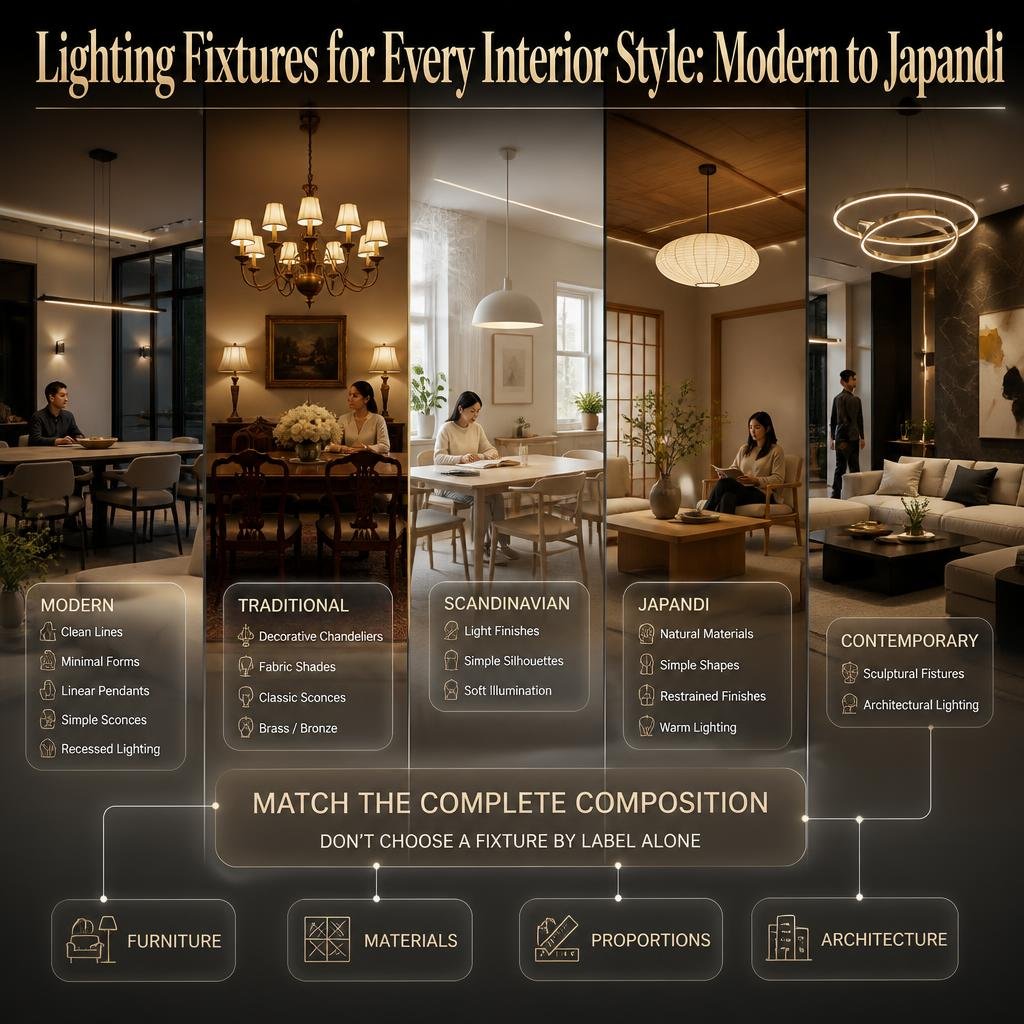
Modern Interiors
Modern spaces often benefit from:
- Matte cabinetry
- Natural wood
- Large-format stone
- Minimal hardware
- Glass
- Black or brushed metal
The goal is usually clean lines with enough texture to prevent the room from feeling sterile.
Scandinavian Interiors
Scandinavian-inspired rooms often use light woods, soft textiles, pale colors, and subtle finishes.
The focus is on simplicity and comfort rather than visual drama.
Natural materials and soft lighting help maintain the relaxed character associated with the style.
Japandi Interiors
Japandi interiors can benefit from:
- Natural timber
- Matte surfaces
- Stone
- Clay-like textures
- Linen
- Subtle dark accents
The material palette should feel calm and purposeful.
You can explore more style-specific inspiration through the site’s interior design styles resources.
Luxury Contemporary Interiors
Luxury contemporary rooms may introduce:
- Marble
- Polished stone
- Brushed metal
- Rich wood
- Glass
- Sculptural lighting
The trick is restraint.
Luxury doesn’t require every surface to be dramatic. In fact, contrast between quiet and statement finishes often creates a more sophisticated result.
How Do You Choose Refined Finishes Room by Room?

Different rooms require different priorities.
Living Room Finishes
Living rooms should balance comfort, durability, and visual interest.
Good combinations include:
- Matte walls
- Natural wood
- Soft upholstery
- Textured rugs
- Stone or wood tables
- Brushed metal lighting
Because the living room is often the most visible social space, finish coordination matters greatly.
If you’re working on the broader styling of this space, ideas related to room-by-room design can help connect finish selection with furniture, lighting, and layout.
Kitchen Finishes
Kitchens require especially careful material selection because surfaces experience moisture, heat, grease, fingerprints, and frequent cleaning.
Consider:
- Cabinet finish
- Countertop texture
- Backsplash
- Flooring
- Hardware
- Appliance finish
A refined kitchen doesn’t need every component to match.
A matte cabinet paired with a subtly veined stone countertop and brushed metal hardware can create enough variation without looking chaotic.
Bathroom Finishes
Bathrooms contain many hard surfaces, making texture especially valuable.
Consider combining:
- Honed stone
- Textured tile
- Brushed metal
- Fluted glass
- Matte cabinetry
- Warm wood accents
Avoid selecting every surface from a different visual family.
A bathroom may contain several materials, but they should share a common color or tonal relationship.
Bedroom Finishes
Bedrooms usually benefit from softer, quieter materials.
Natural wood, fabric, matte paint, upholstered furniture, and warm metals can create a calm environment.
Highly reflective surfaces should be used selectively.
The bedroom should feel comfortable rather than like a showroom.
Entryway
The entryway is a small area with a big psychological impact.
A refined entry can use:
- Durable flooring
- A textured wall
- A simple console
- A statement mirror
- Carefully selected hardware
- Warm lighting
Because the space is often compact, avoid introducing too many different finishes.
How Can Refined Finishes Make a Small Room Feel Better?
Small rooms don’t necessarily need fewer materials. They need better control.
Too many contrasting surfaces can visually divide the room and make it feel smaller.
A better approach is to repeat important finishes.
For example, using the same flooring through a connected hallway and living room can visually extend the space.
You can then introduce variation through:
- Textiles
- Lighting
- Cabinetry
- Hardware
- Small stone elements
- Artwork
Reflective finishes can also help bounce light around a compact space, but don’t rely on gloss alone.
Mirrors, glass, pale colors, and good lighting can all contribute to a brighter appearance.
Can Refined Finishes Make an Affordable Interior Look More Expensive?
Yes, and this is where many homeowners misunderstand luxury design.
You don’t need expensive materials everywhere.
A room often looks more sophisticated when fewer materials are used but those materials are coordinated properly.
Instead of spending heavily on every surface, prioritize areas that people notice most.
Put more attention into:
- Flooring
- Kitchen and bathroom surfaces
- Main lighting
- Cabinet hardware
- Visible architectural details
- Frequently touched surfaces
- Material transitions
Then use simpler materials elsewhere.
A modest natural wood floor with well-selected hardware and good lighting can look more intentional than an expensive room containing five unrelated luxury materials.
The same principle applies to home improvement generally: solve the fundamentals first, then add decorative refinement. Useful practical ideas can be found in Home Improvement.
What Small Details Make Finishes Look More Refined?
Sometimes the biggest difference comes from details that homeowners barely notice consciously.
Consider:
- Straight tile alignment
- Clean grout lines
- Consistent cabinet gaps
- Properly finished edges
- Correct trim proportions
- Matching hardware scale
- Clean transitions between floors
- Carefully positioned lighting
- Consistent paint sheen
- Well-installed wall panels
These details communicate quality.
A premium material installed poorly will still look poorly finished.
A moderately priced material installed with precision can appear considerably more sophisticated.
⚠ Common Mistake: Spending most of the budget on materials while leaving too little for installation. The quality of execution can determine whether the material actually looks as good as it did in the showroom.
How Do You Select Finishes Step by Step?
Step 1: Study the Existing Room
Start with what cannot easily be changed.
Identify:
- Flooring
- Doors
- Windows
- Countertops
- Cabinetry
- Built-ins
- Architectural details
Why it matters: Permanent materials should influence new selections.
Professional advice: Don’t begin with decorative accessories.
Common mistake: Choosing paint or furniture before understanding the fixed materials.
Step 2: Decide How You Want the Room to Feel
Choose a simple direction.
Do you want:
- Calm?
- Warm?
- Elegant?
- Contemporary?
- Dramatic?
- Natural?
- Minimal?
This decision helps narrow the material palette.
Step 3: Choose the Dominant Material
Select the finish that occupies the greatest visual area.
This may be flooring, cabinetry, walls, or another major surface.
Step 4: Add Supporting Materials
Introduce two or three finishes that complement the dominant material.
Use contrast carefully.
Try:
- Smooth + textured
- Matte + reflective
- Warm + cool
- Light + dark
- Hard + soft
Step 5: Introduce Accents
Accent finishes should remain controlled.
A small amount of brass, bronze, dark metal, stone, or decorative glass can provide enough character.
Step 6: Test Physical Samples
This step is frequently skipped and causes expensive mistakes.
Place samples together.
Look at them:
- In daylight
- In evening light
- Beside existing furniture
- Against the actual wall
- Near flooring
- Beside hardware
📌 Quick Tip: Never approve a major finish from a tiny online photograph alone. Material samples reveal texture, undertone, reflectivity, and scale far more accurately.
Step 7: Check Maintenance
Ask how the material behaves after months of real use.
Consider:
- Cleaning
- Scratches
- Water
- Heat
- Stains
- Fingerprints
- Fading
- Repairs
The most beautiful finish isn’t useful if you’re constantly worried about damaging it.
What Are the Most Common Refined Finish Mistakes?
Mistake 1: Making Everything Match
Matching every material may seem safe, but it can produce a flat result.
Why it happens: Homeowners fear making the wrong combination.
Why it’s harmful: The room loses texture and hierarchy.
Better approach: Coordinate finishes rather than duplicating them.
Mistake 2: Using Too Many Finishes
The opposite problem is equally common.
Why it happens: Every material looks attractive individually.
Why it’s harmful: The room becomes visually fragmented.
Better approach: Select a dominant material and build supporting finishes around it.
Mistake 3: Making Everything Glossy
Gloss can create an instant impression of luxury.
Why it’s harmful: Too much reflection creates visual competition.
Better approach: Balance glossy surfaces with matte, honed, and textured materials.
Mistake 4: Ignoring Undertones
A warm wood next to a cool gray stone can look disconnected.
Better approach: Compare materials under the same lighting before ordering.
Mistake 5: Choosing Based Only on Appearance
A material may photograph beautifully but perform poorly in a busy home.
Better approach: Evaluate durability and maintenance before aesthetics alone.
Mistake 6: Forgetting Material Transitions
Two excellent finishes can look awkward where they meet.
Pay attention to:
- Floor transitions
- Tile corners
- Countertop edges
- Cabinet junctions
- Door thresholds
- Wall-panel edges
Mistake 7: Choosing Trends Over Longevity
Some finishes become fashionable quickly and dated just as quickly.
A refined interior doesn’t need to follow every trend.
Choose materials that you can comfortably live with for several years.
How Can DIY Projects Be Used Without Destroying a Refined Look?
Not every finish improvement requires a major renovation.
Small projects can make meaningful changes when they’re carefully selected.
For example:
- Repainting a dated surface
- Replacing cabinet hardware
- Refinishing selected furniture
- Installing simple wall panels
- Updating trim
- Improving lighting
- Adding a textured accent surface
However, DIY work should still respect the existing finish palette.
For practical project inspiration, DIY Home Projects can help when deciding which smaller improvements are realistic.
The key is knowing when to stop.
If a project requires specialist electrical, plumbing, structural, or stone installation work, professional help may be more appropriate.
How Do Lighting and Refined Finishes Work Together?
Lighting can completely change a finish.
A matte wall under soft natural light may look warm and calm.
Under cool artificial light, the same wall can appear flatter or slightly different in tone.
Glossy surfaces behave differently because they reflect their surroundings.
Textured surfaces create shadows.
Metal finishes change depending on the direction and color of light.
This is why lighting should be considered alongside finish selection.
A good interior usually combines:
- Ambient lighting
- Task lighting
- Accent lighting
This creates different levels of illumination and allows the finishes to reveal their texture.
A refined finish palette under poor lighting may not look refined at all.
How Do Garden and Outdoor Finishes Fit Into a Refined Home?
Refinement shouldn’t stop at the interior door.
If indoor and outdoor areas connect visually, repeating materials or colors can create continuity.
Outdoor spaces may use:
- Natural stone
- Timber
- Textured concrete
- Outdoor tile
- Metal
- Weather-resistant fabrics
The finishes need to handle weather exposure, moisture, sunlight, and temperature changes.
For homeowners working on connected outdoor areas, Garden Tips Decoradhouse can complement interior finish planning by extending the design thinking into exterior spaces.
How Do Home Upgrades Affect Refined Finishes?
Sometimes a finish looks wrong because the underlying element needs improvement.
For example, repainting a damaged wall won’t solve an underlying moisture problem.
Similarly, adding decorative panels to a poorly planned room doesn’t fix a bad layout.
This is why a refined design process starts with the basics.
Before upgrading surfaces, check:
- Electrical problems
- Leaks
- Wall cracks
- Poor ventilation
- Damaged flooring
- Uneven surfaces
- Structural concerns
- Poor lighting
Once the underlying issues are handled, finish improvements become much more effective.
For broader upgrading inspiration, Home Upgrading Mintpalment can be used alongside finish planning.
How Can Refined Finishes Support a More Modern Lifestyle?
Modern homes need to look good while supporting real routines.
A refined finish should therefore work with everyday behavior.
If a family frequently cooks, the kitchen should prioritize surfaces that can handle cleaning.
If children use a room daily, delicate materials may need to be limited.
If a home office receives strong afternoon sunlight, finishes should be considered alongside glare and heat.
Good design doesn’t ask people to live carefully just to protect the room.
It makes the room work naturally.
This is also where practical home ideas and current design thinking can be useful. Latest News DecoratorAdvice can provide another content path for homeowners exploring broader design and home-improvement subjects.
How Can Smart Home Features Work With Refined Finishes?
Technology can easily become visually distracting when devices, cables, and controls aren’t considered during design.
A refined interior benefits from discreet technology.
Think about:
- Concealed cables
- Integrated lighting controls
- Built-in charging
- Hidden speakers
- Minimal switch plates
- Smart blinds
- Integrated appliances
The objective isn’t to hide technology at all costs.
It’s to integrate it into the architecture so that it supports the room rather than competing with the material palette.
For additional home-idea inspiration, Blog Home Ideas TheHomeTrotters can be useful alongside a broader design plan.
How Can Existing Furniture Work With New Finishes?
You don’t always need to replace furniture when updating finishes.
Instead, identify what can remain.
A good sofa, dining table, chair, or cabinet can become part of the new design if the surrounding materials are selected carefully.
For example, an older walnut table may look completely different when surrounded by:
- Warm neutral walls
- New lighting
- A textured rug
- Coordinated chairs
- Subtle metal accents
This approach is often more sustainable and economical than replacing everything.
A refined interior isn’t necessarily a new interior.
It can be an existing space that has been edited intelligently.
How Do You Use Home Hacks Without Making the Design Look Cheap?
Useful design hacks should solve a real problem rather than simply add decoration.
Examples include:
- Using vertical storage
- Replacing bulky hardware
- Improving lighting
- Reorganizing visible shelves
- Repositioning furniture
- Adding concealed storage
- Updating tired surfaces
The best improvements usually make the room both more functional and more visually controlled.
For practical ideas that complement this approach, Home Hacks Decoradtech can be explored when planning smaller improvements.
How Should You Think About Trends When Choosing Finishes?
Trends can provide inspiration, but they shouldn’t control every material decision.
A finish may be fashionable today but difficult to live with long term.
Instead, separate trends into two categories.
Long-Term Materials
These usually include:
- Natural wood
- Stone
- Neutral paint
- Simple metal
- Quality tile
- Timeless textures
Easy-to-Change Trends
These can include:
- Decorative accessories
- Cushions
- Artwork
- Small accent colors
- Temporary décor
Keep major surfaces relatively timeless and use trends where they can be changed without major expense.
For homeowners who enjoy following broader home trends and updates, Latest News DecoratorAdvice – Design Updates can sit alongside a longer-term finish strategy.
Can You Design Your Own Refined Finish Palette?
Yes, especially when the project is cosmetic and you have a clear starting point.
Begin with three things:
One dominant material
Choose the surface that anchors the room.
Two supporting materials
Select materials that add contrast without competing.
One accent
Use a small amount of a distinctive metal, stone, color, or texture.
Then test everything together.
For homeowners extending their design thinking beyond interiors, Can I Design My Own Garden Kdagardenation can also be useful when outdoor areas are part of the wider project.
How Can You Connect Refined Finishes Across the Whole Home?
A home feels cohesive when certain materials or characteristics repeat.
You don’t need the same finish in every room.
Instead, repeat a visual idea.
For example:
- Warm wood in the living room
- Warm wood cabinetry in the kitchen
- Warm wood accents in the bedroom
Or:
- Brushed bronze lighting
- Brushed bronze cabinet handles
- Brushed bronze bathroom accessories
This creates continuity without making every room identical.
The same principle can be applied to color, texture, hardware, flooring, and lighting.
How Do Refined Finishes Support Personalized Spaces?
A refined interior shouldn’t feel like a showroom.
Your personality should still be visible.
Personalization can come through:
- Artwork
- Books
- Collected objects
- Family pieces
- Handmade items
- Vintage furniture
- Travel finds
- Meaningful photographs
The finish palette provides the background.
Personal objects provide the story.
This combination is usually more convincing than buying an entire room from one furniture collection.
A sophisticated home should look like someone lives there—not like nobody is allowed to touch anything.
What Do Professionals Check Before Approving a Finish?
Before final approval, professionals generally look beyond the sample itself.
They consider:
Color
Does it work with the existing palette?
Undertone
Is it warm, cool, neutral, yellow, pink, gray, or another direction?
Sheen
Does it reflect too much or too little light?
Texture
Does it add useful depth?
Scale
Will the pattern or grain look appropriate across a large surface?
Maintenance
Can the homeowner realistically care for it?
Durability
Will it survive the room’s use?
Installation
Can the material be installed cleanly?
Longevity
Will the homeowner still like it after trends change?
This process prevents many expensive mistakes.
Refined Finishes: A Practical Decision Table
| If Your Room Feels… | Consider Adding… | Avoid Overusing… |
|---|---|---|
| Flat | Texture and subtle sheen | Too many glossy surfaces |
| Cold | Natural wood and warm metals | Excessive cool gray |
| Busy | Matte surfaces and simpler materials | More patterns |
| Dark | Light-toned finishes and controlled reflection | Heavy dark materials everywhere |
| Sterile | Natural textures and warm materials | More white gloss |
| Disconnected | Repeated materials or tones | Completely unrelated finishes |
| Too Formal | Soft textiles and matte textures | More polished surfaces |
| Too Rustic | Cleaner metal and refined stone | Excessive distressed finishes |
What Are the Biggest Signs That a Finish Palette Is Working?
A successful finish palette doesn’t necessarily attract immediate attention.
Instead, the room feels balanced.
You may notice that:
- Materials transition naturally
- Nothing looks randomly selected
- The lighting feels appropriate
- Textures create depth
- Colors feel connected
- Furniture belongs in the space
- Surfaces don’t compete
- The room feels comfortable
- Maintenance seems realistic
- The design still feels personal
That is often the real meaning of refinement.
The finish isn’t supposed to become the entire room.
It is supposed to make the room work better as a whole.
What Are Refined Finishes in Interior Design
Refined finishes are carefully selected materials, textures, colors, and surface treatments that give an interior a polished, cohesive, and thoughtfully designed appearance. They can include matte or satin paint, natural wood, honed stone, brushed metal, textured plaster, glass, tile, cabinetry, and other architectural surfaces. The key is not how expensive a finish is, but how well it works with the room’s lighting, colors, furniture, architecture, and everyday use.
A refined interior usually doesn’t rely on one dramatic material. Instead, several finishes are layered so that each one has a clear purpose. For example, matte walls can provide a quiet background, natural oak can add warmth, honed stone can introduce depth, and brushed brass can provide a controlled accent.
Important points to consider:
Refinement comes from coordination rather than price alone.
Matte, textured, and natural surfaces can look sophisticated without being flashy.
Materials should complement one another instead of competing for attention.
Installation quality is just as important as material selection.
The finish should suit the way the room is actually used.
This approach is particularly relevant to current interior design, where tactile materials, natural stone, warm woods, and softer metal finishes are receiving strong attention.
Which Interior Finishes Are Trending in 2026?
The strongest 2026 finish direction is toward tactile, natural, warm, and visually authentic materials rather than relying on perfectly uniform or highly reflective surfaces. Current design sources are highlighting natural stone, warm woods, fluted or textured wood, brushed and patinated metals, matte surfaces, artisanal materials, and layered textures.
Natural stone such as travertine, limestone, marble, quartzite, and other stone-inspired surfaces can add visual depth. Warm oak and walnut bring natural grain into cabinetry, furniture, flooring, and wall applications. Brushed brass, bronze, and other softer metals can provide definition without creating the strong reflection associated with highly polished finishes.
Another important direction is material authenticity. Instead of making every surface perfectly smooth and identical, designers are increasingly using finishes that reveal texture, grain, variation, and craftsmanship.
For a practical 2026 finish palette, consider:
Warm natural wood
Honed or matte stone
Limewash or subtly textured walls
Brushed brass or bronze
Fluted or reeded wood
Textured glass
Handmade or slightly irregular tile
Natural linen and other tactile textiles
The important point is not to use every trend at once. Choose the finishes that suit your home’s architecture and use them selectively.
Is Matte or Glossy Finish Better for a Sophisticated Interior?
Neither finish is automatically better. Matte and glossy surfaces create different visual effects, and the right choice depends on the room, lighting, material, and desired atmosphere. Matte finishes absorb more light and generally create a softer, calmer appearance, while glossy surfaces reflect light and can make selected areas feel brighter and more dramatic.
For example, matte cabinetry can create a contemporary and understated kitchen, particularly when combined with natural wood and textured stone. A polished stone island, on the other hand, can become a focal point because its surface catches and reflects light.
The mistake is assuming that a luxury interior needs glossy finishes everywhere. Current material trends are actually placing considerable emphasis on matte, honed, and tactile surfaces, while polished finishes remain useful when a stronger visual statement is wanted.
A professional approach is to create contrast:
Matte walls + subtle satin cabinetry
Honed stone + brushed metal
Natural wood + polished accent
Textured plaster + smooth glass
Soft textiles + harder architectural surfaces
This creates visual hierarchy. One finish becomes the focal point while the others support it.
Quick rule: If everything is glossy, the room can become visually harsh. If everything is completely flat and matte, it may lack variation. Controlled contrast usually produces a more sophisticated result.
How Do You Mix Different Finishes Without Making a Room Look Busy?
The most effective way to mix finishes is to create a relationship between them rather than trying to make everything match. A room can successfully combine wood, stone, metal, glass, paint, and textiles when they share a common color family, undertone, texture, or visual character.
Start by choosing one dominant material. This could be your flooring, cabinetry, wall treatment, or another large architectural surface. Then introduce two or three supporting finishes and use a smaller amount of a distinctive accent.
For example:
Warm oak flooring
→ Soft matte walls
→ Honed limestone
→ Brushed bronze hardware
→ Linen upholstery
These materials are different, but they have a calm and warm relationship.
Another successful approach is to contrast textures instead of adding more colors. A smooth stone surface can be paired with rougher wood grain, soft fabric, and lightly textured walls. This creates depth without making the room feel visually crowded.
Use these professional checks before finalizing the palette:
Compare all major samples together.
Check their undertones in natural light.
Look at them under the room’s artificial lighting.
Identify which material is visually dominant.
Keep accent finishes limited.
Repeat one or two materials in different areas.
Avoid introducing a new finish simply because it looks attractive by itself.
Current 2026 material guidance also emphasizes layering wood, stone, metal, and textiles rather than creating single-material rooms.
The goal isn’t perfect matching. The goal is visual conversation between materials.
How Can You Make a Home Look More Luxurious With Refined Finishes Without Spending Too Much?
A luxurious-looking interior doesn’t require premium materials on every surface. In many cases, the biggest improvement comes from better coordination, cleaner detailing, and selective investment.
Instead of upgrading everything, concentrate your budget on the surfaces people notice and interact with most. Flooring, kitchen countertops, bathroom surfaces, lighting, cabinet hardware, and major architectural details usually deserve more attention than small decorative items.
For example, a relatively simple kitchen can feel considerably more sophisticated when it combines well-proportioned matte cabinetry, a carefully selected stone countertop, consistent hardware, warm lighting, and clean installation.
The same principle works in a living room. You might keep an existing sofa while improving the room through better lighting, a natural-texture rug, a refined coffee table surface, coordinated hardware, and a more cohesive wall finish.
To create a refined look on a realistic budget:
Spend more on a few high-impact surfaces.
Keep large permanent finishes relatively timeless.
Use natural textures where they provide the most visual value.
Upgrade hardware before replacing perfectly good cabinetry.
Improve lighting so materials are shown properly.
Choose fewer finishes but coordinate them carefully.
Prioritize installation quality.
Use décor and accessories for trend-led changes.
Current 2026 design guidance increasingly emphasizes materials that feel authentic, tactile, and capable of aging well rather than simply looking expensive when new.
The professional mindset is simple: don’t ask, “What is the most expensive finish I can buy?” Ask, “Which finish will make the biggest difference to this particular room?”
That shift usually produces a more balanced and believable result.
Conclusion
Refined finishes are what turn a collection of attractive materials into a complete and intentional interior. The goal isn’t to make every surface glossy, expensive, or perfectly matched. It’s about choosing finishes that work together through color, texture, tone, reflection, proportion, and practical use.
Start with the permanent elements of your space, then build a controlled palette around them. Combine matte with subtle sheen, natural wood with stone, soft textures with harder surfaces, and understated metals with carefully chosen focal details. Most importantly, test materials in your actual lighting and consider how they will perform in everyday life.
A sophisticated interior doesn’t need dozens of finishes. It needs the right finishes, used with restraint and installed with care. When materials complement one another and every surface has a clear purpose, even a simple room can feel polished, comfortable, timeless, and genuinely personal.
The best approach is to design for both appearance and real life. Choose finishes that you’ll enjoy looking at today, but that will also remain practical and appealing as your home evolves.

Leave a Reply