
Introduction
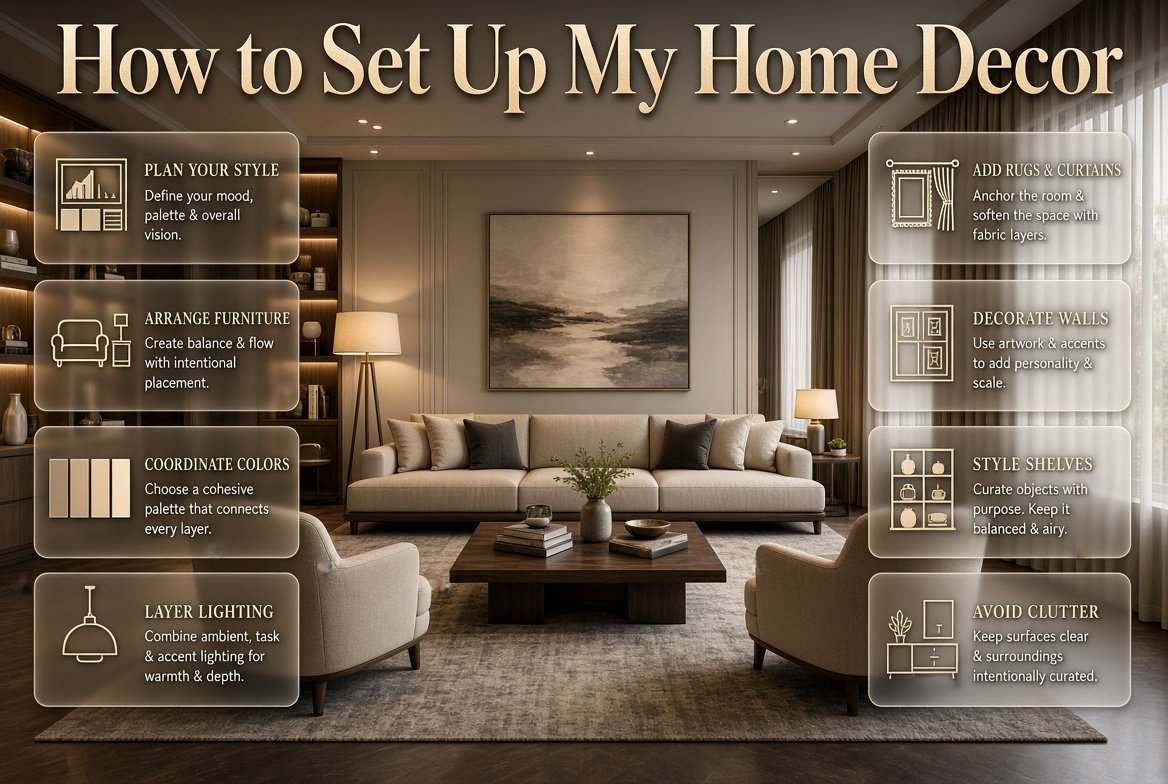
How to Set Up My Home Decoradtech | You can have a beautiful sofa, expensive curtains, attractive wall art, and plenty of decorative accessories, yet your home can still feel unfinished. Maybe the furniture doesn’t seem to sit together properly. Perhaps the walls look too empty, the room feels crowded, or everything looks like it was purchased separately without a clear plan.
That’s why so many homeowners eventually ask, “How to Set Up My Home Decoradtech?”
The answer isn’t simply to buy more decorations. Good home decor starts with understanding your space, deciding how you want it to feel, creating a practical layout, choosing a coordinated color palette, and then adding decorative layers gradually.
Whether you’re decorating a new house, refreshing an apartment, or simply trying to make one room feel more polished, this guide will walk you through the process from beginning to end. You’ll learn how to plan your style, arrange furniture, choose colors, use lighting, select rugs and curtains, decorate walls, style shelves, avoid common mistakes, and create a home that feels comfortable rather than staged.
For broader inspiration and practical interior ideas, you can also explore designmode24 interior design while developing your overall decorating direction.
What Is the Best Way to Set Up Home Decor?
The best way to set up home decor is to work from the largest decisions to the smallest details. Start with the room’s purpose, measure the space, create a furniture layout, choose a color direction, establish lighting, and then add rugs, curtains, artwork, plants, and accessories.
A simple decorating sequence looks like this:
Purpose → Measurements → Layout → Color → Furniture → Lighting → Textiles → Artwork → Accessories → Editing
This order matters because every decision affects the next one.
If you buy decorative accessories first, you may later discover that the colors don’t work with your furniture. If you choose a rug before measuring the seating area, it may be too small. If you hang artwork before deciding the furniture arrangement, it may end up at the wrong height.
A successful interior isn’t created by buying individual beautiful things. It’s created by making those things work together.
How Should You Start Decorating Your Home?
Start by deciding what each room needs to accomplish and how you want it to feel. Before shopping, identify the room’s function, existing furniture, available space, natural light, storage needs, and preferred design style.
This first step sounds simple, but it’s where many decorating projects go wrong.
Imagine you’re decorating a living room. You may want it to look sophisticated, but if your family watches television there every evening, entertains guests regularly, and needs space for children or pets, appearance cannot be the only priority.
The room needs to work for real life.
Ask These Questions Before You Start
Before moving a single piece of furniture, ask:
- What is this room primarily used for?
- Who uses it most?
- What furniture must stay?
- What furniture can be removed?
- Where does natural light enter?
- What do I want people to notice first?
- Do I need additional storage?
- Which colors do I already have?
- What feels wrong about the room now?
- What feeling do I want after decorating?
Your answers will give you a practical starting point.
Define the Mood
Choose three or four words that describe the atmosphere you want.
For example:
Warm + calm + elegant + natural
or:
Modern + bright + clean + sophisticated
These words become your design filter.
When you’re shopping later, ask whether an item supports that feeling. If it doesn’t, you probably don’t need it.
💡 Pro Tip: Don’t begin by asking, “What decorations should I buy?” Begin by asking, “What do I want this room to feel like?” The second question leads to much better decorating decisions.
Mark Cuban house
Celebrity homes offer more than a glimpse into luxury living—they reveal how successful homeowners combine comfort, personality, technology, and sophisticated design. From impressive entertainment spaces to carefully planned interiors, these residences can provide valuable inspiration for creating a home that feels both elegant and personal. One interesting example is Mark Cuban House, which reflects how modern luxury can be shaped around lifestyle, functionality, and personal taste.
How Do You Choose a Home Decor Style?
Choose a home decor style by studying the colors, materials, furniture shapes, textures, and overall atmosphere you naturally prefer. You don’t need to follow one style perfectly; combining compatible influences often creates a more personal and comfortable home.
Popular interior styles include:
| Style | Typical Features | Overall Feeling |
|---|---|---|
| Modern | Clean lines, simple forms | Sleek |
| Minimalist | Less clutter, restrained decor | Calm |
| Scandinavian | Light colors, wood, soft textiles | Airy |
| Japandi | Natural materials, simplicity | Peaceful |
| Traditional | Classic furniture and details | Timeless |
| Industrial | Metal, wood, exposed textures | Urban |
| Transitional | Traditional + modern elements | Refined |
| Bohemian | Patterns, textiles, collected objects | Relaxed |
You don’t have to choose one label and follow it rigidly.
A transitional living room, for example, can combine a classic sofa with modern lighting, contemporary artwork, natural wood, and simple accessories. The result can feel more sophisticated than a room where every item comes from the same design style.
Create an Inspiration Collection
Collect five to ten room images that you genuinely like.
Then look for similarities.
Do you repeatedly choose rooms with:
- Warm white walls?
- Beige furniture?
- Dark wood?
- Black lighting?
- Green plants?
- Large artwork?
- Soft fabrics?
- Minimal accessories?
Those repeated characteristics reveal your real preferences.
This is more reliable than choosing a style simply because it’s trending.
How Do You Measure a Room Before Decorating?
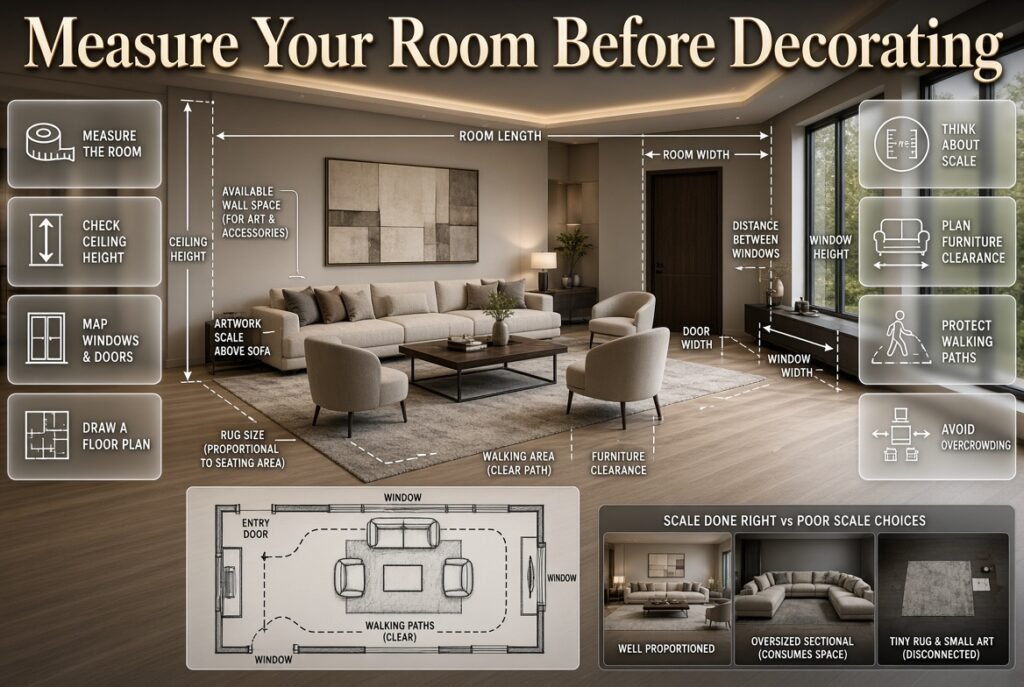
Measure the room’s walls, ceiling height, windows, doors, furniture, and walking areas before purchasing major decor. Correct measurements help you choose furniture, rugs, curtains, mirrors, and artwork that fit the space instead of overwhelming it.
Take measurements of:
- Overall room length
- Overall room width
- Ceiling height
- Door width
- Window width and height
- Distance between windows
- Existing furniture
- Available wall space
- Walking paths
Create a basic floor plan on paper.
You don’t need architectural software. Even a rough drawing can prevent expensive mistakes.
Why Scale Matters
Scale is one of the biggest differences between amateur and professional-looking interiors.
A huge sectional in a small room may consume too much visual and physical space.
A tiny rug under a large seating arrangement may make the furniture appear disconnected.
A small artwork over a large sofa may look insignificant.
The problem isn’t necessarily the individual item. The problem is the relationship between the item and the room.
Think About Clearance
Furniture should allow people to move naturally.
Don’t place a coffee table so close to the sofa that people struggle to stand up. Don’t position a cabinet where doors cannot open fully. Don’t block windows unnecessarily.
A room should look attractive and function comfortably.
How Do You Plan a Furniture Layout?
Plan furniture around the room’s focal point and the way people actually move through the space. Start with the largest piece, such as a sofa, bed, or dining table, then position secondary furniture around it while keeping comfortable circulation paths.
Start With the Largest Piece
In a living room, this is often the sofa.
In a bedroom, it’s the bed.
In a dining room, it’s the dining table.
Place that piece first.
Then consider:
- Chairs
- Side tables
- Coffee tables
- Cabinets
- Storage
- Lamps
Don’t automatically push everything against the walls.
Sometimes floating furniture slightly away from the wall creates a more intimate and balanced arrangement.
Create Conversation Areas
In a living room, seating should encourage interaction.
If two chairs face a sofa across a coffee table, the arrangement naturally creates a conversation zone.
If every seat faces a television from a different direction, the room may become functional but less socially comfortable.
Think about how people use the room, not just how the furniture looks from the doorway.
How Do You Choose a Color Scheme for Home Decor?
Choose one dominant color, one or two supporting colors, and a small number of accent shades. The palette should work with your flooring, furniture, natural light, and architectural features rather than being chosen in isolation.
A practical palette might look like:
Warm white → Beige → Natural wood → Charcoal accent
Or:
Soft gray → Cream → Walnut → Muted green
The goal isn’t to eliminate color. It’s to control it.
For more inspiration, ideas, and guidance around choosing colors for different spaces, explore the Paint Color section.
Consider Natural Light
The same paint color can appear very different depending on the room.
North-facing rooms may feel cooler.
Rooms with strong southern or western light can make colors appear warmer or brighter.
Artificial lighting also affects color at night.
That’s why paint samples should ideally be viewed at different times of day.
Should Every Room Use the Same Colors?
No.
Your home should feel connected, but every room doesn’t need to use identical colors.
You can create continuity by repeating:
- Wood tones
- Metal finishes
- Accent colors
- Neutral shades
- Textile colors
For example, if your living room uses muted green accents, you could repeat a smaller amount of green in the hallway or bedroom.
This creates connection without making every room look identical.
How Do You Create a Focal Point?
Create a focal point by choosing one feature that naturally attracts attention and arranging the surrounding furniture and decor to support it. Common focal points include fireplaces, large windows, artwork, accent walls, statement lighting, or architectural details.
Without a focal point, a room can feel visually confused.
The eye doesn’t know where to settle.
Common Focal Points
A focal point can be:
- Fireplace
- Large artwork
- Television wall
- Statement chandelier
- Architectural feature
- Accent wall
- Large mirror
- Beautiful outdoor view
- Decorative headboard
You don’t need multiple dramatic features.
If you already have a large piece of artwork, you may not need a heavily decorated feature wall behind it.
⭐ Expert Tip: Give every room a “hero” element, but don’t let every object compete for attention. Sophisticated rooms usually have clear visual hierarchy.
How Important Is Lighting in Home Decor?
Lighting is essential because it affects both function and atmosphere. A room with beautiful furniture can still feel flat if it relies on one harsh ceiling light. Layering ambient, task, and accent lighting creates depth and allows the room to change mood throughout the day.
1. Ambient Lighting
This provides general illumination.
Examples include:
- Ceiling fixtures
- Recessed lights
- Chandeliers
- Flush-mount fixtures
2. Task Lighting
This provides focused light for activities.
Examples include:
- Reading lamps
- Desk lamps
- Bedside lamps
- Kitchen task lighting
3. Accent Lighting
This highlights specific features.
Examples include:
- Picture lights
- Wall sconces
- Cabinet lighting
- Decorative lamps
A combination of these layers makes a room feel more intentional.
Use Warm Lighting for Relaxed Spaces
Bedrooms and living rooms often benefit from warmer, softer illumination.
Workspaces and task areas may need brighter, more functional light.
The exact choice depends on the activity and atmosphere you’re trying to create.
How Do You Choose the Right Rug?
Choose a rug according to the entire furniture arrangement rather than the empty floor area. In a living room, the rug should ideally help visually connect the main seating pieces instead of appearing like a small island beneath the coffee table.
Before buying a rug, measure:
- Sofa width
- Seating arrangement
- Coffee table
- Available floor area
A rug that’s too small can make the room feel fragmented.
A very large rug can also become impractical if it interferes with doors or furniture.
Rug Checklist
Look for:
- Appropriate scale
- Suitable texture
- Easy maintenance
- Compatible colors
- Comfortable material
- Correct placement
A patterned rug can become a focal point.
A neutral rug can quietly support stronger artwork or furniture.
How Do Curtains Change a Room?
Curtains add softness, privacy, texture, and visual height. Hanging the curtain rod slightly higher and wider than the window can often make the window appear larger and the ceiling feel taller, as long as the architecture allows it.
Curtain selection should consider:
- Fabric weight
- Color
- Pattern
- Length
- Privacy
- Natural light
For a calm interior, linen-look or softly textured curtains can add warmth.
For a more formal room, heavier fabrics may create a richer appearance.
Avoid choosing curtains based solely on their color. Their texture and length can have an equally important visual effect.
How Do You Decorate Empty Walls?
Decorate empty walls according to their size, location, and relationship to nearby furniture. Instead of filling every blank wall, choose artwork, mirrors, shelving, or architectural treatments that support the room’s overall composition.
Large Walls
Consider:
- Oversized artwork
- Gallery wall
- Large mirror
- Console arrangement
- Decorative wall panels
Small Walls
Consider:
- One medium artwork
- Small mirror
- Pair of framed pieces
- Compact shelving
Artwork Placement
Artwork should relate to the furniture below it.
A very small picture floating above a large sofa can look disconnected.
A larger artwork or carefully arranged group often works better.
Don’t forget viewing height.
Art that’s hung too high can make furniture and walls feel disconnected.
How Do You Use Mirrors in Home Decor?
Use mirrors to reflect light, create visual depth, or make a room feel more spacious. Their placement matters more than simply owning a decorative mirror, because a mirror also reflects whatever is opposite it.
Before hanging one, ask:
“What will this mirror reflect?”
A mirror reflecting a window, artwork, or attractive architectural feature can improve the room.
A mirror reflecting clutter may make the room feel even busier.
Good Places for Mirrors
- Entryway
- Dining room
- Bedroom
- Narrow hallway
- Small living room
Use oversized mirrors carefully. They can be powerful design elements but may dominate smaller rooms.
How Do You Add Texture to a Room?
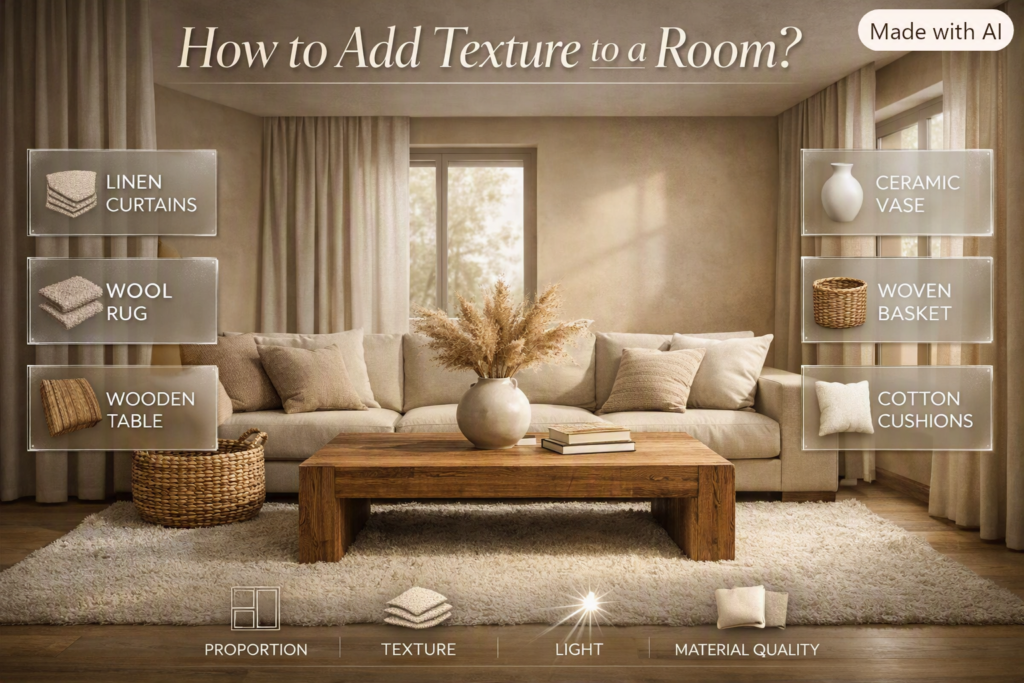
Add texture by combining materials that feel different visually and physically. Mixing wood, linen, wool, ceramic, glass, metal, woven materials, and natural fibers can make a neutral room feel rich without requiring many colors.
Imagine a beige living room containing:
- Linen curtains
- Wool rug
- Wooden coffee table
- Ceramic vase
- Woven basket
- Soft cotton cushions
The colors may be simple, but the room won’t feel flat because the textures create variation.
Texture Is Especially Important in Neutral Rooms
When a room uses mostly white, beige, cream, gray, or taupe, texture becomes one of the main sources of visual interest.
This is one reason minimalist interiors can still feel luxurious.
The sophistication comes from proportion, texture, light, and material quality rather than excessive decoration.
How Do You Add Plants Without Overdoing It?
Use plants strategically to introduce natural color, texture, and softness. One large plant can fill an empty corner effectively, while smaller plants can add life to shelves, side tables, kitchens, or windowsills.
Consider the room’s natural light before choosing a plant.
Think about:
- Light requirements
- Maintenance
- Pot size
- Mature plant size
- Placement
Avoid filling every available corner with plants.
A few well-positioned plants usually create a more polished appearance than dozens of small pots.
How Should You Decorate Shelves and Tables?
Style shelves and tables using a mixture of heights, shapes, textures, and functional objects. Grouping items into small visual arrangements usually looks more intentional than spreading individual decorations evenly across every surface.
A simple shelf arrangement might include:
Tall vase + framed artwork + books + ceramic object + small plant
Another could be:
Sculptural object + stacked books + candle + low bowl
The important point is variation.
Use the Rule of Negative Space
Don’t fill every gap.
Empty space gives decorative objects room to breathe.
If every inch of a shelf is occupied, nothing feels important.
Remove one or two pieces and see whether the arrangement improves.
Very often, it will.
How Do You Make Home Decor Feel Personal?
Make your home personal by displaying objects that have meaning rather than relying entirely on mass-produced decorations. Family photographs, books, travel pieces, handmade objects, artwork, vintage finds, and collections can give an interior character.
Your home should tell people something about the people who live there.
That doesn’t mean every personal item needs to be displayed.
Choose the pieces that contribute to the room.
A collection can be displayed together instead of scattered throughout the house.
A family photograph may look better in a simple frame than surrounded by dozens of other frames.
Personal doesn’t have to mean cluttered.
How Do You Decorate Different Rooms?
Each room should have its own function while still feeling connected to the overall home. The best approach is to create a consistent design language while allowing individual spaces to have different priorities.
For more room-specific planning ideas, the Room-by-Room Design Hub is a useful resource.
Living Room
Focus on:
- Seating
- Focal point
- Rug
- Coffee table
- Lighting
- Artwork
- Accessories
The living room usually benefits from a combination of comfort and visual balance.
Don’t sacrifice comfortable seating simply because a particular sofa looks fashionable.
Bedroom
Focus on:
- Bed placement
- Bedding
- Bedside tables
- Lighting
- Curtains
- Rug
- Artwork
- Storage
A bedroom should feel restful.
Avoid making it visually noisy with too many patterns or decorative objects.
Dining Room
Focus on:
- Table size
- Chair comfort
- Lighting
- Circulation
- Centerpiece
- Wall decor
The light fixture above the dining table can become a major design feature.
Entryway
The entryway creates the first impression.
Consider:
- Mirror
- Console
- Storage
- Lighting
- Artwork
- Small decorative object
But remember that entryways are functional areas.
Don’t place decor where it blocks movement.
How Can You Make a Home Look More Expensive?
A home can look refined without being filled with expensive products. Professional-looking interiors usually depend on proportion, restraint, lighting, material coordination, and thoughtful placement more than price alone.
Focus your attention on:
- Correct furniture scale
- Quality-looking fabrics
- Layered lighting
- Large-scale artwork
- Coordinated materials
- Clean surfaces
- Natural textures
- Consistent finishes
Avoid trying to make a room look luxurious by simply adding gold accessories, shiny surfaces, or oversized decorative pieces.
Luxury is often communicated through restraint.
For example, one beautiful sculptural lamp may have more impact than six inexpensive lamps competing for attention.
How Can You Decorate Your Home on a Budget?
Decorate on a budget by improving the things you already own before buying new ones. Rearranging furniture, removing clutter, changing artwork placement, improving lighting, and restyling shelves can create noticeable changes without major spending.
Start with free changes:
- Rearrange furniture
- Remove unused pieces
- Declutter shelves
- Move artwork
- Reposition lamps
- Open curtains
- Remove visual clutter
Then consider inexpensive upgrades:
- Cushion covers
- Throws
- Plants
- Small lamps
- Mirrors
- Artwork
- Hardware
- Decorative baskets
For more practical low-cost ideas, explore Easy Decorating Tips for Every Budget.
Where Should You Spend More?
If your budget is limited, prioritize things you use every day.
For example:
Higher priority: mattress, sofa, dining chairs, main lighting
Lower priority: small accessories, seasonal decorations, minor decorative objects
A comfortable sofa that lasts years is usually a better investment than buying dozens of decorative pieces that you may replace next year.
How Can DIY Projects Improve Home Decor?
DIY projects can personalize a room, solve small functional problems, and refresh existing furniture without requiring a complete redesign. Simple projects such as painting furniture, creating artwork, updating hardware, or building basic storage can have a strong visual impact.
For ideas and hands-on inspiration, explore DIY Home Projects.
Good Beginner DIY Projects
Try:
- Painting a small side table
- Updating cabinet handles
- Creating simple framed artwork
- Restyling a bookshelf
- Making decorative storage
- Refreshing an old mirror frame
Don’t start with a complicated renovation if you’re new to DIY.
Choose projects where mistakes are inexpensive and reversible.
📌 Quick Tip: Before starting a DIY project, calculate the cost of materials, tools, and your time. A project is only budget-friendly if it actually saves money or provides enough value.
How Do You Create a Beautiful Interior Without Making It Feel Fake?
Create a beautiful interior by balancing polished design decisions with practical and personal details. A home should look considered, but it shouldn’t feel like nobody actually lives there.
This balance is important.
A perfectly styled coffee table may look attractive in a photograph, but if your family uses it every evening, the arrangement needs to be practical.
A decorative tray can help.
So can a storage basket.
The goal is not perfection.
The goal is a home that looks good while supporting everyday life.
For additional visual inspiration, browse Beautiful Interior ideas and look at how furniture, lighting, colors, and accessories work together.
What Can You Learn From High-End and Celebrity Interiors?
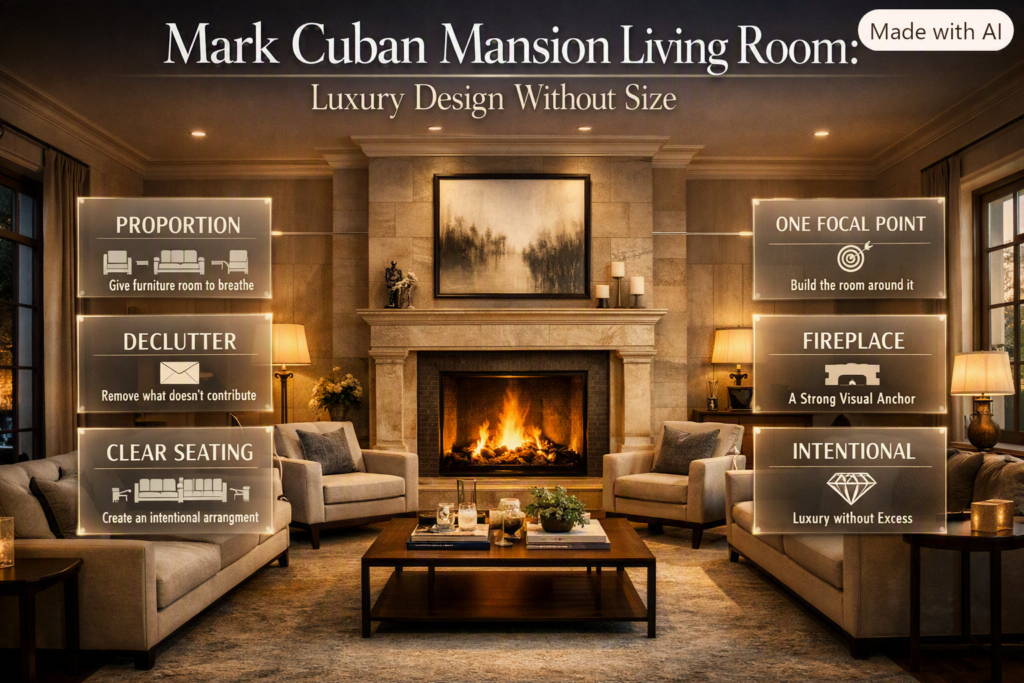
High-end homes can offer useful lessons about proportion, focal points, material selection, and spatial planning, but they shouldn’t be copied literally. Large celebrity homes often have different dimensions, budgets, architectural features, and lifestyle requirements than ordinary homes.
For example, a dramatic oversized artwork may work beautifully in a huge living room but overwhelm a compact apartment.
The useful lesson isn’t:
“Buy what celebrities buy.”
It’s:
“Understand why the design works.”
Look at:
- Furniture proportions
- Lighting
- Material combinations
- Spatial organization
- Color relationships
- Architectural details
For an example of analyzing a high-profile residence from a design perspective, see the Mark Cuban house article.
How Should You Think About Furniture for Special Spaces?
Furniture should always match the needs of the people using the space. This becomes especially important in environments designed for children, hospitality, entertainment, or other specialized purposes.
For example, children’s furniture needs to consider:
- Safety
- Durability
- Easy cleaning
- Rounded edges
- Appropriate proportions
- Visual appeal
These principles can also influence home decorating decisions.
Even in an ordinary family home, furniture should be chosen according to real use rather than appearance alone.
For ideas around child-focused furniture and practical design considerations, see Children’s Hotel Furniture.
What Are the Most Common Home Decor Mistakes?
The most common mistakes are buying furniture without measuring, using too many unrelated colors, choosing rugs that are too small, relying on one light source, filling every surface with accessories, and prioritizing trends over everyday function.
Mistake 1: Buying Before Planning
You see a beautiful chair and immediately buy it.
Later, you discover there’s nowhere suitable to put it.
Solution: Measure first.
Mistake 2: Using Too Many Colors
Every accessory introduces another color.
The room becomes visually chaotic.
Solution: Establish a controlled palette.
Mistake 3: Choosing Furniture That Is Too Large
Large furniture can quickly overwhelm a small room.
Solution: Measure both the room and the furniture.
Mistake 4: Buying a Tiny Rug
A small rug can make an otherwise good furniture arrangement feel disconnected.
Solution: Choose a rug based on the seating group.
Mistake 5: Hanging Artwork Too High
Artwork that is too high can visually separate the walls from the furniture.
Solution: Relate artwork placement to nearby furniture and eye level.
Mistake 6: Using Only Ceiling Lighting
One central light often creates harsh shadows and a flat atmosphere.
Solution: Layer lighting.
Mistake 7: Filling Every Surface
Empty space isn’t automatically a problem.
Solution: Let important objects breathe.
Mistake 8: Following Trends Too Literally
A trend may look beautiful online but may not suit your home.
Solution: Borrow ideas rather than copying complete rooms.
Mistake 9: Ignoring Function
A room that looks good but is uncomfortable will eventually frustrate you.
Solution: Test furniture arrangements based on real-life routines.
Mistake 10: Decorating Too Quickly
Trying to finish everything in one weekend often produces random purchases.
Solution: Decorate in stages.
What Do Interior Professionals Usually Do Differently?
Professionals typically spend more time planning proportion, circulation, lighting, and composition before adding decorative accessories. They also understand that every element has a visual weight and that a room needs hierarchy.
One of the most useful professional habits is editing.
After everything is placed, step back.
Ask:
- Is there too much furniture?
- Is the focal point obvious?
- Are colors balanced?
- Is the room comfortable?
- Are surfaces overcrowded?
- Is anything visually unnecessary?
- Does the room feel like one composition?
Then remove or reposition items.
Sometimes the best design improvement costs nothing.
Another Professional Habit: Repeat With Variation
If you use black metal in one area, repeat it elsewhere.
If you use warm wood in the living room, consider carrying that material into another room.
But don’t make everything identical.
Repetition creates cohesion.
Variation creates personality.
The combination is what makes an interior feel layered.
How Do You Set Up Home Decor Step by Step?
If you want a simple process you can follow this weekend, use the following sequence.
Step 1: Empty and Declutter
Remove unnecessary objects.
Don’t decorate around clutter.
Step 2: Measure the Room
Record dimensions and important architectural features.
Step 3: Define the Function
Decide exactly how the room will be used.
Step 4: Choose the Mood
Pick three or four words describing your desired atmosphere.
Step 5: Create a Color Palette
Choose dominant, supporting, and accent colors.
Step 6: Position Major Furniture
Start with the largest piece.
Step 7: Establish the Focal Point
Choose what should attract attention first.
Step 8: Add Lighting
Use ambient, task, and accent lighting.
Step 9: Add Rugs and Curtains
Use textiles to create softness and connection.
Step 10: Add Artwork
Choose pieces appropriate for the wall and furniture scale.
Step 11: Introduce Plants
Add natural elements where appropriate.
Step 12: Style Accessories
Use different heights, textures, and shapes.
Step 13: Add Personal Items
Bring in meaningful pieces.
Step 14: Edit
Remove anything unnecessary.
This sequence prevents you from decorating randomly.
How Do You Know When a Room Is Finished?
A room is finished when it feels balanced, functional, comfortable, and visually coherent rather than when every available surface contains something.
Walk around the room.
Look at it from:
- The doorway
- The sofa
- The hallway
- Different corners
- Standing height
- Sitting height
Check the room during both daytime and evening.
Natural light can reveal one set of problems.
Artificial lighting can reveal another.
Final Room Checklist
Ask yourself:
- Can I move comfortably?
- Does the furniture fit the room?
- Is there a clear focal point?
- Are the colors coordinated?
- Is the lighting flexible?
- Are the walls balanced?
- Are there too many accessories?
- Is there enough storage?
- Does the room feel personal?
- Would I actually enjoy spending time here?
If the answer is yes to most of these questions, you’re probably close.
What is the best way to start setting up my home decor?
The best way to start is not by buying decorations. Start by understanding the room itself. Look at its size, natural light, existing furniture, traffic flow, storage requirements, and the way you actually use the space. Once those basics are clear, you can choose a style, color palette, furniture arrangement, lighting, and decorative accessories with much more confidence.
A practical order is:
Measure the room before buying anything large.
Declutter items that no longer serve a purpose.
Decide the room’s function and daily requirements.
Choose a general design direction such as modern, warm minimalist, traditional, Japandi, or eclectic.
Arrange the main furniture before worrying about small accessories.
Add lighting, rugs, curtains, artwork, and textiles.
Finish with personal decorative pieces and then edit anything that feels unnecessary.
This approach prevents one of the most common decorating mistakes: buying attractive individual items that don’t work together once they’re inside the room. Designers continue to emphasize measuring, planning layouts, appropriate rug sizes, layered lighting, and functionality as foundations of a successful interior.
The biggest mindset shift is simple: decorate the space you actually live in, not an imaginary version of your lifestyle. A beautiful room that doesn’t provide enough seating, storage, lighting, or comfortable movement will eventually become frustrating.
How do I choose the right color scheme for my home decor?
Choose your color scheme by starting with the elements that are already difficult or expensive to change, such as flooring, major furniture, cabinetry, countertops, and architectural features. From there, select a dominant neutral or base color, supporting shades, and one or two accent colors. This creates a coordinated interior without making every room look identical.
A useful approach is to think in three layers:
Base color: walls, large furniture, or major surfaces
Supporting colors: curtains, rugs, upholstery, and secondary furniture
Accent colors: artwork, cushions, ceramics, plants, or smaller accessories
You don’t have to follow a strict 60-30-10 rule if it doesn’t suit your room. The more important principle is visual balance.
In 2026, warmer palettes, earthy colors, richer woods, and more characterful interiors are receiving significant attention. Browns, olive tones, clay shades, warm neutrals, and natural materials are being used to create rooms that feel comfortable rather than sterile.
Before committing to a wall color, test samples in the actual room. A shade that looks perfect under a showroom’s lighting can look completely different beside your flooring or furniture.
Professional tip: Don’t select paint in isolation. Put the sample beside your sofa fabric, flooring, curtains, and major wood tones. If all of those elements work together, your final color decision becomes much easier.
How can I make my home decor look expensive without spending too much?
A home looks expensive when the composition looks intentional, not necessarily when every item is expensive. Good proportions, appropriate furniture scale, layered lighting, quality-looking textiles, coordinated materials, large-scale artwork, and uncluttered surfaces can create a refined appearance without requiring a luxury budget.
Instead of buying lots of inexpensive decorations, concentrate your money and attention on a few high-impact areas:
Choose a rug that’s large enough for the furniture arrangement.
Use curtains that reach the floor where appropriate.
Upgrade lighting instead of relying on one harsh ceiling fixture.
Choose fewer but larger decorative pieces.
Introduce natural materials such as wood, stone, linen, ceramic, or woven textures.
Keep visible surfaces edited and organized.
Use artwork with enough scale for the wall.
Mix different furniture styles rather than creating a showroom-like matching set.
Current 2026 design direction is strongly moving toward interiors that feel personal, layered, authentic, and lived-in, with vintage pieces, natural materials, warm woods, expressive artwork, and individual character becoming more important.
The key is restraint. Five well-positioned pieces can look considerably more sophisticated than twenty small objects scattered around the room.
A simple rule: if an accessory doesn’t improve the color balance, texture, function, personality, or visual composition of the room, you probably don’t need it.
How do I arrange furniture and decor in a small room?
In a small room, prioritize scale, circulation, and visual breathing space. Don’t try to squeeze full-size furniture into the room simply because you like the pieces individually. Choose furniture that leaves enough space to walk comfortably and arrange it around a clear focal point.
Start with the largest item, such as the sofa or bed. Then add secondary pieces based on how people will move around the room.
For example, in a small living room:
Place the sofa according to the main focal point.
Use appropriately scaled chairs or occasional seating.
Choose a coffee table that leaves comfortable movement around it.
Consider furniture with hidden storage.
Use vertical space for shelving.
Keep unnecessary decorative objects off the floor.
Use mirrors strategically to create depth.
Avoid blocking natural light.
Don’t automatically push every piece against the wall. Sometimes pulling a sofa slightly away from the wall creates a much better conversation area and makes the room feel intentionally designed.
Lighting also matters enormously. A combination of ceiling lighting, table lamps, floor lamps, or wall lighting can make a compact room feel more layered and sophisticated than one bright overhead fixture.
The professional approach is to make a small room feel edited, not empty. You don’t necessarily need less furniture; you need the right furniture, in the right scale, with enough negative space around it.
What home decor trends should I follow in 2026, and which ones should I avoid?
The best 2026 decor trends are the ones that improve how your home feels and functions rather than forcing you to redesign everything every year. Current design coverage points toward warmth, individuality, natural materials, vintage influence, expressive color, layered lighting, soft shapes, texture, and more personalized spaces.
Some particularly useful directions include:
Warm earthy colors instead of overly cold neutrals
Natural wood and organic materials
Vintage or vintage-inspired furniture
Layered and statement lighting
Textured fabrics
Personal artwork and collected objects
Curved or relaxed furniture shapes
More expressive patterns
Handmade and artisanal details
Rooms designed around real lifestyles rather than social-media aesthetics
However, don’t treat every trend as something you need to purchase.
For example, if brown is trending, you don’t need to repaint your entire home brown. You could introduce the trend through a wooden frame, throw, cushion, lamp, artwork, or smaller accent. Recent 2026 coverage specifically highlights this kind of smaller-scale use of brown and natural textures.
The same principle applies to bold colors, vintage furniture, fringe, patterned upholstery, or statement lighting.
Follow trends through flexible elements; keep expensive or permanent decisions more timeless.
That means you can experiment with cushions, artwork, lamps, curtains, paint, and accessories while keeping major furniture and structural finishes suitable for your long-term lifestyle.
The most successful 2026 interiors aren’t necessarily the ones with the most trends. They’re the ones that feel authentic, comfortable, layered, and unmistakably connected to the people who live there.
Conclusion
Learning how to set up your home decor is not about buying more furniture, copying a picture from Pinterest, or following every new design trend. The best home is one that feels balanced, comfortable, functional, and genuinely connected to the people who live there.
Start with the basics: understand your space, measure carefully, plan your furniture layout, choose a cohesive color palette, and build your room around the way you actually live. From there, bring in lighting, rugs, curtains, artwork, plants, textures, and accessories gradually. This approach gives every piece a purpose instead of making the room feel crowded or randomly decorated.
You also do not need an unlimited budget to create an impressive interior. Good proportions, thoughtful placement, layered lighting, coordinated colors, and a few meaningful decorative pieces can often make a bigger difference than expensive purchases. Professional designers continue to emphasize planning, correct scale, functional storage, layered lighting, and personal details as foundations of a successful interior.
Most importantly, give your home time to develop. A beautiful interior does not have to look finished in one weekend. Adding pieces gradually allows your personality, memories, preferences, and lifestyle to become part of the design. In fact, the lived-in and collected-over-time approach is one of the defining directions in interior design in 2026.
Trends can provide inspiration, but they should never control your entire decorating strategy. Whether you prefer modern minimalism, warm traditional interiors, contemporary design, eclectic styling, or a combination of several influences, choose elements that you will still enjoy after the trend has passed.
The ultimate goal is simple: your home should look beautiful, but it should also feel like yours. When furniture is comfortable, colors work together, lighting creates the right atmosphere, and your favorite objects have a place, decoration becomes more than appearance—it becomes part of everyday living.
Take your time, make intentional choices, and allow your home to evolve. The result will be a space that feels considered without feeling staged, stylish without feeling forced, and personal without becoming cluttered.

Leave a Reply