
Suite 1H, Houston, Texas 77081 | Over 20 Years in the Spray Equipment Industry
IN SHORT
Rebuilding a Titan PowrCoat 975 fluid pump means replacing the packings, inspecting and replacing the foot valve and check ball, checking the displacement rod for scoring, and renewing the seals and gaskets. The fluid pump is the wear system on the machine, designed to be serviced and returned to full output.
Why the Fluid Pump Is the Part That Wears
A Titan PowrCoat 975 is really two machines stacked together: an air motor on top that provides power, and a fluid pump below that does the actual work of pressurizing and moving coating. The air motor is durable and services infrequently. The fluid pump, by contrast, is the wear system — it is in direct cBy Nnanna Otuonye — Founder & CEO, AllTitanParts.com | Authorized OEM Dealer for Titan, SprayTech, Wagner & Speeflo | 5250 Gulfton St, ontact with abrasive, high-solids coating at high pressure, and it is engineered to be rebuilt rather than replaced.
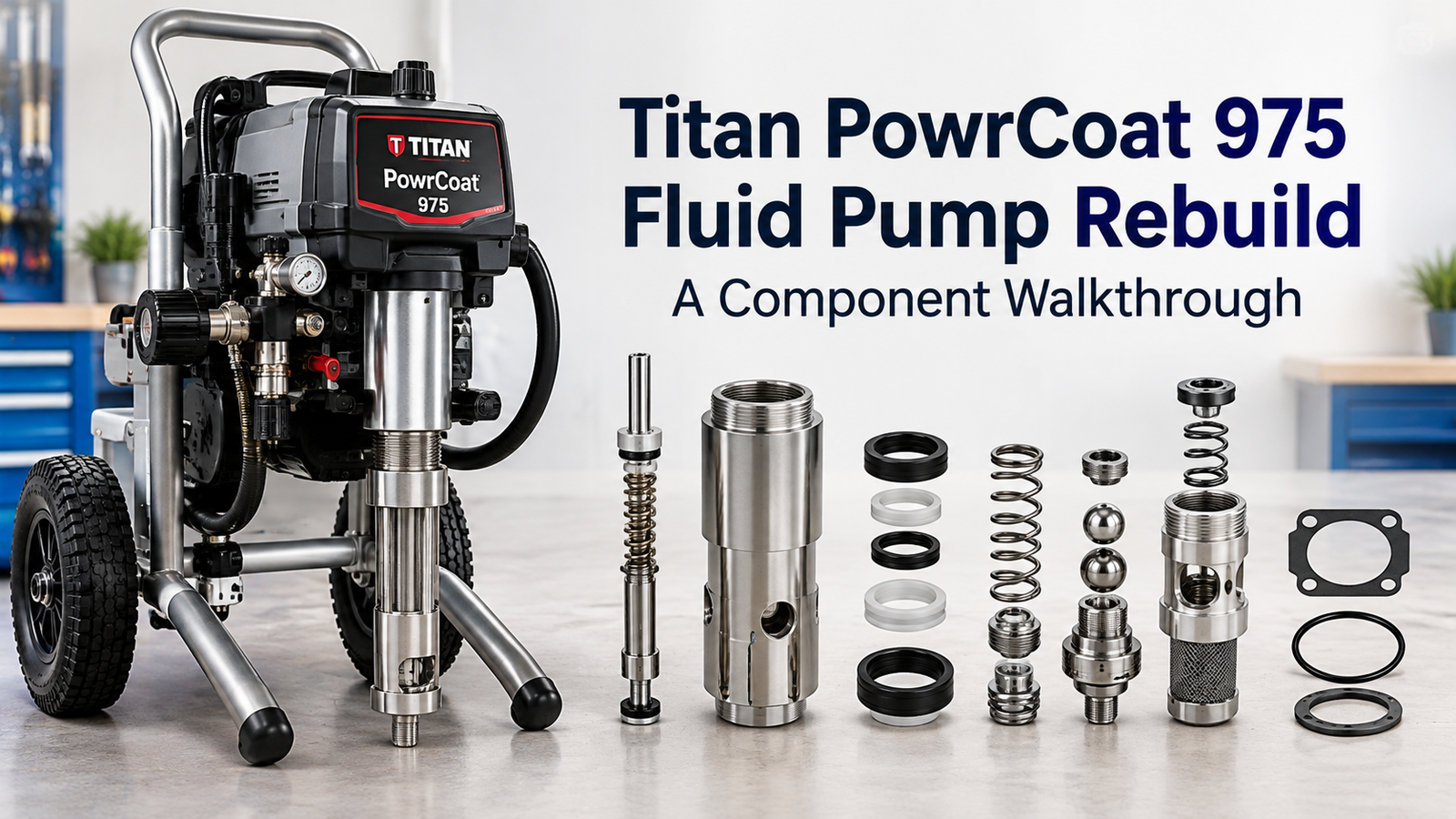
That design intent is good news for cost. When a PowrCoat 975 loses pressure, leaks, or sprays inconsistently, the fix is almost never a new machine — it is a fluid pump rebuild that returns the pump to factory output. The components for that rebuild are documented in the fluid pump assembly listing, and this walkthrough covers what each one does and why it wears.
The Packings: First to Wear, First to Replace
The packings are the sealing stack that surrounds the displacement rod and lets the pump build and hold pressure. On every stroke they seal against the moving rod, and that constant friction — made worse by any abrasive content in the coating — wears them steadily. They are the single most common replacement on the fluid pump, and worn packings are behind most pressure and leakage complaints.
The symptom of worn packings is coating appearing where it should not — leaking from the packing area — and a pump that struggles to build or hold pressure. On a PowrCoat 975, the packing set is the core of any rebuild. Because the machine runs high-solids protective coatings, packing life is shorter than on a light-duty machine, and keeping a set on hand is standard practice for any operation running one. You can confirm the correct set for the powrcoat 975 against its parts diagram before ordering.
The Foot Valve and Check Ball
At the bottom of the fluid pump sits the foot valve — a check valve that lets coating in on the intake stroke and seals to prevent backflow on the pressure stroke. Its sealing element is a hardened check ball that seats against a valve seat thousands of times per operating hour.
When the foot valve or its check ball wears, the pump loses prime or fails to hold pressure between strokes, because coating leaks backward past the valve instead of being pushed forward. Inspect the ball for flat spots and the seat for scoring during any rebuild. A worn foot valve is a common companion to worn packings, and replacing both while the pump is apart is efficient — the labor to access them overlaps.
The Displacement Rod
The displacement rod is the PowrCoat’s equivalent of a piston rod — the component that moves up and down inside the packings to displace and pressurize coating. Its surface must stay smooth, because the packings seal against it on every stroke.
A scored or pitted displacement rod is a serious finding. It will destroy fresh packings in a fraction of their service life, because the rough surface acts like an abrasive against the new seal. The rule is firm: never install fresh packings against a damaged rod. Check the rod carefully during every rebuild, and if it shows scoring, replace it alongside the packings rather than one without the other.
Seals, Gaskets, and Small Components
Beyond the major wear parts, a proper rebuild renews the smaller sealing components — the O-rings, gaskets, and washers that keep the pump sealed at its joints. On a PowrCoat 975 these include the copper gasket and the various seals that, while individually minor, collectively determine whether the rebuilt pump holds pressure without weeping.
These small parts are inexpensive and easy to overlook, but skipping them undermines the rebuild. Renewing them while the pump is open costs little and prevents a return to the bench for a slow leak that a fresh gasket would have prevented.
The Rebuild Sequence
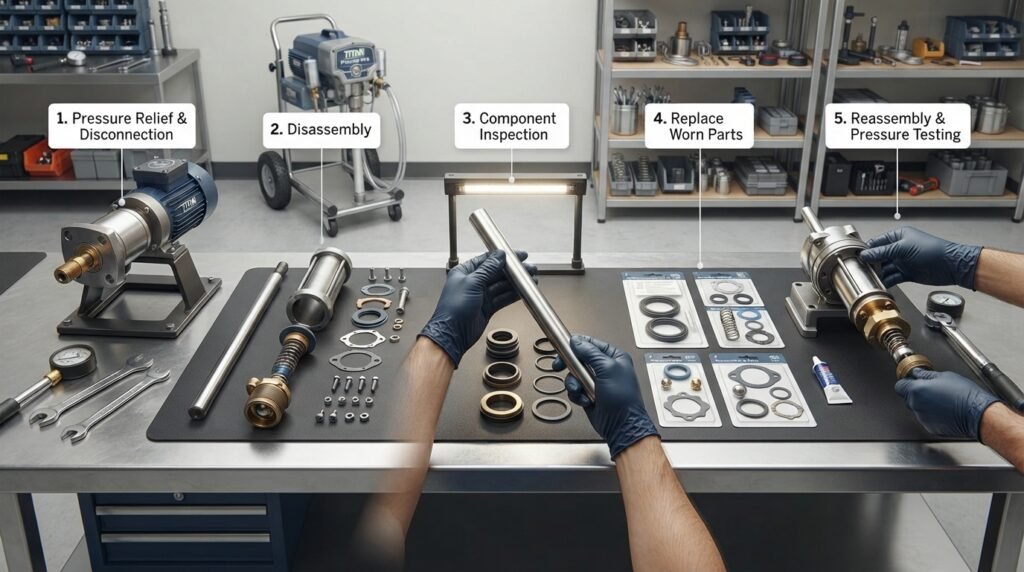
A PowrCoat 975 fluid pump rebuild follows a logical order that any technician comfortable with hand tools can complete.
- Relieve all pressure and disconnect the air supply before touching the fluid section.
- Reference the fluid pump diagram for the 975 to confirm each part number for your configuration.
- Disassemble the fluid section, keeping components in order for reassembly.
- Inspect the displacement rod for scoring — replace it if any roughness is present.
- Replace the packings, the foot valve and check ball if worn, and all seals and gaskets.
- Reassemble to specification, then test at working pressure before returning to production.
Done carefully with genuine parts, the rebuild returns the pump to original output, pressure stability, and priming behavior. This is the defining advantage of an air-powered pump built for industrial duty: the wear system is fully serviceable, so a machine that has coated thousands of square feet can be reset to factory specification at a fraction of replacement cost.
Why Rebuilding Beats Replacing
For an operation weighing whether to rebuild a PowrCoat 975 fluid pump or replace the machine, the arithmetic almost always favors the rebuild, and it is worth understanding why. The air motor and frame of a PowrCoat represent the bulk of the machine’s value, and they are durable — they routinely outlast several fluid pump rebuilds. When the fluid pump wears, replacing the whole machine discards all of that still-good equipment.
A fluid pump rebuild, by contrast, addresses only the parts that actually wore: packings, valves, rod if needed, and seals. Done with genuine parts, it returns the pump to factory output at a fraction of the cost of a new machine. On a 975 with a healthy air motor, the rebuild is not a close call — it is clearly the economical path.
The exception, as noted, is a scored cylinder bore, which is the one condition a rebuild cannot fix. But that condition is uncommon on a maintained machine and is nearly always the downstream result of neglecting the rod inspection. In other words, the discipline that keeps the rebuild cheap — inspecting the rod every time — is the same discipline that prevents the one failure that would force a replacement. Maintenance and economics point in the same direction.
When a Rebuild Is Not Enough
There is a limit. If the pump cylinder bore itself is scored — not just the rod — the sealing surface the packings need is compromised, and no packing will seal against it. This is the one condition where a fluid section component or the pump itself needs replacement rather than a rebuild. It is uncommon on a maintained machine, and it is almost always the end stage of running a damaged rod against fresh packings, which is exactly why the rod inspection step matters so much.For an operation running a PowrCoat 975 in production, the practical takeaway is to rebuild on a preventive schedule rather than waiting for failure, keep a packing set and foot valve components on the shelf, and always inspect the rod. That discipline keeps the machine in the low-cost rebuild zone for its entire life. Confirm your rebuild parts against the diagram, and the team will verify fitment against your serial number before you order.
Frequently Asked Questions
How do I rebuild a PowrCoat 975 fluid pump?
Relieve pressure and disconnect the air supply, then replace the packings, inspect and replace the foot valve and check ball if worn, check the displacement rod for scoring, and renew the seals and gaskets. Reference the diagram for your configuration and test at working pressure before returning to production.
What wears out on a PowrCoat 975 fluid pump?
The packings wear first and are replaced most often, followed by the foot valve and check ball, then the displacement rod if it becomes scored. The smaller seals and gaskets are renewed during any rebuild to keep the pump sealed.
Why is my PowrCoat 975 losing pressure?
Lost pressure usually means worn packings that no longer seal against the displacement rod, or a worn foot valve letting coating leak backward between strokes. Both are addressed by a fluid pump rebuild with genuine parts.
When does a PowrCoat 975 pump need replacing instead of rebuilding?
Only when the pump cylinder bore itself is scored, which compromises the surface the packings seal against. This is uncommon on a maintained machine and is usually the result of running a damaged displacement rod against fresh packings.
About the Author
Nnanna Otuonye is the founder and CEO of AllTitanParts.com, an authorized OEM dealer for Titan, SprayTech, Wagner, and Speeflo spray equipment, located at 5250 Gulfton St, Suite 1H, Houston, Texas 77081. With over 20 years in the spray equipment industry, he supplies painting contractors and industrial coating professionals across the United States with genuine factory parts and same-day shipping on orders placed before 3PM CST.