
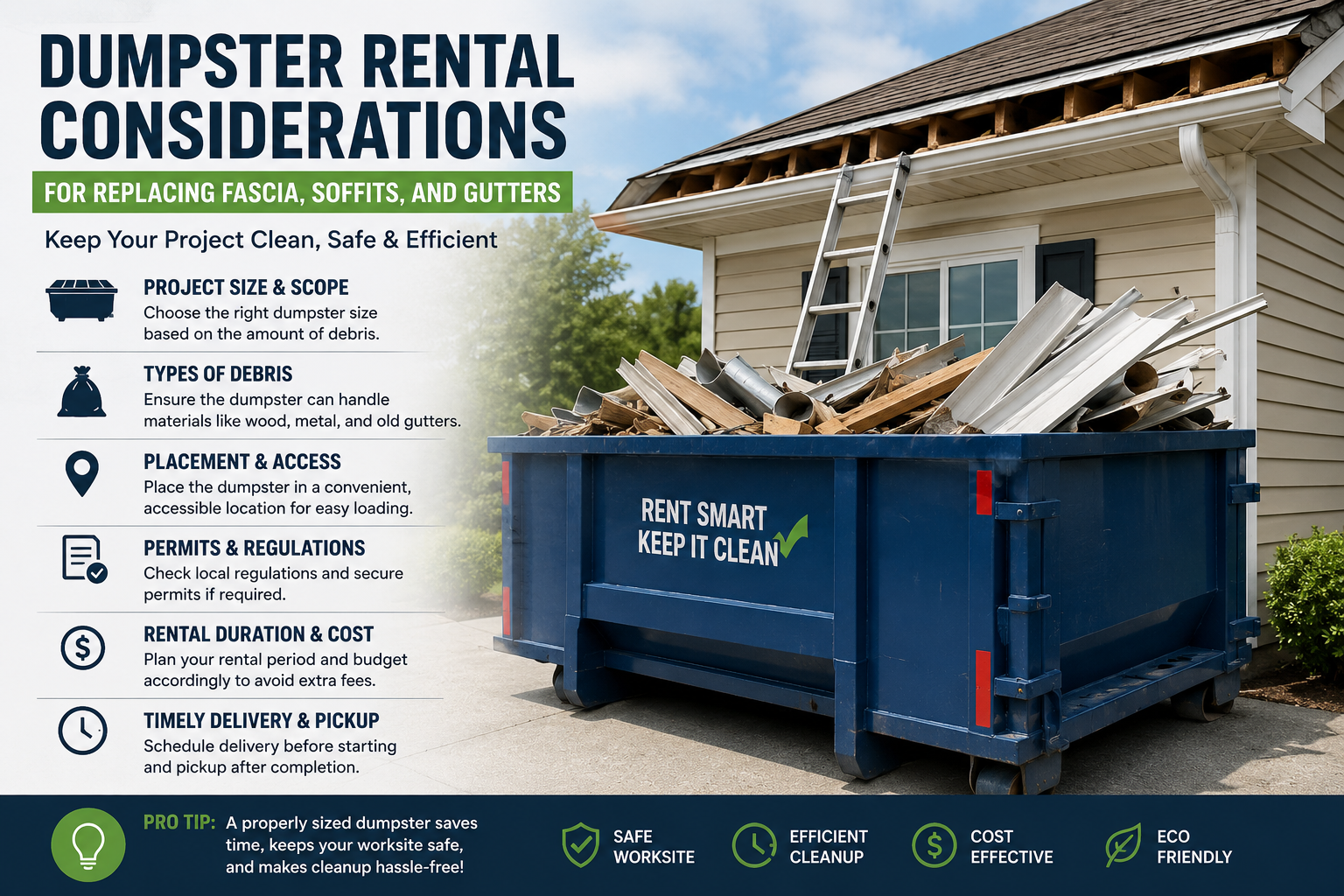
Replacing fascia, soffits, and gutters may look like a focused exterior project, but it can create a surprising amount of debris around the home. Contractors may remove old aluminum gutters, rotten fascia boards, soffit panels, fasteners, downspouts, brackets, flashing, damaged trim, packaging, and sections of water-damaged wood. If the waste plan is loose, debris can spread across lawns, driveways, landscaping, porches, and walkways quickly.
A dumpster rental helps keep exterior replacement work organized, but placement and loading routines matter. Crews need a clear disposal point that does not block ladders, material staging, homeowner access, or service routes. With the right plan, contractors can keep the property cleaner while moving efficiently around the roofline.
Start With a Full Exterior Walkaround
Before scheduling a dumpster, contractors should walk the full perimeter of the home. Fascia, soffit, and gutter damage is not always limited to one side of the structure. Water damage, sagging gutters, loose panels, animal damage, peeling paint, rot, and failed fasteners may appear in several areas once the inspection begins.
The walkaround should identify where the largest debris volume will come from and where crews will need ladder access. It should also note landscaping, fences, gates, decks, patios, AC units, downspout extensions, outdoor furniture, and narrow side yards. These features can affect where debris can be staged and how it will move to the dumpster.
A complete review helps contractors avoid placing the container in a spot that conflicts with the work.
Choose Placement That Supports Perimeter Work
Fascia, soffit, and gutter replacement requires crews to move around the house. The dumpster should be close enough for efficient loading, but it should not block the main work path, ladder movement, driveway access, garage doors, sidewalks, or material staging areas.
Working with Waste Removal USA can help contractors coordinate dumpster rental placement and service timing for exterior residential projects. A practical location gives crews one clear disposal point while keeping enough room open for ladders, tools, vehicles, and new materials.
The best spot usually supports the whole job, not just the easiest loading point on the first side of the house.
Protect Driveways and Homeowner Access
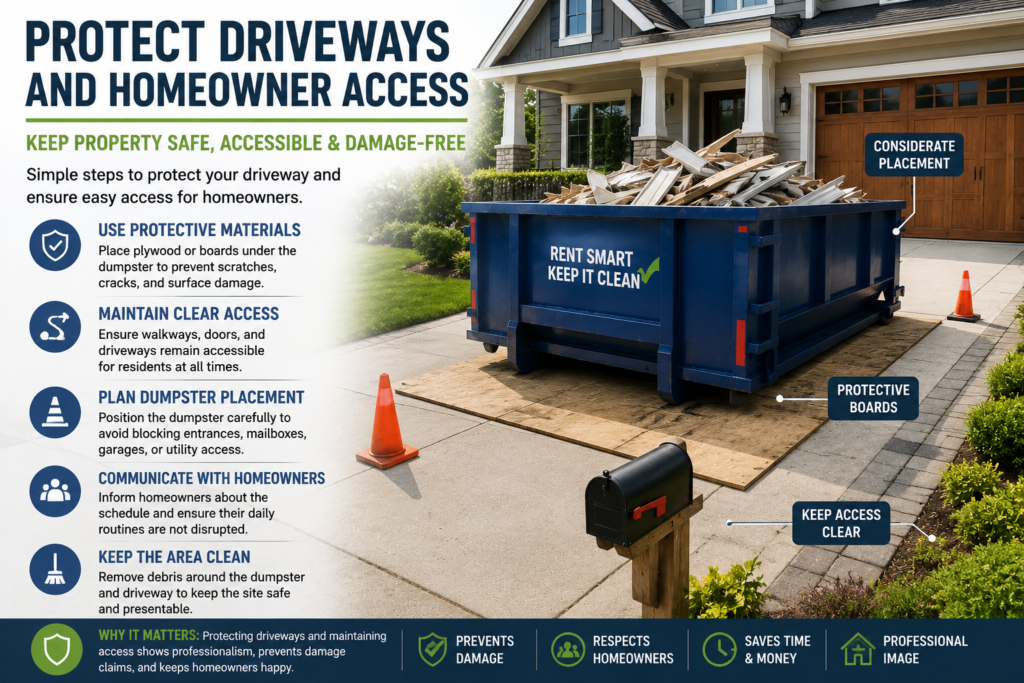
Many fascia, soffit, and gutter projects happen while homeowners continue using the property. They may need access to the driveway, garage, front door, side gate, mailbox, trash bins, vehicles, pets, or outdoor storage. Dumpster placement should account for those daily needs.
If the container must occupy part of the driveway, contractors should explain when it will arrive, how long it will stay, and whether vehicles need to be moved. Walkways and entry points should remain clear whenever possible. If an access route changes temporarily, the homeowner should know before work begins.
Clear access planning reduces frustration during an otherwise disruptive exterior project.
Create Debris Routes Around the Home
A debris route is the path removed materials take from the work area to the dumpster. For fascia, soffit, and gutter projects, crews may be carrying long gutter sections, trim boards, soffit panels, brackets, and downspouts from different sides of the home. If there is no planned route, debris may be dropped in multiple piles around the property.
Contractors should decide how materials will move from each side of the house to the container. Side yards, gates, decks, porches, and landscaping beds should be kept as clear as possible. If long materials need to be carried around corners, crews should watch for windows, siding, plants, and outdoor fixtures.
A planned route keeps the project from scattering debris around the property.
Separate Metal, Wood, and Mixed Debris
This type of exterior project often produces several kinds of waste. Aluminum gutters, steel fasteners, vinyl or aluminum soffit panels, painted wood fascia, rotted boards, sealant tubes, packaging, and general construction scraps may all be present. Some materials may be recyclable or handled separately depending on local options and project needs.
Contractors should separate obvious categories when practical. Long gutter runs and downspouts can be stacked neatly before loading. Rotted wood and broken trim can be handled as general debris if approved. Small fasteners, sharp scraps, and packaging should be collected regularly.
Sorting keeps the site cleaner and prevents loose materials from spreading across the yard.
Watch for Rotten or Water-Damaged Materials
Fascia and soffit replacement often reveals hidden damage. Once gutters are removed, crews may find rotten fascia boards, deteriorated roof edges, damaged sheathing, stained soffit cavities, insect damage, or failed trim. These materials can create additional debris beyond the original estimate.
Contractors should leave room in the waste plan for surprises. Water-damaged wood may be heavier than dry lumber, especially if it has absorbed moisture. Damaged sections should be removed carefully and loaded promptly so they do not sit in the yard or driveway.
A flexible dumpster plan helps contractors respond when the repair grows beyond a simple replacement.
Keep Small Debris Under Control
Small debris can be one of the biggest cleanup issues on exterior trim projects. Nails, screws, gutter spikes, brackets, sealant scraps, metal shards, paint chips, splinters, and cut pieces can fall into grass, mulch, flower beds, driveways, and walkways. These items may be difficult to see but can create hazards for tires, pets, children, and bare feet.
Crews should collect small debris throughout the job instead of waiting until the end. Magnetic sweeping can help where metal fasteners are likely to fall. Tarps or drop zones may also help under active work areas.
A clean site is especially important when the project wraps around the entire house.
Plan for Long and Awkward Materials
Old gutters and downspouts are long, awkward, and easy to leave lying along the side of the house. Fascia boards and soffit panels can also be difficult to stack neatly if they are removed in large sections. These materials should be broken down or bundled when practical before loading.
Leaving long pieces on the lawn can block ladder movement and create trip hazards. It can also make final cleanup take longer. Contractors should load removed sections steadily as the project moves around the home.
Managing awkward debris early keeps the work area more usable.
Coordinate With New Material Staging
Replacement fascia, soffits, gutters, downspouts, trim, fasteners, flashing, sealants, and accessories need clean staging space. If old debris fills the driveway or side yard, new materials may be placed too far from the work area or moved multiple times.
Contractors should keep new materials away from demolition piles. Gutter sections should be protected from bending or denting. Soffit panels and trim should be stacked neatly where crews can reach them without stepping over debris.
Waste removal and material staging should be planned together so the replacement work can continue smoothly.
Consider Seasonal Maintenance Timing
Many homeowners schedule fascia, soffit, and gutter work as part of seasonal upkeep. A Fall Home Maintenance Checklist may remind them to inspect gutters, roof edges, drainage, exterior trim, and areas vulnerable to water damage before colder weather arrives.
Contractors working during busy seasonal windows should plan dumpster timing carefully. Fall weather can bring rain, wind, leaves, and shorter daylight hours, all of which affect exterior cleanup. Removing old materials promptly helps keep the property safer and prevents debris from mixing with leaves or yard waste.
Seasonal timing makes organization even more important.
Keep Landscaping Protected
Fascia, soffit, and gutter projects often require work directly above flower beds, shrubs, mulch, foundation plantings, walkways, and patios. Debris can damage plants or disappear into landscaping if crews are not careful. Heavy boards, gutter sections, and sharp scraps should not be dropped blindly into beds.
Contractors can use tarps, plywood, or designated drop areas to protect sensitive spaces. Crews should move potted plants, patio furniture, hoses, and decorations before work begins. If landscaping is dense, debris should be removed from beds before it becomes buried.
Protecting landscaping helps leave the property looking finished when the exterior work is complete.
Maintain Dumpster Service Access
The dumpster needs to remain accessible for pickup or replacement. On residential exterior projects, service access can be blocked by crew trucks, trailers, ladders, gutter machines, pallets, homeowner vehicles, or new materials. If the container cannot be serviced, cleanup may stall.
Contractors should keep the approach clear throughout the project. If a pickup is scheduled, the homeowner should know when vehicles need to be moved. Crews should avoid stacking old gutters or new materials in front of the container.
A dumpster only supports the project if it can be used and removed on schedule.
Build Cleanup Into the Workday
Exterior trim and gutter projects should include cleanup throughout the day. Crews can remove one section, load debris, sweep or inspect the area below, then move to the next side of the house. This prevents old materials from collecting around the entire property.
An end-of-day reset is also important. Load loose debris, collect fasteners, stack tools, clear walkways, and check the area around the dumpster. If the project continues the next day, the site should still be safe for the homeowner overnight.
Regular cleanup makes the job look professional and reduces final cleanup time.
Avoid Common Dumpster Planning Mistakes
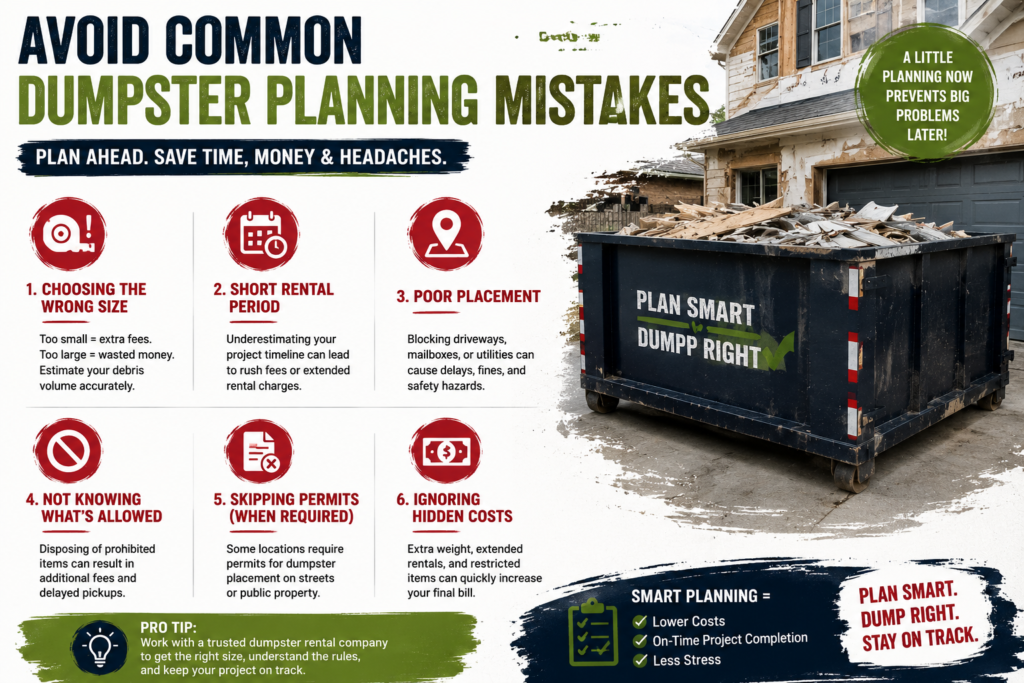
One common mistake is underestimating how much space long gutter sections, rotted fascia boards, and soffit panels can take up. Another is placing the dumpster where it blocks the best material staging area or homeowner parking. Contractors should also avoid letting debris piles form around every side of the home.
A better approach is to plan the container location, debris routes, material staging, small-debris collection, and service access before the first gutter section comes down. Exterior projects move faster when the cleanup plan follows the crew around the house.
Dumpster rental considerations for replacing fascia, soffits, and gutters include more than basic debris disposal. Contractors need to think about perimeter access, homeowner routines, long materials, water-damaged wood, small fasteners, landscaping, new material staging, and pickup access.
By walking the property first, choosing smart dumpster placement, creating clear debris routes, protecting landscaping, sorting materials, and cleaning as work progresses, contractors can keep exterior replacement projects more organized. A thoughtful waste removal plan helps old materials leave the property efficiently while crews install new components with fewer disruptions.

Leave a Reply