
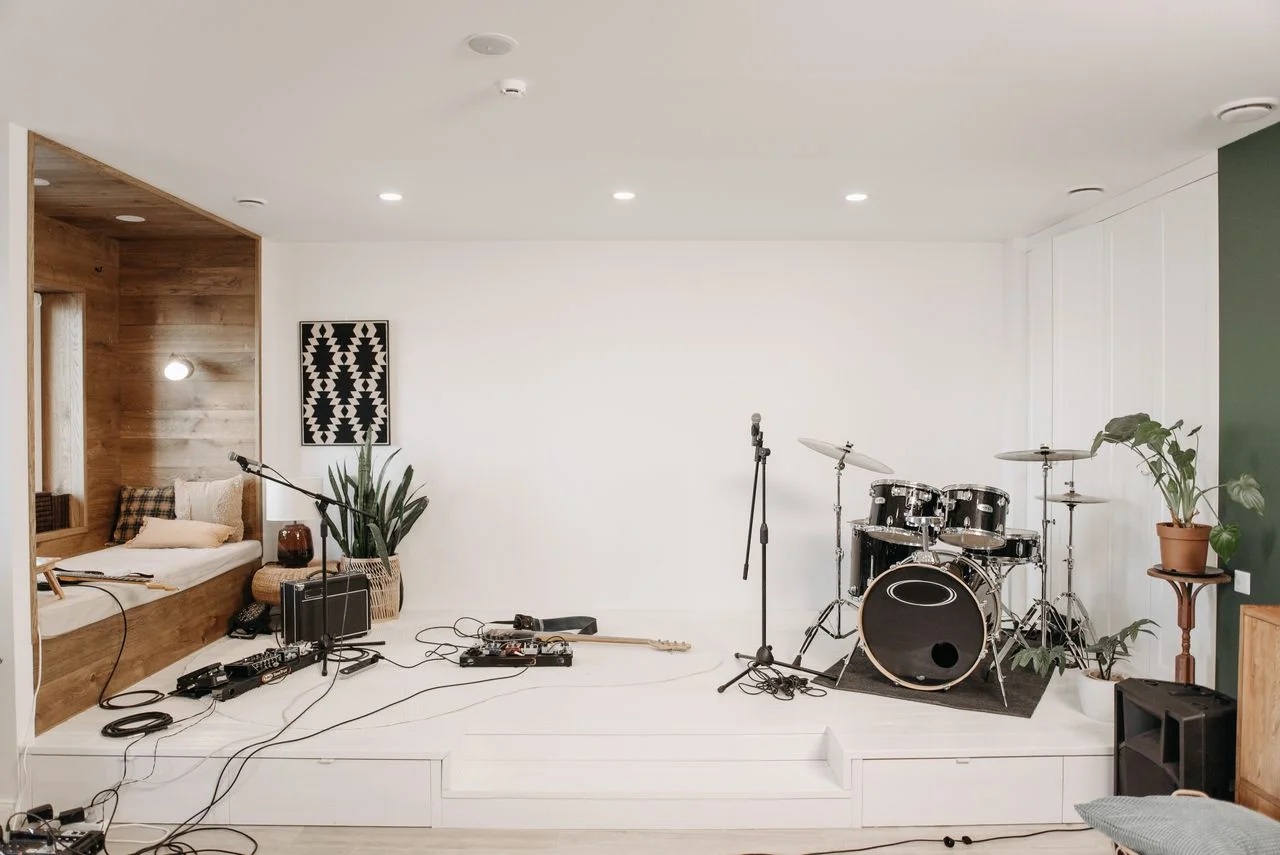
Walk into a room with hard, flat, parallel surfaces everywhere, and you’ll notice it before you can explain why. Voices bounce. Conversations blur into a wash of noise. Someone laughs three tables over and it lands right in your ear like they’re sitting beside you. Acoustic wall panels exist to fix exactly this, and the good ones do it while looking genuinely striking rather than like an afterthought bolted on once someone finally complained about the noise.
Why Hard Surfaces Turn Into Sonic Chaos
Sound doesn’t just disappear when it hits a wall, it bounces, again and again, off every hard parallel surface in a room until it eventually loses enough energy to fade out. In a space full of glass, concrete, and polished timber floors, that bouncing takes considerably longer, which means voices, footsteps, and general ambient noise all stack up into a genuinely fatiguing wash of sound. Acoustic panels interrupt that bounce, absorbing sound energy rather than reflecting it straight back into the room.
Absorption vs Diffusion: Not the Same Job
This distinction trips people up constantly. Absorption reduces overall sound energy in a room, genuinely quietening things down. Diffusion scatters sound in different directions without necessarily reducing its overall energy, which helps avoid harsh echo without making a room feel dead or muffled. Good acoustic wall panel systems often do a bit of both, and understanding which problem you’re actually solving, too loud versus too echoey, shapes which approach genuinely fixes it.
- Absorption reduces overall reverberation and sound energy in a space
- Diffusion scatters sound to avoid harsh echo without deadening the room entirely
- Perforated timber panels combine acoustic performance with genuine visual warmth
- Placement matters as much as material, panels need to target actual reflection points
Perforated Timber: The Best of Both Worlds
There was a time acoustic treatment meant ugly foam wedges bolted to a wall, functional, sure, but nobody’s idea of good design. Perforated timber panels changed that equation considerably, delivering genuine acoustic absorption through an engineered cavity and perforation pattern, while still reading as a warm, natural timber surface rather than an obvious acoustic Band-Aid. Clients get the sound performance without sacrificing the aesthetic they actually wanted in the first place.
Where Acoustic Panels Genuinely Matter Most
Open-plan offices, restaurants, aged care facilities, schools, anywhere a lot of people occupy a shared space with hard surfaces and genuine conversation happening simultaneously. Aged care in particular has become a serious focus area, since poor acoustics don’t just annoy residents, they can genuinely affect hearing-impaired individuals’ ability to follow conversation at all, which matters enormously for quality of life in these environments.
Design Recognition Confirms What Good Acoustic Design Can Achieve
It’s genuinely satisfying when an acoustic product gets recognised for design quality rather than purely technical performance, since it proves these two goals aren’t in conflict. The Modulo® Acoustic system picked up exactly this kind of recognition, which covered in this piece on Modulo® Acoustic winning a Good Design Award, proving that acoustic performance and genuine visual sophistication can absolutely coexist in the same product rather than forcing a trade-off between them.
Placement Strategy: Where the Panels Actually Go Matters
Slapping acoustic panels on a single wall and calling the job done rarely delivers the improvement a space actually needs. Sound reflects off ceilings, parallel walls, and hard floors, so genuinely effective acoustic treatment considers the whole envelope of a room, not just the most visually obvious surface. First reflection points, the spots where sound bounces directly between a source and a listener, often matter more than covering the largest available wall area.
Colour and Finish: Acoustic Performance Doesn’t Mean Compromising Style
One of the biggest myths still floating around is that acoustic treatment forces a choice between sound quality and visual appeal. Modern acoustic timber panels come in a genuine range of finishes, from natural timber grain through to painted and stained options, meaning the acoustic solution can match an interior scheme rather than fighting against it. This matters enormously for designers trying to balance a client’s aesthetic brief against genuine performance requirements.
Fire Compliance in Acoustic Applications
Commercial spaces requiring acoustic treatment frequently also carry fire rating obligations, and the two requirements need to be satisfied simultaneously rather than treated as separate problems. Fire-rated acoustic panel systems exist specifically for this overlap, and specifying the wrong combination, genuinely acoustic but not fire-compliant, or vice versa, creates a headache during certification that’s considerably harder to fix after installation than to plan for beforehand.
Occupant Comfort Is the Real Goal, Not Just a Number
It’s worth remembering that reverberation time and decibel readings are proxies for something more human, whether people in the space can actually hear each other comfortably, concentrate without strain, or simply relax without a constant low hum of noise fatigue building through the day. Chasing the metric without keeping this human outcome in mind risks solving the wrong problem technically correctly.
Measuring Success: How Do You Actually Know It Worked?
Reverberation time, measured in seconds, gives a genuinely objective way to assess whether acoustic treatment achieved its goal, rather than relying purely on “it feels quieter” anecdotes after the fact. Spaces with excessive reverberation times benefit dramatically from properly specified acoustic panels, and measuring before and after installation gives genuine, defensible proof of improvement, which matters considerably for projects where acoustic performance is a specified requirement rather than a nice-to-have.
Working Acoustic Requirements Into an Existing Design Language
Retrofitting acoustic treatment into an already-designed space, rather than one still on the drawing board, requires a slightly different approach. Matching new acoustic panelling against existing finishes, floor colours, ceiling heights, means the acoustic upgrade reads as intentional rather than as an obvious add-on installed after the fact once complaints started arriving.
A Common Mistake: Treating Acoustics as an Afterthought
Too often, acoustic treatment gets bolted onto a design after everything else has been locked in, which limits both aesthetic integration and genuine performance. Involving acoustic considerations during the initial design phase, rather than retrofitting a solution once complaints start rolling in, consistently produces better outcomes on both fronts, sound quality and visual cohesion working together rather than one compromising the other.
So What’s the Real Takeaway Here?
Acoustic wall panels solve a genuine problem that hard, modern interiors create almost by default, and the best solutions do it without forcing a compromise between sound performance and visual appeal. Understanding absorption versus diffusion, placing panels where sound actually reflects, and choosing a finish that matches the space’s design intent all matter considerably more than simply installing “some acoustic panels” and hoping for the best.
If sound quality and style both matter for your next project, then Soundlina® range delivers genuine acoustic comfort through an award-winning perforated wall covering system, and Screenwood team can help match performance requirements against the aesthetic your project actually calls for.

Leave a Reply