
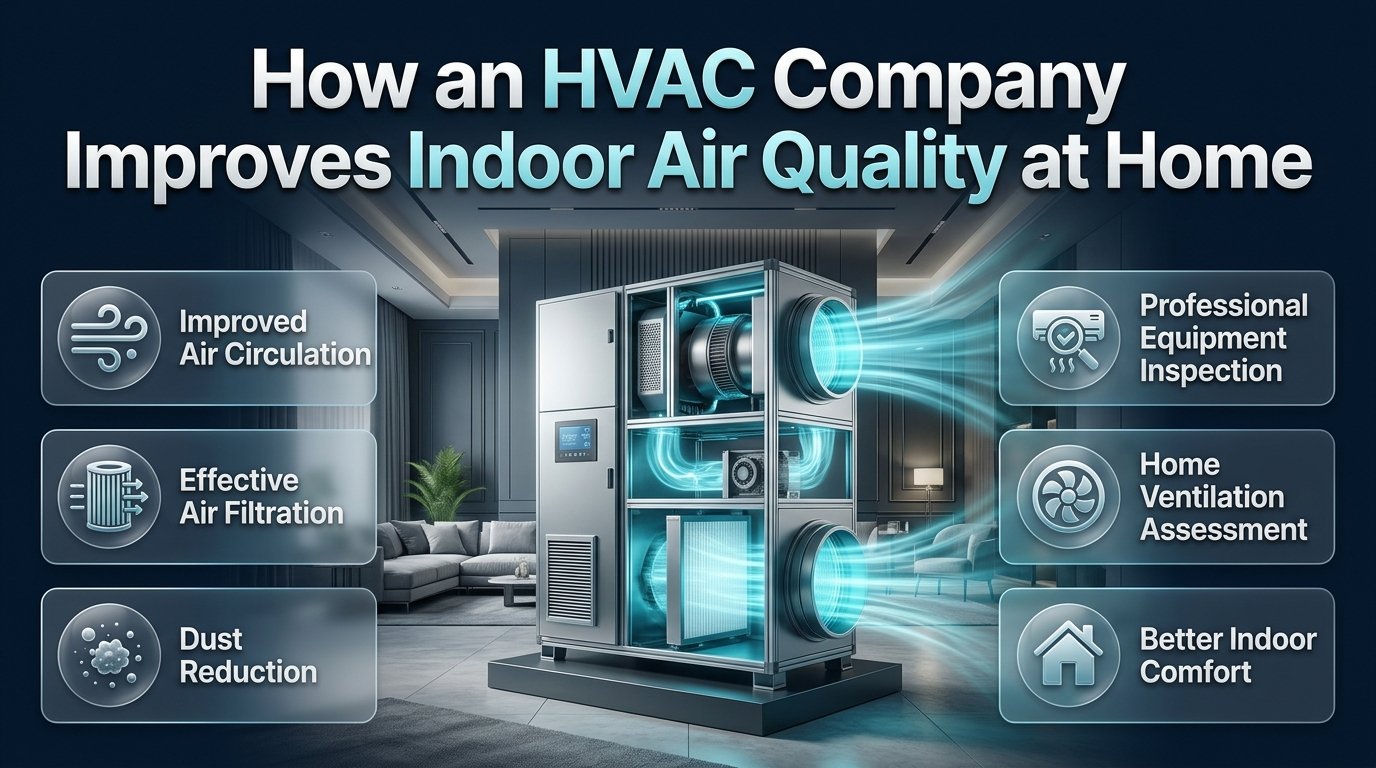
As a homeowner, recurring dust and stuffy rooms may point to indoor air concerns worth investigating. Indoor air quality partly depends on how well your HVAC system circulates and filters air. An HVAC company can assess your equipment and identify services suited to your home. Here is how an HVAC company helps improve your indoor air quality:
Install Air Purifiers
Whole-home air purifiers treat particles as air passes through compatible HVAC equipment. Depending on the system, filtration options target particles such as pollen and pet dander. HEPA air cleaners capture fine particles when installed in a suitable configuration, while electronic cleaners use electrical charges to collect airborne contaminants. An assessment helps match the equipment to the home’s system and the particles causing concern.
Improve Ventilation
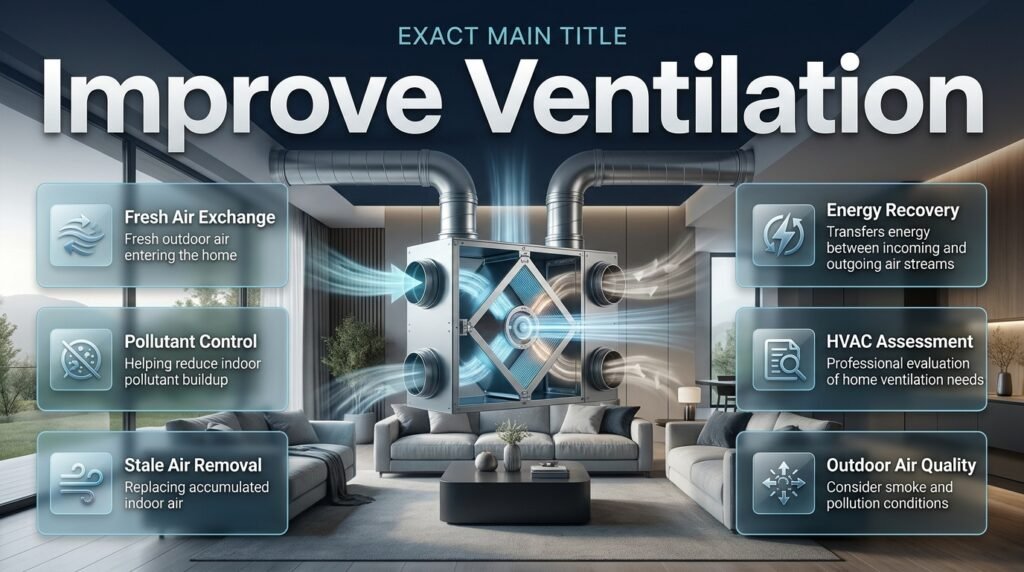
Ventilation replaces stale indoor air with outdoor air, helping reduce indoor pollutant buildup. In tightly sealed homes, limited fresh-air exchange allows odors and airborne contaminants to linger. An energy recovery ventilator brings in outdoor air while transferring energy between incoming and outgoing air streams.
An HVAC company can assess whether an ERV suits the home’s layout and ventilation needs. Outdoor air quality also affects ventilation decisions, particularly during periods of smoke or elevated pollution. The goal is to balance fresh-air exchange with the home’s heating and cooling requirements.
Indoor air quality is also an important part of creating a comfortable and well-designed living environment. Homeowners planning interior improvements should consider how ventilation, natural airflow, lighting, and room layouts contribute to everyday comfort. Design Mode 24 Interior Design offers home interior design ideas and inspiration that can help homeowners create functional, attractive, and comfortable spaces. Thoughtful interior design planning alongside proper HVAC maintenance can help create healthier and more enjoyable indoor environments.
Seal Duct Leaks
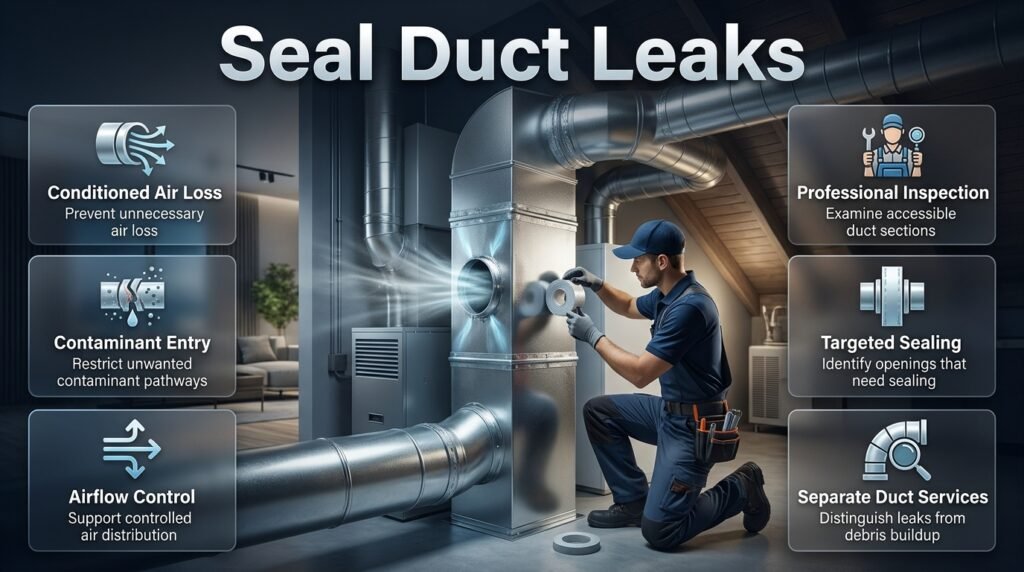
Ductwork transports heated or cooled air from the HVAC equipment to living spaces. Leaking ducts in attics, crawl spaces, or utility spaces can allow unwanted contaminants into the air distribution system. Finding leaks and sealing them restricts that route and helps control airflow through the house.
Leaky ducts also waste conditioned air before it reaches the rooms the air conditioning system serves. This results in some rooms being less ventilated than desired and equipment operating to compensate for the thermostat set point. A technician can examine the sections of the duct that are accessible and will determine where sealing is needed.
Duct sealing focuses on openings and not on debris that has collected in the ducts. The distinction is useful for homeowners to decide which of the services to use for the actual problem. If they find leaks and visible buildup, the technician can discuss what he is doing to resolve each problem.
Clean Ductwork
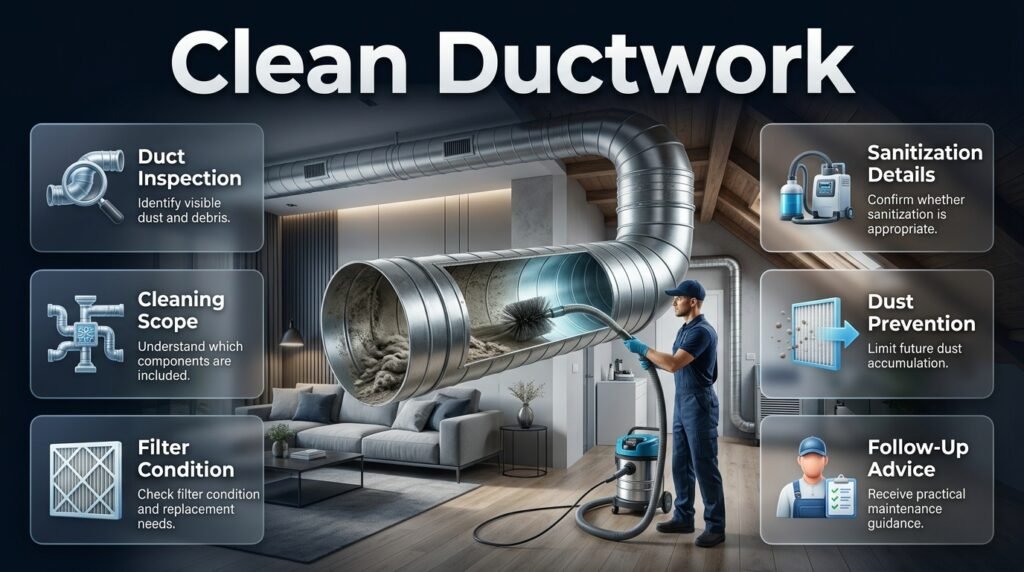
Dust and debris accumulate inside ductwork, particularly when filters are neglected or construction work leaves particles behind. When debris is disturbed, some material can enter the airflow, although duct cleaning is not applicable for every home. An inspection helps determine whether visible buildup or other concerns justify cleaning. A key step to improving your ducts includes:
Duct inspection: Identifies visible buildup and accessible areas needing attention.
Cleaning scope: Clarifies which ducts and components the service includes.
Filter condition: Checks whether the current filter needs replacement.
Sanitization details: Confirms whether sanitization is offered and appropriate for the identified concern.
Follow-up advice: Explains steps for limiting dust accumulation after cleaning.
Plan Indoor Air Quality with HVAC Company
Indoor air concerns sometimes come from several sources, so one treatment does not address every issue. Note when dust, odors, or stuffiness appear, including whether symptoms change when the system runs. That information gives the technician context when evaluating filtration, ventilation, and ductwork. Contact an HVAC company to discuss the signs you have noticed and arrange an assessment tailored to your home
Homeowners planning to refresh their living spaces can also consider design details such as wall finishes and suitable paint color ideas. These choices contribute to the overall appearance of a room, while proper ventilation and filtration address indoor air concerns.
Contact an HVAC company to discuss the signs you have noticed and arrange an assessment tailored to your home.