

With winter close across Canada, owners of farm buildings, workshops, and garages look at their roofs first. Snow is heavy, and a roof that carries it safely is the result of engineering, not appearance. A metal garage shed steel building of this kind is sold with a stated snow and wind rating, which makes it a useful example of how those ratings work.
What the Rating Measures
The rating is the weight of snow pressing on each square foot of roof. This building is rated for thirty-five pounds per square foot, together with a wind rating of 100 kilometers per hour. Depth alone is a poor guide, because fresh powder is light while wet or packed snow can weigh several times more for the same depth.
A rating is a pressure calculated by an engineer. Compare it with the ground snow load that the local building code lists for your area before you decide that a building is suitable for your site.
How the Roof Carries the Weight
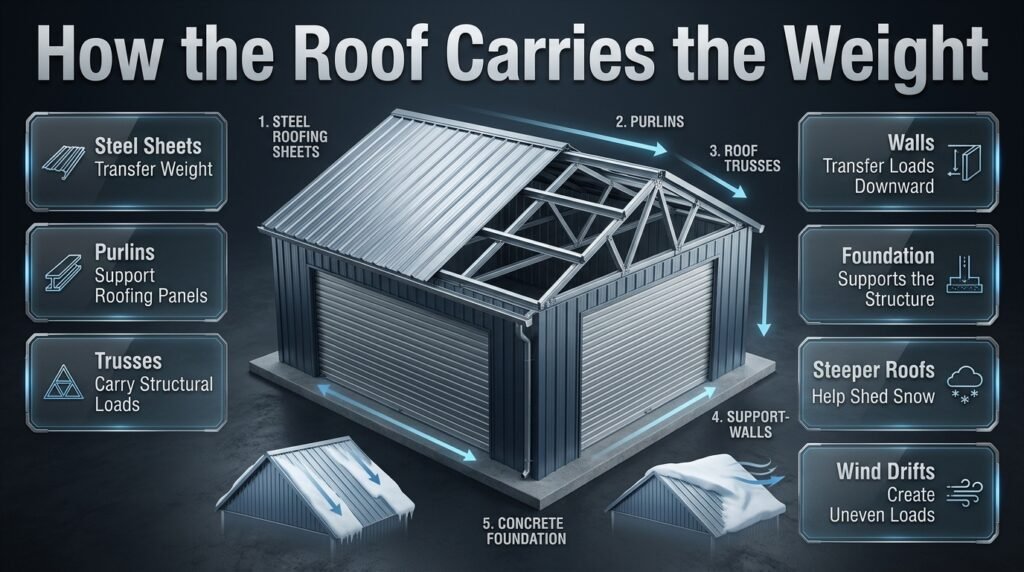
A metal garage shed passes weight along a chain: the steel sheets rest on purlins, the purlins rest on trusses, the trusses rest on the walls, and the walls rest on the foundation. Each link must be strong enough, and the weakest one sets the limit. A pitched gable roof also helps, because snow slides off a steep surface more easily than it settles on a flat one.
Uneven loads matter as well. Wind moves snow into drifts, and a drift can place far more weight on one side of a roof than the average rating assumes, so local conditions should be part of the decision.
Checks Before Ordering
- Find the code value for your location.
- Ask the municipality whether a permit is required.
- Request the engineering drawings and the load report.
- Confirm the foundation type and its condition.
- Plan the route and equipment for unloading.
Documents matter because many municipalities ask for stamped drawings before approving a building of this size. The listing states that drawings from a registered Canadian engineer are included and that a load report can be supplied on request, which can save weeks during approval.
Foundation, Moisture, and Safe Use
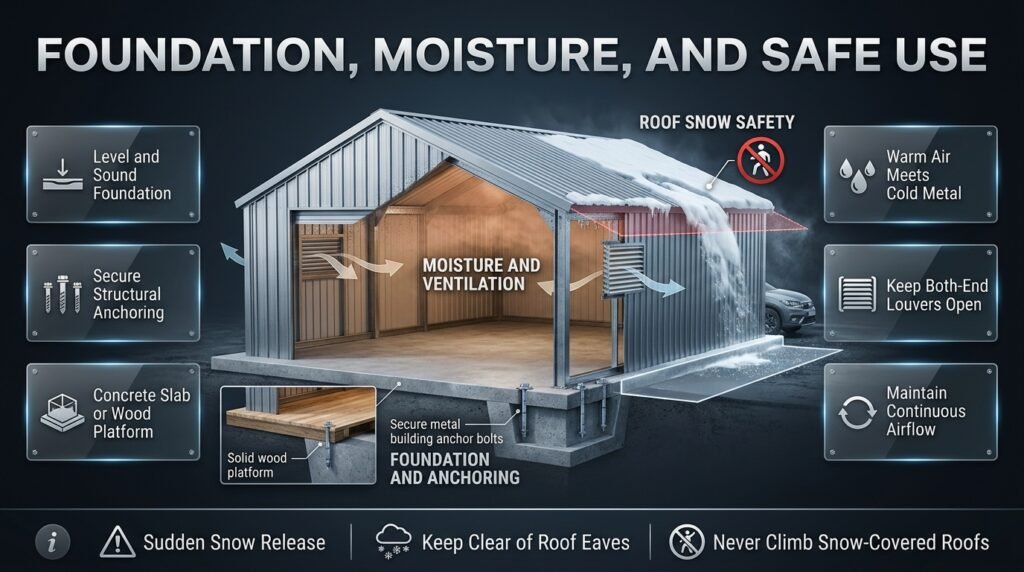
The building bolts to a concrete slab or a solid wood platform, and the surface must be level and sound, because the foundation carries every load the roof collects. Steel buildings also collect condensation when warm, moist air meets cold metal, so the louvers at both ends should stay open to keep air moving.
Roof snow can release suddenly from a smooth metal surface. Keep people and vehicles away from the eaves during a thaw, and never climb onto a snow-covered roof, because the surface is slippery and the sheets are not meant to carry a worker.
Where Steel Helps and Where It Falls Short
The advantages are quick assembly, resistance to rot and insects, and ratings that can be checked on paper. The limits are condensation, no built-in insulation, and a structure that depends on correct anchoring. A typical case is a small farm that parks a tractor and a mower under one roof. After a wet snowfall, the rating and a sound foundation protect those machines.
Building codes continue to tighten requirements for snow, and buyers increasingly ask for documents before a purchase. The numbers on a metal garage shed should be read against the site, and the load report that TMG Industrial makes available on request is the document that makes that comparison possible.