
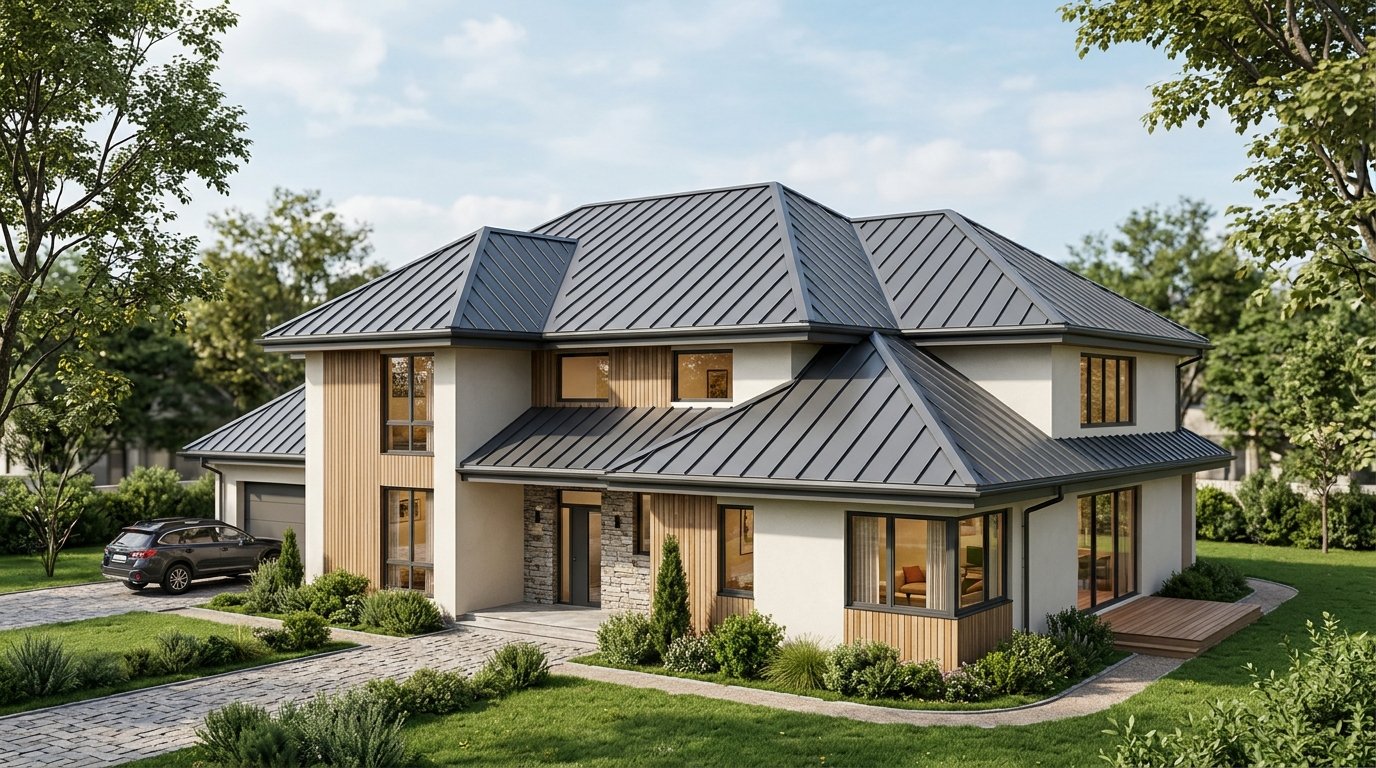
A roof protects the house from the rain, heat, wind, cold and other conditions, so it should be chosen with much thought as it will protect the house against the weather conditions. The metal is a favorable roofing material that can potentially last very long after a successful installation and proper maintenance.
However, not all the metal roofs are the same, and one must know more about the various metal, required installations, and other expenses before buying a new metal roof. One should know more about the different roofing systems and the performance of those systems in the area before making the final decision. A good place to start doing the research is the website Window Pros TX , but the final decision depends on the design, the weather, the energy needs in the house, and the general condition of the roof structure. Here are some pointers to consider when choosing the roofing system for the house:
1. Know About the Different Metal Styles of Roofs
Metal roofing comes with different designs, and each owner must know the pros, cons, and cost of a particular roofing style before making a decision.
Standing Seam Metal Roofing
This kind of metal roofing uses long metal panels that are placed with seams from where the wind gets through. The fasteners on seams that are generally formed by the interlocking of two metal panels are usually hidden within this system.
This style of roofing is preferred for its attractive appeal and efficient drainage, but it should not be ignored that the installation of standing seams is a complicated procedure that calls for great skill in order to ensure that the seams are flashed and properly expanded.
Corrugated Metal Roofing
This is the corrugated or wavy metal roofing known by everybody and mostly found on sheds and garages and also on farms. The corrugations give the required strength to this kind of metal roofing, but the suitability of a particular corrugated panel depends on the material, the thickness, the coating, and the installation.
Metal Shingles
This metal style is mostly designed and marketed to imitate the appearance of slate materials, wood shakes, and other traditional roofing materials. Metal shingles usually have the look and feel of normal shingles but are made of metal, a material better suited to standing up to the severe and extreme weather conditions.
When comparing different styles, one must look at the manufacturer and the expectancy, the maintenance requirements, and the warranty.
2. Know the Difference Between Different Metals Used for Roofing
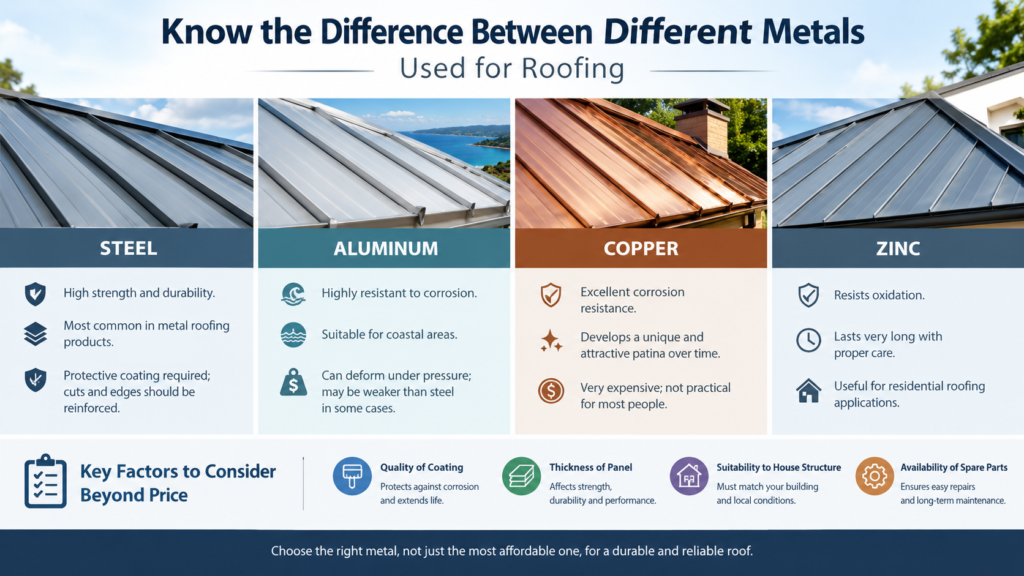
Since the metal is a flexible material, one must know the performance of different metals used in metal roofing, how the metal should be protected against corrosion, and know if a particular alloy is suitable for installation in his area.
Steel
Most metal roofing products are made of steel, and the metal has been used for various purposes due to its relatively high strength. Although the steel has a protective coating, the cuts and the edges should generally be reinforced.
Aluminum
The metal is highly resistant to corrosion, and it can generally be used in coastal areas. However, this metal can deform under pressure, and in some cases, it can be weaker than a steel roof.
Copper
This metal has excellent corrosion resistance properties, and it develops a unique and attractive patina over time. Unfortunately, the metal cannot be chosen for most people as it is very expensive.
Zinc
The metal can be useful in residential roofing where it can resist oxidation and lasts very long provided the appropriate care is taken.
Do not base the decision to get a metal roof on the relative affordability of metals. In choosing a particular kind of metal, one must pay great attention to the quality of the coating, the thickness of the panel, the suitability of the material to his house structure, and the availability of spare parts in the market.
3. Know the Weather Conditions in the Area
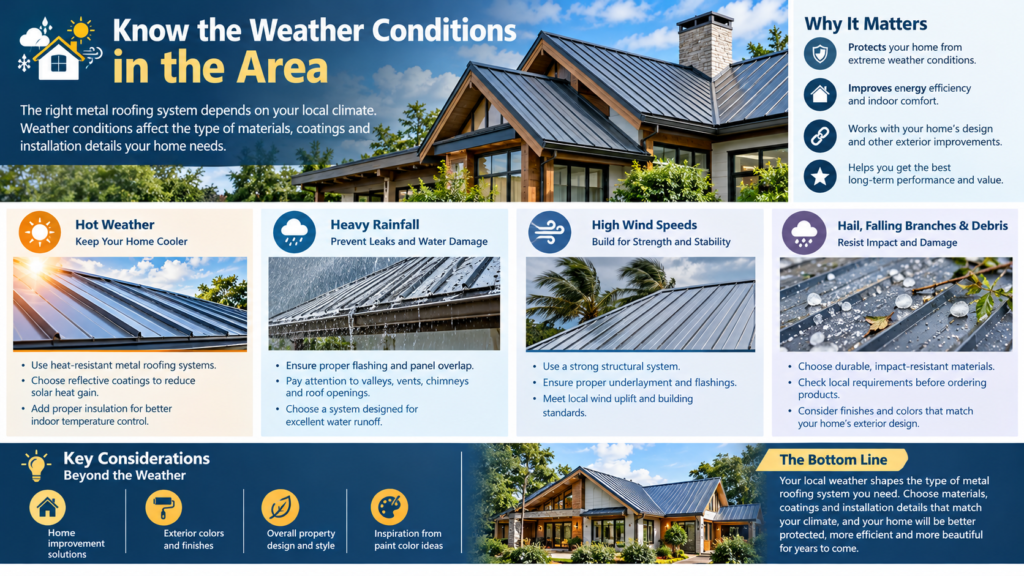
The local weather is a vital element that should be considered by homeowners and roofing contractors when choosing a metal roofing system and its installation accessories. The same roofing system cannot be used to satisfy the needs of areas with different climatic conditions. Homeowners planning improvements should also consider other aspects of their property, including suitable home improvement solutions that complement the roof’s performance and overall protection.
For houses located in places where hot weather is common, choosing a metal roof system that can resist heat should be considered. This is particularly important because solar heat gain can contribute greatly to increasing the indoor temperatures of the house. Solar heat gain is minimized by using the right reflective coatings on metal roof panels in combination with an insulation system.
On the other hand, heavy rainfall in some areas also calls for special consideration when choosing a roofing system. Special care must be taken with flashing, panel overlap, and valley details to ensure proper water runoff because valleys, vents, chimneys, and other roof openings can allow water to leak into the house during heavy rainfall. The roof’s appearance should also complement the property’s overall design, just as thoughtful interior design helps create a cohesive and comfortable living environment.
For areas with high wind speeds, special attention must be given to the structural system and roof coverings, as the roof sheathing, underlayment, and flashings need to withstand strong winds. The complete roof construction should also be able to resist wind uplift forces in accordance with the prevailing standards.
Homeowners should also take into account the impact of hail, falling branches, and flying debris on the roof. It is equally important to contact the relevant authorities to find out the requirements before ordering any products. In addition to weather resistance, homeowners can consider how exterior materials and finishes work together with their property’s overall color scheme, taking inspiration from suitable paint color ideas when planning a coordinated home renovation.
4. Know Everything Related to the Cost of Installation
The cost of installing a metal roof usually covers more than just the cost of materials, and one must know exactly what one is incurring costs for and how much each cost is in relation to the total cost of installation. The roof structure and its design also significantly affect the final cost, where the design should not be chosen for the sake of beauty if no one will appreciate it.
It is true that a roof is only as good as its materials, but its value is generally determined by its overall installation. To know the exact amount that will be spent on a metal roof installation, one must have a cost checklist that includes the following:
- Roofing materials and specifications
- Cost of removal and disposal of old materials
- Cost of underlayment, flashing, edge details, fasteners
- Labor and installation details
- Cost of damaged roof decking
- Details about clean-up and disposal
It is also a good idea to save some money to provide an allowance in case unforeseen roof deck repairs are needed. Having a thorough and complete list when getting bids will make it very easy for the homeowner to determine the installation costs and eliminate the need for him to ask for each item to be clarified.
5. Know if the Old Roof Requires Any Repairs
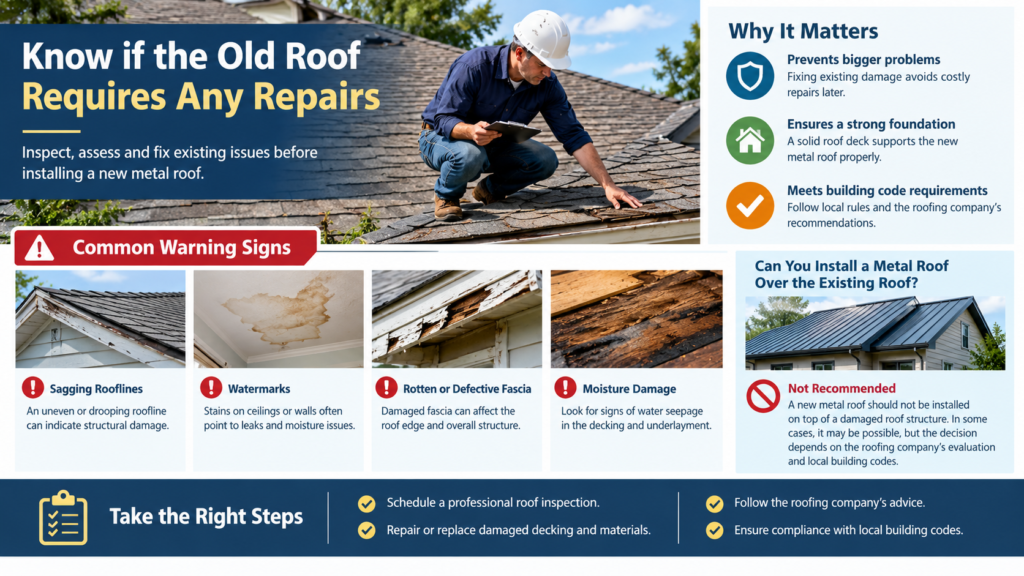
Before the installation of the new metal roof, the existing roof structure should be evaluated for damages to the materials and other structural problems that affect the roof. Although the existing roofing material might have sustained the damages, there is good chance the roof decking will have to be replaced.
Some of the signs that should raise alarms and lead to the condemnation of the roof decking are sagging rooflines and watermarks. One should also look for a rotten or defective fascia and check if the roof has been damaged by moisture that has seeped through the cracks.
A new metal roof should not be installed on top of a damaged roof structure. In some cases, metal roofing can be installed on an existing roof, but the decision to do so depends on the requirements and recommendations specified by the roofing company as the local building codes.
6. Know About the Home Energy Needs and the Efficiency of a Metal Roof
The energy needs of a house and how they can be met or exceeded is critical in determining the kind of metal roofing system to buy.
However, one should remember that while a metal roof can provide energy savings and efficiency, it has to do with the entire roof construction system. For instance, the reflective coatings on the roof panels can reduce the amount of heat transferred into the house compared to a roof surface with no reflective properties, but the color of the roof plays a great role in the determination of the efficiency.
Other aspects, such as proper underlayment and insulation and eaves and attics, also play an important part in insulating the house from heat gained through the roof, and one should get more details about his area’s weather. While the attic plays a more prominent role in insulating the house by reducing the temperatures under the roof, proper ventilation should also be factored in because it helps to clear the attic of unwanted moisture.
When putting up or replacing a roof, a homeowner should make sure the proper installation of the underlayments and the proper attic insulation are done in order for the house to be energy efficient in terms of temperature. It is also very important to know that while a metal roof can be a very great option for insulation against heat energy, it cannot change the inefficiency brought about by walls, windows, and other components with weak thermal properties.
7. Understand How to Take Care of Metal Roofs
Metal roofs require lesser maintenance as compared to most other kinds of roofing, but they should be periodically inspected to ensure the roofing system has been properly installed and there are no defects. Some of the general inspection and maintenance practices that should be noted in order to get the most out of a metal roof should include the following:
Periodically inspect the trim, flashing, and gutters, especially after experiencing harsh weather, and make sure they are not loose or damaged.
When the leaf and branches blockage debris has gathered on the metal roof, it should be removed carefully.
Do not walk on the metal roof unless the manufacturer has stated that such activity will not cause any damage to the panels.
One should learn how to walk on the metal roof if one is not sure what the problem would be that makes it unsuitable for walking on.
Additionally, one should be very careful when cleaning with chemical cleaners and abrasive cleaning agents unless the manufacturer has recommended its use.
One should also carefully read the warranty details related to the metal roof, where one should understand the manufacturer takes care of problems originating from paint, the roofing system, and other general manufacturing defects. One should also always store all the documents related to the roofing system, such as bills and receipts and all the relevant product information, as they could be needed when the roofing company is asked to honor the warranty.
Conclusion
Choosing the right metal roof demands that more effort goes into the selection process as compared to choosing traditional roofing materials. One should consider the roofing materials, the weather, the roof structure, the house energy needs, and the maintenance costs in order to choose the most appropriate metal roof. A thorough comparison of products and a detailed cost estimation before getting final approval will save the homeowner a lot of headaches. The inspection of the existing roof and ensuring the existing problems are rectified should also be taken seriously in order to avoid unneeded expenses