
Interior design is not just about furniture, paint colors, or decorative accessories. The walls themselves can influence how a room feels, how its features work together, and whether the finished space looks cohesive. For homeowners, designers, contractors, and business owners in New York, decorative wall finishes offer an opportunity to create distinctive interiors without completely changing a room’s layout.
From contemporary apartments to office receptions and retail spaces, wall panels come in a range of textures, colors, and material-inspired finishes. The challenge is finding an option that matches the design vision while meeting practical requirements for installation, maintenance, and everyday use.
Why Consider Wall Panels for Interior Design?
Paint and wallpaper can create beautiful effects, but sometimes they do not have the dimension or architectural detail needed to make the interior shine. Panels can add depth, repetition, and patterns in finishes of wood, marble, or even metal.
A well-chosen panel can highlight a few ordinary walls, act as a frame for the television, lend a hand to a child’s bedroom, or give the reception a more integrated look. Coordinated wall finishes in commercial buildings can also help to achieve a corporate identity.
A big plus in favor of decorative panels is the variety of designs. Some panels have subtle grooves and linear shapes, while others imitate the appearance of natural materials. This gives the designer versatility in working with different design concepts without repeating the same design within the same project.
However, decorative panels should not be mistaken for each other because the materials, methods, and applications can vary significantly, so it is best to rely on product specifications.
Explore Different Types of Wall Panels
1. Wood-Look Panels for Warmth and Balance
Wood-inspired panels introduce warmth, texture, and a natural visual element into an interior. Light oak and ash finishes can complement minimalist furniture, neutral walls, and Scandinavian-inspired spaces. Walnut and darker wood tones may suit rooms that call for stronger contrast or a more traditional atmosphere.
These finishes work particularly well behind beds, televisions, dining areas, and office seating. Before choosing a color, consider the existing floor, cabinetry, and furniture. Matching every wood tone exactly is not always necessary; complementary undertones often produce a more natural result.
2. Marble-Look Panels for a Refined Finish
Marble-inspired surfaces are useful when a design calls for dramatic veining or a clean, stone-like appearance. White and light-gray patterns can make a room feel bright, while darker finishes with contrasting veins create a stronger focal point.
They may suit living rooms, reception spaces, selected bathroom applications, and commercial interiors, provided the specific product is approved for the intended environment.
Pay attention to pattern direction and alignment. Large uninterrupted surfaces can look more cohesive when the veining is planned across panel joints rather than arranged without consideration of the overall composition.
3. Metal-Look Panels for Contemporary Spaces
Metallic and mirror-inspired finishes can introduce contrast and reflect available light. Brushed gold, copper, silver, and high-gloss styles may work well in modern offices, entertainment areas, and selected hospitality interiors.
These finishes are visually prominent, so balance them with simpler materials. For example, a metallic feature wall can pair effectively with understated furniture, matte cabinetry, or neutral flooring.
Also consider lighting carefully. Highly reflective surfaces may produce glare when positioned opposite windows or bright light sources.
4. Decorative Panels for Texture and Dimension
Fluted profiles, slatted patterns, chevrons, and geometric designs add depth through repeated lines and shadows. Vertical grooves create a sense of height, while directional patterns can bring movement to a broad wall.
When exploring Decorative Wall Panels, compare profile, finish, dimensions, and installation requirements instead of relying only on product photographs. WALLSMARK’s PS collection includes fluted, slat, chevron, geometric, wood-look, marble-look, and metallic-accent designs.
Remember that a decorative polystyrene panel is different from natural stone or solid timber. Choose the material according to the intended application and verify any performance requirements before installation.
How to Select the Right Panels for Your Space
Start With the Room’s Purpose
A living room, for instance, may be improved by a feature wall in addition to the seating arrangement, while a bedroom is usually better decorated in a manner that promotes relaxation. Retail and office spaces, on the other hand, could benefit from something more unique but appropriate for the intended purpose.
The aim of the design must be chosen first in order to compare and contrast colors and patterns. It will help to avoid unnecessary clutter if the purpose is well-defined.
Consider Room Size and Proportion
Large patterns can become overwhelming in a small room, especially when combined with busy furniture and strong colors. Subtle textures and lighter finishes may provide a more balanced appearance.
In larger rooms, wider panels or stronger patterns can help a feature wall feel proportionate. Measure the available surface and account for windows, doors, outlets, and built-in furniture before ordering.
Review Samples in Real Lighting
Online photographs are useful for narrowing down choices, but screens cannot always reproduce a material’s actual color, sheen, or texture. Natural daylight, warm LEDs, and cool lighting can change how a finish appears.
Request samples when available and view them at different times of day. Place them next to the flooring, cabinetry, or paint colors that will remain in the room. This simple step can reduce the risk of choosing a finish that clashes with existing materials.
Check the Wall and Installation Requirements
A successful installation begins with a suitable substrate. The wall should meet the preparation requirements specified for the selected product, and any moisture, instability, or unevenness should be addressed before installation begins.
Confirm the recommended adhesive, cutting method, joint treatment, and edge finishing. Curved surfaces, corners, and areas exposed to moisture may require additional planning.
For bathrooms, exterior walls, or commercial projects with specific fire or building-code requirements, obtain written product documentation before proceeding. Do not assume that every decorative panel is waterproof, fire-rated, or suitable for outdoor exposure.
Establish a Realistic Budget
The panel price is only one part of the total project cost. Preparation, adhesive, trims, tools, labor, delivery, cutting waste, and future replacement materials may also affect the budget.
Compare complete installed costs rather than choosing solely on the lowest purchase price. A well-planned project can also reduce waste by coordinating panel dimensions with the wall layout before installation.
Where Can Wall Panels Make the Biggest Difference?
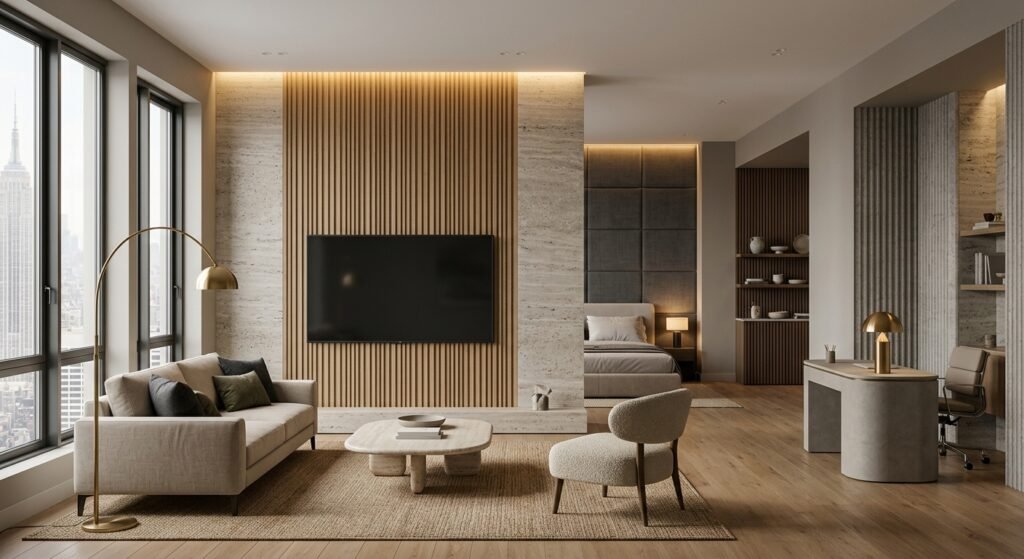
Feature walls are a practical starting point because they allow you to introduce texture without covering every surface. A living room television wall, a bedroom headboard wall, an office reception backdrop, or a retail display area can benefit from a carefully selected finish.
For open-plan spaces, panels can help visually distinguish different zones without adding a physical partition. In smaller interiors, a consistent finish can connect adjacent areas, provided the pattern and color do not make the space feel overly busy.
New York properties vary widely, from apartments with limited wall space to larger commercial interiors. The right design therefore depends on the building, the room’s proportions, the existing finishes, and the practical requirements of the project.
What Should You Look for in a Wall Panel Supplier?
A good supplier should be able to provide information on the material composition of the products, their dimensions, availability, installation instructions and purposes. Samples and the ability to answer questions are especially important if one needs to choose a particular finish for a large room or business.
Designers and contractors should also confirm lead times and quantities before scheduling installation. If matching panels may be needed later, ask about keeping product details and batch information with the project records.
For buyers exploring Wall Panels NYC, WALLSMARK offers a range of decorative surface collections, including wood-look, marble-look, metal-look, and PS wall panels. Its New Rochelle, New York, showroom provides another way to review materials and discuss options for residential or commercial interiors.
Final Thoughts
Choosing the right wall panels involves balancing appearance with material suitability, installation needs, maintenance, and budget. Wood-look finishes can introduce warmth, marble-inspired surfaces can create a refined focal point, and geometric or fluted designs can add architectural detail.
Start by identifying the wall’s purpose, comparing samples in your actual lighting, and checking the product specifications before ordering. With careful planning and a finish suited to the space, wall panels can help create a more cohesive, functional, and visually engaging interior.