
Introduction
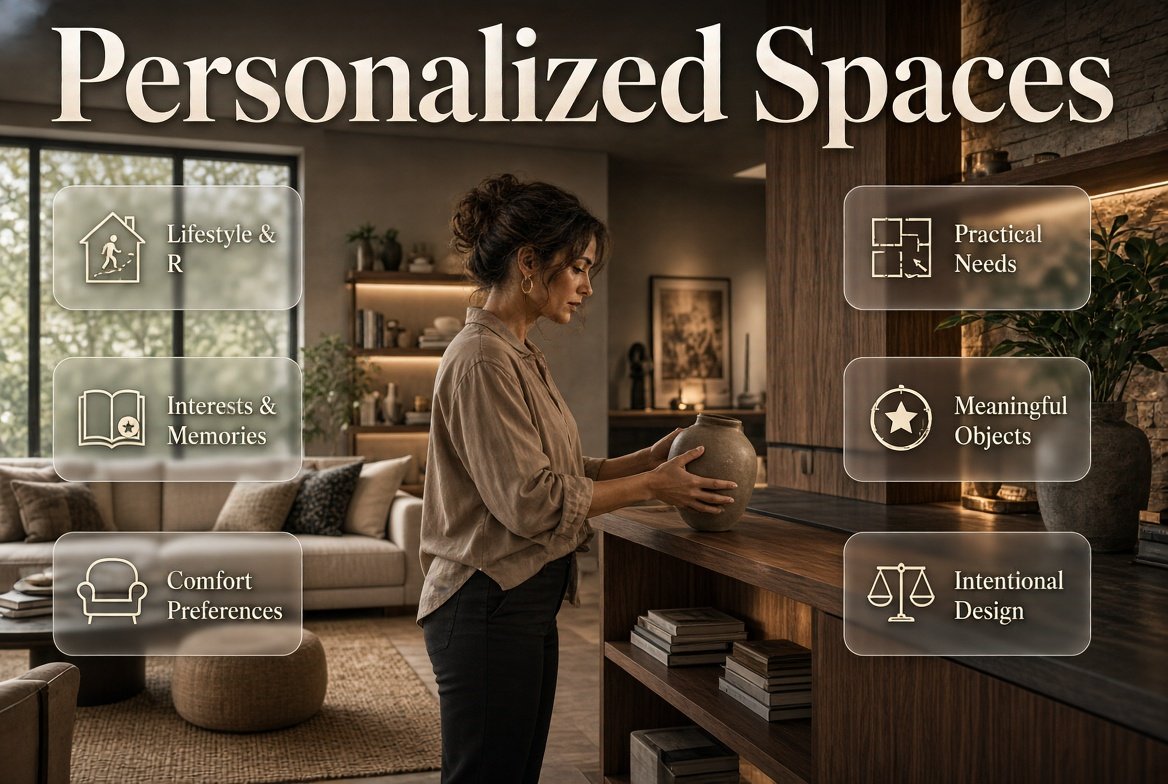
Personalized Spaces | A room can look beautiful and still feel strangely disconnected from the people who live there. The furniture may match, the colors may be fashionable, and every accessory may have been carefully chosen, yet something still feels missing. Usually, the problem isn’t the quality of the décor. It’s the lack of personality.
Personalized spaces solve that problem by starting with the people who actually use the home. Instead of copying a showroom, Pinterest board, or temporary trend, the design reflects your routines, interests, memories, comfort preferences, and practical needs.
This doesn’t mean filling every surface with family photos or ordering custom items with your name on them. Good personalization is more thoughtful than that. It considers how you move through your home, what you need from each room, which objects have meaning, what materials make you comfortable, and how the space should support your everyday life.
For more inspiration and practical interior-design ideas, explore DesignMode24 Interior Design.
In this guide, you’ll learn what personalized spaces really mean, how to personalize a home without making it cluttered, which design elements have the biggest impact, what mistakes to avoid, and how to create rooms that feel intentional rather than simply decorated.
What Are Personalized Spaces?
Personalized spaces are interiors designed around the specific lifestyle, personality, preferences, routines, memories, and functional needs of the people who use them. Instead of beginning with a trend or fixed decorating style, personalization begins with the individual and then translates their needs into layout, furniture, lighting, colors, materials, artwork, storage, and décor.
The important distinction is that personalization is not simply customization.
A customized room may contain a made-to-order sofa or monogrammed accessories. A personalized room goes deeper: the furniture works for the way you sit, the lighting supports your daily activities, storage reflects what you actually own, and meaningful objects are displayed in ways that contribute to the overall design.
Research into personalized interior design similarly emphasizes residents’ preferences, furniture selection, floor-plan decisions, spatial functionality, and the relationship between the user and the space.
Why Do Personalized Spaces Matter?
A personalized space matters because your home has to work for your real life, not an imaginary version of it.
A family that cooks together needs a different kitchen experience from someone who rarely cooks. Someone who works from home may need a quiet, visually controlled work zone, while a person who spends most evenings entertaining may prioritize flexible seating and durable surfaces.
Personalization can improve:
- Daily comfort
- Functionality
- Storage efficiency
- Emotional connection
- Visual character
- Organization
- Long-term satisfaction
- Ease of living
- Adaptability as needs change
The best interiors don’t simply answer, “Does this look good?”
They also answer, “Does this make life easier?”
💡 Pro Tip: Before buying anything for a room, identify one real problem the item will solve. If it solves neither a functional problem nor contributes meaningful visual or emotional value, you probably don’t need it.
What Makes a Space Feel Personal?
A space usually feels personal when several layers work together rather than when one decorative feature dominates the room.
Think about personalization as a combination of five layers:
Lifestyle → Function → Personality → Memory → Visual Cohesion
When these layers overlap, the result feels natural.
For example, imagine a homeowner who loves travel, reads every evening, works remotely, and prefers calm interiors. A personalized living room might include a comfortable reading chair, concealed work storage, warm task lighting, travel objects displayed selectively, natural materials, and a restrained color palette.
None of those choices needs to scream “personalized.”
Together, they tell the story.
Personalization Starts With How You Live
One of the most useful ways to personalize a home is to observe your behavior before changing the room.
Ask yourself:
- Where do you naturally sit?
- Where do you drop your keys?
- Which surfaces become cluttered?
- Where do you work?
- Where do you relax?
- What do you reach for every day?
- Which furniture pieces are rarely used?
- What constantly annoys you?
- Where do family members gather?
- What activities need more space?
These answers are more useful than simply asking, “What style do I like?”
A professional designer often needs to understand behavior before recommending finishes or furniture because the same room can require completely different solutions for different households.
Your Existing Possessions Can Become Design Assets
One common mistake is assuming that personalized design requires replacing everything.
It doesn’t.
An old wooden table, inherited cabinet, travel souvenir, handmade ceramic, family photograph, vintage chair, or artwork can become an anchor for the room.
The key is editing.
Keep the pieces that have meaning, remove the items that create visual noise, and build the surrounding design around the strongest elements.
A meaningful object often contributes more personality than ten generic accessories.
How Do You Personalize a Home Without Making It Look Cluttered?
The easiest way to personalize a home without creating clutter is to curate rather than accumulate. Choose a limited number of meaningful objects, repeat selected colors or materials, create visual hierarchy, and give important pieces enough empty space around them. Personalization works best when every visible item has a reason to be there.
This is where many homeowners go wrong.
They hear that a personalized home should show personality, so they display everything they love at once.
The result can feel crowded rather than personal.
Use the One-Third Rule for Personal Objects
You don’t need to display every memory.
For a shelf, console, or cabinet, choose a small group of objects that work together. Leave negative space around them so each item can be noticed.
For example:
- One travel object
- One framed photograph
- One ceramic piece
- One small plant
- One functional object
This can feel more sophisticated than twenty unrelated accessories.
Repeat Instead of Matching
Personalized spaces don’t need perfectly matching décor.
Instead, repeat small visual elements.
If you love warm wood, you might use it in:
- A side table
- Picture frames
- Shelving
- Decorative objects
If you prefer brass, repeat it through lighting, cabinet hardware, and small accents.
Repetition creates cohesion while still allowing personality.
Current design thinking is increasingly comfortable with mixing finishes, materials, styles, and even darker colors in smaller rooms when those choices are intentional.
How Do You Find Your Personal Interior Design Style?

Finding your personal style isn’t about choosing one label such as modern, minimalist, traditional, or contemporary. Start by identifying the colors, materials, shapes, textures, objects, and atmospheres you repeatedly respond to. Then separate what you genuinely like from trends that simply look attractive in photographs.
Step 1: Collect What You Actually Like
Save rooms, furniture, colors, materials, and details that genuinely appeal to you.
After collecting several examples, look for patterns.
Perhaps you repeatedly save:
- Warm neutral rooms
- Natural wood
- Soft lighting
- Vintage furniture
- Organic textures
- Simple architecture
That pattern tells you more than a style quiz.
Step 2: Identify What You Don’t Like
This is equally important.
Maybe you dislike:
- Glossy finishes
- Excessive symmetry
- Cold white lighting
- Heavy furniture
- Strong patterns
- Open shelving
Knowing what you don’t want prevents expensive mistakes.
Step 3: Separate Inspiration From Reality
A dramatic room may look fantastic online but be completely impractical for your lifestyle.
A white sofa may look beautiful in a photography studio but become frustrating in a home with children and pets.
A huge coffee table may look luxurious but block the main walking route.
Good personalization balances aspiration with reality.
What Are the Main Elements of Personalized Interior Design?
Personalization can be introduced through layout, furniture, color, lighting, materials, artwork, textiles, storage, technology, and accessories. The strongest results usually come from combining several subtle personal decisions rather than relying on one obvious customized feature.
1. Layout
Layout is one of the most important forms of personalization because it affects how you physically experience the room.
If your family gathers around the television, seating should support that activity.
If conversations matter more than television, arrange furniture to encourage face-to-face interaction.
If children use the living room daily, create durable and flexible zones.
A beautiful layout that doesn’t support your habits isn’t truly personalized.
2. Furniture
Furniture should match both your body and your lifestyle.
Consider:
- Seat depth
- Height
- Comfort
- Mobility
- Storage
- Durability
- Room proportions
- Maintenance
A personalized sofa isn’t necessarily a custom sofa. It can simply be the right size, firmness, shape, and configuration for the people using it.
3. Color
Color is one of the easiest ways to express personality.
But personal preference should still work with the architecture.
If you love a strong color, consider using it on:
- One accent wall
- Cabinet interiors
- Curtains
- Artwork
- A chair
- Cushions
- Smaller decorative elements
You don’t have to paint the entire room in your favorite color to make the space feel yours.
For deeper color and decorating guidance, the Paint Color category can provide a useful supporting resource.
4. Lighting
Lighting often reveals whether a room was designed for real life or only for photographs.
Use different layers:
- Ambient lighting for general illumination
- Task lighting for reading or working
- Accent lighting for artwork and architectural details
- Decorative lighting for atmosphere
A person who reads at night needs different lighting from someone who primarily watches movies.
5. Materials
Materials communicate personality through touch and appearance.
Natural wood can introduce warmth. Stone can add weight and permanence. Linen can create softness. Metal can introduce structure. Glass can make a room feel lighter.
The goal isn’t to use expensive materials everywhere.
The goal is to select materials that fit your lifestyle.
That makes the Material Selection guide especially relevant when deciding which finishes deserve investment.
How Can You Personalize Different Rooms?
Each room should express personality differently because each room performs a different job. A personalized bedroom should prioritize rest and comfort, while a living room may focus on conversation and social interaction. Kitchens require efficient routines, home offices require concentration, and entryways need practical organization.
Personalized Living Room
Start with how the room is actually used.
If you entertain often, prioritize:
- Comfortable seating
- Flexible side tables
- Durable fabrics
- Conversation-friendly furniture
- Adjustable lighting
If the room is mainly for relaxing, prioritize comfort and visual calm.
For room-by-room planning, the Room-by-Room Design Hub can help you approach each space according to its specific function.
Personalized Bedroom
The bedroom should feel private rather than staged.
Personalize it through:
- Bedding textures
- Bedside lighting
- Artwork
- Reading areas
- Storage
- Curtains
- Calming colors
- Meaningful objects
Don’t fill the bedroom with decorative pieces simply because there are empty surfaces.
The room should support the way you sleep and unwind.
Personalized Home Office
A home office needs to reflect the user’s working habits.
Think about:
- Monitor position
- Desk depth
- Cable management
- Background appearance
- Storage
- Lighting
- Acoustic comfort
- Video-call positioning
If the office doubles as another room, consider furniture that can change function without making the room feel permanently occupied by work.
Personalized Kitchen
Kitchen personalization is largely about workflow.
Ask:
- Where do groceries enter?
- Where are frequently used appliances stored?
- Where is food prepared?
- Where are dishes cleaned?
- Where does the family naturally gather?
A kitchen can look luxurious and still be frustrating if the layout ignores these movements.
Personalized Entryway
The entryway should solve the first and last problem of the day.
Create dedicated locations for:
- Keys
- Shoes
- Bags
- Coats
- Umbrellas
A small tray or concealed cabinet can make more difference than a large decorative statement.
How Can Personal Memories Become Part of Interior Design?
Personal memories become effective design elements when they’re displayed selectively and integrated with the room rather than treated as separate decorations. Travel objects, inherited furniture, family photographs, artwork, books, handmade pieces, and sentimental collections can provide emotional depth while still supporting the overall visual composition.
One meaningful piece can establish the direction for an entire room.
For example, an inherited wooden cabinet might inspire the room’s wood tone, hardware finish, artwork, and color palette.
A collection of travel photographs might become a gallery wall.
A handmade rug might determine the room’s accent colors.
The important thing is to avoid turning memories into a museum.
Your home should feel lived in, not curated for an exhibition.
How Do You Mix Different Design Styles in a Personalized Space?
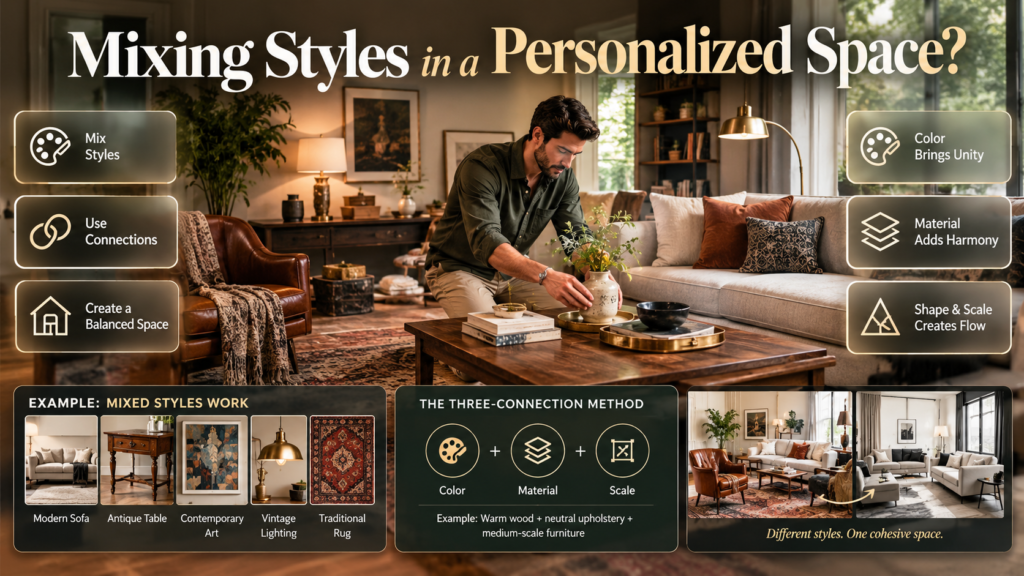
You can mix styles successfully by connecting them through color, scale, material, shape, or proportion. The goal isn’t to make every item belong to the same design period. Instead, create enough visual relationships that different pieces feel intentionally connected.
For example, a modern sofa can work with:
- An antique wooden table
- Contemporary artwork
- Vintage lighting
- A traditional rug
The room becomes interesting because the pieces aren’t identical.
The Three-Connection Method
When mixing styles, connect different pieces through at least three shared characteristics:
Color + Material + Scale
For example:
- Warm wood + neutral upholstery + medium-scale furniture
- Black metal + cream textiles + clean geometric shapes
This provides cohesion without forcing everything into one style.
How Does Technology Fit Into Personalized Spaces?
Technology should personalize the experience of a home without dominating its appearance. Smart lighting, automated shades, climate controls, integrated speakers, charging stations, and connected home systems can support individual routines when they are planned around actual needs rather than installed simply because they are fashionable.
For homeowners interested in technology-driven living, Home Smart Decoradtech offers a relevant direction for exploring smart-home ideas.
The key principle is simple:
Technology should reduce friction, not create another system to manage.
If smart lighting takes five minutes to operate every evening, it isn’t improving your life.
If one button creates the lighting and atmosphere you want, it can be genuinely useful.
How Can DIY Projects Add Personality?
DIY projects are valuable for personalization because they allow homeowners to introduce details that cannot be found in every showroom. A painted cabinet, handmade artwork, customized shelving, restored furniture, or simple wall treatment can create character without requiring a major renovation.
Before starting a DIY project, ask:
- Is it reversible?
- Is the material suitable?
- Do I have the necessary tools?
- Will the finish withstand everyday use?
- Does the project solve a real problem?
- Will it still look appropriate in several years?
For practical project inspiration, explore DIY Home Projects.
You can also find practical shortcuts and creative solutions through Home Hacks Decoradtech.
⭐ Expert Tip: DIY doesn’t have to mean making everything yourself. Sometimes the smartest DIY approach is modifying an existing piece instead of building something from scratch.
How Can Outdoor Areas Become Personalized Spaces?
Personalization shouldn’t stop at the front door.
A garden, balcony, patio, or terrace can become an extension of the home’s personality.
Think about how you want to use the outdoor area:
- Morning coffee
- Evening entertaining
- Gardening
- Children’s play
- Reading
- Dining
- Quiet relaxation
Then choose furniture, plants, lighting, and materials around that activity.
For additional outdoor inspiration, see Garden Tips Decoradhouse.
The best outdoor spaces don’t simply contain plants and furniture. They create a reason to spend time there.
How Can Modern Lifestyle Influence Personalized Spaces?
Modern homes often have to perform several functions simultaneously. A living room may become an office during the day, an entertainment area in the evening, and a children’s activity space on weekends. Personalization therefore increasingly involves flexibility, storage, technology, and furniture that can adapt to changing routines.
This makes Modern Lifestyle a useful related resource when thinking beyond purely decorative decisions.
A personalized home should not only represent who you are today.
Ideally, it should have enough flexibility to accommodate who you may become next year.
How Can You Upgrade a Home Without Losing Its Personality?
Home upgrades work best when they improve the structure and function of a space while preserving the details that make it recognizable as yours. Instead of replacing everything, identify what is working, what is failing, and what no longer represents your lifestyle.
Start with:
- Identify the biggest daily frustration.
- Fix the functional problem first.
- Keep valuable existing pieces.
- Upgrade high-use items before decorative items.
- Improve lighting.
- Edit clutter.
- Add personal details after the foundation is working.
For a broader approach to upgrading interiors, explore Home Upgrading Mintpalment.
A successful upgrade should make the home feel more comfortable, not simply newer.
What Role Does Home Décor Play in Personalized Spaces?
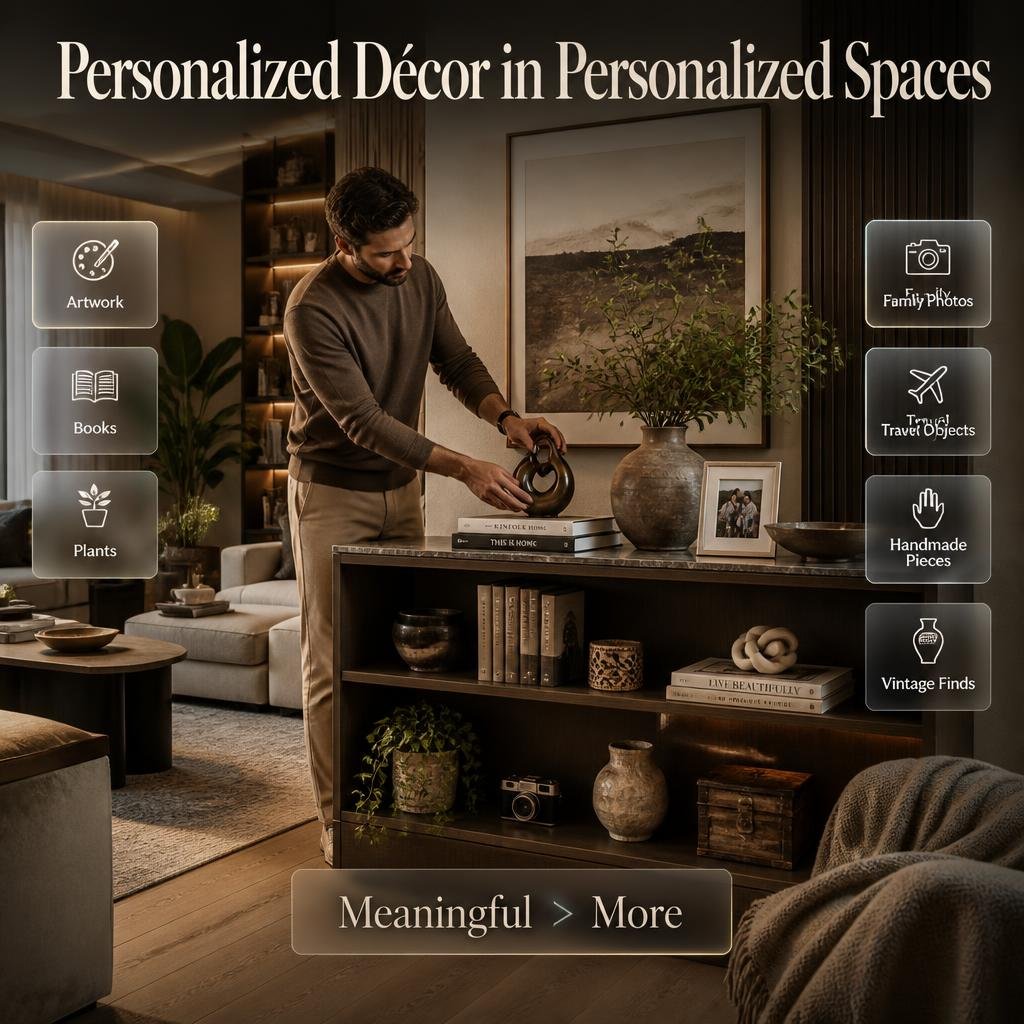
Décor is the final layer that communicates personality after layout, furniture, lighting, and materials have been established. It works best when it reinforces the story of the room instead of trying to create the entire identity by itself.
Useful personalized décor includes:
- Artwork
- Books
- Ceramics
- Plants
- Textiles
- Family photographs
- Travel objects
- Handmade pieces
- Vintage finds
- Collections
The goal is not quantity.
The goal is relevance.
For homeowners who want to think through the complete decorating process, How to Set Up My Home Decoradtech provides another useful starting point.
How Do You Create Personalized Spaces on a Budget?
You don’t need a large budget to personalize a home. The most affordable improvements often come from rearranging furniture, editing clutter, improving lighting, changing textiles, displaying meaningful objects, repainting selected surfaces, and making better use of existing storage.
High-Impact, Lower-Cost Ideas
| Change | Cost Level | Potential Impact |
|---|---|---|
| Rearrange furniture | Low | High |
| Edit clutter | Free | High |
| Change lighting | Low–Medium | High |
| Add artwork | Low–Medium | Medium–High |
| Replace cushions | Low | Medium |
| Paint one wall | Low | High |
| Upgrade hardware | Low | Medium |
| Add custom storage | Medium–High | Very High |
| Replace major furniture | High | High |
The smartest approach is to spend money where you interact with the room most often.
A quality desk chair may improve your life more than an expensive decorative sculpture.
What Are the Most Common Personalized Space Mistakes?
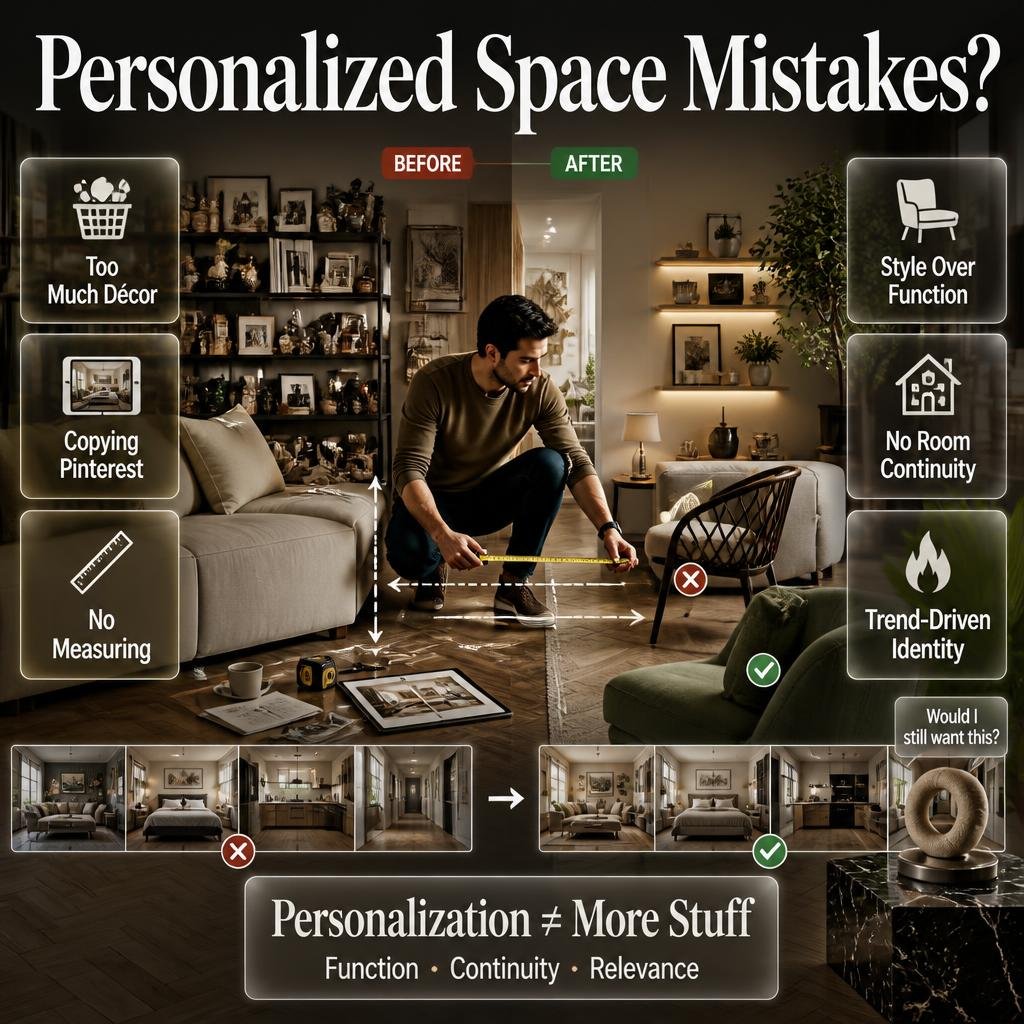
The biggest mistakes are usually caused by confusing personalization with decoration. People may display too many personal objects, follow trends too closely, choose furniture before measuring, or force a favorite style into every room. These choices can make a home feel crowded, impractical, or visually disconnected.
1. Displaying Everything You Love
Why it happens:
People want their personality to be visible.
Why it’s harmful:
Too many objects compete for attention.
Better approach:
Rotate collections and display the strongest pieces.
2. Copying Pinterest Too Literally
Why it happens:
Inspiration photos provide an easy starting point.
Why it’s harmful:
The room may reflect someone else’s lifestyle rather than yours.
Better approach:
Borrow principles, not complete rooms.
3. Buying Furniture Before Measuring
Why it happens:
A piece looks perfect in a showroom.
Why it’s harmful:
Scale can completely change how a room functions.
Better approach:
Measure walls, doors, windows, pathways, and furniture clearances first.
4. Choosing Style Over Function
A visually impressive chair is useless if nobody wants to sit in it.
A beautiful open shelf is frustrating if it becomes a permanent dust-and-clutter zone.
Function should influence aesthetics, not the other way around.
5. Making Every Room Completely Different
Personalization doesn’t mean every room needs a separate identity.
If the living room is minimalist, the bedroom is rustic, the kitchen is industrial, and the hallway is maximalist without any connecting elements, the home can feel fragmented.
Create continuity through:
- Repeated materials
- Similar hardware
- Related colors
- Consistent flooring
- Similar lighting temperature
6. Treating Trends as Personal Identity
A trend can be attractive without being personal.
Ask yourself:
“Would I still want this if I hadn’t seen it online?”
If the answer is uncertain, wait before investing.
How Can You Use Trends Without Losing Personal Style?
Use trends as ingredients rather than instructions. A current color, furniture shape, material, or decorative direction can refresh a personalized interior when it supports the homeowner’s existing preferences. Trends become problematic when they replace those preferences completely.
This approach is particularly useful as interiors move toward more individual expression rather than uniform, showroom-style rooms. Current 2026 coverage highlights greater interest in meaningful objects, personal history, collections, and individuality while still maintaining visual cohesion.
The rule is simple:
Personal style first. Trend second.
What Is the Best Step-by-Step Process for Creating a Personalized Space?
A practical personalization process begins with observing how the room is used, identifying problems, defining priorities, selecting a visual direction, editing existing belongings, and then making targeted design decisions.
Step 1: Observe
Spend several days paying attention to how the room is used.
Why it matters:
You discover real behavior instead of relying on assumptions.
Professional advice:
Notice where clutter naturally appears. That often reveals missing storage or poor layout.
Step 2: Identify Problems
Write down the five things that annoy you most.
For example:
- Not enough storage
- Poor lighting
- Uncomfortable seating
- No workspace
- Too much visual clutter
Common mistake:
Starting with paint color before solving these problems.
Step 3: Define the Feeling
Choose three to five words describing how you want the space to feel.
Examples:
- Warm
- Calm
- Creative
- Sophisticated
- Relaxed
These words become a filter for future decisions.
Step 4: Select Meaningful Anchors
Choose existing objects, artwork, furniture, or materials that matter to you.
Why it matters:
These pieces prevent the room from becoming generic.
Step 5: Build the Functional Foundation
Arrange furniture and storage first.
Professional advice:
Walk through the room physically. Don’t judge the layout only from a floor plan or photograph.
Step 6: Add Visual Character
Introduce:
- Color
- Texture
- Artwork
- Lighting
- Accessories
- Plants
- Textiles
Step 7: Edit
Remove anything that doesn’t contribute.
This is where personalization becomes polished.
Step 8: Live With It
Don’t assume the room is finished on day one.
Use it for several weeks.
Notice what works and what doesn’t.
Then make small adjustments.
How Can You Make Personalized Spaces Feel More Professional?
Professional-looking personalized spaces usually have one thing in common: they balance individuality with structure. Personal objects are present, but they are supported by proportion, scale, repetition, negative space, lighting, and a controlled color/material palette.
This is the difference between personalized and random.
A professional approach doesn’t remove personality.
It organizes it.
For example, a collection of colorful travel objects can look sophisticated when grouped by shelf, color, scale, or material. The same objects scattered throughout every room may feel disconnected.
📌 Quick Tip: When a room feels visually messy, don’t immediately remove your favorite objects. First try grouping them, changing their scale relationship, or giving them more empty space.
What Questions Should You Ask Before Personalizing a Room?
Before purchasing anything, ask:
- Who uses this room most?
- What happens here every day?
- What currently doesn’t work?
- What do I want to feel when I enter?
- Which existing pieces matter?
- What must be stored?
- What needs to remain flexible?
- Which materials fit my lifestyle?
- How much maintenance am I willing to accept?
- Which design choices will still make sense in five years?
These questions can save more money than shopping around for discounts.
How Can I Create a Personalized Space Without Making My Home Look Cluttered?
The best way to personalize a room without creating clutter is to curate your belongings instead of displaying everything you own. A personalized interior should show your personality through a few meaningful choices, not through dozens of decorative objects competing for attention.
Start by selecting the items that genuinely tell your story. This could be family photographs, travel finds, inherited furniture, artwork, books, handmade ceramics, or objects connected to an important memory. Give these pieces enough empty space around them so they become part of the room’s composition rather than looking like random additions.
A useful professional approach is to build the room around one or two strong personal elements, then support them with compatible colors, materials, textures, and lighting.
Practical points:
Display meaningful objects instead of every sentimental item.
Group smaller objects together rather than scattering them around the room.
Leave negative space around important pieces.
Repeat colors or materials to create visual consistency.
Rotate collections when you have more items than the room can comfortably hold.
Remove anything that feels decorative but has no real connection to your lifestyle.
The goal isn’t to make your home look empty. It’s to make every visible item feel intentional. Current 2026 design coverage is also emphasizing curated, meaningful interiors rather than generic mass-produced décor.
What Are the Best Ways to Make a Home Feel More Personal?
The strongest way to make a home feel personal is to design around how you actually live, rather than beginning with a popular interior style. Your routines, interests, memories, favorite materials, hobbies, cultural influences, and everyday habits can all become part of the design.
For example, someone who loves reading might create a dedicated reading corner with comfortable seating, warm task lighting, and accessible bookshelves. A frequent traveler could display selected travel objects or artwork instead of filling every wall with souvenirs. Someone who works from home may prioritize a workspace that feels visually connected to the rest of the home while still supporting concentration.
Personalization becomes much stronger when it is connected to function.
Practical points:
Use artwork that means something to you.
Keep a few inherited or vintage pieces instead of replacing everything.
Display collections selectively.
Choose furniture according to your actual routines.
Use colors you genuinely enjoy rather than choosing them only because they’re trending.
Incorporate handmade or locally crafted pieces where they have meaning.
Create small personal zones for hobbies, reading, work, relaxation, or family activities.
This approach also fits the major 2026 shift toward interiors that reflect individual identity and personal stories instead of looking like identical showroom spaces.
How Do You Personalize a Room While Still Keeping It Stylish and Cohesive?
A personalized room stays stylish when personality is supported by design structure. You don’t need every piece to match, but the room should have relationships between colors, materials, proportions, shapes, and textures.
For example, you can combine a modern sofa with an antique side table, family artwork, a vintage rug, and contemporary lighting. These pieces don’t have to come from the same design period. They simply need a visual connection.
One of the most effective techniques is to repeat a few elements throughout the room. If your personal artwork contains warm brown and cream tones, those colors can appear again in the rug, cushions, wood furniture, or accessories. The result feels collected rather than chaotic.
Professional styling points:
Choose a controlled base palette.
Repeat two or three important colors.
Connect different furniture pieces through material or finish.
Pay attention to scale before adding more décor.
Use contrast intentionally rather than randomly.
Leave breathing room between important objects.
Mix old and new pieces instead of making everything identical.
Let one strong personal piece become a visual focal point.
This is particularly relevant in 2026, when designers are increasingly embracing layered, eclectic and individuality-driven interiors while still emphasizing intentional editing.
A useful rule is:
Your personality should make the room interesting; design principles should make it work.
What Personalized Interior Design Trends Are Popular in 2026?
The strongest personalized interior design direction in 2026 is moving away from perfectly coordinated, generic rooms and toward curated spaces that show personality, history, craftsmanship and individuality. Designers are giving more attention to meaningful objects, vintage pieces, layered artwork, tactile materials, warmer colors and rooms that look collected over time.
Personalization doesn’t necessarily mean adding your name to everything. In fact, subtle personalization is often more sophisticated.
Current ideas include:
Meaningful artwork instead of generic wall prints
Vintage and antique furniture
Family heirlooms
Handmade ceramics and crafts
Layered artwork and gallery walls
Richer and warmer color palettes
Natural wood and tactile materials
Mixed furniture styles
Statement lighting
Personal collections
Specialized corners for hobbies and routines
More expressive use of pattern and texture
Current 2026 trend reporting specifically highlights individuality, curated spaces, layered interiors, historical influences and meaningful personal objects.
The important point is not to copy these trends literally.
Instead, translate the trend into your own home.
For example, if layered artwork is trending, don’t buy five random prints simply to recreate a trend. Build a wall using artwork, photographs, sketches, or objects that actually mean something to you.
That creates a room that can remain relevant even after the trend changes.
How Can I Personalize My Home on a Budget Without Renovating?
You can personalize a home without a major renovation by focusing on high-impact, low-cost changes such as furniture arrangement, lighting, artwork, textiles, storage, paint, accessories, and meaningful objects. In many cases, better editing and arrangement can make a bigger difference than buying expensive furniture.
Start with the room you use most.
Move the furniture and test different layouts before spending money. Remove unnecessary items, improve the lighting, introduce artwork that reflects your interests, and replace a few generic accessories with pieces that have genuine meaning.
You can also personalize a neutral room through inexpensive layers such as cushions, rugs, curtains, lamps, books, plants, framed photographs, and handmade objects.
Budget-friendly improvements:
Rearrange existing furniture.
Paint one wall or a smaller architectural feature.
Change lampshades or light fixtures.
Add meaningful artwork.
Replace generic cushions with more personal textiles.
Refinish or repaint an existing piece of furniture.
Upgrade cabinet or drawer hardware.
Create a small reading, hobby, or work corner.
Use plants to introduce life and texture.
Display existing collections more intentionally.
Shop vintage or second-hand for distinctive pieces.
The smartest strategy is to spend money on things you touch, use, or see every day rather than buying large amounts of decorative filler.
That approach also matches the broader 2026 move toward homes that feel warm, lived-in, collected and individual rather than expensive simply for the sake of appearing expensive.
Professional recommendation: Before buying anything, write down the three biggest problems with the room. Fix those first. Once the space functions properly, personalization becomes much easier because you’re decorating a room that already works for you.
Conclusion
A truly beautiful home is not simply the one that follows the latest interior design trend. It is the one that feels naturally connected to the people who live there. Personalized spaces bring together your lifestyle, memories, preferences, routines, and personality to create an environment that feels comfortable rather than staged.
The best personalization does not mean filling every corner with decorative objects or choosing a completely different style for every room. It means making thoughtful decisions about what deserves a place in your home. A family photograph, a piece collected during travel, a favorite color, a custom furniture detail, meaningful artwork, or even a carefully designed reading corner can give a room far more character than generic décor ever could.
The key is balance. Keep the foundation functional and cohesive, then introduce personal elements through furniture, lighting, artwork, textiles, colors, materials, and objects that genuinely mean something to you. This approach allows your home to evolve naturally as your lifestyle and preferences change.
Most importantly, do not design your home simply to impress visitors or copy what is popular online. Current design direction is increasingly moving toward individuality, layered interiors, meaningful pieces, and spaces that tell a personal story.
Your home should look like you live there—not like you copied someone else’s room. When every major design decision supports the way you live and the things you value, the result is more than attractive décor. It becomes a home with identity, comfort, and a story of its own.

Leave a Reply